





Last April, the city of Barcelona witnessed a remarkable gathering of elite progressive leaders from around the world, including Brazilian President Lula da Silva and Mexican President Claudia Sheinbaum. The core objective of this meeting was to promote the values of pluralism and democracy in the face of the global rise of the far-right, and to honor the experience of Spanish Prime Minister Pedro Sánchez.\n\nToday, Sánchez is the longest-serving center-left leader in power in the Western world, and he has gained widespread international recognition as the most daring leader in confronting the policies of former US President Donald Trump. While other leaders chose to avoid confrontation with Washington, Sánchez took a completely different path characterized by assertiveness and clarity.\n\nThis assertiveness was evident in firm sovereign stances, as Madrid refused to allow its military bases to be used in any potential American confrontation against Iran, and also condemned interference in Venezuelan affairs to overthrow Nicolás Maduro. These steps positioned Sánchez as a fierce opponent of the Trumpian agenda in Europe and beyond.\n\nRegarding NATO, Sánchez emerged as a lone voice opposing Trump's demands for excessive military spending last year. Not only that, but he also confronted threats of US tariffs, emphasizing the independence of European and Spanish decision-making in managing sensitive economic issues.\n\nConcerning the Palestinian issue, Sánchez led a historic diplomatic movement within the European Union to recognize the state of Palestine, describing what is happening in the Gaza Strip as a war of extermination. This principled stance enhanced his position as a moral leader in the eyes of global progressive forces, despite significant international pressure.\n\nSánchez's critics view his policies, which they describe as 'Sanchismo,' as mere populist maneuvers aimed at staying in power at any cost. However, the economic and social reality in Spain presents a different narrative, as he succeeded in transforming his country into a strong bastion of social democracy in a turbulent European environment.\n\nSánchez's journey to power began unconventionally, as he regained leadership of the Socialist Party through grassroots tours in his own car to connect with popular bases. In 2018, he successfully orchestrated the first successful vote of no confidence in modern Spanish history, ousting the conservative government mired in corruption scandals.\n\nHis tenure was characterized by high pragmatism and an ability to forge complex alliances, most notably the amnesty deal for Catalan separatists in 2023. Despite the widespread controversy and protests that accompanied this decision, it ultimately led to political stability and a significant decline in separatist tendencies within the region.\n\nUnder the slogan of 'successful progressivism,' the Spanish government achieved remarkable economic leaps, with the minimum wage increasing by over 60% in seven years. Reforms also included labor laws that reduced unemployment and protected the rights of workers and women, creating a strong social safety net.\n\nBy 2024, international economic reports described Spain as the best-performing rich economy in the world, surpassing many of its European neighbors. This success was based on developed tourism sectors, high-value service exports, and a rapid transition to renewable energy and the automotive industry.\n\nSánchez did not overlook historical aspects, working to clear the legacy of the dictatorship by moving the remains of General Franco from the 'Valley of the Fallen.' He also enacted the Democratic Memory Law, which aims to do justice to the victims of the civil war, a move conservatives considered divisive while progressives saw it as a national entitlement.\n\n"The Iberian Miracle" also relies on a flexible and generous immigration policy, where the status of hundreds of thousands of undocumented immigrants has been legalized to fill labor market gaps. This policy prioritizes cultural and social integration, making Spain a different model from its neighbors who adopt strict policies.\n\nAs the next elections approach, opinion polls indicate that more than half of Spaniards view current US policies as a threat to Europe. This popular sentiment strengthens Sánchez's chances, as he has made confronting Trumpism a cornerstone of his political discourse and his upcoming election campaign.\n\nIn conclusion, Pedro Sánchez has managed to formulate an alternative governing philosophy that proves that the center-left can succeed economically without abandoning its social principles. He has become a role model for leaders seeking a third way that combines idealistic ambition with political realism in a world buffeted by waves of extremism.\n\nSánchez is the longest-serving center-left leader in the West, and he has recently become known for leading the global opposition to President Trump.

PALESTINE
Wed 13 May 2026 6:20 am - Jerusalem Time
Pedro Sánchez: The Leader Who Challenged Trump and Transformed Spain into a Bastion of Social Democracy

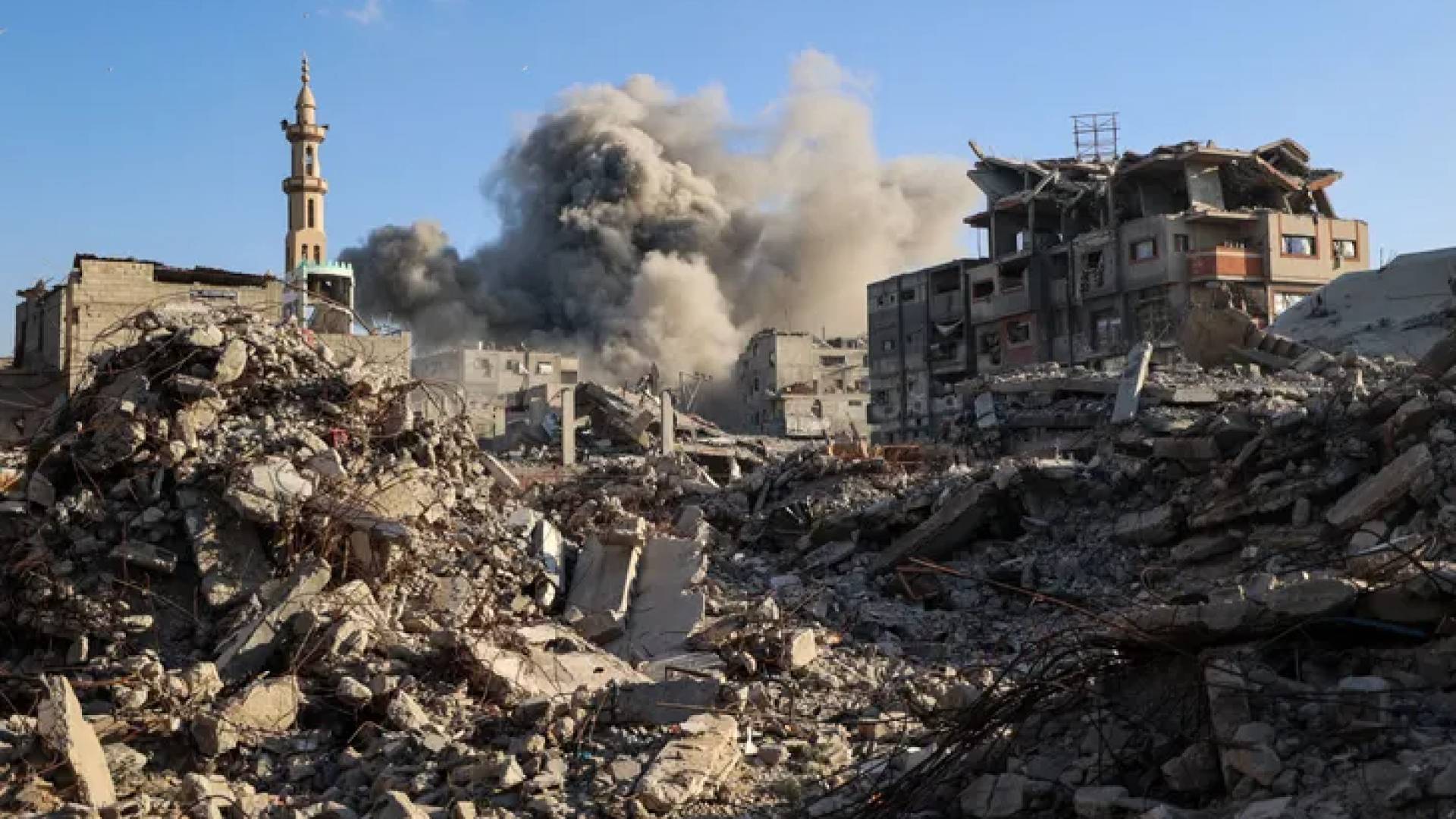
Tags
MORE FROM PALESTINE




Share your opinion
Pedro Sánchez: The Leader Who Challenged Trump and Transformed Spain into a Bastion of Social Democracy