






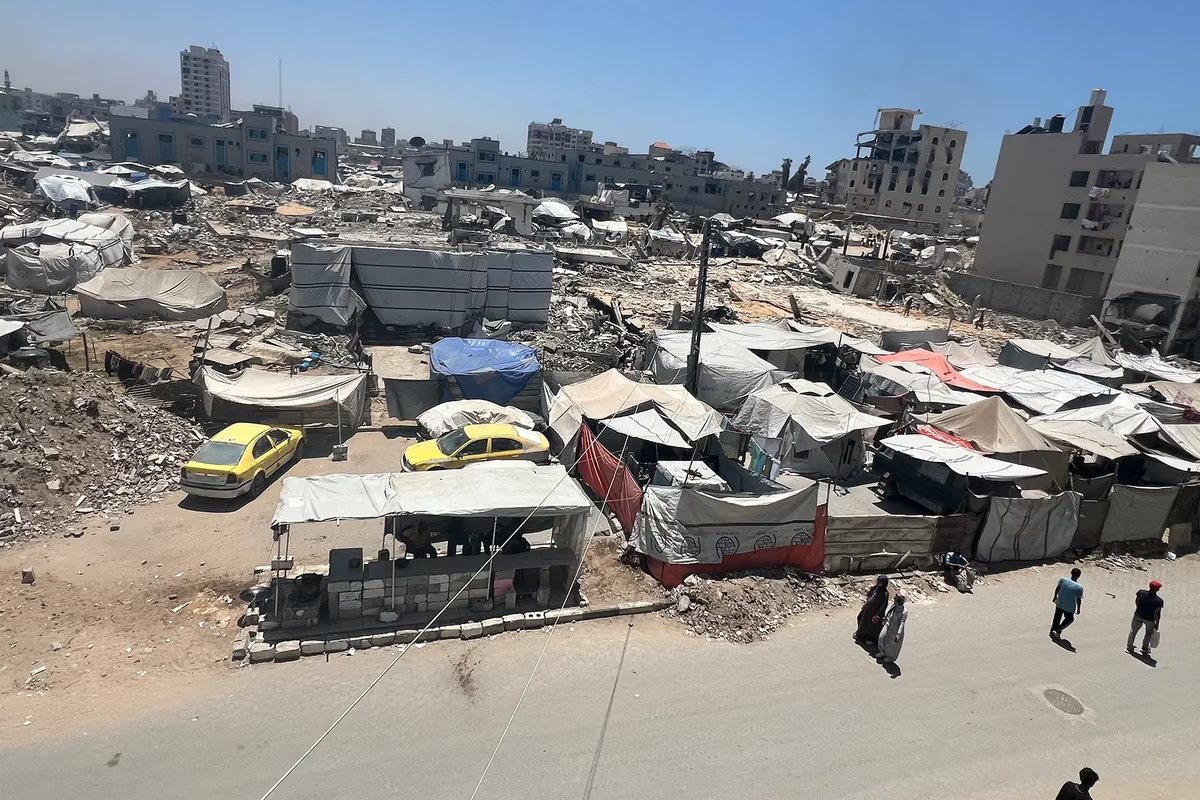
Amidst the continuous threats posed by stray bullets and the volatile climate in the displacement camps in the Gaza Strip, young Khalil Abu Ramadan resorted to inventing an alternative means of protection. With canvas tents failing to withstand summer heat or winter cold, Khalil decided to build a mud room using simple local materials, striving to provide a minimum level of safety for his family.
The idea of construction was not born in the moment, but rather came as a result of a bitter displacement journey undertaken by the digital content creator, as he was forced to move with his family more than 25 times between different areas of the Strip. During these forced journeys, Khalil lost all the professional photography equipment he relied on for his work, which made him face a new reality stripped of his essential tools.
Abu Ramadan describes his suffering with the tent, which could no longer withstand strong winds or heavy rains, noting that it lacks the simplest elements of stability and privacy. This constant reality of uncertainty pushed him to search for a more solid alternative that could withstand the harsh weather conditions that plague the bodies of the displaced.
Khalil's attempts to return to content creation began from the heart of the rubble, where he chose the remains of a demolished room to be his temporary studio. Using only his mobile phone, he made a primitive camera stand from stacked stones, trying to document the daily details of displacement and convey the image of suffering to the world despite the scarcity of resources.
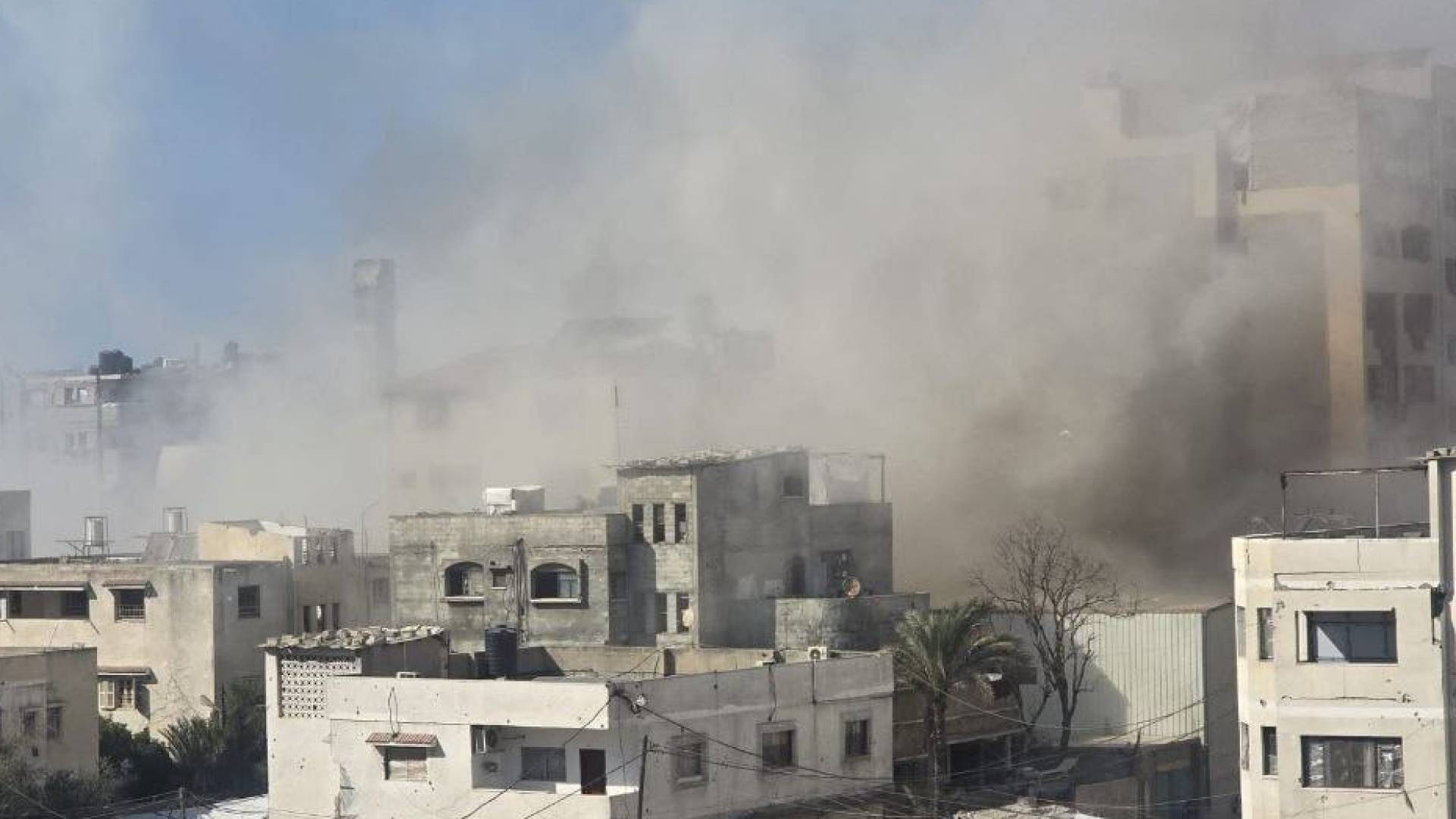
The need to find a safer shelter increased with the continued random shooting, especially in areas close to what is known as the 'Yellow Line'. Sources reported that stray Israeli bullets have become a daily threat to the lives of those living in fragile tents, making the move to mud construction an urgent necessity for survival.
Abu Ramadan consulted a friend who has experience in traditional construction inherited from ancestors, who advised him to build a circular mud room. These designs are considered more cohesive and capable of withstanding external pressures, in addition to being economical and relying entirely on available surrounding environmental resources.
The construction process began with collecting mud from designated lands and manually transporting it to the new housing site, a task Khalil described as extremely difficult and slow. The walls required gradual shaping and long patience to dry and become capable of supporting the roof, reflecting the amount of effort expended in the absence of modern machinery and equipment.
Although this mud room may not radically change the tragic reality of displacement, it represents a humanitarian attempt to alleviate the harshness of living under bombardment and cold. Khalil believes that every brick he lays is a step towards restoring a small part of the dignity and stability lost since the beginning of the aggression on the Strip.
Khalil Abu Ramadan's story embodies the will of the Palestinian in Gaza to adapt to the harshest conditions and create alternatives from nothing to confront the war machine. This mud room remains a testament to a difficult phase, in which man tries to protect his loved ones with the available earth, awaiting return to their homes destroyed by the occupation.
I found myself in a tent that could not withstand rain or wind, and offered no sense of stability, even in the simplest details of daily life.

Share your opinion
Facing bullets with mud.. a content creator in Gaza invents an alternative shelter for fragile tents