






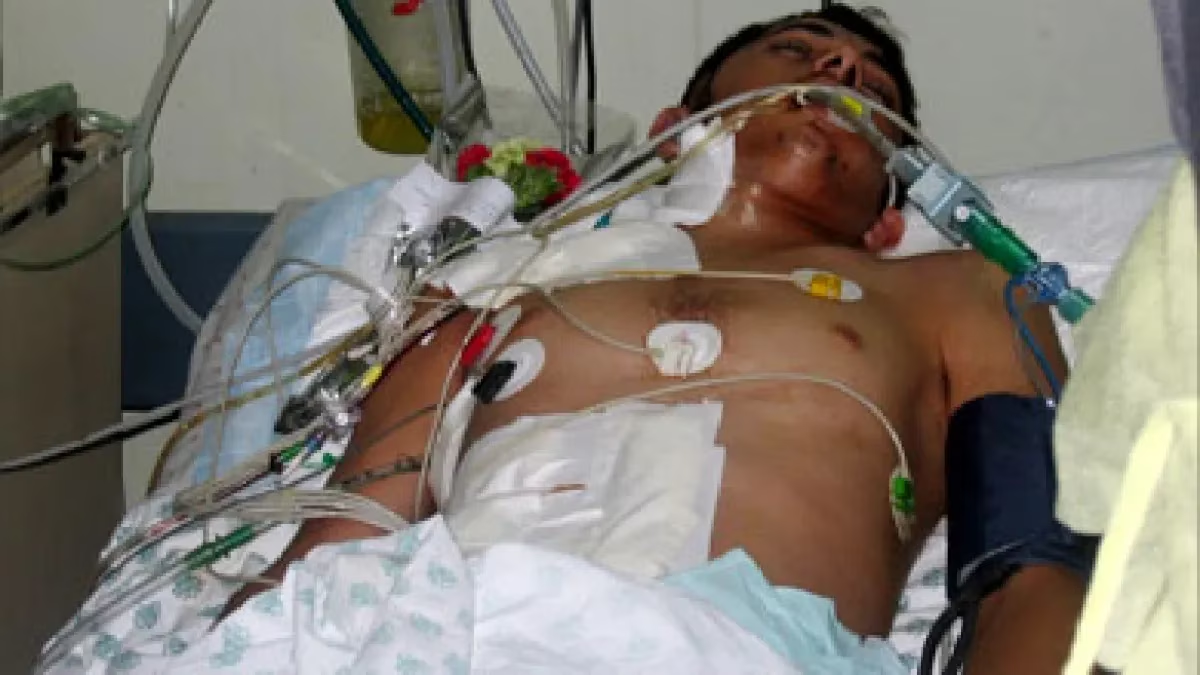
West Bank cities are witnessing a silent health crisis that is escalating day by day, as thousands of Palestinians find themselves in a direct confrontation with illness without the weapon of medicine. In the streets of Ramallah and other governorates, the health card no longer guarantees its holder access to necessary treatment; instead, it has often turned into a mere piece of paper that offers no benefit in front of empty government pharmacy shelves.
Field data indicates that nearly half of Palestinians with official health insurance cannot benefit from its actual services due to a severe shortage in drug supplies. This harsh reality places patients before bitter choices: either a wait that may be prolonged and lead to a deterioration of their condition, or an attempt to secure exorbitant sums of money to purchase treatment from private pharmacies.
Figures released by medical authorities reveal the extent of the catastrophe, as medicines consume about 40% of the monthly income of Palestinian citizens who are forced to provide for them at their own expense. Many patients resort to borrowing or selling their personal belongings to secure therapeutic doses for chronic diseases such as diabetes and high blood pressure, which cannot tolerate delay or interruption.
During a tour inside the warehouses of the Palestinian Ministry of Health, data shows that the crisis has reached unprecedented levels, with a 'zero' balance recorded for approximately 180 types of medicine out of 520 essential types. This shortage is not limited to ordinary medicines but extends to vital medical supplies, leading to partial paralysis in public health facilities.
The most vulnerable group is cancer and tumor patients, as warehouses lack 50 types of treatment out of 97 types that the ministry is supposed to provide. This interruption puts the lives of about 4,000 cancer patients at risk, as they face the danger of death due to the absence of chemotherapy and supportive treatment protocols.
The repercussions of the crisis have not stopped at drug availability but have extended to operating rooms, where approximately 11,000 scheduled surgeries have been postponed. The main reason for this postponement is the shortage of surgical sutures and simple medical supplies without which no surgical intervention can be performed, increasing waiting lists and patient suffering.
Sources reported that the severe financial crisis suffered by the Palestinian Authority is the primary driver of this health collapse, especially with the occupation's continued withholding of clearance funds. These funds, which constitute two-thirds of the Authority's revenues, have led to the accumulation of the Ministry of Health's debts to pharmaceutical companies and suppliers, reaching 1.3 billion shekels.
As a result of these massive debts, a large number of local and international suppliers and pharmaceutical companies have stopped supplying the ministry with new shipments, leading to the depletion of strategic stock. This financial setback has rendered the health system unable to fulfill its obligations towards patients, turning government hospitals into diagnostic centers lacking actual treatment tools.
Patients suffering from rare and chronic diseases, such as Crohn's disease, recount painful stories of their treatment doses being interrupted for continuous months, returning them to square one of pain and helplessness. These patients describe their condition as living in a struggle with a 'ferocious beast' that can only be tamed with regular medication, and without it, leading a normal life becomes impossible.
In this bleak scene, the Palestinian patient remains the weakest link in the conflict of politics and economics, demanding a basic right guaranteed by all international laws. The continuation of the drug crisis in the West Bank opens a new front of pain added to the fronts of siege and aggression, necessitating urgent intervention to save what can be saved of exhausted lives.
When medicine becomes a luxury, unfortunately, illness becomes a death sentence.
Share your opinion
Drug Crisis in the West Bank: Patients Face Death Risk and Severe Shortage of Cancer Medications