






Lebanese diplomacy is currently active through open communication channels with the American administration, aiming to accelerate the implementation of the security annex stemming from the framework agreement. These moves come amidst a state of field anticipation for the start of the Israeli occupation forces' withdrawal from the agreed-upon areas, in preparation for the Lebanese Army to extend its sovereignty over them according to the proposed timelines.
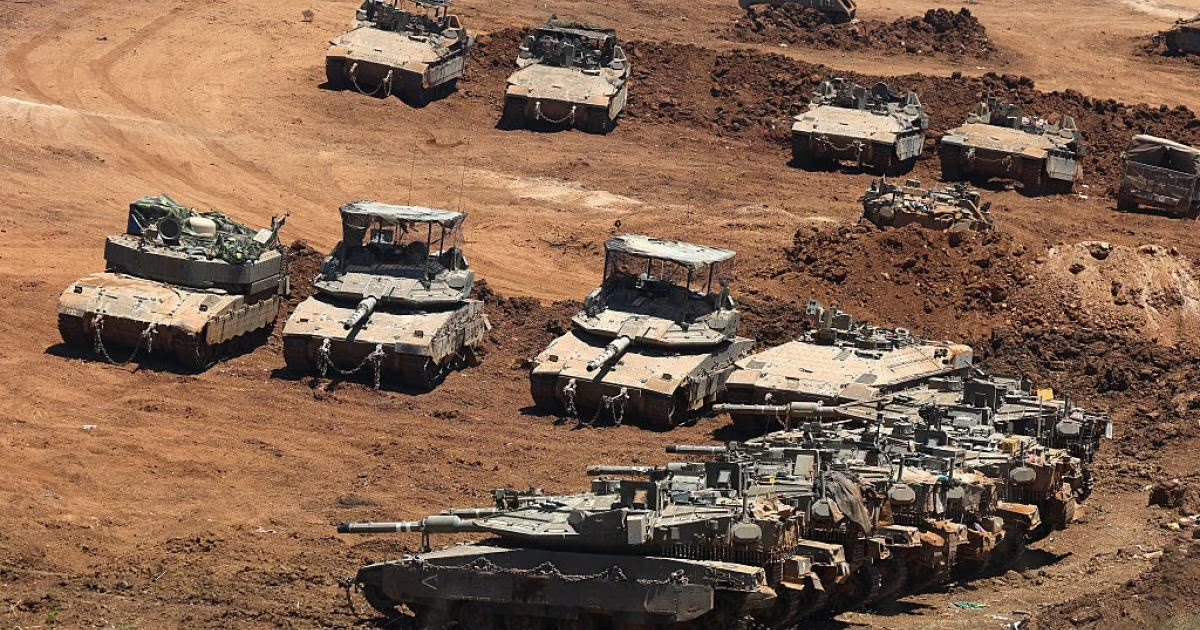
Sources reported that the current focus is on determining the zero hour for Lebanese military units to enter the first experimental areas included in the plan. Despite these arrangements, field reports indicate that Israeli forces still maintain their positions in their current locations, and no actual withdrawal movements have been observed so far.
Discussions led by the President of the Republic and the Commander of the Lebanese Army, in coordination with the US Central Command, include establishing precise mechanisms for the security transition process in the South. The first phase targets the Western Zawtar area and its surroundings, part of the Nabatieh district, which the occupation army is supposed to evacuate to come under the full supervision of the Lebanese state.
The security plan includes a commitment to remove all manifestations and military structures belonging to Hezbollah in those areas, to be done under the supervision of a third international party to ensure transparency and adherence to the agreement. The American side is currently working to finalize these executive mechanisms, which are considered a prerequisite for the start of Israeli military movements backward.
On the ground, the Lebanese front has recorded relative calm and a clear decline in the intensity of combat operations over the past three days, as air raids on towns outside the direct Israeli control zone have ceased. However, some localized explosions are still heard within what is known as the 'Yellow Line,' which are areas experiencing limited sweeping or booby-trapping operations.
This relative stability has positively impacted civilian movement, as life has gradually begun to return to a number of southern villages that their residents had abandoned due to shelling. This development has contributed to alleviating logistical pressures on local authorities, who had been suffering from a suffocating displacement crisis in the capital Beirut and its surroundings over the past weeks.
In a related context, data from the Central Operations Room at the Prime Minister's office revealed a sharp decrease in the number of residents in shelters in Beirut, where the number dropped from 51,000 displaced persons to only about 19,000. This coincided with a campaign to dismantle displaced persons' tents in the 'BIEL' area and transfer the remaining ones to equipped shelters, indicating the gradual recovery of the humanitarian scene.
The start of the Israeli withdrawal will be linked to the completion of the implementation mechanism for the security annex, which the American side is working on intensively.
شارك برأيك
Lebanon Awaits Implementation of Security Annex: Intense Contacts for Israeli Withdrawal from Nabatieh to Begin