






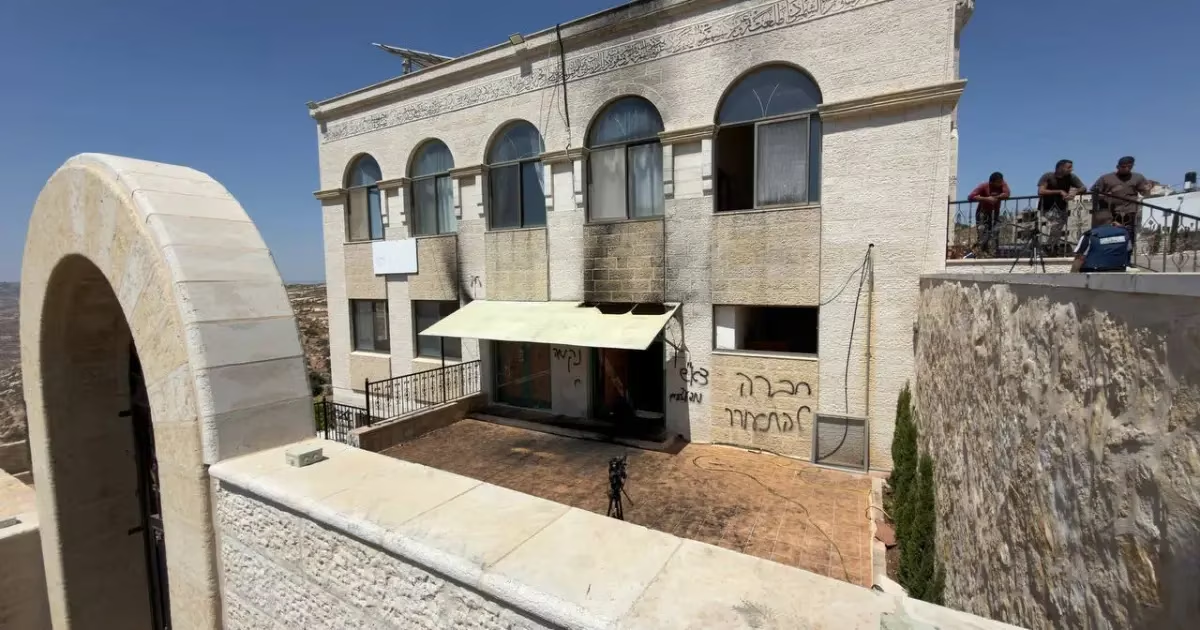
The villages of Ramallah governorate experienced a difficult night following a series of terrorist attacks carried out by groups of settlers, directly targeting places of worship and mosques. In the village of Jaljulia, residents woke up to the sound of a massive fire set by settlers in the Grand Mosque, which almost caused a humanitarian catastrophe were it not for the vigilance of the mosque's imam and his family who live on the ground floor.
Local sources reported that settlers threw about 15 burning tires inside the second floor of the mosque, which led to the complete destruction of the ablution area and the shattering of glass and walls due to the intense heat. The attackers left behind racist slogans calling for 'burning mosques' and inciting further violence against Palestinians and their properties in the West Bank.
The assault was not limited to Jaljulia but extended at the same time to include a mosque in the neighboring village of Mazari al-Nubani. Osama Asaad, head of the Jaljulia village council, confirmed that the swift intervention of the residents and the support of neighboring villages prevented the fire from spreading to the main prayer hall and other parts of the mosque, noting that the village is subjected to continuous harassment from surrounding settlement outposts.
In a related context, the Palestinian Ministry of Endowments and Religious Affairs revealed shocking statistics, documenting more than 50 attacks on mosques and religious shrines since the beginning of 2025. The ministry considered these attacks part of a systematic plan aimed at terrorizing Palestinian citizens and striking religious and national symbols in the region.
Recent days have witnessed a similar escalation in the villages east of Ramallah, where settlers attacked the mosque of Burqa village before the evening prayer with incendiary materials. Despite the presence of worshipers inside the mosque, the attackers did not hesitate to set fires, which led to the burning of a vehicle belonging to one of the worshipers and damage to parts of the first floor of the mosque before residents confronted them.
Reports indicate that the extremist group 'Hilltop Youth' is behind these organized operations, with its members moving in small groups to carry out swift attacks. Observers believe that these groups aim, through the policy of intimidation by burning, to push Palestinian residents to leave their lands and villages to facilitate settlement expansion.
For his part, Ahmed Al-Rifai, an official in the Ministry of Endowments, affirmed that the occupation army provides cover for these attacks by being lenient with settlers and not prosecuting them. Al-Rifai pointed to the existence of declared official financial support for some of these extremist groups, which enhances their ability to carry out daily attacks affecting people, stones, and holy sites.
In occupied Jerusalem, Al-Aqsa Mosque continues to be subjected to intensive daily incursions, with more than 100 settlers storming its courtyards on Wednesday under heavy police protection. These incursions coincide with strict measures preventing Palestinian worshipers from accessing the mosque, in an attempt to impose a new reality in the place.
Researchers in Israeli affairs link the field attacks by settlers to the official policies adopted by the current Israeli government. Statements issued by extremist ministers regarding preventing the call to prayer or restricting freedom of worship give settlers the green light to carry out their attacks on the ground without fear of accountability.
The villages of the West Bank suffer from a suffocating siege imposed by military checkpoints, which hinders the access of civil defense teams in emergencies such as mosque fires. This complex security environment gives settlers a greater opportunity to move freely and carry out their attacks in areas legally classified under the control of the Palestinian Authority.
Sources reported that settlers are now using more dangerous methods, such as using highly flammable materials and tires covered with gasoline to ensure the greatest possible destruction. These tactics show a clear desire to inflict heavy human and material losses on unarmed Palestinian civilians.
Targeting mosques carries religious dimensions aimed at transforming the political conflict into a comprehensive religious confrontation, according to specialists. Settlers understand the symbolic and spiritual value of mosques to Palestinians and use their burning as a means to break the morale of the steadfast residents in their lands.
Despite these repeated attacks, the residents of Ramallah and Nablus villages show great attachment to their holy sites, with damaged mosques being quickly restored through self-efforts. Residents affirm that these attacks will only increase their determination to stay and protect their places of worship from plans of Judaization and forced displacement.
In conclusion, Palestinian and international demands for the necessity of providing international protection for the Palestinian people and their holy sites remain in the absence of any legal deterrent for settlers. The scene in the West Bank remains open to further escalation as long as the policy of impunity and official support for extremist settlement groups continues.
I woke up to the sounds of nearby explosions, and were it not for God's care, I would now be a burned corpse, along with my wife and young daughter.
شارك برأيك
The Night of Burning Mosques.. Escalation of Settler Terrorism in the West Bank and Targeting of Places of Worship