






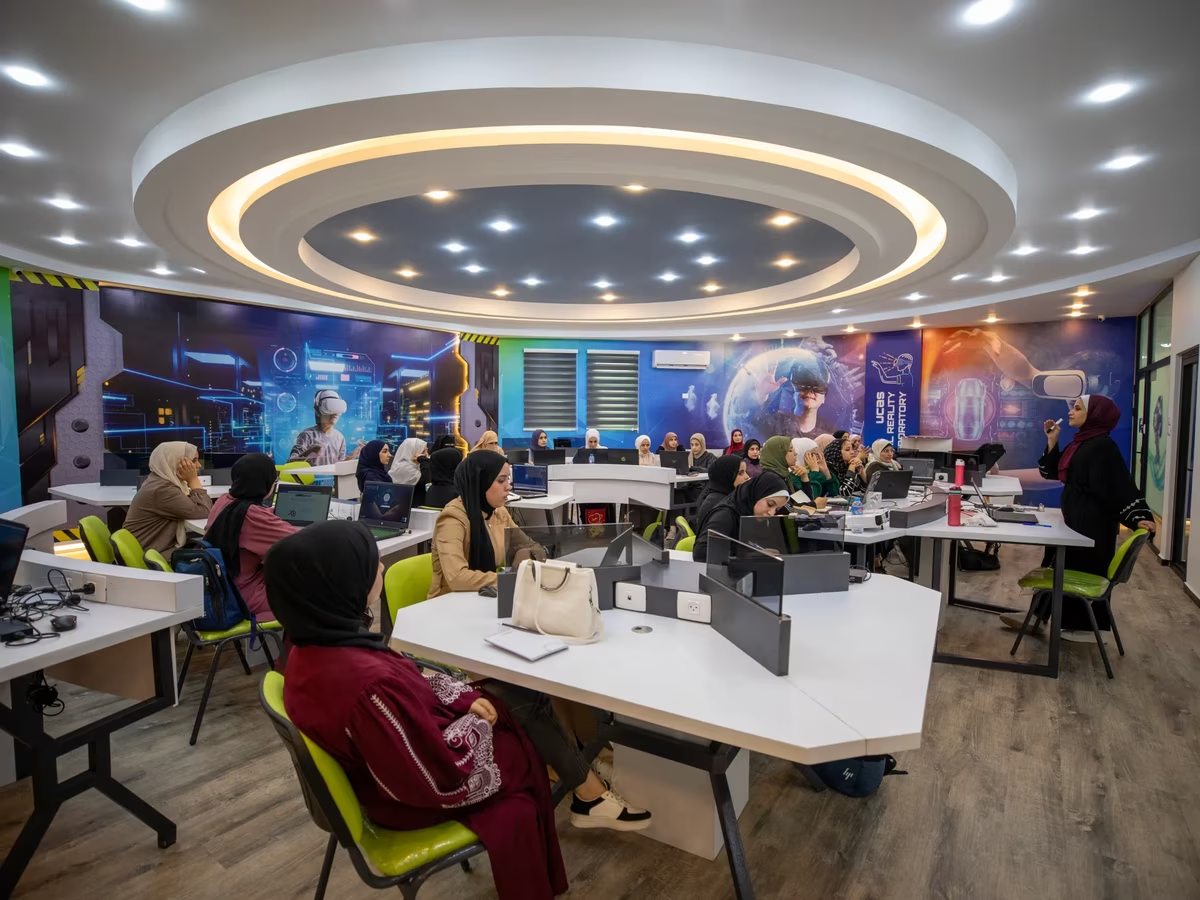
The ongoing war of extermination in the Gaza Strip was not merely targeting residential buildings; it extended to the vital nerve center of the Palestinian youth's future, represented by the technology and entrepreneurship sector. The UCAS Technology Incubator, affiliated with the University College of Applied Sciences, stands out as one of the most prominent examples of this systematic targeting after its headquarters in the Tal al-Hawa neighborhood was reduced to rubble.
The incubator, which for thirteen years represented a window of hope for thousands of graduates, saw its facilities and training system suffer comprehensive destruction, including specialized laboratories and halls. This destruction disrupted the path of hundreds of young people who were preparing to integrate into the global digital labor market, escaping the reality of unemployment and siege.
Speaking about the current situation, Abdullah Al-Tahrawi, the incubator's director, affirmed that the institution was established with the aim of investing in Palestinian minds and fostering a culture of innovation. He explained that the incubator has historically succeeded in supporting more than 500 young men and women, and embracing qualitative projects in the fields of technology, commerce, and creative industries.
Before the war, the incubator included 13 advanced facilities, including media production studios and co-working spaces that provided a fertile environment for creativity. It also offered strategic programs that supported startups with financial grants ranging from 5,000 to 10,000 dollars, which helped transform ambitious ideas into productive projects on the ground.
The human and material losses were devastating, as the incubator lost a number of its creative staff, some martyred and others imprisoned during the aggression. According to field assessments covering 100 startups, it was found that more than 95% of these companies' operational environments became unusable due to total or partial destruction.
Statistical data issued by the incubator indicate that about 23% of the competencies working in these projects were forced to leave the Gaza Strip in search of safety and job opportunities abroad. This bleeding of human capital represents the biggest challenge to restoring the entrepreneurial momentum that was growing at a rapid pace before the war.
Despite this bleak picture, the incubator's management announced the launch of an urgent recovery plan aimed at restoring basic programs and providing alternative workspaces. The first phase of this plan targets more than 100 beneficiaries, in an attempt to bring life back to the innovation system destroyed by the occupation.
Before the war, the digital economy represented one of the most promising sectors in Gaza, where young people were able to overcome the siege through freelancing and software development. Many Gazan startups reached Arab and international markets, providing stable sources of income for hundreds of families amid difficult economic conditions.
For his part, Engineer Mohammed Al-Safadi, supervisor of the "E-Lancer" project, pointed out that the war disrupted the professional path of hundreds of trainees in programming and web development. He stressed that the destruction of technical laboratories and computers will not deter those in charge of the project from continuing to train digital competencies as a primary path to recovery.
The "E-Lancer" project, funded by the incubator, aims to empower graduates with digital system design skills and mechanisms for working through global platforms. Student Tharaa Al-Sharif, one of the beneficiaries, believes that the project provides her with the practical experience necessary to compete in the digital market despite the exceptional circumstances the sector is experiencing.
The incubator did not stop at the technical aspect; its efforts extended to include economic empowerment for the most affected groups, such as the "Jawari Al-Rasool" project dedicated to orphans. This project, in partnership with the Al-Amal Institute for Orphans, aims to train girls who have lost their breadwinners in the arts of fashion and professional sewing.
Amina Hamou, design specialization coordinator, explains that the training is conducted according to modern professional standards, with all necessary equipment and materials for production provided free of charge. The program seeks to transform participants from aid recipients into productive individuals capable of supporting their families with dignity and professional competence.
Student Bayan Al-Sharfa, one of the participants in the design program, confirms that the project gave her the confidence to transform her ideas into marketable products in the local market. Bayan believes that acquiring a real professional skill represents a lifeline for her and her family in the face of the repercussions of war and increasing poverty.
Ultimately, the UCAS incubator's attempts to rise from the rubble remain a message of steadfastness reflecting the Palestinian people's will to build and give. For this institution, reconstruction does not begin with stones, but with empowering people and equipping them with the tools of the future, no matter how severe the current challenges.
We did not only lose infrastructure; we lost part of the human capital that formed the core of our work, yet we have begun a plan for recovery and rebuilding the innovation system.




شارك برأيك
UCAS Technology Incubator in Gaza: The Will to Survive Rises from the Rubble of Destruction