







Israeli Prime Minister Benjamin Netanyahu revealed his government's intentions to expand the military occupation within the Gaza Strip, confirming that the army currently controls about 60% of the total area of the Strip. Netanyahu clarified during a conference held in a settlement in the Jordan Valley that instructions were issued to the forces to work on raising this percentage to 70% in the next phase.
These statements come at a sensitive time witnessing repeated breaches of the ongoing ceasefire agreement, as Hebrew media broadcast video clips of Netanyahu confirming the tightening of the siege on Hamas from all sides. The Israeli Prime Minister did not provide specific details about the new geographical areas the army intends to seize or the mechanism by which this field expansion will be implemented.
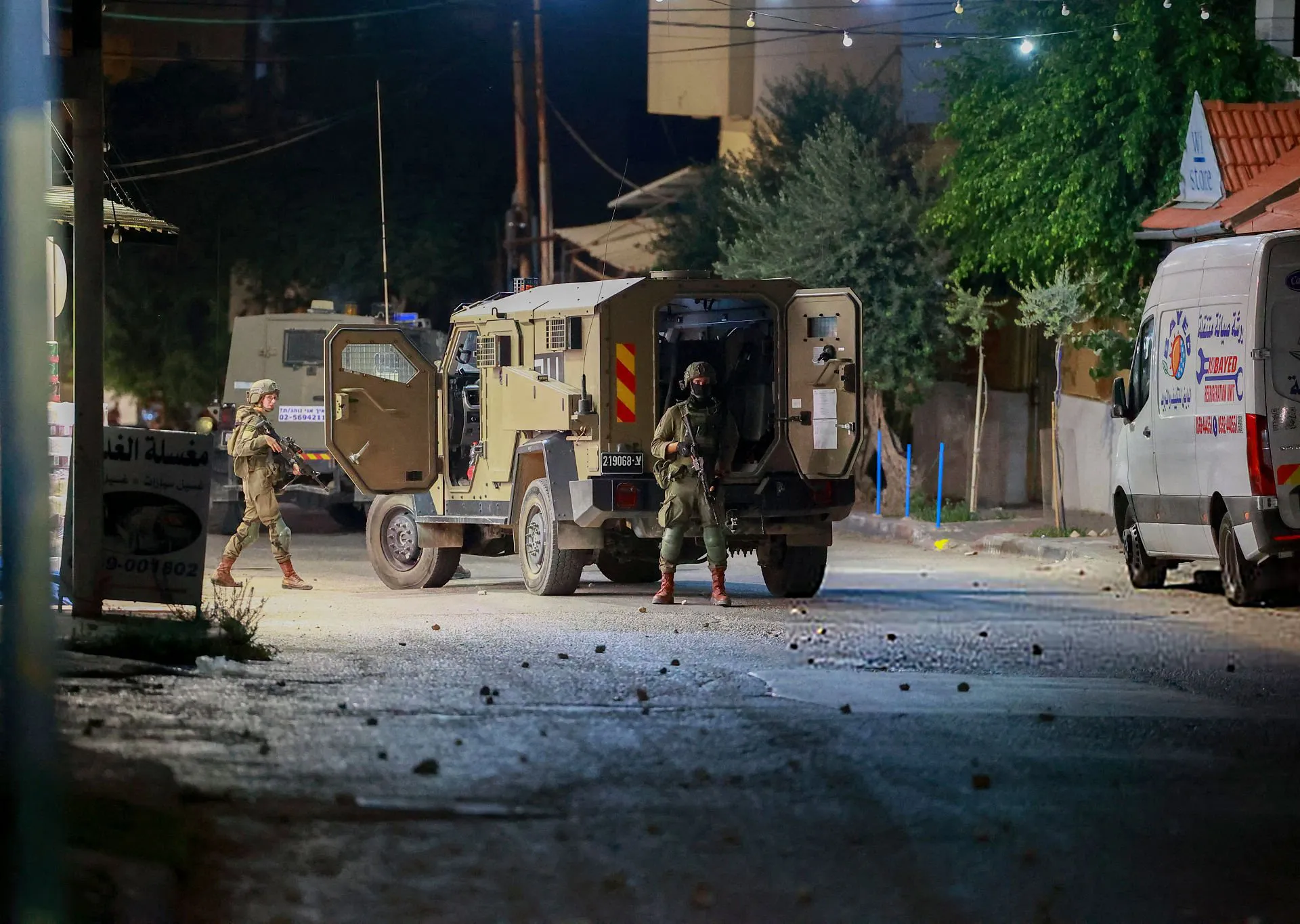
On the ground, local sources reported that the occupation forces issued new forced evacuation warnings targeting a residential block in the Al-Shati camp west of Gaza City, raising fears of a new wave of displacement. These threats coincide with the continuation of limited military operations that result in casualties among civilians attempting to return to their areas or remain in shelters.
In the context of the field escalation, a Palestinian citizen was martyred and several others were injured to varying degrees as a result of Israeli shelling that targeted a gathering of civilians in the Al-Zaytoun neighborhood southeast of Gaza City. These attacks reflect the fragility of the security situation amid the Israeli leadership's insistence on continuing military pressure despite existing international understandings to end the war.
The Israeli army had announced earlier in October last year its retreat to what is known as the 'Yellow Line', then controlling 53% of the Strip's area. This move came as part of the first phase of the peace plan proposed by US President Donald Trump, which assumed additional gradual withdrawals in subsequent phases.
The 'Yellow Line' is considered a temporary virtual border separating areas of Israeli military presence and areas where Palestinians are allowed to move under the truce agreement. However, recent statements by Security Minister Yisrael Katz confirmed Israel's refusal to budge from this line 'by a millimeter' before achieving the condition of complete disarmament of Palestinian factions.
On the international political front, the White House announced last January the adoption of administrative structures for the transitional phase in Gaza, including the formation of a peace council and a national committee for administration. These plans include the deployment of an international stabilization force to undertake security tasks and secure humanitarian aid, which seems to contradict Netanyahu's current directions to expand the occupation.
These complex arrangements fall within a comprehensive 20-point vision for ending the conflict, a vision that was supported by UN Security Council Resolution 2803 issued in November 2025. However, recent Israeli actions on the ground put these international agreements at stake and threaten the collapse of the fragile de-escalation path that began months ago.
It is worth noting that the ceasefire agreement came into effect in October 2025, putting an end to a two-year continuous genocide war. That war left an unprecedented humanitarian catastrophe, with more than 72,000 martyrs and over 172,000 Palestinians injured, the heaviest toll in the history of the modern conflict.
In addition to human losses, the war caused the destruction of about 90% of the infrastructure and civilian facilities in the Gaza Strip, making most areas uninhabitable. UN reports estimate that the cost of rebuilding what was destroyed by the Israeli military machine exceeds $70 billion, a huge challenge facing the international community amid continued threats of expanding the occupation.
My directives are to move from controlling 60% of the Strip's territory to 70%. We are besieging them from all sides and we will take care of the rest.

شارك برأيك
Netanyahu announces plan to expand occupation in Gaza to 70% amid new raids and evacuation warnings