







The Israeli army announced the establishment of what is known as 'The Yellow Line' as a dividing line in South Lebanon, a step that reflects a trend towards solidifying a permanent field reality similar to the model applied in the Gaza Strip. This strategy is based on the pretext of 'land grabbing for security reasons,' where the occupation began targeting anyone approaching this line under the guise of preventing direct threats to its forces.
This field move comes within a broader security vision revealed by Israeli Prime Minister Benjamin Netanyahu, aiming to establish a security zone extending from South Lebanon to the Yarmouk Basin in Syria. Through this buffer zone, the occupation seeks to connect the border areas into a continuous front completely under its military and fire control.
'The Yellow Line' in Israeli military doctrine is known as a tool to temporarily redefine borders and link them to complex political and military conditions. In the Gaza Strip, the continuation of this line was linked to the condition of disarming the resistance, while in Lebanon, it is used as a pressure tool to link withdrawal to the issue of Hezbollah's weapons and to empty the area of its inhabitants.
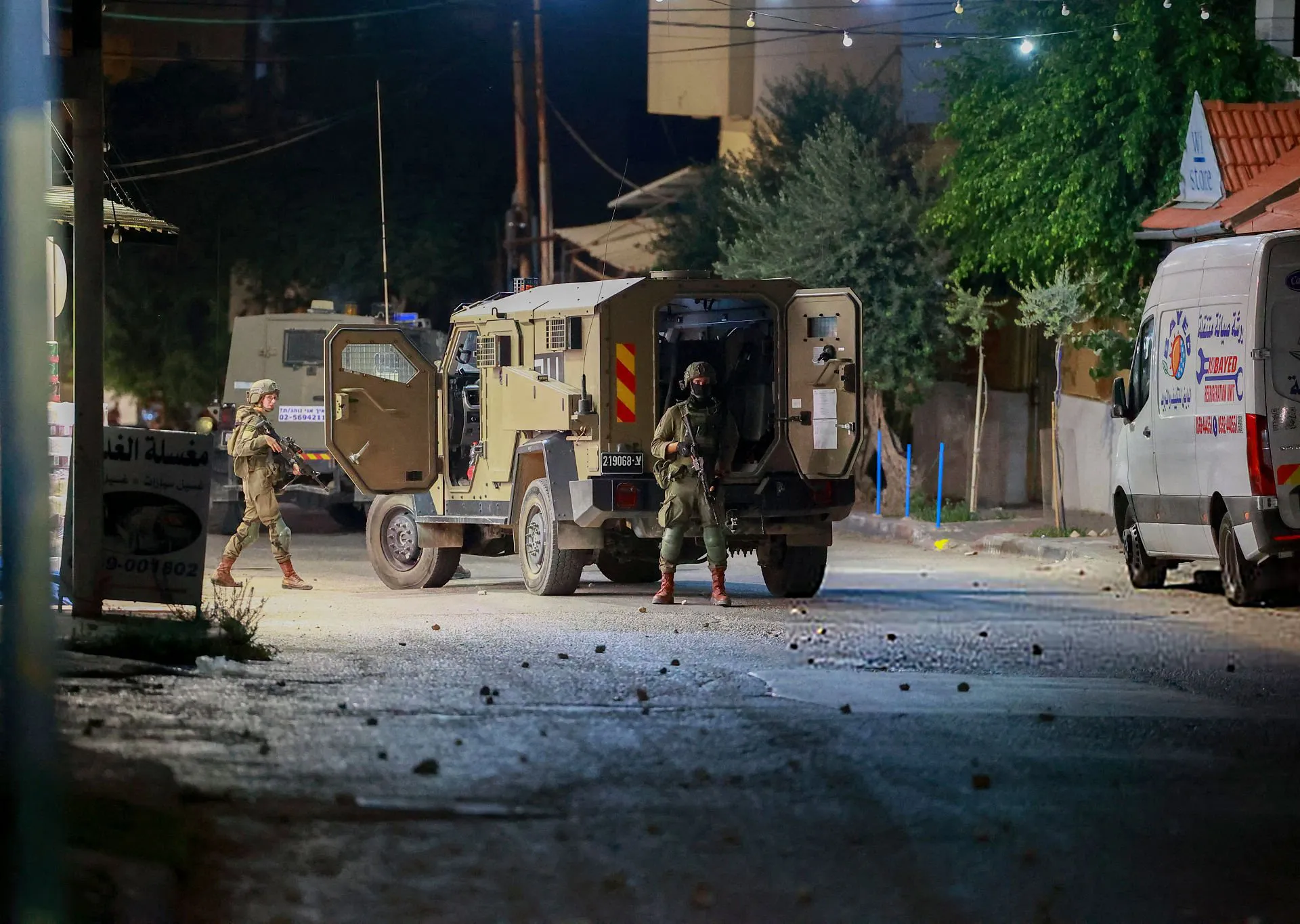
On the ground, this line is demarcated by placing large concrete blocks painted yellow, a color that universally symbolizes warning and danger. This measure turns the areas behind the line into 'free-fire zones,' where civilians are prohibited from crossing, thus establishing a new demographic reality based on forced displacement.
'The Yellow Line' joins a series of historical lines drawn by Israel, such as the Green Line of 1949, the Blue Line that defined the 2000 withdrawal from Lebanon, and the Purple Line in the Golan. However, the new line is characterized by being an expansionist tool aimed at grabbing land under the guise of 'self-defense' and temporary security necessities.
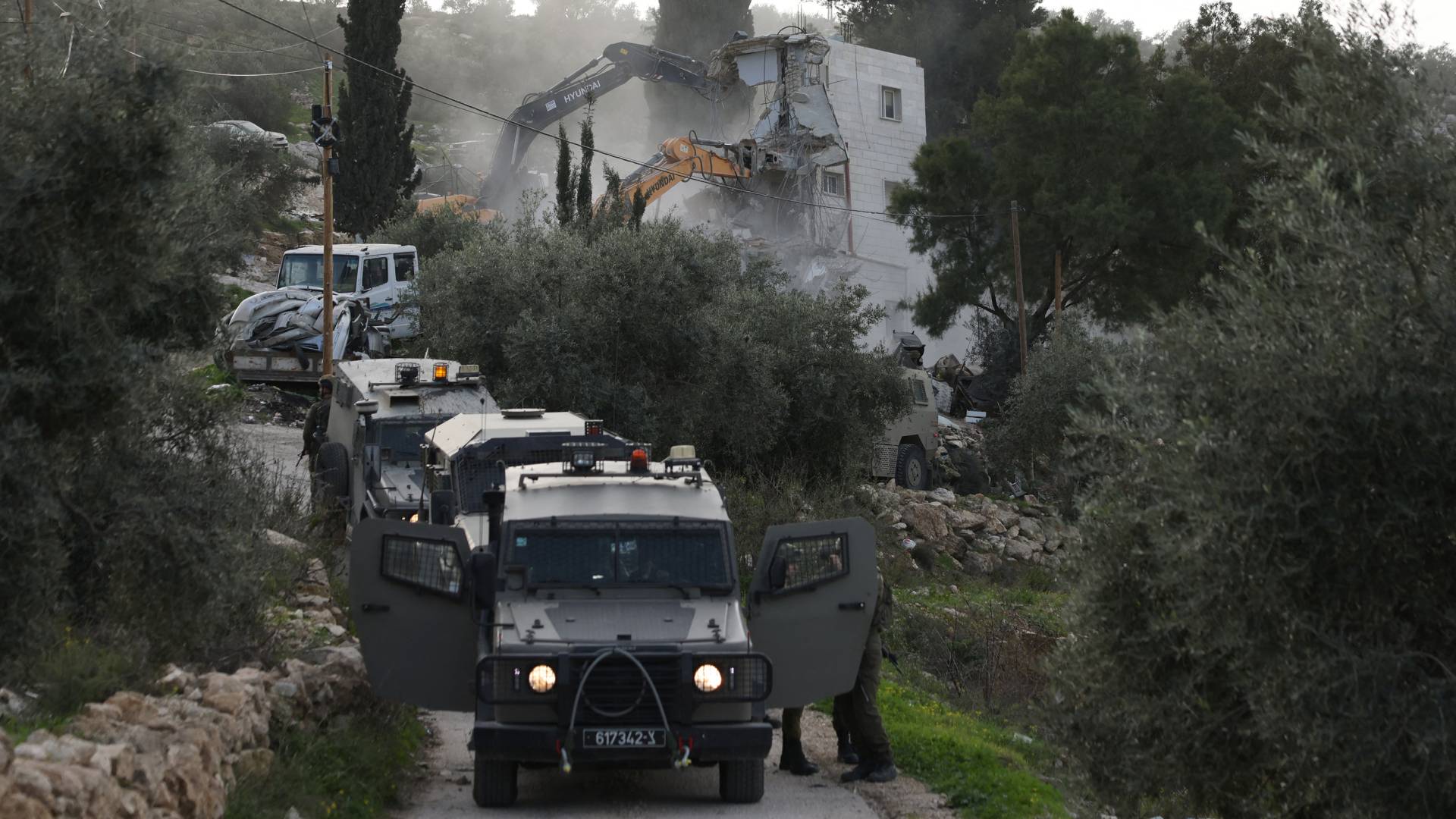
In Lebanon, the Israeli project targets about 55 towns and villages located within a strip ranging from 4 to 10 kilometers deep along the border. Sources reported that nearly 20 of these villages were completely or partially destroyed, especially those on the contact line, with the aim of preventing residents from returning to them in the future.
As for the Gaza Strip, this line has enabled the occupation army to control an area ranging between 52% and 60% of the total area of the Strip. The line extends to a depth of up to 7 kilometers in some areas, turning vast areas into a security belt that prevents Palestinians from accessing their agricultural lands and homes.
The fundamental difference between the two cases is that the Yellow Line in Gaza was included in interim ceasefire agreements, while in Lebanon, it is imposed as a unilateral decision. This approach puts the Lebanese state before a sovereignty challenge, especially with the occupation's insistence on the right to 'free movement' to confront what it describes as threats.
Press reports indicate that the Israeli army has already begun building infrastructure and permanent military sites within the Yellow Line in Gaza. These moves reinforce the hypothesis that the occupation plans for a long-term military presence, and not just temporary security measures as promoted in international forums.
Observers link these lines to the vision of 'Greater Israel' adopted by far-right currents in the current government. Military leaders, including Eyal Zamir, have stated that the Yellow Line represents 'the new borders,' confirming that the goals go beyond security to geographical expansion.
Tel Aviv exploited the international community's preoccupation with regional issues to accelerate the pace of settlement and establish buffer zones in the West Bank and Gaza Strip. Netanyahu's presentation of an Israeli map that includes Palestinian territories at the United Nations is a clear indication of the hidden intentions to abolish the 1967 borders.
Lebanese authorities consider the continued Israeli presence behind the Yellow Line a violation of national sovereignty and armistice agreements. In contrast, resistance forces affirm that this presence gives them the legitimate right to continue military operations until full withdrawal beyond internationally recognized borders.
'The Anti-Tank Missile Line' represents the operational concept that Israel seeks to establish in Lebanon at a depth of 10 kilometers. This range aims to protect northern settlements from direct targeting, but it practically leads to turning Lebanese border villages into deserted and destroyed areas.
In conclusion, 'The Yellow Line' appears as a technical link that gives the settlement ideology a military and legal cover before Israeli public opinion. Thus, the borders described as temporary become a fundamental building block in the project of land grabbing that begins with the pretext of security and ends with the imposition of de facto sovereignty.
The Yellow Line represents the new border between Israel and the Gaza Strip.
شارك برأيك
'The Yellow Line' Strategy: How Israel is Redrawing its Borders in Gaza and Lebanon?