






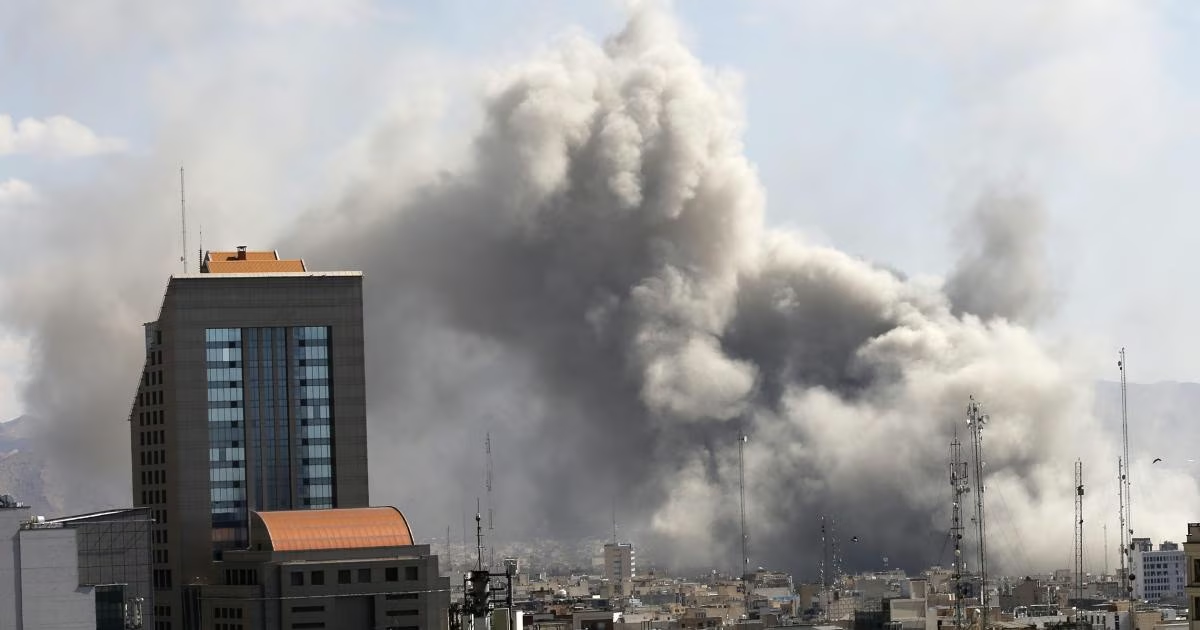
Media sources reported a clear divergence in viewpoints between the Israeli government and the American administration, following a 15-point proposal submitted by Washington aimed at ending the ongoing military operations against Iran. These developments come at a sensitive time in the regional confrontation, as the United States seeks to impose a de-escalation that opens the door to a long-term diplomatic path.
Reports indicated that the American proposal was conveyed to the Iranian capital, Tehran, through Pakistani diplomatic channels, as part of international efforts to contain the escalation. The American plan includes a vision for declaring a temporary ceasefire lasting a full month, to serve as a confidence-building period before engaging in direct negotiations between the parties involved in the crisis.
For its part, official Iranian sources confirmed that Tehran had submitted its final response to the American proposal through intermediaries, emphasizing the necessity of meeting a set of sovereign conditions. The Iranian response included explicit demands for an end to all forms of attacks and assassinations on various fronts, in addition to obtaining international guarantees against the recurrence of military aggression in the future.
Tehran also insisted in its response on the necessity of obtaining financial and legal compensation for the damages it incurred as a result of recent military operations. Iranian officials affirmed the condition of full recognition of their country's sovereignty over the Strait of Hormuz, considering it a red line that cannot be compromised in any future political settlement with the international community.
Within Israel, political sources revealed that objections are primarily focused on three strategic issues that Tel Aviv considers vital to its national security. These issues relate to the future formulation of Iran's ballistic missile program, the mechanism for transferring enriched uranium to the custody of the International Atomic Energy Agency, as well as the pace of economic sanctions relief.
Data indicates that discussions between the Israeli and American sides are still ongoing and intensive, as Tel Aviv attempts to introduce fundamental amendments to the proposed American formula. There is concern in Israeli circles that American flexibility could strengthen Tehran's regional standing without obtaining sufficient concessions on the nuclear and military files.
Sources quoted Israeli officials as saying that Iran has already begun to use language suggesting the imminent end of the war, but at the same time, it is raising its demands to an unprecedented level. These officials believe that Tehran is trying to exploit the American desire for de-escalation to achieve political and economic gains that exceed the current reality on the ground.
There are growing Israeli fears regarding the intentions of US President Donald Trump, who may seek to impose a temporary ceasefire as a fait accompli to advance negotiations with Tehran. Israel fears that this approach could restrict its freedom of military action against Iranian targets before achieving the strategic objectives for which the war began.
On the diplomatic front, no official date has yet been set for a direct meeting between the American and Iranian delegations, despite the noticeable activity of Pakistani mediation. Meanwhile, intelligence assessments suggested that Iran might resort to carrying out large-scale missile attacks as 'final strikes' to strengthen its negotiating position before signing any agreement.
It is worth noting that this direct military confrontation erupted on February 28th, and witnessed an intensive exchange of missile shelling and drone attacks. While international efforts for de-escalation continue, tension remains dominant due to mutual distrust, especially with Tehran's indication of being deceived in previous negotiation experiences.
Iran is indeed speaking the language of the final phase of the war, but it is still putting forward significant demands during ongoing communications.
شارك برأيك
Divergence in Positions Between Tel Aviv and Washington on a Proposal to End the War with Iran