






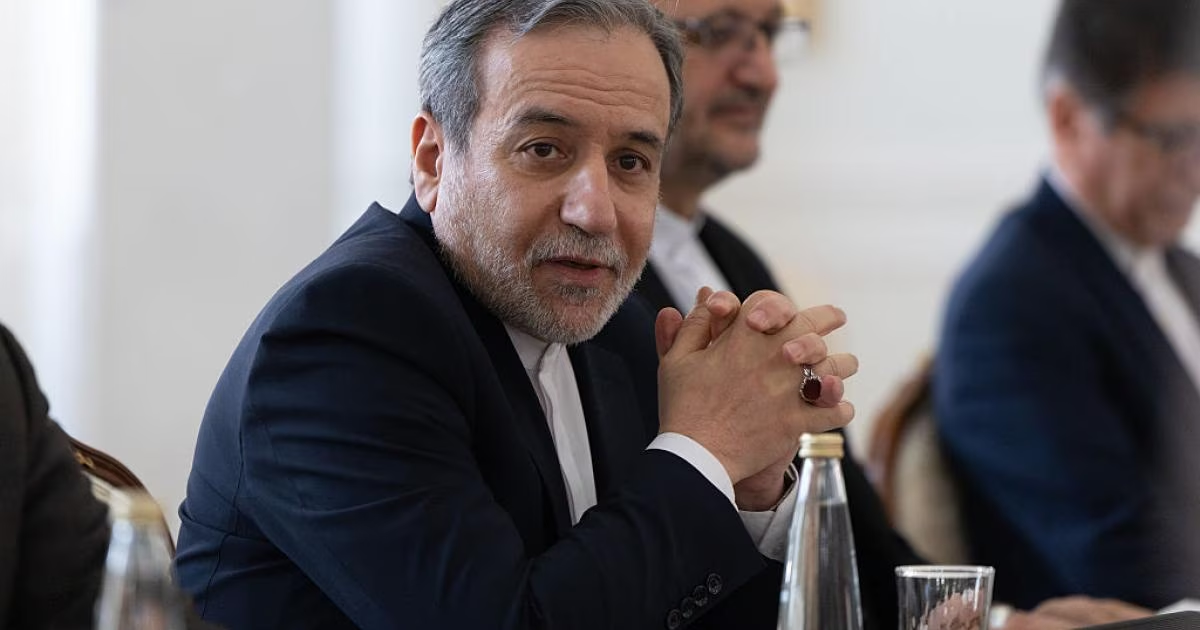
Iranian Foreign Minister Abbas Araghchi, in official statements, denied the existence of any open negotiation channels with the United States at present. Araghchi considered American claims about ongoing negotiations to be merely an attempt to cover up their failure to impose unconditional surrender on Tehran.
The Iranian minister clarified that his country's supreme leadership is currently reviewing a set of proposals received through international mediators, but he stressed that there is no intention to hold direct meetings. He indicated that Washington continues to send messages through multiple parties in an attempt to break the current stalemate.
Araghchi affirmed that any future solution must be based on a permanent and comprehensive end to the war, with Iran receiving fair compensation for the damages and destruction it has suffered. He added that his country does not seek military escalation but insists on ending the conflict with real guarantees that preserve its rights.
In a message addressed to surrounding capitals, the Iranian Foreign Minister called on neighboring countries to distance themselves from American policies in the region. He believed that the United States has completely failed to achieve its strategic goals, whether through a swift military victory or attempts at regime change.
Meanwhile, international media sources, quoting a senior Iranian official, revealed that Pakistan has indeed delivered an American proposal to Tehran aimed at ending the conflict. The sources explained that discussions are still ongoing regarding the venue for any potential talks, given Iran's undecided final position.
Reports indicate that Turkey is playing a pivotal role in mediation and in searching for diplomatic ways to end the ongoing war. Currently, both Ankara and Islamabad are emerging as potential venues to host any rounds of negotiations that might begin if the parties agree on the initial conditions.
In contrast, the White House escalated its hostile rhetoric towards Tehran, stating that President Donald Trump is prepared to take harsher military action. The US administration affirmed that the armed forces are capable of delivering strikes more powerful than anything seen before if Iran refuses to acknowledge the reality on the ground.
Washington claimed that it has already succeeded in curbing Iran's nuclear capabilities and preventing it from threatening American interests in the region. Vice President J.D. Vance participated in a series of intensive security meetings to discuss available options for dealing with the Iranian file in the coming phase.
The White House warned the Iranian leadership against making 'miscalculations,' emphasizing that President Trump will not hesitate to make decisive decisions. The administration clarified that Iran's rejection of the reality of defeat will necessarily lead to punitive and military measures more severe than ever before.
For her part, White House spokeswoman Karoline Leavitt stated that reports of a 15-point American plan contain 'elements of truth.' She indicated that these points include specific demands that Tehran must implement to ensure a cessation of military operations and the restoration of stability.
Regarding international navigation, Leavitt affirmed that Washington has not set a specific timetable for resuming the movement of oil tankers in the Strait of Hormuz. She concluded by saying that President Trump's threats are very serious, and he is ready to 'open the gates of hell' if Iran continues its current approach.
President Trump does not threaten idly, and he is ready to open the gates of hell, and Iran should not miscalculate again.
شارك برأيك
Araghchi denies negotiating with Washington, White House threatens 'gates of hell'