






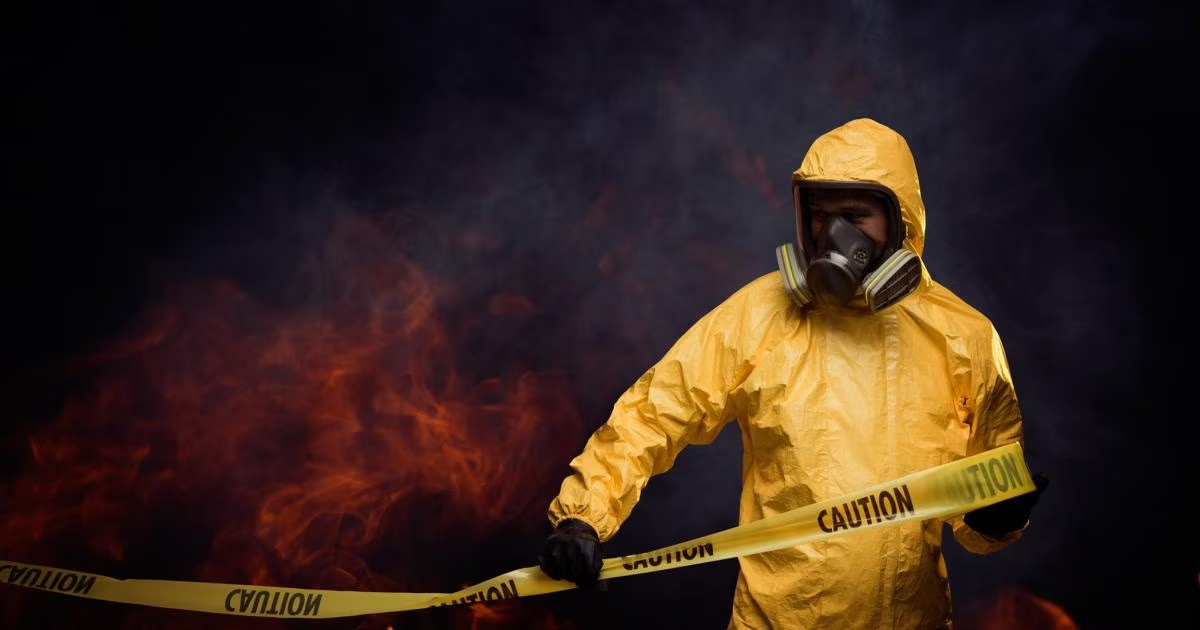
International warnings are escalating about the danger of sliding into a nuclear confrontation, as concerns are no longer limited to the immediate destruction caused by explosions, but extend to the sustained repercussions that could end human civilization. A recent report indicates that scientists are anxiously monitoring a series of environmental and health disasters that will begin immediately after the first fireballs subside.
The Bulletin of the Atomic Scientists, the organization responsible for the 'Doomsday Clock,' warned that the world is at its closest point to total annihilation in history. Studies confirm that any nuclear conflict, no matter how limited, will tear apart the Earth's ecological fabric, making survival an almost impossible challenge for those who survive the initial strike.
Among the most prominent anticipated health risks is the complete collapse of the medical system, where hospitals will cease to function and sources of clean water will completely disappear. This situation will turn affected cities into hotbeds for deadly epidemics, especially with the spread of corpses that will become breeding grounds for microbes and germs in the absence of health control.
Experts anticipate a widespread outbreak of diseases such as salmonella, typhoid, and malaria, in addition to dengue fever and hepatitis. This crisis will be exacerbated by the proliferation of radiation-resistant insects, which will transmit infections from decomposing corpses to humans who survived the initial explosions around the world.
On the environmental front, the threat of a deadly 'ultraviolet spring' emerges, resulting from the destruction of the ozone layer that protects the Earth. A full-scale nuclear war is capable of destroying about 70% of this layer, while limited confrontations could cause a loss of 40%, allowing harmful rays to reach the Earth's surface directly.
This increase in ultraviolet radiation levels will lead to a massive surge in skin cancer rates and eye damage in humans and animals. Agricultural crops will also be directly affected, leading to the collapse of ecosystems that depend on a delicate balance of temperatures and solar radiation.
The phenomenon of 'black rain' is one of the most terrifying scenes in post-explosion scenarios, a contaminated mixture of ash and deadly radioactive materials. This rain falls from the sky, covering vast areas, causing immediate radiation burns and permanent contamination of soil, groundwater, and surface water sources.
The impact of nuclear fallout extends hundreds of kilometers away from the explosion's epicenter, meaning that areas not directly targeted will not be safe from danger. Radioactive materials will travel through the wind to settle in the food chain, making food and water a deadly weapon against those who consume it.
The major catastrophe, however, is the 'nuclear winter' and the global famine that will follow the massive fires in cities and industrial areas. The thick smoke rising will block sunlight for long periods, leading to a sharp and sudden drop in global temperatures and a complete failure of agricultural seasons.
Scientific estimates indicate that this severe food shortage could lead to the deaths of up to 5 billion people from starvation worldwide. The suffering will not be limited to warring nations but will encompass all continents due to the cessation of international trade and the collapse of global food supply chains.
Even shelters, which many believe offer safety, may turn into deadly traps amidst the firestorms resulting from the explosions. These storms raise temperatures to unprecedented levels and consume the oxygen in the surrounding atmosphere, which could lead to suffocation inside fortified shelters.
The failure of medical and electrical equipment due to electromagnetic pulses will make it impossible to provide care for the wounded and those suffering from acute radiation syndrome. Millions will suffer excruciating pain without painkillers or sterile surgical instruments, amidst a complete power outage and communication breakdown.
These scenarios confirm that nuclear war is not merely a transient military event, but an act of collective suicide for the human race and total destruction of planet Earth. The interconnected series of disasters begins with fire and pressure, continues through radiation and disease, and ends with a civilizational and environmental collapse from which recovery is impossible.
In conclusion, these stark scientific warnings serve as an alarm bell for international leaders about the danger of military escalation in the nuclear age. Maintaining peace is not just a political option, but an imperative necessity to ensure the continuation of life on this planet and to spare humanity a dark future with no winners.
The real danger does not end when the fireballs subside; it begins with a series of disasters that will change the face of life for decades.
شارك برأيك
Doomsday Scenarios: What Awaits Humanity the Day After Nuclear War?