






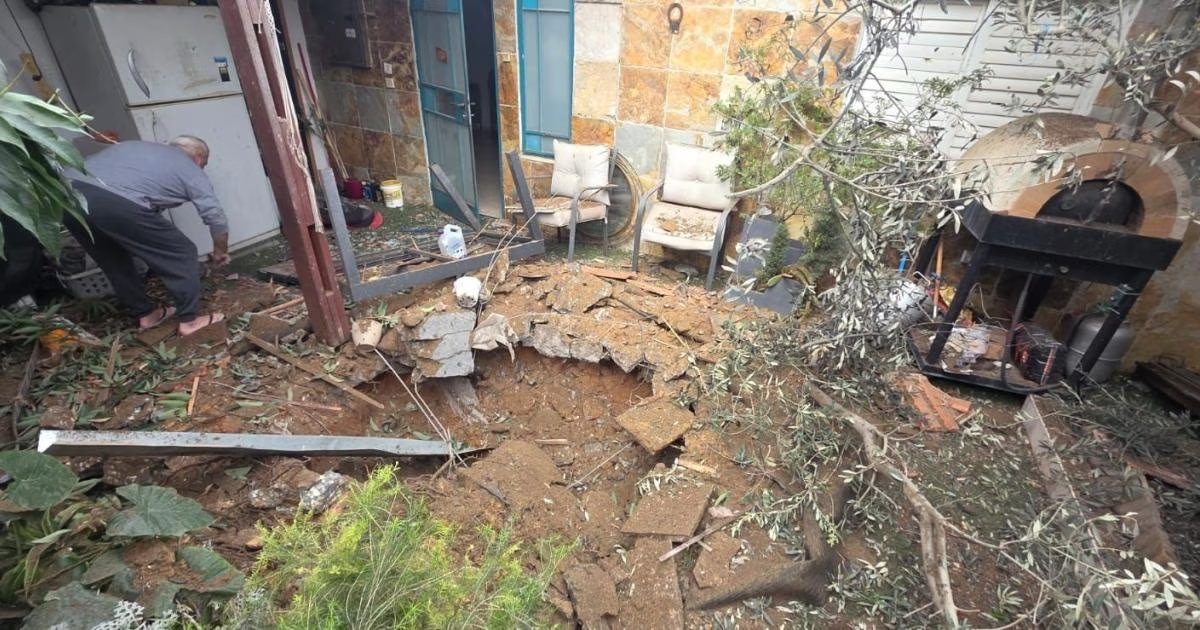
Media sources reported severe material damage to buildings and properties in the Rishon LeZion area of Tel Aviv, following the impact of a cluster missile launched as part of intensive Iranian offensive waves. Field documentation showed columns of smoke rising from the targeted sites, while Israeli police confirmed dealing with shrapnel and missiles that fell in various areas in the center of the country.
In a rapidly escalating field development, sirens blared in the city of Dimona and the Negev and Dead Sea regions, following the detection of new missile barrages launched from Iranian territory. These attacks come within the framework of what Iranian television announced as the execution of the seventieth wave of 'True Promise 4' operation, which targets vital sites deep within Israel.
Field data indicates that Iranian targeting has notably focused on strategic facilities, with three aircraft at 'David Ben Gurion' Airport recently revealed to have been damaged by cluster warhead shrapnel. The Israeli army imposes strict military censorship on the nature of the damaged sites, attempting to downplay the extent of strategic losses incurred by its airbases.
In the city of Haifa, reports revealed severe financial losses estimated at approximately two million dollars due to the targeting of oil refineries and the port over the past two days. The missile strikes caused widespread fires and destroyed parts of the port's infrastructure, reflecting the accuracy of the hits despite Israeli media attempts to obscure the extent of the damage.
Eastern suburbs of Tel Aviv, specifically in 'Kiryat Ono' and 'Elad,' witnessed the fall of cluster warheads that directly damaged buildings and vehicles and left a deep crater in a main road. Sources also observed a missile passing over the skies of occupied Jerusalem heading towards eastern Tel Aviv, which activated alarms in wide areas that had not seen similar escalation for some time.
Israeli security officials warned of the danger of Iran's attrition strategy against the home front, emphasizing that repeated attacks aim to destabilize the psychological stability of settlers. The 'Yedioth Ahronoth' newspaper reported fears of a state of 'apathy' that might affect the Israeli public due to the prolonged missile barrages, which could lead them to ignore shelter instructions.
Sirens were activated more than 40 times over the past forty-eight hours, covering areas from north to south. These attacks were distributed between missile barrages launched from southern Lebanon and others directly from Iran, with military sources recording the launch of approximately 20 heavy Iranian missile salvos during this short period.
In the context of the military response, the Israeli army announced that it carried out airstrikes targeting sites in the Iranian capital, Tehran, describing them as qualitative military targets. Concurrently, warplanes launched intense raids on the southern suburb of Beirut, hitting residential areas after immediate evacuation orders were issued to residents in those neighborhoods.
A state of anticipation prevails in the Upper and Western Galilee regions, where sirens continue to blare in anticipation of drone infiltration or the fall of missile shells from the northern front. Israeli medical sources have not reported any human casualties so far, noting that most of the recorded damages are material damages to infrastructure and private property.
Observers believe that the intensification of targeting of Dimona carries extremely dangerous political and military messages, given the high sensitivity this area represents in Israeli security doctrine. The repeated alarms there indicate Iranian insistence on penetrating air defense systems in the most fortified areas, which puts Israeli defensive technology to a difficult test.
The Israeli leadership faces increasing internal pressure to ensure the security of the home front amid the exhaustion suffered by settlers due to prolonged stays in shelters. The Israeli Home Front Command continuously calls for strict adherence to instructions, warning that any complacency could lead to significant human casualties given the use of cluster missiles.
In conclusion, scenes from Tel Aviv and Haifa show that the direct confrontation has entered a new phase of bone-breaking, where missiles are no longer content with distant military targets but have reached the heart of economic and residential centers. Israeli military censorship remains the only obstacle to knowing the true extent of the damage inflicted on vital facilities in the Negev and the center.
The repeated siren activations in Dimona raise serious questions about the nature of the strategic targets that Iranian missiles seek to reach.
شارك برأيك
Iranian Cluster Missiles Strike Tel Aviv, Intensifying Targeting of Dimona's Vicinity