






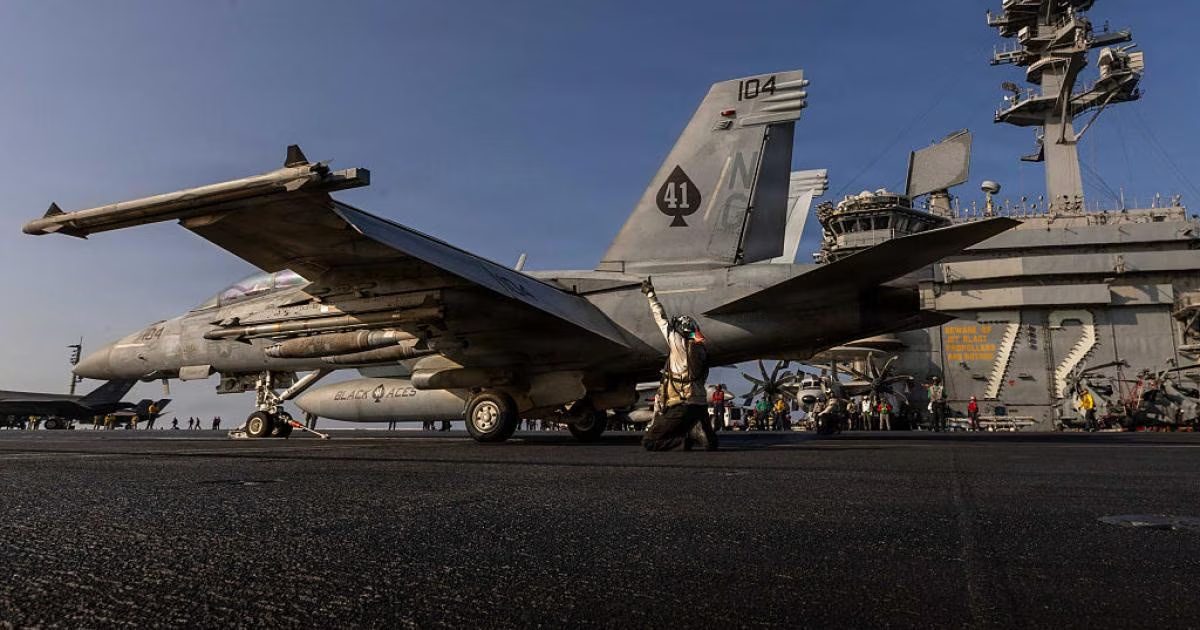
The US budget is facing unprecedented pressures with the escalating military confrontation with Iran, as Department of Defense (Pentagon) estimates indicate that more than 15,000 targets within Iranian territory were targeted in the first two weeks alone. These operations come as part of a large-scale military escalation that has led to a rapid depletion of financial and military resources allocated for overseas operations.
According to analysts at the Center for Strategic and International Studies (CSIS), the war bill is increasing at a rate of up to half a billion dollars per day, a figure that reflects the intensity of fire and the scale of military deployment. Pentagon officials have informed lawmakers in closed sessions that direct costs exceeded $11.3 billion during the first six days of military operations.
However, these official figures may not reflect the full reality of the conflict, as informed sources reported that government estimates often only cover the cost of expended ammunition. These statistics do not include major logistical costs such as expenses for deployed troops, medical care for the injured, or even the cost of replacing warplanes lost during air battles.
By mid-March, cumulative estimates indicate that the total cost has exceeded $18 billion, with operations continuing at a high pace. The most expensive weapons in the US arsenal dominated the early hours of the war, leading to a rapid erosion of strategic missile stockpiles and advanced defensive systems.
Data indicates that the United States used more than 300 'Tomahawk' missiles during the first six days, at a total cost of $1.2 billion, with each missile costing $3.5 million. This heavy consumption later forced the military command to shift towards using less expensive and shorter-range weapons to conserve strategic reserves.
In terms of air defense, costs reached record figures as a result of US attempts to intercept counterattacks, with Washington spending approximately $5.7 billion on interceptor missiles alone. This massive expenditure came in response to about 2,500 drones and missiles launched by Iran in retaliation for US attacks targeting its facilities.
In addition to ammunition costs, US forces recorded direct combat losses estimated at approximately $1.4 billion, plus daily operational costs of $27 million. These figures illustrate the financial burden imposed by direct confrontation in the Middle East on the US treasury, which is already burdened with international obligations.
Research centers relied on Department of Defense budget documents for fiscal year 2026 and Congressional Budget Office data in their analysis to ensure the accuracy of the announced figures. These documents reveal that costs not included in the basic budget, such as troop mobilization and repair of damaged military infrastructure, deepen the financial crisis associated with the war.
The biggest challenge facing the Pentagon remains how to compensate for the severe shortage of defensive systems and radars that were depleted during the first days of 'Epic Fury' operation. Experts believe that the damage to the diversity and availability of the US arsenal may take years to recover, regardless of the political path the conflict may take in the future.
The war bill is escalating by about half a billion dollars daily, and initial estimates are limited to ammunition costs without medical care costs and replacement of lost aircraft.
شارك برأيك
By the Numbers.. Massive Drain on US Budget in Military Confrontation with Iran