






Informed sources reported that US President Donald Trump is working intensively to form a new international alliance, dubbed the 'Hormuz Alliance,' aimed at forcibly reopening the strategic strait. These moves come amid escalating military tensions with Iran, which have disrupted a vital part of global energy supplies and led to rising oil and gas prices.
Reports from sources in Washington indicate that Trump hopes to officially announce this alliance later this week. This diplomatic and military endeavor aims to ensure the return of commercial navigation in the strait, which is considered the main lifeline for the global economy.
In a significant field development, the White House is considering the option of full military control over Iran's Kharg Island, which is the main center for Iranian crude oil exports. US officials believe that this step may be necessary if the detention of oil tankers and the disruption of navigation within Gulf waters continue.
Military estimates suggest that controlling the island may require deploying US ground forces, representing a significant escalation in direct confrontation. Washington accuses Tehran of imposing a blockade on the strait that prevents Gulf countries from exporting their oil, while allowing Iranian tankers bound for China to pass.
An informed source explained that the continuation of the current blockade puts the Trump administration in a difficult position, as the President will not be able to end regional conflicts as long as allied oil exports remain restricted. This reality has prompted the US administration to accelerate military and diplomatic mobilization to change the rules of engagement in the region.
Through his 'Truth Social' platform, Trump announced that the United States would lead an international effort to send warships to the Gulf to secure navigation. He called on major countries such as China, France, Japan, South Korea, and the United Kingdom to contribute to this force, considering energy security a shared international responsibility.
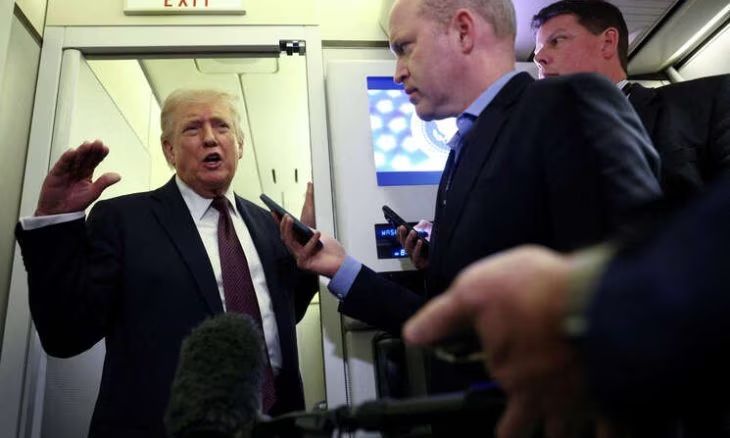
In remarks to reporters aboard Air Force One, Trump affirmed that he is demanding active participation from NATO countries and oil-importing nations. He noted that Washington has received mixed responses so far, with some countries agreeing while others expressed clear reservations about military involvement.
A US official revealed that Trump and his team spent the weekend in intensive contacts with allies to build political commitment towards the 'Hormuz Alliance.' These contacts included a phone call with British Prime Minister Keir Starmer, a reversal from Trump's previous statements in which he considered it too late for London to participate.
Through this alliance, the US administration aims to distribute the burden of protecting waterways among the countries benefiting from the oil passing through them. White House officials stressed that most of the oil crossing Hormuz goes to Asia and Europe, not to the United States, which necessitates the participation of those countries in the costs and risks.
In parallel with diplomatic efforts, US forces continue to strike strategic targets inside Iran, focusing on the coasts near Kharg Island. This island is a vital target as it processes about 90% of Iranian crude oil exports, making it a major economic vulnerability for the regime.
Trump had ordered precise strikes on military facilities on the island last Friday, while avoiding direct targeting of oil infrastructure so far. The US President stated in a television interview that these strikes might be repeated, indicating that all options remain on the table.
Despite the enthusiasm in some decision-making circles in Washington, controlling Kharg Island entails enormous geopolitical risks. Observers warn that such a move could prompt Tehran to launch widespread retaliatory attacks targeting oil facilities and pipelines in neighboring countries, especially Saudi Arabia.
For his part, Republican Senator Lindsey Graham supported Trump's approach, considering that taking the war to Kharg Island would be a decisive blow to the Iranian economy. Graham wrote that controlling this strategic oil hub would radically change the course of the conflict and deprive Tehran of its essential financial resources.
The final position on ground control of the island remains pending the developments of the crisis in the Strait of Hormuz and the extent of allies' response to the new alliance. Sources in the US administration confirm that the final decision will depend on the success of current pressures in forcing Iran to end its blockade of international navigation.
Whoever controls Kharg Island controls the fate of this war.
شارك برأيك
Trump seeks to form "Hormuz Alliance" and considers military control of Iran's Kharg Island