






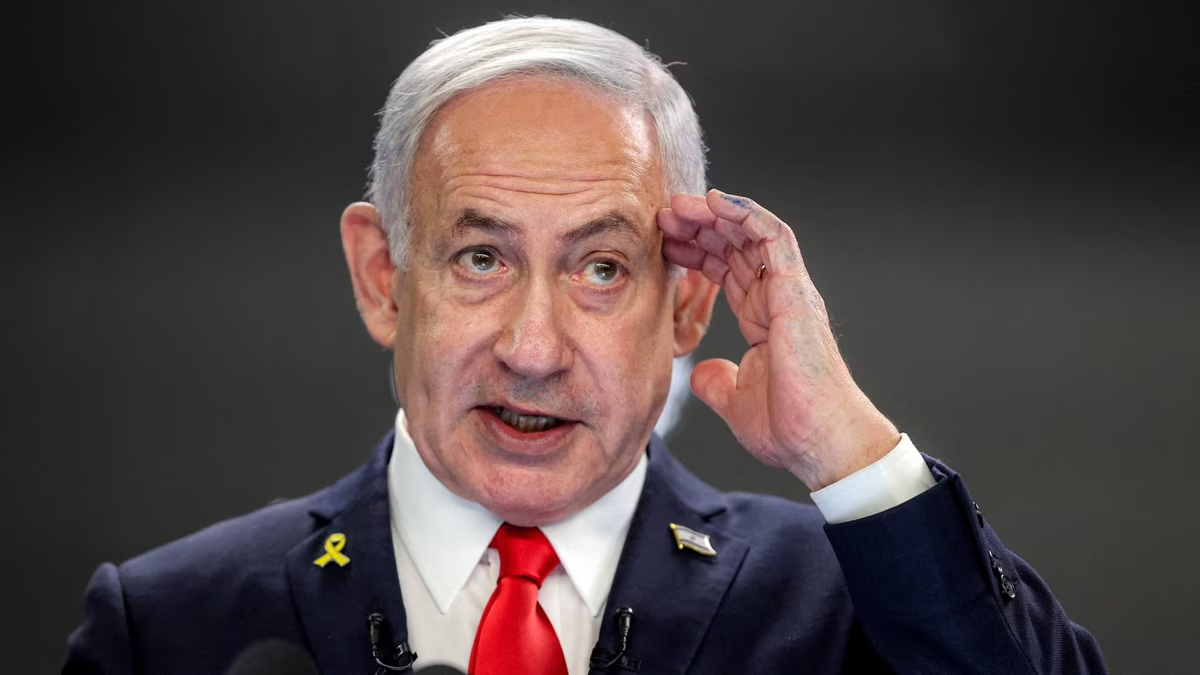
The past forty-eight hours have witnessed a striking and unusual absence of the Israeli occupation Prime Minister, Benjamin Netanyahu, from media platforms and direct appearances. This disappearance has opened the door wide to interpretations, especially in light of the critical security conditions and mutual threats experienced by the region between Tel Aviv and Tehran.
Informed sources reported that Netanyahu is currently spending most of his time inside the 'secure bunker,' which is the nuclear bunker belonging to the Israeli Ministry of Defense. This step comes to directly supervise complex military operations and ensure the continuity of leadership in the event of a large-scale missile escalation targeting government centers.
Observers believe that the magnitude of mutual threats, especially after targeting secret underground facilities, has imposed a kind of instantaneous and intensive coordination with the US Central Command (CENTCOM). This constant communication has made public appearances a secondary matter compared to the necessities of the field, which require quick and decisive strategic decisions.
In parallel, Netanyahu's absence coincides with intensive diplomatic activity led by US Secretary of State Marco Rubio in the region. Estimates suggest that the Israeli Prime Minister is involved in consultations via hotlines to determine the upcoming rules of engagement, ensuring the alignment of field movements with the political orientations of the new US administration.
On the security front, the General Security Service (Shin Bet) has imposed a strict cordon of secrecy on Netanyahu's movements and actual whereabouts. These extreme precautions come in response to explicit Iranian threats to target Israeli 'leadership heads,' as part of the retaliation for assassinations that targeted prominent leaders earlier.
The matter is not limited to military aspects but extends to increasing internal pressures faced by Netanyahu in the Israeli street. Continuous demonstrations in Tel Aviv, and fears of supply chain collapse and an energy crisis after threats to close the Strait of Hormuz, put the government in a critical political and economic predicament.
In an attempt to calm rumors that spread about the deterioration of his health or an assassination attempt, Netanyahu's office issued a brief statement denying those reports. The office confirmed that the Prime Minister is 'fine' and performing his duties as usual, without providing additional details about the reasons for his seclusion from the public.
Political analysts believe that this silence may be the 'calm before the storm,' as Netanyahu seeks to strengthen his position by achieving a tangible military or political accomplishment before reappearing. Disappearing at moments of strategic target classification is part of the tactics of managing psychological and field conflict with adversaries.
Ultimately, the Israeli scene remains dependent on what the 'closed-door' contacts with Washington will yield and what the situation on the inflamed fronts will become. Netanyahu's absence, although security-justified, reflects the extent of anxiety and confusion prevailing in decision-making circles amid the open confrontation with Iran.
The disappearance here is not only political but also a precautionary measure to prevent any tracking of the Prime Minister's whereabouts in light of the use of suicide drones.
شارك برأيك
Between the Nuclear Bunker and the Operations Rooms: The Mystery of Netanyahu's Disappearance at the Peak of Escalation with Iran