PALESTINE

Fri 27 Oct 2023 6:31 pm - Jerusalem Time

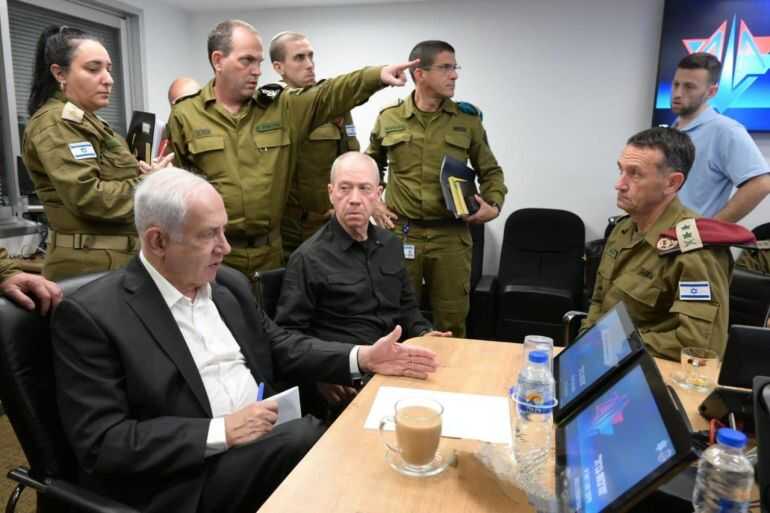
Report: Netanyahu refrains from making decisions to escalate or reduce the war

“The wars of the past taught us that what begins with the explosion of national enthusiasm, retreats when it becomes necessary to pay a price. Netanyahu knows this better than anyone. It is not cowardice that drives him to postpone decisions time after time, but rather an in-depth understanding of public opinion polls.”


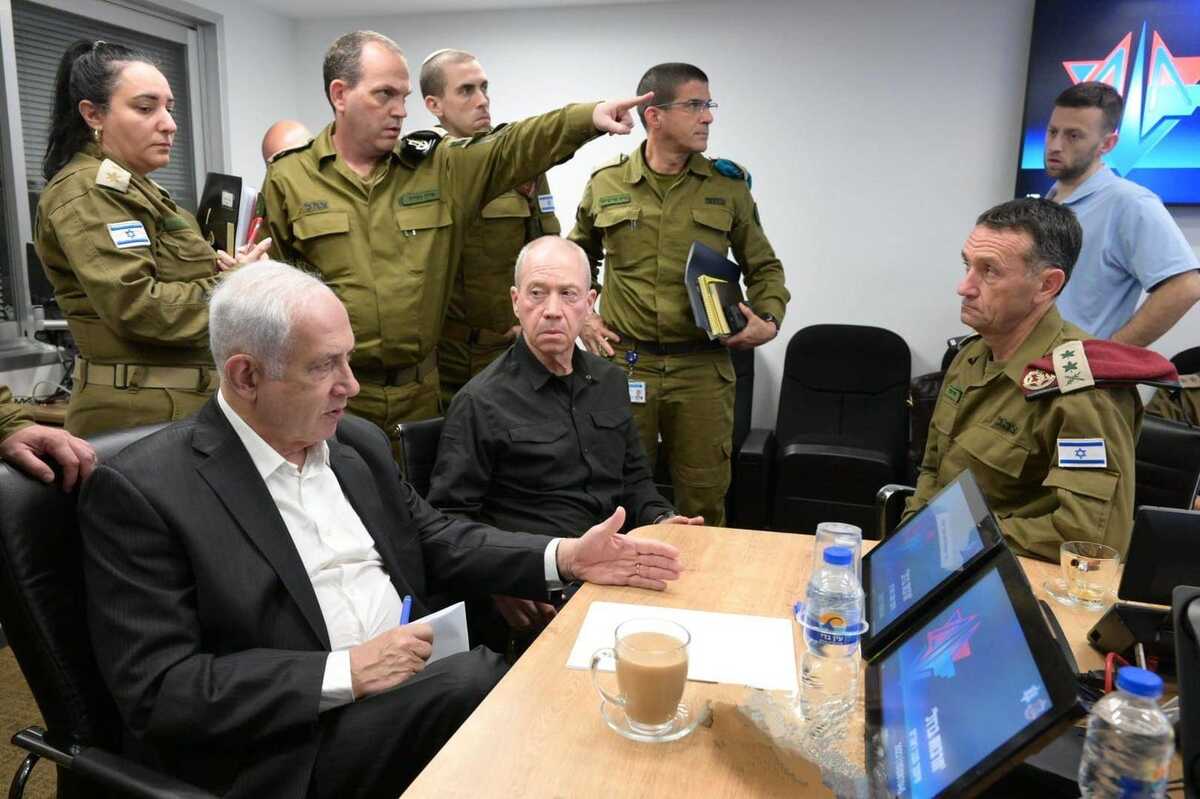
Israeli propaganda in the current war on Gaza paints a picture different from the reality at the center of decision-making, that is, in the Israeli “war cabinet,” in light of a crisis of confidence between the public and the leadership in Israel.


The official government spokesmen, and their mouthpieces on television channels, promote that decisions in the cabinet are taken unanimously, but the political analyst in the Yedioth Ahronoth newspaper, Nahum Barnea, reported that this is not true, and that “the truth is that in any cabinet that is formed during periods of emergency, there is no "There is a vote on decisions. The cabinet has not yet taken any decision related to a tangible political price. A test like this is coming, as it cannot be postponed forever."


He pointed out that "the wars of the past taught us that what begins with the explosion of national enthusiasm, in which everyone supports one person and one person supports everyone, and this enthusiasm declines when it is necessary to pay prices. Netanyahu knows this better than anyone. It is not cowardice that drives him to postpone decisions time after time." "But it is an in-depth understanding of public opinion polls. The weaknesses of the Israelis are his area of expertise."


Barnea pointed out that it would be easy for the cabinet to approve the US-Qatari deal to release Israeli detainees, some of whom also hold foreign nationalities, in exchange for a ceasefire for several hours or supplying the northern Gaza Strip with fuel and medicine.


He considered that "the truly difficult stage will be the liberation of Hamas prisoners, and it will collide with the memory of the Shalit deal. The prisoners who were liberated in it, led by Yahya Sinwar, brought upon us the current catastrophe."


Another difficult decision before the “war cabinet” concerns a large ground invasion in Gaza. Barnea pointed out that such a decision enjoys great popular support in Israel, “and this support will decline when the fighting continues, and the list of martyrs and dead soldiers grows longer and victory does not appear on the horizon. There are limits to the ability to absorb. 1,400 of our dead should not have fallen on October 7. And mothers.” Soldiers, and soldiers too, will wonder, “until when, and even what number” of deaths.


He added that some Israeli ministers see the liberation of detainees in Gaza as a top priority, while other ministers prefer a ground invasion. “They are convinced that the invasion will not thwart the deal (to free the detainees), but rather will reduce its price. Netanyahu is denying the need for a resolution. Any deliberations he holds end with other deliberations.”

According to Barnea, the US administration has an interest in preferring a deal regarding the detainees in Gaza, because a ground invasion would lead to an expansion of the war and the joining of Hezbollah, and would threaten regimes in the “moderate Arab countries” and implicate them and Israel in American public opinion. The release of detainees, including American citizens, will also benefit Biden's election campaign.


Israeli and American media reported that Netanyahu blocked a decision to launch a pre-emptive strike against Hezbollah, but Barnea stated today that “war cabinet” members Benny Gantz and Gadi Eisenkot, from the “National Camp” bloc that joined Netanyahu’s government at the beginning of the war, opposed a military operation against Hezbollah "they are the ones who prevented a disastrous decision."


He added, "In the same way as Netanyahu is in the cabinet, everyone is right. Everyone has his influence. No one has a decisive influence. Thus, it is easier to prevent a decision from being taken. This applies to the decision that was taken this week, to prefer liberating the kidnapped people to entering by land. This is what was decided, But only future book authors will be able to tell us what really happened, and whether the kidnappers were the reason or just a cover in order to postpone a military operation whose price is high and whose effectiveness is doubtful.”


Source: Arab 48

PALESTINE

Fri 27 Oct 2023 6:15 pm - Jerusalem Time

Negotiations are accelerating to conclude a deal between Israel and Hamas

Sources told Al Jazeera on Friday that negotiations are progressing rapidly to conclude a ceasefire agreement and a prisoner exchange deal between Israel and the Islamic Resistance Movement (Hamas) with Qatari mediation.


At the same time, the American CNN network reported from what it described as diplomatic sources familiar with the negotiations that “significant progress” had been made in the negotiations to release the Israeli detainees, but “there are still outstanding issues.”


White House National Security Council spokesman John Kirby also told ABC that Washington is still working with its partners to release all detainees.


This comes after Israeli sources said that Tel Aviv informed the mediators of its willingness to “offer a price” in exchange for the release of a large number of Israeli detainees in the Gaza Strip.


The Palestinian resistance factions captured approximately 250 Israelis during Operation Al-Aqsa Flood launched by the Al-Qassam Brigades, the military wing of the Hamas movement, on October 7, and the Israeli army said that it informed the families of at least 229 people - both military and civilian - that their children were being held in Gaza.


On the other hand, the Russian newspaper Kommersant quoted a Hamas leader as saying that the movement cannot release detainees before agreeing on a ceasefire in Gaza.


Hamas said Thursday that about 50 Israeli prisoners were killed in Israeli air strikes.


Al Jazeera's correspondent had quoted Israeli media as saying that Tel Aviv would consider the possibility of bringing fuel into the Gaza Strip, if a serious deal was offered to release a large number of detainees held by Hamas and other resistance factions.


Although Israeli officials, including Prime Minister Benjamin Netanyahu and Defense Minister Yoav Galant, are vowing to carry out a ground operation in the Gaza Strip, several media reports indicated the approaching conclusion of a deal between the Palestinian factions in Gaza and Israel, including a ceasefire.

Europe calls for a truce


On the other hand, French President Emmanuel Macron called today, following a European summit in Brussels, for a “humanitarian truce” in Gaza to ensure humanitarian aid reaches civilians and the release of Israeli detainees.


Macron said, in a press conference, that several European countries are looking forward to building a “humanitarian alliance,” referring to talks taking place with Cyprus and Greece in this regard. He added that Cyprus could be a base for humanitarian operations.


In his statements, the French President affirmed what he called Israel's right to defend itself, but said that it must "target terrorists precisely without exposing civilians to danger."


He pointed out that France lost 35 of its citizens as a result of Hamas attacks. Meanwhile, Spanish Prime Minister Pedro Sanchez said that the European Union Council accepted Spain's proposal to hold a peace conference in Madrid within 6 months.


Sanchez pointed out during a press conference in Brussels that his country pushed during the European summit to demand an immediate ceasefire, but some countries opposed the proposed wording.


He added that instead, the European Union countries agreed to call for a “humanitarian truce” and open humanitarian corridors, and the Union also accepted the proposal to hold a peace conference, which includes a new effort to revive the two-state solution.


The Israeli war on Gaza has been continuing for 3 weeks, and the unprecedented bombing has left more than 7,300 martyrs, most of them women and children, in addition to about 19,000 wounded, and nearly 1.4 million of the Strip’s population of 2.2 million people have been displaced.


Source: Al Jazeera + agencies


ARAB AND WORLD

Fri 27 Oct 2023 6:11 pm - Jerusalem Time

America imposes new sanctions on Hamas and parties linked to it

The US Treasury Department imposed a second package of financial sanctions on the Islamic Resistance Movement (Hamas) and entities and figures associated with it, following the Al-Aqsa Flood operation launched by the movement against the Israeli occupation on October 7.


The US Treasury said that the new sanctions target Hamas officials in Iran and members of the Iranian Revolutionary Guard.


She added that the measures targeted additional assets in Hamas' investment portfolio, and people who facilitate Hamas-linked companies to evade sanctions.


The ministry said that the sanctions also included a Gaza-based entity that served as a channel for Iranian financing of the Hamas and Islamic Jihad movements.


For his part, US Treasury Deputy Secretary Wally Adeyemo said in the statement, “Today’s action confirms the United States’ commitment to dismantling Hamas’ financing networks by deploying our counter-terrorism sanctions authorities and working with our global partners to deprive Hamas of the ability to exploit the international financial system.”


He added, "We will not hesitate to take measures that would further weaken Hamas's ability to commit horrific attacks by relentlessly targeting its financial activities and sources of funding."


Other Sanctions The Treasury Department said it had imposed sanctions on a Jordanian citizen living in Tehran, who it said “serves as a representative of Hamas in Iran, in addition to officials in the Quds Force of the Islamic Revolutionary Guard Corps who train and assist members of Hamas and other armed groups.”


The sanctions also targeted the commander of the Al-Sabreen Brigade for the Special Forces of the Iranian Revolutionary Guard’s Ground Forces and residing in Iran. The Treasury Department said that the Al-Sabreen Brigade deployed in Syria and provided training to Hamas and members of the Lebanese Hezbollah.


The sanctions included companies in Sudan and Spain and shareholders residing in Turkey in a company that had previously been classified as part of Hamas’ investment portfolio. The United States said earlier that Hamas’ investment portfolio, valued at hundreds of millions of dollars, includes companies operating in Turkey as well as in Sudan, Algeria, the Emirates and other places.


The measure taken today, Friday, freezes any assets in the United States of those targeted, and generally prohibits Americans from dealing with them, and those who participate in certain transactions with them may also be subject to sanctions.


Source: Al Jazeera + agencies

PALESTINE

Fri 27 Oct 2023 6:05 pm - Jerusalem Time

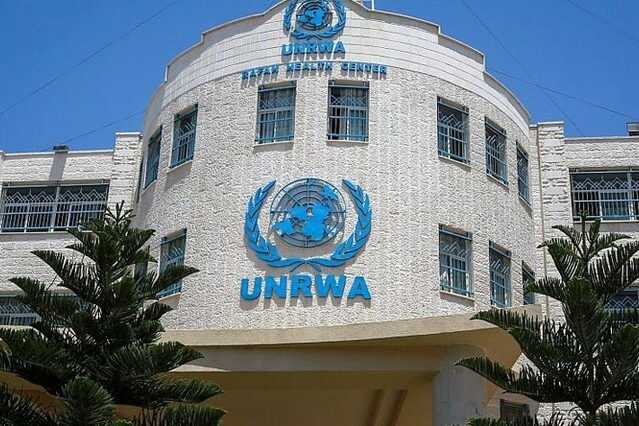
UNRWA: 629 thousand citizens displaced in Gaza and 39 employees killed in Israeli bombing.

The United Nations Relief and Works Agency for Palestine Refugees (UNRWA) said that it documented the displacement of about 629,000 Palestinian citizens to 150 of its shelters in the Gaza Strip, after their homes were subjected to continuous Israeli bombing of the Strip for the 21st day in a row.


UNRWA said in a report today, Friday, that the displaced are living in very difficult humanitarian conditions, especially since the shelter centers have begun to accommodate three times their capacity, noting that one shelter center in the city of Rafah has 12,500 displaced people, most of whom are children and women.


It explained that 39 UNRWA employees were martyred in the Israeli bombing operations on the Gaza Strip, noting that 38,000 patients currently residing in shelter centers are in urgent need of treatment.

PALESTINE

Fri 27 Oct 2023 4:48 pm - Jerusalem Time

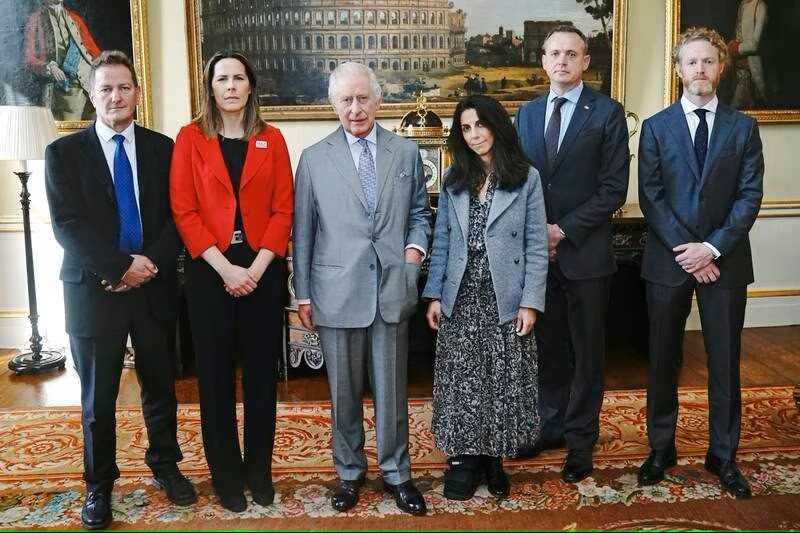
King Charles of UK makes 'generous donation' to Red Cross appeal for Gaza

King Charles III made a "generous donation" to a British Red Cross fundraising appeal for Gaza after being briefed by aid agencies about the deteriorating humanitarian situation on the enclave.

The UK king, who is president of the British Red Cross, discussed the “acute humanitarian situation” in the region, a Buckingham Palace representative said.

"We are immensely grateful to HM King Charles for his generous donation to our Israel and Occupied Palestinian Territory appeal," the charity said on social media.

The monarch also met charity leaders from Medical Aid for Palestinians, UNICEF UK and Christian Aid.

Aid groups have called for a ceasefire in the Israel-Gaza conflict to protect civilians and humanitarian workers, and ensure safe and sustained access to aid.

UK Prime Minister Rishi Sunak has emphasized the need for temporary breaks in the bombings to allow Israeli hostages and British citizens to be freed.

Buckingham Palace did not comment on whether the king discussed the hostages during the private meeting.

The International Committee of the Red Cross, in its neutral intermediary role, has assisted with the recent release of four Israeli hostages. Hamas is still holding more than 200 people.

Those the audience were the chief executive of UNICEF UK Jon Sparkes, Medical Aid for Palestinians chief executive Melanie Ward, vice chairwoman of the board of trustees for Medical Aid for Palestinians Shireen Jayyusi, Christian Aid chief executive Patrick Watt, and Rory Moylan, head of region for the Middle East, North Africa and Europe at the British Red Cross.

The British Red Cross has described the situation in Gaza as an “unprecedented humanitarian crisis” with vital resources unable to get through.

It said the most pressing issue is the lack of food and water and that recent aid convoys were merely “a drop in the ocean”.


Israel has only in recent days agreed to allow aid into Gaza, having besieged the Hamas-ruled area, preventing essentials such as water, food and fuel from reaching more than two million Palestinians.

But the UN has warned it is on the verge of running out of fuel in the Gaza Strip, forcing it to sharply curtail relief efforts in the territory.

The king also held an audience with the Crown Prince of Kuwait on Wednesday, when he also discussed the continuing conflict, which has already claimed at least 8,000 lives on both sides.

Israeli Prime Minister Benjamin Netanyahu has said the military is preparing for a full-scale ground invasion to crush Hamas.

In a landmark speech last week, King Charles stressed the “vital” need for mutual understanding among religions in times of “international turmoil and heart-breaking loss of life”.


PALESTINE

Fri 27 Oct 2023 4:11 pm - Jerusalem Time

Israel launches an arrest campaign that includes 70 Palestinians

The Palestinian Prisoners' Club said that Israel launched an arrest campaign, at dawn today (Friday), that included 70 Palestinians, concentrated in the cities of Jerusalem, Hebron, and Bethlehem in the West Bank, according to Reuters.


The club added, in a statement, that among those detained were “two women and a journalist, in light of the continued arrest campaigns and systematic mass revenge operations against our people since the seventh of October.”


The club explained, in its statement, that “thus, the total number of arrests since October 7, the date of the start of the Al-Aqsa Flood battle, has risen to more than 1,530 arrests.” He added that most of those arrested during this period are being transferred to administrative detention.


Israel uses a law dating back to the British Mandate period, which allows it to detain Palestinians without trial for a period ranging between 3 and 6 months, which can be renewed under the pretext of “the existence of a security file for the detainee.”


Israeli officials stated that the arrests target leaders and members of the Hamas movement in the West Bank.


Palestinian statistics indicate that the number of Palestinian detainees in Israeli prisons reached more than 6,600.


PALESTINE

Fri 27 Oct 2023 4:03 pm - Jerusalem Time

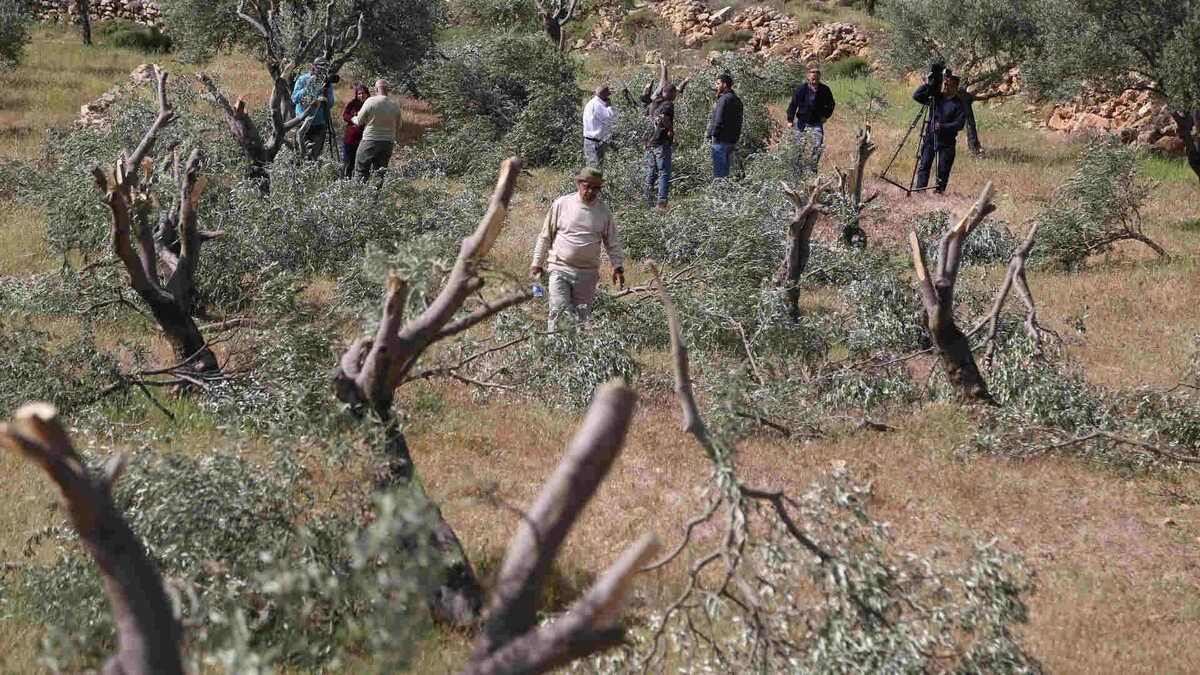
Israeli settlers destroy 200 olive seedlings and fruit trees in Hebron

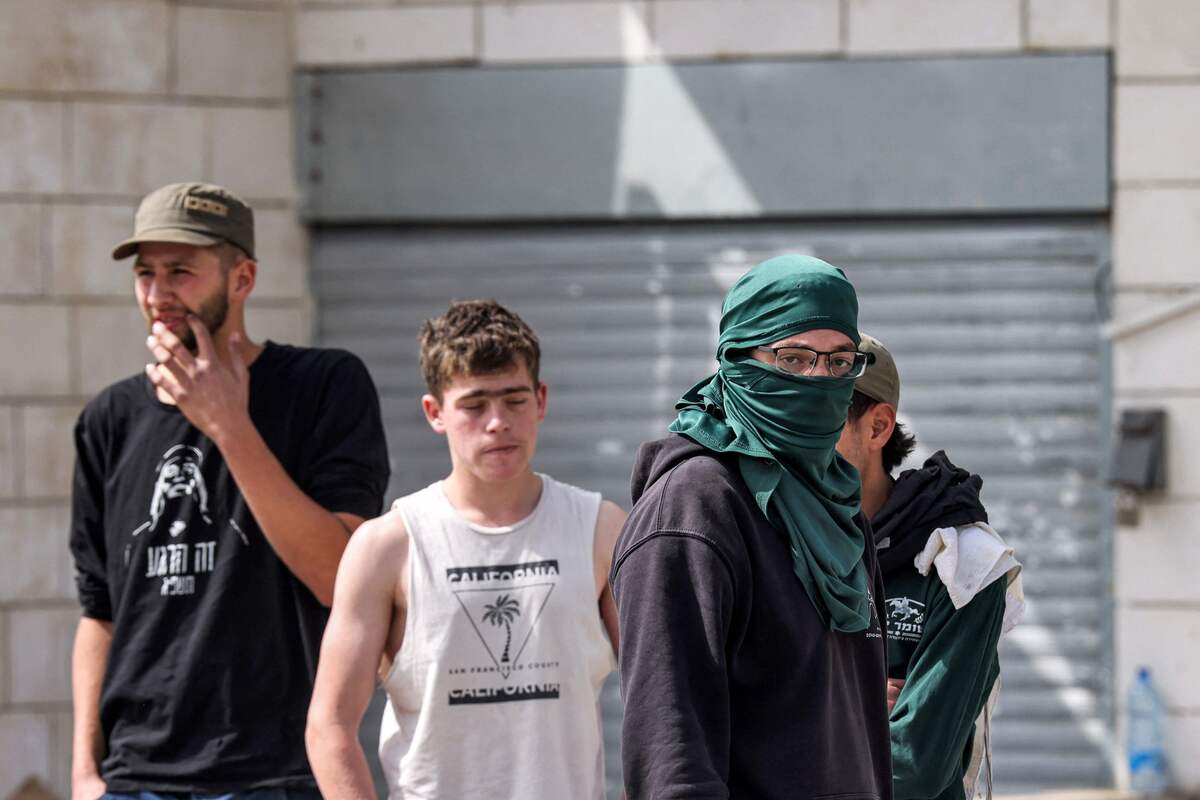
Settlers destroyed and broke 200 olive seedlings and fruit trees, today, Friday, in several areas in Masafer Yatta, south of Hebron.


Local sources reported that settlers destroyed more than 200 olive, almond and grape seedlings, cut irrigation pipes, and stole a water pump owned by the citizen Mamdouh Daajna. They also stole electricity cables, destroyed a water tank in the Al-Ain Al-Bayda area in Masafer Yatta, and cut a water line feeding the community, in Al-Thaala police, and threatened citizens with death.


It is worth mentioning that the settlers intensified their attacks on citizens and their property in Masafer Yatta, after the aggression on the Gaza Strip, with the aim of displacing them from their lands for the benefit of colonialism.

UNCATEGORIZED

Fri 27 Oct 2023 3:54 pm - Jerusalem Time

Death toll risen to 7,326+ including more than 3,000 children. UN confirms the accuracy of Hamas’ numbers

The spokesman for the Ministry of Health in Gaza, Ashraf Al-Qudra, announced today (Friday) that the death toll from Israeli attacks on the Gaza Strip has risen to 7,326 since October 7, according to what was published by the Arab World News Agency.


Al-Qudra said, in a press conference, that more than 3,000 children are among the victims of the attacks launched by Israel on Gaza since the attack carried out by Palestinian factions on towns in southern Israel.


He stressed that there is no objection to any neutral party from reaching Gaza and finding out the facts about the victims of Israeli attacks. He added: “Our doors are open to all relevant institutions to view our work and statistics.”


The United Nations confirmed on Friday that the death tolls issued by the Hamas Ministry of Health were correct, after Washington cast doubt on the outcome of the current war.


The Commissioner-General of the United Nations Relief and Works Agency for Palestine Refugees (UNRWA), Philippe Lazzarini, told reporters in Jerusalem: “In the past, and over the five or six rounds of conflict in the Gaza Strip, these numbers were considered credible and no one had ever questioned them.”


He confirmed the killing of 57 UNRWA employees since the start of the conflict, according to Agence France-Presse.

PALESTINE

Fri 27 Oct 2023 3:12 pm - Jerusalem Time

Casualties among Palestinians in separate confrontations with Israeli army in West Bank

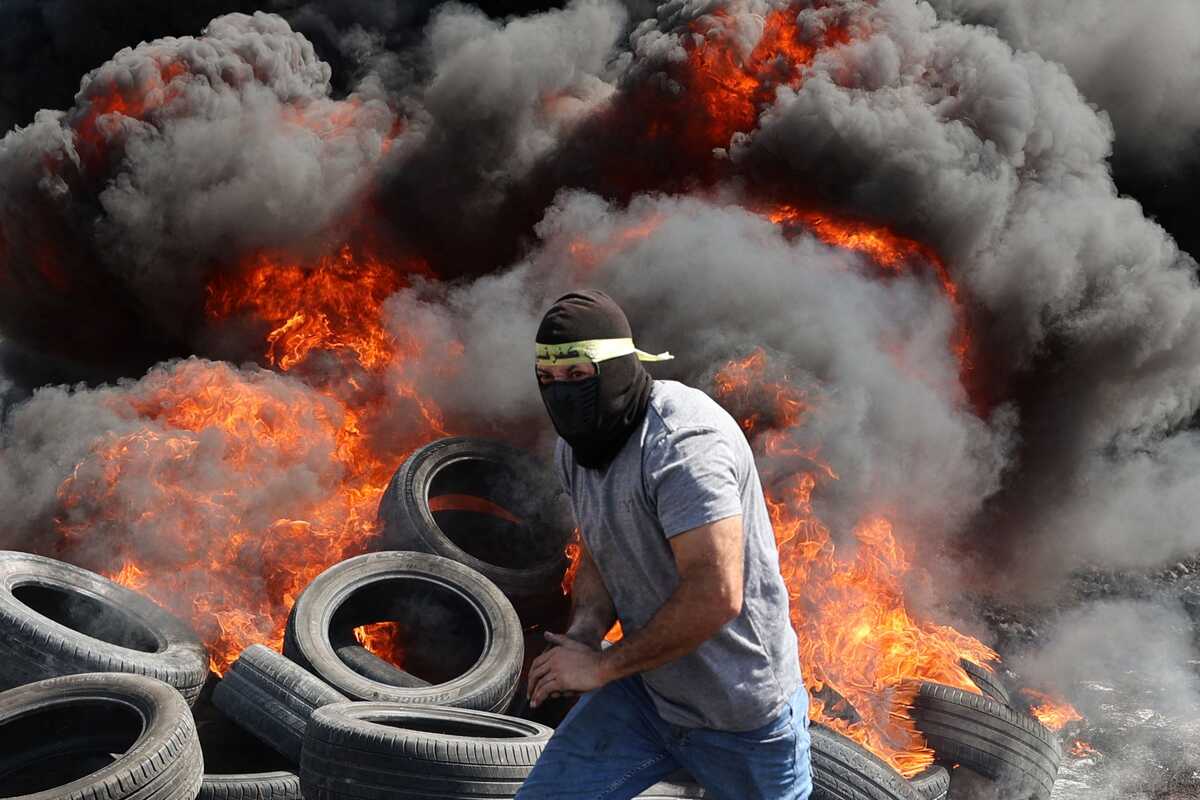
A number of citizens were injured by live bullets, rubber-coated bullets, and suffocation, during confrontations that broke out with the occupation forces in the West Bank governorates, today, Friday, to denounce the crimes of the Israeli occupation in the Gaza Strip.


In Hebron, three citizens were injured by live bullets, today, Friday, during confrontations that broke out with the Israeli occupation forces, at the northern entrance to the city of Hebron.


Sources reported that the occupation army fired live bullets and toxic tear gas towards the citizens who went out in a march in support of our people in the Gaza Strip, which led to 3 of them being injured by bullets, one of whom was described as seriously injured, in addition to dozens suffering from suffocation.


A massive march, called for by the national forces, was launched in the Hebron Governorate from the Guard Mosque in northern Hebron all the way to the Ras Al-Jura roundabout, where the occupation suppressed it and caused casualties.


In Nablus, a young man was injured by live occupation bullets in the thigh, during confrontations that broke out in the village of Osrin, south of Nablus.


Director of the Red Crescent Ambulance and Emergency Center, Ahmed Jibril, said that the occupation forces fired live bullets at citizens, wounding a young man (25 years old), and he was taken to the hospital.


In Qalqilya, confrontations broke out between citizens and the Israeli occupation forces, in the village of Kafr Qaddum, east of Qalqilya.


Local sources reported that the confrontations broke out after the occupation forces attacked participants in the weekly march with stun grenades and toxic tear gas, but no injuries were reported.


The march participants denounced the crimes of the Israeli occupation and its continuing aggression against Gaza and the West Bank.


In Tulkarm, hundreds of our people in Tulkarm participated in a march to support and support our people in the Gaza Strip, and to denounce the ongoing Israeli aggression since the seventh of this month.


The participants in the march, which began after Friday prayers from the Othman bin Affan (New) Mosque in Tulkarm, raised Palestinian flags and chanted “Allahu Akbar” and angry national slogans denouncing the crimes of the occupation against our people in the Gaza Strip and the West Bank.


In Bethlehem, four young men were shot during confrontations with the Israeli occupation forces at the northern entrance to Bethlehem.


A medical source at the Palestinian Red Crescent in Bethlehem reported that four young men were injured by live bullets in their lower extremities. They were then transferred to Beit Jala Governmental Hospital, and their injuries were described as moderate.


In Ramallah, a 14-year-old child was injured during confrontations that broke out with the Israeli occupation forces at the northern entrance to the city of Al-Bireh.


The Red Crescent Society reported that a child was injured by live bullets in the foot, during the confrontations that followed a march that started from central Ramallah, denouncing the Israeli aggression on the Gaza Strip, and he was transferred to the hospital.

PALESTINE

Fri 27 Oct 2023 3:06 pm - Jerusalem Time

The funeral of the bodies of five Palestinian dead in the West Bank

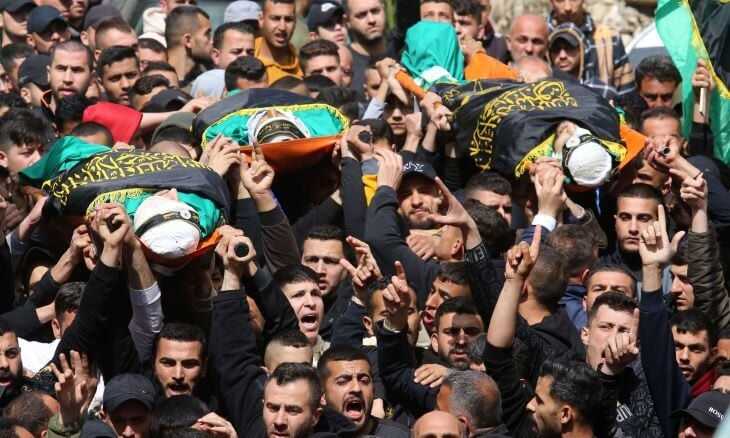
Today, Friday, large crowds of our people in Jenin Governorate mourned the bodies of the four martyrs: Abdullah Bassam Abu Al-Haija from the town of Al-Yamoun, Ayser Muhammad Al-Amer (24 years old) from the Jenin camp, and Jawad Abdul Salam Al-Turki (22 years old), from the eastern neighborhood of the city. And Muhammad Ahmed Sadiq Qabha (25 years old), from the village of Tura in the Ya’bad region.


The funeral march began in front of Jenin Governmental Hospital, and the mourners carried the bodies of the martyrs on their shoulders, and roamed the streets of the city and its camp, with the participation of thousands of citizens, who chanted angry slogans denouncing the Israeli occupation and its crimes against our people, and they also performed prayers for their pure souls.


PALESTINE

Fri 27 Oct 2023 2:59 pm - Jerusalem Time

Increased Israeli settler's attacks in the West Bank

Today, Friday, settlers launched attacks on citizens in the West Bank and occupied Jerusalem, in light of the Israeli aggression on the Gaza Strip.


In Bethlehem, the settler attacked the village of Sarra, and confrontations broke out during which soldiers fired bullets at the citizens, resulting in a young man being shot in the foot with live bullets.


A group of settlers gathered near the entrance to the “Takwa” settlement, which is located on citizens’ lands, on the main street, and threw stones at passing citizens’ vehicles, causing damage to some of them.


In Nablus, a group of settlers stormed a water spring in the village of Qaryut, protected by Israeli occupation soldiers, and performed Talmudic rituals.


Settlers storm the water spring on a weekly basis under the protection of occupation soldiers, who two weeks ago closed the roads leading to the spring with dirt barriers, to prevent citizens from accessing the area.


In Hebron, a group of settlers attacked citizens’ property, olive trees, and water springs in Masafer Yatta, south of Hebron.

Local sources reported that settlers released their sheep into an area planted with olive trees owned by the citizen Issa Ahmed Zein, in the Al-Maraheen Al-Bidh area, and in the Wadi Al-Jawaya area, among trees belonging to citizens of the Al-Daajna family.


The sources added that settlers stormed the Abu Shaban spring and well in the Umm Lasfa area, east of the town of Khallet al-Mayya, and toured the area with the aim of seizing citizens’ lands.

OPINIONS

Fri 27 Oct 2023 2:23 pm - Jerusalem Time

ISRAEL’S LONG-HELD PLAN TO DRIVE GAZA’S PEOPLE INTO SINAI IS NOW WITHIN REACH

Jonathan Cook

Jonathan Cook

Opinion Writer

As the UK and US back Israel’s aggression against Palestinians, including an imminent ground invasion of Gaza, are they also about to assist Israel’s ethnic cleansing proposal for a “Greater Gaza” - in Egypt?


As Israel masses its forces along the fence encaging Gaza, waiting for a green light from the United States for a ground invasion, the question few are asking is: What is the ultimate endgame for Israel?  

Instead, British and US politicians, backed by their media, have limited themselves to amplifying Israel’s bogus rationales for indiscriminately bombing men, women and children in the tiny coastal enclave and preparing to send in troops. Only 80 or so British MPs, out of 650, have so far called for a ceasefire.  

Israeli strikes are known to have killed more than 7,000 Palestinians, nearly half of them children, with many times that number seriously injured. They are being treated in hospitals without medicines or electricity. The United Nations estimates at least 600,000 Palestinians are homeless from the bombing.

At first, Western establishments justified the carnage as Israel’s “right to defend itself” – a right Palestinians had been denied for the previous 16 years while Israel enforced a brutal military siege of the enclave that prevented basic goods and medicines from entering. 

Israel’s supposed “right to self-defense” – the official line from both sides of the political aisle in Britain – serves as western cover for, and complicity in, the crimes against humanity Israel has been committing: mass killing and wanton destruction; a “complete siege” of Gaza, starving it of food and water; and attacks on community infrastructure such as hospitals, schools, mosques, and UN compounds.  

But now, as the death toll becomes increasingly obscene, the rationale has shifted. In chorus, British and US politicians say Israel must be given the time and space to “destroy Hamas”.

That requires a ground invasion by Israeli troops – many of them religious extremists from illegal settlements in the West Bank – who are certain to be seeking vengeance for Hamas’ attack on October 7. The atrocities are only likely to intensify.


Military madness

But there is method in Israel’s military madness. And the main goal is not the one being promoted. Israel has much larger ambitions than “destroying Hamas”.

Israel knows enough history to understand that occupied and oppressed peoples never come to accept their subjugation. They continue to find ways to resist. Even if Hamas can be wiped out, a new, more fearsome adversary will emerge among the next generation currently being traumatized by Israel’s bombs.

In fact, after Israel removed its physical presence from Gaza by pulling out settlers and soldiers in 2005, it began to understand that it had boxed itself into a strategic corner.

It was still occupying the enclave, but at arm’s length. This was the rationale for the blockade that tightly limited what was allowed in and out of the strip. Gaza had been turned into an open-air prison, controlled by Israel through intensive surveillance via drones, eaves-dropping and local collaborators.

In practice, however, Israel found it much harder to police Gaza from afar. Hamas managed to create a much more sophisticated resistance movement in the small spaces left inside the prison that Israel could not surveil, such as a network of underground tunnels.

The results became fully apparent in the preparation and execution of Hamas’ attack on 7 October.

Israel’s strategic problem was compounded by the humanitarian crisis it had created by penning such a large and growing population into a tiny area with no resources.

Poverty, malnutrition, unclean water, overcrowding and lack of housing, as well as the trauma of being encaged and intermittently bombed by Israel to subdue any resistance, was slowly turning Gaza from a prison into a death camp. The UN had warned that the enclave would be effectively “uninhabitable” by 2020.

The solution to this – one that accorded with Israel’s long settler colonial ambitions to replace the Palestinians in their own homeland – was clear. Israel needed to create a consensus in the West justifying the expulsion of the Palestinians from Gaza.

And the only realistic place for them to go was into the neighboring Egyptian territory of Sinai.


Source: Declassified UK


PALESTINE

Fri 27 Oct 2023 12:35 pm - Jerusalem Time

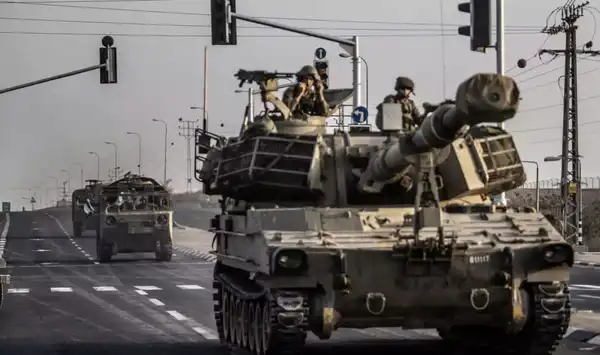
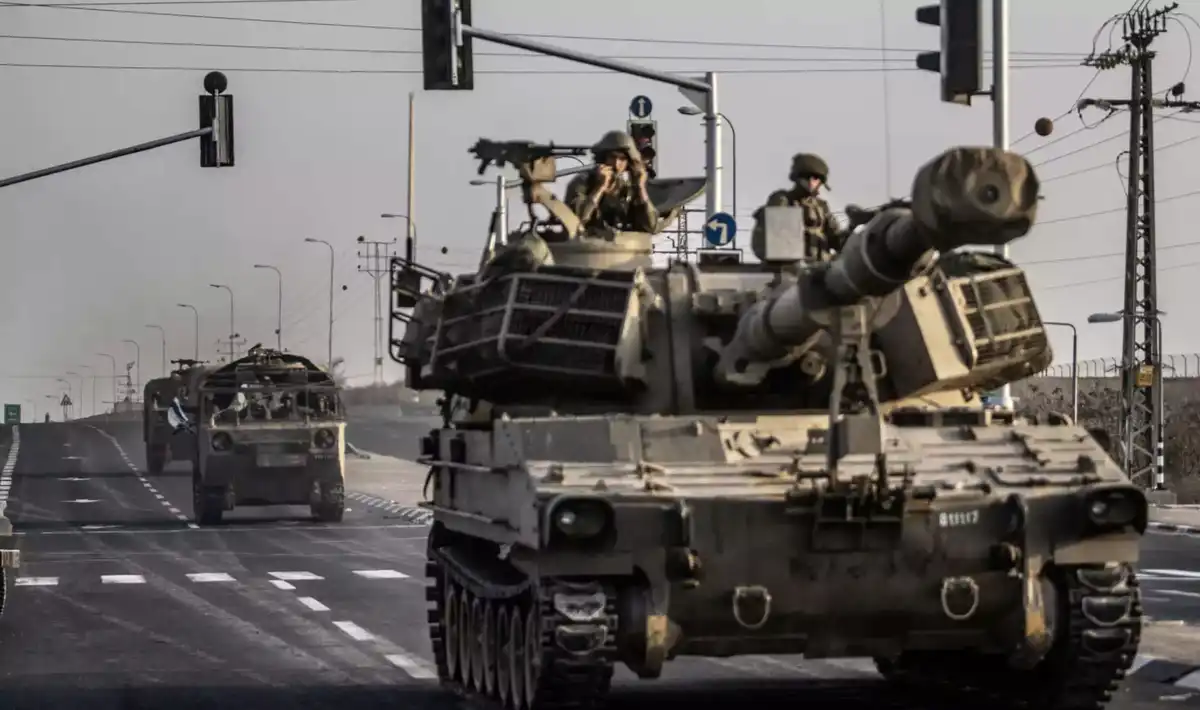
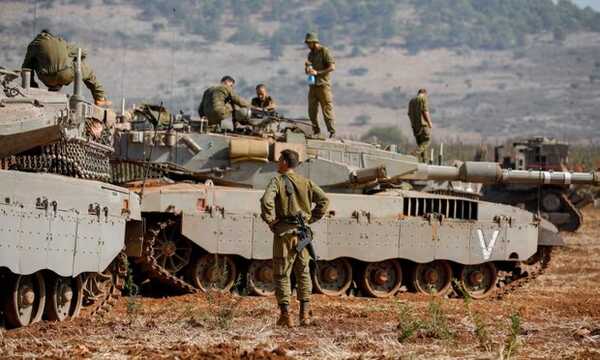
A new Israeli limited ground incursion into the Gaza Strip

The Israeli army and Palestinian sources said today (Friday) that the Israeli army entered an open area near the separation fence in the town of Beit Hanoun in the northern Gaza Strip and the Bureij camp in the central Strip.


Palestinian sources told Xinhua News Agency at dawn today (Friday) that they recorded two ground incursions on the outskirts of Beit Hanoun and Bureij camp amid heavy gunfire, noting that Israeli tanks and vehicles advanced dozens of meters in the two areas but remained in open areas and close to the fence. .


This is the third time that Israeli forces have penetrated the Gaza Strip since the start of fighting with Hamas on October 7th.


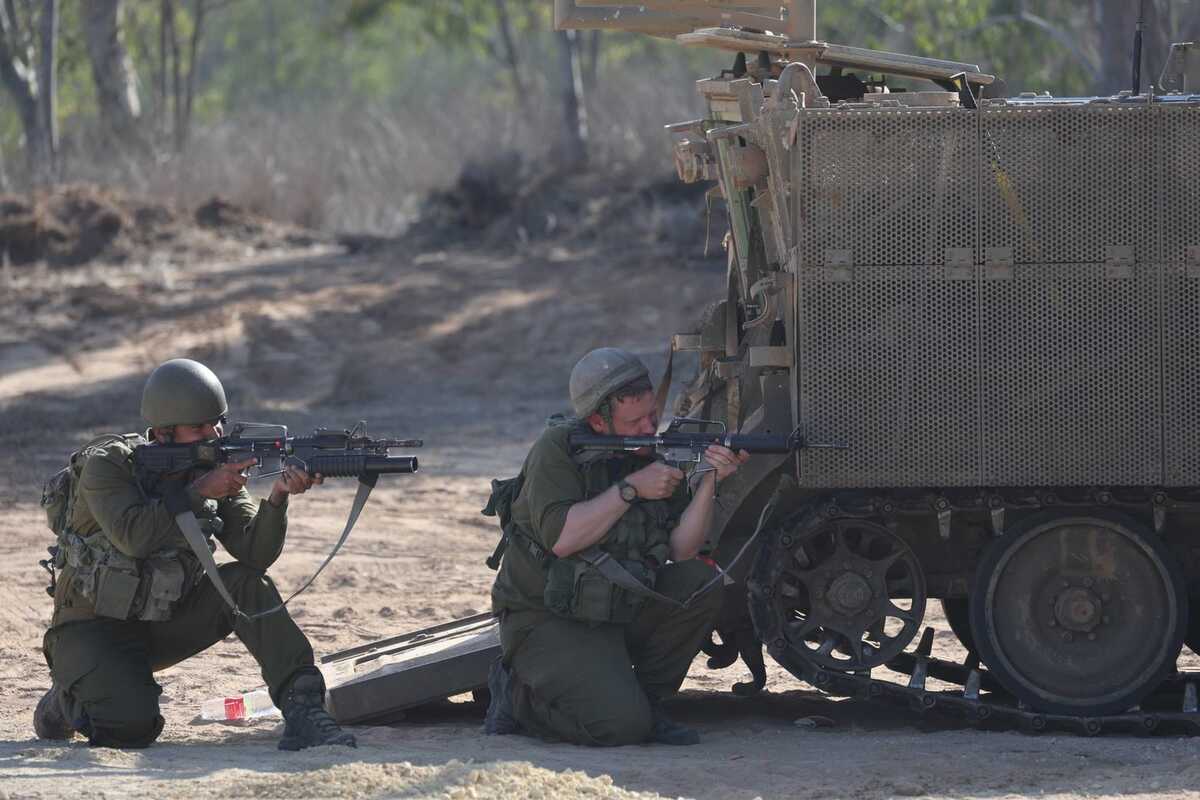
An Israeli army spokesman said that the incursion forces targeted anti-tank weapons, in what observers believe was in preparation for a deep ground invasion into the Gaza Strip.


Media reports quoted Israeli Army Radio as saying that infantry, armored and engineering forces carried out a ground incursion into the Gaza Strip at night and worked there for several hours, attacking Hamas targets.


Media reports, citing the Israeli army, said that the forces had left the area without any casualties after carrying out the ground operation.

PALESTINE

Fri 27 Oct 2023 11:37 am - Jerusalem Time

The pain of loss and unknown fate double the pain of the Palestinian family in Gaza

The lives of thousands of Palestinian families in the Gaza Strip have turned into hell as the intense and unprecedented Israeli raids on the Strip continue for the twentieth day in a row.


As the horrific days of bombing continued, the families that were separated became not aware of each other, and many were saddened by the killing of their peers and parents, while others awaited the fate of their missing children.


When Shadi Al-Souq fled with his large family from the northern Gaza Strip in search of a safe haven, he did not think that his family’s fate would be between the pain of loss and an unknown fate.


Al-Souq (37 years old), a brother of eight siblings, half of whom were married and had children under the age of ten, who lived in a five-story building in the overcrowded Jabalia camp, said, “Last week we left our building as the bombing intensified, and I, my three children, and two of my brothers arrived here.” But the rest of the family stayed with friends of ours in Gaza and the central Strip.”


The man added from inside a school that was turned into a shelter center in Khan Yunis, “Since the day we were displaced (we fled), contact with his parents, my three little brothers, has been cut off.”


He points out that one of his brothers was killed along with his wife and five children as a result of a bombing that targeted the home of one of the families in which they took refuge in the Nuseirat camp in the central Gaza Strip.


The Al-Souq family was displaced along with thousands of Palestinian families to the south of the Gaza Strip, as a result of air strikes and continuous Israeli warnings to the civilian population in preparation for a ground attack aimed at undermining the military capabilities of Hamas and ending its rule, according to what Israel says.


The latest statistics from the Hamas government media office in Gaza indicate that the Israeli army committed 688 “massacres” against families in the Strip, leaving 4,807 dead, while hundreds of dead are still under the rubble.


While the children of the market are playing with their peers inside the classrooms in the school courtyards, and the women are chatting while sitting on the students’ chairs, the market is sending short messages via mobile phone in the hope of receiving a response from his parents or other siblings.


The man, puffing on a cigarette, explained to Xinhua News Agency, "Every day I send messages but I do not receive a response... Family friends informed me that my father and younger siblings are still alive, but none of them have spoken to me for a week."


Mobile phones are the primary means of communication in Gaza in light of the interruption of Internet services in large areas of the Strip as a result of targeting the network infrastructure and the ongoing power outages.


The Palestinian Telecommunications Group said in a press statement that 40% of cellular phone subscribers in Gaza were affected after half of the cellular network towers and sites were disrupted.


In Gaza City, Fayez Al-Bahtini (77 years old) and his wife insist on not leaving his home despite the flight of a number of his children and their families and the destruction that befell Al-Nasr neighborhood, which is the most prestigious neighborhood in the city and was inhabited by more than 600,000 people before the fighting broke out on the seventh of this October.


The man sent a short message to his son Muhammad, who lives in the middle of the Strip, reassuring him of his situation and asking him to return home again.


But Al-Bahtini Jr. is still committed to staying where he lives now, as he fears for the fate of his four children, the eldest of whom is only nine years old, according to what he says.


The population of the Gaza Strip, which has a population of 2.3 million, has never witnessed such a tragic situation, which came after an unprecedented attack carried out by hundreds of Hamas militants, which resulted in the killing of at least 1,400 Israelis in southern Israel.


The number of displaced people in the Gaza Strip reached about one million six hundred thousand Palestinians, more than a third of whom reside in schools that have been turned into shelter centers under the supervision of the United Nations Relief and Works Agency (UNRWA).
A large number of displaced people regret the homes, shops, olive and citrus fields waiting to be harvested, agricultural lands, and livestock from which they have been living, in the midst of a non-existent economic reality for more than a decade and a half.
Among them is Ibrahim Naim (57 years old), who was displaced from the town of Beit Lahia, which is subjected to unprecedented Israeli air strikes.
Naeem told Xinhua from inside a shelter in Rafah, “We in Beit Lahia depend on agriculture and raising poultry. We have no other resources,” expressing his sadness at leaving the poultry farm with two thousand chickens inside it without food, and the value of its establishment amounted to 20 thousand dollars. .
“In one moment, we lost our home, our livelihood, and everything.”
But what worries Naeem most is the fate of his cousins who insisted on staying in the village despite the bombing. They were quoted as saying, "Some of them were saying, 'We will die here and not leave our home and our land.'"
In the courtyard of Al-Shifa Hospital in Gaza, Ahmed Al-Masry, displaced from the town of Beit Hanoun, adjacent to the border with Israel, laments the money he spent on building his new house, to which he planned to move his fiancée to complete the marriage ceremony.
Al-Masry (27 years old) says, "The house was destroyed and my wife's family was killed. Only her (his fiancée) and her younger brother remained, as they are receiving care inside here."
The young man, currently residing in the hospital courtyard with thousands of displaced people, tries in vain to control himself, holding his tears behind a smile when he remembers how he lost everything in one moment.
He adds, "I try to live with people and forget, but my wound is great and does not heal."
As Israeli aircraft continue to launch raids on populated homes, bakeries, and cafes in the southern Gaza Strip, the tragedy of loss and unknown fate does not stop.
Photojournalist Firas Al-Shaer escaped death, but all his family members were killed as a result of an Israeli raid that targeted their home in the Rafah refugee camp in the southern Gaza Strip.
The poet Lamazia recounts the last moments before the three-story house was bombed, saying, “Everyone was in their bed downstairs, while I was sleeping upstairs at the moment of the bombing.” He adds that the pain of loss is a terrible thing, and soon I will join them.

PALESTINE

Fri 27 Oct 2023 11:37 am - Jerusalem Time

Israel launched a massive arrest campaign in the West Bank, targeting 70 Palestinians

Last night and at dawn today, Friday, the occupation forces arrested at least 70 citizens of the West Bank, including two women and a journalist, in light of the continued arrest campaigns and systematic mass revenge operations against our people since the seventh of this October.


The arrests were concentrated in the governorates of Bethlehem, Hebron, and Jerusalem, and the rest of the arrests were distributed across the majority of the governorates of the West Bank.


Thus, the total number of arrests since October 7, the date of the start of the Battle of Al-Aqsa Flood, has risen to more than 1,530 arrests.

PALESTINE

Fri 27 Oct 2023 9:47 am - Jerusalem Time

Poll: Half of Israelis support postponing a ground invasion of Gaza


According to the poll, there is no difference between voters of the various Zionist parties regarding their support for postponing the invasion, and it is likely that their high percentage is due to developments in the issue of Israeli prisoners and hostages in Gaza.


A public opinion poll in Israel, published by the Maariv newspaper today, Friday, showed that 49% support the Israeli government postponing a decision regarding launching a large-scale ground invasion in the Gaza Strip.


29% believed that such a decision should not be delayed and an invasion should be launched immediately, noting that this percentage was 65% in the poll published by the same newspaper last Friday.


The newspaper reported today that regarding postponing the decision on the invasion, there is no difference in opinions about it between supporters of the various Zionist parties in the coalition or the opposition. The newspaper attributed this change to developments regarding the issue of Israeli prisoners and hostages held in Gaza and the release of four hostages so far.


The poll also showed that the effect of joining the “National Camp” bloc, headed by Benny Gantz, had dissipated slightly, and if elections were held now, this bloc would obtain 36 seats in the Knesset, after obtaining 40 and 41 seats in the previous two weeks’ polls. It appears that voters who refrained from voting for this bloc gave their votes to the Yesh Atid and Yisrael Beytenu parties, and the Likud Party's representation increased by one seat.


If elections were held for the Knesset now, the results would be as follows: “National Camp” 36 seats; Likud 19 seats; Yesh Atid: 17 seats; Yisrael Beytenu: 8 seats; Chas 8 seats; “United Torah Judaism” 7 seats; Meretz 6 seats; Arab Front for Change: 5 seats; Religious Zionism 5 seats; The unified list has 5 seats; Otzma Yehudit has 4 seats and is close to the electoral threshold.


According to these results, the representation of the current opposition parties, with the “National Camp,” will be 77 seats, compared to 43 seats for the current coalition parties.


49% said that Gantz is most suitable to assume the position of prime minister, while 28% considered Netanyahu the most suitable. Support for Netanyahu as prime minister is also declining within Likud, as 57% said he is most suitable for the position.


Source: Arab 48

ARAB AND WORLD

Fri 27 Oct 2023 9:35 am - Jerusalem Time

US military carries out a strike in Syria on targets linked to Iran

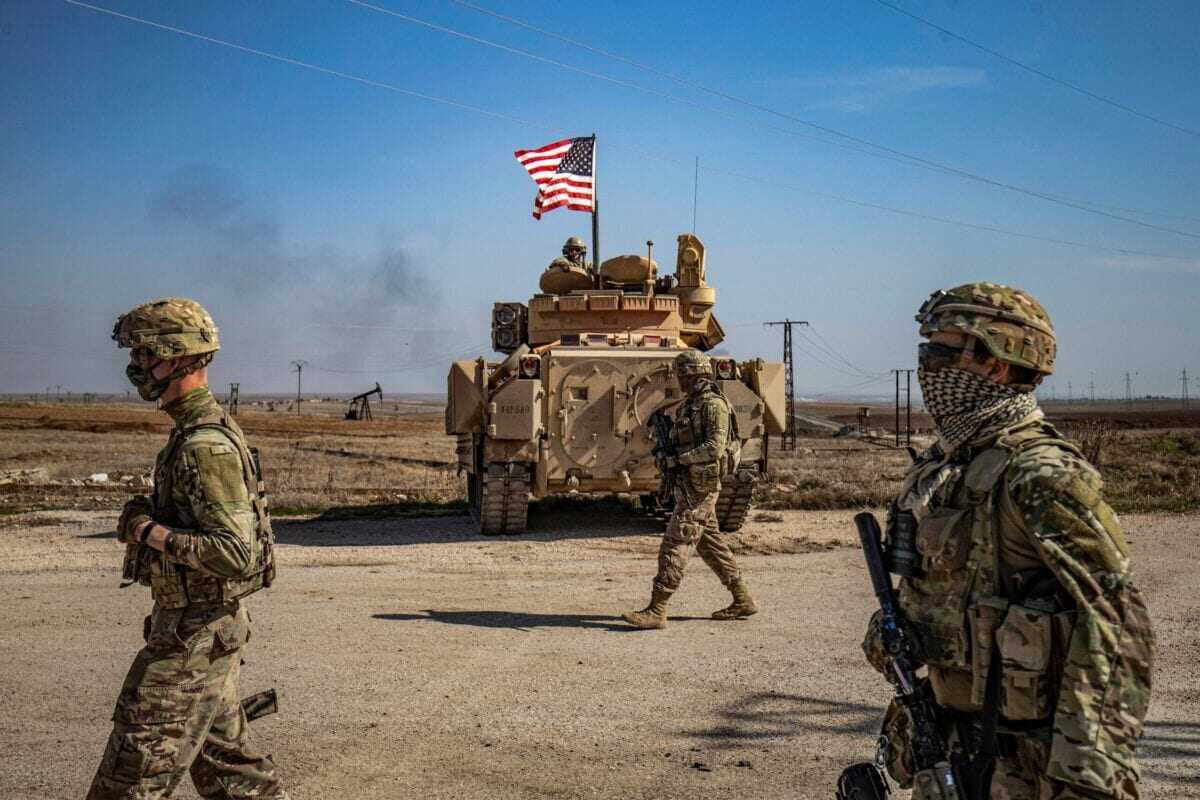
The US military launched air strikes early Friday on two sites in eastern Syria linked to the Iranian Revolutionary Guard, the Pentagon said, in response to a series of drone and missile attacks against US bases and personnel in the region that began early. last week.


According to experts, the United States “seeks to strike Iranian-backed groups suspected of targeting the United States as hard as possible to deter future aggression, possibly fueled by Israel’s war against Hamas, while also working to avoid inflaming the region and provoking a broader conflict.”


According to the Pentagon, there have been at least 12 attacks on American bases and personnel in Iraq and four in Syria since October 17, resulting in the injury of 21 American soldiers who were injured in two of those attacks that used drones to target Al-Asad Air Base in Iraq and its garrison. Al-Tanf in Syria.


US Defense Secretary Lloyd Austin said in a statement, “The precision strikes are self-defense and are a response to a series of ongoing and mostly unsuccessful attacks against Americans in Iraq and Syria by Iranian-backed militias that began on October 17.”


He said President Joe Biden launched the narrowly tailored strikes “to make clear that the United States will not tolerate such attacks and will defend itself, its people, and its interests.” He added that the operation is separate and distinct from Israel's war against Hamas.


Austin explained, "The strikes are intended only to protect and defend our forces in Iraq and Syria," adding, "They are separate from the ongoing conflict between Israel and Hamas, and do not constitute a shift in our approach toward the conflict between Israel and Hamas."


The US Secretary of Defense pledged to continue "urging all governmental and non-governmental parties not to take actions that would lead to a broader regional conflict."


Austin reiterated that Washington “will not tolerate such attacks and will defend itself and its interests,” noting that “the United States does not seek conflict and has no intention or desire to engage in further hostilities, but these Iranian-backed attacks against the forces America is unacceptable and must stop.”


He stressed that Iran wants to "hide its hand and deny its role in these attacks against our forces, and we will not allow that. If Iranian proxies' attacks against our forces continue, we will not hesitate to take further measures to protect our people."


Earlier Thursday, the Pentagon said that about 900 additional American forces are heading to the Middle East or have recently arrived there to strengthen defenses in order to protect American soldiers in light of the escalation of attacks in the region from groups loyal to Iran.


The Biden administration has not accused Iran of having a direct role in the Hamas attack on Israel on October 7, and said that so far it appears that Tehran was not aware of it in advance. But the United States has noted that Iran has long supported Hamas and has raised concerns that Iran and its proxies could turn the conflict into a broader war.


Austin said the United States is not seeking a broader conflict, but if Iranian proxy groups persist, the United States will not hesitate to take additional measures to protect its forces.


According to the Pentagon, all American personnel who were injured in the armed attacks suffered minor injuries and all returned to duty. Additionally, one contractor suffered a cardiac arrest and died while seeking shelter from a possible drone attack.


The retaliatory strikes were not surprising, as officials at the Pentagon and the White House had made clear over the past week that the United States would respond, with Ryder again saying on Thursday that it would be “at a time and place of our choosing.”

PALESTINE

Fri 27 Oct 2023 9:20 am - Jerusalem Time

Israeli settlers threaten Palestinians of West Bank with a new “Nakba”

Israeli-Palestinian settlers threatened the occupied West Bank with a new “great catastrophe” similar to what happened in 1948, “including killing and displacement,” in light of the war between the occupation and resistance factions in the Gaza Strip.


Palestinian media reported that settlers “placed leaflets on Palestinian farmers’ vehicles near the town of Derastiya, northwest of Salfit (north),” and platforms published pictures of those posters.


The Palestinian News Agency "Wafa" also reported that those leaflets - which were written in Arabic - included "threatening Palestinian citizens in the West Bank, saying that they must leave their villages and towns and go to Jordan, and if they do not leave, the Palestinians will be attacked and displaced by force."


Activists and platforms circulated a picture of a poster on one of the vehicles that said, “You wanted a catastrophe similar to the year 1948. By God, a great catastrophe will soon descend upon your heads. You have the last chance to escape to Jordan in an organized manner. After that, we will finish off every enemy and forcefully expel you from our holy land that God has written for us,” according to the post. Rolling.


Continuous attacks

Settlers' attacks on Palestinians increase from time to time, including murder incidents, including the shooting by a Jewish settler of the Palestinian youth, Qusay Maatan (19 years old), on August 4, in an incident that the United States described as a terrorist attack, before the occupation police reduced the accusation of murder against the settler. .


Palestinian and international human rights organizations say that the Israeli government is lenient in the cases of Israelis accused of killing or assaulting Palestinians.


Settlers' attacks - which coincide with Israel's continued policy of expanding settlements - also include the exposure of dozens of Palestinian homes' vehicles to burning, breaking, and assaulting by extremist settlers under the protection of occupation soldiers in several towns and areas in the West Bank.


Source: Palestinian press + Anadolu Agency


OPINIONS

Fri 27 Oct 2023 9:07 am - Jerusalem Time

If we’re forbidden from looking history in the eye during this horrific war, we’re doomed to repeat it

The Guardian-By Gaby Hinsliff

The Guardian-By Gaby Hinsliff

Opinion Writer

Palestinians and Israelis are bound together in suffering. Seeking to untangle this, as the UN has, should not be seen as making excuses for Hamas


Never again. When the United Nations was originally founded from the ashes of the second world war, it was at least in part to give more solid meaning to those words. The first treaty it ever adopted, thanks to the efforts of a Polish Jew named Raphael Lemkin who had lost more than 40 members of his family in the Holocaust, was the convention on the prevention and punishment of the crime of genocide. From Rwanda to Srebrenica, the UN itself admits it hasn’t always lived up to Lemkin’s ideals. Its founding mission remains, however, to learn from history, not to repeat it. But whose history, exactly? This week Gilad Erdan, Israel’s ambassador to the UN, furiously accused the organization of becoming a “stain on humanity” after its secretary general, António Guterres, declared that while nothing could justify the 7 October massacre perpetrated by Hamas, the attacks “did not happen in a vacuum”. 

They had, Guterres said, followed “56 years of suffocating occupation” and vanishing hopes of a political solution to Palestinians’ plight. History, in other words, matters; perhaps especially so in the Middle East, where some trace the roots of conflict back to the Bible, and every modern war unfolds in the psychological shadow of the last. But that’s not the kind of history Israel’s government wishes to discuss, perhaps especially in the context of UN calls for a ceasefire. 

Though Guterres had explicitly warned his remarks should not be taken as justifying Hamas’s crimes, Israel’s foreign minister promptly accused him of blaming the murdered, raped and mutilated victims for their own fates. The idea that children gunned down in kindergartens, or white-haired peace campaigners taken hostage, could somehow have had it coming is, of course, repellent. And for Jews who have long sensed an unspoken “but …” hovering in the air when atrocities against them are condemned, talk of putting massacres in “context” may well feel like the beginnings of that argument being made: they note a tendency for sympathy towards dead Jews to fade rapidly once live ones start fighting back. They have their reasons. 

But so do those who will have felt a strange relief at hearing someone in power articulate what is on one level a statement of the obvious – that like all terrorist organizations, Hamas feeds off an existing wellspring of pain, even as its own actions only worsen Gaza’s desperate poverty and vulnerability – and yet has felt unsayable. 


There is growing anger in some quarters at western leaders’ perceived reluctance to acknowledge the long tail of Palestinian suffering, even as dead children are once again pulled from the rubble.

Is nobody to talk of history even now, in a conflict where both sides are shaped by memories handed down through generations: of persecution and exile, suffering and mourning, the Nakba (or Palestinian tragedy of displacement) and the Holocaust? 


These stories are too entwined to make sense of one without mentioning the other, and it should be possible to say so without being accused of making excuses for Hamas – as if there was anything on earth that could excuse the slaughter of children in front of their parents, and parents in front of their children. For there’s a principle at stake here that goes far beyond one war. Alarm bells should ring for liberals whenever we are told to stop trying to understand things, and perhaps particularly things that seem to defy all reasonable understanding, because that is essentially what liberalism is. 

To try to understand something that you cannot possibly condone or forgive is a way of holding on to our humanity, even in the face of its murderous opposite. 


To say that neglectful, abusive parents are often repeating a pattern they experienced as children is not an excuse for cruelty. To say that even a madman has his reasons is not the same as suggesting that whatever he does is rational. To argue that gang or knife crime can’t be eradicated without tackling the reasons some teenagers want to carry knives in the first place is entirely about preventing murder, not justifying it.


You might get understandably short shrift for delivering that particular lecture to a mother whose son had just been stabbed, which is why no diplomat could have said what Guterres said in the immediate aftermath of 7 October. And some will always worry that understanding a little more, to paraphrase John Major’s famous 1990s homily on crime, leads to condemning a little less. But eventually societies have to be permitted to have difficult conversations about how and why people do unspeakable things, not to absolve the perpetrators but to prevent them happening again.

Some may feel it’s still too soon for such conversations in Israel’s case, but war imposes its own inexorable timetable. Advocates of a ceasefire must accept that Israelis cannot simply be expected to live with the fear of Hamas coming back. But advocates of crushing Hamas in a ground war must equally acknowledge that Palestinians cannot simply carry on living afterwards in hopeless misery, or a new Hamas will eventually emerge to feed off that enduring pain and the cycle will begin again.


History does not have to be destiny, and nor can it be license. Past suffering does not absolve any individual of moral responsibility for their own actions. But those who cannot look their own history in the eye are too often doomed to repeat it. If an organization founded on learning from the past cannot be allowed to say so, who can?


OPINIONS

Fri 27 Oct 2023 8:59 am - Jerusalem Time

Despite their rhetoric, neither Iran nor Hezbollah want an escalation of war in the Middle East. Here’s why

The Guardian- Lina Khatib

The Guardian- Lina Khatib

Opinion Writer

A Lebanese front is unlikely: it wouldn’t be in Iran’s interests, as it would probably spark US intervention


Since 7 October, questions have been posed over whether Hezbollah would intervene in the fight against Israel in aid of Hamas, and on the extent of Iran’s involvement in Hamas’s attack on Israel. Iran backs both Hamas and Hezbollah: they are military partners and have coordinated training and battles with support from the Islamic Revolutionary Guards Corps. Neither Hamas nor Hezbollah take decisions to declare war or peace without explicit prior agreement from Iran. However, battles are not the same as full-on war. 

To date, Hamas and Hezbollah have never been involved in a war on two fronts against Israel. This is a scenario that neither the two groups nor Iran take lightly, because such a scenario amounts to regional war in the Middle East, which is in no one’s interest. 


Hamas’s objectives in the 7 October attack on Israel were political: it wants to assert itself as the sole legitimate representative of Palestinian voices by engaging in an act which, in its eyes, would be seen by its supporters as heroic and would force the international community to engage with it as a de – facto military and political authority. Hezbollah recognizes this approach as it pursued a similar strategy in its own war with Israel in 2006. 

At that time, Hamas did not intervene to support Hezbollah, leaving the latter to claim singlehanded “victory” against Israel. With Hezbollah being the better equipped of the two militant groups, there is a clear imperative for Hezbollah to let Hamas be the leading actor in this war so as not to detract from Hamas’s pursuit of status. 

This is partly why Hezbollah’s leader, Hassan Nasrallah, has been noticeably absent from the public domain since 7 October.

Iran, on the other hand, has always made sure its superiority over the groups it supports is known. Iran does not need to instruct Hamas to start a war with Israel or even to be directly involved in Hamas’s war planning. What Iran does is more nuanced: on the one hand it expresses support for the actions of Hamas but then shakes the stick of Hezbollah against Israel. This was seen in the 12 October speech by the Iranian foreign minister, Hossein Amir-Abdollahian, during his visit to Beirut when he raised the prospect of Israel receiving a response from “the rest of the axis”. 

This way Iran does not undermine Hamas’s stature, but at the same time the invocation of Hezbollah places it as a stand-in for all Iran-backed militias in the Middle East – Hamas included – and therefore affirms Iran’s position as their patron.

Yet, while they have been careful not to detract from the leading role Hamas is taking in the war, Hezbollah’s status does carry the expectation of not standing still while its ally is engaged in the most important fight of its history against Israel. This is translating into escalated but calculated attacks by Hezbollah on areas in northern Israel. The attacks have mainly been on military targets and disputed territories that Hezbollah regards as Lebanese but occupied by Israel. 

Hezbollah’s rockets have not reached areas further inside Israel, as they did in 2006. Although Israel has responded by bombing southern Lebanon, killing two civilians and a Reuters journalist in separate attacks, the extent of this bombing remains within 3km of Lebanon’s southern border and most of the targets are connected to Hezbollah. It is clear from Hezbollah’s actions and Israel’s reactions that both still abide by their undeclared rules of engagement whereby neither side sparks a new war.


But there is a threat that still looms: if such a war were to happen again, Israel has said it would no longer distinguish between Hezbollah and the rest of Lebanon. It is, though, not in Israel’s interest to open a northern front while it is engaged in a significant southern front, especially considering political divisions within the country and question marks over its security and intelligence apparatuses, which failed to see the Hamas attack coming. While this may seem like an opportune moment for Hezbollah to take advantage, the group must also answer to the Lebanese public. 

Lebanon is suffering from the worst financial crisis in its modern history and cannot withstand the cost of another war. Unlike in 2006, when the country could expect aid and reconstruction money from Arab Gulf countries in the war’s aftermath, those countries have made it clear they will no longer engage in this kind of unconditional rescue.


As things stand, the likelihood of escalation from Hezbollah is low, and lowered further by the fact that, unlike in 2006, it does not need another “victory” to consolidate its position in the country, as it is comfortably the most powerful political actor in Lebanon. Nor will Iran want to sacrifice Hezbollah’s political gains for the sake of Hamas, as the Lebanese militant group’s role in aiding Iranian allies across the Arab world is key to Iran’s regional influence.

Iran’s preferred method of balancing politics and military action is for its allies to be on the frontline against Israel, so it can celebrate them as winners and martyrs at once. This way both Iran and these militant groups reap the political benefits while keeping Iranian territory out of the line of fire. 

That is why a Lebanese front is unlikely: it wouldn’t be in Iran’s interests, as it would entail the intervention of the US, which has already sent aircraft carriers to the eastern Mediterranean as a deterrent. US intervention sparks the potential for the war to spread to Iran itself, which is the last thing Iran wants. Its role and Hezbollah’s position would seem to suggest that, unless something dramatically changes, they are adhering to their post-2006 stance of mutual deterrence.


Lina Khatib is director of the Soas Middle East Institute and associate fellow at the Middle East and North Africa program at Chatham House

PALESTINE

Fri 27 Oct 2023 8:51 am - Jerusalem Time

Israeli forces storm the city of Jenin in the West Bank and clash with Palestinians


The Palestinian News Agency reported that large forces from the Israeli army stormed the city of Jenin in the West Bank at dawn today (Friday).


The agency quoted local sources as saying that the Israeli force, which was accompanied by two bulldozers, stormed several buildings and homes “concentrated in the vicinity of Ibn Sina Hospital, in the city’s Al-Zahraa neighborhood, and in the vicinity of the Jenin camp.”


Children injured as a result of Israeli raids are transferred to a hospital in Khan Yunis (AP)

She said, “Israeli snipers occupied these buildings and homes, while the skies over Jenin and its camp witnessed intense overflights of Israeli aircraft.”


The Palestinian Agency quoted eyewitnesses as saying that Israeli forces stormed the city from several fronts and sent in large reinforcements, including more than 40 vehicles, amid clashes and confrontations that it described as violent during the storming operation.


PALESTINE

Fri 27 Oct 2023 8:46 am - Jerusalem Time

The aggression against Gaza enters its 21st day... violent raids and dozens of deaths

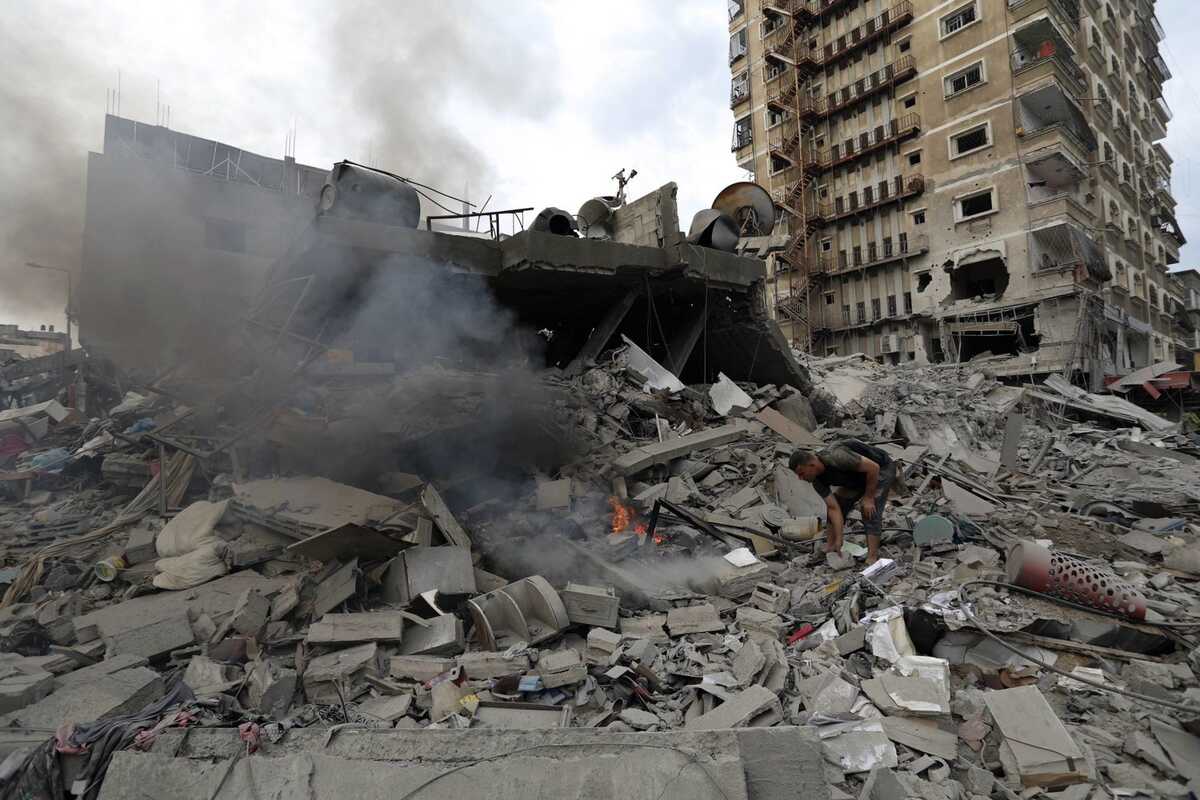
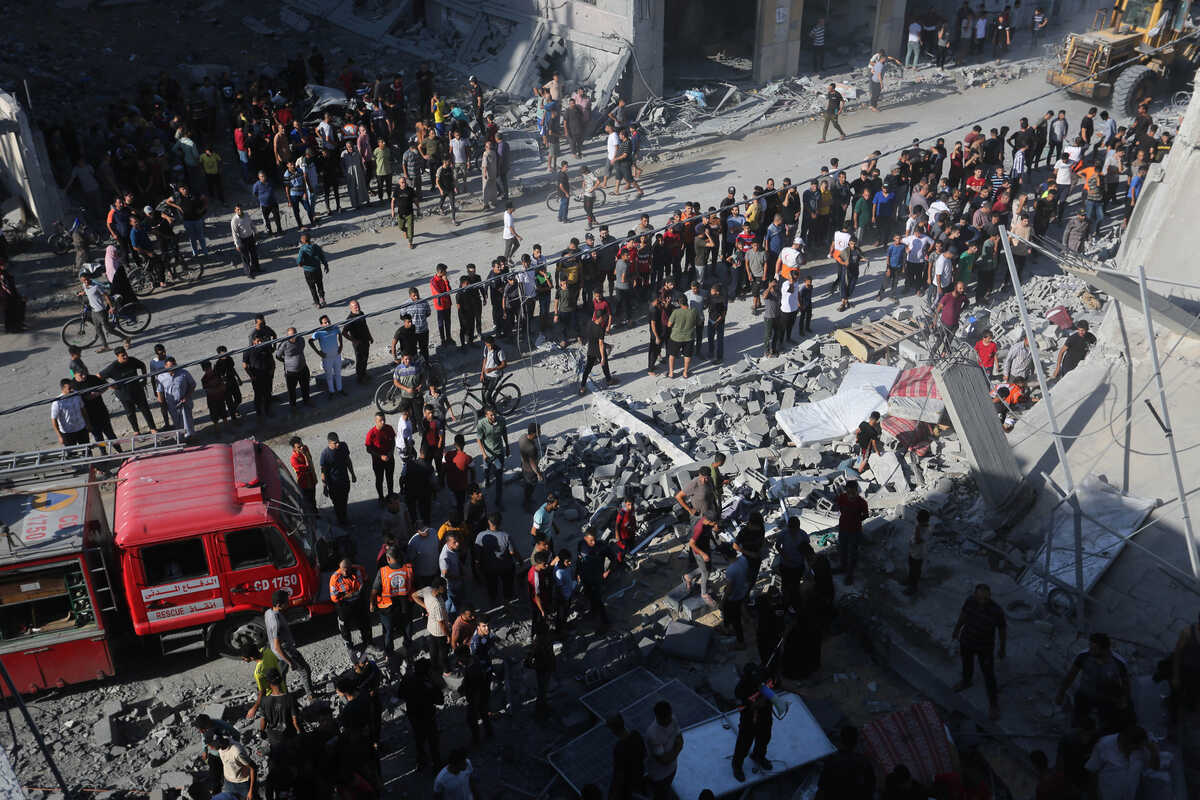
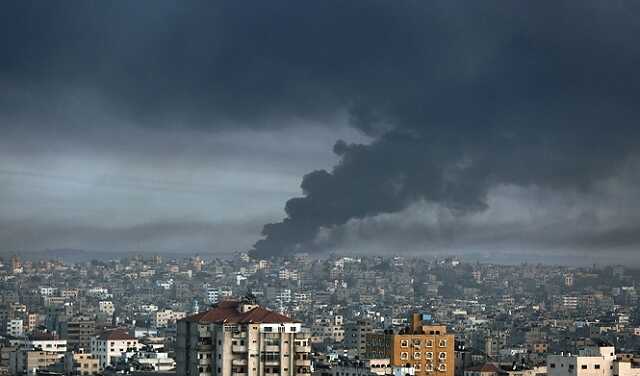
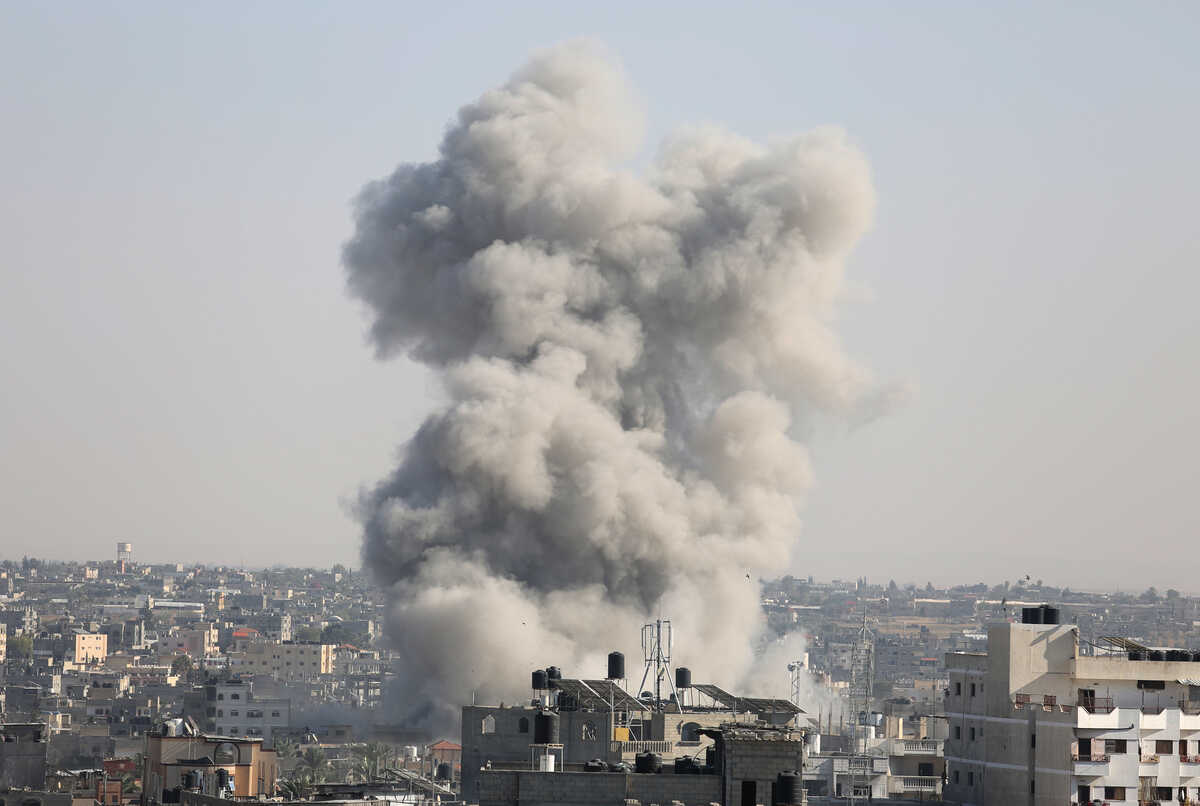
On the 21st day of the war on Gaza, Israeli raids left dozens of dead Palestinians and wounded in Khan Yunis and other areas, and destroyed more homes and mosques in the besieged Strip.


15 citizens, including 6 children, four women and two elderly people, were killed in raids that targeted two homes, one for the Muhaisen family in the Al-Amal neighborhood, and the second for the Al-Alami family in Khan Yunis, south of the Gaza Strip.


A number of citizens were killed and others were injured, including women, children and the elderly, after an Israeli warplane bombed with a missile a house for the Yassin family over the heads of its residents in the Al-Zaytoun neighborhood, southeast of Gaza City, while a number of them are still under the rubble.


The occupation artillery bombarded intensively and continuously for hours the eastern and western areas of the Al-Zaytoun neighborhood, and shells fell on citizens’ homes, causing injuries among their ranks.


Local sources confirmed the death of four citizens and the injury of others, shortly after the occupation warplanes targeted a house for the Abu Shahma family in the Ma'an area of Khan Yunis, in addition to injuries caused by an Israeli missile strike that targeted a house for the Abu Namous family in the western camp in Khan Yunis.


Occupation aircraft also bombed the White Mosque in the Beach Camp, west of Gaza City, killing and wounding citizens. They were transferred to Al-Shifa Hospital, west of the city.


The occupation navy's warships and boats fired dozens of shells towards the fishermen's port area, west of Gaza City, causing destruction in the area.


Hospitals in the Gaza Strip announced, in a non-final toll of the victims of the Israeli aggression on the Gaza Strip, that 7,028 citizens were martyred, including 2,913 children, 1,709 women, and 397 elderly people, and 18,484 citizens were injured with various injuries since October 7 of this month.

- -

PALESTINE

Fri 27 Oct 2023 8:31 am - Jerusalem Time

Israeli media: Israel informed Qatar and Egypt of its readiness to conclude a prisoner exchange deal with Hamas

The Hebrew Broadcasting Authority reported, Thursday, October 26, 2023, that Tel Aviv informed the mediators that it is ready to consider “a large-scale deal with the Gaza Strip, leading to the release of a large number of Israelis” held by Hamas.


The official authority said, “Israel informed the mediators, including Qatar and Egypt, that it is ready to consider a large-scale exchange deal with the Palestinian factions in the Gaza Strip.”


It pointed out that "the deal includes the release of a large number of prisoners held by Hamas in Gaza, while Hamas demanded the transfer of fuel to Gaza, the release of Palestinian prisoners, and a ceasefire."


For its part, the Israeli newspaper Yedioth Ahronoth, quoting senior political officials, confirmed that “there are talks to reach an agreement to release the hostages with the participation of Qatar.”


The Israeli newspaper Haaretz, citing informed Israeli and foreign sources, also confirmed that there are contacts to release a large number of detainees and prisoners held by the Hamas movement in the Gaza Strip.


The newspaper quoted one of the sources as saying that the parties leading the negotiation process hope to complete this “within two days, or perhaps less.”


The newspaper stated that the number and identities of the detainees that Hamas will release are not yet known, while "Israel looks forward to the liberation of all kidnapped civilians."


A source familiar with the talks confirmed to the newspaper that this is the plan currently on the table, but sources in Tel Aviv said that the talks may also lead to a less successful agreement, whereby not all civilians will be released, while Tel Aviv will be required to provide something in return.


According to the newspaper, the occupying state may be asked to take various steps in exchange for their release, such as releasing Palestinian female prisoners in occupation prisons, elderly and sick prisoners, or allowing the expansion of humanitarian aid brought into the Gaza Strip, including fuel.


Although Israeli officials, including Prime Minister Benjamin Netanyahu and Defense Minister Yoav Galant, are vowing to carry out a ground operation in the Gaza Strip, a number of media reports indicated that a deal between the Palestinian factions in Gaza and Israel is approaching, including a ceasefire.


For the 20th day, the Israeli army continues to target Gaza with intense air strikes that destroyed entire neighborhoods, killing 7,028 Palestinians, including 2,913 children, 1,709 women, and 397 elderly people, and wounding 18,484 people, in addition to more than 1,950 missing people under the rubble.


During the same period, the Hamas movement killed more than 1,400 Israelis and wounded 5,132, according to the Israeli Ministry of Health. It also captured more than 200 Israelis, including high-ranking military personnel, and wants to exchange them for more than 6,000 Palestinian prisoners, including children and women, in Israeli prisons. .


Source: Arabic Post

PALESTINE

Fri 27 Oct 2023 8:16 am - Jerusalem Time

The balance of sympathy is running out... Bloomberg: Israel is losing Western support as anger grows over bombing of Gaza

Queen Rania Al-Abdullah had the opportunity to express her opinion on the events of October 7, when she was asked in an interview with CNN how she felt, as a “Palestinian Arab, a human being, and a mother?” The Jordanian Queen began to strongly condemn the Israeli bombing of Gaza and the double standards followed by the West, which put what happened in southern Israel in parallel with what is happening in Gaza. She asked: “Are we being told that it is wrong to shoot an entire family, but it is acceptable to bomb them to death?”


The interview, which was received angrily in Israel, represents part of the growing divergence between the way the Israeli state views the conflict and how the rest of the Middle East, the West, and many other regions view it, according to Bloomberg.


Within Israel, a strong feeling of anxiety was evident, with a new opinion poll showing that 64% of Israelis now fear for their physical safety. Hamas continues to fire rockets into the country every day, while militants try to infiltrate across the land or sea, despite the historic bombing of the Gaza Strip. Security officials believe that some of those who entered on October 7 may be hiding in preparation for a second attack.


“Hamas attacks did not happen in a vacuum.”

While many outside Israel see things from a different perspective. On Tuesday, October 24, United Nations Secretary-General António Guterres said, “Hamas’ attacks did not occur in a vacuum. The Palestinian people have been subjected to stifling occupation for 56 years.”


Israel's ambassador to the United Nations, Gilad Erdan, was so angry at the idea that Hamas' violence needed this context that he called on Guterres to resign. This feeling was not limited to those on the right of Israeli politics. Opposition leader Benny Gantz previously posted on Twitter, saying: “These are dark days when the Secretary-General of the United Nations condones terrorism,” as he put it.


But Germany, which was quick to show its support for Israel in the days following the October 7 attacks, confirmed that its ally's request was rejected. German government spokesman Stephen Hebstreit said in Berlin: “The Secretary-General of the United Nations, of course, has the confidence of the German government.”


Israelis do not deny that the events of October 7 require context. But for them, this context is not about mistreatment of Palestinians; They view the Hamas attack as “an extension of anti-Semitic attacks over the centuries,” they believe.


Western leaders showed their solidarity and support through Tel Aviv. This comes after a visit by US President Joe Biden, who provided billions in military aid and referred to what he believes is “painful Jewish history.”


The stock of Western sympathy for Israel is running out

After that visit, the Israelis felt protected. They believed that their plan to destroy Hamas would gain global sympathy, and with Israeli fighter planes flying in the skies of Gaza and their insane bombing of civilians; Which resulted in the killing of thousands. This sympathy came with consequences that the Israelis did not expect.


On Wednesday, October 25, Turkish President Recep Tayyip Erdogan canceled a visit to Israel that was scheduled to take place later this year, and added, “Hamas is not a terrorist organization, but rather a group of liberators and mujahideen who are defending their land and people. We will not allow Never, killing children." Türkiye also froze plans for energy cooperation with Israel.


Elsewhere in the Muslim world, Malaysian Prime Minister Anwar Ibrahim said no Muslim leader expected the events in Gaza to be resolved easily. He added that the reason for this is that "Israel has become very arrogant with the support of the United States and Europe. It is crazy to allow the slaughter of people, the killing of children, the bombing of hospitals, and the destruction of schools. It is the height of barbarism in this world."


Israel is trying to portray Hamas in the West as "the new ISIS" and has pledged to destroy the armed Palestinian movement, which the United States and the European Union classify as a terrorist organization.


“Describing Hamas as the new ISIS is not only analytically inaccurate, but also carries the risk of making all Gazans vulnerable targets,” said Lina Al-Khatib, director of the Middle East Institute at SOAS in London. “Arabs and Muslims widely reject this simplistic and dangerous characterization.” .


The war will expand

Many world leaders are calling for a ceasefire that would allow more aid into Gaza, although some describe this as a "humanitarian truce." On Tuesday, October 24, eight trucks entered, followed by 17 more on Wednesday, October 25, according to Israeli officials, who said their officers were checking all the trucks to make sure nothing was entering to help Hamas.


Tommaso della Longa, spokesman for the International Federation of Red Cross and Red Crescent Societies, said earlier this week that the aid that has arrived so far is “a drop in the ocean” of needed aid.


In Israel, as fears grow that Hezbollah may join the war and open a front in the north, some are talking about leaving for the United States or Europe, at least for a while. While others say that anti-Israel demonstrations in Western cities make them feel less safe abroad than at home.


While many Israelis say that this is a battle for the “Jewish homeland,” it is a “second war of independence,” as they claim. But it is still unclear what this will entail internally. Officials say weapons license applications are expected to triple.

source: Arabic Post

ARAB AND WORLD

Thu 26 Oct 2023 10:46 pm - Jerusalem Time

Washington: Biden sent a warning to Khamenei against targeting American forces

The White House confirmed today, Thursday, that US President Joe Biden delivered a direct message to Iranian Leader Ali Khamenei, warning against targeting American soldiers in the region, after American forces were attacked in Iraq and Syria.


White House spokesman John Kirby said in a press briefing: “The message was conveyed directly.” He did not go into details.


Kirby's statements came at a time when American officials are still concerned about the expansion of the conflict in the Middle East after the attack by Hamas militants, on October 7, on Israel, with the US Department of Defense, the Pentagon, intensifying surveillance and publishing it. Additional military assets and personnel in the area.


The Pentagon said on Tuesday that American forces were attacked more than ten times in Iraq and Syria during the past week.


President Biden said yesterday, Wednesday, that he warned Khamenei that the United States would respond if American forces continued to be targeted, but he did not specify how he conveyed the message.


The US President said, in a press conference: “My warning to the Ayatollah is that if they continue to move against those forces, we will respond, and he must prepare.” “It has nothing to do with Israel.”


Iran commented on Biden's warning; Mohammad Jamshidi, the official in charge of political affairs in the Iranian president’s office, said, “The American messages were not addressing the Iranian leader (Ali Khamenei), and did not include anything other than a request from Iran.”


The Iranian official wrote, in a post on the “X (formerly Twitter)” platform: “If Biden believes that he has issued a warning to Iran, he should ask his team to show him the final text of the messages.”


The official IRNA news agency reported, citing an informed source, that Washington urged Iran and the “resistance” groups to exercise “restraint,” adding that Iran “explicitly said that the (resistance) groups in the region operate independently.”


The source said: “There are two letters so far sent from America to Iran, and dozens of letters from America and some Western countries to (resistance) groups in the region, especially the Lebanese Hezbollah.”


Iranian Foreign Minister Hossein Amir Abdollahian told the United Nations General Assembly that Washington “is not in a position to call on others to exercise restraint and not expand the scope of the war,” warning of “uncontrollable consequences.” Because of what he described as American logistical support.


Earlier today, The Washington Post revealed that Biden is under increasing pressure to strike Iranian proxies, after several attacks on American forces in Syria and Iraq.


It quoted American officials, whose identities were not revealed, that Biden is considering striking groups linked to Iran if American forces are attacked in Syria and Iraq.

PALESTINE

Thu 26 Oct 2023 9:48 pm - Jerusalem Time

Israeli voices, including Netanyahu's allies, demand his resignation and army commanders

Demands are expanding in Israel for the resignation of Prime Minister Benjamin Netanyahu, and the leaders of the army and intelligence, at a time when the ground invasion of the Gaza Strip is being postponed, amid official statements that the war will last for months, and the families of Israeli prisoners go out in a demonstration, warning against forgetting their cause.


The leaders of the protest against the government’s judicial plan express their concern that one of the reasons for prolonging the war is to maintain the leadership responsible for the failures to take advantage of the time for personal or partisan purposes and interests.


It was noted that demands for this resignation also began to rise among the ranks of the right, among Netanyahu’s allies, especially among the settlement forces and the extreme right.


The news website for Haredi Jews around the world, “Bahdrei Hadrim,” published an editorial saying that senior experts on the right and left in Israel believe that Netanyahu is retreating from his strict political rhetoric, twisting his tail, and searching for arguments to justify not carrying out a ground invasion. The website adds in an editorial that the goal set by the government and army leadership to annihilate Hamas cannot be achieved from the air. This position is not an emotional one stemming from a desire for revenge, “but rather it is a strategic interest in restoring the Israeli deterrent power that was destroyed by a few thug criminals from Hamas.” Even if it was carried out at the expense of thousands of poor Palestinian victims, it is directed at the powerful and great enemy (Hamas), and Hezbollah and Iran behind it.”


On the website of extremist settlers in the West Bank, “Channel 7,” writer After Shaki published an article demanding the resignation or dismissal of Netanyahu. He said that he loves the man and appreciates his great abilities, “but his history was full of serving the ideas of the left and disavowing the ideas of the public that loves him and elects him.” This was the case when he signed the Hebron and Wye River Agreements and when he gave the Bar-Ilan speech on the two-state solution. But today he is wasting a historic opportunity to liquidate Hamas and evading it. “In this, it deals a serious strategic blow to Israel.”


Even lawyer Nadav Hatzni, one of the settler leaders in the Hebron area, who writes a weekly article in the Yedioth Ahronoth newspaper, attacked Netanyahu at the “killing point.” He is an old friend of his and knows that he is obsessed with likening himself to the historical British leader Winston Churchill. He wrote an article in which he attacked Netanyahu’s “cowardly” policy.


He said that this is the time for Israel to show its seriousness in fighting Hamas, even if a large number of casualties occur in Israel, as the war cannot be without cost.


He added, "Netanyahu bears no resemblance to Churchill. In fact, he resembles the British Prime Minister who preceded Churchill, Arthur Noel Chamberlain." This Chamberlain has become in history an example of an acquiescent, hesitant, and cowardly politician, who submitted to Hitler in 1938 and signed the Munich Agreement with him, granting Germany a region of Czechoslovakia.


Protest leaders return

On the other hand, the demand for resignation is also raised by the protest leaders, who organized the huge demonstrations against the government because of its plan to overthrow the ruling system and weaken the judiciary. Among the most prominent of them is the writer Uri Misgav, who published (Thursday) an article in the Maariv newspaper, in which he mocked the Likud leaders who say: “The one who failed is the one who must reform. We are prohibited from changing the leader.”


He said: “This is almost like saying after the Titanic disaster that if the captain had survived, we should have given him another ship.” He added: “The State of Israel cannot allow itself to continue with this failed and irresponsible leadership, a leadership that is negligent and allows for months and years to launch missiles at our towns, our citizens, and our children. Many citizens from all segments of the population want another leadership, a leadership that does not change its approach according to the needs of remaining in the seat. Netanyahu has no interest in the victims and their families. The Israelis and their army will not be able to defeat jihadist terrorism as long as this person is the prime minister. He must go now.'


The families of the Israeli prisoners went out in a demonstration in Tel Aviv, during which they expressed their concern that their cause would be forgotten in this war and demanded that they leave everything and enter into negotiations to release their sons and daughters.


In the face of this wave, retired General Yitzhak Brik issued an explicit call demanding that the first military leadership resign, and he meant both the Chief of Staff of the Army, Herzi Halevy, and the heads of the Southern Brigade of the Army and Intelligence.


This call is an attempt by Netanyahu, who has met with Brik three times since the outbreak of the war, to strike a balance between his responsibility for the failure and the responsibility of the army and intelligence. Although Netanyahu stresses in his popular appearance that he is working collectively in leading the war, with Defense Minister Yoav Galant and the minister who came from the opposition, Benny Gantz, and is working in full coordination with the Chief of Staff, his men are attacking these partners relentlessly.


Netanyahu had delivered a speech (Wednesday evening) to send a message to those who accuse him of cowardice. He said, “The return of Israeli prisoners and hostages in the Gaza Strip constitutes one of the first goals of the war.” He confirmed that the army intends to invade Gaza by land, at a time, size, and extent determined by the “war cabinet,” according to the supreme interest.


He reiterated “the goal set by his government for the war, which is to eliminate the Hamas movement and kill all its members,” threatening all members of the movement “underground or above” that they are “condemned to death.”


He said that the timing and size of the ground attack on the Gaza Strip are being determined with the Chief of Staff of the Israeli Army, Herzi Halevy, and added: “I will not determine when, how and how much. I will not detail the set of considerations, most of which the public does not know.” Then he went to the people of Gaza, advising them to leave south.

PALESTINE

Thu 26 Oct 2023 9:04 pm - Jerusalem Time

Israeli settlers threaten to commit massacres against Palestinians in the West Bank

Settlers threatened to commit massacres against the Palestinian people in the West Bank.


This came in leaflets placed by settlers, today, Thursday, on farmers’ vehicles located on the edges of the road along the main street near the town of Derastia, northwest of Salfit.


The leaflets included threats to Palestinian citizens in the West Bank, saying that they must leave their villages and towns and go to Jordan, and if they do not leave, the Palestinians will be attacked and displaced by force.


The mayor of Derastiya, Firas Dhiyab, said that what the settlers did was an old, new and clearly visible method, calling on citizens to be cautious and wary of the settlers’ attacks that aim to displace the Palestinian from his land.

OPINIONS

Thu 26 Oct 2023 8:58 pm - Jerusalem Time

Israeli Press: Beyond Gaza, the Confrontation with Iran

Ehud Yaari

Ehud Yaari

Opinion Writer

Iran’s leaders seem to have concluded that the objectives of the October 7 attack – which it encouraged Hamas to undertake – were achieved in a manner that surpassed their expectations. They apparently see no need to sacrifice their most valued asset (Lebanon’s Hezbollah) in the next stage of the war. Therefore, Iran is now bent on trying to avoid getting Hezbollah, and its own forces, involved in a full-blown war with Israel. 


The dramatic reinforcement of the US military presence in the region is certainly contributing to their concerns. Tehran has always regarded its Lebanese proxy – with fighting formations and arsenal of 140,000 missiles, a few hundred of which are already equipped with precision guidance – primarily as a deterrence against strikes on Iran’s own nuclear installations. 

They may reassess this position once the IDF starts a major ground offensive in Gaza. For now, however, their goal is to deny Israel the chance of fulfilling its commitment to destroy Hamas and remove it from governing the Gaza Strip. If Hamas maintains control of Gaza, even after suffering major punishment, Iran would consider that a great victory. 


Iran’s main interest was – and remains – to prevent the US from brokering Saudi-Israeli normalization. Foreign Minister Amir Abdollahian wasted no time declaring during the first week of the war that this goal had been achieved. For his part, Prince Turki Al Faisal, former head of Saudi intelligence, has confirmed that in his view, sabotaging the deal was the aim of the operation.

The Iranians are extremely concerned that Saudi-Israeli normalization would pave the way for the establishment of a US-led security architecture in the Middle East, in which Arab and Israeli armies and intelligence services would cooperate under the direction of CENTCOM. They are worried that while they pressure American units in Iraq and Syria, hoping to see them withdrawn, the US is fortifying its supremacy in the region by forging unwritten alliances between Israel and some of the Gulf states. 

This was reflected during the course of the current fighting by a huge billboard in the Iranian capital reading: ”The battle zone is Tel Aviv not Tehran.” 

October 7 dealt a severe blow to Israel’s image as a powerful actor, enabling Iran to pour cold water on those Arabs seeking reconciliation and collaboration with the Jewish state. Israeli intelligence was stripped of its formidable reputation, the armored units and infantry were not deployed properly for defense and the air force was not on alert. All this happened despite numerous pieces of intelligence that should have alerted Israel to the possibility of that Hamas intends to move from exercise mode to attack. 

Throughout the days of raging air force bombings in Gaza, and the systematic launching of hundreds of rockets every day into Israeli cities and villages, the Iranians kept quoting Hasan Nasrallah’s old description of Israel as “The House of the Spider” – weaker than cobwebs – that is slowly but surely disintegrating. 

The evacuation of a total of 100,000 inhabitants from towns and smaller communities in the Gaza border region and the north of Israel is interpreted by them as a precursor for the unraveling of Israel in the future. 

By igniting Pro-Palestinian sentiments all over the Arab world, the “Axis of Resistance” – as Iran and its allies define themselves – managed not only to stall progress on the Saudi-Israeli track but are to cause strain in the relations between Israel and its two oldest peace partners – Jordan and Egypt. Both president Abd al-Fattah Sisi and King Abdullah may soon have to bow to public calls to suspend diplomatic ties, recall ambassadors or display dismay in some other manner. In Cairo and many other cities in Egypt, demonstrators – for the first time ever – were urging Hizbullah to pound Israel with missiles and some switched to screaming “Down with Sisi” chants. 

In Amman the police had a hard time preventing the crowds from storming the Israeli embassy (vacant, due to precautionary instructions) and blocking protesters from reaching the border with Israel. Additional sources of potential trouble are Iranian-sponsored Iraqi Shiite militiamen gathering at the Iraq/Jordan border crossing point, demanding to be allowed “to get to the front.” 

On Jordan’s border with Syria, small teams of Hizbullah and other militias are setting up positions for attacks on the Golan. In the West Bank, thousands are demonstrating against president Mahmud Abbas and in support of Hamas. The PA Presidential Guard is deployed around Abbas’ compound in Ramallah, the Muqata’a, in view of classified reports of possible attempts by Hamas members together with some units of the security agencies to take over.

In the weeks preceding October 7, Iranian Revolutionary Guard Corps officers, headed by Quds Force commander General Qaeni, held secret meetings in Beirut and Damascus with Nasrallah and members of his “Jihad Council,” Hamas and Palestinian Islamic Jihad leaders. They assisted Hamas’ military wing, ”Izz al-Din al-Qassam Brigades,” in adopting a version of the plan devised for Hizbullah’s commando troops, the Radwan Force, to mount raids into Israel. The information available to this writer from reliable sources indicates that – for reasons of secrecy – the Iranians were not advised of the zero hour or the exact scale of the attack. However, Hamas received from its Iranian interlocutors a promise to open up other fronts, though not a commitment for an all-out war by Hizbullah or Iran. It is quite telling that a fortnight after the war broke out, one of Hamas’ top leaders, Khaled Masha’al, expressed in public his disappointment with the scope of skirmishes initiated by Hizbullah, declaring that ”history is not written with hesitant, limited steps.”

The Hamas military leadership – Yahia Sinwar, Muhammad Deif and a handful of their colleagues – had to choose between opting for a limited raid to take hostages, that may later be exchanged for Hamas prisoners in Israel, or staging an offensive on a scale far bigger than ever before, all along the 70-kilometer border of walls and fences between the Gaza Strip and Israel. 

The Iranian promise of backing, steered them towards the more ambitious course: a brigade-size assault by their commandos, the Nukhba (“Elite”), employing motorized gliders, pick-up trucks with machine guns and motorbikes for a dawn attack on 22 villages, two towns and 11 army bases. Some of the Hamas groups penetrated 30 kilometers deep into Israel. 

In addition, Hamas naval units attempted landings on the beaches near the Israeli coastal cities of Ashqelon and Ashdod. As we learned from brochures they carried with them, as well as interrogations of captured terrorists, their orders were to break into houses: all houses in all villages, take hostages and kill all others. The orders given to them were to stay for days, even weeks if possible, inside Israeli territory. Quite a few brought with them Captagon and other drugs to increase endurance, just like those that were distributed by ISIS to its men before engaging the enemy.

The Hamas military leadership decided to risk this a large-scale attack out of a desire to make sure the Israeli response would be declaring a war rather than just launching one more round of air strikes lasting at most a few weeks, without substantial ground operations. One can assume that Hamas felt that Hizbullah and Iran would be hard pressed to deliver on their promise for a multifront response, once the IDF was maneuvering into Gaza. The coming days will show whether this bet was justified.

To understand the calculations of Iran, Hamas and Hizbullah, one has to bear in mind the principles of the “Muqawwama (Resistance) Doctrine” adhered to for decades. This doctrine was refined by the late Qassem Suleimani, founder of Iran’s regional network of militias, who was assassinated by the US near Baghdad in 2020.There is no published document elaborating this doctrine, but this writer summed up its main pillars in an article in The Jerusalem Report published 17 years ago: Peace is not an option. 

The Arab world must not, because of temporary hardship, be dragged into recognizing Israel and accepting its existence through peace agreements. When in need of a respite, it is permitted to reach hudna (“armistice”) agreements, valid for a limited period only, with the “Zionist regime.” Thus both Hizbullah and Hamas could maintain long periods of calm along Israel’s borders.It is not necessary to wait for there to be a balance of power.

Unlike Egypt’s President Nasser, who aimed to build up enough military might to beat Israel, or President Hafiz al-Asad, who sought what he called “strategic parity,” the disciples of the Muqawwama Doctrine reject any unnecessary delay in the fighting. On the contrary, even when the balance of forces is clearly in the enemy’s favor, they uphold the imperative of continual warfare, if only on a small scale. The military disadvantage can be narrowed through innovative tactics.

Do not fight over territory. The goal of the Muqawwama is the methodical erosion of the enemy’s resolve. There is no need to defend territory against Israeli occupation, or to try to conquer land. The essence is to spill blood, and since that is the case, it is better to focus on the civilian population as the primary target. The motto is blood, not land, and the effort is directed at denying victory to the enemy, not at achieving a quick result.

Jihad is not a national struggle. In effect, Iran and its associates in Lebanon and Palestine have reformulated the old slogans of the “Popular War of Liberation” fashioned by nationalists such as Yasser Arafat and the leaders of the Algerian revolution, and have injected it with exclusively Islamic content. Fighting is undertaken for the sake of Allah, and not out of patriotic sentiment.

The Arab state is not a suitable vehicle. The Muoqawwama is not merely a military system, but a comprehensive, alternative regime. The Arab states constitute a flawed and inefficient apparatus, unfit to conduct the historic battle. The task must be shouldered instead by the Islamic movements that, alongside their military activity, engage in societal reform through educational, health and business institutions.“

By encouraging and supporting Hamas’ “Al-Aqsa Flood” operation, Iran managed to subvert, for the time being, President Biden’s vision for a broad Arab-Israeli partnership in the Middle East. Yet Israeli success in destroying Hamas’ military capabilities may turn the tables. Taking Hamas out of the regional equation would constitute a painful setback for Iran’s aspirations to become the dominant power in the Levant. 

The Israeli “Swords of Iron” counter-offensive must be given ample time to carry out its mission, including its focus on minimizing losses of Israeli soldiers and Gazan civilians. No one should expect a quick campaign. The IDF can break through in few hours into the heart of Gaza and sit on top of the large tunnels network, but will not opt to send soldiers underground and has to keep in mind that hostages are held there. 

This dilemma may translate into attrition tactics, waiting for Hamas to exhaust its fuel supplies used to ventilate the tunnels. We may be looking at a series of major raids instead of one decisive offensive, while the air force maintains pressure by hunting down Hamas operatives and destroying infrastructure. Whatever the tactics chosen by the IDF, the ultimate responsibility falls on the Israeli public to disprove Nasrallah’s fragile cobweb description of their society.


Source: The Jerusalem Strategic Tribune

Ehud Yaari is the chief Middle East commentator of Israel television Channel 12 and the Lafer International Fellow of The Washington Institute for Near East Policy.


ARAB AND WORLD

Thu 26 Oct 2023 8:11 pm - Jerusalem Time

A fire broke out in southern Lebanon due to Israeli bombardment with incendiary phosphorus shells

In light of the daily Israeli bombing of areas adjacent to the border in southern Lebanon for nearly two weeks after the “Al-Aqsa Flood” operation carried out by Hamas in Israel, this bombing on the night of Wednesday-Thursday, October 26, 2023, caused a major fire in the town of Alma Al-Shaab, which spread to the vicinity of a number of homes and firefighting teams were unable to contain it quickly.


In the morning, the town's residents appealed to "UNIFIL forces, the Lebanese Army, and Civil Defense to intervene quickly and work to extinguish the fires that broke out as a result of the Israeli bombing." Volunteers rushed to fight the flames without being able to control them due to the speed of the wind.
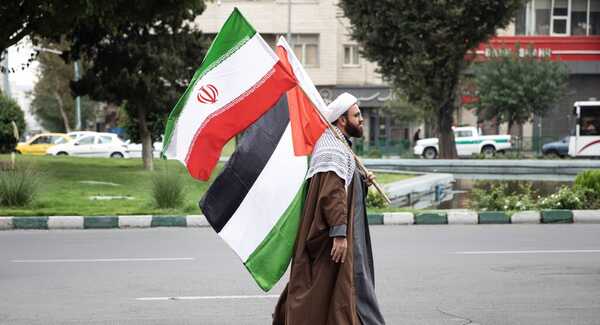

These fires destroyed large areas of olive trees, which were abundantly planted in the region.


As for the residents of the town of Alma al-Shaab, approximately 70 percent of its population was displaced due to the Israeli bombing, as in other southern towns on the border with Israel.


The fire originally broke out in a forest area separating Alma Al-Shaab from the neighboring city of Naqoura. The mayor of Naqoura, Abbas Awada, accused the Israeli army of "firing phosphorous shells at night, which led to the outbreak of the fire."


The border region witnesses almost daily confrontations between Lebanese Hezbollah and Israel, which led to the killing of 57 people in Lebanon, including 44 Hezbollah fighters and four civilians, one of whom is a Reuters news agency photographer. Israel announced the killing of 4 people.

PALESTINE

Thu 26 Oct 2023 7:49 pm - Jerusalem Time

Amr Mousa: The West’s Beguiling Smile Does Not Tempt Anyone Anymore

By Amr Moussa

The international conference called for by Egypt that was held on October 21st did something important. It clarified or confirmed the political and cultural fault lines of what looks like a clash between two blocs with conflicting interests, or rather irreconcilable basic moral assumptions.


At the global level, efforts to reshape and update the global order are underway. It has become clear that the Western community is not ready to develop its concepts, which is among the main reasons that the multilateral system has lost credibility, especially with regard to maintaining international peace and security. I am referring to double standards. The opposite of the ideal that was defended in the Ukraine is being defended in Israel-Palestine. That was clear from the interventions of most Western countries at the Cairo Conference, which upset large segments of Arab, regional, and global public opinion.


The discussions in Cairo have raised a number of alarming questions regarding the reformulation of the international order. If the Western does not change its approach, I believe that the “Global South”, as they call it, will take this into account in formulating its position on this issue.


Indeed, we must take a proactive approach to this endeavor, boldly confronting this perilous pandemic and the duplicity of double standards. Otherwise, attempts to develop the international order would be as futile as plowing the sea.


In this context, we ask: What morally justifies the Western nations’ refusal to pass the Security Council regarding humanitarian assistance for civilians in Gaza, which has a population of over two million people? Furthermore, why do they refuse a ceasefire? What are they waiting for?


We in Egypt know the answer. A ceasefire was delayed in October 1973 to allow the faltering Israeli military to “recover,” and today, it is now being delayed to help Israel prepare for a military incursion into the Gaza Strip. So, what constitutes legitimate defense? Can a state militarily occupying territories legitimately defend? Is assaulting civilians and enforcing collective punishment legitimate defense?


Is the demolition of Palestinian villages in the West Bank and the expulsion of their residents legitimate defense? Is erasing the Palestinian people, as demanded by extremist ministers in the current Israeli government, legitimate defense? Does anyone but Israel have a right to defend themself? This is, indeed, a regrettable case of double standards.


At the regional level, the discussions at the conference have made it clear that while Arab nations are ready for peace, as is apparent from their initiatives and agreements, they are not willing to make the concession that the West has granted Israel.


We stand on the brink of a perilous confrontation with the notions brought to light at the Cairo Conference. Many continue to believe they can exert pressure on this government or that authority to do favors for Israel. They heard unequivocal responses on this matter from Egyptian President Abdel Fattah Al-Sisi, Jordan's King Abdullah II, and Saudi Foreign Minister Prince Faisal bin Farhan at the conference. Their words weren't only directed to those in the West; they


also reassured their concerned citizens that things are under control. The Western smile, which had long beguiled many Arabs, entices no one now, and the promises made regularly are not taken seriously anymore.


Indeed, the only way to salvage Arab-Western relations is to be serious. I urge everyone to recognize the considerable frustration and anger of the Arab people for this and other reasons. I also want to note, here, that the region is not inhabited by Arabs alone, and they are not alone in their anger.


I would also like to call on peace advocates in Israel itself to clearly voice their position on the prospects for peace and justice. I invite them to express their opposition to their governments’ extremist policies towards the inhabitants of the occupied territories and their refusal to grant the Palestinians their right to an independent state. I envision a regional coalition that includes peace advocates in Israel changing the picture and sending those with “double standards” a stern message: You are very mistaken.


Israeli politicians should know, and I am sure they do now, that the Palestinian question will not evaporate, sink, or be buried in the desert sand. It will explode in everyone's faces so long as its people are denied their rights and their very existence is negated. They must know that their definition of security is inadequate. Striking civilians will not grant them security, nor will occupation, land confiscation, or oppression of people.


True security can only be founded on an “equilibrium,” that is, on balanced relations and mutual acceptance. This is true for the Camp David Accords, which worked because no one enabled Israel to evade its obligation to comply with the deal’s stipulation. Indeed, this equilibrium can also be found in the Interim Agreement on the West Bank and the Gaza Strip (Oslo 2). However, Israel went on to violate it because those “protecting” it allowed it to not hold up its end of the bargain. And so the region - no, the world - is in the position we find ourselves in today, facing everything that has happened since October 7.


Moreover, Israel and its officials must recognize that their systematic effort to depopulate the occupied territories of their inhabitants, forcing the displacement of Palestinians as part of a plan to expand the Jewish state and end the prospects of a Palestinian state, has become blatantly transparent. We reject it. It would be challenging, indeed impossible, to compel Arab nations and their people - I repeat, their people - to accept this.


Now, what next? What is to Be Done? I am uncertain if the West in its entirety can accept to do what is necessary, as it is trapped in a mindset of double standards.


In my opinion, the Cairo Conference achieved some important humanitarian outcomes, such as opening crossings, allowing the entry of aid, and discussing the release of some detained civilians... However, the conference also achieved a lot strategically. It opened the door to critical discussions regarding the legitimate defense and its limits.


What the European representatives had to say in this regard is dangerous. It could negatively affect the international order, which requires a thoughtful Arab position to confront these attempts. In this regard, I propose that we call on the international community, the Security Council, or the United Nations General Assembly, to hold discussions on this matter. This is especially given that the US Congress, it has been reported, is considering granting Israel this right after the legal advisors realized that the United Nations Charter and the international law do stipulate that Israel is exercising its legitimate right to defense in this case, as it is, in most aspects is a reaction to the policies that occupier has taken to the detriment of the occupied population. This constitutes a clear violation of the Fourth Geneva Convention Relative to Protection of Civilian Persons in Time of War.


Last but not least, everyone has spoken - in one way or another, with and without good intentions - about the “political future” and the need to open horizons, which is something we should not ignore. We should strike the iron while it is hot. In this regard, I call on the Arab countries, whether within the framework of the Arab League or any other framework for collective Arab action that includes Egypt, Jordan, and the Kingdom of Saudi Arabia, along with other Arab countries wishing to join, to request that this matter be formally discussed in the Security Council without the need to take urgent decisions. We must call on those concerned to help open this political horizon towards a just settlement of the Palestinian question that grants them a state and ensures all of our security.


Amr Moussa is a former Arab League Secretary General and former Foreign Minister of Egypt