PALESTINE

Thu 14 Dec 2023 7:55 pm - Jerusalem Time

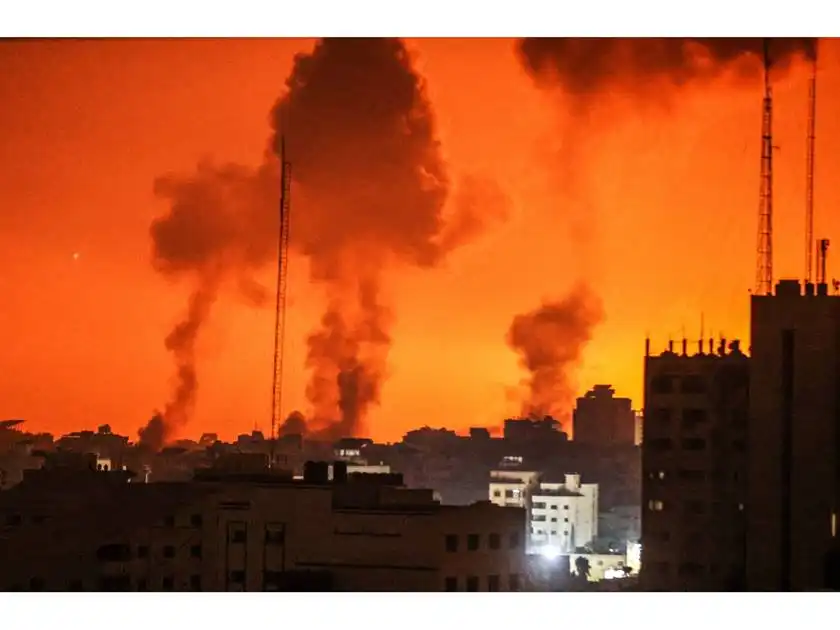
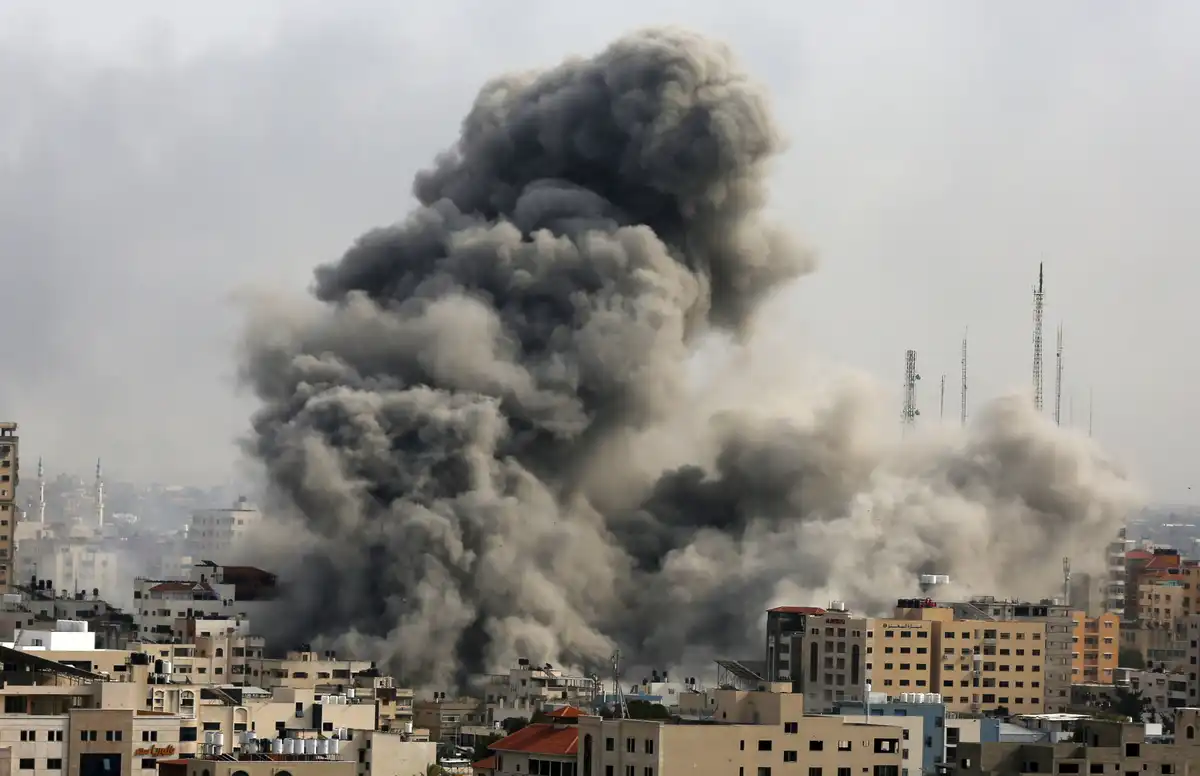
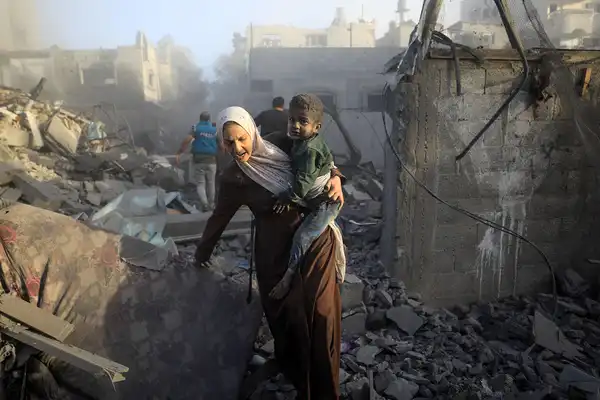
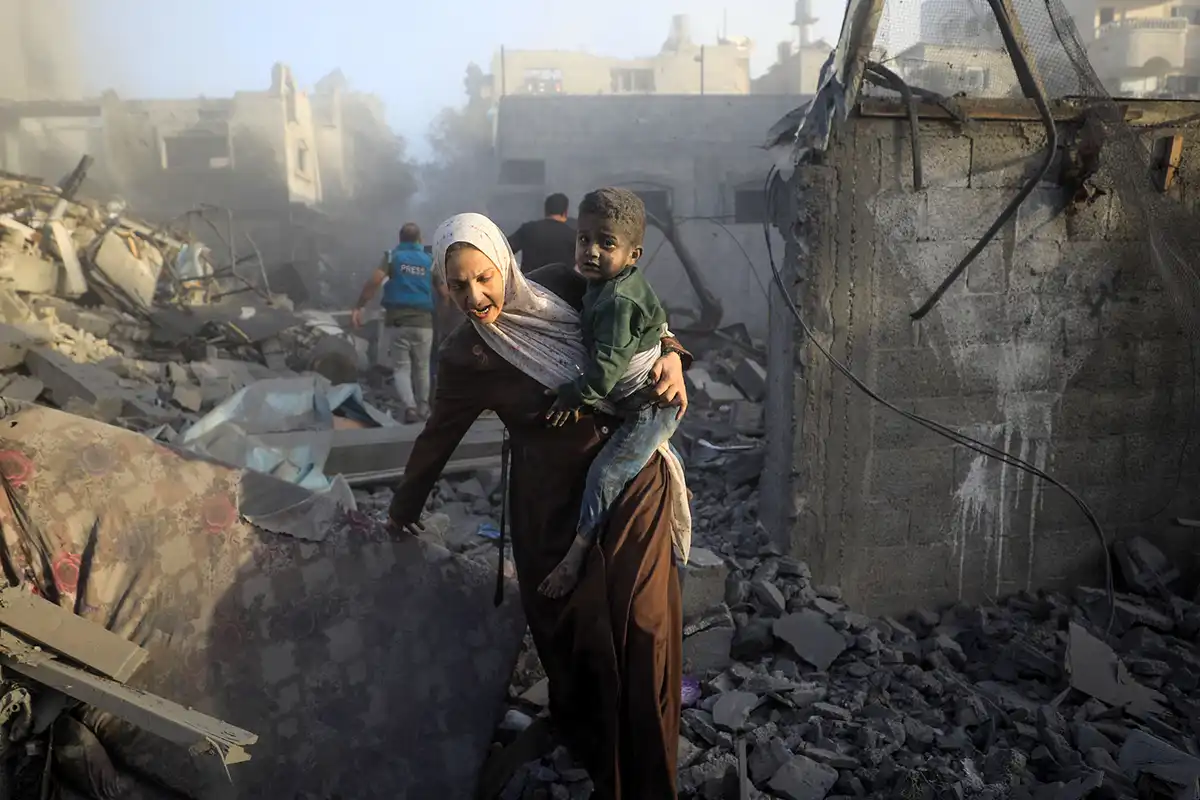
Israel threw 29,000 ground-to-air shells into Gaza

The American CNN network said that an assessment by the US Office of the Director of National Intelligence concluded that Israel dropped 29,000 ground-to-air missiles on the Gaza Strip.


It stated that the evaluation concluded that nearly half of the munitions dropped by Israel on Gaza were unguided and inaccurate bombs, or known as "dumb bombs."


The network quoted an occupation army spokesman who refused to comment on the type of ammunition used in the Gaza Strip.


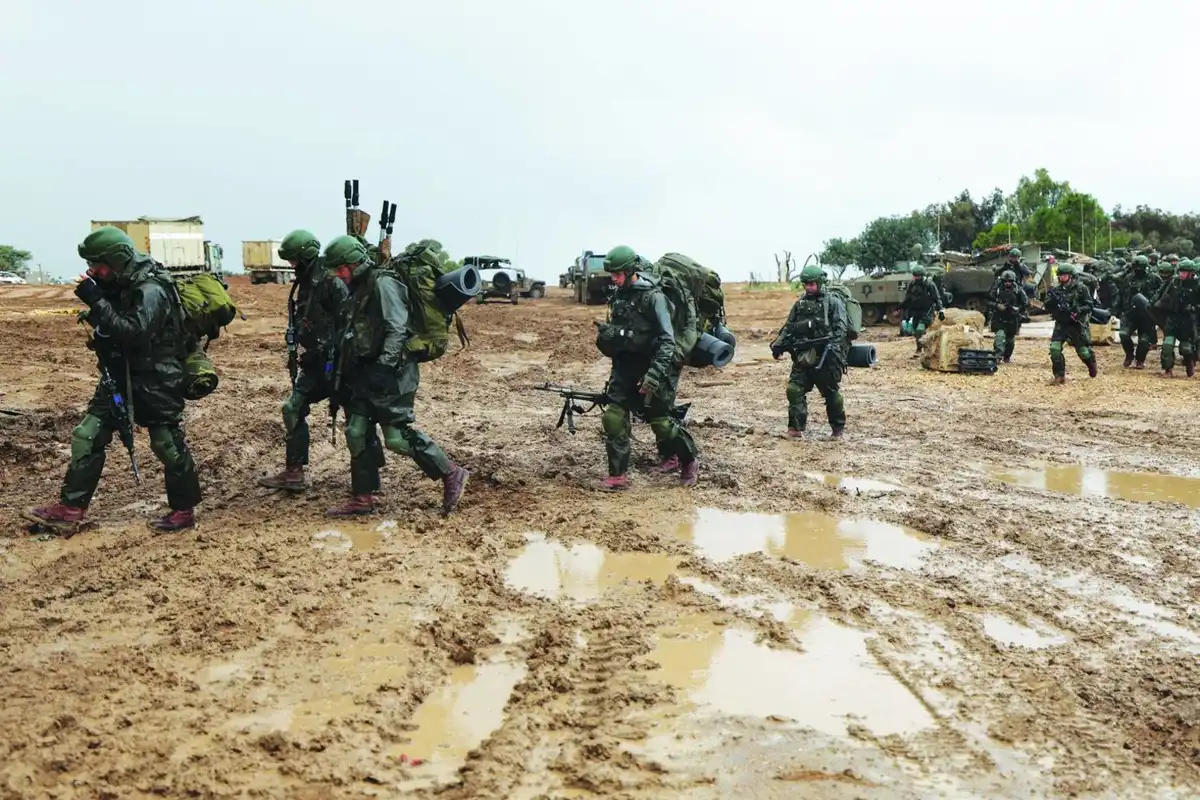
The Israeli occupation army announced that the Air Force carried out more than 500 air strikes this week in the Gaza Strip.


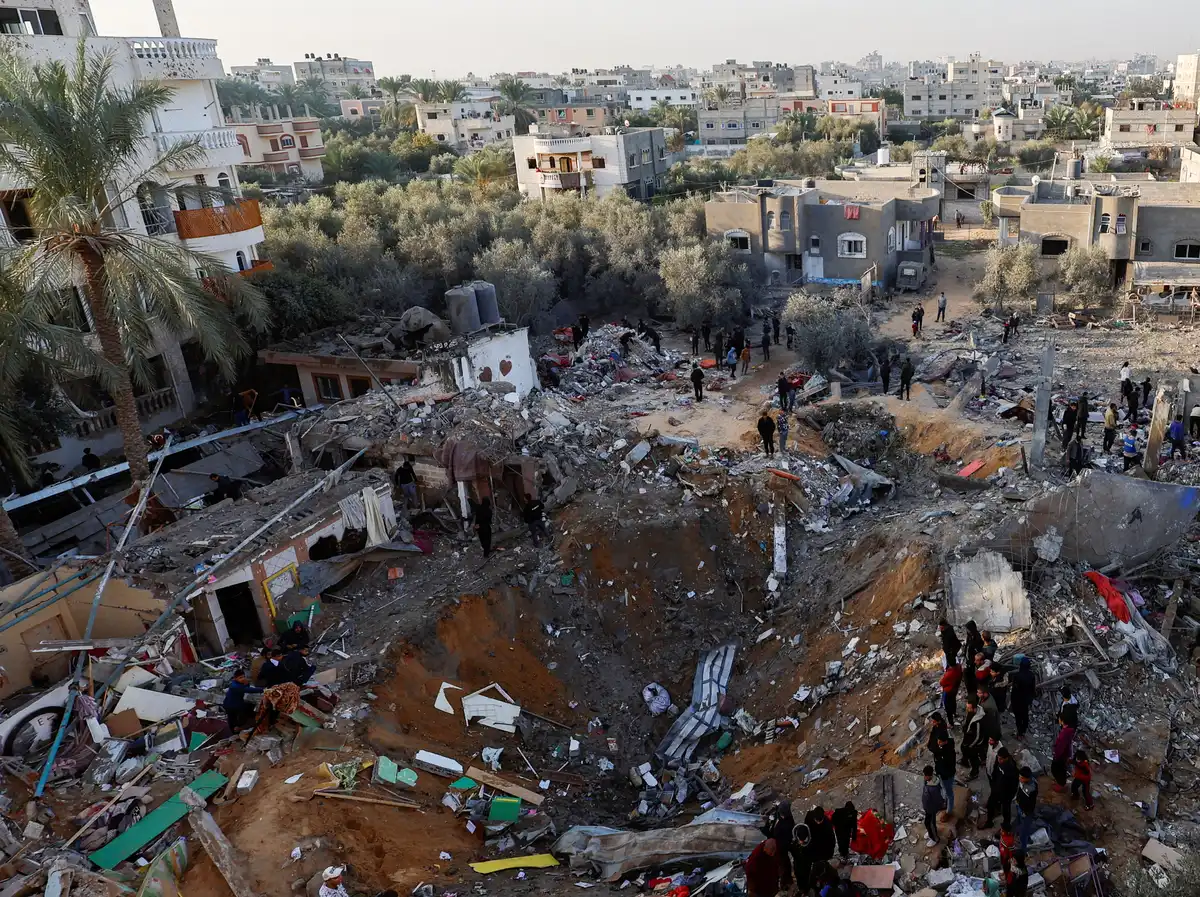
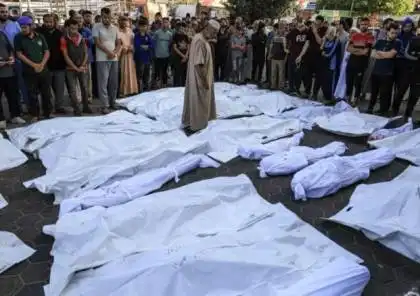
The Israeli raids have caused the death of more than 18,500 Palestinians since the start of the aggression on October 7.

ARAB AND WORLD

Thu 14 Dec 2023 7:15 pm - Jerusalem Time

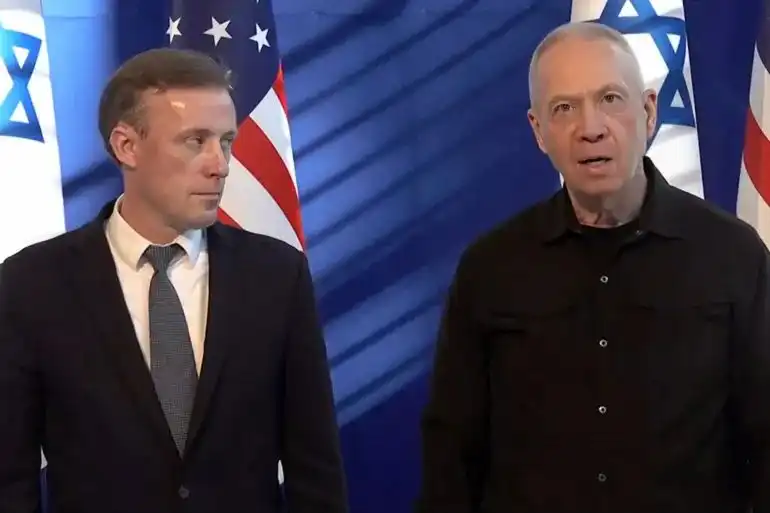
Sullivan meets Israeli war leaders and Gallant asks for months to "dismantle" Hamas

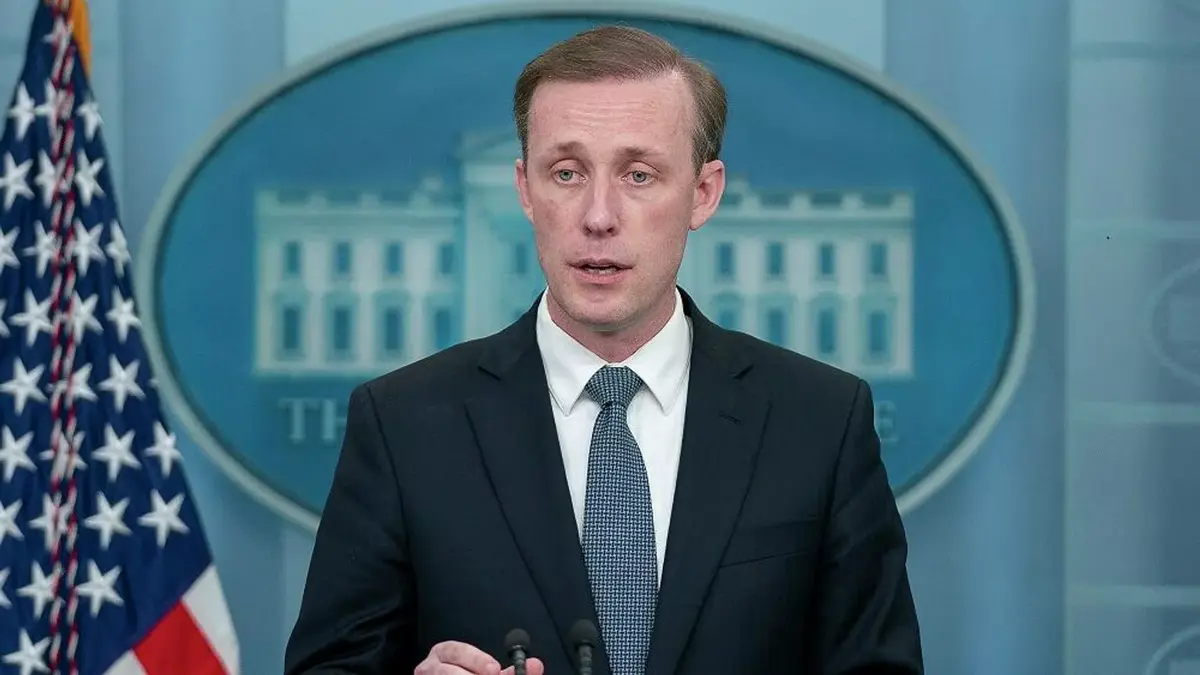
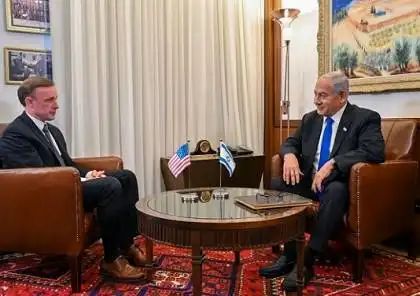
US National Security Advisor Jake Sullivan met with Israeli Prime Minister Benjamin Netanyahu and Defense Minister Yoav Gallant in Tel Aviv on Thursday, during a visit aimed at discussing the duration of the war on Gaza and its aftermath.


Sullivan held a one-on-one meeting with Netanyahu, according to the Israeli Prime Minister’s Office, without details about the course of the meeting. The American official also participates in a meeting of the Israeli War Council.


Netanyahu had preceded his meeting with Sullivan by saying that international pressure would not stop military operations in the Gaza Strip, expressing his hope to reach a consensus with Washington regarding the status of the Strip after the war.


As for the Israeli Defense Minister, he told Sullivan in a separate meeting that “dismantling” the Islamic Resistance Movement (Hamas) requires “a long period extending more than several months,” according to a statement issued by his office.


Israeli media said that Gallant also told Sullivan that the war would continue and that Israel needed continued American support.


They also discussed returning Israelis to settlements near the border with Lebanon after the displacement of tens of thousands of them due to mutual bombing with Hezbollah.


For more than 9 weeks, the Israeli occupation army has been waging a devastating war on Gaza that, as of Thursday evening, has left 18,787 martyrs and 50,897 wounded, according to the Ministry of Health in the Strip.


American support

Israel ignored calls for a ceasefire, supported by the United States, which supplies it with thousands of tons of weapons and ammunition via an air bridge, and provides it with political cover, as it used its veto in the UN Security Council a few days ago to block a resolution calling for an end to the war.


US National Security Council spokesman John Kirby said that Sullivan will discuss with the Israelis the need for their strikes to be more accurate, as he put it.


For his part, US President Joe Biden said the day before Tuesday that Israel had begun to lose international support due to its "indiscriminate" bombing of Gaza. He also called on Netanyahu to change his government because it "does not want a two-state solution."


On the other hand, the American magazine Politico quoted a source close to the office of US Vice President Kamala Harris that she believes that Washington should be more strict with Netanyahu.


The source added that Harris called for her country to be more forceful in seeking long-term peace and achieving the two-state solution.


According to the magazine, Harris told her colleagues in the administration that she wanted the White House to show more concern about the humanitarian damage in Gaza.


It also urged officials, including the US President, to show more sensitivity towards Palestinian civilians.


PALESTINE

Thu 14 Dec 2023 6:42 pm - Jerusalem Time

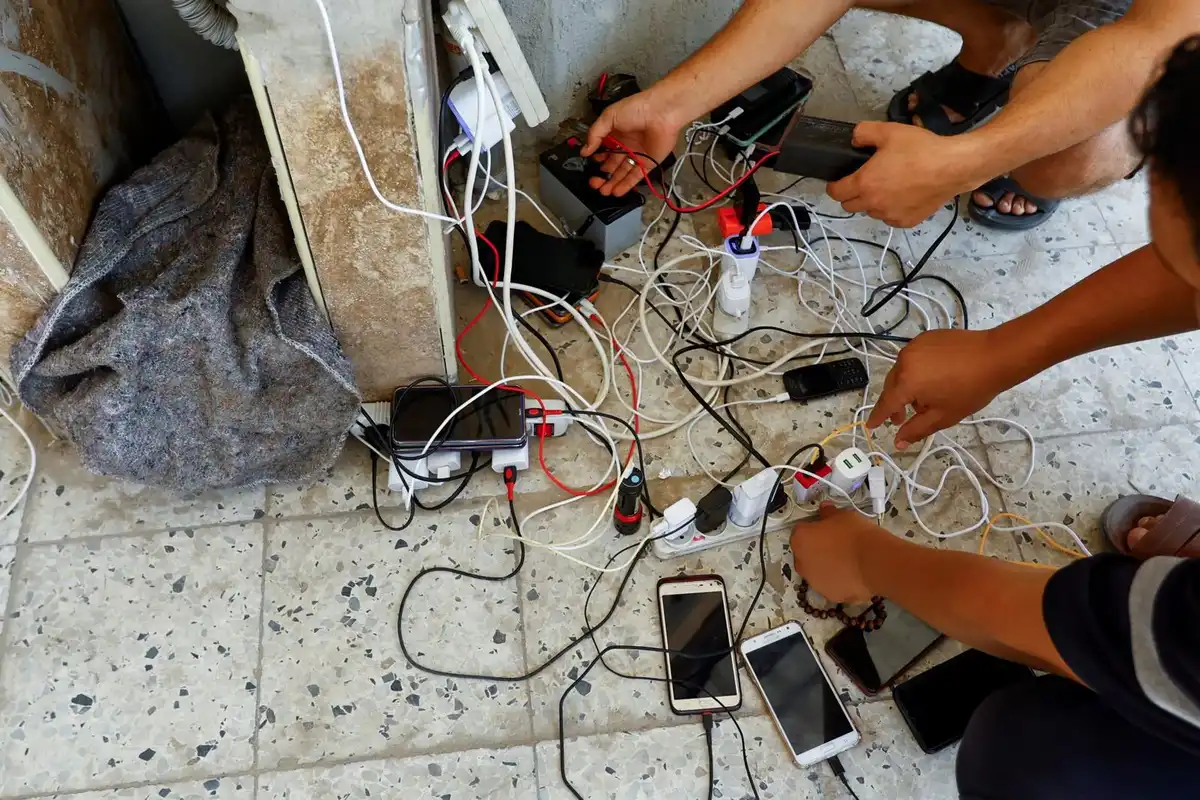
Telecommunications and Internet services in Gaza were completely halted

The Palestinian telecommunications companies Paltel and Jawwal confirmed on Thursday evening that telecommunications and Internet services had completely stopped in the Gaza Strip.


The two companies said in a statement: “We regret announcing a complete interruption of all communications and Internet services in the Gaza Strip due to the ongoing aggression.”


It is noteworthy that these two companies are the main ones in Gaza.


This is the fifth time that the Gaza Strip has been subjected to a complete interruption of communications services, during the devastating Israeli aggression that has continued for nearly two months.


PALESTINE

Thu 14 Dec 2023 5:32 pm - Jerusalem Time

Israeli soldiers perform their rituals inside a mosque in Jenin

A video spread on social media platforms of occupation soldiers performing a Talmudic prayer on the occasion of what they call “Hanukkah” over loudspeakers in one of Jenin’s mosques after storming the camp.


This passage comes to refute what Israel boasts about, that it seeks to preserve the holy places of all monotheistic religions and provide them with protection. Last year, the Israel Arabic account of the Israeli Ministry of Foreign Affairs published a tweet in which he said:

“Terrorism affects the sanctity of the dead prophets, not just innocent civilians in Israel. The irony is that Israel is striving to preserve the holy places of all heavenly religions and provide freedom of worship, especially in the blessed month of Ramadan in Al-Aqsa Mosque, while the hand of terrorism reaches the sanctity of the grave of the Prophet Joseph, peace be upon him.”


The extremist Israeli Minister of National Security, Itamar Ben Gvir, posted the video clip on his Facebook page, and the clip began to spread among the audience on social media platforms around the world, and sparked a state of anger and denunciation. Tweeters considered the movement provocative, and said that the occupation soldiers knew that “the Palestinian resistance will not fight them inside the houses of God because of the sanctity of fighting there and for fear of destroying them.”


Bloggers commented on the video that it was a blatant violation of divine religions and international law, noting that Israel had crossed all red lines by violating human rights and the sanctity of sanctities.


Palestinian pages circulated a video clip that they said was of the destruction caused by the Israeli occupation soldiers in the Jenin Mosque.


The government media office in Gaza had published a report in which it said that the number of mosques completely destroyed reached 88, and the number of mosques partially destroyed reached 174, in addition to targeting 3 churches, during the aggression that has continued for more than 69 days on the Strip.


Jews all over the world celebrate the “Hanukkah” holiday in memory of the so-called “victory of the Hasmoneans” in their revolution against the Greeks during the “Second Temple” period, according to the claim of the Jews who claimed that the Greeks oppressed rights and prevented Jewish worship, and their “revolution” resulted in the occupation of... Jerusalem and the replacement of Greek rule with Jewish rule.

OPINIONS

Thu 14 Dec 2023 4:52 pm - Jerusalem Time

What to do now, today!... Hostages and Prisoners

Gershon Baskin

Gershon Baskin

Opinion Writer

The number one priority of the State of Israel must be to bring home the hostages – all of them.   The State of Israel failed to protect its citizens who were massacred and taken hostage. It is the moral responsibility of the State of Israel to bring them home.  Hamas and its leader, YehyaSinwar, made it very clear in the first days of the war some 10 weeks ago that the deal on the table is all of the hostages in exchange for all of the Palestinian prisoners. Sinwar has made it his life’s goal to empty the Israeli prisons. He said it in his first public speech after his release in 2011 and has repeated it in every important speech over the past 12 years. This mission is more important to him than his own life. At the beginning of the war there were about 5,600 prisoners. Now there are more than 7,600 and the number grows every day. Of those prisoners there are 559 who were sentence to life in prison for murdering Israelis.  Some of them are on multiple life sentences for killing many Israelis. Most of these people are very dangerous because they have no regrets for what they did and many of them would probably intend to continue to do what they did in the past. There are an additional 130 terrorists who were caught in Israel on October 7, 8 and 9.  These are brutal murdering terrorists as well.  There are more than 2500 administrative detainees who have been arrested without charge and imprisoned without trial. Only about 500 of the 7600 prisoners are from Gaza. Before October 7 about 25% of the prisoners were identified as being members of Hamas.


Yes, there are clear and present dangers to releasing these people. There is more and present danger to the lives of the Israeli hostages left in Gaza - every day that they are there is a risk to their lives.  That is why the “all for all” deal must be made. If it becomes clear that Israel has decided to sacrifice the hostages, as it now appears to be so, and they are killed in Gaza, this kind of blow to Israeli society is one that we will not heal from. It will take many years, if ever, to get over the realization that the government of Israel allowed its innocent citizens to be killed in Gaza because it would not make a deal with Hamas.


Yes, this will be a victory for Hamas and for Sinwar that no one wants to grant him.  But it will be a very temporary victory, because the war effort will continue immediately after the hostages come home. Hamas must not be allowed to continue to control Gaza even one day after the war.  There is no victory for Israel if the hostages remain in Gaza. There is no victory for Israel of Hamas continues to control Gaza after the war.  Sinwar will face his wish to become a shaheed – this we can promise him. This deal must be on the table now. To mitigate the risks, the released prisoners should be sent to the West Bank and not to Gaza. In the West Bank they can be more easily monitored and watched and if need be, rearrested or if they try to engage in terrorism, they can be eliminated. Yes, there are risks and 7600 released prisoners are a lot of people. But let’s face reality, Israel arrests Palestinians every night. In 2014, Israel rearrested 68 Palestinians who were released in the Shalit deal.


Without resolving the Israeli-Palestinian conflict and enabling Palestinians to have the right of self-determination, personal and national dignity and ending the Israeli occupation, there is no shortage of Palestinians willing to fight and die and be arrested for their cause of liberation. So immediately when this horrible war is over, we have to get into the hard work of ending this conflict and doing it much more seriously than ever before. October 7 has to be our wake-up call – for Israelis and for Palestinians.


The Gaza Humanitarian Catastrophe

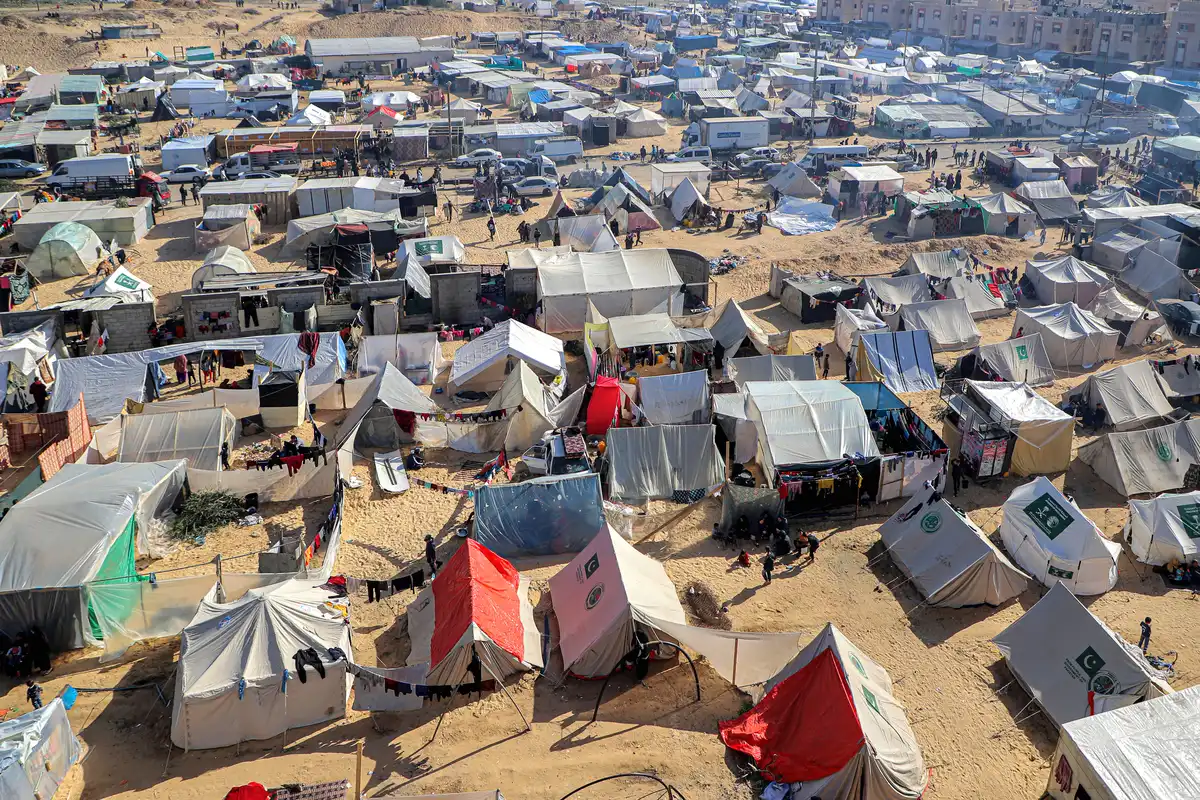
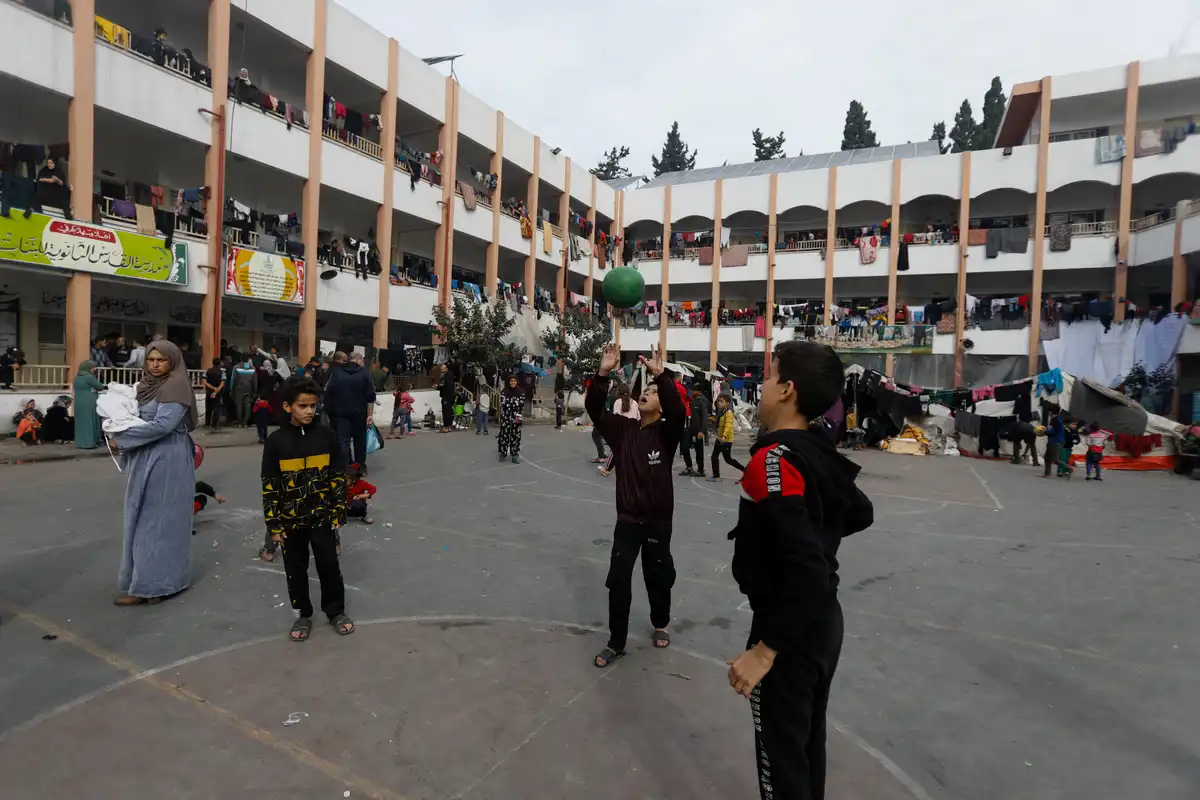
Facing the immediate humanitarian disaster in Gaza – with about 2 million people who have once again become homeless without homes to return to because Israel has bombed them into rubble. Winter is here now with rain, flooding, and cold, and people having to live in make shift tents with no proper sanitation. There is a shortage of food, and very little potable water. People are still being bombed, even within the so-called safe areas. Hospitals are not functioning because most of them have been bombed. Schools that are still standing are serving as shelters for tens of thousands of homeless people. Objectively speaking, there is little doubt that war crimes have been committed by Israel.  Whole families have been killed in their homes. Thousands of orphans are facing life without homes and families. This is a disaster. So many innocent people have become victims of this war. They need to place blame on Hamas, no doubt, but Israel is also to be blamed and held responsible for this humanitarian catastrophe.


On days before the war, more than 500 trucks of goods entered Gaza on a daily basis.  Now all trucks entering, much smaller in numbers, are filled with food, water, medical supplies and other urgent basic human needs. There is no economy left in Gaza. The aid trucks are providing the most basic needs to deal with the crisis of 2 million homeless people. Israel has agreed to open the Kerem Shalom crossing for the purpose of allowing more trucks to go through security clearance. That is a step in the right direction, but the trucks return to the Rafah crossing bottleneck before entering Gaza. Once in Gaza, the trucks face Hamas gunmen who confiscate a lot of the aid which should be going to the civilian population. Israel must set up its own humanitarian aid corridor at Kerem Shalom crossing, and at least one crossing in the north of the Gaza Strip – perhaps Erez to bring the aid directly to where it is most needed. Israel should make this crossing efficient and the IDF should accompany the aid trucks to the points of destination that Israel told the population they would find safe zones. Israel should distribute the aid to the people in need.  This should be done because it is the right thing to do and because we always have to remember that there will be a day after the war where two million Palestinians will still be living in Gaza as Israel’s neighbors.

OPINIONS

Thu 14 Dec 2023 4:29 pm - Jerusalem Time

Jewish victimization in service of the Zionist executioners

Dalal Al-Bizri

Dalal Al-Bizri

Opinion Writer

In support of its war on the Palestinians, Israeli propaganda has adopted a single accusation against any person or entity that now criticizes its policy: anti-Semitism. That is, hatred of members of the Jewish religion. It relies on ancient, rooted evidence: Spain, which returned to Catholicism for centuries, expelled them from it, along with the Muslims, and the horrific Inquisition that it invented to punish them for their beliefs. To the stifling ghettos and bitter ghettos they had tasted; Beginning with the Russians, then with the rest of the Eastern European countries, until it extended to the Western ones. Its climax was the organized, studied, and “scientific” Holocaust, which was led by the Nazi German mind, led by Hitler. This last injustice wiped out millions of Jews, displacing them and scattering them. So it had a name: the Holocaust, or the Holocaust, or Jewish victimization. It is the single word, or the most frequently mentioned argument when Israeli propaganda talks about its enemies, the anti-Semites: that they do not acknowledge that we have been wronged throughout history.


The Holocaust in many ways occurred in Germany during World War II. Documenting it, announcing its evidence, and the testimonies of its survivors were among the most powerful dynamics that made the Zionist project successful in Palestine. The Holocaust, that unique crime in human memory, became, after all, the “moral” base on which Israel built its legitimacy. That the Jews have been oppressed throughout history, that after the Holocaust they reached the peak of their suffering, that they, like other peoples, have the right to have a homeland in which they can be safe, and to be free from the ghettos, anti-Semitism, and hatred that the Europeans inflict upon them...etc.


Because of the new oppression that the founding of this State of Israel brought upon us, we were unable to see the Jews as anything but evil in essence. Basically evil. Eternally evil, they could not have known injustice, persecution or the Holocaust.


At this moment, it is difficult to imagine that your perpetrator was once a victim. This is a spiritual effort, sought by calm, reassured souls, exempt from the immediate horror of war and its scourges.


Therefore, in the 1990s, when a French writer, named Roger Garaudy, emerged denying the Holocaust, denying its organization and planning, and accusing the Zionists of collaborating with the Nazis... we were filled with joy. He was celebrated in some Eastern capitals and invited to them. Damascus, Amman, then Beirut. In the latter capital, he was received by two left-leaning forums, the Arab National Forum and the Permanent Conference Against the Zionist Cultural Invasion. It was a symposium in which he spoke, a trip to the south, and a tour of Beirut and the Lebanese mountains. In recognition of his “political and cultural approach,” and his “spiritual faith and courage,” he earned during this visit the title “Sheikh Roger Garaudy” (see the nickname “Abu Ali Putin” for the Russian president, after Syria and Ukraine).


Subsequently, Garudi's book, “The Founding Myths of Israeli Politics,” was translated into Arabic by the publishing houses Al-Shorouk in Cairo and Al-Kitab in Damascus. In 1998, he was invited to the International Book Fair in Cairo, and was welcomed by prominent Egyptians, such as Muhammad Hassanein Heikal, Naguib Mahfouz, and Sheikh Muhammad Tantawi. Arab donations were collected to pay the costs of the trial held against him in France, as it was forbidden to deny the Holocaust. But it also turned out that he relied in his book on only two references, by two historians who all wrote about Holocaust denial. When Roger Garaudy's other positions developed and led him to support far-right parties, we did not care. We continued to admire him, even though we had forgotten him all these years. We forgot Garaudy, perhaps because someone came to take his place, and forcefully, amid the dust of the grinding war that Israel is waging against the people of Gaza and the Gaza Strip.


The massive demonstrations taking place in Western capitals and cities fill our hearts with joy, despite sorrow. They cannot believe that Palestinian flags are flying in these spots, with demonstrations, sit-ins, and cultural and networking events. Many groups, progressive, liberal, leftist, minorities, Native Americans (First Nations), participate in this, which resembles a peaceful, Western popular uprising for Palestine. But also, in these activities in support of Palestine, there are participants from the “supremacist” category, white supremacists from the far right, some of whom have Nazi tendencies. These are the strongest electoral stock for Donald Trump in the previous and next two presidential terms. Groups known for their hostility toward Jews and Arab Americans alike. They hate the Jews, because they see them as potential communists, the owners of money and banks, who control the media and Hollywood, carry out suspicious business operations, and have no conscience...and their control over all these sectors aims to “exterminate whites.”


Recognizing the Nazi Holocaust against the Jews is the only way to stop the blackmail practiced by Israeli propaganda against any party that supports the Palestinians, regardless of its tone.


Here are some representatives of thoSupremacistsists": Jackson Henkel. A young man in his early twenties, an influencer, with two and a half million followers. From the extreme conspiratorial right. The number of his followers has increased these days as he defends the Palestinians, glorifies Hamas and Hitler, and attacks Israel. Just like his two companions, Cath Yewd and Lord Pipo. Their social and Internet activity floods the network with their positions and statements “to the point that everyone forgot their previous anti-Muslim and anti-Arab words” (according to one American commentator).


As a reminder, their icon, Donald Trump, is not much different from them. In his election campaigns, he is enthusiastic about his "supremacist” audience, who raise banners reading: “The Jews will not take our place.” He supports them and praises their actions. He denies himself an anti-Semite. He says, "I am the least person in the world that you could describe as an anti-Semite." But in reality, he uses all the anti-Semitic clichés, encourages them, tolerates them.

On the contrary, there are positions that characterized the German government, which was heavily involved with Israel in this war. And it didn't budge. The secret behind this German “persistence”? The same Holocaust complex that we are dealing with. A few words sum up the former German Chancellor, Angela Merkel. She visits the remains of the Nazi Holocausts in Germany, and says, at the conclusion of one of them in Auschwitz: “To remember the crime, to name its perpetrators, to honor its victims and restore their dignity... This is our responsibility. And to be aware that this responsibility is at the core of our national identity.” Its clear doctrine was: Israel's security, for Germany, was "the state's interest." Her successor, Olaf Scholz, maintains this doctrine, declaring from Tel Aviv, days after the “Al-Aqsa Flood”: “Germany has only one place: to be at Israel’s side (...) Our own history, our responsibility in the Holocaust, oblige us “By ensuring Israel’s existence and security. This responsibility is our compass” (At the same time, Germany is the most generous European with the Syrians fleeing Bashar al-Assad. It receives a million and a half of them...).


A true and just peace will recognize the injustices of Palestinians and Jews alike


Thus, it is easy for us to deny the Holocaust and fall into anti-Semitism, not as Netanyahu presents it as an excuse for killing and destroying Palestinians, but from the perspective of the current moment, so it is difficult to acknowledge it. At this moment, it is difficult to imagine that your perpetrator was once a victim. This is a spiritual effort, sought by calm, reassured souls, exempt from the immediate horror of war and its scourges.


But also: Recognizing the Holocaust is a fundamental human act, which facilitates understanding the human transformation from perpetrator to victim. I mean that our history, as human beings, is full of victims who turned into executioners. The Jewish Holocaust, which had the greatest credit for establishing the State of Israel, provided full legitimacy for the transformation of the Jewish victim into the executioner... is only one of its stories. This recognition is the only way to stop the blackmail practiced by Israeli propaganda against any party that supports the Palestinians, regardless of its tone. Thanks to it, our imaginations navigate the depths of the suffering of others. This is an act that may happen after the end of the war and the start of negotiations, and at a later stage, during the work to establish a single democratic Palestinian Jewish state... Its day will come, no matter how late it is. At that time, we must say that the Jews were once victims. For Israel to respond that the Jews under its rule had turned into executioners, it would atone for its sin (An Israeli writer asks: How has the Nakba covered the Holocaust in the American media since October 7?)


A true and just peace will recognize the oppression of Palestinians and Jews alike. The first is new and the second is old. Otherwise, this peace will remain fleeting, falling, like the one before it, into the category of impossible peace and permanent wars... written on our foreheads.


ARAB AND WORLD

Thu 14 Dec 2023 4:24 pm - Jerusalem Time

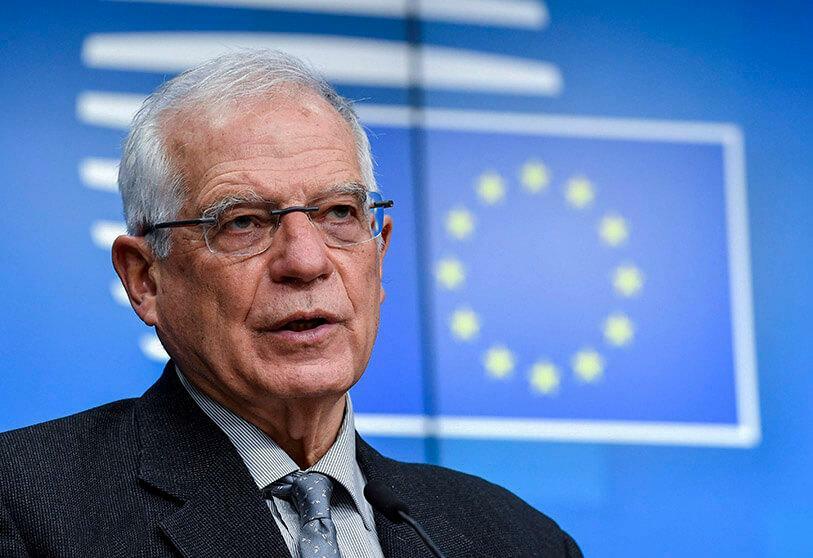
Borrell: Increasing European countries support the ceasefire in Gaza

European Union foreign policy chief Josep Borrell said on Thursday that "more European countries are now seeking a ceasefire in the Gaza Strip."


Speaking to the press before the European Council meeting in the Belgian capital, Brussels, Borrell said, “During today’s meeting, the leaders will discuss the war in Ukraine.”


He added: "We will also discuss the situation in Gaza."


The European official added: "Despite some different trends among member states, more and more European Union countries today support the ceasefire in Gaza."


Regarding today's European Council meeting, Borrell said, "Attendees will have to take into account last week's vote in the United Nations General Assembly calling for a ceasefire in the besieged Strip."


He stressed that "Europeans must start thinking about how to deal with the problem using a political approach."


Borrell continued, saying: “We must focus on the political solution to the Palestinian issue once and for all,” referring to the implementation of the principle of the two-state solution.

ARAB AND WORLD

Thu 14 Dec 2023 4:08 pm - Jerusalem Time

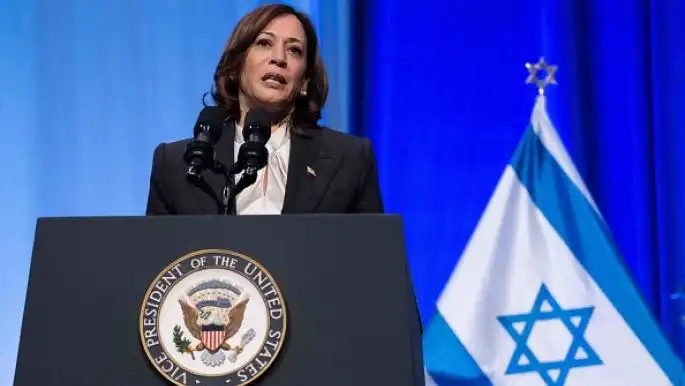
Harris: America should be tougher with Netanyahu

US Vice President Kamala Harris urged Washington and President Joe Biden to be more sympathetic to Palestinian civilians and show more concern for the humanitarian damage in the Gaza Strip, where Israel is locked in a bloody battle with the Islamic resistance movement Hamas, according to a report published by the American newspaper Politico.

Harris stressed, according to the report published on Thursday, that her country “should be tougher with Israeli Prime Minister Benjamin Netanyahu, and be more forceful in seeking to achieve long-term peace through the two-state solution.”


The newspaper, which was quoting a senior official in the US administration and sources close to Harris, said that the latter argued during internal talks about the war on Gaza that the time had come “to begin making plans for the next day in order to deal with the wreckage of the war as soon as the fighting ends.”


The newspaper confirmed that Harris's statements "reveal the extent to which senior Democratic officials are struggling to walk a cautious line regarding the war between Israel and Hamas, especially since the conflict has shaken the Democratic political alliance internally and externally."


The newspaper added, "Harris urged Biden, in the wake of the Hamas attack on Israel on October 7, to condemn Islamophobia at the same time as he spoke against anti-Semitism. In confirmation of this, the Washington Post reported last month that Harris persuaded Biden to add a line He condemned Islamophobia in his speech on October 10, about the outbreak of war.


The newspaper continued: “Since then, Biden, Harris, and other administration officials have become increasingly willing to criticize Israel’s approach to fighting Hamas, and this became clear this week when the president issued a stark warning to the Israeli government about the potential political consequences of its fierce military attack. He also condemned what he called” "Indiscriminate bombing," and called on Netanyahu's hard-line government to change its methods.


She noted that "Secretary of Defense Lloyd Austin and Secretary of State Anthony Blinken rebuked Israel for the toll its military operation had on ordinary Palestinians, with Austin warning that Israel risked a 'strategic defeat' if it insisted on these heavy civilian losses."


In this regard, Harris recently spoke about Israeli military tactics in tough terms after meeting in Dubai with leaders from Egypt, Jordan and the United Arab Emirates, where she reiterated that Israel “has the right to defend itself, but what matters is how it carries out this mission. Too many have been killed.” "Of innocent Palestinians. Frankly, the scale of civilian suffering, and the images and videos coming from Gaza, are devastating. It is truly heartbreaking," she said.


In response to her statements, Politico newspaper quoted Wael Al-Zayat, CEO of the Islamic advocacy group Emgage, as saying that Harris “uses stronger language against Israelis who should refrain from harming civilians, and she is a woman of color who is in tune with various issues of racial and social justice,” while one considered that Pro-Israel Democrats said the administration's "record on shipping weapons to Israel and seeking more aid from Congress was more important than any rhetoric from senior officials."


Kamala Harris had confirmed in previous statements that her country would not, under any circumstances, allow the “forced deportation” of Palestinians from Gaza or the West Bank, just as she called on Israel more than once to do more to protect Palestinian civilians.


She stressed the need for regional consensus and support for post-war Gaza, calling on the international community to "allocate significant resources to support short- and long-term recovery in Gaza."

OPINIONS

Thu 14 Dec 2023 3:51 pm - Jerusalem Time

The war of complete conformity, the war of complete silence

 Gideon Levy

Gideon Levy

Opinion Writer

Our entire history has never witnessed a war like this. It is a war of complete conformity, a war of complete silence, a war of blind support. It is a war without opposition, without protest, and it is a war without rejection, and without a rejecting parliamentary bloc, neither at its beginning nor at its climax. It is a war by consensus, a war with the support of the comprehensive Israeli public, the public from one end to the other (and this does not include the Arab citizens who are prohibited from dissent). It is a war without question marks, but rather it is a war without an iota of doubt.

Is the war that resulted in the deaths of about 20,000 people in the Gaza Strip, most of them innocents, the war that resulted in the destruction of the homes and lives of almost the entire population of the Gaza Strip, the most just war in the history of Israel? Is a war that causes such horrific suffering to more than two million people the most moral of Israel's wars? If the answer is no, then how come we do not hear a voice here calling for an end to the bloodbath? Rather, how can we not find a voice that rejects the war, given the increasing bloodshed from Israeli army soldiers, and how has the following question not yet arisen: Hatam and for how long?


Israel's wars, for the most part, were wars of choice. At first, it was supported by almost all of Israeli society, but opposition soon began to emerge, after the terrible costs and futility of military action became clear. When these wars ended, many of our ranks became against them. The opponents of this war, with a reactionary effect, became too numerous to count. This is what happened in the two ridiculous Lebanon wars, and this is what happened in all the attacks against the Gaza Strip and the West Bank. These wars, all of them, were shorter than the current war, the end of which no one can predict. Here we are in a war that everyone supports, and no one is asking questions about. The media is brainwashing with an intensity we have never seen before: The media appears to be a chorus of pretenders of integrity, if I do not want to describe them as a chorus of chants of the Soviet Red Army. This is the chorus that reaches day and night in the studios, but whoever has doubts starting to seep, perhaps, into his heart, will not dare to speak about them publicly. Well, “Together we will win!” [The slogan that Israel raises for this war].


This is the course of a war that broke out as a result of a “barbaric and criminal” attack, but nothing has curbed this war since its outbreak. There are no limits to this war, and on the other hand, there is no controversy or opposition to it. The credibility of this war at its beginning, in the eyes of Jewish Israelis, justifies everything that will happen during it. But now, after two terrible months, doubts may be starting to creep in.

You will not find anyone among Arab society who is not shocked by the horrific scenes coming from the Gaza Strip, as their victims are their brothers and members of their families, and they, unlike the Jews, are watching what is happening in the Gaza Strip, an exposure that the Jews are deprived of, thanks to the miserable and propaganda media. But "Israeli Arabs" cannot protest. The current government threatens Arabs more than all its predecessors, brutally muzzles people, and throws citizens into prisons. Now, “Israeli Arabs” live in terror, terror from the authorities, and terror from the Jewish street, a terror the likes of which we have not seen since the 1948 Nakba.


In the Jewish street as well, and despite the complete and overwhelming agreement on the legalization of war, with all the crimes it entails, there are certainly those who have begun to realize the atrocities committed by Israel, but the fear of revenge is great here as well, due to the terror imposed by the current government, the Israeli street and “The Awakened” [the prevailing description of the Israeli “leftist” figures who declared that they had “awakened” from the illusions of coexistence, after the start of the Al-Aqsa Flood operation]. The result: war without opposition.


Even in Putin's Russia, there are more anti-war manifestations in Ukraine than in supposedly democratic Israel. This does not mean that we equate the two wars in terms of the justice of their endeavors. The crime in Ukraine was infinitely more horrific, but the means used in the two wars, and their results, made them more similar than before. We are witnessing horrific manifestations in both, and immeasurable suffering of millions of innocent people, all in the name of achieving absurd goals.

The suffering in the Gaza Strip will bring nothing to Israel. Winter is approaching, and this suffering will be two and three times greater than it is now. Israel has never, throughout its existence, sown such devastation, nor has it killed such a number of children and the elderly in its entire life, as it did in this war. At a time when Israeli public discourse focuses on military achievements, whether real or imagined, along with the insistence on wallowing endlessly in Israeli suffering, and the insistence on focusing on the suffering of Israelis alone, not others, and in addition to all of this, pounces on any appearance from the manifestations of opposition to the war, the conclusion becomes clear: on the Israeli side, this war can be continued indefinitely, and the entire population of the Gaza Strip can be killed, and its entirety destroyed, forever. Thus, this act becomes the most moral and the most just.

Source: Haaretz

ARAB AND WORLD

Thu 14 Dec 2023 3:37 pm - Jerusalem Time

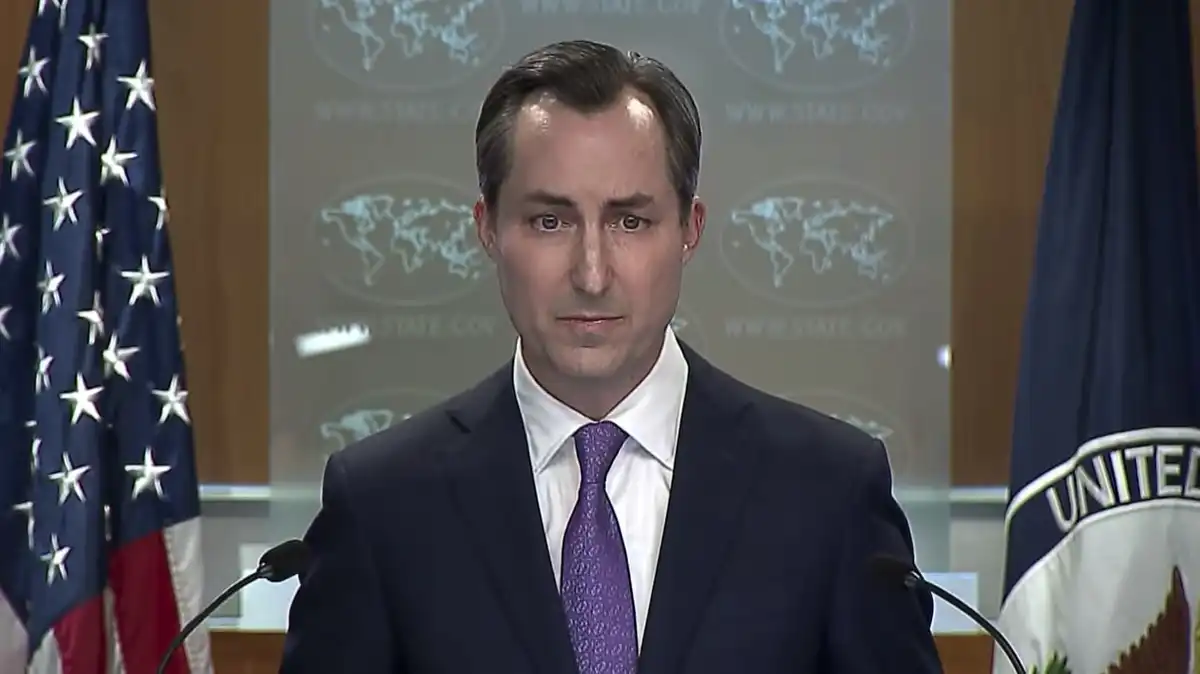
US State Department spokesman Miller: An idea cannot be defeated on a battlefield

US State Department spokesman Matthew Miller said yesterday, Wednesday, that an idea cannot be defeated on a battlefield, in the context of his talk about Israel's war on Hamas in Gaza. When asked during a press conference about the United States’ view of the possibility of eliminating Hamas militarily in the way that Israel seeks, Miller said, “It is certain that the current military leadership of Hamas can be defeated militarily. There are leading figures who planned the October 7 attacks, and there are those who carried out the individual attacks.” "They are sheltering with civilians in Gaza now. These people can be found and brought to justice. This is a military goal that we believe can be achieved." He added, "However, an idea cannot be defeated on the battlefield. Therefore, Israel, other countries in the region, the United States and every country around the world that wants to be a responsible player must come up with a better idea. 


That is why you have heard Secretary Blinken repeatedly say And once again, at the end of this conflict there must be a legitimate answer to the aspirations of the Palestinian people.” Miller was asked about the possibility of the Authority running any future Palestinian state, in conjunction with an opinion poll published by the Associated Press on Wednesday, which showed that 90% want the President of the Palestinian Authority, Mahmoud Abbas, to step down. He said, "We believe that. It is clear that the Palestinian Authority is not in a position to administer Gaza, and to provide security, police, and other guarantees." 


He continued, "We believe that the Palestinian Authority is the representative of the Palestinian people, and that a Palestinian Authority that is renewed, reformed, and reorganized is the way forward toward the reunification of the West Bank and Gaza Strip." Speaking about the United Nations General Assembly’s vote on Wednesday regarding a ceasefire in Gaza, Miller said, “I think what can be drawn from this vote is that it is clear that the world wants to end this conflict, and it is a goal that we share. We want this conflict to end". 


He pointed out that the United States expects every country that supplies it with weapons to use them “in full compliance with international humanitarian law and the laws of war, and Israel is no exception.” Miller was asked by reporters whether Washington was assessing the extent of Israel's compliance with the conventional arms transfer policy, which the Biden administration approved in February 2023. This requires the State Department to determine that those weapons are unlikely to be used in genocide, crimes against humanity, or other violations. Geneva Conventions or serious violations of international law. Miller said that the State Department had not taken such a decision, and reiterated the American position that Israel could make more efforts to reduce the harm to civilians in the Gaza conflict.

ARAB AND WORLD

Thu 14 Dec 2023 3:32 pm - Jerusalem Time

The timetable for the war on Gaza from Netanyahu’s point of view... An Israeli channel reveals the final date for operations

On Wednesday evening, December 13, 2023, a Hebrew channel published what it said was an Israeli timetable for the aggression against the Gaza Strip, showing that violent military operations may end at the end of January 2024.


Israeli Channel 12 said that Israel has entered the third month of the war, and the American administration is pressuring Tel Aviv, saying that the “hourglass” for the aggression is about to run out, and the visit of US National Security Advisor Jake Sullivan to Israel aims to discuss the time frame for ending the war.


According to the Israeli timetable, published by the channel, “it is expected that by the end of January 2024, Israel will end the phase of violent fighting.”


America is pressing to end the war on the Gaza Strip by Christmas, that is, the beginning of January 2024, but in light of the current situation, Tel Aviv does not see that as possible, according to the Israeli channel, which indicated that the Israelis say that a few more weeks will be needed after the end of the fighting, to complete the withdrawal of forces from the heart of Gaza and deploy them in the defensive lines, some inside the Strip and some outside it.

As for the second phase, the channel said that it is expected to be longer, and includes “the completion of the elimination of the Hamas movement.” Estimates indicate that it may extend until the end of 2024, and include the destruction of the movement’s military capabilities, through operations and raids by the Israeli army.


It added: "The most important thing is that Israel aims to maintain security control (over Gaza) in the foreseeable future."


The channel considered, "This seems to be a realistic timetable that both Israel and the United States can agree on, but in addition to that, the Americans see great importance for the humanitarian issue of the people of Gaza."


Tel Aviv plans to agree to reopen the Kerem Shalom crossing, to bring aid into the Gaza Strip, as a thank you to the Americans, according to the Israeli channel.


On Thursday, December 14, 2023, National Security Advisor Jake Sullivan arrived in Tel Aviv to hold talks on the war on the Gaza Strip, in light of the increasing intensity of disputes between the American administration and the Israeli occupation government.


Israeli occupation Prime Minister Benjamin Netanyahu insists on continuing the war on the Gaza Strip, despite American pressure and popular protests around the world.


On December 12, 2023, US President Joe Biden said that Israel was “losing the support of the international community” as the death toll in Gaza rose.


On Wednesday, December 13, 2023, the Ministry of Health in Gaza announced that the toll of the Israeli aggression on the Strip had risen to 18,608 dead and 50,594 injured, since last October 7, stressing that the occupation had committed hundreds of massacres against civilians, as a result of the bombing of their homes and shooting them in the street.

PALESTINE

Thu 14 Dec 2023 3:22 pm - Jerusalem Time

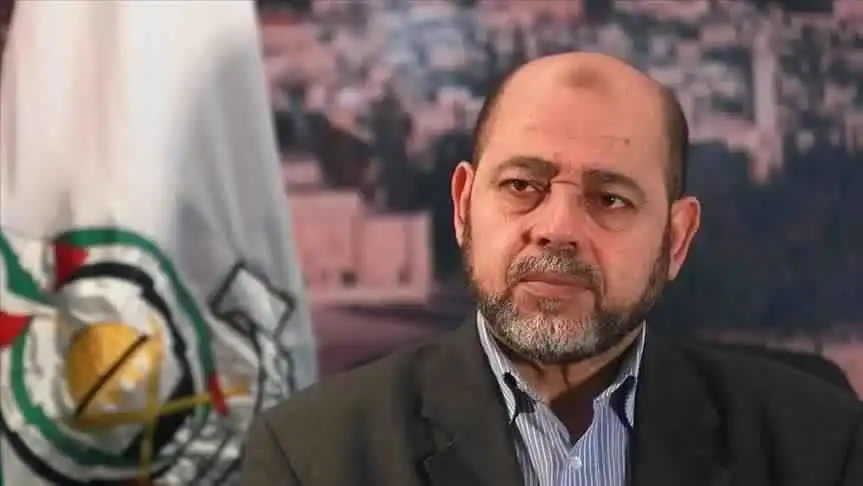
Senior Hamas Leader: We seek to join the PLO and be part of its commitments

A member of the Hamas political bureau, Musa Abu Marzouk, said in an interview published by the Al-Monitor website, today, Thursday, December 14, 2023, that Hamas “seeks for us to be part of the Palestine Liberation Organization, and we said that we will respect the organization’s commitments.”


He added, according to what was reported by the American website: “Israelis must obtain their rights, but not at the expense of others.”


The Hamas leader defended the “Al-Aqsa Flood” operation on October 7, 2023, which resulted in the killing and capture of hundreds of settlers and soldiers.


According to the newspaper, Abu Marzouk said: “The kidnapping of women and children was a mistake,” and in response to a question about not releasing them immediately, he explained that “Israel is bombing Gaza relentlessly.”


Abu Marzouk rejected the Israeli occupation’s allegations that his movement committed “sexual violence” during the operation, describing them as “mere lies.”


When asked what the October 7, 2023, attacks achieved for the people of Gaza, Abu Marzouk said: “Many goals,” including returning the Palestinian issue to the international agenda. “Everyone is talking about a Palestinian state,” he said.


Abu Marzouk pointed out that Hamas is still seeking to establish a state on the 1967 borders, referring to the political document issued by the movement in 2017, which talks about a Palestinian state on the 1967 borders, but it did not reach the point of recognizing “Israel” or supporting it. "The two-state solution."


Israeli Prime Minister Benjamin Netanyahu opposes the return of the Palestinian Authority and says that Israel “will not repeat the Oslo mistake,” referring to the 1993 agreement, which established the Palestinian Authority and aimed to pave the way for the establishment of a Palestinian state.


For its part, the Ramallah-based Palestinian Authority, which exercises limited self-rule in the West Bank, said it would only help govern Gaza as part of a broader peace plan to create an independent state.


Abu Marzouk, who was a permanent resident of the United States, spent nearly two years in a federal prison in New York on suspicion of “terrorist” activity, before being deported to Jordan in 1997.


The 72-year-old now lives in exile in the Qatari capital, Doha, where he heads the international office of the Hamas movement.


OPINIONS

Thu 14 Dec 2023 2:47 pm - Jerusalem Time

Foreign Policy: How Will This War End? How Can the Next One be Prevented?

Ramallah - “Al-Quds” dot com

Ramallah - “Al-Quds” dot com

Opinion Writer

The war between Israel and Hamas—now in its ninth week after a brief cease-fire—has made talk of peace processes and hopes for final-status agreements seem more remote than ever. But the brief pause in fighting and the successful hostage exchange brokered with the assistance of Qatar—along with Egypt and the United States—suggested that there is space for diplomacy even amid a brutal war.


Rather than seeking blueprints for a permanent peace deal, which seems far-fetched given the current Israeli and Palestinian political leadership, Foreign Policy asked a range of experts two narrower questions:

  •  What will Gaza look like one year from now?
  •  What single policy could any actor in this conflict pursue that would make it less likely that this war will end like so many others, with the same security threats remaining and key political grievances unresolved?


Netanyahu Should Step Aside

By Ehud Olmert, former prime minister of Israel

1. Israel’s campaign in Gaza will continue until Hamas’s military capabilities are eliminated. It’s hard to guess how long it will take, but if we are to be honest, it will take longer than Western societies are prepared to accept, longer than what their leaders, and above all U.S. President Joe Biden, a close friend of Israel, are willing to tolerate.

2. Exactly for this reason, it is imperative that Israel already provide, at this stage, a picture of what comes next after the army has completed its work. It should be based on the following principles and assumptions: 

Israel has no intention, desire, or ability to stay in Gaza at the end of the military campaign. When the war is over, Israel must withdraw all the way to the border. No force connected to the Palestinian Authority or the Arab states will be willing to enter Gaza when the IDF withdraws. All moderate Arab countries wish to see the destruction of Hamas, which is a destabilizing force for their own regimes. The brutal killings perpetrated by the group on Oct. 7 were, by the standards of these countries, a disgrace to Islam and its values. But none of these countries want to be seen as lending a hand to Israel’s military campaign. Therefore, if the United States and other allies of Israel are unwilling to allow Israeli forces to remain in Gaza, there is no alternative but an international force from NATO states, under the auspices of Chapter VII of the U.N. Charter, through which the Security Council will rebuild the civilian authorities and governing systems in the Gaza Strip for a period of approximately 18 months. Then, and only then, is there a possibility that the security apparatus of the Palestinian Authority can replace the international force in Gaza.

In parallel with this effort—and starting now—Israel must offer a political horizon for the end of the military campaign. The state of Israel must announce that immediately after the cessation of the military campaign, talks will begin with the Palestinian Authority based on a two-state solution—which is the only political horizon that can offer stability, cooperation between Israelis and Palestinians, and cooperation between Israel and the moderate Arab states within the framework of the Arab League peace initiative.

There is no doubt that the Netanyahu government is unwilling, unable, and unprepared to make such a bold move. For this reason and others, the government needs to step aside immediately.


Palestinians Need a Path to Sovereignty

By Zaha Hassan, a fellow at the Carnegie Endowment for International Peace

1. Israel’s war on Hamas—and its parallel campaign against the Palestinian civilian population of Gaza—will continue for many months as Israel attempts to degrade the military capabilities of Hamas and pursue an apparent plan to drive Palestinians into smaller enclaves to the south. This would effectively be an annexation more extensive than the previously existing “access-restricted zones” around Gaza’s land border with Israel and its maritime area—which comprise approximately 24 square miles.

Before this war, Palestinians had been totally or partially denied access to approximately 35 percent of Gaza’s cultivable land and 85 percent of the coastal waters used for fishing. In the minds of many in Israel, shrinking Gaza will facilitate the “New Middle East” that the Israeli prime minister spoke about at the U.N. General Assembly in September—one in which Palestinians and their national aspirations apparently don’t exist.

Expanding and deepening normalization between Israel and Arab governments, however, will be challenged by the devastation and killing wrought by Israel’s bombardment and blocking of supplies necessary to sustain Palestinian life in Gaza. Israel, unfazed by international outrage, will also likely move to consolidate control over the West Bank and create conditions there to encourage the flight of the population into the crowded urban enclaves or outside of the occupied territories altogether.

In the short to medium term, the apartheid reality in which Palestinians live will worsen as it becomes married to conditions aimed at permanent Palestinian displacement. Though Israel may be counting on the Arab Gulf states, Egypt, and the U.N. to put what remains of Gaza back together again—as was the case after past Israel-Hamas fighting—this is unlikely without a Palestinian governing body willing to take over governance of the Gaza Strip. The Palestinian Authority needs a pathway to a political solution to take on Gaza, but for now, no conceivable Israeli coalition will countenance meaningful Palestinian sovereignty.


2. No single party holds the cards to change the path that Israelis and Palestinians are currently on. It will require sustained and concerted collective action on the part of the international community.

First, the U.N. Security Council—the five permanent members in particular—must be willing to take on its duty to preserve and protect international peace and security and to impose sanctions on Israel for its gross violations of the rights of Palestinians, including their right to self-determination as confirmed by U.N. General Assembly resolutions and the International Court of Justice in its 2004 advisory opinion on the wall of separation inside the occupied West Bank.

The international community could move to strictly enforce U.N. Security Council Resolution 2334 (adopted in 2016), which called on all states to not recognize Israel’s changes to the pre-June 1967 green line separating Israel from the occupied Palestinian territory, including Israel’s illegal annexation of Jerusalem in an effort to distinguish between Israel and the occupied Palestinian territory. This would intensify and accelerate international and regional efforts aimed at ending Israel’s occupation and realizing a political solution based on international legitimacy.

This kind of international engagement will take years before it bears fruit—but it is the only way to change the dynamic between Israel and the Palestinians.


Biden Should Outline New Terms for Peace Talks

By Daniel C. Kurtzer,  a former U.S. ambassador to Egypt and Israel.


1. A war without a political goal is a war defined by anger and vengeance. While Israel’s bombing campaign has been directed at locating and destroying Hamas tunnels, hideouts, and arms depots, the effect of that campaign on civilians has been brutal. Before talking about how the war ends, the bombing should end, and Israel should pursue an alternative strategy against Hamas. Israel should also stop promising that it will destroy Hamas. This empty declaration puts Israel in a position where it either must back off a stated goal and look weak as a result, or else it must maintain an unending presence in Gaza in search of the elusive last Hamas fighter. Substantially degrading Hamas’s ability to operate from Gaza is a more realistic military objective than declaring an intention to eradicate the organization altogether.


The critical corollary to this military goal is the political horizon that needs to follow the end of the war. At some point, the Israeli major ground offensive will end, and Gaza will be left with hundreds of thousands of homeless, hungry, sick, and injured civilians who will be living under no government and with no internal security. They will also be living with no hope, ready to be recruited into violent resistance movements, including Hamas 2.0 or worse.


2. There are, thus, at least two necessary ingredients for the political horizon after the fighting stops, and both Israel and the international community should start planning for these immediately.

First, a process and timeline should be developed that addresses immediate postwar requirements related to de-escalation, stabilization, and interim governance. Who will be responsible for security? Who will govern on an interim basis to provide basic services and to manage the humanitarian crisis? Who will pay and be responsible for reconstruction? And how will these essential tasks help militate against a repeat of the wars we have seen in Gaza since 2006? 

The second ingredient for postwar planning is to develop a political process aimed at securing an end of the Israeli occupation and the ability of Palestinians to choose their future through self-determination. If the Palestinian people choose to establish an independent Palestinian state in the territory occupied by Israel since 1967, then an accelerated process of peacemaking must be launched.

The problem is that neither Israel nor the Palestinians are in a frame of mind to pursue these intertwined goals. Not only is Israel still absorbing the shock of Oct. 7, but its ruling coalition is also too extreme and too invested in expanding Israeli control over the territories. The Palestinians in Gaza are shellshocked and battered by the Israeli response to Oct. 7 and unable to focus on anything but that. And the Palestinian Authority is challenged to govern even the West Bank, let alone take responsibility for Gaza while promoting a political endgame.

This means that the onus will fall on outside parties, foremost among them the United States. The United States must secure Israel’s commitment to stop—and reverse—its settlement activities and onerous occupation practices, and it must secure the Palestinian Authority’s commitment to clamp down on violence while reforming itself. The United States should also articulate terms of reference for future negotiations that narrow the differences between the parties’ positions to a point where bridging solutions are possible.


Palestinians Need a New Government

By Elliott Abrams, a senior fellow for Middle Eastern studies at the Council on Foreign Relations


1. It is impossible at this point to see a multinational formula that will protect Israeli security and prevent the reestablishment of Hamas military power in Gaza. Coalitions of the willing will lack willing participants; Egypt will not take responsibility; no Israeli would trust a U.N. force, and rightly so (see, for example, UNIFIL in Lebanon).I therefore expect that a year from now, Israel will be playing the central security role. It will not be occupying Gaza and policing every street, but it will, from outside, intervene often to hit Hamas and prevent its efforts to rebuild. Everyone will complain—but no one will take on that responsibility except Israel.


2. Palestinians have been cursed by their leadership since the British chose Haj Amin al-Husseini as the grand mufti in 1921 and more recently since the Oslo Accords handed Palestinian society to Yasser Arafat. There is no Palestinian state today because Arafat turned down each opportunity to get one, just as Palestinian Authority President Mahmoud Abbas has. Arafat refused or was unable to change himself from a guerrilla and terrorist into a serious, sober national leader in the way that South Africa’s Nelson Mandela did; Abbas has lacked the legitimacy and the courage. Only once has any serious effort been to reform Palestinian politics, and that was the effort by former U.S. President George W. Bush starting in 2002. 


That was when efforts were made to sideline Arafat, he was forced to take on a prime minister, an empowered finance minister (Salam Fayyad) was pushed in, and Fayyad became prime minister under Abbas. Simultaneously, work began (under a U.S. general) to build a professional and reliable Palestinian security force. Those who wish the Palestinians well, whether in an independent and sovereign state, in a future entity of some sort linked to Israel or Jordan, or in their current situation, must wish them a decent, honest, and competent government. But in recent years, there have been no efforts to build one—not by Israel, the Arab states, or the United States.

No kind of progress toward peace and prosperity for Palestinians is possible unless such a government is built. It isn’t a magic wand that will solve all problems, nor will it be quick or easy. But it’s a prerequisite for any sort of improvement in Palestinian life and Israeli-Palestinian relations, so it should return to the top of the agenda.

There is no point in restarting a peace process, continuing a public embrace of a so-called two-state solution, or hoping that this war will end better than previous ones did unless one has a serious plan for governance and security in the Palestinian territories.


The U.S. Should Withhold its Veto Power

By Omar M. Dajani, a former legal adviser to the Palestinian negotiating team and a professor of law at the University of the Pacific


1. One year from now, hundreds of thousands of Palestinians will still be living in tents as a second winter approaches, mired in the gap between the international community’s good intentions and the courage it lacks to confront Israel. This predicament will feel familiar to Palestinians—and not just because the conditions resemble those suffered by their great-grandparents during the Nakba of 1948-49.A pattern has emerged over the past 20 years: Following Israel’s punishing assault on West Bank cities in 2002 and its increasingly devastating wars on Gaza in 2008-09, 2014, and 2021, international donors pledged billions of dollars for reconstruction, but failed repeatedly to follow through on their promises, allowing Gazans to sink deeper into poverty and despair. The issue each time was not just financial. Again and again, two deeper problems crippled efforts to rebuild.

Severe Israeli restrictions on movement and trade between the West Bank and Gaza Strip and across their international borders prevented Palestinians from obtaining necessary building materials and stymied attempts to revitalize their economy. These restrictions, which Israel began to impose well before Hamas assumed power in Gaza, are driven only partially by security concerns. As the Israeli human rights organization Gisha points out, the policy of separating Palestinians in the West Bank and Gaza Strip from one another is also motivated by Israel’s effort to annex West Bank territory, along with a desire to maintain a Jewish majority in the areas that Israel sees as coming under its sovereignty.

Even if Israel succeeds in forcibly ousting Hamas from power in the Gaza Strip, the annexationist agenda of its far-right leaders—and the separation policy through which it is being advanced—are unlikely to be abandoned absent the kind of sustained international pressure that has so far been wanting.

Past efforts to rebuild Gaza have also faltered because they have been disconnected from a credible political horizon. Gaza is part of Palestine. It can only succeed if it is reintegrated, economically and politically, with the West Bank. The profound legitimacy crisis that has hobbled the Palestinian Authority—and perpetuated the schism between Fatah and Hamas—is in part a crisis of hope: Palestinians have lost confidence in their leaders’ ability to deliver freedom, dignity, and equality.


2. If the Palestinian Authority is somehow to assume the helm of government in the Gaza Strip pending a peace settlement, as Biden has advocated, it can do so only if its legitimacy has been buoyed by an internationally mediated peace process that Palestinians can believe in. The international community’s weak-kneed attempts over the past decade to persuade Israel to embrace the values necessary to sustain such a process—such as equal partnership and mutual self-determination—provide little cause for optimism in the year ahead.

But if Biden’s commitment to securing “equal measures of freedom, opportunity and dignity” for Palestinians and Israelis is more than cruel rhetoric, there are ways that the United States can signal that it is serious about doing things differently this time. Perhaps none is more consequential, symbolically and practically, than how it uses its veto in the United Nations Security Council. Undoubtedly, attempts will be made in the coming months to use the Security Council to press for a permanent cease-fire, for Israeli action to bring a halt to escalatory actions such as settler violence, for an end to movement restrictions, and even for the deployment of an international peacebuilding and stabilization mission on the ground.

Biden, who has established extraordinary credibility among Israelis, is uniquely positioned to communicate to them—and their leaders—that there are lines that may not be crossed. Withholding the veto, and explaining why, would be a powerful first step.


Israel Should Annex Part of Gaza

By Eugene Kontorovich, the director of the Center for the Middle East and International Law at George Mason University’s Antonin Scalia Law School


1. How the war will end depends in part on who wins. Israel, of course, has the power to win militarily if left to its own devices. But Hamas has learned to turn Israel’s strengths into weaknesses, and to turn its own weaknesses—such as a total disregard for the lives of its own civilian population—into diplomatic pressure on Israel. Hamas’s strategy is based on martyring the people of Gaza so that Israel’s allies compel it to end the war while the Hamas leadership is still intact. If that happens, Hamas will be seen as having won a great victory, and both it and other Islamist groups will be encouraged to launch medieval pogroms against Israel, leading to larger and more destructive confrontations. If, however, Israel succeeds in defeating the organization, it clearly will not allow any other force or faction to maintain security in Gaza. United Nations peacekeeping and international security presences have a dismal record of failure in the region, as UNIFIL’s failure to disarm Hezbollah in Lebanon reminds Israel on a daily basis. Nor will Israel allow the implantation of a regime led by Fatah, the other major Palestinian faction, which has power in the West Bank. Thus, in a year, Gaza will likely be experiencing a period of “de-Hamasification”—identifying terror perpetrators and supporters to determine who is suitable to participate in the future governances of the territory.

Hamas has had four significant and countless lesser campaigns against Israel since it took control of Gaza in 2007, after Israel’s withdrawal in 2005. The Israeli disengagement in 2005 and false doctrines of international law have given Hamas an insurance policy: No matter the degree of its atrocities against Israel, it will come out of any conflict with no less territory in Gaza than before. Yes, Gazans pay a significant price, but Hamas does not see that as a cost. Hamas may lose men, but it gains honor, and it is guaranteed at least a territorial draw.


2. To change the calculus—and this is true for groups such as Hezbollah that also threaten Israel’s existence—there must be a permanent price for initiating aggression and committing mass atrocities, as Hamas did, and has been doing, since Oct 7. Hamas went to war to push Jews out of their territory. Its members must see that losing their war of aggression has a permanent territorial cost. 

Thus, Israel should permanently annex a narrow Gazan buffer zone—such as the largely uninhabited strip right along the northern border with Israel, from which Hamas has constantly fired rockets at Israeli cities. Israel’s annexation of the largely unpopulated Golan Heights from Syria’s genocidal Bashar al-Assad regime provides a precedent. This is not the kind of solution that the international community favors. But Oct. 7 shows the failure of the assumptions of international diplomacy.


Don’t Allow Israel to Continue Flouting International Law

By Diana Buttu, a lawyer and analyst based in Haifa and former legal advisor to the PLO


1. Israel’s brutal bombing of the Gaza Strip has revealed the futility of international legal norms. Since the start of the war, Israeli officials have made clear in public statements that they would condone war crimes as they re-invaded the besieged Gaza Strip. These statements have been matched by action: In the span of seven weeks, Israel has killed more than 15,000 Palestinians according to the Gaza Health Ministry, most of them civilians; it has decimated the entire infrastructure of the Gaza Strip, and it has even attacked hospitals—all illegal under international law.


Given the tepid international response, I expect that, in a year’s time, Israeli forces will remain in the Gaza Strip as statements of so-called grave concern and disingenuous calls for a two-state solution continue emanating from international capitals.


2. At the end of this war, the leaders of the world must finally take tangible action to end Israel’s brutal occupation. Israel has been coddled for decades as it continues to flout international law. Instead of using the international system to support Palestinians, world leaders (and the United States in particular) have allowed Israel to crush Palestinians. 

Let me be clear: Palestinians engaged in negotiations only to find that Israel expanded settlements and stole more land, all with the U.S. government looking on or telling us to agree. We engaged in a process seeking recognition for Palestine’s statehood only to find Washington threatening to cut its funding to U.N. agencies that recognize Palestine.

We engaged in a grassroots boycott, divestment, and sanctions (BDS) effort to hold Israel accountable, only to find countries around the world passing laws to block those boycotts. We tried peaceful protest, particularly in Gaza, where they saw that the weekly protests were met with brutal Israeli military force and the world doing nothing whatsoever to stop the onslaught. We have tried using the U.N. Security Council only to find the United States exercising its veto to protect Israel and its brazen misdeeds (in fact, Washington has exercised its veto more often for Israel than for any other issue).In short, the world appears to have hoped that Palestinians would simply accept living under a repressive and violent system of military rule as our land is stolen, with new Israeli settlements built, our children imprisoned, and with many of us caged into cantons. Obviously, that does not work and will not work in future.

Israel must face stern consequences for its flagrant and ongoing war crimes. Short of that caliber of policy change, the world will find itself in this same position yet again. At the end of this war, Biden and other world leaders must finally take tangible action to end Israel’s brutal occupation.


Israel Must Agree to a Palestinian State

By Peter R. Mansoor, a professor of military history at the Ohio State University


1. The war in Gaza will take several months to play out, and during this period, Israeli air and artillery strikes will pound Palestinian buildings and the tunnel systems underneath them. Provided that the Israel Defense Forces (IDF) achieve their goal of destroying Hamas, they will be compelled to undertake a challenging counterinsurgency operation to subdue the remnants of Palestinian militant organizations amid a sullen and uncooperative population.


A year from now, the IDF will still be enmeshed in Gaza, ferreting out Hamas operatives while the Israeli government attempts to find willing partners—the United Nations? Neighboring Arab states?—to take over security responsibilities in the Gaza Strip.


2. The broader world community will assist in providing humanitarian support to the Palestinian people, but more robust reconstruction aid will not be forthcoming without progress on an Israeli-Palestinian peace treaty, which would require Israel to agree to the creation of a Palestinian state and for the Palestinian people to agree to the existence of Israel and forgo the right of return of Palestinian refugees to their pre-1948 homes. 

Regrettably, neither prerequisite seems to be in the cards. In the meantime, Gaza City and other urban centers in the Gaza Strip will look much like other cities that have witnessed the horrors of war—bombed-out buildings, rubble-strewn streets, and battered infrastructure will litter the cityscapes. Hundreds of thousands of Palestinian refugees will eke out an existence wherever they can find shelter. The world community will rage against Israel, the attacks of Oct. 7 all but forgotten amid the destruction and death.


Israeli Prime Minister Benjamin Netanyahu (or his successor) needs to seek out willing partners for peace among the Palestinian people and negotiate a final peace accord on the basis of a two-state solution, ceding East Jerusalem to become the capital of a Palestinian state and offering compensation in lieu of the right of return of Palestinian refugees to their pre-1948 homes in Israel.


The chances of the Israeli government adopting such a plan are admittedly slim, but any other conceivable policy will merely delay the next onset of hostilities. By destroying Hamas, military operations in Gaza can create the conditions for a peace settlement, but only if that settlement provides the Palestinians with political sovereignty and hope for a brighter future.


A Global Crisis Requires a Global Solution

By Daniel Levy, the president of the U.S./Middle East Project and a former Israeli negotiator


1. Gaza will be reeling and recovering from Israel’s devastating destruction long beyond one year from now, and that’s if Israel is unsuccessful in efforts to ethnically cleanse large numbers of Palestinians from Gaza permanently. Governance is likely to be weak as well as heavily dependent on and led by U.N. agencies and aid groups. A residual Israeli military presence and attendant Palestinian resistance is very plausible. 


The marches of return undertaken by Palestinians in Gaza from 2018-2019 along the border fence could be repeated, and even if not, the sentiment will likely not only prevail, but also intensify as newly displaced Palestinians look beyond their destroyed refugee dwellings in the Gaza Strip to their original pre-1948 family homes inside what is now Israel.

2. There is no silver bullet. Change is necessary in Israel and is unlikely to be exclusively self-generated. Absent external pressure—and being held accountable and forced to face real choices—Israeli politics will remain stuck or worse. External levers of pressure will need to move beyond the U.S.-led Western monopoly—exposed in all its inadequacy and complicity during this current devastation.


Palestinian politics is crying out for renewal, too—to unify and represent its people with greater authenticity, urgency, and effectiveness in challenging the permanent denial of their rights. The Palestinian Authority conspicuously fails to do that. What’s needed is a new international architecture and new ideas. Arab and regional states have a role to play, albeit with internal divisions that complicate that reality. So a third vector needs to emerge. This cannot be BRICS itself (the bloc consisting of Brazil, Russia, India, China, South Africa, and six new members), but should come from within some of those BRICS plus countries. The Arab League and Organization of Islamic Cooperation countries have formed a seven-state follow-up group addressing the immediate crisis—who have already visited the capitals and met with leaders from the five permanent members of the U.N. Security Council—that points a way forward.

The Israeli political and public arena has to feel that decisions on its position toward the Palestinians cannot be indefinitely postponed and subject to the whims of the latest ascendant domestic extremists. That, in turn, requires a new incentive and disincentive structure, creating costs and consequences for the entrenching of apartheid rule and a gradual erosion of Israeli impunity.

The situation requires a timetable for decisions to be made, for consequences to be imposed, and for choices to be clearly framed: either two-state parameters on the 1967 lines (genuine sovereignty without residual occupation and Bantustan components) or an acknowledgement that an Israeli created one-state reality requires equal political rights—thereby moving beyond partition.

There is a need to create an international architecture that is capable of carrying forward this new approach. That will involve Washington and the West; the Arab states; and should also include the broader global south, led for instance by the incoming G-20 chair Brazil along with other weighty actors, such as Indonesia and South Africa. Rather than being excluded, China should play a central role.

The first major peace process, launched in Madrid in 1991 was co-chaired by the United States and the Russian Federation, a power then in decline. While difficult to choreograph, a new process should be co-chaired by the United States and China, the latter having demonstrated diplomatic appetite and receipts in the Middle East, given its role on the Iranian-Saudi front.

The Palestinian-Israeli conflict is now a global crisis; its resolution requires a global architecture.





ARAB AND WORLD

Thu 14 Dec 2023 2:36 pm - Jerusalem Time

Britain prevents those responsible for settler violence against Palestinians from entering its territory

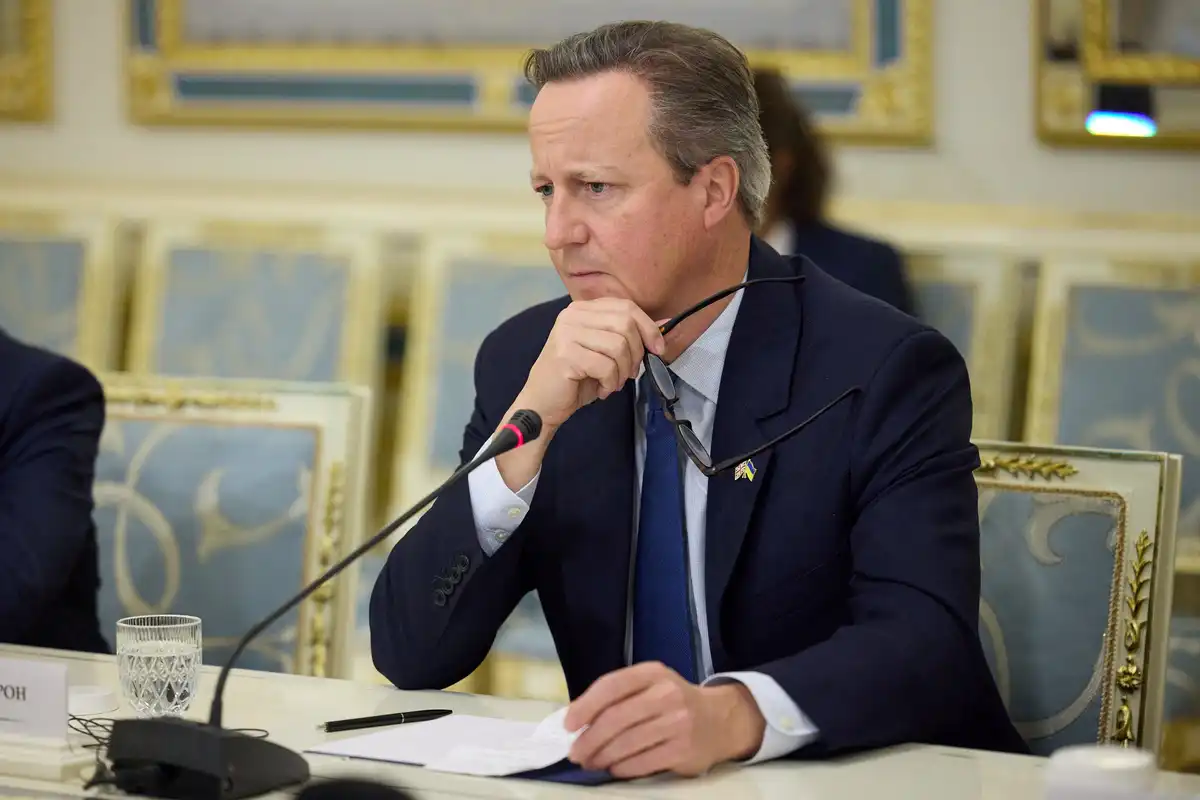
British Foreign Secretary David Cameron said on Thursday that he had decided to prevent those responsible for violence committed by settlers against Palestinians from entering Britain.


“By targeting and killing Palestinian civilians, extremist settlers undermine the security and stability of both Israelis and Palestinians,” Cameron said in a post on the X platform.


He added, "Israel must take stronger measures to stop settler violence and hold perpetrators accountable. We will prevent those responsible for settler violence from entering the United Kingdom, to ensure that our country cannot be home to people who commit these acts of terror."


For its part, the Ministry of Foreign Affairs and Expatriates welcomed the decision of British Foreign Minister David Cameron, and demanded the application of international law on colonialism to protect the two-state solution.
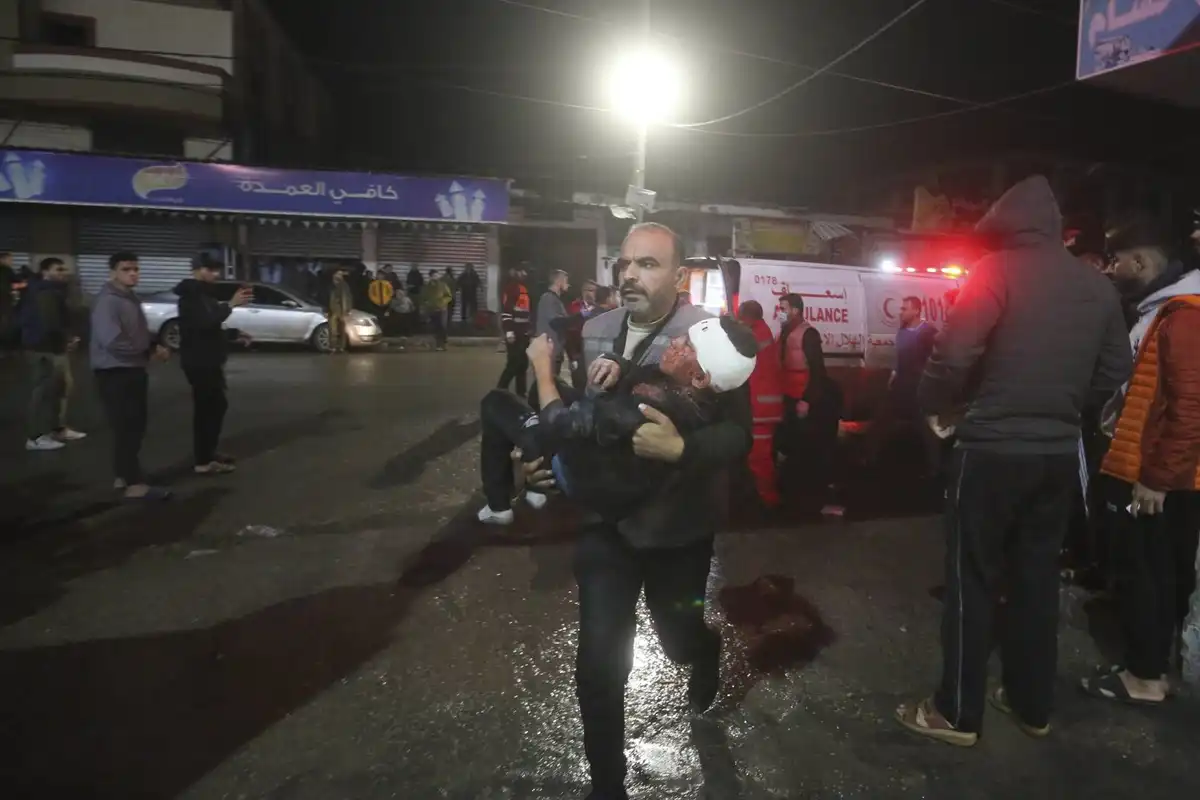

In a press statement, the Foreign Ministry considered the decision an important step in the right direction towards full compliance with international law and international legitimacy resolutions related to the Palestinian issue, on the path to lifting the historical injustice that befell the Palestinian people as a result of the continuation of this long-term occupation.


It called on all countries to take more anti-colonial decisions, as it is fundamentally illegal and illegitimate, in order to protect the two-state solution.


ARAB AND WORLD

Thu 14 Dec 2023 2:27 pm - Jerusalem Time

US National Security Advisor Jake Sullivan arrives in Israel

US National Security Advisor Jake Sullivan arrived in Israel on Thursday to hold talks on the war on Gaza.


Israeli Army Radio said that Sullivan arrived in Tel Aviv, without further details.


The White House said in a written statement, on Wednesday, a copy of which reached Anadolu, “National Security Advisor Jake Sullivan will travel to Israel on Thursday, December 14 and Friday, December 15, to meet with Prime Minister Benjamin Netanyahu, his war cabinet, and President Isaac Herzog, to discuss the latest developments in Israel and Gaza.”


Israeli Channel 12 said earlier Thursday that Israel would present to Sullivan during his visit what it said was a timetable for the war on the Gaza Strip.


According to the Israeli timetable, “it is expected that by the end of next January, Israel will end the phase of intense fighting.”


Despite foreign political pressure and popular protests around the world, Israeli Prime Minister Benjamin Netanyahu insists on continuing the war, hoping to end Hamas' continued rule of Gaza since the summer of 2007, and eliminate the military capabilities of the movement, which asserts that it resists the occupation and defends the Palestinians.


According to the channel, “It is estimated in Israel that the phase of completing the elimination of Hamas will extend over most of 2024, and includes the destruction of its military capacity through operations and raids by the Israeli army.”


She added, "In addition to the time frame of the war, among the issues that Sullivan will discuss are the fate of Gaza after the war, the role of the Palestinian Authority, the transfer of clearance funds (taxes) to the Authority, and the entry of Palestinian workers from the West Bank into Israel."


PALESTINE

Thu 14 Dec 2023 2:19 pm - Jerusalem Time

West Bank: Death toll from the Israeli aggression on the city of Jenin reached 12 dead

The Ministry of Health announced, this afternoon, Thursday, the death of the boy Musa Ahmed Musa Khatib (17 years old), shot by the Israeli occupation forces, bringing the death toll of the ongoing aggression against the city of Jenin and its camp to 12 dead.


Local sources said that the occupation forces shot the boy while he was in front of Jenin Governmental Hospital, wounding him with a bullet in the chest, and his death was later announced.


With the death of Khatib, the number of dead in the city of Jenin and its camp since dawn today has risen to four, and since the start of the aggression three days ago to 12.


Most neighborhoods in the city of Jenin are witnessing violent confrontations between young men and the occupation forces, who fire live bullets at them, especially in the vicinity of the Interior Directorate, Nazareth Street, the Old City, and the vicinity of Jenin Governmental Hospital and the eastern neighborhood, while the occupation forces continue to destroy citizens’ homes in the Jenin camp and commercial stores using “energy” shells. ".


It is noteworthy that Jenin hospitals are subjected to a fierce attack by the Israeli occupation forces, which besiege them, obstruct the arrival of the wounded, search and arrest staff working there, and also attack ambulances, shoot at them, search them, and obstruct their movement.


ARAB AND WORLD

Thu 14 Dec 2023 12:17 pm - Jerusalem Time

Washington suspends sending more than 20,000 rifles to Israel

The American website Axios attributed American officials to telling the site that the Biden administration has once again suspended licenses to sell more than 20,000 American-made rifles to Israel due to concerns about attacks by extremist Israeli settlers against Palestinian civilians in the occupied West Bank.


The decision to send the arms deal for further review by the State Department indicates that the Biden administration remains concerned that the Israeli government is not doing enough to curb extremist settler violence.


In the first week of the war it was waging on the Gaza Strip, Israel requested these rifles for “civilian first response teams in Israeli villages near the borders with Gaza, Lebanon and Syria, where these teams, made up of local residents, receive weapons and training from the Israeli police to be the first responders in the event of a terrorist attack occurred,” according to the report.


But the Biden administration dealt with caution with the Israeli request, according to Axios, who explained that this was due to fears that the far-right Minister of National Security who supervises the police, Itamar Ben Gvir, would distribute rifles to extremist settlers in the West Bank, according to American officials.


The Biden administration and Congress did not approve export licenses for American defense companies until they were certain that the weapons would not go to civilian teams in Jewish settlements.


But the website revealed that several weeks after approving the deal, the US State Department decided to slow down the process and subject the licenses to a new review, US officials said.


In a related issue, American officials said that the Biden administration currently has no plans to impose conditions on the military aid it provides to Israel, despite increasing calls from Democratic lawmakers and human rights organizations to stop providing weapons, unless Israel does more to protect civilians in Gaza.

PALESTINE

Thu 14 Dec 2023 12:11 pm - Jerusalem Time

Rain and wind destroy the tents of Palestinian displaced people in the central Gaza Strip

Heavy rains doubled the suffering of the displaced in Deir al-Balah, as the winds destroyed some tents erected at Al-Aqsa Martyrs Hospital in the city located in the central Gaza Strip.


Video footage shows displaced children trying to keep rainwater away from their tents.


"Hell on Earth"

Amin Adwan, who was displaced from Beit Hanoun and now lives in a tent in Al-Aqsa Hospital, says: “The water flooded our tent, which affected our ability to sleep. We tried to search for nylon covers, but we did not find anything, so we had to use stones and sand to prevent water leakage.”


The Israeli war on Gaza entered its sixty-eighth day on Wednesday, and according to the latest toll published by the Ministry of Health in the Gaza Strip, the Israeli bombing led to the death of 18,412 people, about 70 percent of whom were women and children.


More than two months after the outbreak of the Israeli war on the Gaza Strip, 85% of the population of 2.4 million people were displaced, and the Commissioner-General of the United Nations Relief and Works Agency for Palestine Refugees (UNRWA), Philippe Lazzarini, likened the situation in Gaza to “hell on earth.”


According to OCHA, 100 trucks loaded with aid have entered the Gaza Strip through the Rafah crossing since Monday evening, in addition to 120,000 liters of fuel, which, according to the office, remains much less than the needs.


The United Nations Office for the Coordination of Humanitarian Affairs (OCHA) said many people were still missing under the rubble.


PALESTINE

Thu 14 Dec 2023 12:01 pm - Jerusalem Time

Palestinian Education: 3,714 students were killed and 381 schools were bombed and vandalized in Gaza and the West Bank.

The Ministry of Education said that 3,714 students were killed and 5,700 were injured since the start of the Israeli aggression on October 7 in the Gaza Strip and the West Bank.


Education explained in a statement issued today, Thursday, that the number of students who were killed in the Gaza Strip since the beginning of the aggression reached 3,679 students and 5,429 wounded, while in the West Bank, 35 students were killed and 271 others were injured, in addition to 82 being arrested.


It indicated that 209 teachers and administrators were killed and 619 were injured in the Gaza Strip, two were injured, and more than 65 were arrested in the West Bank.


It pointed out that 278 government schools and 65 affiliated with the United Nations Relief and Works Agency for Refugees (UNRWA) were bombed and vandalized in the Gaza Strip, which led to 83 of them being severely damaged and 7 completely destroyed, and 38 schools in the West Bank were stormed and vandalized.


It confirmed that the Israeli targeting of schools affected 90% of school and government education buildings, which were subjected to direct and indirect damage, in addition to 29% of school buildings that could not be operated because they were exposed to total demolition or severe damage.


The Ministry added that 133 government schools were used as shelter centers in the Gaza Strip.


PALESTINE

Thu 14 Dec 2023 11:10 am - Jerusalem Time

West Bank: Israel carries out widespread arrest campaigns

The Israeli occupation authorities continue to carry out widespread arrest campaigns in the West Bank, specifically in the Jenin Governorate and its camp, which is subject to comprehensive aggression. Since the start of the military operation on the morning of December 12, and until today’s date, the occupation has arrested hundreds of citizens, the majority of whom were released after being subjected to interrogation. Field operations and abuse operations in Salem camp. We point out that in light of the continuation of the military operation and the arrest campaigns, we were not able to confirm the exact numbers of detainees in Jenin Governorate and its camp, knowing that this arrest campaign is the highest since the years of the Al-Aqsa Intifada.


In the rest of the governorates of the West Bank, the occupation arrested (17) citizens last night and until dawn today, including a girl from Hebron and former prisoners. The arrest operations were concentrated in the town of Beit Ummar/Hebron, and the rest of the arrests were distributed among the governorates of Tubas, Bethlehem, Jerusalem, Nablus, And Ramallah.


During the arrest campaigns, the occupation forces continue to carry out widespread raids and abuse, severe beatings, and threats against detainees and their families, in addition to field investigation operations, sabotage and destruction of citizens’ homes, and direct shooting with the aim of killing, in addition to widespread sabotage operations that affected the infrastructure, as is happening in Jenin Governorate.


Thus, the total number of arrests after October 7 rose to more than (4,400), and this total includes those who were arrested from homes, through military checkpoints, those who were forced to surrender themselves under pressure, those who were held hostage, or those who were arrested and subjected to field investigation, knowing that recently, the occupation forces have been focusing on field investigation operations, where they arrest many citizens, with the aim of investigating them on the ground, and then release them later, after carrying out abuse and torture against them.


PALESTINE

Thu 14 Dec 2023 8:10 am - Jerusalem Time

On Teacher's Day: More than 200 killed and dozens of educational personnel were detained

On the fourteenth of December of each year, Palestine celebrates Palestinian Teacher’s Day, which is a national occasion in which the people of the country express their reverence and appreciation for the Palestinian teacher, the bearer of the message of the prophets and the torch of salvation from ignorance and slavery, and an expression of their appreciation for his pioneering role.


This day carries a national symbolism whose roots are linked to a stage of struggle that began in 1972, when dozens of teachers were subjected to oppression and abuse at the hands of the Israeli occupation authorities, for their national role of protecting the educational process from the interference of the occupier, and his attempts to impose guardianship over it, in addition to their demands for their fair union rights, all the way to Until December 14, 1982.


At that time, the first teachers’ march was launched from the Expatriates School in Al-Bireh, and its participants were subjected to severe beatings, assaults with excessive force, and arrest at the hands of Israeli occupation soldiers. Among those who were attacked were the leaders of the General Committee for Teachers, which was formed through regional committees of school teachers in each governorate, after which the General Committee for Teachers announced a successive strike for 75 days, which led to the occupation authorities’ defeat and submission to their demands.


Palestinian teachers made great sacrifices to prevent the passage of the occupation authorities’ plans to Judaize education and falsify Palestinian history and geography, and all attempts to interfere in the educational process. They recorded grave positions and challenges during the first Palestinian popular uprising, during the continued closure of Palestinian schools and universities by the occupation authorities, by resorting to popular education, from In order to preserve the progress of the national educational process, defying the might of the occupation, which they tried to suppress harshly and brutally, in addition to their national and trade union struggle in defending the cause of our Palestinian people, to rise from among their ranks the martyrs, fall the wounded, and throw many of them into the occupation prisons.


On this occasion, the Ministry of Education issued the following statement: We remember our departed martyred teachers, to have mercy on them, and we extend our salutes to all our male and female teachers, who continue their active presence in the process of giving and building generations, preserving the value system, and creatively combining the provision of knowledge and confronting all attempts to undermine them. Identity.


This day comes in extremely complex circumstances in Gaza and the West Bank, including Jerusalem, where the occupation’s violations against our teachers continue, and perhaps the presence of more than two hundred martyrs of educational personnel in the Gaza Strip, and dozens of teachers detained in the West Bank, and hundreds of teachers prevented from reaching their schools. The almost daily exposure to teachers in Jerusalem schools, the Jordan Valley schools, Masafer Yatta and other areas are all practices that fall within the framework of targeting the educational learning process.


She expressed her pride in the teachers who continue to give and prove their affiliation, through continuous giving in person or remotely, as the Palestinian teacher has always proven to be a difficult number. In this context, we salute our teachers, at a time when some of Gaza’s teachers in shelter centers continue to provide educational events and activities to our students, and Jerusalem’s teachers assume their role in protecting our curriculum and preserving values, and our Palestinian teacher supports the choice of education as a tool for liberation.


It called on international institutions, specifically UNESCO, to assume its responsibilities to protect Palestinian teachers from continued targeting by an occupation that targets the Palestinian education sector with all its components.


PALESTINE

Thu 14 Dec 2023 8:10 am - Jerusalem Time

Gaza war: A new Israeli massacre... 27 Palestinians killed in Rafah

On the 69th day of the Israeli aggression on the Gaza Strip, the occupation army’s raids continued on various areas of the Strip, and clashes continued with the resistance in various axes, as the Israeli army admitted that 10 of its soldiers, most of them officers, were killed in an ambush by the Al-Qassam Brigades, which announced the bombing of its command rooms. An occupation field in the southern axis of Gaza City.


27 Palestinians, including children and women, were killed, and others were injured in an Israeli bombing that targeted two homes near the Al-Dakhni Junction in the center of Rafah. Most of the victims of the new Israeli massacre are from the “Abu Dabaa” and “Abu Matar” families.


OPINIONS

Thu 14 Dec 2023 8:00 am - Jerusalem Time

The Gaza War and the Arabs' strategic choices

Burhan Ghalioun

Burhan Ghalioun

Opinion Writer

First, the dimensions of the current Israeli war in Gaza and Palestine:

Most Arab leaders - governments, intellectuals and politicians - are mistaken if they believe that the war that Israel is waging, and behind it the United States and its Western allies, is primarily a war against the Hamas movement, even if Hamas was the one that caused its outbreak. Those who bet on the Israeli war to eliminate political Islam movements and liberate Arab or Middle Eastern countries from them and their adventures, in favor of enhancing the chances of the birth of secular or semi-secular, democratic or pluralistic political systems, are most mistaken. The goal of the war, on the contrary, is to block the way to such birth of national, democratic, and secular systems that cannot be created and shaped without a minimum level of peace, stability, sovereignty, respect for human rights, and consideration of the interests of the Arab peoples, foremost of which is launching the wheel of civilizational, economic, political, and moral development. There is no factor that has contributed to undermining this human development and depleting the intellectual, human and material efforts of these peoples more than the wars that have been continuing for more than a century to empty the region of its power and weight and strengthen the hotbed of Jewish settlement.


This settlement, securing its presence, expanding its base of expansion, and enabling it to impose its will on neighboring Arab countries, has turned into a black hole that swallows up all the intellectual, human, and material efforts of the Arabs for an entire century, dooming them to decline, backwardness, and regression in all fields, to the extent that it has made subjecting their peoples to this agenda the core of the  Global political agenda, especially Western, in the Middle East. This necessitated depriving its people of their sovereignty and not hesitating to interfere in their internal affairs, supporting military and security dictatorial regimes, protecting them, and covering up their violations of civil and political rights, no matter how serious.


Hence, the Washington/Tel Aviv battle to subjugate the Palestinians and the war of ethnic cleansing that it is adopting in Palestine are inseparable from the battle to defend the authoritarian regimes that it was betting on to ensure normalization with Israel, liquidate the Palestinian issue, and establish an alliance that would ensure that the Middle East remained a region of Western influence. This is one of the most important motives for Normalization is the stabilization of the foundations of authoritarian regimes that were destabilized by the Arab revolutions in the past decade, and which now realize that they have no hope of survival after their national bankruptcy and failure, even in responding to the basic needs of their societies, in the field of freedoms and civil rights, and even in the field of providing bread, water, and electricity, except by betting on Western and American protection in particular. Thus, there are no longer differences between these regimes and the apartheid regime in Palestine, nor any significant differences between the practices of the Israeli occupation regime towards the Palestinians and the practices of many Arab regimes towards their people. Here too, Israel provides, in its war against the people of Gaza, a role model for using starvation, thirst, and deprivation of peoples of any humanitarian services as a weapon to subjugate them and force submission on them.


The Israeli war and Western complicity with it appeared to be a blatant challenge to the political and moral principles on which loyalty to the state, the regime, and public morals are based.


These Arab leaders are wrong if they believe that the Gaza war is only related to Palestine, even if the issue of Palestine, the land and the people, is at its heart. In essence, it is a regional war to preserve American control over the Middle East and its strategic advantages in the face of any internal Arab or regional Turkish and Iranian competitions. At the forefront of the tasks of this war to maintain Western control is to restore the credibility of the Israeli deterrence, which it is betting on as a major regional power that threatens regional countries aspiring to expand the margin of its initiative, secure and protect subordinate regimes against internal or external disturbances, including deterring the Arabs from thinking outside the box in which this policy itself has placed them.

But its goal is also, beyond that, to confront the attempts of the major rising powers aspiring to change the international system centered on the West and its interests and to establish a new system that redistributes the cards of control and spheres of influence in the world, and with regard to international decision-making. This means that this war has a global dimension, represented by Washington asserting its control over its areas of influence and not giving up its monopoly on shaping the global policy agenda in a way that serves its goals and strategic interests. It views any party that violates its decisions, does not abide by them, or does not act on them as rebellious against it and a threat to international peace and security, and therefore vulnerable to the sanctions it deems appropriate. It does not hide that its decision is the law, whether it agrees with international law or contradicts it. It does not pay any attention to the latter when it comes to what it calls its interests or the interests of its allies.


Gaza is today the epicenter of the clash and the theater of operations to restore the reputation of this central American force that clings to control and unipolarity, to the extent that Israel’s deterrence of the Arabs and erasing the negative impact of the Al-Aqsa flood on the credibility of this deterrence is the necessary condition for forcing the Arabs to continue to join the West, and with Washington in particular, and preventing them from thinking in expanding the scope of their strategic initiative by establishing positive and independent relations with rising international powers, such as China and Russia, with whom Washington believes it is in a real historical war due to its dispute over the monopoly of the right to formulate the international political agenda, and their endeavor to form a broad international coalition against its unilateral control.


Secondly, in the difference in Arab and international responses

Large segments of public opinion in the West have realized the motives behind this American-Western policy aimed at making them bear the price of neo-colonial wars of control, not only on the material level and daily living conditions, but more than that at the expense of their peoples’ civil rights and freedoms and involving them in racist and genocidal wars, which they will bear. Its moral, political, and even economic responsibility for many decades to come. Hence, what is happening in the West in response to the policy of supporting settlement, occupation, terrorism and ethnic cleansing does not express a profound political and ideological revolution among the Western peoples against the fabricated narrative that their countries have mastered regarding the Israeli and Palestinian issue only, but rather it is more than that a revolution of conscience against crossing all moral limits. And humanity in managing this colonial war, which went beyond the model of the crusade launched by George W. Bush against Iraq to the model of wars of racist extermination. 

It reflects the response of Western consciousness to the historical and political deception promoted by colonial propaganda and media that there is no solution to the Palestinian issue, and therefore there is no escape from supporting Israel until the end and financing the Palestinian war of extermination.

The Israeli war and Western complicity with it appeared to be a blatant challenge to the political and moral principles on which loyalty to the state, the regime, and public ethics are based, despite the absence of cultural or political kinship with the Arab countries and the Palestinian people.


To the extent that the war in Gaza placed the regimes in a dilemma of lack of strategic options in a war that would decide the fate of the Middle East, it placed the Arab peoples before a great challenge to which their elites were also unable to rise to the level of a minimal response.


To the extent that this awakening of conscience constitutes one of the manifestations of the decline of the hegemony of the neo-colonial system, it also highlights the explosion of the contradictions of the existing system of international control, and works to reshape the popular political consciousness, and the return of the conflict to its main internal axis, after the long control of the right-wing and racist movements and their bet on detonating foreign wars to cover up on their social contradictions. This means that the ideological crisis will spread to these central countries, regardless of the final military outcome of this ongoing war in Gaza. On this awakening that was sparked by the genocidal war in Gaza in the countries of the Western Center, we can bet, and we should bet in the future, on expanding the circle of cross-border alliances and strengthening solidarity between the democratic forces in the global North and South in order to expose the growing methods of racist thinking and the struggle against the policies of oppression, deprivation of will and sovereignty, and formulating proposals for new global policies that break with the colonial spirit and logic. In order to open new horizons for social liberation and democratic movements curbed by the alliance of imperialism and tyranny in most regions of the world, and to push towards changing the priorities of global politics.


In the Arab region, where the strongest forms of alliance prevail between imperialist control projects and tyrannical regimes, between oil rents, arms trade, and investment in armies and militias, the big explosion in Palestine, and in Gaza in particular, has put governments before difficult choices, as it has undermined their strategic project for normalization with Israel and behind it with the West, to secure its systems against popular revolutions and protect it from external threats, and Iranian ones in particular, without opening another horizon for it to formulate new options to confront external dangers and threats, thus leaving it in a strategic vacuum, unable to keep pace with the Palestinian uprising, nor to stand against it and deepening its estrangement with its peoples who automatically stand in solidarity with it. 

Ignoring the Israeli cleansing war is no less dangerous than accepting armed Palestinian resistance projects, which carry both ideological, political and strategic risks. Therefore, its position was to wait and open windows on its Islamic environment to ease the burden of the West’s challenge by supporting the resistance and Palestinian demands on the one hand, and the dangers of standing up to its people in solidarity with the resistance on the other hand. It is walking on a tight rope, holding its breath and weighing every step according to the gold standard, so as not to exceed the limits of the margins of its almost non-existent initiative. 

But the regimes were not the only ones who lacked initiative. To the extent that the war in Gaza put the regimes in a dilemma of lack of strategic options in a war that would decide the fate of the Middle East, it placed the Arab peoples before a great challenge to which their elites were also unable to rise to the level of a minimal response. 

Therefore, silence, hesitation, and passive follow-up were the major characteristics of the behavior of the large bloc of people disqualified from politics, besieged ideologically, politically, and security-wise, and lacking any political and intellectual leadership. Thus, contrary to what led the Western public to demonstrate enthusiastically after discovering the deception behind its regime’s marketing of Israel as the protector of Western, civil and humanitarian values in the Middle East and the savage Arab world, Arab protests or demonstrations of solidarity did not emerge until late, and were much less powerful than what happened in Western countries. But this does not mean the absence or weakness of sympathy for the fighters of the Palestinian factions.


The Washington/Tel Aviv battle to subjugate the Palestinians and the war of ethnic cleansing it is adopting in Palestine are inseparable from the battle to defend authoritarian regimes.


The weakness of the Arab popular demonstrations compared to the demonstrations and protests of the masses of Spain, Italy, Ireland, Britain, the United States, and other foreign countries stemmed from their audience’s loss of confidence not only in the regimes that govern them, but also in the factions, militias, and even opposition political forces as well, many of which participated in their suffering, and it was one of the manifestations of their surrender and acceptance that Israel and the Arab governments have resolved the situation in their favor, and they cannot change any of the miserable conditions, including accepting the Israeli settlement policy as a fait accompli.


Indeed, a section of the Arab elites in government and opposition have reached a firm belief that liberation from the Palestinian issue and its related aspects of struggle and focus on hostility to Zionism and confrontation with the West, and therefore, accepting the fait accompli and giving Israel what it wants, is a necessary condition for political and social liberation in Arab societies, even if it was at the expense of the Palestinian people, “who were unable to unite their ranks and reach understanding among their groups,” to put pressure on Israel and the West to obtain some of their rights. In short, Palestine has become, in the eyes of the majority of the ruling elites and the Arab opposition, an unbearable burden for the sake of achieving local or national political and ideological liberal aspirations. In their view, it feeds Islamism, fixation on identity, and belief in the rift between the West, Arabs, and Muslims. Thus, it deprives them of integration into civilization. Accepting its existence as it is, is less harmful to the Arabs than resisting it or standing in the way of its expansionist projects.


Third, a heroic chapter in the decolonization and the return of history to its course

On the other hand, Israel was subjected to a historic blow, which was imposed on its public and many of the international powers that stand behind it and use it as a sharp sword to deprive the Arab countries, most notably Egypt, from restoring its regional role, gathering the Arab countries around it or establishing an effective regional alliance that enhances all of their chances of achieving success in economic and humanitarian development, and increases the confidence of the peoples of these countries in their countries and their investment in them, to maximize their opportunities for progress and ensure the future of their coming generations. This strike shook the foundations on which Israel was founded, and the great progress it had achieved in the past decades. We would be wrong if we thought that this exceptional strength and progress resulted from nationalism or adherence to religious belief. What attracted and continues to attract Jewish immigrants to Palestine is, first and foremost, the exceptional privileges that each colonial regime offers to its audience, in exchange for conscripting them into the permanent war against the peoples from whom they have seized their movable and immovable property and directing them towards the new settlers who find themselves transformed into new masters and feudal lords simply by their loyalty to the new state, and their obtaining its citizenship, after they had been displaced and poor in their countries of origin. But it is not the theft of indigenous property and its free appropriation from them that explains the size of these privileges, but rather the large investment placed in the occupation by the Western bloc, which from the beginning made Israel the “regional” or local guardian of its interests in the region, in exchange for its work on its strategy, implementation of its plans, and undertake to deter its people, governments and elites. It is a purely strategic investment, and has nothing to do with what is rumored about the West’s acquittal of the Holocaust committed against the Jews in Europe, nor its leaders’ compassion for the victims of Nazism.


From here, the depth of the crisis in which the “Al-Aqsa Flood” placed Israel and threatened its future emerges. If Israel loses its role, it will be a deterrent force for Arab governments and peoples and a heavy stick that can be used to strike any serious attempt to liberate itself from its hegemony or eliminate any dreamer of an independent policy that puts the interests of its people and nation at the forefront. In the face of colonial interests, the West no longer has an interest in defending its superiority, control, and massive military and political investment in it. If the West’s in-kind and invisible financial, military, diplomatic, ideological and media aid weakens, and the strategic returns of the occupation diminish, there is no longer anything to encourage the Jews of the West and the world to join it and bear the burden of the wars that its function calls for in return for few or no benefits. In this case, the Zionist settlement project, that is, for Israel, no longer has much appeal.


Israel is waging a battle for its existence to the extent that it seeks to reaffirm its exceptional military and strategic ability to serve its financiers from Western countries.


Therefore, it is true that Israel today is waging a battle for its existence to the extent that it seeks to reaffirm its exceptional military and strategic ability to serve its financiers from Western countries. In order to prove this, it must erase the shame of the defeat that its army and security suffered on October 7, restore its deterrence, and restore its readiness to terrorize Arab countries and peoples, extract their submission, and humiliate them. This is the most prominent challenge it faces today, which makes it believe that it is faced with an equation that cannot be undone. Either its existence, which calls for the end of the Palestinian people and their cause, which undermines their livelihood and ends their function, or the existence of the Palestinian people, whose achievement of a Palestinian state alongside them means nothing but the elimination of its geostrategic role on which it built its control, its material and symbolic wealth, and its superiority, that is, its actual myth.


What position responds to the interests of Arab governments in this confrontation? 


It will certainly not be possible to distance oneself from the confrontation, consider the matter to be related to the factions, Gaza, or Palestine, and seek mediation to end it. On the contrary, they should benefit from the crisis of the Israeli apartheid regime, and behind it the crisis of Western, and especially American, control, and employ it in order to expand the circle of their initiative and the margin of independence of their decisions and ensure a better future for their countries and societies.

This means that they work together and systematically, so that Israel is not the winner in the end, and that the Palestinians achieve the most important part of being recognized as a people, a political community, and an independent and sovereign state alongside other regional countries. Palestine winning this major political battle does not mean the disappearance of Israel, which is not their desired goal now. Rather, it is to limit it, remove its fangs, and transform it into a natural state subject, like all countries in the region, to one law, which is international law applied by the United Nations and the rest of the international rules and norms. This provides these governments with the opportunity to rebuild their relations with Israel and other regional countries on the basis of prevailing international agreements based on the principle of equality, i.e. principled equality and exchange of interests, not on coercion and coercion by force on the one hand and acquiescence on the other. This is what will encourage the entire region to break out of its barbarism, which was mainly linked to Israel’s wars and its undermining of all international norms, and to work with the logic of force and conquest at home and abroad, and motivate it to come under the roof of the law.


Large segments of public opinion in the West have realized the motives of American Western policy aimed at making them bear the price of wars of neo-colonial control.


Adopting and pursuing this option does not require the final military victory of the Palestinian factions over the Israeli force, armed with modern weapons and supported in an unprecedented manner by the American and European Atlantic military arsenal, as this is impossible. It only calls for not neglecting the Palestinian strategic, political and media achievement, which diminished Israel no matter what happened afterward, made it smaller, exposed its lies and deceit to the world, and mobilized large sectors of global public opinion, including, and especially, in the United States and Europe against what has become clear that Israel, which, along with the West, is accustomed to repeating that it is the only democracy in the region, to justify absolute and unconditional support for it, it is nothing but an apartheid state, and a barbaric force that does not abide by any international standards or humanitarian values. Building on this, the Arabs can impose on the Americans, who are supposed to recognize that they can no longer protect their interests in the region with Israeli force that was “Deflated” by the Palestinian factions, and they must build their relations with the Arab countries on the basis of greater respect for their independence, interests, and the rights to respond more positively to the aspirations of their peoples.


The success of Arab governments in achieving such a more independent relationship with the United States and the West will not only enable them to impose their respect on others, but also to open up to their people and save money invested in the arms race, in wars, and in the reconstruction of destroyed countries here and there, to improve the living conditions of their peoples and their rehabilitation. This reduces the risks of revolutions and uprisings, and opens the door to gradual democratic transformation, to the extent that it changes the general aggressive climate prevailing today in relations between and within countries between governments or frightened ruling elites and grieving or afflicted peoples, or both.


The bottom line is that what we witnessed two months ago, and are still witnessing, of the success of a small group of faction fighters in dislodging the static tectonic regulations and changing the balance of power, is an epic new chapter in the long and stubborn process of decolonization, and one of its major and exceptional battles is similar to the battle of Algiers (1957), which struck the bell of the French colonial withdrawal. Unfortunately, it will not be the final chapter. 

There are still many peoples and groups living under occupation, and they are exposed to discrimination, persecution, and racial discrimination, but it remains an inspiring confirmation of the inevitability of history returning to its natural context, I mean human liberation and the trend towards justice and equality, despite all obstacles.


But before that, it remains the culmination of the spirit of exceptional sacrifice, human heroism, faith in the cause, and refusal to surrender to the fate of force and injustice. The first people to be inspired by are the Syrians who are suffering under the brutal dictatorship, which is the monstrous product of the complicity of Israeli colonial control and hateful tyranny.


ARAB AND WORLD

Thu 14 Dec 2023 7:53 am - Jerusalem Time

Flooding the tunnels threatens Gaza with a disaster

Environmental experts have warned of reports that Israel is seeking to flood Gaza's tunnels, noting that this step, if it occurs, will cause a disaster with long-term effects on groundwater and perhaps the soil in the Strip, as well as the potential impact on building foundations, while it is not yet clear if the Israeli army had not actually begun pumping seawater into the Hamas tunnel system in the Gaza Strip.


Israel attacks Hamas' tunnels in the north and south of the Gaza Strip, as they are the most powerful weapon that enables the movement's leaders to survive and gives its fighters the advantage in attacking. It is also considered a secret prison for detainees that Israel is searching for. While the Israeli army refused to comment on the matter, statements by Defense Minister Yoav Galant indicate that the dumping, if it actually takes place, is taking place in specific areas where Israel knows there are no detainees.


The situation in Gaza and other regional issues were the focus of a meeting between Saudi Crown Prince Mohammed bin Salman and US National Security Advisor Jake Sullivan yesterday (Wednesday), according to what two American officials announced to Reuters. One of them stated that the research focused on “increasing diplomatic efforts to maintain stability throughout the region and prevent the expansion of the conflict between Israel and Hamas.”


Israeli Prime Minister Benjamin Netanyahu anticipated Sullivan's arrival in Tel Aviv today (Thursday), in an attempt to heal the rift with Washington, after the differences between them became public. Sullivan is expected to exert pressure to reduce the intensity of fighting and put forward a deadline for war.


Meanwhile, Israel announced that it had suffered its largest losses in more than a month after its forces were ambushed in Gaza City, causing shock among its citizens. The Israeli army admitted that it lost 10 soldiers, including an officer with the rank of colonel, and senior commanders in battalions, including the Golani Brigade. Following this announcement, the families of the Israeli prisoners issued a distress call and demanded a complete cessation of the war and negotiations to release their sons.


At a time when Israel faces increasing diplomatic isolation with the rising number of civilian deaths and the worsening humanitarian catastrophe in the Gaza Strip, and a day after the United Nations called for an immediate ceasefire for humanitarian reasons, and US President Joe Biden’s statement that the “indiscriminate” bombing of civilians undermines international support for Israel. ; Israeli Prime Minister Benjamin Netanyahu challenged the world with a statement during a visit to an armored forces camp in the southern region, saying: “International pressure will not stop us.”

OPINIONS

Thu 14 Dec 2023 7:39 am - Jerusalem Time

A war that is difficult for anyone to absolutely win it

Hazem Saghieh

Hazem Saghieh

Opinion Writer

“America is Alone”: This is how this newspaper titled what happened recently in the Security Council. Indeed, America was alone when it announced the veto. No one in the world supported it. Even Britain contented itself with abstaining from voting, while France disagreed.


This miserable result says that the Israeli war can only be won by force, and by force alone wars cannot be won at all. With this characteristic, it is similar to the superiority of the beast over humans and the superiority of muscle over everything else. This is not an underestimation of power, but it highlights its limitations in persuasion and value and its inability to win allies, which ultimately leads to it confining itself to itself, and its owner appearing as hated, arrogant and arrogant.


How could it be otherwise when insane Israeli killing takes place, accompanied by indifference to any public opinion, clear contempt for human humanity and an extremely unequal and discriminatory evaluation of their lives, not to mention an endless flood of lies?


This is how the Israelis today appear to be alone, and who would dare to join them in a barbaric project like this, the most prominent of which is the killing of children, the displacement of the population, and the destruction of homes, even if they wanted to?


But the depletion of alliances is fueled by other factors indicated by the demonstrations in the world's capitals and what some of its educational and media institutions are witnessing. Israel does not accompany its war with any policy or proposal for a solution, and there is widespread hostility towards America and the West based on its identification with them. In turn, the memory of the Holocaust is declining and obsolete, especially after its leaders continued to exploit it. This is while the new mood in the world can no longer tolerate silence about the tragedies of peoples, especially the tragedy of the Palestinians have also become fascinated by this mood of the defeated victim, just as it was fascinated decades ago by the strong victor. In addition to the spread of anti-violence sentiment, albeit with a degree of selectivity, social media has become available for all speech after the traditional media, owned by wealthy institutions, filtered and directed speech. Finally, especially with immigration and demographic changes, the contradiction between democracy and its foreign policy has become subject to accountability, and the review of “colonial history” has become widespread, rivaled only by the awakening of identities of every kind to their partial self, and the atrophy of the universality contained in the values of Enlightenment.


But when taken together, these factors appear to be similar to the mixture of conception and misfortune. Although it provided many allies for the Palestinians, the fear remained that the Palestinian national project and its specificity would be suffocated by the grip of this intense and abundant embrace. While many reject the possibility of the aforementioned project coexisting with the liberation concern of the Syrians, which is supposed to be the closest and most similar, those appear who make Palestine a symbol of gender equality, and of objection to Columbus’ discovery of America, and those who reject neoliberalism, and those seeking a cleaner environment, and those who want to Islamize the world, as well as those who want to remove religion from the world's chest. In these “social movements” we find those who claim to correct history and the mistakes of geography because of the colonialism and borders and entities created by the colonizers. We also find those who seek to return women to the male house of obedience, and those who want freedom for them are said to be what prevents them from consumerism mixed with reactionary values. 

And just as ideas and perceptions are mixed around Palestine, so are the borders. Thus, Yemen, which is experiencing a civil war accompanied by Iranian hegemony, is relied upon to save Gaza by immersing the region in a regional and perhaps international war. As Lebanon lives in daily fear of war spreading to it, such an event, supposedly supportive of Palestine, would be able to explode an issue fraught with sectarian conflict that would steal some light from its cause.


It is feared, in the end, that we will live through an expanded repetition of what we have witnessed of the traditional Arab use of the “central issue” as everyone’s issue and no one’s issue at the same time. This is with the knowledge that “everyone”, this time, is the entire world.


The situation is that many signs announce the difficulty of transforming this noise into a policy that reflects itself on decisions and institutions. Overthrowing Joe Biden, for example, will only bring Donald Trump to the White House, provided he escapes prosecution. This, while preventing the British Labor Party from winning, will keep the Conservatives in power, just as Marine Le Pen inheriting Emmanuel Macron is incomparably more likely than Mélenchon inheriting him. 


This is reminiscent of the observations made by some scholars of the movements opposing neoliberalism, after the objection began to lack a strong social class such as the working class and its unions, as a result of the technical revolution and robots. Thus, those outside production and classes are the ones who undertake this task in which reactionary and progressive titles rise and fall in between, while its practical effectiveness decreases and declines.


In turn, the many issues in the Palestinian issue are what it is advisable to control and shorten so that the private Palestinian voice remains more heard. Otherwise, abundance is a source of weakness in the case of the Palestinians, just as few are a source of weakness in the case of the Israelis: one party is isolated and the other is lost in the crowd. This is what makes a sweeping and complete victory, any victory, a hasty claim.

PALESTINE

Thu 14 Dec 2023 7:37 am - Jerusalem Time

War on Gaza: 13 Palestinians were killed in an Israeli raid on two homes in Rafah

The Palestinian Radio reported today (Wednesday) that 13 people were killed in an Israeli raid on the Rafah Governorate in the southern Gaza Strip, according to what was reported by the Arab World News Agency.


The radio added that the bombing that targeted two houses in Rafah Governorate also resulted in a number of casualties.


The radio later reported that six people were killed in an Israeli bombing that targeted a school housing displaced people in Gaza City in the northern Gaza Strip. It was reported that the bombing of the school, located in the Sheikh Radwan pool, also resulted in the injury of dozens of others, without providing further details.


The spokesman for the Ministry of Health in the Gaza Strip announced today that the number of Palestinian deaths since the start of the Israeli war on the Strip has risen to 18,608, and the number of injured has increased to 50,594.


Yesterday, 20 people were killed, including 6 children, and dozens were injured in an Israeli bombing that targeted a house in Rafah, south of the Gaza Strip.


ARAB AND WORLD

Thu 14 Dec 2023 7:26 am - Jerusalem Time

War on Gaza: Israel is preparing a timetable to discuss it with Washington

White House National Security Advisor Jake Sullivan intends to visit Israel on Thursday and Friday to meet with Israeli Prime Minister Benjamin Netanyahu, as part of American efforts to pressure Israel to envision the “day after” the war that Israel has been waging on the Gaza Strip for 68 days.


US National Security Council spokeswoman Adrian Watson said on Wednesday evening that Sullivan intends to hold meetings with Netanyahu, the Israeli “war cabinet” and President Isaac Herzog, to discuss the latest developments in Israel and Gaza, in a visit that comes amid declared tensions between US President Joe Biden. , Netanyahu, regarding the Israeli military operation in Gaza.


Biden said on Tuesday that Israel has begun to lose international support due to its “indiscriminate” bombing of Gaza and that Netanyahu must “change,” indicating that the latter cannot reject the two-state solution in the future, which reveals a new rift in relations with the Israeli Prime Minister, who He spoke publicly about a dispute with Washington “over the next day for Hamas,” as he put it.


With his visit to Israel, there is a state of concern among Israeli officials that Sullivan will offer Israel an American deadline of only a few weeks to end the war, after the White House announced that one of the topics of Sullivan’s talks will be a “timetable” for the war, while Israel seeks to prolong the war. Its war in light of the failure to achieve any of the declared goals.


Israeli Channel 12 reported, on Wednesday evening, that Biden sent Sullivan to Tel Aviv to “make sure that the American message that the hourglass is about to run out clearly reached officials in the Israeli government and that Israeli plans are consistent with the American timetable for the war.”


The timetable that Tel Aviv will present to Washington:


> By the end of next January: Israel is expected to end the “violent fighting” phase, referring to the most violent and intense phase of its attack on the Gaza Strip, noting that Washington was seeking to end this phase by next year, specifically at the beginning of January. January 2024, but “in light of the current situation, Tel Aviv does not see the possibility of this.”


> Several weeks to withdraw forces: Channel 12 revealed that the Israeli “war cabinet” will ask Washington for “a few more weeks after the end of the fighting (intensive attacks), to complete the withdrawal of forces from the heart of Gaza and deploy them in defensive lines, some inside the Strip and some outside it.”


> Completing the plan to “eliminate Hamas”: Channel 12 indicated that this phase will be considered the longest in the Israeli war on the Gaza Strip, and without it, the declared Israeli goal of “eliminating the Hamas movement, ending its ability to rule the Gaza Strip or attack Israel” will not be achieved.


According to Channel 12, the phase of “eliminating Hamas,” as it put it, will continue throughout the year 2024, and includes a shift in tactics to destroy Hamas’ military capacity through specific ground operations and air strikes, aimed at pursuing Hamas members and senior leaders of the movement, in addition to other military targets.


While American officials stress that they do not want to see Israel occupy Gaza, they acknowledge that a temporary occupation may be necessary until long-term arrangements are reached with Israel and other partners. Channel 12 confirmed that Israel aims to continue its “security control” in The foreseeable future of the sector.


Channel 12 considered that the timetable prepared by Israel to discuss it with its American ally regarding its war on Gaza is “realistic and constitutes a strong basis for deliberations between officials in Tel Aviv and their counterparts in Washington to reach a settlement on this matter,” while it stressed American insistence on introducing humanitarian aid into the Gaza Strip. .


The channel pointed to a possible equation that Israel seeks to establish and convince Washington to continue the war on the Gaza Strip with its current intensity and intensity until the end of last January, despite Washington’s desire to reduce the most intense phase of the Israeli war on Gaza in early next January, which is Opening the Kerem Shalom crossing to increase aid to Gaza.


The White House: Israel will continue to pursue Hamas


The two sides, the American and Israeli, confirm that there are no differences between Washington and Tel Aviv regarding the war on Gaza and its declared goals of eliminating the Hamas movement, ending its ability to rule the Gaza Strip or attack Israel, and that the disagreement that has emerged over the past days is related to the lack of an Israeli vision for “today.” The next war is consistent with American plans for the region.


In a related context, John Kirby, coordinator of strategic communications at the National Security Council at the White House, said that Washington conveyed its concerns to Tel Aviv regarding the method of carrying out Israeli military operations in the Gaza Strip, indicating “the need for the Israeli army to be more precise in preventing civilian casualties.” ".


Kirby added, in a press statement on Wednesday evening, “We constantly encourage the Israelis to be as careful as possible, while acknowledging that Hamas was the one who started (the attacks) on October 7 last year.” Kirby stated that the Israeli army will continue to pursue Hamas, “but it is very important that it does not target civilians while doing so,” as he put it.

Source: Sama News

ARAB AND WORLD

Thu 14 Dec 2023 7:18 am - Jerusalem Time

American officer: “Israel’s attack on Gaza is in fact an attack on civilians”

A senior US Air Force officer said that "Israel's attack on Gaza is in fact an attack on civilians," stressing that the problem in Tel Aviv is its arrogance, according to what was reported by the American magazine "Newsweek", Wednesday, December 13, 2023.


The US Air Force officer's statements came after his participation in internal deliberations within the administration of US President Joe Biden and other discussions with his Israeli counterparts, according to the magazine.


The officer told the American magazine, "Israel has lost the information war, and the size of the Israeli strikes does not seem disproportionate to the type of measures used in international law."


Newsweek magazine confirmed that "Israel has so far attacked 25,000 targets in Gaza from the air, sea and land, and dropped about 140,000 weapons, 60% of which were artillery shells and 40% were weapons dropped by aircraft."


“It is difficult to believe that such widespread destruction was necessary to confront the threat posed by Hamas,” says Ken Roth, former director of Human Rights Watch and a visiting professor at Princeton University, reflecting a view shared by many in the US government, which is that it was Israel could and should have pursued different strategies to eliminate Hamas.


Meanwhile, a prominent Israeli military analyst said on Wednesday that the Israeli army had lost its “advantage” in the course of the fighting in Gaza, stressing that control over the Shujaiya neighborhood in the northern Gaza Strip “is still out of reach.”


Analyst Amos Harel said, in an analytical article in the Hebrew newspaper Haaretz, that the combat conditions on the ground and the close encounter between the Israeli army and Hamas members “reduced the relative advantage that the Israeli army enjoys in the field of technology and intelligence.”


He also described the network of tunnels established by Hamas as “its size and complexity exceeding what Israeli intelligence expected,” and considered that these circumstances “also increased the number of Israeli casualties.”


He pointed out that the Israeli army "is still far from controlling the Shujaiya neighborhood east of Gaza City (north), the last remaining stronghold of the Hamas movement in the northern Gaza Strip, and the site that is witnessing ongoing fighting."


He added: "The Israeli army is still far from controlling the area (referring to the Shujaiya neighborhood), and in the Jabalia refugee camp, resistance has diminished somewhat in recent days."


He continued: “The fighting itself, by infantry, and to a large extent also by tanks, takes place at a very close range and in densely built-up areas, only some of which have been destroyed, enabling groups of Hamas fighters to clash with the Israeli army, in some cases at a distance of only a few meters.” .


He added: "These circumstances reduce some of the relative advantage that the Israeli army enjoys in the field of technology and intelligence, and increase the number of Israeli casualties."


Earlier Wednesday, the Israeli army announced that the number of officers and soldiers injured since the beginning of the ground war in the Gaza Strip had risen to 619, including 139 seriously injured, while the number killed since the beginning of the battles reached 115.


Harel also indicated that "the offensive operation is taking place alongside an attempt to locate the bodies of the hostages."


He added: "It appears that further progress in another round of hostage negotiations has not yet begun, but the Qatari mediators and other countries participating in the talks are trying to formulate a new agreement that includes the release of some of the 137 hostages who are still being held."


He also pointed out that Tel Aviv's priorities in the hostage exchange are "women, sick and wounded men, and then elderly men."

Harel noted that at the present time, "Hamas has not shown any sign of the necessity of reaching an agreement urgently."


He also explained that "there is no evidence at the present time that Hamas feels that its bargaining power in future negotiations has diminished."


He said in this regard, "The hostage exchange deal reached last month (November) was crucial for Hamas, because the movement needed a ceasefire so that it could restore its forces and reorganize."

But on the other hand, he considered that now that “the northern part of the Gaza Strip is largely under the control of the Israeli army, and most Hamas fighters have withdrawn, the organization’s leadership does not feel the need to move” (to negotiate now).


He added: "Senior Hamas officials said in recent days that more abductees will not be released except as part of a comprehensive deal, under which all Palestinian prisoners imprisoned in Israel will be released."


In this context, the Israeli analyst said that Tel Aviv also “is not in a rush to reach an agreement.”


He added: "Despite the harsh conditions the hostages were suffering from, the Israeli army announced the killing of more than 20 of them."


Harel considered that the Israeli leadership's failure to complete another deal was due to Prime Minister Benjamin Netanyahu's "fear" of the possible reaction from his partners in the far-right coalition.


He said: “One of the reasons is political pressure: Netanyahu fears that (the exchange deal) will be seen as a surrender to Hamas’ demands and a disruption of the ground operation (which began last October 27).

Last Sunday, Abu Ubaida, spokesman for the Al-Qassam Brigades, the military arm of the Hamas movement, stressed that “no Israeli prisoners or detainees in the Gaza Strip will be released except through the conditional exchange announced by the Palestinian resistance since the beginning of the Battle of Al-Aqsa Flood.”


ARAB AND WORLD

Thu 14 Dec 2023 7:08 am - Jerusalem Time

Thomas Friedman: This is what worries me about the Gaza war

American commentator Thomas Friedman recorded the observations he collected during a tour he took during the past few days in the Gulf region. In an article published by the New York Times, he said that he had been concerned since Israel launched its invasion of Gaza to eliminate Hamas without a plan for what to do with the Strip and its people in the wake of any victory.


“Having now spent a week in Saudi Arabia and the Emirates feeling the pulse of this important corner of the Arab world, I now feel even more worried,” he said.


He said that Hamas has built a vast network of tunnels under Gaza, and as the Israeli forces seek to eliminate it, they are “forced to destroy huge numbers of structures.” “It is the only way they can kill a lot of Hamas fighters and demilitarize Gaza without losing many of their soldiers in the short window that Israel feels it has in the face of pressure from the United States and other allies to end the invasion.” Speaking about the October 7 attacks and Israel’s right to respond to them, he said that Hamas planned and “executed a campaign of unspeakable barbarism that seemed to aim to make Israel crazy and attack without thinking the next morning... and this is exactly what Israel did.”


He added that Israel, in its quest to dismantle Hamas and its military capabilities and kill its prominent leaders, killed and wounded thousands of innocent civilians in Gaza. He claimed that “Hamas knew this would happen and did not care at all.” But Israel will inherit responsibility for a massive humanitarian catastrophe that will require years for a global coalition to repair and manage.”


Friedman referred to a recent article in the Haaretz newspaper on this subject, written by David Rosenberg, in which he said, “Even if the fighting ends with a decisive victory over Hamas, Israel will be burdened with a problem that is almost insoluble.” Most public discussions about what will happen the day after the war have focused on who will govern Gaza. This alone is a complex question, but the problem is much deeper than who will be responsible for law and order and the provision of basic services: whoever is in charge will have to rebuild the wreckage that is Gaza and create a functioning economy.”


Friedman said that his talks in the Gulf states indicate that no Gulf Arab country (not to mention the European Union countries or the US Congress) will rush to Gaza with bags of money for its reconstruction unless Israel has a legitimate and effective Palestinian partner, and is committed to negotiating one day... The two-state solution. “Any Israeli official who says otherwise is delusional,” he said.


Friedman said his talks in the Gulf states indicate that no Gulf country will rush to Gaza with bags of money for its reconstruction unless Israel has a legitimate and effective Palestinian partner.


He added that he returned optimistic from his trip that the normalization negotiations with Saudi Arabia had not ended, as Riyadh was committed in principle to resuming the negotiations that were ongoing before October 7. Negotiators were discussing a grand deal in which the United States would enter into a security treaty with Saudi Arabia, in exchange for the latter normalizing relations with Israel — provided that Israel commits to specific steps to work with the Palestinian Authority toward achieving a two-state solution.


He stressed that he formed a very strong impression that the Saudis want the Americans to end the war in Gaza as soon as possible, because the death and destruction in Gaza is radicalizing its young population, while scaring away foreign investors and generally hindering what Saudi Arabia wants to focus on: the 2030 vision of the Crown Prince Mohammed bin Salman.


He said that the leaders of these countries are not sympathetic to Hamas and will not be sad if it is defeated, but they doubt Israel's ability to eliminate it forever, and are concerned that the damage to Gaza, in its attempt to do so, will lead to bad unintended consequences.


In light of the extremist government that wants to expand settlement in the West Bank and Jerusalem, and whose symbols aspire to settle again in Gaza, there will be no government willing to concede to a ruling Palestinian authority.


Friedman stressed that if Israel does not reach a long-term political vision to entice the world to help it finance the reconstruction of Gaza, it will be exposed to a lot of diplomatic and economic harm. Gaza may ultimately turn into a major wound in the chest that exhausts Israel militarily, economically, and morally, and takes its superpower sponsor, the United States, in its path.


He added that Netanyahu is now campaigning to retain his position by trying to prove to his far-right base that he is the only leader willing to tell the Biden administration face-to-face that his country will never do the minimum required by the United States: that it help Israel take care of the Palestinian Authority after its renewal, and provide a long-term political horizon for the Palestinian state in order to develop a Palestinian partner capable of one day ruling Gaza liberated from Hamas and Israel. He stated that Western diplomats and Saudi officials explained to him how the political winds opposing any new normalization attempt are blowing today in “bad” Arab battles taking place on Arab social media over the issue of Palestine.


ARAB AND WORLD

Wed 13 Dec 2023 10:23 pm - Jerusalem Time

Israeli disputes over a new exchange deal, and anger prevails among detainees familites

The Association of Families of Israeli Detainees in the Gaza Strip called on the Israeli government to work on a new prisoner exchange deal, while Israeli media reported on Wednesday that there were disagreements within the War Council regarding a new deal.


The Association of Families of Israeli Detainees - in a sit-in in central Tel Aviv - expressed increasing concerns about the fate of their children in the wake of the Israeli army’s talk of “recovering” the bodies of two detainees.


The families called on the Israeli government to move quickly and set a new course to release their families, accusing the Red Cross of "moving slowly in light of the great danger facing detainees in Gaza."


Disagreements and waiting

Israeli Channel 13 reported that disagreements were plaguing the War Council regarding a new exchange deal to return more detainees held by Palestinian resistance factions in Gaza.

The channel explained that Israeli Prime Minister Benjamin Netanyahu and his Defense Minister Yoav Gallant believe that they must wait for any indication from the Islamic Resistance Movement (Hamas) that it is interested in an exchange deal, “which did not happen,” according to the channel.


Channel 13 added that Israeli War Council member Benny Gantz believes that Israel must find an opportunity to move the negotiation process forward again.


The day before yesterday, Monday, Israeli media reported new moves to conclude a prisoner exchange deal between the Palestinian resistance in Gaza and Israel, indicating that the conditions are ready, and that Tel Aviv is ready to listen to the mediators’ proposals regarding a new exchange deal.


The families of Israeli detainees in Gaza escalated their pressure on the Netanyahu government in previous times by organizing a protest march from Tel Aviv to the Prime Minister’s Office in occupied Jerusalem to demand practical steps to return their children.


A state of anger also prevailed among the families of the Israeli prisoners when they met earlier with members of the war council led by Netanyahu, and some of them withdrew from the meeting in protest at the failure to answer their questions.


A temporary truce that began on November 24 lasted for 7 days between the Hamas movement and the Israeli occupation, mediated by the State of Qatar and Egyptian-American coordination, during which 80 Israelis were released in exchange for 240 Palestinian prisoners.