ARAB AND WORLD

Mon 08 Jan 2024 6:49 pm - Jerusalem Time

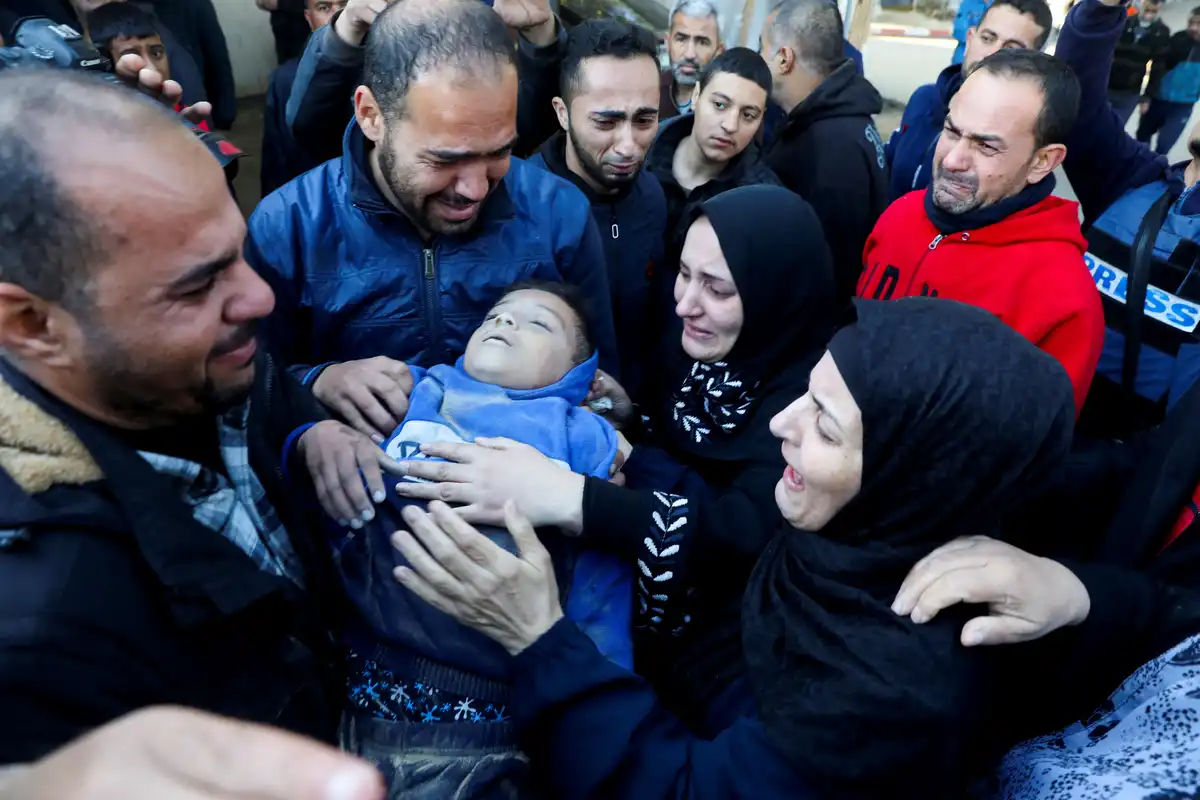
“Gaza Government”: The death toll of journalists has risen to 112 since October 7

The government media office in the Gaza Strip announced on Monday that the death toll of journalists inside the Strip had risen to 112 since last October 7, after two of them were killed by Israeli bombing.


The office said in a statement: “The number of journalist killed has risen to 112 journalists, since the start of the genocidal war on the Gaza Strip (October 7), after the ascension of two fellow journalists: Abdullah Burais and Muhammad Abu Dayer.”


The office indicated in its statement that Burais and Abu Dayer “were killed by the ongoing Israeli occupation bombing of the Gaza Strip (without specifying the location).”

ARAB AND WORLD

Mon 08 Jan 2024 6:29 pm - Jerusalem Time

Officials warn that Biden leads US into a major war in Middle East

As tensions in the Middle East exacerbate due to the ongoing brutal Israeli attack on the Gaza Strip, US officials warn that US President Joe Biden's decisions could lead to a major regional war.


According to what was published by the “HuffPost” website, American officials told the website that “Israel has ignited an all-out war in southern Lebanon, and the consequences could be disastrous.” “All scenarios show that this will escalate into something terrible... whether in terms of counterterrorism or war with Iran,” one official said.


The official said that many in the Biden administration fear that unconditional American support for Israel may encourage Israeli officials to expand their operations in Lebanon. Last week, Israel dramatically escalated the situation by launching a drone strike in Beirut that killed a senior Hamas official who was involved in hostage negotiations.


The American official told the site: “I was trying to prevent the (mountain) avalanche from falling on Lebanon, and so did many people, but the problem is that no one can restrain Biden, and if Biden has a policy, he is the commander in chief - and we must implement it. This is what things have come to, unfortunately, very, very, very unfortunately.”


Another American official said that Israeli Prime Minister Benjamin Netanyahu, Defense Minister Yoav Gallant, and Strategic Affairs Minister Ron Dermer “are very determined to seize this moment to expand the war into southern Lebanon and deliver an imaginary, legendary knockout blow to Hezbollah.”


The United States sent Biden's energy envoy, Amos Hochstein, of Israeli origin and birth, to try to reach a diplomatic solution between Israel and Hezbollah, but no progress was made.


US officials also told Politico that the administration is making plans to respond to a "long-term regional conflict." Lebanon is just one area where Israel's assault on Gaza is spilling over into the region, where the US and its allies are threatening to strike the Houthis in Yemen over their attacks on commercial ships linked to Israel in the Red Sea, and the US is already in a low-level conflict with Shiite militias in Iraq and Syria that could explode. .


Instead of pressuring Israel to end its brutal attack on Gaza and ease tensions with Hezbollah, President Biden is opting for regional escalation while continuing to provide full military and political support to Israel. The officials who spoke to the Huffington Post reiterated that the Biden administration is not considering placing any conditions on military aid to Israel at this time.

ARAB AND WORLD

Mon 08 Jan 2024 5:07 pm - Jerusalem Time

Israeli Defense Minister: Israel will move to a “long” third phase of war on Gaza

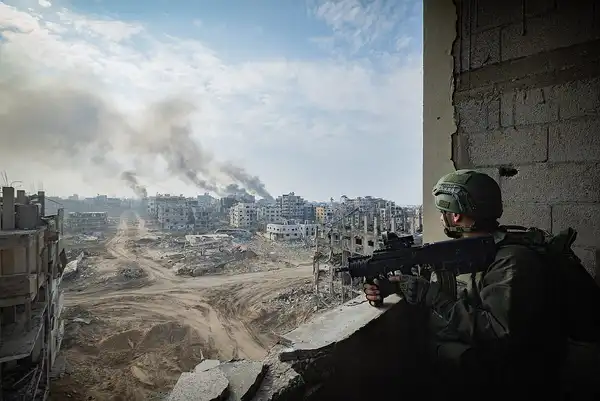
Israeli Defense Minister Yoav Galant announced on Monday that Israel will move into a “long” third phase of the war on the Gaza Strip.


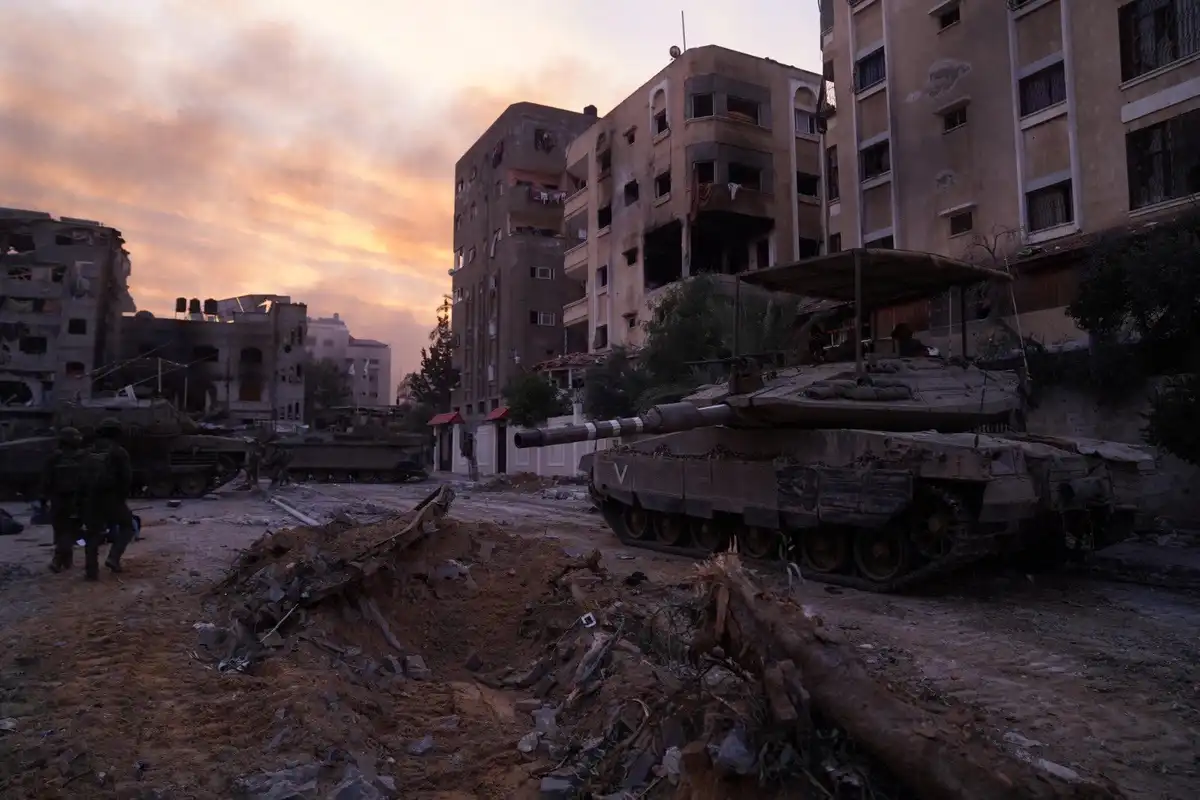
Gallant told the American newspaper "The Wall Street Journal" that the Israeli forces will shift from what he called "the intensive maneuver phase of the war" to "different types of special operations," without specifying a start date for that, or details about these operations.


But he warned that "the next chapter of the war will last much longer."


While Israel has not officially announced the transition to the third phase of the war, Israeli reports say that the matter “will be on the agenda of US Secretary of State Anthony Blinken’s meetings, on Tuesday, with Israeli officials in Tel Aviv,” in what is the fourth visit by Blinken since the start of the war in October 7 last.


On Thursday, the Israeli Broadcasting Corporation revealed that the army “has moved to the third phase of the war in some areas of the Gaza Strip with smaller forces.”


According to Israeli media, the third phase requires moving from “intensive bombing to specific bombing and withdrawing the largest number of forces from inside the Gaza Strip to the border.”


Blinken will arrive in Israel, Monday evening, for a two-day visit, during which he will meet with the War Council on Tuesday, before heading to Ramallah in the West Bank, on Wednesday, as part of a tour of the region to discuss developments in the war on Gaza and prevent its expansion.


In this context, Gallant stressed in his statements to the American newspaper that “Israel will not abandon its goals of destroying Hamas, ending its control over Gaza, and liberating the remaining (Israeli) hostages (in Gaza).”


He explained that Hamas's sudden attack on Israeli towns and military bases in the Gaza Strip on October 7 "severely shook the Israelis' sense of security, and profoundly changed the way they look at the world around them."


He said: "October 7 was the bloodiest day for the Jewish people since 1945. The world needs to understand, this is different. The Hamas attack on October 7 represented a major failure in deterrence."


ARAB AND WORLD

Mon 08 Jan 2024 4:29 pm - Jerusalem Time

Netanyahu: Hezbollah is making a big mistake in our assessment

Israeli Prime Minister Benjamin Netanyahu said on Monday that Hezbollah has been miscalculating Israel since 2006 until today, adding that his government "prefers to restore security to the north, without a large-scale war."


This came in blog posts published by Netanyahu’s office on the “X” platform, which conveyed statements made by the Israeli Prime Minister to a number of soldiers on the border with Lebanon in northern Israel.


According to Netanyahu's office, the latter visited the soldiers and listened to security reports.


Netanyahu's office did not clarify whether the Israeli Prime Minister made these statements before or after the raid that killed the prominent field commander of the Lebanese "Hezbollah", Wissam Al-Tawil, on Monday morning, and Israel was accused of being responsible for it, while it did not officially announce its responsibility until 1:35 p.m. 


Netanyahu told the soldiers: “Hezbollah misjudged us in 2006, and it is making a big mistake in our judgment even now,” according to the same source.


He added: “Hezbollah thought we were a spider’s web, and suddenly he saw what a spider it was,” referring to the words of the Secretary-General of Hezbollah in several speeches, most notably dating back to the period of the “July 2006 War,” in which he said that Israel and its army “ Weaker than a spider's web."


He continued: "It (Hezbollah) sees here a tremendous force, a united people, and a determination to do everything necessary to restore security in the north, and I tell you: this is my policy."


In this context, Netanyahu stressed in his speech to the soldiers: “We will do our best to restore security in the north and allow your families, as many of you are local residents, to return to their homes safely and in the knowledge that we cannot be messed with.”


He continued: "We will do whatever it takes, and of course, we prefer that this be done without a large-scale (war) campaign, but that will not stop us."


Last December, Israeli Defense Minister Yoav Galant vowed to remove Hezbollah beyond the Litani River in southern Lebanon, “whether by international political arrangement or military action.”


Otherwise, Israeli Foreign Minister Eli Cohen said, on the 17th of the same month, that “nothing will prevent the outbreak of war with Lebanon except the implementation of International Resolution 1701 to remove Hezbollah fighters to the north of the Litani River.”


On August 11, 2006, the UN Security Council unanimously adopted Resolution 1701, which called for a complete cessation of hostilities between Lebanon and Israel, after a 33-day war between Hezbollah and the Israeli army.


The resolution calls for the creation of an area between the Blue Line (separating Lebanon and Israel) and the Litani River in southern Lebanon, free of any militants, military equipment and weapons, except for those belonging to the Lebanese Army and the United Nations Interim Force (UNIFIL).


In "solidarity with the Gaza Strip", Hezbollah and Palestinian factions in Lebanon have exchanged intermittent daily bombardment with the Israeli army since October 8, resulting in dozens of deaths and injuries on both sides of the border.


Tensions escalated and attacks were exchanged between the two sides, following Israel's assassination of Saleh Al-Arouri, the deputy head of the Hamas political bureau, last week in Beirut.

PALESTINE

Mon 08 Jan 2024 2:51 pm - Jerusalem Time

War on Gaza: Death toll exceeds 23 thousand

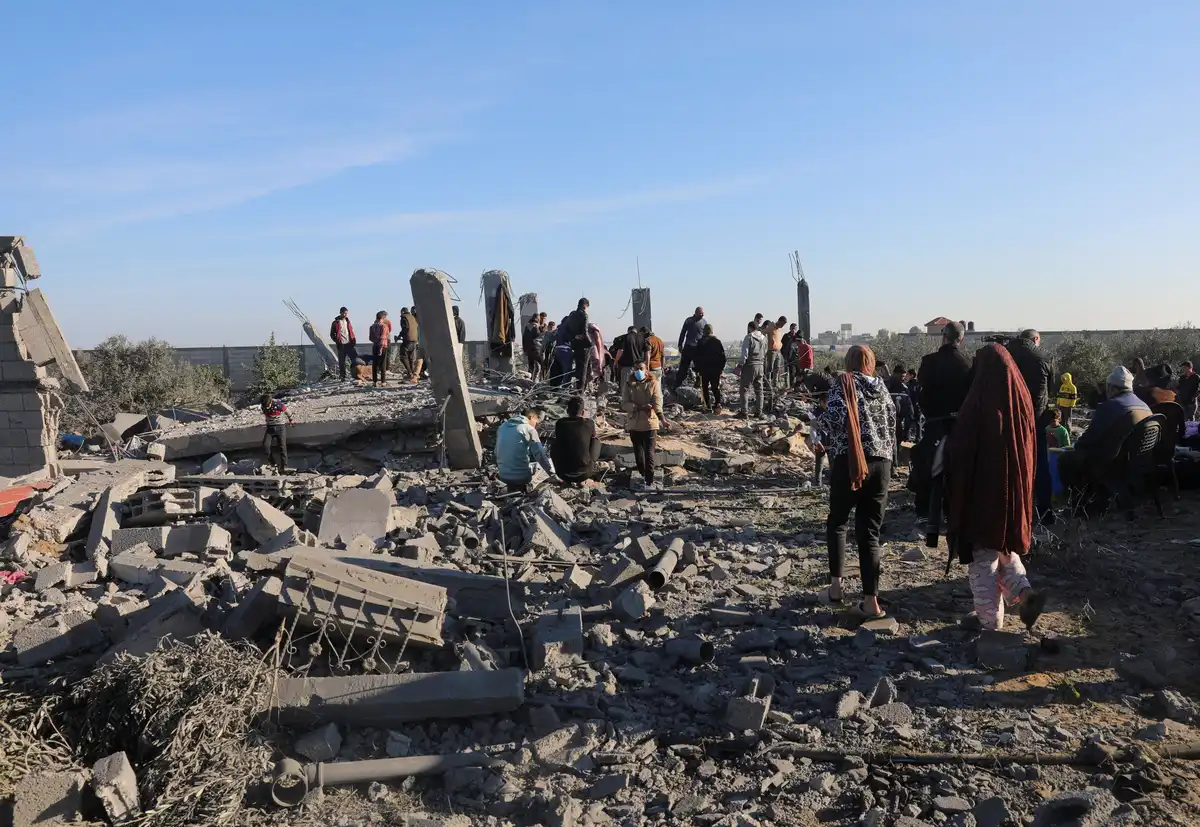
The Palestinian Ministry of Health in the Gaza Strip announced that the number of dead as a result of the ongoing Israeli occupation aggression has risen to 23,084 people, and the number of injured has risen to 58,926 since the seventh of last October.


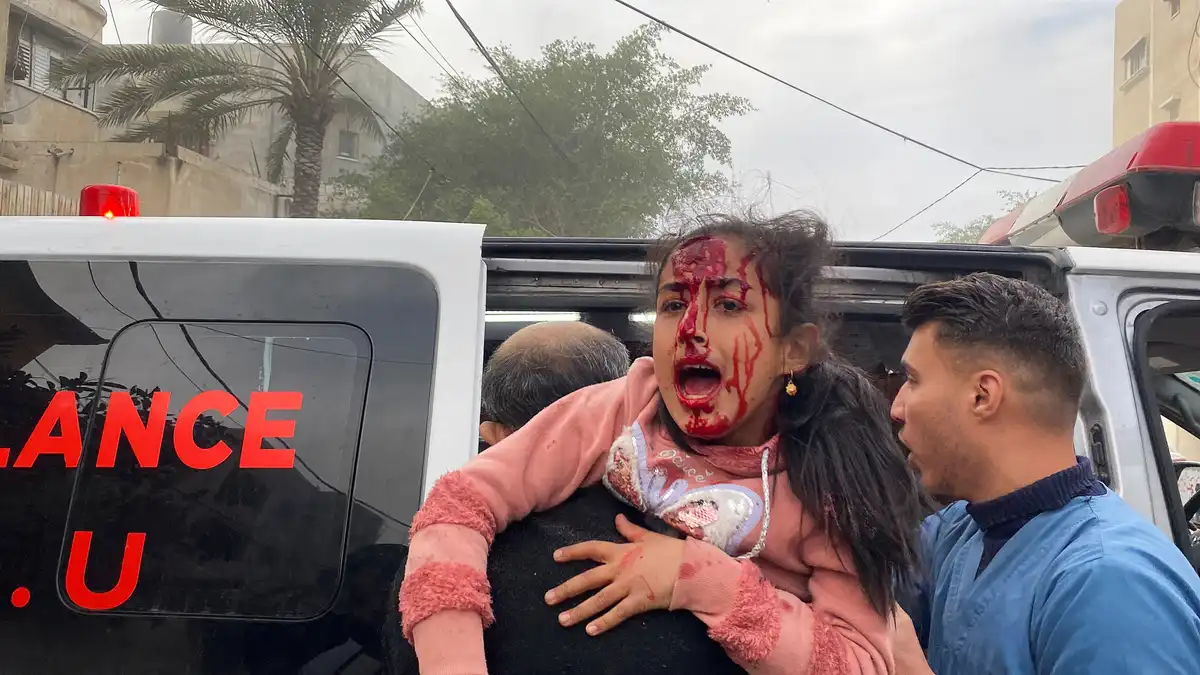
The ministry said in a statement on Monday that during the past 24 hours, the Israeli occupation forces committed 17 massacres against families in the Gaza Strip, killing 249  Palestinians and wounding 510 .


The occupation forces continue their aggression against the Gaza Strip for the fourth day after the 90th, and the occupation bombed the areas of northern, central and southern Gaza Strip, raising the number of dead and wounded.


The government media office in Gaza had called for the necessity of opening the Rafah crossing and transferring 6,000 wounded people for treatment abroad “immediately and urgently,” in light of the humanitarian catastrophe that the Strip is experiencing as a result of the aggression.


The Israeli army announced that 19 soldiers were injured during the past 24 hours in the ongoing battles in the Gaza Strip.


This announcement comes while violent battles are taking place between the resistance and the occupation forces, especially in the central and southern Gaza Strip.


PALESTINE

Mon 08 Jan 2024 2:26 pm - Jerusalem Time

Prisoners’ Authority: Female detainees at Damoun Prison are subjected to severe punishments

The Prisoners and Ex-Detainees Affairs Authority confirmed on Monday that female detainees at Damoun Prison north of Haifa, especially those arrested from the Gaza Strip, face very difficult detention conditions and are subject to severe punishments that have been increasing in frequency on a daily basis since the 7th of last October.


The Commission said, according to the visit of its lawyer, that the occupation forces launched a massive campaign of arrests of women in the West Bank, Jerusalem and Gaza, noting that they were subjected to torture and abuse from the moment of arrest and in the interrogation cells.


It added that the prison administration deliberately isolates female detainees and commits the most horrific crimes against them, including: surprise inspections at all times by special teams of “Shabas.” The female detainees also suffer from the terrible and extreme cold due to the lack of sufficient clothing. They are also only allowed one blanket, and the food is poor in terms of quantity and quality.


It pointed out that the number of detainees inside the rooms is very large, as there is no possibility of complete movement, and all electrical appliances such as television and radio have been seized.


The Commission confirmed that what was mentioned expresses a very small part of the suffering of female detainees inside the occupation prisons, calling on the international community to break its silence regarding the practices of the Israeli occupation authorities against all detainees, in which they violated all international laws and norms.


ARAB AND WORLD

Mon 08 Jan 2024 2:08 pm - Jerusalem Time

A prominent Hezbollah field commander was killed by Israeli drone bombing

On Monday afternoon, the Israeli occupation army assassinated a prominent field commander in the Lebanese Hezbollah group. Lebanese sources said it was a long medal.


The Islamic Resistance in Lebanon (Hezbollah) announced the death of the leader of the Radwan Unit, Wissam Hassan Tawil, “Hajj Jawad,” from the town of Khirbet Selm in southern Lebanon.


Lebanese sources said that Al-Tawil, who was targeted, is a field commander in Hezbollah's highly trained Radwan unit.


The Lebanese News Agency reported that there were casualties as a result of the occupation targeting a vehicle in Khirbet Selm.


While the Hebrew channel Kan commented that the assassination of the senior official in the Radwan unit was a “very painful blow” to Hezbollah


PALESTINE

Mon 08 Jan 2024 11:58 am - Jerusalem Time

Israeli MK Cassif : Israeli government is calling for ethnic cleansing and even genocide

Israeli Knesset member Ofer Cassif  said, “The Israeli government and its members are calling for ethnic cleansing and even genocide.”


Cassif  added in blog posts on the X platform: “My constitutional duty is towards Israeli society and all its residents, and not towards a government whose members and coalition call for ethnic cleansing, or even actual genocide.”


He continued, referring to the government: "They are the ones who harmed the country and the people. They are the ones who led South Africa to appeal in The Hague, not me and my friends."


Cassif  had signed a petition supporting the lawsuit submitted by South Africa against Israel to the International Court of Justice in The Hague, to oblige it to an immediate ceasefire in Gaza, against the backdrop of its accusation of committing “genocide crimes.”


He continued in his blog posts: “When the government works against society, the state, and its citizens, especially when it sacrifices them and commits crimes in their name to maintain its existence, it is my right and even my duty to warn against this and to do everything I can within the law to stop it.”


He added: "I will not give up the struggle for our existence as a moral community. This is true patriotism. No wars of revenge and calls for extermination, no unnecessary bloodshed, and no sacrifice of kidnapped citizens and soldiers in false wars."


Cassif is a member of the Knesset for the Democratic Front for Peace and Equality, an Arab and Jewish party that rejects the occupation and calls for the establishment of a Palestinian state with East Jerusalem as its capital.


In this context, the Hebrew newspaper Maariv reported on Sunday that Cassif  "was subjected to severe criticism from the right, after he signed a petition to support the lawsuit filed against Israel in the International Court of Justice."


Smotrich calls for settlement in Gaza


Israeli Finance Minister Bezalel Smotrich stressed the necessity of controlling Gaza “at all times,” calling on the government to establish Jewish settlement within the Strip.


The minister, known for his extremist statements, added that Israel will not be able to permanently control Gaza without a civilian presence, so that terrorism has no place to grow, he said.


He added, "See why Jenin and Tulkarm turned into capitals of terrorism? Because there is no Jewish settlement there."


The severity of Smotrich's extremist statements has increased since the start of the aggression on Gaza, the last of which was a few days ago when he spoke with National Security Minister Itamar Ben Gvir about the necessity of displacing the residents of Gaza, reoccupying the Strip and building settlements there.


The extremist statements even affected the Palestinians in the West Bank, as Smotrich said late last November that “there are two million Nazis” in the West Bank.


In early January, South Africa filed a lawsuit before the International Court of Justice, the main judicial body of the United Nations, accusing Israel of committing “genocide crimes” in the Gaza Strip. Next Thursday and Friday, the International Court of Justice is scheduled to begin hearing the pleadings of Israel and South Africa in the case, with deliberations continuing later.


On October 7, 2023, Hamas and other Palestinian factions in Gaza launched Operation “Al-Aqsa Flood,” in response to “the continuing attacks by Israeli forces and settlers against the Palestinian people, their property, and their sanctities, especially Al-Aqsa Mosque in occupied East Jerusalem.”


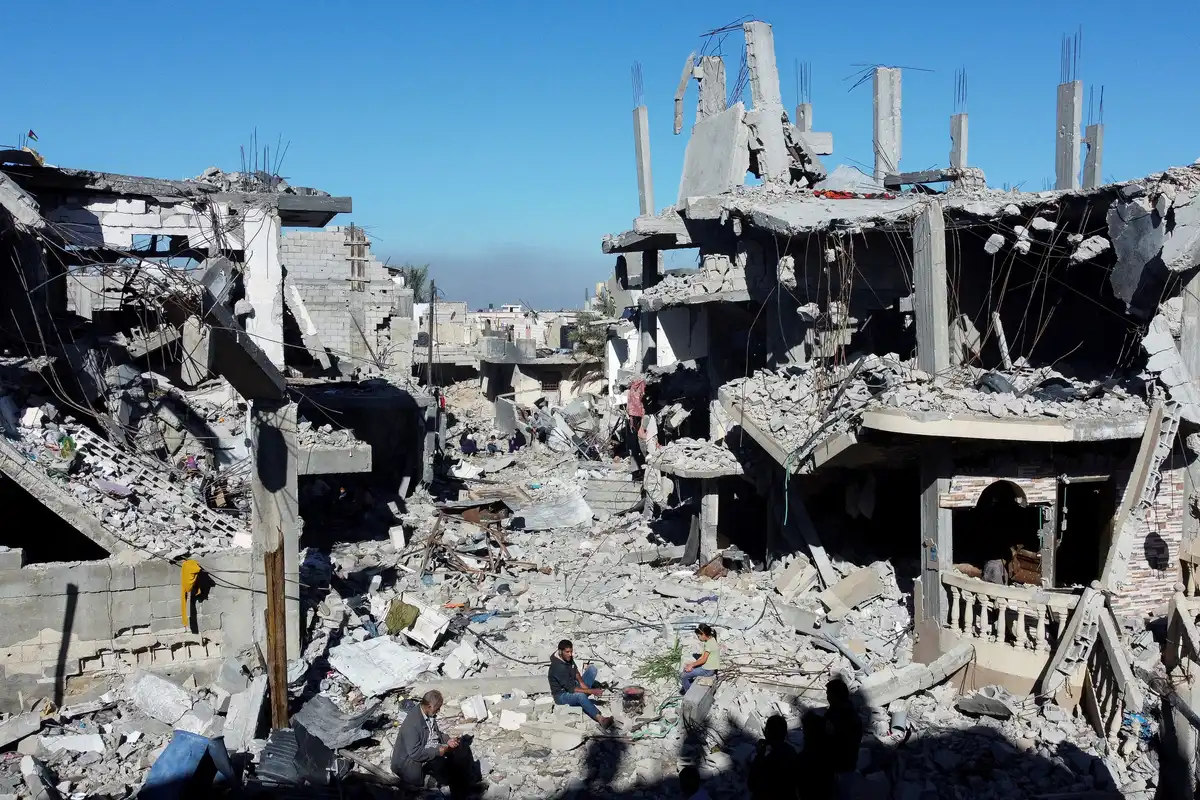
In response, the Israeli army launched a devastating war on Gaza, leaving about 23,000 dead and more than 58,416 wounded, most of them children and women, massive destruction of infrastructure, and an “unprecedented humanitarian catastrophe,” according to Palestinian and international sources.


ARAB AND WORLD

Mon 08 Jan 2024 11:40 am - Jerusalem Time

Bolivia announces support for South Africa's lawsuit against Israel for genocide in Gaza

The Bolivian Ministry of Foreign Affairs announced its support for the lawsuit filed by South Africa before the International Court of Justice against Israel for genocide crimes in the Gaza Strip.


The Bolivian Ministry of Foreign Affairs praised the step taken by South Africa in this regard, in accordance with its commitment to the Genocide Convention, considering it a historic step in defending the rights of the Palestinian people and the Palestinian cause, stressing the need to support this initiative from the international community.


The ministry pointed out that Bolivia, in partnership with South Africa, Bangladesh, Comoros, and Djibouti, submitted a lawsuit on November 17 to the International Criminal Court to investigate the situation in the Palestinian territories.


Bolivia is the first country in Latin America to announce its support for South Africa's lawsuit.


The International Court of Justice said that it received a request from South Africa on December 29 to sue Israel on charges of committing genocide in the Gaza Strip. The lawsuit stated that Israel “conducted acts aimed at ethnic cleansing in Gaza.”


The court explained that South Africa had submitted a request to file a lawsuit against Israel for violating the Genocide Convention.


South Africa asked the court to indicate interim measures in order to protect Palestinians in Gaza “from any further serious and irreparable harm” under the convention, and to ensure “Israel’s compliance with its obligations under the Genocide Convention not to engage in, prevent and punish genocide.”


South Africa's move comes in the wake of the death of more than 23,000 citizens, most of them women and children, in the ongoing Israeli aggression on the Gaza Strip since last October 7.


ARAB AND WORLD

Mon 08 Jan 2024 10:52 am - Jerusalem Time

Americans are divided over American intervention in the Middle East

A Gallup poll in the United States concluded that there is no clear direction from the American public regarding US involvement in “resolving the conflict between Israel and Hamas in Gaza,” with nearly four in 10 (of respondents) saying that the United States It does “about the right amount” of effort required (41%), while 39% think the US is doing “not enough” and about two in 10 (19%) think the US is doing “too much.”


Forty percent of both Republicans and Democrats believe that the United States is not doing enough to resolve the conflict, but Democrats (48%) are more likely than Republicans (33%) to say that American intervention is right. On the other hand, Republicans are more likely than Democrats to believe that the United States is doing too much (26% vs. 11%, respectively). Independents' opinions are on par with national averages.


The poll indicates that Americans are divided regarding American efforts in the conflict between Israel and Hamas


Gallup conducted its poll during the period from the beginning of December 2023 until the twentieth of the same month, that is, about two months after the start of the war in Gaza.


Israel pledged to "eliminate" Hamas following the attack launched by the movement on Israel on October 7, which led to the killing of about 1,200 people, both military and civilian, according to what Israel says.


During the attack, Hamas also took about 250 hostages, 132 of whom are still being held in the Gaza Strip, according to Israeli army figures.


The continuous Israeli bombing of the Gaza Strip, accompanied by a ground attack since October 27, has led to the deaths of at least 22,722 people, the majority of whom are women and children, according to the latest figures from the Ministry of Health in the Gaza Strip.


Also, the bombing and battles led to widespread destruction in the besieged sector, and a growing humanitarian crisis in light of the scarcity of humanitarian aid and the displacement of about 85 percent of the population, according to United Nations figures.


Poll data indicate that Americans are also divided regarding American support for Israelis and Palestinians.


About 40 percent of respondents say that Israel receives the appropriate amount of (American) support, while 36 percent believe that Israel receives too much support, while 24 percent believe that Israel receives too little support.


Americans' opinions regarding American support for the Palestinians are more evenly divided, with about a third saying that the United States supports the Palestinians too much, a third saying that Washington supports them too much, and a third saying that it receives too little support.


Regarding Americans’ view of Israeli Prime Minister Benjamin Netanyahu, the negative view of him increased to 47 percent among those polled, which is considered the highest since he has been in power since 1998.


Gallup notes that “Netanyahu is the longest-serving prime minister in Israel, but he is accused of fraud, bribery, and breach of trust. He has denied these accusations, and he leads the most right-wing government to date. He recently tried to limit the ability of Israeli courts to reverse the government’s actions, not to mention the criticism directed at him.” His government accused him of allowing serious security lapses that allowed Hamas to carry out its attacks.


Gallup concluded that "Americans lack consensus in their views regarding US intervention in the war between Israel and Hamas, and its comprehensive support for Israel and the Palestinians."


It added that US President Joe Biden faces difficult choices regarding the American role in the Middle East, especially with the start of the presidential election year, as he may face criticism from part of his Democratic base.

ARAB AND WORLD

Mon 08 Jan 2024 10:44 am - Jerusalem Time

What are the chances of South Africa succeeding in accusing Israel of genocide?

Abdul Aziz Abu Bakr

Johannesburg - Last week, South Africa became the first country to file a lawsuit against Israel at the International Court of Justice in The Hague, which increases international pressure on the Israeli occupation to stop the ongoing aggression against the Gaza Strip, since last October 7, which has so far resulted in the death of more than 22 thousand Palestinians, including thousands of children.


In the 84-page lawsuit, which South Africa submitted to the court on December 29, the accompanying evidence explains the brutality being committed in Gaza, in addition to an urgent request for the court, which is considered the United Nations body for resolving disputes between states, to quickly declare that... “Israel has violated its obligations under international law since October 7th.”


South Africa accused Israel before the International Court of Justice of committing genocide against the Palestinians in Gaza, noting that “Israel carried out specific actions with the intent to destroy the Palestinians as a national, racial and ethnic group,” which constitutes a violation of the Convention on Genocide.


It noted in its lawsuit that “Israel failed to prevent genocide and incited it,” and the request calls for “interim measures to protect the rights of Palestinians and ensure Israel’s compliance with its obligations under the Genocide Convention.”


Previous experience

The state of Namibia, a former German colony, came under the administration of South Africa after World War I, through a League of Nations mandate, and despite the subsequent dissolution of the League of Nations, South Africa refused to give up its control over Namibia.


The United Nations considered that “South Africa’s continued administration of Namibia is illegal,” while South Africa considered that the United Nations aimed, with this statement, to transfer its control over Namibia to the United Nations, which prompted it to reject the resolutions of the United Nations General Assembly and the Security Council.


In 1960, the United Nations requested an advisory opinion from the International Court of Justice on the legal consequences of South Africa's continued presence in Namibia, and the International Court of Justice issued its decision in 1971, in which it noted that "South Africa's continued administration of Namibia is illegal under international law." Stressing that South Africa is obligated to withdraw its administration from Namibia immediately.


Despite the advisory opinion of the International Court of Justice, South Africa retained control over Namibia for several years, and the issue remained a focal point in international forums, which in turn put diplomatic pressure on South Africa, leading to Namibia eventually gaining its independence from South Africa in 1990, after extensive international pressure, negotiations, and implementation of the United Nations plan for the independence of Namibia.


What are South Africa's accusations against Israel?


Israel committed genocide in Gaza, in violation of the 1948 Genocide Convention, which defines genocide as “acts committed with intent to destroy, in part or in whole, a national, racial, religious or sectarian group.”

Committing genocidal acts, including killing Palestinians in Gaza in large numbers, especially children, destroying their homes, expelling and displacing them, and imposing a blockade on basic resources.

Imposing measures that prevent Palestinians from giving birth, by destroying basic health services necessary for the survival of pregnant women and children.

Responsibility for incitement to genocide and refraining from prosecuting instigators, referring in particular to statements made by Israeli officials during the war, which sought to justify the killing and destruction in Gaza.

An emergency request to stop operations and move quickly to prevent Israel from committing more crimes in the Strip, most likely by issuing an order to stop the attack. The International Court said - in a statement - that this request would be a priority, but it did not specify a timetable.


The importance of the lawsuit


For his part, researcher in African and Middle Eastern affairs, Naeem Jenna, considered that "the documentation provided by South Africa indicates the urgent need for such issues, in light of the increasing misinformation about the war."


Gina adds, “These measures are important to slow the normalization of any mass crimes committed by Israel, and send a message that if there is a country that will commit mass crimes as Israel is doing, we must expect it to be brought before an international court with authority at the international level, to review the record of the country in question.” In front of international standards.


Anthony Hodgson, an activist in the Jewish Committee to Support Palestine, also welcomed the decision of the South African government to pursue urgent recourse to the International Court of Justice, regarding the ongoing genocide committed by Israel in Gaza.


He affirmed their rejection of “the deliberate and malicious attempts made by the Israeli government and its allies to interpret attempts to hold Israel responsible as anti-Semitism,” indicating that they “praise their government’s decision to take a principled position and not to be intimidated by bad faith actors who deliberately distort the facts on the ground.” ".


Cite evidence


South Africa also explained that statements made by Israeli officials, including Prime Minister Benjamin Netanyahu, showed “genocidal intent.” For example, the lawsuit cited Netanyahu’s statements in which he compared the Palestinians to the people of the Amalekites (Amalekites) in the Jewish Bible, where God commanded The Israelites destroyed them, and the Bible verse says, “Now go and smite the Amalekites... kill the man, the woman, and the infants.”


Moreover, it cited Netanyahu saying in his statement on December 26 that “despite the destruction of Gaza and the killing of thousands, we will intensify the fighting in the coming days, and this will be a long battle.” Several other statements were also cited, including those In which Israeli officials described the people of Gaza as a “force of injustice,” in contrast to Israel, which they described as a “force of light.”


South Africa says that “the scope of the Israeli army’s operations, its indiscriminate bombing and executions of civilians, in addition to Israel’s blockade of food, water, medicine, fuel, shelter and other humanitarian assistance,” are evidence of its claim, stressing that these measures have brought the sector to “the brink of famine.”


It stated that Israel is committing other violations of international law in the Gaza Strip in addition to genocide, such as launching attacks on Palestinian culture, by targeting sites of “religion, education, art and science, historical monuments, hospitals and places where the sick and wounded are collected.”


Similar issues

Researcher Naeem Jenna confirms to Al Jazeera Net that, “Under the Genocide Convention, cases of genocide crimes have been filed against other countries, whether they were directly involved in the conflict or not,” noting that in 2019, The Gambia submitted - on behalf of the Organization of Islamic Cooperation - A request to the court against Myanmar, due to its crimes against the Rohingya.


Jena explained that both South Africa and Israel are parties to the International Court, which means that its decisions are binding on both parties. However, the International Court does not have executive authority, and its orders have been ignored in some cases without serious penalties.


Kiev had filed a case against Moscow in the court in March 2022, one month before Russia's war on Ukraine, in which Ukraine asked the court to establish emergency measures to stop Russia's aggression.


The court ordered Moscow to halt military operations after a short time, and indicated that it was "extremely concerned" about the attack on Ukraine, but all of this did not prevent the ongoing Russian war on Ukraine.


Court procedures

The International Court of Justice will hold a hearing from January 11 to 12, although the procedures may take time that may extend to years. To this day, the Court is still examining the Gambia v. Myanmar case since 2019, but South Africa has requested to revitalize the process. This could lead to a request for an emergency order from the international court, which could lead to quick results within weeks, as happened in the Ukraine case.


In response to the lawsuit, the Israeli Foreign Ministry strongly denied the genocide accusations, describing the case as a "bloody slander, grotesque exploitation, and disdain for the court." The ministry accused Pretoria of being a "criminal accomplice in Hamas attacks."


For the first time in its history, Israel agreed to stand before the court and file an appeal in the genocide case filed by South Africa. While this is not the first judicial move against Israel in its history, this lawsuit filed by South Africa is considered a difference, because it used the agreement paper. The International Committee against Genocide, which Israel has agreed to and is a signatory to.


Israeli Foreign Ministry spokesman Elon Levy stated, “Tel Aviv will defend itself in the Hague sessions, assuring South African leaders that history will judge them, and it will judge them without mercy.”


Source: Al Jazeera

PALESTINE

Mon 08 Jan 2024 10:22 am - Jerusalem Time

West Bank: Israeli forces launch an arrest campaign in the West Bank

Today, Monday, the Israeli occupation forces arrested dozens of citizens from various governorates of the West Bank.


OPINIONS

Mon 08 Jan 2024 9:53 am - Jerusalem Time

Israeli Opinion: The ‘second Nakba’ government seizes its moment

+972 Magazine

+972 Magazine

Opinion Writer

By Meron Rapoport

Israeli leaders are explicit about reusing the methods of 1948 in Gaza today. But what didn’t quell the Palestinians then will not do so now.


In early December 2022, shortly before Israel’s far-right government was sworn in and long before the horrendous events of October 7 and Israel’s ongoing brutal assault on the Gaza Strip, Ameer Fakhoury and I published an article on these pages entitled, “Why the ‘second Nakba’ government wants to remake the Israeli state.” Our concern that this government would carry out an expulsion modeled on the mass dispossession of the 1948 Nakba was based on the fact that Bezalel Smotrich and Itamar Ben Gvir had been given central roles in the government — Smotrich as finance minister and de facto West Bank overlord, and Ben Gvir as national security minister. This duo, we wrote, desire chaos, believing that this “will lead to the decisive moment in which Palestinians either come to heel or are expelled.”One year on, our worst fears have come to fruition: 1.9 million of the Gaza Strip’s 2.2 million Palestinian residents are currently displaced from their homes — which in many cases have been totally destroyed — and senior Israeli government figures are openly touting, and actively working toward, mass expulsion from the besieged enclave.


In recent days, Smotrich has laid out his vision for the Strip in clear terms. “My demand is that Gaza not continue to be a hotbed where 2 million people grow up on hatred and aspire to destroy the State of Israel,” he said in an interview with army radio last week. “If there are 100,000 or 200,000 Arabs in Gaza and not 2 million, the whole discourse about the day after will be different.”At a meeting of his Otzma Yehudit (Jewish Power) faction in the Knesset on Jan. 1, Ben Gvir called for “encouraging the migration of the residents of Gaza” as the “correct, just, moral, and humane solution,” and echoed Smotrich’s call to reestablish Jewish settlements in the Strip. This comes after two Knesset members from Netanyahu’s Likud party published an article in the Wall Street Journal in November titled “The West Should Welcome Gaza Refugees.”Netanyahu himself told members of his Likud party last month that Israel is “working on” facilitating the so-called “voluntary migration” of Gaza’s Palestinians, while another party member, Agriculture and Rural Development Minister Avi Dichter, explicitly described the army’s current operation in the Strip as “Nakba 2023.


And, as +972 and Local Call revealed in full at the end of October, Israel’s Intelligence Ministry has recommended the forcible and permanent transfer of Gaza’s entire Palestinian population to the Sinai Peninsula. Egypt, for its part, still maintains that it will not acquiesce to any transfer of Palestinians into its territory.

There is nothing new about Israeli politicians using the threat of the Nakba as a political tool; indeed, Fakhoury and I published another article in June 2022 entitled, “How threats of a second Nabka went mainstream,” which detailed how the Israeli right has shifted in recent years from denying the Nakba to justifying it and wielding it as a renewed threat against the Palestinians. Now, however, this threat has transformed from a rhetorical strategy into a devastating reality.


A ‘strategic weapon’ — and an end


The Israeli army’s declared goal in Gaza is to incapacitate Hamas and other Palestinian armed groups. Its actions over the past three months, however, attest to a far broader campaign resembling policies of Nakba: expelling civilians en masse and rendering their homes and neighborhoods uninhabitable.Within days of the Hamas-led rampage in southern Israel, the Israeli military ordered 1.1 million Palestinians residing in the northern half of the Strip to abandon their homes and move south of Wadi Gaza until further notice — while still bombing the areas to which they were told to flee. More recently, the army has given further expulsion orders to Palestinians in various parts of southern Gaza, pushing hundreds of thousands toward the coast and Gaza’s border with Egypt.

The editor-in-chief of Israel’s liberal Haaretz newspaper, Aluf Benn, argued that expulsion is “Israel’s main strategic move” in the war, and the army’s ability to kill civilians who try to return home will be key to Israel’s victory. The newspaper’s Middle Eastern affairs analyst, Zvi Bar’el, similarly described the humanitarian crisis that Israel has induced in Gaza as a “strategic weapon” designed “to sear into Palestinian consciousness the apocalyptic punishment facing anyone who from now on dared challenge Israel.”


Not only does Israel see forcible displacement as a tool, it also appears to see it as an end in itself. Testimonies and documentation that have trickled out of Gaza throughout this period, in addition to the analysis of satellite imagery, suggest that the Israeli army is making sure many of the people it has displaced will have no homes to return to. The army has leveled entire neighborhoods, damaging or destroying approximately 70 percent of Gaza’s homes. It has destroyed libraries and archives, municipal buildings, universities, schools, archeological sites, mosques, and churches. Even if Israel doesn’t ultimately force a mass expulsion of Palestinians out of the Strip, precious little will remain from their lives before this war.“Israel has no interest in Gaza being rehabilitated,” Giora Eiland, the former head of Israel’s National Security Council, said on Israel’s national broadcaster, Kan, in November. “Is a situation of ongoing chaos in Gaza, similar to Somalia, a situation that Israel can live with? Israel can live with it. Whoever wants to change that can do so on our terms.” Beyond the moral depravity of the very idea of deporting or killing 2 million people, the flourishing of the “Nakba camp” in Israeli politics testifies to the ideological poverty of Israeli society. Seventy-five years after the state’s establishment, the only thing that Jewish-Israeli politics has to offer is a second Nakba. 

Returning to 1948’s foundational military and political strategy, to that same method of mass deportation of an entire people, demonstrates the instability and weakness of the other methods Israel has suggested for dealing with the “Palestinian question” over the years: annexation, maintaining the status quo, unilateral disengagement, “shrinking the conflict,” and even two-state solution proposals centered primarily around Jewish interests. 

Moreover, the prominence given to “the Nakba option” in contemporary Jewish-Israeli political discourse further testifies to Israel’s exceptionality in today’s world. After World War II, and despite some cases to the contrary, the international consensus largely deemed forced population transfer and mass expulsion no longer legitimate, even designating them as grave international crimes.


Even when these tactics have been put to the test more recently, such as in Bosnia or Rwanda, hardly any state has dared to declare it as official policy, and the international community — even if sometimes acting atrociously late — has generally worked to end their use. But expelling Palestinians from their homes and preventing their return is Israel’s oldest policy, and its leaders are primed to put it into action once more.


At the edge of the abyss


October 7 was a moment of crisis unlike anything Israel has seen for half a century, or perhaps even since 1948. Israel’s national security crumbled, along with the personal sense of security of many of its citizens. The viciousness of the Hamas-led attacks aroused a deep desire for revenge; indeed, most of the Jewish public views living by the sword as the most reasonable option.But it is still worth remembering: the Nakba of 1948 didn’t resolve the conflict between Jews and Palestinians. Seventy-five years later, Israel is fighting the grandchildren and great-grandchildren of the Palestinian refugees who fled or were expelled to Gaza in 1948 from their lands inside what became the State of Israel.

Now, Israel is making its fantasy of enacting a second Nakba into reality, intoxicated with its own power and military advantage over Hamas, and effectively greenlit by the legitimacy that the international community has granted Israel to “respond” after October 7. But Israel may sober up sooner than expected.

A complete “cleansing” of the entire Gaza Strip appears to be an impossible mission: Hamas won’t surrender, Palestinians won’t raise the white flag, and the humanitarian crisis would likely lead to Arab, American, and European intervention. The question of the fate of the remaining Israeli hostages in Gaza may also complicate an unambiguous course of action, while domestic Israeli politics is much less cohesive than ubiquitous performances of patriotism may suggest.


If Israel does eventually sober up, how will it change course? One can hope that, unlike in previous cases, perhaps this time Israeli society won’t simply return to the absurd idea of “managing the conflict.” One can hope that, especially after experiencing such a terrible trauma, Israeli society will begin to understand that a secure future in this land can only be guaranteed by coming to some sort of agreement with the Palestinians — and that coercion, violence, and supremacy will never achieve this. Jews and Palestinians are closer today to the abyss than we have been for 75 years, and Israel’s embrace of a full-blown Nakba solution could cast us all into it. But it is also important to remember: when you stand at the edge of the abyss, it is still possible to glimpse the other side.

OPINIONS

Mon 08 Jan 2024 9:41 am - Jerusalem Time

The U.S. can’t blindly support Israel and prevent escalation in the region at the same time

Mondoweiss

Mondoweiss

Opinion Writer

BY MITCHELL PLITNICK  

The instability in the Middle East cannot be overstated as the region stands on the precipice. It all stems from Israel’s ongoing slaughter in Gaza and the Biden administration’s blind support of it.


Joe Biden and his administration have put themselves in a difficult position with their blind support for Israel’s genocidal and warmongering aggression in Gaza and Lebanon. Israeli leaders across its government keep making it clear that they intend to ethnically cleanse the Gaza Strip. In response, the U.S. has tried to highlight statements along those lines by Bezalel Smotrich and Itamar Ben-Gvir, in an effort to portray such sentiments as fringe and not representative of the full government’s plans.These efforts are regularly undermined by the fact that Israeli Prime Minister Benjamin Netanyahu and many members of his Likud party—the so-called “mainstream” of Israel—are saying the same things. Fortunately for Biden and his cadre of genocide backers, a credulous U.S. media has kept dutifully silent about those statements while highlighting those of Smotrich and Ben-Gvir. But it’s not just the disconnect between what the U.S. supports rhetorically and what it supports in practice that vexes Biden and his accomplices. One genuine policy point that has driven U.S. engagement in this ongoing genocide is its desire to contain the fighting in an effort to limit the slaughter to the Palestinians on whose lives the administration places no value. They do not want to see the fighting spread to the rest of the region. AdvertisementThe problem is that containing it is not so easy, especially when Israel has some different ideas. Although the Israeli government has been careful not to push too openly for a wider war, they have articulated some goals that go beyond Gaza and have taken some reckless actions that certainly risk escalation. 


The U.S. does itself no favors by allowing Israel to dictate the flow of events with virtually no pushback, aside from the occasional, empty, and mild rebuke. Both Hezbollah and Ansar Allah (commonly referred to as the Houthis) took what were at first relatively minor steps to express solidarity with the Palestinians, doubtless hoping that their actions would incentivize the U.S. to lean on its Israeli client to back away from the full-blown genocidal nature of its attacks. They surely didn’t even hope the U.S. would stop Israel, but it was reasonable to think the threat of escalation might diminish American support and thereby convince the U.S. to press Israel to lessen its assault, eventually leading to a ceasefire, as it has in previous conflicts. But rather than take this obviously sensible step, as previous administrations have done, Biden doubled down on his support. Israel is now escalating even more. Its Christmas Day assassination of Sayyed Razi Mousavi, a top commander of the Islamic Revolutionary Guard Corps (IRGC) in Syria was a provocative act that threatened to widen the conflict. Iran has threatened retaliation and will probably take some action in the future, but the Islamic Republic knows how much it has to lose if the war expands to include its confronting Israel and the U.S. They have continued to show restraint. Whether Israel is really trying to draw Iran into a wider conflict is debatable, but Israel has established wartime goals regarding Lebanon and Hezbollah. Israel has made it clear that it wants Hezbollah to redeploy at least eighteen miles away from the southern border, claiming only this will allow the residents of northern Israeli towns that have been evacuated since October 7 to return. 

Hezbollah, naturally, is disinclined to acquiesce to Israel’s demand that it retreat to the 2006 ceasefire line as long as Gaza is under attack. Yet it also faces domestic Lebanese pressures. As much as many Lebanese feel strong solidarity with the Palestinians, the last thing they want to see in their country—already reeling from decades of civil war, corruption, and the more recent economic collapse—is a new round of full-blown warfare with Israel. Israel, for its part, would like to force Hezbollah to pull back from the border without having to commit to greater warfare in the north. With the ethnic cleansing of Gaza proving to be more difficult than Israel at first might have thought, and with international discomfort with Israel’s actions growing, Israel is likely reluctant, at least for the moment, to expand the carnage it is causing in Southern Lebanon to too great a degree. 

Yet at the same time, its devotion to military force as the solution to its problems has led it to take real risks of expanding the fighting.Mousavi’s assassination was one example. Another was the more recent attacks that killed Hamas leader Saleh al-Aruri and, later, Hezbollah commander Hussein Yazbeck. With numerous northern Israeli towns having been evacuated, Israel could, potentially, launch much broader attacks on Hezbollah, although that carries the risk of retaliation in the rest of Israel. 


There is nowhere in Israel that Hezbollah’s missiles—which are vastly superior to those that the Palestinian groups, including Hamas, have—cannot reach. Still, if Israel were really determined to hit Hezbollah and push them away from the border, they could. Instead, they are settling for continuing the gradual escalation in the hope that pressure, mostly from the Lebanese public, does the job for them. Failing that, Israel is likely to continue the gradual escalation until it feels comfortable diverting more of its forces from Gaza to the northern border area.All of this is a delicate balancing act, easily tipped asunder by other actors. 

The attack in Kerman, Iran during a ceremony honoring the assassinated IRGC leader Major General Qassim Suleimani, was a clear example of this. Many leaped to the conclusion that Israel was responsible, although it turned out to be ISIL that claimed responsibility. The motivation for this specific attack is not clear, although ISIL has launched many attacks on Iran over the years. But one result was to increase the air of tension in Iran, as well as the sense of growing chaos in the Persian Gulf and Red Sea areas. Meanwhile, the United States, following the reckless lead of its Israeli partners, assassinated Mushtaq Talib al-Saidia, the deputy commander of operations for Baghdad, of the Iraqi Hash al Sha’bi militia, in a strike in the middle of Baghdad. The attack was apparently revenge for recent attacks on U.S. bases in Iraq. Hash al Sha’bi is part of the quasi-official Popular Mobilization Forces in Iraq and opposes the U.S. presence in Iraq. 

The PMF is made up of a wide variety of groups spanning the spectrum of Iraqi identity, but many of its constituent groups are distinctly pro-Iran. The presence of U.S. troops is contentious in Iraq, and actions like this one are certain to exacerbate tensions there and lead to increased attacks on U.S. bases, rather than deter them.The United States has also escalated its actions against Ansar Allah in the Red Sea, sinking three of its boats in the Red Sea that had attacked a commercial container ship, killing ten Ansar Allah fighters. All of these escalations are inevitably going to grow, along with the risk of either a misstep or an intentional act by some actor that leads to the regional war that most of these actors want to avoid. And all of it can be avoided simply by stopping the ethnic cleansing of Gaza, something most of the world, aside from the United States and Israel, wants. 

Then there is the departure from the Eastern Mediterranean of the giant American aircraft carrier, the USS Gerald Ford, this week. The departure of the ship itself is no surprise; it had been in that location longer than usual, and it is normal for ships to be rotated out so that its crew does not spend too much time at sea for any one period. But rather than replace the Ford with another aircraft carrier, the United States decided to replace it with ships that carry only a few helicopters and are meant to carry Marines who are specially trained for evacuations of American and allied personnel. 

The Ford, by contrast, had many aircraft that could provide air support for Israel and a much greater ability to intercept drones and missiles should large-scale attacks from Iran be launched.

This change reflects American confidence, perhaps overconfidence, that the risk of an expanded war has lessened. The decision to change the nature of the U.S. presence, however, was made prior to the recent escalations by Israel. The timing of the Israeli actions would seem to indicate that they are concerned about this American repositioning. Also, the numerous incidents in recent days have caused the Biden administration to reassess the threat of escalation, creating more incoherence in its policy. 

In response to that concern, Biden has dispatched his senior adviser, Amos Hochstein, to the region. Hochstein’s mission is to diminish tensions on the Israeli-Lebanese border. But, while Hochstein will meet with Lebanese leaders, and thereby can send messages to Hezbollah, he can only talk directly to Israel. At those meetings, it seems likely that he will try to reassure Israel that American support is not waning and that the departure of the Ford does not mean the U.S. is any less protective of Israel’s genocidal actions in Gaza. 


The instability that all of these myriad factors come together to produce cannot be overstated. The region is on the precipice of a new conflagration. And it all stems from Israel’s ongoing slaughter in Gaza and the Biden administration’s blind and heartless support of it. It is possible that Israel is finally being forced to admit that the world won’t allow it to empty Gaza of its inhabitants, as Israeli Defense Minister Yoav Gallant announced a plan on Thursday that would leave Israel in overall control of Gaza but will “permit” some Palestinian civilian control. Gallant’s plan is not an official Israeli position, and its announcement seems aimed at mollifying a Biden administration that is concerned about explicitly supporting ethnic cleansing while not committing to stopping any part of its crimes in Gaza. 


But colonial pretensions and political theater aside, the risk of a regional explosion remains high and continues to grow. It may take time, but if the United States doesn’t depart from its current course of backing Israeli violence with its protection and with violence and lawlessness of its own, that explosion will come eventually, just as it did on October 7.

ARAB AND WORLD

Mon 08 Jan 2024 9:29 am - Jerusalem Time

Israeli estimates: Blinken will demand the return of the residents of northern Gaza to their homes

Estimates from officials in the Israeli security services indicate that US Secretary of State, Anthony Blinken, who arrives in Tel Aviv on Monday, will demand that Israeli government officials allow residents of the northern Gaza Strip who are in areas sheltering displaced persons in the central and southern Strip to return to their areas, according to Haaretz newspaper quoted sources it described as “informed.”


The newspaper indicated on its website that officials in the White House “fear” the worsening humanitarian catastrophe taking place in the southern Gaza Strip, and they want to “convey a message” to officials in Tel Aviv that the method of combat operations in the northern Gaza Strip, as it is currently taking place, is "You must change."


The newspaper added, "Despite the widespread destruction caused by the Israeli army in the northern Gaza Strip, in recent weeks, American officials have raised clear demands from officials in the Israeli government that the residents of the northern Gaza Strip be allowed to return to their homes."


It stated that estimates by senior security officials in Tel Aviv indicate that Blinken will present clear and direct demands in this regard. Note that Blinken said during a press conference held on Sunday evening in Doha, with the participation of the Qatari Prime Minister, Mohammed bin Abdul Rahman, that “the United Nations can play a decisive role regarding the return of the Palestinians to their homes in northern Gaza.”


He said, "90% of the population of the Gaza Strip faces a severe food shortage," noting that "the immediate increase of aid in Gaza, especially in the north, is essential."


According to Haaretz, Israeli army officials realize that “international law prohibits forcing anyone to leave their home in combat zones, and therefore it will be difficult to continue preventing the movement of civilians to the north.”


It pointed out that "the return of nearly a million people to their areas in the northern Gaza Strip will make things difficult for the Israeli army, especially with regard to maintaining large forces inside the Gaza Strip that may be exposed to direct contact with the civilian population."


It added, "It is possible that Hamas will exploit the return of the population to its advantage, such that the Israeli security services will be forced to modify the nature of operational activities in the region so as not to expose the forces to danger."


Israeli reports indicate that the Israeli army is already moving to the third phase of combat operations targeting the northern areas of the Gaza Strip, which includes carrying out lightning raids, specific incursions and raids, instead of intensive attacks and widespread deployment of forces.


Israeli Channel 12 reported, on Sunday evening, that Blinken will demand that Israeli Prime Minister Benjamin Netanyahu officially announce the end of the phase of concentrated and violent fighting in northern Gaza, and move to the “next” phase, which includes specific operations and attacks.


However, Channel 12 reported that the talks that Blinken will hold with officials in Tel Aviv will focus on the “northern front,” in reference to the escalating confrontations with Hezbollah.


The channel pointed out the escalation of American fears of “opening another front in Lebanon,” referring to the escalation of confrontations leading to a comprehensive war with Hezbollah, in light of the shuttle talks conducted by the American envoy, Amos Hockstein, in this regard.


During the press conference in Doha, US Secretary of State Blinken said, “The Palestinians cannot and should not be forced to leave Gaza.” He stressed that "Palestinian civilians must be able to return to their homes."


He added, "As soon as circumstances permit." He expressed Washington's "rejection" of the statements made by Israeli politicians and officials in recent days regarding the displacement of Palestinians out of Gaza.


Blinken described such Israeli statements as “irresponsible” and make the situation more difficult.


ARAB AND WORLD

Mon 08 Jan 2024 9:27 am - Jerusalem Time

Israel: 64% of Israelis were dissatisfied with Netanyahu during the war

Opinion polls in Israel continued to give their back to Prime Minister Benjamin Netanyahu, as 64% believed that his performance in the war on Gaza was not good. The poll also expected the decline of the Likud Party in exchange for the rise of the state camp led by Benny Gantz.


In addition to the 64% who said they were not satisfied with Netanyahu's performance, 50% of the 600 Israeli respondents said they were completely dissatisfied with his performance.


On the other hand, 63% expressed their satisfaction with the performance of Defense Minister Yoav Galant during the current war, and only 25% believed that Netanyahu is suitable for the position of prime minister.


At the same time, the poll revealed that if parliamentary elections were held in Israel, the State Camp party led by Benny Gantz would be the largest party in Israel, winning 33 seats compared to the 12 seats it won in the November 2022 elections, while the Likud Party led by Benjamin Netanyahu won 20 seats, compared to the 33 he won in the last elections.


55% also expressed their support for the decision of Israeli Chief of Staff Herzi Halevi to form an investigation committee regarding the events of last October 7 (the Al-Aqsa flood), compared to 20% of those polled who considered the decision unjustified.


Gantz outperforms Netanyahu

Another opinion poll published by Maariv newspaper last Friday said that 48% of Israelis preferred Gantz as prime minister over Netanyahu, who received the support of 34% of those polled, while the rest of the participants did not have a specific opinion.


According to Anatolia News Agency, the possibility of holding parliamentary elections does not appear on the horizon in light of the ongoing war on Gaza since the seventh of last October, but Israeli estimates indicate the possibility of returning to the ballot boxes after the war.


Thousands of Israelis demonstrate weekly throughout Israel, demanding the resignation of the current government headed by Benjamin Netanyahu and the holding of early elections.


Since the Battle of Al-Aqsa Flood on October 7, Netanyahu has also been subjected to many criticisms from the opposition and former officials and soldiers, who accused him of failing to manage the government and the war on the Gaza Strip.


#Israel #War on Gaza

PALESTINE

Mon 08 Jan 2024 7:57 am - Jerusalem Time

Gaza Health: 73 Palestinians killed and 99 injured during the past 24 hours in Israeli continuous bombing

The Ministry of Health in Gaza reported that 73 were killed and 99 others were injured in Israeli bombing of the Strip during the past 24 hours.


Eight citizens were killed and dozens injured, at dawn on Monday, after occupation aircraft bombed a house west of the city of Deir al-Balah.


Medical sources reported that 8 dead arrived at Al-Aqsa Martyrs Hospital, in addition to dozens of injured people, including children and women, and the missing, after the occupation aircraft targeted a house west of Deir al-Balah in the central Gaza Strip.


An occupation army drone also opened fire towards the courtyard of the Gaza European Hospital, southeast of Khan Yunis, and occupation aircraft also bombed the buildings of the College of Science and Technology, south of Khan Yunis, south of the Gaza Strip.


Israeli warplanes launched a series of violent raids on Al-Maghazi camp in the central Gaza Strip.


In an infinite toll, the death toll in the Gaza Strip since the start of the aggression on the seventh of last October has risen to 22,835 dead, more than 70% of whom are women and children, and 58,316 wounded, in addition to 7,000 people missing under the rubble. 


PALESTINE

Sun 07 Jan 2024 10:54 pm - Jerusalem Time

More than 10 children in Gaza lose a limb every day

Save the Children said that at least 10 children lose their legs every day in the Gaza Strip, which has been subjected to an Israeli war since October 7.


The organization, which is based in Britain, explained in a statement issued on Sunday that reports from the United Nations Children’s Fund (UNICEF) indicate that “1,000 children in Gaza have lost one or both of their legs” since the beginning of the Israeli attacks.


The statement added that most of the surgeries performed on children were performed without anesthesia.


In this context, he pointed out the lack of medical personnel and medical equipment in the sector.


The statement devoted space to the statements of the organization's affairs coordinator in Palestine, Jason Lee, who said that "the suffering of children in this conflict is unimaginable."


As of Sunday, the war left 22,835 dead, 58,416 wounded, massive infrastructure destruction and an unprecedented humanitarian catastrophe, according to the Gaza Strip authorities and the United Nations.

PALESTINE

Sun 07 Jan 2024 10:38 pm - Jerusalem Time

War on Gaza enters its fourth month: 22,835 killed and 58,416 wounded

The Israeli war on Gaza has entered its fourth month. Today, Sunday, with the start of the 93rd day of the aggression against the Strip, Israeli aircraft intensified raids on various areas of the Strip, while Israeli artillery renewed its targeting of residential squares and shelter centers for the displaced.


The Israeli raids were concentrated on various areas in Rafah, Al-Maghazi camp, the Tal Al-Zaatar area, Deir Al-Balah and Khan Yunis, where Israeli aircraft bombed a number of homes and residential communities, killing dozens and wounding hundreds, most of them children, women and the elderly.


The toll of the Israeli aggression since the seventh of last October has reached 22,835killed, in addition to 58,416 injured, most of whom are children and women, according to the latest official data issued by the government media office in the Gaza Strip.

ARAB AND WORLD

Sun 07 Jan 2024 10:32 pm - Jerusalem Time

Prime Minister of Qatar: Al-Arouri’s killing complicated prisoner negotiations

Doha confirmed, on Sunday evening, that the assassination of Hamas leader, Saleh Al-Arouri, in the southern suburb of the Lebanese capital, Beirut, last week, “complicates negotiations on the release of the Israeli hostages” held in Gaza.


The Qatari Foreign Minister, Mohammed bin Abdul Rahman Al Thani, said during a joint press conference with his American counterpart, Anthony Blinken, who is conducting a Middle Eastern tour in light of the continuing Israeli war on the Gaza Strip,“ that the attack against a senior Hamas leader (referring to the assassination of Al-Arouri) complicates negotiations on the release of the hostages.”


He added: "We are going through challenges in the ongoing negotiations regarding the release of the hostages... and try to reach an agreement that leads to the release of the hostages and a ceasefire."


He stressed that "the expansion of the conflict in the region is possible and work must be done to prevent this," adding: "We emphasized the importance of pressure to stop the fighting and allow aid to pass into the Gaza Strip."


He stated that "the recent events, whether in Lebanon or Syria, are condemnable and are a violation of the sovereignty of countries."

He pointed out that "there is no peace in the region except through a just and comprehensive settlement within the framework of international legitimacy."


He added: "Our priority at the current stage is to end the ongoing war in Gaza."


Regarding the Yemeni Houthi attacks in the Red Sea, Al Thani said: “We do not see that the military solution is the correct solution in response to what is happening in the Red Sea,” in reference to the coalition formed by Washington to deal with threats in the Red Sea.


Blinken said, "It is very important that Israel do more to protect civilians in Gaza and provide humanitarian aid."


He added, "The Houthi attacks in the Red Sea caused the disruption of more than 20% of international shipments, and caused harm to people across the world."


“The ongoing conflict could easily spread, causing greater suffering,” he said, adding: “We have an obligation to use our influence to avoid the emergence of new fronts in the current conflict.”


He continued: "We raise with Israel the need to do everything possible to deliver humanitarian aid to Gaza."

He said, "90% of the population of the Gaza Strip faces a severe food shortage," noting that "the immediate increase of aid in Gaza, especially in the north, is essential."


The US Secretary of State stated, "The United Nations can play a decisive role regarding the return of Palestinians to their homes in northern Gaza."


He added: "We reject the statements issued by officials in Israel regarding the displacement of Gaza's residents."

PALESTINE

Sun 07 Jan 2024 10:27 pm - Jerusalem Time

UNRWA: “The pressure on the people of Gaza is enormous”

The United Nations Relief and Works Agency for Palestine Refugees (UNRWA) said on Sunday, “The pressure on the people of Gaza is enormous, and we do not know how long they will endure these harsh conditions without food, shelter and water.”


This came in an interview conducted by the American channel CNN, with Scott Anderson, Deputy Director of Gaza Operations at the UN agency, and the latter published its content on the “X” platform.


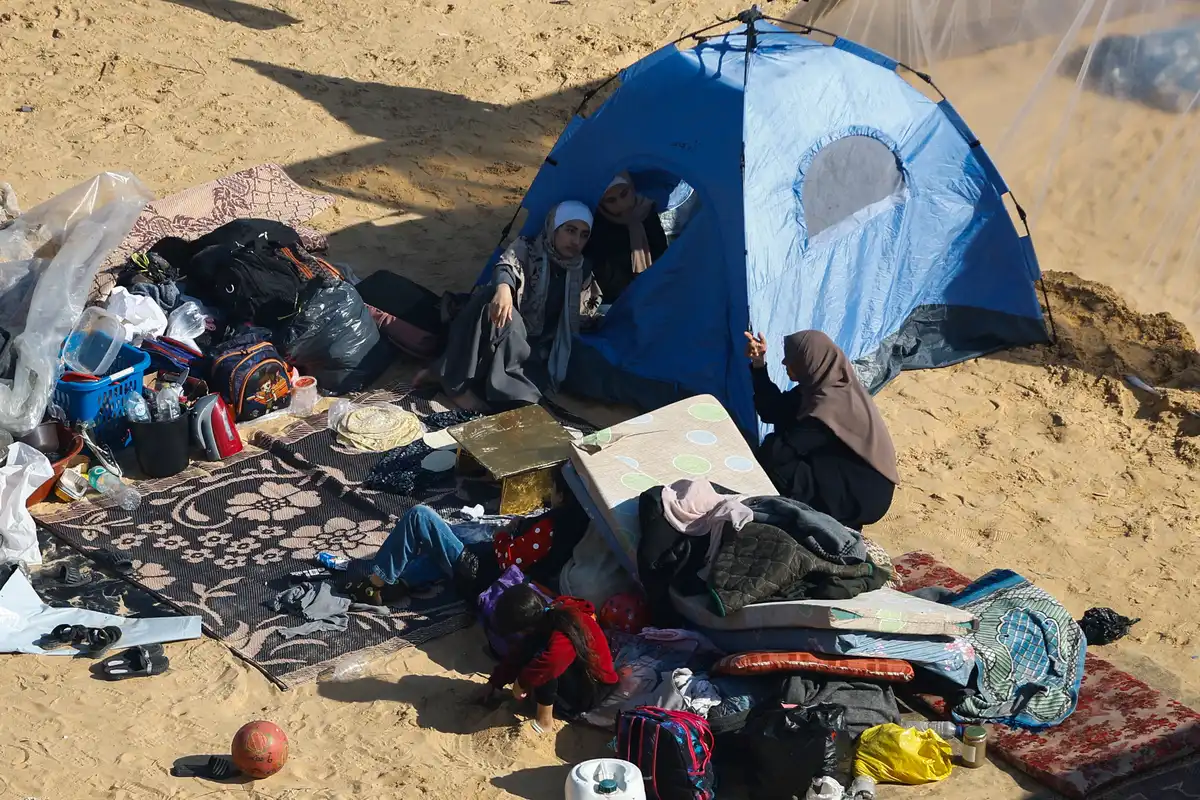
Anderson added, "The situation has become very difficult, especially since we are in the winter, and most of the population is living in tents."


He added, "Gaza has turned into a city of tents, and its residents are doing their best to live their lives and take care of their children."


The UN official stressed, "The pressure on the people of Gaza is enormous, and we do not know how long they will endure these harsh conditions, without food, shelter, water, and any basic amenities."


Last week, the Commissioner-General of the United Nations Relief and Works Agency for Palestine Refugees in the Near East (UNRWA), Philippe Lazzarini, said that the residents of Gaza are being subjected to “collective punishment” in light of the scarcity of humanitarian aid.


This came in a blog post he published on the X platform, on Thursday, about the situation in the besieged Gaza Strip, which is suffering under Israeli attacks.


Since last October 7, the Israeli army has been waging a devastating war on Gaza, which as of Sunday left 22,835 people dead, 58,416 wounded, massive infrastructure destruction and an unprecedented humanitarian catastrophe, according to the Gaza Strip authorities and the United Nations.

PALESTINE

Sun 07 Jan 2024 10:19 pm - Jerusalem Time

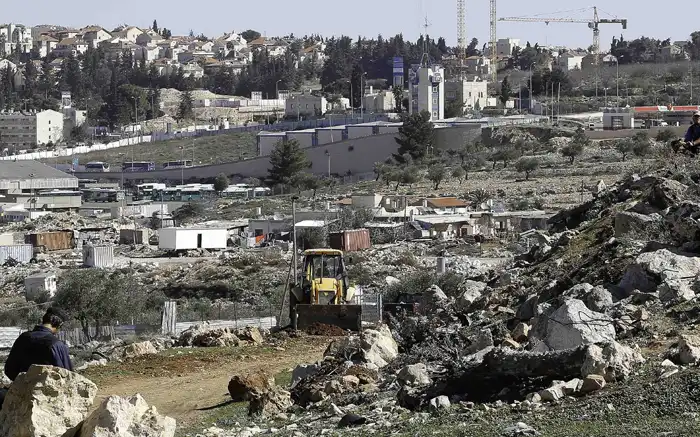
Israeli municipality approves two settlement projects in Jerusalem

The occupation municipality in Jerusalem announced, this evening, Sunday, its approval of the settlement plan called “Silicon Valley,” which aims to destroy the industrial zone in the Wadi al-Jouz neighborhood in Jerusalem, as well as the approval of the establishment of a garbage dump in northeastern occupied Jerusalem.


The first settlement project, called "Silicon Valley," extends along Wadi al-Jouz Road and Othman bin Affan Street, and buildings ranging from 8 to 14 floors will be built on the ruins of commercial and industrial shops in the Jerusalem Industrial Zone in Wadi al-Jouz.


The plan is located west of Wadi Al-Jouz Road, east and south of Dhu Al-Nourin Street, and north of Othman bin Affan Street.


Lawyer Muhannad Jabara, who submitted the petition against the project on behalf of the affected Jerusalemite citizens, said that the “Silicon Valley” plan is a disastrous plan for Jerusalemites, and it infringes upon the owners of businesses in the industrial zone and their property rights by seizing their shops, despite their need for housing and an industrial zone, and not for a settlement project that aims to remove an entire industrial zone for Jerusalemites. It was originally built before the occupation.


He said that the occupation municipality in Jerusalem is talking about a new neighborhood in the city, forgetting the presence of an Arab Jerusalemite neighborhood in the place, and that the classification of this plan for “high-tech” buildings limits residential projects in the Palestinian land, as Jerusalemites are allowed to build on only 10% of the area of their land in Jerusalem.

The occupation municipality in Jerusalem also approved the establishment of a garbage dump on an area of 109 dunams in a valley near Al-Issawiya, Anata, and Ras Shehadeh, east of occupied Jerusalem, where tens of thousands of Jerusalemites reside.


The plan began in 2012, when the municipality intended to establish the landfill on an area of 520 dunums in the same place, but the people of Jerusalem struggled legally for a full decade against the establishment of this landfill.


The landfill will have an area of 350,000 cubic metres, and will cause environmental damage to the private lands of Jerusalemites, after the occupation demolished 70 residential and commercial facilities to implement this plan.

PALESTINE

Sun 07 Jan 2024 9:29 pm - Jerusalem Time

West Bank: A Palestinian was injured in a settler attack in the northern Jordan Valley

This evening, Sunday, a citizen was injured in a settler attack on citizens in the northern Jordan Valley.


Moataz Bisharat, the official responsible for the settlement file in Tubas Governorate, said that Red Crescent crews transported a citizen who suffered bruises as a result of the colonists’ attack on residents’ tents in the “Shuwayar” area in the northern Jordan Valley.


He added that a large force of the occupation army rushed to the population center to protect the colonists, and prevented citizens from reaching the area and checking on families there.

PALESTINE

Sun 07 Jan 2024 8:44 pm - Jerusalem Time

West Bank: Israeli settlers attack Palestinians' homes in Masafer Yatta, south of Hebron

This Sunday evening, dozens of settlers attacked the Al-Jawaya community in Masafer Yatta, south of Hebron, searched citizens’ homes, and caused damage to their contents.


Local sources said that dozens of settlers from the “Itzkhar Man” and “Maon” settlements, heavily armed and under the protection of the occupation forces, attacked the gathering, assaulted the citizens, and insulted them with obscene language.


The sources added that the settlers stormed a number of citizens' homes, tents, and their surroundings and caused damage to their property. The owners were known to include Mamdouh Abu Tabikh and Ahmed Nawaja'a, while they threatened the people with persecution and death unless they left the area.

-

Sun 07 Jan 2024 7:40 pm - Jerusalem Time

Good luck with the International Court of Justice

Who sees the continuation of the useless war; Whoever sees the extent of killing and destruction in Gaza; Who wants to end the suffering of more than a million people? He must hope, at least in his heart, that next Thursday, the International Court of Justice in The Hague will issue a public interim order to stop the war. It is not easy for an Israeli to support an order against his country, and this could lead to punitive steps being taken against him, but is there another way to stop the war?

It is not easy for your country to be sued by a country that knows its regimes of injustice and evil, and whose leader was a moral role model throughout the world. It is not easy to be prosecuted in South Africa, and it is not easy to be accused of genocide committed by a country founded on the ruins of the largest genocide in the world.

It is not easy to ignore the suspicions hovering over Israel that it is committing the most horrific crimes against humanity and against international law. They are no longer talking about occupation, but about apartheid, transfer, ethnic cleansing, genocide, and what is more dangerous. It seems that today there is no other country in the world accused of these charges.

These charges cannot be refuted by anything, not even anti-Semitism, even if some of them are exaggerated and untrue. The indifference with which these charges are received in Israel, and going so far as to accuse the victim, is perhaps the best way to deny and reject, but this is not enough to clear Israel's name, reform, or heal..

More than 20 thousand dead within 3 months, including thousands of boys and children, massive destruction of entire provinces, which can only raise suspicion of genocide. Preposterous statements by key figures regarding the need to “cleanse” Gaza of its population, or eliminate them, raise strong suspicions of intent to carry out ethnic cleansing. Israel must be judged on both counts.

Israel did not fight this war to commit genocide, I have no doubt about that, but it is committing it, in practice, even if unintentionally. Every day that passes in this war, with hundreds of deaths, every day, this doubt increases. In The Hague, they need to prove prior intent, and they may not find it. Does this exonerate Israel?

The suspicion of planning ethnic cleansing, which the International Court of Justice will not currently examine, is well established. Here the intention is clear and public. Israel's defense of itself that central ministers do not represent the government is ridiculous. There is no doubt that anyone takes this seriously. If Bezalel Smotrich, who is calling for the transfer, does not represent the government, then why is he present in it? If Benjamin Netanyahu does not fire Itamar Ben Gvir, how can he be innocent of the accusation?

But in addition to all of this, it is the atmosphere prevailing in Israel that should worry us more than what is happening in The Hague. The prevailing hostile spirit indicates that the commission of war crimes has been given broad legitimacy. Ethnic cleansing in Gaza, and later in the West Bank, is the subject of the “for and against” debate, and the mass killing of Gazans is not at all discussed in Israeli public discourse.

The Gaza problem was created by Israel in 1948. It expelled hundreds of thousands of people to the Strip, in a complete process of ethnic cleansing of the south of the country. Ask Yigal Allon. Israel has never admitted its responsibility for this. Now, ministers are calling for an end to the task in the sector as well. The disgusting manner of the next day's discussion, based on what Israel will and will not do in Gaza, proves that the spirit of 1948 is not dead. This is what Israel did then, and what it wants to do again.

Whether the International Court of Justice decides that what is happening in Gaza is sufficient to accuse Israel of committing genocide or other war crimes, from a moral point of view, the answer is already known.

ARAB AND WORLD

Sun 07 Jan 2024 7:25 pm - Jerusalem Time

After three months of war, Israel is no closer to destroying Hamas

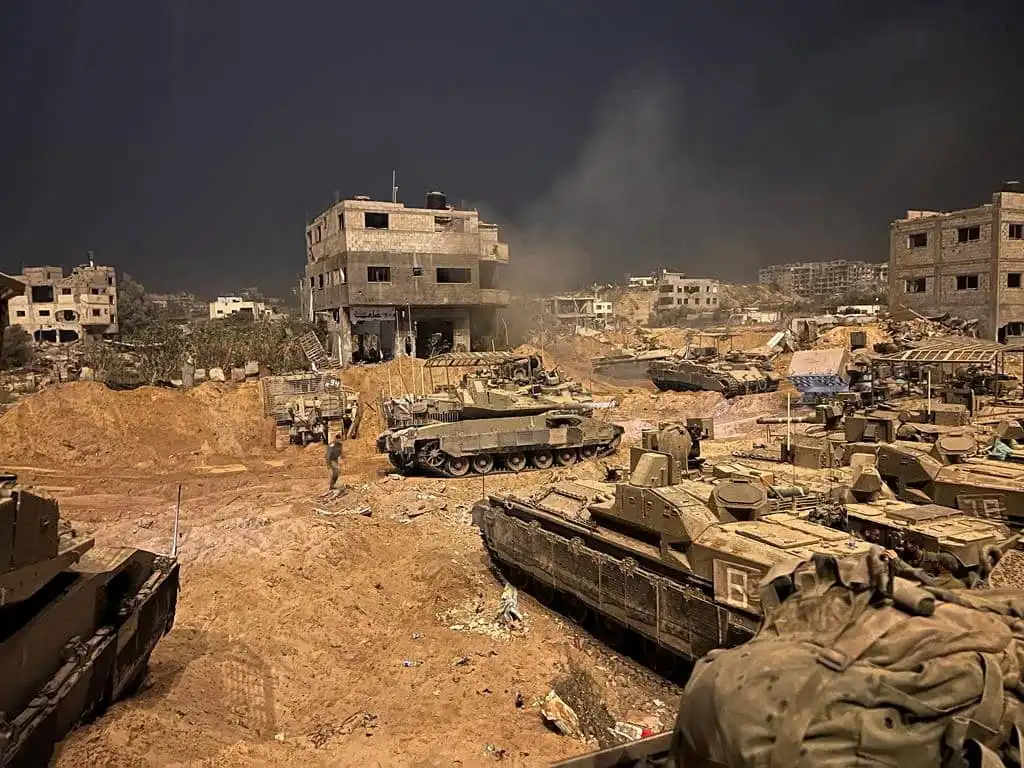
In a lengthy CNN report published on Sunday, the network refers to what Israeli Prime Minister Benjamin Netanyahu said three months ago, “speaking to citizens who were shaken by a horrific day of attacks launched by Hamas, asserting to himself that the Israeli army would be “Immediately deploy all its strength to destroy Hamas’ capabilities and we will destroy them,” but this goal seems far-fetched now, in light of Israeli statements that the Israeli army is moving to a new phase of its war on Hamas in Gaza “amid indications that its goals are changing as well.”


The network quotes Bilal Saab, associate fellow for the Middle East and North Africa at Chatham House, as saying: “The war record does not appear to be very conducive to military campaigns that seek to eliminate Hamas, the deeply rooted military-political movement.”


Saab said: “The Israeli army leadership is well aware that the most it can do is to severely weaken Hamas’ military capabilities.”


The network claims that Israel has witnessed some successes in this regard; Its forces claim to have killed thousands of Hamas fighters, including some high-ranking members, and dismantled some parts of the movement's vast tunnel network under the Strip, but challenges remain, and the endgame (the war) is far from the horizon, as there are few Countries at war setting war deadlines, Israeli officials have warned of a long war that could stretch across all of 2024 and beyond.


It will unfold before an international community increasingly alarmed by the extraordinary humanitarian crisis and mounting civilian deaths in Gaza, “and as international pressure grows, domestic unease with Netanyahu – an embattled prime minister keen to point to tangible victories – may also grow.”


Saab spoke to the network, explaining the main questions facing the Israeli leadership by saying, “There is a race against time. At what price will this tactical success come, and how much time do the Israelis have to achieve this tactical success without being exposed to greater international anger?”


"This type of mission cannot be completed. We have seen it fail over the years many times," Saab said.


Hamas's influence extends far beyond Gaza, meaning that the group's complete defeat is at least a major ambition for Israel, if it can be achieved at all.


It is noteworthy that in a speech he gave on the occasion of the anniversary of the attacks, Netanyahu reiterated his goals for the conflict: “Eliminating Hamas, returning our hostages and ensuring that Gaza will no longer pose a threat to Israel.” These are goals that experts feel are impossible to achieve, especially since it is not clear whether the leadership of the Israeli army is now placing the elimination of Hamas at its top priority. Israeli media have indicated that the head of Israeli military intelligence, Major General Aharon Haliva, did not address the issue of destroying Hamas when he mentioned military targets in a speech he delivered last Thursday (1/4/2024). ).


Also on Thursday, Israeli Defense Minister Yoav Galant revealed plans for the next phase of the war in Gaza, stressing a new combat approach in the north and a continued focus on targeting Hamas leaders suspected of being in the Strip's southern territories.


The third phase will include Israeli army operations in northern Gaza, “raids, destruction of terror tunnels, air and ground activities, and special operations,” according to Gallant, and “this phase may be less intense, but it will take more time,” according to the report, which says, “If the goal is What is more realistic is that despite the severe reduction in Hamas' fighting capabilities, many analysts say that tangible progress has been made in the past three months.


The report attributed Yohanan Plesner, president of the Israel Democracy Institute and former Knesset member for the Kadima party, to CNN, saying, “The definition of success will not be to arrest or kill all Hamas activists, but rather to ensure that Hamas is unable to govern the Gaza Strip effectively. Hamas is an organization like "The army, with command and control centers, regiments and brigades. This command structure is being seriously challenged and dismantled."


It is noteworthy that Netanyahu said last week in a press conference in Tel Aviv that the Israeli army “is fighting with force and new systems above and below the ground,” and claimed that it had killed 8,000 Hamas fighters in Gaza, according to Israeli Army Radio (but CNN could not verify this number). .


The Ministry of Health in Gaza says that nearly 23,000 people have been killed in the Strip since the start of the war, and that about 70% of the dead or wounded are women and children.


Israel believed Hamas had about 30,000 fighters in Gaza before the war began on October 7, the Israeli military told CNN in December. The Israeli army told CNN that the fighters were divided into five brigades, 24 battalions and about 140 companies, each with capabilities that include anti-tank missiles, snipers and engineers, and arrays of missiles and mortars.


Israel also claimed some success in targeting Hamas' tunnel corridors, a complex that is difficult for Israeli army forces to penetrate. The Israeli army released a video this week that it said showed the dismantling of one of the tunnels under Al-Shifa Hospital, the largest medical complex in Gaza, which it accused Hamas of digging.


Last month, it published other videos that it said showed a network of tunnels connecting to the residences and offices of senior Hamas leaders, including Ismail Haniyeh, Yahya Sinwar, and Muhammad Deif, “but the larger goal of finding and killing the most important Hamas leaders in Gaza, remained... “Unattainable for Israel so far.”


Saab said: “This is where intelligence is the master of the situation, and organizations like these replace leaders quite easily, and I do not believe that there is anyone who cannot be replaced in the Hamas movement, and if Israel is able to eliminate the symbolic heads of the organization, who knows whether "That could have a trickle-down effect, especially with people who have military responsibilities."


The new phase of the Israeli war seems unlikely to bring relief to Palestinians trapped in Gaza, where the humanitarian crisis has escalated to extraordinary levels.


But Netanyahu may be more inclined to submit in the face of internal pressure, which has escalated in particular due to the continued capture of more than a hundred hostages taken by Hamas on October 7.


Israel believes 25 hostages are dead and still being held in Gaza, Prime Minister Benjamin Netanyahu's office told CNN on Friday. That leaves 107 hostages from last year's Hamas attack believed to be alive.


The return of these hostages remains a goal in the new phase of the war, but failure to achieve this would lead to intensifying political pressure on the decisive leader, whose popularity among Israelis has declined since October 7.

PALESTINE

Sun 07 Jan 2024 6:40 pm - Jerusalem Time

Israel is unable to resolve the tunnels battle, and Gaza has revealed Europeans' inability

The international press continues to shed light on the developments in Israel's war on the Gaza Strip and the difficulties facing its forces there, as well as the possibility of the confrontation expanding to other fronts in the region.


An article in Foreign Policy magazine questioned Israel's ability to win what it called the "battle of the tunnels," noting that destroying the Gaza tunnel network is a cumbersome and slow process.


The article pointed to questions that began to be raised by experts and analysts that cast doubt on the success of the Israeli occupation army in its struggle with the tunnels, and called for drawing lessons from this “campaign.”


The French newspaper Le Monde said, in a report from occupied Jerusalem, that the extreme right in Israel is confusing the war government, making it unable to determine options other than continuing a war that seems to have no end.


The newspaper added that the past few days have brought to light all the contradictions of Benjamin Netanyahu's government, pointing to the intensity of pressure from nationalists in the government on Netanyahu, which forced him to cancel some meetings.


In an article in the Israeli newspaper The Jerusalem Post, writer David Brin said that the most important lesson in the Gaza war is that absolute victory is no longer possible as was the case in 1967.


Brin added that Israel's opponents today have become very strong and the geopolitical conditions are very complex. He continued, saying, "It is unfortunate that the next day for Israel in Gaza means the beginning of dealing with Lebanon as the next battlefield."


In turn, Amos Harel saw in an article in the Israeli newspaper Haaretz that military confrontation may be the only remaining option in the north.


The article warned that the situation on the northern front is no less complicated than in Gaza, and that it is likely to deteriorate further, “not only because Hezbollah and the Islamic Resistance Movement (Hamas) will seek to avenge the killing of Saleh Al-Arouri, but also because Israel is in an already complicated situation, which may "It pushes it to take broader military action."


As for the American newspaper, The Wall Street Journal, it quoted a senior American official - whose name was not mentioned - in his comment on the tension in the Red Sea that Washington is walking on a tightrope in the region. The official called on regional actors to use their influence to avoid escalation, stressing that the United States It will defend its ships and crews crossing the region.


He expected his country's talks with Israel regarding Gaza to be difficult, reiterating the existence of differences between the two parties regarding who will rule the Gaza Strip after the war.


As for the British Economist magazine, it analyzed what it called the confusion of European diplomacy regarding the war in Gaza, and its analysis concluded that Europe is divided, and that this happens whenever the European Union needs to deal with a crisis outside its space.


It said that what is worse than the division in opinion is the inability of Europeans to make their voices heard, and "the war in Gaza has once again reminded them of this fact."

Source: Al Jazeera + American press + British press + French press
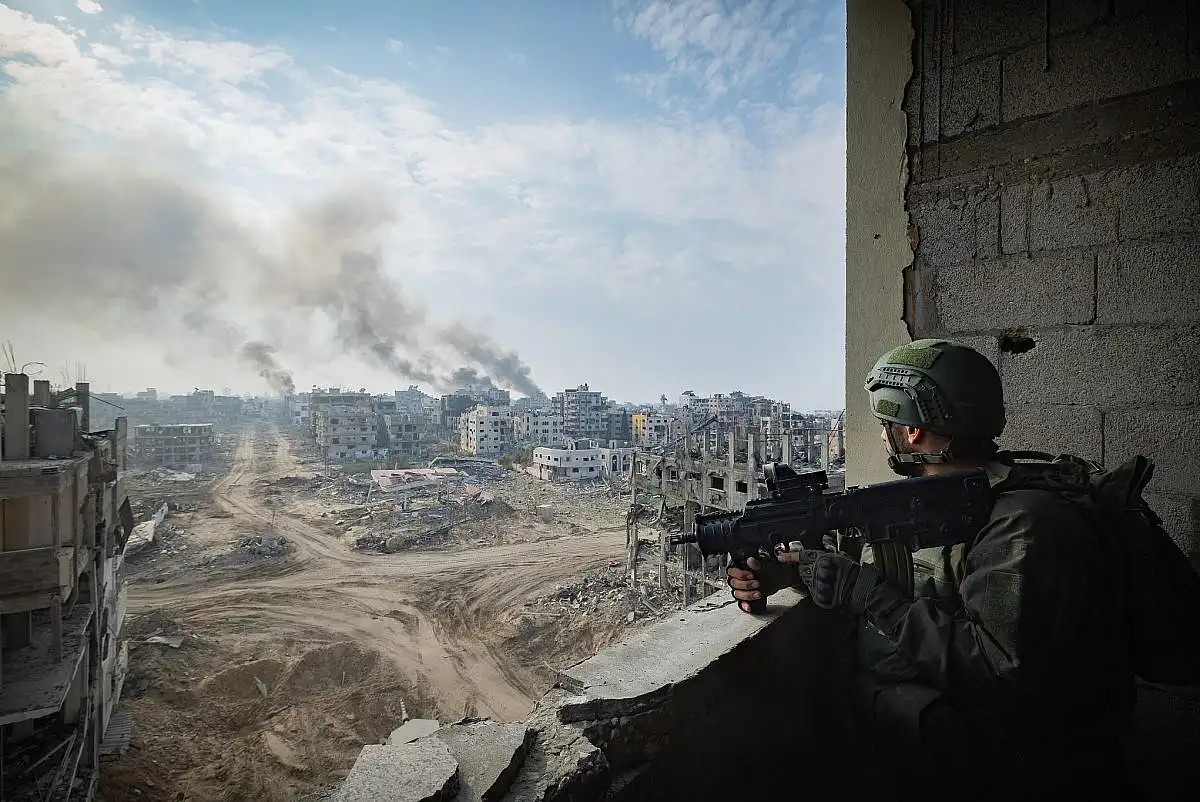
PALESTINE

Sun 07 Jan 2024 6:33 pm - Jerusalem Time

West Bank: Israeli forces assault a young Palestinian south of Nablus
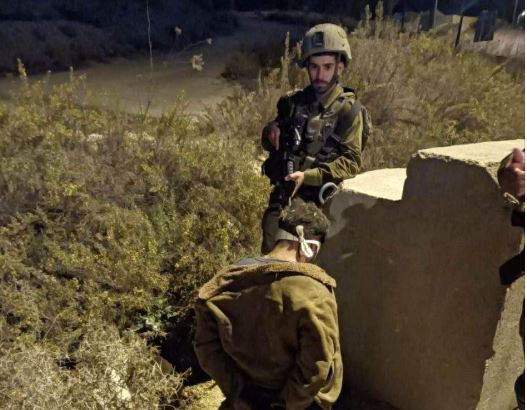
Today, Sunday, Israeli occupation forces assaulted a young Palestinian near the town of Ainabus, south of Nablus.


Medical sources said that the occupation forces severely beat a young man (29 years old) from the town of Zeta while he was near the town of Ainabus, and he was transferred to Rafidiya Hospital to receive treatment.

PALESTINE

Sun 07 Jan 2024 6:30 pm - Jerusalem Time

Jerusalem: Three Palestinians, including a 4-year-old girl and a woman, were killed by Israeli forces

Three Palestinians, including a 4-year-old girl and a woman, were killed this evening, Sunday, by Israeli forces, allegedly in an “attempt to thwart” a run-over attack near the “Ras Biddu” checkpoint, which separates the towns of Biddu and Beit Iksa, northwest of the occupied city of Jerusalem.


Eyewitnesses reported that the occupation forces opened fire on two vehicles as they passed through the checkpoint, wounding two people (a man and a woman) who were in the same vehicle, claiming that they had tried to carry out a ramming attack.


Israeli media confirmed that they died of critical injuries.


A child who was in another vehicle was also hit by occupation bullets, and Israeli ambulance crews quickly announced that she had died as a result of her injury “accidentally.”

PALESTINE

Sun 07 Jan 2024 4:58 pm - Jerusalem Time

Jerusalem: Israeli forces arrest four Palestinians from the town of Jabal Mukaber

Today, Sunday, Israeli occupation forces arrested four citizens from the town of Jabal Mukaber, south of occupied Jerusalem.


Local sources reported that the occupation forces stormed the town and arrested: Osama Al-Jalil, Thaer Khalil, Bahjat Khalil, and Hussam Shteiwi, and imposed financial fines on the residents.


In the same context, the occupation forces obstructed the movement of citizens and searched their vehicles at the Shuafat Camp military checkpoint, north of occupied Jerusalem.


In another context, the occupation authorities extended the detention period of the young man Abdullah Jaber from the Old City of occupied Jerusalem until next Sunday, and he has been detained since the nineteenth of last month.