





Intensive American movements are underway to solidify Trump's plan, which Netanyahu seeks to collapse in hopes of returning to a genocide war. A war that Netanyahu does not want to stop, but rather wants to continue indefinitely; were it not for American pressure and President Trump's decision, it would not have ceased. His need for its continuation is an urgent necessity to remain at the head of the government, maintaining his coalition with Ben Gvir and Smotrich. Therefore, American movements and mediators do not stop; rather, they are intensifying these days, as Vice President Trump will arrive on a tour preceded by Tikvah, Kushner, and the head of Egyptian intelligence. All these movements aim to prevent Netanyahu from taking any step that could ignite the situation again and undermine all international and Arab efforts made to end the war permanently and begin reconstruction and lifting the siege.
In the meantime, people in Gaza are still waiting for what the coming days may bring them; they have not felt anything tangible on the ground, except that the pace of bombing has decreased, along with the number of martyrs and injured. However, they are living in difficult conditions in tents, needing a lot of security and safety amid the harsh reality left by the genocide war, which has left them exposed to the scorching sun and the pain of memories of all they lost and all they once were. At the same time, they need an immediate start to the reconstruction of schools, hospitals, health centers, and homes, everything that the war machine has destroyed, which left nothing in Gaza.
This is the urgent necessity that mandates the implementation of all stages, and that the matter does not remain dependent on Netanyahu's exposed intentions, as he seeks to collapse Trump's plan and thwart it to return once again to war.
Netanyahu can do this if American pressure guaranteeing the plan recedes, and if President Trump relaxes his pressures and steps, and this is seemingly what Trump has understood through his advisors and mediators, which is why we find him sending his vice president back to the region.
What is hoped for today is to thwart what Netanyahu is planning, which is reflected in the ability of the parties to translate promises into actions, and not to slacken in implementing the plan, prioritizing the interests of the Palestinian people in Gaza. Gaza can no longer bear to wait any longer, and any retreat from the path of stopping the genocide will only mean more pain and suffering for a people exhausted by wars.

OPINIONS
Wed 22 Oct 2025 9:22 am - Jerusalem Time
Washington extinguishes the fire while Netanyahu blows on its ashes.
Baha Rahal
Opinion Writer

PALESTINE
Wed 22 Oct 2025 9:11 am - Jerusalem Time
"Ma'ariv": Trump's plan is collapsing.. and several countries refuse to send troops to Gaza.

The Hebrew newspaper "Ma'ariv" highlighted what it called the "collapse of Trump's plan," due to the refusal of several countries to send troops to Gaza, based on the American president's plan, noting that the ceasefire in Gaza faces a significant challenge.
The newspaper explained that this challenge lies in the unwillingness of many countries to send international security forces to the sector, according to what the New York Times reported, pointing out that Trump's peace plan calls for the establishment of such a force.
However, diplomats and officials involved in the discussions reported increasing concerns about the risks, the lack of clarity regarding the mission of the force, and the fear that it would be seen as an "occupying force."
Ma'ariv noted that this information contradicts Trump's statements, who claimed the exact opposite in a press conference, saying that "there are countries that contacted me when they saw the killings committed by Hamas, and they wanted to intervene and address the situation."
According to Trump's twenty-point plan, which led to a ceasefire in Gaza and an agreement for a prisoner exchange, a temporary international stabilization force will be deployed in Gaza, with its role being to secure the areas from which the Israeli occupation army withdraws.
It will also work to prevent the smuggling of weapons into the sector, assist in the distribution of humanitarian aid, and train a Palestinian police force.
Ma'ariv emphasized that the establishment and deployment of this force is crucial for transforming the current ceasefire into a sustainable agreement and promoting stable peace between Israelis and Palestinians.
The newspaper quoted the New York Times, stating that little progress has been made in forming the force, largely due to confusion and lack of clarity regarding its mission, which is considered the most significant obstacle.
Representatives from several countries that are considered potential candidates secretly stated that they would not commit to sending troops without clarifying their role in the sector.
It continued: "The main concern is that their forces would be asked to fight armed Hamas elements on behalf of Israel. Several countries have even indicated that they do not want to station their forces in the centers of Gaza cities, given the danger posed by Hamas and its network of tunnels."
The main concern is that their forces would be asked to fight armed Hamas elements on behalf of Israel.
PALESTINE
Wed 22 Oct 2025 9:01 am - Jerusalem Time
Hebrew media: US is monitoring the finest details in the Gaza Strip.
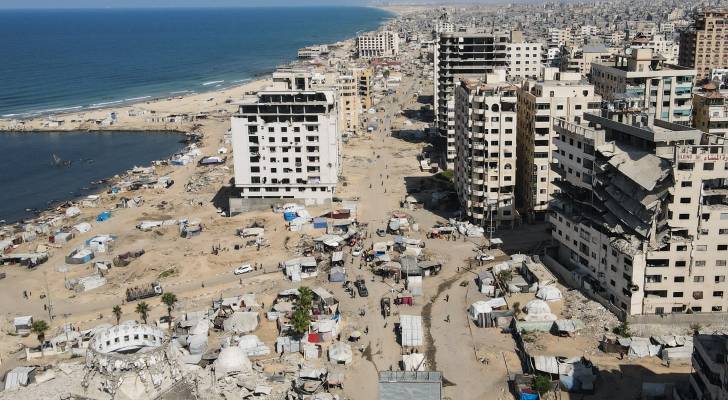
The aggression resulted in the martyrdom of 68,216 Palestinians in a step that reflects the extent of direct American involvement in solidifying the ceasefire agreement.
Hebrew media revealed on Wednesday that the United States is closely monitoring every movement in the Gaza Strip, with its oversight reaching the point of approving certain actions or preventing the execution of others.
The ceasefire agreement between Hamas and the occupation came into effect on October 10 of this month, based on the 'Trump Plan' consisting of twenty points.
Americans are monitoring everything happening in Gaza and are doing everything they can to prevent the collapse of the ceasefire agreement.
PALESTINE
Wed 22 Oct 2025 7:59 am - Jerusalem Time
"The New York Times": The "Stability Force" plan in Gaza is facing failure.. and countries refuse to send their troops.
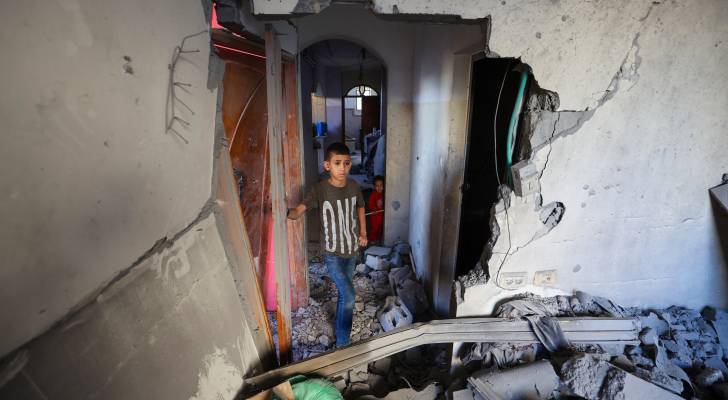
A lengthy report highlighted major concerns among countries that may contribute troops to the "Temporary International Stabilization Force" in the Gaza Strip, a force that represents the cornerstone of the peace plan proposed by U.S. President Donald Trump.
The report indicated that progress in forming this force is "virtually nonexistent," due to the "ambiguity of the mission," and the refusal of countries to risk direct confrontation with Hamas fighters, or the fear of being perceived as "new occupying forces."
This report comes at a critical time, amid a fragile ceasefire that included a halt to hostilities and an exchange of prisoners and detainees.
The American plan, consisting of twenty points, fundamentally relies on two main assumptions: first, that Hamas fighters will relinquish their weapons, and second, that an international peacekeeping force will take over while the occupying army gradually withdraws from the territory.
Diplomats believe that the success or failure of deploying this force will determine whether the current ceasefire will evolve into lasting peace.
According to Trump's plan, the "Temporary International Stabilization Force" is scheduled to undertake vital tasks immediately upon deployment; these include securing areas from which the occupying forces withdraw, preventing the entry of munitions into the territory, facilitating the distribution of humanitarian aid, and beginning to train a new Palestinian police force.
However, diplomats and officials from several countries expected to participate have confirmed that they "will not commit to sending troops" until the nature of the mission is fully clarified.
What concerns these countries the most is the possibility that their soldiers may be expected to engage in battles against Hamas fighters, some of whom remain heavily armed.
This international hesitation poses a significant obstacle to implementing the agreement; the occupying army will not continue its withdrawal from the territory until the international force is ready to assume security tasks.
This ambiguity regarding who will take over security raises fears that parts of the territory may remain without any military presence to limit Hamas's influence for weeks, if not months.
Mediators are currently seeking to quickly introduce the international force to stabilize the situation before Hamas can reorganize and consolidate its authority in the areas from which the occupation has withdrawn.
Analysts believe that Arab countries, in particular, will not be willing to send their soldiers to Gaza if they fear being drawn into confrontations with Hamas.
In the absence of that force or a new government, Hamas may remain the only authority in Gaza.
PALESTINE
Wed 22 Oct 2025 1:41 am - Jerusalem Time
Kushner: We will not allocate any funds for reconstruction in areas still controlled by Hamas.

Jared Kushner, son-in-law of U.S. President Donald Trump, stated that the reconstruction of Gaza in areas controlled by the Israeli occupation army is "carefully planned."
Kushner explained during a press conference in Tel Aviv on Tuesday that "there are ongoing considerations in the area controlled by the occupation army as long as it can be secured, to begin construction as a 'new Gaza,' with the aim of providing Palestinians residing in the sector a place to go, work, and live."
The U.S. president's son-in-law added that the reconstruction will not include areas still controlled by Hamas, noting that several action plans from last year are currently being updated and will be presented to President Trump and the "Peace Council" for recommendations on what should be built and the phased implementation mechanism.
The reconstruction of Gaza in areas controlled by the Israeli occupation army is carefully planned.
PALESTINE
Tue 21 Oct 2025 11:39 pm - Jerusalem Time
"Reporters Without Borders" demands that Israel open the Gaza Strip to the media.
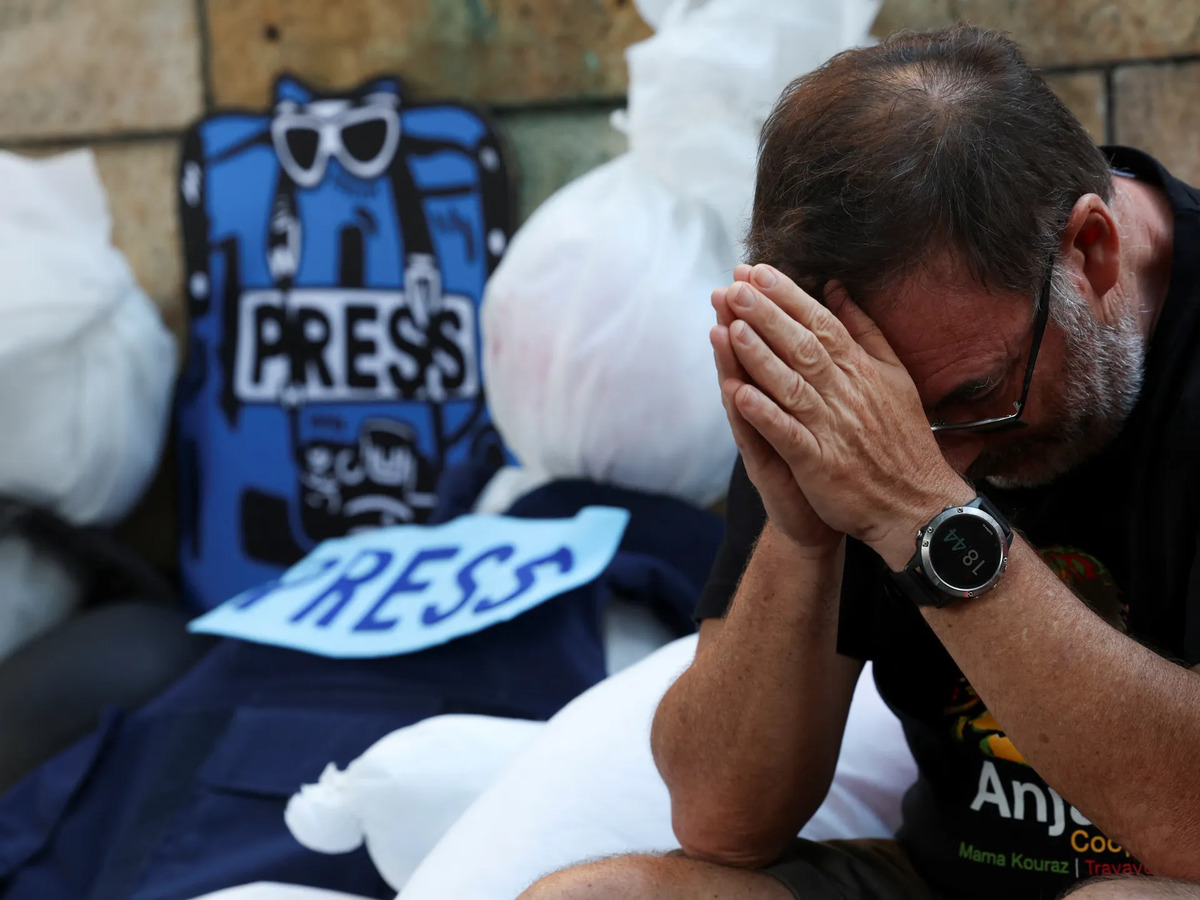
The organization "Reporters Without Borders" demanded today, Tuesday, to open the Gaza Strip to journalists who have been denied independent access to the area since October 2023 due to the devastating war waged by Israel over the past two years.
"Reporters Without Borders" stated that it has joined the legal petition submitted by the Foreign Press Association, calling for the borders to be opened to independent journalists, and submitted its legal memorandum on October 15 of this month to support the association's position before the Supreme Court in order to confront this ban.
It also pointed out that preventing international journalists from entering Gaza increasingly isolates Palestinian journalists, leaving them to face Israeli smear campaigns alone, in addition to the enormous field risks while covering events in the area.
In mid this month, "Reporters Without Borders" submitted a memorandum containing facts and legal arguments supporting the Foreign Press Association's position that Israel is violating press freedom and the right to access information about Gaza.
The organization's advocacy and assistance director, Antoine Bernard, stated that the Israeli government has imposed a "complete blockade on the entry of independent journalists, whether Israeli or foreign, into Gaza for two years."
He added that more than 210 Palestinian journalists have been killed in Gaza, at least 56 of whom were killed while performing their journalistic duties or because of them, and they are subjected to systematic smear campaigns, emphasizing that the result of this situation is "an unprecedented violation of press freedom and the public's right to independent, reliable, and diverse information."
The result of this situation is an unprecedented violation of press freedom and the public's right to independent media.
PALESTINE
Tue 21 Oct 2025 8:37 pm - Jerusalem Time
Of the thousands of trucks scheduled, only 16% of the aid has entered Gaza.
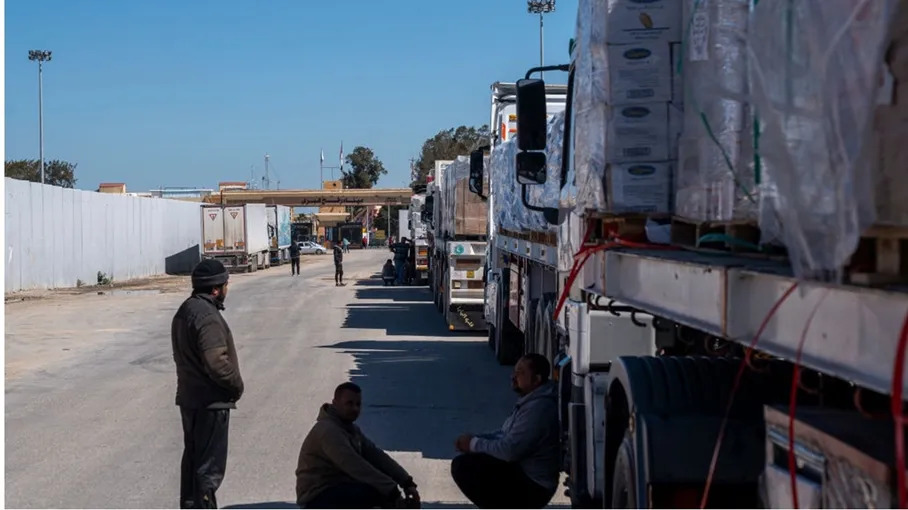
The government media office in the Gaza Strip stated on Tuesday that only 986 aid trucks have entered the territory since the ceasefire with Israel came into effect, out of 6,600 trucks that were supposed to enter by Monday evening according to the agreement.
The government media office confirmed in a statement that "the total number of aid trucks that have entered the Gaza Strip since the ceasefire decision came into effect is only 986 humanitarian aid trucks out of 6,600 trucks that were supposed to enter by Monday evening, October 20, 2025, according to what was agreed upon in the texts of the decision."
It added that "the average number of trucks entering the territory daily since the ceasefire came into effect does not exceed 89 trucks, out of 600 trucks that are supposed to enter daily."
It viewed this as "reflecting the continued policy of strangulation, starvation, and humanitarian blackmail practiced by the occupation against more than two million and 400 thousand citizens in Gaza."
The government office emphasized that these limited quantities reaching the territory "do not cover the minimum of humanitarian and living needs."
It reiterated the urgent need for the territory to have "a regular flow of no less than 600 aid trucks daily, including food, medical, and relief materials, as well as operational fuel and cooking gas, to ensure the minimum requirements for life."
On Monday, the spokesperson for Hamas, Hazem Qassem, accused the occupation of "exploiting the aid file to blackmail the political situation while threatening starvation once again."
In this regard, he stated in a press statement: "The occupation has not abandoned its policy of starvation against our Palestinian people in the Gaza Strip."
The first emergency coordinator at the United Nations Children's Fund (UNICEF), Hamish Young, described the situation in the Gaza Strip as "catastrophic."
He confirmed that UNICEF needs a significant amount of food supplies to address the effects of famine in northern Gaza.
The meager humanitarian aid reaching the territory under the ceasefire agreement, which came into effect on October 10, has failed to break the famine or begin to address its effects, especially as this coincides with a sharp deterioration in the economic conditions of most Palestinians, preventing them from purchasing food supplies.
The ongoing Israeli extermination for two years has turned Palestinians in the Gaza Strip into "poor," according to previous data from the World Bank.
The occupation has not abandoned its policy of starvation against our Palestinian people in the Gaza Strip.
ARAB AND WORLD
Tue 21 Oct 2025 8:35 pm - Jerusalem Time
Netanyahu dismisses Tzachi Hanegbi over his opposition to the attack on Qatar.

Israeli Prime Minister Benjamin Netanyahu dismissed National Security Council Chairman Tzachi Hanegbi amid his opposition to the attack on Qatar and the operation to occupy the city of Gaza.
Netanyahu's office stated: "The Prime Minister thanks Tzachi Hanegbi for his service as Chairman of the National Security Council over the past three years."
He added: "The Prime Minister intends to appoint the Deputy National Security Council Chairman, Gil Reich, as Acting Chairman of the Council immediately," without details on the reasons and circumstances of the dismissal.
However, the official Hebrew broadcasting authority clarified that "Hanegbi was dismissed by Netanyahu due to his opposition to the attack on Qatar and the Gideon 2 operation (to occupy the city of Gaza)."
On September 3, the Israeli army announced the launch of Operation "Gideon 2" to fully occupy the city of Gaza, which sparked criticism and protests in Israel, fearing for the lives of prisoners and soldiers.
On September 9, the Israeli army launched an airstrike on the leadership of the "Hamas" movement in Doha, which Qatar condemned and affirmed its right to respond to this aggression.
The attack on Qatar came despite its role as a mediator, alongside Egypt and with American participation, in indirect negotiations between "Hamas" and Israel.
For his part, Hanegbi, who took office in January 2023, issued a statement published by Hebrew media, saying: "The Prime Minister informed me today of his intention to appoint a new national security advisor."
Hanegbi called for an investigation into the events of October 7, 2023, stating: "It must be thoroughly investigated to ensure that appropriate lessons are learned and to help restore lost trust."
Israeli officials consider that what happened on October 7 represents the largest intelligence and military failure for Israel, causing significant damage to Israel's image and its army in the world.
The major failure on October 7 must be investigated to ensure that appropriate lessons are learned.
ARAB AND WORLD
Tue 21 Oct 2025 7:52 pm - Jerusalem Time
The formation of the international force in Gaza has stumbled due to security concerns and ambiguity regarding the mission.

Washington – "Jerusalem" dot com - Said Arikat
In light of the fragile calm prevailing in the Gaza Strip after the ceasefire came into effect last week, the task of consolidating this calm appears more complicated than political statements suggest. According to a report published by the "New York Times" on Tuesday about the hesitation of countries to send troops to Gaza "for fear of clashes with Hamas," the foundations of the current ceasefire rely on two main hypotheses: the disarmament of Hamas militants and the deployment of an international peacekeeping force to take over security tasks in areas from which Israeli forces have withdrawn.
However, this plan faces a significant obstacle, as the countries considered candidates to participate in that force have shown clear hesitation in sending their troops to Gaza, fearing direct confrontation with Hamas, which still retains its military capabilities, according to what the newspaper reported from diplomats and individuals familiar with ongoing discussions.
The newspaper clarifies that U.S. President Donald Trump's plan, which included twenty points and led to the truce and the exchange of prisoners and hostages between Israel and Hamas, stipulated the immediate deployment of a "temporary international stabilization force" in Gaza. The goal of this force was to secure the areas from which the Israeli occupation army withdrew, prevent the entry of munitions, facilitate the delivery of humanitarian aid, and train a Palestinian police force to manage local security.
The "New York Times" believes that the fate of this force may determine the future of the ceasefire as a whole, and whether it can transform into a permanent peace agreement between Israelis and Palestinians, or whether it will remain just a temporary truce that quickly collapses in the face of escalating tensions.
The ambiguity of the mission hampers the formation of the force
According to diplomats and officials from several countries, no tangible progress has been made in assembling the international force, amid ambiguity surrounding the nature of its mission. This ambiguity is considered, according to the article, "the most dangerous obstacle" to proceeding with its formation. The newspaper quoted representatives of countries viewed as candidates for participation saying they would not commit to sending troops until the mission assigned to them is clearly defined, and whether they would undertake combat tasks or merely maintain security.
The main concern is that these forces may be asked to confront Hamas fighters on behalf of Israel, a possibility that diplomats say could convince many countries to withdraw from participation. Some countries have also expressed concerns in closed discussions about being stationed in city centers within Gaza, given the complex security threat posed by Hamas's network of tunnels, according to what the newspaper reported from sources familiar with the talks.
New clashes reinforce concerns
The "New York Times" confirms that the violence that erupted in Gaza last Sunday reaffirmed the validity of these concerns. The Israeli army announced that an attack by Palestinian militants in Israeli-controlled territories resulted in the deaths of two soldiers, prompting Tel Aviv to respond with what it described as punitive strikes targeting Hamas facilities, resulting in the deaths of 45 Palestinians, according to the Gaza health ministry, which did not distinguish between civilians and fighters.
Regional and international deliberations
The newspaper notes that efforts to form the force are not new, as initial attempts began during the administration of President Joe Biden, which included contacts to recruit personnel from Indonesia, the United Arab Emirates, Egypt, and Italy, according to Jamie Rubin, a former advisor to then-Secretary of State Antony Blinken and one of the contributors to the post-war governance plan for Gaza.
In recent months, discussions have expanded to include Indonesia, Egypt, Turkey, and Azerbaijan, according to diplomats. Mediators who facilitated the ceasefire hope that an international force will be sent as soon as possible to stabilize Gaza before Hamas reorganizes in the half of the territory from which Israel has withdrawn so far.
Divergent positions from Ankara and Jakarta
In Ankara, a Turkish government statement indicated that President Recep Tayyip Erdoğan announced his country's readiness to join a task force overseeing the ceasefire. It remains unclear whether he was specifically referring to the proposed "stabilization force." However, the newspaper pointed out that Israel may be wary of a leading Turkish role in Gaza, given Erdoğan's sharp positions against it over the past two years.
Indonesia, on the other hand, has taken a clearer stance, as President Prabowo Subianto stated in a speech before the United Nations General Assembly last month that his country is ready to send 20,000 soldiers or more "to help secure peace in Gaza," and even in other conflict areas around the world.
While international mediators seek to find a formula that preserves the ceasefire and prevents its collapse, it seems that the formation of the international stabilization force faces significant political and security obstacles. Reluctant countries do not wish to engage in confrontation with Hamas, nor to appear as tools for implementing Israeli
PALESTINE
Tue 21 Oct 2025 7:19 pm - Jerusalem Time
The head of Egyptian intelligence meets Netanyahu in Jerusalem.
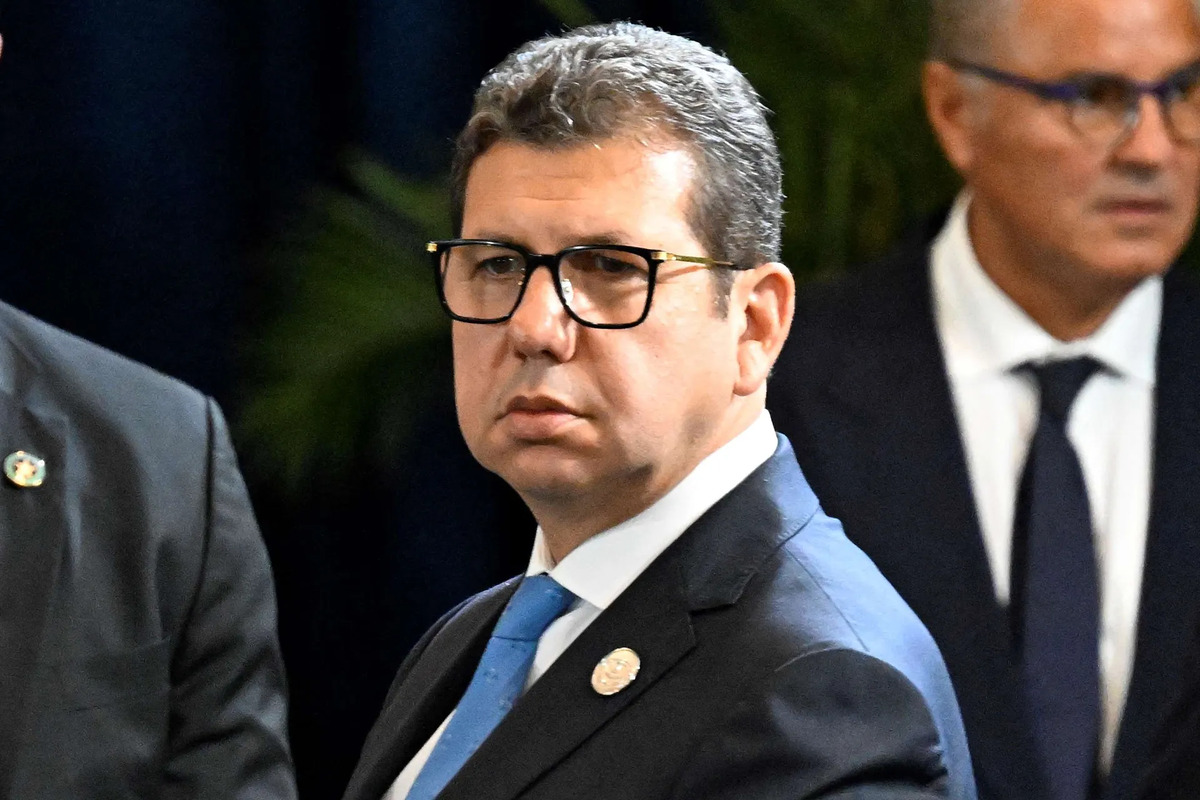
The head of Egyptian intelligence, Hassan Rashad, held discussions in Jerusalem today, Tuesday, with Israeli Prime Minister Benjamin Netanyahu, who is wanted by the International Criminal Court, as part of regional efforts to solidify the ceasefire in the Gaza Strip.
The Israeli Prime Minister's office stated in a statement that Netanyahu "met with his professional team and the head of Egyptian intelligence at the Prime Minister's office in Jerusalem."
The statement added, "During the meeting, ways to enhance the ongoing truce in the sector, Israeli-Egyptian relations, and strengthening peace between the two countries were discussed, in addition to addressing other regional issues."
Egyptian media reported that the head of Egyptian intelligence will also meet with the U.S. envoy to the Middle East, Steve Wittekov, who is currently in Israel.
Rashad's visit to Jerusalem comes after Israel launched heavy airstrikes on the Gaza Strip the day before yesterday, Sunday, marking the largest breach of the ceasefire agreement that was reached in Sharm El Sheikh, Egypt, on October 9, with the mediation of Qatar, Egypt, and Turkey, and the participation of the United States.
Under U.S. pressure, Israel announced on Sunday evening a return to the ceasefire and reversed its decision to close all crossings into the Gaza Strip.
The visit of the head of Egyptian intelligence coincides with the visit of U.S. Vice President J.D. Vance, who will discuss developments in the Gaza Strip with senior Israeli officials and will also meet with U.S. envoys Steve Wittekov and Jared Kushner, as well as military officials monitoring the ceasefire.
Ways to enhance the ongoing truce in the sector and Israeli-Egyptian relations were discussed.
PALESTINE
Tue 21 Oct 2025 7:09 pm - Jerusalem Time
Vance inaugurates the "Civil-Military Cooperation Center" for the reconstruction of Gaza and predicts the durability of the agreement.
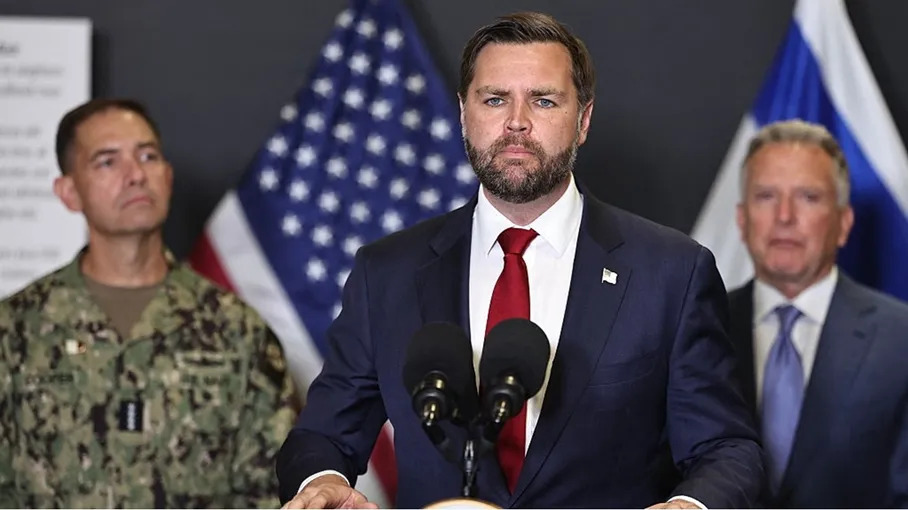
JD Vance, the U.S. Vice President, expressed his belief that the ceasefire agreement between Israel and the Palestinian Islamic Resistance Movement 'Hamas' 'will hold', and announced the opening of a civil-military center to devise a plan for the reconstruction of the Gaza Strip.
This came during a press conference held on Tuesday evening at the headquarters of the U.S. and Israeli armies in the Israeli base 'Kiryat Gat', which included U.S. envoys Steve Witkoff and Jared Kushner.
Vance said: 'I am optimistic that the ceasefire agreement will hold, and we want to move towards sustainable peace.' He added: 'We announce the opening of the civil-military cooperation center to launch a plan for the reconstruction of Gaza,' in accordance with what the ceasefire agreement included.
Regarding the bodies of Israeli prisoners, Vance stated that the locations of some bodies of deceased prisoners in Gaza are unknown, adding that the issue is 'difficult' and will not be resolved overnight.
I am optimistic that the ceasefire agreement will hold, and we want to move towards sustainable peace.
OPINIONS
Tue 21 Oct 2025 6:48 pm - Jerusalem Time
We Need More of Trump’s Unprecedented Diplomacy


We Need More of Trump’s Unprecedented Diplomacy
October 21, 2025
Gershon Baskin
Is the Muslim Brotherhood from Qatar and Türkiye Going to Take Over Gaza?
Many Israelis are fearful that the multinational stabilization force for Gaza will be formed
mainly of military personnel from Türkiye and Qatar. The mouthpieces of the Netanyahu
government are already screaming that the Turkish and Qatari supporters of the Muslim
Brotherhood will keep Hamas in power in Gaza through the American planned stabilization
force in Gaza. While it is true that the United States utilized the close relations of President
Trump with Qatar and Türkiye and their close relations with Hamas in order to leverage
pressure on Hamas to agree to the 20-point Trump plan and the agreement to end the war and
to return all of the hostages, the United States has no intention to allow Hamas to continue to
control Gaza and to regain its military strength.
First of all, it is entirely not clear that Turkish and Qatari troops will be part of the multinational
stabilization force for Gaza. That is yet to be decided. But even if they are, they will be among
many other troops from many other nations, including those in the region (Arab countries),
from Asia, and hopefully from Europe as well. The creation of the multinational mechanism in
the end of the war agreement made up of Egypt, Qatar, and Türkiye was done to ensure the
maximal return the hostages. This mechanism was created to ensure that Hamas continues to
make 100% effort to find and to return the deceased hostages and to provide technical support
in that effort. It has been reported that Israel has limited and prevented the entrance of
Egyptian, Qatari, and Turkish personnel and machinery into Gaza. If this has not been resolved,
it must be resolved, because those personnel and machinery are part of the process to locate
and to return deceased hostages.
Israel claims that it has the most technologically advanced team and machinery to find bodies
in a war zone. If that is the case, Israel should be using them in the 53% of Gaza which is under
the full military control and occupation of the IDF. Perhaps that is being done, and if not, it must
be done. One of the objective limitations on Hamas in locating deceased hostages is that Hamas
only has access to less than half of the Gaza Strip. Other limitations include the reality that
thousands of Gazans may be buried underneath the rubble of buildings bombed by Israel. There
is good reason to believe that Israeli hostages may also be underneath the rubble as well. Many
of the Hamas commanders who were in charge of the burial of deceased hostages were killed
by Israel and most Hamas commanders did not have this information.
Unprecedented Trumpian Diplomacy
In the process of reaching the end of war deal, following the failed Israeli attack on the Hamas
leadership in Doha, not only did President Trump force Netanyahu to apologize to the Qatari
Prime Minister, on the phone, on camera, the United States also signed a mutual defense treaty
with Qatar. This is unprecedented in US foreign policy. President Trump, Steve Witkoff and
Jared Kushner enjoyed very close relations with the Qataris even before the negotiations
between Israel and Hamas went into high gear under Trump. Those relations became even
closer after Trump needed to disassociate himself from Israel’s bombing in Doha. The mutual
defense treaty between the US and Qatar is not the only unprecedented US policy shift that has
taken place. Kushner and Witkoff admitted on the US TV program 60 Minutes that they met
directly, face-to-face with the Hamas chief Khalil al Haya. These two US businessmen/diplomats
understand the essential element of the personal touch when making difficult deals. It was that
face-to-face contact that ensured that Hamas said yes to the deal.
Witkoff had arrived to the decision to make personal contact before the Doha attack. We were
working on organizing a meeting between Witkoff and the Hamas negotiators in Istanbul to
agree to the 8-point document that was worked out by Ghazi Hamad and myself with the direct
input of Witkoff in the end of the first week of September. Witkoff proposed that the Hamas
leadership come to Istanbul to meet with him and to sign the eight-point document. Witkoff
had received the greenlight from the President to meet directly with the Hamas negotiating
team. That meeting didn’t happen and shortly afterwards, on September 9, Israel attacked the
Hamas leadership in Doha.
Also in the context of unprecedented diplomacy under President Trump, on October 9 at 2:00
in the morning the delegates from Qatar, Egypt, Türkiye, Hamas, and Israel signed the
document “Implementation Steps for President Trump’s proposal for a Comprehensive End of
the Gaza War”. What was unprecedented is that the four member Hamas negotiating team sat
in the same room across from the Israeli negotiating team. This has never happened before. In
my 18 years of contacts with Hamas I proposed many times to the Israeli officials that I dealt
with to speak to Hamas directly, instead of going through me or through the Egyptians or
others. No one ever agreed. There were even situations when I sat with the Israeli team in the
Ministry of Defense headquarters in Tel Aviv and in the presence of Israel officials, I was asked
to call Hamas and speak with them. I did this also from the offices of several ministers in Israel’s
past governments. For President Trump there are no diplomatic red lines if crossing them helps
to reach a deal.
Türkiye and Israel
Going back to the multinational stabilization force, I would like to propose to President Trump
that he uses his personal relationship with Turkish President Erdogan and his leverage on
Türkiye to reach a deal I which in exchange for Turkish involvement in the stabilization force
and in the reconstruction of Gaza, Türkiye should be required to reconcile with the State of
Israel – including the renewal of full diplomatic relations, the re-instatement of flights between
Tel Aviv and Istanbul for both Israeli and Turkish carriers, the return to two-way commerce
between both countries and the renewal of military-intelligence cooperation between the two
militaries. Türkiye must also be required to agree that it will take no part in trying to re-
establish Hamas’s control of Gaza or support Hamas or any other group in the Palestinian
territories, including Gaza to threaten Israel in any way.
Ending the War Should Also Mean Ending the Economic Blockade on Gaza
According to the agreement to end the war, the Rafah crossing was supposed to open today for
the movement of people in both directions. Israel has prevented that which is a substantive
breach of the agreement. The agreement to open the crossing should have been similar to
what was agreed to in 2005 with a more robust European inspection mechanism on the Gaza
side of the crossing. The following is what was agreed to in 2005 and worked until 2007.
The Agreement on Movement and Access (AMA) was an agreement between Israel and
the Palestinian Authority (PA) signed on 15 November 2005 aimed at improving Palestinian
freedom of movement and economic activity within the Palestinian territories, and open
the Rafah Crossing on the Gaza–Egypt border. AMA was described as "an agreement on
facilitating the movement of people and goods within the Palestinian Territories and on
opening an international crossing on the Gaza-Egypt border that will put the Palestinians in
control of the entry and exit of people." Part of the agreement was the Agreed Principles for
Rafah Crossing. According this agreement the Rafah Crossing was to be operated by the
Palestinian Authority on its side, and Egypt on its side. Only people with Palestinian ID, or
foreign nationals, by exception, in certain categories, subject to Israeli oversight, were to be
permitted to cross in and out. The PA should notify the Israeli authorities 48 hours in advance
of the crossing of a person in the excepted categories.
Rafah was supposed to be used for export of goods from Gaza to Egypt, subject to rigid control.
Imports were cleared by PA customs officials at Kerem Shalom under the supervision of Israeli
customs agents.
Now, we need to return to this agreement with several important amendments. The Rafah
crossing must be used for people and goods in both directions. The Egyptians should treat the
Palestinians crossing from Gaza into Egypt in the same way that Egypt treats all foreign nations
wishing to enter Egypt. The goods crossing into Gaza from Egypt must go through a robust EU
based inspection preventing smuggling of weapons and materials for producing weapons. The
EU should treat this crossing as if it was an entry gate into Europe. There is no reason why
goods going into Gaza or exiting Gaza should be under the discretion of the State of Israel. With
the end of the war in Gaza, it is essential that the economic blockade on Gaza come to an end –
if not, we will return to fighting in the future.
The Mandate for the Multinational Stabilization Force
Last, in order for the Trump Administration to create the multinational stabilization force there
is a need for a UN Security Council Resolution and a UNSC mandate for the force. This is the
demand of many countries willing to send personnel to the force. The force established could
be a UN Blue Helmet Force, which is generally military, police, and civilian staff provided by UN
member states and are deployed on peacekeeping missions to help countries transition from
conflict to peace. Their core purpose of a UN Blue Helmet Force is to support political solutions,
protect civilians, and help establish conditions for a sustainable peace. But, Israel is likely to
oppose a Blue Helmet Force.
Another solution could be a UN mandated multi-national force similar to the Multinational
force in Sinai created after the Israeli Egypt peace agreement. The multinational force in the
Sinai is a non-UN peacekeeping organization established in 1981 to oversee the terms of the
1979 peace treaty between Egypt and Israel. Its mission is to supervise the security provisions
of the treaty, monitor compliance, and ensure freedom of navigation through the Straits of
Tiran and the Gulf of Aqaba. The force is made up of military personnel from various countries
and has a civilian and military presence in the Sinai Peninsula. The MFO is funded by Egypt,
Israel, and the United States, along with financial contributions from other donor countries. The
MFO is headed by a Director-General and a Force Commander, who is often from a non-U.S.
contributing country. The Director-General is almost always from the United States. The U.S.
Army colonel in charge of the American contingent also serves as the MFO's Chief of Staff, a key
leadership position. The U.S. provides the single largest military contingent to the MFO, including an infantry battalion and logistics support. This exact model does not have to be
copied and pasted for the Multinational Stabilization Force in Gaza but it does need a direct US
leadership role - both to create confidence for the Israeli side, but also to ensure that all of the
participating countries fulfill all of their responsibilities, especially when and if the situation
begins to deteriorate.
PALESTINE
Tue 21 Oct 2025 5:29 pm - Jerusalem Time
UN report: 50% of Gaza's population is hungry.. and the occupation has committed "genocide" in the north.
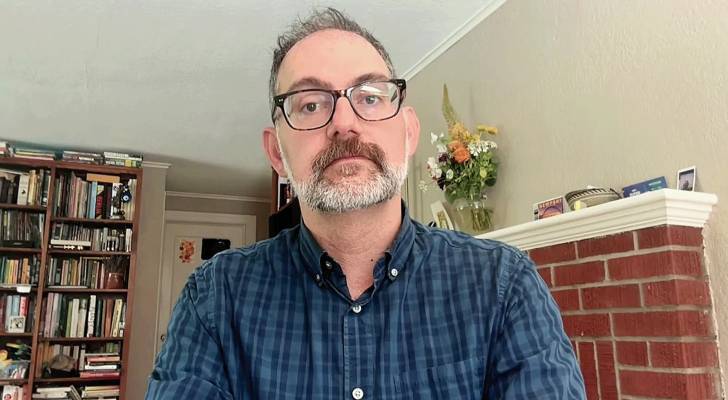
The UN Special Rapporteur on the right to food, Michael Fakhri, revealed that 50% of the population in the Gaza Strip "are still suffering from hunger."
He accused the occupation in a press interview of committing "genocide" in the northern part of the strip, emphasizing the need to completely rebuild the food system.
These statements come amid the ongoing siege imposed by the occupation on the Gaza Strip, which has led to systematic destruction of infrastructure, including agricultural land, bakeries, and food storage facilities.
The food-related structure in the Gaza Strip must be completely rebuilt, not just the introduction of aid.
PALESTINE
Tue 21 Oct 2025 3:01 pm - Jerusalem Time
Haaretz: Hamas strengthens its grip on Gaza and the influence of the tribes is fading.
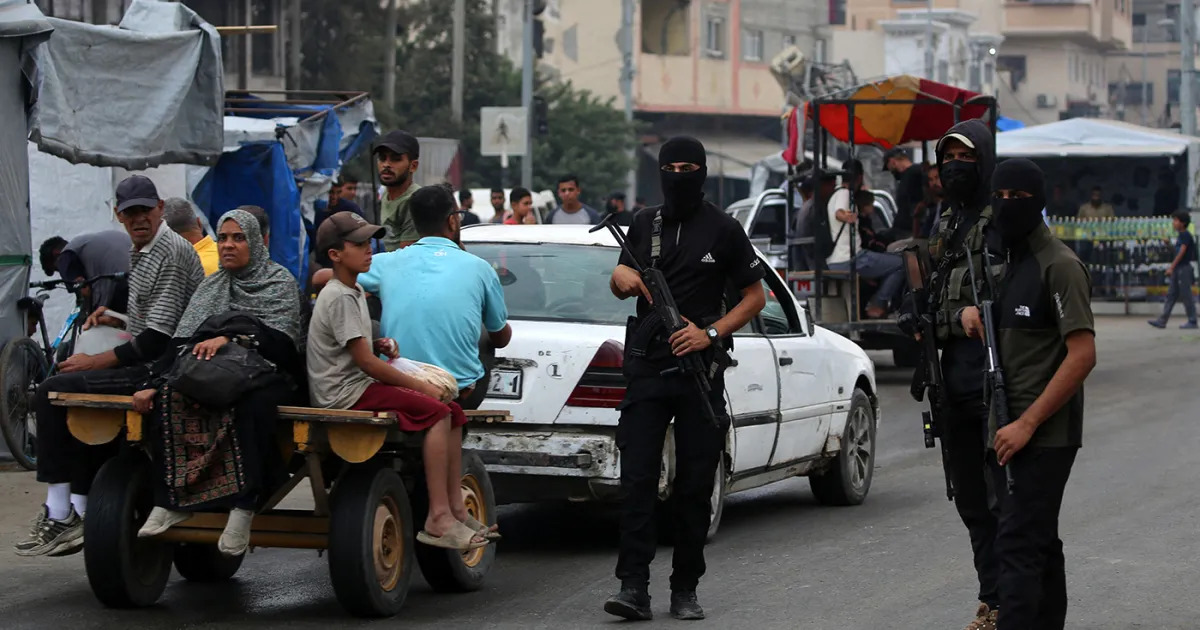
An Israeli security institution report indicates that the Islamic Resistance Movement (Hamas) has succeeded in strengthening its control over the Gaza Strip since the ceasefire agreement came into effect on October 10.
According to military correspondent Yaniv Kubowitz, estimates within the occupying army suggest that Hamas "has not lost control over the sector for even a single day," and that it had prepared in advance for this phase by keeping thousands of fighters in reserve to regain control of governance as soon as military operations ceased.
He confirmed that the movement has practically regained authority, administration, and security positions in the sector, while Israel's recent attempts to create local alternatives from tribes or collaborators have faded.
According to the report, the Israeli military is closely monitoring the growing signs of organization and discipline among Hamas police officers who have returned to regular fieldwork in most cities of the sector, currently undertaking tasks of maintaining public order and pursuing thieves and criminals.
It noted that the movement has regained control over municipal offices and government institutions in Gaza, Khan Younis, and Rafah, appointing its affiliated figures to leadership positions within the civil apparatus, indicating that the "post-war" phase is proceeding according to Hamas's vision rather than the Israeli or American plan.
The security institution acknowledges that Israel's recent attempts to strengthen some local tribes against Hamas have failed, with Haaretz's report relying on sources that spoke of "the dismantling of most tribal formations that emerged in recent weeks, and their leaders facing threats, pursuit, or even elimination by Hamas elements."
A senior Israeli officer told the newspaper that "the tribes no longer exist as an organized force, and Hamas has re-established complete deterrence in Gaza."
The report indicates that the Israeli army has observed in recent weeks Hamas elements firing at anyone attempting to cooperate with Israel.
It adds that "the message quickly reached everyone: no one contests Hamas's rule."
In contrast, no protests or popular uprisings against the movement have been recorded despite the harsh living conditions, surprising some analysts in Israel who expected a social explosion against it after two years of war.
The security institution clarifies that the few manifestations observed on social media do not pose a real threat, and it is not expected that they will turn into a widespread protest movement.
Haaretz's report states that the Israeli army believes that the entry of any external party into the sector - especially Turkey - could further enhance Hamas's position and provide it with a political and security umbrella that protects it from Israeli pressures.
Therefore, there is increasing concern within the security institution that the U.S. plan to form an international force in Gaza with Turkish participation "could translate on the ground into rehabilitating Hamas under a humanitarian cover," which Israel considers a direct threat to its post-war strategy.
At the same time, the Israeli army acknowledges that the residents of the sector do not seem eager to return to their homes in northern Gaza despite the ceasefire being in effect.
According to the figures provided in the report, about 150,000 people remained in the north during the fighting, and after the ceasefire agreement came into effect, only about 200,000 have returned.
The army attributes this hesitation to fears of renewed fighting and the absence of infrastructure, as tens of thousands have lost their homes completely.
However, the greater concern for the army now lies in the possibility of tens of thousands of civilians moving out of the "humanitarian areas" crowded towards what is known as the "yellow line," which is the Israeli withdrawal line established under the agreement.
The military leadership fears that this random movement could lead to clashes between civilians and Israeli soldiers deployed along the line, potentially igniting unintended field confrontations.
Haaretz points out that the army is facing difficulties in preparing a coherent plan amid the political ambiguity regarding the future of the sector.
So far, no basic details have been agreed upon in the "second phase" of the understandings with Hamas, including "rules of engagement, mechanisms for thwarting attacks, the nature of the multinational force and its field authorities, and the extent of its cooperation - or lack thereof - with Hamas."
The newspaper confirms that foreign teams that were supposed to participate in formulating this mechanism have already arrived in Israel (the newspaper did not specify the identity of these teams), but they have been unable to establish a practical model for implementation due to disagreements over the distribution of powers between the Israeli army and international forces.
Leaders in the army believe that the absence of this clarity makes it difficult to build a "sound operational defense line," keeping the forces in a state of constant readiness without a clear strategic vision.
In a related context,
PALESTINE
Tue 21 Oct 2025 2:55 pm - Jerusalem Time
UN official: Gaza is the most devastated place on Earth, and its people are facing enormous challenges.
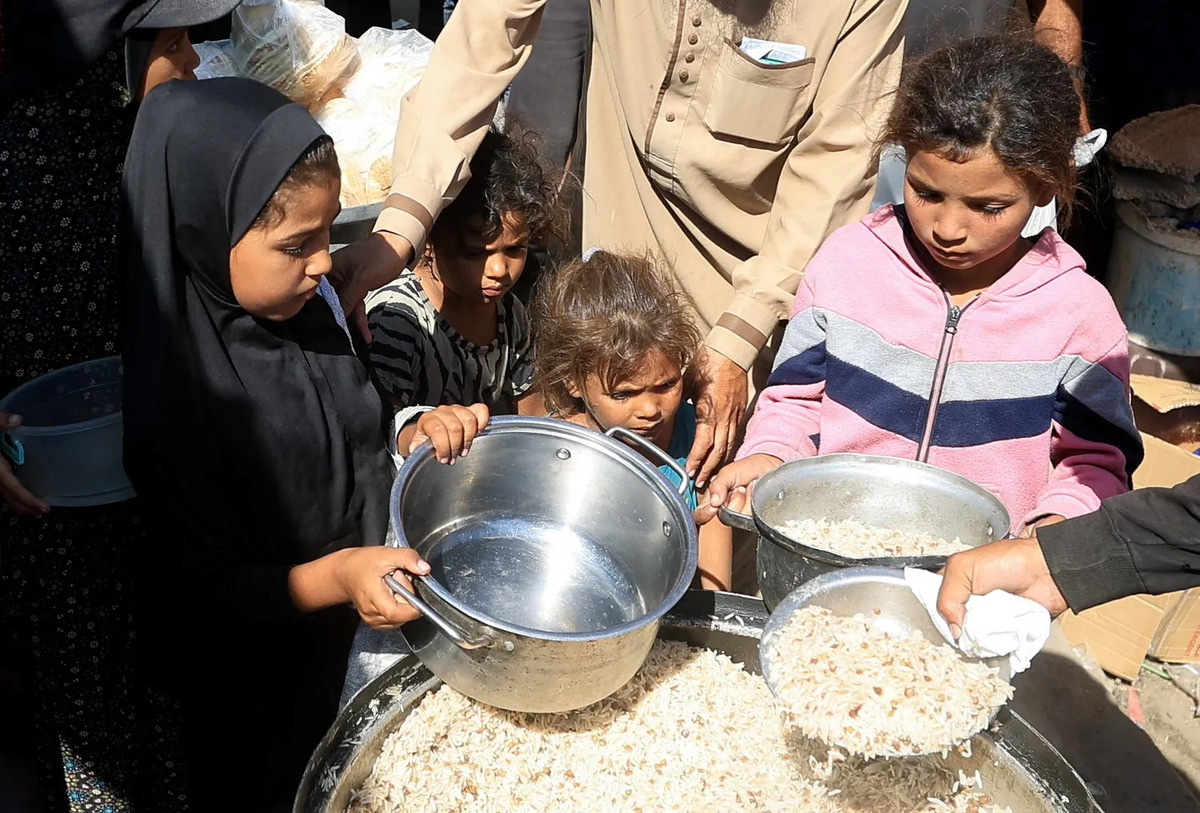
Jakob Silvers, the special representative of the UN Development Programme's director-general in the Palestinian territories, painted a grim picture of the situation in the Gaza Strip following the implementation of the ceasefire agreement, emphasizing that what he witnessed during his recent visit reflects an unprecedented level of destruction and human suffering.
Silvers described the Strip as "the most devastated place on Earth," noting that the scenes of rubble scattered everywhere embody the magnitude of the disaster that has befallen civilians.
He explained that residents are searching through the debris for remnants of their belongings, while children stand in long lines to obtain food and water.
He confirmed that the people of Gaza are facing enormous humanitarian challenges related to securing shelter, food, and water, while the United Nations estimates the accumulated rubble in the Strip to be about 25 million tons, which must be removed before any reconstruction efforts can begin.
Despite this difficult reality, the UN official stressed that the residents "are still trying to return to their normal lives," adding that the spirit of resilience he sensed during his visit instills hope for the possibility of recovery despite the magnitude of the losses.
He clarified that the health and environmental situation in the Strip is "extremely difficult," noting that he visited waste disposal facilities in the central area and found that they operate under harsh conditions, amid fears of disease outbreaks due to the weak sanitation and public health infrastructure.
He added that tens of thousands of families live in overcrowded places that do not meet appropriate health standards, exacerbating water and sanitation problems and increasing the suffering of residents amid weak food and medical supplies.
Silvers spoke about the environmental challenges facing Gaza, pointing out that the accumulation of waste and the lack of effective resource management pose an additional threat to the population, especially with limited access to electricity and safe drinking water.
Regarding humanitarian aid, he explained that the quantities reaching the Strip "do not match the enormous needs," noting that the restrictions imposed on the types and quantities of materials entering Gaza directly affect recovery efforts.
He indicated that the United Nations and humanitarian organizations are doing their utmost to meet the urgent needs of the population, but this remains contingent on facilitating the entry of aid through the crossings and lifting the restrictions imposed by the Israeli side.
The government media office in Gaza stated that only 986 aid trucks have entered the Strip since the ceasefire began, out of 6,600 trucks that were supposed to enter by last Monday evening according to the agreement.
He expressed hope that the ceasefire would provide "more stable conditions" that would allow for the intensification and expansion of relief operations to cover various areas of the Strip, affirming the international community's readiness to provide full support to the Palestinians if the appropriate environment is available.
Silvers emphasized the necessity for the ceasefire to be accompanied by practical steps to facilitate the delivery of aid and enable UN institutions to fully perform their tasks, including the rehabilitation of the destroyed vital infrastructure.
He explained that the United Nations is currently working to "increase the volume of aid and services" directed to Gaza, expressing hope that the Israeli authorities would allow for the acceleration of these efforts to alleviate the immense humanitarian suffering experienced by more than two million Palestinians in the Strip.
According to the World Food Programme, nearly one-third of families in the Strip are deprived of meals for consecutive days.
The United Nations Children's Fund (UNICEF) reported that 39% of the Strip's population goes without food for days, and that 320,000 children under the age of 5 are at risk of acute malnutrition.
Additionally, 290,000 children under 5, and 150,000 pregnant and breastfeeding women need nutrition and supplements.
Simultaneously with the genocide it has waged against the Gaza Strip since October 7, 2023, Israel has implemented a systematic starvation policy in the area, resulting in the deaths of 463 Palestinians, including 157 children.
Gaza is the most devastated place on Earth, and the residents are facing enormous humanitarian challenges.
PALESTINE
Tue 21 Oct 2025 2:37 pm - Jerusalem Time
"Ma'ariv": Turkey's inclusion in the Gaza reconstruction plan raises concerns for Israel.
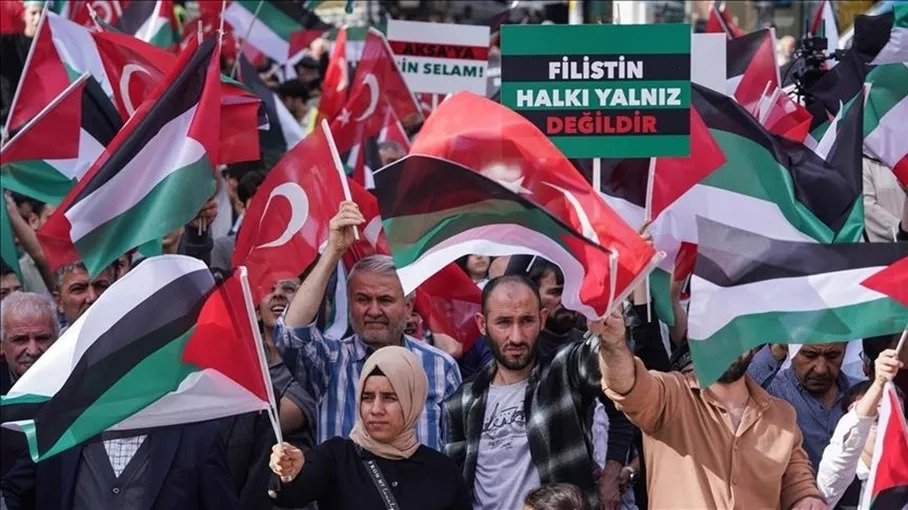
The Hebrew newspaper "Maariv" published an article warning about the rapprochement of Turkish President Recep Tayyip Erdoğan with the occupying state, considering that: "This rapprochement should raise concern in Tel Aviv."
The newspaper clarified that: "Those who dream that the end of the war will end the story with Hamas, and that the twenty-point initiative presented by U.S. President Donald Trump to solve what he called (the Gaza syndrome) will bring a new dawn to the region, can continue to dream."
Maariv pointed out that: "Incorporating Turkey into the plan to solve the Gaza crisis raises fears in Israel," stating that "Erdoğan is indeed favored by Trump and has significant influence over Hamas, but from Israel's perspective, the introduction of a Turkish foot in Gaza, just meters from the borders of the State of Israel, is a cause for concern."
It added that: "This 'Turkish integration' in solving what he called the Gaza syndrome 'will bring us back to the days of the Turkish invasion'," referring to the Ottoman rule of Palestine that lasted for 400 years.
It emphasized that solidifying Turkey's presence on Israel's borders "requires sounding the alarm," justifying this by stating that Ankara is known for its support of Hamas and has maintained close relations with it for years, with some of its leaders residing in Turkey and receiving support and assistance at all levels.
According to the article, Turkey's participation in the reconstruction of Gaza and managing its affairs "will allow Hamas to maintain its political and military strength, and its status as the absolute ruler of the sector," which will lead to "the exacerbation of the historical competition between Turkey and Egypt, and may negatively affect Israeli-Egyptian relations, especially in areas of military and security cooperation."
The newspaper viewed that: "Turkey, as a key player in the reconstruction of Gaza and organizing life there, will exploit this to enhance its influence in the sector," adding that: "This will ultimately turn Gaza into a Turkish sphere of influence, which could destabilize the region."
The article indicated that Ankara "has the ability to rehabilitate Gaza quickly and efficiently thanks to its expertise in supplies and humanitarian aid, and the massive construction and development companies it owns, enabling it to implement large-scale reconstruction projects and acquire most of them."
The article also noted that: "Turkey will seek to expand its influence by building an airport and a seaport to serve the residents of Gaza, which will provide thousands of job opportunities and grant it unprecedented influence in the sector," adding that: "This influence will intersect with Qatari support in Gaza as part of the reconstruction plan, which will strengthen Hamas and represent a strategic breakthrough for Turkey just minutes from the borders of Israel."
The writer questioned at the end of his article in "Maariv" whether these developments "oblige Israel to strongly oppose Turkey's participation in the plan," noting that "so far, after more than two weeks since Trump presented the plan, no reservations or opposition have been heard from Prime Minister Benjamin Netanyahu regarding Erdoğan and Turkey's cooperation, even though he knows the facts presented better than anyone else."
The introduction of a Turkish foot in Gaza, just meters from the borders of the State of Israel, is a cause for concern.
PALESTINE
Tue 21 Oct 2025 2:10 pm - Jerusalem Time
Israel kills 20,000 Palestinian students in Gaza and the West Bank during the genocide war.
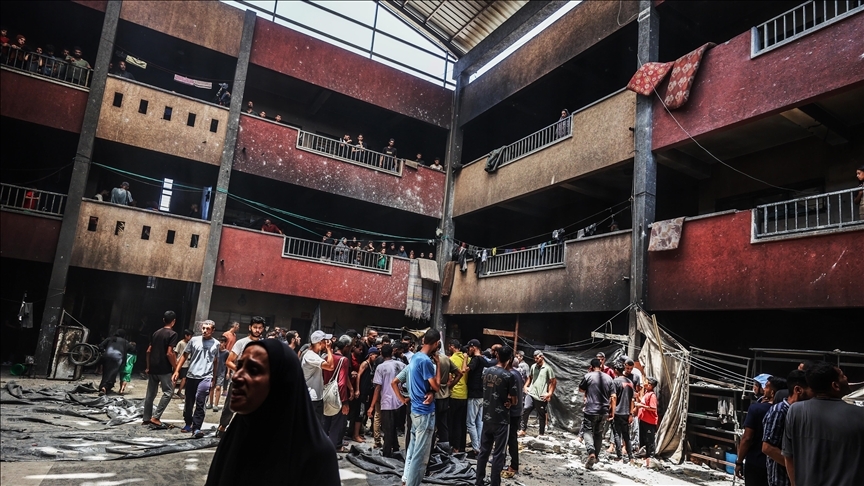
The Palestinian Ministry of Education announced on Tuesday the death of 20,000 students and the injury of 31,000 others since the start of the Israeli war on the Gaza Strip and the West Bank in October 2023.
The ministry clarified in a statement that the number of martyrs among students reached 20,058, including 19,910 in the Gaza Strip and 148 in the West Bank.
It also indicated that the number of injured students reached 31,139, of whom 30,097 were in Gaza and 1,042 in the West Bank.
The ministry added that 1,037 teachers and administrative staff were martyred, and 4,740 others were injured, while more than 228 teachers and administrative staff were arrested in the West Bank since the war began.
It mentioned that the Israeli aggression led to the complete destruction of 179 public schools in the Gaza Strip, in addition to the destruction of 63 university buildings, and damage to 118 public schools and more than 100 schools belonging to the United Nations Relief and Works Agency for Palestine Refugees (UNRWA) due to bombing and vandalism.
The Palestinian Ministry of Education pointed out that the Israeli attacks resulted in the complete removal of 30 schools, including their students and teachers, from the official educational record.
In the West Bank, the statement noted that two schools were completely destroyed in both Hebron and Tubas, and 8 universities and colleges were subjected to repeated incursions and vandalism by the occupation forces.
Since October 8, 2023, Israel has launched a genocidal war on the Gaza Strip that lasted for two years, with American support, resulting in the death of 68,216 Palestinians and the injury of 170,361 others, in addition to the destruction of about 90 percent of the civilian infrastructure in the sector.
The occupied West Bank also witnessed a wide escalation in assaults during the same period, resulting in the death of at least 1,056 Palestinians, the injury of about 10,000 others, and the arrest of more than 20,000 citizens, including 1,600 children.
The Israeli aggression led to the complete destruction of 179 public schools in the Gaza Strip.
PALESTINE
Tue 21 Oct 2025 1:59 pm - Jerusalem Time
The head of Egyptian intelligence visits Tel Aviv to discuss the consolidation of the ceasefire and the "Trump proposal."
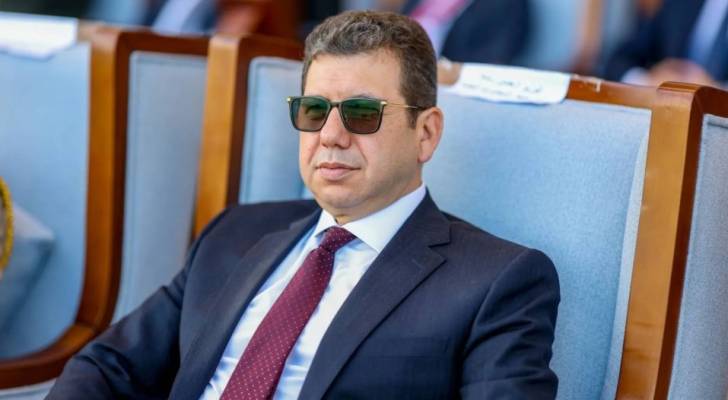
The head of the Egyptian General Intelligence, Major General Hassan Rashad, arrives in Tel Aviv on an official visit aimed at discussing the consolidation of the ceasefire in the Gaza Strip and preventing any violations that could lead to a new military escalation.
The channel clarified that Rashad will meet with officials in the occupying entity to discuss the latest developments on the ground, political, and humanitarian issues in Gaza, in addition to ways to facilitate the entry of humanitarian aid into the region.
The visit also aims to overcome obstacles to implementing the Trump proposal, which was presented by U.S. President Donald Trump to achieve temporary stability in Gaza and ensure compliance with the ceasefire conditions by all parties.
Egyptian and Hebrew sources reported that Rashad met with Israeli Prime Minister Benjamin Netanyahu and discussed with him the details of the Trump plan, including military, humanitarian, and political issues related to the region.
He is also expected to meet with the U.S. envoy to the Middle East, Steve Wittekov, to follow up on the practical steps for implementing the American proposal and facilitating the delivery of aid.
The discussions address the commitment of all parties to the ceasefire in all affected areas, in addition to studying guarantees to facilitate the arrival of humanitarian aid.
The consultations include specific mechanisms to monitor compliance with the truce and ensure the balanced participation of all parties in the humanitarian and political process.
The visit aims to overcome obstacles to implementing the Trump proposal and achieving temporary stability in Gaza.
PALESTINE
Tue 21 Oct 2025 1:52 pm - Jerusalem Time
Trump's deputy arrives in Israel and diplomatic efforts to solidify the ceasefire in Gaza.
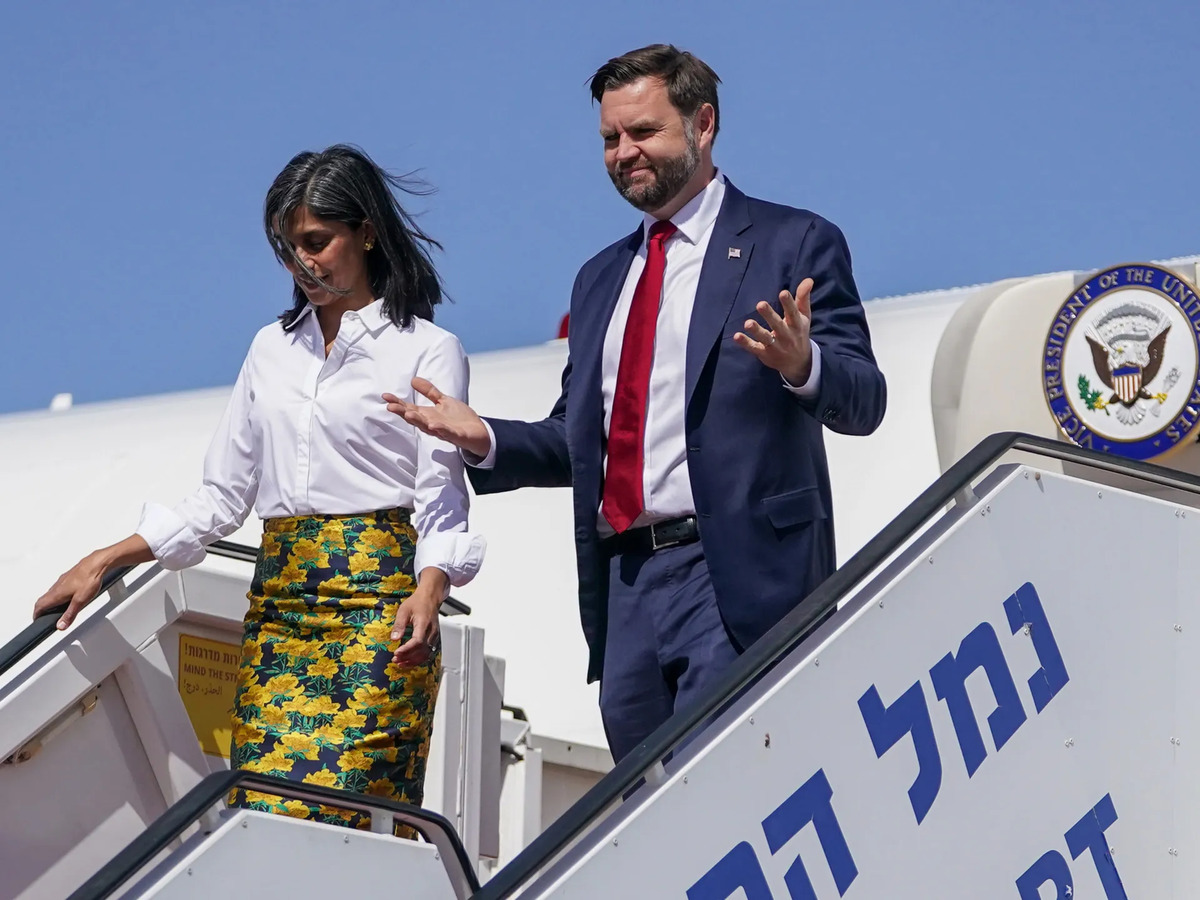
U.S. Vice President J.D. Vance arrived in Israel today, Tuesday, for a two-day visit to discuss solidifying the ceasefire agreement between Israel and Hamas in the Gaza Strip.
This visit comes a day after U.S. Middle East envoy Steve Witkoff and President Donald Trump's son-in-law Jared Kushner arrived in Tel Aviv, where they met with Israelis who were released as part of a prisoner exchange agreement facilitated by the United States, Egypt, Qatar, and Turkey.
In a related context, the Cairo News Channel reported that the head of Egypt's General Intelligence Service, Abbas Kamel, will head to Israel today to discuss mechanisms for solidifying the ceasefire and ensuring the implementation of the exchange agreement's terms.
The families of the Israeli prisoners stated in a statement that Witkoff and Kushner met in Tel Aviv with nine survivors who were released last week after more than two years of detention in Gaza, noting that the meeting addressed ways to recover the remaining bodies of the prisoners.
The statement added that the former prisoners thanked the U.S. officials for their "pivotal role in concluding the agreement" and expressed their gratitude to President Donald Trump for placing the issue of their release "at the top of his priorities."
Witkoff confirmed, according to the statement, the United States' commitment "to continue efforts until all remaining prisoners' bodies are recovered."
Hamas had released 20 living Israeli prisoners on October 13 in exchange for the release of about 2,000 Palestinian prisoners from Israeli jails, in addition to halting the genocide in Gaza, which erupted on October 7, 2023, resulting in over 68,000 deaths and 229,000 injuries, most of whom are women and children, and the destruction of about 90% of the civilian infrastructure in the region.
Since then, Israel has announced the receipt of 14 bodies of Israeli prisoners, while the movement claims it needs "time and special equipment" to extract the remaining bodies from under the rubble.
The United States is committed to continuing efforts until all remaining prisoners' bodies are recovered.
PALESTINE
Tue 21 Oct 2025 1:43 pm - Jerusalem Time
The Times: Israeli prisons are creating a generation of Hamas leaders
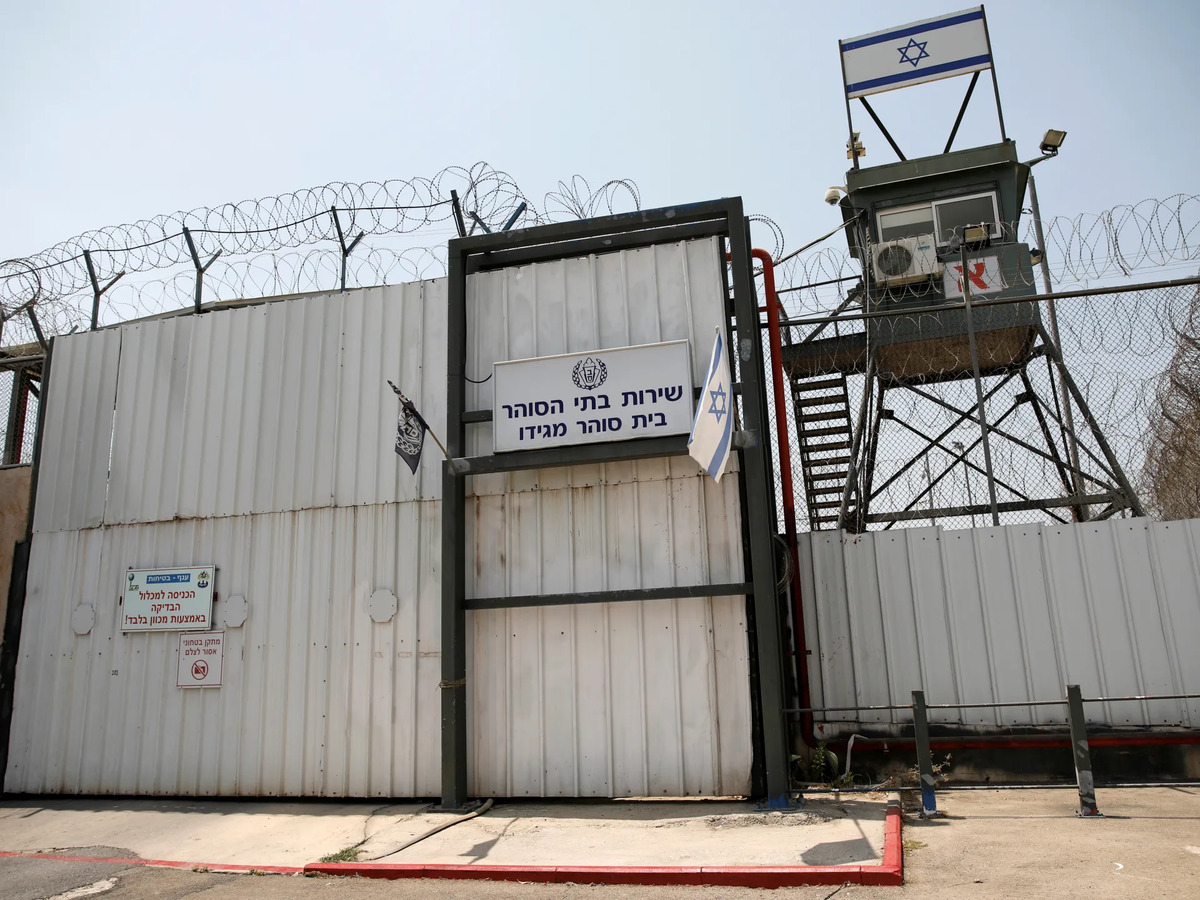
A report revealed that Israeli prisons played a pivotal role in shaping and forming a generation of Hamas leaders, most notably Yahya Sinwar, who spent more than 20 years in captivity.
Sinwar emerged from 'Hadarim' prison armed with a deep understanding of his adversary, having learned Hebrew and studied Jewish history.
Israel has long pursued an approach of unequal deals for prisoner exchanges, making the abduction of Israelis an effective leverage tool in the hands of Palestinian factions.
Similar experiences affected other leaders such as Sheikh Ahmed Yassin and Ismail Haniyeh, causing Israel to fear repeating the same mistake.
UN reports have documented cases of torture and sexual assaults within prisons, while Israel denies the violations and asserts its commitment to international law.
Tel Aviv released 1,700 Palestinian detainees in the recent ceasefire deal, raising concerns about their reorganization away from Israeli oversight.
The prisons that Israel intended to be a means of deterrence have turned into incubators for the formation of Hamas leaders.
PALESTINE
Tue 21 Oct 2025 1:29 pm - Jerusalem Time
Hind Rajab Foundation submits a file to the International Criminal Court demanding the arrest of 24 soldiers and commanders from the occupation.

The Hind Rajab Foundation submitted an official file to the International Criminal Court in The Hague on Tuesday, October 21, 2025, under Article 15, documenting the details of the crime that led to the death of the girl Hind Rajab, and calling for immediate judicial action against those responsible, including soldiers and leaders of the occupation.
The foundation's statement clarified that the file consists of 120 detailed pages, identifying the responsibility of 24 soldiers and leaders of the occupation for the crime, in addition to six members of the victim's family and Red Crescent paramedics who were targeted while attempting to save the girl.
The foundation confirmed that the file outlines the direct role of each individual and soldier in committing the crime, providing evidence, documents, and testimonies that prove their involvement, emphasizing that the goal is to pursue the perpetrators judicially and ensure they do not escape punishment.
The foundation called on the International Criminal Court to issue immediate arrest warrants for the 24 soldiers and leaders listed in the file, considering this a necessary step to achieve justice for the girl and her family, and to protect civilians from future violations.
The foundation also urged the expansion of the judicial investigation to include specific military units of the occupation, pointing to: "The Empire of Vampire Commandos," the 52nd Armored Battalion, and the 401st Armored Brigade, asserting that these units played a role in executing the crime.
The foundation noted that the purpose of submitting the file is to achieve justice for the victims and hold accountable those responsible for gross violations of international humanitarian law, especially regarding the protection of civilians, children, and paramedics during armed conflicts.
The "Hind Rajab Foundation" confirmed that it will follow up on the case with the international court and will provide any additional documents or witnesses that prove the involvement of more individuals or military units in the crime.
The foundation highlighted that the file includes precise and comprehensive documentation of the dates, locations, and circumstances in which the crime occurred, in addition to eyewitness testimonies, photos, and videos documenting the violations, aiming to present a complete file that leaves no legal gaps before the international court.
The foundation concluded its statement by emphasizing that this file represents a call to the international community to ensure accountability for the perpetrators of crimes, sending a clear message that children, civilians, and paramedics are protected under international law, and that any violation will be pursued judicially, no matter how long it takes.
This file represents a call to the international community to ensure accountability for the perpetrators of crimes.
PALESTINE
Tue 21 Oct 2025 12:13 pm - Jerusalem Time
NYT: American concerns about the possibility of Netanyahu withdrawing from the Gaza agreement
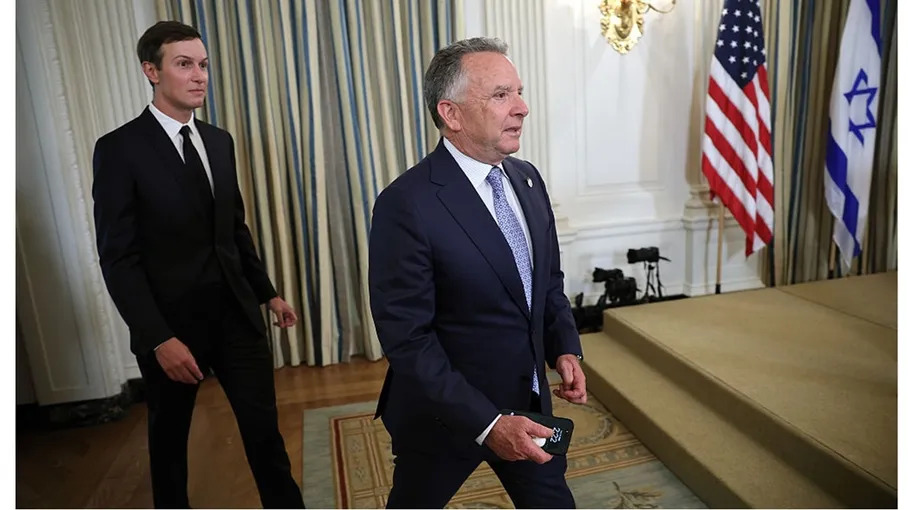
The American newspaper "The New York Times" revealed, citing officials in the White House, that there is concern within President Donald Trump's administration about the possibility of Israeli Prime Minister Benjamin Netanyahu withdrawing from the ceasefire agreement in Gaza.
The newspaper stated that "the current strategy is the attempt by Vice President Trump, Steve Witkoff, and Jared Kushner to prevent Netanyahu from resuming the war."
The New York Times quoted a White House official as saying that Trump currently believes that Hamas leaders are willing to continue negotiations in good faith, and that the attack on the soldiers was carried out by elements not adhering to the movement's instructions.
The newspaper also quoted a senior American official saying that Witkoff and Jared Kushner acknowledge that the situation is extremely sensitive, and that the Gaza agreement is at risk of collapsing.
American envoys Steve Witkoff and Jared Kushner arrived in Israeli-occupied territory on Monday morning, on the eve of the arrival of U.S. Vice President J.D. Vance, a day after intensive Israeli airstrikes on the Gaza Strip, following Israeli accusations against Hamas of violating the agreement.
Witkoff and Kushner discussed on Monday with Israeli military officials ways to maintain the ceasefire agreement in Gaza and implement its second phase.
The Hebrew newspaper "Yedioth Ahronoth" reported that the meeting held at the Israeli Ministry of Defense brought together the envoys, the head of the military intelligence division (Aman) Shlomi Binder, and the head of the planning division in the army Eyal Harel, discussing "intelligence issues and decisions related to the day after in Gaza."
The newspaper quoted unnamed Israeli security sources saying that the American delegation was keen during the meeting to "plug the gaps" in preparation for the second phase of the agreement, which includes the entry of foreign forces and the disarmament of Palestinian factions.
On October 10, the ceasefire agreement between Hamas and the occupation came into effect, based on Trump's plan which, in addition to ending the war, involves a gradual withdrawal of the Israeli occupation army, mutual release of prisoners, and immediate entry of aid into the sector.
Yedioth described the meeting as positive, noting that the Israeli delegation expressed concern "about the fate of the strategic tunnels that still exist in large parts of the sector, and demanded that the international force ensure their destruction or sealing," according to the same source.
The second phase of Trump's plan to end the war in Gaza includes the deployment of an international peacekeeping force in the sector, the withdrawal of the Israeli occupation army, and the disarmament of Hamas.
Trump believes that Hamas leaders are willing to continue negotiations in good faith.
LATEST NEWS
Tue 21 Oct 2025 10:51 am - Jerusalem Time
The number of dead among the prisoner movement has risen to 80 since the beginning of the genocide war.
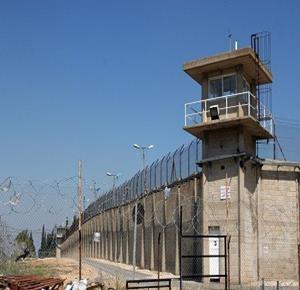
The Prisoners' Club stated that the number of martyrs among the ranks of prisoners and detainees whose identities are known since the beginning of the genocide in the Gaza Strip has risen to (80) martyrs, including at least (47) martyrs from Gaza, following the announcement of the martyrdom of detainee Kamel Al-Ajrami from Gaza yesterday.
It reported in a statement issued today, Tuesday, that the number of martyrs among the ranks of prisoners and detainees whose identities are known since 1967 has risen to (317), based on what institutions have been able to document over the decades. It is noteworthy that in light of the genocide, there are reports of dozens of detainees who have been executed in the field after their arrest, specifically from Gaza.
It pointed out that the occupation continues to hold the bodies of (88) martyrs from the prisoners' movement, of whom (77) have been held since the beginning of the genocide, while dozens of martyrs from Gaza detainees remain subjected to enforced disappearance.
The Prisoners' Club emphasized that the prisoners' movement has not witnessed a bloody phase in its history as it is experiencing today since the outbreak of the war, due to the systematic killings practiced by the prison system against the prisoners, at a time when the extremist Israeli National Security Minister "Ben Gvir" continues his calls for the enactment of a law to execute prisoners.
The prisoners' movement has not witnessed a bloody phase in its history as it is experiencing today.
PALESTINE
Tue 21 Oct 2025 10:49 am - Jerusalem Time
Gaza Government: 986 aid trucks have entered the sector since the ceasefire began.
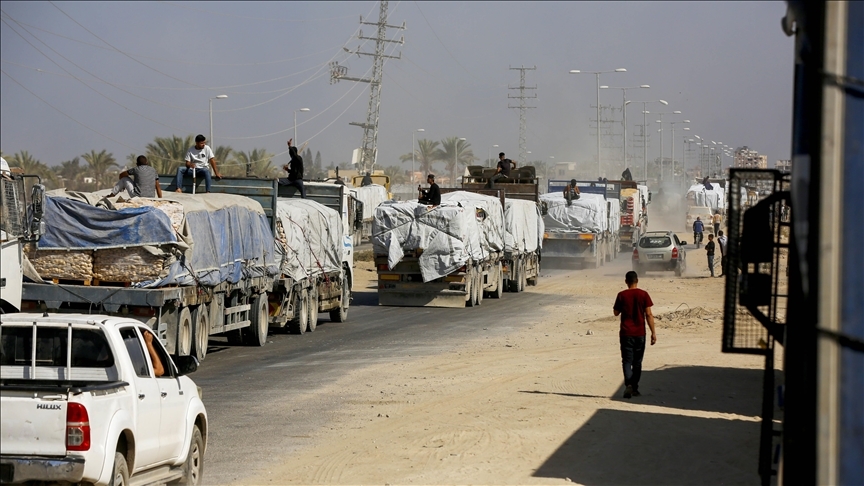
The "Gaza Government" stated on Tuesday that only 986 aid trucks have entered the sector since the ceasefire with Israel came into effect, out of a total of 6,600 trucks that were supposed to enter by Monday evening according to the agreement.
The government media office confirmed in a statement that "the total number of humanitarian aid trucks that have entered the Gaza Strip since the ceasefire took effect is only 986 trucks out of 6,600 trucks that were supposed to enter by Monday evening, October 20, 2025, according to the terms of the agreement."
It added that "the average number of trucks entering the sector daily since the ceasefire took effect does not exceed 89 trucks, out of 600 trucks that are supposed to enter daily."
The government office viewed this as "reflecting the continued policy of suffocation, starvation, and humanitarian blackmail practiced by the occupation against more than 2.4 million citizens in Gaza."
It reflects the continued policy of suffocation, starvation, and humanitarian blackmail practiced by the occupation against more than 2.4 million citizens in Gaza.
PALESTINE
Tue 21 Oct 2025 10:47 am - Jerusalem Time
"Leaked" document includes the names of 30,000 Israeli soldiers involved in the genocide of Gaza.
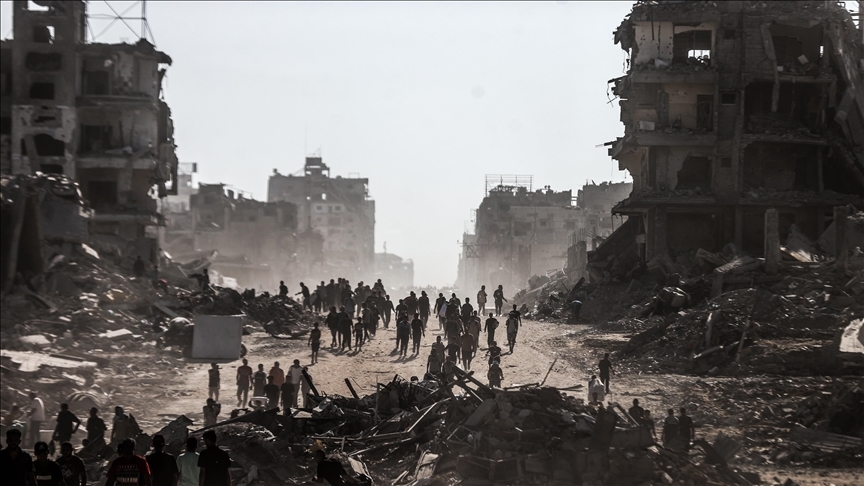
An investigation broadcast by a channel revealed a leaked document containing the names of 30,000 Israeli soldiers involved in the genocide in the Gaza Strip.
The program "What is Hidden is Greater," hosted by journalist Tamer Al-Mashtal, showcased this document on screen, stating that it is leaked and includes the names, addresses, and ranks of 30,000 pilots, soldiers, and technicians in the Israeli Air Force.
Al-Mashtal confirmed in his program that these soldiers are "engaged in the war on Gaza, and their airstrikes have claimed the lives of tens of thousands of civilians in the sector."
Israel began a genocide in the Gaza Strip on October 8, 2023, with American support, which lasted for two years, resulting in the deaths of 68,216 Palestinians, injuring 170,361 others, and destroying 90 percent of the infrastructure in the sector.
This war ended with a ceasefire agreement that came into effect on October 10, but Tel Aviv violated it 80 times.
The agreement was based on a plan by U.S. President Donald Trump that, alongside ending the war, called for a gradual withdrawal of the Israeli army, mutual release of prisoners, and immediate entry of aid into the sector.
These soldiers are engaged in the war on Gaza, and their airstrikes have claimed the lives of tens of thousands of civilians.
PALESTINE
Tue 21 Oct 2025 10:11 am - Jerusalem Time
Intensive Israeli airstrikes in Gaza.. A sign of collapse or the establishment of equations?
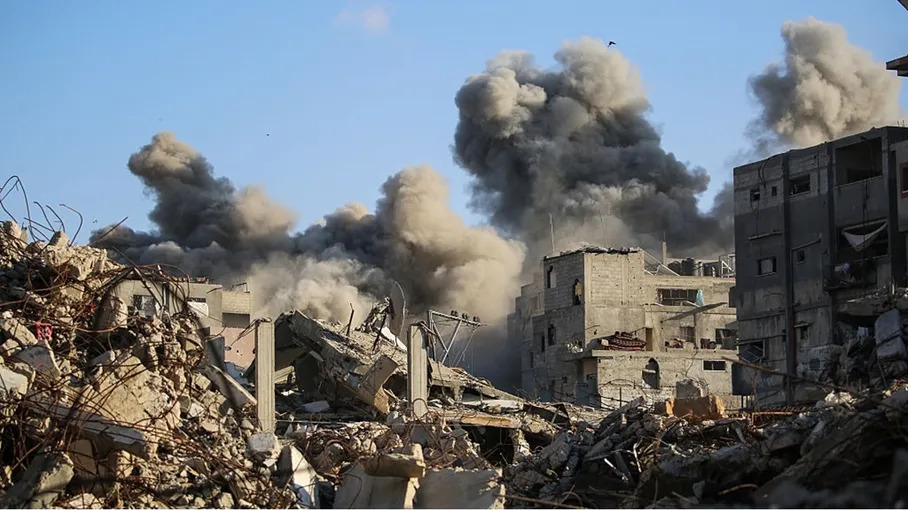
The intensive Israeli airstrikes carried out by the occupation army last Sunday in various areas of the Gaza Strip, resulting in dozens of martyrs and injuries, have raised fears of a potential collapse of the ceasefire agreement and the return of the specter of war to the Strip, which has endured a war of extermination for two years.
Observers believe that the scale of the Israeli bombardment exceeds claims of "responding to what happened in Rafah," which remains under complete control of the occupation army, especially in light of Hamas's quick efforts to affirm its commitment to the ceasefire agreement, and the arrival of American officials to the region to solidify the agreement.
Political analyst Ibrahim Al-Madhoun explained that the return of intensive Israeli airstrikes to the Gaza Strip last Sunday falls within the context of the occupation's attempts to undermine the ceasefire agreement, believing that "the Palestinian resistance is concerned with solidifying the agreement."
Al-Madhoun added that "the resistance wants to protect its people from the war of extermination that the occupation has waged for two years, and there has been no regional or international capacity to stop it," emphasizing that what the occupation is doing constitutes killing, not fighting.
He noted that the recent Israeli airstrikes aim to establish a new engagement equation that allows for bombardment, killing, and destruction while maintaining a presence in the Gaza Strip, but the resistance will not accept this equation, despite its desire to spare the Palestinian people from a return to extermination.
He pointed out that the arrival of an official Hamas delegation to Cairo is part of efforts to mobilize mediators to compel the occupation to adhere to the ceasefire agreement and fulfill its commitments to end the war and prevent its return to Gaza.
In his assessment of the possibility of a return to war, writer and political analyst Wissam Afifa ruled out this scenario, stating: "All indicators and assessments confirm that Trump's plan aims to end the war and not just to implement the first phase of the plan."
Afifa mentioned that "the significant international and regional effort has come to end the war, and even on the Israeli side, Netanyahu is conveying to the Israeli public and his voters that what he has achieved is an accomplishment, and thus this achievement should not turn against him."
He noted that "Trump is celebrating this significant achievement like never before, coming from the White House to the region, elated by this achievement, and it is unreasonable to talk about a major achievement and then turn against it after the first phase."
He emphasized that "the large celebration and political demonstration in Sharm El-Sheikh confirmed the necessity of a ceasefire in Gaza, and all these data confirm that there is a real path to end the war and not just to settle for the first phase of Trump's plan."
According to the "New York Times," the White House is working to maintain the stability of the peace agreement in Gaza, amid growing fears that Israeli Prime Minister Benjamin Netanyahu may dismantle the agreement brokered by the U.S. administration.
In this context, the Hebrew newspaper "Yedioth Ahronoth" reported that U.S. President's envoys Steve Witkoff and Jared Kushner discussed with Israeli military officials ways to maintain the ceasefire agreement in Gaza and implement its second phase.
The newspaper noted that the meeting held at the Israeli Ministry of Defense brought together the American envoys, the head of the military intelligence division "Aman," Shlomi Bender, and the head of the planning division in the army, Eyal Hareli, to discuss intelligence matters and decisions related to the next day in Gaza.
The newspaper quoted unnamed Israeli security sources stating that the American delegation was keen during the meeting to "plug the gaps" in preparation for the second phase of the agreement, which includes the introduction of a foreign force and the disarmament of Palestinian factions.
For its part, the "Times" reported that senior officials indicated that Witkoff and Kushner realize that the situation is "extremely sensitive," and that the agreement they brokered may collapse, so their current goal is to stabilize the region, ensure the delivery of humanitarian aid to Gaza, and recover the bodies of Israeli prisoners.
The newspaper pointed out that Witkoff and Kushner are also addressing issues that remained open in the original agreement, such as establishing a stabilization force led by Egypt and starting the process of disarming Hamas, which has not yet been given a timeline, as confirmed by Trump, who stated last Sunday that "there is no definitive timeline" for disarming Hamas.
Trump emphasized that the implementation of the ceasefire agreement in Gaza depends on the developments in the field and political situations during the upcoming phase,
OPINIONS
Tue 21 Oct 2025 9:41 am - Jerusalem Time
Dividing Gaza .. a step towards entrenching division and serving the occupation project
Abdul Rahim Jamous
Opinion Writer
The Israeli occupation army has officially begun to divide the Gaza Strip into two parts: Eastern Gaza, which is under its direct control and represents about 58% of the area of the strip, and Western Gaza, controlled by Hamas, which constitutes approximately 42% of the remaining area. The occupation has warned civilians against crossing the yellow separation lines drawn on the ground, threatening to kill anyone who approaches them, in a move that reveals a dangerous shift in the management of aggression and its political outcomes.
This field division cannot be viewed as a temporary military measure; rather, it is an actual implementation of part of a broader political plan aimed at reshaping Palestinian geography, in line with what was stated in the "Deal of the Century" and plans to rearrange the region. The occupation has not only destroyed the infrastructure of the strip and displaced its residents, but it is now seeking to re-engineer the reality of Gaza in a way that ensures its security and economic control over it on one hand, and perpetuates the state of Palestinian division on the other.
What is happening today seems to be a practical application of the "dual administration" model that keeps Gaza divided between two conflicting authorities:
The authority of the occupation that holds the field, controls the borders, corridors, and resources, and the authority of the de facto situation that continues to manage what remains of the strip, politically and geographically besieged, without a horizon or genuine national legitimacy.
The painful irony is that those who raised the slogan of "liberating and unifying Jerusalem" have contributed – consciously or unconsciously – to the division of Gaza itself, making Jerusalem further away, Gaza smaller, and Palestine more divided and weakened. With this transformation, the slogan turns into a retreat from the unifying national goal, and the occupation becomes the sole beneficiary of the continuation of this destructive division.
The current division of the strip constitutes a dangerous precedent that threatens to turn it into two contradictory entities in terms of system, administration, and loyalty, one subject to Israeli hegemony and possibly to subsequent international oversight, and the other mired in its internal crises. This means that the strip is heading towards a long phase of geographical and political separation, the effects of which may extend to the entire Palestinian scene.
What is happening today imposes on the Palestinian leadership, with all its factions and forces, to reconsider its priorities. What is required is not to manage the division or adapt to it, but to restore national unity based on a comprehensive liberation project that returns the Palestinian cause to its centrality and legitimacy, and prevents Gaza from becoming a double-walled prison: from the outside by the occupation, and from the inside by division.
It is time for the Palestinian to rise from the ashes of pain, like the phoenix, not to soar in the space of division, but in the sky of Jerusalem, freedom, and dignity. The homeland is not restored by slogans or division, but by the unity of will, purpose, and destiny.
OPINIONS
Tue 21 Oct 2025 9:36 am - Jerusalem Time
Netanyahu's government on the sickbed
Amin Al-Hajj
Opinion Writer

As the date of Netanyahu's trial approaches, the world trembles, as if the fate of the planet hangs on his fluctuating pulse. A war erupts here, a crisis explodes there, Netanyahu enters the hospital with a mysterious ailment, rearranging the scene anew. No one knows if he is truly ill or if illness has become another form of governance, but what is certain is that the body has turned into a political tool, and illness has become a weapon to freeze "justice," numb the streets, and prolong a regime that feeds on delay and fear.
The Hebrew newspapers themselves have begun to whisper harsh expressions; one suggested he might be suffering from "Munchausen syndrome," named after a German officer known for adding sensational details to his life. This psychological disorder causes its owner to feign illness to elicit sympathy and escape confrontation. In the case of this man, illness seems to be a recurring strategy rather than a mere incident; every time a court session approaches, a health emergency arises, thus turning the body into a political shield, and time into an ally, while what is called justice gasps behind a septuagenarian who knows how to create chaos to remain in the scene.
But what lies beyond the individual is the structure that allows this to happen: the occupying state itself, which has built its legend on superiority and discipline, is today revealed as a body afflicted with the same frailty; a political system living on the edge of representation and denial, fearing confrontation, justifying every deviation in the name of "existential danger." Here, the illness of the head of the regime becomes a metaphor for the illness of the system, just as war becomes a temporary remedy for a legitimacy crisis.
The judicial system in the occupying state, which the West presents as a model of democracy, is nothing but a facade for an authority based on structural discrimination and systematic repression. The occupying courts that claim to hold the corrupt accountable are the same ones that issue daily unjust rulings against dozens of Palestinians, without charges or fair trials, while they slow down in the face of their leader's corruption, legitimizing land theft, house demolitions, and the killing of Palestinians under a fabricated legal cover, in a precise engineering of injustice and tyranny, blurring the lines between law and force, and making justice a tool to conceal the features of crime rather than reveal them.
In contrast, the global scene seems to participate in the play; every delay is met with a new disturbance, as if the man, every time he is summoned, conjures a crisis that occupies everyone, to the point that it has become a characteristic of many contemporary leaders, where illness is borrowed from the body to the system, and from the individual to the world.
In reality, this scene cannot be separated from the moment of the great decline of a power that has lost its moral legitimacy. Netanyahu is not just a politician manipulating the law, but an embodiment of an era that has lost its moral compass, where truth turns into a well-crafted lie, and illusion becomes an art of governance. He understands that survival today relies not only on power but also on the ability to manage illusion and tame consciousness.
His trial may not end soon, as its continuation serves many; the judiciary that impersonates independence to hide its dependency, the opposition that feeds on anger, and the world that finds in chaos a justification for more false balances. However, what no one will be able to delay is the collapse of the structure that has turned lying into a skill, illness into a trick, and war into bloody salvation.
In the end, Netanyahu is not only escaping from the court but also from his own reflection. When he is tried, the occupying state is tried alongside him, and when he falls ill, the system he created becomes unbalanced. But his real illness is his fear of a moment when wars and crises cannot delay the truth, and when the dependent judiciary cannot save him from the justice of history, which comes slowly but never misses its target.
PALESTINE
Tue 21 Oct 2025 9:24 am - Jerusalem Time
Violation of the agreement.. Trump sets the pace and will not allow the return of war.

Dr. Hussein Al-Daik: The ceasefire agreement will continue despite obstacles, with the possibility of significant amendments and delays in its implementation
Talal Awkal: Trump will not allow his plan to collapse or return to a wide-scale war, based on his vision of American interests which he prioritizes absolutely
Dr. Suhail Diab: What can be expected in the upcoming phase is the continuation of a "tense calm" until the Israeli elections are over, without a return to genocide
Yasser Manaa: The next phase may witness partial arrangements related to the administration of the sector under American and Arab sponsorship, with limited Israeli and Palestinian approval
Mohammed Abu Alan Draghmeh: Netanyahu seeks to change the nature of military operations without fully ending the war, exploiting any opportunities to achieve military objectives
Attention is once again directed to the ceasefire agreement in Gaza following the new Israeli escalation, and the maneuvers being carried out by the Israeli occupation government leader.
Writers, political analysts, and specialists, in separate conversations with "Y", believe that the agreement, which came under American pressure, reflects Washington's need for a quick calm that aligns with its internal calculations, especially with the upcoming electoral deadlines, while Israeli Prime Minister Benjamin Netanyahu seeks to prolong the first phase of the agreement, avoiding the obligations of the subsequent phases, in an attempt to leverage the file in his upcoming electoral battle. However, the field reality, according to writers, analysts, and specialists, reveals the fragility of the understandings, with hundreds of violations of the agreement recorded, suggesting that the crisis is being postponed rather than resolved.
Writers and analysts believe that Gaza's future remains a battleground between two conflicting visions: the first calls for American-British guardianship under the umbrella of a "Peace Council," while the second seeks a Palestinian technocratic administration supported by Arab and international backing.
Netanyahu seeks to buy more time and maneuver
The writer and political analyst specializing in American affairs and international relations, Dr. Hussein Al-Daik, confirms that Israeli Prime Minister Benjamin Netanyahu was compelled and forced to sign the recent ceasefire agreement, as his main goal was to gain more time and political maneuvering with the American administration.
Al-Daik explains that the American move to force Netanyahu into the agreement came after several international factors, including the Israeli military strike in the Qatari capital Doha, European recognition of the Palestinian state, and the scene at the United Nations General Assembly where delegations left without listening to Netanyahu's speech, prompting the American administration to act.
Al-Daik points out that the agreement aimed to return Israel to the Western European fold and support Netanyahu's political position.
He notes that a return to large-scale fighting is unlikely, but the war has not actually stopped; it has not ended, but it will not return as it was during the past two years, as violations continue daily, with civilian casualties.
He confirms that the tools of war have changed, and that its continuation falls within the framework of the new American adaptation to the vision of the Middle East, which does not allow for a return to comprehensive war in Gaza.
Al-Daik points out that the Lebanese model likely to be applied to Gaza will impose harsher tools, with the Israeli army controlling about 52% of the sector's area, and drawing what is known as the yellow line that prevents Palestinians from approaching it, indicating that these areas are sought by Israel to be annexed or left as a buffer zone under Israeli control.
The agreement has been structurally fragile from the beginning
Regarding the second phase of the agreement, Al-Daik clarifies that the agreement has been structurally fragile from the beginning, with a lack of clarity regarding the details of the second phase, especially the issues of governance and disarmament.
He points out that each party's interpretation of these issues is different; the American and Israeli sides view disarmament as a primary goal, while the Palestinian and Arab interpretation is entirely different, which may delay or complicate the implementation of the second phase. Al-Daik notes that the issue of returning the remains of Israeli soldiers may pose a major obstacle to moving to the next phase.
Al-Daik addressed the issue of the technocratic government and law enforcement within Trump's plan, explaining that the arrangements include training about 5,000 to 10,000 Palestinian police officers in the Egyptian capital Cairo, in addition to the presence of international forces to monitor security and disarmament within Gaza, with questions about their nationalities and powers, and whether
PALESTINE
Tue 21 Oct 2025 8:57 am - Jerusalem Time
Israeli request to postpone the reconstruction of Gaza and a pilot model regarding tunnels in Rafah
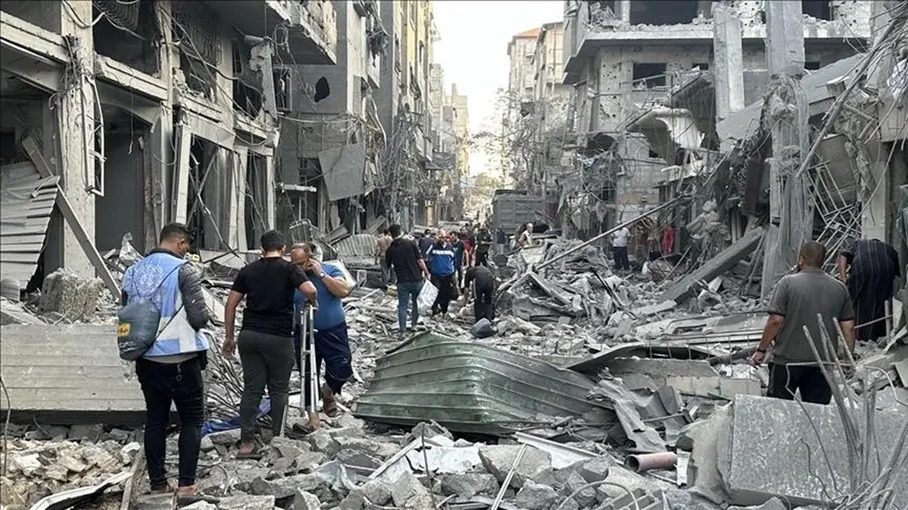
The Israeli Broadcasting Authority revealed that Tel Aviv has requested Washington to postpone the start of the reconstruction of the Gaza Strip, coinciding with discussions about a pilot model regarding tunnels that will be implemented in the city of Rafah.
The authority stated that "Israel asked the United States not to begin the reconstruction of Gaza before demonstrating that Hamas is ready to disarm," noting that "neutralizing the tunnels in Gaza is one of the issues that will be discussed with the U.S. administration led by Donald Trump."
The Israeli authority indicated that the Trump administration wants to start a pilot model regarding the tunnels in Rafah, confirming that Tel Aviv agreed to that.
Meanwhile, U.S. President Donald Trump said on Monday that he would give Hamas "a small chance" to respect the ceasefire agreement in the Gaza Strip with Israel, but he vowed to "eliminate" the movement if it failed to do so.
Trump stated to reporters at the White House during a meeting with Australian Prime Minister Anthony Albanese: "We have reached an agreement with Hamas that ensures their behavior is very good, and if they don't, we will eliminate them. And if we have to, they will be eliminated."
Trump's remarks came at a time when two of his senior envoys met with Israeli Prime Minister Benjamin Netanyahu, after extensive Israeli airstrikes on Sunday threatened to destabilize the ceasefire, which was mediated by the U.S. president about two weeks ago.
Trump mentioned that U.S. forces would not participate in the fighting against Hamas, stating that dozens of countries that agreed to join an international force to maintain stability in Gaza "would be pleased to intervene."
He said: "In addition, Israel will be ready to enter within two minutes if I ask them to."
He continued: "But we haven't said that yet. We will give them a small chance, and we hope there will be less violence. But for now, as you know, they are violent people," he said.
Trump pointed out that "Hamas is now much weaker, especially with the exclusion of Iranian intervention, its regional supporter, following the American and Israeli strikes earlier this year."
Trump: We will give Hamas a small chance to respect the ceasefire agreement, and if they fail, we will eliminate them.