PALESTINE

Fri 24 Oct 2025 11:16 am - Jerusalem Time

An Israeli reading on the Knesset's approval of the "Annexation of the West Bank" law in a

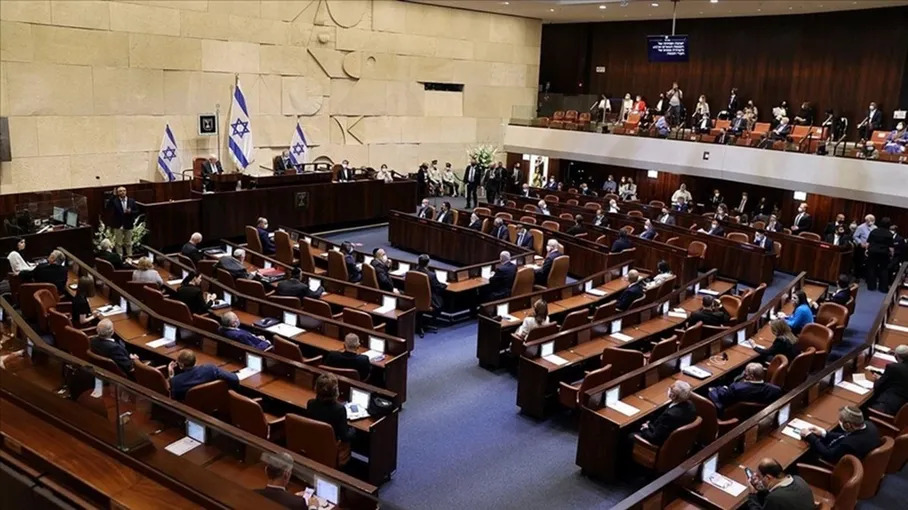
Israeli media highlighted the steps following the Knesset's preliminary approval of the 'Annexation of the West Bank' law, indicating that the prevailing perception is that the implementation of the annexation step is not imminent, whether regarding the settlement of 'Ma'ale Adumim' or the northern Jordan Valley.

Yuval Karni, a writer for Yedioth Ahronoth, mentioned that 'the joy of coalition and opposition members (each for their own reasons) over the approval of annexation laws is considered premature, whether due to the proposal by Avigdor Lieberman, the leader of the opposition Yisrael Beiteinu party, regarding a partial annexation of the Ma'ale Adumim settlement or the Jordan Valley, and certainly not comprehensive sovereignty over the entire West Bank, as proposed by Knesset member Rabbi Avi Maoz from the far-right in the ruling coalition, which heads the religious 'Noam' party.'

He added in an article translated by 'Arabi21' that 'considering this joy as premature is due to the fact that it is a preliminary reading, and the path to the law's approval in the second and third readings is very long, and the coalition can spoil the progress of the law and obstruct the legislative process. But more importantly, there will be no annexation of the West Bank for one main reason: Prime Minister Benjamin Netanyahu will not agree to this step in the face of the entire world, and contrary to the position of the U.S. administration, which forced him to swallow the bitter pill of opposing the law, after he promised right-wing voters in every election to announce the annexation.'

He clarified that 'Netanyahu is embarrassed because he knows that the whole world is pressuring him, and I might well remember the 'dramatic' press conference on the eve of the 2019 elections when he announced that he 'would annex the Jordan Valley and the northern Dead Sea,' but it was a promise that remained ink on paper, which raises questions about what happened in the first winter session of the Knesset with the approval of this law in a preliminary reading, as events revealed that there was an unofficial alliance between wide sectors of the coalition and opposition members aimed at embarrassing Netanyahu during an important diplomatic visit by U.S. Vice President J.D. Vance.'

He pointed out that 'Lieberman presented the bill to corner Netanyahu from the right, and the result is that a number of coalition members supported the bill as an expression of their lack of confidence in him regarding the annexation, and they no longer trust his promises about annexation every time, especially on the eve of elections, even though the Likud's announcement of support for the opposition to the annexation laws appeared ironic when it accused them of leading a campaign aimed at harming our relations with the United States.'

He added that 'the problem is not with the opposition, but with the fact that Netanyahu does not control his coalition and his far-right partners, and therefore I do not think that Likud voters take the claim of blaming the opposition seriously, despite his claims that he will achieve annexation through actions, not words, and through appropriate fieldwork and creating the right political conditions for recognition of that, as happened in the Golan Heights and Jerusalem, even though the last annexation taken by Menachem Begin of the Golan was in 1981, and 44 years have passed, most of which were under Likud leadership, and during Netanyahu's tenure, he has done nothing.

LATEST NEWS

Fri 24 Oct 2025 10:48 am - Jerusalem Time

Colonizers attack olive pickers in Beit Iksa, northwest of Jerusalem.

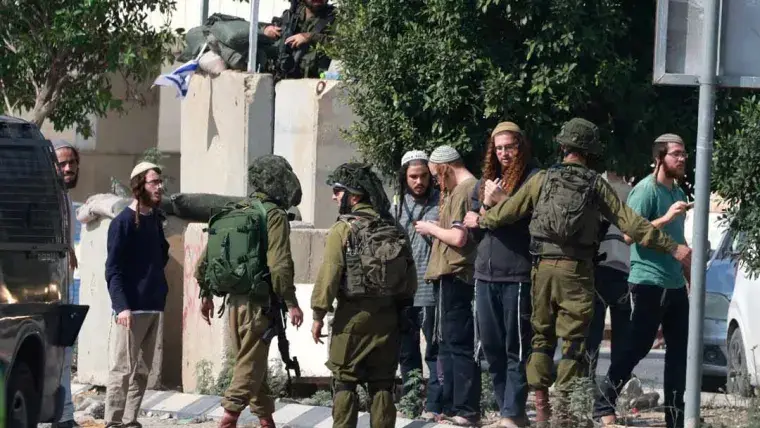
This morning, Friday, settlers attacked farmers while they were harvesting olives in the lands of the village of Beit Iksa, northwest of Jerusalem.

Eyewitnesses reported that a group of settlers from the "Ramot" settlement, which is built on the citizens' lands, attacked several citizens with stones and insults in the area of the city valley, attempting to expel them from their lands, under the protection of Israeli occupation forces.

The witnesses added that the farmers confronted the settlers and continued their work despite the assault, confirming that these attacks occur annually during the olive harvest season, as part of attempts to seize more lands of the village, which is surrounded by the wall and settlements.

The village of Beit Iksa has been subjected to repeated assaults by settlers for years, especially during the olive harvest season, where the occupation often prevents farmers from accessing their lands except with special permits and on specific days, as part of a policy aimed at displacing the population and controlling the agricultural lands adjacent to the "Ramot" settlement and the separation wall.

LATEST NEWS

Fri 24 Oct 2025 10:38 am - Jerusalem Time

Colonizers attack farmers and foreign activists in Kafr Malik, east of Ramallah.

Today, Friday, settlers attacked farmers and foreign activists in the town of Kafr Malik east of Ramallah, preventing them from reaching their lands.

Local sources reported that a group of settlers attacked the farmers along with activists as they were heading to their land in the southern areas near the bypass road and the 'Manateer' area to the east, forcing them to turn back.

According to the Wall and Settlement Resistance Commission, its teams have documented a total of 158 attacks against olive pickers since the beginning of the current season, with the occupation army carrying out 17 attacks, while settlers conducted 141.

PALESTINE

Fri 24 Oct 2025 10:26 am - Jerusalem Time

Israeli writer: The Gaza war created a moral gap between American Jews and Israel

The Israeli writer Daniel Sokatch stated that the current moment is a critical reckoning for many American Jews whose institutions have become morally implicated in the mass killings in Gaza. He questioned the options available to them, as they refuse to defend what happened in Gaza but at the same time do not want to abandon Israel.

He added in an article for Haaretz that Israel has always been at the center of the identity of many liberal American Jews, who have recently felt horror at the extreme and hardline nationalist shift within Israel.

The writer - who is the CEO of the New Israel Fund and author of the book "Can We Talk About Israel? A Guide for the Curious, Confused, and Conflicted" - reminded readers of a poll conducted by the Washington Post earlier, which confirmed that 61% of American Jews say that Israel has committed war crimes in Gaza, and 4 out of 10 - a staggering figure, the writer notes - say that Israel is guilty of committing genocide against the Palestinians.

Sokatch continued that liberal American Jews are shocked that many Israelis, and many of their institutions, are willing to justify the catastrophic destruction of Gaza and the mass killings that occurred there.

According to a survey conducted by the Akkord Center at the Hebrew University - the writer explains - two-thirds of Israelis (64%) believe that there are no innocents in Gaza.

The writer states that this is more than just a political divide; it is a "moral gap."

He emphasizes that this issue is not limited to American Jews; even with a ceasefire in Gaza, Israel is losing international support, as several of its longtime allies have recognized a Palestinian state, and more than half of American adults say they hold a negative view of Israel.

Sokatch spoke about the polarization within Israeli society, stating that "old tribal affiliations" should not be the sole determinant of Israeli identity, but rather new affiliations should be created for a tribe that prioritizes human rights, compassion, and the sanctity of life, regardless of race, religion, or nationality.

The writer urged the necessity of criticizing Israeli institutions for their moral failures, clarifying that this does not mean betrayal or a desire for punishment, but rather a desire to help those institutions find a way out. He continued, "Support for the Israeli government should not be so unconditional."

He affirmed that unbalanced positions are losing their power not only among American Jews but also within the Democratic Party, the political home of the vast majority of Jews.

He stressed that criticism is necessary "because we cannot remain silent in the face of policies that result in the deaths of tens of thousands in Gaza, destroy Israel's international standing, and put Jews around the world at risk."

He stated that if Jews do not act to correct the situation, they are allowing for collapse, adding, "If we act, we affirm that American Jews can love Israel without losing our souls, and that true love requires courage, clarity, and conscience."

PALESTINE

Fri 24 Oct 2025 9:34 am - Jerusalem Time

A new American plan to deliver aid to Gaza after the Gaza Humanitarian Foundation halted operations.

An American official and another in the field of humanitarian relief revealed details of a new American plan under consideration to deliver aid to the Gaza Strip, in a move aimed at transitioning to the second phase of the 'Gaza Agreement.' The proposal aims to find an alternative to the 'Gaza Humanitarian Foundation' supported by the U.S., which has sparked widespread controversy due to accusations of 'militarizing aid' and the lack of neutrality in the distribution of humanitarian assistance.

According to a document reviewed by Reuters, what is known as the 'Humanitarian Belt of Gaza' will be the backbone of the American proposal. The belt will consist of 12 to 16 centers, which will be distributed along the line to which Israeli occupation forces withdrew within the sector, to provide aid to the populations on both sides of the line.

The mission of these centers will not be limited to relief distribution only, but will also include 'voluntary reconciliation facilities' for militants willing to lay down their arms in exchange for amnesty, and will serve as operational points for international forces tasked with 'establishing stability' and disarming Gaza.

According to the plan, the United Nations and non-governmental organizations will be tasked with managing the distribution of aid using an electronic platform under the supervision of the 'Civil-Military Coordination Center,' which will ensure that goods reach the centers within a timeframe not exceeding 90 days.

The plan includes a mechanism to absorb or replace the 'Gaza Humanitarian Foundation,' which suspended its operations temporarily 13 days ago, with other entities such as the Red Cross and the evangelical Christian organization 'Samaritan’s Purse.'

The United Nations and several international relief organizations have expressed concern about this approach, describing the characterization of the centers as 'controversial' due to similarities with the operational style of the 'Gaza Foundation' in using armed escorts to ensure the delivery of aid, which could lead to the militarization of the humanitarian process and force the population to displace.

PALESTINE

Fri 24 Oct 2025 9:14 am - Jerusalem Time

Hebrew Broadcasting Authority: "Israel" informed Washington of "Hamas's" ability to return the bodies of 10 of the deceased captives.

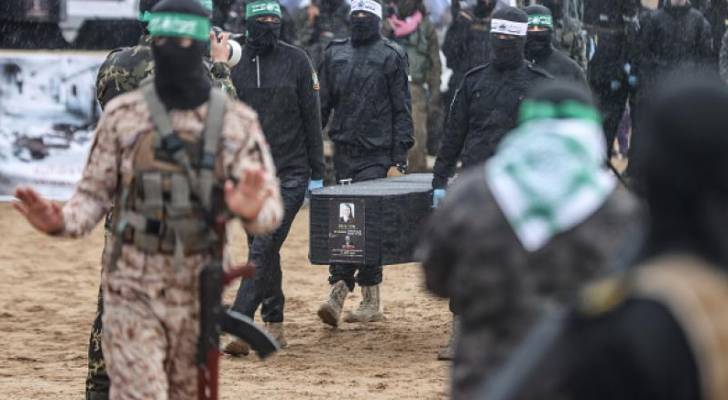
The Hebrew broadcasting authority "Kan" revealed on Friday that officials in the Israeli occupation's Ministry of Defense informed U.S. Vice President J.D. Vance during his visit to Tel Aviv that Hamas is capable of returning the bodies of 10 out of 13 deceased captives still held in the Gaza Strip.

The meeting took place at the "Kirya" base, where the Israeli occupation's Minister of Defense, Israel Katz, and the Chief of Staff, Eyal Zamir, provided a detailed intelligence assessment regarding the situation in Gaza and Hamas's ability to deliver the bodies.

The occupation officials confirmed that the return of the bodies could occur before the arrival of international teams to assist in their retrieval.

This assessment comes after Hamas returned 15 bodies of captives who died during detention since the beginning of the ceasefire, in addition to releasing 20 living captives.

Sources indicate that these operations were conducted in coordination with international parties to ensure safe delivery according to humanitarian protocols.

Before the ceasefire, Hamas was holding the bodies of 28 deceased captives. With the start of the ceasefire, the movement returned 15 bodies (the latest being the delivery of two bodies last Tuesday night), while 13 bodies remain held in the sector.

The new assessment reflects Hamas's capability to return at least 10 bodies, which contrasts with previous estimates that stated recovering all bodies might be difficult due to the conditions of detention and the destruction resulting from the conflict.

This new estimate allows for clearer and safer planning of future delivery procedures.

The issue of retrieving the bodies of captives is one of the most sensitive files, closely monitored by the international community, including the United Nations and the Red Cross.

PALESTINE

Fri 24 Oct 2025 7:52 am - Jerusalem Time

The occupation army plans to reduce its forces in the West Bank settlements and shift security responsibilities to the settlers.

The Hebrew newspaper "Yedioth Ahronoth" revealed on Thursday a military plan being prepared by the Israeli occupation army to significantly reduce the number of defense forces stationed in West Bank settlements, while transferring part of the responsibility for local security to the settlers themselves.

This move comes after more than two years of intensive security reinforcements that began following the attacks on October 7, 2023, during which the army bolstered local defense units and mobilized thousands of soldiers in sensitive areas to ensure the prevention of repeated attacks.

Military sources indicate that the goal of the plan is to reduce direct military presence while continuing to monitor changing security assessments, ensuring the army's ability to intervene when necessary without fully relying on a large number of soldiers stationed in each settlement.

This planned withdrawal of forces is part of a redistribution of the military strategy of the occupation in the West Bank.

The Hebrew newspaper notes that the occupation army conducts periodic assessments of its units in various settlements, aiming to adjust military deployment in accordance with the actual security situation, while leaving more space for local communities to participate in maintaining security.

Observers believe that this trend reflects the army's belief that some settlement sites have become less susceptible to direct attacks, and that relying on local defense and involving civilians can reduce the financial and operational costs of a heavy military presence.

Although a final decision has not yet been made, the army has held several meetings with the heads of local councils in the settlements, asking them to prepare for a gradual reduction of forces in defense positions.

This announcement has raised serious warnings from Knesset members and security observers.

Knesset member Tzvi Sukkot, from the "Religious Zionism" party, stated that the army intends to reduce regional defense forces in the West Bank by about 30% in the coming weeks, which could leave population centers with significant gaps between security needs and allocated forces.

He added that this reduction could increase the settlements' exposure to threats, especially in areas that require a continuous military presence.

Sukkot pointed out that the army has informed residents that the responsibility for civil guard duties will be entrusted to them, warning that this approach imposes heavy financial burdens on small communities, which may not be able to fund the necessary security measures.

He emphasized that this step could increase risks to the settlements at a time when threats are rising, placing civilians in direct confrontation with security challenges without adequate support.

Sukkot explained that such a policy could negatively affect the stability of small and medium settlements, especially in the absence of a strong military presence capable of rapid intervention in the event of any security incident.

For its part, the Israeli occupation army confirmed that security assessments related to troop deployment are still ongoing, and that any final decisions will be announced later.

The occupation army stated that population centers in the West Bank have been trained in reserve teams and have strengthened their defensive infrastructure, alongside the combat forces already deployed in the area.

In its official statement, it said: "Regardless of the final decision, we have improved local defenses and equipped reserve units to provide greater security for the settlements and ensure the stability of the security situation in the West Bank."

It also emphasized that any future steps will be taken in full coordination with local councils to avoid any potential security gaps.

OPINIONS

Thu 23 Oct 2025 10:45 am - Jerusalem Time

Why the American air train to Israel?

Rasem Abid

Rasem Abid

Opinion Writer

The airlift of American leaders to the occupying state resembles the airlift we witnessed on the second day of the battle on October 7, 2023, when American leaders – politicians, military officials, and security personnel – flocked to the occupying state. Former President Joe Biden and his Secretary of State Antony Blinken participated in the meetings of the "War Council" that was formed at that time, and it was announced that America would take the lead in the military and security war on the Gaza Strip, establishing a continuous air and sea bridge to Israel, which appeared on the brink of collapse. Had it not been for this air and sea bridge, and by the admission of Israeli leaders themselves, Israel would have collapsed within three days, as for the first time in its existence, it faced such an existential threat.

What is happening today is similar to what occurred on the second day of the battle on October 7, 2023. In light of the Israeli military failure to eliminate Palestinian resistance and achieve the minimum war objectives – recovering prisoners without negotiations with the resistance – and the inability to destroy the military and armament capabilities of the resistance and its tunnels, which is a demand that takes precedence over the demand for disarming the resistance and holds priority in American and Israeli demands, as well as the failure to achieve the maximum objectives of occupation, military rule, and resettlement and displacement through destruction, it became necessary to pursue a new goal aimed at disrupting the demographic balance in historical Palestine in favor of the settlers.

Israel is also facing an existential crisis, akin to a major nightmare for it, which is the reverse migration from Israel to abroad. According to Israeli radio, 25% of Israelis expressed their willingness to emigrate from Israel, and 6% have already left, not to mention the existence of about 2 million Israelis holding dual citizenship, of whom 400,000 do not wish to return.

Today, after the Israeli military failure to achieve the minimum and maximum war objectives, the focus has shifted to politically besieging the resistance so that they can achieve the war objectives, especially concerning the goal of international mandate "World Peace Council." Therefore, this airlift of American leaders, who have arrived and continue to arrive in Israel, comes in this context: to solidify the ceasefire and for the American administration to take the lead in this political project from A to Z, concerning the ceasefire, the introduction of aid and heavy equipment, the opening of crossings, reconstruction, and the day after for the sector, forming the force, and removing Netanyahu's objections to the participation of Egypt, Qatar, and Turkey in the intended international force, while considering Israeli security interests. Hence, the position of U.S. Vice President J.D. Vance in the press conference he held the day before yesterday in Tel Aviv was clear: "Any violation of this agreement, with an incident here or there, does not mean that the agreement has fallen" – the goal to be achieved is very significant and extends beyond the Gaza Strip to the region and the area.

Before detailing the essence of the new plan and project, we saw how Steve Witkoff, the special envoy of the American president, and his son-in-law Jared Kushner participated in the meeting of the small political and security cabinet "the Cabinet" to pass Trump's plan, with Netanyahu enlisting Benny Gantz from the opposition to pass it, amid the rejection of Itamar Ben Gvir, Yair Lapid, and Smotrich of this plan unless it included disarming Hamas.

We must recognize that Trump's threats to Hamas, stating that if they violate the agreement, there are allies ready to intervene swiftly and eliminate them with all force and brutality, make us certain, despite the lack of surprise, of the positions and statements of this president. This audacity and alignment with the Israeli position, through the high tone he used in addressing the leadership of Hamas, serves as a fire cover for a battle taking place elsewhere, and a kind of appeasement for the occupying government’s Prime Minister Netanyahu, in response to his demands to retract his reservations about the participation of Egypt, Turkey, and Qatar in forming the required international force to be deployed in Gaza. After the visit of the U.S. Vice President revealed the presence of U.S. envoy Steve Witkoff and President Trump's son-in-law Jared Kushner, it became clear that the mission of the enhanced U.S. delegation is to confront Netanyahu with the reality that his inability to end the resistance militarily forces him to accept its political siege and seek to weaken it, and if possible disarm it, and that the reservations he places on Turkish, Egyptian, and Qatari participation prolong Hamas's control and restore its presence and build its strength. He must facilitate the commencement of the second phase of Trump's plan, including opening crossings, introducing aid and heavy machinery, forming the guaranteeing force, and involving those whom Hamas trusts and can communicate with, paving the way for the deployment

OPINIONS

Thu 23 Oct 2025 10:41 am - Jerusalem Time

Political and Legal Analysis of the Draft "New International Mandate Document on the Gaza Strip (GITA)"

Abdul Rahim Jamous

Abdul Rahim Jamous

Opinion Writer

This analytical reading is based on the complete Arabic text of the draft of the new international mandate document for the Gaza Strip (GITA), prepared by the Tony Blair Institute for Global Change and published by the Hebrew newspaper Haaretz, translated into Arabic by Dr. Ghaniya Malhis. This analysis aims to dismantle the political and legal implications underlying this document, and to read its objectives and risks in light of what is happening in the region and the Palestinian issue.

This document represents a new attempt to reshape the concept of "international guardianship" over the Palestinian people in the Gaza Strip, cloaked in legal and humanitarian rhetoric, but at its core, it reproduces the logic of "mandate" that colonial powers exercised in the early twentieth century. It attempts to legitimize a foreign multilateral administration that exercises actual sovereignty over the region under the pretext of reconstruction and establishing stability, while Palestinians are stripped of their right to self-determination.

The document does not speak of a "sovereign Palestinian state," but rather of an "internationally managed entity" overseen by a governing body called the "Transitional Gaza Authority (GITA)," which has a temporary administrative nature, yet possesses full tools of economic, security, and legal control, while Palestinian forces are left with symbolic or advisory roles, devoid of any real sovereign content.

The draft portrays the current situation in Gaza as a result of a governance vacuum or a collapse of authority, rather than a direct result of the Israeli occupation and its policies, which justifies—according to its logic—"organized international intervention" to manage the sector. In this way, the historical narrative of the conflict is reshaped, making Gaza a site of "humanitarian crisis management," rather than a part of a national liberation issue.

Through a careful reading of the document, it can be concluded that its strategic goal goes beyond reconstruction or security control, extending to the demographic and political structure of Palestinian society. It includes visions for resettlement, redistribution of power, and linking the local economy to external funding sources and partnerships that entrench dependency. It also opens the door for the participation of international security companies and regional powers in maintaining "order," which weakens any possibility of restoring independent national decision-making.

From a legal perspective, the document constitutes a circumvention of international law principles that recognize the right of peoples to self-determination under occupation. Instead of holding Israel accountable for war crimes and the blockade, the issue is transformed into a file of "civil and humanitarian management," draining the conflict of its liberatory content. It is a formula of "post-war management" that prepares the ground for entrenching the reality of political and geographical separation between Gaza and the West Bank, serving the strategy of dismantling the Palestinian national entity.

On the political side, the draft reflects an implicit consensus among Western and regional parties to turn Gaza into a testing model for a new international governance in the Middle East, where crises are managed through technocratic institutions of a humanitarian nature, but subject to Western decision-making centers. This vision is based on the philosophy of "reform from the outside," which experiences have proven to fail in Iraq, Afghanistan, and Lebanon, as it ignores the national factor and marginalizes popular will.

What is called the "new mandate document" is not a temporary project for Gaza's relief, but an attempt to politically and demographically re-engineer the Palestinian reality, separating the sector from its national depth. It legitimizes international guardianship and paves the way for solidifying the occupation in a more flexible and formally legitimate manner, under the guise of international humanitarian law.

In conclusion, this document shows that what is happening is not merely crisis management, but a redefinition of the concept of Palestinian sovereignty, and a redistribution of roles between the occupation and the international community at the expense of the Palestinian people. Therefore, confronting this vision requires coordinated Palestinian, Arab, and Islamic action in the political, legal, and diplomatic arenas, to reject any form of guardianship or disguised mandate, and to affirm that the only just solution is to end the Israeli occupation in all its forms and to empower the Palestinian people to exercise their full sovereignty over their land, in accordance with international law and international legitimacy resolutions.

PALESTINE

Thu 23 Oct 2025 10:28 am - Jerusalem Time

Hanging questions.. Did the minister resign or was he dismissed?!

Dr. Ammar Dweik: It is very important to have actual accountability and criminal prosecution, and that resignation should not be a substitute for the criminal judicial process.

Firas Yaghi: The corruption allegations associated with the name Zarab require a clear explanation from the Cabinet that answers the citizens' questions.

Dr. Ahmad Rafiq Awad: The healthier the government’s situation, the more it can provide the public with sufficient information to reduce rumors.

Jihad Harb: The official announcement of the reasons for the resignation could have presented a different model from previous governments and enhanced trust in the government.

Dr. Omar Rahal: Clarifying the reasons for the resignation is important, and transparency demonstrates a serious commitment to the government’s program, which includes fighting corruption.

Salih Mousa: The manner in which the resignation decision was announced was not successful and did not rise to the level of the event, nor does it respond to the idea of a "reform government."


Once again, the issue of Minister of Transport and Communications Tarek Zarab has sparked widespread debate, with the government announcing Prime Minister Dr. Mohammad Mustafa's acceptance of his resignation, amidst a lack of official clarifications regarding the background of the decision, whether it is related to ongoing investigations concerning corruption allegations or administrative disputes within the ministry, and whether what occurred was an ousting of the minister or his resignation?

Officials, writers, political analysts, and human rights advocates, in separate conversations with "Y," indicate that the brief announcement of the acceptance of the resignation via the Government Media and Communication Center, without additional details, has opened the door to public inquiries regarding the nature of the case and the measures taken against the resigning minister.

Writers, analysts, officials, and rights advocates believe that the government's handling of the resignation file has been characterized by ambiguity and has not risen to the level of a case that attracts public interest, noting that transparency in such matters represents a real test of the executive authority's commitment to the principles of accountability and fighting corruption. They affirm that merely accepting the resignation does not substitute for the judicial process in the event that the charges are proven, and that citizens have the right to know the complete facts to ensure trust in state institutions, considering that this case represents a pivotal moment in the path of a government that has raised the banner of reform and combating corruption, emphasizing that clarity and honesty with the public are the way to enhance trust between the people and their institutions, and that managing such sensitive files requires a greater degree of responsibility and transparency to avoid conflicting narratives and the spread of rumors.

The lack of announcement of the details of the ousting may be due to the continuation of investigations.

The Director General of the Independent Commission for Human Rights "Ombudsman," Dr. Ammar Dweik, confirms that the ousting of Minister of Transport and Communications Tarek Zarab, which was likely at the request of Prime Minister Dr. Mohammad Mustafa, is practically considered an end to his duties, and this comes against the backdrop of criminal investigations related to corruption charges against him.

He points out that the government's failure to announce the details of the ousting may be due to the ongoing investigations by the public prosecution, emphasizing that this does not prevent the government from clarifying the background of the ousting in general without delving into the details of the investigations.

Dweik states: "We consider the ousting of a person accused or suspected of corruption a positive step, but it is very important to have actual accountability and criminal prosecution, and that resignation should not be a substitute for the criminal judicial process."

He clarifies that the minister remains presumed innocent as long as the case is ongoing, and all legal guarantees for a fair trial under Palestinian law must be provided, stressing the need to differentiate between the substance of the ongoing investigations and their details and the possibility of giving a general statement about the background of the ousting.

Dweik said that transparency in such cases enhances public trust in the government and its institutions, and confirms that the action taken should be part of a clear legal process, not just an administrative measure to avoid criminal accountability.

The absence of clarifications opens the door to rumors.

Political writer and analyst Firas Yaghi emphasizes the importance of transparency in the Palestinian executive authority's handling of the issue of Minister of Transport and Communications Tarek Zarab, considering that the absence of official clarifications from the government and the Prime Minister opens the door to rumors and weakens the trust of the Palestinian street in its institutions.

Yaghi clarifies that the Palestinian public always demands that the executive authority be clear in its

PALESTINE

Thu 23 Oct 2025 10:27 am - Jerusalem Time

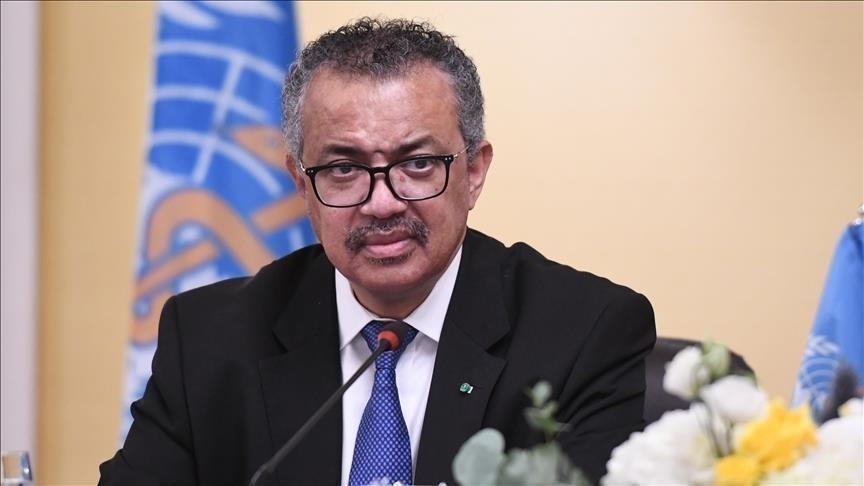
The first after the ceasefire.. the World Health Organization evacuates 41 patients from Gaza.

The Director-General of the World Health Organization, Tedros Adhanom Ghebreyesus, announced the evacuation of 41 critically ill patients from the Gaza Strip for treatment in other countries, marking the first medical evacuation since the ceasefire.

This was stated in a post on the American platform "X" on Thursday regarding medical evacuation operations from the Gaza Strip.

Ghebreyesus noted that the World Health Organization led the medical evacuation of 41 critically ill patients and 145 companions from Gaza.

The Director-General of the World Health Organization reiterated his call for countries to show solidarity and open all avenues to expedite medical evacuations from Gaza.

On October 10, the first phase of an agreement for a ceasefire in Gaza came into effect, according to a plan by U.S. President Donald Trump.

Israel has committed genocide in Gaza since October 8, 2023, resulting in 68,234 Palestinian deaths and 170,373 injuries, most of whom are children and women.

PALESTINE

Thu 23 Oct 2025 8:55 am - Jerusalem Time

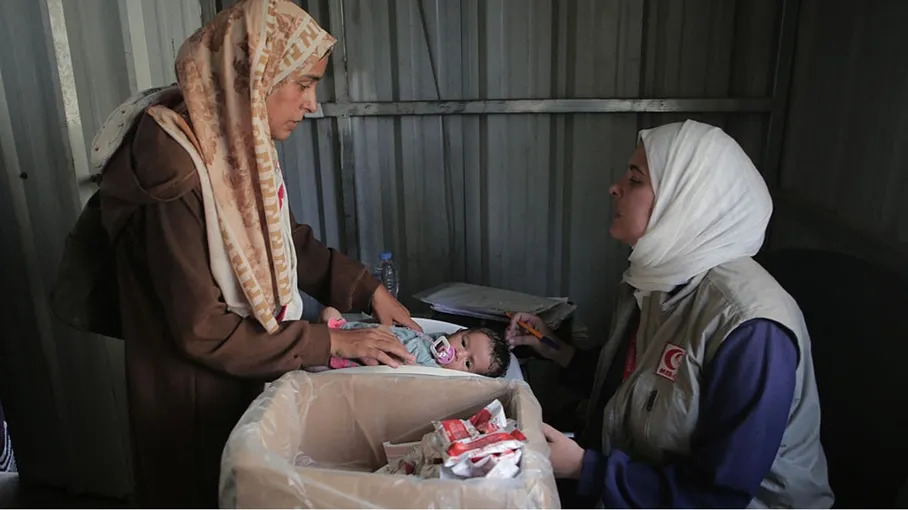
United Nations: The effects of the Gaza war on pregnant women and infants will extend for generations.

The United Nations Population Fund warned that the effects of malnutrition among pregnant women and infants in the Gaza Strip "will extend for generations," which "will likely cause problems that require lifelong care" for the children currently being born in Gaza.

Upon returning from a five-day mission in Jerusalem and the West Bank, in addition to Gaza where he spent five hours in the Palestinian territory, the Fund's representative Andrew Saberton held a press conference at the United Nations headquarters in New York, during which he stated that the scale of destruction he witnessed resembled a Hollywood movie.

He reminded that one in four residents in Gaza suffers from hunger, noting that among them are 11,500 pregnant women.

He added that as a result, 70% of newborns are born premature and with low birth weight, compared to 20% in the period before the outbreak of war on October 7, 2023.

Saberton explained that all neonatal facilities in the sector are operating well above their capacity (170% of their capacity), forcing them to place multiple children in one incubator.

He pointed out that a third of pregnancies in the sector are currently considered "high-risk" and that the maternal mortality rate is "high."

The senior official at the United Nations Population Fund confirmed that "malnutrition is the biggest problem," in addition to other issues such as a shortage of medicines and the destruction of medical infrastructure, as 94% of hospitals in the sector have been damaged or destroyed, and 15% of institutions providing emergency obstetric care.

Saberton noted that the lack of contraceptives forces some women to resort to "dangerous abortions."

He added that all forms of gender-based and sexual violence, including early marriage, "have exploded in Gaza, as is the case in other conflicts."

PALESTINE

Thu 23 Oct 2025 6:39 am - Jerusalem Time

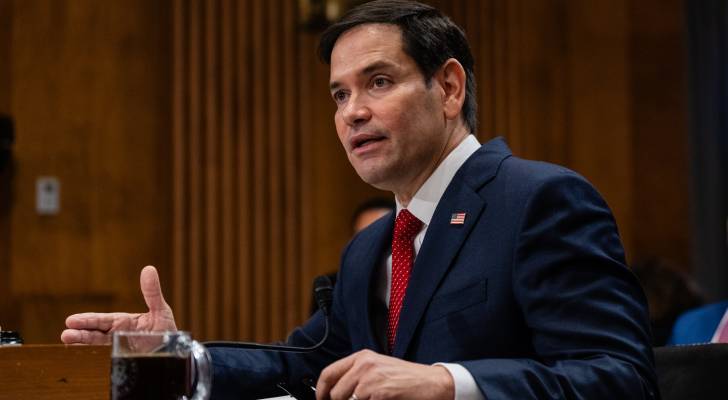
Rubio warns: The Knesset's approval of the annexation of the West Bank "threatens" the ceasefire agreement in Gaza.

More than 40 Democratic members of the U.S. Senate recently urged President Trump to strengthen his opposition to annexation plans, according to Axios.

Trump pledged not to allow Israeli Prime Minister Benjamin Netanyahu to annex the West Bank, according to Politico.

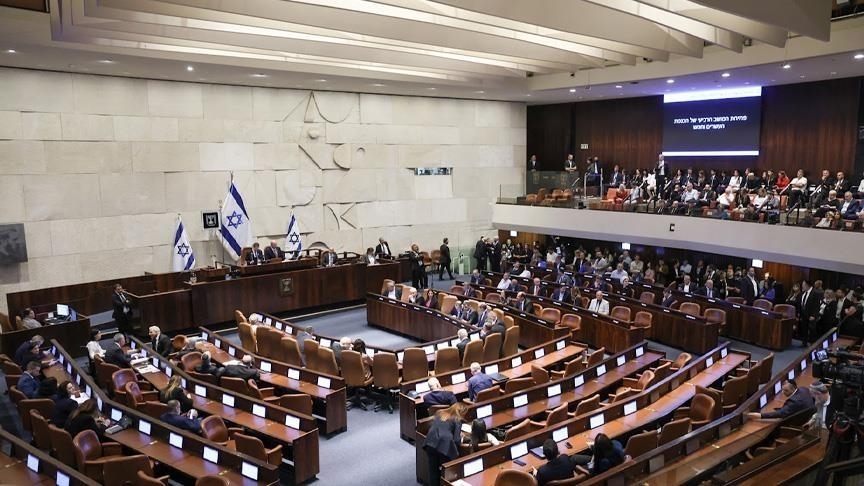
In a provocative move that could undermine fragile diplomatic efforts in the region, the Knesset approved on Wednesday, in a preliminary reading, a bill aimed at annexing large parts of the occupied West Bank.

This controversial step comes in direct defiance of the U.S. position, as Secretary of State Marco Rubio warned, ahead of his anticipated visit to the region, that proceeding with annexation plans could "threaten" the existing ceasefire agreement in Gaza.

This troubling development comes at a very sensitive time, coinciding with the intensive efforts by President Donald Trump's administration to solidify the recently reached ceasefire agreement between the occupation and Hamas, which ended a devastating two-year war.

The United States considers that its comprehensive peace plan, which forms the basis of the agreement, includes an implicit commitment not to take any unilateral steps, such as annexing the West Bank, that could undermine the chances of reaching a lasting settlement.

President Trump had personally assured Arab leaders during a meeting on the sidelines of the United Nations General Assembly last month that he would not allow Israeli Prime Minister Benjamin Netanyahu to annex the West Bank, according to Politico.

More than 40 Democratic members of the U.S. Senate recently urged President Trump to strengthen his opposition to annexation plans, according to Axios.

Despite clear U.S. warnings, the Knesset moved forward with discussions on the proposed annexation law, which was presented by members of the far-right in the governing coalition.

According to Channel 12, the law was approved in a preliminary reading by a very slim majority, with 25 members voting in favor and 24 opposing it, and the vote of the former chairman of the Foreign Affairs and Defense Committee, Yuli Edelstein, was the decisive one that tipped the balance in favor of passing the law.

Immediately after the law was provisionally approved, far-right ministers in Netanyahu's government rushed to celebrate the step and called for moving forward with the annexation process.

Finance Minister Bezalel Smotrich addressed Netanyahu, saying: "Mr. Prime Minister, the Knesset has spoken, the people have spoken, it is time to impose full sovereignty over all the lands of Judea and Samaria (the West Bank)."

For his part, National Security Minister Itamar Ben Gvir said: "The time for sovereignty is now."

In Washington, Secretary of State Marco Rubio's response was swift and firm.

He told reporters before heading to the region on an official visit starting Thursday: "I believe President Donald Trump has made it clear that this is not something we can support at this time."

Rubio clearly warned that the approval of any of the texts presented before the Knesset related to annexation "would threaten" the ceasefire in Gaza and "would have counterproductive results" on ongoing diplomatic efforts.

Rubio is scheduled to visit the occupation from October 22 to 25, with the aim of "supporting the successful implementation of President Trump's comprehensive plan to end the conflict in Gaza," according to a statement from the U.S. State Department.

This preliminary vote in the Knesset places Netanyahu's government in direct confrontation with the U.S. administration and threatens to undermine the fragile understandings recently reached.

The overall trajectory of events now hinges on what will result from Secretary of State Marco Rubio's visit and his ability to persuade the occupation government to backtrack on these unilateral steps that could plunge the entire region back into a cycle of violence.

PALESTINE

Thu 23 Oct 2025 3:15 am - Jerusalem Time

Hamas accuses the occupation of trying to disrupt the agreement.. and clarifies its position regarding disarmament.

Ismail Ridwan, a leader in the Islamic Resistance Movement Hamas, stated that the Israeli occupation continues to procrastinate and evade fulfilling the obligations of the first phase of the ceasefire agreement, and that the movement is committed to discussing disarmament and the management of the Gaza Strip within a national framework.

He added in a television interview that Hamas is committed to implementing the agreement to fully end the aggression, withdraw the occupation forces from the Strip, rebuild it, fully open the crossings, and allow the entry of aid.

Ridwan also accused the occupation of failing to adhere to its humanitarian obligations in the first phase of the agreement, noting that it is allowing only very small amounts of aid to enter despite its commitment to allow at least 600 trucks daily.

He confirmed the occupation's refusal to allow the entry of necessary relief aid, tents, urgent goods, in addition to the heavy equipment needed to remove rubble and recover the bodies of the missing, including the bodies of Israeli prisoners.

He continued, "The failure to operate the Rafah crossing and the refusal to allow the entry of medical supplies or to transport patients who need treatment abroad represents another aspect of Israel's violation of what was agreed upon."

Regarding the issue of Palestinian missing persons, Ridwan pointed out that the destruction in the Strip has resulted in over 10,000 missing persons under the rubble, who can only be recovered by bringing in the heavy equipment that was agreed upon in the ceasefire plan.

He explained that "the occupation is causing delays in extracting the Israeli prisoners who are under the rubble, and in delivering their bodies by preventing the entry of international teams and the necessary equipment to search for them, while blaming us."

Ridwan also called on mediators and the U.S. administration to work on obligating the occupation to fulfill its obligations so that the transition to the second phase can occur, emphasizing that disarmament of the resistance and management of the Strip will only be discussed within the Palestinian national framework.

He confirmed the movement's keenness to form an independent committee to manage the Strip urgently without Hamas's participation, stating that the movement has provided the Egyptians with a written approval on this matter, accusing Israel of putting obstacles in the way to prevent the transition to the second phase.

The occupying state refuses to open the Rafah crossing and imposes significant restrictions on the aid that was agreed to be allowed in, claiming that Hamas is delaying the delivery of the bodies of the prisoners.

PALESTINE

Thu 23 Oct 2025 1:15 am - Jerusalem Time

Israeli frustration over the increasing separation of Jews around the world from the occupation and their adoption of the Palestinian narrative of the conflict.

At a time when Israelis are complaining about the international isolation surrounding them due to their crimes against Palestinians in Gaza, they believe that many Jews around the world outside the occupying state see their vital interests forcing them to effectively abandon it and not cling to it, especially American Jews who will have to choose between three alternatives that do not seem good for the occupying state.

Professor Avi Bar-Eli, a writer for "Israel Hayom," mentioned that "what can be described as the 'Jewish world' shows signs of breaking in the face of the crisis it is experiencing today, similar to the confirmed defeat that Israel witnessed in the recent war on Gaza, and even more dangerously, because we have seen during the years of war the emergence of a new phenomenon of world Jewry's animosity towards the state of Israel itself, which requires an explanation for this dangerous development."

He added in an article translated by "Arabi21" that "in a poll, 61% of American Jews believed that Israel is guilty of committing war crimes in Gaza, and there are a number of Jewish professors, some of whom are openly Zionist or Israeli, who tend to admire the wave of anti-Semitism sweeping through their universities, and Jewish entities like the Anti-Defamation League and many Jewish organizations are now under the control of progressives who obscure the deep complicity in the anti-Semitic attacks on Jews and Israel."

The writer questioned, "How can we explain the fall of a large segment of American Zionists to this low level, after diaspora Zionists supported Israel and participated in its construction, but today they do not see it as a homeland to return to, rather they do not want to rely on it, preferring to integrate without separation into American national citizenship, and it seems that identification with Israel no longer helps them integrate, but rather undermines it."

He pointed out that "one of the reasons for the abandonment of Jews around the world of Israel is the takeover of what can be described as the 'progressive current' over liberalism in the United States, injecting it with anti-Israel sentiment under the guise of anti-Zionism, and therefore, their vital interests, in the eyes of many Jews, force them to effectively abandon Israel and not cling to it, which places us in the midst of a process whose end we do not know."

Bar-Eli concluded by saying that "American Jews will have to choose between three paths: fully integrating into the United States, abandoning Jewish communal life, or withdrawing from this American life in an extreme Orthodox manner, or immigrating to Israel, a choice that does not seem to have preference in their eyes so far."

Among the evidence that increases Israelis' frustration with the positions of world Jewry towards the occupying state is that in the numerous Jewish demonstrations at universities in the United States during the years of the war on Gaza, the phrases "from the river to the sea," meaning the destruction of "Israel," and adopting the Palestinian narrative based on the injustices committed by the Israeli occupation were repeatedly echoed, and when American Jews watch news reports, they insist on considering "Israel" completely guilty.

PALESTINE

Thu 23 Oct 2025 12:09 am - Jerusalem Time

Weitkof and Kushner discuss in the UAE efforts to solidify the Gaza agreement.

The Deputy Ruler of the Emirate of Abu Dhabi, UAE National Security Adviser Tahnoun bin Zayed Al Nahyan, discussed on Wednesday with American envoys Steve Witkoff and Jared Kushner the efforts to solidify the ceasefire agreement in the Gaza Strip.

According to the UAE news agency, Tahnoun bin Zayed met with Witkoff and Kushner in Abu Dhabi, where they discussed the latest developments regarding the ceasefire in Gaza and the United States' efforts to ensure the consolidation of the agreement reached as part of President Donald Trump's plan.

The Gaza agreement was reached on October 10, with mediation from Egypt, Qatar, the United States, and Turkey, following negotiations in Sharm El Sheikh, Egypt.

The UAE agency did not specify the timing of the American officials' arrival in the UAE or the duration of their visits, but the visit comes as part of their tour of the Middle East, which began in Israel on Monday, to discuss the next phase of the American plan to end the Gaza war.

Washington is pushing for the start of the second phase, but Israel is tying this to the completion of receiving the bodies of the prisoners.

The agency added that the meeting between Tahnoun bin Zayed, Witkoff, and Kushner also addressed "ways to enhance stability in the region and the necessity of moving out of the ongoing escalation it is witnessing, which would enhance opportunities for prosperity and sustainable development in the Middle East."

The second phase of Trump's plan to end the war in Gaza includes deploying an international peacekeeping force in the sector, the withdrawal of the Israeli army, and the disarmament of Hamas.

Since October 13, Hamas has released twenty living Israeli prisoners and handed over the bodies of 16 prisoners, with 12 remaining, most of whom are Israelis.

Meanwhile, Israel claims that the remaining number is 13, alleging that one of the delivered bodies does not match any of its prisoners.

The movement asserts that it seeks to "close the file" and needs time, advanced equipment, and heavy machinery to search for and retrieve the remaining bodies.

Before the current ceasefire agreement, Israel, with American support, committed genocide since October 8, 2023, lasting for two years, resulting in the deaths of 68,234 Palestinians, injuring 170,373 others, and causing destruction that affected 90 percent of civilian infrastructure.

PALESTINE

Wed 22 Oct 2025 11:39 pm - Jerusalem Time

Israel deports 32 foreign activists who expressed solidarity with Palestinians during the olive harvest.

The Israeli occupation authorities announced today, Wednesday, the deportation of 32 foreign activists who participated in a solidarity event with Palestinian farmers during the olive harvest season in the occupied West Bank, claiming they violated military orders and were linked to an agricultural organization that Israel classifies as 'terrorist.'

Israeli Deputy Prime Minister Yariv Levin stated that, in coordination with National Security Minister Itamar Ben Gvir, he issued instructions for the deportation of the activists. He noted that the decision came after an investigation conducted by Israeli authorities based on a complaint from the head of the settlements council in northern West Bank, Yossi Dagan, who described them as 'anarchists who carried out provocations,' according to his claims.

Levin added, in a statement published via the Telegram platform, that 'the decisive action sends a clear message that Israel will not tolerate those who violate its sovereignty or support terrorism.' According to the Israeli statement, the incident occurred last Thursday near a farm south of Nablus, where the activists organized 'a demonstration on agricultural land subject to military orders allowing only olive pickers to remain there during the season.'

Among those deported was a British young man named Rudy Shukoldin, who told Agence France-Presse that he came to the West Bank in solidarity with Palestinian farmers who face repeated attacks from settlers during the olive season.

Local media also reported that the Israeli army arrested the activists while they were participating in olive picking alongside Palestinians, in a move aimed at documenting the violations faced by farmers from settlers.

'The Union of Agricultural Work Committees' is a non-governmental agricultural organization registered with the Palestinian Ministry of Interior, and it is one of the largest agricultural development institutions established in 1986.

For its part, the Palestinian Ministry of Foreign Affairs condemned the arrest and deportation of the activists, affirming that they were participating in a solidarity campaign with the locals to document the attacks by settlers.

Since October 2023, due to the attacks by settlers, Palestinian farmers have faced significant difficulties and dangers in accessing those lands during the olive harvesting season without the presence of foreign supporters.

According to data from the Palestinian Wall and Settlement Resistance Commission, settlers carried out 7,154 attacks against Palestinians and their properties in the West Bank in the years of extermination in the Gaza Strip, which resulted in the martyrdom of 33 citizens and the displacement of 33 Palestinian Bedouin communities, as well as the establishment of 114 settlement outposts.

PALESTINE

Wed 22 Oct 2025 10:42 pm - Jerusalem Time

Israel.. A British force joins an American coordination center "to support Gaza"

Britain announced the dispatch of a group of officers to Israel to join the Civil-Military Coordination Center opened by the United States to support stabilization efforts in the Gaza Strip.

On Tuesday, the U.S. Central Command announced the opening of the Civil-Military Coordination Center (CMCC) in Israel to support the stability of Gaza.

It clarified that the center is designed to support stabilization efforts and that U.S. military forces will not be deployed inside the Gaza Strip, but will help facilitate the flow of humanitarian, logistical, and security assistance from international partners into the territory.

Centcom Commander Brad Cooper stated that the center will monitor the implementation of the ceasefire agreement through an operations room that allows the staff to assess developments in Gaza moment by moment.

The ceasefire agreement that the center will monitor came into effect on October 10, based on a plan by U.S. President Donald Trump.

This plan aims, alongside ending the war, for a gradual withdrawal of the Israeli army, mutual release of prisoners, and immediate entry of aid into the territory.

The Times of Israel reported that the British Ministry of Defense announced that a small group of British military planning officers has been sent to Israel to join a U.S.-led task force to support stabilization efforts in Gaza.

A spokesperson for the ministry stated that the deployment of this force aims to ensure that Britain remains engaged in U.S.-led planning efforts for stabilization in Gaza after the conflict.

A stabilization force, supported by the U.S., is expected to be based in a complex known as the Civil-Military Coordination Center (CMCC) in the city of Kiryat Gat in southern Israel to ensure security in the Gaza Strip.

On Monday, British media reported that Defense Minister Jon Healey stated at an event in central London that Britain has specialized experience and skills that we offered to contribute.

Healey added that the deployment of his country's forces in Israel within the Civil-Military Coordination Center came in response to a request from the United States.

For its part, Channel 12 reported that the British did not disclose the number of officers and soldiers they sent to Israel.

This appears to be a small but significant force, and at the request of the Americans, the deputy commander of the headquarters will be a British general.

The channel clarified that the role of the coordination center is to monitor the progress of reconstruction in the Gaza Strip, in addition to coordinating between the armies that will send soldiers to the territory.

This center will also oversee the Israeli army's responses to what it claims are violations of the agreement by Hamas.

According to the channel, the center will be the executive body that will limit Israel's responses in Gaza.

The channel reported that over the past twenty-four hours, criticisms have increased within the Israeli army regarding some of the coordination center's tasks.

Several senior Israeli military officials, as raised in various discussions, feel that Tel Aviv is losing its independence in the Gaza Strip.

The center monitors everything happening in the territory, which also includes the locations of Israeli army forces and operational activities there.

The channel continued: These officials strongly criticize the fact that carrying out military operations in Gaza requires American approval and approval from a multinational command.

They see this - from their professional perspective - as something that should not be constrained by a foreign force, even if it is a close partner like the Americans.

Before the current ceasefire agreement, Israel, with U.S. support, committed genocide on October 8, 2023, which lasted for two years.

This resulted in the deaths of 68,234 Palestinians, injuries to 170,373 others, and destruction affecting 90 percent of the civilian infrastructure.

The second phase of Trump's plan to end the war in Gaza includes the deployment of an international peacekeeping force in the territory, the withdrawal of the Israeli army, and the disarmament of Hamas.

PALESTINE

Wed 22 Oct 2025 6:43 pm - Jerusalem Time

Security concerns within the occupying state over Trump's haste in finalizing the Gaza plan.

Channel 12 reported that there is concern within the Israeli security establishment about the speed with which the United States is pushing to implement President Donald Trump's plan to end the war in the Gaza Strip.

The channel mentioned that U.S. Vice President JD Vance and American envoys Steve Witkoff and Jared Kushner arrived in Tel Aviv to monitor the progress of the plan on the ground and to ensure that there are no delays or violations in its implementation.

In contrast, the security establishment in Israel warned that the American approach to managing the political process could conflict with Israeli security interests. Security officials say there are a number of vital interests for the occupying state, such as the positions of the Israeli army, rules of engagement, and the mechanism for delivering humanitarian aid to the Gaza Strip, which may currently be determined by the United States rather than by Israel itself.

The greatest concern is that Washington may impose restrictions on Israel regarding these sensitive issues, which could limit the Israeli army's ability to use force or the government's ability to impose sanctions on Hamas, which Tel Aviv classifies as a terrorist organization.

Observers in Israel believe that the visit of the U.S. Vice President indicates that the process is moving in the right direction; however, the security establishment still fears that interests between the allies may clash at a later stage, which could put Israeli-American relations to a difficult test.

American envoys Steve Witkoff and Jared Kushner arrived in the occupied territories on Monday morning, just before the arrival of U.S. Vice President JD Vance, following a day of Israeli airstrikes on the Gaza Strip after Tel Aviv accused Hamas of violating the agreement.

Haaretz reported that the U.S. administration intends to present a draft resolution to the United Nations Security Council in the coming days regarding the formation of an international force in Gaza, which includes defining the nature of its mandate with expected support from France, Britain, and several Arab countries.

In a related context, the newspaper mentioned that American officials confirmed last week that Hamas has not violated the ceasefire agreement so far, despite Israeli claims accusing the movement of stalling in delivering the remains of some prisoners.

Farhan Haq, Deputy Spokesperson for the UN Secretary-General, emphasized the need to allow a much larger quantity of shelter materials into Gaza before winter arrives. Haq stated in a press release that relief organizations in Gaza continue to increase their activities in areas that were previously difficult to access.

PALESTINE

Wed 22 Oct 2025 6:40 pm - Jerusalem Time

The Knesset reveals details of two bills to annex the West Bank and a settlement to Israel.

The Israeli Knesset revealed, on Wednesday, details of two bills regarding the annexation of the West Bank and one of the settlements, which were approved by the Knesset in a preliminary reading today.

The Knesset stated in a statement published on its website: "The Knesset's plenum approved in a preliminary reading the bill to apply the sovereignty of the State of Israel over the areas of Judea and Samaria (the West Bank), presented by MK Avi Maoz (from the right-wing Noam faction)."

It added: "25 Knesset members supported the bill, while 24 opposed it, and it will be referred to the Foreign Affairs and Defense Committee for discussion" before being presented for a first reading out of three readings before it becomes an enforceable law.

According to the statement, the text of the bill proposes that "the laws of the State of Israel and its judicial authority and administration and sovereignty will be applied to all areas of the settlements in Judea and Samaria," meaning the West Bank.

It stated: "The explanatory notes of the bill indicate that on the seventy-seventh anniversary of the national revival of the State of Israel (the 1948 War), and the fifty-eighth anniversary of the return of the Jewish people to their historical homeland in Judea and Samaria (the 1967 War), and based on our natural and historical right, and in accordance with the United Nations General Assembly resolution, it is proposed that the State of Israel apply its laws and sovereignty over the settlement areas in Judea and Samaria.

This is to solidify the status of these areas as an integral part of the sovereign State of Israel."

It is worth noting that the United Nations General Assembly issued Resolution 181 in November 1947, which called for the partition of Palestine into two states: Jewish (about 55 percent of the land) and Arab (about 45 percent), with a special status for Jerusalem under international administration.

This contradicts what Israel claims regarding the West Bank, which was not included in the proposed borders of the Jewish state at that time.

If Israel annexes the West Bank, it would mean the end of the possibility of implementing the two-state solution (Palestinian and Israeli), which is stipulated in resolutions issued by the United Nations.

The second bill that the Knesset voted on in a preliminary reading stated: "The Knesset's plenum voted in favor in a preliminary reading of the bill to apply sovereignty over Ma'ale Adumim (a settlement in the West Bank), presented by MK Avigdor Lieberman (Yisrael Beiteinu) and a group of Knesset members."

It added: "In the vote, 32 Knesset members supported the bill against 9 opponents, and the bill will be referred to the Foreign Affairs and Defense Committee for discussion before being presented for the first reading out of three readings to become an enforceable law."

It noted that "the bill proposes to apply the laws of the State of Israel and its judicial authority and administration to the Ma'ale Adumim area."

It stated: "The explanatory notes of the bill indicate that the city (settlement) of Ma'ale Adumim was established in 1977, and over the years it has grown to become a city with a population of about 40,000."

It added: "The city is located about 7 kilometers east of Jerusalem, along the Jerusalem - Dead Sea road, at a strategically important crossroads to secure the route to Jerusalem."

It continued: "Ma'ale Adumim is located in an area that has always been an integral part of the historical land of Israel," according to its expressions.

The Knesset claimed that "according to the explanatory notes, there is broad agreement, in Israel and internationally, regarding the application of Israeli sovereignty over Ma'ale Adumim."

Ma'ale Adumim is located east of occupied Jerusalem and is one of the largest settlements in the occupied West Bank.

Its annexation would isolate East Jerusalem from its Palestinian surroundings to the east and divide the West Bank into two parts.

Israel occupied the West Bank, including East Jerusalem, in 1967, in a move considered a clear violation of the United Nations Charter and principles of international law.

Since then, the United Nations has emphasized in its resolutions the necessity of Israel's withdrawal from the territories it occupied in 1967, considering the West Bank and East Jerusalem as occupied Palestinian territories, over which Israel has no right to impose its sovereignty or change its demographic and legal character.

It is

LATEST NEWS

Wed 22 Oct 2025 6:05 pm - Jerusalem Time

"The International Justice" obliges Israel to facilitate aid to Gaza and criticizes its claims regarding "UNRWA."

The International Court of Justice ruled today, Wednesday, that Israel, as an occupying power, is obligated to facilitate and secure the entry of relief efforts carried out by the United Nations and its agencies, including the United Nations Relief and Works Agency for Palestine Refugees (UNRWA).

The panel of judges, consisting of 11 members, added that Israel is required to ensure the fulfillment of the "basic needs" of civilians in the Gaza Strip, including essential supplies for their survival.

During a session held by the court in The Hague to issue an "advisory opinion" defining Israel's obligations regarding aid, the court's president, Yuji Iwasawa, confirmed that the court did not find evidence to support Israel's claims regarding the neutrality of UNRWA, which alleged that a significant number of the agency's staff are members of "terrorist" factions.

The ruling carries "significant legal weight and moral authority," despite being a non-binding advisory opinion, after the United Nations requested the court to clarify Israel's obligations as an occupying power to ensure and facilitate the provision of urgent and necessary supplies for the "survival" of Palestinians.

The status of UNRWA was a key focus during the week-long hearings held last April, in which Israel did not participate.

Tensions between the two sides escalated after Israel banned the agency's operations on its territory and accused some of its staff of involvement on October 7, 2023.

Although an independent report led by former French Foreign Minister Catherine Colonna acknowledged in April 2024 the existence of "neutrality-related issues" within UNRWA, it indicated that Israel "has not yet provided supporting evidence" for its claim that a large number of the agency's staff are members of "terrorist" organizations.

This is the third such ruling issued by the court regarding Israel's practices since the outbreak of the Israeli aggression on Gaza on October 7, 2023.

The court had previously ruled in July that Israel's occupation of Palestinian territories is illegal, and it had earlier issued a ruling ordering Israel to take all necessary measures to prevent genocide in Gaza.

ARAB AND WORLD

Wed 22 Oct 2025 5:11 pm - Jerusalem Time

Trump's contradictory messages about the ceasefire in Gaza reveal a deeper confusion in his strategy.

Washington – "Al-Quds" dot com - Said Arikat 

The state of confusion surrounding the U.S. stance on the ceasefire in Gaza is increasing as U.S. President Donald Trump continues to send contradictory messages regarding the agreement and its second phase, which is supposed to include humanitarian arrangements and the reconstruction of the sector after a devastating war that lasted more than two years. While Trump seeks to portray himself as a peacemaker, his conflicting statements seem to confuse both his allies and adversaries alike, raising questions about the seriousness of Washington in leading a coherent political process in the Middle East.

Trump wants the credit without the involvement

Since the announcement of the ceasefire, Trump has not stopped praising his personal role in achieving the truce, describing the agreement as a “historic deal that no one but me could accomplish.” But just hours later, he returned to question the intentions of Hamas, saying it “cannot be trusted,” hinting that Israel would be “free to respond” if fighting resumed.

This duality, as observers see it, is not coincidental. Trump seeks to reap political gains without bearing the consequences of direct U.S. intervention. He wants to appear to the American public as a decisive peacemaker, without making financial or military commitments that might anger his conservative base or increase Washington's foreign burdens.

One expert on Middle Eastern affairs in Washington told a correspondent for Al-Quds newspaper that “the president wants to own the victory, but he does not want to own the responsibility. He wants the success attributed to him, not to bear its consequences.”

The second phase: Ambiguity in vision and conflicting messages

While regional mediators talk about a “second phase” that includes reconstruction and stabilizing the ceasefire through international mechanisms, it seems that the Trump administration does not have a clear or unified plan. While some of his advisors promote the idea of an international coalition overseeing the reconstruction of Gaza, the president himself rejects it, describing it as “wasting American money.”

This contradiction reveals a division within the U.S. administration between the State Department, which leans towards coordinating with international partners, and the political team at the White House that prefers to minimize any long-term U.S. involvement in the region. One U.S. diplomat described the scene, saying: “Every time we get close to a coherent policy, the president tweets something that turns everything upside down.”

Regional confusion and Arab caution

Israel, which openly claims to coordinate everything with Washington, including its violation of the ceasefire last weekend, does not hide its concern over the contradictions in U.S. positions. Some Israeli officials have expressed their dissatisfaction in closed sessions about the lack of clarity regarding whether Washington supports continued pressure on Hamas or prefers to stabilize the truce.

As for Hamas and the mediators in Doha and Cairo, they see the U.S. position's turmoil as an opportunity to push for easing restrictions on the sector and increasing humanitarian aid. In Cairo and Amman, officials are exercising extreme caution, aware that a single tweet from Trump could reignite the situation.

An Arab diplomatic source in Washington told a correspondent for Al-Quds that “moderate Arab countries are dealing with the U.S. position as they would with unpredictable weather — no one knows when the storm will hit.”

Electoral calculations behind foreign policy

Domestically, Trump's fluctuations reflect a mix of political and electoral calculations. He seeks to reassure his evangelical and pro-Israel conservative base without alienating war-weary voters. Therefore, he adopts a dual rhetoric: publicly declaring peace while simultaneously making hardline statements to satisfy two opposing sides within the American scene.

A former U.S. National Security Council official said, “Trump deliberately maintains ambiguity because he believes that contradiction gives him negotiating power and keeps everyone on edge. It’s a governing style based on surprise rather than planning.”

The risks of a confused approach

However, this approach is fraught with risks. The contradiction in the U.S. position may encourage hardliners on both sides — within Hamas who doubt Washington's commitment, and in Israel who see that U.S. confusion allows them freedom of action. It may also undermine what remains of the United States' credibility as an honest broker in the region.

A European diplomat involved in mediation efforts warns that “peace is not built on tweets and conflicting statements, but on a stable and clear policy.”

In the end, the ceasefire may succeed in holding temporarily, but unless Washington lays out a clear vision for the next phase, what Trump describes as the “greatest diplomatic achievement” may

PALESTINE

Wed 22 Oct 2025 5:05 pm - Jerusalem Time

Jewish figures call for sanctions against the occupation due to "genocide crimes" in Gaza.

More than 450 prominent Jewish figures around the world, including former Israeli officials, thinkers, and award-winning artists, have called for international sanctions against the Israeli occupation due to what they described as "unacceptable actions amounting to genocide" in the Gaza Strip.

This call came in an open letter addressed to the United Nations and world leaders, demanding accountability for the occupation's practices in Gaza, the West Bank, and occupied Jerusalem.

The letter, published by the British newspaper "The Guardian," coincided with a meeting of European Union leaders in Brussels, amid reports of some European countries intending to backtrack on proposals to impose sanctions on Tel Aviv due to its human rights violations.

The signatories stated in their letter: "We have not forgotten that the laws and international covenants established to protect human life were a response to the Holocaust, but Israel has systematically and repeatedly violated those guarantees."

The list of signatories included notable names such as Abraham Burg, former president of the Israeli Knesset, and Daniel Levy, a former Israeli negotiator in peace talks, alongside British writer Michael Rosen, Canadian Naomi Klein, Oscar-winning director Jonathan Glazer, American actor Wallace Shawn, Pulitzer Prize winner Benjamin Moser, as well as Emmy winners Ilana Glazer and Hannah Einbinder.

The signatories urged world leaders to adhere to the rulings of the International Court of Justice and the International Criminal Court, to avoid complicity in violations of international law by halting arms exports to the Israeli occupation and imposing targeted sanctions, while ensuring sufficient humanitarian aid reaches Gaza and rejecting false claims of anti-Semitism against voices calling for peace and justice.

The letter also stated: "We bow our heads in immeasurable sorrow, as evidence mounts that Israel's actions meet the legal definition of genocide."

The letter reflects a significant shift in public opinion within Jewish communities in the United States in recent years.

According to a poll by the "Washington Post," 61% of American Jews believe that the Israeli occupation has committed war crimes in Gaza, while 39% said it is committing genocide.

In another poll conducted by the Brookings Institution, 45% of Americans said they believe the occupation has committed genocide, while a Quinnipiac University poll last August revealed that half of American voters share the same view, including 77% of Democrats.

Among the other signatories of the letter are Israeli maestro Ilan Volkov, playwright V (formerly known as Eve Ensler), American comedian Eric Andre, Booker Prize-winning South African novelist Damon Galgut, Israeli journalist and Oscar-winning director Yuval Abraham, Tony Award winner Toby Marlow, and Israeli philosopher Omri Boim.

The signatories concluded their letter by stating: "Our solidarity with the Palestinians is not a betrayal of Judaism, but a realization of its essence. When our sages taught us that whoever destroys a human life is as if they have destroyed an entire world, they did not exclude the Palestinians. We will not rest until a ceasefire turns into an end to the occupation and apartheid."

Since October 7, 2023, more than 65,000 Palestinians have been martyred and at least 167,000 have been injured, according to the Ministry of Health in Gaza, while the United Nations estimates that about 90% of the population of the Strip has become internally displaced.

In a recent report, U.S. Senators Chris Van Hollen and Jeff Merkley, following a field visit to the region last September, confirmed that the Israeli occupation has implemented "a systematic plan to destroy and forcibly displace Palestinians from Gaza," warning of U.S. complicity in these crimes through its ongoing military and political support for Israel.

The report clarified that the occupation has nearly completely destroyed civilian infrastructure, used food as a weapon, and imposed systematic obstacles to the entry of humanitarian aid, in blatant violation of international humanitarian law.

LATEST NEWS

Wed 22 Oct 2025 4:55 pm - Jerusalem Time

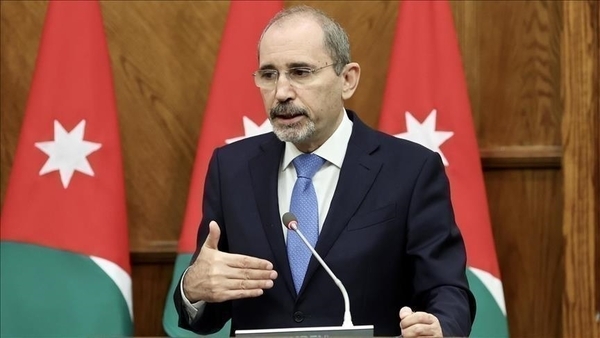
Jordan condemns the Knesset's approval of two bills aimed at annexing the West Bank.

The Jordanian Ministry of Foreign Affairs and Expatriates condemned the Israeli Knesset's preliminary approval of two bills, one of which aims to impose Israeli sovereignty over the occupied West Bank.

The other bill seeks to legitimize Israeli sovereignty over one of the illegal colonial settlements, considering it a blatant violation of international law.

The ministry's spokesperson, Fouad Majali, emphasized the kingdom's absolute rejection and strong condemnation of any Israeli attempts to impose sovereignty over the occupied West Bank.

LATEST NEWS

Wed 22 Oct 2025 4:13 pm - Jerusalem Time

The Israeli Knesset approves in the preliminary reading the annexation of the West Bank.

The Israeli Knesset's General Assembly approved, in a preliminary reading, a bill to annex the West Bank and impose 'Israeli sovereignty' over it, proposed by the leader of the far-right 'Noam' party, Avi Maoz.

25 Knesset members supported the bill to annex the West Bank while 24 opposed it, whereas 32 Knesset members supported the bill to annex the 'Ma'ale Adumim' settlement and 9 opposed it.

The vote on the West Bank annexation bill was conducted publicly, and members of the 'Yesh Atid' party voted against the bill in an attempt to defeat it.

PALESTINE

Wed 22 Oct 2025 3:03 pm - Jerusalem Time

American concern over "Netanyahu's withdrawal" from the Gaza deal.. and Washington seeks to prevent a "full-scale attack"

American media reports revealed today, Wednesday, an increasing concern within the U.S. administration regarding the course of negotiations for a ceasefire in Gaza.

High-level sources conveyed serious fears about the possibility of Israeli Prime Minister Benjamin Netanyahu withdrawing from the currently proposed deal.

This concern comes at a sensitive time, as diplomatic efforts are focused on securing a sustainable truce and ending the conflict, while simultaneous statements about alternative future plans emerge.

According to a report published by the "New York Times," citing American officials, there is significant anxiety within the U.S. administration about the possibility of Netanyahu retracting and withdrawing from the ceasefire proposal currently being negotiated.

The officials did not clarify the nature of the reasons prompting the administration to hold this belief, but concerns are centered around the potential collapse of current diplomatic efforts at the last moment.

In this context, the officials revealed to the newspaper that Washington's current strategy is to try to "prevent Netanyahu from resuming a full-scale attack on Hamas."

This move indicates that the U.S. administration is working on two parallel tracks: pushing to complete the current deal while simultaneously using its influence to curb any large-scale military escalation that the occupation might undertake if negotiations falter.

Vance expressed in a press statement his hope that "Trump's plan moves forward and peace is achieved," while acknowledging at the same time that "there are difficulties" obstructing this path.

Vance also addressed the current agreement, stating: "We are looking to move to the next phase of the ceasefire agreement in Gaza," indicating that various American political parties are monitoring the stages of the truce's implementation.

PALESTINE

Wed 22 Oct 2025 2:01 pm - Jerusalem Time

Israel has destroyed 98% of the agricultural sector.. "The fire of war" consumes agricultural nurseries and deprives farmers of their livelihoods.

Abu Rami Al-Astal sits in front of his tent in the Mawasi area of Khan Younis, south of the Gaza Strip, with tears in his eyes that tell the story of twenty years immersed in a love for agriculture and the land, but the Israeli war on the Strip has consumed everything he owns.

Al-Astal quickly began to recount his story until his tears betrayed him, then he wiped them with his hands and said: "I have been practicing agriculture for 20 years; I used to work as a farmer for the owners of agricultural nurseries in the liberated lands of Rafah and Khan Younis."

He added: "I wake up from 6 AM until 12 PM, I uproot vegetables, fruits, and citrus, and distribute them to shop owners to sell in the markets."

Al-Astal's memory began to recall those days that, according to him, will never return, as he recounts with a smile overshadowed by regret: "I used to work for 5 shekels an hour, and by the end of my day, I would earn thirty shekels, which I would use to buy everything for the house, from vegetables and fruits to a main meal I would eat with my six children," describing it as: "The world was good, and agriculture was abundant."

He claps his hands together and says: "Now my whole life has turned upside down; I lost my job, and my only concern after being displaced from my home is finding a tent to shelter my family," he adds with a defeated look: "I can't meet my children's needs; our whole life is canned food."

Before the ceasefire, vegetables were a dream for every Gazan household, and anyone who ate them was considered wealthy. Al-Astal continues: "Sometimes I work as a laborer, and at the end of my day, I take a tomato from what I grow for my children."

He describes that moment with a joyful expression: "I felt at that time that I owned the world and everything in it, for a tomato was a precious thing that people craved."

Despite the temporary truce, the Israeli army still controls all agricultural lands, whether in the northern and eastern areas of Gaza City or the eastern regions of the southern and central Strip.

A sadness overshadowed Al-Astal's voice as he said: "They left us no land to cultivate; even the empty areas have now become camps for the displaced," noting that the empty lands are very few and small and are not sufficient for agriculture or to meet the needs of the population.

After two years of war, the situation for farmers has become extremely difficult, as they have no land left to own or even a source of livelihood to support their families.

Farmer Ahmed Abu Halima (45 years old) is one of those farmers who owned the largest agricultural nurseries in the northern Strip and used to export to the entire region and to the occupied interior.

He looks around, contemplating the situation he has reached after being forced by the occupation army to flee south and live in a tent, saying: "I used to own 45 dunams in my beloved city Beit Lahia, where I grew everything that Gaza is famous for, whether strawberries, olives, vegetables, or various fruits."

Not only that, but Abu Halima was the main source relied upon by farmers for growing the essential "mother" seedlings. Regret overtook his voice as he recounted: "I used to produce thousands of tons of fruits and vegetables daily, not to mention selling hanging and ground strawberries, palm trees, and ornamental plants."

When the war ignited, it burned all harvest seasons for two full years, as vegetables and fruits disappeared entirely from the Strip, and its residents longed to catch a glimpse of at least one type in the markets.

Abu Halima recounts his tragedy of losing his only source of livelihood: "From the first day of the war, Israeli tanks bulldozed all private nurseries and took control of that entire area," he adds, tears streaming down his cheeks: "I have no land, no nurseries, and no financial resources to support me in the future."

It is not only worries that have burdened Abu Halima, but also the accumulated debts that have left him lacking a life he never imagined he would wish for.

He held back his tears behind his sad voice, adding: "Everything I own was stolen by the occupation, and the fruits of my years of hard work have gone to waste, with my losses estimated at three million dollars."

Currently, farmers lack suitable soil for cultivation, especially after toxins have penetrated it due to the occupation's bombardment of the lands, in

PALESTINE

Wed 22 Oct 2025 10:13 am - Jerusalem Time

UNRWA Director warns: Destruction and forced displacement continue in the northern West Bank.

The Director of the United Nations Relief and Works Agency for Palestine Refugees in the Near East (UNRWA) in the West Bank issued a serious warning, confirming that the destruction and forced displacement operations carried out by the occupying army are continuing at an escalating pace in the northern occupied West Bank.

The UN official emphasized that "the future of Gaza and the West Bank is one," warning that the withdrawal from the Gaza Strip, under the recent agreement, should not be used as a cover to tighten the grip of the occupation in other areas.

These statements come at a critical time when the world's attention is focused on the Gaza Strip to follow up on the implementation of the terms of the "Trump Plan" for a ceasefire and the signing of the "Sharm El-Sheikh Peace Document."

Amid this intense international focus on consolidating the truce and starting reconstruction operations in the sector, UNRWA highlights a deteriorating and concerning reality in the West Bank.

The agency points out that the military and political tactics of the occupation are escalating there, away from the spotlight, threatening to undermine the foundations of any future peace.

According to the UNRWA Director, the northern West Bank is witnessing a worsening humanitarian crisis. He explained that the forced evacuations of key camps, specifically Jenin Camp, Tulkarm Camp, and Nur Shams Camp, have driven Palestinians to displacement.

He added that this displacement is not only a result of the direct military operations of the occupying army but is also a direct consequence of the significant escalation in "settler violence."

This violence, which is protected by the occupying forces, has created an environment of fear and terror that has made it nearly impossible for Palestinian families to remain in their homes and camps, exacerbating the internal displacement crisis in the West Bank.

The situation has not stopped at the field escalation; the UN official confirmed that these practices are accompanied by a legislative and administrative assault targeting the existence of the UN agency directly.

The UNRWA Director in the West Bank stressed that "the occupation's laws against the agency have led to the closure of its schools and the de facto expulsion of its staff."

This comes in the context of a systematic campaign led by the right-wing occupation government since the attacks of October 7, 2023, to delegitimize UNRWA and dry up its funding sources, ultimately aiming to end its operations entirely in the Palestinian territories, including Jerusalem and the West Bank.

The closure of schools and the expulsion of staff means a complete undermining of the organization's ability to provide its essential services to thousands of refugees, contributing to the dismantling of the community structure in the camps.

The statement from the UNRWA Director represents a clear political and diplomatic message to the international community and the mediators involved in the Gaza agreement.

By emphasizing that "the future of Gaza and the West Bank is one," the UN official implicitly rejects any fragmented solutions that deal with the sector in isolation from the West Bank.

UNRWA's warnings indicate real concerns that the calm on the Gaza front may serve as a cover for passing the occupation's plans in the West Bank, represented by settlement expansion and the implementation of forced displacement policies, especially in northern West Bank areas that have witnessed intensive military operations for over two years.

Linking "settler violence" to "the evacuation of camps" shows a systematic pattern aimed at making life impossible for Palestinians in those areas.

Additionally, the direct targeting of UNRWA through laws is seen as a strategic step to remove the last international safety nets supporting the resilience of refugees, facilitating their silent displacement.

The UNRWA Director emphasized that any withdrawal of occupying forces from Gaza should not lead to "tightening the grip of the occupation in other areas."

Thus, UNRWA places the ball in the court of the international community and the guarantor states of the agreement, demanding that they ensure that any upcoming political path includes both the West Bank and Gaza Strip, and that immediate violations aimed at imposing a new reality on the ground are halted.

PALESTINE

Wed 22 Oct 2025 10:09 am - Jerusalem Time

Israel receives the bodies of two prisoners and identifies their identities.

The office of Israeli Prime Minister Benjamin Netanyahu announced today, Wednesday, that Israel received the bodies of two Israeli prisoners from the Gaza Strip, Tamir Adar and Aryeh Zalmanovich, through the International Committee of the Red Cross, as part of the first phase of the ceasefire agreement.

The Israeli army confirmed that it informed the families of the prisoners after identifying their bodies, and they were returned for burial inside Israel.

The Al-Qassam Brigades, the military wing of Hamas, had previously announced that they recovered the bodies of the prisoners from under the rubble and handed them over to the Red Cross yesterday evening, Tuesday.

According to a statement issued by the Israeli army early Wednesday, Adar was killed during the "Al-Aqsa Flood" operation launched by Palestinian resistance on October 7, 2023, where he held the position of Deputy Security Coordinator and was a member of the rapid response team.

The statement added that his body was taken by the Popular Front for the Liberation of Palestine, and his death was officially announced on January 4, 2024.

As for Zalmanovich, he was kidnapped alive from his home in Kibbutz Nir Oz, and the army stated that he died in captivity on November 17, 2023, with a heart attack being the likely cause of death, as shown in a video previously released by Hamas.

With the handover of the bodies of Adar and Zalmanovich, the total number of bodies handed over by the Al-Qassam Brigades since the ceasefire agreement began is 15 out of 28 Israeli prisoners who died in Gaza, while the search for the remaining bodies is still ongoing.

Israeli sources indicated that a third body was also handed over via the Red Cross, but authorities clarified that it does not belong to any Israeli soldier; rather, it is believed to belong to a Palestinian collaborator with the Israeli army from the occupied West Bank.

In contrast, a reporter stated that the International Committee of the Red Cross received a new batch of bodies of Palestinian martyrs from the Israeli side and transported them to the Gaza Strip.

A medical source at Nasser Medical Complex in Khan Younis confirmed the arrival of the bodies of 15 martyrs as part of the sixth batch of bodies released by Israel under the ceasefire agreement.

According to the Ministry of Health in Gaza, the number of bodies of Palestinian martyrs received since the announcement of the ceasefire has reached 165 so far.

These developments come as part of the first phase of the ceasefire agreement in the Gaza Strip, which was reached through U.S. mediation and includes the gradual exchange of bodies and prisoners.

Last week, Hamas released all remaining living prisoners in exchange for the release of more than 1,900 Palestinian prisoners from Israeli jails.

PALESTINE

Wed 22 Oct 2025 9:55 am - Jerusalem Time

Does the occupation agree to the presence of Turkish forces in Gaza?

U.S. Vice President JD Vance stated that the issue of foreign troops on the ground 'will depend on the approval of the Israeli government,' emphasizing that it will have to agree, while also indicating that he does not rule out a Turkish role in the next phase after the ceasefire.

During a press conference held in Tel Aviv, Vance clarified that 'any security or political arrangements concerning Gaza must be in full coordination with Israel,' but he added that Washington 'appreciates Turkey's previous efforts in reaching the current truce,' expressing gratitude to Ankara 'for its constructive role during the recent ceasefire negotiations.'

Vance affirmed that the United States 'sees Turkey as an important regional partner,' noting that his country 'is following up on coordination with Ankara, Cairo, and Doha regarding the future of the sector after the war,' adding: 'We recognize that Turkey has previously supported Hamas, but we are not looking at the past today, but rather at how to build a more stable future for the region.'

The U.S. Vice President refused to discuss the possibility of deploying Turkish troops in Gaza at this time, merely stating that 'any foreign presence on Palestinian land must have the full approval of Israel and should aim to support humanitarian security and reconstruction, not military intervention.'

Vance's statements came at a time when international efforts are intensifying to solidify the ceasefire agreement that came into effect two weeks ago, mediated by Egypt and Qatar with U.S. support, after two years of war that resulted in thousands of casualties and unprecedented humanitarian crises in the besieged sector.

In Ankara, there has been no official comment yet on the U.S. Vice President's statements, but Turkish diplomatic sources told local media that Ankara 'will not rule out any role in the reconstruction of Gaza or in ensuring its security stability,' confirming that any Turkish move will be 'in full coordination with the relevant international and Arab parties.'

It is worth noting that Turkey had played an active role in mediating a ceasefire agreement, benefiting from its relations with both Qatar and Palestinian resistance movements.