PALESTINE

Mon 10 Nov 2025 7:32 pm - Jerusalem Time

The Israeli occupation destroys hundreds of archaeological sites in Gaza and steals thousands of artifacts.

The cultural memory of the Gaza Strip has not escaped the Israeli destruction machine that has ravaged all aspects of life for two years. The occupying army has destroyed more than 300 archaeological sites in various areas of the Strip, in a systematic attempt to erase the historical identity of the Palestinians and their deep roots in this land.

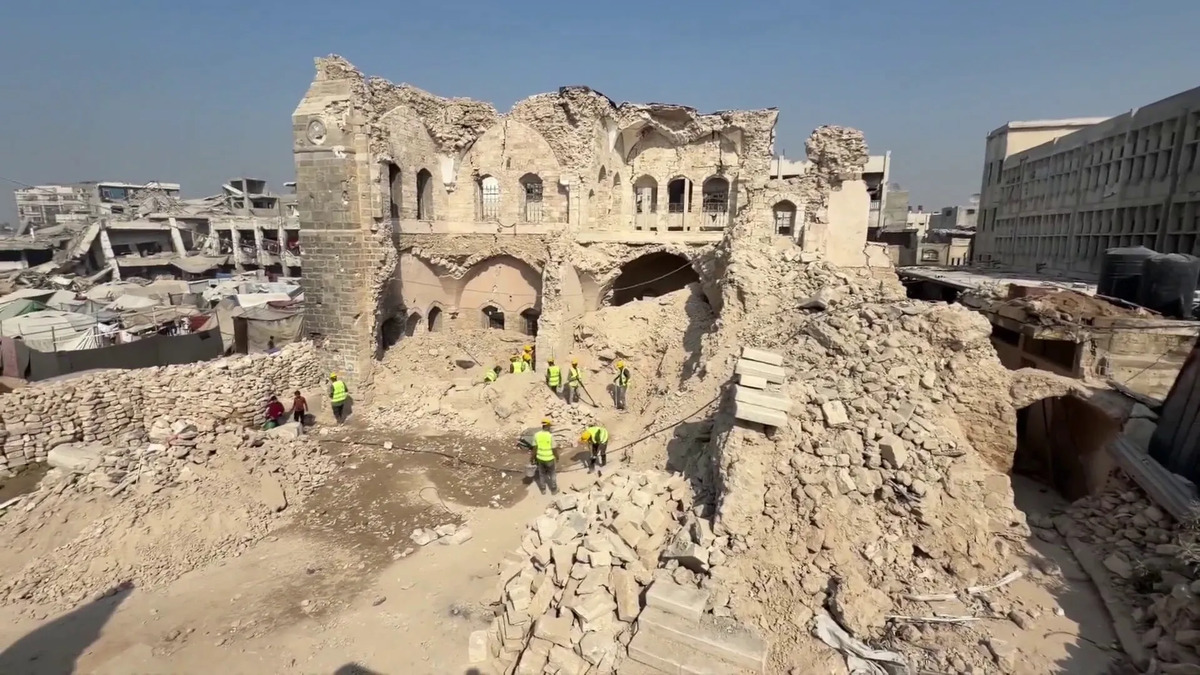
During a field tour of several destroyed archaeological sites in the old city of Gaza, it became clear that the deliberate targeting included historical landmarks spanning different eras, while some official entities are trying to begin restoring what remains amid a severe shortage of resources and equipment.

Gaza is not just a geographical space where its people are subjected to killing and displacement; it is a historical land that holds a cultural and civilizational heritage that has also been subjected to systematic Israeli destruction, where archaeological landmarks that have stood for centuries have turned into ruins and ashes.

The Pasha Palace, built during the reign of the Mamluk Sultan Al-Zahir Baybars, stands as a testament to the magnitude of the disaster. The occupying army completely destroyed it along with its archaeological artifacts that adorned the halls of its ancient museum.

A responsible official at the Pasha Palace site revealed that before the Israeli invasion, the place housed more than 17,000 archaeological pieces, but the occupying army stole all the contents of the palace, and no piece has been found since its withdrawal from the area.

This is a devastating loss. The official explained that the stolen pieces belong to multiple historical periods, including the Byzantine and Roman eras, various Islamic periods, and even the late Ottoman era, representing a significant loss to the human heritage in the region.

As for the Great Omari Mosque, one of the oldest and most prestigious archaeological mosques in the Strip, it was also subjected to bombing and destruction over two years of Israeli aggression, and the destruction was not limited to its courtyards and facilities alone.

The destruction also extended to the library that housed rare volumes and books within the mosque, in addition to the adjacent Qaisariyah market, which was completely destroyed by the occupation forces, causing the place to lose its historical and cultural significance.

In another location, the features of the ancient Samara bath, dating back to the Ottoman era, have disappeared. It was the last archaeological bath in Gaza, a historical landmark, a medical pilgrimage, and a refuge for the people of the Strip before it was struck by systematic Israeli bombing.

The occupying army did not stop at killing and displacing Palestinians; it sought to destroy their civilizational and historical heritage in an attempt to erase the human identity that proves their deep roots in this land for thousands of years.

This crime against Palestinian heritage constitutes a blatant violation of international laws that prohibit targeting archaeological and cultural sites, at a time when the occupation continues its comprehensive war against everything related to the Palestinian existence.

PALESTINE

Mon 10 Nov 2025 6:54 pm - Jerusalem Time

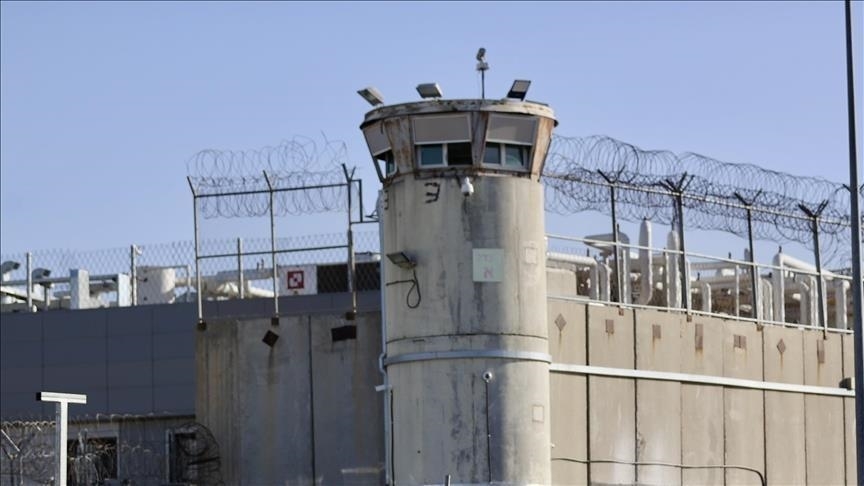
Palestinian organizations warn of potential executions of hundreds of detainees in Israel.

Nine Palestinian human rights organizations warned on Monday of Israel committing mass executions against prisoners if the proposed death penalty law presented to the Knesset is approved, noting that Tel Aviv is already practicing execution in various forms even before the law is enacted.

This came in a "position paper" issued by the nine Palestinian human rights organizations regarding the Israeli bill to impose the death penalty on Palestinian prisoners, of which a copy was received.

At the beginning of November, the Knesset's National Security Committee approved the proposal to be voted on in the first reading in the parliamentary general assembly, which sparked Palestinian, regional, and international criticism.

The proposal stipulates "the imposition of the death penalty on any person who intentionally or through negligence causes the death of an Israeli citizen out of racial hatred or to harm Israel."

Earlier on Monday, Channel 15 reported that "the death penalty bill is expected to be put to a vote in the first reading today."

The Palestinian organizations stated that the most dangerous aspect of the new legislative draft is that "it applies retroactively, which is unprecedented in any legislative process, especially in criminal laws, where they take effect immediately after issuance and publication."

They added that "this project may be formulated, according to the poles of the Israeli government, including Minister of National Security Itamar Ben Gvir, to legislate the execution of mass executions that could affect hundreds of Palestinian detainees from the elite members of the Al-Qassam Brigades who were arrested on October 7, 2023, or thereafter."

Hamas surprised Tel Aviv on October 7, 2023, with an unprecedented attack on dozens of military bases and settlements surrounding the Gaza Strip, resulting in the deaths and injuries of hundreds of Israelis.

The Palestinian human rights organizations considered that "the essence of what the proposed legislation aims for is to respond to motives of revenge or retribution, not to deter or prevent future crimes."

They continued that the ongoing discussions about this legislation, whether in the media or in some human rights circles, "give a misleading and deceptive image, as it portrays Israel as a state among those that do not apply the death penalty, and that it had abolished this penalty and is moving towards reinstating it against Palestinian detainees."

They added that Israel "has not actually stopped executing that penalty against Palestinians in the occupied Palestinian territories for decades."

They clarified that Israel "has practiced and continues to commit thousands of extrajudicial executions against Palestinians through various means, the most prominent of which are: assassinations, sniper operations, shooting at military checkpoints, shooting at participants in peaceful protests in the West Bank, and killing detainees."

The Palestinian organizations noted that the law that applies only to Palestinians "reveals another aspect of the system of racial discrimination in Israel, as it will not include the execution of the death penalty against an Israeli who kills a Palestinian."

The organizations that signed the paper are: Al-Mezan Center for Human Rights, the Palestinian Center for Human Rights, Al-Haq Foundation, the Addameer Prisoner Support and Human Rights Association, the Palestinian Authority for Prisoners and Released Prisoners Affairs, the Addameer Foundation for Human Rights, the Palestinian Independent Commission for Human Rights, the Palestinian Prisoners Club, and the Jerusalem Center for Legal Aid and Human Rights.

According to Israeli legislation, any bill must be voted on in three readings in the Knesset before it becomes a valid law.

More than 9,250 Palestinian prisoners are held in Israeli prisons, including children and women, suffering from torture, starvation, and medical neglect, with many of them killed, according to Palestinian and Israeli human rights and media reports.

Israel has intensified its targeting of prisoners since it began, with U.S. support, a campaign of genocide against Palestinian citizens in the Gaza Strip on October 8, 2023.

This genocide stopped with a ceasefire agreement that came into effect on October 10, but Israel violates it daily, resulting in hundreds of deaths and injuries, in addition to preventing the entry of sufficient food and medical supplies.

The genocide has resulted in more than 69,000 Palestinian deaths and over 170,000 injuries, with destruction affecting 90 percent of the civilian infrastructure in the sector.

For decades, Israel has occupied Palestine and lands in Syria and Lebanon, refusing to withdraw from them and to establish an independent Palestinian state, with East Jerusalem as its capital, on the borders prior to the 1967 war.

PALESTINE

Mon 10 Nov 2025 6:40 pm - Jerusalem Time

"The World Health Organization" confirms that there are more than 16,000 patients in Gaza in need of travel.

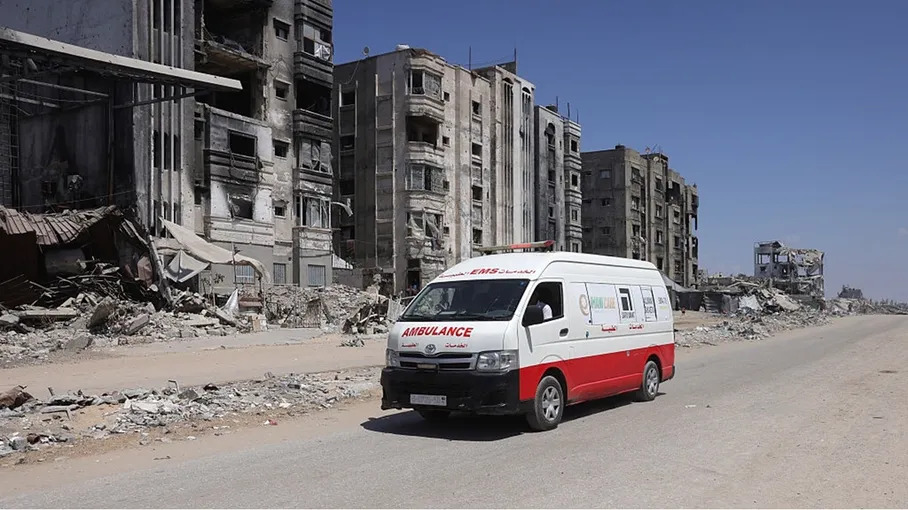
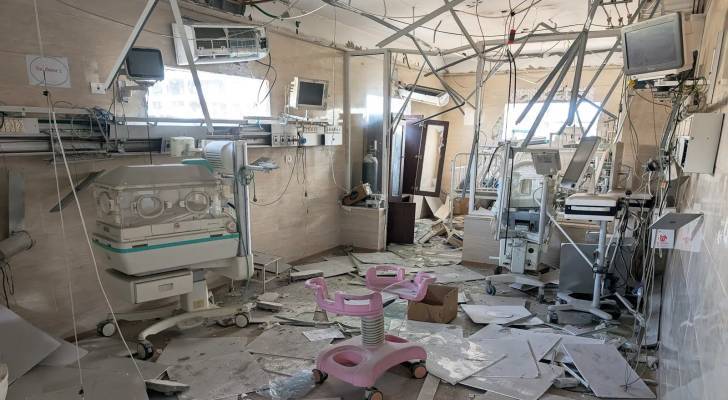
The World Health Organization confirmed that there are more than 16,000 patients in the Gaza Strip waiting to be evacuated for treatment abroad, amid the catastrophic humanitarian conditions in the region and the destruction of hospitals and medical facilities during the Israeli genocide that lasted for two years.

The organization called in a statement for ensuring the flow of humanitarian aid without any obstacles through all crossings leading to the Gaza Strip, given the serious deterioration of health and humanitarian conditions.

It urged more countries to receive patients and injured individuals from Gaza for treatment, emphasizing that the health system in Gaza is facing complete collapse due to the ongoing blockade and shortages of medical supplies and fuel.

It mentioned that "thousands of injured individuals need urgent surgeries that cannot be performed within the Strip," noting that facilitating their transfer to hospitals outside Gaza has become a pressing humanitarian issue.

It pointed out that its medical supplies are ready at the border and called for the urgent and sustainable reopening of all crossings.

It clarified that the Rafah crossing in the southern part of the Strip is "a vital outlet for medical evacuation and a main entry point for health supplies to Gaza."

Since May 2024, Israel has occupied the Palestinian side of the Rafah crossing, destroying and burning its buildings and preventing Palestinians from traveling, which has plunged them, especially patients, into a major humanitarian crisis.

The World Health Organization confirmed that "Egypt remains one of the main destinations for patients needing urgent care," while simultaneously calling for "more countries to receive Gazan patients for treatment."

It stated that it has transferred about 4,000 patients through Rafah for treatment in Egypt and beyond, adding: "There are still 16,500 patients waiting for evacuation."

During the genocide committed by the Israeli occupation army over two years, it deliberately targeted Gaza's hospitals and health system, rendering most of them out of service, which endangered the lives of patients and the injured, according to Palestinian and international data.

Since October 10 of last year, Tel Aviv and Hamas have reached a ceasefire agreement in the Gaza Strip, which is violated daily by the occupation army, resulting in hundreds of martyrs and injured individuals.

For two years, the Israeli occupation army, with American support, committed genocide in the Gaza Strip, resulting in 69,169 Palestinian martyrs and 170,685 injured, most of whom are children and women.

PALESTINE

Mon 10 Nov 2025 5:20 pm - Jerusalem Time

Important statement from Hamas regarding the ceasefire in Gaza

The Islamic Resistance Movement "Hamas" issued a detailed and comprehensive press statement on Monday evening, November 10, 2025, regarding the occupation's violations of the ceasefire agreement signed in Sharm El-Sheikh, one full month after its implementation began.

The movement and resistance forces affirmed their complete and precise commitment, in good faith, to implement the agreement from the outset, such as the release of living detainees.

The statement pointed to the difficulty of the arduous efforts to search for the bodies of prisoners that have been vaporized or lost due to the war, the destruction of infrastructure, and the lack of excavation equipment that the occupation prevents from entering. However, they managed to reach 24 bodies (out of 28) and provided the coordinates of other bodies under the occupation's control.

The occupation has not ceased to undermine the agreement since its inception, as 271 Palestinians were martyred as a result of shelling and deliberate gunfire, with more than 91% of them being civilians, and 58% of the martyrs being children, women, and the elderly, reflecting a systematic policy of killing against the defenseless.

The occupation also continued to arrest Palestinians (35 detainees), including fishermen, with 29 of them still in custody.

The occupation continues its violations in the humanitarian and military field, as it has not adhered to the temporary withdrawal line, but rather exceeded the yellow line by an area estimated at about 33 km², and placed concrete blocks inside the temporary line.

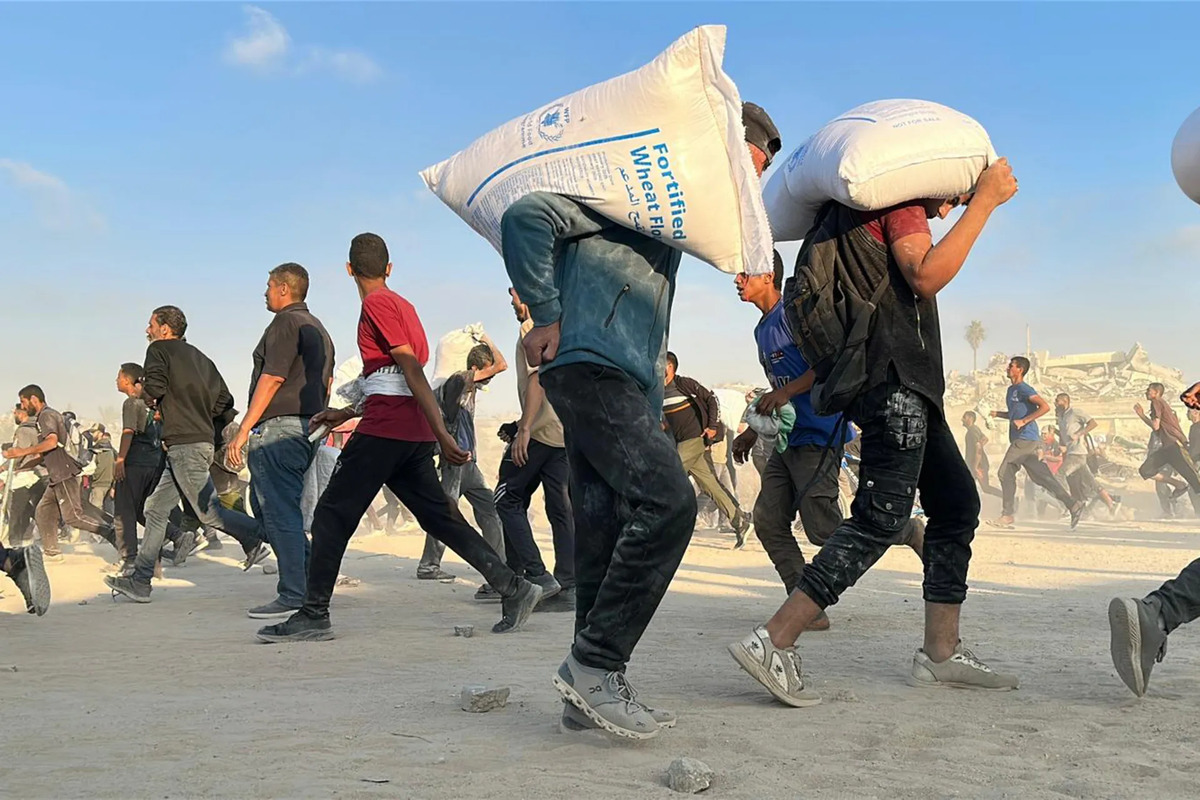
The occupation deliberately violated the terms of aid entry, as the actual aid did not exceed 40% of the agreed quantity, and prevented the entry of more than six thousand shipments for UNRWA.

The closure of the Rafah crossing since 18/03/2025 constitutes a direct violation of the agreement, which has exacerbated the suffering of those stranded.

The occupation also continued to manipulate the delivery of the list of detainees and missing persons, which numbers more than 1,800 missing from Gaza.

The statement called on mediators and guarantors to take immediate and serious action to compel the occupation to stop the aggression, lift the siege, and open the crossings.

ARAB AND WORLD

Mon 10 Nov 2025 4:42 pm - Jerusalem Time

Gaza after the war: Blair and Kushner lead the American "commercial peace" project.

Washington – "Al-Quds" dot com - Said Arikat 

With the start of the ceasefire sponsored by the United States between Israel and Hamas on October 10, the administration of President Donald Trump is moving towards what it calls the "new peace plan," which is essentially a massive economic project for the reconstruction of Gaza and transforming it into an attractive investment area for global capital.

This "peace" is not based on political reconciliation as much as it bets on the "opportunities" left by the destruction, through giant real estate and commercial projects led by former British Prime Minister Tony Blair, while Jared Kushner, Trump's son-in-law, returns to a position of influence as the de facto commissioner for post-war management, putting his experience in the "Deal of the Century" and normalization agreements to serve the "peace through development" project.

Blair: From the Iraq War to the "Peace Council" in Gaza

Since the war on Iraq and its occupation in 2003, Blair has not left the Middle Eastern stage. He led Britain into war based on claims of weapons of mass destruction, earning him the reputation of a "war criminal." Today, after two decades, he returns to oversee what is called the "Peace Council" in Gaza, tasked with managing the economic reconstruction of the afflicted sector.

When he was a special envoy for the Quartet in 2009, he boasted of securing Israel's approval for a new Palestinian telecommunications company, but documents revealed that the deal included a Palestinian concession to drop the case of Israeli war crimes at the United Nations after the "Cast Lead" operation. That incident early on revealed how justice is replaced by deals, and politics by investment.

"Making Gaza Safe for American Capitalism"

After leaving the premiership, Blair immersed himself in a complex network of business and consulting, serving as a consultant for JPMorgan with a million-dollar annual salary, and for companies like PetroSaudi and Zurich Insurance for hefty commissions, while simultaneously being a peace envoy.

In 2017, he consolidated his charitable and business institutions under one umbrella, the "Tony Blair Institute for Global Change" (TBI), which expanded to include about 900 employees in 45 countries, with revenues exceeding $145 million by 2022.

His opponents criticize the institute as an "international lobby" serving the interests of major corporations and wealthy states, using titles like "good governance" and "digital transformation." Reports confirm that representatives of the institute participated in a meeting last July to discuss visions for "post-war Gaza," which included plans to transform the sector into a "special economic zone" featuring projects like "Trump Riviera" and "smart manufacturing zones" similar to Elon Musk's projects. The most alarming proposal involves "compensating half a million Palestinians to leave Gaza" to prepare the ground for real estate investors.

Money and Technology: The Alliance of Interests

Behind Blair's expansion are major funders, most notably Larry Ellison, the extreme Zionist who recently bought TikTok, and the founder of the giant Oracle Corporation, who donated about $300 million to the Blair Institute. Ellison, known for his close ties to Israel, has funded controversial projects, including support for the occupation army and financing excavations in occupied East Jerusalem.

Blair promotes digital projects in health and education as tools for transparency, but in practice, they expand the dominance of donor corporations and open the door to the privatization of public sectors – and Gaza could be the next stop.

This trend reflects Blair's vision for the "post-conflict" phase, where rubble turns into investment opportunities, and afflicted communities are managed as profitable economic projects under international supervision.

Jared Kushner Returns to the Forefront

In this context, Jared Kushner returns to play the role he excels at: turning politics into investment.

Kushner, who crafted the "Deal of the Century" (2020) under Netanyahu's instructions and contributed to normalization agreements between Israel and several Arab countries, is now seeking to integrate Gaza into his broader "peace through development" project, benefiting from his network of relations in Silicon Valley and the Gulf.

Through his real estate companies and investment funds, he is working to attract capital to develop projects in Gaza and link them to the Israeli economic system, so that the region becomes subject to indirect American-Israeli oversight.

While Blair takes center stage as the "international director," Kushner works behind the scenes "as the engineer" ensuring the continuity of American influence and corporate interests in controlling Gaza's natural resources, foremost among them the offshore gas that has been a point of contention

PALESTINE

Mon 10 Nov 2025 4:40 pm - Jerusalem Time

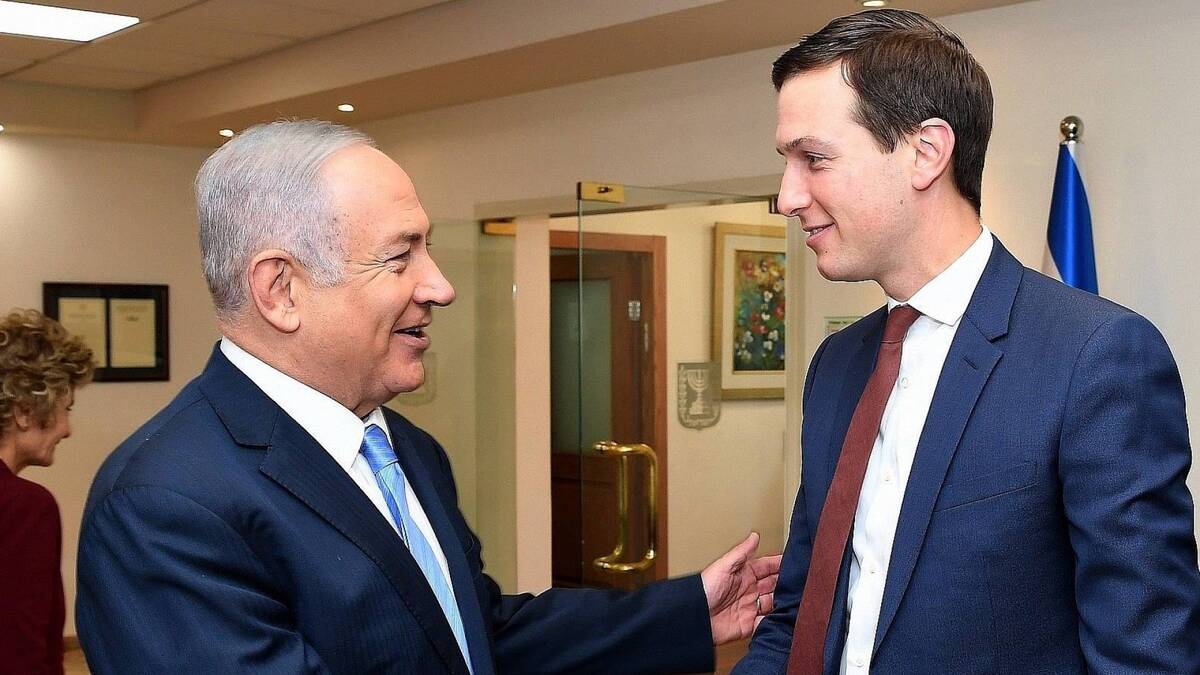
Netanyahu and Kushner are studying the next phase of the ceasefire and the plan to disarm Hamas in Gaza.

Israeli Prime Minister Benjamin Netanyahu discussed on Monday with U.S. envoy Jared Kushner the next steps in the framework of the U.S.-sponsored ceasefire agreement in the Gaza Strip.

Prime Minister's Office spokesperson Shosh Bedrosian stated in a press briefing that the two sides discussed, in addition to the ongoing first phase, the future of the second phase, which includes two main objectives: disarming Hamas and stripping Gaza of weapons.

The ceasefire in Gaza has been in effect since October 10, and the agreement has led to a significant reduction in violence and allowed for the release of the majority of Palestinian detainees held in Israeli prisons.

The ongoing first phase still aims to secure the release of the remaining detainees.

Bedrosian clarified that the second phase of the plan is based on firm security and political parameters that are not open to interpretation, which were discussed between Netanyahu and Kushner.

These parameters are summarized in three key points: the complete disarmament of Hamas, the total disarmament of all factions in Gaza, and the most important goal is to ensure that Hamas has no role in the administrative and political future of Gaza.

The focus on the conditions of the second phase, which consist of disarmament and removing Hamas from power, presents new and significant obstacles to any comprehensive agreement to end the war.

PALESTINE

Mon 10 Nov 2025 3:52 pm - Jerusalem Time

8 dead in Gaza daily despite the ceasefire agreement.

The Euro-Mediterranean Human Rights Monitor stated that Israel continues its genocide in the Gaza Strip despite the ceasefire agreement being in effect, confirming an average of 8 martyrs daily.

The Geneva-based human rights monitor added in a statement that Israel continues to impose deadly living conditions on two million Palestinians, depriving them of recovering from the effects of the humanitarian disaster that has persisted for more than 25 months, amid international silence and inability to protect and provide justice for them.

The monitor reported that it has documented since the agreement came into effect on October 10, the ongoing deliberate killings carried out by the occupation army against Palestinians.

It clarified that the Israeli army kills an average of 8 Palestinians daily and injures more than 20 others, amid the continued comprehensive siege imposed on the sector.

The human rights monitor explained that this is accompanied by a policy of deliberate starvation and deprivation of the population's means of survival, preventing reconstruction, restricting freedom of movement, denying the injured and sick access to treatment, and deliberately obstructing the entry of humanitarian aid.

According to the government media office in Gaza, the average number of aid trucks entering daily does not exceed 24%, amounting to 145 trucks, from the number of trucks that the agreement stipulated should enter daily, which is 600 trucks.

The latest data from the Palestinian Ministry of Health in Gaza showed that 242 Palestinians have been martyred and 622 others injured in Israeli violations of the ceasefire agreement.

The ministry announced in a statement today, Monday, that the death toll from the genocide initiated by Israel on October 8, 2023, has risen to 69,179 Palestinian martyrs and 170,693 injured.

It confirmed the presence of victims under the rubble of destroyed homes and in the streets, where rescue and civil defense teams are unable to reach them to retrieve them.

The government media office estimates that there are about 9,500 missing Palestinians either under the rubble or whose fate remains unknown due to the Israeli genocide.

Israel refuses to allow heavy machinery and equipment to lift tons of rubble to retrieve the bodies of Palestinians buried beneath it, while it hastens to retrieve the bodies of its remaining captives in Gaza, allowing limited equipment to enter for this purpose.

PALESTINE

Mon 10 Nov 2025 9:52 am - Jerusalem Time

Gaza: A Long and Difficult Road to Recovery

After two years of fierce war in Gaza, the fragile ceasefire - which is the first phase of President Trump's 20-point plan - offers some calm to the weary population.

For my colleagues at UNRWA on the ground in Gaza, the ongoing fear of death from explosions and airstrikes may have diminished, but there is still much to be concerned about.

Access to shelter, food, and clean water remains a challenge, and winter is approaching rapidly.

There is no time to waste in addressing hunger and widespread diseases.

The scale of physical and psychological trauma is immense, and expectations regarding access to healthcare and education are on the rise.

The coming weeks and months will determine whether this critical turning point will lead to a new dawn or be another phase of further despair.

The United Nations, including UNRWA, has the expertise and resources necessary to effectively and widely meet critical humanitarian needs.

But we must be allowed to work freely and independently, without arbitrary and unreasonable restrictions on the entry of supplies and staff and their movement.

The road to recovery in Gaza will not be easy; the ceasefire is fragile, as near-daily violations test the commitment of the parties that guarantee it.

A ceasefire that prolongs the absence of war without charting a viable path to peace will only repeat the catastrophic mistakes of the past.

A truly peaceful future requires a real investment in a final political solution to the Israeli-Palestinian conflict.

Basic security is essential to underpin recovery.

The ceasefire must support the presence of an international stabilization force, tasked with maintaining calm, protecting critical infrastructure, and ensuring access to humanitarian aid.

This force will create the necessary space to rebuild Palestinian institutions.

The success of the international stabilization force, and the transition from emergency to stability, will also depend on providing the people of Gaza with reliable public services, a credible path to peace, and respect for human rights.

This can only be achieved through a capable civil service that enjoys the trust of the community.

We have previously seen the consequences of underestimating the importance of providing stable and effective public services, most clearly in Iraq, where the dismantling of civilian administration in 2003 created a governance vacuum that brought years of instability.

The lesson is clear: public institutions capable of delivering essential services to civilian populations must be maintained.

Professionals, administrators, and local community leaders in Gaza must be part of the solution, not victims of political rearrangements.

UNRWA, with its thousands of Palestinian staff, has the capacity, experience, and community trust necessary to provide healthcare, education, and other public services to a population that has suffered devastation.

For decades, UNRWA teachers, doctors, and engineers have been a vital part of an effective public service system for millions of Palestinian refugees in Gaza and the region.

In its advisory opinion, the International Court of Justice reaffirmed the professionalism of UNRWA staff, emphasized the indispensable humanitarian role of the agency, and concluded that UNRWA remains a neutral and impartial actor.

UNRWA's educational services, including its highly regarded human rights program, will be a key factor in preventing the emergence of extremism, which is fueled by the severe blockade on Gaza and the atrocities committed over the past two years.

Currently, nearly 700,000 school-age children live among the rubble, deprived not only of their homes and loved ones but also of education, which has always been a source of hope and pride.

Returning children to an educational environment is an investment in peace and stability in Gaza and the region as a whole.

Alongside humanitarian relief efforts and the resumption of public services, an environment of trust is also needed to open the door to long-term investments.

Businesses and donors must be confident that peace will endure and that reconstruction efforts will not be in vain.

They must be assured that there will be no relapse into another cycle of destruction.

The people of Gaza need a commitment to a normal life, with permanent housing, hospitals, and well-functioning schools.

Rebuilding Gaza means restoring good governance and justice, and reinforcing the belief that peace is still possible within the framework of a two-state solution.

This requires that the "yellow line" of the agreement - drawn for temporary security coordination - does not turn into further fragmentation with a new dividing line within Gaza and between Gaza and the West Bank.

Finally, the difficult and necessary work of reconciliation must begin without delay.

Today, Israelis and Palestinians are neighbors who no

OPINIONS

Mon 10 Nov 2025 8:58 am - Jerusalem Time

Jews Against Zionism and Colonialism

Hamada Farane

Hamada Farane

Opinion Writer

Zahran Mamdani's success as the mayor of New York was not isolated from the events and occurrences in various countries around the world:

1- The demonstrations that swept across American universities, with 62 universities expressing solidarity with the Palestinian people and rejecting the Israeli settlement.

2- The demonstrations that engulfed Europe, prompting its countries and governments to respond to the protests of their peoples, and imposing recognition of the Palestinian state, especially by Britain and France.

3- The World Jewish Conference held in Vienna, Austria, about five months ago, which resulted in a rejection of Zionism and the Israeli settlement.

4- The crimes and massacres declared by the settlement against Palestinian civilians.

5- The suffering of the Palestinian people and the massacres they faced against civilians at the hands of the occupation forces in the Gaza Strip, which continue, as well as in the Palestinian West Bank.

What has occurred is not a coincidence, a stroke of luck, or a moral awakening, but rather a human accumulation on one side, and racial extremism on the other. This was well represented by the alignment of a large part of the Jewish community, especially among the youth, in liberating themselves from Zionism. This is an important development that the Palestinian people and the Arab and Islamic nations should recognize: the struggle against Zionism is not a struggle against Jews. The Zionist movement and its parties claim to represent Jews, and they are keen to assert and reinforce this claim, but they certainly do not represent them, just as ISIS and Al-Qaeda do not represent Islam and Muslims. Both are led by committed Muslims, yet they do not represent Islam and Muslims; they are wings, factions, parties, or political interpretations, but they certainly do not represent Islam and Muslims. The same applies to the Zionist movement and its various parties and organizations, whether they are Israeli or cross-border.

The International Jewish Conference held in Vienna, Austria, from June 13 to 15, 2025, aimed to oppose Zionism and reject its claim to represent Jews and Judaism; rather, the conference was held to support the Palestinian cause.

The reasons and objectives of the conference were stated in its final statement:

"We reject the claim of Zionism to represent Jews, condemn the use of the Jewish religion to justify colonialism and racism against Palestinians, and call for the dismantling of the Zionist system as a racist colonial system. We assert that Zionism does not represent true Judaism and contradicts the values of justice and human rights, and we demand the establishment of a Jewish-Palestinian anti-Zionist alliance."

The final statement of the conference, which they called the "Vienna Statement," called for isolating Israel—the settlement—as a Zionist colonial project and for its international boycott. They demanded the prosecution of war criminals before the International Criminal Court and affirmed the right of Palestinian refugees to return to their homes from which they were previously expelled.

The organizers of the International Jewish Conference specifically chose to hold it in Vienna because it is the birthplace of Theodor Herzl, the founder of the Zionist movement, as a confirmation of their rejection of his ideas and motives that called for the establishment of an expansive colonial project on the land of the Palestinians, their homeland, which they have no other homeland.

Therefore, what has been achieved in the New York elections, as well as in the states of Virginia and Michigan, and prior to that the European recognition of Palestine, should be considered cumulative steps towards: 1 revealing the truth of Zionism and its racist colonial expansionist project, 2 understanding the legitimacy of Palestinian demands and supporting them until the Palestinian people can regain their full rights to their homeland: Palestine.

PALESTINE

Mon 10 Nov 2025 8:58 am - Jerusalem Time

NYT: The isolation of the occupying academics continues after the ceasefire in Gaza.

A newspaper reported that the boycott of the occupation's academics is ongoing, following the ceasefire in Gaza, after a wave of global pressure due to the genocide committed in the sector.

It noted that 23 of the occupation's academics received emails informing them of the possibility to participate in a virtual meeting of the European Archaeological Association, provided they conceal their professional identities.

A message from the association's board stated: "Any reference to affiliation with an Israeli institution or funding body must be avoided." This decision, which came as part of the association's suspension of its relations with the occupation due to the war in Gaza, shocked Guy D. Steibel, the head of the Israeli Archaeological Council and long-time director of an excavation mission at the ancient fortress of Masada.

The prominent lecturer at Tel Aviv University sent an angry message to the council, stating, "You have washed your hands and quieted your consciences, and you may now look in the mirror believing you have done something. But have you asked yourselves what real change your decision has brought about?"

Under pressure from the occupation, the council retracted its decision and described it as "hasty and a misjudgment" the day before the conference began, but its initial decision reflected the spread of boycotts against Israeli universities and academics, especially from European institutions, which have significantly increased during the ongoing genocide in Gaza over the past two years, and continued even after the fragile ceasefire reached last month.

No one expects the boycotts to end soon, according to the newspaper.

Emmanuel Nachshon, head of the Israeli task force against boycotts on the eight universities of the occupation, stated: "They may lessen in intensity, and their frequency may decrease, but they will continue in one form or another. The real goal is to delegitimize Israel."

In Europe, university officials say the boycotts are justified due to accusations of Israel committing genocide in Gaza, accusations made by a UN committee and several human rights organizations.

Raúl Ramos, vice president of the University of Barcelona, explained why his university announced a boycott of Israeli universities last year: "The technology coming from Israeli universities would be used to kill the Palestinian people." However, he added that the university would continue to cooperate with individual Israeli students and researchers.

The boycotts represent an example of the increasing international isolation of the occupation due to the genocide in Gaza, which has resulted in the deaths of more than 67,000 Palestinians, most of whom are women and children.

Nachshon, a former diplomat for the occupation, stated that about 50 European universities and academic institutions have partially or completely ended their cooperation with Israeli universities during the war.

In a report to the Knesset in May, his team documented more than 700 cases of academic boycotts, including the termination of student exchange programs and the refusal to grant Israeli researchers funding for research.

Related news showed that the number has now exceeded a thousand cases, adding that the most prominent boycotters are in Belgium, the Netherlands, Italy, and Spain.

Ghent University in Belgium, which is among the leaders of this trend, continued its boycott of all Israeli universities even after the ceasefire on October 10.

Meanwhile, the University of Amsterdam, which suspended its student exchange program with the Hebrew University in March, stated that the ceasefire is "a glimmer of hope," but announced on October 15 that it would not enter into any new cooperation with Israeli academic institutions.

Bob Monten, a spokesperson for the University of Amsterdam, said: "Independent international bodies have concluded that genocide is ongoing. There is a broad consensus in our community that inaction is unacceptable." However, he clarified that the university, like Barcelona, will maintain its relationships with individual Israeli students and researchers.

Israeli academics fear further actions beyond boycotts, including demands in some countries to exclude Israel from the "Horizon Europe" program, a massive European funding program that has provided billions of euros to the occupation over the past decade.

ARAB AND WORLD

Mon 10 Nov 2025 8:56 am - Jerusalem Time

Washington prohibits the use of its weapon against Israel and restricts it to the Arabs.

Arab leaders are flocking to the U.S. capital, Washington, to finalize massive economic, security, and military deals with the administration of President Donald Trump, as part of what Washington describes as a "new stability partnership" in the Middle East. However, behind these repeated visits lies a steadfast truth: no matter how varied the deals or how high their figures, the American weapons purchased by Arabs will never be used against Israel.

For decades, the United States has inundated Arab countries with weapons, in deals amounting to tens of billions of dollars annually. Yet, the outcome is almost the same in every war waged by Israel against the Palestinians or its Arab neighbors: American weapons are never used against Israel.

This reality is not a coincidence, but a firmly established American policy based on a clear principle: Israeli military superiority is a red line. Therefore, the American arms system in the Middle East is built on a delicate equation that always ensures Israel has the upper hand, turning American weapons in Arab hands into a constrained force, whose primary function is to maintain the balance as seen by Washington, not as desired by Arab capitals.

American laws themselves, particularly the Arms Export Control Act (AECA), grant the U.S. administration the authority to monitor the "end use" of any weapon it exports and to ensure that it is not used against "Washington's allies," foremost among them Israel. Under this rule, Arab countries do not have the freedom to use American weapons except within the limits set by the United States.

Thus, no Arab country has ever used an American aircraft or missile against the repeated Israeli aggression on Gaza, Lebanon, or Syria. In contrast, Israel uses the same American weapons, including bombs, missiles, and aircraft, to wage its wars against the Palestinians and Arabs.

This glaring contradiction reveals the essence of the relationship: American weapons are not a tool for Arab defense, but a tool for controlling Arabs. They serve more as a means of political influence than as a means of military deterrence.

Syria appears to be a clear example of this rule. Since the arrival of Ahmad al-Shara, formerly known as Abu Muhammad al-Julani, to power about a year ago, Syrian military capabilities have declined to their lowest level. Israel has destroyed most of the Syrian arsenal in a series of airstrikes that received little to no effective response. It succeeded in this because it knows, in coordination with Washington, the locations and nature of Syrian defenses, and it ensures in advance the absence of any significant response.

In Iraq, the American role was clearer. After 2003, Washington restructured the Iraqi army, but designed it to fit its own interests. It supplied it with third-rate American weapons but stripped it of military decision-making freedom. When it decided that Iraq no longer needed a strong army, it allowed it to be practically dismantled, turning it into a limited internal security force that lacks the decision-making power for war or deterrence.

In conclusion, American weapons have become a symbol of dependency rather than a guarantee of security. Arab countries pay a high price for the weapons, but they do not have the keys to operate them without Washington's permission. Even when they possess the latest aircraft and fighters, their technical systems, munitions, and software remain under direct American supervision.

Thus, weapons become a means of American political influence, not a tool for protecting Arab issues. When repeated Israeli wars against the Palestinians break out, those arsenals filling Arab warehouses do not move. Not a single shot is heard in defense of Gaza or Jerusalem, because the military decision itself is not independent.

Washington benefits from this dual equation: it sells weapons to the Arabs while giving them for free to Israel. In every war, American aid to Tel Aviv is used to destroy what Washington sold to the Arabs themselves. It is a closed circle of dependency and depletion, ensuring the continued military superiority of Israel indefinitely.

The problem is not in the quality of the weapons or their efficiency, but in the nature of the political decision that accompanies them. Washington does not sell weapons to strengthen its Arab allies, but to constrain them and tie them to itself. In this way, American weapons become a sword wielded against the Arabs themselves, not against those who occupy their land and violate their sovereignty.

As long as the United States considers Israel a strategic extension of itself in the Middle East, and as long as Arab armies rely on Washington for their armament, the equation will remain unchanged: American weapons will never be used against Israel, but they will always be used to ensure that no one dares to do so.

LATEST NEWS

Mon 10 Nov 2025 8:54 am - Jerusalem Time

The occupation continues to demolish homes in the Zeitoun neighborhood and launches airstrikes on Khan Younis.

The Israeli occupation army continues to demolish the homes of citizens in the Zeitoun neighborhood southeast of Gaza City, coinciding with intense airstrikes in Khan Younis to the south.

Our correspondent reported that the occupation army continues to demolish homes in the Zeitoun neighborhood, amidst heavy gunfire from its military vehicles east of the city, and the flight of drones of various types in the western skies.

The occupation's warplanes are carrying out intense and violent airstrikes on the northern and eastern areas of Khan Younis, coinciding with the launch of several shells on the al-Zanna area northeast of the city.

Since the announcement of the ceasefire agreement that came into effect on October 11, the occupation continues to violate it by committing more brutal crimes, with the death toll rising to 241 martyrs and 619 injured, and 528 bodies have been recovered.

This raises the death toll since the genocide against the Gaza Strip began on October 7, 2023, to 69,176 martyrs and 170,690 injured.

ARAB AND WORLD

Mon 10 Nov 2025 8:53 am - Jerusalem Time

Agreement to End the Longest Government Shutdown in U.S. History

Members of both the Republican and Democratic parties in the U.S. Senate reached a preliminary agreement on Sunday evening aimed at ending the longest government shutdown in U.S. history, following more than five weeks of political paralysis that disrupted the work of federal institutions and negatively impacted the national economy.


Informed sources on the closed negotiations indicated that at least eight Democratic members agreed to support a settlement reached with the White House and Senate Republicans, a number sufficient to pass the plan and send it to the House of Representatives. A procedural vote in the chamber was expected to take place late Sunday evening.


U.S. President Donald Trump, upon returning to the White House on Sunday evening, stated that negotiations were close to achieving a breakthrough to end the crisis, adding: “It seems we are very close to ending the shutdown… You will know that very soon.”


The agreement entails reopening and funding federal agencies until the end of January, canceling temporary layoffs of federal employees and ensuring they receive their back pay.


However, the settlement included a concession from the Democratic side regarding tax credits for healthcare, which were the main point of contention between the two parties. While Democrats demanded an extension of these credits, which expire at the end of the year, the agreement only included a commitment to hold a vote on them by mid-December, without any guarantees for their extension.


This provision raised objections from several Democratic lawmakers, as House Democratic Leader Hakeem Jeffries announced his rejection of the agreement, stating in a statement: “We will fight against the Republican bill in the House, as it does not protect the healthcare tax credits that millions of American families rely on.” He added: “Due to Republicans' refusal to address the healthcare crisis they caused, ordinary Americans will bear a huge increase in their costs.”


This development came on the fortieth day of the government shutdown, following warnings from the Trump administration that the continuation of the crisis could lead to a sharp slowdown in air travel and economic contraction. Treasury Secretary Scott Pruitt stated that the impact of the shutdown “is worsening day by day,” noting that the disruption of flights and the halt of food assistance for low-income families threaten the economic and social stability of the country.


The U.S. government had shut down on October 1, following Congress's failure to reach an agreement on the budget for the new fiscal year, leading to the disruption of hundreds of thousands of federal employees and forcing others to work without pay.


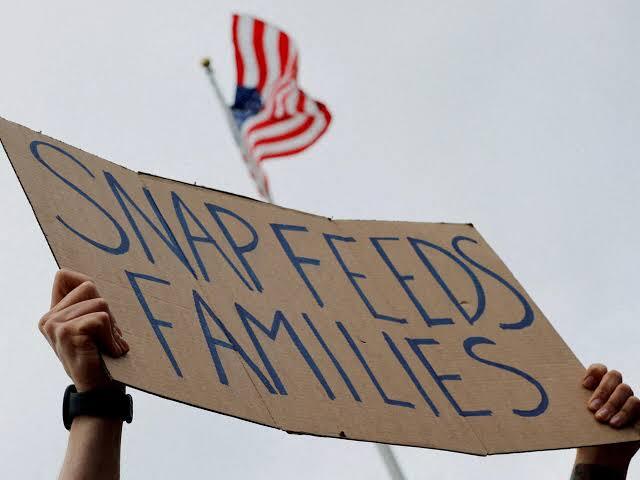
The repercussions of the crisis have intensified in recent weeks, with the suspension of benefits for the Supplemental Nutrition Assistance Program (SNAP) since November 1, affecting more than 40 million Americans who rely on food stamps. The Federal Aviation Administration ordered last Friday to gradually reduce the number of flights by up to 10 percent by November 14 if the deadlock continues.


Republicans were pushing for the passage of a Continuing Resolution that would keep spending at current levels, while Democrats conditioned the inclusion of an extension for healthcare tax credits in this resolution.


In a series of social media posts, President Trump attacked health insurance companies and rejected the idea of extending those credits, instead suggesting direct payments to Americans, stating: “Pay the money to the people, not to the insurance companies!”


The temporary agreement reflects the fragility of the political balance in Washington, as both parties seek to avoid being blamed for the continuation of the shutdown amid increasing public and economic pressure. While Republicans, led by Trump, wanted to appear as the saviors who reopened the government, Democrats attempted to mitigate their political losses by extracting a commitment to revisit the issue of health credits later, making the agreement more of a tactical step than a final settlement.


The course of the crisis also shows how issues of federal funding and healthcare have become tools for early electoral conflict a year before the 2026 elections, as both sides seek to establish different political narratives before American voters: Republicans claim they are fighting “waste and bureaucracy,” while Democrats present themselves as defenders of social justice. Therefore, ending the shutdown does not necessarily mean the end of the crisis, but may rather be a prelude to a new round of conflict over spending priorities and the role of the state in the economy.

LATEST NEWS

Mon 10 Nov 2025 8:38 am - Jerusalem Time

The occupation arrests five citizens from Nablus Governorate.

The Israeli occupation forces arrested five citizens from Nablus Governorate early this Monday.

Security sources reported that the occupation forces stormed the city of Nablus, raided several homes in the Khillat al-Iman neighborhood, and arrested four citizens: Yazan Jaber, Issam Jaber, Ahmad Jaber, and Tarek Jaber.

The same sources added that the occupation forces stormed the town of Beit Furik east of Nablus and arrested Muhammad Khattab after raiding his home.

LATEST NEWS

Mon 10 Nov 2025 8:36 am - Jerusalem Time

21 years since the martyrdom of leader Yasser Arafat

Tomorrow, November 11, marks the 21st anniversary of the martyrdom of the symbol and leader President Yasser Arafat 'Abu Ammar'. The anniversary of 'Abu Ammar's' martyrdom comes amid the ongoing brutal assaults against our people in the Gaza Strip and the West Bank, including Jerusalem, where the daily scene is characterized by bloody reality, as the Israeli aggression machine hardly stops its operations of killing, incursions, destruction, and displacement, along with arrests accompanied by abuse, almost daily in Palestinian cities and villages. The blood of our people in the Gaza Strip continues to bleed, leaving so far 69,176 martyrs and 170,690 injured, in addition to the catastrophic conditions they are experiencing.

The 11th of November each year will remain a painful memory reminding us of the departure of a leader who fought a liberation struggle for our national cause for decades, facing countless military and political battles for it, until it ended with his martyrdom in 2004, after a siege and Israeli aggression that lasted more than three years on his headquarters in Ramallah.

Various stages of the national struggle since the onset of the contemporary revolution have benefited from the extensive wisdom, will, and steadfastness of the leader and martyr Yasser Arafat in the face of all challenges, as he transformed many setbacks into victories recorded in history and will be remembered by future generations for a long time.

PALESTINE

Mon 10 Nov 2025 8:16 am - Jerusalem Time

"Haaretz": Kushner arrives in Israel to follow up on Trump's plan regarding Gaza

U.S. envoy Jared Kushner arrived in Israel after midnight on Sunday to follow up on the implementation of his country's President Donald Trump's ceasefire plan in the Gaza Strip, marking his second visit in about three weeks.

The Israeli newspaper "Haaretz" reported on its website that Kushner arrived in Tel Aviv "to discuss the implementation of the second phase of President Donald Trump's plan for a ceasefire in Gaza."

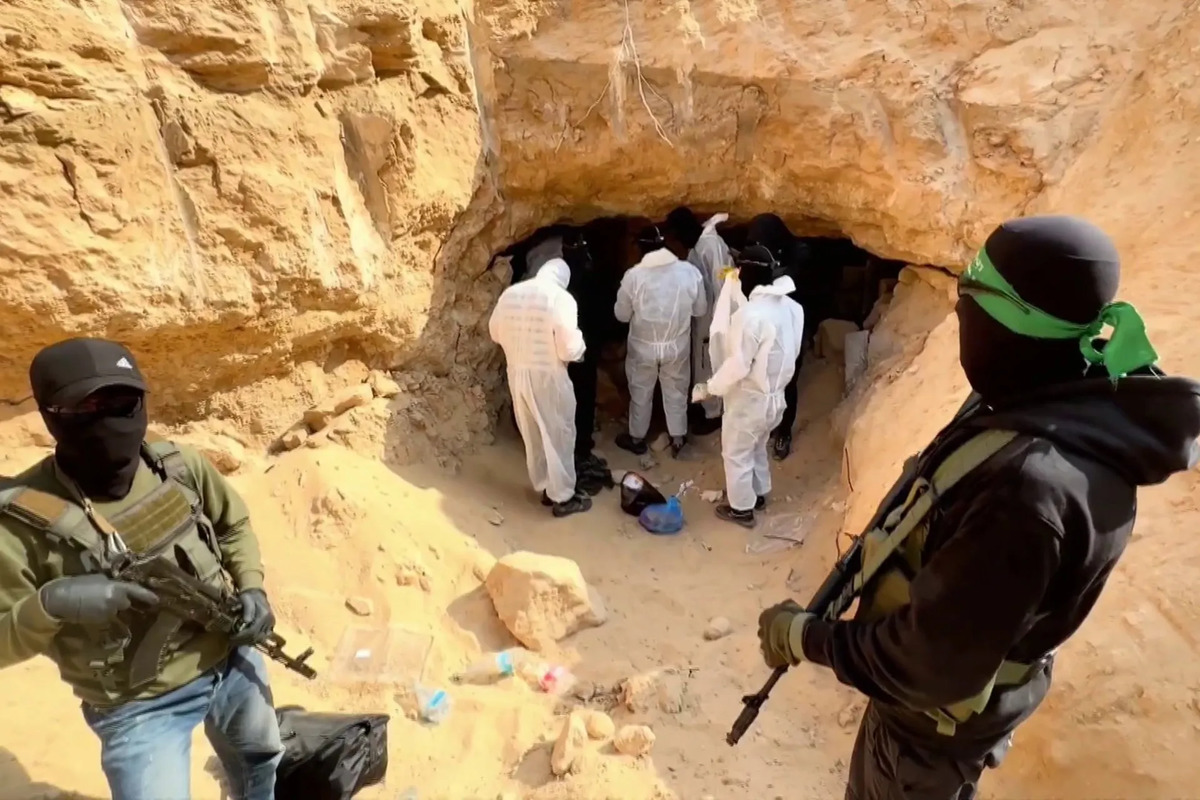
Hours earlier, the Israeli Broadcasting Authority reported that "Washington is pushing to allow the exit of about 150 militants from an underground tunnel in Rafah to areas outside the control of the Israeli army" in the Strip.

It clarified that this comes "as part of an American vision aimed at accelerating the transition to a reconstruction phase" in the Strip, according to Trump's plan.

Last September, Trump revealed his 20-point plan in three phases regarding Gaza, which includes ending the war, a gradual withdrawal of the Israeli army, mutual release of prisoners, immediate entry of aid into the Strip, and disarming "Hamas."

In contrast, the authority reported that Israel proposed an alternative suggestion that involves "not killing the militants if they surrender, but rather arresting them and transferring them for interrogation inside Israel, as a compromise between American demands and Israeli security considerations."

The visit of the American envoys comes amid the ongoing crisis of dozens of Hamas fighters in Rafah, trapped in an area controlled by the Israeli army behind what is known as the "yellow line."

In this context, the Hebrew newspaper "Yedioth Ahronoth" stated: "In recent weeks, Hamas has tried to push for the release of about 200 militants who are apparently being held in tunnels in the Rafah area, but its attempts and those of various mediators have so far failed."

On Tuesday, Israeli Chief of Staff Eyal Zamir conditioned the handover of the remains of officer "Hadara Goldin," who was captured by Hamas in 2014, on considering the release of its members trapped in Rafah.

However, he later stated in a meeting of the security cabinet on Thursday that there would be "no deal" with these militants.

Israel received the body of Goldin on Sunday evening, who was killed in August 2014 in the Gaza Strip, and "Hamas" has held his remains since then.

For its part, the "Izz ad-Din al-Qassam" Brigades, the armed wing of Hamas, held Israel responsible for any clashes that occur with its members trapped in the city of Rafah, in a statement earlier on Sunday.

Since the ceasefire agreement began on October 10, 2025, until November 9 of this year, "Hamas" has handed over twenty living Israeli prisoners and the remains of 26 others out of 28, most of whom are Israelis.

PALESTINE

Mon 10 Nov 2025 7:46 am - Jerusalem Time

The occupation is concerned about the increase in arms smuggling across the borders... and fears of armed infiltrators.

The Israeli fears regarding the risks arising from the increase in smuggling operations across neighboring borders with Egypt, Jordan, Syria, and Lebanon do not cease, whether it is drug smuggling for the criminal world or weapons for resistance forces. This has heightened warnings that what began with the smuggling of drugs and weapons on bicycles may end in a serious security incident, approaching the severity of the Al-Aqsa flood, regardless of its strength and danger.

Yair Kraus, a security correspondent for Yedioth Ahronoth, focused in his remarks on the border with Syria, noting that a new reality has begun to take shape in an unfamiliar arena. Since October 2023, it has become a new and dangerous smuggling route. While it is currently used for criminal purposes, it may become a route for infiltrating militants.

He added in a lengthy report that "this criminal axis will later take on national dimensions and will achieve successes at the expense of Israeli security. This means that a complex reality is currently forming in the Syrian area near the border. On one hand, people live routine lives, and on the other hand, there are many hostile elements that want to harm us."

He explained that "what increases the security danger of the border with Syria is that there is no police or government to enforce order, and smuggling along the northern border, especially the Golan Heights, is significantly affected by geopolitical and security changes."

He confirmed that "dozens of smuggling operations are running smoothly, and the responsibility falls on the army." He quoted Major Oshri Amour, the commander of the border unit established about three decades ago to deal with smuggling, stating that "on the night of October 7, 2023, we were ambushed on the Lebanese border while we were standing by the fence. Initially, the unit was called the 'Lebanese Border Unit,' but over the years, the challenge increased, and it was deployed along the entire northern border for hundreds of kilometers, now including the Syrian border as well."

Kraus revealed that "on the morning of October 7, when we saw trucks crossing the border in the south at the Gaza border, we immediately organized all the soldiers to go there to assist the army and settlers. However, the area commander advised us not to do so, fearing a real threat of Hezbollah joining in and breaching the northern border. Therefore, we stayed to protect it. Today, he and his men could not have imagined two years and a month ago that they would be standing at the same border after the collapse of the Assad regime and Hezbollah receiving a fatal blow."

He clarified that "Israel has achieved successes in the security field in the north, but facing smuggling operations constitutes an ongoing struggle that is still far from achieving victory in it. Because when one smuggling route for drugs and weapons is closed, smugglers immediately look for another route, like new buds after rain. Now, it seems they have found at least one route in Syria. The reasons for this are multiple; before the war, while the Syrian border was exposed and flooded with water, the Lebanese border was filled with dense thickets that made it easier for smugglers to hide, and at the same time, Israel was hesitant to attack it."

He pointed out that "throughout the fighting in the north, smuggling operations from the Lebanese border ceased, and anyone approaching the fence is considered dead. Access to the Syrian border has also become extremely difficult. Currently, the presence of the army in Lebanon still affects smuggling routes, but at the same time, the rate of smuggling from Jordan, Israel's longest border, has increased, where efforts are concentrated. Despite the decline in smuggling on the Syrian border, it still attracts significant attention from the police, army, and Shin Bet, because what was once unfamiliar has now become a phenomenon and a changing, evolving event."

Kraus emphasized that "if anyone approaching the fence on the Lebanese border is at risk of death, and the area adjacent to it is forbidden for Lebanese to enter, the reality in Syria, where a buffer zone has been established with Israeli soldiers present, has become much more complicated, as have the security efforts to combat the smuggling of weapons and drugs and infiltration attempts."

He explained that "on the other side, there is life, roads, and homes very close to the fence, where people live. Ultimately, it is enough for there to be a road that allows a private car to approach the fence, and then someone jumps for a few seconds, in phone contact with the smuggler from the Israeli side, and throws pistols into his pockets, and the incident ends in the blink of an eye."

He confirmed that "on the Syrian side, the driver escapes deep into the area

PALESTINE

Sun 09 Nov 2025 5:20 am - Jerusalem Time

A Palestinian dead in the Al-Far'a camp, and the occupation storms the homes of freed prisoners.

A Palestinian youth was martyred on Saturday evening by Israeli army gunfire in the al-Far'a camp south of Tubas, at a time when cities and villages in the occupied West Bank were being raided, and homes of several released prisoners and deportees from the recent "Tsunami of Freedom" deal were being stormed.

The Ministry of Health stated in a brief statement that the young man, Abdul Rahman Ahmed Abbas Darawsha (26 years old), was martyred after being shot by the Israeli army, noting that he was transferred to Tubas Government Hospital in critical condition before his death was announced.

The Palestinian news agency reported that an Israeli force stormed the camp, deployed infantry soldiers at its entrance, and opened live fire, as well as obstructing traffic on the main road adjacent to the camp.

With the martyrdom of Darawsha, the number of Palestinians who have been martyred in the West Bank since the beginning of the Israeli genocide against Gaza on October 8, 2023, has risen to 1,069 martyrs, in addition to about 10,000 injured and more than 20,000 detainees, including 1,600 children, according to official Palestinian statistics.

The genocide that lasted for two years in Gaza, which ended with a ceasefire agreement that came into effect on October 10, 2025, resulted in more than 69,000 martyrs and over 170,000 injured.

In the same context, Israeli occupation forces raided the homes of several released prisoners and deportees from the recent "Tsunami of Freedom" deal in the town of Kafr Qaddum east of Qalqilya in the occupied West Bank.

Israeli occupation forces also stormed the city of Yatta south of Hebron and the al-Arroub camp north of it, as well as the villages of Ajjah south of Jenin, Kafr Qaddum east of Qalqilya, and Beit Jala in Bethlehem, and raided homes there.

PALESTINE

Sun 09 Nov 2025 12:08 am - Jerusalem Time

Israeli admission: The ceasefire agreement is in favor of Hamas despite the strikes it received.

Despite the return of all Israeli prisoners and the nearing conclusion of the remains of the dead, as time passes, the euphoria of the occupation fades, and it awakens to the existing reality, as he describes it, which is that Hamas still controls Gaza, and American intervention prevents the occupying state from collapsing, placing them in a situation that reminds them of Lebanon, with a steady presence of the Israeli army in Gaza that could turn into a war of attrition.

Menachem Horowitz, a writer for Channel 12, confirmed that "after a month of signing the agreement with Hamas to end the war and the hostage deal, it seems we have become smarter, and we understand where this whole thing is heading. It somewhat resembles the situation with Hezbollah in the north, as the army strengthens its grip on the ground, mostly maintains the ceasefire, and sometimes acts on a case-by-case basis."

He added in an article translated by "Arabi21" that "the fleeting euphoria that prevailed on the day of the hostages' return, Trump's visit to the Knesset, and the potential visit of the Prime Minister to attend the Sharm El-Sheikh summit, along with the arrival of the Indonesian president to Israel, both of which ultimately did not happen, has been replaced by the realization that we apparently are not rushing towards a new Middle East, and that regional peace is not on the horizon."

He clarified that "the military base that Israel has become known for over the past month is not affiliated with the army at all, but is located in Kiryat Gat, hosting American soldiers, and soon also soldiers from the multinational force that will arrive in Gaza, although after Trump, the Vice President and Secretary of State arrived, then the American Chief of Staff to closely follow the important project for the United States in its new foreign policy, where Trump feels the necessity of its success, and Israel has been chosen to be a model in achieving American aspirations."

Horowitz pointed out that "the situation seems strange, and not always pleasant, but if we remember that Trump helped Israel a lot in the attack on Iran, whether through direct attack or as a defensive umbrella, and thanks to him, twenty hostages returned home alive, and he is keen to provide us with the necessary weapons, this may be a price worth paying, and the current meaning of unprecedented deep American intervention is that we currently do not have the capability to launch a large-scale attack on Hamas in Gaza, and for that to happen, we have to change the Americans' minds, or breach the rules and act contrary to our agreement with them, and both scenarios are very unlikely."

He confirmed that "Hamas is keen to shake hands with the Americans in every incident where army soldiers are attacked, but it is clear that everything that was agreed upon with them is suspended, and although it is not yet clear, we have realized after a month of signing the agreement that Hamas is still alive and controls the Gaza Strip, even with several local gangs opposing its rule. Does anyone think that after the end of the phase of returning the dead hostages, the movement will simply move on and leave others to manage affairs in Gaza?"

The writer noted that "Trump's threats to destroy Hamas seem somewhat empty, as Trump avoids sending American forces to conflict areas as much as possible, and he certainly would not be happy about entering another front. Let us remember that this is the same Trump whose envoys negotiated directly with Hamas leaders, who survived two years of war that almost completely destroyed Gaza, with Palestinian casualties reaching astronomical numbers, and nearly all senior leaders of the movement were eliminated, yet it still exists."

He explained that "objectively, this could be considered an unprecedented Israeli success, akin to the fatal blow received by Hezbollah and Iran. Although we have been told for many months that Hamas is losing its grip and is on the verge of disintegration, and that a little pressure will cause it to collapse, we discover that the picture is completely different, reminding us somewhat of images of the hungry in the Gaza Strip at the peak of the humanitarian crisis, which completely disappeared from the images coming from the Strip immediately after the signing of the agreement, and today we can indeed see the residents of Gaza celebrating in candy stores with new iPhones."

He admitted by saying that "we are facing a problem forming before our eyes, and it will be difficult for us to get out of it. We are now in a situation that reminds us of the eighties and nineties in Lebanon: the army is present there, but not fully, and the soldiers are mostly in a state of stagnation, so perhaps describing them as 'ducks in a shooting range' is somewhat exaggerated, but considering Hamas's capabilities and Washington's impatience, we may face a long war of attrition,

PALESTINE

Sun 09 Nov 2025 12:06 am - Jerusalem Time

Complications beyond the field.. Will Trump's plan for Gaza succeed in its second phase?

Attention is increasingly focused on the second phase of the ceasefire agreement and the exchange of prisoners according to the plan of U.S. President Donald Trump, as the first phase nears its end, amid questions and speculations about the possibility of maintaining momentum and achieving the declared goals.

Analysts suggest that the first phase did not lay the groundwork for the success of the second phase, which is described as being governed by "complexities that extend beyond the battlefield to a battle of political wills" between Washington and Tel Aviv on one side, and the Palestinians and their regional allies on the other.

According to Ibrahim Fraihat, a professor of international conflicts at the Doha Institute for Graduate Studies, the success of the first phase was limited to "achieving a temporary ceasefire and the exchange of prisoners" and implementing some humanitarian provisions, without necessarily meaning that the path is now clear for the second phase and its success.

The second phase appears to be more complicated, as it touches on the essence of the conflict - according to Fraihat during his appearance on the program "Event Path" - since it concerns security and administrative arrangements in Gaza, which are issues that have not been resolved between the major powers or between the regional and Palestinian parties.

In light of this, any deviation in the understandings "could lead to a complete collapse of the process," because "the success of the first phase was more technical and humanitarian than political."

For his part, Israeli affairs expert Mohannad Mustafa confirms that Israel views the second phase from a completely different perspective, as it seeks - according to him - to "take advantage of the relative calm to reposition itself on the ground, without getting involved in political commitments or an actual withdrawal from the sector."

According to Mustafa, Tel Aviv aims to keep its forces on the outskirts of the Gaza Strip and not withdraw during the election year, and it "will not allow the establishment of a unified Palestinian administration or an international security force that limits its military freedom."

He points out that the Israeli security and political establishment sees the second phase as "fraught with risks to achieving the goals of the war," so it manages it cautiously and seeks to expand its margin of maneuver.

Based on this, Israel wants the proposed international force to be referenced by the Peace Council under Trump's plan rather than the Security Council, as it is not entirely convinced of the usefulness of this phase and does not guarantee that it will serve its interests.

However, Fraihat does not rule out that this force "could turn into a military occupying force with absolute powers, if it enjoys excessive security under the reference of the Peace Council," emphasizing the need for its powers to be limited by a UN reference.

Meanwhile, Ahmed Atawneh, director of the Vision Center for Political Development, links the impasse of the American plan to the nature of the Palestinian political environment, noting that "any talk of success or failure remains incomplete as long as Washington deals with Gaza as a file separate from the Palestinian issue."

Atawneh believes that the absence of a unified Palestinian national reference makes the plan susceptible to disintegration, expressing his conviction that the second phase "will face a legitimacy crisis, as the local parties do not see themselves represented in the ongoing understandings."

In the same context, former U.S. State Department official Thomas Warik believes that Washington is betting on passing the second phase through the Security Council, to provide a legal cover for the proposed international force in Gaza.

However, Warik warns that "any failure to build international consensus will leave the plan halfway."

Based on this, the spokesperson sees that the success of the United States in issuing a UN resolution is a "test of credibility" for the Trump administration, which faces potential Russian and Chinese rejection, in addition to Arab and European reservations about the nature of the proposed force and its tasks.

Since the start of the ceasefire agreement on October 10, the Palestinian resistance has released 20 living prisoners and handed over the bodies of 23 out of 28, with 5 bodies remaining, one of which belongs to a Thai national and 4 others to Israelis, including officer Hadar Goldin, whose body was retrieved on Saturday evening from Rafah.

PALESTINE

Sat 08 Nov 2025 11:18 pm - Jerusalem Time

Arab rejection of the US conditions for the Gaza reconstruction plan.. "threatens the stability of the region"

The "Financial Times" reported that Arab countries have rejected the U.S. plan for the reconstruction of the Gaza Strip under the conditions set by Washington, confirming that they will not fund the project from their own resources.

According to the newspaper's sources, Israeli and American officials, including Jared Kushner, son-in-law of U.S. President Donald Trump, proposed launching a reconstruction process in the area controlled by the occupation from the Gaza Strip, claiming that this could provide a "better" model for Palestinians compared to life under Hamas rule.

The newspaper clarified that Arab countries rejected the U.S. proposal to reconstruct what is known as the "new Gaza Strip" in the area under Israeli control, considering that implementing this plan could entrench a reality of permanent division of Palestinian territories.

The "Financial Times" quoted an Arab diplomat as saying that the disagreement over the reconstruction plan could spark a political confrontation between Palestinians, Egyptians, Qataris, and Turks on one side, and the United States and Israel on the other, adding that another diplomat emphasized that no Arab country would contribute financially to the reconstruction under these conditions.

This comes at a time when the Palestinian Authority's Minister of Economy, Mohammed Al-Amour, revealed that Israeli strikes have led to the "complete destruction of 85 percent of civil infrastructure facilities" in Gaza, where about 90 percent of the population lives without work.

International institutions estimate that the reconstruction process for the Gaza Strip, which has suffered near-total destruction, could take about ten years and require approximately $70 billion, while the toll from the ongoing war since October 2023 has exceeded around 68,500 martyrs and more than 170,000 Palestinian injuries.

PALESTINE

Sat 08 Nov 2025 11:00 pm - Jerusalem Time

The most prominent of them is "Hilltop Youth".. Israeli settlement organizations mistreat Palestinians in the West Bank.

The violence perpetrated by settlers against Palestinians in the occupied West Bank is escalating, as part of the activities of extremist Israeli organizations that have been carrying out these assaults for years, often originating from illegal settlements even under Israeli law.

Israeli settlers attack Palestinian villages and towns - under the watch of the occupation forces and their police - and the frequency of these assaults increases during the olive harvest season.

At the forefront of these organizations is the "Hilltop Youth," which emerged after the second intifada in 2001, from which the "Hilltop Girls" group was formed starting in 2005.

The philosophy of this organization is based on occupying hills overlooking Palestinian villages and their farms, then gradually expanding to turn into an illegal settlement outpost, according to a report broadcast by Al Jazeera.

This organization has committed acts of murder, arson of homes, and destruction of property, and it faced American and European sanctions last year.

On Friday, the United Nations stated that Israeli settlers carried out 264 assaults against Palestinians in the West Bank during October, the highest monthly toll in nearly 20 years.

Israel occupied the West Bank, including East Jerusalem, in 1967, in a move considered a clear violation of the United Nations Charter and principles of international law, and it refuses to withdraw and establish an independent Palestinian state.

Additionally, active in the West Bank is the so-called "Price Tag" group, a radical youth group that has carried out assaults on the property of Palestinians and Arabs within the "Green Line," deliberately leaving racist signatures and slogans at the sites of their operations.

Meanwhile, "Guardians of Judea and Samaria" is a volunteer organization established in 2013 to protect farms and illegal settlements, supporting settler violence, and it faced British sanctions in 2024.

The "Regional Defense Brigades" also stand out - formed by the Israeli occupation army after the events of October 7, 2023 - by recruiting 5,500 settlers to serve in their areas and near nearby Palestinian villages.

About 7,000 people serve in this organization, which is active in acts of violence, threats, and destruction of Palestinian property.

The goal of settler violence is to make Palestinian agriculture unsustainable and push Palestinian residents to flee, as part of the broader objectives of the occupation to annex more parts of the West Bank.

PALESTINE

Sat 08 Nov 2025 10:52 pm - Jerusalem Time

An American official talks about the opportunity to evacuate Hamas fighters from Rafah.

Israeli Channel 12 reported today, Saturday, that a senior American official stated that the return of the body of Israeli officer Hadar Goldin gives Prime Minister Benjamin Netanyahu space to resolve the crisis of Hamas members trapped in Rafah, southern Gaza Strip.

The American official said that the administration of President Donald Trump has been pressuring Hamas in recent days to return Goldin's body to Israel, in order to create an opportunity for an agreement between the two sides to end the crisis of Hamas fighters trapped in the tunnels of Rafah.

He added that the arrangement desired by Washington is the return of Goldin's body followed by the surrender of the trapped Hamas members' weapons in Rafah.

He continued that under this arrangement, the trapped individuals are granted safe passage to Hamas-controlled areas or to a third country.

The Israeli channel also quoted the American official as saying that in the second phase, the tunnels where Hamas militants were trapped will be destroyed.

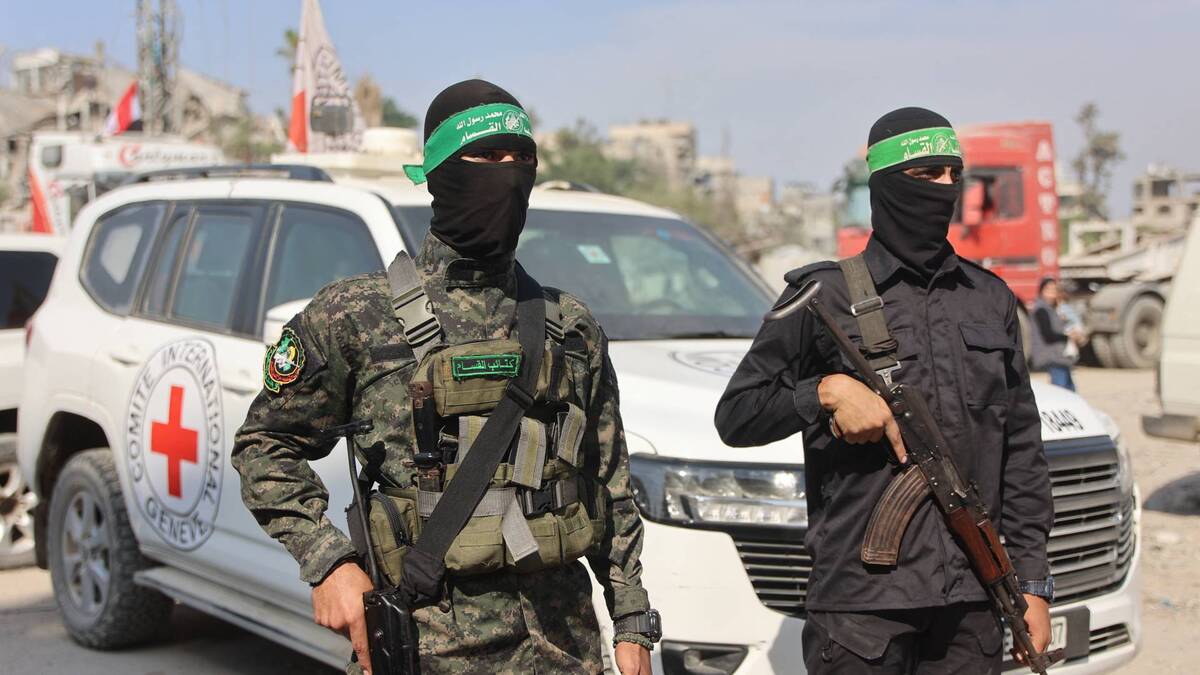
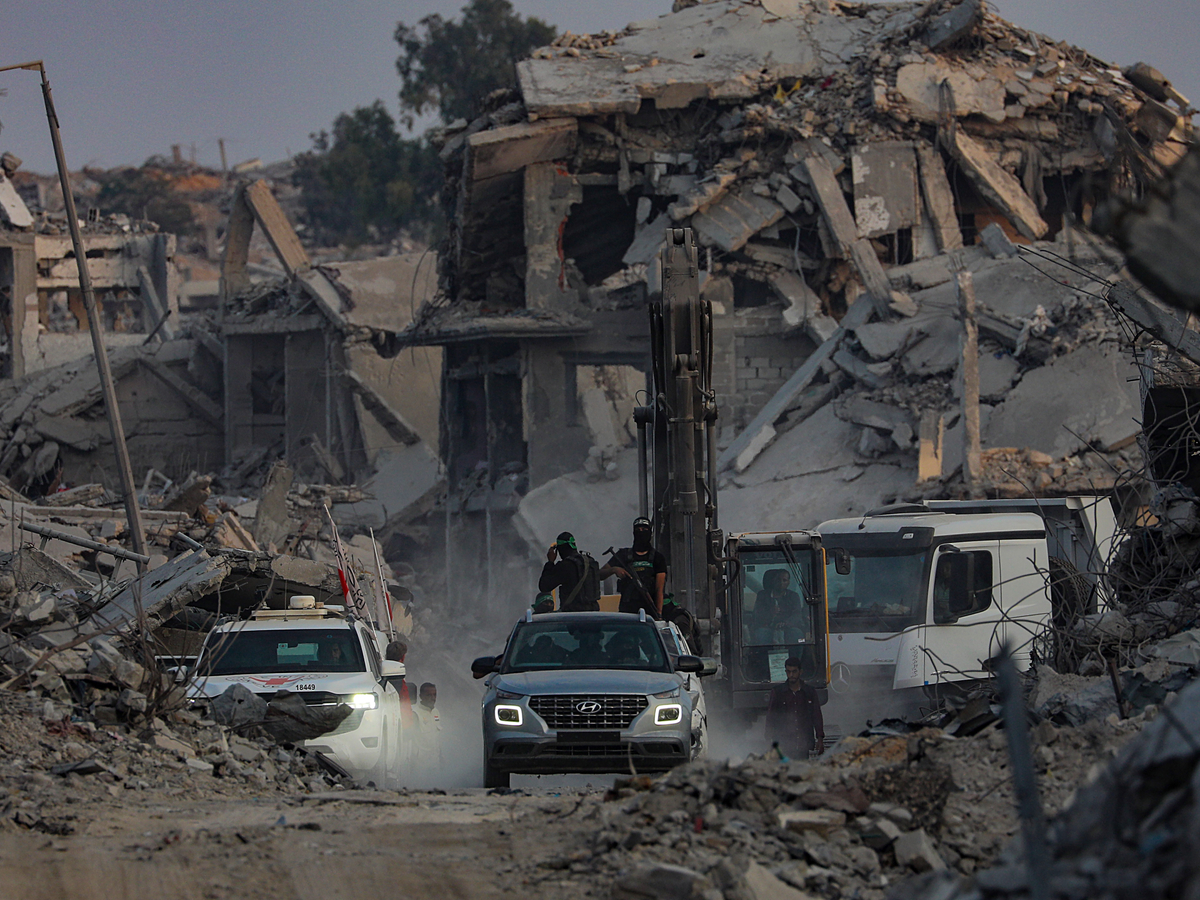
A leadership source in the Al-Qassam Brigades told Al Jazeera earlier today that Al-Qassam, along with a team from the International Red Cross, retrieved the body of Israeli officer Hadar Goldin, who was killed in 2014, from a tunnel west of Rafah city.

For its part, the Ma'ariv newspaper quoted an Israeli source stating that the American pressure to allow safe passage for the besieged Hamas fighters in Rafah stems from a desire to maintain the stability of the ceasefire in the Gaza Strip, which came into effect on October 10 of last month.

Israel estimates the number of Hamas fighters trapped in an area it occupies in Rafah to be around 200, and the Israeli newspaper Yedioth Ahronoth reported last Tuesday that Chief of Staff Eyal Zamir expressed readiness to release these fighters in exchange for the return of Hadar Goldin's body, which has been held by the Al-Qassam Brigades since 2014.

However, Israeli officials stated that the trapped Hamas fighters must choose between "surrender" or death inside the tunnels of Rafah.

LATEST NEWS

Sat 08 Nov 2025 8:34 pm - Jerusalem Time

A child was killed due to the explosion of an unexploded ordnance from the occupation in Khan Y

A child was martyred this evening, Saturday, due to the explosion of an object left over from the Israeli occupation in Khan Younis, south of the Gaza Strip.

Local sources reported that the child's body was transferred to Nasser Medical Complex in Khan Younis.

International relief organizations had previously warned of the danger posed by war remnants in the Gaza Strip, which "may last between 20 and 30 years."

It is noted that the toll of the occupation's aggression on the Strip has risen to 69,169 martyrs, the majority of whom are children and women, and 170,685 injured, since October 7, 2023.

Meanwhile, several victims remain under the rubble, while the toll of martyrs and injuries since the ceasefire agreement on October 11 has reached 241 martyrs and 614 injured.

A total of 522 bodies have been recovered, and the bodies of 300 martyrs from the occupation have been received, of which 89 have been identified so far.

PALESTINE

Sat 08 Nov 2025 6:20 pm - Jerusalem Time

"World Health Organization": 16,500 patients in Gaza are waiting for evacuation, and we demand the immediate opening of the Rafah crossing.

The World Health Organization issued an urgent and strongly worded appeal on Saturday, demanding the immediate reopening of the Rafah crossing and all crossings leading to the Gaza Strip.

The organization revealed a shocking number that highlights the scale of the disaster, confirming that there are at least 16,500 patients in urgent and critical need of evacuation outside the territory to receive life-saving treatment.

The UN organization emphasized that the Rafah crossing is a 'vital outlet' for medical evacuations of critical cases and a 'key entry point' for the already scarce health supplies.

LATEST NEWS

Sat 08 Nov 2025 12:32 pm - Jerusalem Time

The death toll from the aggression on the Gaza Strip has risen to 69,169 dead and 170,685 injured

Medical sources announced today, Saturday, that the death toll in the Gaza Strip has risen to 69,169, the majority of whom are children and women, since the start of the Israeli occupation's aggression on October 7, 2023.

The sources added that the number of injuries has risen to 170,685 since the onset of the aggression, while several victims remain under the rubble, and rescue teams are unable to reach them.

It was noted that 10 bodies of martyrs have arrived at hospitals in the Gaza Strip over the past 72 hours, including 9 martyrs who were retrieved from under the rubble, in addition to 6 injuries.

The death toll and injuries since the ceasefire agreement on October 11 have reached 241 martyrs and 614 injured, with 522 bodies retrieved.

Additionally, the bodies of 30 martyrs from the occupation have been received, of which 89 have been identified so far.

PALESTINE

Sat 08 Nov 2025 12:16 pm - Jerusalem Time

Israel tightens its grip on food in Gaza

While the Israeli occupation allows the passage of aid and goods to the Gaza Strip, it continues to adhere to the equation of 'keeping the head above water' with more than two million Palestinians, resembling a state of leaving them in a spiral of starvation without recovering from its effects.

This policy is evident through Israel's control over the types of goods entering, their quantities, and prices, aiming to make their availability difficult for consumers who are still suffering from the repercussions of a devastating war that has left its marks on their bodies.

The occupation has accurate statistics on the monthly consumption of basic food items by the residents of the Strip, as the occupation forces allowed the entry of a total of 4,453 trucks, including all that has entered the Strip in terms of aid, commercial goods, and fuel derivatives.

The number of trucks entering the commercial sector reached 1,110 trucks, of which 354 were food trucks, accounting for 32% of the total incoming to traders.

The number of meat trucks was limited to only 10 trucks, while the number of vegetable and fruit trucks reached 62 trucks.

The Director General of the Government Media Office, Ismail Al-Thawabteh, states that the average number of trucks entering daily is only 171 trucks out of 600 trucks that are supposed to enter according to humanitarian protocols.

The occupation forces still prevent 350 types of essential foods needed by children, patients, the injured, and vulnerable groups, most notably eggs, red meat, poultry, fish, and dairy products.

The occupation has accurate statistics on the monthly consumption of basic food items by the residents of the Strip due to its control over the commercial crossings.

The Acting Director General of Studies at the Ministry of Economy, Muhammad Barbak, states that the occupation relies on a policy of 'keeping the head above water' and controls the incoming goods in a way that ensures the population lives in a state of hunger without reaching complete mass death.

The occupation's procedures control the triad of quantities, prices, and types, redistributing goods at rising prices, making the market fragile and quick to be affected by any escalation.

The Gaza Strip is currently suffering from a lack of the necessary infrastructure to store goods after warehouses and storage facilities were destroyed during the war.

The Director General of Studies at the Ministry of Economy confirms that the Israeli occupation deliberately controls the quantity of essential goods entering to ensure its continued control over the market.

It seems that the occupation has set a limit on the number of calories each person in the Gaza Strip consumes, so that they do not reach a level of recovery from starvation.

Nutritionist Ahmad Al-Fara states that malnutrition in Gaza has shifted from a stage of severe calorie deficiency to a stage of protein deficiency.

The lack of protein causes swelling of the face, abdomen, and limbs, as well as destroying immunity, making the body unable to resist diseases.

The diet in Gaza has become dangerously imbalanced, as the population relies solely on carbohydrates, while essential natural fats are scarce.

Al-Fara confirms that the situation is becoming harsher for the most vulnerable groups such as the injured, pregnant women, and newborns.

New birth cases clearly reflect the disaster, as the weights of newborns do not exceed one and a half kilograms.

Malnutrition has become a constant partner of chronic diseases, and we lose cases in intensive care every day.

PALESTINE

Sat 08 Nov 2025 11:56 am - Jerusalem Time

The survival of a family whose home was burned by settlers in Ramallah, and the occupation assaults a family in Hebron.

Settlers set fire to a house east of Ramallah on Saturday, resulting in injuries, while occupation soldiers carried out new assaults and incursions in Jenin and Hebron in the West Bank.

A correspondent reported that the settlers attacked the house during the night, noting that the family managed to escape through the back door after several members suffered from suffocation.

Local sources reported that settlers set fire to a house in the village of Abu Falah northeast of Ramallah early Saturday morning, causing parts of it to ignite and injuring several family members with suffocation before they managed to escape.

Palestinian local sources from the village confirmed that occupation forces later stormed the area around the house and fired at the citizens present, with no injuries reported.

In Hebron, a citizen was injured with wounds and bruises on Saturday after being assaulted by Israeli occupation soldiers in the town of Yatta south of Hebron in the West Bank.

Security and local sources reported that occupation forces stormed the home of citizen Osama Tarad Abu Aram in Yatta and brutally assaulted him and his family members, resulting in his injuries, for which he was taken to Yatta Hospital, where his condition was described as moderate.

On another note, occupation forces set up several military checkpoints at the entrances to Hebron and its towns, villages, and camps, in addition to closing several main and secondary roads with iron gates, concrete blocks, and earth mounds.

In the city of Jenin, Israeli occupation forces stormed the town of Ya'bad southwest of the city early Saturday morning.

The mayor of Ya'bad, Amjad Atatreh, reported that occupation forces stormed the town, raided several homes, forced their owners to evacuate them, and turned them into military barracks, while closing commercial shops at the town's entrance.

He added that occupation forces closed the road leading to the Tarm area north of the town with earth mounds.

He continued that occupation forces raided his home and threatened to close the town and destroy its houses.

766 assaults On their part, data revealed by the Palestinian Wall and Settlement Resistance Commission documented more than 766 assaults carried out by settlers against Palestinians and their properties in the West Bank during October.

The pace of settlement attacks in the Jordan Valley has escalated, as the occupation seeks to impose new realities and complete demographic changes.

After the occupation displaced 32 Bedouin communities, it worked to establish new settlement outposts in the area to seize the land.

These assaults fall within a broad wave of Israeli escalation in the West Bank by the army and settlers, which began concurrently with the start of the Israeli genocide in Gaza on October 8, 2023.

These assaults in the West Bank resulted in the martyrdom of 1,068 Palestinians and injuries to about 10,000 others, in addition to the arrest of more than 20,000 Palestinians, including 1,600 children.

Meanwhile, the genocide that lasted for two years in Gaza left about 69,000 martyrs and more than 170,000 injured.

PALESTINE

Sat 08 Nov 2025 11:00 am - Jerusalem Time

Egypt reveals international moves to issue a Security Council resolution supporting the "Trump Plan" for peace in Gaza.

The Egyptian Ministry of Foreign Affairs announced on Saturday that there are intensive diplomatic efforts in New York aimed at obtaining a resolution from the United Nations Security Council to support U.S. President Donald Trump's peace plan for the Gaza Strip.

This revelation came during a phone call received by Egyptian Foreign Minister, Badr Abdel Atti, from the High Representative of the European Union, Kaja Kallas.

The two sides discussed the necessary measures to solidify elements of the American plan and enhance the role of international parties in its implementation.

Abdel Atti clarified that the UN effort aims to form a peace council in Gaza and deploy an international force to monitor the situation, in addition to stabilizing the work of the Palestinian administrative committee, in accordance with the provisions of the American peace initiative.

The Egyptian minister also emphasized the necessity of fully implementing the Sharm El Sheikh Agreement to ensure a complete end to the war, calling for a transition to the second phase of the initiative, which includes political and humanitarian aspects, and the initiation of early recovery and reconstruction steps.

Abdel Atti noted that Cairo is following up on the arrangements for the international conference for the reconstruction of Gaza, which Egypt will host this month, stressing the importance of international community support to ensure the success of rebuilding efforts and achieving stability in the sector.

The call did not only focus on the Palestinian issue but also addressed recent developments in Sudan, where both the Egyptian and European sides confirmed that there is no military solution to the Sudanese crisis.

The joint statement indicated that both parties condemned the blatant violations witnessed in the city of El Fasher recently and called on the international community to put an end to the serious abuses and protect civilians.

Both sides also expressed their deep concern over the worsening humanitarian situation in Sudan, demanding an immediate ceasefire to facilitate the delivery of aid and alleviate the suffering of the affected population.

These diplomatic moves come at a time when Egypt and the European Union are seeking to coordinate international efforts to ensure the implementation of Trump's peace plan for Gaza in a thoughtful manner, focusing on political, security, and humanitarian stability in the sector.

The Egyptian Ministry of Foreign Affairs confirmed that ongoing communications with partners aim to unify international positions and ensure that UN decisions support the stability of the region, with a focus on protecting civilians and continuing reconstruction efforts.

PALESTINE

Sat 08 Nov 2025 10:29 am - Jerusalem Time

Political Thinker: The False Promise of a Ceasefire in Gaza

The writer and political thinker Mohammed Ayoub stated that the agreement in Gaza faces the imminent risk of collapse less than a month after the announcement of a ceasefire, accusing Israeli extremism and the declining American commitment to supporting a permanent solution to the Palestinian-Israeli conflict.

Ayoub began his article by emphasizing that American efforts led by Vice President J.D. Vance, envoy Steve Witkoff, and President Trump's son-in-law Jared Kushner failed to rein in Israeli Prime Minister Benjamin Netanyahu, who launched two new attacks on the Gaza Strip within a few weeks.

The writer believes that the second phase of the agreement—which involves disarming the Islamic Resistance Movement (Hamas) and establishing an alternative authority in Gaza—seems almost impossible, as no one can convince the movement to give up its weapons without losing its justification for existence as a national resistance against occupation. Even if it surrendered, other organizations would emerge to fill the void.

Israel's recent excessive military responses show that the Israeli government is eager to resume its military campaign in Gaza, especially since it only accepted the ceasefire under pressure from U.S. President Donald Trump, and many ministers in Netanyahu's government oppose the agreement and demand the continuation of the war until the "complete elimination of Palestinian resistance."

The Israeli government will continue to seek a pretext to resume the attack to achieve its maximum goals declared by Netanyahu since the beginning of the war, and this option seems more appealing now after Hamas released all living Israeli detainees.

However, the Israeli right's desire to turn Gaza into the "Riviera of the Middle East" reveals an implicit intention to uproot the population and seize the land, reinforcing Palestinians' conviction that the real goal is their permanent displacement from the Strip.

Despite Israel's military superiority, Ayoub questions the sustainability of its dominance in the region, as the demographic balance will make it almost a bi-national state, placing it before two bitter choices.

The article notes that the war on Gaza has weakened Arab confidence in Israel, especially among Gulf states, distancing the possibility of normalization with Saudi Arabia.

As for within the United States, Ayoub asserts that American public opinion is undergoing a radical shift against Israel, with a majority of Americans believing that Israel has committed war crimes.

Mohammed Ayoub concluded that the "current ceasefire" in Gaza is not the beginning of a solution, but rather a fragile station dependent on the continuation of Israeli dominance and unconditional American support.