ISRAELI AFFAIRS

Mon 09 Mar 2026 12:00 pm - Jerusalem Time

Israeli Warnings Against 'Intoxication of Power' and Fears of a Long War of Attrition with Iran

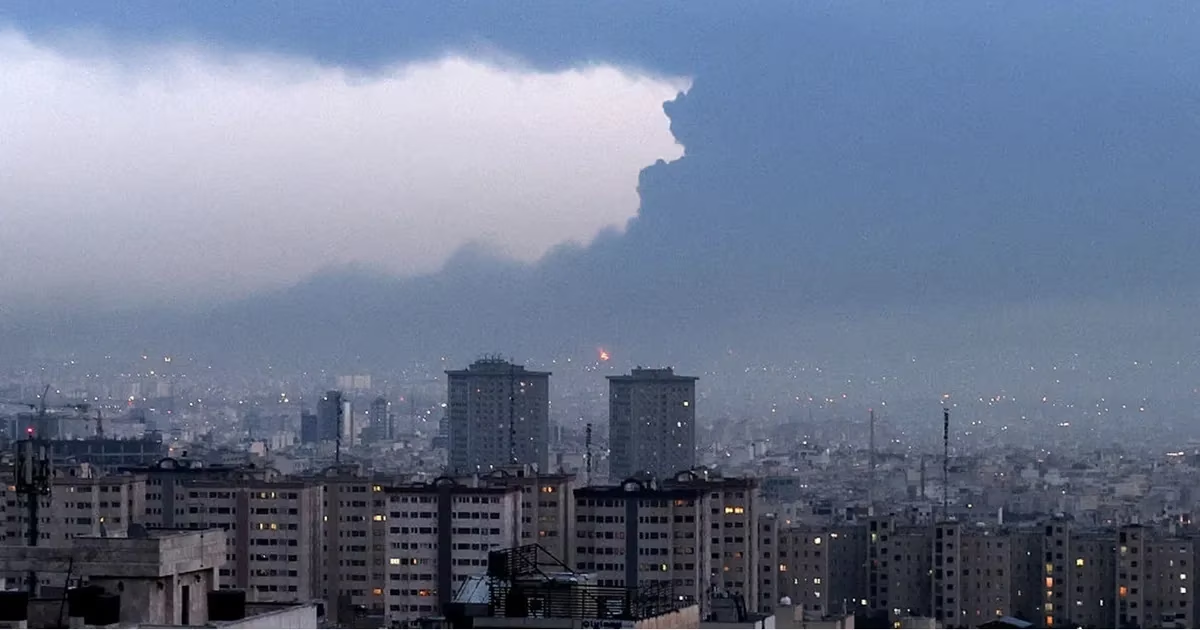
The direct military confrontation between the Israeli-American alliance and the Islamic Republic of Iran has entered its tenth day, amidst sharp differences in Israeli assessments between rushing to destroy the Iranian regime and warning against sinking into an endless quagmire of attrition. Israeli cabinet member Avi Dichter affirmed that the current air operations primarily aim to completely dismantle the Iranian nuclear project, considering that the United States has the capability and responsibility to overthrow the regime in Tehran through intensified aerial bombardment.

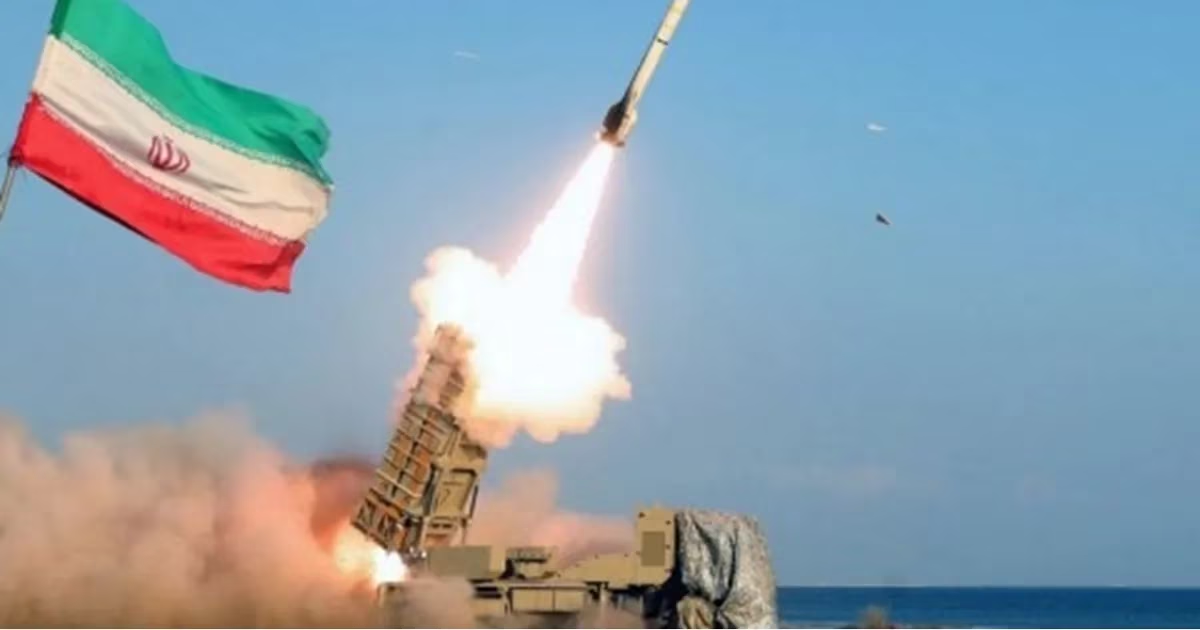
In a related context, occupation army commander Eyal Zamir indicated that the current war is not bound by a specific timeline, while sources in the General Staff revealed military preparations to continue fighting for at least another month. These leaders are pushing for continued intense military pressure until the threat of Iranian ballistic missiles is neutralized, as military reports claim the destruction of a large part of Iran's missile capabilities, with only about 150 active launch platforms remaining.

For his part, US President Donald Trump stated that any decision regarding a ceasefire or ending military operations would be made in full coordination with Israeli Prime Minister Benjamin Netanyahu. Trump clarified that the conditions set for ending the war would be firm, while his defense secretary, Pete Hegseth, hinted that Washington does not rule out the option of future ground intervention despite its current focus on overwhelming air strikes.

On the other hand, Israeli voices emerged warning against the consequences of 'intoxication of power,' with reserve general Yisrael Ziv criticizing the absence of a clear exit strategy from the confrontation. Ziv expressed concerns that calls for continued military pressure could lead to Israel's involvement in a long war of attrition, recalling the Iranian regime's ability to withstand for many years, as happened in its previous war with Iraq.

Political analyst Nahum Barnea agreed with this view, noting that the military operations, which began with great momentum, lack a political vision for the next phase. Barnea warned of the effectiveness of 'Iranian patience' and Tehran's ability to disrupt daily life in Israel through sporadic and continuous missile attacks, which could turn initial military achievements into a strategic burden.

In an analysis of the field situation, military analyst Amos Harel pointed out that the war has not yet succeeded in addressing the fundamental nuclear threat represented by the enriched uranium stockpile. Harel warned that the Iranian regime's survival from this wave might push it to accelerate its steps towards acquiring nuclear weapons, criticizing what he described as the government's 'dullness of feeling' towards the suffering of the Israeli home front and the deterioration of economic conditions.

Economic reports indicate that Israel is incurring huge losses amounting to 9.4 billion shekels weekly as a result of the partial paralysis in production sectors and the call-up of 100,000 reserve soldiers. This economic pressure coincides with a sharp rise in global oil prices, posing increasing internal and international challenges for the Trump administration, especially with escalating criticism in Congress regarding the constitutionality of engaging in this war.

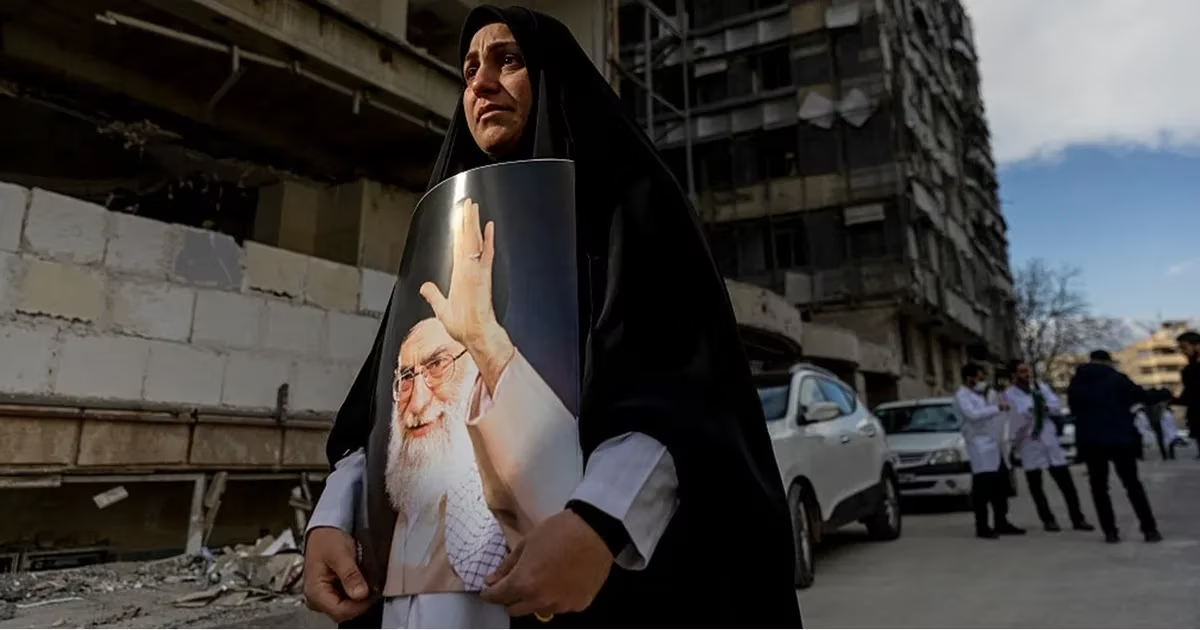
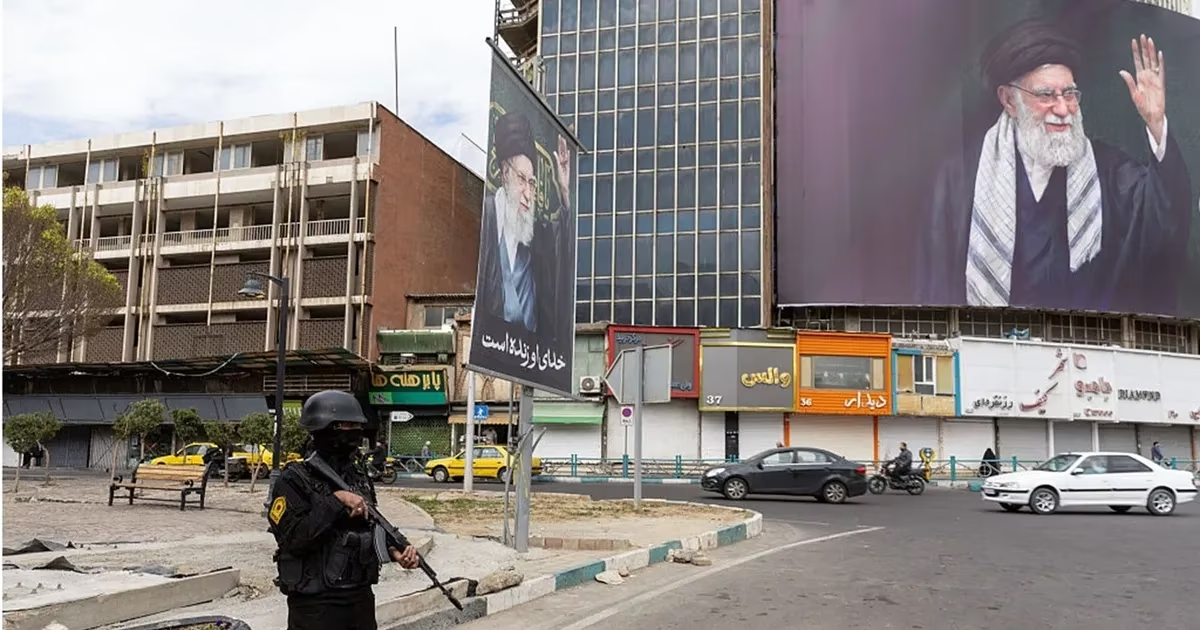
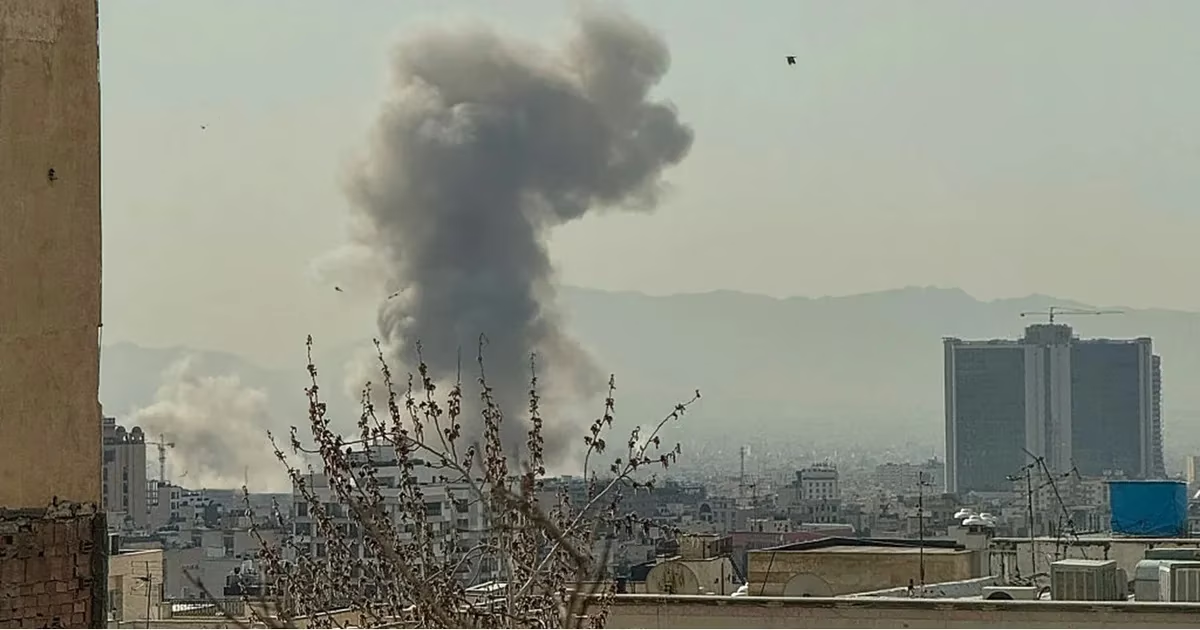
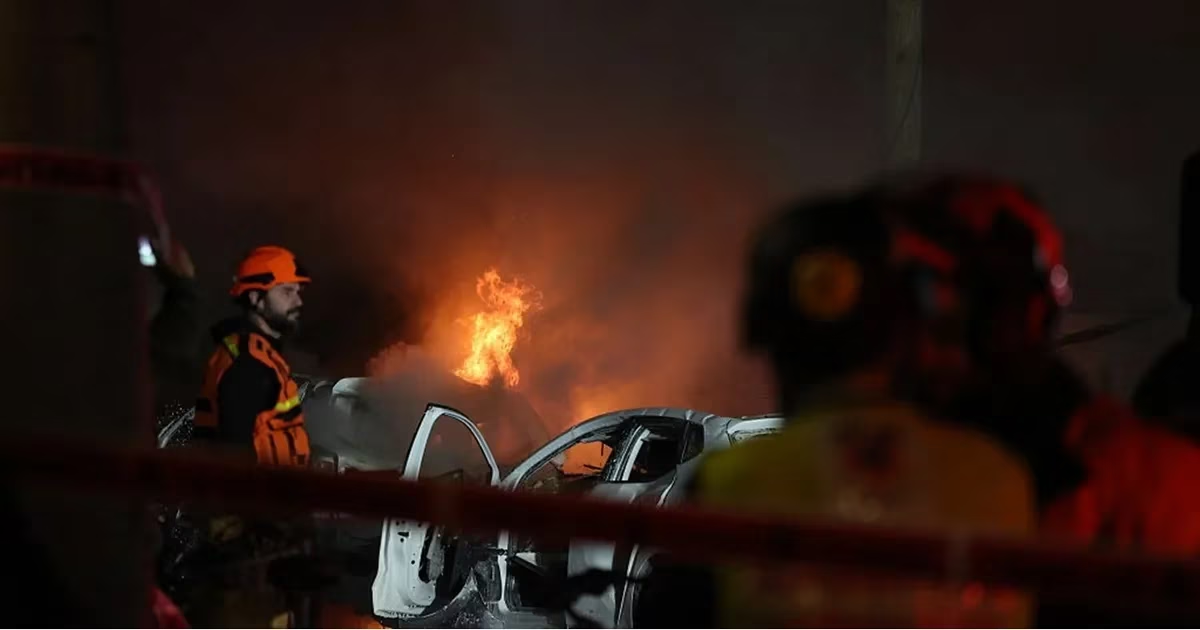
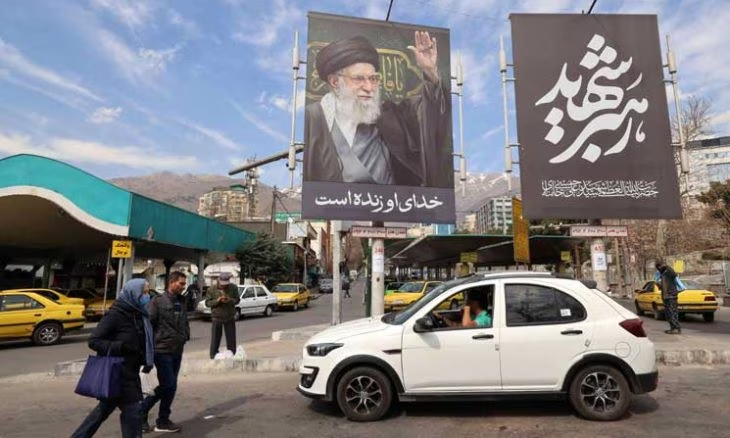
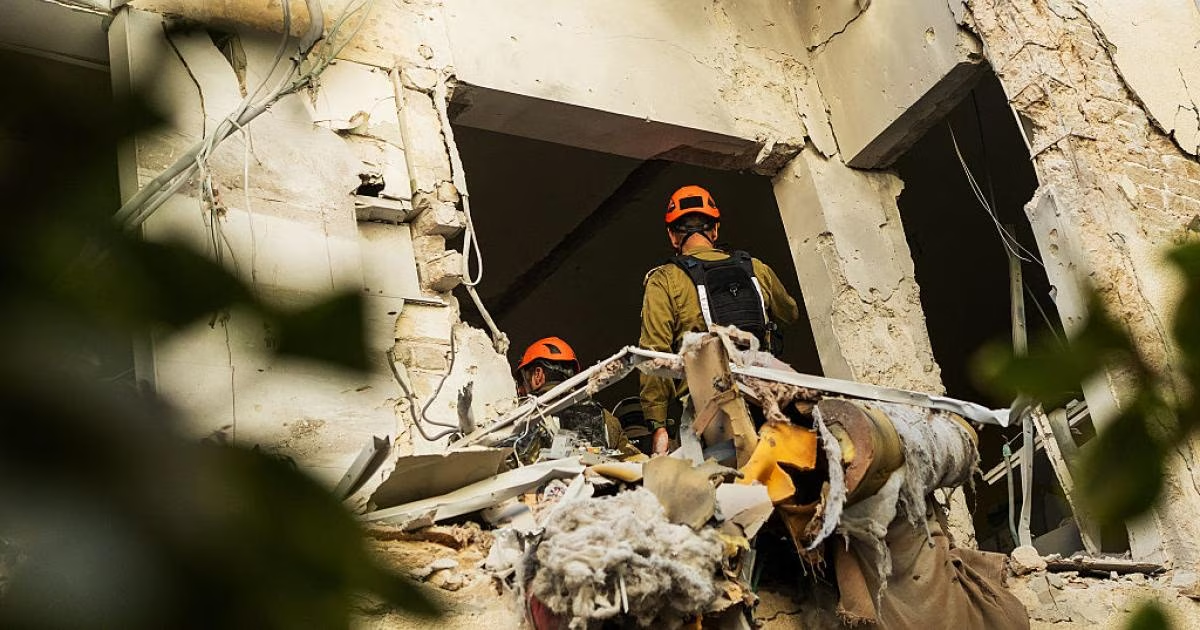
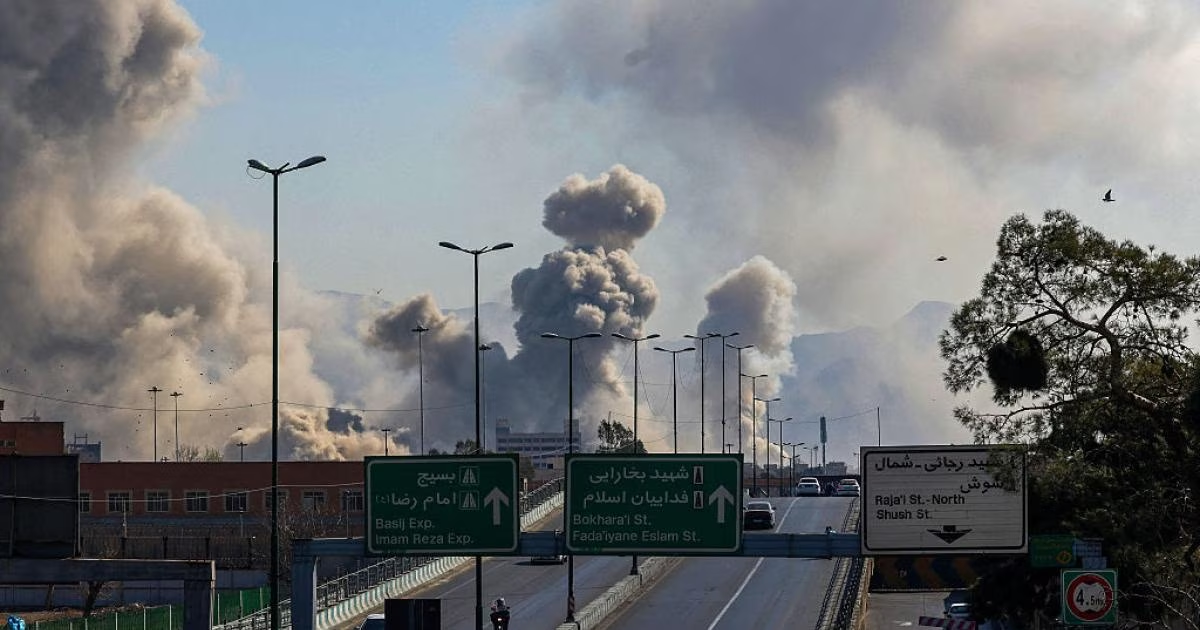
On the ground, air raids carried out by F-35 and B2 stealth fighters caused severe damage to a radiation facility in Isfahan, in addition to significant human losses in the capital Tehran. These strikes came after the assassination of Supreme Leader Ali Khamenei and a number of senior military commanders in the opening strike of the operation, causing confusion in the Iranian leadership structure.

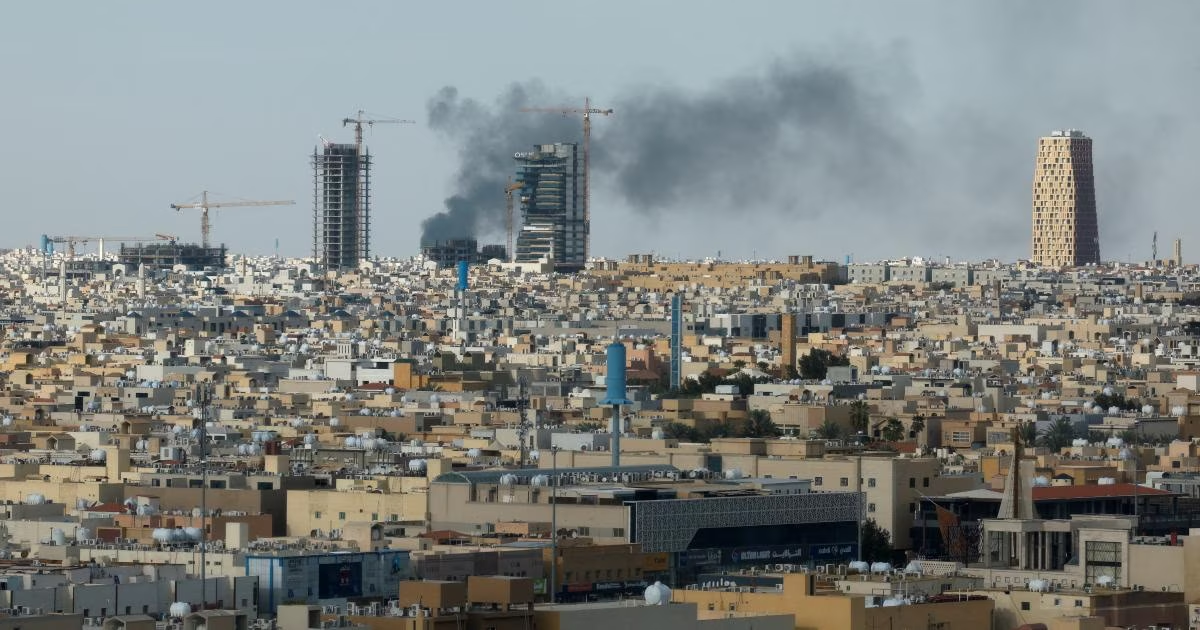
In response to the attacks, Iran launched widespread attacks targeting countries in the Gulf Cooperation Council and vital facilities in Saudi Arabia, Qatar, and Bahrain, as well as the vicinity of Dubai airport. Tehran used hundreds of drones and ballistic missiles in these attacks, in an attempt to raise the cost of the war at the regional and international levels and pressure for a halt to military operations.

Regarding the northern front, Minister Dichter called for not relying on the Lebanese government to dismantle Hezbollah's weapons, affirming that Israel is about to establish a 'wider security belt' in southern Lebanon. These statements come at a time when the Lebanese border is witnessing ground confrontations that have resulted in the deaths of Israeli soldiers, amidst calls to expand the scope of operations to include Lebanese infrastructure.

At the level of the Israeli opposition, Yair Lapid took a hardline stance by calling for the complete destruction of Iranian oil facilities, considering that striking the lifeline of the Iranian economy is the fastest way to overthrow the regime. These statements reflect a state of political consensus within Israel on the need to capitalize on the current momentum to achieve a radical change in regional power balances, despite the looming dangers.

In conclusion, the question remains about Israel's and the United States' ability to decisively win the battle without sliding into a widespread ground confrontation or a war of attrition that drains economic and human resources. With continued mutual bombardment and escalating threats, the region awaits what the coming days will bring, given Washington's and Tel Aviv's insistence on imposing full surrender terms on Tehran.

It is unreasonable for Israel to turn into a hammer looking for every nail to hit; we must be careful not to be dragged into an endless war of attrition.

PALESTINE

Mon 09 Mar 2026 12:00 pm - Jerusalem Time

Warnings of organized "Jewish terrorism" aimed at forcibly displacing Palestinians from the West Bank

Hebrew press sources reported that global attention, preoccupied with tensions with Iran, is overlooking a dangerous escalation of what it described as "Jewish terrorism" in the occupied West Bank. The sources indicated that this violence is not random but part of a strategy aimed at pushing Palestinians to leave their lands and depopulating the area of its indigenous inhabitants.

Reports stated that the current practices carried out by settlers, with the support or silence of security agencies, put Israel in the face of international accusations of committing war crimes and crimes against humanity. This scene reflects an escalation in organized violence that has resulted in deaths and injuries among unarmed Palestinian civilians in recent days.

In details of the field attacks, masked settlers stormed the outskirts of Khirbet Abu Falah village, northeast of Ramallah, leading to violent stone clashes. These clashes resulted in serious head injuries to Palestinians, while Israeli army forces intervened by firing live ammunition and tear gas, causing the death of an elderly Palestinian due to a severe heart attack.

In the southern Hebron hills region, Palestinian territories witnessed a bloody shooting incident carried out by a settler against two Palestinian brothers, resulting in the death of one and critical injuries to the other. Security sources confirmed that the shooter is a reserve soldier serving in regional defense units, which raises questions about arming settlers and using their military powers to liquidate civilians.

Similar bloody scenes were repeated near Nablus city, where two Palestinians were killed by settler gunfire while trying to defend an olive grove from illegal bulldozing operations. The decision to transfer the investigation from military police to civilian police sparked widespread indignation, as this step is seen as a prelude to closing the case without holding the perpetrators accountable, as is customary in similar incidents.

Data indicates that these attacks have already led to harsh demographic consequences, with entire communities in the east of Duma village and the Aqaba area being forced to leave. This displacement comes after months of continuous harassment and direct threats that made daily life in those areas impossible under the weight of intimidation.

Observers believe that the Israeli policy relies on creating a state of permanent and painful friction for Palestinians to force them to leave their lands voluntarily in appearance and forcibly in reality. This recurring pattern of attacks is classified under "gradual displacement" policies aimed at changing the geographical and demographic reality deep within the occupied West Bank.

Sources held a group of senior Israeli officials directly responsible for these violations, led by Benjamin Netanyahu, Bezalel Smotrich, and Itamar Ben-Gvir. The indictment also included high-ranking military leaders such as Chief of Staff Eyal Zamir and Central Command Commander Avi Bluth, for their role in providing security and political cover for the attackers.

In conclusion, reports stressed that Israel, as an occupying power, is legally obligated to protect civilian populations under international conventions, yet it deliberately fails to do so. With the continued escalation of violence, international pressure is increasing to demand accountability for Israeli officials before international courts to ensure impunity is not granted.

Israel, through the acquiescence of its institutions or the support of its officials for Jewish terrorism, may bear responsibility for serious violations of international law, including war crimes.

OPINIONS

Mon 09 Mar 2026 11:59 am - Jerusalem Time

This Desecration of the West Bank

The occupation army and Israeli rulers are exploiting the world's preoccupation with the repercussions of the explosion in the region, which resulted from the Israeli-American aggression against Iran, to escalate their oppression of the Palestinian people in the West Bank and Jerusalem... Since Israel began its aggression on the morning of the 28th of last month (February), the occupation forces have closed approximately one thousand one hundred military checkpoints and more than two hundred gates, turning the villages, towns, and cities of the West Bank into isolated prisons. More than a week after the aggression began, the majority of checkpoints and gates remained closed. For example, all entrances and gates to the city of Jericho were closed, making it completely isolated from the outside world, and this is the situation for dozens of villages and towns.The occupation army is not content with closures; its forces raid dozens of towns, villages, and refugee camps daily and nightly, wreaking havoc, abuse, and arresting their residents in unprecedented campaigns in terms of their scale. As for Al-Aqsa Mosque and the Ibrahimi Mosque in Hebron, they have never been closed during Ramadan throughout history. During this aggression, the occupation continued not only to prevent all West Bank residents from reaching Jerusalem and Al-Aqsa Mosque but also deliberately prevented residents of Jerusalem and the interior from reaching the mosque and prevented worshippers from entering and performing prayers there, a dangerous precedent that portends many plans. As for the Ibrahimi Mosque in Hebron, Muslims were denied entry and prevented from performing prayers there, making it completely monopolized by Jewish worshippers.The closure of checkpoints and crossings has deepened the escalating economic crisis in the West Bank, paralyzing health and educational services, as well as commercial operations and most economic activities. These are severely suffering due to Israel's dismissal of approximately 220,000 workers who entered the unemployment market since "October 7" (2023), and due to the piracy of Finance Minister Smotrich, who confiscated most of the Palestinian tax revenues, which constitute more than 55% of the Palestinian Authority's income. The amount of money withheld by the Israeli government has exceeded three billion dollars, rendering the Palestinian Authority (whose powers have been largely confiscated) unable to pay its employees' full salaries or to fulfill its health, educational, and social obligations towards the Palestinian population.The general economic deterioration is leading to severe hardship and bankruptcies in many private sector projects and institutions. Residents of Jerusalem are subjected to further pressure, suffering from excessive taxes imposed by Israel, the scarcity of exorbitantly priced building permits, and a sharp increase in the cost of living. Due to exorbitant taxes, a large portion of shops in Jerusalem and the Old City of Hebron are forced to close their doors.However, the most dangerous phenomena are the unrestrained settler terrorist gangs that pursue residents of Palestinian villages and the desert, continuing their terrorist attacks under the protection and patronage of the occupation army. Many villages and towns, such as Qasra, Beita, Al-Mughayyir, Abu Falah, Sinjil, Turmus Ayya, Masafer Yatta, and many others, are subjected to repeated attacks, reaching the point of killing by gunfire, beating and abuse, and forced displacement of residents, as happened to more than 70 communities, most of which are Bedouin communities in the Jordan Valley, Hebron, and Ramallah. The audacity reached a point, days ago, where the occupation army stopped citizens at the checkpoint leading to the town of Al-Mughayyir, then allowed terrorist settlers to attack them, including the village doctor.It is the duty of all sympathizers and supporters of the Palestinian people to escalate their solidarity movement with them, and expose the ongoing crime of desecration.There is no real distinction between the settler terrorists who carry weapons provided by the Israeli government and the army itself, as a large number of them serve in the army, which recently made a decision to allow soldiers to keep their weapons when they are discharged from the army, or go on leave, or when they are not on official duty.Some communities, such as the Bedouin community in the Ein Samiya area, have been displaced several times from one place to another. The occupation understands that the heroic steadfastness of the Palestinian people, despite all forms of terrorism, abuse, and unjust oppression, is what thwarts the ethnic cleansing plan, and therefore it exploits events such as the ongoing aggression to escalate attacks and abuse against Palestinians. There is no doubt that the inaction of most of what is called the international community in imposing sanctions on Israel for committing the crime of genocide in Gaza encourages settlers to commit more crimes in the West Bank.What is happening in the West Bank, including Jerusalem, is nothing less than a brutal desecration of its civilian population, without deterrence, and without any respect for any local or international law. While Palestinians bravely endure and perform feats in the face of oppression, it is the duty of all sympathizers and supporters of the Palestinian people to escalate their solidarity movement with them, expose and uncover the ongoing crime of desecration, and not allow media preoccupation with the ongoing war in Iran and the Gulf region to cast a dark and gloomy veil over the suffering, struggle, and steadfastness of the Palestinian people, whether in the West Bank or the Gaza Strip, especially since silence on the ongoing desecration carries within it the risks of serious crimes whose consequences and repercussions no one will be able to escape.

OPINIONS

Mon 09 Mar 2026 3:38 am - Jerusalem Time

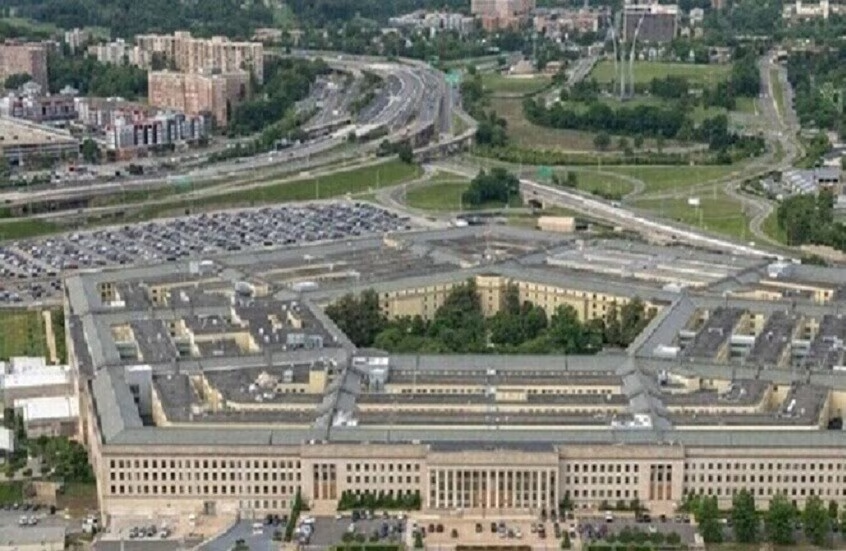
Pentagon Prepares for War That Could Extend Until September Amid US Escalation Against Iran

Said Erikat

Opinion Writer

Washington – Said Arikat – 3/9/2026

News Analysis

Increasing indicators within the US military establishment suggest that the ongoing war against Iran could last months longer than initially announced by the White House. According to a report published by Politico magazine, the Pentagon is currently developing scenarios for military operations that could extend until next September, far exceeding the initial estimates mentioned by President Donald Trump when he set an approximate duration for the campaign not exceeding four weeks.

The report indicates that the US military command has already begun taking practical steps in preparation for the possibility of a prolonged confrontation. The United States Central Command (CENTCOM) has requested the Department of Defense to send an additional number of intelligence officers to its headquarters in Tampa, Florida, with the aim of supporting operational planning and battle management for a period that could last at least one hundred days.

This step, according to military observers, reflects a shift from a perception of a "quick, limited operation" to preparing for a longer and more complex campaign. Continuous air operations, the expansion of the confrontation area, and Iranian reactions are all factors pushing military planners to adopt more conservative time estimates.

In the same context, US Secretary of War Pete Hegseth announced that the United States would continue to strengthen its military presence in the Middle East, in parallel with expanding the scope of the air campaign against Iranian targets.

Hegseth stated that additional military reinforcements have already arrived in the region, explaining: "More bombers and fighters are arriving today. With our complete control of the skies, we will continue to use GPS and laser-guided precision bombs, weighing 500, 1000, and 2000 pounds, and we have a large stock of them."

Despite political and media pressure to set a time horizon for the war, the Secretary of Defense avoided giving a clear date for the end of operations. He said that estimates might change depending on battle developments, adding that the campaign duration could be "four weeks, or six, or eight, and perhaps more," emphasizing that the United States would determine the "pace and speed" in managing the war.

This ambiguity in defining the timeframe reflects the dynamic nature of the conflict, as Washington tries to maintain military pressure on Tehran while avoiding being drawn into a large-scale ground war, a challenge that US administrations have faced in most regional conflicts over the past decades.

On the ground, initial estimates indicate that the war has so far resulted in the deaths of more than a thousand Iranian civilians due to US and Israeli airstrikes, while at least six US soldiers have been killed in Iranian drone attacks targeting military sites in the region.

The Pentagon is also working to bolster its stockpiles of missiles and air defense munitions in the Middle East, after they significantly decreased during the first days of military operations. Military sources indicate that the high consumption of munitions during the first five days of the war prompted the military command to accelerate the transfer of supplies from US bases in Europe and the United States.

In addition to the military dimension, developments also revealed logistical and diplomatic challenges faced by the US administration. The Politico report indicated that the US State Department had to intensify its efforts to evacuate American citizens stranded in a number of Middle Eastern countries as tensions expanded.

According to the report, the administration did not have a ready-made large-scale evacuation plan, despite months of military buildup in the region and escalating threats from Washington to strike Iran. This led to a state of confusion in the early days of the war, prompting US diplomats to work urgently to organize departures for US nationals via commercial flights and land routes.

These developments reflect the gap that can sometimes appear between military planning and the civilian preparations accompanying wars, especially when political threats turn into actual military operations faster than various government institutions anticipate.

As Washington continues to strengthen its military presence, the main question within political and military circles remains whether the air campaign can achieve its strategic objectives without sliding into a broader confrontation that could involve other regional parties.

The Pentagon's preparation for operations that could extend until next September reveals a clear gap between initial political rhetoric and realistic military estimates. In many conflicts, political leaders tend to present short timelines to reassure public opinion, while military planners develop longer and more complex scenarios. The request to send additional intelligence officers to CENTCOM headquarters indicates that Washington is preparing to manage an aerial war of attrition that could last months, not weeks.

Despite Washington's assertion of having "complete control of the skies," recent military experiences show that air superiority alone does not guarantee the achievement of rapid strategic objectives. Iran is increasingly relying on drones, missiles, and unconventional networks in its response, tools that allow it to prolong the conflict and raise its cost without a direct conventional confrontation with US forces.

With the rising number of civilian casualties in Iran and increasing risks to US forces in the region, the US administration may face growing political pressure domestically and internationally. The longer the war lasts, the more questions will arise about its ultimate goals and strategic cost. Furthermore, the absence of a clear evacuation plan from the outset highlights gaps in coordination between military preparedness and the management of the

ISRAELI AFFAIRS

Mon 09 Mar 2026 3:38 am - Jerusalem Time

Turkey in Israel's Crosshairs: A Reading of Post-Iran Scenarios

Fierce discussions are escalating in political and security circles about the features of the phase that will follow the Israeli-American confrontation with Iran, with a fundamental question emerging about which party will fill the regional vacuum. Data indicates that the Israeli occupation is placing Turkey at the forefront of its future targets, seeking to impose complete hegemony over the region and prevent any regional power from obstructing its expansionist projects.

Ankara formulated its position on the recent escalation with extreme caution, expressing concern about the mutual attacks without sliding into direct condemnations that might close the doors to mediation. Despite Turkey remaining unaffected by direct military impact so far, the Turkish leadership realizes that long-term repercussions could directly and unprecedentedly affect its national security.

The hypothesis of targeting Turkey is based on a series of official statements issued by occupation leaders, foremost among them Isaac Herzog, who affirmed that the goal goes beyond changing the Iranian regime to include a complete reshaping of the Middle East. Benjamin Netanyahu further reinforced these fears by speaking of forming new axes targeting active powers in the region, of which Turkey is an essential part.

In a related context, former Israeli Defense Minister Yoav Gallant considered Turkey a strategic challenge that surpasses the Iranian threat, calling for the necessity of preparing to confront it. This vision aligns with Israel's inclusion of Turkey in its list of threats since 2021, and the recommendations of security committees to prepare for a potential military clash in the coming years.

Israel does not appear to be alone in this trend, as statements by former US Ambassador Mike Huckabee about supporting complete Israeli control over the region reflect aspects of the Trump administration's policy. These trends are supported by Western press reports explicitly calling for preventing Turkey from filling any vacuum that might result from a decline in Iranian influence in the region.

On the ground, Israel has begun to modify its security doctrine by returning to the 'Periphery Doctrine' which aims to encircle major countries in the region and weaken them from within. This is clearly evident in attempts to fuel ethnic and sectarian conflicts, target the Turkish presence in Syria, and seek to impose buffer zones that serve Israeli interests.

Israeli incitement has taken an institutional character through the formation of alliances in the Eastern Mediterranean including Greece and Cyprus, primarily aimed at encircling Ankara and forming a joint rapid intervention force. Netanyahu has sought to expand this axis to include Asian powers and Arab countries, in an attempt to isolate Turkey and deprive it of its maritime and geographical influence.

Observers believe that any imbalance in the balance of power resulting from the weakening of Iran will serve the interests of the 'Greater Israel' project, which does not recognize existing international borders. Ankara fears that the division of Iran or a change in its regime could reignite the Kurdish issue on its southern and eastern borders, threatening the 'Turkey without Terrorism' project, which has made significant strides.

The Turkish leadership realized the magnitude of this threat early on, with President Erdogan openly stating that Israeli ambitions could reach Turkish borders in a short time. The Turkish Parliament held closed sessions to discuss Israeli threats, while Foreign Minister Hakan Fidan warned against the occupation's attempts to drag the region into an extended war that would exhaust its powers.

Ankara has effectively begun implementing a comprehensive defensive plan that included building shelters, fortifying the home front, and developing advanced missile and defense systems to confront any potential aggression. It also deployed F16 fighters in Northern Cyprus, sending a clear deterrent message to the tripartite alliance led by Israel in the Mediterranean basin.

Despite Turkey's inherent strength and its membership in NATO, analysts warn against relying on this immunity amidst the fluctuations of American politics and the instability of successive administrations' positions. Betting on international protection could be a losing gamble in the face of an American administration that might sacrifice its allies for geopolitical gains or major deals.

Experts indicate that targeting Turkey may not initially take the form of traditional military confrontation, but may rely on hybrid means including economic blockade and inciting internal chaos. The weapon of refugees and economic pressure also emerge as potential tools to weaken the Turkish state from within before moving to more aggressive stages.

The project to weaken Turkey is not just media 'propaganda,' but a plan that is crystallizing through military alliances and intelligence plans that are constantly updated to suit changing circumstances. Historical facts confirm that countries that believed they were immune to targeting were the next victims as soon as the international balance of power shifted.

In conclusion, Turkey finds itself today facing an existential challenge that requires internal cohesion and broad regional coordination to thwart the Israeli 'Periphery Doctrine' plans. The lesson lies in taking threats with utmost seriousness and working to build a self-deterrent force capable of protecting national sovereignty, away from reliance on volatile international alliances.

Israel is playing the semi-final with Iran, and the final will be with Turkey.

ARAB AND WORLD

Mon 09 Mar 2026 3:38 am - Jerusalem Time

Iranian Consensus on Khamenei's Successor and Occupation Threatens to Target Assembly of Experts

Official Iranian sources revealed crucial developments regarding the succession of the Supreme Leader of the Islamic Revolution. Mohammad Mehdi Mirbagheri, a member of the Assembly of Experts from Semnan province, confirmed that a near-final consensus has emerged within the Assembly regarding the person who will succeed Ali Khamenei. Mirbagheri indicated that intensive consultations have led to the formation of a clear majority around a specific name, despite some procedural details that require addressing before the official announcement.

In statements made via a local communication platform, the Iranian official clarified that choosing the new leader represents a historic decision that cannot be rushed, despite the sensitivity of the timing. He emphasized the necessity of carefully scrutinizing all opinions to ensure a smooth transition of power. He added that the Assembly of Experts is making strenuous efforts to complete the necessary procedures, expressing hope that the results will be revealed soon after all existing obstacles are removed.

In a related context, Mirbagheri stressed that the responsibility entrusted to the Assembly of Experts is one of the most critical political and religious tasks in the country, which drives members to work with utmost seriousness to ensure the selection of a leader characterized by precision and steadfastness. He affirmed that the primary goal is to reach a personality that enjoys national consensus and is not a subject of dispute, especially given the complex regional and international circumstances facing the Islamic Republic.

For its part, the Israeli occupation army entered the crisis by issuing direct and unprecedented threats. The army spokesperson in Farsi announced that its forces would pursue anyone chosen to assume the position of Supreme Leader. The Israeli spokesperson claimed that Tel Aviv would not hesitate to use its military force to obstruct the transition process, in a clear indication of the occupation's intention to carry out political assassinations targeting senior leaders.

Israeli threats did not stop at the Supreme Leader's successor but extended to include the members of the Assembly of Experts themselves. Military sources threatened to target the Assembly's meeting if it convenes to choose the new leader. The sources claimed to have information indicating the Assembly's intention to meet soon in the holy city of Qom, warning that this meeting would be within the direct targeting circle of Israeli aircraft.

1The occupation's military spokesperson indicated that what he described as "Israel's long arm" is capable of reaching any point within Iranian territory to pursue those who attempt to appoint the next leader. These statements come at a time of escalating tension in the region, as Israel seeks through these threats to exert psychological and political pressure on decision-making centers in Tehran during this sensitive transitional phase.

It is worth noting that the Assembly of Experts is the constitutional body responsible for selecting, monitoring, and, if necessary, dismissing the Supreme Leader. It consists of clerics who are popularly elected. Global intelligence circles are closely monitoring the movements of this Assembly, especially with increasing talk about the current leader's health condition and the ongoing arrangements to ensure the stability of the Iranian political system in the post-Khamenei era.

Israel's long arm will continue to pursue the successor and anyone who attempts to appoint him to the position of Supreme Leader.

PALESTINE

Mon 09 Mar 2026 3:38 am - Jerusalem Time

6 Dead in Israeli Raids on Gaza and Nuseirat and Continuous Violation of Ceasefire Agreement

Medical sources in the Gaza Strip reported today, Monday, the martyrdom of six Palestinian citizens as a result of a series of attacks carried out by Israeli occupation forces, targeting various areas in Gaza City and Nuseirat camp. The sources explained that intense artillery shelling targeted tents of displaced persons in the Al-Sawarah area, located southwest of Nuseirat camp in the central sector, resulting in the martyrdom of three and the injury of about twenty others with varying degrees of injuries.

In another field development in Gaza City, a drone belonging to the occupation army targeted a group of civilians in the Ansar area west of the city, leading to the immediate martyrdom of three citizens. For its part, the occupation army claimed in a statement that it carried out an attack targeting two Hamas elements, alleging that they were planning to carry out sniping operations against its forces stationed in the northern sector, without providing concrete evidence for these claims.

These aggressions come at a time when daily statistical reports indicate an escalation in the death toll since the ceasefire agreement came into effect on October 10, 2025, with the total documented martyrs reaching 641 people. The data shows that among the victims are 199 children, 83 women, and 22 elderly people, which confirms that vulnerable civilian groups constitute about 46% of the total victims of ongoing Israeli violations.

Despite reaching a truce agreement last year after a two-year genocidal war, the occupation continues its daily violations through aerial and artillery bombardment and direct firing. The war, which began on October 7, 2023, has left massive destruction affecting about 90% of the civilian infrastructure in the sector, amidst UN estimates indicating that the cost of reconstruction could reach 70 billion dollars.

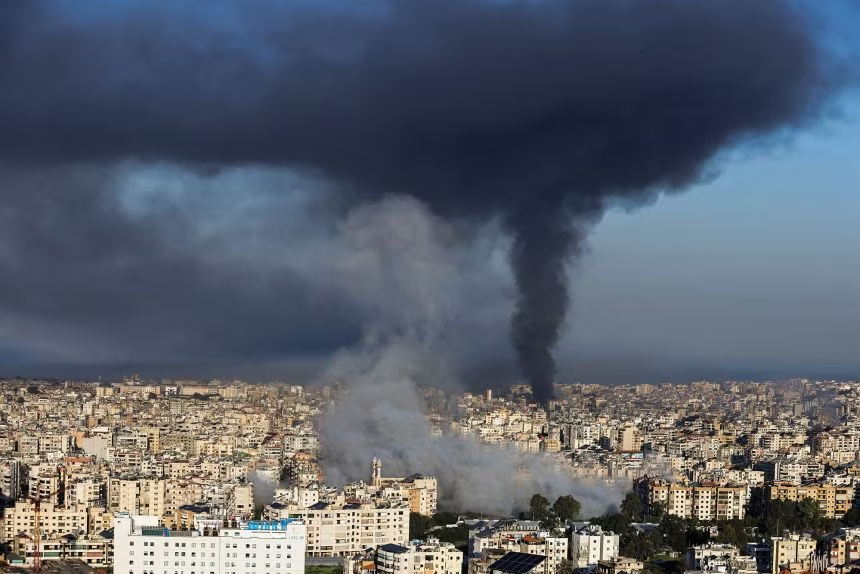
In a related regional context, other fronts are witnessing similar escalation, with more than half a million people displaced in Lebanon due to intense Israeli raids exceeding one hundred raids in a single day. The repercussions of the Israeli aggression on Iran, which began last February, also continue, leaving hundreds dead, amid the ongoing limited ground incursion into southern Lebanon and the targeting of vital facilities and residential buildings in Beirut and the southern suburb.

The total documented martyrs reached 641 people, with children, women, and the elderly representing about 46% of the victims of ongoing violations.

PALESTINE

Mon 09 Mar 2026 3:37 am - Jerusalem Time

Palestinian Women on Their International Day: A Heavy Toll of Blood and Displacement Under Siege

March 8th, International Women's Day, arrives while Palestinian women are enduring the harshest humanitarian conditions in modern history, due to the ongoing Israeli aggression and suffocating siege. Women in the Gaza Strip are at the forefront of the groups most affected by the systematic starvation policies imposed by the occupation, turning their lives into a daily battle for survival.

The latest data issued by the Ministry of Health revealed the extent of the tragedy that has befallen the Strip since October 7, 2023, with 72,117 martyrs by early March 2026. Women have suffered a painful share of this bloodshed, with over 12,500 women martyred, and hospitals recording the arrival of approximately 11,000 female martyrs by the end of last year.

The direct targeting of the Palestinian family fabric was evident in the martyrdom of over 9,000 mothers, leaving thousands of children without care or protection. Professional cadres were also not spared from this targeting, as 34 Palestinian female journalists were martyred while performing their duty to convey the truth, a dangerous indicator of the persecution of women in all fields of work.

Regarding injuries, statistics indicate that women and children account for more than 40% of the total injured, whose number exceeded 171,000. Approximately 23,769 women suffer from direct injuries, which in many cases led to permanent disabilities and deep psychological trauma that are difficult to overcome due to the absence of specialized rehabilitation centers.

The tragedy of the missing continues to cast a shadow over grieving families, with approximately 9,500 missing persons under the rubble, the vast majority of whom are women and children. This bitter reality is accompanied by repeated displacement journeys for over two million people, where women are forced to bear the burden of caring for their families in tents lacking the most basic necessities of life.

In the West Bank, the scene is no less bleak, with 1,121 martyrs, including 23 women, as a result of attacks by occupation forces and settlers. These figures confirm that the Israeli targeting of Palestinian women is not limited by geography but extends to all their locations in the face of policies of erasure and displacement.

The issue of female prisoners reveals grave violations, with human rights organizations documenting over 7,000 arrests in the West Bank in 2025 alone. Currently, 70 female prisoners are held in occupation prisons, including two children, where they are subjected to harsh detention conditions that lack international standards, amidst systematic practices of abuse and torture.

In the Gaza Strip, the issue of female detainees remains shrouded in extreme ambiguity due to the crime of enforced disappearance practiced by the occupation army. Sources indicate that the occupation refuses to disclose the places of detention or the number of women arrested from the Strip, which increases the concern of families and human rights organizations about their fate.

The social impacts of the aggression have caused an earthquake in the structure of Gazan society, with 22,057 women finding themselves widowed after losing their husbands. This forced transformation has led to an increase in the percentage of female-headed households to 18%, placing them before enormous economic and social responsibilities in the absence of income and the collapse of markets.

The health system in Gaza has suffered a near-complete collapse after 94% of its facilities were destroyed, directly affecting maternal and child health services. This collapse has led to an alarming increase in maternal mortality rates, which jumped from 17.4 cases in 2022 to 145 cases per 100,000 births during 2024.

Pregnant and breastfeeding women face an existential threat, with approximately 37,000 women suffering from severe malnutrition that threatens their lives and the lives of their children. This severe shortage of food and medicine has led to an increase in miscarriages and low birth weights, portending a health catastrophe whose effects will extend to future generations.

Cancer patients in Gaza face a slow death sentence, especially those with breast cancer, which accounts for 30% of cancer cases among women. For more than two years, these women have lacked early detection services or radiation and chemotherapy, due to the destruction of specialized centers and the prevention of necessary medical equipment from entering.

In the West Bank, women suffer from increasing economic pressures due to the weakness of the social protection system and wage justice. Women find themselves between the hammer of unemployment among graduates and the anvil of precarious and exploitative work, which weakens their ability to withstand the successive economic crises imposed by the occupation.

The reality of Palestinian women on their International Day in 2026 represents a cry in the face of the silent international community regarding these crimes. Between killing, arrest, and displacement, Palestinian women continue to write an exceptional epic of steadfastness, demanding their fundamental right to life, dignity, and freedom on their land.

Palestinian women remain at the heart of the targeting, paying a heavy price in the battle for survival and existence amidst a comprehensive system of systematic abuse and torture.

ARAB AND WORLD

Mon 09 Mar 2026 3:37 am - Jerusalem Time

Military Escalation in the Region: Israel Targets Iranian Oil Refineries, Tehran Vows Retaliation

The Speaker of the Iranian Parliament, Mohammad Bagher Ghalibaf, affirmed that Tehran will not hesitate to respond to any military aggression targeting its territory, emphasizing that the response will include any area or base from which attacks are launched. Ghalibaf indicated that Iran is keen on friendly relations with neighboring countries, stressing his country's positive role in regional negotiation tracks despite current tensions.

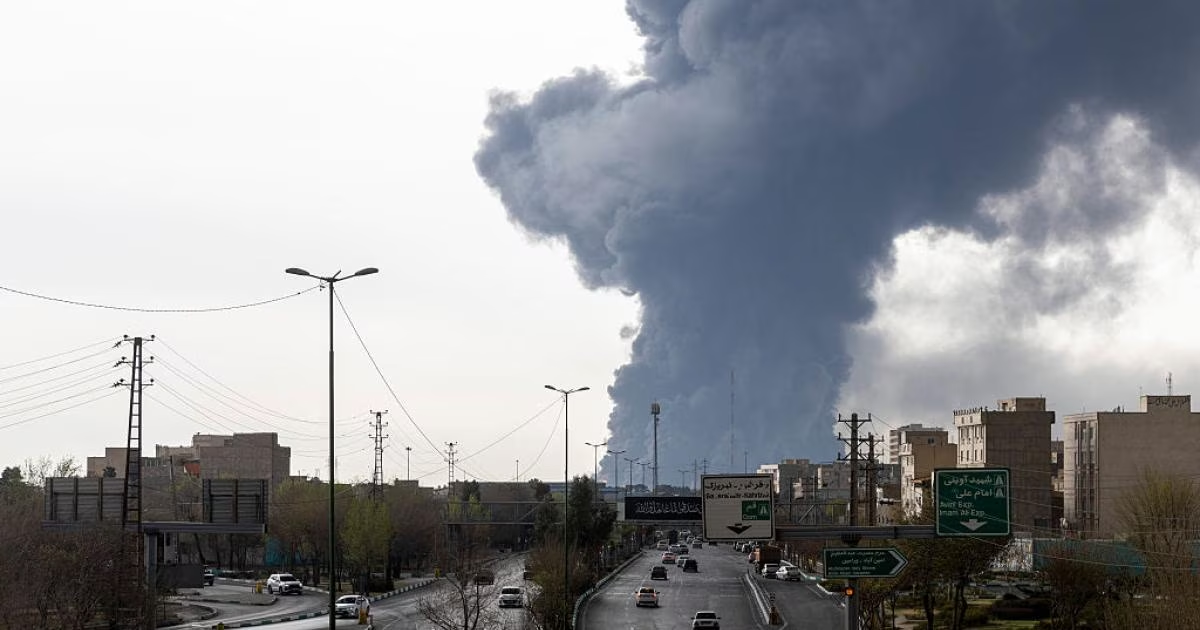
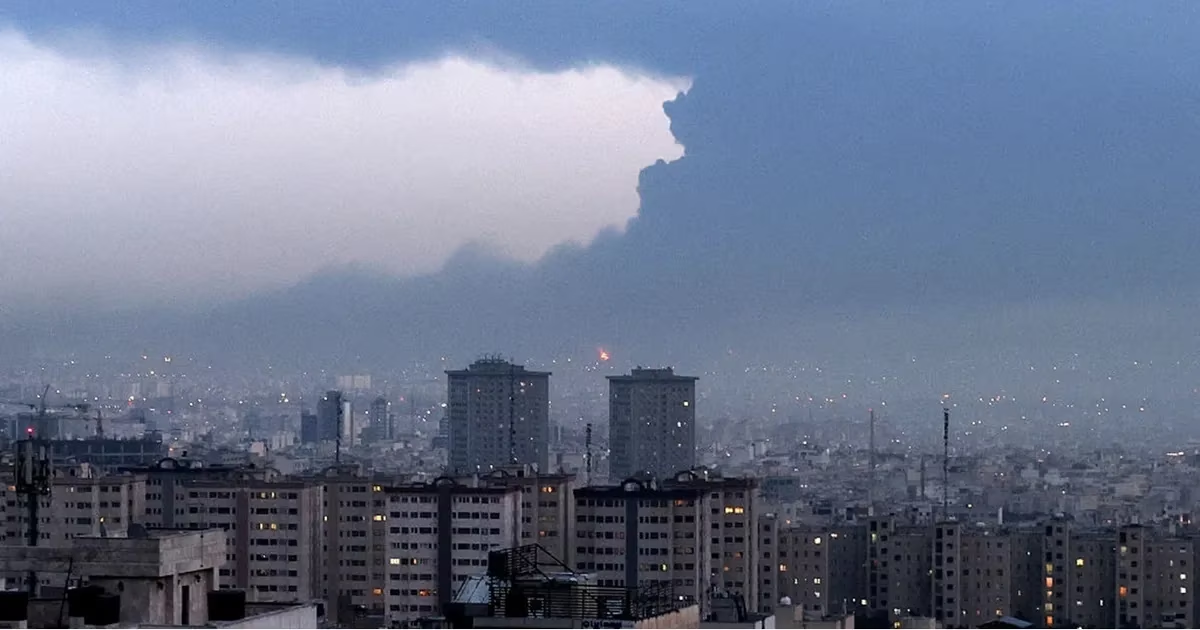
In a rapidly developing field situation, media sources reported that an oil tanker was attacked off the Omani coast using a suicide drone boat, raising concerns about the security of international navigation. This attack coincided with reports of scattered explosions in the cities of Dezful and Tabriz, in addition to strong explosions heard across wide areas of the capital, Tehran.

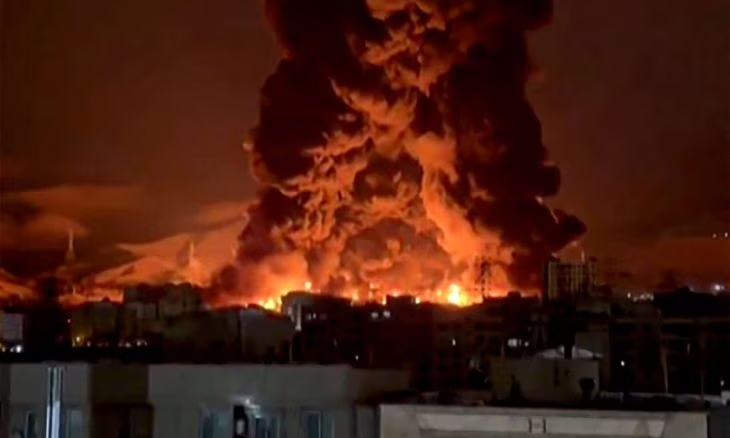
Israeli military operations have moved to a phase of targeting the vital infrastructure of the Iranian regime, with recent strikes focusing on fuel tanks in major oil refineries. This step raises strategic questions about Tel Aviv's endeavor to weaken Iran's economic and service capabilities as part of a comprehensive escalation plan in the region.

For his part, the Governor of Iran stated in press remarks that the facilities and stockpiles that were bombed are used exclusively for civilian purposes and to provide public services to citizens. He considered that targeting these facilities directly affects the lives of civilians and aims to create an internal fuel crisis that impacts essential service sectors in the country.

Military experts believe that Israel has begun to apply what is known as 'John Warden's theory,' which focuses on paralyzing a state's capabilities by targeting five vital rings, including infrastructure and leadership. Sources indicated that the aerial attacks carried out by Israeli and American aircraft included areas in the northwest and west, reaching targets in the south via maritime routes.

Despite the intensity of the airstrikes, military readings indicate an Iranian resilience that surprised Western intelligence circles, as the attacks did not lead to the collapse of defensive or administrative systems. Analysts believe that the ultimate goal of this escalation is to bring about a radical change in the structure of the Iranian political system through continuous military and economic pressure.

On the political front, international affairs professor Abdullah Al-Otaibi believes that the mutual threats between Tehran, Tel Aviv, and Washington have reached a 'brink of the abyss' stage. He explained that this confrontation could slide into an open and comprehensive conflict, or remain within the framework of maximum political pressure to achieve gains in unresolved regional and international issues.

Regarding Gulf relations, Al-Otaibi affirmed that the partnership between Gulf countries and the United States has been continuously developing for years, with the signing of strategic agreements that enhance regional security. He stressed the need to separate the complex American-Iranian file from the good neighborly relations that the countries of the region are trying to maintain with Tehran despite the challenges.

Observers warned that any Iranian transgression of the national sovereignty of Gulf countries will inevitably lead to a comprehensive review of diplomatic and security relations with Tehran. However, geography remains a crucial factor that necessitates a kind of coexistence and the search for diplomatic solutions to avoid an uncontrollable explosion of the situation in the Gulf waters.

In conclusion, it appears that the region has entered a dark tunnel of direct confrontation, with each side seeking to impose a new deterrence equation and declare victory from its own perspective. While Israel continues to target leaders and infrastructure, Iran is banking on internal popular support and the ability to respond militarily to repel attempts to undermine its regime.

Any attack on our country will be met with a decisive Iranian response targeting the region or base from which the aggression is launched.

ANALYSIS

Mon 09 Mar 2026 3:37 am - Jerusalem Time

Repercussions of Khamenei's Assassination: Has Washington Burned the Bridges of Return with Tehran?

Traditional rules of warfare suggest the necessity of maintaining room for maneuver and negotiation, yet the recent American step of assassinating Iranian Supreme Leader Ali Khamenei has burned all bridges of return with Tehran. This dramatic development transcends the concept of changing political regimes, entering into a conflict of identity and religious symbols that constitute the essence of the Iranian state.

Khamenei is not merely the head of the power pyramid who can be replaced in 'day after' arrangements; rather, he is the highest religious and moral authority who holds a special sanctity among followers of the Shiite doctrine. His shrine and his status in the Iranian consciousness make targeting him an act that touches national and religious dignity, which fundamentally differs from other political models the world has witnessed.

America's interpretation, which attempted to apply the Venezuelan model to the Iranian situation, is a form of excessive political naivety, given the fundamental differences in culture and social structure. Iran possesses a human depth three times the population of Venezuela, in addition to a military arsenal and defensive capabilities that make direct confrontation an unsafe gamble with unpredictable consequences.

Iran's response was swift and violent, targeting American interests in several Gulf capitals simultaneously, reflecting Tehran's desire to expand the conflict. This field escalation sends a clear message that the Iranian leadership has nothing left to lose after targeting its primary symbol, which places the region on the brink of a volcano.

The decision to close the Strait of Hormuz represented the peak of Iranian escalation, aiming to strike the vital arteries of the global economy and pressure the international powers standing by. This step means transforming theoretical threats into a tangible reality that threatens global energy supplies and confronts the international community with serious and unprecedented economic and security challenges.

In contrast, the American administration is suffering from clear confusion in managing the crisis, as domestic support for President Trump's decisions has begun to decline due to fears of sliding into an all-out war. This confusion in Washington fuels a state of uncertainty among international allies who are watching the scene with great concern for their strategic interests.

The Gulf states find themselves in a critical situation, as trust in the American security umbrella has vanished, which did not prevent the sparks of conflict from reaching their territories despite the presence of military bases. The targeting of vital interests in the region proves that no party is immune from the repercussions of the major military explosion caused by the American move.

Observers raise urgent questions about the real motives behind Trump's decision, and whether he realized the size of the fireball he unleashed in the region. Some believe that the recklessness in making such fateful decisions may be an attempt to escape internal pressures or thorny personal issues plaguing the president in Washington.

Exhausting the Gulf states and plunging Europe into a dark economic tunnel seems an inevitable consequence of the continued military escalation without a horizon for a solution. Nevertheless, the White House insists on showing strength to avoid admitting falling into the trap of a long-term war of attrition whose end or human and material cost cannot be predicted.

History teaches us that wars, no matter how fierce, always end at the negotiating table, but the price paid by peoples in blood and destruction cannot be compensated. Decisions that prioritize individual and power interests over human security always lead the world to humanitarian disasters that could have been avoided by adopting the language of reason and diplomacy.

Millions today live under the weight of terror and imminent danger as a result of the absence of political wisdom and the triumph of the logic of force over the logic of international law. Turning the region into an arena for settling personal and political scores reflects a decline in the diplomatic values that once governed relations between major powers and regional powers.

The question remains about the ability of the international community to intervene to curb this accelerating deterioration before the conflict reaches a point of no return. The current American confusion may push other parties to intervene, transforming the conflict from a bilateral confrontation into a widespread regional war that consumes everything in its path.

Comparing what is happening today with previous wars that Trump criticized and described their presidents as 'stupid' puts the American president's credibility to the test before his voters. Involvement in a conflict with a country the size of Iran and its capabilities requires a clear strategy, which seems completely absent from the current scene full of recklessness.

Ultimately, the cannons will one day fall silent, and everyone will sit down to find a way out, but the wounds left by the assassination of a religious and political symbol will remain deeply etched in Iranian memory. The cost of peace after this escalation will be very high, and may require concessions that Washington could not have imagined making before taking this suicidal step.

Khamenei's assassination is not merely the end of a political authority, but an affront to a religious symbolism and dignity that is non-negotiable in Iranian custom.

LATEST NEWS

Mon 09 Mar 2026 3:37 am - Jerusalem Time

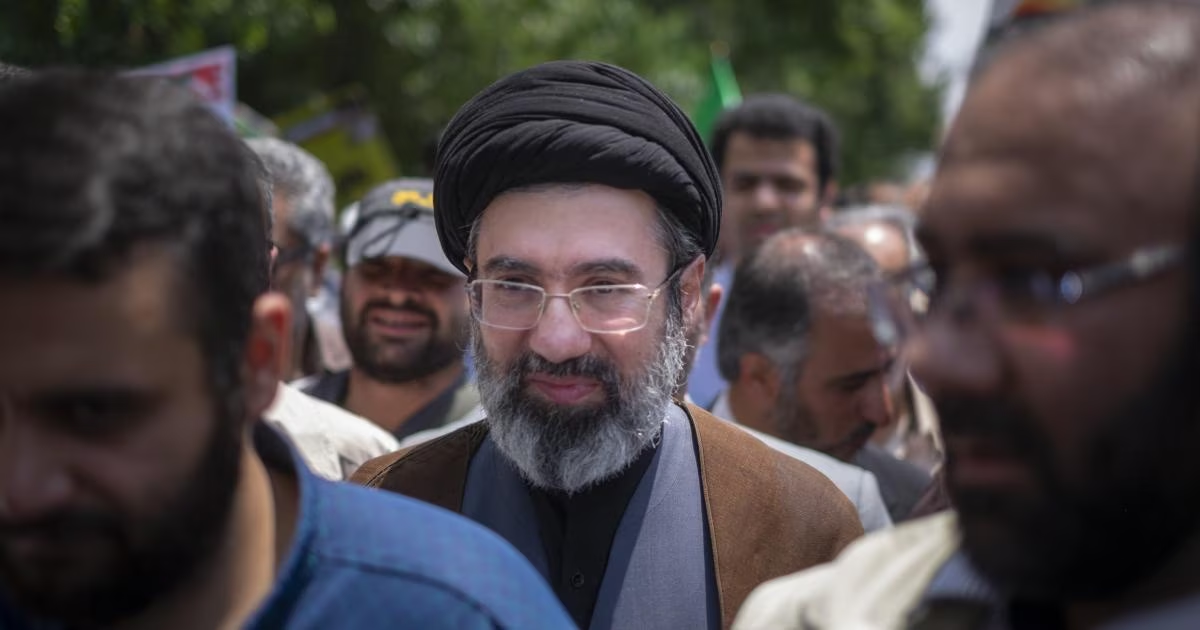
Iran chooses Mojtaba Khamenei as Supreme Leader to succeed his assassinated father

Tehran has settled the succession issue at the top of the Iranian power hierarchy, as the Assembly of Experts announced today, Sunday, the election of Mojtaba Khamenei as the new Supreme Leader of the Islamic Republic. This appointment comes after the death of his father, Ayatollah Ali Khamenei, who was killed at the beginning of the aerial attack launched by American and Israeli forces on the capital, Tehran, on February 28th.

The statement issued by the Council, which includes 88 members, confirmed that the selection of Mojtaba Khamenei came during an extraordinary session and based on a decisive vote from the representatives, making him the third leader of the country since its establishment in 1979. This step is an attempt to consolidate political stability at a time when the country is witnessing widespread security and military unrest.

For his part, the Secretary of the Supreme National Security Council, Ali Larijani, emphasized the new leader's competence in managing state affairs during this critical phase. Larijani indicated that Mojtaba Khamenei possesses the necessary vision to lead the country amidst the sensitive circumstances and external threats currently facing Iran.

In the context of international reactions, US President Donald Trump preempted the announcement with controversial statements, considering that any leader chosen by Tehran would not enjoy continuity unless approved by Washington. These statements reflect the extent of the existing tension and the American desire to exert maximum possible pressure on the new Iranian leadership.

The threats were not limited to the American side, as Israel hinted that any figure succeeding Khamenei would be a direct target for assassination operations. These threats come at a time when Tel Aviv continues its military operations that previously targeted senior security and political officials in Tehran.

Reports indicate that the leader's election process took place via a secret ballot, where victory requires obtaining an absolute majority of the votes of the attending members of the Assembly of Experts. This transition is the first of its kind since 1989, when Ali Khamenei assumed power after the death of the revolution's founder, Ruhollah Khomeini.

On the ground, military confrontations have continued since late February, with the Israeli-American aggression resulting in hundreds of casualties. In response, Tehran continues to retaliate by launching missile barrages and drones targeting Israeli sites and American interests in several countries in the region.

Mojtaba Khamenei, born in the city of Mashhad in 1969, grew up in a complex political and religious environment that coincided with his father's opposition to the Shah's regime. He progressed in religious studies in the city of Qom until he attained the rank of 'Hujjat al-Islam,' a rank that allows him to teach and exercise ijtihad in the Shiite seminary.

According to official sources, the new leader lost his wife, Zahra Haddad Adel, daughter of the former Parliament Speaker, who was killed in the same airstrikes that targeted his father. These developments place Mojtaba Khamenei before immense challenges, both in terms of healing internal wounds and confronting external military escalation.

His Eminence Ayatollah Sayyid Mojtaba al-Husseini Khamenei was elected as the third leader of the Islamic Republic based on a decisive vote from the representatives of the Assembly of Experts.

ISRAELI AFFAIRS

Mon 09 Mar 2026 3:37 am - Jerusalem Time

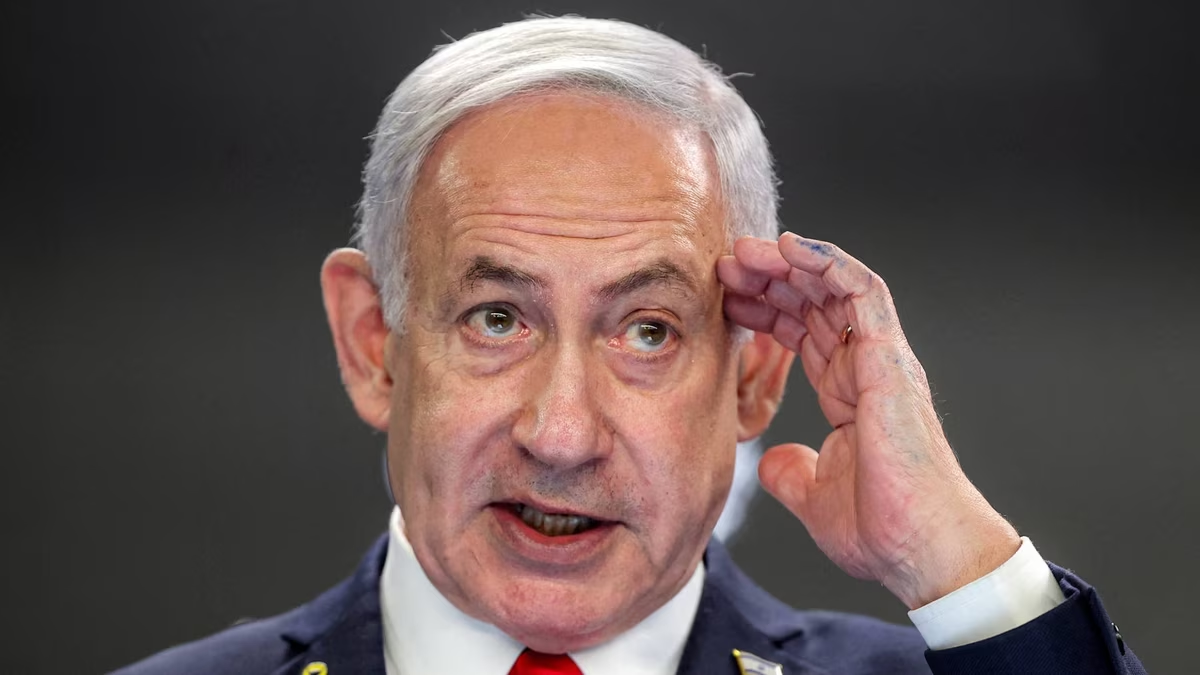
Strict security measures to protect Netanyahu from drone threat

Hebrew security sources revealed an official decision to tighten and enhance the personal protection measures surrounding the occupation prime minister, Benjamin Netanyahu. This step comes amid security assessments indicating a high level of risks facing political and military leaders in Tel Aviv during the current period.

The reports clarified that the security system decided to focus intensively on confronting threats resulting from drones, which have become a major challenge for defense agencies. The security team will be equipped with advanced technologies capable of detecting and neutralizing small flying objects before they reach their targets.

Observers link this decision to the escalating regional tensions, especially with the ongoing open confrontation with Iran and its proxies in the region, such as Hezbollah and the Houthis. Intelligence agencies consider the use of suicide drones to be the preferred weapon for carrying out precise targeting operations that bypass traditional radars.

Data indicates that the recent period has witnessed actual attempts to target facilities and figures belonging to the occupation through waves of missiles and unmanned aircraft. This reality prompted security circles to conduct a comprehensive review of protocols for protecting important figures and update them to suit the nature of the new aerial weapon used in the battle.

The new defensive measures are expected to include changes in the movement routes of the occupation prime minister, in addition to strengthening fortifications in his residences and workplaces. These moves come at a time when various fronts are witnessing a state of maximum alert in anticipation of any military escalation that may directly affect Israeli depth.

The new measures focus particularly on confronting potential threats from drones amid regional tensions.

ISRAELI AFFAIRS

Mon 09 Mar 2026 3:37 am - Jerusalem Time

An Israeli Reading of the Region's Future: Lebanon, Iraq, and Yemen Facing Radical Transformations

Israeli security assessments indicate that the Middle East region is undergoing a period of labor that will lead to a political and geopolitical reality completely different from what it was before October 6th. According to the vision presented by Segev Steinberg, an official at the Jerusalem Center for Foreign Affairs, future alliances will not be based on sectarian slogans, but will primarily rely on common interests, technological superiority, and military strength.

Lebanon stands out as one of the first countries affected by these transformations, as Hezbollah faces unprecedented military and financial pressures that have eroded its influence in its traditional strongholds in the southern suburbs. Sources believe that Israel does not aim to change the Lebanese regime by force, but rather seeks to create a political environment that weakens the party and removes it from the sphere of effective influence, exploiting the decline in financial support from Tehran and the damage to its military infrastructure.

As for Iraq, the equation is moving towards breaking the Iranian grip that has controlled Baghdad for many years, especially with the change in the American administration and the return of Donald Trump to the White House. The Israeli reading clarifies that cutting the land corridor connecting Iran to the Mediterranean Sea represents a cornerstone in changing the regional balance, which puts Iraq before two choices: either sinking into internal conflicts or engaging in new economic axes.

Regarding Yemen, the Houthis are experiencing a state of increasing anxiety as they observe the decline in the power of their allies in the region, realizing that Iranian aid is no longer guaranteed as before. Field pressures on the group by government forces are increasing, at a time when Saudi Arabia is anticipating any reckless move that might give it a pretext to definitively end the security threat on its southern borders.

This strategic shift is linked to a broader American vision aimed at connecting India with the UAE and Saudi Arabia, all the way to Israel, which means a complete break with other international projects such as China's "Silk Road." This new axis requires regional stability that ensures the flow of trade and energy, which necessitates reducing the influence of armed groups loyal to Iran in countries that represent vital corridors for these projects.

In conclusion, these readings confirm that the region is living a moment of truth, where old powers will not automatically disintegrate, but they face existential challenges that may redraw the boundaries of influence. The shape of the future Middle East remains dependent on the outcomes of current confrontations and the ability of central states to impose a new reality that transcends the conflicts of past decades towards a stage of economic and technological competition.

When the storm of war finally subsides, the regional balance of power and the historical confrontation between political and sectarian axes will witness radical transformations that will shape future generations.

OPINIONS

Mon 09 Mar 2026 3:28 am - Jerusalem Time

A War Without a Calendar: The Pentagon’s Expanding War with Iran

March 9, 2026


News Analysis


Wars rarely follow the neat timelines announced by politicians. In Washington, a widening gap is emerging between the White House’s early portrayal of the war against Iran as a short campaign and the Pentagon’s increasingly sober military calculations. What was initially framed as a limited operation lasting only weeks now appears to be evolving into a conflict that could stretch for months.


Recent reporting by Politico suggests that the Pentagon is quietly preparing for military operations that could continue until September. That timeline stands in stark contrast to the early public statements by Donald Trump, who indicated that the campaign might last roughly four weeks.


The difference between those two timelines highlights a familiar dynamic in American wars. Political leaders often promise swift, controlled operations to reassure the public, while military planners prepare for the far messier reality of prolonged conflict.


Evidence of that shift is already visible. The Pentagon has begun reinforcing planning capabilities at United States Central Command, the command responsible for U.S. military operations across the Middle East. Officials have requested additional intelligence officers to support operational planning at the command’s headquarters in Tampa, Florida.


According to military officials, the move is intended to support planning for a campaign that could last at least 100 days. In bureaucratic language, such requests are rarely routine. They typically signal that commanders expect the conflict to become longer, more complex, and more resource-intensive than initially anticipated.


In practical terms, this suggests that Washington is already moving away from the notion of a quick punitive strike and toward the possibility of a sustained air war.


Pentagon rhetoric reflects the same ambiguity. Defense Secretary Pete Hegseth recently confirmed that the United States is reinforcing its military presence in the Middle East while expanding the air campaign against Iranian targets. Additional bombers and fighter aircraft have been deployed to the region, and U.S. forces continue to rely heavily on precision-guided munitions, including bombs weighing 500, 1,000, and 2,000 pounds.


Hegseth has emphasized that the United States maintains “complete control of the skies.” Yet control of the skies has rarely been the decisive factor in modern wars. Air power can destroy infrastructure, degrade military capabilities, and impose heavy costs on an adversary. But it does not necessarily produce quick political outcomes.


Despite growing pressure in Washington to define a clear end date for the conflict, the defense secretary has deliberately avoided doing so. The campaign, he suggested, could last “four weeks, six weeks, eight weeks — or longer.” The United States, he insisted, will determine the “pace and speed” of the war.


This carefully calibrated ambiguity serves a political purpose: it preserves flexibility while avoiding the admission that the war may be far longer than originally presented.


On the ground, however, the costs are already becoming evident. Early estimates suggest that more than one thousand Iranian civilians have been killed in American and Israeli airstrikes since the war began. At least six American soldiers have also died in Iranian drone attacks targeting U.S. positions in the region.


The Pentagon has simultaneously begun reinforcing its stockpiles of missiles and air defense interceptors in the Middle East after reserves dropped sharply during the opening days of the war. Military sources say that the rate of ammunition consumption during the first phase of operations forced the Pentagon to accelerate resupply shipments from bases in Europe and the United States.


Such developments highlight the logistical realities of modern warfare. Even a war fought largely from the air can quickly consume enormous quantities of weapons, forcing the military to expand supply lines and sustain a steady flow of equipment into the theater.


Beyond the battlefield, the conflict has also exposed weaknesses in Washington’s broader crisis planning. According to reporting by Politico, the U.S. State Department was forced to scramble to organize evacuations for American citizens stranded in several Middle Eastern countries as tensions escalated.


Despite months of military buildup and repeated threats of military action against Iran, the administration reportedly lacked a comprehensive evacuation plan when hostilities began. Diplomats were therefore forced to arrange departures through commercial flights and improvised land routes during the early days of the crisis.


This disconnect between military readiness and civilian preparedness is not new, but it remains troubling. Time and again, American administrations appear ready to initiate military operations while underestimating the broader logistical and humanitarian consequences that follow.


More fundamentally, the Pentagon’s preparations for a campaign lasting into September reveal the growing gap between political messaging and military reality. The initial narrative of a short, decisive operation now appears increasingly difficult to sustain.


Even overwhelming air superiority does not guarantee rapid strategic success. Iran has spent years preparing for precisely this type of confrontation. Instead of confronting U.S. forces directly, Tehran relies heavily on drones, missiles, and regional proxy networks capable of striking American targets without engaging in conventional battle.


This strategy allows Iran to prolong the conflict while raising its political and military costs for Washington. Each drone attack, each missile launch, and each disruption across the region forces the United States to commit more resources to containment and defense.


The result could be a familiar pattern in American foreign policy: a war launched with promises of speed gradually evolving into an open-ended military commitment.


If that trajectory continues, the central question facing Washington will not be whether the United States can win air battles over Iran. It will be whether the political leadership ever defined what victory actually means.

ARAB AND WORLD

Sun 08 Mar 2026 10:26 pm - Jerusalem Time

Trump launches fierce attack on Tehran, accusing it of targeting civilians amid controversy over school bombing

US President Donald Trump launched a scathing attack on the Iranian leadership, describing them as the most evil entities on Earth at present. These sharp remarks came in the context of escalating reactions to the growing military tensions between Washington and Tehran, with Trump accusing the Iranian side of committing horrific crimes including abusing women and killing children.

In statements made from aboard the presidential plane, Trump downplayed Iranian protests regarding the targeting of civilian infrastructure, specifically a desalination plant. The US President affirmed that he pays no attention to Tehran's complaints about water facilities at a time when the world faces the reality of brutal Iranian practices targeting innocent people, as he put it.

For his part, Iranian Foreign Minister Abbas Araqchi directly accused the United States of committing a desperate and blatant crime by attacking a freshwater desalination plant on Qeshm Island. Araqchi considered Washington to be the one that set the rules for targeting vital facilities, warning of the repercussions of this escalation on regional security and stability.

Regarding the humanitarian catastrophe that occurred at a primary girls' school and resulted in the deaths of 175 children, Trump categorically denied the involvement of US forces in the attack. The US President went further by accusing Tehran of deliberately bombing the school, considering that the Iranian regime is trying to pin the blame on Washington to cover up its crimes against its people.

On the military front, Defense Secretary Pete Hegseth affirmed that investigations are still ongoing to determine the circumstances of the targeting of the school and other civilian facilities. Hegseth stressed in his statements that the American military doctrine does not target civilians, claiming that the only party that practices systematic killing against the defenseless in this confrontation is the Iranian side.

Despite official denials, media sources quoted American officials as suggesting that US forces may actually be responsible for the deadly attack on the girls' school in southern Iran on Saturday. The sources indicated that military investigators are reviewing aerial operation records, confirming that the final results have not yet been decided despite strong indications of a grave military error.

In the context of international reactions, the United Nations High Commissioner for Human Rights intervened in the crisis, demanding the necessity of a transparent and independent investigation into the incident. The Commissioner's spokesperson said that the responsibility for the investigation lies directly with the forces that carried out the attack, warning that if Washington's involvement is proven, this incident will be among the deadliest in the history of American operations in the Middle East.

I know nothing about the desalination plant, they complain about a water plant and we complain about the fact that children should not be beheaded.

ARAB AND WORLD

Sun 08 Mar 2026 10:26 pm - Jerusalem Time

Dangerous Escalation in Iran: Raids Target Oil Facilities in Tehran and Threats to Control Kharg Island

Field sources reported that military operations against Iran witnessed a dramatic shift early Sunday morning, as American and Israeli airstrikes targeted four major oil storage facilities and a vital logistical site for transporting oil derivatives in the capital Tehran and its suburbs. The bombing resulted in the death of four people and caused a temporary halt to fuel distribution operations within the capital, indicating a new direction to strike the Iranian regime's economic infrastructure on the eighth day of the comprehensive war.

In an interpretation of this escalation, Dr. Mosaddegh Pour, a professor of political science, stated in remarks to media sources that the war has moved to more dangerous levels by targeting fuel production refineries. Pour explained that these strikes reflect an attempt to overcome the failure to achieve rapid military objectives, noting that the nature of the selected targets aims to directly paralyze the logistical and internal capabilities of the Iranian state.

These developments coincide with intelligence reports discussing Washington and Tel Aviv's consideration of a scenario for field control of Kharg Island in the Arabian Gulf. This island is considered the aorta of the Iranian economy, as it contains the primary port for shipping crude oil from various national fields to global markets, making its control a complete cut-off of Tehran's financial resources.

Economically, these confrontations have caused a jump in global oil prices to reach $80 per barrel, amid fears of disruption to international energy supplies. In contrast, the Israeli budget is suffering from immense pressure, with Ministry of Finance estimates indicating weekly losses exceeding 9.4 billion shekels, in the absence of an approved budget for 2026 and a funding gap of up to $18 billion.

Internally in Iran, observers believe that the continuation of mutual shelling and the targeting of sovereign symbols, most notably the martyrdom of the Supreme Leader in the first strike, has contributed to strengthening societal mobilization. Dr. Pour pointed out that younger generations have become more widely involved in political discourse and military confrontation, which may change the calculations of the attacking forces that aim, according to statements by Benjamin Netanyahu and Donald Trump, to overthrow the regime.

Militarily, the Iranian leadership has hinted at resorting to unprecedented defensive and offensive tactics if the targeting of energy facilities continues. Sources close to decision-making circles in Tehran spoke of the possibility of using advanced generations of ballistic missiles capable of bypassing defense systems, in response to the raids carried out by thousands of aerial sorties daily since the outbreak of the war on February 28th.

In a related context, the regional war reflected escalating tension in the Palestinian territories, where settler attacks in the West Bank increased by 25%. Local sources reported the martyrdom of two brothers in the town of Qaryut by settler bullets, coinciding with forced displacement operations of Bedouin communities in the Jordan Valley, linking the various fronts of confrontation amid international preoccupation with the comprehensive war against Iran.

The war has indeed entered a new and dangerous phase with the expansion of targeting to include oil facilities and vital energy sources.

OPINIONS

Sun 08 Mar 2026 10:25 pm - Jerusalem Time

War on Iran: A Tactical Gain or Strategic Loss for Arabs?

Arabs rarely view any war fought by the United States in the Middle East as one that might bring them direct strategic benefit. Historical experience since the end of World War II mostly indicates the opposite: military interventions reshape balances, but often leave the region more turbulent and complex.

It becomes even rarer when it involves military action in which the United States and Israel participate together. In the Arab political consciousness, it is difficult to find a clear precedent where a joint decision between Washington and Tel Aviv directly served Arab interests.

However, the ongoing war today between Iran on one hand, and the United States and Israel on the other, raises an unusual question: Could this be one of those rare moments where American and Israeli interests intersect with a clear Arab interest?

To understand this possibility, one must go back to a pivotal moment in the region's history: the Iranian Revolution. Since then, Iran has no longer been merely a regional state with traditional policies, but has gradually transformed into a political and strategic project seeking to expand influence beyond its national borders.

Over more than four decades, this influence has spread through multiple tools: political alliances, armed groups, and indirect military presence in a number of Arab arenas, from Iraq to Syria and Lebanon, all the way to Yemen. For many Arab countries, this was not merely a natural competition between neighboring states, but evolved into a long-term strategic challenge that altered the balance of power in the Middle East and opened the doors to complex conflicts.

In this context, the current war seems to strike at the heart of that equation. If it ends with the weakening of Iranian military capabilities or the reduction of its regional project, it could remove one of the most prominent sources of strategic tension that has pressured the region since the late 1970s.

However, reading the scene so simply might be misleading. The United States, as international relations literature confirms, does not act out of a motive to serve others, but according to precise calculations related to its strategic interests: maintaining the balance of power, preventing adversaries from threatening its influence, and ensuring the continuation of its leading position in the international system.

Here another, more complex paradox emerges. Israel alone may not be the ultimate beneficiary of this war; Arabs may ultimately find themselves facing a greater strategic cost than initially appears.

Major geopolitical shifts in the world today are not only about the Middle East, but about the escalating competition between the United States and China for leadership of the international system. In this context, the outcomes of the war in the Middle East could become part of broader arrangements aimed at reorganizing global alliances.

In one possible scenario, after weakening Iran, the United States might seek to establish a new regional order that links Arab countries more closely to American strategy in confronting China's rise. This could manifest in political, economic, or security pressures that limit the ability of Arab countries to expand their cooperation with Beijing.

Here a new equation might emerge: weakening a regional adversary like Iran, in exchange for restricting the strategic maneuvering room of Arab countries in their relationship with the rising power in the world.

Many Arab countries today have growing economic ties with China, whether in energy, infrastructure, or technology. If the region becomes part of the front line in the US-China competition, these countries may find themselves forced to choose between their economic partnerships and their position in the US-led security system.

In this case, the problem may not be the war itself, but the arrangements that may follow it.

The worst-case scenario for Arabs lies in the possibility that the war leads to a dual outcome: a decline in Iranian influence on one hand, and the region being drawn into a larger global conflict equation between major powers on the other. In such a situation, Arabs might become a party to a strategic confrontation that does not necessarily concern them, but for which they bear the consequences.

For this reason, the real question is not only about the outcome of the war, but about the phase that will follow it. If Arab countries can deal with the coming transformations with greater coordination and strategic vision, this moment could turn into an opportunity to rebuild a more stable regional balance.

However, if post-war arrangements are left to be entirely shaped from outside the region, Arabs may once again find themselves facing a new regional order whose rules are determined by other powers.

In the Middle East, major transformations often begin with war, but their true effects appear in the order that emerges afterward.

ARAB AND WORLD

Sun 08 Mar 2026 10:25 pm - Jerusalem Time

Regional War Developments: Occupation Casualties in Lebanon and Targeting of a Nuclear Facility in Isfahan

Field sources reported the killing of a number of Israeli occupation army soldiers during fierce clashes on the Lebanese front, at a time when the regional confrontation, which erupted on February 28, is escalating. Concurrently with the ground battles, reports revealed material damage to a radiation facility in the Iranian city of Isfahan following airstrikes, raising international concern about the repercussions of targeting sensitive facilities.

Economically, the occupation faces a suffocating crisis as the war continues into its eighth day, with estimates from the Israeli Ministry of Finance indicating direct losses exceeding $3 billion per week. The call-up of 100,000 reserve soldiers from various sectors of work has led to a partial paralysis of the economy, in the absence of an approved budget for 2026 and a funding gap of $18 billion, which places Israel's credit rating under the scrutiny of international rating agencies.

Internally, the cities of Tel Aviv, Haifa, and West Jerusalem witnessed massive demonstrations demanding an end to the war on Iran and Lebanon, where protesters held Prime Minister Benjamin Netanyahu responsible for the continuous failures since October 7. The demonstrations saw attacks by right-wing activists on protesters, while the police arrested a number of participants on charges of disturbing public order, amid notable participation from Knesset members who opposed the military escalation that led to a global rise in oil prices to $80 per barrel.

The comprehensive war that began last February has caused an economic bleeding for the occupation estimated at 9.4 billion shekels per week, amidst escalating internal protests against the Netanyahu government.

ARAB AND WORLD

Sun 08 Mar 2026 10:25 pm - Jerusalem Time

Behind the Scenes of Tehran's First Strike: Washington Killed 'Negotiators' and Iran Activates 'Madman Operation'

International press reports revealed new details concerning the first American-Israeli strike that targeted the Iranian capital, Tehran, last Saturday. Sources indicated that the bombing resulted in the killing of a group of Iranian officials who were holding a meeting in a targeted complex, noting that some of these casualties were classified by the White House as figures willing to negotiate.

American officials stated that the killing of these officials might hinder efforts to end the conflict quickly, as they were seen as potential diplomatic channels compared to hardline leaders. This information is based on interviews conducted with dozens of officials in the United States, the occupying state, and Iran, reflecting the complexity of the field and political scene after the escalation of violence.

In the context of military capabilities, intelligence estimates presented to the US Congress indicate that Iran still retains about 50% of its missile arsenal. Reports also confirmed that Tehran possesses a larger stock of drones, which was evident in the attack that targeted American soldiers in Kuwait last Sunday, killing six of them.

Financially, Pentagon officials informed Congress that the cost of the first week of military operations amounted to about $6 billion. Observers expect the US administration to request additional funding from lawmakers to ensure the continuation of military operations amid the ongoing escalation in the region.

For its part, the Iranian leadership expressed confidence in the ability of state institutions to withstand intensive aerial bombing campaigns. Iranian officials affirmed that their strategy relies on exhausting the desire of the United States and the occupying state to continue the war by raising the human and economic cost of the conflict to an unprecedented level.

Under the name 'Madman Operation,' Tehran began implementing a plan aimed at igniting the region and expanding the scope of military confrontation to include unconventional targets. This plan includes several stages, starting with striking deep into Israel, then moving to target American military bases spread across neighboring Arab countries.

Reports indicated that the Iranian plan is not limited to military targets but also includes attacking civilian locations frequented by Americans, such as hotels, airports, and embassies. Iran has already begun using missiles and drones to strike vital oil and gas infrastructure in Gulf countries, creating immense economic pressure on global markets.

Iranian attacks have choked shipping traffic in the Strait of Hormuz, leading to the closure of international transit centers, a halt in tourism, and a sharp rise in energy prices. Military leaders in Tehran believe that this path is the only way to force Washington and Tel Aviv to retreat from their military campaign.

Regarding the leadership structure, sources revealed that Ayatollah Khamenei had issued preemptive orders before his death to ensure the continuation of military operations. Khamenei established four layers of alternative leadership to avoid any power vacuum, with explicit directives to escalate attacks if the country faced major strikes.

On the other hand, American military leaders believe that the coming days will be crucial in determining Iran's ability to continue its retaliatory strikes. General Kenneth McKenzie described the current situation as a 'race' between the ability to destroy and the ability to respond, with the number of American forces in the region reaching over 50,000 soldiers.

The American political scene is in a state of confusion due to President Donald Trump's fluctuating positions on the ultimate goals of the war. While Trump initially called for a popular uprising within Iran, he later reaffirmed his desire for direct intervention to choose the country's next leadership, demanding unconditional surrender.

Trump warned in his latest statements that the United States and Israel might expand the target bank to include areas and groups not previously targeted. This verbal escalation coincides with American preparations for a long-term conflict that could extend for several weeks, despite widespread popular opposition to the war within the United States.

On the ground, the occupying forces and the US military divided geographical tasks, with the former focusing on targeting military and religious leaders in the north. In contrast, US forces undertook the destruction of air defense systems and ballistic missile launch platforms in the southern regions of Iran.

Despite the intensity of the strikes, reports confirm that the basic structure of political power in Iran remains intact, with the heads of government branches remaining in their positions. However, a large number of military commanders who fell in the first waves of bombing have been replaced, leaving the region open to further escalation scenarios.

Our plan is to expand the war and prolong its duration; it is the biggest blow we can deal to Trump, and we have no other option.

PALESTINE

Sun 08 Mar 2026 10:25 pm - Jerusalem Time

The passing of the great Palestinian historian Walid Khalidi.. A hundred years of documenting the Nakba and protecting the narrative

Palestine and international academic circles lost on Sunday the great historian and thinker Professor Walid Khalidi, who passed away in Cambridge, Massachusetts, at the age of 101. The deceased is considered one of the most prominent pillars of contemporary Palestinian thought, and one of the few who dedicated their scientific and practical lives to documenting the details of the Palestinian cause and the crimes of the Israeli occupation since the Nakba.

Palestinian President Mahmoud Abbas mourned the deceased with great sadness, praising his career full of national and intellectual contributions. The President affirmed in his statement that Khalidi was a faithful guardian of the Palestinian historical narrative, as through his rigorous research and his works, which were translated into several languages, he was able to prove the Palestinian right in international academic forums, pointing to his pioneering role in establishing major research institutions.

For its part, the Institute for Palestine Studies mourned its honorary president and one of its early founders, stressing that his passing represents a tremendous loss for the Arab and international libraries. The Institute indicated in its statement issued from its offices in Beirut, Ramallah, and Washington, that Khalidi remained, until his last years, an inspiring reference for researchers and scholars, and supervised the most precise details of research work related to the Arab-Israeli conflict.

Walid Khalidi was born in the heart of Jerusalem in 1925, where he grew up in a distinguished Jerusalemite family known for its knowledge and literature. He received his early education at the Friends School in Ramallah and then St. George's School in Jerusalem, before traveling to Britain to complete his higher education and graduate from the prestigious Oxford University in 1951, after which he began an exceptional academic career.

Khalidi held high academic positions, working as a lecturer in political studies at the American University of Beirut for three decades, then moving to work as a researcher at the Harvard Center for International Affairs. He also lectured at Princeton and Oxford universities and was elected a fellow of the American Academy of Arts and Sciences, reflecting the prestigious position he enjoyed in Western academic circles.

History records that Walid Khalidi was one of the first to lay the foundations of what is known as 'Nakba studies,' as he did not merely narrate events but delved into the analysis of Zionist documents. He was credited with exposing 'Plan Dalet' to the world in the 1960s, which was the main military plan implemented by Zionist gangs to occupy Palestinian cities and villages and displace their inhabitants in 1948.

Khalidi's works are indispensable references for any researcher on Palestinian affairs, foremost among them his encyclopedic book 'All That Remains' which documented the destroyed Palestinian villages, and the book 'Before Their Diaspora'. His scientific output exceeded forty books, in addition to hundreds of research papers and articles published in major peer-reviewed scientific journals around the world.

In 1963, Khalidi participated in the founding of the Institute for Palestine Studies in Beirut alongside Constantine Zurayk and Burhan Dajani, to be the first independent research institution specializing in Palestinian affairs. Under his administration, the Institute transformed into an intellectual beacon and a primary reference providing decision-makers and researchers with accurate information and deep analyses of the conflict.

The deceased received wide official recognition, as President Mahmoud Abbas awarded him the Star of Honor of the State of Palestine of the highest class in 2015. This honor came in appreciation of his scientific contributions that formed a cultural shield against attempts to falsify history, and in recognition of his role in consolidating Palestinian national identity through systematic scientific research.

Khalidi's contributions did not stop at official awards; he also received a special honor in 2025 with the Lifetime Achievement Award during the fourteenth session of the Palestine Book Award. The Journal of Palestine Studies also issued a special supplement on the occasion of his hundredth birthday, reviewing a century of intellectual contributions that never ceased despite the conditions of displacement and diaspora.

Khalidi's methodology was characterized by extreme precision and reliance on original archives, which made it difficult for Israeli historians to refute his conclusions. His efforts contributed to changing the perspective of many Western academics towards the roots of the conflict, as he presented the Palestinian narrative in a rigorous scientific language, devoid of mere emotion, which earned it international credibility.

Even after his retirement from Harvard University, Khalidi continued to follow the daily affairs of the Institute for Palestine Studies from his residence in Boston until 2017. He saw institutional work as the only guarantee for the continued defense of Palestinian rights, and he remained convinced that knowledge is the strongest weapon in confronting the settlement project.

Sources close to the deceased's family reported that his body will be laid to rest in the United States, with memorial services befitting his national stature to be held in Ramallah, Beirut, and Amman. Palestinian factions, national forces, and cultural institutions mourned him, considering his passing to close a chapter of the Palestinian intellectual struggle that spanned more than seven decades.

Walid Khalidi leaves behind a great legacy and students spread across universities worldwide who carry the torch of scientific research he ignited. His name will remain etched in the memory of the Palestinian people as one of the giants who were not broken by exile, nor deterred by the years from continuing the battle of consciousness and preserving collective memory from oblivion.

The deceased dedicated his life to defending the Palestinian historical narrative and documenting the history of Palestine and its people, and contributed to establishing the truth in international academic circles.

ARAB AND WORLD

Sun 08 Mar 2026 10:25 pm - Jerusalem Time

Two killed and 12 injured by military projectile in Al-Kharj Governorate, Saudi Arabia

Saudi authorities announced on Sunday that human casualties occurred in Al-Kharj Governorate, south of the capital Riyadh, after a military projectile fell on a populated area. The Civil Defense reported that the incident resulted in the death of two individuals of Indian and Bangladeshi nationalities, in addition to 12 others sustaining various injuries. The injured were transported to receive necessary medical care.

Official sources clarified that the projectile directly hit a residential complex designated for workers of a maintenance and cleaning company in the governorate. The Al-Kharj region includes a vital air base, which has been a target of repeated strikes since the escalation of military tensions in the region in late February, raising the pace of security concerns in both vital and civilian installations.

For its part, the Iranian Revolutionary Guard announced its responsibility for carrying out operations targeting radar systems and military sites in Al-Kharj and other areas within the Kingdom. These attacks come in the context of Tehran's response to military operations led by the United States and Israel against Iranian targets, which have entered a new phase of direct and open confrontation.

Saudi Civil Defense stressed that deliberately targeting civilian objects and residential facilities constitutes a clear violation of international humanitarian conventions and laws. The authorities affirmed that they have initiated the implementation of all approved procedures to deal with such emergency situations, while maintaining a state of alert to confront any potential aerial threats that may affect Saudi territories.

In a related context, Sunday witnessed a coordinated escalation affecting several Gulf countries, as Bahrain, Kuwait, and the United Arab Emirates announced that they had been subjected to similar attacks. Drones and ballistic missiles were used in these attacks, indicating the expansion of the regional conflict as the confrontation enters its ninth day amidst the absence of any prospect for de-escalation.

Iranian President Masoud Pezeshkian had previously delivered a televised speech, in which he apologized to neighboring countries for the collateral damage of military operations. Pezeshkian indicated that his country is prepared to cease targeting these countries on the condition that their territories or military bases are not used as a launchpad for attacks against Iran by international powers.

It is worth noting that the region has been in a state of turmoil since February 28, following a widespread aggression launched by Israel and the United States against Iran, which led to the killing of high-ranking leaders. Since then, Tehran has responded with missile barrages targeting Israeli depth and what it describes as American interests in the region, leading to civilian casualties and severe material damage in several Arab countries.

Attempts to target civilian objects represent a blatant violation of international humanitarian law.

ARAB AND WORLD

Sun 08 Mar 2026 10:24 pm - Jerusalem Time

Iraq in the Eye of the Storm.. How Did the Land of Two Rivers Turn into a Battleground for Score-Settling Between Washington and Tehran?

Iraq has once again slipped into a cycle of regional conflicts after a short period of relative stability, as its airspace and territories have become an open theater for the military confrontation that erupted between the United States, Israel, and Iran. Since the launch of the joint attack on Tehran on February 28th, the Iraqi arena has witnessed an unprecedented escalation, including airstrikes and reciprocal missile attacks.

Successive Iraqi governments since 2003 have sought to maintain a delicate balance in their relations between Washington and Tehran, but this balance is now threatened with complete collapse. Although neither the United States nor Israel officially admits to launching strikes inside Iraq, they are accused of targeting headquarters of armed groups allied with Iran.

Iraqi armed factions have explicitly declared that they will not stand idly by in the face of attacks on Iran, and have already begun to carry out operations targeting what they described as 'enemy bases.' These factions have used drones and missiles to attack American military and diplomatic facilities across the country.

Pro-Iranian forces enjoy widespread influence within the Iraqi political system, possessing parliamentary representation and military wings operating under the Popular Mobilization Forces. However, some of these brigades, such as 'Hezbollah' and 'Sayyid al-Shuhada,' operate independently within the framework of the 'Islamic Resistance in Iraq' to implement agendas linked to the Tehran axis.

The Green Zone in Baghdad, specifically around the American embassy, has been subjected to repeated missile attacks that have been intercepted by air defense systems. Baghdad International Airport, which hosts American logistical support teams, has also not been spared from continuous targeting by drones and missiles launched by armed factions.

The scope of targeting has extended to economic interests, with oil fields managed by foreign and American companies in Basra and the Kurdistan Region being shelled. These attacks raise serious concerns about the stability of the energy sector, which represents the backbone of Iraq's ailing economy.

In the Kurdistan Region, air defenses in Erbil have daily intercepted unidentified drones flying over the city. The region hosts international coalition forces and a major American consulate, making it a constant target for factions seeking to expel foreign forces.

Washington has warned of the possibility of targeting hotels frequented by foreigners in the Kurdistan Region, amid escalating security tensions. The region has already recorded attacks targeting tourist facilities, reflecting the desire of some parties to exert maximum pressure on the Western presence there.

On another front, Tehran has exploited the current circumstances to intensify its strikes against the camps of opposing Iranian Kurdish factions located in northern Iraq. Iran accuses these groups of working for hostile intelligence agencies and participating in subversive operations within Iranian territory.

Five opposing Kurdish groups, including the Democratic Party of Iranian Kurdistan, announced the formation of a new political alliance aimed at overthrowing the regime in Tehran. This alliance seeks to benefit from international military pressure on Iran to strengthen the Kurds' position in determining their own destiny.

Press reports have circulated about the possibility of these Kurdish factions launching a ground attack on Iran with American support, which has greatly angered Tehran. The Iranian leadership has threatened to target all vital facilities in the Iraqi Kurdistan Region if its territory is used as a launching pad for any ground invasion.

For his part, US President Donald Trump tried to calm fears about the Kurdish escalation, emphasizing his desire not to complicate the military scene further than it already is. Trump indicated a friendly relationship with the Kurds, but ruled out supporting a ground attack that could open new, uncontrollable fronts of conflict.

The authorities in Baghdad and Erbil find themselves in a critical position, constantly emphasizing their rejection of turning Iraqi territory into a launching pad for aggression against neighboring countries. However, controlling armed factions or preventing foreign interventions seems an almost impossible task given the current balance of power.

Iraqi Prime Minister Mohammed Shia' al-Sudani issued strict directives to pursue those involved in missile attacks on diplomatic missions. Al-Sudani affirmed that the protection of embassies is the responsibility of the state, stressing that these actions harm Iraq's supreme interests and hinder the path of stability and development.

Targeting diplomatic missions and embassies operating in Iraq is an act that cannot be justified or accepted under any circumstances.

ISRAELI AFFAIRS

Sun 08 Mar 2026 10:24 pm - Jerusalem Time

Netanyahu describes confrontation with Iran as 'War of Armageddon' amidst questions about contradictions in his discourse

Israeli Prime Minister Benjamin Netanyahu considered the ongoing military confrontation with Iran a decisive stage, which he described as the 'War of Armageddon'. In a televised speech, he affirmed that this war primarily aims to reshape the geopolitical reality in the Middle East, emphasizing that his government possesses a strategic and organized plan aimed at undermining the Iranian regime and ending its threats.

Netanyahu touched upon what he described as a 'historic victory', indicating that the current operations will lead to results that serve Israel's security for generations and decades to come. This verbal escalation comes at a time when the region is witnessing unprecedented tension, as Tel Aviv seeks to rally broader international support for its military stances towards Tehran and its armament programs.

In contrast, media sources observed a clear contradiction in Netanyahu's discourse, as he had announced only eight months prior that Israel had achieved a victory that would last for decades. However, the return to a comprehensive confrontation with Iran, in coordination with the United States, raises questions about the accuracy of the security and political assessments previously presented by the Israeli Prime Minister.

Sources reported that the official Israeli narrative has undergone a remarkable shift; after claims of eliminating the Iranian ballistic missile program last year, Israeli agencies have returned to warning of an existential threat. Israel now claims that these missiles not only threaten its security but also extend their risks to include the European continent and the United States within the next few years.

Domestically, this contradiction in the official discourse is being ignored by Israeli media preoccupied with the state of general mobilization. A widespread consensus currently prevails in Israeli society supporting the continuation of military operations, as a broad segment of Israelis sees the necessity of military decisive action in this critical phase.

Remarkable in the current political scene is the supportive stance shown by the Israeli opposition towards the war on Iran, a position similar to the alignment that occurred after the events of October 7th. This support stems from the opposition leaders' feeling that they are true partners in the field achievements made by the Israeli army on various fronts.

This cohesion between the government and the opposition is linked to the social composition of the armed forces, especially in the air force and technical intelligence units such as '8200'. Opposition leaders boast that their constituents' sons are carrying out qualitative operations deep inside Iran, despite Netanyahu's continuous attempts to attribute these military successes to himself and his unilateral political decisions.

Israel has an organized plan to eliminate the Iranian regime, and this confrontation is the War of Armageddon that will redraw the features of the Middle East.

ARAB AND WORLD

Sun 08 Mar 2026 10:24 pm - Jerusalem Time

Iranian Military Escalation Targets Infrastructure in Kuwait and Bahrain, Kuwaiti Ministry of Interior Mourns Two Officers

Official sources reported severe damage to infrastructure in both the State of Kuwait and the Kingdom of Bahrain, following a wave of military escalation launched by Iranian forces targeting vital facilities in both countries. This field development comes amidst escalating tensions in the region, leading to widespread security alert.

In a related context, the Kuwaiti Ministry of Interior issued an official statement mourning two of its members who were martyred during the performance of national duty as a result of this targeting. The Ministry stated in its communiqué No. (10) that the two martyrs are Lieutenant Colonel Abdullah Emad Al-Sharrah and Major Fahad Abdulaziz Al-Majmad, affirming its pride in the sacrifices of its sons in protecting the country's security.

Reports from the field indicate that the shelling caused partial disruption to some essential facilities, while emergency teams and relevant authorities in Kuwait and Bahrain have begun damage assessment operations and repairing what was destroyed by the shelling. Gulf capitals are closely monitoring the situation amidst international calls for de-escalation and preventing the region from sliding into a comprehensive confrontation.

Ministry of Interior mourns the martyrs of duty, Lieutenant Colonel Abdullah Emad Al-Sharrah and Major Fahad Abdulaziz Al-Majmad.

PALESTINE

Sun 08 Mar 2026 10:24 pm - Jerusalem Time

Deterrence and Alliances: A Reading of the Major Military Confrontation Between Iran and the Western Alliance

The military confrontation between Iran and the US-Israeli-led coalition entered a pivotal phase since its outbreak in late February 2026, with the initial days revealing an American strategy based on rapid international mobilization. Washington sought to expand the umbrella of military and logistical support, exceeding the direct capabilities available in the region to include a complex network of Western bases and allies.

In contrast, Tehran chose to fight this war by relying entirely on its deeply rooted defense institutions and local manufacturing capabilities, despite the severe blow it received at the beginning of the conflict. This disparity highlights a struggle between two models; the first relies on collective technological and logistical superiority, and the second is based on internal cohesion and strategic independence built over decades of sanctions.

The US administration realized early on that military operations against Iran's vast geography required massive infrastructure that extended beyond Israel's borders. This realization prompted Washington to activate its military agreements with Britain, which placed its strategic air bases at the disposal of American heavy bombers heading towards their targets deep within Iran.

Britain's 'Fairford' base and 'Diego Garcia' base in the Indian Ocean are vital strongholds in this war, providing safe air routes and maintenance and supply services. Without this logistical network, American operations would have faced enormous challenges in maintaining the intensity of air raids targeting vital Iranian facilities.

The European role was not limited to British logistical support but extended to direct French military action in the Mediterranean basin and the Gulf region. Paris sent the aircraft carrier 'Charles de Gaulle' to reinforce the Western naval presence, a move reflecting European concern about the war's repercussions on global energy security and international trade routes.

On the Iranian side, military institutions such as the Revolutionary Guard and the army showed an ability to manage the crisis despite the martyrdom of Supreme Leader Ali Khamenei and a number of senior commanders in the initial strike. This institutional cohesion reflects the nature of a system that has developed alternative command and control mechanisms capable of operating under conditions of total war and extreme pressure.

Iran's defensive strategy relies on the multiplicity of institutions and local production of missiles and drones, which reduced its need to request direct external military intervention. Observers believe that this approach expresses a historical political culture that tends towards self-reliance, which has led Tehran to engage in the confrontation with its independent national capabilities.

On the ground, Iran did not cease to retaliate, targeting American bases in the Gulf and vital facilities with ballistic missiles, raising the cost of the war for the American side to about one billion dollars daily. This financial attrition places increasing pressure on the US administration, which seeks to achieve its stated goals of overthrowing the Iranian regime.

Inside Israel, reports revealed enormous economic losses amounting to 9.4 billion shekels weekly due to the halt of wide sectors and the cost of military mobilization. Despite unlimited American support, the continuation of mutual shelling places the Israeli home front before unprecedented challenges in the history of regional conflicts.

In parallel with the regional war, the occupied Palestinian territories witnessed a dangerous escalation, as settlers exploited the world's preoccupation with the war to increase the pace of their attacks in the West Bank by 25%. These attacks resulted in the martyrdom of Palestinians in the village of Qaryout, in addition to forced displacement operations of Bedouin communities in the Jordan Valley.

Informed sources confirm that American participation in this war came in part to protect strategic interests and ensure Israel's security, although the actual decision to launch the attack was under direct Israeli pressure. This overlap of interests reinforces the 'organic' nature of the alliance linking Washington to Tel Aviv in confronting Iranian influence.

A comparison between the military capabilities of the two sides reveals that power lies not only in technology but also in the ability to bear long-term economic and human consequences. While the Western alliance possesses overwhelming air superiority, Iran has geographical depth and a distributed military infrastructure that makes it difficult to decisively win the battle with swift strikes.

This war is a real test of the theory of 'self-reliance' versus 'collective security,' as the world watches how a single country can withstand an international alliance that includes great powers. The field results so far indicate that the conflict may be prolonged, threatening to radically change the map of political balances in the Middle East.

In conclusion, the Palestinian arena remains the most affected by the repercussions of this conflict, as Palestinians fear the liquidation of their field issues under the cover of the rising smoke from the regional fronts. As the war continues, the question remains about the ability of international institutions to curb the escalation and prevent the region from sliding into a comprehensive catastrophe whose end cannot be predicted.

Power is not measured only by the size of alliances, but by a state's ability to rely on itself and manage its national resources in the face of extreme military pressures.

ISRAELI AFFAIRS

Sun 08 Mar 2026 10:24 pm - Jerusalem Time

Billions Bleeding: War with Iran Pushes Israeli Economy to the Brink of Collapse

The Israeli economy is facing its toughest test in decades, as hopes for stability recorded at the beginning of 2026 vanished with the outbreak of direct military confrontation with Iran. The economy, which was a cornerstone of the Zionist project, has turned into a continuous drain to finance a broad aggression strategy that includes multiple fronts.

Financial sources reported that the war, which began on February 28, imposed immediate financial burdens that exceeded the capacity of traditional budgets. According to Ministry of Finance estimates, the direct cost of military operations and ammunition amounts to about three billion dollars per week, a figure likely to rise with the continuation of mutual shelling.

The losses are not limited to the purely military aspect but extend to include a near-complete paralysis of commercial and service activity within major cities. These figures reflect the nature of modern wars that strike the joints of the local economy and abruptly halt production in vital sectors.

The call-up of about 100,000 reserve soldiers is a devastating blow to the labor market, as the most productive segments have been withdrawn and turned into a budget-consuming force. This measure has raised overall operating costs to unprecedented levels, with these soldiers currently making no contribution to the GDP.

This financial crisis is being managed amidst a dangerous financial constitutional vacuum, as the general budget for 2026 has not yet been approved. This confusion has led to a funding gap estimated at about 18 billion dollars, complicating the task of the Netanyahu government in managing both war and state affairs.

Economic circles are anxiously awaiting reports from international credit rating agencies such as 'Moody's' and 'Standard & Poor's'. Sources indicated that any new downgrade of the sovereign rating would mean an immediate increase in the 'risk premium' on Israeli debt, diverting resources from developmental spending to debt servicing.

The high-tech sector, which represents the core of economic growth, is suffering from capital flight due to a lack of stability. As this sector is considered 'fickle capital,' the continuation of military operations is pushing international companies and investors to seek safer environments away from the conflict zone.

Geopolitical tensions have contributed to a global rise in oil prices to $80 per barrel, which directly translated into imported inflation. The final Israeli consumer is currently bearing the additional costs of transportation, production, and essential goods affected by rising energy prices.

On the ground, the war continues on its eighth day with thousands of airstrikes targeting Iranian depth, while Tehran responds by targeting vital bases and facilities. Reports reveal the exorbitant cost of air defenses, with a single 'Patriot' missile costing 3 million dollars to counter inexpensive drones.

These economic pressures coincide with escalating internal tensions, as police dispersed demonstrations in Tel Aviv, Haifa, and West Jerusalem rejecting the continuation of the war. Protesters raised slogans holding Netanyahu responsible for the failure, describing his government as the 'October 7th government' leading the country to ruin.

The occupied West Bank is also witnessing parallel escalation, with settler attacks increasing by 25% since the start of the war on Iran. These attacks have led to the martyrdom of Palestinians in Qaryout, further complicating the security and political landscape for the Israeli government.

Analysts believe that economic repercussions will be the main driver for Israeli voters in the general elections scheduled for next October. The cost of living and rising prices are expected to lead to changes in the party map and electoral slogans that will attempt to appeal to the angry public.

Benjamin Netanyahu may find himself unable to return to power despite his attempts to export 'military victories.' The voter who bears the exorbitant costs of war may prefer political change over the continuation of the financial and human bleeding caused by extensive military adventures.

Ultimately, the Israeli economy appears as a soft underbelly in the face of a long-term regional war for which financial calculations were unprepared. With continued shelling and destruction, the question remains about the ability of financial institutions in Tel Aviv to withstand a budget deficit that worsens day by day.

The direct weekly losses of the war exceed three billion US dollars, imposing a financial burden that goes beyond the capacity of the emergency budget.

ARAB AND WORLD

Sun 08 Mar 2026 10:24 pm - Jerusalem Time

Western Covert Operations to Track Chemical Weapons in Iran and Israeli Preparedness for 'Terrifying Scenarios'

International press reports have revealed the involvement of British intelligence operatives in a highly dangerous covert mission inside Iranian territory, aimed at monitoring and identifying the locations of chemical weapons stockpiles. These movements come amid growing fears of the potential integration of these deadly weapons into drone attacks targeting countries in the region, primarily Israel and the United Arab Emirates.

Sources reported that British intelligence officers are working in close coordination with their counterparts from the United States and France, relying on intelligence provided by Israel regarding potential nerve gas caches. Despite recent intensive airstrikes targeting Iranian military facilities, the CIA and Mossad possess evidence of chemical supplies hidden in four precisely identified key locations.

High-level security sources conveyed warnings against underestimating the Iranian reaction should military pressure on the regime increase, noting that the combat doctrine there might push towards suicidal options. A security official warned that Tehran might resort to using its chemical arsenal against regional targets, emphasizing that the ability to inflict thousands of casualties in major cities like Dubai remains a real and worrying possibility for Western circles.

In a related context, accusations have emerged against the regime in Tehran for using chemical agents against its own people during the suppression of protests that erupted in the cities of Isfahan, Shiraz, and Mashhad earlier this year. These reports coincide with the World Health Organization's revelation of the distribution of prophylactic drugs, such as potassium iodide, in various parts of the Middle East to deal with the repercussions of any potential nuclear or chemical attack that might occur in the region.

Security experts believe that the Iranian chemical program is no longer merely a defensive project but has evolved into a 'directed offensive capability' relying on chemical compounds and narcotics designed to disrupt the central nervous system. Israeli diplomatic warnings had been issued earlier in 2025, indicating that these substances could be fatal even with very small exposures, raising the level of existential threat.

International concern is not limited to the direct use of these weapons by Tehran but extends to the possibilities of transferring them to allied parties in the region, such as the Houthi rebels in Yemen or the Syrian regime. Intelligence estimates indicate strong suspicions about actual transfers of nerve gases and toxic materials that have recently occurred, which reinforces the state of constant alert in the joint operations rooms between Washington and Tel Aviv.

On the nuclear front, informed sources revealed ongoing discussions between the United States and Israel about the possibility of special forces operations deep inside Iranian territory to seize enriched uranium stockpiles. Attention is currently focused on approximately 450 kilograms of 60% enriched uranium, which officials see as an imminent danger to Tehran's ability to convert it into military nuclear fuel within a few weeks.

Estimates suggest that any military operation to seize nuclear materials would be extremely complex given the fortification of facilities underground and in rugged mountainous areas. Washington and Tel Aviv are likely to postpone this step until Iranian defensive capabilities are fully neutralized, to ensure the safety of forces that may have to operate on the ground in a hostile and highly dangerous environment.

We should not underestimate the Iranians, as history shows that their culture pushes them to death rather than surrender, and if cornered, they may resort to chemical weapons.

ARAB AND WORLD

Sun 08 Mar 2026 10:23 pm - Jerusalem Time

Iran's Assembly of Experts chooses a successor to Khamenei, and news points to his son Mojtaba

Informed sources from inside the Iranian capital, Tehran, reported that the Assembly of Experts held a crucial meeting on Sunday, which resulted in the selection of a new leader for the Islamic Republic. This urgent move comes to fill the leadership vacuum following the killing of the former leader, Ali Khamenei, who died on the first day of the joint military attack launched by the United States and Israel on Iranian territory on February 28th.

Ahmed Alamolhoda, a member of the Assembly of Experts, stated that the voting process was successfully completed and resulted in the identification of the person who will lead the country in the next phase. Alamolhoda clarified in statements reported by local media that the General Secretariat of the Assembly is the body authorized to reveal the identity of the new leader, and an official statement is expected to be issued later to arrange the inauguration ceremony.

In a related context, other members of the Assembly revealed details of the selection process, with one of them explicitly indicating that Mojtaba Khamenei, the son of the late leader, is the person chosen to assume the high position. Mojtaba has long been a name circulated in Iranian political circles as a potential successor to his father, who led the country from 1989 until his recent death.

For his part, Mohsen Heidari, the representative of Khuzestan province in the Assembly of Experts, affirmed that the chosen personality is the most suitable for the current stage Iran is going through. Heidari added that the new candidate received widespread support and approval from the vast majority of the Assembly members, reflecting a state of internal consensus to face the escalating security and political challenges following the external attacks.

In a video clip broadcast by media sources, Assembly member Mohammad Mehdi Mirbagheri said that the deliberations reached a decisive and final opinion that represents the will of the majority within the supreme religious and political establishment. Mirbagheri stressed that this decision aims to preserve the stability of the state and its institutions in light of the exceptional circumstances the region is experiencing due to the recent military escalation.

International and regional circles are awaiting the official announcement of the new leader's name, due to its direct impact on Iranian foreign policy and the future of confrontation with Western powers. This transition process is the first of its kind in decades, putting the Iranian regime to a real test of its ability to maintain its internal balances in the absence of the head of the leadership hierarchy.

It is worth noting that Ali Khamenei assumed power after the founder of the Islamic Republic, Ruhollah Khomeini, and his reign witnessed major transformations in nuclear and regional issues. His sudden departure as a result of the American-Israeli attack accelerates the succession file, which was managed with utmost secrecy and widespread speculation about his son Mojtaba's role in the future power structure.

Reports from Tehran indicate that the selection of the new leader was made in an atmosphere of extreme secrecy to ensure a smooth transfer of power and avoid any internal disturbances. The upcoming leader is expected to determine the features of the Iranian response to the recent attacks, and the extent of the continuity of the political and military approach adopted by Tehran over the past decades.

The vote to choose the leader was held, the leader was chosen, and the Assembly's secretariat will announce the name later.

PALESTINE

Sun 08 Mar 2026 5:20 pm - Jerusalem Time

Cluster Missile Attack Hits 16 Locations in Tel Aviv, Causing Injuries and Widespread Damage

The greater Tel Aviv area experienced a state of security disruption following the impact of cluster missile fragments in 16 different locations, leading to injuries and extensive material damage. Israeli medical sources confirmed that ambulance teams responded to multiple reports in the central region, where six injured individuals were transported for treatment due to the heavy fall of missile fragments.

The damage was primarily concentrated in Tel Aviv and the city of Petah Tikva, located north of it, where fragments shattered building facades and damaged infrastructure. Local sources reported that municipal crews are currently working at two main sites that suffered significant destruction, attempting to clear debris and assess the extent of losses to public and private property.

Eyewitnesses and field observations described the scale of destruction as enormous, with the force of the explosions and scattered fragments causing vehicles to be thrown into the air and windowpanes to shatter in dozens of surrounding buildings. These developments come amidst a notable military escalation, with reports indicating that the missile used is of the cluster type, designed to inflict widespread damage over extended geographical areas.

In a related context, media sources revealed the launch of eight such missiles towards Israeli targets, raising the level of concern among security circles about the recurrence of these attacks. The danger of these missiles lies in their ability to bypass some air defense systems and scatter fragments over populated areas, multiplying the potential for human and material casualties.

Regarding residential losses, data indicates that the repercussions of the recent missile attacks have directly or indirectly damaged the homes of over 3,100 Israelis. These affected individuals are currently residing in hotel facilities after their residential units became uninhabitable, while damage assessment operations by relevant authorities continue.

Civil defense and rescue teams continue to deploy in the affected areas to deal with potential fires and ensure the structural integrity of buildings hit by fragments. This missile strike puts the home front on high alert, coinciding with ongoing regional tensions and an escalating pace of military confrontation.

The intercepted missile is a cluster missile, raising significant concern due to the extensive damage it causes in impact zones.

ARAB AND WORLD

Sun 08 Mar 2026 5:19 pm - Jerusalem Time

Widespread Destruction in Iran: Thousands of Residential Units Targeted, Thousands of Civilian Casualties

Reports issued by the Iranian Red Crescent today, Sunday, stated that military operations led by the United States and Israel have resulted in the destruction and targeting of 9,669 civilian units across the country since the end of February. The destruction included 7,943 residential homes and 1,017 commercial establishments, reflecting the extensive damage inflicted on civilian infrastructure and the daily lives of residents.

The targeting was not limited to residential facilities but also directly affected the health and education sectors, with 32 health centers and 65 educational schools reported damaged. Official sources also recorded the targeting of 13 centers belonging to the Iranian Red Crescent, which hinders relief efforts and humanitarian services provided to those affected in the devastated areas.

Regarding human casualties in the medical sector, the statement announced the killing of 11 healthcare workers and the injury of 33 others with varying degrees of wounds while performing their duties. In a related context, a United Nations spokesperson revealed shocking figures regarding child victims, confirming the killing of approximately 180 children as a result of ongoing attacks on Iranian cities.

For its part, the Iranian Ministry of Health stated that the civilian death toll has exceeded 1,200, while the number of injured has surpassed 10,000 after eight days since the outbreak of the war. These figures come amidst an unprecedented military escalation in the region, with warnings of an imminent humanitarian catastrophe if the intensity of the shelling continues at the same pace.

In contrast, the Israeli army announced an intensification of its air operations, indicating that more than 400 sites inside Iranian territory were targeted in the past twenty-four hours alone. A military statement clarified that the total number of strikes carried out since the start of joint operations with Washington reached approximately 3,400 strikes, using nearly 7,500 various munitions.

Field sources confirmed the start of a new wave of violent air raids targeting sites in the capital Tehran and its suburbs, leading to massive explosions. This wave is part of a strategy to expand the scope of targets to include vital centers, at a time when warplanes continue their intensive flights in Iranian airspace.

On the other hand, the Israeli Ministry of Health revealed that the number of injured Israelis has reached 1,929 people since the start of the confrontation on February 28th. The ministry explained that hospitals received 157 new injuries in recent hours, with dozens still receiving treatment in emergency departments and intensive care.

The severity of injuries within Israel varies, with 9 critically injured and 42 moderately injured, while the remaining cases were described as minor or resulting from panic. Medical authorities appealed to settlers to adhere to shelters and exercise extreme caution when hearing sirens to avoid injuries resulting from stampedes or shrapnel.

At the beginning of March, the city of Beit Shemesh, west of Jerusalem, witnessed the fall of an Iranian missile that killed 9 people and injured 27 others, the highest toll since the start of the war. The shelling caused extensive material damage to residential buildings and widespread fires, necessitating the intervention of explosives experts and ambulance teams to secure the affected area.

Military operations since the end of February have targeted 9,669 civilian units across Iran, including homes, schools, and health centers.