ISRAELI AFFAIRS

Sun 22 Mar 2026 4:45 pm - Jerusalem Time

Popular anger pursues occupation ministers: Accusations of security failure after Arad and Dimona bombing

The state of popular tension within Israeli society is escalating unprecedentedly, coinciding with the continuation of intense rocket barrages launched from the Iranian and Lebanese fronts. Settlers directed harsh criticism and boos against prominent government officials, holding them directly responsible for the failure to confront aerial threats that have begun to strike deep strategic areas.

These angry field developments come in the wake of Iranian rocket attacks targeting the cities of Arad and Dimona, which resulted in injuries to approximately 182 people with varying degrees of severity. Sources reported that these strikes caused a shock in the Israeli street, especially with rockets reaching areas that were classified as fortified security zones, raising questions about the efficiency of air defense systems.

In the southern city of Arad, National Security Minister Itamar Ben Gvir was subjected to an embarrassing situation during his inspection of a fall site, where a citizen shouted at him, accusing him of causing destruction and deaths. The woman addressed the minister in a sharp tone, saying that his presence was unwelcome, holding him responsible for the bloodshed that resulted from the security policies implemented, which she described as failed.

Justice Minister and Deputy Prime Minister, Yariv Levin, was not immune from these verbal attacks, as he faced similar criticism in the city of Jerusalem from a citizen who explicitly accused him of causing public panic. The citizen pointed out that the entire country is now rushing to shelters because of him, describing him as 'guilty' in light of the inability to intercept rockets that now threaten the lives of residents daily.

On the northern front, a deep sense of betrayal prevails among the residents of border settlements who considered themselves merely 'cannon fodder' in the government's political and military calculations. These residents accused the authorities of treating them as second-class citizens, asserting that their lives have completely stopped as a result of continuous evacuations and incessant, non-stop warnings.

These recurring scenes reflect a state of erosion of trust between the Israeli public and the political level, despite official attempts to contain the situation through field visits. These tours included Prime Minister Benjamin Netanyahu and the Police Commissioner, but they were met with coldness or field protests expressing the growing gap between government promises and the deteriorating security reality.

In light of this complex scene, observers believe that the continuation of rocket fire and its expanding scope will increase internal pressure on Netanyahu's coalition, which faces accusations of failure in managing the war file. The cities of the south and north continue to live under the weight of a constant threat, at a time when the security system appears unable to provide satisfactory answers to a public angry at the repetition of injuries and destruction.

You are responsible for all this death, you have no place here, get out of my city.
ANALYSIS

Sun 22 Mar 2026 4:45 pm - Jerusalem Time

The Psychology of Iranian Negotiation: How Tehran Manages the Battle of Wills with Washington?

The Iranian negotiating mind is characterized by a logic entirely different from the American approach based on pressure and escalating demands; Tehran views negotiation as a process of managing patience and accumulating leverage, not a quick surrender. This behavior is not merely a fleeting diplomatic tactic, but rather the product of a bitter historical experience with sanctions and the previous American withdrawal from the nuclear deal.

The structural distrust of American intentions is the primary driver of Iranian policy, as leaders in Tehran believe that international promises are not sufficient guarantees. This was evident in the statements of the Iranian Supreme Leader, who affirmed that negotiation does not resolve crises as long as the other party remains uncommitted to its documented pledges.

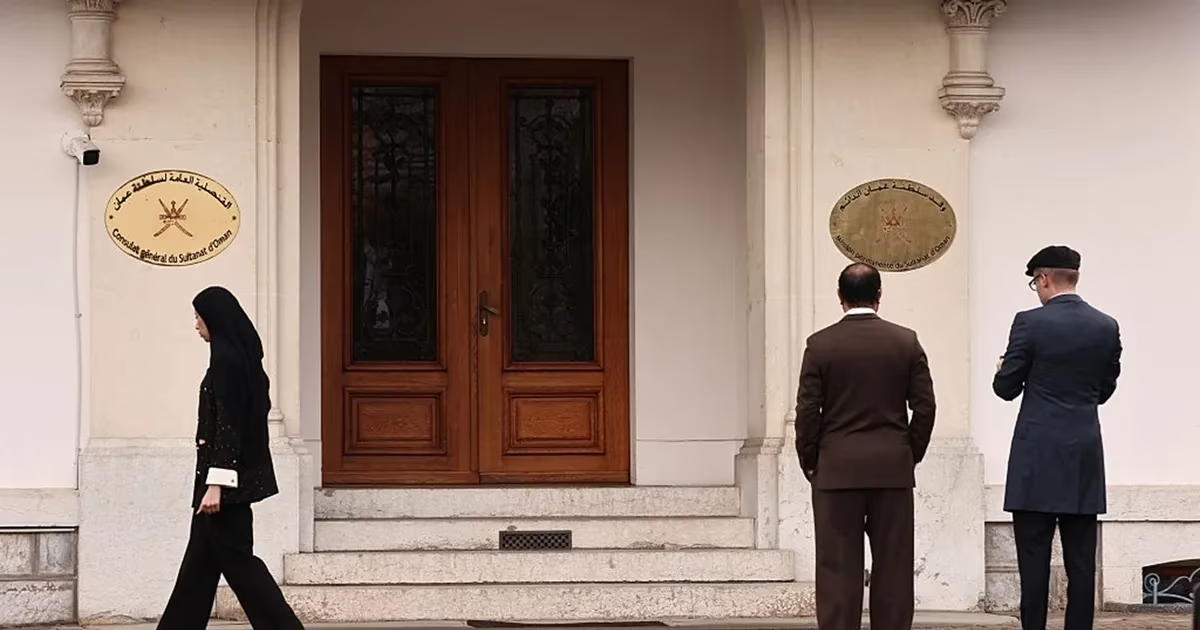
Iranian diplomacy prefers indirect channels for dialogue, as recently occurred in Geneva through Omani mediation, to reduce the symbolic and political cost before the domestic public. This approach allows the regime to maintain a narrative of steadfastness and sovereignty while seeking practical gains away from the spectacle of direct submission.

In contrast to the American desire for a 'grand' and comprehensive deal, Iran tends towards incremental, cumulative agreements built on a 'step-for-step' basis. This gradualism gives Tehran an opportunity to test Washington's seriousness before making substantial concessions on sensitive issues such as uranium enrichment.

Tehran recently proposed a three-phase vision starting with reducing enrichment levels in exchange for tangible economic measures, including the unfreezing of assets. This plan aims to ensure actual returns before moving on to inspection issues and broader commitments requested by the International Atomic Energy Agency.

For Iran, the nuclear card is a strategic negotiating asset, not merely a technical project isolated from the state's general policy. Tehran uses enrichment levels as leverage to prevent negotiations from turning into a state of subservience, and to send psychological deterrence messages to the other party when pressures escalate.

Reports indicate that Iran categorically refuses to abandon its stockpile of highly enriched uranium before seeing a real and comprehensive lifting of economic sanctions. This stance stems from the conviction that early concession deprives the state of its maneuverability and makes it vulnerable to potential political treachery.

Contrary to Western expectations, increased sanctions may sometimes lead to a hardening of the Iranian position rather than flexibility, as economic resilience is linked to national independence. The Iranian leadership fears that any concession under duress would be interpreted as a sign of weakness, which could threaten the internal balance of the regime.

The ultimate goal of the Iranian state in any negotiation process is to protect the survival of the regime and its political legitimacy before any other economic considerations. Therefore, any agreement formula must guarantee the 'right to enrichment' and avoid appearing as external dictates that harm the state's dignity.

Iran always seeks an 'honorable exit' that allows it to market the results as an assertion of rights against major powers, rather than a surrender to international pressures. This approach explains the constant insistence that the lifting of sanctions is the sole and primary criterion for judging the seriousness of any dialogue with Washington.

The real clash in Iranian-American negotiations is not merely technical, but a collision between two schools of political psychology. While Washington believes in pressure to generate trust, Tehran insists on obtaining guarantees before embarking on any path of substantial concessions.

Monitoring sources confirm that Tehran rejects the principle of 'zero enrichment' outright, considering it a red line that cannot be crossed in any future settlement. This position reflects the regime's desire to maintain technological capabilities that ensure its regional standing and sustainable negotiating power.

Back channels and indirect messages remain Iran's preferred means for managing major crises with the United States, away from media clamor. This space gives the Iranian negotiator sufficient flexibility to retreat or advance without having to justify it to rigid domestic institutions.

Ultimately, the Iranian negotiating mind appears as a highly suspicious and long-suffering entity, refusing to dismantle its cards before receiving its price. It is a battle to control the mental image, where the regime seeks to gain advantages while maintaining slogans of resistance and sovereignty intact.

Iran does not just ask what it will get in negotiations, but first asks: How do we ensure that the agreement will not be broken later?

ARAB AND WORLD

Sun 22 Mar 2026 4:45 pm - Jerusalem Time

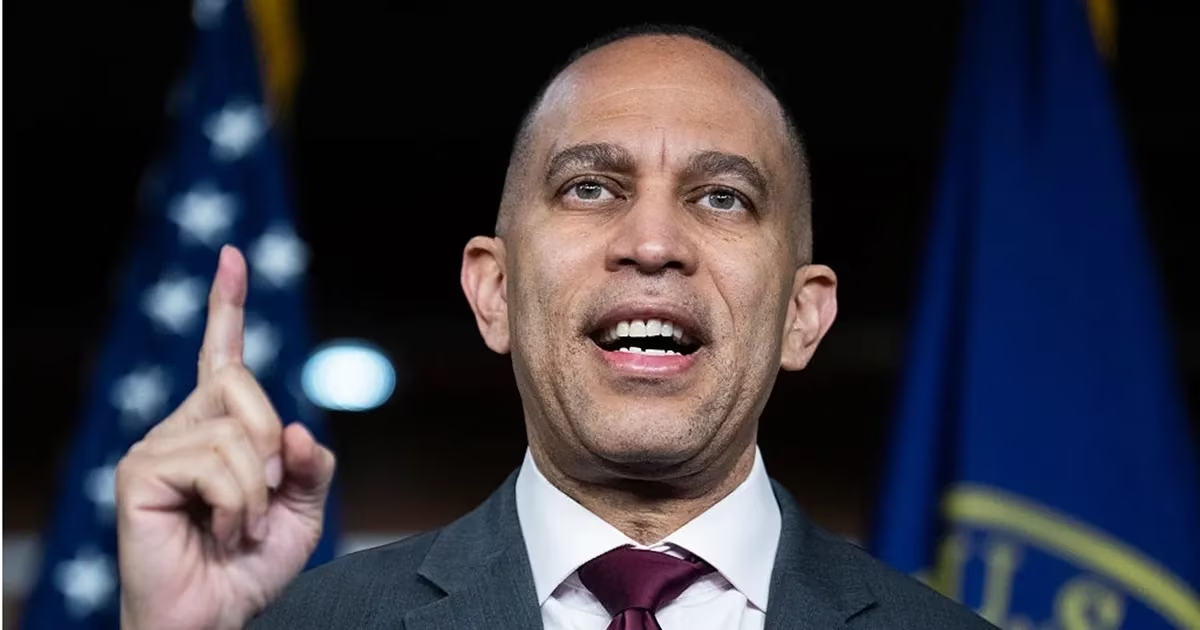
Jeffries attacks Trump, calls war on Iran 'reckless,' calls for regime change in Washington

Hakeem Jeffries, the leader of the Democratic minority in the US House of Representatives, launched scathing criticism against President Donald Trump and the Republican Party, describing military involvement against Iran as a 'reckless option.' In statements made on the (X) platform, Jeffries held Trump and those he described as 'Republican extremists' directly responsible for igniting a conflict that did not receive congressional approval, emphasizing that these actions led to the deterioration of US national security.

The Democratic official pointed to the severe economic repercussions of the war, explaining that it caused a疯狂 surge in fuel prices and drained the state budget by wasting billions of dollars of citizens' money. Jeffries concluded his remarks with a phrase that caused shock in political circles, as he explicitly called for the necessity of 'regime change in America,' referring to the need to remove the current administration.

On the ground and financial fronts, reports issued by the US Department of Defense (Pentagon) and the Center for Strategic and International Studies (CSIS) revealed shocking figures, with military operations costing approximately $25 billion. Sources explained that the daily spending rate approaches $1 billion, which prompted the administration to request a massive additional budget of up to $200 billion to compensate for the severe shortage in strategic ammunition stockpiles and ensure the continuation of operations.

This war, not approved by Congress, caused a jump in fuel prices and wasted billions of dollars, making the United States less safe.

PALESTINE

Sun 22 Mar 2026 4:45 pm - Jerusalem Time

Widespread Injuries and Arrests in the West Bank Following Settler Attacks and Occupation Raids

Seven Palestinian citizens sustained varying degrees of injuries as a result of a series of violent attacks carried out by Israeli settlers, targeting approximately 13 locations in various parts of the occupied West Bank. These assaults coincided with a campaign of raids and incursions by the occupation army, which resulted in the arrest of seven citizens and the physical assault of an elderly Palestinian.

In detail, groups of settlers attacked the village of Jalud, south of Nablus city, where they severely beat residents. The attackers set fire to the village council building, in addition to burning four vehicles belonging to citizens, causing extensive material damage.

Medical sources from the Palestinian Red Crescent reported that their teams dealt with three injuries resulting from settler assaults, including a young man with a deep head wound. Other injuries, including bruises, were recorded in the town of Broqin in Salfit Governorate, after a Palestinian vehicle was heavily pelted with stones.

Jenin Governorate witnessed similar attacks, where settlers stormed the village of Al-Fandaqumiya and set fire to a number of homes and vehicles, in an attempt to terrorize and displace residents. A citizen was also injured with bruises in the town of Silat al-Dhahr after settlers assaulted him while attempting to burn his home, before residents were able to confront them and force them to retreat.

The wave of attacks extended to include the Amriha cluster and the outskirts of the town of Jaba, in addition to targeting Palestinians in the Ain al-Hilweh cluster and vehicles near the 'Kedumim' settlement. In the southern West Bank, two homes in the towns of Sa'ir and Halhul, north of Hebron, were subjected to similar attacks, amidst a noticeable escalation in the pace of organized settler violence.

Official data issued by the Wall and Settlement Resistance Commission indicates a dangerous escalation in these violations, with more than 511 attacks carried out in February alone. These attacks have led to the martyrdom of seven Palestinians by settler gunfire, reflecting a systematic policy aimed at tightening the noose on the Palestinian presence.

Regarding military incursions, the occupation army launched a campaign of raids on citizens' homes in different areas, during which four Palestinians were arrested from the town of Tuqu', southeast of Bethlehem. Local sources reported that Israeli forces meticulously searched homes and tampered with their contents before taking the detainees to unknown destinations.

In the town of Beit Ummar, north of Hebron, occupation forces arrested two 16-year-old youths and severely beat an elderly man in front of his family members during the raid. Arrests also included a young man from the village of Deir Nizam, as part of daily campaigns targeting youth cadres and activists in Palestinian villages and towns.

In a related context, the 'Shin Bet' and Israeli police announced the arrest of a cell comprising four young men from the city of Umm al-Fahm, allegedly for planning to carry out operations within the occupied territories. These arrests come at a time when more than 9,300 Palestinian prisoners are held in occupation prisons, suffering from harsh detention conditions and continuous violations of their basic rights.

Since the start of the comprehensive aggression in October 2023, the number of violations in the West Bank has reached record levels, with 1,133 Palestinians martyred and approximately 11,700 others injured. The recorded arrests have also reached about 22,000 cases, amid the ongoing war of extermination waged by the occupation on the Gaza Strip and its field repercussions in all Palestinian territories.

Settler attacks have escalated dangerously, with hundreds of assaults targeting lives and property under the protection of the occupation army.

PALESTINE

Sun 22 Mar 2026 3:42 pm - Jerusalem Time

Occupation decides to destroy Litani bridges and level Lebanese border villages to the ground

Israeli Defense Minister, Israel Katz, announced today, Sunday, the issuance of joint official instructions from him and Prime Minister Benjamin Netanyahu to begin an immediate and comprehensive bombing operation of all bridges located on the Litani River in southern Lebanon. This step comes as part of a military escalation aimed at radically changing the field reality on the northern front.

Katz clarified that the orders issued to the Israeli army are not limited to bridge infrastructure only, but extend to include accelerating the demolition of homes in Lebanese frontline villages. He stated that the goal of this systematic destruction is to remove what he described as threats facing the northern areas, emphasizing the necessity of ending residential and urban presence in the contact areas.

The Israeli minister revealed that the occupation army has adopted the 'Gaza model' in dealing with Lebanese villages, specifically what happened in Beit Hanoun and Rafah of extensive surveying and destruction operations. This approach indicates the occupation's intention to turn the border strip into an uninhabited area through the scorched-earth policy it followed in the Strip.

For his part, the Israeli army spokesman confirmed that the air operations will directly target the Qasimiya Bridge, which represents a vital part of the coastal highway connecting Lebanese areas. This announcement is a continuation of a series of previous targeting, as the Tyre-Falsieh – Zrarieh Bridge was bombed in mid-March.

In a military reading of these developments, analytical sources reported that the occupation seeks, by destroying the bridges, to cut off the logistical arteries of the Lebanese resistance and completely isolate the operational area. This strategy aims to restrict the fighters' ability to maneuver and transport supplies between the two banks of the river, exploiting Israel's absolute air superiority.

Observers believe that the destruction of the bridges will significantly impede logistical movement, slowing down the resistance's field response speed in the face of any potential ground incursion. Tel Aviv is preparing, through these steps, for a broader phase of military confrontation, as it seeks to secure its field superiority by paralyzing the enemy's movement.

The sources warned that the greatest danger lies in the occupation's intention to level border villages to the ground, which clearly indicates the actual start of work on establishing a buffer zone south of the Litani River. Through this zone, Israel aims to remove any military or civilian presence that threatens its northern settlements, and impose a new security reality by force.

These extreme Israeli decisions come in light of the difficulties faced by ground forces in previous attempts to advance, where they suffered losses in lives and equipment. The occupation leadership was surprised by the ability of small resistance groups to target 'Merkava' tanks and trap attacking forces in well-planned ambushes.

Resorting to the destruction of civilian infrastructure and bridges reflects an Israeli desire to compensate for field failures by exerting immense military and destructive pressure. Anticipation remains the master of the situation regarding the repercussions of these decisions on regional stability and the possibility of the situation sliding into an all-out war not limited to border areas.

The instructions include accelerating the demolition of Lebanese homes in frontline villages to end threats, according to the model of Beit Hanoun and Rafah in Gaza.

ISRAELI AFFAIRS

Sun 22 Mar 2026 3:42 pm - Jerusalem Time

Israeli Security Blackout: Ban on Photographing Missile Impact Sites in Dimona and the Negev

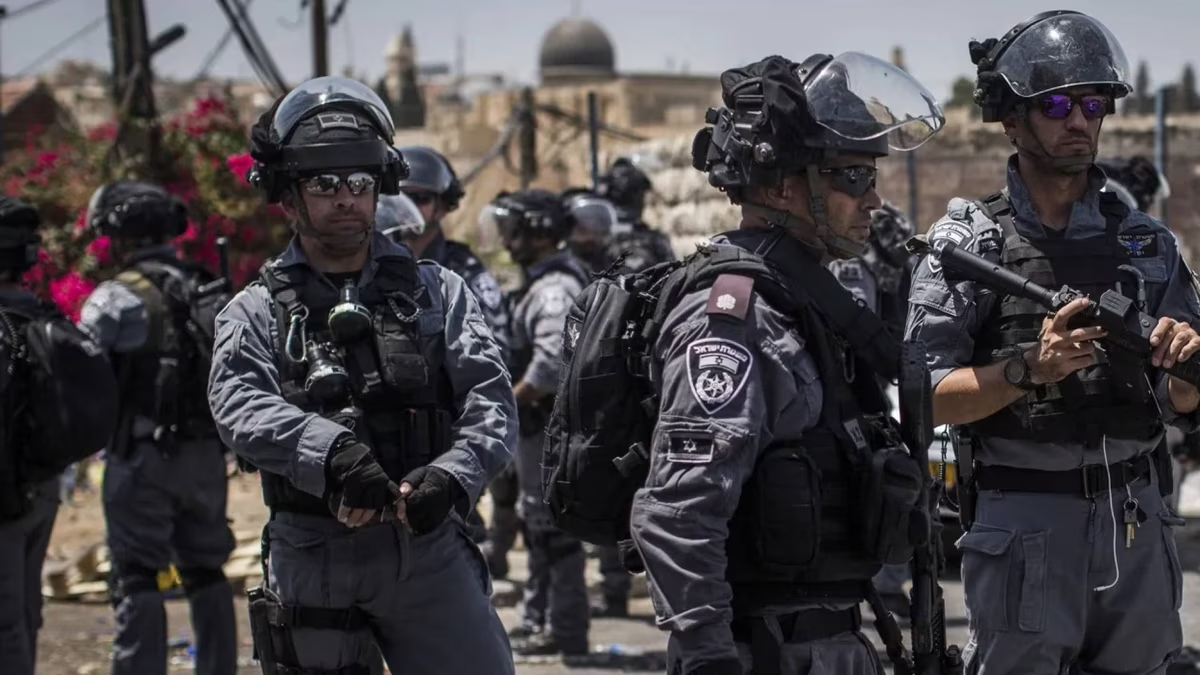
The Israeli occupation police have imposed strict security measures aimed at enforcing a complete blackout on the results of missile strikes that targeted the city of Dimona and wide areas in the Negev. Security agencies issued strict instructions, as part of what is known as 'Operation Lion's Roar,' prohibiting the photographing or circulation of any visual documentation showing missile impact sites or the extent of the resulting damage. This step comes amid a state of security alert following recent Iranian missile attacks that targeted strategic locations.

Occupation authorities considered the circulation of bombing images via social media platforms or instant messaging groups to be a clear 'security betrayal' that serves the objectives of the other side. Security sources explained that these photographic materials provide resistance operations rooms with a golden opportunity to correct bombing coordinates in upcoming salvos, as well as their ability to assess the accuracy of hits and the effectiveness of air defense systems in intercepting missiles.

The new instructions included an absolute ban on taking photos or videos of damaged buildings or directly documenting moments of missile impact. The police also emphasized preventing the precise geographical identification of impact areas, warning that any violation of these orders would expose the perpetrator to immediate legal prosecution. Expected penalties include severe charges related to 'harming state security' and cooperating with hostile parties in wartime.

Observers believe that the primary goal of this ban is to cover up the true extent of the losses caused by the missiles deep inside Israel, especially amid reports of massive fires and damage to multi-story buildings in Dimona. Through these decisions, military censorship seeks to control the media narrative and prevent the leakage of any information that could demoralize the home front or boost morale on the resistance fronts.

Through this blackout, Israeli intelligence agencies are trying to prevent the collection of information from 'open sources,' which have become a fundamental pillar in modern military planning. These measures confirm growing Israeli concern about the accuracy of recent strikes and their ability to reach sensitive targets in the Negev, which has prompted the security establishment to take unprecedented steps to restrict freedom of publication and field documentation.

Publishing photos of the bombing is considered a security betrayal that helps the enemy correct its coordinates and assess the accuracy of hits.

ISRAELI AFFAIRS

Sun 22 Mar 2026 3:41 pm - Jerusalem Time

Injuries and widespread damage in Tel Aviv and its surroundings due to a new wave of Iranian shelling

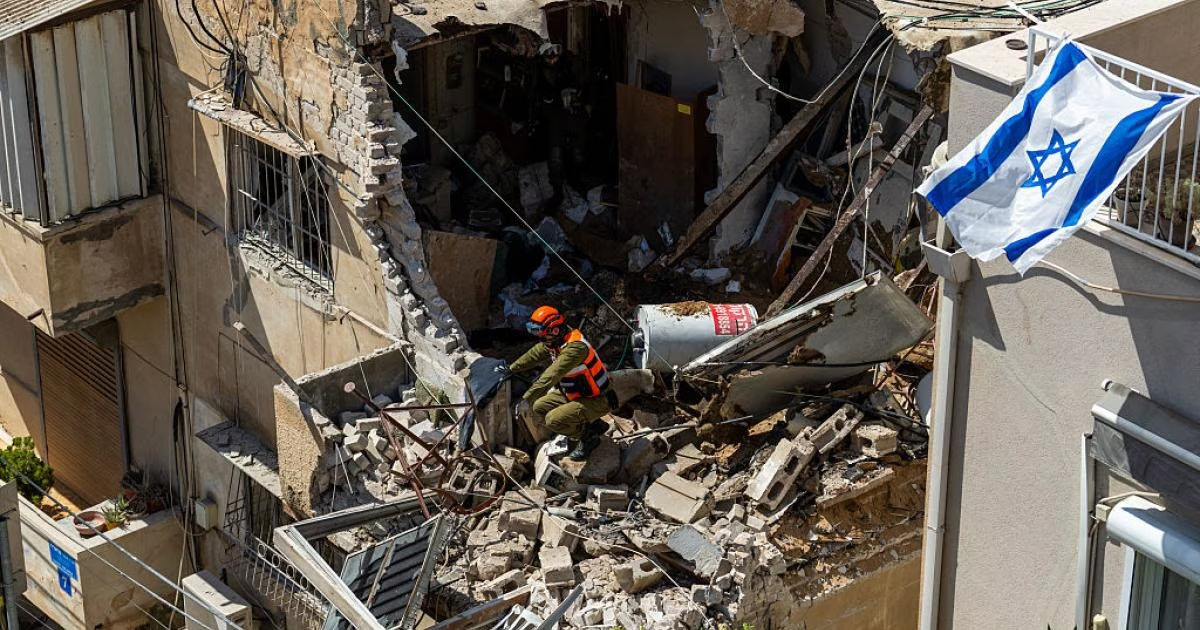
Medical and field sources reported at least 15 people injured in various parts of central Israel, following a large-scale Iranian missile attack. The missile barrages triggered sirens in Tel Aviv and vast surrounding areas, prompting thousands of settlers to urgently seek shelter.

For its part, the Iranian Revolutionary Guard issued a statement confirming the execution of the 74th wave of 'Operation True Promise 4', which targeted vital sites deep within Israel and American military bases in the region. The statement clarified that the attacks focused on destroying security centers and military bases in the cities of Tel Aviv, Petah Tikva, Holon, and Ramat Gan.

In contrast, the Israeli Home Front Command confirmed detecting four missile attacks launched from Iranian territory towards the central region, noting that air defenses attempted to intercept several of them. Local sources reported that a cluster missile targeted the greater Tel Aviv area, with its shrapnel and sub-munitions scattered in the Holon area south of the city.

Israeli Army Radio announced that fragments of interceptor and offensive missiles fell in the city of Petah Tikva and the Tirat Yehuda area, southeast of Tel Aviv. The radio acknowledged material damage to properties and infrastructure as a result of these falls, at a time when ambulance and rescue teams rushed to the affected sites.

Israeli Magen David Adom stated in an official announcement that the 15 injuries recorded in the central region ranged from moderate to minor, most of them resulting from missile shrapnel. These injuries were distributed across seven different locations, reflecting the wide scope of the recent Iranian targeting that affected economic and security centers of gravity.

Videos circulated by Hebrew media documented extensive damage to a building in the city of Petah Tikva, in addition to a massive fire breaking out in another building in the heart of Tel Aviv. Cameras also captured severe damage to public roads and parked vehicles in the city of Ramat Gan due to the violent explosions that rocked the area.

These field developments come one day after attacks described as the deadliest since the start of the confrontation, which targeted the cities of Arad and Dimona. The Israeli Ministry of Health announced on Sunday that the number of injured in those attacks had risen to 182 people, the vast majority of whom were transferred to central hospitals for treatment.

The ministry indicated that Soroka Hospital in Be'er Sheva alone received 116 injured from Arad and Dimona, where they are undergoing intensive treatment protocols. Official statistics showed that among these injured, 7 cases were described as serious, 24 as moderate, while the rest of the injuries were described as minor.

In the details of the Dimona incident specifically, medical sources clarified that 64 injured were transferred to hospitals last night, including one very critical case. These numbers confirm the significant pressure on the Israeli health system amid the continuous influx of wounded from various shelling sites in the south and center.

In a comprehensive update, the Ministry of Health revealed that the total number of injured Israelis since the start of the Iranian response on February 28 has reached 4564. The ministry added that the last 24 hours alone saw 303 new injuries recorded, indicating an unprecedented escalation in the pace of Iranian military operations.

Currently, about 124 injured are in intensive care units and various medical departments, including 13 in serious condition and 26 in moderate condition. Israeli authorities face internal criticism due to what is described as a failure to intercept missiles that are now reaching their targets with greater accuracy and causing tangible human and material losses.

Israeli military censorship continues to impose a complete blackout on the true results of Iranian military responses and Hezbollah operations. The Israeli occupation army warns Israelis against publishing any videos showing the extent of losses or revealing damaged military sites, in an attempt to prevent accurate intelligence information from reaching the other side.

The Iranian Revolutionary Guard announced the execution of the 74th wave of Operation True Promise 4 towards military and security targets in Tel Aviv and American bases in the region.

PALESTINE

Sun 22 Mar 2026 3:41 pm - Jerusalem Time

Escalation of Settler Attacks in the West Bank: Homes and Facilities Burned, Citizens Injured

Villages and towns in the occupied West Bank have witnessed a dangerous escalation in settler attacks since yesterday, resulting in injuries to seven citizens. These attacks coincided with a raid campaign carried out by occupation forces, which led to the arrest of six Palestinians, including four young men from the town of Tuqu' and two children from the town of Beit Ummar, north of Hebron.

In Nablus Governorate, field sources reported that three citizens were injured at dawn today, Sunday, following an attack by settlers on the village of Jalud. The attack involved setting fire to the village's local council headquarters, in addition to burning four vehicles, three of which were completely charred by the raging fire.

The attacks did not stop at Nablus but extended to the town of Bruqin in Salfit Governorate, where three Palestinians sustained various bruises. These injuries occurred after a group of settlers directly pelted their vehicle with stones as they passed through the area, leading to the shattering of the vehicle's windows and injuries to those inside.

In Jenin Governorate, video clips documented harsh scenes of homes and vehicles burning in the village of Al-Fandaqumiya, south of the governorate, due to settler attacks. The recordings showed fires igniting in more than one home, a step that reflects the extent of settler encroachment and the targeting of the private property of unarmed citizens.

A Palestinian citizen in the town of Silat ad-Dhahr, southwest of Jenin, was also subjected to a brutal beating by a group of settlers. The assault occurred while the settlers were attempting to burn the citizen's home, resulting in bruises and injuries that required medical intervention, amidst a state of panic among the residents of the area.

In the northern Jordan Valley, settlers attacked the Ein al-Hilweh residential community, where they used pepper spray directly and harmfully against the residents. In a related context, citizens' vehicles were pelted with stones near the 'Kedumim' settlement in Qalqilya, with no human injuries reported in that incident.

Official data issued by the Wall and Settlement Resistance Commission indicates that last February alone witnessed 511 attacks carried out by settlers. The commission confirmed that these attacks led to the martyrdom of seven Palestinians by settler bullets, which indicates that these groups are being given a green light to commit violence.

Since the outbreak of the war on the Gaza Strip in October 2023, the death toll from army and settler attacks in the West Bank has reached 1133 martyrs. Medical and human rights teams also recorded injuries to approximately 11,700 citizens, while arrests exceeded 22,000 cases under harsh conditions.

Settlers carried out 511 attacks in the West Bank last February, leading to the martyrdom of 7 Palestinians by their bullets.

ARAB AND WORLD

Sun 22 Mar 2026 3:41 pm - Jerusalem Time

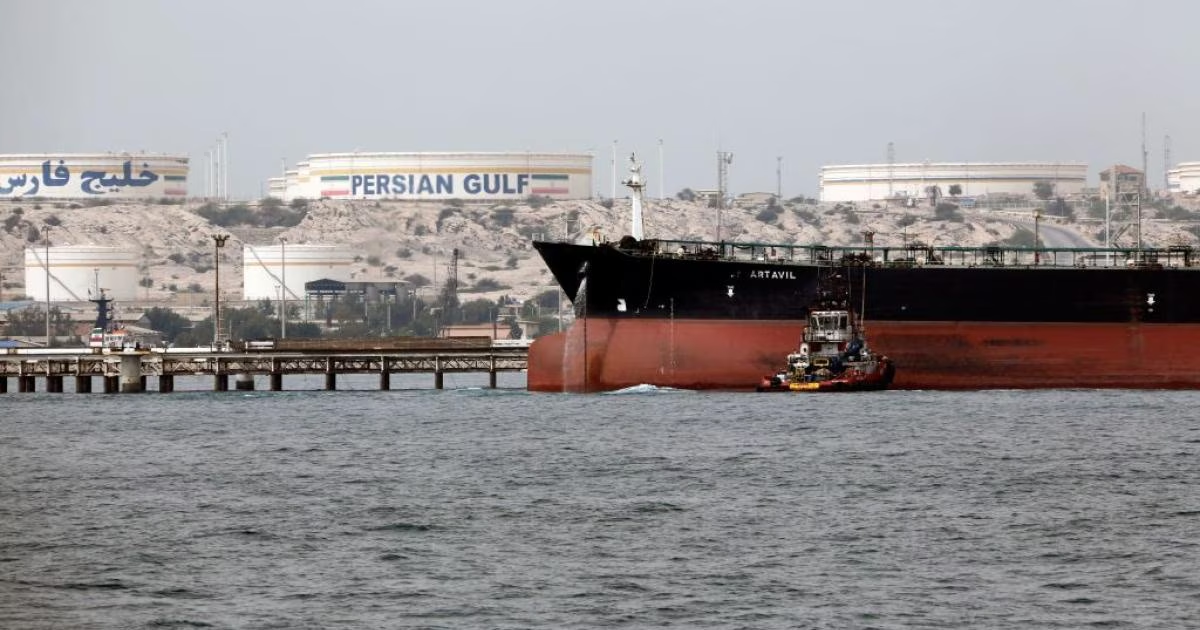
Gulf Conflict 2026: Will Confrontation with Iran End the 'Petrodollar' Era?

The military tensions witnessed in the waters of the Arabian Gulf in early 2026 are no longer just a fleeting security confrontation; they now signal a deep structural shift in the global financial system. While Washington attempts to market 'Operation Epic Fury' as a measure to ensure stability, observers believe it represents the culmination of the struggle over the 'petrodollar' system that has governed the international economy for half a century.

American economic power fundamentally relies on the mandatory trading of oil in dollars, which creates sustained global demand, allowing Washington to finance its massive deficit and maintain its military influence. However, the events of 2026 revealed the fragility of this system in the face of major geopolitical conflicts, as the traditional pillars of oil cooperation began to collapse under the weight of military escalation.

Tehran had prepared for this confrontation over years by building parallel financial networks away from the dominance of the 'SWIFT' system, which had been weaponized for sanctions. By linking with Chinese and Russian systems, Iran succeeded in creating alternative routes for energy trade, enabling it to withstand the maximum pressure strategy pursued by the US administration.

The strikes targeting Iranian nuclear and missile facilities last February accelerated the pace of the shift towards 'de-dollarization' in international transactions. Reports indicate that this trend is no longer limited to Washington's adversaries but has extended to cautious allies who have begun to fear the use of the US currency as a political tool to impose political will.

Economic data released in March 2026 indicates severe disruptions in energy markets, with Brent crude prices soaring past $92 per barrel. This surge was a direct result of supply disruptions through the Strait of Hormuz, through which about a fifth of the world's oil passes, putting the global economy on high alert.

Domestically in the US, the war has caused enormous financial drain, with military operations estimated to cost around $900 million per day. This massive spending, coupled with rising inflation rates and eroding purchasing power, has begun to spark a wave of public discontent within the United States due to the deterioration of citizens' daily living standards.

Iran's move to demand that oil importers settle transit fees in the Strait of Hormuz in Chinese Yuan poses a direct challenge to the heart of the petrodollar system. If major industrial powers respond to these demands to secure their energy needs, it would mean the end of the US dollar's historical monopoly over the global oil market.

The dollar's loss of its status as the exclusive currency for energy will force the United States to compete for capital in an equal international arena for the first time in decades. This shift will deprive Washington of the 'safety net' provided by the recycling of oil money into US Treasury bonds, weakening its ability to finance its foreign policies.

Analysts believe that Washington is falling into the trap of 'yesterday's war,' attempting to protect an old monetary system using military force, at a time when the world is moving towards multipolar digital finance. Over-reliance on the military machine to maintain financial hegemony has become counterproductive, pushing countries to seek alternative security and economic solutions.

The current crisis embodies a vicious cycle; the more military escalation there is to protect the dollar, the greater the incentive for regional and international powers to move away from it entirely. This contradiction places American decision-makers before difficult choices: either continue the costly confrontation or accept a new global financial reality in which the dollar alone does not hold the ultimate say.

The shift towards a multipolar financial world will necessarily reduce the United States' ability to impose effective economic sanctions in the future. When sanctions lose their value as a pressure tool, Washington will be forced to re-evaluate its overall strategy in dealing with rising powers in the Middle East and Asia.

Central banks around the world have already begun to diversify their reserves, moving towards gold and regional currencies as a precautionary measure against dollar volatility linked to conflicts. This trend reflects a loss of confidence in the neutrality of the US-led financial system and enhances the chances of success for economic blocs such as 'BRICS'.

Ultimately, the conflict in the Gulf transcends being a dispute over regional influence, becoming a true test of the resilience of American hegemony in the 21st century. If Washington fails to secure waterways and restore confidence in its currency, we may witness a sudden end to the era that began after World War II.

The painful economic adjustment that the dollar's decline might impose on the US domestic front will have far-reaching political and social consequences. Thus, history may record that the 2026 war was the point at which the dollar transformed from a deadly strategic weapon into an economic burden accelerating the demise of unipolarity.

The true victim of the 2026 Iran war may not be the regime in Tehran, but rather the absolute supremacy that the US dollar has always enjoyed.

PALESTINE

Sun 22 Mar 2026 3:41 pm - Jerusalem Time

Killed and injured among the occupation forces due to intense rocket barrages from Lebanon

Field sources reported the killing of an Israeli and the injury of another with varying degrees of wounds today, Sunday, after an anti-tank missile fired from Lebanese territory fell towards the settlement of Misgav Am in the Upper Galilee. The direct hit led to fires in several vehicles and damage to vital facilities in the border area, amid continuous siren sounds.

For its part, the Israeli occupation army acknowledged detecting projectiles fired from Lebanon towards towns in the north, confirming material damage and human casualties among the settlers. This coincided with Hezbollah's announcement of targeting gatherings of occupation soldiers in the vicinity of Misgav Am with a precise rocket barrage that achieved direct hits.

In a related context, Israeli military sources announced the injury of two reserve soldiers due to mortar shells fired from southern Lebanon towards military sites in the north of the country. These field developments come one day after the occupation army command approved operational plans for continued fighting on the northern front.

Early hours of Sunday witnessed a qualitative escalation, as Hezbollah carried out a series of attacks that included more than 14 military operations using rockets, drones, and artillery shells. These operations targeted movements of occupation vehicles and gatherings of its soldiers in the battle axes in southern Lebanon and the settlements adjacent to the border.

The party clarified in successive statements that its fighters shelled military sites and gatherings in the towns of Adayssa, Markaba, Khirbet Yaroun, and Muhaysibat Hill with rocket salvos. The targeting also included sites in Khiam, Wadi Al-Asafir, and Al-Hamamess site, in addition to shelling the center of the Khiam detention facility's vicinity using heavy rockets.

In a remarkable development, swarms of kamikaze drones launched aerial attacks targeting the Avivim and Ramot Naftali barracks, leading to the activation of Israeli air defense systems. Rocket fire also hit the settlements of Dishon and Avivim, as part of what the party described as a defensive response for Lebanon and its people in the face of ongoing aggression.

On the other hand, Israeli occupation aircraft continued their violent raids on various areas in southern Lebanon, where the raids targeted villages in the Nabatieh district and the towns of Rihan and Qatrani. The aerial bombardment extended to the Mashghara area in Western Bekaa, causing widespread destruction to properties and infrastructure.

Local sources monitored an Israeli drone targeting a civilian car at the Burj Al-Muluk – Khiam – Kfarkila triangle, resulting in the injury of three people inside it. These raids come within the escalation policy pursued by the occupation against Lebanese villages and towns since the start of border confrontations this March.

The head of the Misgav Am settlement council indicated that four explosions shook the settlement without prior warning, causing panic among the remaining settlers. He confirmed that shrapnel from the explosions caused severe damage to a house and two vehicles, amid the inability of interception systems to counter some short-range projectiles.

Official statistics issued by the Lebanese authorities indicate that the ongoing Israeli aggression since the beginning of the month has led to the martyrdom of 1001 people and the injury of 2584 others. Military operations have also caused a major displacement wave, with more than one million Lebanese leaving their homes to escape intense aerial and artillery bombardment.

The attacks come in defense of Lebanon and its people and in response to the escalating Zionist aggressions.

PALESTINE

Sun 22 Mar 2026 3:41 pm - Jerusalem Time

US Proposal to Hamas: Disarmament for General Amnesty and $7 Billion Reconstruction

Informed sources revealed that the 'Peace Council,' headed by US President Donald Trump, submitted a written proposal to the Hamas movement, aiming to establish a comprehensive mechanism for the movement to abandon its military arsenal. This move came during intensive meetings held in the Egyptian capital, Cairo, last week, with the participation of the Council's High Representative in Gaza, Nikolay Mladenov, and Ariyeh Lightstone, assistant to Trump's special envoy, in an attempt to push Washington's plan for the future of the Strip.

The American plan includes an offer to grant a comprehensive 'amnesty' to Hamas members, in addition to injecting massive investments to rebuild the destroyed infrastructure in the Gaza Strip. The Trump administration stipulates that these steps be implemented with the withdrawal of Israeli forces from the areas they control, provided that the movement and all other armed factions commit to surrendering their heavy and light weapons without any exceptions.

For his part, Nikolay Mladenov confirmed that the operational framework for relief and reconstruction operations is ready for implementation and on the negotiating table, but he stressed the necessity of making a strategic decision to end the armed presence in the Strip. These diplomatic moves come after a period of stagnation in disarmament talks, following the outbreak of military confrontations between the United States and Israel on one hand, and Iran on the other, in late February.

Despite the financial and political temptations, sources close to Hamas indicate a tendency to reject these offers due to complex field security concerns. The movement fears that disarming it would leave it exposed to attacks from hostile armed groups within Gaza, which receive support from the occupation authorities, especially in light of the continued bloody tensions that have not ceased since last October.

Regarding the financial aspect, significant challenges emerge concerning the 'Peace Council's' ability to fulfill its reconstruction commitments, estimated at seven billion dollars. Although Trump had previously gathered financial pledges from Gulf and international countries, the regional military escalation with Iran led to a disruption in the flow of these funds, with only a very small portion of the previously committed amounts having been paid.

The situation in the Gaza Strip remains suspended between strict Israeli security demands for complete disarmament and the insistence of Palestinian factions on protecting their field presence under occupation. With Israeli forces controlling about half of the Strip's area, observers believe that the success of any political proposal requires a delicate balance that ensures regional stability and ends the ongoing suffering of civilians.

The operational framework for relief is on the table, but it requires a clear choice for Hamas and all armed groups to completely abandon their weapons.

ARAB AND WORLD

Sun 22 Mar 2026 3:40 pm - Jerusalem Time

Dozens Injured in Iranian Missile Attack Targeting Dimona Reactor Area

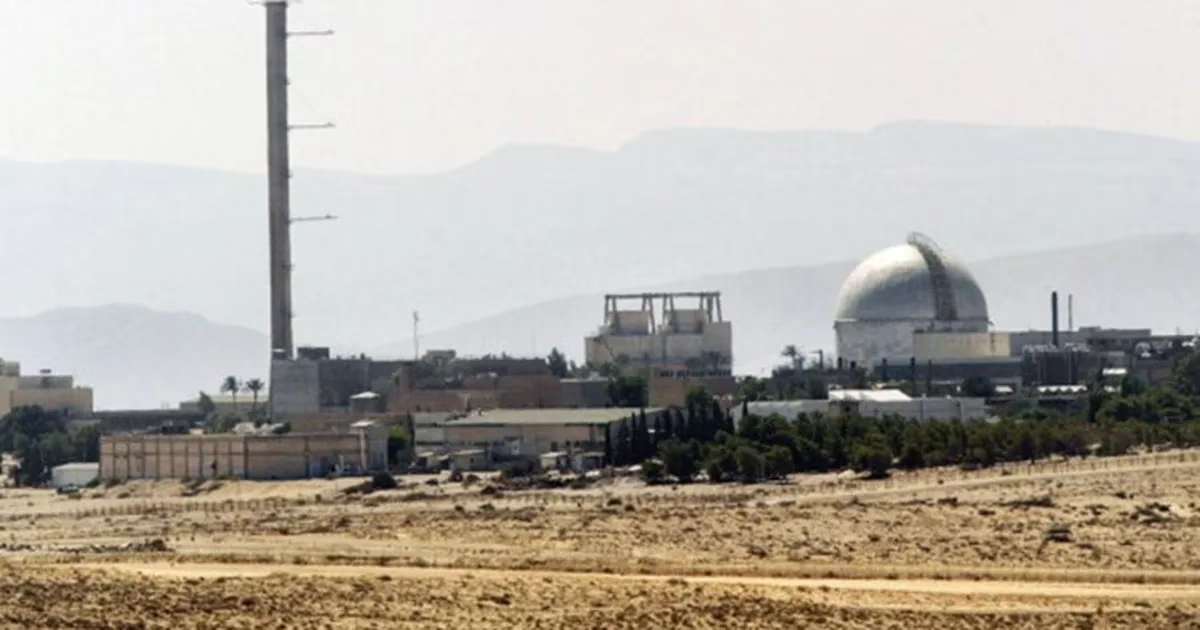
Field and media sources reported the detection and interception of a series of missiles launched from Iranian territory towards the Dimona nuclear area in the Negev, southern Israel. The sources confirmed that air defense systems attempted to counter the missile barrage, which caused widespread panic in the southern regions.

For its part, the Israeli occupation army acknowledged that the city of Dimona was hit by a direct missile strike, noting that sirens sounded over vast areas including Beersheba and the vicinity of the nuclear reactor. This barrage is the ninth launched from Iran in recent hours, reflecting the intensity of the ongoing aerial attack.

In an initial toll, ambulance services announced that at least 47 people sustained varying injuries due to falling missile shrapnel, with one person's condition described as serious. The injured were transported to nearby hospitals for treatment, while rescue teams continue to search sites where projectiles fell.

On the political front, Iranian state television announced that targeting the vicinity of the Dimona facility comes within the framework of a legitimate response to the bombing of the Natanz nuclear facility, which occurred on Saturday morning. Tehran held both Tel Aviv and Washington fully responsible for the attack that targeted its peaceful nuclear program earlier.

According to the Iranian Atomic Energy Organization, the Natanz uranium enrichment facility was subjected to a joint aggression launched by American and Israeli forces. Iranian agencies clarified that this escalation imposes a new field reality that necessitates a direct deterrent response deep within Israeli territory to protect Iran's national capabilities.

In a related context, tensions were not limited to the southern front, as sirens sounded in the city of Nahariya and the Western Galilee region in northern occupied Palestine. Sources reported that missiles launched from southern Lebanon fell in scattered locations, indicating potential coordination in military operations on multiple fronts.

This explosion in the field situation is an extension of a widespread aggression launched by Israel and the United States against Iran since late February. These raids resulted in severe human losses among the Iranian leadership, including the former Supreme Leader and high-ranking security officials, which prompted Tehran to intensify its missile responses.

On the Lebanese front, Hezbollah continues to target Israeli military sites in response to continuous violations of the ceasefire agreement concluded in November 2024. Israel responded with a fierce bombing campaign that affected wide areas in Lebanon, leaving thousands dead and wounded and a million-strong displacement wave, the largest in years.

Reports indicate that the region has entered a stage of open confrontation that transcends traditional rules of engagement, especially with the targeting of vital and nuclear facilities. International powers are cautiously monitoring this accelerating escalation, which threatens to ignite a comprehensive regional war whose repercussions cannot be controlled amid continued mutual shelling.

The missile attack on the city of Dimona came in response to the enemy's bombing of the Natanz nuclear facility earlier.

ARAB AND WORLD

Sun 22 Mar 2026 3:40 pm - Jerusalem Time

Three Weeks of Confrontation: Gains and Losses in the American War on Iran

The military confrontation led by the United States and Israel against Iran entered its third week, reaching the halfway point of the timeline set by President Donald Trump to end operations. While field reports speak of tangible military progress, high human, economic, and political costs are emerging, putting the American strategy under scrutiny.

The US administration holds onto a list of military achievements, with official sources confirming the success of forces in destroying large parts of Iran's air defenses and naval fleet. Data also indicates a sharp decline in missile attacks directed at Israel by over 90%, coinciding with intensive targeting of drone factories and ballistic missiles.

On the other hand, American forces were not immune to losses, as the deaths of at least 13 soldiers were confirmed, some of whom fell to friendly fire according to the official narrative. Around 200 other soldiers were injured, while advanced military equipment suffered severe damage, including F-15 and F-35 aircraft, in addition to the malfunction of vital radar systems in the region.

International press sources reported that satellite images showed a US radar malfunctioning in Jordan and the destruction of at least seven air defense sites in several Arab countries. The cost of a single F-35 aircraft forced to make an emergency landing is estimated at around $100 million, reflecting the extent of material attrition in this confrontation.

Washington is currently facing a severe logistical crisis, with ammunition stockpiles decreasing by up to 25%, prompting the administration to ask arms companies to double their production rate. The government has requested additional funding from Congress worth $200 billion to cover the escalating costs of ongoing military operations in the Middle East.

The confrontation quickly turned into something akin to an 'oil war,' as the closure of the Strait of Hormuz paralyzed 20% of global energy supplies. Oil prices jumped to touch the $114 per barrel mark, amidst dozens of targeting incidents affecting oil facilities and gas fields in nine countries in the region, including Saudi Arabia, UAE, Iraq, and Qatar.

The war caused a silent diplomatic crisis with Washington's allies in Asia, particularly South Korea, Japan, and Thailand, which rely vitally on oil from the Strait. Observers believe that the US entering the war without prior coordination led to supply disruptions for these countries, causing widespread discontent in Asian capitals.

India was directly affected by the repercussions of the conflict, as it relies on 40% of its oil needs through the Strait of Hormuz, in addition to the impact on remittances from Indian workers in the Gulf. This crisis is considered a blow to the strategic partnership between Washington and New Delhi, especially given the ongoing American competition with Chinese influence in the region.

On the Western front, President Trump sparked a crisis with European allies by calling them 'cowards' for refusing to participate in securing maritime navigation. The matter did not stop there; he also described NATO as a 'paper tiger,' hinting at the possibility of his country unilaterally withdrawing from the alliance without consulting Congress.

Despite the assassinations of senior leaders in Tehran, including the Supreme Leader, the strategic goal of overthrowing the regime has not yet been achieved. Contrary to American intelligence estimates, Iranian cities did not witness widespread popular protests demanding government change, putting Washington in a complex political predicament.

The United States now finds itself facing the dilemma of withdrawal; ending the war without reopening the Strait of Hormuz would be a harsh strategic defeat. In an attempt to break the stalemate, Washington is preparing to send a force of 2,500 Marines, supported by naval and amphibious units from Asia, towards the Gulf early next month.

Forecasts indicate that the upcoming mission for US forces may include taking control of Kharg Island or parts of the Iranian coast adjacent to the Strait. This military move aims to create a buffer zone to prevent Revolutionary Guard forces from threatening international navigation and to secure the flow of oil to global markets once again.

In his recent statements, President Trump tried to paint an optimistic picture, asserting that American goals are being achieved and that the end of the war is very near. However, he placed the responsibility for protecting the Strait in the future on the countries benefiting from it, indicating that his country would only provide technical assistance when absolutely necessary.

Trump concluded his stance with a striking escalation, issuing a final ultimatum to Tehran to fully open the Strait of Hormuz within just 48 hours. The American president threatened that if there was no response, US forces would begin unprecedented strikes on power stations and vital infrastructure deep within Iran.

Trump describes NATO as a 'paper tiger' and threatens to strike Iranian power plants unless the Strait of Hormuz is opened within 48 hours.

OPINIONS

Sun 22 Mar 2026 8:08 am - Jerusalem Time

Shocking UN Report: Torture at the Core of Genocide Accusations in the Palestinian Territories

Said Erikat

Opinion Writer

Washington - Said Arikat - 22/3/2026

A report by the United Nations Special Rapporteur on the situation of human rights in the Palestinian territories occupied since 1967, Francesca Albanese, titled "Torture and Genocide," has recently been released. It offers a sharp and detailed reading of what the report describes as a systematic pattern of grave violations against Palestinians, in the context of what the Rapporteur considers an "ongoing settler-colonial genocide."

The report, issued on March 19, 2026, under the symbol A/HRC/61/71, carries serious accusations regarding the use of physical and psychological torture as a central tool in managing the conflict, not only within detention centers but also in the daily lives of Palestinians in the occupied territories. It argues that these practices constitute part of a "comprehensive torturous environment" aimed at exhausting the Palestinian population and forcing their displacement from their land.

Torture as a Systematic Policy

The report reviews multiple patterns of torture and ill-treatment, including arbitrary arrest, physical violence, psychological humiliation, and deprivation of basic rights. It indicates that these violations are not limited to prisons and interrogation centers but extend to military checkpoints, night raids, and restrictions on movement, making the daily lives of Palestinians, according to the report, surrounded by constant elements of pressure and coercion.

The Special Rapporteur emphasizes that this widespread use of torture cannot be understood in isolation from the broader political context, considering it a "structural pillar" in the system of control, rather than merely individual excesses or exceptions.

"Torturous Environment": Beyond Detention Facilities

One of the most prominent concepts presented by the report is the "torturous environment," where torture is not limited to direct practices within detention facilities but also manifests in policies and procedures that impose continuous suffering on the civilian population. This environment includes, according to the report, restrictions on movement, demolition of homes, settlement expansion, and the use of excessive force, creating a permanent state of fear and instability.

The report believes that this pattern of practices contributes to the "dismantling of the Palestinian social fabric" and aims to undermine the ability to resist and survive, serving, according to its analysis, a broader project to reshape the demographic reality on the ground.

Between Torture and Genocide

The report directly links torture practices to what it describes as genocide, considering that torture is not only used as a punitive or intelligence tool but as a means of inflicting organized collective harm on the population. It indicates that this link is based on definitions of international law, which take into account acts committed with the intent to destroy, in whole or in part, a specific group.

In this context, the report emphasizes that what is happening goes beyond individual violations to reach the level of "state policies," implemented repeatedly and systematically, which, according to it, raises serious legal questions about international responsibility.

Report Presentation in Geneva

The report is scheduled to be officially presented during an event held at the United Nations headquarters in Geneva on Monday, March 23, at 4:30 PM Central European Time, followed by a press conference the next day, Tuesday, March 24, at 9:30 AM.

These events are part of efforts to highlight the report's findings and open the door for international discussion on its conclusions and recommendations.

Previous Reports and Accumulated Context

This report does not come in isolation from a series of previous reports prepared by the Special Rapporteur, which addressed the development of what she described as the "economy of extermination" and "genocide as colonial erasure." Among these reports are one titled "Gaza: A Collective Crime" and another on the transformation from an "economy of occupation" to an "economy of extermination," all of which, according to Albanese, paint a comprehensive picture of an escalating pattern of violations.

Expected International Controversy

The report is expected to spark widespread controversy in international political and legal circles, given the seriousness of its descriptions, especially concerning the use of the term "genocide" and its legal and political implications.

While international and human rights bodies are expected to rely on the report as a reference for assessing the situation in the Palestinian territories, its conclusions are likely to face rejection from the Israeli side, which has consistently rejected such accusations as biased.

The report transcends its documentary nature to raise a fundamental problem related to the effectiveness of the international system in dealing with prolonged violations. While UN reports accumulate and their descriptions become more severe, the practical impact remains limited, reflecting a clear gap between legal description and implementation mechanisms. This gap raises questions about the ability of international institutions to enforce accountability, especially in conflicts where political and strategic considerations intertwine with the principles of international law and human rights.

The report also reflects a remarkable shift in international human rights discourse, where it is no longer limited to describing violations but tends to frame them within major concepts such as settler colonialism and genocide. This shift carries deep political and legal implications, as it raises the bar for international discussion and increases polarization, but at the same time, it may contribute to reshaping the priorities of the international community and push for a review of traditional frameworks for dealing with the Israeli-Palestinian conflict.

ARAB AND WORLD

Sun 22 Mar 2026 8:08 am - Jerusalem Time

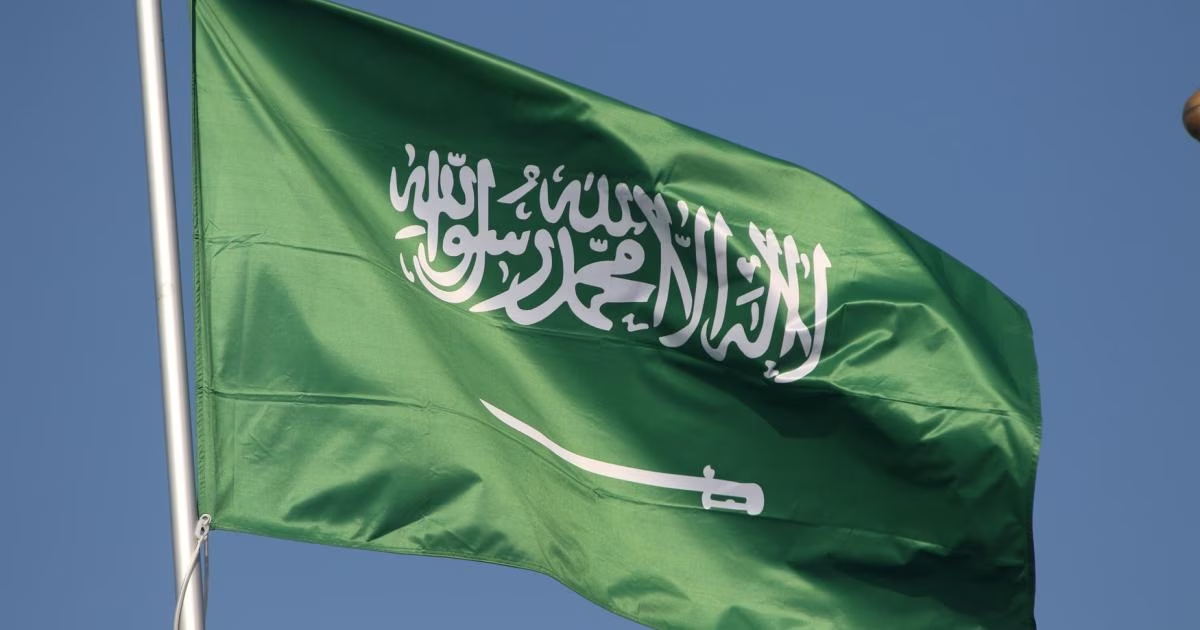
Saudi Arabia Expels Iranian Military Attaché and 4 Staff, Gives Them 24 Hours to Leave

The Kingdom of Saudi Arabia has taken an escalating diplomatic step by announcing the expulsion of the military attaché at the Embassy of the Islamic Republic of Iran in Riyadh, in addition to his assistant and three staff members of the diplomatic mission. This decision comes amidst increasing regional tensions, with Saudi authorities giving the Iranian diplomats no more than 24 hours to immediately leave the Kingdom's territory.

In an official statement, the Saudi Ministry of Foreign Affairs clarified that it had informed those concerned of the decision to consider them persona non grata, emphasizing that this step comes in response to a series of transgressions. Sources confirmed that the Kingdom is closely monitoring diplomatic and military movements that affect its national security and regional stability under the current circumstances.

This decision comes in the context of ongoing military confrontations since February 28, where Israel and the United States have been conducting military operations against Iranian targets. In response, Tehran has retaliated by launching barrages of missiles and drones that have on several occasions targeted what it describes as American interests within the territories of Arab countries.

Saudi Arabia's Foreign Ministry reiterated its strong condemnation of what it described as blatant Iranian aggressions against the Kingdom and the Gulf Cooperation Council countries, as well as other Arab and Islamic nations. The ministry indicated that these attacks have caused casualties and inflicted severe material damage to civilian objects, which the Kingdom rejects entirely.

Riyadh stressed that it would not hesitate to take all necessary measures and procedures to preserve its sovereignty and protect its lands and airspace from any external threat. The statement affirmed that the protection of citizens, residents, and the Kingdom's economic assets is at the top of the Saudi leadership's priorities in confronting any military or security escalation.

Saudi authorities considered the targeting of diplomatic premises and civilian objects a blatant violation of international conventions and the rules of international law governing relations between states. It also noted that these practices disregard the principles of good neighborliness and respect for national sovereignty, further complicating the political landscape in the Middle East.

The Ministry of Foreign Affairs warned that the continuation of the Iranian approach of military escalation would have extremely serious repercussions on the future of bilateral relations between the two countries. It clarified that the Kingdom rejects the policy of imposing a fait accompli through force, emphasizing that harming economic interests and vital installations is a red line that cannot be crossed.

In a related context, official sources in Riyadh revealed that the Kingdom had been subjected to further Iranian attacks in recent hours, necessitating a heightened state of alert. These field developments confirm the seriousness of the threats facing the region as a result of the direct conflict between regional and international powers on Arab lands.

Saudi Foreign Minister, Prince Faisal bin Farhan, had previously stated that the Kingdom does not rule out resorting to military options to defend itself. In press interviews following a ministerial meeting in Riyadh, he indicated that Tehran is trying to exert political and field pressure on its neighbors through its military proxies and direct attacks.

The Minister concluded his statements by emphasizing that Iranian pressures would lead to counterproductive results for Tehran politically and morally before the international community. He affirmed that the Kingdom retains its full right to military deterrence if the threats targeting its security and stability continue, stressing that Saudi patience has limits imposed by the requirements of national interest.

The Kingdom will not succumb to pressure, and we reserve our right to take military action if necessary to protect our sovereignty.

ARAB AND WORLD

Sun 22 Mar 2026 8:08 am - Jerusalem Time

Massacre at Al-Daein Hospital in Sudan: 64 Killed, Including Children, in Airstrike

The World Health Organization (WHO) announced a new humanitarian catastrophe in Sudan, following the targeting of Al-Daein Teaching Hospital in the capital of East Darfur state. The organization confirmed that the attack resulted in dozens of casualties, including dead and injured, amid ongoing military escalation that is hitting vital and medical facilities in the country.

The Director-General of the World Health Organization, Tedros Adhanom Ghebreyesus, revealed a heavy toll of at least 64 fatalities. Ghebreyesus clarified that among the dead were 13 children, in addition to two nurses and a doctor, as well as a number of patients who were receiving treatment inside the health facility at the moment of the strike.

For its part, the United Nations Office for the Coordination of Humanitarian Affairs (OCHA) in Sudan expressed its strong dismay over this deadly attack. UN reports indicated that the number of injured reached 89 people, placing immense pressure on the already dilapidated health system in the Darfur region, which suffers from siege and supply shortages.

In the context of documenting the responsible party, the human rights group 'Emergency Lawyers' reported that the airstrike was carried out by drones belonging to the Sudanese Army. The group, which monitors war violations, confirmed that the bombing directly hit vital parts of Al-Daein Teaching Hospital, leading to widespread destruction of medical infrastructure.

Field reports indicate that the attack was described as violent and involved heavy weapons, causing damage to medicine warehouses and medical supplies. Informed sources confirm that targeting health facilities has become a recurring pattern in the ongoing conflict, depriving thousands of civilians of their basic right to access emergency medical care.

Despite the World Health Organization documenting the attack, it adhered to its usual protocol of not directly accusing any party to the conflict. The organization limits itself to verifying the occurrence of attacks and their impact on medical personnel and patients, leaving criminal investigation tasks to other international and human rights bodies.

This escalation comes at a time when Rapid Support Forces (RSF) fighters control large parts of the Darfur region, while the army's influence is concentrated in the eastern and central areas. International concerns are growing about hospitals turning into arenas for military score-settling, exacerbating the suffering of populations facing the specter of famine and forced displacement.

It is worth noting that Sudan has been experiencing a bloody conflict between the army and the Rapid Support Forces since mid-April 2023, which has left tens of thousands dead. The United Nations classifies the current displacement crisis in Sudan, which has affected 11 million people, as the worst and most complex crisis in the world in modern times.

The World Health Organization has verified a new attack on healthcare facilities in Sudan, targeting Al-Daein Teaching Hospital, resulting in the deaths of at least 64 people.

ARAB AND WORLD

Sun 22 Mar 2026 8:07 am - Jerusalem Time

Earthquake in Energy Markets: War in the Middle East Pushes Prices to Record Levels and Threatens Food Supplies

Rapid military developments in the Middle East are painting grim scenarios for the global energy sector, as direct confrontations have led to a sharp drop in supplies. Consumers around the world have found themselves forced to pay exorbitant amounts for fuel, coinciding with international calls to reduce consumption to counter the growing deficit.

The effective closure of the Strait of Hormuz is the harshest blow to the global economy, as the passage of about 20% of oil and liquefied natural gas supplies has ceased since the start of air raids on February 28. This vital waterway adjacent to the Iranian coast represents the main lifeline for energy flowing from the Gulf to international markets.

The damage was not limited to navigation but extended to essential infrastructure, as mutual strikes targeted gas fields, oil refineries, and vital ports. Sector experts confirm that the extent of the destruction inflicted on facilities in the Middle East will require many years of repair operations to restore production capacity to what it was.

The International Energy Agency described this disruption as the worst in the history of the global energy sector, surpassing the effects of the famous Arab oil embargo of 1973. The global market has so far lost about 400 million barrels of supplies, which is equivalent to the world's entire consumption for four continuous days, creating a huge gap between supply and demand.

This crisis was directly reflected in prices, which jumped by 50%, with the price of a barrel of oil exceeding $110, while crude oil designated for Asian markets recorded record figures approaching $164. These insane increases placed enormous pressure on the transportation and industrial sectors, and their effects began to appear clearly in daily living costs.

In an attempt to contain the situation, many countries resorted to harsh austerity measures to preserve their fuel reserves. Thailand imposed restrictions on employee travel and elevator use. In a related context, Bangladesh closed its universities, while Britain implemented emergency plans that included reducing speed limits on roads to save gasoline and diesel consumption.

On the American front, the price shock turned into a heavy political burden on President Donald Trump, who is trying to justify involvement in the war to domestic public opinion. Trump sharply criticized Washington's NATO allies, describing them as cowards for not providing sufficient support for military operations against Tehran.

The escalation also affected strategic gas facilities, as Iran's South Pars field and Qatar's Ras Laffan complex were subjected to missile strikes that led to a halt in production. Responsible sources in the energy sector stated that the attacks will lead to the loss of millions of tons of liquefied gas annually, which represents a direct threat to energy security in Europe and Asia.

The International Energy Agency warned that spending 400 million barrels from emergency reserves would not be enough, as this amount only covers twenty days of the deficit resulting from the war. Financial analysts believe that forced demand reduction is the only remaining solution for the market in light of the severe shortage of refined petroleum products.

Away from the transportation sector, jet fuel prices in Europe reached record levels of $220 per barrel, threatening a sharp rise in ticket prices and disruption of air traffic. In the United States, gasoline prices at retail stations have risen by more than a dollar per gallon since the start of military operations, exacerbating inflation.

The effects of the war extend to the global agricultural sector, as fertilizer supply chains, one-third of which pass through the Strait of Hormuz, have been disrupted, leading to a 40% increase in urea prices. This severe shortage has forced fertilizer factories in India and Malaysia to reduce production or close completely, threatening a catastrophic agricultural season.

The United Nations Food and Agriculture Organization (FAO) warned that the continuation of the conflict for additional weeks would lead to a significant disruption in global grain and feed supplies. Since half of the world's food depends on chemical fertilizers, the rise in their costs will inevitably lead to a jump in the prices of meat, dairy, and basic food products.

The International Gas Union calls for an immediate halt to targeting energy facilities and securing shipping in the Strait of Hormuz to ensure the flow of raw materials necessary for the pharmaceutical and plastic industries. Experts confirm that the current situation is no longer just a price crisis, but has become an existential threat that shakes the foundations of the modern global economy.

In light of these facts, the world remains hostage to field developments in the Middle East, where energy, food, and political issues intertwine in an unprecedented way. With the continuation of mutual strikes, fears are growing of the global economy entering a long-term stagflationary recession, from which it will be difficult to emerge without a comprehensive political settlement that restores stability to the region.

This crisis cannot be overcome by saving; what will happen is that prices will rise to such an extent that people stop consuming.

ARAB AND WORLD

Sun 22 Mar 2026 8:07 am - Jerusalem Time

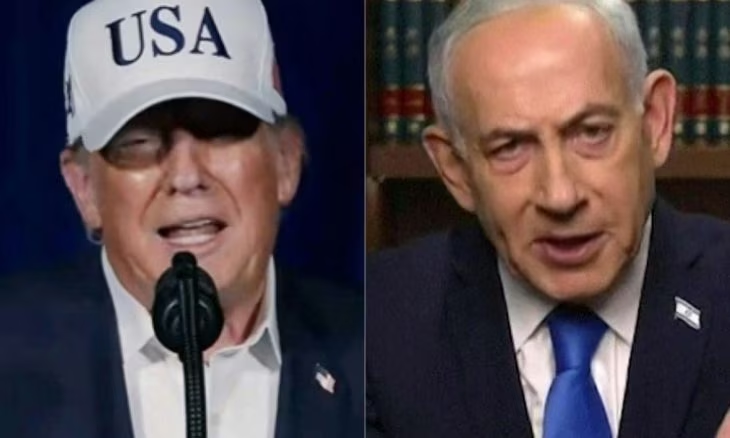
Trump gives Iran 48 hours to open Strait of Hormuz, threatens to destroy power plants

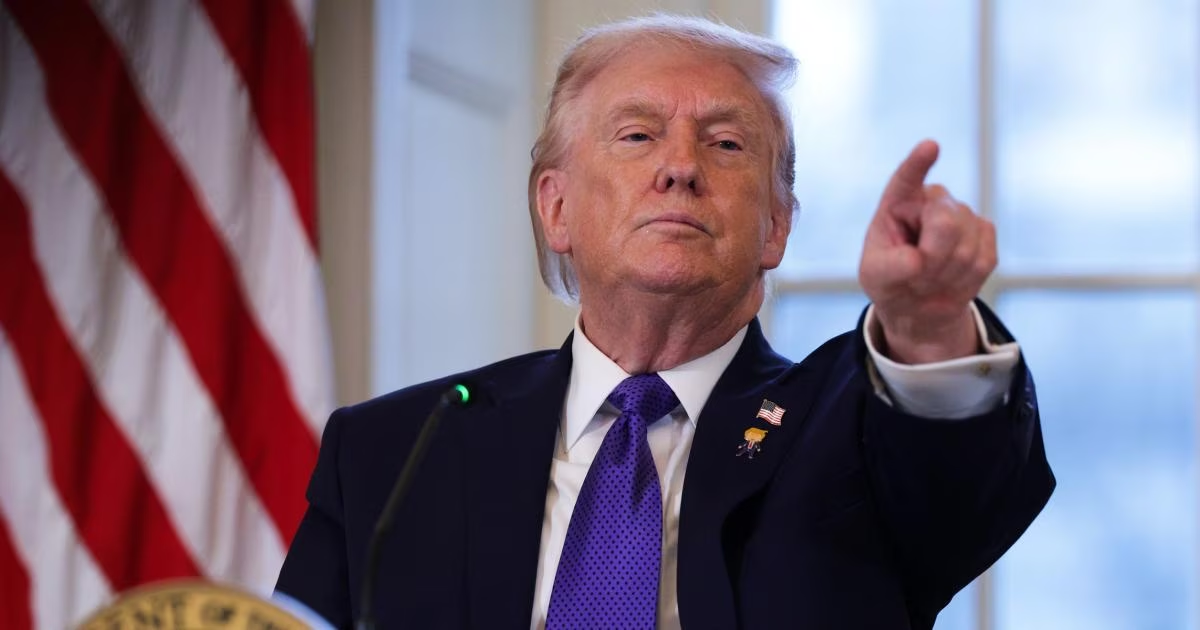
US President Donald Trump issued a stern warning to the Iranian leadership, threatening to target and destroy the country's energy facilities and power plants. Trump stipulated that for Washington to back down from this step, Tehran must fully open the Strait of Hormuz to international navigation within a period not exceeding 48 hours.

Trump clarified via his 'Truth Social' platform that potential American attacks would target various Iranian power plants, emphasizing that the largest and most vital plants would be the first. This threat comes amidst escalating tensions following Tehran's decision to restrict movement in the strategic waterway in response to joint military operations.

Iranian authorities had announced on March 2nd the imposition of strict restrictions on navigation in the Strait of Hormuz, threatening to target any vessels crossing the passage without prior coordination with them. Tehran considers this a legitimate response to what it describes as ongoing American-Israeli aggression against its territory and leadership.

The Strait of Hormuz represents a major lifeline for the global economy, with approximately 20 million barrels of oil flowing through it daily to international markets. The closure of the strait or the threat thereof has led to sharp jumps in global energy prices, as well as an unprecedented rise in insurance and maritime shipping costs.

In a related context, the US President claimed that the United States had already succeeded in achieving its military objectives against Iran weeks ahead of schedule. Trump alleged that the Iranian naval and air forces had been completely eliminated, indicating that the country currently lacks any effective defense systems.

For his part, Iranian Foreign Minister Abbas Araghchi affirmed that his country is prepared to secure the passage of ships for some countries, such as Japan, if direct coordination with Tehran is established. Araghchi stressed that safe navigation is linked to respecting Iranian sovereignty and ceasing support for military operations targeting national facilities.

On the ground, Iran continues its military responses for the third consecutive week by launching dozens of missiles and drones towards Israeli targets. Media sources reported the most violent missile attack hours ago, targeting areas in southern Israel, resulting in the destruction of an entire neighborhood and injuring dozens with varying degrees of severity.

The office of Israeli Prime Minister Benjamin Netanyahu described the current situation as a 'very difficult night,' noting that Israel is fighting a fateful war for its future. These statements coincide with the ongoing intensive airstrikes launched by Israeli and American forces on strategic sites deep within Iranian territory.

It is worth noting that the military escalation, which began on February 28th, has resulted in hundreds of deaths on the Iranian side, including Supreme Leader Ali Khamenei and prominent security commanders. Despite the significant human and material losses, Tehran continues to insist on pursuing its missile operations, placing the region before scenarios open to a comprehensive regional war.

If Iran does not fully open the Strait of Hormuz, without any threat, within 48 hours from now, the United States of America will strike and destroy its various power plants, starting with the largest.

PALESTINE

Sun 22 Mar 2026 8:07 am - Jerusalem Time

Monica Witt: The American Soldier Who Became an 'Intelligence Headache' in Tehran

The case of former US Air Force soldier, Monica Witt, has once again come to the forefront of intelligence concerns, amidst escalating tensions in the Middle East. Witt's case is classified as one of the most controversial espionage operations in modern American history, given the nature of the information she had access to.

Witt, 46, held a sensitive position as a counterintelligence specialist, spending over ten years conducting electronic surveillance and complex communications analysis. During her years of service, she received several military decorations, making her a trusted asset within the heart of the American defense establishment before her sudden defection.

Witt's career path began to change dramatically after her participation in an international conference in the Iranian capital, Tehran, in 2012. Reports indicate that elements linked to the Iranian Revolutionary Guard successfully recruited her during that visit. This transformation ultimately led her to fully defect from the United States and move to Iran in 2013.

Intelligence investigations later revealed exchanged messages between Witt and Iranian entities before she left US territory, in which she expressed a clear desire to join the other side. In one of these messages, Witt clearly stated her intention to end her work and leave immediately, describing Iran as the 'homeland' she sought to return to.

Security experts believe that Witt's greatest danger lies in the extent of her precise knowledge about the identities of American agents and the surveillance and tracking methods used by Washington. This information, according to officials' estimates, enabled Tehran to develop counter-strategies and thwart many American intelligence operations in the region.

In an assessment of the damage she inflicted on national security, Douglas Wise, a former official at the Defense Intelligence Agency, indicated that Witt's capacity for sabotage is very high. Wise rated her danger level between 7 and 8 out of 10, reflecting deep concern about the continued exploitation of her expertise.

Witt's life underwent a gradual intellectual and behavioral transformation that began to become public after her first visit to Tehran, where she began to speak positively about the Islamic religion through official Iranian media. She stated at that time that her reading of the Quran helped her understand the truth away from the official narrative promoted by the US military.

After her temporary return to the United States before her final defection, Witt began wearing the hijab and officially embracing Islam, and actively sought to obtain a permanent return visa to Iran. In 2013, she executed her plan to leave on a one-way trip via Dubai, and has since resided under the protection of Iranian authorities.

Following her departure, Witt faced official espionage charges brought against her in absentia by the US judiciary, where she was accused of leaking highly classified information that endangered lives. Allegations confirm that the Iranian government provided her with all means of support, including housing and the necessary technical equipment to continue her intelligence activities.

With the escalation of mutual cyberattacks between Washington and Tehran, concerns arise that Witt may be the mastermind or consultant behind some of these complex operations. Her extensive experience within the American system makes her capable of identifying weaknesses in the digital infrastructures she previously oversaw protecting.

Monica Witt was born in El Paso in 1979, and joined the military at a very young age after difficult family circumstances, including the death of her mother. She rose through the military ranks thanks to her skills in languages and cryptographic analysis, and served in hot conflict zones such as Iraq and Afghanistan.

Witt remains on the FBI's most-wanted list to this day, amidst mystery surrounding her exact whereabouts or current activities. Despite her absence from public appearances since 2019, the impact of her defection continues to pose a significant challenge to US intelligence agencies attempting to contain the repercussions of her betrayal.

I realized that, contrary to what the US military told us, Islam is not a violent and aggressive religion.

PALESTINE

Sun 22 Mar 2026 8:07 am - Jerusalem Time

Western Diplomatic Missions Condemn 'Settler Terrorism' and Hold Israel Responsible for Protecting Palestinians

A group of Western diplomatic missions operating in the cities of Jerusalem and Ramallah expressed their strong condemnation of the escalating waves of violence carried out by settler groups against Palestinian citizens in the occupied West Bank. In a joint statement issued on Saturday, these missions affirmed that what is happening falls under the framework of systematic 'terrorism' aimed at intimidating peaceful residents and undermining their stability in their lands.

International missions held the Israeli occupation authorities fully legally responsible for what is happening, considering them the occupying power under international law. Western diplomats expressed their deep alarm at the significant increase in the rates of Palestinian killings in recent weeks, emphasizing the need to rein in 'settler militias' that seek to impose a new geographical reality by seizing land and forcibly displacing residents.

The statement called on the Israeli authorities to take immediate action to prevent these deadly attacks and prosecute those involved in the raids and assaults targeting Palestinian villages and towns. Diplomats pointed out that protecting Palestinian communities is not an option but a legal obligation on Israel, warning against the continuation of the impunity policy that encourages settlers to persist in their violence.

In a related context, official data issued by the Wall and Settlement Resistance Commission revealed that settlers carried out more than 511 attacks in February alone. Sources indicated that these attacks resulted in the martyrdom of 7 Palestinians by settler bullets since the end of the same month, reflecting a dangerous shift in the nature of attacks, which now directly and intensively use live ammunition against civilians.

Cumulative statistics since the start of the aggression on the Gaza Strip in October 2023 indicate that attacks by the army and settlers in the West Bank have led to the martyrdom of 1133 Palestinians and the injury of approximately 11,700 others. Arrest campaigns also affected nearly 22,000 citizens, coinciding with widespread demolition operations of homes and facilities aimed at accelerating the pace of settlement expansion in the occupied territories, including East Jerusalem.

This violence perpetrated by settler militias, which aims to seize land and create a coercive environment to force Palestinians to leave their homes, must end.

ARAB AND WORLD

Sun 22 Mar 2026 8:07 am - Jerusalem Time

Heavy Toll.. 4447 Iranian Missiles and Drones Targeted 7 Arab Countries in 22 Days

The Arab region has witnessed an unprecedented military escalation over the past three weeks, with official reports counting Iran's targeting of seven Arab countries with approximately 4447 missiles and drones. These attacks were mainly distributed among the Gulf Cooperation Council states, in addition to Jordan, in a wave that began on February 28th and has not stopped yet.

Data compiled from military and governmental sources indicates that Tehran justifies these operations as a response to what it describes as continuous American-Israeli aggression against it. Despite Iranian claims that the attacks exclusively target American interests and bases, the reality on the ground has shown damage to vital civilian facilities, including international airports, commercial ports, and residential buildings.

The United Arab Emirates topped the list of countries most exposed to these attacks, with the UAE Ministry of Defense announcing the handling of intense aerial threats. According to official data, 341 ballistic missiles and 15 cruise missiles were intercepted and destroyed, in addition to 1748 suicide drones that attempted to penetrate UAE airspace.

In Kuwait, monitoring operations based on army and National Guard data revealed the interception of at least 270 missiles and 589 drones. The past few days have seen an escalating pace of attacks, with March 21st alone recording the interception of 9 missiles and 4 drones, preceded by a series of daily targets that affected various areas.

As for the Kingdom of Bahrain, its Defense Force confirmed that air defense systems were on high alert since the start of the Iranian escalation. Bahraini military sources clarified that the total number of interceptions reached 143 missiles and 244 drones, confirming the success of the defense systems in neutralizing these threats before they reached their targets.

In Qatar, Ministry of Defense statistics showed the handling of 206 missiles and 87 drones, in addition to an aerial breach carried out by two Sukhoi-24 fighter jets. Some of these attacks were concentrated around the Ras Laffan Industrial City, the country's energy lifeline, reflecting the seriousness of the escalation on the security of major economic facilities.

The Kingdom of Saudi Arabia, in turn, faced successive waves of attacks targeting several areas, including the capital Riyadh. According to official sources, 38 missiles and 518 drones were intercepted, with March 16th recording the peak with 92 drones intercepted in a single day, necessitating the full activation of the Royal Air Defense systems.

The escalation was not limited to the Gulf region but extended to include the Hashemite Kingdom of Jordan, which announced a toll of 240 missiles and drones since the start of tensions. Jordanian army data reported that the armed forces are dealing firmly with any violations of sovereign airspace, noting the interception of 85 projectiles and flying objects in mid-March.

The Sultanate of Oman was the least affected by this escalation compared to its neighbors, but it was not entirely spared from Iranian aerial threats. The Oman News Agency reported that the Sultanate was subjected to attacks by 16 drones on different dates, with several of them shot down by Omani air defenses, which continue to monitor the airspace accurately.

The temporal details of the attacks reveal an escalating pattern, with not a single day passing since the beginning of March without recording missile or drone targeting attempts. This continuous military pressure has raised widespread international concern, amid warnings of the region sliding into a comprehensive confrontation that would affect international shipping lanes and global energy supplies.

Sources indicate that the diversity in the weapons used, from long-range ballistic missiles to cruise missiles and suicide drones, shows a deliberate intention to bypass Arab defense systems. Despite the significant success in interception operations, the continuation of attacks places significant logistical and military pressures on the region's armies.

In a related context, field reports indicated that some fragments resulting from interception operations fell in populated areas, leading to civilian casualties. The affected Arab countries have maintained restraint so far, while affirming their full right to defend their sovereignty, territorial integrity, and citizens by all available means.

Observers believe that this massive volume of projectiles, exceeding four thousand in less than a month, represents a real test for joint defense agreements and regional military cooperation. It also places the international community before its responsibilities to stop this threat that affects the stability of seven Arab countries at once under the pretexts of regional conflict.

In conclusion, the announced figures are likely to increase given the ongoing tension and the absence of indicators of an imminent de-escalation from the Iranian side. Military operations rooms in the concerned Arab capitals continue to coordinate their efforts to monitor any suspicious movements, with official casualty and interception tolls being updated periodically.

Tehran asserts that it does not target specific countries but rather American bases and interests, yet the attacks have caused damage to civilian facilities and resulted in casualties.

PALESTINE

Sun 22 Mar 2026 8:07 am - Jerusalem Time

Occupation Army Staff Approves Plans to Expand Military Operations in Lebanon

The Chief of Staff of the Israeli occupation army, Eyal Zamir, has approved new military plans for the Northern Command aimed at continuing combat operations on the Lebanese front. This approval comes amidst an escalation in field confrontations that began in early March, as Tel Aviv seeks to establish a new military reality by intensifying air raids and ground operations.

Field sources reported that the approved plans include a high probability of expanding the scope of ground incursions deep into Lebanese territory. This approach is consistent with repeated statements by the spokesman for the occupation army, who has indicated on several occasions in recent days that ground operations in southern Lebanon will see a significant expansion in the coming phase.

In the context of military reinforcements, the occupation army announced the completion of the readiness of Division 162 and its deployment to the northern border after being transferred from the southern combat front. This division is considered one of the striking forces that the occupation relies on to carry out additional combat missions and expand the scope of field control in border areas with Lebanon.

Zamir stressed during his military meetings that war operations will not stop in the coming weeks, confirming that they will include the period of the Hebrew Passover, which extends between the first and eighth of next April. He explained that the military establishment has decided to definitively abandon the 'containment' policy that was previously followed, and shift towards a comprehensive offensive strategy.

On the ground, the occupation army admitted that two reserve soldiers were injured as a result of mortar shells fired from southern Lebanon targeting military sites in the north. Medical sources described the condition of one soldier as moderate due to shrapnel injuries, while the injury of the other soldier was described as minor, and they were immediately transferred to the hospital for treatment.

In a separate incident, Israeli ambulance crews reported that five people were injured in the Tarshiha area of the Upper Galilee following a rocket barrage launched from Lebanese territory. These rockets caused a state of alert within the northern settlements, while sirens continued to blare in wide areas of the Galilee.

For its part, Lebanese Hezbollah continues to confront Israeli ground incursion attempts, confirming in its military statements that it is engaged in fierce confrontations with infiltrating forces at the front edge. Resistance reports in Lebanon confirm that it has inflicted losses on the occupation's vehicles and soldiers since the start of the limited ground aggression on March 3rd.

Observers believe that the transfer of Division 162 to the north represents a strategic shift in the distribution of Israeli forces, indicating the occupation's intention to open new fronts or deepen current operations. These movements coincide with the continuation of intense air raids targeting the southern suburbs of Beirut and various areas in the Beqaa and the South.

The region has been in a state of regional turmoil since late February, with the scope of confrontations expanding to include multiple parties in an open conflict. With the Israeli military leadership's insistence on continuing the fighting, international fears are growing that the situation will slide into an all-out war whose consequences in the Middle East cannot be controlled.

The war will continue in the coming weeks, whether in Lebanon or Iran, with the adoption of a new policy based on abandoning the containment approach.

ARAB AND WORLD

Sun 22 Mar 2026 8:06 am - Jerusalem Time

News of Trump demanding billions of dollars from Gulf states to fund war on Iran

Media sources reported claims by Omani political analyst Salem Al-Jahouri that US President Donald Trump made exorbitant financial demands on Gulf states in exchange for continued military operations against Iran. Al-Jahouri explained that the requested amounts reached 5 trillion dollars to continue the war, or 2.5 trillion dollars if they wished to end it, without specifying the time or place where these demands were made.

In a related context, the General Secretariat of the Gulf Cooperation Council has not issued any official comment confirming or denying these circulating reports about the funding. These developments come at a sensitive time when the region is witnessing unprecedented military escalation, as Gulf states seek to deal with the repercussions of a direct confrontation between Washington and Tel Aviv on one hand, and Tehran on the other.

On the diplomatic front, recent documents revealed a collective Gulf move to request an emergency session of the United Nations Human Rights Council in Geneva. This step aims to discuss Iranian attacks that targeted civilian facilities and energy infrastructure in several Arab countries, considering these aggressions a serious threat to international peace and security and human rights.

On the ground, the joint military campaign launched by the United States and Israel on Iranian territory entered its third week, amidst violent Iranian reactions that included the launch of ballistic missiles and drones. These attacks targeted objectives in Bahrain, Kuwait, Saudi Arabia, the UAE, and Oman, causing significant material damage to vital energy sectors.

The ongoing military operations since late February have resulted in the killing of a number of senior Iranian leaders, most notably Supreme Leader Ali Khamenei and prominent security officials. In return, Tehran continues to target what it describes as American interests in the region, which has resulted in civilian casualties and sparked a widespread wave of condemnation from affected Arab countries.

Economically, Tehran's closure of the strategic Strait of Hormuz caused severe disruptions in global energy markets, with prices soaring to record levels. Economic reports warned that continued obstruction of maritime navigation and attacks on oil facilities would lead to an uncontrollable global inflation wave, putting additional pressure on international powers to end the conflict.

For its part, the US administration added the protection of allies in the Middle East as a fifth and main objective of its military operations, in addition to preventing Iran from acquiring nuclear weapons and destroying its ballistic capabilities. While Trump demands unconditional surrender, discrepancies emerge in American statements about the timeline of the operation, between those who see it as a short preemptive strike and those who expect it to continue for a long period.

Trump asked Gulf states to pay 5 trillion dollars if they wanted the war on Iran to continue, or 2.5 trillion dollars if they wanted to stop it.

ARAB AND WORLD

Sun 22 Mar 2026 8:06 am - Jerusalem Time

Trump expands military operation objectives against Iran to include protecting Washington's allies

US President Donald Trump has introduced a fundamental amendment to the declared military objectives in the current confrontation with Iran, adding a fifth objective: providing maximum protection for Washington's allies in the Middle East. The list specified by Trump in his recent statements included Israel, Saudi Arabia, the UAE, Qatar, Bahrain, and Kuwait, emphasizing that ensuring the security of these countries has become a fundamental pillar of ongoing US military action.

This addition joins the four objectives that the US administration has adhered to for weeks, which focus on stripping Tehran of its nuclear capabilities and preventing it from arming its loyal groups in the region. According to the American vision, the operations also aim to completely destroy Iran's naval power and cripple the Islamic Republic's capabilities in the field of ballistic missiles, which Trump claims could pose a direct threat to American territory in the future.

US strategy shows a noticeable contradiction in official statements, with time estimates for the operation ranging from a few weeks to the possibility of it continuing for long periods without a specific time limit. While Defense Secretary Pete Hegseth stated that the goal is to undermine Iran's security infrastructure, Trump had earlier demanded unconditional surrender as the only option for reaching any agreement, before later backtracking, hinting at the possibility of ending operations without signing a formal ceasefire agreement.

On the political front, narratives within the White House varied regarding the motives for the attack. Marco Rubio considered the US move a pre-emptive measure against a unilateral Israeli operation and a protection of American interests, while Trump pointed to his pivotal role in pushing the Israeli side to act. Amidst these complexities, Trump's repeated calls to the Iranian interior for regime change stand out, despite his acknowledgment of the difficulty of this in the absence of sufficient armament for the internal opposition.

Protecting our allies in the Middle East at the highest level, specifically Israel, Saudi Arabia, Qatar, the UAE, Bahrain, and Kuwait.

ARAB AND WORLD

Sun 22 Mar 2026 8:06 am - Jerusalem Time

Tehran threatens to ignite the Red Sea in response to any targeting of 'Kharg' oil island

An Iranian military official issued stern warnings to the United States, asserting that any attempt to target the strategic Kharg Island would immediately lead to instability in the Red Sea and the Bab al-Mandab Strait. Sources clarified that Tehran considers these waterways legitimate targets for resistance forces if its vital oil installations are subjected to any external aggression.

The official, who preferred to remain anonymous, pointed out that American threats starkly contradict Washington's recent diplomatic moves. He noted that the United States had partially lifted oil sanctions to control global energy prices, while simultaneously threatening to strike Iran's most important export centers.

In a related context, Tehran stressed that the dire consequences of any military folly would extend beyond Iran's geographical borders to include all oil installations in the region. The military official vowed to inflict severe damage on American interests, describing the expected scale of destruction as the largest since the end of World War II.

These developments come after Washington announced temporary sanctions waivers to allow the trading of Iranian crude oil stranded in tankers. Observers believe that this American move aimed to calm markets, but the ongoing escalation on the ground may undermine all implicit understandings between the two parties.

Kharg Island, located deep in the Gulf 30 kilometers off the coast, is the cornerstone of the Iranian economy and the primary export terminal for crude oil. Targeting it would be a devastating blow to Tehran's financial capacity, which explains the severity of Iranian military rhetoric and the threat to expand the conflict to include international shipping lanes.

On the ground, the region has been in a state of turmoil since late February, following the outbreak of direct military confrontations, including intense Israeli and American airstrikes. These operations resulted in hundreds of deaths, including prominent security officials in the Revolutionary Guard, prompting Tehran to respond with missile barrages and drones targeting Israeli territory.

The scope of tension also extended to American interests in several Arab countries, where civilian installations and assets were subjected to attacks claimed by or attributed to factions loyal to Iran. These attacks sparked widespread international condemnation amid fears of the region sliding into a comprehensive regional war that spirals out of control and destroys energy infrastructure.

Any potential American attack on Kharg Island would create instability in the Red Sea and the Bab al-Mandab Strait, making them targets for resistance.

PALESTINE

Sun 22 Mar 2026 8:06 am - Jerusalem Time

Guterres welcomes 'Peace Council' goals for Gaza reconstruction, criticizes Trump's unilateral decision-making

The Secretary-General of the United Nations, António Guterres, expressed his welcome for the initiatives aimed at funding and rebuilding infrastructure and homes in the Gaza Strip, which were included in the plan of the 'Peace Council' affiliated with US President Donald Trump. Guterres affirmed in press statements that the international organization is closely following the goals approved by the UN Security Council in this regard, pointing to active cooperation with the administrative structures established by the American initiative to ensure that support reaches those who deserve it.

Despite welcoming the construction goals, the UN official criticized the project's management mechanism, considering that the US President's complete control over all details represents an obstacle to the required effectiveness. Guterres stressed that addressing the grave crises faced by Palestinians requires institutional work that goes beyond personal projects, affirming that clarity regarding international law and the values of the United Nations Charter remains the cornerstone of any genuine pursuit of peace.

Regarding the situation on the ground, the report indicated a continued deterioration of living conditions in the Gaza Strip despite the ceasefire agreement coming into effect on October 10, 2025. The occupying state faces direct accusations of not adhering to the truce provisions, especially concerning the entry of humanitarian and medical aid and essential shelter equipment, which exacerbates the suffering of hundreds of thousands of displaced people in dilapidated shelters.

Field sources reported that the occupation army continues its daily violations of the agreement through concentrated shelling and gunfire in border areas, threatening the collapse of the fragile truce. The ongoing war has resulted in catastrophic figures, with the number of martyrs rising to over 72,000, while the number of injured has exceeded 172,000, amidst massive destruction affecting nearly 90% of vital and civilian facilities in various governorates of the Strip.

On the diplomatic front, Guterres revealed that there has been no direct contact between him and President Trump since the outbreak of the recent confrontations, but he affirmed the continuation of diplomatic channels with prominent officials in the American administration. The Secretary-General refused to disclose the identity of these officials, contenting himself with indicating that coordination focuses on attempting to align American initiatives with urgent humanitarian requirements on the ground.

In a related regional context, the UN Secretary-General called for the necessity of ending the Iranian blockade of the Strait of Hormuz, warning of its repercussions on regional stability and global trade. Guterres suggested that the United Nations play a pivotal role in protecting this strategic waterway and that the organization be part of a comprehensive international plan to de-escalate military tensions and ensure freedom of navigation.

These statements come at a sensitive time when international parties are trying to consolidate stability in the region, amidst legal and political challenges posed by the nature of the new American initiatives. The UN bet remains on the necessity of integrating all relief efforts within the framework of international legitimacy to ensure the sustainability of reconstruction and the protection of fundamental Palestinian rights in light of unprecedented destruction.

There is a goal that has been identified and adopted by the Security Council, and we are actively cooperating with the structures established by the Peace Council, but complete control is not an effective way to address serious problems.

PALESTINE

Sun 22 Mar 2026 8:06 am - Jerusalem Time

International Criminal Court Prosecutor Karim Khan acquitted of misconduct charges

Informed sources reported that a specialized judicial body has completed its review of the accusations against Karim Khan, the Prosecutor of the International Criminal Court, and decided to fully acquit him. This decision came after a thorough examination of the results of an investigation conducted by the United Nations Office of Internal Oversight Services regarding allegations of sexual misconduct that had been raised against him earlier.

According to available information, the report, described as "highly confidential," was delivered to the office of the Assembly of States Parties, the Court's supreme oversight and executive body, on March 9th. The three-member judicial body confirmed in its conclusion that the available evidence does not rise to the level of proving any breach of duty or unruly conduct by the Prosecutor.

Diplomatic sources who reviewed the report indicated that the judges made their decision unanimously, emphasizing the absence of any evidence incriminating Khan. This report is expected to remain confidential and will not be released to the public, nor has it been seen by the vast majority of the Court's 125 member states.

These accusations surfaced concurrently with crucial legal steps taken by the Prosecutor's office to prosecute officials in the Israeli occupation government. Observers believe that the timing of raising these allegations was aimed at pressuring the Court to deter it from investigating war crimes committed during the ongoing aggression on the Gaza Strip.

In a related context, sources stressed that Khan's acquittal means the continuation of the Court's legal process without administrative impediments related to the person of the Prosecutor. This includes the continued validity and international enforcement of arrest warrants issued against the occupation Prime Minister Benjamin Netanyahu and former War Minister Yoav Gallant.

The Appeals Chamber of the International Criminal Court dealt a legal blow to the occupation late last year by rejecting an appeal aimed at halting investigations in Gaza. This decision confirmed that the Court has full jurisdiction to pursue crimes committed in the Palestinian territories, despite repeated Israeli rejection and international political pressure.

It is worth noting that Karim Khan had decided to temporarily step down from his duties last May, preferring to take leave until the completion of the UN investigations. This step, according to his statements, was to ensure the highest degree of integrity and transparency in the Court's work, and to prevent any disruption to the major criminal cases handled by his office.

In messages addressed to Court staff during the investigation period, Khan affirmed his commitment to the principles of justice and fairness, noting that his decision to temporarily step aside was carefully considered to protect the institution's reputation. During that period, Khan faced pressure from non-governmental organizations demanding his resignation, but he insisted on following official legal procedures until the truth emerged.

The International Criminal Court continues to face major challenges, especially in light of the ongoing war of annihilation waged by the occupation in Gaza and its refusal to recognize the Court's jurisdiction. However, the Prosecutor's acquittal restores momentum to the ongoing investigations and affirms the independence of the international judicial body in confronting accusations targeting its leading cadres.

In conclusion, this legal development marks the end of a period of controversy surrounding the person of the Prosecutor, allowing him to return to fully exercising his duties. The next phase is expected to focus on accelerating the pace of prosecutions related to the situation in Palestine, amidst increasing international demands for accountability for those responsible for grave violations of international law.

My decision to temporarily step aside was driven by a deep and unwavering commitment to the credibility of our office and the Court, and to ensure the integrity of the process and fairness for all.

ANALYSIS

Sun 22 Mar 2026 8:06 am - Jerusalem Time

Thomas Friedman: Destroying Iran is not a final solution, and relying on military decisive action is an 'illusion'

Prominent American writer Thomas Friedman expressed deep doubts about the possibility of improving conditions in the Middle East through the option of militarily destroying Iran. In an article for the New York Times, he explained that historical facts have proven there is no such thing as a 'final' solution to the complex conflicts in this region of the world.

Friedman considered that relying on the phrase 'once and for all' represents a dangerous slippery slope, as military threats cannot be completely eliminated without combining force with a clear political path. He pointed out that this path always requires painful and complex political concessions that current parties refuse to engage in.

As an example, the writer cited Israel's assassination approach against the Hamas movement since the 1990s, where it managed to eliminate three generations of historical leaders. Despite this, this policy did not succeed in ending the movement's existence, which is now led by a fourth generation in large areas of the Gaza Strip.

Friedman explained Hamas's resilience by stating that it is a movement deeply rooted in the Palestinian social fabric, making its military eradication almost impossible. He also criticized Benjamin Netanyahu's government's refusal to cooperate with the Palestinian Authority as a political alternative, considering that this refusal aims to obstruct the two-state solution and maintain permanent control over the West Bank.

Regarding the Iranian issue, Friedman believes that Washington and Tel Aviv are repeating the same mistake by targeting leaders, only for new leaders to replace them in the absence of a unified opposition. He stressed that eliminating the Iranian leadership through airstrikes from long distances will not achieve the desired stability but may exacerbate chaos.

The article warned against the policy of stripping an enemy of their dignity to the extent that they feel they have nothing left to lose, describing this as lost wisdom. He considered that pushing adversaries into a corner without a political horizon will inevitably lead to major explosions whose regional repercussions cannot be controlled.

Friedman touched upon the situation in the West Bank, emphasizing that the settlement policy eliminates the chances of establishing a Palestinian state, which puts Israel in a historical dilemma. Either it transforms into a binational state and loses its identity, or it becomes an apartheid state and loses its alleged democracy.

As for Lebanon, the writer believes that destroying infrastructure and occupying territories will not eliminate Hezbollah as a military and political force. He explained that the only way to weaken the party's influence is through an internal political process led by a strong Lebanese government, which is hindered by ongoing military operations.

Friedman criticized US Defense Secretary Pete Hegseth's statements boasting about absolute military power against Tehran, questioning the effectiveness of this power in the face of economic consequences. He pointed out that Iran, even in a state of weakness, is capable of shaking the stability of the global economy by targeting energy supplies.

He explained that launching a single drone from a simple truck is enough to disrupt navigation in the Strait of Hormuz and raise oil, gas, and fertilizer prices to record levels. This reality proves that military force alone does not provide protection for strategic interests in a closely interconnected global economy.

The writer described what is currently happening as a 'global tragedy' that will not end with the killing of leaders or the stripping of factions of their missile arsenals. Wars not followed by a political vision turn into a permanent drain on lives and resources without achieving real security for any party to the conflict.

Friedman called for adopting a strategy aimed at weakening adversaries enough to open the way for 'real politics' in Gaza, Lebanon, and Iran. He believes that pressure should be directed to force these powers to consider their peoples' desire to live in peace and enjoy the benefits of modernity and economic prosperity.

He concluded his article by emphasizing that politics, not total war, is the only way to sustainably and definitively end these conflicts. History proves that military force may win battles, but it rarely creates lasting peace in a region teeming with historical and religious contradictions.

The vision put forward by Friedman reflects growing concern among the American intellectual elite about being drawn into promises of swift military decisive action. The question remains open as to how willing the current US administration and the Israeli government are to heed these warnings before it is too late.

The most dangerous words in the Middle East are those found in the phrase 'once and for all,' because the conflicts in the region will never end, no matter how much the parties pledge to resolve them definitively.

PALESTINE

Sun 22 Mar 2026 8:06 am - Jerusalem Time

Albanese: Occupation Practices Systematic Torture Against Palestinians with Destructive Intentions

The United Nations Special Rapporteur on the Occupied Palestinian Territories, Francesca Albanese, affirmed that the Israeli occupation authorities are pursuing a systematic and widespread policy of torture against Palestinian detainees. Albanese explained in a recent report presented to the media that these practices reflect a clear desire for collective revenge and reveal destructive intentions targeting the Palestinian presence. She stressed that these violations have escalated sharply and unprecedentedly since the events of October 7, 2023.

The UN report, issued under the title 'Torture and Genocide,' detailed horrific accounts of the extremely cruel physical and psychological abuses suffered by Palestinian detainees. Human rights sources indicated that the occupation has turned detention centers into arenas for collective punishment, away from international oversight. The report stated that this policy aims to break the will of the Palestinian people by directly and continuously targeting the bodies and minds of detainees.

Albanese detailed in her report the types of violations committed, confirming that they include brutal beatings, sexual violence, rape, in addition to ill-treatment that in many cases led to death. She also drew attention to the policy of deliberate starvation and systematic deprivation of the most basic necessities of human life inside prisons. She considered these actions not merely individual incidents, but part of an integrated system used by the occupying state in the occupied territories.

The UN rapporteur warned of the long-term effects of these crimes, as the occupation's practices have left deep and permanent scars on the bodies and minds of tens of thousands of Palestinians and their families. She affirmed that the scale of human suffering resulting from these policies is beyond description and calls for urgent international action for accountability. Albanese also condemned all forms of ill-treatment and torture, focusing primarily on the systematic behavior of the Israeli occupation in this context.

In contrast, the Israeli mission in Geneva responded to these accusations by attacking the person of the UN rapporteur, claiming that she adopts a 'hate agenda' aimed at delegitimizing Israel. Despite these criticisms, Albanese continues to document the crimes committed in the occupied territories, emphasizing the need to protect the human rights of Palestinians. This report comes at a time when international pressure on the occupation to stop its ongoing violations in the Gaza Strip and the West Bank is increasing.

Torture in detention centers has been used on an unprecedented scale as collective punishment, indicating revenge and destructive intentions.

PALESTINE

Sun 22 Mar 2026 8:05 am - Jerusalem Time

Written American Proposal to Hamas for Disarmament in Exchange for Withdrawal and Reconstruction

Informed sources revealed that the Peace Council, headed by US President Donald Trump, submitted a formal written proposal to the Hamas movement outlining detailed mechanisms for the movement to relinquish its military arsenal. The sources clarified that this proposal was presented during an intensive series of meetings held in the Egyptian capital, Cairo, last week, as part of Washington's efforts to impose new security arrangements in the Gaza Strip.

Nikolay Mladenov, the High Representative of the Peace Council for Gaza, along with Ariyeh Lightstone, Assistant Special Envoy for US President Steve Witkoff, participated in these high-level talks. This step comes as part of Trump's broader plan for the Strip, which aims to end armed manifestations in exchange for international guarantees of the withdrawal of Israeli occupation forces and the commencement of extensive reconstruction operations for the devastated areas.

The proposed plan stipulates exchanging the military presence of Palestinian factions for a timetable for a comprehensive Israeli withdrawal from the Strip, and immediately beginning the restoration of damaged infrastructure. According to the sources, these understandings had received initial approval from the concerned parties last October, but the procedural details of disarmament remained the most prominent sticking point in the negotiations.

For his part, Nikolay Mladenov affirmed that intensive efforts are currently underway to secure the urgent delivery of relief aid to the residents of the Strip who are suffering from the ongoing war. In recent statements, he indicated the existence of a consensual framework among mediators that could pave the way for advancing the reconstruction process, provided that decisive decisions are made regarding the security file and arms control.

Mladenov stressed in a message on the occasion of Eid al-Fitr that the option presented to the Palestinian leadership is clear and unequivocal: the complete abandonment of weapons by Hamas and all armed factions. He added that this step is the mandatory path to achieving stability and fulfilling the aspirations of the Palestinian people to live in safety away from the cycles of armed conflict.

In contrast, the Hamas movement adopts a cautious stance towards these proposals, having previously affirmed that any implementation of such plans requires difficult and complex negotiations that guarantee the rights of the Palestinian people. Musa Abu Marzouk, a leader in the movement, had clarified that the circulated formulas regarding weapons ranged between freezing and disarmament, stressing that the top priority currently is to stop the aggression and protect civilians.

The American incentives offered include the possibility of granting a comprehensive amnesty to members of the movement within a final agreement that stipulates the surrender of all types of heavy and light weapons, including individual weapons. This offer, according to American officials, aims to encourage field leaders to engage in the new political path in exchange for legal and security guarantees that protect them from future prosecution.

Despite these offers, observers indicate that the success of the agreement fundamentally depends on the Israeli position, as the occupation government insists on complete and verified disarmament as a condition for any withdrawal. At the same time, the occupation forces still militarily control about half of the Gaza Strip, and have shown no actual indications of their intention to evacuate the positions they have entrenched in over the past two years.

In the context of financial support, reports revealed that President Trump succeeded in raising financial pledges totaling $7 billion from donor countries, including Gulf states, allocated for the reconstruction of Gaza. However, doubts remain about the flow of these funds, as only a small portion of them has been provided so far, which weakens the strength of the economic incentives offered to Palestinians.

On the ground, the situation in the Gaza Strip remains extremely fragile despite the ceasefire agreement in effect since October 2025, as the occupation forces continue their constant violations of residential areas. These violations have led to the martyrdom of hundreds and the injury of thousands, which reinforces the state of distrust in international promises regarding security and Israeli withdrawal from the occupied territories.

Official statistics issued by the Ministry of Health indicate an unprecedented humanitarian catastrophe, with the number of martyrs since the beginning of the aggression in October 2023 exceeding 72,000, while approximately 172,000 citizens have been injured. The war has caused the destruction of nearly 90% of the Strip's infrastructure, making the reconstruction file a major political bargaining chip in the hands of international parties.

The matter is now on the table, requiring one clear choice: the complete abandonment of weapons by Hamas and all armed groups, without any exceptions.