PALESTINE

Tue 24 Mar 2026 2:10 pm - Jerusalem Time

Warnings of the emptying of the Jordan Valley: Palestinian presence declines to 1,500 due to occupation attacks

Mutaz Bisharat, head of the settlement and Jordan Valley file in Tubas Governorate, confirmed that the Palestinian presence in the northern Jordan Valley areas faces an unprecedented existential threat. Bisharat explained that the region has witnessed a sharp decline in population numbers for years, as a result of the combined attacks by settlers and the strict military measures imposed by the Israeli occupation army.

The Palestinian official pointed out that the change in demographic reality has become tangible and clear, as the number of residents in those communities has dramatically decreased. He indicated that the area, which was teeming with thousands of Palestinians who depended on agriculture and livestock farming, has now become almost devoid of its original inhabitants.

According to the figures provided by Bisharat, more than 6,000 Palestinian citizens lived in the northern Jordan Valley areas in previous periods. However, these numbers have shrunk due to forced displacement policies, reaching today only about 1,500 citizens, which reflects the extent of the pressures exerted on the ground.

The decline was not limited to the number of individuals, but also extended to the population centers themselves, as Bisharat revealed the disappearance of dozens of villages and encampments. After the region included about 28 Palestinian population centers, only eight centers remain today, struggling to survive.

Bisharat attributed this deterioration to the daily attacks carried out by settlers, whose number is estimated at about 750,000 settlers throughout the West Bank and occupied Jerusalem. These systematic attacks aim to terrorize citizens and force them to leave their lands and livelihoods to facilitate control over them.

He explained that the methods of restriction are not limited to direct physical violence, but also include depriving Palestinians of access to vital water sources. Occupation forces also prevent farmers from entering their lands, which prevents the continuation of their agricultural activity, which represents their only lifeline.

Local sources reported that these harsh conditions forced entire families to leave their historical homes and seek safer havens. This forced displacement has led to the disintegration of the social and economic fabric of those communities that have endured for decades in the face of occupation.

The past two years have witnessed a dangerous escalation in displacement operations, especially in the Al-Maleh areas and Bedouin encampments, which were considered major centers for livestock farming. Bisharat stated that most of these communities have been almost completely evacuated, with only two families remaining in some of them, facing extremist settlers.

The official warned of the catastrophic economic repercussions of this evacuation, considering the Jordan Valley to be the most important food basket for the West Bank. The departure of residents means the cessation of vegetable, fruit, and strategic crop production, which would severely damage the local Palestinian economy and increase dependence on the occupation.

Bisharat also warned of the danger of engineering projects implemented by the occupation army in the region, such as the construction of walls, earth mounds, and road closures. He considered that these measures aim to isolate Palestinians in narrow enclaves and prevent them from geographical communication with their natural surroundings in Tubas Governorate.

Bisharat revealed Israeli plans to isolate vast areas of agricultural land, which may reach more than 190,000 dunams in Tubas Governorate alone. This isolation, if completed, will lead to the loss of thousands of dunams of the most fertile agricultural lands and natural pastures for Palestinians.

The official described what is happening in the Jordan Valley as a slow ethnic cleansing process aimed at resolving the conflict over land in favor of the settlement project. He stressed that the continued international silence on these practices encourages the occupation to proceed with emptying the region of its original inhabitants.

In light of these facts, the remaining residents find themselves in a daily confrontation with the unknown, as some families are forced to repeatedly displace within a few months. These families live in a state of permanent instability due to continuous threats of demolishing tents and confiscating property and livestock.

Bisharat concluded his statements by warning that the Palestinian presence in the Jordan Valley is on its last breath if urgent action is not taken to support the steadfastness of the residents. He stressed that protecting the Jordan Valley is protecting the future of the Palestinian state, given its sensitive geographical, economic, and political position.

More than 6,000 Palestinian citizens used to live in the Jordan Valley areas, but today only about 1,500 citizens remain due to continuous pressures.

OPINIONS

Tue 24 Mar 2026 2:09 pm - Jerusalem Time

Settler Crimes

Settler attacks are relentless in the Palestinian West Bank, from north to south. The escalation of these crimes is attributed to the direct support from Ben Gvir, Smotrich, and others in the occupation government, who provide financial and military backing and issue military decisions. These crimes would not occur without the direct protection of occupation soldiers who guard settler groups and provide them with security. Every attack they carry out, and every crime they commit, happens under the eyes of the soldiers and with instructions from ministers of the occupation government who lead the settlement movements. The support and protection for these evildoers are the real motive behind all the crimes committed. No agricultural field, livestock, poultry farms, forest or fruit trees, vehicles, or homes have been spared from looting, burning, and theft. There are many testimonies to this, most recently what happened the night before last in Beit Amrin, Burqa, and Huwara, and how they burned a health clinic and a house belonging to a family whose members miraculously survived. Had it not been for God's grace, they would have all perished. The life of the Palestinian citizen in the cities and villages of the West Bank is difficult to describe, facing the brutality of settlers who continue their rampage, and people find no one to protect them and relieve them of this savagery. On the ground, settlers armed with machine guns are under the protection of occupation soldiers, while the Palestinian citizen is unarmed and not allowed to defend themselves, their livelihood, their field, their children's sustenance, and their property, which is subjected to theft and looting by foreign settlers. In the face of this difficult reality, and while the regional war rages on several fronts, and with the continued suffering in Gaza which has not stopped even after the formation of the administrative committee and the so-called peace council, and as the suffering of people in the Palestinian West Bank and Jerusalem continues, with the increase in attacks and the level of crimes committed by settler gangs, in the absence of the required protection, and the escalation of feelings of fear and insecurity among citizens who are subjected to attacks every day. Here, the search for means and methods of protection to provide security and safety becomes an imperative necessity, and parties, factions, and the Authority with its components must work together to create a unified front to confront and deter these crimes that threaten the Palestinian human being. The suffering of people in Palestinian villages and towns due to these crimes is beyond description and words, as the circle of fear expands and the feeling of safety disappears amid repeated and continuous attacks without deterrence, which exacerbates the suffering of the residents and burdens them psychologically and economically, and no one provides them with protection, yet they continue to stand firm on their land and in their homes. In the face of these scenes, the question remains: who will provide them with protection? And how can they withstand armed gangs that attack them with burning, beating, and theft?

OPINIONS

Tue 24 Mar 2026 10:09 am - Jerusalem Time

War and Inflation: A Crisis Manufactured, Not Inevitable

News Analysis

Washington, D.C - Wars are often framed as unavoidable—products of failed diplomacy or last-resort necessity. But the U.S.–Israeli war with Iran tells a different story. This was not a conflict that emerged after negotiations collapsed. It was a war launched while negotiations were still underway—twice. That distinction is not semantic. It goes to the heart of how this crisis began, and why its consequences are now being felt far beyond the battlefield.

In both 2025 and 2026, the United States and Iran were actively engaged in diplomatic talks when military action was initiated. Beginning in April 2025, negotiations mediated by Oman proceeded through multiple rounds in Muscat and Rome. Far from breaking down, these talks were repeatedly described as constructive, with both sides agreeing to continue discussions. Diplomacy was not stalled; it was slow, imperfect, and ongoing—exactly as complex negotiations tend to be.

The same pattern held in early 2026. Talks resumed in February and were again characterized as a “good start,” with further negotiations expected. Just days before the February 28 attack, officials indicated that an agreement could still be within reach. There was no clear endpoint, no mutually recognized deadline, and no definitive collapse. Diplomacy had not ended. It was still unfolding.

And yet, in both instances, Israel chose to act militarily—first in June 2025, then again on February 28, 2026—effectively overriding an active negotiating track and drawing the United States into war. These were not reactive moves taken after diplomacy had been exhausted; they were preemptive actions taken while diplomacy was still alive.

This raises a fundamental question: if negotiations were ongoing, and by all indications still viable, why was war necessary?

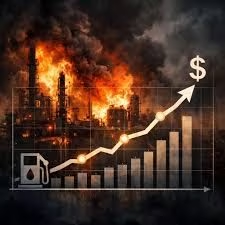
The economic consequences underscore the cost of that decision. A study by Bloomberg estimates that fears of a wider war erased more than $2.5 trillion from global bond markets in March alone—the worst monthly loss in years. This is not a routine correction. It is a signal of systemic stress, driven by geopolitical escalation.

The same analysis points to an even broader shock: global equities have lost an estimated $11.5 trillion in market value, reflecting a level of disruption that extends across sectors and continents. Investors are not merely reacting to uncertainty; they are repricing risk in a world where political decisions are once again overriding economic fundamentals.

The mechanism behind this disruption is both simple and severe. War drives up oil prices. Higher energy costs ripple through supply chains, increasing the cost of production, transportation, and basic goods. This fuels inflation, which in turn erodes the real value of fixed-income assets such as bonds. As inflation rises, central banks are pressured to tighten monetary policy, pushing interest rates higher and slowing growth. What begins as a geopolitical decision quickly cascades into a global economic shock.

As noted by Michael Brown, a senior strategist at Pepperstone, investor concern is increasingly centered on inflation—particularly that driven by rising energy prices. Large energy-importing economies, he warns, are especially vulnerable, facing both accelerating inflation and deteriorating government bond performance.

This vulnerability is especially acute in the United Kingdom and across Europe, where dependence on imported energy amplifies exposure to price spikes. For these economies, the likely path forward includes tighter monetary policy, higher borrowing costs, and weaker growth. In the worst-case scenario, the combination of inflation and stagnation could tip major economies toward recession—reviving fears of stagflation that many believed had been left behind decades ago.

But to focus solely on markets and macroeconomics is to miss the deeper issue. The economic fallout is not an accident; it is the consequence of political choice.

In both 2025 and 2026, military action did not follow the failure of diplomacy. It interrupted it. This distinction matters because it challenges the central narrative often used to justify war—that force becomes necessary only when all other options have been exhausted. Here, the record suggests the opposite: alternatives were still being actively pursued when they were overtaken by military escalation.

Diplomacy is rarely neat or decisive. It advances unevenly, shaped by competing interests, domestic pressures, and shifting regional dynamics. Progress is often incremental, and setbacks are inevitable. But that is not a sign of failure—it is the nature of the process. To abandon negotiations because they are incomplete is to misunderstand what diplomacy is.

The decision to move from negotiation to war, under such conditions, is not inevitability—it is agency. It reflects a judgment that the risks of continued diplomacy outweigh the risks of conflict. Yet the economic data now emerging suggests that this calculation may have been deeply flawed.

Inflation is rising across global markets. Financial systems are under strain. Growth projections are being revised downward. The costs are being distributed worldwide, affecting not only the parties to the conflict but also economies and populations with no direct stake in it.

The tragedy, then, is not simply that war occurred. It is that it occurred while alternatives still existed—and that those alternatives were not allowed to run their course.

There is a broader lesson here. When military force is used not as a last resort but as a parallel track—or even a substitute—for diplomacy, the consequences extend far beyond immediate strategic objectives. They reshape markets, destabilize economies, and impose costs on a global scale.

The question now is not only how this war began, but what it signals about the future. Will diplomacy continue to be treated as a prelude to force rather than an alternative to it? Will negotiations be given time to succeed, or cut short by decisions made in the name of urgency?

In an interconnected global economy, the answers to these questions matter not just for peace and security, but for economic stability itself. Because as this conflict makes clear, when war is chosen over diplomacy, the price is paid by everyone.

OPINIONS

Mon 23 Mar 2026 1:20 pm - Jerusalem Time

Palestinian Transitional Justice: A Path for Acknowledging Mistakes, National Reconciliation, and Building an Inclusive Political and Social Future

Palestine today is going through a critical phase as a result of accumulated internal divisions and the impact of the ongoing occupation, which has made addressing the effects of the past an urgent national necessity. The division between the West Bank and the Gaza Strip was not merely political disagreements between factions; its impact extended to encompass the entire Palestinian people. Citizens were affected in their daily lives, whether in terms of individual and social rights, or in employment opportunities, education, and basic services, and the level of trust in national institutions declined. Furthermore, the Palestinian cause as a whole was affected, as the division weakened unified national representation and reduced the Palestinian community's ability to confront internal and external challenges, including Israeli policies, creating a double barrier to national unity and effective international action. In this context, it is clear that the Palestinian people are the true victims of division and political and social accumulations, not just one faction, which makes transitional justice a comprehensive national necessity to restore national unity and trust between society and the state.

Lessons can be learned from transitional justice experiences implemented by other countries. In Morocco, the Equity and Reconciliation Commission successfully achieved a balance between truth-telling, reparations, and institutional reform, without resorting to widespread judicial trials, which enhanced political stability and symbolic justice for victims. As for South Africa, the Truth and Reconciliation Commission's experience demonstrated the importance of the "amnesty for truth" principle to overcome the legacy of apartheid and build a cohesive society based on reconciliation and mutual recognition. Tunisia's experience highlighted the necessity of a clear legal and institutional framework to address past violations, while Rwanda focused on community justice and local reconciliation after the genocide, benefiting from community traditions to ensure the rebuilding of the social fabric. These models confirm that the balance between acknowledging mistakes, reparations, institutional reform, and collective reconciliation is a fundamental factor in building sustainable national unity, and these lessons can be adapted to the specificity of the Palestinian reality to enhance their positive impact.

Palestinian transitional justice emerges as a vital national path that allows all political parties to acknowledge their mistakes and learn from past experiences, transforming past errors into a foundation for building an inclusive political and social future. What is required is for the factions to take responsibility for acknowledging mistakes, not only at the individual level but at the institutional and societal levels as a whole, to ensure that violations and transgressions are not repeated, and to create an environment where political and social differences can be managed within the bounds of law and institutions, away from violence or exclusion. Palestinian transitional justice acquires an additional strategic dimension, as it represents a tool to thwart the occupation's attempts to exploit division and weaken national cohesion, and it also represents a response to a widespread popular demand, pressuring factions to deal positively with the national reconciliation process. Returning to the people through elections alone is not enough to address divisions or restore trust between parties, and if it is not based on comprehensive national reconciliation, it will fail to achieve the desired change. However, if this proposal is agreed upon and seriously implemented, elections become an effective step, based on unity, accountability, and transparency, and establish a stable and sustainable democratic path.

The detailed proposal for Palestinian transitional justice consists of a set of integrated measures:

Building Political Consensus: Through a comprehensive national agreement among all parties to address the past and acknowledge mistakes, with oversight from an independent body representing civil society and national forces to ensure the neutrality of the process, and involving all factions in drafting the roadmap for reconciliation. Here, political challenges can be addressed by developing flexible scenarios to confront resistance, such as establishing bilateral and quarterly dialogues initially between the most conservative parties to ensure their participation, then expanding the scope of consensus to include everyone, with guarantees that the process will not be used to settle political scores.

Establishing the Palestinian Truth and Justice Commission: An independent body comprising judicial, human rights, and community figures, tasked with documenting violations, listening to victims from all over Palestine, and preparing a comprehensive report that builds a collective national memory reflecting the recognition that the entire Palestinian people are the victims, and ensuring the acknowledgment of mistakes at the individual and collective levels, with transparent dissemination of its findings to promote collective recognition. Indicators can be developed to measure the commission's success, such as: the number of beneficiaries, their satisfaction with the process, and the number of initiatives undertaken based on the commission's recommendations.

National Reparations Program: Includes providing material, social, and psychological compensation to all those affected by the division, whether at the individual or collective level, and reintegrating those affected into national institutions and jobs, in addition to rehabilitation and training programs, with official recognition of those affected to restore their dignity and enhance their sense of justice.

Flexible Approach to Accountability: Adopts the principle of "acknowledgment for mitigation," focusing on moral and political responsibility, and avoiding widespread judicial trials that may hinder national reconciliation, to ensure that acknowledging mistakes becomes part of collective learning rather than a tool for division. To emphasize the balance between justice and reconciliation, a framework can be established to clarify that the process integrates symbolic justice, acknowledgment of harm, and limited legal responsibility, thereby preventing the recurrence of violations without politicizing justice.

Reforming and Unifying Institutions: Includes reforming judicial, administrative, and security apparatuses to ensure transparency and justice, enhancing judicial independence and professionalism in administration, and establishing clear controls to prevent the recurrence of violations.

Engaging Society in Reconciliation: By supporting local and community reconciliation initiatives, and involving civil society and local frameworks in managing national dialogue, to promote a culture of acknowledgment, reconciliation, and community participation, ensuring that the process includes all affected segments of society, including youth, women, and marginalized groups. This can be enhanced through continuous media and community communication mechanisms, such as open dialogue programs, online forums, and interactive media campaigns that allow citizens to participate in formulating solutions.

Managing the Occupation File in Parallel: By systematically documenting Israeli violations through legal and international channels, while separating this file from the internal reconciliation process to ensure efforts are focused on addressing internal divisions and national reconciliation.

Integrating Memory into Education and Media: By incorporating concepts of transitional justice, acknowledgment of mistakes, and reconciliation into curricula, and producing media programs aimed at promoting a culture of acknowledgment, accountability, and tolerance among all components of society, contributing to educating new generations about the value of reconciliation and national unity.

Monitoring and Implementation Mechanisms: To ensure the continuity of the process and prevent deviation, including monitoring the implementation of the Truth and Justice Commission's recommendations, independent mechanisms for evaluating progress, and ensuring the separation of political and judicial authority. Interim evaluation indicators can be added to periodically measure the progress and effectiveness of the process.

Temporal Flexibility and Gradual Implementation: With a clear timeline for each stage of reconciliation, allowing for periodic evaluation and adjustment based on results on the ground.

This path is expected to have a multi-dimensional impact; politically, by strengthening national unity, reducing division, and increasing the legitimacy of institutions; socially, by restoring trust among citizens, promoting civic participation, and spreading a culture of reconciliation and tolerance throughout society; legally and institutionally, by developing the justice system, enhancing judicial independence, and improving the performance of security and administrative apparatuses; and internationally, by enhancing Palestine's image as a society striving for good governance and respect for human rights, and attracting technical and legal support; and in the long term, by building a strong and stable rule of law, reducing the likelihood of internal conflicts, and enabling Palestinian society to work unitedly towards an inclusive political and social future that ensures the participation of all without exclusion.

This Palestinian model of transitional justice represents a path for political acknowledgment of mistakes and learning from them by all factions, placing disagreements within the bounds of law and institutions, and addressing the harm that has affected the entire Palestinian people and the national cause as a whole. It also provides a solid foundation that makes any future elections meaningful and effective, as it ensures that political competition will be based on unity, accountability, and transparency, rather than on division or the exploitation of past divisions. Through this path, painful experiences are transformed into a basis for building an inclusive future, where political differences are managed constructively, and differences become a means of dialogue, not a tool for conflict or division, enabling Palestinian society to restore its unity and strength, and launch its national project cohesively and sustainably, benefiting from the lessons of international models such as Morocco, South Africa, Tunisia, and Rwanda in acknowledging the past, making reparations, and reforming institutions as the basis for any true national reconciliation.


OPINIONS

Mon 23 Mar 2026 1:19 pm - Jerusalem Time

Iranian Resilience in the Face of Escalation: A Reading of the Foundations and Future Prospects

Ramallah - "Al-Quds" Dot Com

Ramallah - "Al-Quds" Dot Com

Opinion Writer

The military escalation led by the United States against the Islamic Republic of Iran has entered its fourth week, amidst intense airstrikes targeting facilities and lives. Despite the ferocity of the attacks, field data indicates that the declared objectives of the aggression have not yet been achieved, as the state has maintained its basic structure.

Observers believe that the loss of prominent leaders in the hierarchy of power has not led to the expected collapse or internal chaos that adversaries were banking on. Instead of popular protests condemning the authority, mass engagement in defending national sovereignty and dignity in the face of external threats has been observed.

Before the outbreak of direct confrontation, the American president exhausted all tools of military threat and intimidation, hoping for the Iranian leadership to retreat from its political positions. The American gamble was on a popular revolution that would overthrow the regime to spare the country the horrors of war, which did not happen on the ground.

The American side expressed clear astonishment at the continued Iranian resistance, with Trump questioning the secret behind not surrendering despite immense pressures. This question opens the door to understanding the nature of resilience that goes beyond traditional military calculations to dimensions related to identity and national dignity.

The inherent strength of the Iranian position relies on a philosophy that rejects dependency and considers freedom a value that cannot be bargained for, no matter the sacrifices. This type of will grants peoples the ability to endure grave risks in order to preserve their sovereignty and independent political decision-making.

For decades, political socialization in Iran has worked to mobilize society against what is described as 'global arrogance,' concepts that have been entrenched since the 1979 revolution. This socialization was not merely slogans but transformed into practical action in the face of successive international crises.

History recalls similar situations, such as the American embassy crisis that lasted 444 days, where Iranians bravely faced the threats of the Sixth Fleet. At that time, former President Jimmy Carter realized that dealing with a people who do not fear sacrifice requires completely different calculations than traditional wars.

The lack of fear of death in the Iranian political doctrine does not mean a desire for annihilation, but rather a means to defend a dignified and independent life. A life without sovereignty or moral values is considered in this perspective a meaningless existence, which reinforces the solidity of the internal front.

The symbolism of resilience is evident in the continued performance of duties by leaders from their official offices despite direct threats of assassination and bombing. Moreover, popular turnout on occasions such as International Quds Day reflects a clear message of defiance that leadership and people are in one trench.

Forecasts indicate that American dreams of imposing complete surrender will not be realized, no matter how high the material and human costs. Military technological superiority does not always guarantee decisive victories against peoples who possess a deeply rooted fighting doctrine that rejects humiliation and dependency.

The slogan 'Far be it from us to accept humiliation' represents a fundamental pillar in the Iranian collective consciousness, and it goes beyond being a political cry to become a doctrine that prevents defeat. This ideological dimension is what makes it difficult to impose settlements on 'victor and vanquished' terms, as happens in other conflicts.

It is likely that the aggressors will fail to achieve their strategic objectives, which may force them to seek safe exits and tempting settlements that save what remains of their face. Peoples who defend their existence possess long endurance and patience that aggressive powers do not have.

The next phase may witness attempts to reach an emergency truce or tempting settlements, but these will not erase the deep-seated animosity between the two sides. Each side seeks to build its own gains in preparation for future rounds of confrontation that seem inevitable given the conflicting interests.

Ultimately, Iranian resilience remains a phenomenon worthy of study from a political and social perspective, where national spirit intertwines with religious doctrine. The prospects of this resilience will determine the shape of new balances in the region for many years to come.

What can be done with people who do not fear death but seek it?

OPINIONS

Mon 23 Mar 2026 1:19 pm - Jerusalem Time

Desecration of Intimacy: When Our Private Belongings Become Tools of War

In a moment when the night's stillness collapses, doors are broken and homes are invaded. The scene is brief, but it leaves an impact that transcends its duration: soldiers enter, rampage, tamper, then wear women's private underwear—lingerie—and photograph themselves inside a space that has been violated at gunpoint. The goal here is not inspection, nor even material destruction, but rather to redefine the place itself: transforming the home from a private sanctuary into a stage for control and intrusion.

What is happening in Gaza and Lebanon is not an anomalous behavior, but a colonial technique: intimate colonialism—that form of domination that is not content with controlling land, but extends to the body, privacy, and meaning. When intimate clothing is worn and displayed on strange bodies, not only are possessions violated, but the psychological boundaries that separate the public from the private, the safe from the threatened, are breached. The intimate becomes material for colonial harm, and privacy transforms into a space susceptible to subjugation.

More dangerous than the act itself is its re-broadcasting. The photos and videos that are later published are not fleeting social media posts, but part of a deliberate strategy: delayed shock through the screen. Displaced people watch their homes violated, not at the moment of the event, but afterward—when they are powerless to act, and forced to receive. Here, the invasion does not end with the soldiers' departure; rather, another form of violation begins, settling in memory and being re-evoked whenever the image is re-watched.

This behavior, which may seem sarcastic or perverse, is at its core an organized practice of power restructuring: humiliation, subjugation, and the redefinition of the human being in relation to themselves and their body. It is a systematic occupation act, which is only complete with its reproduction and dissemination, as a means to prolong the harm and generalize it to the displaced and the entire occupied society. This aligns with the approach of liberation psychology, which views psychological violence not as an individual symptom, but as the product of an oppressive structure that must be understood in its political and social context.

The psychological impact is distributed, but it integrates into the dismantling of the social fabric:

On men: Violence manifests as complex humiliation—inability to protect, exposure of private space, and a threat to identity associated with the role of protection.

On women: The body becomes a symbolically penetrated space; anger intertwines with shame and fear, not only because of the act itself, but because of what it implies about domination over the body and the possibility of its subjugation.

On children: The boundary between what is private and what is public collapses. What was hidden from their eyes suddenly appears, not as knowledge, but as a shock that confuses their perception of safety, and plants a deep rift in their sense of the stability of the world around them.

Here, not only the individual is targeted, but the gender structure of society is targeted: humiliating men by exposing their helplessness, and violating women by desecrating their intimacy, in an integrated process of dismantling roles and relationships. It is armed intimate violence, using everyday symbols to reproduce domination.

This act extends through time. It does not happen once, but is repeated in memory, in images, in the retrieval of small details: a house door broken into, a drawer opened, a piece of cloth snatched, an order disrupted. Even if the house remains standing, it is no longer as it was. It becomes laden with the memory of violation, as if the occupation never left it.

Despite this, transforming these experiences into testimony against the occupation is not just a news narrative, but an act of resistance. Turning this testimony into a public space not only exposes the violation, but also reduces the isolation of the victims, and reconnects the experience to its collective context instead of leaving it as a silent individual burden. Thus, the ability to understand is restored, possibilities for confrontation are opened, and dignity and social relations that are intended to be torn apart are repaired.

These practices are not a marginal detail of war, but one of its precise techniques: dismantling the human being from within, by transforming their most private spaces into tools for controlling them. And confrontation begins by recognizing and naming it, not as a fleeting incident, but as a continuous structure of symbolic violence, which does not end with the event, but continues unless we succeed in dismantling it and neutralizing its impact.

PALESTINE

Mon 23 Mar 2026 1:09 pm - Jerusalem Time

Israel depletes its old stockpiles in bombing Iran and field escalation claims martyrs in Gaza

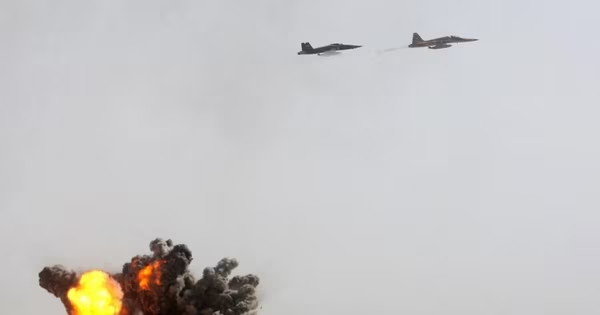
Hebrew media sources revealed a remarkable shift in the Israeli army's military strategy during its ongoing aggression against Iran, as it began relying on old stockpiles of imprecise ammunition. Reports indicated that these bombs, which have been stored for about half a century, were recently used to target military sites inside Iranian territory, which was discovered by chance through monitoring the nature of the explosions and the resulting debris.

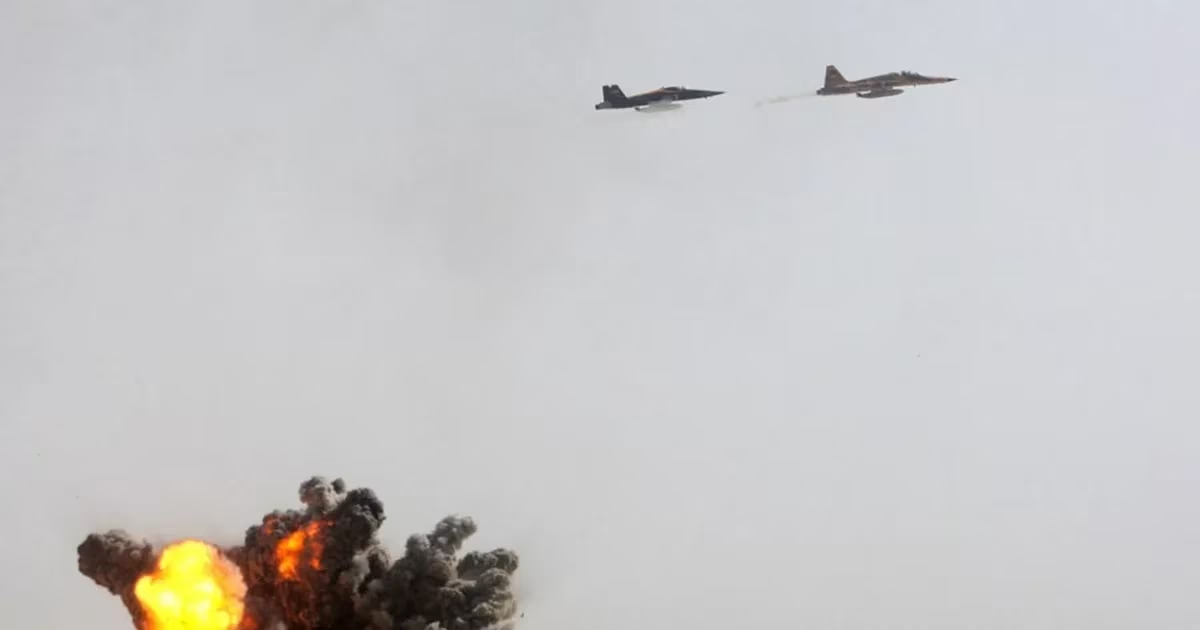
Data from the Israeli Broadcasting Authority indicates that the motives behind this decision lie in the military leadership's desire to reduce the exorbitant costs of air operations, in addition to seeking to empty warehouses of obsolete weapons. This development comes amid continued mutual confrontations since late February, with Israel and the United States launching widespread attacks, met by Tehran's firing of missiles and drones targeting Israeli depth and American interests in the region.

On the humanitarian front in Iran, the Iranian Red Crescent announced that air attacks have targeted more than 81,000 civilian sites across the country since the start of the aggression. The head of the institution, Pir Hossein Kolivand, confirmed that relief teams are working at their maximum capacity, with more than 100,000 volunteers trained to provide first aid and rapid intervention services in emergencies resulting from the intense bombing.

For his part, Iranian Health Minister, Mohammad Reza Zaferkandi, revealed a heavy toll of civilian casualties, pointing to the killing of 210 children and the injury of more than 1,500 others with varying degrees of wounds. The minister clarified that the targeting was not limited to military sites, but also included about 300 health centers and 30 ambulances, which hinders medical efforts to save the injured and constitutes a flagrant violation of international conventions.

In a related context in the Gaza Strip, the occupation forces continued their violations of the ceasefire agreement signed last October, as four Palestinians were martyred and eight others were injured in a raid targeting a police vehicle in the Nuseirat camp. Local sources reported that the vehicle was performing official duties at the Abu Sarar intersection in the central sector, in a clear attempt to undermine the security and service system that manages citizens' affairs.

Medical sources also recorded the martyrdom of another Palestinian citizen in a raid targeting a civilian gathering in the Sheikh Radwan neighborhood north of Gaza City. These attacks come as part of a series of continuous violations, which have resulted in about 677 martyrs and more than 1,800 injured since October 2025, threatening the collapse of the fragile calm that came after two years of devastating war that left enormous destruction in the infrastructure.

Human rights reports indicate that the occupation deliberately targets police and service agencies in Gaza to disrupt civil peace and prevent the organization of aid distribution and basic services. This field escalation comes despite international warnings of a return to a comprehensive conflict, especially with the continued fall of civilian casualties amid international silence regarding repeated violations of the ceasefire agreement.

It is worth noting that the war that erupted in October 2023 left a catastrophic toll exceeding 72,000 martyrs and 171,000 injured, with about 90% of vital facilities in the sector destroyed. With the confrontation with Iran entering a new chapter of military escalation, fears are growing of the expansion of the regional conflict and its direct impact on the Palestinian issue, which continues to suffer from the consequences of the siege and continuous aggression.

The Israeli army began using imprecise ammunition, stored for half a century, to strike military bases in Iran to save costs and empty warehouses.

LATEST NEWS

Mon 23 Mar 2026 1:09 pm - Jerusalem Time

Doomsday Scenarios: What Awaits Humanity the Day After Nuclear War?

International warnings are escalating about the danger of sliding into a nuclear confrontation, as concerns are no longer limited to the immediate destruction caused by explosions, but extend to the sustained repercussions that could end human civilization. A recent report indicates that scientists are anxiously monitoring a series of environmental and health disasters that will begin immediately after the first fireballs subside.

The Bulletin of the Atomic Scientists, the organization responsible for the 'Doomsday Clock,' warned that the world is at its closest point to total annihilation in history. Studies confirm that any nuclear conflict, no matter how limited, will tear apart the Earth's ecological fabric, making survival an almost impossible challenge for those who survive the initial strike.

Among the most prominent anticipated health risks is the complete collapse of the medical system, where hospitals will cease to function and sources of clean water will completely disappear. This situation will turn affected cities into hotbeds for deadly epidemics, especially with the spread of corpses that will become breeding grounds for microbes and germs in the absence of health control.

Experts anticipate a widespread outbreak of diseases such as salmonella, typhoid, and malaria, in addition to dengue fever and hepatitis. This crisis will be exacerbated by the proliferation of radiation-resistant insects, which will transmit infections from decomposing corpses to humans who survived the initial explosions around the world.

On the environmental front, the threat of a deadly 'ultraviolet spring' emerges, resulting from the destruction of the ozone layer that protects the Earth. A full-scale nuclear war is capable of destroying about 70% of this layer, while limited confrontations could cause a loss of 40%, allowing harmful rays to reach the Earth's surface directly.

This increase in ultraviolet radiation levels will lead to a massive surge in skin cancer rates and eye damage in humans and animals. Agricultural crops will also be directly affected, leading to the collapse of ecosystems that depend on a delicate balance of temperatures and solar radiation.
The phenomenon of 'black rain' is one of the most terrifying scenes in post-explosion scenarios, a contaminated mixture of ash and deadly radioactive materials. This rain falls from the sky, covering vast areas, causing immediate radiation burns and permanent contamination of soil, groundwater, and surface water sources.

The impact of nuclear fallout extends hundreds of kilometers away from the explosion's epicenter, meaning that areas not directly targeted will not be safe from danger. Radioactive materials will travel through the wind to settle in the food chain, making food and water a deadly weapon against those who consume it.

The major catastrophe, however, is the 'nuclear winter' and the global famine that will follow the massive fires in cities and industrial areas. The thick smoke rising will block sunlight for long periods, leading to a sharp and sudden drop in global temperatures and a complete failure of agricultural seasons.

Scientific estimates indicate that this severe food shortage could lead to the deaths of up to 5 billion people from starvation worldwide. The suffering will not be limited to warring nations but will encompass all continents due to the cessation of international trade and the collapse of global food supply chains.

Even shelters, which many believe offer safety, may turn into deadly traps amidst the firestorms resulting from the explosions. These storms raise temperatures to unprecedented levels and consume the oxygen in the surrounding atmosphere, which could lead to suffocation inside fortified shelters.

The failure of medical and electrical equipment due to electromagnetic pulses will make it impossible to provide care for the wounded and those suffering from acute radiation syndrome. Millions will suffer excruciating pain without painkillers or sterile surgical instruments, amidst a complete power outage and communication breakdown.

These scenarios confirm that nuclear war is not merely a transient military event, but an act of collective suicide for the human race and total destruction of planet Earth. The interconnected series of disasters begins with fire and pressure, continues through radiation and disease, and ends with a civilizational and environmental collapse from which recovery is impossible.

In conclusion, these stark scientific warnings serve as an alarm bell for international leaders about the danger of military escalation in the nuclear age. Maintaining peace is not just a political option, but an imperative necessity to ensure the continuation of life on this planet and to spare humanity a dark future with no winners.

The real danger does not end when the fireballs subside; it begins with a series of disasters that will change the face of life for decades.

ISRAELI AFFAIRS

Mon 23 Mar 2026 1:08 pm - Jerusalem Time

End of War Scenarios: Israeli Estimates Suggest Iranian Regime Survival and Both Sides Declaring Victory

International press reports indicate that the joint war led by the United States and the occupation state against Iran has entered its fifth week with no signs of an imminent surrender by Tehran. Despite significant military setbacks and the loss of prominent leaders, estimates suggest that the timeline set by President Donald Trump is nearing its end without a radical change in the regime's structure.

Media sources quoted Israeli officials admitting that the conflict might end with the Iranian government remaining in power, which could create a sense of frustration among those who expected a rapid collapse. This is due to the disparity between declared objectives and the slow pace of military achievements compared to the momentum that accompanied operations in their early stages.

An Israeli military official explained that Iran represents an enormous geographical and security challenge, being a country eighty times larger than Israel and roughly half the size of the European continent. He added that the Iranian regime has succeeded over decades in building a complex security apparatus, which makes its mere resilience in the face of current attacks a victory from its perspective.

The official pointed out that the media narrative considering the regime's survival a defeat for Washington and Tel Aviv is inaccurate from the Israeli strategic perspective. From their point of view, a state that threatened to wipe Israel off the map reaching a stage where survival is considered a victory reflects the extent of the damage inflicted on its capabilities.

Sources emphasized that overthrowing the regime in Tehran was never a declared military objective of the current air operations; rather, the focus was on eliminating direct existential threats. Military leaders believe that weakening the regime creates suitable conditions for the Iranian people to choose change themselves if they wish to do so in the future.

Regarding the outcomes of the war, the military official predicted a scenario where both sides declare victory simultaneously, with the Iranian regime viewing its survival as a historical success. In contrast, Israel and the United States will consider that they have achieved their goals by destroying military infrastructure and unprecedentedly weakening Tehran's offensive capabilities.

Intelligence reports observed cracks in the combat morale of Iranian forces and increasing difficulties in coordinating organized missile barrages. Sources confirmed that field commanders are now forced to accompany their soldiers to carry out missions due to the spread of fear and confusion among ground forces.

Intelligence information also revealed that Iranian forces resorted to launching missiles from hidden positions under bridges and tunnels to avoid intense aerial surveillance. This defensive tactic has led to a significant decrease in the number of missile attacks launched from the region, indicating a decline in offensive initiative capabilities.

At the leadership level, an increase in individual decision-making by field military commanders has been observed over the past two weeks, reflecting a weakness in central coordination. Observers believe that the absence of a unified and cohesive Revolutionary Guard leadership has led to a state of disarray in the management of daily military operations.
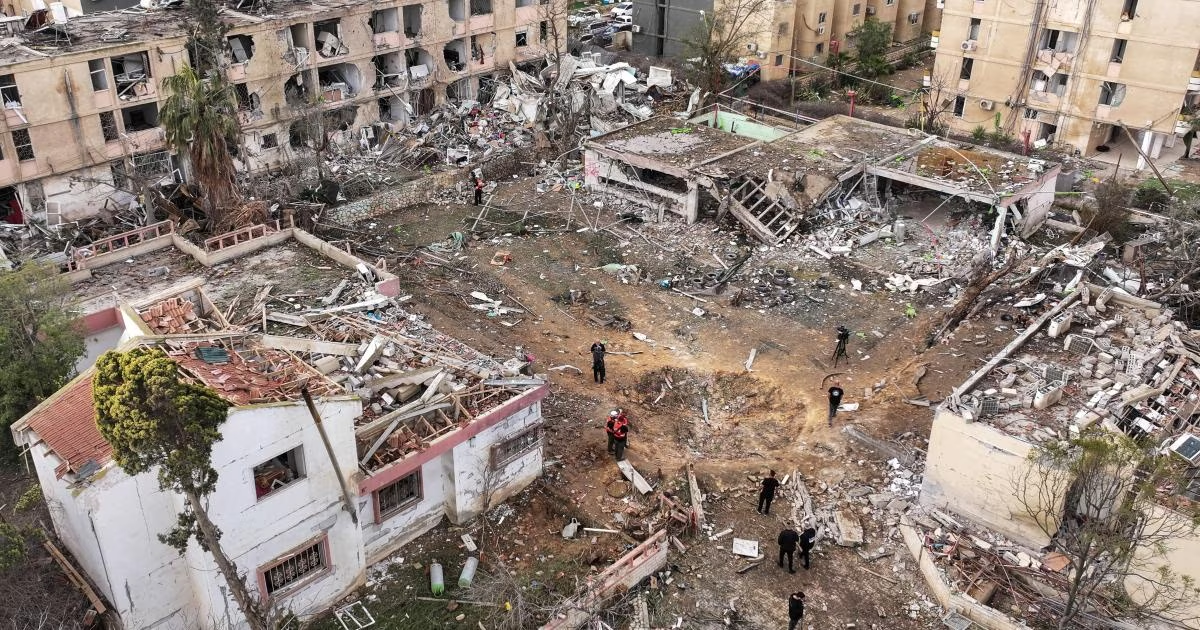
For his part, Ofir Akunis, the Israeli Consul in New York, stated that the Iranian security establishment is weakening day by day despite its continued control over state joints. He described the current situation as very fragile, especially with the possibility of other regional parties, such as the Ansar Allah group in Yemen, entering the confrontation more broadly.

Despite the profound effects of the air campaign on the stability of the Iranian state, Akunis ruled out an imminent government collapse at present. He pointed out that the possibility of an internal uprising remains complex due to the presence of currents that oppose the regime but at the same time reject external military intervention in their country.

Regarding the American position, the Trump administration's messages were inconsistent regarding the final war objectives and the possibility of deploying ground troops. While Trump set short deadlines for ending operations, he later reaffirmed that he would not send soldiers to participate in ground operations, emphasizing that securing international waterways should be a collective responsibility.

It is important to realize that the Iranian regime manages a country 80 times larger than Israel, and they are now in a position where they consider mere survival a victory.

PALESTINE

Mon 23 Mar 2026 1:08 pm - Jerusalem Time

Crime Shakes Gaza: Occupation Tortures Infant with Cigarettes to Pressure Detained Father

The Gaza Strip witnessed a shocking incident reflecting the extent of cruelty and violations practiced by the Israeli occupation army against civilians, where a child, not yet two years old, became a means of physical and psychological pressure during a military field interrogation. The incident, which occurred in the Al-Maghazi area, sparked a wave of widespread anger after details of the child's torture in front of his detained father were revealed.
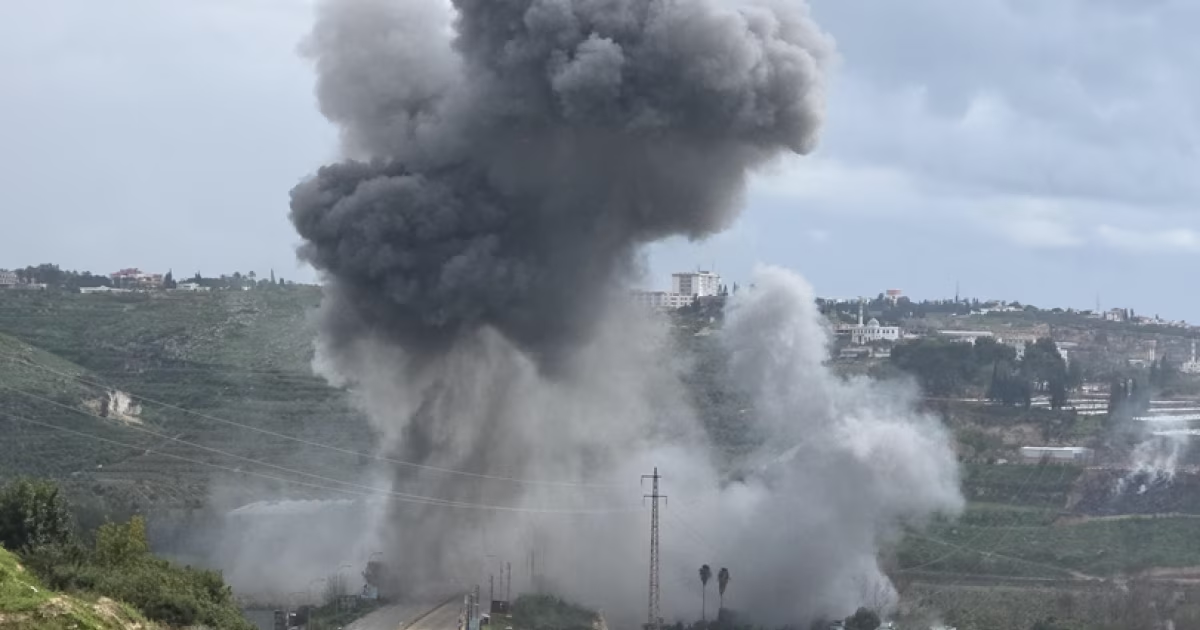
The tragedy began when the young man, Osama Abu Nassar, left his home with his young child, 'Kareem,' to secure some basic necessities for the family. Suddenly, the area came under heavy fire from occupation forces stationed near the eastern border of Al-Maghazi, placing the father and his child in a direct target zone.

Local sources and eyewitnesses reported that a 'quadcopter' drone surrounded Abu Nassar, forcing him at gunpoint to leave his child alone on the ground and advance towards a temporary military checkpoint. There, the father was forced to strip completely before being interrogated by occupation soldiers in a humiliating manner.

In a scene lacking the slightest standards of humanity, the soldiers detained the infant and began to inflict various forms of physical torture upon him. The purpose of these brutal practices was to pressure the distraught father into watching his child suffer, in order to extract confessions and information during his field interrogation.
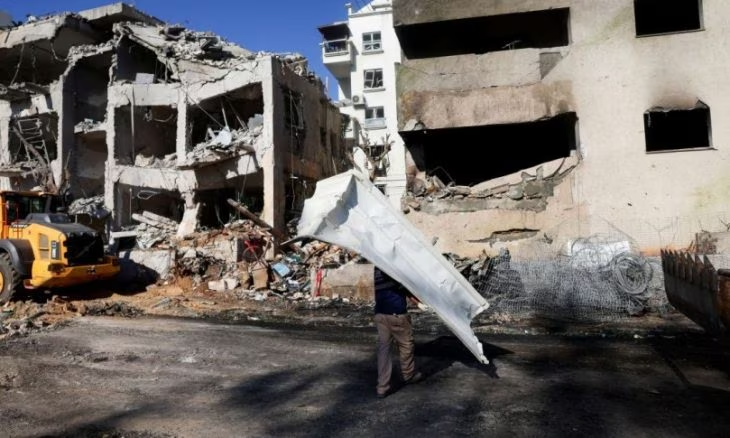
Family sources quoted Kareem's mother as providing horrific details documented in an official medical report after the child's release. It was revealed that the soldiers extinguished burning cigarette butts on various parts of the infant's body, in addition to embedding an iron nail in his leg and pricking him with sharp tools to force him to scream continuously.

Kareem was held for ten continuous hours away from his family's embrace and in conditions lacking the most basic care. After the interrogation of his father concluded, the child was handed over to Red Cross teams in the Al-Maghazi market area, in a very difficult physical and psychological state as a result of what he endured.

While Kareem returned to his mother burdened with his physical injuries, his father, Osama Abu Nassar, remains in detention in occupation prisons, with his fate and the charges against him unknown. The family lives in a state of double anxiety over the unknown fate of the father and the health condition of the child, who requires intensive medical and psychological care.

This crime sparked angry reactions on social media platforms, where activists and human rights advocates considered it a full-fledged war crime that crosses all red lines. Commentators affirmed that targeting infants and using them as hostages for military pressure represents an unprecedented moral decline in the history of modern conflicts.

Human rights organizations called for an urgent and independent international investigation into this incident and its documentation as part of the war crimes files raised against occupation leaders. Human rights advocates stressed that the absolute international silence regarding these violations gives the green light to the occupation army to repeat such brutal practices against children and women.

This incident comes in the context of a long series of violations documented daily by Palestinians in the Gaza Strip, which include deliberate killing and field torture. The story of Kareem remains a living testament to the extent of suffering experienced by the residents of the Strip, where even infants are not safe from the Israeli machine of oppression and abuse.

It is impossible for these to be human beings; they are monsters in human form. Indeed, even monsters are more merciful than what these individuals commit against our children.

ISRAELI AFFAIRS

Mon 23 Mar 2026 1:07 pm - Jerusalem Time

Compensation Crisis Haunts Netanyahu's Government: Anger Among Settlers and Expectations of Payment Delay Until Next May

A wave of anger has escalated among settlers and business owners within the occupation's home front, due to the government's delay in paying financial compensation for losses resulting from the ongoing war. These protests come at a time when cities and settlements are still being subjected to successive missile strikes from Iran and Hezbollah, leading to a partial paralysis in wide economic sectors.

Economic sources reported that beneficiaries of the war compensation scheme will have to wait for many weeks before receiving any financial support. The Ministry of Finance is currently working on preparing the necessary legislative drafts to regulate compensation for workers and companies, a process that requires a long time for review and public comment before being referred to the Ministerial Committee.

Estimates indicate that funds will not reach their beneficiaries before next May, given the coincidence of legislative procedures with the timing of Jewish holidays and the anticipated Knesset recess. Despite the Ministry of Finance's attempts to deny any deliberate delay, bureaucratic reality suggests that payments will not be made soon, even if laws are expedited.

Observers criticized the slow timelines for preparing legislation compared to previous confrontations, such as the events of June 2025 or the start of the war on Gaza in October 2023. It appears that the current government faces difficulties in reconciling the preparation of the state budget with meeting the urgent needs of those affected by the ongoing military operations.

Israeli anger is particularly focused on the conditions of the compensation scheme, which is limited to companies that have lost at least 25% of their annual turnover. The current model aims to compensate only salary expenses and fixed costs, which major companies with budgets of millions of dollars consider insufficient to cover their actual losses.

Informed sources confirmed that the Treasury published the aid scheme without reaching final agreements with employers on fundamental issues. This confusion has led to a state of uncertainty in the market, where stakeholders fear continued financial bleeding without a clear and direct government safety net.

An additional crisis emerges concerning severance pay and unemployment benefits for employees who were forced to stop working during the first week of the war. The current model requires an employee's absence for 14 consecutive days to be eligible, which deprives those who return to work early of any financial compensation for their period of stoppage.

Shahar Turgeman, head of the Federation of Chambers of Commerce, warned that the current Finance Minister's policies contribute to suppressing economic growth instead of stimulating it. Turgeman considered that the current scheme encourages workers to stay at home for longer periods to ensure they receive unemployment benefits, which harms the overall productivity of the Israeli economy.

Official data revealed a bitter reality for the business sector, with approximately 170 companies closing daily in Israel for about two and a half years. These figures reflect the depth of the structural crisis facing the economy, which has sharply worsened with the outbreak of recent military confrontations and the expansion of the targeting area.

A recent survey conducted by the Bank of Israel showed that economic damage affected approximately 66,000 companies employing more than two million workers. The survey indicated that a quarter of companies in the Israeli economy are currently temporarily closed or operating at a minimum human capacity, signaling an economic catastrophe.

Although some companies reported a slight improvement in employment levels compared to previous rounds, only 44% of companies are operating at a normal level. This disparity indicates that vital sectors are still suffering from labor shortages or supply chain disruptions due to the deteriorating security situation in the north and center.

In a stormy meeting of business owners, the head of the Bar Association and the CEO of the Restaurants Organization expressed their dissatisfaction with the government's disregard for the demands of the private sector. The attendees affirmed that continued procrastination in paying compensation would lead to the collapse of more small and medium-sized enterprises, which form the backbone of the local economy.

Netanyahu's government faces increasing pressure to review compensation criteria and make them more flexible to include a wider segment of those affected. However, budget deficits and political complexities within the government coalition seem to prevent quick and decisive decisions to rescue the ailing economic situation.

In conclusion, settlers remain in a state of anticipation and anxiety about their financial future amidst the ongoing war and the absence of effective government solutions. The coming days remain crucial in determining whether the Knesset will be able to overcome bureaucratic obstacles to pay compensation before entering the long holiday recess.

Instead of generating growth, the Finance Minister is suppressing it, encouraging workers to stay at home to receive unemployment benefits.

ARAB AND WORLD

Mon 23 Mar 2026 1:07 pm - Jerusalem Time

The Escalation Trap in the Middle East: A War of 'Irrationality' Threatens the Global Economy and Stability of Major Powers

Tensions are escalating in the Middle East as the military confrontation against Iran enters its fourth week, amid indications that parties are slipping into what is known as the 'escalation trap'. The irrationality of this war is evident in the Israeli ally's attempt to embroil the United States in an illegal conflict, which has not received approval from the UN Security Council or explicit authorization from the US Congress, putting the Trump administration in direct confrontation with the Constitution and international law.

On the ground, reports revealed successful assassination operations targeting the top leadership in Tehran, including Supreme Leader Ali Khamenei and a number of first-tier leaders, among them Ali Larijani, Secretary-General of the Supreme National Security Council. These strikes, according to informed sources, aim to block any future opportunities for diplomatic negotiation, while the new leader, Mojtaba Khamenei, survived an assassination attempt despite being injured in the initial strike that targeted the leadership headquarters.

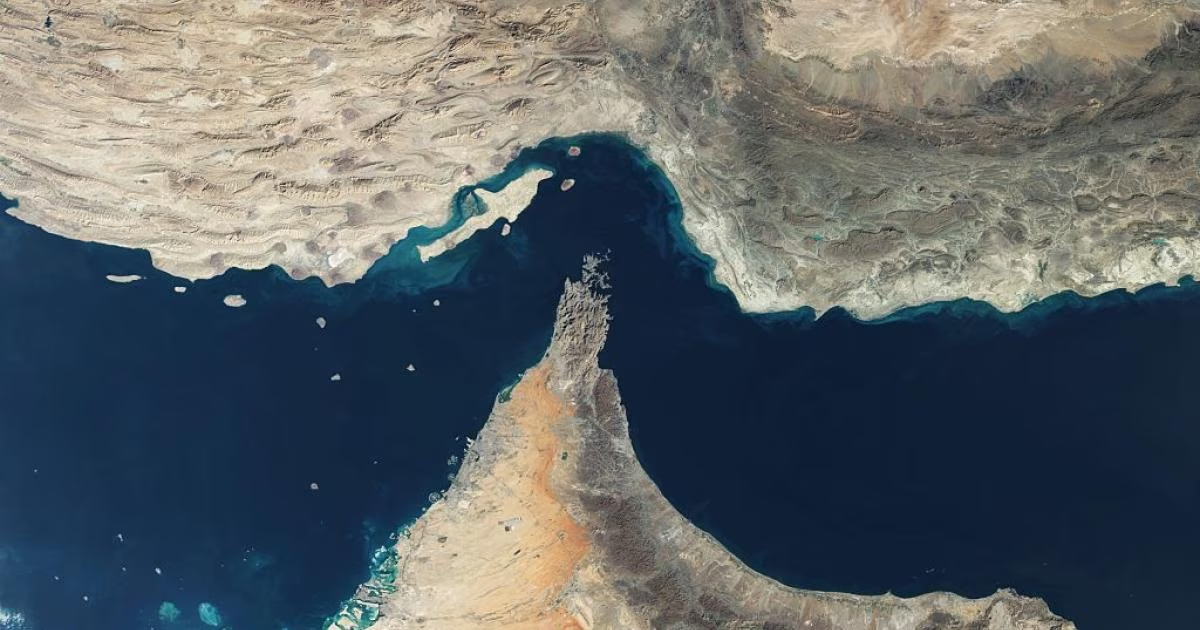
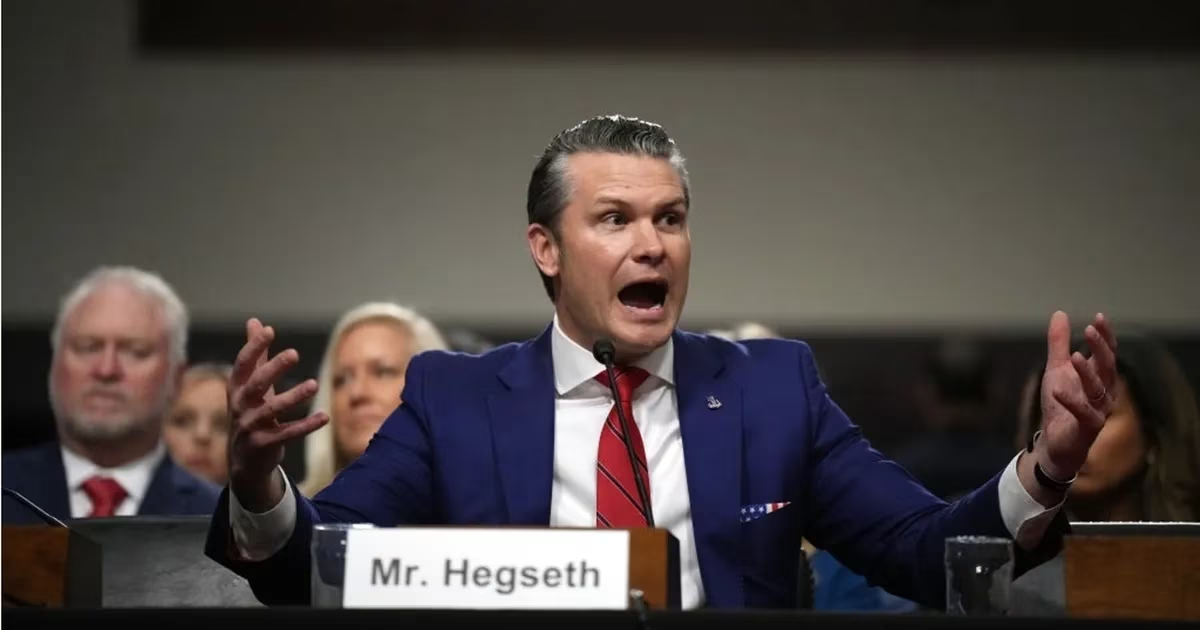
Despite statements by US Secretary of War, Pete Hegseth, claiming a decline in Iranian capabilities and the collapse of its air defenses, the reality on the ground indicates fluctuations in the pace of operations. CENTCOM data shows that the total number of targeted objectives exceeded 7,000, but Iranian forces are still capable of retaliation, as evidenced by the partial closure of the Strait of Hormuz and the targeting of vital facilities in the region.

Economically, the war has caused a severe shock to global markets, with the price of a barrel of oil jumping above $110, prompting the Trump administration to take contradictory steps, including temporarily lifting sanctions on Russian and Iranian oil to ensure supply flow. This confusion reflects military planners' misjudgment of the repercussions of closing vital waterways and its direct impact on fuel and electricity prices in Europe and the United States.

Domestically, President Trump faces increasing public opposition, with opinion polls showing that 60% of Americans reject continued involvement in this war, which has led to a rise in gasoline prices to $4 per gallon. This public discontent threatens the Republican majority in both the House and Senate as the midterm elections approach, especially amid accusations of corruption and mismanagement of international crises against the administration.

In the context of international pressure, regional parties, including the Sultanate of Oman, sent warning messages to Washington about the necessity of regaining control over its foreign policy and curbing Israeli escalation. Diplomatic sources confirmed that continued targeting of vital Iranian facilities will inevitably lead to retaliatory actions affecting allies' interests, making de-escalation an urgent necessity to avoid a complete economic collapse.

International powers, primarily Russia, are exploiting the US preoccupation with the conflict to achieve strategic gains and historical profits from rising energy prices. While Trump describes his NATO allies as 'cowards' for refusing to participate in securing navigation, Washington finds itself isolated in a war that drains its military resources, as confirmed by the recent emergency landing of an F-35 aircraft during a combat mission.

The current Iranian strategy is based on the principle of 'survival by raising the cost of war,' which Tehran considers a victory in itself against the American and Israeli war machine. With continued mutual shelling, the prospects of achieving a 'quick victory,' as Netanyahu had hoped, are fading, and the confrontation is turning into a long-term war of attrition that threatens to change the geopolitical map of the entire region.

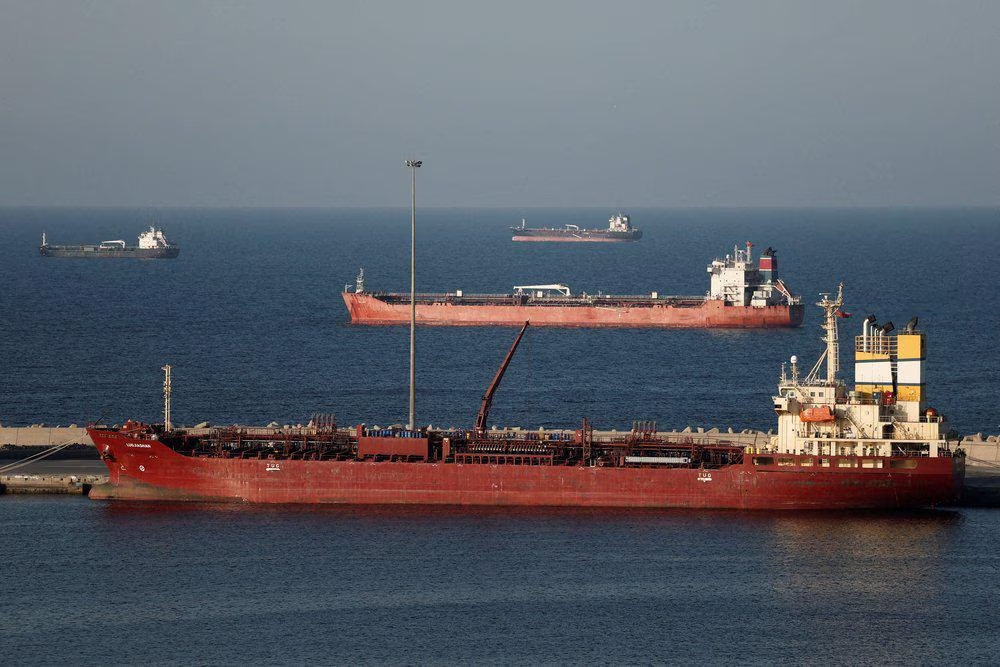
In conclusion, observers believe that the only way out of the crisis lies in returning to de-escalation and opening the Strait of Hormuz to stranded Gulf oil and gas tankers. The continuation of the 'escalation trap' will not only lead to the fall of regimes but may also extend its impact to include the collapse of global stability, placing the GCC countries before a historical responsibility to impose a narrative of stability away from zero-sum agendas.

The current war is a war of choice and agendas, not a war of necessity, as the United States is being dragged behind Israel's desire to eliminate the Iranian regime without clear strategic objectives.

PALESTINE

Mon 23 Mar 2026 1:07 pm - Jerusalem Time

Fierce Israeli escalation in southern Lebanon, Hezbollah carries out 63 operations in one day

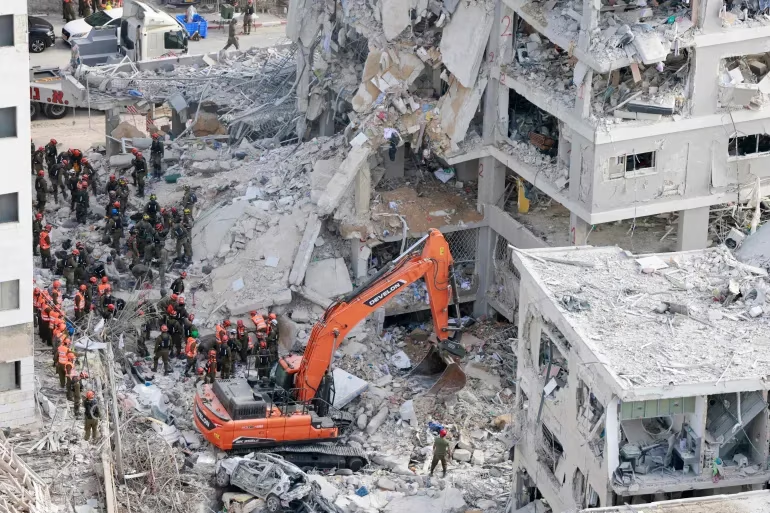
The town of Al-Shihabiya in the Tyre district of southern Lebanon witnessed a fierce Israeli raid after midnight on Sunday-Monday, targeting a residential building and resulting in the martyrdom of one citizen and the injury of another with varying degrees of wounds. This attack coincided with a series of intense airstrikes launched by warplanes at dawn today, affecting the plain of the town of Sar'in Al-Tahta in the Beqaa in the east of the country, in addition to the towns of Rihan, Sahmar, and Zalaya in the deep south.

In a remarkable field development, the Israeli occupation army destroyed the main bridge connecting the area south of the Litani to its north, completely isolating it and rendering it out of service. Initial engineering estimates indicate that the rehabilitation of this vital artery will take a long time, exacerbating the suffering of transportation and logistics in the areas targeted by the aggression.

On the ground, sources reported that the resistance in Lebanon increased the pace of its military response, with yesterday, Saturday, recording the highest rate of operations since the start of the recent escalation, with 63 military operations. These attacks varied between the use of qualitative and guided missiles, intense rocket barrages, as well as the launch of swarms of drones and kamikaze drones that targeted occupation gatherings and sites.

Field maps show that clashes are concentrated in four main axes, with noticeable intensity in the Khiam and Taybeh axes, which are witnessing fierce direct confrontations. In contrast, Israeli forces are attempting to infiltrate villages in the western sector, where the advance of vehicles from the Marwahin area to Naqoura was observed, along with other infiltration attempts in the border axes of Maroun al-Ras and Ayta ash-Sha'b.

On the political and military level within Israel, Channel 12 Hebrew quoted a military source confirming that Tel Aviv does not intend to evacuate the residents of the northern settlements at present. The source explained that the current approach focuses on increasing fortifications and protective measures for the towns of Galilee, amid the continued concentrated rocket fire launched by Hezbollah on military sites and settlements.

In the Gaza Strip, Israeli violations of the ceasefire agreement continued, with four Palestinians martyred and eight others injured as a result of targeting a police vehicle in the Nuseirat camp. Local sources confirmed that the vehicle was performing an official mission at the Abu Sarar intersection, noting that the occupation deliberately targets service agencies to undermine the security and civilian system within the besieged Strip.

Official Lebanese statistics indicate that the toll of the aggression has so far reached 1024 martyrs, including hundreds of children and women, with more than one million people displaced from their homes. In Gaza, the number of victims of ceasefire violations since last October has risen to 677 martyrs, putting fragile agreements to a real test amid the continued Israeli war machine targeting civilians and vital facilities.

Recent hours recorded the highest level of field operations since the expansion of confrontations, with Hezbollah's operations reaching 63 operations in one day.

ANALYSIS

Mon 23 Mar 2026 5:05 am - Jerusalem Time

Israeli Blackout on Losses: Between Security Necessities and Narrative Management

Said Erikat

Opinion Writer

Washington - Said Arikat - 23/3/2026

News Analysis

The Israeli blackout on losses during times of war or military escalation cannot be understood as a circumstantial behavior or an immediate response to field considerations. Rather, it is part of a deeply rooted institutional structure managed within a comprehensive approach that blends security, psychological, and political aspects. In the context of a prolonged and complex conflict, information transforms into a strategic resource parallel to military power, and controlling its flow becomes a crucial element in managing the battle, not only on the ground but also in shaping public consciousness internally and externally. From this perspective, the blackout becomes an effective tool consciously used to guide perception, manage expectations, and maintain the cohesion of the home front.

At its core, the blackout is linked to maintaining social stability and preventing the erosion of morale. Israeli society, which lives in a state of semi-permanent mobilization, is deeply affected by the scale of human losses, especially when they affect soldiers or civilians alike. Announcing high numbers could open the door to waves of anxiety, and perhaps protest, and weaken confidence in the political and military leadership, especially if operations are prolonged without a clear resolution. Therefore, information is carefully managed to maintain the state of mobilization without slipping into frustration, in a delicate balance between disclosure and concealment.

At the same time, the blackout serves a central goal of depriving the adversary of achieving moral gains. Modern wars are not only decided by controlling territory but by each party's ability to impose its narrative and convince its public of its efficacy. Disclosing losses might provide adversaries with propaganda material used to confirm the effectiveness of their operations, even if they are militarily limited. Consequently, minimizing these losses or delaying their announcement becomes part of a broader battle over image and impression, where war is managed as much as a conflict over perception as it is a field confrontation.

In addition to the psychological and media dimensions, there is a direct operational dimension that explains part of this blackout. Some information related to losses might indirectly reveal the nature of military operations, deployment tactics, or even weaknesses. In a complex and technologically advanced combat environment, any partial information can be exploited by the adversary to improve their performance. Therefore, withholding these details is seen as a precautionary measure aimed at protecting forces and maintaining the secrecy of ongoing operations.

This approach is not separate from the external political dimension, where Israel seeks to maintain an image of deterrence and control capability. This image is not merely a propaganda element but an influential factor in the calculations of allies, primarily the United States. Continued political and military support is partly linked to the general impression of Israel's ability to manage the conflict efficiently. Hence, minimizing talk about losses becomes part of maintaining this image, serving broader strategic interests.

At the level of tools, Israel relies on an institutional military censorship system that imposes clear restrictions on the dissemination of sensitive information. This censorship is not limited to prohibition but extends to indirectly guiding media discourse by determining what can be published and when. In many cases, the announcement of losses is delayed until certain procedures are completed, such as notifying families or the conclusion of related operations, which allows a margin for timing management in line with political and military objectives.

In parallel, the media narrative is guided by focusing on military achievements, such as destroying targets or neutralizing threats, while minimizing discussion of losses. Softened language is also used when referring to damages, thereby limiting their psychological impact. Reliance on unified official sources contributes to reducing the chances of conflicting narratives and enhancing media discipline, which is reflected in a coherent discourse consistent with the official narrative.

However, this approach faces increasing challenges in the era of open digital media. Social media, international press, and leaks create a reality where monopolizing information is difficult, unlike in the past. Partial or contradictory information often emerges, creating an incomplete picture and raising questions about the limits of transparency. This discrepancy can create a trust gap, especially when the differences between what is announced and what is circulated accumulate.

In this context, the Israeli blackout on losses reflects a deep structure in national security doctrine, where information is treated as a tool of power no less important than weapons. Managing public perception becomes an end in itself, and an official narrative is crafted to control consciousness and reduce the scope of doubts, while controlling the timing of information dissemination to serve political and military decisions. It is not limited to concealment but includes reshaping reality within a specific narrative framework.

The blackout also intertwines with psychological warfare management, where it is used to reduce the adversary's ability to morally exploit losses, in contrast to exaggerating successes to reshape the balance of perception. Here, the media transforms into a parallel battlefield, where the war of narratives is fought alongside military operations, in a continuous attempt to prevent the formation of an image of defeat or weakness.

This approach also reveals the nature of the relationship between the military establishment and the media, where the press is not treated as a fully independent oversight authority during crises but as an implicit partner in managing the battle. In addition to legal restrictions, self-censorship develops within the media, pushing it to adopt a discourse close to the official narrative, which limits pluralism and delays the emergence of the full picture.

Nevertheless, the blackout is no longer based solely on concealment but has become a dynamic process of managing the information flow. The challenge is no longer in preventing information but in guiding and rephrasing it within a context that serves strategic objectives. In this transformation, there is a growing realization that controlling the narrative, not just concealing it, is the key to influence in an age where information flows without limits.

The American approach differs from the Israeli blackout in being less centralized and more subject to multiple decision-making centers and oversight. In the United States, despite national security considerations, independent media institutions and Congress play an active role in revealing losses and holding the executive branch accountable, which limits the possibility of complete concealment. Moreover, a culture of relative transparency, especially after experiences like Vietnam and Iraq, has pushed for the periodic publication of casualty figures. Nevertheless, Washington resorts to reframing losses within a justificatory discourse, instead of concealing them, with a focus on strategic objectives and military achievements.

PALESTINE

Mon 23 Mar 2026 5:05 am - Jerusalem Time

Palestinian Police Announce Death of 5 Citizens Due to Rocket Shrapnel and Raise Readiness

The Palestinian Police announced a painful toll of victims from falling rocket shrapnel in various governorates, as Brigadier General Louay Irzeiqat, the police spokesperson, confirmed the death of five citizens since last February 28th. Irzeiqat explained that the Central Operations Department monitored the fall of approximately 198 rocket shrapnel pieces, which caused these human losses in addition to widespread material damage to private property.

Regarding the details of the victims, the deaths were primarily concentrated in the Hebron governorate, which recorded four cases, while a fifth citizen died after falling from a height while attempting to observe rockets from an elevated position. These incidents also resulted in nine citizens sustaining various injuries, while about 27 homes and private establishments were damaged, necessitating a comprehensive security alert to confront the serious repercussions on public safety.

Based on the directives of Major General Allam Al-Saqqa, the Director-General of Police, it was decided to raise the level of field readiness for all teams and units to deal immediately with falling rocket objects. Forces are currently deployed in various affected areas in coordination with the competent authorities, with the aim of securing sites and ensuring the preservation of public security and preventing further casualties amid difficult weather and field conditions.

The police issued an urgent appeal to citizens to exercise the utmost caution and vigilance, and to completely stay away from open areas or rooftops during periods of rocket barrages. Sources warned of the danger of climbing heights for the purpose of photography, stressing that this behavior poses a direct threat to life and may lead to fatal falls or direct exposure to flying shrapnel in the air.

Brigadier General Irzeiqat emphasized the dangers of tampering with suspicious objects or attempting to move them from their place, given the possibility of them exploding at any moment and causing severe injuries or deaths. The security institution called on all residents to report any rocket remnants immediately upon discovery to the concerned authorities, with the necessity of staying in safe and protected areas away from gatherings that may be vulnerable to targeting or random falling military debris.

In conclusion of its statement, the police urged citizens to obtain information only from official sources and not to be drawn into rumors aimed at spreading panic and confusion in the Palestinian street. It also reminded of the necessity of immediate communication through free emergency numbers, which are (100) for the police, (102) for civil defense, and (101) for the Red Crescent Society, to ensure a rapid response to any emergency that threatens the safety of residents.

The Central Operations Department recorded the fall of 198 rocket shrapnel pieces in scattered areas, leading to the death of five citizens and the injury of nine others.

ARAB AND WORLD

Mon 23 Mar 2026 5:04 am - Jerusalem Time

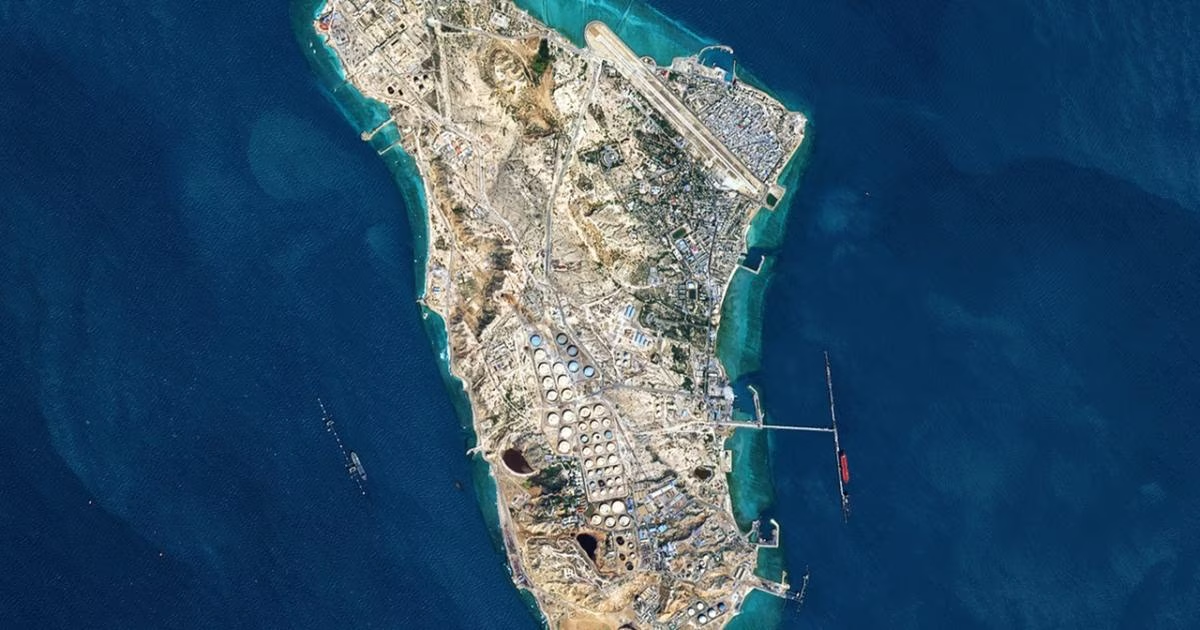
Rapid American Moves for a Potential Landing Operation on Iran's Kharg Island

International media reports have revealed that the United States is accelerating the pace of its military deployment in the Middle East, as part of intensive preparations for a potential landing operation on Iran's Kharg Island. These moves come amid escalating direct military tensions between Washington and Tehran, with the US administration considering the option of a ground assault to seize the strategic island.

Informed sources stated that high-ranking American officials have informed their allies in the region, including the Israeli side, that Washington might be forced to resort to the option of occupying the island. This step represents a dramatic shift in the nature of the current confrontation, aiming to cripple Iran's economic capabilities by seizing its most important oil outlets.

For its part, an Iranian military official warned of the repercussions of any military adventure targeting Kharg Island in the Arabian Gulf. The official affirmed that Tehran would resort to escalatory options, including threatening the security of navigation in the Red Sea entirely, in response to any American attempt to seize the island, which is located 30 kilometers off the Iranian coast.

Military data indicates that American reinforcements include the deployment of thousands of Marines and elements of special naval forces. These forces include the amphibious readiness group of the warship "USS Boxer," which is a key pillar in naval landing operations and beach control.

Reinforcements also included the arrival of the amphibious transport ships "USS Portland" and "USS Comstock" to the region's waters, loaded with approximately 4,500 troops and advanced combat equipment. These deployments aim to provide the necessary cover for any swift ground operation that might target vital facilities on the island, which is the lifeline of the Iranian economy.

Kharg Island represents the main center for oil exports in Iran, with approximately 90% of Iranian crude oil being shipped through its berths, most of which is destined for Chinese markets. Therefore, controlling it would practically cut off the main financial resources of the Iranian regime and neutralize its ability to fund military operations.

The region has witnessed a state of mutual military aggression since late February, with Israeli and American forces launching continuous attacks on Iranian targets. In response, Tehran has retaliated by launching a barrage of ballistic missiles and drones towards Israeli sites, exacerbating the security crisis in the region.

In a related context, Iranian attacks targeted what it described as American bases and interests in several Arab countries, resulting in casualties and damage to civilian facilities. The targeted countries condemned these aggressions, demanding an immediate halt to the escalation that threatens to drag the region into an unprecedented comprehensive confrontation.

The United States may have no option but to launch an attack to occupy the island to secure international interests.

ARAB AND WORLD

Mon 23 Mar 2026 5:04 am - Jerusalem Time

Washington's Strategic Confusion: Why Did Trump's Quick 'Invasion' Against Iran Falter?

International press reports revealed that US President Donald Trump is reviewing the pace of military operations against Iran, in what was described as an attempt to 'de-escalate' after the objectives of the 'quick invasion' faltered. Sources indicated that Trump, who seemed determined to gradually withdraw during his trip to Florida, is still indecisive about ending the military operation, which has not yet achieved its major strategic goals.

Internal pressures are mounting on the US administration as the average price of gasoline at local stations reaches about $4 per gallon, raising concerns among the Republican electoral base. Infrastructure in the Gulf region has also been significantly affected by the reciprocal raids, while the Iranian regime has shown no signs of disintegration or retreat from power despite the severe blows it has received.

The White House's messages are characterized by clear contradictions, with critics arguing that Trump entered the conflict without a clear exit strategy, while his supporters describe this fluctuation as 'strategic ambiguity'. While sending Marine reinforcements to the region, he issues statements confirming the destruction of Iranian missile and naval capabilities, followed by posts suggesting that objectives are close to being achieved and military efforts are nearing an end.

Trump's recent speech showed a retreat from some previously declared goals, as he omitted any mention of defeating the Iranian Revolutionary Guard, which still holds the reins of power. Messages directed at the Iranian people, urging them to take power, were also absent, indicating a reassessment of the field reality that has proven the resilience of the Iranian security structure despite the absence of public appearances by the new Supreme Leader Mojtaba Khamenei.

Regarding the nuclear file, Trump proposed a new objective focusing on preventing Iran from approaching nuclear capability instead of the previous demand to ship all enriched materials out of the country. This approach reflects an acceptance of the status quo resulting from the destruction of major nuclear sites last June, which are still under close surveillance by US satellites to ensure activity is not resumed.

Trump demanded that US allies bear the responsibility for protecting and monitoring the Strait of Hormuz, indicating that Washington no longer relies on it directly for its supplies. Richard Haass, former National Security Council official, described this approach as 'Trump's new doctrine' based on destroying adversaries and then shifting the responsibility for managing the consequences to regional and international allies.

The weekend saw an escalation in threats, with Trump threatening to target Iranian power plants, most notably the Bushehr nuclear plant, if the Strait of Hormuz was not fully opened. This threat is a violation of international norms that consider nuclear facilities no-go areas in armed conflicts to avoid environmental disasters, reflecting the extent of frustration over the continued closure of waterways.

Diplomatic sources indicate that Trump expected an unconditional Iranian surrender within the first week of the war, which did not happen despite immense military pressure. European officials described these expectations as lacking an understanding of the nature of power centers in Iran and its national history, confirming that Tehran's refusal to surrender shocked decision-makers in Washington.

The biggest surprise for the US administration was the global energy market crisis, which the International Energy Agency described as the largest in history in terms of supply disruption. This turmoil led to the withdrawal of quantities from the US strategic reserve, which was already suffering from depleted stocks, prompting the Treasury Department to issue exceptional licenses for the delivery of oil shipments stuck at sea.

On the financial front, international institutions such as Goldman Sachs warned that oil prices would remain high until 2027 if tensions in the Strait of Hormuz continued. Tehran understands that market chaos is its most effective weapon, having threatened to ignite other energy facilities in the region, relying on an arsenal of naval mines and fast boats that still pose a threat to navigation.

Trump found himself in dire need of international allies to conduct long-term patrols in the region, something he had not planned for at the beginning of the conflict, believing the war would be swift. It became clear that securing checkpoints and waterways could take years, requiring a collective effort that Washington currently lacks due to its unilateral policies in initiating the conflict.

American expectations of widespread defections within the Revolutionary Guard or a major popular uprising to overthrow the regime from within also proved false. Despite assurances from some White House officials about existing cracks, US and European intelligence reports found no concrete evidence of an imminent collapse in the Iranian power structure, despite the liquidation of senior leaders.

Analysts believe that Trump's previous successes in swift operations against nuclear sites or in Venezuela gave him a false impression of the possibility of repeating the scenario with a country the size of Iran. It seems that the reliance on the absolute military power of the US army did not take into account the complexities of Iranian geography and demographics, turning the 'short trip' into a long-term attrition.

In conclusion, Trump faces a real dilemma between his desire to end the war before the elections and a field reality that forces him to stay or admit failure to achieve major goals. With continued ambiguity surrounding the fate of the new Iranian leadership, the region remains open to all possibilities in the absence of any real prospect for a ceasefire or a comprehensive political settlement.

Consider this Trump's new doctrine for the Middle East: We destroyed it, but you bear the responsibility.

ARAB AND WORLD

Mon 23 Mar 2026 5:04 am - Jerusalem Time

Financial Times: Trump's Iran adventure threatens a long-term 'quagmire' and global energy crisis

US President Donald Trump's administration faces increasing warnings of sliding into a new 'quagmire' in the Middle East, as international reports indicate that the war launched three weeks ago against Iran is still far from being decided. Despite optimistic statements from the White House about destroying Iranian military capabilities, the reality on the ground suggests that Tehran continues to threaten shipping lanes and global energy security.

Press sources reported that Trump attempted to market the military campaign as having achieved its objectives in its early days, considering the mission 'largely accomplished.' However, the Strait of Hormuz, which is the lifeline for global energy trade, remains closed, pushing oil prices to record levels that have alarmed traders and consumers alike.

In a notable testimony before Congress, US Director of National Intelligence, Tulsi Gabbard, affirmed that the structure of the Iranian regime remains 'intact' and ready to rearm once military operations cease. This assessment sharply contradicts the administration's rhetoric promoting an imminent collapse in Tehran's defensive and offensive capabilities.

For his part, John Bolton, former National Security Advisor, expressed concern about the current course of the war, noting that failure to fully accomplish the mission would leave a weakened regime still capable of quickly returning to its previous practices. Observers believe that this confusion brings to mind the strategic errors Washington made in previous wars in the region.

On the ground, US forces have suffered 13 casualties, at a time when the Pentagon is considering sending ground reinforcements of 2,500 soldiers. These developments put the Republican Party in a critical position before voters, especially with fuel prices rising by 33% coinciding with the approaching midterm elections.

Financial pressures began to emerge clearly after the Pentagon requested an additional budget of $200 billion to fund war operations, a huge sum equivalent to the budgets of essential service ministries. This massive spending raises questions about Trump's previous electoral promises to end 'endless wars' and avoid draining America's wealth abroad.

Experts believe that Trump, who previously described the invasion of Iraq as the 'worst mistake,' is now repeating the same scenario by setting vague war objectives whose success is difficult to measure. Preventing Tehran from acquiring nuclear weapons and ending its support for armed factions are conditions analysts consider 'impossible' given the current complex reality.

In a related context, former US Ambassador Ryan Crocker indicated that Iran achieves a symbolic victory simply by enduring and surviving under bombardment. He added that Iran's ability to survive has proven effective, making it difficult for Washington to declare a decisive and final military victory in the foreseeable future.

Contradictions in Trump's statements also emerged regarding the state of the Iranian military. While he claims that the Iranian fleet is 'at the bottom of the sea,' he admits that the mere thought of mines prevents ships from crossing the strait. Furthermore, claims of a 90% reduction in ballistic missile launches clash with the continued penetration of these missiles through advanced US defenses.

Defense Secretary Pete Hegseth tried to alleviate these concerns, emphasizing that the current conflict is fundamentally different from the wars of the last decade and does not represent an 'endless abyss.' However, this official discourse faces widespread skepticism from members of Congress and former intelligence analysts who believe that withdrawal options have become limited.

Senator Elissa Slotkin, a former CIA analyst, clearly stated that current indicators do not point to a decisive American victory. She warned that any sudden withdrawal now could leave behind a more hardline and militarized Iranian regime, putting future US administrations under constant pressure.

At the ground forces level, Trump's true intentions remain shrouded in mystery. He told reporters that he would not send ground troops, but then informed other media outlets that he might do so 'if necessary.' This fluctuation increases military leaders' fears of the operation escalating into a comprehensive and direct ground confrontation.

Iran, for its part, shows no desire to make concessions and considers the war an existential battle that does not accept compromises, especially with the widening gap between American and Israeli objectives. This Iranian insistence complicates the task of mediators and makes a ceasefire a distant prospect for now.

Ultimately, analysts expect Trump to declare 'victory' at a certain point for political and economic considerations, even if the reality on the ground does not fundamentally change. But this announcement will leave the region facing explosive crises, including destroyed infrastructure, unsafe shipping lanes, and a regime with strong motives for revenge.

Iran triumphs simply by surviving, and it has clearly demonstrated its ability to endure despite the strikes.

ARAB AND WORLD

Mon 23 Mar 2026 5:04 am - Jerusalem Time

Secrets of Iran's Rejection of Trump's Proposals: Underground Arsenal and Long War of Attrition

Russian press reports shed light on the underlying motives behind the Iranian leadership's rejection of all proposals put forward by the US administration under Donald Trump to reach a ceasefire. Sources indicated that Trump is trying to expand the conflict by drawing in multiple international parties, including Washington's NATO allies and countries of the Global South, to strengthen his negotiating position.

Sources stated that the US President, after his diplomatic efforts faltered, adopted a more escalatory path that included targeting high-ranking officials and launching airstrikes on various facilities. However, most international powers preferred to distance themselves from this military adventure, with the exception of some countries that had completely lost their political balance in dealing with the crisis.

Observers believe that the fundamental reason for the steadfastness of the Iranian position is Tehran's retention of its primary power cards in fortified, hard-to-reach locations. While some promote the idea of a collapse in Iranian capabilities due to a decrease in the intensity of strikes, realists believe that this calm precedes storms and unpleasant surprises for Washington and Tel Aviv.

In this context, Major General Sergei Lipovoy, Hero of the Russian Federation, confirmed that Tehran has practically announced a transition to a new phase of war characterized by long-term endurance. This strategy relies on innovative tactics and the deliberate deployment of its missile arsenal, far from the blitzkrieg approach that adversaries were betting on.

Moving towards long-term military operations imposes on the Iranian leadership a policy of rationalizing the use of specialized weapons, with a focus on accuracy. The arsenals stored deep underground are considered the trump card that ensures the continuity of Iranian military resistance for extended periods without being affected by surface strikes.

Estimates indicate that Iran possesses a huge fleet of offensive drones, numbering between ten and fifteen thousand aircraft. This unconventional air power represents a continuous threat to military bases and vital interests in the region, and acts as a long arm in Iran's deterrence strategy.

Regarding missile power, sources quoted Revolutionary Guard officials as saying that recently produced missiles have not yet entered the battlefield. Officials clarified that what has been consumed so far does not exceed 7% of the total missile stockpile, which is estimated at about one hundred thousand missiles of various ranges and destructive capabilities.

Since the first decade of the twenty-first century, Iran has begun building integrated missile cities under towering mountain ranges, reaching depths of hundreds of meters. These facilities include production lines, command and control centers, and launch platforms, making their destruction by conventional airstrikes almost impossible.

Although US intelligence is aware of the existence of these sites, the precise coordinates of their entrances and exits remain top state secrets. This operational ambiguity forms a fundamental pillar in the ability of Iranian military infrastructure to operate under the harshest conditions of intense aerial bombardment.

Western air defense systems face a significant technical challenge from Iranian missiles that reach speeds of between 4 and 5 Mach. Sources confirm that systems such as the American 'Patriot' have shown clear inability to intercept these projectiles, which sometimes carry warheads weighing more than one ton.

Military sources reported that US bases in the Middle East have undergone severe tests that proved the failure of interceptor missiles to counter precise attacks. In some cases, five interceptor missiles were launched for every attacking missile without being able to prevent it from reaching its designated target.

On the Israeli side, the 'Iron Dome' was not in a better position in confronting high-speed missiles, despite propaganda campaigns promoting its effectiveness. Israeli Prime Minister Benjamin Netanyahu acknowledged the difficulty of overthrowing the regime in Tehran by betting on popular protests, hinting at other surprises.

In contrast to Israeli claims of destroying hundreds of Iranian launch platforms, negative data emerged regarding the shrinking US aerial refueling fleet. The US Air Force lost seven Boeing KC-135 aircraft due to technical and field reasons, which weakens the air force's ability to carry out long-range missions.

In conclusion, it appears that the attack planned by the United States and Israel to be swift and decisive has turned into a mutual attrition that does not serve their interests. With Tehran continuing to conceal its true capabilities, expectations are growing that the region is heading for a confrontation that will require Washington to prepare for scenarios worse than expected.

We have not consumed more than 7 percent of our missile stockpile, while our total stockpile is estimated at about one hundred thousand missiles, and most of our modern arsenals have not been touched yet.

OPINIONS

Mon 23 Mar 2026 4:56 am - Jerusalem Time

Power, Profit, and the Kushner Question: When Public Service Blurs Into Private Gain

By: Said Arikat


March 23, 2026


News Analysis


Washington, D.C- In Washington, conflicts of interest are often debated in the abstract—until a case emerges so stark that it collapses the distinction between public service and private enrichment. The latest scrutiny surrounding Jared Kushner does exactly that, forcing a reckoning not only with one individual’s conduct but with the standards the U.S. government is willing to tolerate.


Two senior Democratic lawmakers, Congressman Robert Garcia (CA) and Senator Ron Wyden (OR), have formally demanded answers from the White House regarding Kushner’s reported efforts to raise billions of dollars from Middle Eastern governments for his private equity firm, Affinity Partners. Their concern is not merely procedural—it is foundational: whether American foreign policy is being conducted alongside, or potentially entangled with, personal financial ambitions.


This is not a theoretical fear. It is grounded in credible reporting and in a pattern of behavior that raises unavoidable questions about incentives and accountability. According to recent disclosures, Kushner has sought upwards of $5 billion in investment capital from foreign governments—governments with a direct stake in U.S. policy decisions—while simultaneously acting as a key informal envoy in the same region. Even if no laws are technically broken, the ethical fault lines are glaring and difficult to dismiss.


The White House response has been predictable. Officials insist that Kushner acts “in the best interests of the American public,” dismissing criticism as partisan noise recycled from earlier political battles. But this defense sidesteps the core issue: not whether Kushner believes he is acting appropriately, but whether the system allows for such entanglements in the first place—and what risks they pose to governance.


At the heart of the matter lies a dangerous ambiguity. Kushner holds no formal government title, yet he reportedly plays a central role in sensitive diplomatic efforts—from hostage negotiations in Gaza to backchannel discussions with Iranian officials before the onset of war. This dual status—private financier and public negotiator—creates a gray zone ripe for conflicts of interest, whether intentional or structural.


Even the assurances from Affinity Partners that it will not accept new funding while Kushner is “volunteering” for the government fail to resolve the underlying concern. Influence does not operate on a pause button. Relationships cultivated during moments of diplomatic leverage can easily translate into financial opportunities later. The question is not only what money is being raised now, but what expectations are being quietly established for the future.


The implications extend well beyond optics. When foreign governments are invited to invest in a firm tied to someone with direct access to U.S. policymaking, it introduces the risk—real or perceived—of policy being shaped by financial relationships. This is precisely the kind of vulnerability that national security frameworks are designed to prevent, not rationalize after the fact.


Yet this episode is not just about Kushner. It reflects a broader erosion of norms that once governed the separation between public duty and private interest. In previous administrations, even the appearance of a conflict could trigger recusal, divestment, or at minimum heightened transparency. Today, the threshold appears to have shifted: as long as actions can be defended as technically legal, ethical concerns are treated as secondary, even optional.


This normalization is dangerous. Democracies do not function on legality alone; they depend on public trust—trust that decisions are made in the national interest, not influenced by personal financial considerations or private relationships. When that trust erodes, so does the legitimacy of the institutions that rely on it.


Supporters of Kushner may argue that his business experience and regional connections make him uniquely effective as a negotiator. But that argument cuts both ways. The very qualities that enhance his influence also heighten the risk of conflicts of interest. Access, in this context, is not simply an asset; it is a potential liability when left unchecked and insufficiently scrutinized.


The administration’s dismissal of these concerns as a “tired narrative” only deepens the problem. Oversight is not partisan theater; it is a constitutional necessity designed to safeguard the integrity of governance. When lawmakers raise alarms about potential conflicts involving foreign money and U.S. policy, the appropriate response is transparency and accountability, not deflection or dismissal.


Ultimately, the Kushner controversy forces a fundamental question: where should the line be drawn between public service and private profit? If that line becomes too blurred, the consequences will extend far beyond any single individual or administration. They will reshape expectations for what is acceptable in American political life, lowering the bar in ways that future officials may find difficult to reverse.


And that is the real danger—not that rules are being openly violated, but that they are being quietly reinterpreted in ways that make conflicts of interest easier to justify and harder to challenge. In such an environment, accountability becomes reactive rather than preventive.


In the end, the issue is not whether Kushner’s actions can be defended within existing rules. It is whether those rules are still adequate to protect the public interest in an era where influence, access, and capital are increasingly intertwined.

OPINIONS

Sun 22 Mar 2026 8:19 pm - Jerusalem Time

Unprecedented Escalation: Mutual Threats Between Washington and Tehran Warn of Strait of Hormuz Closure and Widening Confrontation

Said Erikat

Opinion Writer

Washington - Said Arikat - 22/3/2026

News Analysis

In a dangerous development reflecting an unprecedented escalation of tension, Iran has threatened to completely close the Strait of Hormuz, should the United States proceed with its threats to target Iranian energy facilities. This comes in response to a clear ultimatum from US President Donald Trump, who gave Tehran 48 hours to reopen the vital shipping lane for global trade.

According to Reuters, the Iranian Revolutionary Guard Corps (IRGC) confirmed in an official statement that closing the Strait would be a strong option if the energy infrastructure were subjected to any American attack, emphasizing that the response would not be limited to defense but could extend to targeting widespread economic interests. The statement clarified that companies linked to the United States could become direct targets, while energy facilities in countries hosting American bases could be considered “legitimate” targets.

The IRGC affirmed that Iran “did not start the war and will not start it,” but stressed that any aggression against its vital facilities would be met with a comprehensive response, reflecting what it described as the country’s right to defend its sovereignty and the interests of its people. These statements come in an escalating context characterized by harsh rhetoric and mutual deterrent messages, reflecting the crisis sliding into a more dangerous phase.

In contrast, the US President significantly escalated his tone, threatening to destroy Iranian energy facilities, starting with the largest among them, if Tehran did not commit to reopening the Strait of Hormuz. This strait is considered one of the most vital arteries in the world, as about one-fifth of global oil exports pass through it, along with large quantities of liquefied natural gas.

Field reports indicate that navigation in the Strait has already been significantly affected due to increasing security threats, leading to a decrease in the number of passing ships and a sharp rise in global energy prices. This has directly impacted American markets, where consumers have begun to feel the consequences of the crisis through rising fuel prices.

On the ground, the escalation expanded to include inside Israel, where Iran launched missiles targeting the cities of Dimona and Arad in the south of the country, in areas near the Israeli nuclear research center. According to (Israeli) reports, some missiles managed to penetrate air defense systems, leading to a large number of casualties and significant material damage.

Israeli authorities announced that about 180 people were injured as a result of the attacks, some in serious condition, while Prime Minister Benjamin Netanyahu described the situation as “very difficult,” indicating the severity and scope of the strikes. Scenes from the bombing sites showed widespread destruction, reflecting the precision of the attacks and their ability to have a tangible impact.

In the same context, Iranian officials escalated their rhetoric, with the Parliament Speaker announcing that any targeting of Iranian energy facilities would be met with an expansion of the response to include vital infrastructure in the Gulf region, threatening to turn the conflict into an open regional confrontation.

On another front, “Hezbollah” announced the execution of a series of missile attacks targeting Israeli military sites near the Lebanese border, indicating the targeting of troop concentrations in several areas. Although these claims have not been independently verified, they reflect the possibility of the confrontation widening to include more than one arena.

This multi-front escalation reflects a state of strategic fragility, where military threats intersect with complex political calculations. It also highlights the contradiction in the American position, as statements range between talk of potential de-escalation and readiness for widespread military escalation, adding an element of ambiguity to the scene.

Given these facts, the region appears to be on the brink of a comprehensive confrontation, especially with the entry of new elements into the conflict equation, such as targeting the vicinity of nuclear facilities, and expanding the scope of the threat to include regional infrastructure. It is feared that any miscalculation could lead to consequences that are difficult to contain.

The Strait of Hormuz is one of the most dangerous choke points in the global economy, and any complete disruption of its movement would lead to immediate disturbances in energy markets. The Iranian threat is not limited to being a political leverage, but represents a tool of global economic influence. Given the reliance of major countries on this passage, any closure could trigger a sharp wave of inflation and reshape international policy priorities, including alliances and alternative energy plans.

The discrepancy in American rhetoric reflects a deeper problem related to crisis management in a complex environment. Combining military threats with talk of de-escalation creates a state of strategic ambiguity, which other parties may interpret in contradictory ways. This pattern of messaging may increase the chances of misunderstanding, a factor that has historically caused the outbreak of unforeseen conflicts, especially in regions saturated with tensions such as the Middle East.

Introducing the nuclear dimension, even indirectly, raises the level of risk to a new qualitative degree. Targeting areas near sensitive facilities creates an unstable mutual deterrence, where calculations become more complex and dangerous. With the involvement of non-state actors, the likelihood of the conflict expanding horizontally increases, which could turn it into a widespread regional conflict, difficult to contain by traditional diplomatic means.

ISRAELI AFFAIRS

Sun 22 Mar 2026 8:18 pm - Jerusalem Time

Unprecedented Devastation in Arad: Iranian Missiles Penetrate Israeli Defenses, Leaving Hundreds Injured and Displaced

The city of Arad, located in the Negev region of the occupied territories, witnessed widespread destruction affecting an entire residential block, following a missile attack by an Iranian missile last night. Israeli Prime Minister Benjamin Netanyahu described the incident as a 'difficult evening,' confirming during his visit to the affected site that the extent of material losses was very significant and unprecedented in that area.

Field sources reported that the missile that fell in Arad carried an explosive warhead weighing approximately 450 kilograms, according to initial military estimates. This massive explosion completely or partially destroyed more than 100 residential apartments, in addition to causing severe damage to surrounding buildings and vehicles parked in the area.

Regarding human casualties, medical teams recorded about 100 injured in Arad alone, while about 75 others were injured in the nearby Dimona area, approximately 40 kilometers away. Injuries varied between shrapnel wounds and severe panic attacks due to the force of the explosion that shook the entire southern region.

Rescue and relief teams continue to work at the targeted site to remove debris and assess the final damage, amid indications that the actual destruction may exceed what initial images showed. This attack is considered the most impactful in terms of the scale of material destruction and the number of injured in a single location since the beginning of the current escalation.

The missile's success in reaching its target raised sharp questions within Israeli media and military circles about the efficiency of air defense systems. Criticism focused on the failure of radars and batteries to intercept the missile despite high alert levels and continuous American technical support in this field.

The spokesperson for the Israeli army refused to disclose the identity of the system that failed in the interception operation but ruled out that the American 'THAAD' system was responsible. Military analyses suggest that the Israeli 'Arrow' system failed to deal with the incoming Iranian aerial threat.

In a brief comment, one of the Israeli Air Force commanders considered that revealing details of the technical failure in the media would be a 'foolish act.' He explained that providing such information might give the Iranian side intelligence and technical vulnerabilities that could be exploited in future missile attacks to bypass defenses.

The attack led to a widespread wave of displacement, with about 1,000 people leaving Arad for fear of repeated shelling or due to losing their homes. Hebrew press reports stated that about 450 displaced persons were transferred to hotels in the Dead Sea area to provide them with temporary shelter after their residential neighborhoods were damaged.

The greatest damage was concentrated in neighborhoods inhabited by ultra-Orthodox Jews (Haredim), which exacerbated the humanitarian crisis due to the large family sizes in those areas. Dozens of families became homeless as a result of their apartments being destroyed, rendering them uninhabitable for the time being.

Internal voices in Israel, which had been calling for continued military operations, began to recede in the face of the scenes of destruction in Arad and Dimona. The discussion now focuses on the increasing danger of Iranian missiles and their ability to penetrate airspace and reach vital targets twice in one day.

Estimates indicate that the missile used is not the most powerful in the Iranian arsenal, as Tehran possesses missiles with warheads weighing over one ton. This raises deep concern among the Israeli military leadership about the possibility of multiplied destruction if more advanced weapons are used.

For the first time, Israel faces a missile threat of this destructive magnitude, compared to missiles previously launched from other fronts such as Gaza, Lebanon, or Yemen. The destructive power of Iranian warheads has placed the Israeli home front before a security challenge it has not experienced in previous wars.

Despite official calls to adhere to Home Front Command instructions, public concern is growing about the ineffectiveness of shelters against such heavy missiles. The scenes of destruction in the Negev remain present as evidence of a qualitative shift in the nature of direct military confrontation and its effects on populated areas.

This is a difficult evening, and adherence to Home Front Command instructions helps reduce human casualties despite the extent of the destruction.

ARAB AND WORLD

Sun 22 Mar 2026 8:18 pm - Jerusalem Time

Aoun warns of imminent ground invasion after Israel destroys Qasmiyeh Bridge in southern Lebanon

Lebanese President Joseph Aoun strongly condemned the Israeli airstrikes that targeted the vital Qasmiyeh Bridge located on the Litani River in the south of the country, describing this escalation as a blatant violation of Lebanese sovereignty. Aoun affirmed in an official statement that the destruction of essential infrastructure represents a clear prelude to a potential ground invasion, noting that the Lebanese state had repeatedly warned through international diplomatic channels of the danger of being drawn into this level of military confrontation.

The Lebanese President explained that targeting bridges falls within suspicious plans aimed at geographically isolating the area south of the Litani from the rest of Lebanese territory. He considered that these moves seek to establish a reality of occupation and create a buffer zone, describing the attacks as a policy of collective punishment practiced against Lebanese civilians to undermine their ability to move and live in their border areas.

On the ground, press sources reported that the occupation's air force carried out two consecutive raids with a short time difference targeting the bridge located on the coastal highway, which led to severe damage and large openings in its structure. Although the bridge did not completely collapse, the extent of the destruction rendered it completely out of service, causing the interruption of a major transportation artery connecting the southern cities with the capital Beirut and the rest of the governorates.

In contrast, Israeli Security Minister Israel Katz revealed that direct instructions had been issued by him and Prime Minister Benjamin Netanyahu to the army to begin a comprehensive destruction operation of all bridges built on the Litani River. Katz claimed that this step aims to remove threats facing the northern areas in Israel, stressing that operations will expand to include accelerating the pace of demolition of homes in Lebanese villages located within what he described as 'front lines'.

These developments come amid an unprecedented military escalation, as the occupation army began targeting crossings and bridges days ago in a move observers see as an attempt to impose a military blockade on operational areas. Field footage documents the extent of the devastation that has afflicted the area around the Litani River, amid international fears of these airstrikes turning into a large-scale ground incursion that changes the field map in southern Lebanon.

Targeting infrastructure is a prelude to a ground invasion that Lebanon has long warned against being drawn into through diplomatic channels.

ISRAELI AFFAIRS

Sun 22 Mar 2026 8:18 pm - Jerusalem Time

Israeli Critic Warns of 'Fatal Illusions' in War on Iran: Unstated Goals and a Rolling Catastrophe

Israeli writer and critic, Ofer Ilani, focused on the unstated policies and intentions driving Israel towards military escalation against Iran. In a lengthy article, Ilani warned against slipping into what he described as fatal illusions, pointing out that these tendencies could lead to a rolling catastrophe whose effects would not be limited to Israel alone, but would extend to all countries and peoples of the region.

The writer questioned the real utility of targeting Iran at this time, reviewing a list of justifications circulated by political and media circles. These explanations included eliminating the nuclear threat, launching preemptive strikes, and even attempts to 'liberate' the Iranian people and impose a new political system that would be more friendly and aligned with Western and Israeli interests.

Ilani believes that the most realistic explanation lies in Tel Aviv and Washington sensing a state of weakness within the Iranian regime, which generated a conviction that there is a historic opportunity to reshape the Middle East. This logic, according to the writer, assumes that the regime in Tehran is on the verge of collapse and only needs a strong external push to fall completely and change the regional balance of power.

In a striking comparison, Ilani explained that this thinking is very similar to the logic that Hamas relied on before the October 7 attack, when it believed that Israeli internal division represented a moment of historical weakness. He noted that Israeli media at the time reflected a scene of disintegration and protests that paralyzed the state, which tempted adversaries to deliver a blow they thought would be decisive.

However, reality proved otherwise, as Israel quickly recovered and its internal front solidified in the face of the existential threat, a lesson the writer believes Israel and the United States have not learned in their dealings with Iran. Iran, despite its crises, may choose to entrench itself and fight when it finds itself cornered, just as Israel did in the face of recent threats.

Ilani criticizes the Israeli reading that describes the Iranian regime as absolutely weak, emphasizing that authoritarian regimes often rely on broad social support bases that defend their interests. He warned that the belief that peoples will welcome external intervention is an illusion that ignores the complexities of the social and political structure within the Islamic Republic.

The article points to another strategic error, which is exaggerating the portrayal of Iran as an 'octopus' that drives all conflicts in the region, and the belief that its removal will turn the Middle East into a paradise. The writer believes that this view is naive, because tensions in the region are structural and deep, and cannot be resolved simply by neutralizing one party, no matter its military strength or missile arsenal.

Ilani asserts that Iran's absence from the regional scene, should it occur, will not end conflicts but will create a vacuum that other regional powers, such as Turkey, may fill. The reasons driving wars in this region are inexhaustible, and healthy societies are those that try to coexist and manage crises instead of rushing into unnecessary optional wars that drain resources and lives.

The writer described the current policy as a 'rolling catastrophe' that sets a dangerous precedent in international relations, where countries are invaded or attacked amidst ongoing negotiations. This behavior, in his opinion, provides indirect justifications for other international powers to carry out similar operations in other conflict zones around the world, threatening global stability as a whole.

On the humanitarian and environmental level, Ilani noted that this war has already destroyed the lives of countless people in Iran, Lebanon, and the Gulf states, as well as causing severe environmental damage. These operations continue to destroy what remains of the balance within Israeli society, which has come to accept the idea of war as a natural and permanent state without considering its long-term consequences.

The critic believes that Israel's transformation into a state that wages wars simply because 'the opportunity is ripe' reflects a destructive mentality that disregards the devastation inflicted on individuals' lives and livelihoods. The political authority, in its pursuit of military victories, ignores the exorbitant human and social cost paid by citizens as a result of these impulsive decisions.

Ilani also criticized the alliance with the current US administration in this path, describing it as having an initial fascist tendency and being willing to sacrifice global stability for narrow agendas. He considered that political confusion is the only thing preventing some from seeing the real dangers of this alliance, which could lead the region to the abyss.

In conclusion of his analysis, the writer called for the necessity of restoring rationality in managing the conflict, away from the dreams of 'imagined salvation' promoted by the political leadership. He stressed that military force alone cannot resolve complex historical and geographical conflicts, and that continuing this approach will lead to further exhaustion for all parties involved.

The warnings raised by Ilani reflect a current within Israeli intellectual circles that fears the absence of a clear strategy and the reliance on military reactions. The question remains about the extent to which these voices can influence decision-making centers that seem to have made up their minds towards comprehensive escalation in the face of Iranian influence.

Israel's transformation into a state that wages optional wars simply because the opportunity is ripe entrenches a destructive mentality that disregards the lives and livelihoods of individuals.

PALESTINE

Sun 22 Mar 2026 8:18 pm - Jerusalem Time

Jordan warns of escalating situation and condemns terrorist settler attacks in West Bank

The Jordanian Ministry of Foreign Affairs and Expatriates expressed its strong condemnation and absolute denunciation of the continued terrorist attacks carried out by settlers against Palestinian citizens in the occupied West Bank. In an official statement, the ministry indicated that the recent attacks targeting several villages and towns in the northern West Bank represent a dangerous escalation that requires a firm international stance, holding Israel, as the occupying power, fully legally responsible for providing protection to civilians and stopping these violations.

For his part, Ambassador Fouad Al-Majali, the official spokesperson for the ministry, affirmed that the Kingdom categorically rejects the escalating pace of systematic settler terrorism against the unarmed Palestinian people. Al-Majali warned that the continuation of these attacks, in conjunction with the ongoing policies of restriction and violations in the occupied territories, creates a volatile environment that portends a comprehensive explosion of the situation, which will necessarily undermine the security and stability of the entire region.

The official spokesperson stressed the need for the international community to assume its legal and moral responsibilities towards what is happening in the Palestinian territories, and to work immediately to compel the occupation authorities to stop all escalatory measures. He explained that international silence on these practices encourages settlers to continue their crimes, which necessitates effective action to put an end to this cycle of violence that targets the Palestinian presence on its land.

In conclusion of the statement, Amman reiterated its affirmation that the only way to achieve a just and comprehensive peace lies in fulfilling the legitimate rights of the Palestinian people, foremost among them the establishment of their independent, sovereign state on the June 4, 1967 lines with East Jerusalem as its capital. The ministry considered that ending the occupation and stopping the attacks is the only guarantee for achieving permanent security and stability in the Middle East, away from policies of oppression and intimidation.

Terrorist attacks by extremist settlers threaten to ignite the situation, endangering the security and stability of the region.

PALESTINE

Sun 22 Mar 2026 8:17 pm - Jerusalem Time

Settlers launch sabotage attacks and burn property northwest of Nablus

Areas northwest of Nablus city witnessed a new wave of settler attacks today, Sunday, targeting archaeological sites and commercial establishments. Local sources reported that dozens of settlers carried out widespread vandalism and sabotage, concentrated in the Al-Masoudiya and Deir Sharaf areas, resulting in material damage to Palestinian citizens' properties.

Regarding the details of the attack on the Al-Masoudiya archaeological area, settlement resistance activist Diab Hajji stated that about 30 masked settlers suddenly stormed the area. The attackers set fire to part of a tourist tent designated for visitors, in an attempt to impose a new reality in the historical site, which is subjected to repeated targeting.

Sources confirmed that the vigilance of Palestinian youths in the area prevented a greater catastrophe, as they confronted the attacking settlers and clashed with them with their bare hands and stones. This popular resistance forced the settlers to withdraw from the place before the fire could spread to consume the entire tourist tent or adjacent facilities.

Concurrently, another group of settlers stormed the village of Deir Sharaf, where they targeted a vehicle junkyard located on the western side of the town. The settlers set fire to parts of the junkyard, causing a number of parked vehicles to burn and columns of smoke to rise into the sky of the area amidst a state of extreme tension.

The attacks were not limited to direct sabotage but extended to include acts of vandalism on the vital road connecting the cities of Nablus and Tulkarm. The presence of settlers and their provocations disrupted the movement of citizens and their vehicles, causing a state of panic and anxiety among travelers on the external roads of the West Bank.

About 30 masked settlers attacked the Al-Masoudiya archaeological area, setting fire to part of a tourist tent before being confronted by youths.

PALESTINE

Sun 22 Mar 2026 8:17 pm - Jerusalem Time

Martyrs and wounded in an Israeli raid targeting a police vehicle in Nuseirat camp

Israeli occupation aircraft launched an airstrike this Sunday morning, directly targeting a vehicle belonging to the Palestinian police force in Nuseirat camp, central Gaza Strip. Field sources reported that the bombing occurred in the vicinity of 'Abu Sarar roundabout,' leading to the destruction of the vehicle and its catching fire in a densely populated area.

This new crime resulted in the martyrdom of four individuals and the injury of eight others with varying degrees of wounds. The victims and injured were quickly transported to nearby hospitals for treatment. This raid comes in the context of the occupation's repeated targeting of security and service personnel who work to organize citizens' lives and secure their needs under harsh war conditions.

For its part, the Ministry of Interior in Gaza issued a statement confirming that warplanes targeted the vehicle while its crew was on an official work mission inside the camp. The ministry clarified that this targeting falls within the occupation's plan to strike the security and service system and attempt to spread chaos by eliminating cadres who maintain civil peace.

In a related context, the occupation's raids did not stop in the central Strip but extended to Gaza City, where a martyr fell and a number of citizens were injured in a bombing that targeted a civilian gathering. The targeting occurred near the 'Old Court' area in Sheikh Radwan Bridge, north of the city, reflecting the occupation's insistence on pursuing civilian gatherings in various areas.

The Gaza Strip areas are witnessing a continuous escalation in the pace of airstrikes and artillery shelling that targets residential blocks and infrastructure daily. These attacks, according to observers, aim to increase pressure on the popular base by targeting institutions that provide the minimum relief and security services to besieged citizens.

The occupation bombed the police vehicle while it was moving on an official work mission inside Nuseirat camp to serve citizens.

ARAB AND WORLD

Sun 22 Mar 2026 8:17 pm - Jerusalem Time

Tehran vows to close Strait of Hormuz in response to Trump's threats to strike energy facilities

The Iranian Revolutionary Guard announced today, Sunday, its readiness to completely close the Strait of Hormuz if the American administration proceeds with its military threats. This stance came in response to statements by US President Donald Trump, in which he hinted at targeting vital energy facilities inside Iran.

Trump had set a 48-hour deadline to fully open the international shipping lane, threatening to 'wipe out' Iranian power stations if Tehran did not comply. This threat represents a dramatic shift in American rhetoric just hours after he spoke of the possibility of de-escalating the conflict, which has entered its fourth week.

The statement issued by the Revolutionary Guard warned that any aggression would make companies with American capital contributions direct targets for destruction. The statement also stressed that energy facilities in regional countries hosting American military bases would be considered legitimate targets for Iranian forces in the event of a confrontation.

For his part, Iranian Parliament Speaker Mohammad Bagher Ghalibaf entered the crisis, warning of catastrophic repercussions for regional energy security. Ghalibaf affirmed that harming Iranian electricity grids would lead to widespread and irreversible destruction of oil and gas infrastructure throughout the region.

In an analysis of the field situation, informed sources explained that Tehran is adopting a strategy of partial closure of the strait to its direct adversaries. The sources indicated that the shipping lane is still available to some ships, but it is completely prohibited for American ships and those linked to Israel and its allies.

The escalating tension in the strategic waterway has led global shipping companies to exercise extreme caution and avoid passage. Reports have monitored the rerouting of some ships in coordination with the concerned capitals, reflecting the extent of international concern about the disruption of global energy supplies.

Observers believe that Trump's recourse to the deadline policy reflects Washington's awareness of the difficulty of a direct military option to open the strait by force. It appears that the American administration is trying to exert maximum economic pressure by threatening to strike infrastructure to avoid sliding into an open naval war.

Estimates indicate that the continued closure of the strait, even for additional hours, will lead to unprecedented jumps in global oil prices. This reality places the international community before a major challenge, especially with Tehran hinting at expanding the scope of the conflict to include other waterways such as Bab al-Mandab and the Suez Canal.

On the diplomatic front, countries such as Oman, Russia, Qatar, and Turkey are leading intensive efforts to defuse the crisis and prevent a full-scale explosion. However, these mediations are still clashing with the two parties' adherence to their positions, as Tehran demands real security guarantees to prevent a recurrence of attacks on its territory.

In the absence of trust in American promises, Iran is considering taking new sovereign measures in the strait, including imposing transit fees on passing ships. It seems that the escalation scenario is the most likely currently, unless international pressure succeeds in imposing a formula for a cessation of hostilities and ensuring freedom of navigation.

Iran will completely close the Strait of Hormuz if US President Donald Trump carries out his threats to target Iranian energy facilities.

ARAB AND WORLD

Sun 22 Mar 2026 8:17 pm - Jerusalem Time

Gap Between Statements and Reality: Does Washington Really Control Iranian Airspace?

The official narrative of the US Department of Defense faces significant challenges amid the emergence of field data that contradicts the statements of Secretary of War, Pete Hegseth, regarding the scale and pace of ongoing military operations against Iran. The Secretary has asserted on several occasions that the United States is continuously increasing the pace of its strikes, vowing that the coming days will witness the most violent attacks since the start of the military campaign.

Despite the confident tone with which Hegseth speaks, figures released by the US Central Command indicate a different trajectory characterized by fluctuation and instability in the number of aerial sorties. Records show that military operations are not proceeding in an escalating manner as promoted in the media, but rather are subject to complex logistical and technical variables that affect the daily performance of forces.

In a media briefing in early March, Hegseth described the upcoming strikes as the "largest and biggest" in the history of the confrontation, emphasizing that the Pentagon is working to accelerate operations. The Secretary claimed that Iran's military capabilities are rapidly eroding, describing the situation as Tehran losing its power hour by hour under the weight of continuous bombardment.

On March 10, the Secretary of War went further by declaring that day represented the peak of offensive intensity within Iranian territory, which he reiterated in the following days. However, informed sources reported that these statements lack numerical support in the daily operational records documented by US Army field units.

Technical reports indicate that the number of daily strikes is directly affected by the maintenance schedule of aircraft and warships participating in the campaign, as well as the availability of confirmed intelligence targets. It appears that the US military has begun to exhaust its pre-prepared target list, forcing it to slow down operations until new locations are identified and verified to ensure accuracy of engagement.

Media sources quoted a Defense Department official as saying that operations against Iranian military targets are ongoing and have not stopped, but he acknowledged challenges related to maintaining accuracy. This statement reflects an attempt to balance the image between the Secretary's political ambitions and the operational constraints faced by military commanders on the ground.

Observers believe that the contradiction between Hegseth's language and official figures reveals the use of media messages as a tool in psychological and political warfare rather than as realistic reports. While the Secretary speaks of a "decisive victory" and comprehensive destruction of Iran's industrial and defensive base, field realities show Tehran's continued resistance and response to US movements.

Ministerial statements claim that Iran is now without air defenses or an effective naval force, yet reality indicates the continuation of Iranian threats in international waterways. This situation has led to a partial closure of the Strait of Hormuz, raising questions about the accuracy of reports that speak of a complete paralysis of Iranian military capabilities.

Despite the blows received by the Iranian leadership and the assassination of pivotal figures in the regime's structure, the United States still finds it difficult to fully secure commercial navigation. These difficulties increase pressure on the US administration to explain the gap between promises of absolute control and ongoing security challenges in the region.

In a notable incident, an emergency landing of an F-35 aircraft during a combat mission was announced, which analysts considered an indicator of the stress on US equipment. Such incidents raise serious questions about claims of complete control over Iranian airspace, which the Pentagon promoted as an achievable goal by mid-March.

Retired Colonel Mark Cancian explains that the fluctuation in the rate of attacks is normal in long air campaigns, as aircraft require intensive periodic maintenance. He added that the military faces the challenge of finding high-value targets after striking most of the strategic locations identified in the initial target bank, which included thousands of sites.

Looking at the statistics, the average daily strikes in mid-March reached about 250 strikes, a figure much lower than the numbers recorded on the first day of the campaign. The peak of operations had targeted more than 1,000 sites in one day, making the claim that the pace is continuously escalating numerically inaccurate.

Data shows that the total number of targeted objectives increased from 6,000 to 7,000 objectives over four days, an increase that reflects the continuity of work but not with the momentum portrayed by political discourse. This difference confirms that military operations are subject to the logic of the field and intelligence calculations, far from media displays aimed at boosting morale.

In conclusion, the military scene in Iran remains complex and intertwined, with official narratives clashing with numerical facts released by command centers. While the Secretary of War continues to emphasize the acceleration of strikes, maintenance and the accuracy of intelligence information remain the actual drivers of the scale of operations on the ground.

Media messages about war are sometimes used for morale and political purposes, not just to convey field reality.

ANALYSIS

Sun 22 Mar 2026 8:17 pm - Jerusalem Time

The International Coalition's Dilemma: Can Trump Rally Europe Against Iran?

As the military escalation between the United States and Israel on one side, and Iran on the other, enters its fourth week, US President Donald Trump finds himself facing complex challenges in forming international cover for his operations. These moves come amidst internal accusations that Trump is drifting behind Benjamin Netanyahu's agenda, which aims to protect the Zionist project more than American national interests.

The White House is currently seeking to announce an "international coalition" under the pretext of protecting global navigation in the Strait of Hormuz, a demand that Trump failed to achieve before the current confrontations erupted. The conflict has gradually transformed into what resembles an "energy war," especially after Tehran succeeded in tightening its grip on vital passages for global oil supplies.

Informed sources confirm that the real goal behind the American call is to entangle international powers in a war aimed at overthrowing the Iranian regime, after Washington and Tel Aviv failed to achieve this goal individually. However, this desire has met a solid wall of European rejection led by major capitals such as Paris, Berlin, and London.

Statements from Britain, France, Germany, and Italy reflect a deep rift with the Trump administration, as these countries refuse to engage in an ill-defined military adventure. It appears that European leaders have learned from past lessons, preferring to maintain their political independence away from American dictates that could harm their economic interests.

European Commission President Ursula von der Leyen had paved the way for this trend with her statements about Europe's need to strive for strategic independence in a radically changing world. This trend is now translated into European eagerness not to get involved in a war aimed at absolute American control over the region without regard for the shares of other partners.

European interests are evident in the necessity of returning to the negotiating table to ensure the flow of oil and gas and the stability of global markets suffering from severe disruptions. Europeans believe that the continuation of the war threatens to permanently close the Strait of Hormuz and Bab al-Mandab, which would lead to an economic catastrophe that their peoples cannot bear the consequences of.

On the other hand, Iran is imposing its own rhythm on energy markets by establishing new equations, including the condition of using the Chinese Yuan as a currency for exchange in return for passage through the Strait of Hormuz. This tactic represents a direct challenge to American dominance over the global financial system and further complicates the military and field situation.

Iranian threats to strike vital energy facilities in the region, such as Kharg Island, have prompted the US administration to reconsider its targeting of Iranian oil facilities. The commander of the Iranian Revolutionary Guard stated that any attack on this island would create a harsh and unprecedented equation in global energy distribution.

Trump's confusion in his statements about American ships escorting commercial tankers reflects an inability to protect navigation unilaterally. His repeated request for other countries to participate in a "protection force" clearly shows the failure of American tactics in confronting Iranian countermeasures in waterways.

While Netanyahu insists on continuing the war to achieve aggressive goals, it appears that Trump has begun to look for a way out that saves face through a compromise agreement with the Iranian leadership. This outcome may essentially resemble the nuclear agreement that Trump previously canceled, but the divergence of positions between Washington, Tel Aviv, and European capitals remains the dominant factor.

French President Emmanuel Macron affirmed in his contacts with the Iranian side that security can only be achieved through a new political framework, which is consistent with the German position rejecting NATO's role. The German Chancellor clearly stated that his country will not participate in this war and calls for its swift end to avoid further economic deterioration.

Italy, for its part, expressed through its foreign minister that diplomacy is the only correct approach to dealing with the Strait of Hormuz crisis, which strengthens the European rejection front. This European consensus weakens the legitimacy of any upcoming American military action and deprives Washington of the international cover it needs.

European rejection also stems from internal pressures, as European peoples suffer from skyrocketing prices and inflation resulting from successive energy crises. European leaders do not want to repeat the scenario of the Russian-Ukrainian war, which drained their economies for the sake of American geopolitical objectives.

Ultimately, Europeans realize that being drawn into Trump's and Netanyahu's policies could ignite a widespread regional conflict that threatens European territories themselves with Iranian missiles. Therefore, political wisdom dictates that they adhere to diplomatic solutions and demand an immediate cessation of aggression, which further isolates the American-Israeli position in the region.

Peace and security for all can only be guaranteed through a new political and security framework.