ARAB AND WORLD

Wed 25 Mar 2026 3:28 am - Jerusalem Time

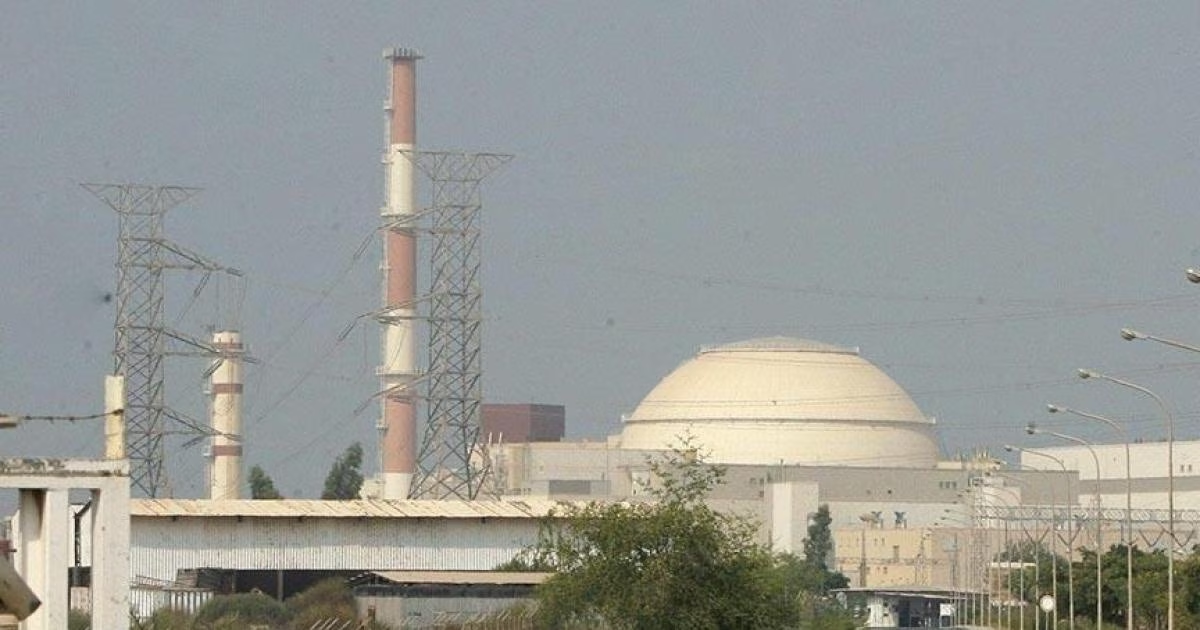
Iran confirms Bushehr nuclear plant site hit by missile during US-Israeli attack

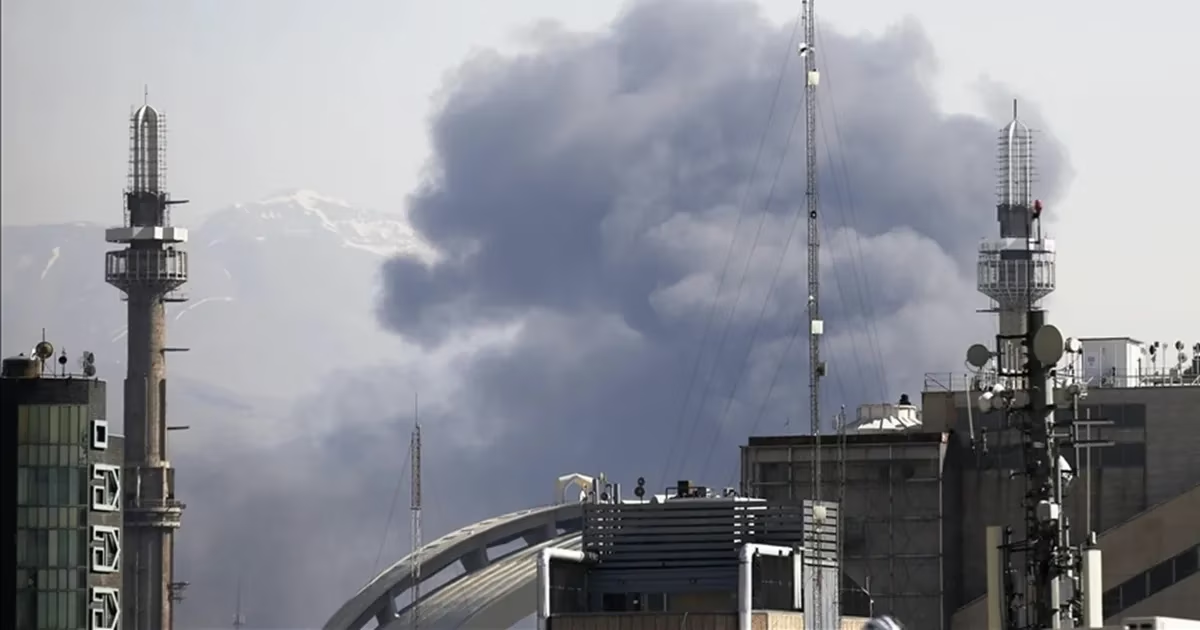
The Atomic Energy Organization of Iran revealed that the Bushehr nuclear power plant site was directly hit by a missile, as part of a series of attacks launched by American and Israeli forces. The organization clarified in an official statement that initial examinations confirmed no technical damage to the plant's infrastructure, and no human casualties were recorded among the staff working at the facility.

Iranian authorities stressed through their official accounts that targeting peaceful nuclear facilities represents a serious violation of international conventions that protect such sites. Tehran considered this escalation to put regional security at severe risk, holding the attacking parties fully responsible for the environmental and security repercussions that may result from these military operations.

For its part, the International Atomic Energy Agency confirmed receiving an official notification from the Iranian side stating that a projectile had fallen in the area surrounding the Bushehr plant. The agency indicated in an update that the information received confirms that conditions inside the plant remain within the normal range, as safety systems or personnel were not affected by the explosion that occurred in the outer perimeter of the nuclear facility.

In the context of international reactions, the Director-General of the International Atomic Energy Agency, Rafael Grossi, issued an urgent appeal to all parties to exercise the utmost restraint. Grossi warned that continued military operations near nuclear sites increase the likelihood of catastrophic radiological incidents, calling for these facilities to be spared from any armed conflicts to ensure public safety.

On the political front, Russia entered the crisis through statements by Kremlin spokesman Dmitry Peskov, who described the targeting of nuclear facilities in Iran as extremely dangerous. Peskov stressed that such steps could lead to dire and irreversible consequences at the regional and global levels, pointing to the need to immediately halt military escalation to avoid catastrophic scenarios.

These developments come amidst a widespread war that erupted since late February, with Israel and the United States launching intensive raids that resulted in the deaths of hundreds of people, including Supreme Leader Ali Khamenei and high-ranking security leaders. These strikes have brought about a radical shift in the nature of the conflict, prompting Tehran to respond with missile and drone attacks targeting various sites.

Field confrontations continue amidst mutual accusations, as Iran continues to target what it describes as American interests in the region, which has led to civilian casualties in several Arab countries. The affected countries demand a halt to these attacks that have targeted civilian objects, while all parties insist on their field positions, which threatens to prolong the conflict and expand its scope.

Targeting peaceful nuclear facilities is a blatant violation of international law and a serious threat to regional security.
ARAB AND WORLD

Wed 25 Mar 2026 3:28 am - Jerusalem Time

Mystery shrouds US-Iranian negotiations: Vance's surprising involvement and anticipated military movements

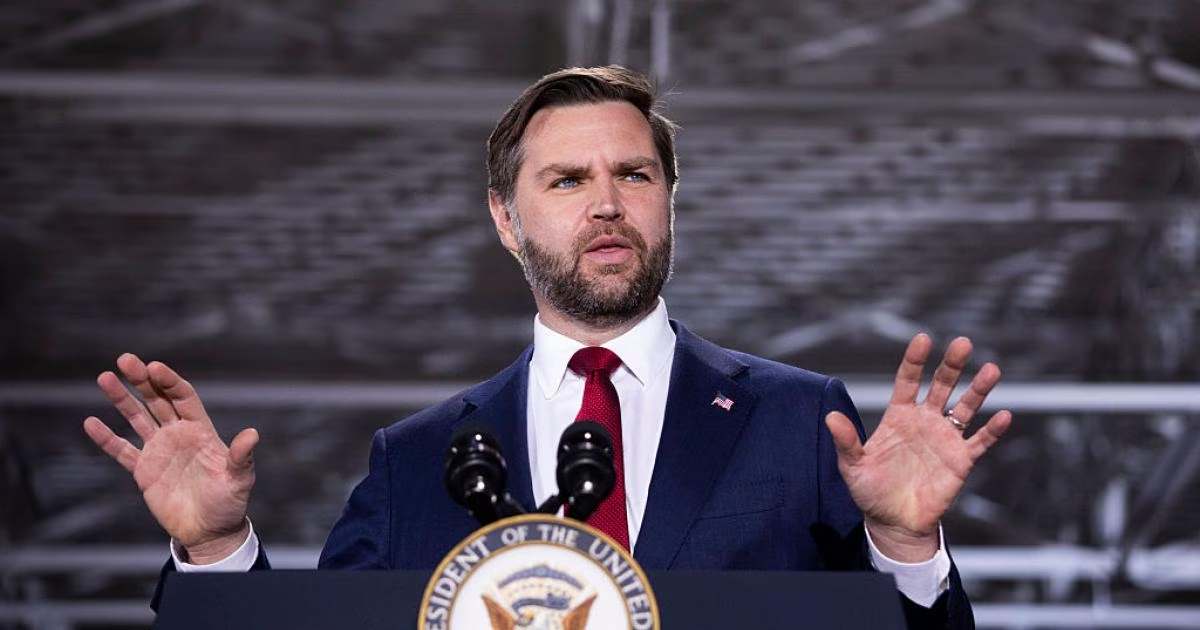
US President Donald Trump confirmed the existence of open negotiation channels with Iran, noting the involvement of his deputy, JD Vance, in these diplomatic efforts. This move is unusual in the corridors of American foreign policy, where sensitive files are typically handled by close advisors like Jared Kushner, raising questions about the nature of the role Vance will play in shaping future understandings.

Despite Trump's assurances, the outlines of his deputy's role still lack clear leadership, with the President describing him as 'involved like others.' Vance's participation gains particular importance given his stated positions against long wars and his strong reservations about any direct military escalation with Tehran, especially the plans discussed in Washington under the name '12-day war.'

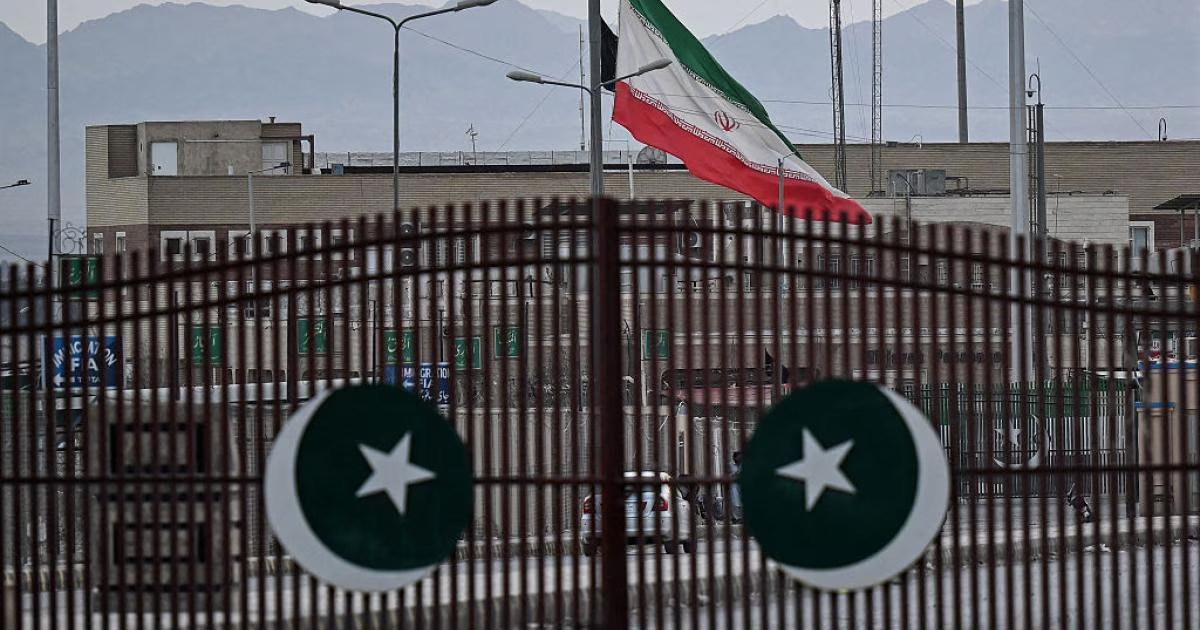
In the context of seeking official communication channels, Pakistan emerged as a strong candidate to play a mediating role between the two parties. Trump held a phone call with Pakistani Army Chief Asim Munir, who has a close relationship with the US administration, to strengthen this path aimed at finding common ground away from direct confrontation in the region.

Trump stirred a wave of mystery with his statements about a 'gift' from the Iranians related to the energy sector and the Strait of Hormuz, without disclosing its nature. The US President went further by stating that 'the regime has changed' in Tehran, which contradicts prevailing intelligence and political assessments that do not see a radical shift in the structure of Iranian power so far.

In contrast, there is a state of skepticism in American political and media circles regarding the seriousness of these negotiations. Observers, including Democratic Senator Chris Murphy, believe that Trump's statements may be merely a media tool aimed at calming global energy markets and lowering prices, rather than an expression of a genuine desire to reach a comprehensive nuclear or political agreement.

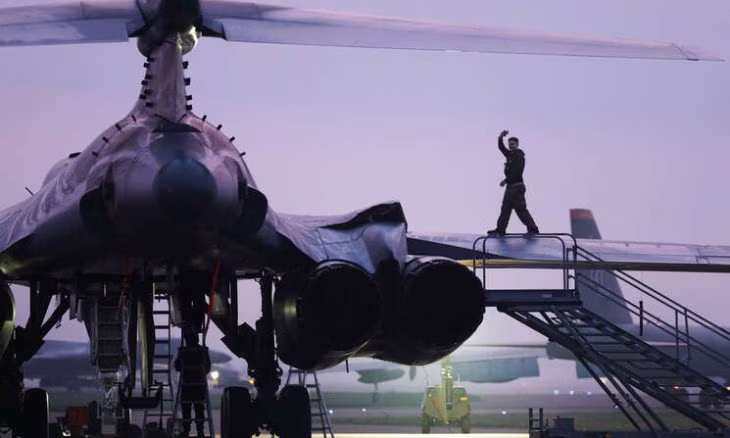
On the ground, the diplomatic atmosphere contradicts military leaks indicating a potential imminent escalation in the Middle East. Reports from the US Department of Defense speak of the possibility of transferring the 82nd Airborne Division, an elite unit specializing in rapid ground operations, to carry out specific missions aimed at securing airfields and establishing a pressing military presence on the ground.

The data indicates that Washington may form a joint force of five thousand soldiers to strengthen its negotiating position through field power. While the US administration tries to show that it holds the initiative, Tehran insists that it holds the keys to escalation and de-escalation on the ground, leaving the scene open to all possibilities between a comprehensive settlement or military explosion.

Trump: The regime has changed in Iran, and they gave us a gift related to oil, gas, and the Strait of Hormuz.

ARAB AND WORLD

Wed 25 Mar 2026 3:28 am - Jerusalem Time

After 24 hours under the rubble.. Lebanese elderly woman rescued from the ruins of a house destroyed by the occupation in Arnoun

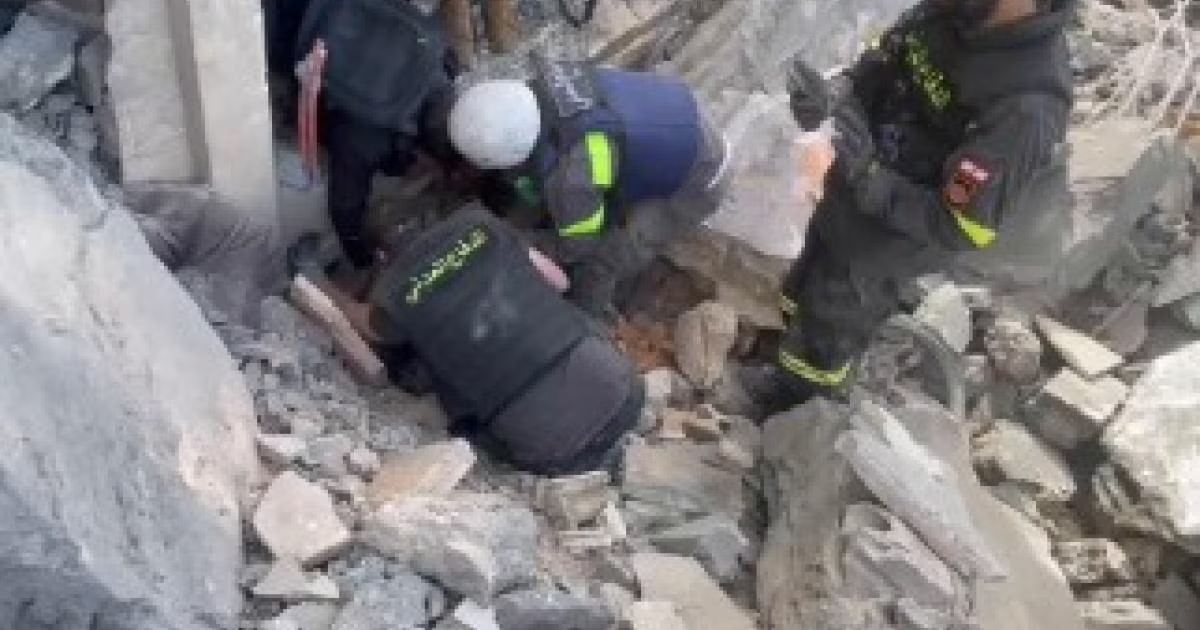
Civil Defense teams in southern Lebanon managed to complete a complex rescue operation for an elderly woman, after the Israeli air force targeted her home in the town of Arnoun Al-Shaqif. Video clips documented the moments the woman emerged from the rubble after strenuous efforts by relief teams to reach her under difficult field conditions.

Field sources explained that the woman, in her fifties, remained trapped under the rubble of a two-story residential building for about 24 continuous hours. The extraction operation was carried out in close coordination between the Civil Defense and units of the Lebanese Army, which imposed a security cordon around the site to ensure the safety of the paramedics and the targeted location.

Immediately after the teams successfully pulled the woman from under the shattered concrete blocks, she was provided with the necessary first aid on site before being quickly transferred to a nearby hospital. The survivor is currently under intensive medical observation to assess her health condition after the long period she spent under the rubble without food or water.

This incident comes in the context of a wide military escalation launched by the Israeli occupation on Lebanese villages and towns since the beginning of March. The intense airstrikes have resulted in the destruction of hundreds of residential units over the heads of their residents, which doubles the challenges for rescue teams trying to search for survivors under the rubble.

According to official data issued by the Lebanese authorities, the ongoing aggression since March 2 has resulted in the martyrdom of 1072 people and the injury of about 2966 others with varying degrees of injuries. The military operations also led to a major displacement wave exceeding one million people who fled from the bombing areas towards shelters and safer areas.

The teams carried out a rescue operation in coordination with units of the Lebanese Army, which took charge of providing protection around the site.

PALESTINE

Wed 25 Mar 2026 3:28 am - Jerusalem Time

Under the guise of confrontation with Iran.. Israel accelerates 'legislative coup' to annex the West Bank and Jerusalem

While the clamor of military confrontation between Israel and Iran dominates the international media scene, the Israeli demographic and legal change machine in the occupied West Bank is operating at an unprecedented speed. The far-right government is exploiting the current security conditions as a cover to pass a series of legislative and administrative changes aimed at reshaping the reality on the ground and obliterating any horizon for the establishment of a future Palestinian state.

Observers believe that the confrontation with Tehran has turned for Tel Aviv into a 'geopolitical opportunity' that allows for the reformulation of regional reality away from the eyes of the world. This 'silent legislative coup' practically aims to end the Palestinian legal and administrative presence in vast areas, and to transform the West Bank into an integral part of the Israeli administrative system under the thick smoke of regional battles.

February 2026 witnessed a historic step represented by the Israeli government's approval, for the first time since 1967, of registering vast areas of West Bank land as 'state land'. This step paves the way for changing administrative law and restricting legal protection for Palestinian lands, which is a practical prelude to large-scale annexation operations with new legal coverage that undermines the historical property rights of Palestinians.

Measures did not stop there, but also included decisions by the Ministerial Committee 'the Cabinet' to cancel the law that had been in force since the Jordanian era, which prevented settlers from buying land in the West Bank. This fundamental amendment opens the door wide for settlement associations to directly and legally control Palestinian properties and lands according to the new Israeli system.

In a related context, the powers of the civil administration were transferred directly to the occupation authorities, which contributed to dismantling the existing legal structures that regulated Palestinian affairs. Human rights organizations, including 'Peace Now', considered these steps to be a 'window of opportunity' exploited by settlers to strengthen their administrative and political influence in the heart of Palestinian communities.

On the ground, settler violence escalated remarkably, with thousands of armed individuals in military uniform carrying out daily attacks including shooting and land confiscation. These movements reflect official complicity by the occupation security apparatus to enhance settler control, according to reports by 'B'Tselem' which monitored an increase in the pace of organized attacks against Palestinian villages and towns.

As part of what is called the 'Capital Shield' operation, the occupation authorities demolished more than 35 Palestinian structures in the Qalandia and Kafr Aqab areas to reinforce the settlement contact line. This dual strategy reveals an Israeli desire to establish solid settlement facts within the West Bank and Jerusalem, benefiting from the major powers' preoccupation with the outcomes of the war in the region.

For his part, political analyst Oreib Al-Rantawi confirmed that recent measures, such as the closure of Al-Aqsa Mosque during the month of Ramadan, were carried out without much fanfare to reduce the cost of popular reaction. Al-Rantawi explained that the Israeli right is betting on the absence of an official and popular Palestinian reaction to impose fundamental changes in the structure of the Holy City and its geographical surroundings.

Al-Rantawi pointed out in statements to media sources that Israel is carrying out a daily 'de facto annexation' that includes land registration, the cancellation of old Jordanian laws, and the construction of settlements in sensitive locations. He added that the ultimate goal is to encircle Jerusalem and completely isolate its neighborhoods, in addition to emptying Area C and the Jordan Valley of their Palestinian residents to formally annex them to Israeli sovereignty.

At the international level, the UN High Commissioner for Human Rights, Volker Türk, warned that Israel has exploited security conditions to accelerate 'illegal annexation'. Türk confirmed in a recent report that more than 36,000 Palestinians have been displaced in the West Bank since the beginning of this year, which amounts to a dangerous and continuous demographic change that threatens international peace.

In the context of regional pressures, King Abdullah II of Jordan warned against any attempts to displace Palestinians or annex lands in Gaza and the West Bank. The King stressed during international contacts that these measures provoke political and strategic earthquakes that affect the security of the entire region, emphasizing the need to keep Palestinians on their land and prevent the liquidation of their cause.

Human rights reports indicate that the Israeli government has imposed strict restrictions on the work of international organizations within the West Bank, which facilitates demolition and displacement operations away from oversight. According to 'Human Rights Watch', these restrictions aim to conceal facts on the ground from the international community and prevent the documentation of systematic violations against Palestinian civilians.

The official Palestinian scene, according to observers, appears unable to provide a political response that rises to the level of existential challenges imposed by the occupation's measures. While the 'Israelization' processes in Jerusalem and the West Bank are accelerating, the Palestinian Authority in Ramallah remains absent from effective influence, leaving the field open for rapid settlement expansion.

What is happening today in the West Bank is not merely transient security measures, but a comprehensive redrawing of the political and geographical map of occupied Palestine. With the continued smoke of regional battles, Israel continues to seize land and dismantle rights, exploiting the world's silence and preoccupation with other issues to implement its final settlement project.

While eyes are watching the clamor of battles in the region, Israel is advancing in the West Bank and Jerusalem with steady steps to redraw maps on the ground.

ANALYSIS

Tue 24 Mar 2026 9:52 pm - Jerusalem Time

Tehran's Resilience and the Dilemma of Attrition: Why Did Bets on the Collapse of the Iranian Leadership Fail?

Field readings, weeks after the direct military confrontation, indicate that the bet on isolating the Iranian regime by targeting its leaders did not achieve the desired results. Tehran's organizational structure proved to possess an alternative command chain, pre-prepared to deal with emergencies and assassinations, drawing inspiration from Hezbollah's experience in rapid recovery.

The United States and Israel have so far failed to extract fundamental concessions regarding the nuclear program or to halt the production of long-range ballistic missiles. Despite intense bombardment, Tehran remains steadfast in its political and military stances, putting war planners in Washington in a predicament of a continuing war with no clear prospect of victory.

On the Lebanese front, resistance sources succeeded in drawing the occupation into significant land and air attrition to relieve military pressure on the Iranian interior. This was evident in the qualitative ambushes that targeted Merkava vehicles in the south, in addition to continuous rocket barrages that paralyzed movement in the Galilee settlements.

Iranian missiles demonstrated their superior ability to penetrate the most advanced defense systems in the world, including Iron Domes and modern American systems. These missiles reached sensitive strategic points near the Dimona reactor, prompting the Israeli leadership to admit the difficulty of the situation and describe the past nights as 'arduous'.

Official Israeli and American narratives starkly contradict the reality on the ground, as Netanyahu and Trump had previously announced the destruction of Iran's nuclear capabilities in previous rounds. However, the recurrence of war and the return to targeting the same facilities reveal the falsity of those claims and clarify that the true goal goes beyond the nuclear file to an attempt to break political will.

The issue of defending the existence of the Zionist entity emerged as a primary driver for the current American administration in this war, with Trump considering Iran an existential threat that cannot be overlooked. Nevertheless, the justifications put forward by the White House spokeswoman remained vague and undefined, reflecting confusion in determining the ultimate goals of the military operation.

For Benjamin Netanyahu, this confrontation is a fateful and personal battle, through which he seeks to escape his legal prosecutions and consolidate his political legitimacy. Netanyahu used the rhetoric of 'existential war' to justify the massive destruction and strikes that hit the Iranian interior, despite the significant risks of adverse reactions.

In contrast, Iran was able to inflict painful blows on American bases in the region, and its missiles reached the heart of Tel Aviv and vital oil facilities. The confrontation also saw a remarkable development with the withdrawal of the aircraft carrier 'Gerald Ford' from service after sustaining damage, which weakened the naval offensive capability of the coalition.

The closure of the Strait of Hormuz remains Tehran's most potent weapon, as it caused a suffocating global energy crisis that led to a crazy rise in fuel prices. Despite Washington's attempts to use its strategic reserves, the halt in the flow of Gulf oil paralyzed the major industrial countries allied with America economically.

The Strait became a political fulcrum that prompted countries such as Japan, South Korea, and Pakistan to review their positions on joining the American military alliance. These countries preferred to distance themselves from the conflict to avoid further collateral damage to their economies as a result of the cessation of navigation in this vital passage.

American rhetoric gradually began to retreat from the 'regime change' square to seeking diplomatic exits through international mediators. Trump appeared in his recent statements more inclined to talk about agreements that guarantee Iran does not possess nuclear weapons, which represents a retreat from the high demands set at the beginning of the war.

Sultanate of Oman played a pivotal role in revealing the scenes of secret negotiations, as its Foreign Minister Badr Al Busaidi confirmed that Tehran had already agreed to technical terms before the outbreak of the war. This statement embarrassed Western propaganda and showed that the military escalation was a purely Israeli desire to disrupt any potential rapprochement.

Reports indicate the involvement of Mossad in attempts to sabotage any potential de-escalation between Washington and Tehran, including the mysterious explosions that targeted oil facilities inside America. This behavior aims to keep the United States engaged in the war and prevent Trump from reaching an agreement that ends military operations before Netanyahu's goals are achieved.

The question remains about the fate of the region's countries that found themselves caught in a conflict in which they have no stake, without being part of the agreement formulation. While the major powers negotiate, these countries remain vulnerable to the economic and security consequences of the war, awaiting the outcome of the 'war of words' in upcoming diplomatic rounds.

An Iranian regime armed with long-range missiles and nuclear weapons would pose an intolerable threat to the Middle East and also to the American people.

PALESTINE

Tue 24 Mar 2026 9:52 pm - Jerusalem Time

Child martyred in Khan Yunis, and the occupation rearrests 100 freed in exchange deals

The city of Khan Yunis, in the southern Gaza Strip, recorded a new crime added to the series of Israeli violations of the ceasefire agreement, as 13-year-old child Khaled Saif al-Din Suleiman Arada was martyred. Medical sources reported that Israeli bullets targeted the displaced persons' tent where the child was located, leading to his immediate death before being transferred to Nasser Hospital.

In a related context, the Ministry of Health in the Gaza Strip announced a new update to the cumulative toll of victims of the ongoing aggression since October 7, 2023. According to the official statement, the number of martyrs has risen to 72,263, while the number of injured and wounded reached approximately 171,948 people in various areas of the Strip.

The ministry clarified that hospitals received only four injuries during the past twenty-four hours, amidst a decrease in the pace of direct shelling compared to previous periods. However, medical sources stressed that a large number of victims are still under the rubble and in rugged roads that are difficult to access.

Field reports indicated the inability of ambulance and civil defense crews to retrieve the bodies of martyrs in several areas due to security restrictions and the destruction of infrastructure. These numbers are expected to increase as search and investigation operations continue in areas from which occupation forces have partially withdrawn.

Regarding the prisoners' file, the Palestinian Prisoner's Club revealed a systematic Israeli escalation campaign targeting prisoners who were released as part of recent exchange deals with Hamas. The club confirmed that the occupation authorities have re-arrested approximately 100 freed prisoners since the comprehensive ceasefire agreement came into effect in October 2025.

The statement clarified that the arrest operations were not limited to prisons but also included harsh field investigations and night raids on the homes of the freed prisoners and their families. The Prisoner's Club considered these measures a blatant violation of the guarantees of the exchange deals that were sponsored internationally and regionally in recent months.

Under the agreement in effect since October 10, 2025, Israel had released 3,985 Palestinian prisoners in successive batches. This step came in exchange for Palestinian factions in Gaza releasing all Israeli prisoners and the bodies of those killed who were held by the resistance.

The Prisoner's Club monitored the names of several new detainees in Qalqilya Governorate, north of the West Bank, including Sameh and Ammar Al-Shobaki, Saeed Diab, Saed Al-Fayed, and Hadi Jadoua. These arrests confirm the occupation's insistence on pursuing the freed prisoners and sending direct threats to them and their families to revoke the effects of their release.

Human rights sources stated that the occupation has introduced new laws and military orders that provide legal cover for security agencies to pursue freed prisoners without clear reasons. These violations included severe physical assaults on prisoners before and after their release, in an attempt to intimidate them and prevent them from living normal lives.

Finally, the Prisoner's Club concluded its statement by warning of the danger of this policy, which aims to empty exchange deals of their humanitarian and political content. It called on international institutions to intervene immediately to stop these persecutions and ensure the protection of freed prisoners from the brutality of the occupation, which disregards all signed agreements.

The occupation authorities continue their escalation in targeting freed prisoners in exchange deals, through repeated arrests and field investigations.

ARAB AND WORLD

Tue 24 Mar 2026 9:52 pm - Jerusalem Time

German President attacks Trump's policies: War on Iran 'catastrophic mistake' and violation of international law

German President Frank-Walter Steinmeier launched a sharp and unprecedented diplomatic attack on US President Donald Trump's foreign policy, describing the ongoing war against Iran as a 'catastrophic mistake'. Steinmeier affirmed in official statements that these military actions represent a blatant violation of international law, reflecting a significant deterioration in the understandings between Berlin and Washington that have lasted for decades since the end of World War II.

The German President explained during a speech at the Ministry of Foreign Affairs headquarters that the justifications put forward by the American administration regarding imminent threats against US targets lack logic and realism. He pointed out that silence in the face of international rule-breaking does not serve the credibility of German foreign policy, emphasizing the need to call things by their true names, even when it concerns the largest strategic allies.

These frank positions from Steinmeier reveal a clear divergence in views within the German leadership, as his statements were sharper than the stance of Chancellor Friedrich Merz, who preferred caution and avoided answering questions regarding the legitimacy of military operations. Steinmeier benefits from the honorary nature of his position, which grants him a wider margin to express the ethical and legal principles of the German state, away from daily political constraints.

In a striking comparison, the German President considered that Trump's second term created an earthquake in international relations, similar in its impact to the Russian invasion of Ukraine in 2022. He believed that just as it became impossible for relations with Moscow to return to their former state, transatlantic ties would never return to what they were before January 20, 2025, signaling a new phase of European autonomy or Western division.

On the ground and regional level, these criticisms coincide with continued American pressure that conditions Iran's surrender of hundreds of kilograms of enriched uranium and the opening of the Strait of Hormuz for international navigation under strict supervision. While major powers are preoccupied with this regional conflict, the Palestinian arena continues to suffer from the consequences of the confrontation, as field sources have monitored massive destruction in Gaza and its transformation into rubble amidst the spread of torn tents for displaced persons.

In a related context, Israeli Prime Minister Benjamin Netanyahu's philosophy of power emerges as an exacerbating factor in the conflict, coinciding with proposals from Trump's 'Peace Council' that pressure resistance factions to surrender their weapons. While raids and threats continue, Palestinian women in Gaza insist on staying and refusing forced displacement despite hunger and the loss of providers, in a scene that embodies the humanitarian tragedy resulting from the intertwining of regional and international wars.

Our foreign policy will not become more convincing simply because we refrain from calling a violation of international law a violation of international law.

ISRAELI AFFAIRS

Tue 24 Mar 2026 9:51 pm - Jerusalem Time

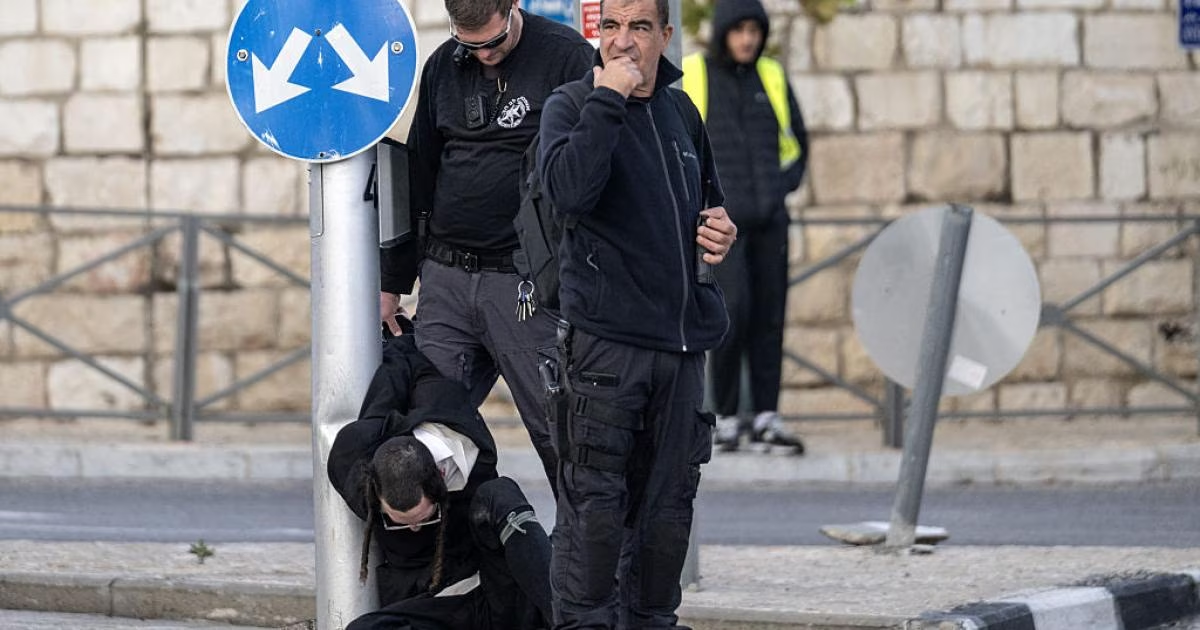
Two Haredi Brothers Accused of Espionage for Iran and Impersonating Soldiers in Unit 8200

Israeli judicial and security authorities revealed today, Tuesday, the filing of a serious indictment against two brothers from the Haredi Jewish community in occupied Jerusalem. The indictment includes charges of espionage for a foreign agent and providing intelligence information to a hostile entity, in addition to impersonating military personnel with the aim of misleading security agencies and obtaining illicit financial gains.

Media sources reported that the main defendant in the case successfully impersonated a soldier serving in the famous military intelligence Unit '8200', using a digital identity he obtained via the 'Telegram' platform. The two brothers worked in coordination to use advanced artificial intelligence techniques to draft reports and forge military documents that appeared to be issued by high-level security agencies.

According to the investigations, the two brothers received cash sums exceeding 100,000 shekels in exchange for the information sent to the Iranian side. This data included claims about joint military preparations between Tel Aviv and Washington to launch a large-scale attack on Iranian facilities, with hypothetical dates set for these operations at the beginning of this year.

Among the forged documents presented by the defendants was a document falsely attributed to Unit '8200' claiming Israel's direct involvement in the helicopter crash of former Iranian President Ebrahim Raisi, which occurred in 2024. The correspondence also included personal data of an Iranian citizen with claims of his involvement in internal assassinations, information described by sources as entirely fabricated and intended to enhance the value of the 'information' they provided.

In a related context, the Israeli court decided to impose strict censorship and a publication ban on the names and identities of the two brothers based on a request submitted by the defense team. This case comes amid escalating Israeli security warnings about repeated attempts by Iranian intelligence to recruit local citizens through social media in exchange for financial inducements, which has been repeated in several similar cases recently.

On the other side of the security confrontation, Iranian authorities announced the implementation of a widespread arrest campaign targeting about 466 people on charges of engaging in electronic activities aimed at destabilizing national security. Official reports in Tehran indicated that the number of detainees during the current month exceeded one thousand people, as part of the pursuit of what it describes as networks linked to hostile entities seeking to collect sensitive information.

Tehran accuses the detainees of cooperating with the 'enemy', photographing strategic sites, and publishing content inciting against the government, asserting that these actions are based on accurate intelligence monitoring. These simultaneous developments in both Jerusalem and Tehran reflect the intensity of the intelligence conflict between the two parties, which has clearly shifted to the digital space and the use of modern technology in deception and information gathering operations.

The main defendant impersonated a soldier in Unit 8200, using an identity obtained via Telegram, and with the help of his brother, resorted to artificial intelligence to forge documents that were transferred to an Iranian entity.

ISRAELI AFFAIRS

Tue 24 Mar 2026 9:51 pm - Jerusalem Time

Intense Iranian Missile Attacks Hit Tel Aviv, Forcing Dozens of Families to Flee

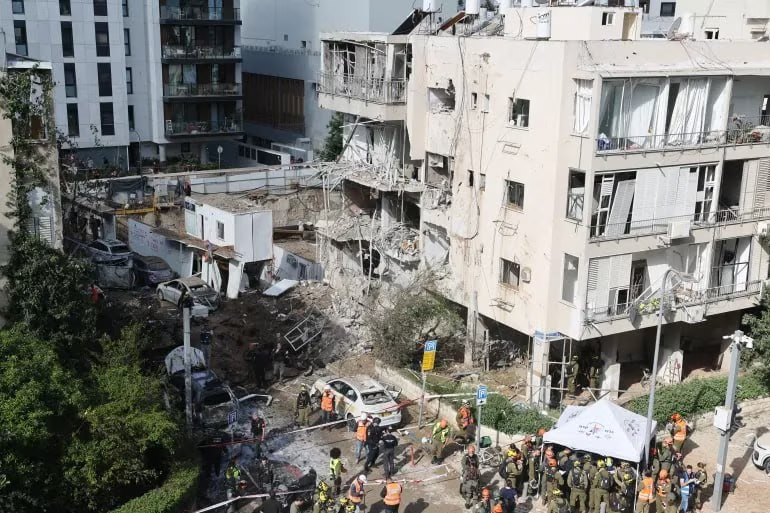
Iranian forces launched a series of intense missile attacks today, Tuesday, targeting strategic and civilian sites deep within Israel. This wave has been described as the most violent since the escalation began. Sources reported that the missile barrages, numbering 11 attacks, were heavily concentrated in the greater Tel Aviv area, causing extensive material damage and injuries among settlers.

Air raid sirens blared across a wide area, including the north, center, and south of the country, reaching sensitive areas such as Dimona and Beersheba, while millions of Israelis rushed to fortified shelters. Loud explosions were heard in the skies of major cities, resulting from attempts by air defense systems to intercept ballistic missiles coming from the east.

In the Negev region in the south of the country, medical sources confirmed that four people sustained varying injuries in the village of Al-Jarf after direct missile shrapnel fell. This coincided with reports of missiles falling in open and populated areas, causing a state of extreme panic among residents who remained in shelters for long periods.

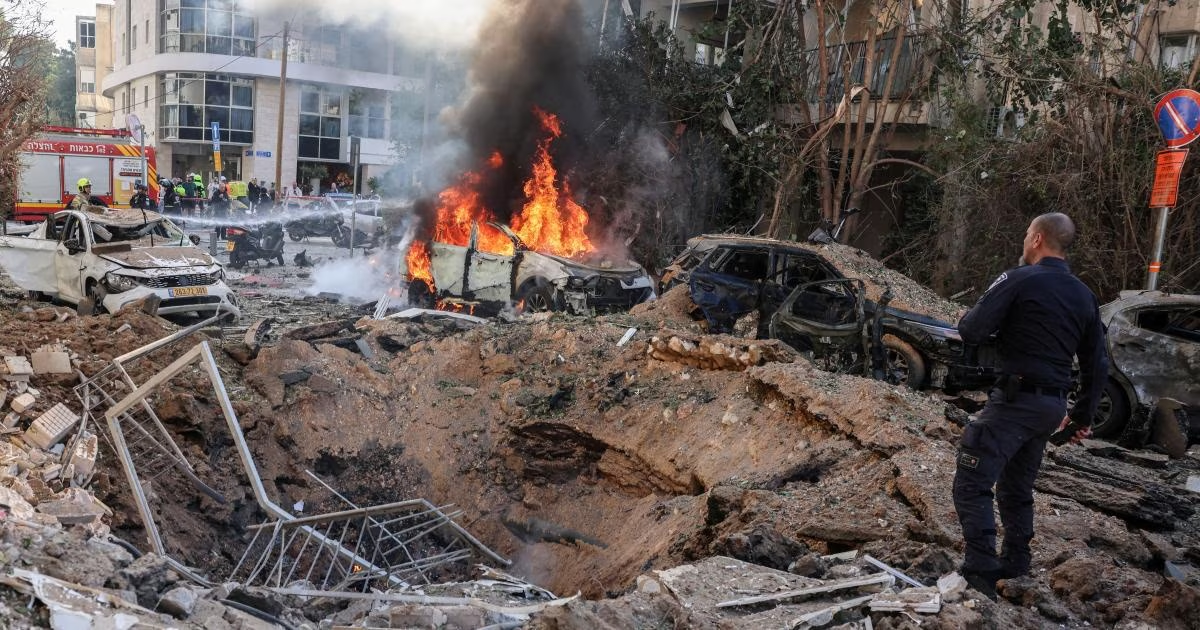
In the city of 'Rosh HaAyin', near Tel Aviv, at least two residential apartments were directly damaged as a result of the Iranian missile bombardment. The city's municipality announced the discovery of unexploded ordnance that fell on a main road, necessitating the intervention of engineering and explosives teams to dismantle them and secure the area for traffic.

In another field development, a missile described as a 'cluster' missile directly hit a building in the city of Nesher, near Haifa, resulting in one person sustaining minor injuries. This strike caused extensive damage to the targeted building and a number of vehicles parked in the vicinity, while fire brigades responded to several fires that broke out at the impact sites.

Reports from the Tel Aviv municipality indicated that the recent attacks led to the displacement of 93 families from their homes after their apartments were damaged, rendering them uninhabitable. Sources explained that the destruction affected 12 residential buildings to varying degrees, in addition to the destruction of nine cars that were parked in the city streets subjected to the morning bombardment.

This new displacement raises the number of displaced persons within Tel Aviv alone to about 1,500 since the beginning of the current military confrontations. Local authorities are facing severe difficulties in repairing previous damages, as the destruction caused by ballistic missiles requires complete demolition operations and engineering redesign of the affected areas.

Regarding overall human casualties, the Israeli Ministry of Health revealed that the number of injured since the outbreak of the war has reached 4,829 people, including 122 injuries recorded in the past twenty-four hours alone. These figures reflect the significant pressure faced by the health sector amid continuous missile barrages from multiple fronts.

For its part, the Israeli Institute for National Security Studies, in its latest statements, indicated that 18 Israelis have been killed since the beginning of the war, a toll subject to strict military censorship. The Israeli security establishment is trying to maintain the morale of the home front by regulating published information about the number of casualties and military sites that have suffered precise hits.

Military censorship in Israel imposes a strict blackout on the results of the Iranian response and Hezbollah's attacks, warning Israelis against circulating videos documenting the losses. These measures aim to prevent intelligence information from reaching attacking parties about the accuracy of the hits, at a time when internal criticism of the effectiveness of air defense systems is increasing.

The destruction caused by Iranian ballistic missiles is enormous and requires the demolition of damaged buildings and the complete redesign of the area.

ISRAELI AFFAIRS

Tue 24 Mar 2026 9:51 pm - Jerusalem Time

Scenarios for the End of the Confrontation with Iran: A Reading of Israeli and American Calculations

Questions are escalating in Israeli political and security circles regarding the final outcomes of the direct military confrontation with Iran, which began on February 28th. These readings coincide with leaks indicating active negotiation channels between Washington and Tehran aimed at reaching a formula that ensures a ceasefire.

Hebrew press reports warned against the security establishment falling into the trap of underestimating Iranian will, noting that Tehran has proven its ability to withstand and achieve qualitative accomplishments during recent rounds of escalation. It appears that initial assessments aimed at regime change have begun to recede in favor of more realistic goals.

Current data indicates that Israel and the United States have effectively begun to lower their expectations regarding the results of this military campaign. After comprehensive military decisive action was discussed, the focus is now on how to exit the confrontation with the least strategic losses.

Analysts believe that the most likely scenario is a quick political deal, marketed by all concerned parties as a historic achievement. This outcome will allow Americans, Israelis, and Iranians alike to claim that they have achieved their main objectives from this round.

This vision is based on the principle of sharing gains and losses, as everyone realizes that no party can achieve an overwhelming victory that definitively ends the conflict. Parties usually reach this conviction when the cost of continuing military operations exceeds the desired benefits of continuing them.

In this context, questions arise about who will be able to extract the best terms in the final moments before signing. The real battle now is no longer about breaking bones, but about improving negotiating positions to ensure a better strategic situation in the post-war phase.

A state of concern prevails within the Israeli defense establishment that ending the campaign at the present time may be premature. Security leaders believe that the army needs more time to inflict substantial damage on Iran's military infrastructure to ensure it does not recover quickly.

The biggest fear is that stopping military operations before achieving their full objectives will give Tehran a golden opportunity to rehabilitate its capabilities. The Iranian side is expected to have a greater incentive than ever before to proceed with the nuclear bomb project to provide future immunity for its regime.

Reports emphasize the necessity for Washington and Tel Aviv to insist on addressing the enriched uranium file, as Iran currently possesses about 440 kilograms at an enrichment level of up to 60%. This quantity, distributed across several secret sites, is considered a red line that cannot be overlooked in any future agreement.

Despite the decline in rhetoric about overthrowing the Iranian regime as an immediate goal, security sources confirm that this option has not been completely dropped from strategic calculations. However, the prevailing term currently in decision-making circles indicates that this path may take many years and will not be a direct result of the current campaign.

Informed sources believe that international and economic pressures will play a decisive role in shaping the final agreement. Iran seeks to lift sanctions and alleviate isolation, while Israel seeks to ensure the removal of the missile and nuclear threat from its borders for a long period.

It appears that the US administration is pushing for a diplomatic solution that prevents the region from sliding into a comprehensive regional war whose outcomes cannot be predicted. This American approach forces decision-makers in Tel Aviv to balance their military ambitions with the requirements of the strategic alliance with Washington.

Any upcoming deal will be a temporary truce to reposition forces in the Middle East, not an end to the existential conflict between the two parties. Recent history proves that direct confrontations often end with fragile understandings that are broken by successive field developments and regional expansion ambitions.

Ultimately, the field remains the judge in determining the ceiling of demands, as Israel tries to intensify its strikes in the final hours to impose a new reality. While everyone awaits the announcement of the deal's details, eyes remain fixed on Iran's nuclear facilities, which constitute the core of the conflict and the driver of escalation.

The most likely end to this confrontation is a quick deal, which everyone will present as a victory, as there will be no decisive victory for any of the parties.

LATEST NEWS

Tue 24 Mar 2026 9:51 pm - Jerusalem Time

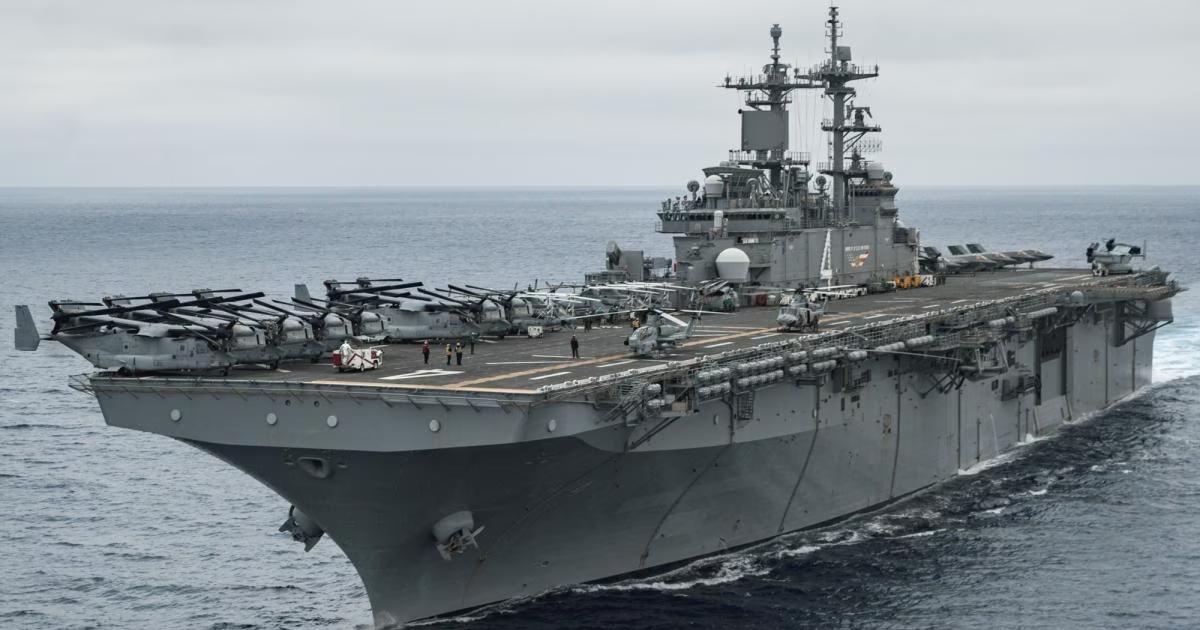
Washington Boosts Military Presence in Middle East with Amphibious Assault Ship 'Boxer'

Informed sources revealed the US Department of Defense's intention to send the amphibious assault ship 'USS Boxer' (LHD-4) to the Middle East region, a move that reflects the United States' increased military readiness. This ship is part of an integrated amphibious group accompanied by Marine units, indicating Washington's desire to strengthen its direct field presence amid escalating tensions.

This military deployment is linked to reports suggesting that the administration of US President Donald Trump is considering more severe strategic options towards Tehran, including the possibility of imposing a naval blockade or seizing Iran's Kharg Island. This island is of utmost importance as it is the main artery for Iranian oil exports, making the US military movement in its vicinity a clear operational pressure message.

In addition to the 'Boxer', the naval force heading to the region includes the 'USS Portland' warship of the San Antonio class, and the 'USS Comstock' ship of the Whidbey Island class. The group also integrates the Eleventh Marine Expeditionary Unit, which includes about 2,500 personnel, a force equipped with air and land components that enable it to carry out complex and rapid landing operations in coastal theaters of operation.

The 'USS Boxer' is a multi-mission combat platform belonging to the 'Wasp' class, specifically designed to support large-scale landing operations and transport troops and heavy equipment. The ship has a superior ability to operate vertical take-off 'Harrier' aircraft and hovercraft landing craft, in addition to accommodating more than 2,000 elite Marine soldiers.

In addition to its offensive capabilities, the 'Boxer' serves as an advanced naval base thanks to its sophisticated infrastructure, which includes a large field hospital with 600 beds and six equipped operating rooms. With a crew of more than a thousand personnel and more than 20 helicopters and attack aircraft on board, the ship provides high flexibility to ensure a sustainable and rapid military presence in the world's most sensitive regions.

The movement of the Boxer amphibious group indicates Washington's transition to a phase of strengthening its operational tools in the vicinity of tension in the Middle East.

ISRAELI AFFAIRS

Tue 24 Mar 2026 9:51 pm - Jerusalem Time

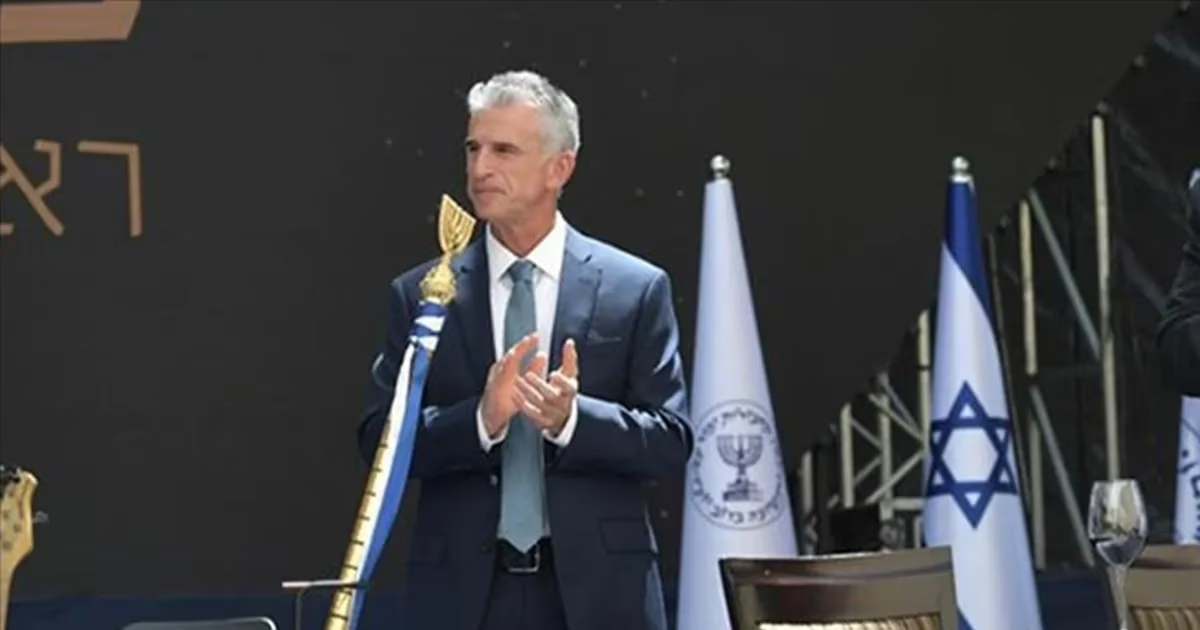
Mossad's Estimates Behind the Scenes: A Year to Topple the Tehran Regime and Accusations of Misleading Barnea

Hebrew press reports revealed the behind-the-scenes security discussions within the Israeli occupation, where the head of the 'Mossad' agency, David Barnea, estimated that the process of regime change in Iran could take a full year. These estimates came on the eve of escalating military tensions, sparking widespread debate in political circles about the feasibility and realism of these predictions.

Sources reported that Barnea presented several time-based scenarios to the cabinet for dealing with the Iranian file, ranging from a few months to a full year. Despite the varying probabilities, the head of the Mossad favored the longer-term scenario, considering that radical transformations in Tehran require a long breath and intensive intelligence work.

In contrast, Barnea faced a wave of indirect attacks through leaks from anonymous sources accusing him of misleading the Israeli and American leaderships. These leaks claimed that the head of the Mossad presented an overly optimistic picture regarding the chances of toppling the Iranian regime, leading to the construction of strategies based on inaccurate foundations.

International reports indicated that this campaign against Barnea might be driven by attempts to tarnish his reputation, especially with the increasing likelihood of failure in efforts to achieve a quick breakthrough. Sources suggested that circles close to Benjamin Netanyahu or the American administration might be behind these leaks to justify the lack of tangible results.

Political leadership offices in Tel Aviv and Washington face daily questions from the public about the reasons for the stalled progress in regime change in Iran. It appears there is an attempt to hold the security establishment, particularly the Mossad, responsible for raising expectations without real guarantees on the ground.

David Barnea is known for his tendency to provide cautious and conditional estimates, usually avoiding presenting inevitable scenarios of imminent collapse. Those close to him describe him as an 'establishment man' who adheres to the political leadership's directives and formulates intelligence briefings based directly on the Prime Minister's requests and orientations.

In the context of coordination with Washington, sources confirmed that the briefings presented by Barnea to Trump administration officials were under direct supervision from Netanyahu. These moves were not independent initiatives from the agency but rather part of a comprehensive political vision aimed at mobilizing American support for the military and security option.

Press investigations reported that Barnea had previously informed Netanyahu of the possibility of motivating the Iranian opposition to cause widespread unrest. The bet was that these disturbances would lead to the collapse of the regime from within within days of any direct military confrontation, which did not materialize.

Some reports held Netanyahu and Trump responsible for adopting an 'overly optimistic' approach to the Iranian file, ignoring warnings from other intelligence agencies. Leaked documents showed that Netanyahu expressed impatience with the slow pace of achieving results, especially with his concerns about the decline of international momentum supporting his operations.

On the other hand, there is no concrete evidence that the Mossad presented estimates fundamentally different from the Israeli army's position. The army believes that military force can only create suitable conditions for political change, but it does not automatically guarantee the fall of the ruling regime in Tehran without supporting internal factors.

The leaked Mossad plans included support for the movements of opposing Kurdish groups from northern Iraq to destabilize internal stability in Iran. However, these plans faced skepticism from the previous American administration, which downplayed the effectiveness of relying on armed factions with limited influence in changing the balance of power.

Barnea's name is associated with the 'death by a thousand cuts' strategy, which aims to exhaust the Iranian regime through qualitative operations and non-military tools. This strategy, developed during the previous government's tenure, relies on striking Iranian interests on several fronts simultaneously to gradually weaken the regime's structure.

Observers criticized the current debate's disregard for crucial factors, such as the lack of international intervention to protect Iranian protesters during previous waves of demonstrations. They believe that betting on the Iranian internal situation without providing effective international cover was one of the reasons for the failure of the Israeli intelligence strategy.

In conclusion of the leaked data, silence remains the master of the situation in the Prime Minister's office and the Mossad agency, as both parties refrained from commenting. This state of confusion reflects the depth of the crisis within the decision-making institutions of the occupation regarding how to deal with the complex Iranian file.

Regime change in Tehran could take about a full year, and cautious estimates are a characteristic of responsible intelligence work.

ARAB AND WORLD

Tue 24 Mar 2026 9:51 pm - Jerusalem Time

Arab Mediation Leads Trump to Back Down from Striking Iran, 5-Day Truce Looms

International press reports revealed intensive diplomatic activity led by Arab and regional capitals, where the foreign ministers of Egypt, Saudi Arabia, Turkey, and Pakistan met in Riyadh to find a way out of the escalating military crisis in Iran. Sources indicated that these moves came at a critical time, aiming to prevent the region from sliding into a comprehensive confrontation, despite the challenges posed by the absence of direct communication channels with the Iranian side.

The mediation efforts faced a major obstacle with the assassination of Ali Larijani, head of Iran's Supreme National Security Council, by the occupation state, who was seen as a party capable of dialogue with Western powers. This field development briefly disrupted diplomatic calculations, before Egyptian intelligence succeeded in breaking the deadlock and opening a direct communication channel with leaders in the Iranian Revolutionary Guard Corps.

Egyptian mediators proposed a five-day cessation of hostilities as a confidence-building measure, which paved the way for a surprising shift in the White House's stance. According to sources, US President Donald Trump decided to suspend military strikes targeting Iranian power stations after being briefed on the results of the Riyadh deliberations, preferring to give diplomacy a last chance.

Trump had issued a stern warning to Tehran to open the Strait of Hormuz within 48 hours, threatening to destroy the country's energy infrastructure. However, the messages conveyed by Arab mediators about the possibility of reaching an agreement changed the course of the decision in Washington, reflecting a desire by the US administration to avoid the economic and political repercussions of a long-term war.

For her part, White House spokeswoman Caroline Leavitt affirmed that the United States is engaged in extremely sensitive diplomatic discussions, emphasizing that the administration will not negotiate through the media. She clarified that the field and political situation remains unstable, calling for not adopting press speculations as final facts before official announcements from the competent authorities.

This news immediately reflected on global markets, with US stock indices on 'Wall Street' recording record gains, the highest since last February. Oil prices also saw a sharp decline, with Brent crude falling by 11% to below $100 per barrel, driven by hopes of de-escalation and avoiding the closure of vital energy passages.

Despite this optimism, Arab mediators expressed caution regarding the possibility of reaching a quick agreement, given the deep gap in the demands of both parties. While Tehran stipulates financial compensation and American and Israeli pledges to stop future attacks, Washington insists on dismantling the nuclear program, halting ballistic missile development, and ending the influence of pro-Iranian militias.

Inside Iran, a kind of caution and skepticism prevailed, as Parliament Speaker Mohammad Bagher Ghalibaf denied the existence of any direct negotiations with Washington at present. Ghalibaf considered that American statements about the progress of the diplomatic path are primarily aimed at manipulating global financial markets and alleviating economic pressures, stressing that his country is not prepared to concede under threat.

The technical discussions led by Arab leaders focused on the issue of the Strait of Hormuz, through which five global oil supplies pass, where the formation of a neutral international committee to ensure navigation was proposed. In contrast, the Revolutionary Guard Corps put forward the idea of imposing transit fees on ships passing through the strait, similar to the Suez Canal, a proposal that was met with outright Gulf rejection as it would give Tehran excessive control.

Information indicates that back channels are still active with the participation of Qatar, Oman, France, and Britain, with a proposal emerging for a high-level meeting in Pakistan or Turkey. The US side in these discussions is likely to be represented by Steve Witkoff and Jared Kushner, with the possibility of Vice President J.D. Vance joining if a draft agreement matures.

These developments come amid a sensitive transitional phase within Iran, where Washington is dealing with a regime led by the new Supreme Leader Mojtaba Khamenei, who is described as hardline. Despite this, Trump showed unexpected flexibility, hinting at the existence of Iranian leaders he respects and with whom a new era of relations can be reached, away from the language of military threat.

Finally, military analysts believe that the United States continues to strengthen its field presence by sending Marine units, to ensure pressure on Tehran during negotiations. The question remains about the extent of the Iranian regime's ability to make fundamental concessions regarding its nuclear program in exchange for political survival and the lifting of sanctions, in light of the widespread destruction of its military capabilities during recent confrontations.

The situation is unstable, and speculations should not be considered final before the official announcement of the results of the sensitive diplomatic discussions.

LATEST NEWS

Tue 24 Mar 2026 9:50 pm - Jerusalem Time

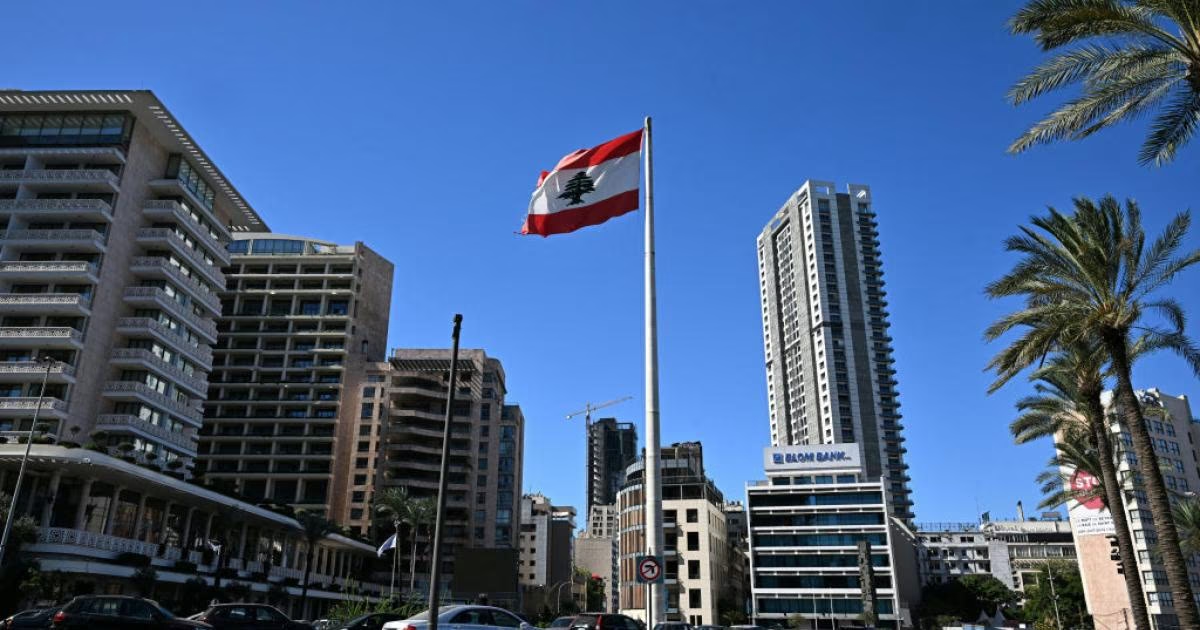
Lebanon Expels Iranian Ambassador, Revokes Credentials Amid Accusations of Sovereignty Violation

The Lebanese Ministry of Foreign Affairs and Emigrants took an escalating diplomatic step by summoning the Iranian Chargé d'Affaires in Beirut, Toufiq Samadi Khoshkhou, to inform him of an official decision to withdraw approval for the accreditation of the designated Iranian Ambassador, Mohammad Reza Shibani. The decision included declaring Shibani persona non grata, with a deadline set for next Sunday, the twenty-ninth of this month, for him to permanently leave Lebanese territory.

These rapid developments come amidst accusations by Lebanese officials that the Iranian Revolutionary Guard is directly involved in managing the military operations Hezbollah is waging against Israel. Beirut considered these actions a crossing of red lines and an interference in the sovereign affairs of the state, especially given the current circumstances the country is experiencing.

In parallel with the expulsion decision, Lebanese authorities recalled their ambassador in Tehran, Ahmed Suwaidan, for consultations and to assess the repercussions of the current diplomatic crisis. The Lebanese Foreign Ministry justified these measures by the existence of clear violations by Tehran of diplomatic norms and established international principles governing relations between states, emphasizing the necessity of respecting national sovereignty.

Informed sources reported that the Lebanese government had taken a firm decision since the outbreak of military confrontations, prohibiting any potential security or military activity by the Iranian Revolutionary Guard on its territory. It appears that the latest measure came as a result of monitoring activities that Beirut considered a violation of this explicit government decision, necessitating a decisive diplomatic response.

Sources indicated that the Lebanese Foreign Ministry had previously requested written clarifications from the Iranian side regarding a number of objections, but the responses were not sufficient or convincing. These objections focused on official Iranian statements hinting at direct operational coordination and joint operations rooms between the Revolutionary Guard and Hezbollah, especially after the synchronized missile launches.

The points of contention also included statements made by the Iranian Ambassador to the United Nations following the targeting of a hotel apartment in the Raouche area of Beirut, where he claimed that the targets were Iranian diplomats present with the knowledge of Lebanese authorities. The Lebanese Foreign Ministry quickly denied these claims outright, asserting that it had no records proving the diplomatic status of these individuals or knowledge of their missions.

This crisis reflects the depth of the current rift between Beirut and Tehran, as official Lebanon insists on distancing itself from any external interference that affects its sovereign decision or puts it in confrontation with the international community. This step is expected to provoke widespread reactions regionally and internationally, given the sensitivity of the timing and the nature of the historical relations between the two parties.

The Lebanese state considers what happened a violation by Tehran of diplomatic conduct norms and established principles between the two countries.

ARAB AND WORLD

Tue 24 Mar 2026 9:50 pm - Jerusalem Time

Former American Colonel: Egypt Faces Complex Crises and a Test of Its Regional Role After the War on Iran

Reserve Colonel Amir Noi, former commander of the Operational Coordination Cell in the US Army, painted a bleak picture of the future challenges facing the Egyptian state in the wake of the military confrontation between Iran on one hand, and the United States and the occupation state on the other. Noi explained in an analysis published by media sources that Cairo finds itself today facing three simultaneous crises affecting the economic, political, and media sectors, which places its foreign policy under the scrutiny of regional criticism.

The economic crisis topped the list of challenges, as the war led to widespread disruptions in international trade routes passing through the Red Sea and the Bab al-Mandab Strait. This tension prompted major global shipping companies to change their routes towards the Cape of Good Hope around Africa, causing a sharp and direct decline in the revenues of the Suez Canal, which represents the main lifeline for hard currency in the country.

The analysis indicated that the Egyptian tourism sector, which is highly sensitive to any security tensions in the region, was not spared from the negative repercussions. These circumstances created a harsh paradox for the Egyptian state, which, despite its commitment to a policy of caution and non-direct involvement in military operations, is bearing the largest economic cost of the escalating regional conflict.

In a related context, the American colonel raised questions about Cairo's continued allocation of huge budgets for arms deals and military capability development despite the suffocating financial crisis. He considered that these systems, ostensibly directed towards the occupation, raise the astonishment of observers in light of an existing peace treaty, attributing this to the regime's desire to maintain the army as a fundamental pillar of state stability and its Arab standing.

On the internal political front, the report noted that President Abdel Fattah el-Sisi's regime faces increasing pressure to maintain a balance between security control and providing a minimum level of living stability. Noi warned that widening social disparities and exacerbating economic crises could turn any sudden regional shock into a fuse for internal unrest, especially with the threat of some opposition forces remaining dormant.

The analysis touched upon Egyptian-Gulf relations, indicating that Cairo relies heavily on remittances from hundreds of thousands of its workers in Gulf countries. With these countries facing direct threats from Iran and its proxies during the military campaign, Egypt's cautious stance raised questions among Gulf elites about the absence of a clear defensive position, which could in the future turn into a political pressure tool on Cairo.

Strategic experts in Cairo believe that the danger lies not only in the continued existence of the Iranian regime but also in the possibilities of its sudden collapse, which could lead to widespread chaos. Egypt fears the rise of new regional leaders who may seek to seize legitimacy by instigating additional conflicts, making the preservation of the status quo, despite its drawbacks, an Egyptian option to avoid unforeseen geopolitical shifts.

This official approach was reflected in the local media discourse, where editorials in national newspapers such as Al-Ahram focused on the need for self-restraint and preventing the region from sliding into a comprehensive war. Media messages held major powers responsible for curbing 'military adventures,' while sharply criticizing Israeli policies that contribute to expanding the scope of the conflict and threatening Arab national security.
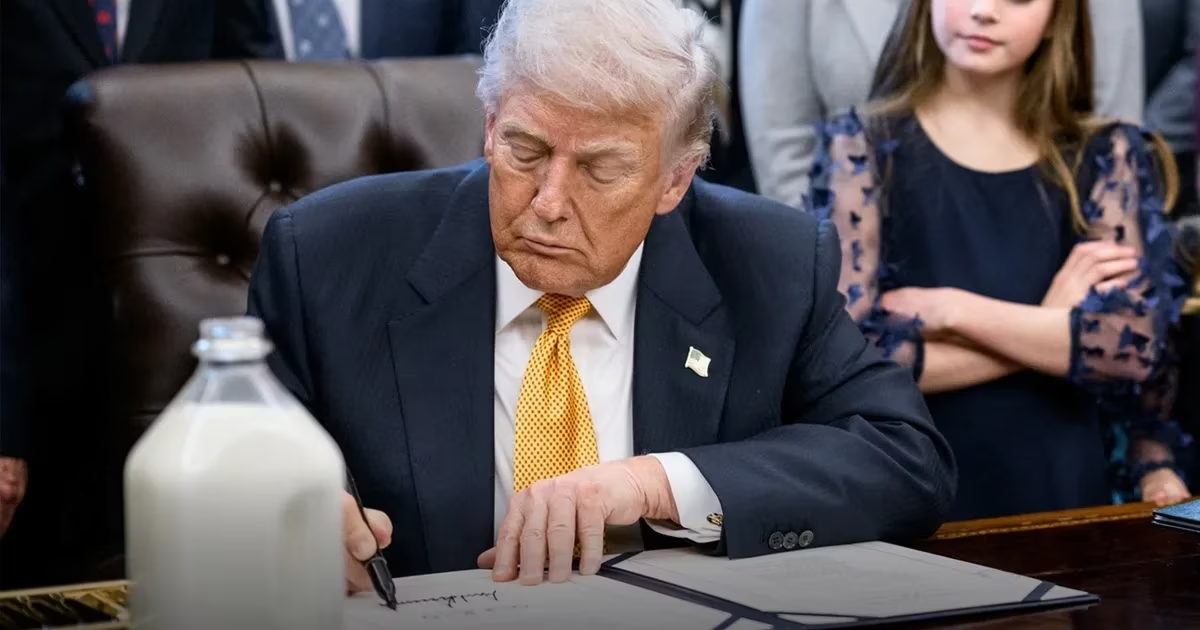
While the world is preoccupied with the conflict between major powers and Iran, Gaza continues to suffer from the effects of widespread destruction and the spread of torn tents amidst the legendary steadfastness of Palestinian women. These analyses come at a time when Washington insists on harsh conditions towards Tehran, including the surrender of enriched uranium stockpiles and the opening of the Strait of Hormuz for international navigation under strict supervision.

The report also indicated that the Egyptian position will undergo a historical evaluation in the post-war phase, where the policy of 'caution' will be judged either as responsible diplomacy that spared the country the ravages of war, or as evidence of the decline of Cairo's regional leadership role. The balance of cost and benefit remains the primary driver for decision-makers in facing accumulated economic losses.

On the other hand, the contradiction in international positions stands out, where Trump's 'Peace Council' demands that resistance factions surrender their weapons in exchange for reconstruction, while Benjamin Netanyahu adopts an extremist discourse that sanctifies power. This complex atmosphere increases the difficulty of Egypt's task in maintaining its strategic balance between American pressures and Arab popular demands.

In conclusion, Colonel Noi affirmed that Egypt will continue to face a real test of its mental image in the Arab world, where arms deals intertwine with economic setbacks and political risks. Cairo's ability to overcome these three crises will determine its position in the new regional order currently forming amidst the explosions in the region.

Egypt did not participate directly in the war but bears its heavy economic cost as a result of the disruption of global trade routes.

ISRAELI AFFAIRS

Tue 24 Mar 2026 9:50 pm - Jerusalem Time

Anxiety in Tel Aviv over Trump's intentions to quickly reach an agreement with Tehran

Official and security circles in Israel are showing increasing anxiety over the dramatic shifts in the stance of US President Donald Trump, who has openly declared his desire to reach an agreement with Iran. Estimates in Tel Aviv vary regarding the seriousness of this approach, especially after Trump's surprising statements that disrupted the calculations of the Israeli government, which had been banking on continued maximum military pressure.

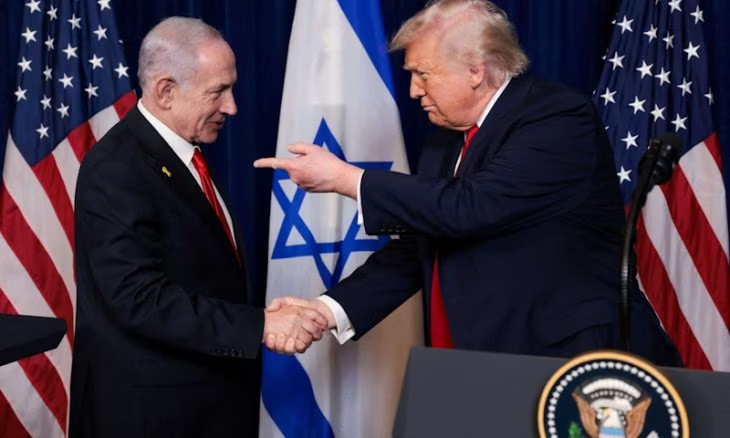
Benjamin Netanyahu, the head of the occupation government, commented on these developments by indicating that he had held talks with the US President, explaining that the latter sees a golden opportunity to capitalize on what he described as the 'significant achievements' of the Israeli and American armies in the region. Netanyahu tried to reassure his audience that any future agreement must preserve Israel's vital security interests, despite clear gaps in visions between the two parties.

In the context of accelerated diplomatic moves, informed sources revealed that US Vice President, J.D. Vance, discussed details related to the initiation of negotiations with Tehran with Netanyahu in a phone call. The discussions covered potential clauses to end direct military confrontation, reflecting the Trump administration's desire to close this thorny file early in its term.

For its part, media reports indicated the existence of a 'secret message' sent by Iranian Foreign Minister, Abbas Araqchi, to US Special Envoy Steve Witkoff. The message included indications of the new Supreme Leader, Mojtaba Khamenei's, approval to quickly end the current crisis, provided that fundamental Iranian demands are met, suggesting a shift in Tehran's political stance.

Leaked information suggests that Araqchi made a phone call to Witkoff in the presence of the US President's son-in-law, Jared Kushner, to ensure the message reached Trump's inner circle. The Iranian side's objective with this move is to demonstrate a smooth and organized transfer of power in Tehran, contrary to Israeli expectations that had been banking on internal unrest hindering political decision-making.

On the ground, sources reported that Washington has already begun taking practical steps to set the stage for negotiations, with Trump directing the Department of Defense to postpone scheduled airstrikes on Iranian energy facilities. This five-day postponement aims to provide an opportunity for diplomatic efforts, coinciding with news of a round of negotiations starting in Pakistan later this week.

In an attempt to minimize damage and ensure that red lines are not crossed, Netanyahu dispatched Minister Ron Dermer to Washington to clearly present Israeli demands to the US administration. Through this visit, Israel seeks to emphasize the necessity for any agreement to include a complete dismantling of the nuclear program and prevent Iran from acquiring any future enrichment capabilities.

Israeli newspapers, including 'Haaretz,' warned against the Netanyahu government obstructing the new negotiation process, as happened in previous experiences. The newspaper called for the US to be enabled to manage the diplomatic dialogue, noting that continuous military escalation may not achieve the long-term strategic goals desired by the international community.

There is confusion within the Israeli security establishment regarding Trump's true intentions, with former officials fearing the conclusion of a 'bad deal' that would grant Iran international legitimacy without fundamentally addressing the ballistic missile issue. These officials believe that merely reducing the range of missiles might avert danger from Europe but would keep Israel and the Gulf states under direct threat.

Military analysts in Tel Aviv indicate that Trump fears entanglement in a wide regional war that could drain American resources, and therefore prefers quick settlements. This approach puts Netanyahu in a political dilemma, as his desire to continue the war to achieve 'absolute victory' conflicts with his biggest ally's desire in Washington to end armed conflicts.

Observers believe that Netanyahu, who strongly pushed for Washington's withdrawal from the nuclear agreement in 2018, now finds himself facing a complex reality after the acceleration of Iranian enrichment. Voices are rising within Israel demanding a review of the effectiveness of previous policies that led Iran to the brink of nuclear capability, considering diplomacy as the only remaining way out.

Amidst this atmosphere, Israel continues its military operations in Lebanon and against Iranian targets, in an attempt to impose facts on the ground before any political agreement matures. Israeli officials publicly assert that military pressure is what pushed Tehran to the negotiating table, in an attempt to save face before the domestic public.

In conclusion, anticipation remains the dominant sentiment in the region, awaiting the outcome of upcoming meetings in Pakistan or Washington. While Trump aims for a quick diplomatic achievement, Israel remains apprehensive that this achievement might come at the expense of its national security, potentially opening the door to a silent confrontation between the allies on how to deal with Iranian ambitions.

Trump believes there is an opportunity to reach an agreement with Iran, leveraging military achievements, but we will work to ensure Israel's vital interests.

ARAB AND WORLD

Tue 24 Mar 2026 9:50 pm - Jerusalem Time

Military and Financial Drain.. Washington Faces Readiness Crisis Due to Conflict with Iran

Warnings have escalated in the US capital, Washington, regarding the repercussions of continued military operations against Iran, as data indicates a significant drain on the US Army's capabilities. These concerns arise just three weeks after the outbreak of the conflict, amidst reports confirming a decline in vital ammunition stockpiles and unprecedented damage to strategic military equipment.

Field sources revealed the killing of at least 13 American soldiers and the injury of approximately 232 others since the start of military operations on February 28th. These figures reflect the scale of field pressure faced by US forces in the region, amid confrontations characterized by intensity and technological and military complexity.

In terms of material losses, the Air Force and its associated services recorded the crash or downing of approximately 16 various aircraft, including modern fighter jets, drones, and refueling aircraft. An advanced 'F-35' fighter jet was also forced to make an emergency landing due to technical malfunctions or damage during combat missions.

The damage was not limited to the Air Force but extended to the naval strike force, as the aircraft carrier 'USS Gerald R. Ford' sustained damage after a fire broke out on board recently. The US Navy faces immense operational pressures due to dedicating a large part of its fleet to monitoring and securing operations related to the Iranian file.

In a related context, a report published by 'The Hill' warned that the Pentagon's plans to deploy ground troops inside Iranian territory could rapidly multiply human and material losses. The report indicated that this escalation could weaken the United States' ability to respond to crises in other regions, particularly in the Indo-Pacific.

Former defense officials believe that engaging in a long-term conflict in the Middle East drains maintenance and readiness resources for essential military assets. They fear that this drain could undermine American deterrence against other major powers such as China, especially amid ongoing tensions over Taiwan.

Politically, President Donald Trump announced the resumption of negotiations with Tehran regarding its nuclear program, a step aimed at de-escalation after previous threats to target energy facilities. However, military movements on the ground continue, as Washington considers sending a combat brigade from the 82nd Airborne Division to reinforce its presence.

Financial estimates indicate that the cost of this war could reach one billion dollars daily, which puts the defense budget under immense pressure. The US administration is expected to request an additional emergency funding of up to 200 billion dollars from Congress to cover the expenses of ongoing military operations and compensate for equipment shortages.

Air defense and long-range missile stockpiles are suffering from a sharp decline, as 'Patriot,' 'THAAD,' and 'Tomahawk' missiles are being consumed at rates exceeding the production lines' ability to compensate. Experts confirm that rebuilding these stockpiles will take many years, putting the US military in a critical position if simultaneous conflicts erupt.

Analysts link the current crisis to the extensive military support Washington provided to Ukraine in its war against Russia, which has already consumed a significant portion of strategic reserves. This accumulation of military commitments limits the maneuvering options available to decision-makers in both the White House and the Pentagon.

On the ground, Washington continues to accelerate the deployment of thousands of Marines and additional warships to the region to enhance deterrence and protect vital interests. Despite these reinforcements, observers believe that the arrival of some of these forces may take weeks, leaving currently deployed forces under constant pressure to confront increasing threats.

In conclusion, questions remain about the extent of the United States' ability to bear the cost of continuing this conflict without compromising its global standing. While the administration tries to downplay the extent of losses, field and economic realities indicate that the war with Iran has become a strategic burden that transcends regional boundaries.

Engaging in a theater that is not a top priority leads to a drain on the readiness of military assets that could be crucial in confronting China.

PALESTINE

Tue 24 Mar 2026 9:50 pm - Jerusalem Time

The occupation gives dozens of Palestinians a deadline to evacuate their homes north of Jerusalem in preparation for their demolition

Dozens of Palestinian families in Qalandia village, located north of occupied Jerusalem, face the imminent threat of displacement after the Israeli occupation authorities issued final orders to demolish seven residential buildings. This Tuesday morning, occupation municipality crews posted demolition notices in the eastern neighborhood of the village, citing the pretext of building without a permit, which is rejected by popular and local activists in the area.

The occupation municipality specified in its notices a deadline not exceeding 21 days for residents to completely evacuate their homes, in preparation for the demolition operations. The Israeli authorities based their decision on a judicial ruling they claim has been in effect since the end of 2021, warning that they will not be responsible for any damage to property if the specified evacuation date is not met.

Local sources reported that the targeted buildings are not new, with the newest dating back more than twenty years, which refutes the occupation's claims regarding regulation and construction. The sources explained that the recent escalation in targeting this specific area is due to its connection with Israeli plans aimed at establishing a massive facility for burning and recycling waste in those areas.

The homes threatened with demolition are located on an area estimated at 15 dunams in the eastern part of Qalandia, an area very close to the entrance of the old Jerusalem International Airport. Approximately 40 Palestinians reside in these housing units, half of whom are children, facing an unknown future amid the occupation's insistence on forcibly annexing these lands to its municipal boundaries.

The residents of this area, numbering over 500, suffer from a suffocating siege imposed by the separation wall since 2002, forcing them to travel long distances and cross military checkpoints to reach the center of their village. This geographical isolation has made the eastern neighborhood of Qalandia an easy target for settlement projects aimed at changing the demographic and geographical reality in Jerusalem.

In a related context, the head of the Qalandia Village Council confirmed that the Israeli assault was not limited to demolition notices but also included decisions to confiscate 150 dunams of residents' land in recent months. These steps are part of a systematic policy aimed at controlling the eastern part of the village, which was isolated behind the wall, under the pretext of being within the administrative scope of the occupation municipality.

Local officials described the future of the village as bleak, warning that the completion of the waste recycling project and the expansion of the 'Atarot' settlement would completely suffocate the residents. Israeli plans include building 9,000 new settlement units on the lands of the Jerusalem International Airport, which will reduce the available area for Palestinians to its minimum, turning the village into a small enclave.

Historically, Qalandia village has been subjected to continuous confiscation and demolition operations since the 1970s, due to its strategic location near the industrial zone and the airport. Through these cumulative measures, the occupation seeks to end the Palestinian presence in the areas surrounding Jerusalem to ensure a continuous settlement geography that serves its long-term expansionist goals.

For its part, human rights organizations condemned these measures, considering them a blatant violation of international humanitarian law and fundamental housing rights. Al-Baidar Human Rights Organization affirmed that what is happening in Qalandia is a systematic forced displacement operation, calling on the international community and UN institutions to intervene immediately to stop the demolitions and protect families from displacement under the current circumstances.

The future of the village has become very bleak in light of the plans aimed at reducing the area of our lands from 4,000 dunams to only 150 dunams.

ARAB AND WORLD

Tue 24 Mar 2026 2:12 pm - Jerusalem Time

Underwater Arms Race: Who Controls Naval Mine-Sweeping Fleets?

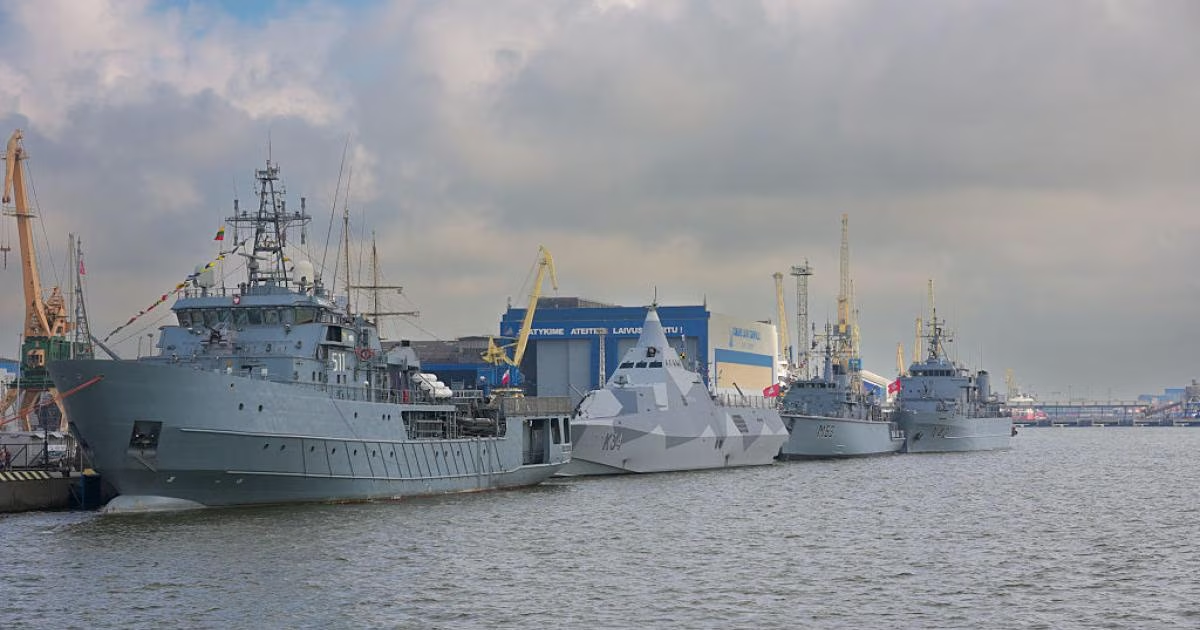
Naval mine-sweepers have returned to the forefront of global military attention, coinciding with escalating tensions in strategic waterways. These vessels are considered the first and primary line of defense for securing international navigation from the invisible threats posed by naval mines, which could paralyze global trade in moments.

In this context, Iranian threats have emerged as a catalyst for this attention, as the Iranian Defense Council warned that any aggression against the country's islands would be met with the planting of mines in waterways, sea lanes, and coasts. Tehran affirmed that coordination with it is the only way to ensure the passage of ships belonging to non-hostile countries through the vital Strait of Hormuz.

Military estimates indicate that Iran possesses a massive stockpile of naval mines, totaling approximately 6,000 mines, posing significant challenges to international powers. This large stockpile makes naval clearance operations a complex task requiring advanced technologies and a long time to ensure the safety of passing ships.

Mine-sweepers are known as specialized naval units that detect underwater explosive objects using advanced sonar systems. These vessels accurately locate mines and classify their types before beginning the process of dealing with them, either by in-situ detonation or deactivation using robotic technology.

The missions of these ships vary among three main types. The first is 'sweepers,' which drag mechanical or magnetic equipment to trigger and detonate mines. The second type is 'hunters,' which rely on precise searching and individual dismantling of each mine, leading to modern systems that use naval drones.

In terms of power balances, Russia tops the list of countries with the largest number of these ships, with a fleet ranging between 45 and 47 mine-sweepers. China comes in second with approximately 36 ships, reflecting the Eastern powers' interest in securing their coasts and vital areas from naval blockade.

In the Western camp, Poland has a strong fleet of 29 ships, followed by France with 19 ships, while Finland and Japan each have 18 ships. Although the United States and the United Kingdom do not top the list in terms of numbers, they possess the most advanced technology in this field.

The North Atlantic Treaty Organization (NATO) enhances its collective capabilities by possessing more than 100 ships dedicated to mine clearance and sea security missions. Western powers are increasingly relying on integrating unmanned systems and specialized helicopters to reduce human risks during complex clearance operations.

In conclusion, experts agree that naval mine clearance operations remain among the slowest and most sensitive military tasks in complex environments. These vessels stand out as an indispensable strategic tool for protecting maritime infrastructure and ensuring the continuous flow of energy and trade in times of peace and war alike.

The only way for non-hostile countries to pass through the Strait of Hormuz is prior coordination with Tehran.

ARAB AND WORLD

Tue 24 Mar 2026 2:12 pm - Jerusalem Time

Escalating Concerns in Washington Over the Depletion of US Military Capabilities Amidst Widening Confrontation with Iran

Said Erikat

Opinion Writer

According to "The Hill" newspaper, based on reports issued in March 2026, the US-Israeli war on Iran, known as Operation "Overwhelming Fury," has sparked growing concern within decision-making circles in Washington, amidst clear indications of the depletion of US military resources and a decline in its operational readiness. Since the start of operations on February 28, 2026, field developments have shown that the high pace of fighting and the intensive use of munitions pose unprecedented challenges to US military capabilities.Data indicates a rapid consumption of air defense missile stockpiles and high-precision munitions, in light of intensive and continuous operations, with thousands of missiles and drones launched or intercepted during the first few weeks of the campaign alone, reflecting the unprecedented scale of escalation in this conflict. Reports also indicated the destruction of at least 16 American aircraft during the first three weeks, signaling the intensity of the confrontations and the ability of Iranian defenses to inflict tangible losses. In parallel, the US Navy faces significant logistical pressures, as about 40% of available aircraft carriers have been deployed in the region, limiting the ability to respond to other potential crises.These data raise serious questions about the nature of modern warfare, which increasingly relies on advanced technology and precision munitions. The rapid consumption of these resources reveals a gap between production capacity and operational expenditure in wartime, which may force the United States to re-evaluate its military strategies. It also reflects a shift in the balance of power, where military dominance is no longer measured solely by technological superiority, but also by the ability to sustain long-term conflicts. Hence, the challenge no longer seems limited to achieving superiority on the battlefield, but extends to the ability to maintain this superiority for long periods without severe depletion.In the same context, US Department of Defense officials warned that the continuation of the campaign at this pace could negatively affect the readiness of US forces to confront other threats, especially in the Indo-Pacific region, where tensions are escalating with rival international powers. These warnings indicate the possibility of a "strategic pause" in US deterrence capability on multiple fronts, which could open the door for other adversaries to test the limits of US power in different regions of the world. Regarding human casualties, operations during the first three weeks resulted in injuries to more than 200 US soldiers, in addition to the deaths of 13 others, increasing political and internal pressure on the US administration.These developments reflect a shift in the nature of the confrontation between major powers and regional adversaries, where relatively weaker parties resort to unconventional strategies to prolong the conflict. Instead of direct confrontation, the focus is on exhausting the adversary economically and militarily, which may lead to a change in traditional rules of engagement. In this context, Iran seems to be betting on the factor of time, benefiting from the complexities of the regional scene and the intertwining of international interests, making a quick resolution elusive, and pushing towards more complex scenarios where military dimensions may intertwine with economic and political ones.The repercussions of the conflict extended beyond the direct operational arena, as Iran launched retaliatory attacks targeting US bases and infrastructure of Washington's allies throughout the Middle East. These developments also led to the closure of the Strait of Hormuz to navigation, a vital passage through which about 20% of global energy supplies pass. This closure caused significant disruptions in global markets, with sharp increases in the prices of some raw materials reaching 165%, reflecting the fragility of the global economy to geopolitical shocks, and raising concerns about broader economic repercussions.The repercussions of the closure of the Strait of Hormuz reveal the strategic importance of maritime passages in the global economy, where a single choke point can cause widespread disruptions. This crisis also highlights the deep interconnectedness between security and energy, as any threat to supplies immediately reflects on markets and prices. In this context, the crisis may push major countries to accelerate plans to diversify energy sources and reduce reliance on traditional passages, which may reshape the global energy map in the future, and open the door for long-term geopolitical and economic shifts.In parallel, American analysts and officials raised concerns about the ability of the US defense industrial base to keep pace with the requirements of simultaneous conflicts in multiple regions, including the Middle East, Europe, and Asia. Previous warnings, dating back to 2024, when Israel exhausted huge quantities of American weapons and munitions in its war on Gaza, had pointed to this challenge, confirming that current military production may not be sufficient to support large-scale operations for long periods. These concerns are exacerbated by the rapid consumption of advanced missiles and munitions, which puts additional pressure on supply chains and manufacturing capabilities, and raises questions about the readiness of the United States to fight multi-front wars simultaneously.Overall, these developments reflect a complex picture of a conflict that extends beyond its military boundaries to include global strategic and economic dimensions, at a time when warnings are increasing about long-term repercussions that may reshape the international balance of power, and force major powers to reconsider their defense priorities and strategies in managing international crises.

ARAB AND WORLD

Tue 24 Mar 2026 2:11 pm - Jerusalem Time

Pakistan offers mediation between Tehran and Washington, Trump postpones energy strikes

The Pakistani Ministry of Foreign Affairs announced today, Tuesday, Islamabad's official readiness to host any potential negotiation rounds between Tehran and Washington. The ministry affirmed that the success of this initiative primarily depends on the will of both parties and their acceptance of Pakistani mediation to end the ongoing conflict in the region.\n\nInternational media reports quoted Pakistani officials as saying that arrangements might lead to direct talks within the next five days. Sources indicated that regional countries, including Turkey and Egypt, are actively contributing to facilitating communication channels to ensure the launch of these discussions as soon as possible.\n\nSources from Islamabad reported that the Pakistani initiative comes in the context of attempts to de-escalate tensions that have begun to directly affect Pakistan's security and economy. The Pakistani government seeks to leverage its balanced relations with both the United States and Iran to play the role of an impartial mediator in this complex crisis.\n\nDespite intensive diplomatic moves, sources clarified that Islamabad has not yet received a final official response from either party regarding the location and timing of the hosting. These moves coincide with internal pressures in Pakistan, fearing potential waves of displacement across the shared border with Iran if military escalation continues.\n\nFor his part, US President Donald Trump revealed that he held "very good" talks with a high-ranking Iranian official, without disclosing his identity. Based on these contacts, Trump announced the postponement of military strikes that were scheduled against Iranian energy facilities for an additional five days.\n\nIn contrast, Trump's statements faced a wave of skepticism within American political circles, with Democratic Senator Chris Van Hollen describing the news as inaccurate. Van Hollen considered talk of Iran making substantial concessions to fall under "misinformation," warning that targeting energy infrastructure constitutes a violation of international law.\n\nIn a related context, the "Axios" website pointed to the possibility of an upcoming meeting in Pakistan bringing together American envoys with a high-level Iranian delegation. Although the White House described this news as speculation, reports indicate secret diplomatic activity behind the scenes to arrange this meeting.\n\nOn the Iranian side, Parliament Speaker Mohammad Bagher Ghalibaf denied the existence of any current negotiations with Washington, accusing international parties of spreading false news to influence oil and financial markets. Ghalibaf affirmed that the Iranian position is firm regarding the American conditions, which he described as unfair to the nuclear and missile program.\n\nFrom an Israeli perspective, Prime Minister Benjamin Netanyahu considered that the US administration sees a golden opportunity to build on what he described as military achievements to impose an agreement that achieves war objectives. At the same time, press sources reported that Iranian Foreign Minister Abbas Araghchi informed American envoys that he had received a green light from the supreme leadership in Tehran to begin serious negotiations.\n\nThe success of any initiative remains contingent on the approval of both parties and their acceptance of mediation to end the current escalation.

ARAB AND WORLD

Tue 24 Mar 2026 2:11 pm - Jerusalem Time

Katz Threatens to Occupy South Litani, Occupation Forces Carry Out Kidnappings in Arqoub

Israeli Security Minister, Israel Katz, hinted at expanding the scope of ground military operations to include full control over the remaining bridges over the Litani River deep inside Lebanese territory. Katz considered this step aimed at transforming the area south of the river into a buffer security zone, allegedly to cut off Hezbollah's military supply lines and prevent infiltration or rocket launches towards northern settlements.

The Israeli minister affirmed that army forces would continue their field pressure and offensive operations if Hezbollah fighters did not fully withdraw north of the Litani. These threats come at a time when southern Lebanon is witnessing an unprecedented escalation, as Israeli forces attempt to achieve new field breakthroughs after their setbacks in the eastern sector axes in recent days.

On the ground, sources reported that the occupation army intensified its air raids and artillery shelling on the western sector, using incendiary bombs in the vicinity of the towns of Naqoura and Wadi Hamoul. These intensive attacks aim to pave the way for the advance of ground forces and connect the shelling axes, amidst fierce confrontations waged by Lebanese armed groups to repel Israeli infiltration attempts.

In a significant field development, an Israeli infantry force carried out an incursion into the town of Halta in the Arqoub area, resulting in the martyrdom of one Lebanese citizen and the kidnapping of four others, who were taken to an unknown destination. This coincided with violent raids targeting the town of Selaa in the Tyre district, which, according to initial data, led to the martyrdom of four and the injury of four others with varying degrees of severity.

For its part, the Lebanese Ministry of Health announced a bloody toll from the series of raids that targeted various areas in the South and Mount Lebanon, where seven people were martyred and 11 others were injured. The aerial targeting included the towns of Bashamoun in the Aley district, and Zifta in Nabatieh, in addition to the villages of Sarbin, Haris, Rashaf, Deir Antar, and Toulin, causing widespread destruction to property and infrastructure.

On the front of confrontation, Hezbollah announced the execution of a series of qualitative attacks using rockets and kamikaze drones, targeting military bases and gathering sites for occupation soldiers behind the border. The strikes focused on Israeli army movements in the areas of Al-Qawzah and Hanin, confirming direct casualties among the attacking forces attempting to establish new strongholds.

Official statistics issued by the Lebanese authorities indicate that the ongoing Israeli aggression since the beginning of March has resulted in massive human losses, with the number of martyrs exceeding 1039 people, while the number of injured reached approximately 2876. The military operations and indiscriminate shelling have also led to the displacement of more than one million citizens from their villages and towns, amidst extremely complex humanitarian conditions.

The Israeli army will control the remaining bridges over the Litani River and the area south of it to cut off supply routes and military strongholds.

PALESTINE

Tue 24 Mar 2026 2:11 pm - Jerusalem Time

Former Knesset Speaker Reveals 5 Secret Attempts to Blow Up Al-Aqsa Mosque

Avraham Burg, the former Speaker of the Israeli Knesset, revealed shocking details concerning at least five secret attempts carried out by extremist Jewish groups to blow up the blessed Al-Aqsa Mosque and the Dome of the Rock. Burg explained that these attempts began since the occupation of Jerusalem in 1967, indicating that the primary goal was to remove Islamic landmarks to make way for the construction of the alleged Temple.

These statements came during a controversial interview with American journalist Tucker Carlson, where Burg affirmed that he is not sure there aren't additional attempts that have not yet been revealed. He stressed that the issue is not only about the number of supporters of these ideas, but about the dedication and readiness of fanatical groups to carry out destructive operations on the ground.

For his part, journalist Tucker Carlson expressed his astonishment at this information, wondering if these attempts were actual conspiracies to blow up the holy sites, which Burg clearly confirmed. The interview received widespread interaction on social media platforms, especially in light of the current tensions in the occupied city of Jerusalem.

These revelations coincide with the continued complete closure of Al-Aqsa Mosque by the occupation authorities for about 25 days, citing the state of emergency declared after the recent military developments. Observers believe that this long closure represents a dangerous precedent aimed at isolating the mosque from its Palestinian surroundings and preventing prayer in it permanently.

In the context of systematic incitement, right-wing politician Moshe Feiglin expressed his satisfaction with the continued closure of what he calls 'Temple Mount,' considering that the absence of a violent reaction proves Israel's regional strength. These statements reflect a tendency among the far-right to exploit security circumstances to impose new realities in the Noble Sanctuary.

National Security Minister Itamar Ben-Gvir also joined the incitement campaign, publishing videos showing the occupation forces suppressing Palestinian worshipers in the streets of Jerusalem. Ben-Gvir praised the strictness of police commanders in dealing with Palestinians, emphasizing that 'firmness and strength' are the only way to ensure calm from his extremist point of view.

Incitement did not stop at political levels but extended to the right-wing media, where journalist Yinon Magal explicitly called for targeting Al-Aqsa Mosque with shelling. Magal published coordinates near the mosque after rocket fragments fell in the area, in a clear indication of his wish to destroy the Islamic prayer halls within the Old City.

In the framework of psychological warfare and deception, extremist rabbis circulated AI-generated images claiming the existence of secret military installations beneath Al-Aqsa Mosque. This type of content aims to desacralize the place and justify any future military or security aggressions that might target it under a security cover.

Jerusalemite activists confirmed that what Burg revealed reinforces fears of real plans being cooked up in the shadows of extremist Zionist circles. They pointed out that the current government, which is the most extreme in the history of the occupation, provides political and legal cover for these groups to implement their gradual aims in the mosque.

Experts in Jerusalem affairs warned that the parallel between the field closure and digital incitement paves the way for the implementation of provocative Talmudic rituals, such as the slaughter of the 'sacrifice.' These steps, if implemented, are considered a crossing of all red lines that could lead to an explosion of the situation in all Palestinian territories and the region.

Field sources reported that the occupation forces impose strict restrictions on the entry of Palestinians into the Old City and pursue anyone who tries to pray in the roads leading to Al-Aqsa. These measures come amid the absence of international and Islamic oversight over what is happening inside the mosque's walls during the long and continuous closure period.

Analysts believe that Burg's statements are not just a recollection of history, but a warning of a future planned by the Israeli right, which now controls the levers of the state. The groups that operated in secret in past decades now have parliamentary and ministerial representation that facilitates their access to their destructive goals.

Arab and Islamic condemnations of these policies continue, amid calls for the necessity of international intervention to protect the historical and legal status quo in Al-Aqsa Mosque. However, the occupation authorities continue to disregard these warnings, persisting in implementing a strategy of gradual erosion of the powers of the Islamic Endowments in the Sanctuary.

There have been at least five attempts to blow up Al-Aqsa Mosque, and I am not sure there haven't been more, as extremist groups have sought to remove it since 1967.

ISRAELI AFFAIRS

Tue 24 Mar 2026 2:11 pm - Jerusalem Time

Maariv: War strategy against Tehran focuses on undermining the regime, not its immediate overthrow

Hebrew press sources revealed the strategic features of the military campaign led by the Western coalition against Iran, confirming that the objectives go beyond localized strikes. Reports indicated that the current endeavor focuses on creating strategic pressure aimed at gradually weakening the structure of the Iranian regime, which opens the door for potential internal transformations.

Maariv newspaper clarified that US President Donald Trump's decision to suspend targeting Iranian energy facilities for five days does not constitute a retreat from escalation. Rather, the newspaper described this step as a tactical maneuver within a long-term path, noting that any strikes directed at energy would have a symbolic and limited impact at this stage.

In an interpretation of the internal political scene in Tehran, sources pointed to the absence of a leadership element with absolute authority to make fateful decisions regarding war or peace. However, Mohammad Bagher Ghalibaf emerged as the most influential figure currently, as he manages sensitive files and indirect communication with the American side.

Reports touched upon what they described as the 'small peace' currently proposed by Trump, questioning whether it would lead to a 'big peace' that guarantees complete Iranian surrender. Political circles believe that Washington will not accept ending military operations without extracting substantial concessions affecting the core of Iran's nuclear program and military capabilities.

The US administration set three impossible conditions for a ceasefire: first, the delivery of 450 kilograms of enriched uranium to ensure non-acquisition of a nuclear bomb. The demands also include Iran's unconditional agreement to open the Strait of Hormuz to international navigation, and to ensure freedom of commercial movement without military threats.

As for the third condition, it concerns the establishment of a strict and effective international monitoring mechanism to follow Iran's ballistic missile program and limit its development. Sources confirm that the Trump administration will not conclude any political deal or stop the military momentum unless these three criteria are fully and tangibly met on the ground.

Hebrew reports denied news that the Mossad was seeking the immediate overthrow of the regime through direct military force at present. They clarified that intelligence assessments indicate that regime change requires the maturation of internal political alternatives, which the current campaign is working to prepare through a policy of 'shock and subversion'.

According to intelligence estimates, the goal is to bring the regime to a state of incapacitation that prompts the Iranian street to move and engage in widespread protests. This strategy bets that intense external pressure will ultimately lead to internal fissures that could result in a coup or popular revolution that changes the face of power.

Sources stressed that any military operation, no matter how destructive its power, cannot automatically replace the regime without the presence of a ready alternative leadership. Therefore, the current plan focuses on destroying the economic and military pillars that the regime relies on to suppress internal opposition and manage its regional influence.

The newspaper expected this operation to continue for months or perhaps years, as political change in Tehran is a complex and long-term process. It affirmed that military pressure is merely a tool to serve the larger political goal, which is to make the cost of the current regime's continuation exorbitant and unsustainable.

The assessment by the Mossad and 'Aman' agency links military success to the ability of Iranian society to exploit the state of weakness that the regime will suffer. These agencies consider the current war to be the 'catalyst' that will produce a new geopolitical reality in the region, provided that strategic pressure continues without retreat.

In conclusion, it appears that the joint American-Israeli approach tends towards exhausting Iranian capabilities rather than entering into a comprehensive occupation war. The coming days remain dependent on the extent of Tehran's response to American conditions, or its ability to absorb successive military shocks targeting its infrastructure.

The path taken by the Trump administration reflects a desire to reshape the balance of power in the Middle East by definitively curbing Iran's role. This path requires long-term patience and close coordination among allies to ensure that the region does not slide into uncontrolled chaos that could harm Western interests.

The question remains about the Iranian regime's ability to withstand this fierce wave of military and economic pressures. While Washington insists on its conditions, Tehran tries to maneuver through figures like Ghalibaf to alleviate the impact of the strikes without making concessions that affect the core of the regime's existence.

The primary goal is to undermine, weaken, and shock the regime, and to prepare the ground for the Iranian people to act, not immediate overthrow through military force alone.

PALESTINE

Tue 24 Mar 2026 2:11 pm - Jerusalem Time

Field Escalation in Iran: Raids Target Energy Facilities in Isfahan and Khorramshahr, Washington Announces Striking 9,000 Targets

Vital energy facilities in the Iranian cities of Isfahan and Khorramshahr were subjected to a series of airstrikes on Tuesday morning, as part of the ongoing military escalation led by the United States and Israel since late February. Field sources reported that the bombing targeted the gas administration building and a pressure reduction station on Kaveh Street in Isfahan, resulting in significant material damage.

Media reports indicated that the explosion in Isfahan was so severe that it caused partial damage to some residential buildings adjacent to the targeted facility. Despite the extent of the destruction, sources noted that the facility was out of actual operation before the bombing, which relatively contributed to reducing the direct operational losses.

In the city of Khorramshahr, located in the south of the country, a projectile landed near one of the main gas pipelines supplying a power generation station. According to local officials, the explosion did not result in any human casualties or significant material damage to the station's infrastructure, confirming that the situation is under security and technical control.

For its part, the US Central Command (CENTCOM) revealed in an official statement via the 'X' platform the toll of its extensive military operations inside Iranian territory. The statement confirmed targeting more than 9,000 military and strategic targets since the outbreak of confrontations, indicating the use of a combination of strategic bombers, fighter jets, and drones.

CENTCOM clarified that the air, sea, and land attacks resulted in the destruction or severe damage to more than 140 warships belonging to the Iranian Navy. These announcements come at a time when the Israeli army confirmed carrying out a wave of raids targeting headquarters belonging to the Revolutionary Guard and the Ministry of Intelligence in the capital, Tehran.

On the internal security front, the Iranian Ministry of Security announced the implementation of a wide-ranging security operation that resulted in the arrest of 30 individuals described as 'agents'. These arrests were concentrated in the provinces of Hamadan, Lorestan, and Kerman, as part of Tehran's efforts to pursue what it calls espionage networks and subversive operations linked to foreign entities.

Amidst this military escalation, signs of behind-the-scenes diplomatic movements aimed at containing the escalating crisis emerged. Media sources quoted officials as saying that arrangements are underway for potential talks between Washington and Tehran within the next five days, with active contributions from Turkey and Egypt to facilitate this dialogue.

A senior official in the Iranian Foreign Ministry confirmed that Tehran has already received a set of points and proposals from the American side through international mediators. The official indicated that the relevant authorities in Iran are currently studying these points before responding to them, in light of increasing international pressure to open the Strait of Hormuz and secure global energy supplies.

US President Donald Trump had previously threatened to strike major Iranian energy facilities unless restrictions on navigation in the Strait of Hormuz were reversed. The partial closure of the strait, ongoing since early March, has caused severe disruptions in global oil markets, pushing crude prices and shipping costs to record levels.

It is worth noting that the conflict that erupted on February 28 has left hundreds dead and wounded, and witnessed dramatic events, most notably the death of Supreme Leader Ali Khamenei. Tehran continues its military responses by launching missiles and drones towards Israeli targets and American interests in the region, amidst international warnings of the situation sliding into a comprehensive regional war.

The US Central Command announced that it has targeted more than 9,000 targets inside Iran since the start of military operations in late February.

ISRAELI AFFAIRS

Tue 24 Mar 2026 2:11 pm - Jerusalem Time

Military Analysis: Trump's Deadline for Iran a Tactic to Arrange Military Options and Expand Field Presence

Military analyst at Haaretz newspaper, Amos Harel, considered the new deadline granted by US President Donald Trump to the Iranian leadership, which extends for five days, not merely a diplomatic respite. Harel explained that the essential goal of this postponement is to give the American administration additional time to arrange its military options and prepare potential response scenarios in case the political path fails.

The analysis indicated that this behavior falls within Trump's usual tactics, where he mixes direct threats with leaving a slightly open window for negotiations. This move coincides with tangible military reinforcements in the region, including the deployment of naval units and marines to be on standby for any field emergency.

Should talks reach a dead end, Harel revealed that Washington has unprecedented escalatory options on the table. Prominent among these options is military intervention to break any blockade Tehran might impose on the Strait of Hormuz, ensuring freedom of international navigation by armed force if necessary.

Potential American plans also include field control over strategic Iranian sites, foremost among them Kharg Island, which is a vital artery for oil export. This approach aims to dry up Iranian funding sources and pressure the regime by controlling key national economic hubs.

The threats did not stop there but also included the possibility of focused air and missile strikes targeting energy facilities deep inside Iran. The analyst believes these threats aim to send a firm message that the United States is prepared to go to great lengths to protect its interests and allies.

On the ground, Harel noted that the current US administration has not set clear restrictions or red lines for military operations carried out by the occupation against Iranian targets. Air attacks continued to target various sites, reflecting a kind of implicit coordination or American turning a blind eye to Israeli movements.

Regarding the role of the head of the occupation government, Benjamin Netanyahu, the analysis clarified that his influence on White House decisions remains tangible and present. However, Harel believes that this influence has become less decisive compared to previous periods, as Trump tends to make his decisions based on his own vision for his country's interests first.

The analyst affirmed that the final decision on escalation or de-escalation remains solely with Trump, who may accept political compromises that do not fully satisfy the occupation's ambitions. This potential divergence in views indicates the complexity of the relationship between Washington and Tel Aviv in managing the thorny Iranian issue.

Regarding the future of the regime in Tehran, the analysis ruled out that the goal of "regime change" is seriously on the table in any imminent agreement. Despite Trump's previous enthusiastic statements about the collapse of the regime, political realism has begun to assert itself at the current negotiating table.

Issues related to the nuclear program remain the biggest obstacle in any potential negotiation path between the two parties. The stock of enriched uranium and advanced centrifuges constitute the cornerstone of American and international demands to ensure Iran does not acquire nuclear weapons.

In addition to the nuclear file, the issue of Iranian ballistic missiles stands out as one of the thorny issues that Washington insists on including in any settlement. The United States considers Tehran's growing missile capabilities a direct threat to regional stability and its military bases in the region.

Harel concluded that Iranian support for armed groups in the Middle East remains a constant item on the list of American demands. He believes that any agreement that does not address the issue of Iranian regional influence will remain incomplete from the perspective of security circles in both Washington and Tel Aviv.

The postponement is seen as part of a tactic that combines threats and opening the door for negotiation, in parallel with strengthening the military presence in the region.

OPINIONS

Tue 24 Mar 2026 2:10 pm - Jerusalem Time

"Day Laborer" with the Rank of President!

Dr. Ibrahim Melhem

Editor-in-Chief

The real estate mogul and man of surprises, who leads the White House with a "day labor" system, never ceases to present astonishing shows in the darkest nights, sometimes with shock, and other times with de-escalation for a few days, after he brought the world to its knees and held its breath when he gave Tehran's leaders a few hours before sending his bombers to destroy their energy facilities, starting with the largest, if Tehran did not open the strait. This apparent contradiction in the statements of the "reality TV" hero, who is fascinated by conferences and contradictory statements, is not strange, for the words of the night are erased by the day for him. He never tires of repeating the threat of "hell" which has become a meaningless phrase on his tongue, and a constant in his State of the Union address whenever he wants to intimidate his enemies or improve his negotiation terms. He entered the war with flimsy pretexts and without safe exits, as Senator "Chuck Schumer" said, and before him "Joseph Kienitz," the director of the National Counterterrorism Center, who resigned after his conscience pricked him about Trump's entry into the war, driven by the impulses of the "Likud wolf," who embellished its ability to change the regime after the initial strike, according to the "Caracas invasion" scenario, only to be surprised by the trap before he went down different paths, while the wolf remained licking its lips for an opportunity to deliver the postponed strike to Iranian energy facilities when the hands of the clock embrace at the opportune moment. Perhaps what is more dangerous than starting fires is their getting out of control, and their instigator's inability to extinguish them, and his pleading with his allies who abandoned him after he threatened them with invading parts of the "Old Continent" to help him extinguish them. Trump threw a large stone into the turbulent waters, after which diplomatic efforts intensified, from everyone concerned in the four corners of the earth, to rein in the reckless truck driver's impulsiveness, and reveal negotiations that have reached a promising stage, the truth of which Tehran's announcement of their non-occurrence does not deny. Awaiting the end of the five-day deadline on Friday, coinciding with the closure of global stock markets. The war, from which everyone will emerge with bleeding noses and broken teeth, is entering a new turning point, during which Trump will try to make a noisy exit from the wrestling ring, after his goals have shrunk to a single goal: opening the strait that is already open, thus becoming like one who is content with returning from the spoils!

OPINIONS

Tue 24 Mar 2026 2:10 pm - Jerusalem Time

The Surplus of Sacrifice and the Failure of Achievement: The Crisis of the Palestinian Political Mind

Through extended conflict stations over more than seven decades, the occupiers succeeded in luring us into the arena where they achieve decisive and guaranteed superiority. Since the popular uprising of 1987 was aborted before it bore fruit, the occupiers set traps for us into which we all fell: factions, movements, forces, activities, public opinion, media, theorists, and educational, religious, cultural, and social institutions, by dragging us into armed violence, at the time chosen by the occupation, and in the arena it desired.The Al-Aqsa Intifada in 2000, during which the occupiers managed to drag us all into their square capable of achieving decisive political gains and solidifying their sacred principle: "more land and fewer Arabs." During the Al-Aqsa Intifada, the occupiers succeeded in injecting Palestinian public opinion with all the elements of militarization, through a populist discourse that glorifies a singular form of resistance and excludes any call for review, performance criticism, and rationalization, thereby transferring the conflict to an open military arena, at a time and context carefully chosen by the occupiers, which enabled them to achieve deep political and strategic gains.In this context, the militarization of the Intifada was not merely a field option, but transformed into a general state of mind, through which Palestinian collective consciousness was reshaped. A populist discourse prevailed, glorifying armed action as the only option, and excluding any call for review or rationalization as an expression of weakness or retreat. This discourse integrated with media, movement, and official performance that contributed, to varying degrees, to entrenching a unilateral vision of resistance, which narrowed the scope for any real critical discussion about the utility and outcomes of the tools used.The results of this phase did not require complex analysis to understand their effects; the Al-Aqsa Intifada led to profound transformations in the structure of the conflict, manifested in the construction of the separation wall, accelerated settlement, deepened the Judaization of Jerusalem, and reshaped the security and political environment to serve the occupiers' project and agenda. It also contributed to the rise of the extreme religious right within Israel, in contrast to an unprecedented decline of left-wing forces, and the shrinking of any progressive political horizon within Israeli society. Indeed, the bloody division that began in 2007 is one of the outcomes of the state of militarization that prevailed since the Intifada; that division, which was called "military decisive action," confirmed that the priorities of influential parties in Palestinian society are not the priorities of the people, but rather the glorification of the militarization of society, even if it comes at the expense of the homeland, the people, and the cause.Then came the events of October 7th as a pivotal moment in contemporary Palestinian history, which some argue brought the Palestinian issue back to the center of international attention and broke the illusion of "stability" that prevailed in the preceding years. However, a reading of the outcomes of this operation, away from emotion, theorizing, and partisan polarization, shows that it opened the door to a harsher phase for the Palestinian people, and for a number of Arab peoples.In contrast, Palestine, our people, our generations, especially the Gaza Strip, witnessed an unprecedented escalation in levels of violence, reaching the point of genocide of people, stone, water, institutions, and all elements of life in the Strip. And here the occupation is re-occupying more than half of the Gaza Strip, controlling everything that enters the Strip, including medicine, food, and air.The assertion that resistance is a right and a duty should not be reduced to adopting a single path, or to immunizing it against criticism and review. Conscious resistance is that which is constantly subject to follow-up, monitoring, and rational evaluation, and reconsiders its tools according to criteria of effectiveness, cost, and outcomes.We are at a real crossroads, not between multiple options, but between two paths: a path that leads to strengthening survival and steadfastness, and another that opens the door to erosion and disintegration. In such moments, hesitation is not an option, but conscious decision-making becomes a historical responsibility.

OPINIONS

Tue 24 Mar 2026 2:10 pm - Jerusalem Time

Between Power and Value: Is Netanyahu Writing His Narrative in the Footsteps of Genghis Khan?

Not all statements made in politics are slips of the tongue; some are carefully uttered to reveal more than they conceal. Netanyahu's words, quoting the historian Durant, are understood as equating Jesus Christ (peace be upon him) with Genghis Khan. These words reveal a vision deeper than mere provocation, but rather a redefinition of human and historical value according to a single criterion: whoever leaves an impact, regardless of its nature. Thus, values no longer center judgment, but results. Christ, in religious and historical consciousness, represents a moral model based on mercy and tolerance. His influence was not a result of authority or power, but rather an idea that settled in human conscience over centuries. Genghis Khan, on the other hand, represents a model of power and killing that redrew the world's maps through blood. The problem is not in saying that both left an impact, but in equating two different impacts and equating an idea that spreads through conviction with another that is imposed by force, which makes the comparison an insult, even if implicit. Invoking such a statement in a political discourse transforms it into a tool of justification, and herein lies the danger, transcending the idea to its uses. The question remains: why invoke this idea now? The answer is inseparable from a political and military reality where Netanyahu leads wars in the region under the pretext of defending Western civilization and values, from Gaza to Lebanon and Syria, extending to broader arenas including Yemen and Iran, all with declared political, military, and financial support from America and Western countries, all of which have a Christian background. Here lies the paradox that cannot be ignored: Netanyahu's strength and prominence are based on a system historically shaped by the teachings of Christ, yet he returns to use an argument that diminishes the value of this foundation, which goes beyond the issue of contradiction to denial. The matter here transcends the issue of insult to open the door to another question: did he err in description or inference, or did he reveal – intentionally or unintentionally – the features of the path he is treading? It is not difficult to consider Netanyahu's words and actions as an explicit admission that he is following in the footsteps of Genghis Khan, even if some see otherwise. His focus on the issue of impact, whatever the cost, cannot be ignored, which is understood as an adoption or admiration at the very least. In other words, even if he does not explicitly admit to following Genghis Khan, he has made it a project or a concept at least. Genghis Khan built his empire over rivers of blood and mountains of skulls. Although this logic today has become more complex and is based on alliances, military superiority, and opening multiple fronts, the common denominator is the reshaping of reality through power and blood exclusively. And precisely here lies the problem: redefining legitimacy by the logic of power, not values. But it is a logic that overlooks a harsh historical truth: every project based solely on power, no matter how solid, strong, and extensive it may seem, carries within it the seeds of its demise. Genghis Khan's empire, which reached extreme power, vanished because the power that created it was not enough to sustain it. This is the most important historical lesson: sustainability requires making this system morally acceptable to some extent. Consequently, Netanyahu's statement places his project in a precarious position. He admits that power is what grants him the ability to act and is the sole basis for creating the historical moment. But by the same logic, the logic of history, he also places his project in the choice of time, and history provides a conclusive answer, but it remains that it is not always who won, but who created the impact. And between those who ruled by the sword and those who ruled by an idea, the question remains that no power can overcome: what will remain when the cannons fall silent? Power, or the impact created to endure without the need for power?

OPINIONS

Tue 24 Mar 2026 2:10 pm - Jerusalem Time

With the Arabian Gulf, and we will remain

We learned from our fathers and grandfathers, from our heritage: "I am with my brother against my cousin, and I am with my cousin against the stranger." A familial, tribal, political equation that imposed the values of alliance and priorities, without addition or subtraction. An equation that imposes itself on us in how to deal with and determine the priorities of alignment in the face of the Israeli-American colonial war against Iran, and with our Arab Gulf countries and peoples against the unacceptable Iranian bombing of any Arab country. This is how we were in the Iraqi-Iranian war throughout its lean years; we were with Iraq without hesitation in confronting Iran. The late Hussein taught us that we were against Iraq in its invasion of Kuwait, and Hussein advised him to withdraw from Kuwait unconditionally, to protect Iraq and for the dignity of Kuwait. Saddam Hussein was stubborn and did not respond to Hussein's advice. Hussein said, and I was with him on the return flight from Iraq, Hussein said: "We will not participate in the slaughter of Iraq under the American flag," and our Jordanian army did not go to Hafar Al-Batin as Hafez al-Assad and Hosni Mubarak did. We paid the price with siege and estrangement, but we excelled by possessing national and pan-Arab dignity, with Hussein's steadfastness and wisdom, despite American anger and the reproach of our brethren. The aggressive, racist Israeli-American attack on Iran began on February 28, 2026, a neighboring Muslim country, against the backdrop of the Iranian stance: 1- Supporting the Palestinian people, 2- Rejecting the Israeli colonial project. This aggression could have made all Arabs and Muslims stand with Iran, but the Iranian mistake is similar to the Iraqi mistake in invading Kuwait on 8/2/1990, and Iran's mistake of directing bombing towards the Gulf countries and Jordan, even if it was under the pretext of targeting American institutions, overturned the Arab position and forced us to be against any infringement on our national and pan-Arab sovereignty by Iran. The Iranian bombing of the Israeli colony is the natural, legitimate, and sound response to the attack of 2/28/2026, but we fell into a deliberate trap, as we cannot stand with the colony against Iran, nor can we support Iran and remain silent about its infringement on the security and sovereignty of our countries. We are betting on the wisdom of the Arab Gulf countries, especially Oman, Saudi Arabia, and the Emirate of Qatar, which possess broad horizons and realistic practical demands, not to be dragged into a battle that Netanyahu sought and succeeded in involving the United States, the Arab Gulf countries, and Iran in a battle that is not in their interest. The war was planned and programmed by Israel for its benefit with the aim of: First, changing Arab and international media and political attention from the crimes committed by the colony against the Palestinian people in the Gaza Strip. Second, reducing and diminishing international sympathy and solidarity with the suffering of the Palestinian people. Third, attempting to evade and dilute attention to the International Court of Justice's demand for prosecution on the basis of the crimes it committed, and the International Criminal Court's demand for Netanyahu on the basis of responsibility for committing crimes against humanity against Palestinians. Netanyahu exploited Trump's desires, who seeks to continue American hegemony and unilateralism in international politics, especially: 1- Towards China, the economic competitor, 2- Russia, the political competitor, 3- Europe, which looks towards liberation from American dominance and unilateralism, since its victory in the Cold War. The Third Gulf War was ignited by the colony with the aim of controlling the entire Arab East, starting from the coasts of the Eastern Mediterranean to the borders of Iran. Through the United States, it succeeded in overthrowing Saddam Hussein's regime on 4/9/2003, and overthrowing Bashar al-Assad's regime on 6/8/2024, and assassinating Hezbollah leaders and Hamas and Houthi leaders, and is moving eastward towards Iran, towards the plan and program of the powerful, influential, controlling, and dominant "Greater Colony" over the peoples of our Arab East. The question we await an answer to is what will be the outcome of this war? Will the colony be able to impose its results and achieve what it seeks?