






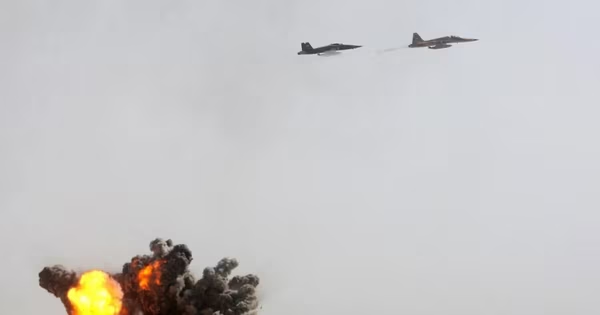
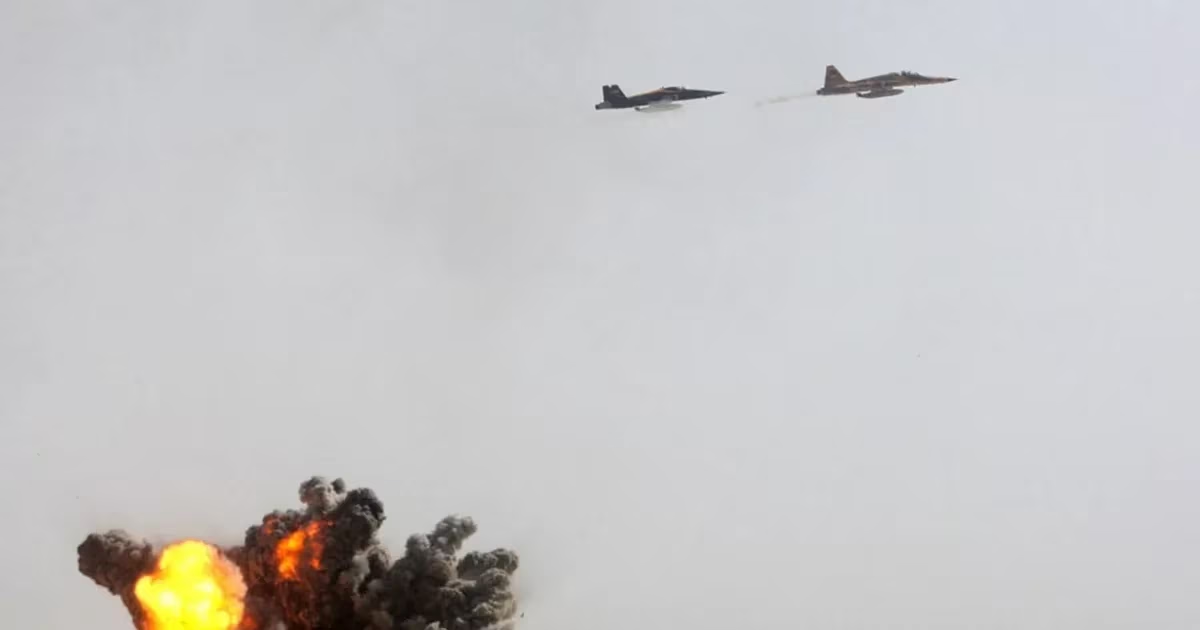
The military escalation led by the United States against the Islamic Republic of Iran has entered its fourth week, amidst intense airstrikes targeting facilities and lives. Despite the ferocity of the attacks, field data indicates that the declared objectives of the aggression have not yet been achieved, as the state has maintained its basic structure.
Observers believe that the loss of prominent leaders in the hierarchy of power has not led to the expected collapse or internal chaos that adversaries were banking on. Instead of popular protests condemning the authority, mass engagement in defending national sovereignty and dignity in the face of external threats has been observed.
Before the outbreak of direct confrontation, the American president exhausted all tools of military threat and intimidation, hoping for the Iranian leadership to retreat from its political positions. The American gamble was on a popular revolution that would overthrow the regime to spare the country the horrors of war, which did not happen on the ground.
The American side expressed clear astonishment at the continued Iranian resistance, with Trump questioning the secret behind not surrendering despite immense pressures. This question opens the door to understanding the nature of resilience that goes beyond traditional military calculations to dimensions related to identity and national dignity.
The inherent strength of the Iranian position relies on a philosophy that rejects dependency and considers freedom a value that cannot be bargained for, no matter the sacrifices. This type of will grants peoples the ability to endure grave risks in order to preserve their sovereignty and independent political decision-making.
For decades, political socialization in Iran has worked to mobilize society against what is described as 'global arrogance,' concepts that have been entrenched since the 1979 revolution. This socialization was not merely slogans but transformed into practical action in the face of successive international crises.
History recalls similar situations, such as the American embassy crisis that lasted 444 days, where Iranians bravely faced the threats of the Sixth Fleet. At that time, former President Jimmy Carter realized that dealing with a people who do not fear sacrifice requires completely different calculations than traditional wars.
The lack of fear of death in the Iranian political doctrine does not mean a desire for annihilation, but rather a means to defend a dignified and independent life. A life without sovereignty or moral values is considered in this perspective a meaningless existence, which reinforces the solidity of the internal front.
The symbolism of resilience is evident in the continued performance of duties by leaders from their official offices despite direct threats of assassination and bombing. Moreover, popular turnout on occasions such as International Quds Day reflects a clear message of defiance that leadership and people are in one trench.
Forecasts indicate that American dreams of imposing complete surrender will not be realized, no matter how high the material and human costs. Military technological superiority does not always guarantee decisive victories against peoples who possess a deeply rooted fighting doctrine that rejects humiliation and dependency.
The slogan 'Far be it from us to accept humiliation' represents a fundamental pillar in the Iranian collective consciousness, and it goes beyond being a political cry to become a doctrine that prevents defeat. This ideological dimension is what makes it difficult to impose settlements on 'victor and vanquished' terms, as happens in other conflicts.
It is likely that the aggressors will fail to achieve their strategic objectives, which may force them to seek safe exits and tempting settlements that save what remains of their face. Peoples who defend their existence possess long endurance and patience that aggressive powers do not have.
The next phase may witness attempts to reach an emergency truce or tempting settlements, but these will not erase the deep-seated animosity between the two sides. Each side seeks to build its own gains in preparation for future rounds of confrontation that seem inevitable given the conflicting interests.
Ultimately, Iranian resilience remains a phenomenon worthy of study from a political and social perspective, where national spirit intertwines with religious doctrine. The prospects of this resilience will determine the shape of new balances in the region for many years to come.
What can be done with people who do not fear death but seek it?
Share your opinion
Iranian Resilience in the Face of Escalation: A Reading of the Foundations and Future Prospects