OPINIONS

Thu 02 Apr 2026 3:56 pm - Jerusalem Time

Dancing on the Ladder!

Dr. Ibrahim Melhem

Editor-in-Chief

Few words

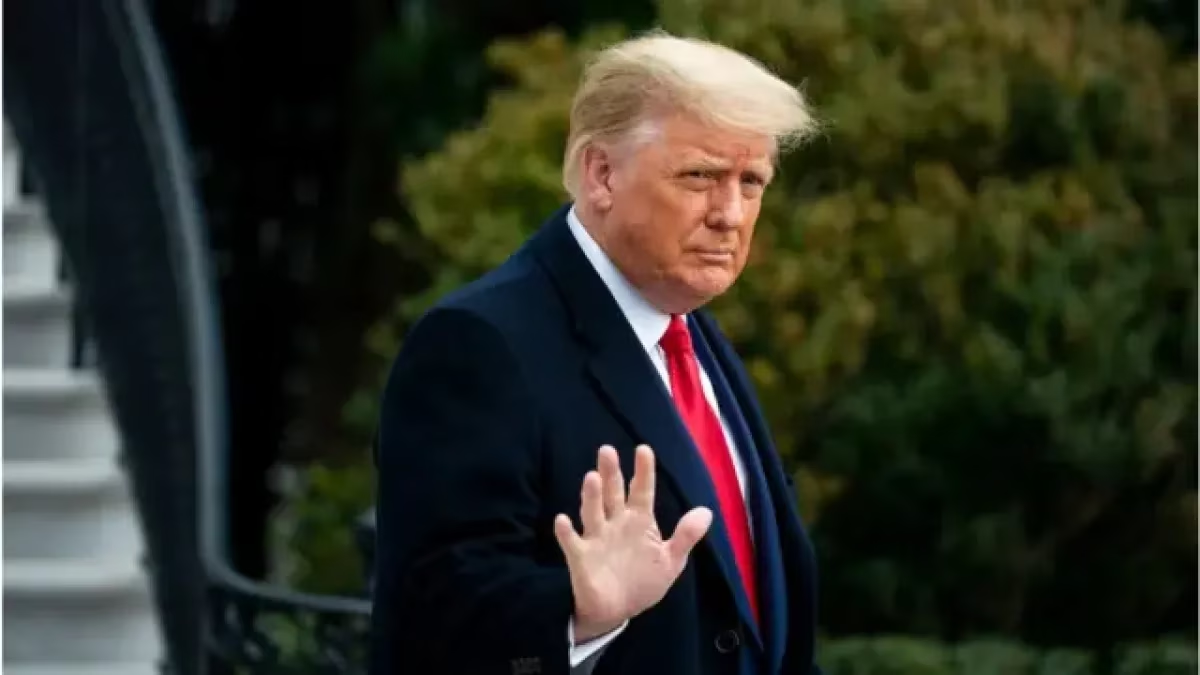
"The eccentric man" and "Goebbels" of America do not stop dancing on the rubble heaps in the region, driven by a burning ideology that shapes their thought and behavior, drowning them in the delusions of accelerating the illusory "moment of salvation" with the approaching battle of "Armageddon," in which they see themselves and their followers in "the ultimate enmity." These are "theopolitical" charlatanries that stand behind military decisions, fueled by the psalms of "Mr. Security," who inspired him with what he inspired of launching "easy" invasions with astonishing results, similar to the "Caracas invasion" in which he achieved what the ancients could not.

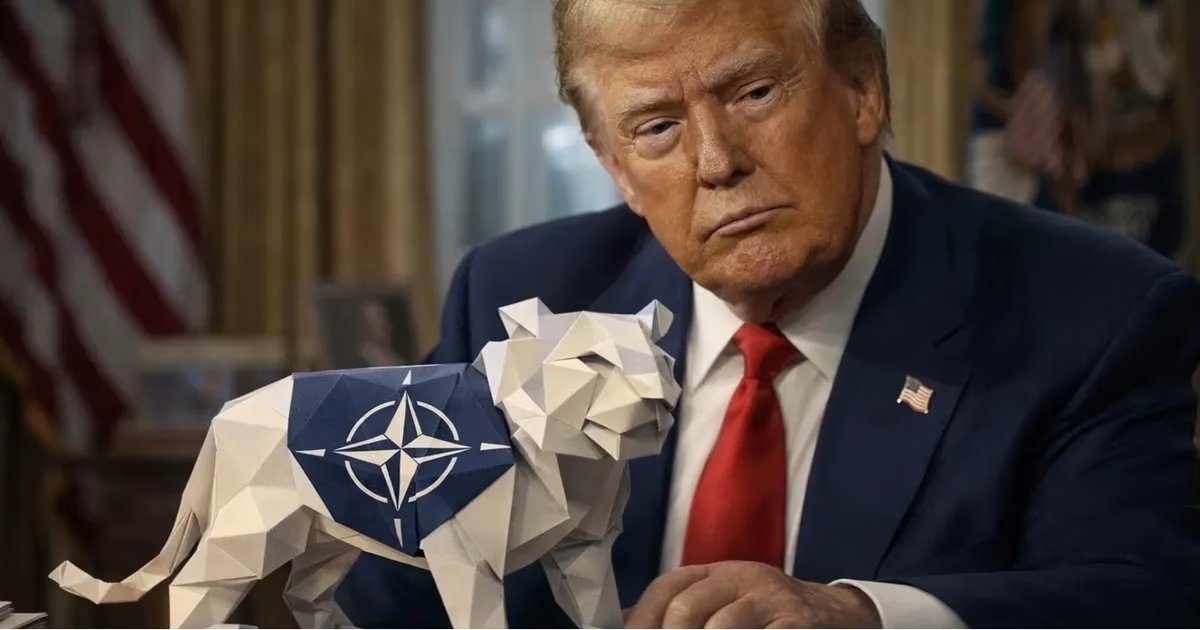
Over the past hours, Trump has issued a barrage of contradictory statements, sometimes trying to hold the stick by its middle, and other times striking his enemies and opponents indiscriminately. While he announces the imminent end of the war in response to an alleged request from Iranian leaders, which Tehran has denied outright, he threatens NATO with withdrawing its "nuclear umbrella" that shelters it from its neighbors, after its countries refused to go along with his proliferating and confusing wars, as he tried to swallow one of its stray islands by seizing it as he swallows a "hamburger," and he views national security as an "insurance contract" that can be canceled whenever he wishes.

"The article's title" is an Egyptian proverb used for someone who has lost their compass, neither gaining the satisfaction of those above them nor those below them. Trump failed to convince his NATO allies of the futility of his absurd wars, nor was he able to subjugate his enemies in Tehran to his impossible conditions. He became like one who is uprooted, neither covering ground nor keeping a back... and was content with returning with the spoils, after rejecting the advice of his advisors, so the saying of the pre-Islamic poet Duraid bin Al-Samma applies to him: "They did not see the advice clearly until the next morning." Will Trump announce the end of the war in his speech at dawn today?

OPINIONS

Thu 02 Apr 2026 3:56 pm - Jerusalem Time

Structural Contradiction in Trump's Discourse

Trump's discourse represents an embodiment of what can be termed in intellectual contributions as "structural contradiction in political discourse." Here, the disparity in statements is not understood as a flaw in logical sequence, but rather as a deliberate, multi-layered mechanism that seeks to produce meaning within the context of negotiating power. Therefore, the combination of escalation and de-escalation styles does not reflect unconscious duality, but rather reflects an ability to employ semantic multiplicity as a tool to control the scope of interpretation, allowing Trump to maneuver without being bound by definitive, closed positions.

Within this framework, we can say that contradiction and strategic ambiguity are central tools in this rhetorical pattern, which aims to weaken the other party's ability to build comprehensive expectations, thereby limiting its ability to make calculated decisions. In this sense, contradiction becomes a source of power used to rearrange and redistribute levels of uncertainty among active parties. However, although the ambiguous nature of the discourse suggests placing Iran in a state of cognitive uncertainty, Iran recognizes this manipulation and deals with it with full awareness.

On the other hand, at the level of the internal structure of the discourse, one can speak of an intentional popular duality, where statements are formulated in a way that allows for multiple readings depending on the different audiences receiving the political media discourse. We find that escalating statements about "striking energy sources and limited ground intervention" respond to the expectations of a large popular base seeking to demonstrate strength and decisiveness. In contrast, the tone of negotiation and de-escalation produces a rational discourse directed at elites and economic and international institutions, which provides the possibility of interaction and adaptation to several cognitive contexts simultaneously.

In a complementary context, it can be said that retracting, postponing, or modifying positions is not a contradiction in the traditional sense, but rather falls within a rhetorical pattern based on flexibility and continuous adjustment of strategies and power positions. Statements are not viewed from the perspective of their stability or factual accuracy, but rather by their function and strategic political and economic impact, and their ability to reshape collective perception.

However, this approach, despite the strategic flexibility it provides, raises fundamental problems: firstly, it weakens the obligatory value of the discourse, thus losing its function and credibility as a tool of reference to reality, which weakens confidence in the ability to achieve objectives. Secondly, it undermines the possibility of building stable scenarios, which increases the probabilities of strategic miscalculation.

For all the above, this discourse cannot be understood as mere unrelated contradictions, but rather must be read as a rhetorical pattern that offers a new reading of the role of language in shaping and exercising power, despite the multiplicity or difference of its interpretations. It is a discourse that may be employed to gain time and invest the element of surprise as a strategic tool, or it may reflect deliberate caution for fear of economic and military repercussions.

OPINIONS

Thu 02 Apr 2026 3:56 pm - Jerusalem Time

No to Kings! America.. Huge Protests Coming

Away from the heat of the war in the Middle East.. and the loss of Arabs between hegemonic projects, a battle is raging within America that is perhaps no less heated, even if its results will appear in the long run. The American states witnessed a wave of massive protests led by a movement calling itself "No to Kings" or No kings. This is the third wave of protests led by this movement, although it is the largest ever, and it is said that the number of participants reached about 9 million people in various American places and cities. The basic issue from which the idea of the "No to Kings" movement stems is to limit the expansion of the powers and strength of the president, who, from their point of view, has begun to act like a king. He renames public institutions after himself, hangs huge banners with his picture on government buildings, and his supporters and some of his ministers suggest to the general public that he has been granted divine support and that his decisions have a kind of infallibility and blessing. In addition to Trump's perpetually provocative behavior in attacking his opponents from all walks of life and types, and intimidating journalists. For example: he withdrew tax exemptions from left-leaning organizations and universities such as Harvard as a means of pressure due to the university's stance on pro-Palestine demonstrations during the Gaza war, and prevented $18 billion in funding for infrastructure in states governed by Democrats such as New York.

And the truth is, this is not the first time protests have occurred during Trump's era.. and this is expected because an administration like Trump's enjoys immense authoritarian power, as it dominates the three branches of government and is supported by financial and technological magnates, and therefore it is fertile ground for inciting discord and racism, and thus generating an opposing force in the streets against controversial Trumpian policies.

This time, the protests created a great echo within America and were discussed in intellectual and populist debates about their repercussions on political life in America and the extent of their impact on bringing about change, especially in light of the decision to go to war with Iran and the division of some symbols supporting Trump regarding the feasibility of the war. There is no doubt that the weight of the organizing body and its strategy play a major role in the uproar surrounding it, as the importance of the "No to Kings" movement stems from three important points:

First: It is a comprehensive and diverse organization of protest movements, progressive organizations, and alliances that include hundreds of labor unions, religious groups, and civil rights organizations of various stripes and goals, but they agree on opposing Trump's policies and the executive branch's overreach at the expense of the legislative and judicial branches.

Second: Its activities are not limited to protest only, but rather seek to transform the voices of millions of protesters into an electoral force that motivates youth to ensure participation in elections and pushes new candidates, whether in local and small cities or in Congress, to break the Republican Party's dominance over centers of power in the United States.

Third: It rejects violence, shies away from extremism, and adheres to peacefulness, unlike other anarchic protest movements, and has an intention of continuity, and for this reason, it finds a wide echo within American civil society because it expresses the spirit of democracy and American soft power, and it also announced upcoming protest activities in April.

The question is, will the movement succeed in restoring balance to American political life, or are the battles of American democracy not found in the arena of protests, but rather in secret settlements, suspicious deals, the influence of money, and party conspiracies? I believe that the upcoming congressional elections will settle this debate. Although I favor the Democrats winning, taking advantage of the momentum in the American street and the rising price of oil.

PALESTINE

Thu 02 Apr 2026 3:56 pm - Jerusalem Time

The occupation establishes a new military reality east of Gaza by building dozens of sites along the 'Yellow Line'

Field sources reported that the Israeli occupation army continues to strengthen its military and security presence inside the Gaza Strip, exceeding the recently concluded ceasefire understandings under international auspices. Occupation forces have begun constructing dozens of fixed military sites along what is known as the temporary 'Yellow Line,' a path extending from the far north of the Strip to its south, parallel to Salah al-Din al-Ayyubi Road, indicating the occupation's intention to transform this line into a new border reality that isolates the eastern areas.

The occupation army exploited the elevated terrain in the eastern region to establish these fortifications, ensuring full military oversight of the western areas of the Strip. Military bulldozers deliberately cleared and destroyed all surrounding civilian homes and facilities to create open spaces, and these sites were equipped with massive lighting poles operating around the clock to turn the area into military barracks visible to the naked eye from long distances.

These strategic sites are distributed in sensitive points, especially in the buffer zone between the cities of Rafah and Khan Yunis, and in the towns of Ma'an and Bani Suheila, extending to east of Deir al-Balah and the Bureij and Maghazi camps in the central region. Fortification operations also included the Shuja'iyya neighborhood east of Gaza City and wide areas in the north, thus imposing a military siege on all major population centers in the Strip.

In a related context, local sources confirmed the continued extensive bulldozing operations by the occupation of the remaining rubble in the eastern areas, coinciding with massive demolition operations of residential buildings. The past hours witnessed a field escalation represented by intense tank shelling and live ammunition fire, in addition to almost daily airstrikes targeting civilians in areas that the occupation had previously classified as 'safe.'

Estimates indicate that the occupation plans to use these military bases as launching points for managing complex security operations, which may include overseeing local armed militias operating under its command and intelligence agencies. These moves aim to create an alternative security reality that ensures the occupation's permanent control over the Strip's key points and prevents any attempt to restore national administration in the forcibly evacuated areas.

Since the start of the genocide war on October 7, 2023, the occupation authorities have deliberately destroyed all basic life components in Gaza, including water and electricity networks and hospitals, to make returning home impossible. Despite the ceasefire agreement coming into effect on October 10, 2025, Israeli violations have not stopped, as the occupation continues to systematically target citizens in various cities and towns.

Regarding human casualties, the latest statistics issued by the Ministry of Health revealed a massive increase in the number of victims, with the number of martyrs reaching 72,289, while the number of injured reached 172,040 with injuries of varying severity. Rescue teams still face extreme difficulties in recovering thousands of missing persons believed to have been martyred under the rubble of destroyed homes targeted by the occupation throughout the months of aggression.

Establishing these military bases nullifies the idea of temporary positioning and makes the Yellow Line a new border for the devastated Strip.

PALESTINE

Thu 02 Apr 2026 3:55 pm - Jerusalem Time

Settlers carry out bloody attacks in the West Bank (638) attacks against Palestinian citizens and demolition of (70) homes and facilities During last March

The Palestinian Labor and Planning Department of the Palestine Liberation Organization issued its monthly report on settler attacks and the demolition of homes and facilities in the West Bank and occupied Jerusalem, and the most prominent of what was stated in it:-

First: Attacks by settler gangs:

During last March, settler gangs carried out (638) attacks against Palestinian citizens and their properties, an increase of 177% over the same period last year 2025.

These bloody Nazi attacks resulted in the martyrdom of ten unarmed Palestinian citizens, who were killed in cold blood just because they decided to defend their land from intruders and newcomers to this land. The martyrs are: Nablus Governorate: Muhammad Taha Ma'mar (52 years old) and his brother Fihm Taha Ma'mar (48 years old) from Qaryut village, and the martyr Amir Mutasem Odeh (28 years old) from Qasra village. In Hebron Governorate: the martyrs Amir Muhammad Shanaran and Yusri Majed Abu Qubaita (31 years old) from Yatta town. In Ramallah and Al-Bireh Governorate: the martyrs Fara' Judat Hamayel (57 years old) and the martyr Thaer Farouk Hamayel (24 years old) from Khirbet Abu Falah town, and the martyr Raafat Ayed Arar (60 years old) from Qarawat Bani Zeid village. In Jerusalem Governorate: the martyrs Murad Radi Al-Shweiki (32 years old) from Al-Za'im town and the martyr Muhammad Ahmed Faraj Al-Malhi (37 years old) from Sharafat town. Meanwhile, (190) citizens were injured with various injuries as a result of being attacked by gunfire, beating, and stone-throwing, including (11) children and (7) women. These human losses recorded during March are considered the highest ever since the occupation of the West Bank in 1967.

The attacks included (30) shooting incidents, while criminal settler gangs destroyed and uprooted (729) fruitful trees, and stole and killed (1255) head of livestock belonging to Palestinian farmers with the aim of restricting them and raising the cost of their stay on the land. Meanwhile, (84) vehicles were damaged as a result of being burned or stoned, while settler gangs destroyed and burned (4) homes and agricultural, animal, and service facilities in villages and towns of the West Bank.

In the context of pastoral settlement expansion, the Labor and Planning Department monitored during the past month attempts to establish (12) new pastoral outposts, including the areas and villages of Al-Lubban Al-Sharqiya and Beit Amrin in Nablus Governorate, Al-Dhahiriya, Masafer Yatta, and Al-Samu' in Hebron Governorate, Turmus Ayya and Sinjil in Ramallah and Al-Bireh Governorate, Beit Iksa in Jerusalem Governorate, Tayasir and Ainun in Tubas and Northern Valleys Governorate, Sanur in Jenin Governorate, and Harmala in Bethlehem Governorate.

The criminal attacks were concentrated in Nablus Governorate (152) attacks, Hebron Governorate (125) attacks, Ramallah and Al-Bireh Governorate (111) attacks, Tubas and Northern Valleys Governorate (70) attacks, Jerusalem Governorate (51) attacks, Bethlehem Governorate (43) attacks, Salfit Governorate (41) attacks, Jenin Governorate (19) attacks, Qalqilya Governorate (17) attacks, Jericho Governorate (6) attacks, Tulkarm Governorate (3) attacks.

First: Demolition of homes and facilities:

During last March, the Israeli occupation authorities demolished (70) homes and facilities in the West Bank and occupied Jerusalem, including the demolition of (30) homes and (40) facilities, among them (12) self-demolition operations in the towns of Jabal Al-Mukaber, Beit Hanina, and Sur Baher in occupied Jerusalem, and Al-Samu' town south of Hebron Governorate, and Anza village south of Jenin Governorate, which their owners self-demolished to avoid paying exorbitant fines. The demolition operations included the governorates of Hebron, Jerusalem, Jericho, Ramallah and Al-Bireh, Nablus, Jenin, Qalqilya, Tubas, and the Northern Valleys.

In the framework of the collective punishment policy, the Israeli occupation army forces demolished two homes belonging to the families of martyrs and prisoners, claiming they carried out fedayeen operations. They are: the home of the family of prisoner Azmi Nader Abu Hleil from Dura town south of Hebron city, and the home of the family of martyr Mahmoud Imad Al-Aqqad in Nablus city.

Settler gangs continued to sabotage and destroy citizens' facilities in the villages and cities of the West Bank, where the department documented settlers burning and destroying four homes and facilities in the governorates of Nablus, Hebron, Tubas, and the Northern Valleys.

The occupation authorities issued (33) demolition and stop-work orders for homes and facilities, and the notifications included the governorates of Hebron, Jenin, Jerusalem, and Ramallah and Al-Bireh.

ISRAELI AFFAIRS

Thu 02 Apr 2026 3:55 pm - Jerusalem Time

Israeli Calls for a 'Madrid Conference 2' to Redraw a New Political Map for the Region

Calls are escalating in Israeli political circles to adopt a comprehensive diplomatic path that ends the protracted conflict on the Gaza, Lebanon, and Iran fronts. Observers believe that achieving a desired end to these confrontations requires a broad political settlement, stemming from the conviction that military force alone will not resolve the deeply rooted crises in the region.

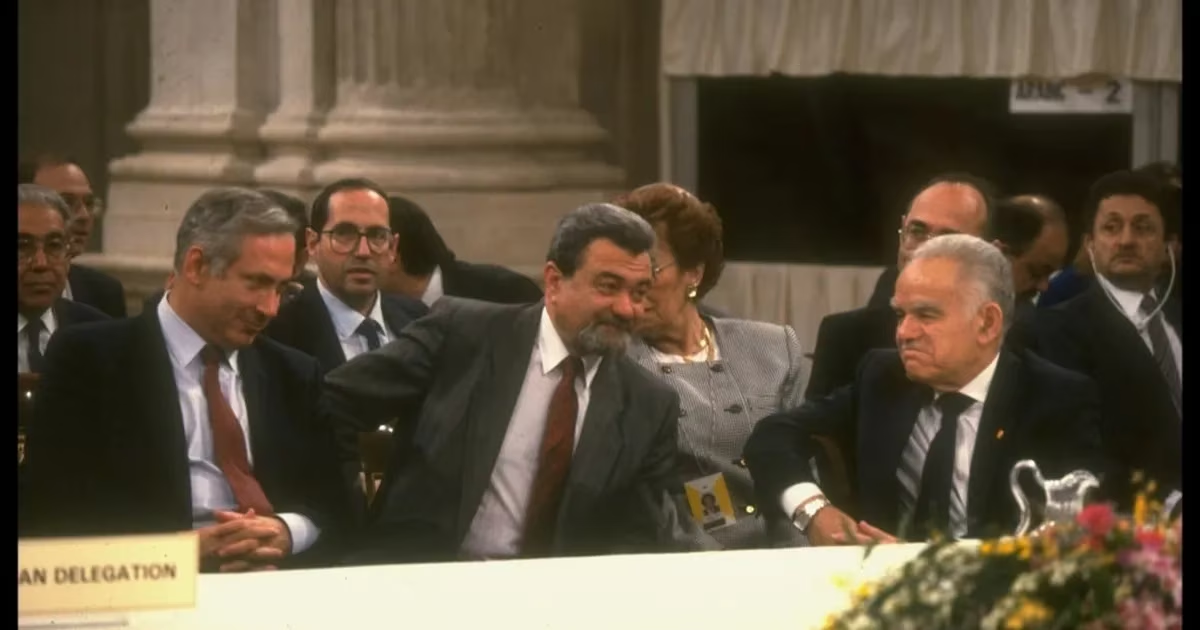
In this context, veteran diplomat Nadav Tamir reviewed the experience of the Madrid Peace Conference held in 1991 as a model that can be replicated and developed. Tamir pointed out that this conference represented the first attempt to open a direct dialogue between Israel, the Palestinians, and the surrounding Arab states under major international sponsorship.

Tamir explained in an analysis published by the occupation press that the original Madrid Conference came amidst a complex security reality and continuous wars, but the American leadership at the time realized the necessity of dialogue. He considered those discussions to be the first seeds that later led to the Oslo Accords, the peace treaty with Jordan, and eventually the modern normalization agreements.

The Israeli diplomat criticizes the absence of a comprehensive political vision in subsequent meetings held in Camp David and Annapolis, where the link between the bilateral and regional tracks was overlooked. He believes that the current leadership in Tel Aviv has become immersed in a reality that sees war as the only solution, making fighting a daily routine that exhausts all parties.

The analysis indicates that the world currently lacks the quality of leadership that prevailed in the early nineties, considering that the names put forward in the current American administration do not possess the same diplomatic weight. He also described current regional leaders as having turned the 'art of war' into a science, ignoring available opportunities to sit at the negotiating table.

Tamir believes that true victory over what he described as 'hostile forces' led by Iran requires building a regional alliance based on political and economic peace. He stressed that this path will not succeed without explicit recognition of the Palestinian people's right to self-determination and the establishment of their independent, viable state.

The analysis warned that ignoring the Palestinian issue, as successive Israeli governments have done, leads to the fueling of ongoing conflicts and the weakening of Israel's international legitimacy. It also criticized the approach of the Netanyahu government, which is working to entrench facts on the ground that undermine the chances of a two-state solution and prevent any real diplomatic progress.

The article proposes an urgent framework for regional peace talks once direct military operations cease, to avoid a dangerous political vacuum. This proposed framework includes Israel, the Palestinians, Lebanon, and Syria, in addition to active Arab states in the region to ensure the sustainability of any agreement.

Among the proposals was the idea of holding an 'updated Madrid Conference' in the Saudi capital, Riyadh, to leverage the Kingdom's influence and impact on various parties. It is believed that Riyadh's hosting of such an event would ensure broad regional commitment, especially since it was the initiator of the Arab Peace Initiative in 2002.

The Israeli diplomat calls for giving the new American administration an opportunity to build on previous successes to stop the war in Gaza and achieve a comprehensive agreement. He believes that this agreement must include a clear plan for a demilitarized Palestinian state, with precise security and political arrangements between Israel and its neighbors to the north.

The proponents of this idea believe that Donald Trump has the ability to turn military failures into major diplomatic successes if he pursues a path of comprehensive deals. The analysis indicates that Trump has significant influence over the Israeli right, which could enable him to change the current course led by Netanyahu.

The vision put forward by Tamir directly clashes with the current government's tendencies, which prefer the continuation of military operations to achieve its goals. Nevertheless, calls to return to the 'spirit of Madrid' represent a current within the Israeli establishment that sees regional diplomacy as the only way out of the cycle of bloodshed.

The analysis concludes by emphasizing that true stability will only be achieved by changing the path that leads to 'endless bloodshed.' It stresses the need to move from a state of permanent war to political agreements that guarantee security for all peoples of the region based on justice and mutual recognition.

The question remains about the extent to which international and regional powers will respond to such initiatives amidst the sharp polarization and widespread destruction left by recent wars. However, the proposal of 'Madrid 2' reflects a desire to seek a political horizon that ends the stalemate that the region has suffered from for many years.

Solutions to problems will be achieved through the negotiating table, not in endless rounds of fighting, and true victory requires concerted regional efforts to provide a joint response.

ARAB AND WORLD

Thu 02 Apr 2026 3:55 pm - Jerusalem Time

Trump Vows to Return Iran to the 'Stone Age' and Sets a Date for Ending Military Operations

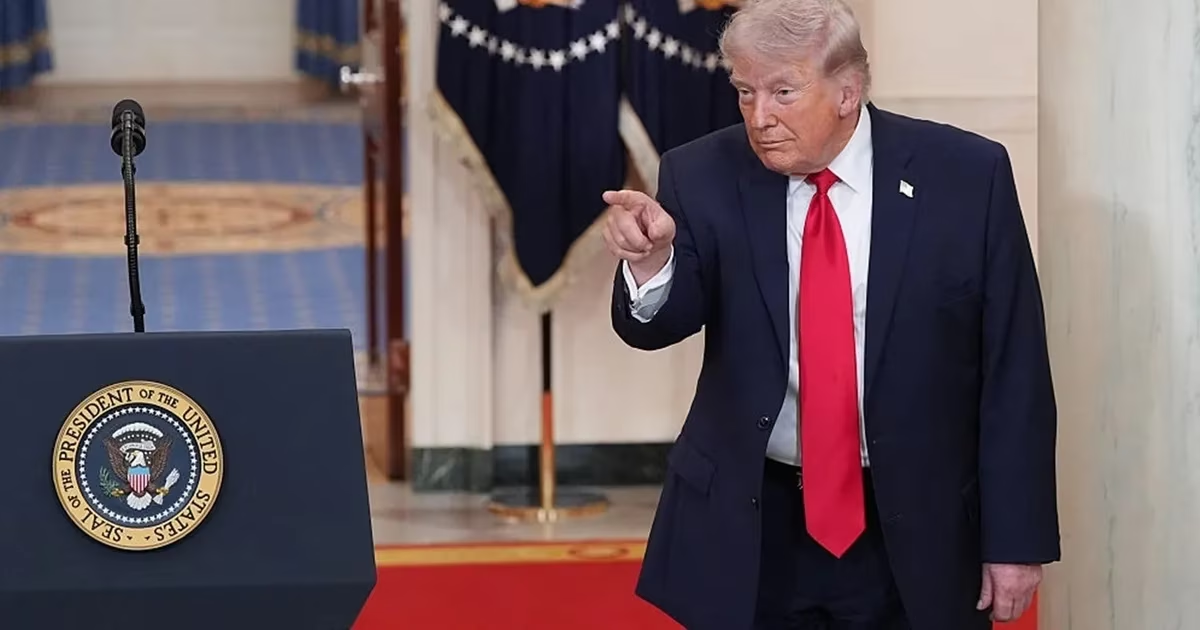
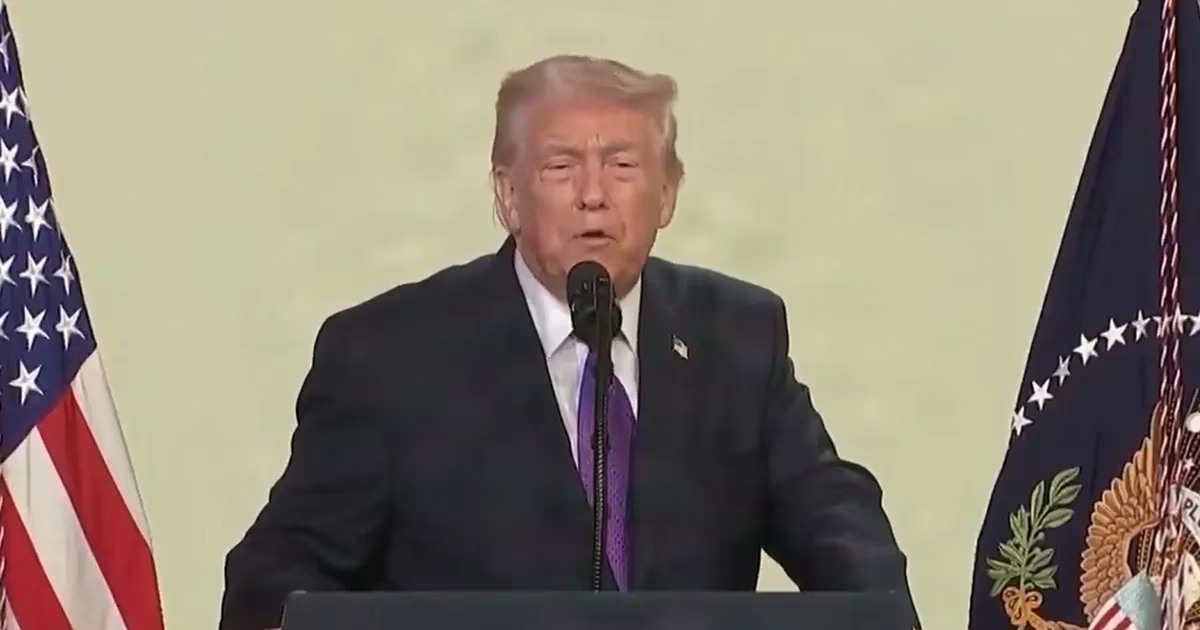
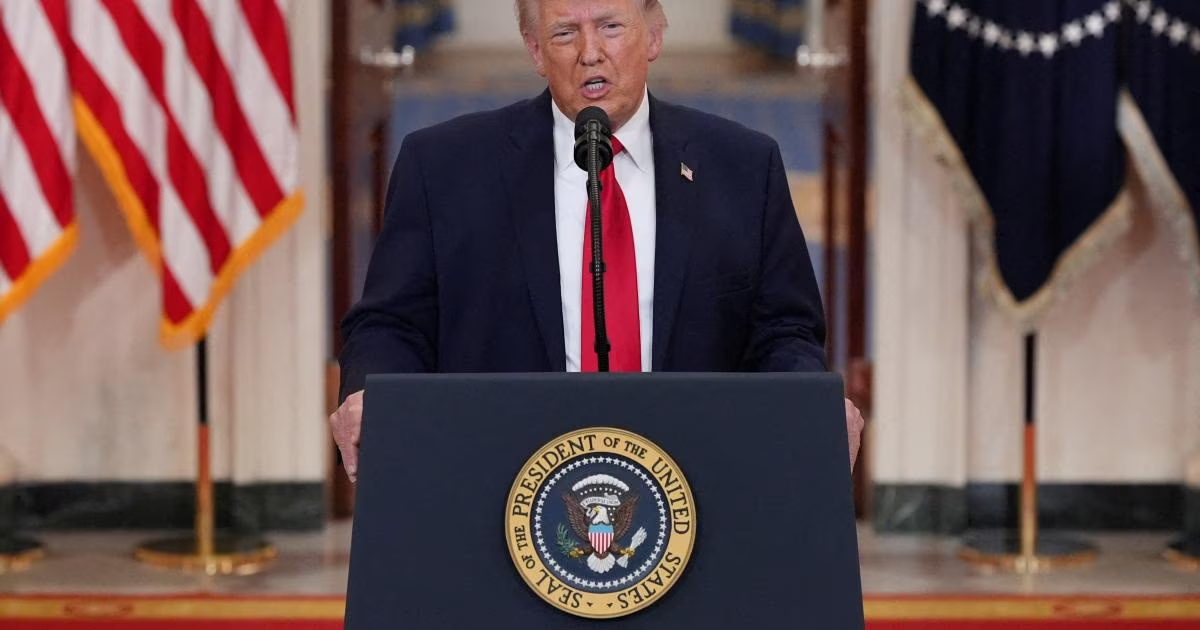
US President Donald Trump emphasized his country's commitment to achieving its military objectives against Iran, vowing to return it to the 'Stone Age' as a result of ongoing operations. Trump clarified in a speech on Thursday that Tehran no longer poses a real threat to American interests in the region, noting that Washington now possesses all the cards to control the course of the conflict.

The US President revealed an anticipated timeline for ending combat operations, expecting American forces to complete their missions within a period of two to three weeks. He affirmed that current discussions focus on delivering decisive and severe blows during this period to ensure the systematic dismantling of the Iranian regime's capabilities that threaten US national security.

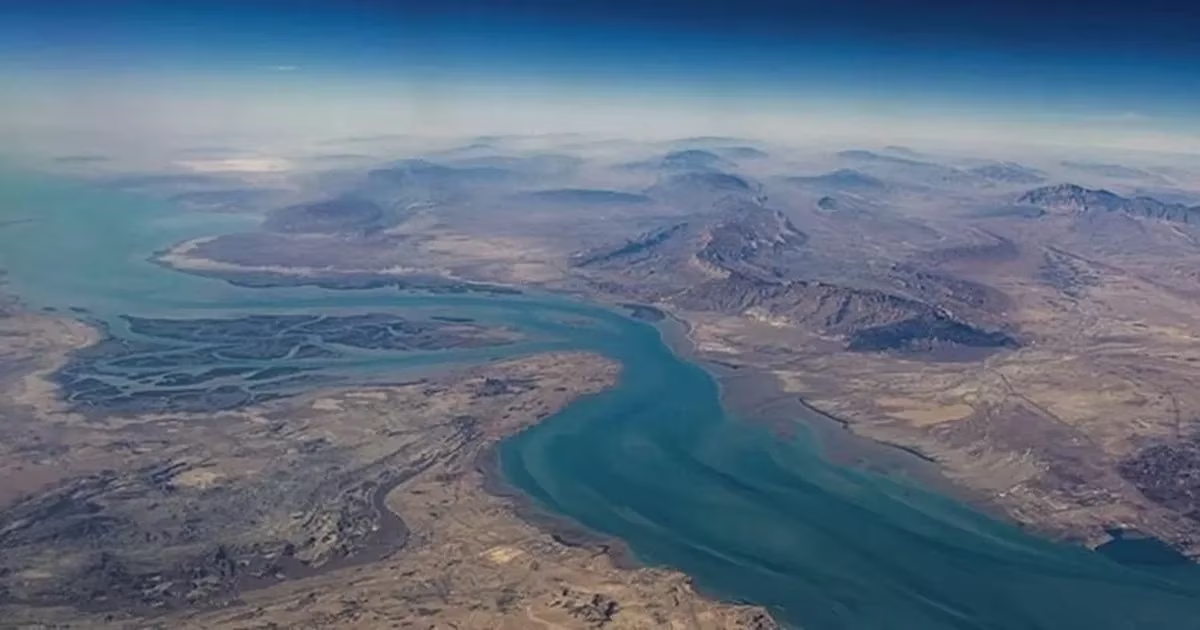
Regarding international waterways, Trump reassured global markets that the Strait of Hormuz would open normally once the current conflict ends. He indicated that the United States no longer relies on this passage for oil imports, calling on countries that benefit from navigation there to bear their responsibilities in protecting the security of the shipping lane and securing their tankers.

Trump described Iran's current state as 'completely devastated' militarily and economically, considering that the most difficult part of the confrontation has already ended. He added that the Iranian regime's naval forces have completely disappeared, while the air force suffers from widespread destruction due to concentrated airstrikes targeting vital facilities.

The US President addressed the nuclear file, stressing that the Iranian regime cannot be trusted with possessing weapons of mass destruction. He accused Tehran of attempting to build its nuclear program in secret and various locations, emphasizing that ending the previous nuclear agreement was a necessary step to protect the world from the regime's ambitions, which he described as fanatical.

Regarding economic repercussions, Trump downplayed the recent rise in gasoline prices within the United States, describing it as a 'short-term' increase. He held the Iranian regime fully responsible for the disruption of energy markets due to what he described as insane attacks on oil tankers before its military capabilities were neutralized.

Trump noted that the US armed forces achieved swift and decisive victories over the past four weeks on the battlefields. He affirmed that the primary strategic objectives set by the US administration for this war are nearing final realization, paving the way for a quick and decisive closure of this file.

In a related context, sources reported that the 'Epic Rage' operation led by Washington precisely targeted missile launch platforms and military production facilities deep within Iran. These statements come at a time when news is circulating about the deployment of thousands of additional US troops to the Gulf region to enhance ground control and secure achieved gains.

On the internal Iranian front, Trump claimed that most of the regime's leaders, whom he described as terrorists, had died during recent military operations. He accused the regime of killing about 45,000 of its citizens during its years in power, asserting that the United States is winning today more than ever in confronting the leading state sponsor of terrorism.

For its part, Tehran officially denied reports of its request for a ceasefire, describing the US President's statements as mere 'lies' aimed at media consumption. Iranian sources insist that resistance continues despite the extent of the destruction inflicted on the country's infrastructure, military, and electrical facilities.

In Washington, recent opinion polls conducted by international institutions showed that about 60% of American voters oppose continuing this war. Despite this popular pressure, the White House appears committed to the timeline set by military leaders to complete the mission and destroy what remains of the Iranian regime's capabilities.

Reports indicate that upcoming American threats may include comprehensively striking all power generation stations and the electrical grid in Iran. This escalation, according to observers, aims to paralyze the remaining joints of the Iranian state and force it to full surrender to American conditions before the specified deadline.

Trump concluded his remarks by affirming that the United States will complete the mission very quickly and will not allow the conflict to drag on longer than planned. He stressed that American military power has proven its absolute superiority in the field, making the coming days crucial in drawing a new roadmap for the region free from Iranian threats.

We have all the cards, and they have no cards... We can hit their oil, and we will finish the job very quickly.

ARAB AND WORLD

Thu 02 Apr 2026 3:55 pm - Jerusalem Time

Trump Renews Attack on NATO Over Strait of Hormuz: Deep Divisions Over Internationalizing Conflict with Iran

U.S. President Donald Trump has once again launched scathing criticism at the North Atlantic Treaty Organization (NATO), accusing it of failing to support efforts to secure navigation in the Strait of Hormuz. This attack comes in the context of Washington's ongoing attempts to internationalize the conflict with Iran and involve international powers in military operations led by the United States in cooperation with Israel.

The current U.S. administration seeks to persuade member states of the alliance of the necessity of direct involvement in protecting vital waterways, and to alleviate the financial and military burdens on Washington and Tel Aviv. Observers believe that Trump aims, through these pressures, to transform the confrontation with Tehran from a bilateral conflict into an international security issue for which allies are responsible.

In contrast, NATO countries show strong reluctance towards these demands, refusing to send naval frigates or combat forces to the Gulf region. These countries maintain that the current war does not fall within the alliance's defensive missions, but rather is a result of unilateral policies adopted by the Trump administration in coordination with the Israeli government.

Diplomatic sources reported that major European capitals view American moves as an attempt to drag them into a conflict that does not serve their strategic interests in the region. These sources confirm that the alliance countries prefer diplomatic paths to de-escalate tension, rather than military escalation that could lead to a permanent closure of waterways.

Despite the alliance's history of military intervention in areas such as Libya, Kosovo, and Afghanistan, the situation with Iran appears different for Europeans. In previous cases, there was a UN Security Council cover or collective consensus, which is lacking in the current action in the Strait of Hormuz.

Trump bases his pressures on the enormous military power possessed by the alliance, which includes about 3.5 million soldiers and more than 20,000 warplanes. The U.S. President believes that these capabilities should be harnessed to protect common interests, including global energy security that passes through the Strait of Hormuz.

For his part, French President Emmanuel Macron stressed that Paris is not currently considering participating in any military operations to secure the strait. This French position reflects a state of European caution towards being drawn into the American escalatory vision in the Middle East.

In London, British Prime Minister Keir Starmer indicated that his country is considering alternative plans to secure navigation, but he clearly affirmed that any move would not be under the umbrella of NATO. This position reinforces the isolation Trump faces in his attempt to activate Article 5 of the alliance's charter in this conflict.

As for Germany, it was more explicit in its rejection, as official sources in Berlin confirmed that the ongoing war has nothing to do with NATO's defensive obligations. Other countries such as Japan, Australia, and Spain joined the list of those rejecting any direct military intervention, preferring to stay away from the front lines.

In Brussels, EU foreign policy chief Kaja Kallas revealed the absence of any desire among foreign ministers to contribute to reopening the strait by force. This European consensus indicates a deep gap in strategic visions between the two sides of the Atlantic regarding how to deal with the Iranian file.

Despite Trump's repeated threats to withdraw from the alliance and his description of it as 'obsolete,' legal and political reality limits his ability to take such a step. New U.S. legislation imposes strict restrictions on any decision to withdraw from major international treaties without broad legislative approval.

Analysts believe that Trump's aggressive rhetoric primarily aims at political blackmail to gain financial benefits and increase member states' contributions to the defense budget. However, the allies' insistence on their position may lead to further tension in transatlantic relations in the coming period.

The Strait of Hormuz remains a focal point in the current geopolitical conflict, where global energy interests intertwine with complex military calculations. While Washington continues to pressure, allies remain steadfast in their refusal to turn NATO into a tool in wars they see no need to engage in.

The ongoing war is not the alliance's war; it is a conflict started by the Trump and Netanyahu administrations, and we have no stake in it.

ISRAELI AFFAIRS

Thu 02 Apr 2026 8:43 am - Jerusalem Time

Double missile attack targets Tel Aviv, cluster munitions fall in vital areas

The greater Tel Aviv area experienced an unprecedented state of security alert today, Wednesday, for weeks, as sirens blared five consecutive times within just eight minutes. This escalation forced millions of settlers to remain in shelters for extended periods, amid estimates indicating the launch of about ten ballistic missiles from Iranian territory towards the center.

Media reports confirmed that the attack was a coordinated double strike between Iran and Lebanese Hezbollah, putting Israeli air defense systems under severe pressure. Despite interception attempts, shrapnel and cluster munitions fell in strategic locations, causing fires and extensive material damage in several settlements.

In the city of Holon, southeast of Tel Aviv, violent explosions were heard due to falling projectiles, while 14 people sustained various injuries in the Bnei Brak area. These injuries come amid intense fire targeting residential areas and vital areas deep in the center, reflecting a development in the offensive capabilities of the perpetrators.

Regarding human casualties, a young man died in the city of Ramat Gan, east of Tel Aviv, after losing consciousness due to shock and panic during the blaring of sirens. Haaretz newspaper described the scene as chaotic, with millions rushing to underground fortifications in quick succession, leading to a complete paralysis of public life within the city.

Field sources reported that the Israeli army is now facing difficulty in containing these barrages, which have begun to rely on the numerical density of missiles at one time. It was noted that Israeli military discourse has begun to change, with statements that previously spoke of destroying launch platforms by specific percentages receding, contenting themselves with referring to continuous attempts to thwart threats.

Observers believe that this day recorded the highest number of missile alerts since the outbreak of the current confrontation, which weakens previous Israeli expectations of the army's ability to quickly resolve the missile battle. Official estimates at the beginning of the war indicated the possibility of ending the Iranian threat within days, but the reality on the ground proves otherwise with the continued flow of barrages.

In a related context, press sources indicated that the use of cluster munitions in the bombing represents a new phase of escalation aimed at inflicting the greatest possible material and moral losses. The state of maximum alert continues in all Israeli ambulance and rescue services in anticipation of additional waves of bombing that may be launched in the coming hours from multiple fronts.

Current data indicate an escalation of attacks, as Iran is no longer launching a single missile but rather salvos of up to ten missiles towards Tel Aviv.

PALESTINE

Thu 02 Apr 2026 8:43 am - Jerusalem Time

Behind the Scenes of US Sanctions on Albanese: Did Targeting 'Tech and Defense Giants' Drive Washington's Retaliation?

International press reports have revealed intriguing details regarding the United States' decision to impose severe sanctions on the UN Special Rapporteur on the situation of human rights in the Palestinian territories, Francesca Albanese. Sources indicated that the Italian legal expert learned of the decision while delivering a lecture in the Slovenian capital, where she was informed that Washington had decided to financially isolate her and restrict her and her family's movement in an unprecedented manner.

Data suggests that the US sanctions were not merely a reaction to Albanese's political statements, but a direct result of her legal actions against major American economic interests. Albanese had sent official letters to 48 companies, universities, and financial institutions, including giants like 'Alphabet,' 'Lockheed Martin,' and 'Chevron,' warning them against complicity in the genocide being committed by the occupation in the Gaza Strip.

Sources quoted a former White House official as saying that targeting American companies and executives was the 'red line' Albanese crossed, prompting the Trump administration to act swiftly. The official confirmed that anti-Israel sentiment within the UN corridors might be common for Washington, but threatening the commercial interests of the energy, technology, and innovation sectors necessitated a decisive punitive response to halt this trajectory.

Albanese is currently facing a situation described as 'financial ostracism,' with banks freezing her accounts, health insurance companies ceasing to deal with her, and her hotel reservations and academic email being canceled. The UN rapporteur relies on cash assistance from friends and family for her daily living in Tunisia, describing the American measures as behavior akin to 'mafia' practices to intimidate free voices.

In a notable legal development, Albanese's minor daughter, a US citizen, filed a lawsuit in a Washington court to challenge these sanctions, given her mother's inability to litigate under UN rules. The lawsuit is based on the violation of the right to freedom of expression, considering that sanctions typically imposed on terrorists and drug lords were used here to silence a human rights expert performing her professional duty.

For its part, the US administration did not stop at imposing sanctions but also contacted the UN Secretary-General to inquire about Albanese's immunity, which the latter considered a 'betrayal.' The Secretary-General clarified that Albanese's correspondence with companies was in a personal capacity, which provided Washington with a legal loophole to proceed with its repressive measures without clashing with international diplomatic immunities.

On the ground, Albanese's family in Tunisia is experiencing a state of security concern after suspicious incidents, including tampering with hotel room belongings and placing broken glass in front of their doorstep. Her husband, an economist at the World Bank, believes these harassments aim to pressure her to resign, especially after she received unofficial messages from parties close to the US administration urging her to leave quietly.

Despite these pressures, Albanese continues her work from her office in Tunisia, where she has issued harsh legal reports under titles such as 'Anatomy of a Genocide.' The UN rapporteur asserts that her silence in the face of what is happening in Gaza would be tantamount to complicity in the crime, emphasizing that describing her as an activist is not an insult but the essence of human rights work in the face of systematic violence and historical injustice.

In contrast, the Israeli mission to the United Nations continues its campaign against Albanese, describing her as a 'chaos agent' and an inciter of antisemitism. The occupation authorities claim that Albanese's reports distort facts and diminish the 'Holocaust,' accusations that the Italian expert rejects outright, considering them an attempt to whitewash crimes committed against Palestinians.

Albanese enjoys widespread support from international human rights organizations and more than 50 progressive Jewish groups, who viewed the US sanctions as a dangerous escalation threatening the independence of UN experts. Her supporters believe she represents a rare voice that broke the barrier of international silence regarding what is happening in Gaza, especially after the number of victims reached catastrophic levels documented by medical and human rights organizations.

Reports indicate that the American companies that sought assistance from the White House belong to vital sectors in the current administration's agenda, particularly in artificial intelligence and defense. These companies considered Albanese's messages a legal and reputational threat that could affect their international investments, making their protection a top priority for decision-makers in Washington.

Albanese's current situation reflects the scale of the conflict between international law and major geopolitical and economic interests, where financial weapons are used as a tool for political punishment. Albanese asserts that what she is experiencing is the price of 'poking the bear in the eye,' referring to her boldness in calling things by their names and directly accusing the powers that fund and support the occupation.

As the legal battle continues in US courts, the position of the Special Rapporteur for the Palestinian territories remains under direct targeting, putting the credibility of international institutions at stake. The sanctions have not only affected Albanese as an individual but also the UN's ability to protect its experts and ensure their independence in documenting human rights violations around the world.

In conclusion, Albanese affirms that the pain suffered by Palestinians in Gaza and the West Bank far exceeds any personal suffering resulting from sanctions or financial restrictions. She emphasizes that she will continue to perform her mission until her last breath, considering that justice for children and victims is the primary driver of her steadfastness in the face of what she describes as organized smear and intimidation campaigns.

I was scared and said to myself: what mafia, but they will not break us.

ANALYSIS

Thu 02 Apr 2026 8:43 am - Jerusalem Time

New York Times: Trump must trade 'survival of the Iranian regime' for enriched uranium

Amidst increasing military complexities between Washington and Tehran, calls have emerged from within the American analytical elite urging President Donald Trump to re-evaluate his strategic goals. Writer Thomas Friedman, in an article in the 'New York Times,' considered that the only available way out currently is to secure Iran's stockpile of enriched uranium, instead of clinging to the illusion of regime change, which facts have proven difficult to achieve.

Friedman pointed out that Trump and Israeli Prime Minister Benjamin Netanyahu waged a war on Iran based on false assumptions about the ease of overthrowing the authority there. This miscalculation led to underestimating the Iranian leadership's military resilience and its ability to threaten America's allies and close the world's most important waterways for energy transport, putting the global economy at risk.

The article touched upon the confusion experienced by the White House, where Trump issues contradictory statements about imminent victory at one time, and his inability to regain control of the Strait of Hormuz at another. This confusion reflects the absence of a clear plan for after military escalation, making the American administration appear as if it is placing the world's strongest army in a highly explosive environment without the slightest security precautions.

Friedman strongly criticized the government formation surrounding Trump, describing it as chosen based on personal loyalty rather than competence or commitment to the Constitution. He highlighted Secretary of Defense Pete Hegseth, pointing to reports about his adoption of extremist religious beliefs calling for the practice of 'overwhelming violence' against opponents, which transforms political conflict into a dangerous ideological confrontation.

Regarding the proposed solution, the writer believes it is necessary to simplify American demands to be limited to two fundamental items that guarantee regional security. The first item is Tehran's abandonment of more than 950 pounds of highly enriched uranium, in exchange for the second item, which is official American guarantees not to seek to overthrow the Iranian regime or target its political stability.

This trade-off, according to the article, will lead to an end to all mutual hostilities, including aerial bombardment, ballistic missiles, and the blockade of maritime passages. It will also prevent the United States from sliding into a ground war on Iranian soil, a step everyone fears due to its catastrophic consequences for the stability of the entire Middle East.

Friedman quoted Professor John Arquilla as saying that the essence of the conflict lies in the Iranian regime's desire to survive, versus Washington and Israel's desire to prevent a nuclear bomb. Arquilla believes that both parties can achieve their primary goals if they have the courage to concede secondary goals that hinder reaching a comprehensive and sustainable settlement.

It appears that Trump has already begun paving the way for this tactical retreat, having recently described Iranian leaders as 'very rational' in surprising statements to reporters. Friedman considered this description nothing more than a cover for Washington and Israel's attempt to conceal their overestimation of their ability to resolve the conflict through air power alone without ground intervention.

Leaked information indicates the existence of back-channel negotiations taking place through Pakistan, where Trump's team is communicating with Iranian Parliament Speaker Mohammad Bagher Ghalibaf. Ghalibaf, who has wide influence within the Revolutionary Guard, is believed to be the party capable of striking a deal that guarantees the regime's survival in exchange for fundamental concessions on the nuclear file.

The article compared Trump's reckless approach with former President Barack Obama's policy, which was based on a deep understanding of the complexities of the Iranian scene. The 2015 agreement succeeded in imposing strict restrictions on the enrichment program, keeping Iran far from a nuclear bomb with enough time for an international response, which Trump destroyed with his unilateral withdrawal.

After years of 'maximum pressure' policy, the United States found itself facing a bitter reality, where the time Iran needs to produce a nuclear weapon has shrunk from a full year to a few weeks. This strategic failure places the current Trump administration before difficult choices, the least bad of which is bitter, in the absence of any effective alternative to the agreement that was torn up in 2018.

Friedman emphasizes that simplifying the problem is the only way to a solution, by providing guarantees to stop the destruction of Iranian infrastructure and ease crippling oil sanctions. In return, Tehran must hand over all fissile materials that can be used in nuclear weapons under strict international supervision to ensure no return to escalation.

The success of this vision depends entirely on the Iranian leaders accepting this deal, which puts Trump's political fate in the hands of his sworn enemies in Tehran. The writer considered that matters reaching this point is conclusive evidence of the failure of American foreign policy that relied on threats without possessing the real tools for implementation.

In conclusion, Friedman warns that continuing the 'regime change' approach will inevitably lead to a comprehensive regional war from which no one will emerge victorious. Therefore, returning to the logic of mutual interests and securing the nuclear file as a top priority is the only rational option remaining to avoid a major explosion in a region that cannot tolerate more crises.

Trump must abandon his 15-point plan and condense it into two points: Iran giving up highly enriched uranium in exchange for Washington giving up its efforts to change the regime.

ANALYSIS

Thu 02 Apr 2026 8:42 am - Jerusalem Time

The Strategy of Patience: How Beijing Plans to Seize Global Hegemony from Washington Through the Iranian Conflict?

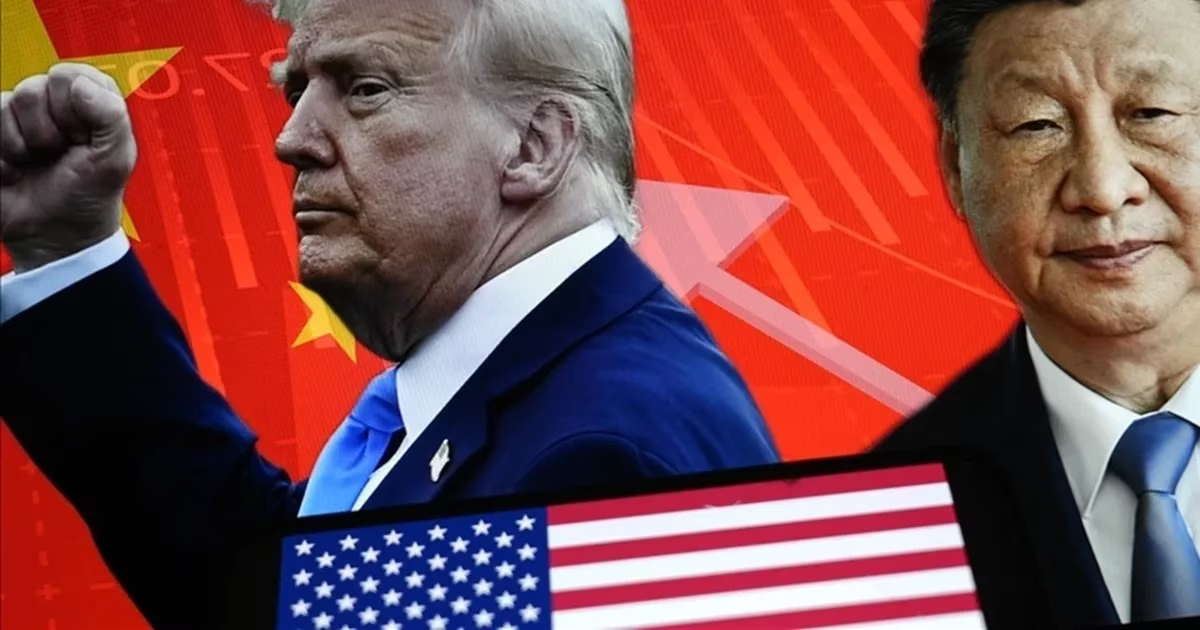
The political leadership in Beijing is closely watching the military escalation led by the United States against Iran, viewing this conflict as a strategic window to enhance its presence on the international stage. Chinese political circles believe that Washington's involvement in a long-term conflict could open the door for exploiting diplomatic and economic vulnerabilities that the American administration might leave behind.

According to recent international press reports, Beijing is betting that the current war will inevitably lead to a shift in the balance of power in the Middle East in a way that does not serve traditional American interests. While Washington's operations aim to undermine the Iranian regime and curb its nuclear ambitions, China believes that these moves may reveal the limits of actual American power in protecting its regional allies.

Analytical readings indicate that China is adopting a strategy based on careful observation and calm, far from any direct military involvement in the conflict. This vision relies on a historical Chinese principle that advocates letting the adversary drown in their mistakes without interruption, giving Beijing an opportunity to reposition itself as a rational and balanced superpower in the face of what it describes as American impulsiveness.

Energy is one of the fundamental pillars in Chinese calculations, with Beijing carefully monitoring the war's effects on international shipping lanes and oil and gas flows. Since the global economy is closely linked to the stability of energy shipments, any disruption in this sector could give China new leverage to expand its economic influence by offering commercial and diplomatic alternatives to affected countries.

Beijing is currently seeking to intensify its contacts with Asian and European capitals that are concerned about the repercussions of military escalation in the region. These diplomatic moves aim to build new alliances based on mutual interests and present the Chinese model as a reliable and more stable partner compared to American policies characterized by volatility and reliance on hard power.

The weakness that may appear in the United States' ability to secure its allies in the region represents, from a Chinese perspective, a golden opportunity to strengthen its own deterrent power. This ambition is not limited to political influence but extends to technological and economic hegemony, as Beijing tries to fill the vacuum that Washington's preoccupation with exhausting regional wars might leave.

Amidst this intense competition, China emerges as a player skilled in the art of waiting, betting that American attrition in the Middle East will inevitably lead to a decline in focus on the Indo-Pacific region. This strategic shift is what Beijing aspires to establish itself as the sole pole in Asia, and then move towards leading the new global order.

Sources confirm that the Chinese leadership carefully studies every American military step and analyzes international reactions to it to draw lessons. For Beijing, the war against Iran is not just a military confrontation, but a real test of the resilience of American hegemony in the face of complex geopolitical challenges posed by rising powers.

Economic diplomacy also plays a pivotal role in the Chinese plan, with massive infrastructure investments being utilized to link countries affected by the conflict to the Chinese economic system. This linkage creates a kind of soft dependence that Beijing prefers over direct military confrontations, thereby strengthening its soft power in the long run.

On another note, analysts believe that China benefits from the dispersion of American efforts across multiple fronts, which weakens Washington's ability to impose effective economic sanctions against Beijing. This dispersion gives Chinese companies greater room for maneuver and growth in global markets that were previously under absolute American dominance.

The current Chinese stance reflects a deep desire to reshape international rules in line with its aspirations as a great power. By observing the course of the war in Iran, Beijing hopes to prove that the American model of crisis management is outdated, and that the world needs new leadership that provides security and prosperity without constant recourse to arms.

Reports indicate that Beijing has already begun to strengthen its presence in international institutions, taking advantage of the global division over the American war. This move aims to pull the rug out from under Washington's feet in UN organizations and shift the compass of international decision-making towards a vision more aligned with Chinese, Russian, and their allies' orientations.

Ultimately, the American war against Iran remains a catalyst that may accelerate the transition to a multipolar international system. China, with its characteristic strategic patience, seems ready to inherit global influence should American steps falter, relying on a solid economic base and a long-term political vision that transcends the limits of immediate conflicts.

The question remains in the corridors of global research centers about Washington's ability to avert these risks before it's too late. While American cannons are engaged on battlefronts, Chinese minds continue to draw new maps of influence, relying on a quiet strategy that may change the face of the world in the coming decades.

Never interrupt your enemy when he is making a mistake; this is the rule Beijing follows in observing American blunders in the Middle East.

ARAB AND WORLD

Thu 02 Apr 2026 8:41 am - Jerusalem Time

Trump threatens Iran with 'severe' strikes, confirms 'Epic Rage' operation nearing decisive phase

US President Donald Trump affirmed his country's continuation in implementing its military strategy against Iran, emphasizing that the operation named 'Epic Rage' will not stop until all strategic objectives are achieved. Trump clarified in a speech to the nation that American forces have succeeded in destroying large parts of Iran's capabilities, considering that the most difficult phase of the confrontation has already ended.

Sources reported that the US administration believes that the objectives related to neutralizing Iran's missile arsenal and production facilities are on the verge of full completion. The US President indicated that the Iranian naval forces have been annihilated, ensuring the security of the region from threats that Tehran posed to international navigation, and preventing it from possessing nuclear weapons forever.

In a new escalation, Trump threatened to launch devastating strikes targeting the power generation and electricity network across Iranian territory if an agreement satisfactory to Washington is not reached. Trump described the next phase as 'extremely severe,' noting that operations could continue for an additional two to three weeks to ensure complete surrender.

According to informed sources, Trump is adopting a hardline rhetoric aimed at pressuring the Iranian regime to accept American conditions unconditionally. His statements included a threat to return Iran to the 'Stone Age,' referring to the extent of destruction expected to be inflicted on infrastructure and services if Iran continues to reject American demands.

Domestically, recent opinion polls conducted by international institutions showed that the current war does not enjoy widespread support among American voters, especially independents. A poll indicated that about 60 percent of citizens oppose the continuation of the armed conflict, while 66 percent demand a rapid end to military involvement to avoid further losses.

Despite these popular pressures, US military movements continue to escalate, with field reports confirming that thousands of additional troops are en route to the Gulf region. These movements reflect the White House's desire to keep all military options on the table, including the option of full-scale escalation if field necessity dictates.

In a related context, the Iranian Ministry of Foreign Affairs categorically denied Trump's claims regarding Tehran's request for a ceasefire, describing them as false narratives. The spokesperson for the Iranian Foreign Ministry affirmed that his country had not requested any truce, emphasizing the steadfastness of Iranian forces in the face of what he described as continuous American aggression for more than a month.

For his part, JD Vance, the US Vice President, entered the crisis by sending firm messages to Tehran, warning that the US administration's patience was running out. Vance held talks with international mediators to discuss the repercussions of the conflict, stressing that pressure on Iranian infrastructure would double if Iranian behavior in the Strait of Hormuz did not change.

Reports indicate that Trump is simultaneously considering options for de-escalation and conditional withdrawal, having hinted at the possibility of ending the war even if Iran refuses to fully open the Strait of Hormuz. However, his next steps remain shrouded in mystery, as some of his advisors believe that the President sometimes tends to shift attention to pressing domestic issues.

In an unprecedented move, Trump visited the US Supreme Court to attend discussions on immigration policies and citizenship restrictions, which observers considered an attempt to demonstrate control over domestic issues despite his preoccupation with the war. This is the first time a sitting US president has directly attended such judicial deliberations.

Upon his return to the White House, Trump stated that the administration was 'on the verge of ending' military action, but added that it would require 'a few more strikes' to ensure a decisive outcome. These statements coincide with continuous air raid sirens in the occupied territories, indicating an expansion of security tensions associated with this regional conflict.

Through this campaign, the United States seeks to impose a new geopolitical reality that fundamentally ends Iranian influence in the region, according to the view of conservatives in Washington. However, field challenges and growing popular opposition within America may force the administration to seek a political exit that saves face in the coming weeks.

Trump also hinted at the possibility of reconsidering US commitments to NATO, linking it to the extent of allies' cooperation in the Strait of Hormuz crisis. This approach reflects Trump's desire to exert dual pressure on adversaries and allies alike to ensure the achievement of his 'America First' vision in energy and global security matters.

In conclusion, the scene in the Middle East remains open to all possibilities, between Trump's threats of 'Stone Age' strikes and Iran's denial of making any concessions. International circles await what the coming days will bring, especially with the approaching deadline set by the White House to evaluate the results of the 'Epic Rage' operation.

We will strike them very severely in the next two or three weeks, and we will return them to the Stone Age where they belong.

OPINIONS

Thu 02 Apr 2026 8:41 am - Jerusalem Time

Trump declares war on Iran "nearing its end" and vows devastating strikes on Tehran

Said Erikat

Opinion Writer

Washington – Said Arikat – 2/4/2026

News Analysis

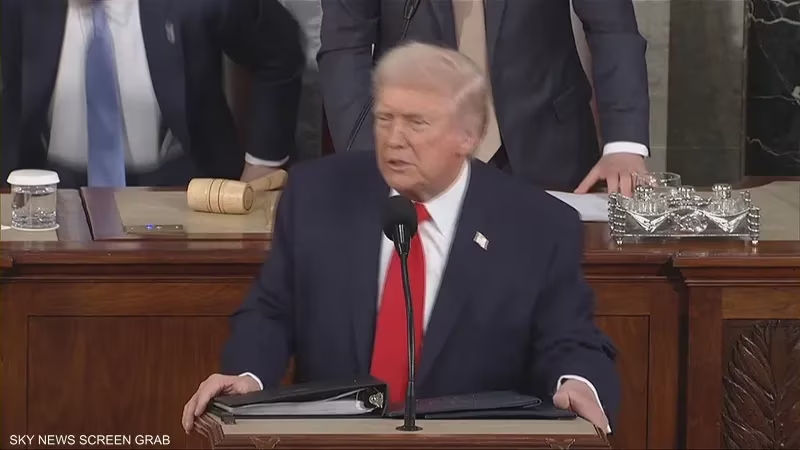
In his first address to the American nation since the outbreak of war over a month ago, President Donald Trump announced that US forces were on the verge of "completing the mission" in Iran, affirming that core strategic objectives were nearing completion. Trump offered a strong defense of the war, considering it a decisive moment to put an end to Tehran's ambitions, especially regarding its nuclear program, which Washington has long considered a direct threat.

This speech came in a context characterized in recent weeks by conflicting American messages, oscillating between talk of reducing military operations at one moment and preparing for escalation at another. Amidst continued Iranian attacks on Israel and Gulf states, and intensified airstrikes on Tehran, the speech appeared aimed at resetting the official narrative and presenting a clearer picture of the war's trajectory and its ultimate goals.

Despite this attempt, Trump reiterated many points he had previously raised in his speech, indicating that the United States was close to achieving its military objectives, and setting a timeframe for ending operations within two to three weeks. He also stressed that US forces would continue to deliver "very powerful" strikes, confirming that military decisive action remains his preferred option.

In justifying the war, Trump stated that preventing Iran from acquiring nuclear weapons was no longer just a slogan, but required actual action. He considered that US forces had achieved "swift and decisive victories" in recent weeks, criticizing the policies of previous administrations which, according to him, failed to deal with the Iranian file, and asserting that he was now working to "correct those errors" that had accumulated over decades.

On the military front, Trump painted an optimistic picture of the operations' progress, announcing the destruction of a large part of Iran's capabilities, including its navy and air force, and indicating that what remained was "easy." He also warned that any Iranian attempt to target or rebuild nuclear sites would be met with devastating strikes, under precise American satellite surveillance.

Economically, Trump acknowledged the rise in oil and gasoline prices within the United States, but described these repercussions as temporary. He affirmed that his country does not depend on oil from the Strait of Hormuz, calling on other countries to take responsibility for protecting this vital passage, with Washington ready to provide support when needed.

Regarding the nuclear file, Trump accused Tehran of continuously seeking to rebuild its nuclear program in secret locations, considering the cancellation of the previous nuclear agreement a correct decision. He also leveled sharp accusations against the Iranian regime, affirming that the United States is systematically working to dismantle its capabilities that threaten its security and the security of its allies.

In a related context, Trump's statements during a public event sparked widespread controversy when he hinted at the possibility of "seizing Iranian oil," before partially retracting, indicating that American public opinion prefers ending the war and returning home. This discrepancy in statements increased the ambiguity surrounding the true goals and limits of the war.

On the ground, the speech coincided with mutual escalation, as Iranian missiles targeted sites in Israel and Gulf states, while American strikes continued. Tehran, through its foreign minister Abbas Araghchi, also denied any request for a ceasefire, affirming that the war would continue until "the aggressor is punished."

Domestically in the US, opinion polls reflect a decline in Trump's popularity, with increasing opposition to the war and its economic repercussions. Data also showed a decrease in support for the military operation, especially among independent voters, raising questions about the speech's ability to change public mood or gain broader support.

As for global markets, Brent crude remained under pressure from volatility, with prices rising due to continued tension in the Strait of Hormuz, through which about 20% of global energy supplies pass, reflecting ongoing concern about the widening scope of the crisis and its impact on the international economy.

Trump's speech reflects a clear attempt to re-produce the narrative of "imminent decisive action," a recurring feature in American war rhetoric, where a short timeframe is used to convince the public of the utility of operations. However, this pattern often ignores the complexities of the situation on the ground, and transforms war into a technical matter capable of rapid completion, rather than an open political and strategic conflict with multiple possibilities, which may lead to a growing gap between official discourse and actual reality.

The speech is also characterized by a simplistic tendency in describing the adversary, as the Iranian regime is presented as a monolithic entity that can be easily dismantled militarily. This simplification ignores the complex structure of the state and society in Iran, and also overlooks the regional repercussions of any sudden collapse. Thus, the speech becomes more of a mobilization tool than a realistic analysis, which may weaken the ability to formulate long-term policies.

Also noteworthy is the selective use of the economic dimension in the speech; while Trump acknowledges rising prices, he quickly downplays their importance, in an attempt to contain domestic anxiety. However, this approach ignores the deep interconnectedness between geopolitical stability and energy markets, making the speech seem detached from citizens' real concerns, especially amidst continued volatility.

The discrepancy between Trump's statements about "seizing oil" and the call to end the war reveals a lack of clear strategic consistency. This contradiction not only weakens the credibility of the discourse but also raises questions about the nature of the war's true objectives: are they security-related, economic, or domestic political? Amidst this ambiguity, the speech becomes closer to a mixture of conflicting messages that are difficult to translate into a coherent policy.

It is also observed that Trump, in his address to the American nation, adopted a tone close to the Israeli approach consistently put forward by Prime Minister Benjamin Netanyahu, known as the "mowing the grass" principle, i.e., delivering periodic and intensive strikes to weaken the adversary without seeking a final resolution. This approach reflects a shift in American discourse from the logic of long-term deterrence to managing a continuous low-intensity conflict, raising questions about the horizon and limits of American strategy, and the possibility of it sliding into a permanent pattern of open confrontation.


PALESTINE

Thu 02 Apr 2026 8:40 am - Jerusalem Time

Ocasio-Cortez Pledges to Halt Military Funding to Israel and Supports Arms Ban

Progressive US Representative Alexandria Ocasio-Cortez, who is seen as a potential candidate for the 2028 US presidential election, announced a decisive political stance regarding military support for Israel. Ocasio-Cortez pledged to vote against any future military funding packages, emphasizing that this position includes even systems classified as defensive, such as the 'Iron Dome'.

These statements were made during a special meeting held by the Representative with the 'Democratic Socialists of America' organization in New York City, where she sought to clarify her upcoming political path. Observers considered this pledge to be aimed at strengthening her position within the progressive wing of the Democratic Party and a response to increasing demands from her electoral base to adopt stricter policies towards the occupation.

During the meeting, Ocasio-Cortez faced sharp questions from activists about her previous voting record, particularly her abstention from voting in 2021 on Iron Dome funding. Some attendees at the time described that stance as a 'betrayal' of the Palestinian cause, which prompted her to affirm her full commitment to adopting a 'no' vote in any future votes related to Israeli military spending.

In her speech, the Representative stressed the necessity for the Israeli government to bear the costs of its armaments from its own budget without relying on the American taxpayer. She clarified that her position rejecting funding would not waver, noting that US foreign policy should stop providing blank checks for military operations that have caused massive human casualties.

Ocasio-Cortez touched upon the catastrophic humanitarian conditions in the Gaza Strip, referring to reports confirming the killing of tens of thousands of Palestinians since the start of the Israeli offensive in 2023. She considered that continued military support in light of these facts constitutes indirect participation in ongoing violations, which she categorically rejects in her legislative career.

In a related context, the Representative pledged to oppose the 'International Holocaust Remembrance Alliance' definition of antisemitism, which conflates criticism of Israeli policies with hostility towards Jews. Ocasio-Cortez believes that this definition is used as a tool to silence dissent and prevent legitimate criticism of the occupation's practices or describing them as racist.

Strategic experts believe that this shift in Ocasio-Cortez's rhetoric reflects a broader change in American public sentiment towards Israel. Informed sources indicated that Israel's popularity in the United States has declined to unprecedented levels, making opposition to its funding a winning political option among youth and progressives.

Recent polls indicate that the number of Americans who hold a negative view of Israel now exceeds those who view it positively. This shift in public opinion is pressuring decision-makers in Washington to re-evaluate strategic relationships and traditional military alliances that no longer enjoy popular consensus.

This stance puts Ocasio-Cortez in direct confrontation with the traditional leadership of the Democratic Party, which continues to support Israel. This gap is clearly evident when comparing her rhetoric with the positions of figures such as Kamala Harris and Gavin Newsom, who avoid explicitly calling for an arms embargo or a halt to military funding.

Analysts link this pledge to the Representative's presidential ambitions in 2028, as she seeks to present herself as a radical alternative representing the aspirations of the new generation. It is believed that the issue of Palestine and military funding will be one of the primary criteria by which progressive voters will evaluate their candidates in upcoming election cycles.

For his part, journalist Ryan Grim pointed out that Israel may bear a large part of the public blame in the event of a financial crisis or economic recession resulting from regional wars. He added that the distancing of rising political figures from supporting Israel is a strong indicator of the declining influence of pro-occupation lobbies within the Democratic Party corridors.

Ocasio-Cortez's positions align with other members of the 'Squad' in Congress, such as Rashida Tlaib and Ilhan Omar, who lead a continuous movement to impose oversight on military aid. However, her latest pledge to also reject 'defensive' funding represents a new ceiling that this number of American lawmakers has not openly adopted before.

Palestinian solidarity activists affirm that this step represents a victory for years of popular pressure and demonstrations that have swept American cities. They believe that the arrival of this discourse at the heart of the American legislative institution paves the way for real changes in foreign policy towards the Middle East in the near future.

In conclusion, the biggest challenge for Ocasio-Cortez remains facing pressure from pro-Israel organizations that possess significant financial influence in elections. However, her supporters are betting that the shift in American voter awareness will be the protective shield for such bold positions that reflect the principles of justice and human rights.

I have never voted for funding Israel, and I never will. The Israeli government must fund its own weapons if it wants to arm itself.

ARAB AND WORLD

Thu 02 Apr 2026 8:40 am - Jerusalem Time

Iranian Military Escalation Targets Vital Facilities and Oil Tankers in Gulf States

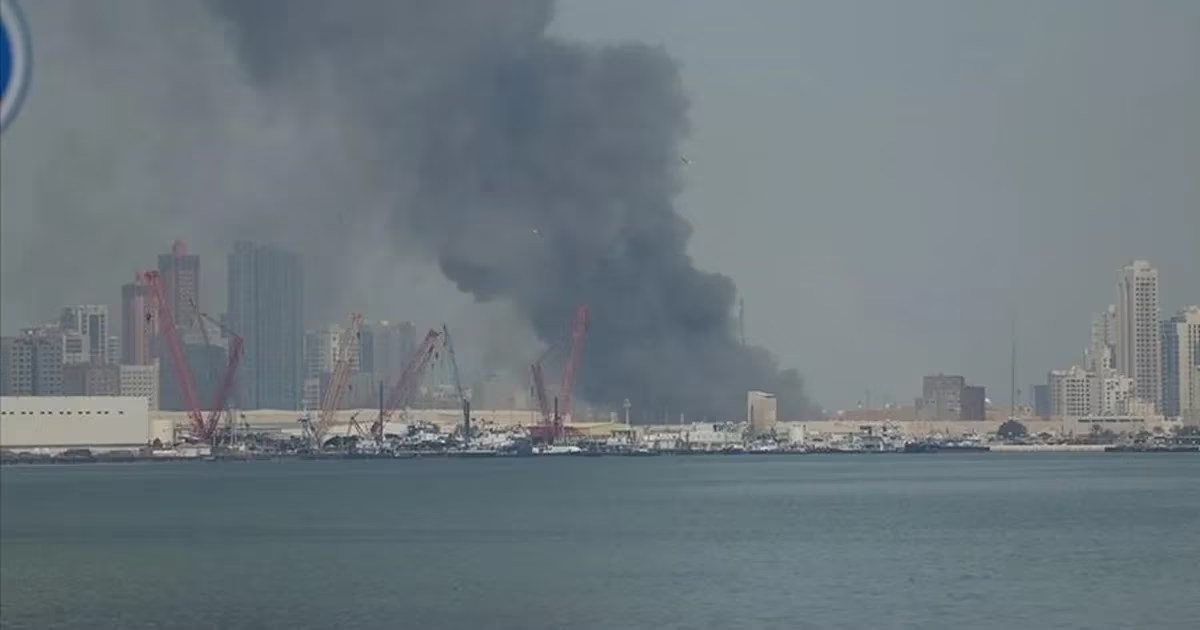
Several Gulf countries were subjected to a series of simultaneous military attacks carried out by Tehran early Wednesday morning, leading to widespread fires in vital facilities and direct targeting of maritime navigation. The escalation included drone and cruise missile strikes that hit Kuwait International Airport and industrial facilities in Bahrain, in addition to the interception of aerial attacks over Saudi territory.

In Kuwait, the Directorate General of Civil Aviation confirmed a massive fire broke out in the fuel tanks belonging to 'Kafco' company within the premises of Kuwait International Airport. Sources explained that the attack was carried out by suicide drones, causing significant material damage to the aircraft fueling infrastructure, while firefighting teams managed to control the flames without any casualties.

In Manama, the Bahraini Ministry of Interior announced it dealt with a fire that erupted in a major industrial facility as a result of what it described as direct Iranian aggression. A state of security alert prevailed in the country after sirens were activated several times during the early morning hours, with authorities urging residents to adhere to instructions and head to safe areas.

On the maritime front, the Qatari Ministry of Defense revealed that its territorial waters were subjected to an attack by three cruise missiles launched from the Iranian side, with air defenses successfully intercepting two of them. The ministry confirmed that the third missile struck the oil tanker 'Aqua 1', chartered by Qatar Energy, necessitating the urgent evacuation of its entire crew.

International shipping sources reported that the targeted tanker sustained a direct hit on its left side 17 nautical miles off the coast of Doha. The competent authorities in Qatar initiated their technical investigations to assess the damage, while Qatar Energy confirmed that the incident did not cause any oil spill or environmental damage in the surrounding maritime area.

In the same context, the Saudi Ministry of Defense announced that its forces managed to intercept and destroy two drones that were targeting areas in the Kingdom early today. The ministry did not disclose the specific locations that were targeted, but indicated that these attacks are part of a series of ongoing aggressions that have threatened the security and stability of the region for weeks.

These field developments come on the thirty-third day of the open military confrontation between Iran and the Israeli-American coalition. These attacks are considered the most violent since the conflict began last February, with civilian and economic facilities in Gulf states now within the direct targeting circle of mutual military operations.

For its part, Tehran justified these attacks as a legitimate response to military operations and assassinations that targeted its senior security and political officials, including the former Supreme Leader. Iranian sources claim that their strikes focus on bases and interests serving the American presence in the region, holding Washington and Tel Aviv responsible for the collapse of regional security.

The region is experiencing a state of international anticipation and concern regarding the safety of global energy corridors amid the targeting of oil tankers and international airports. Maritime navigation bodies have called on all vessels transiting the Gulf to exercise the utmost caution, amid expectations of further military escalation that may affect other economic sectors in the coming days.

The operations target American bases and interests in the region in response to ongoing aggression that has targeted senior leaders.

ARAB AND WORLD

Thu 02 Apr 2026 8:40 am - Jerusalem Time

Trump announces 'regime change' in Iran militarily and pledges to end the mission quickly

US President Donald Trump announced that the American armed forces achieved a decisive victory in their battle against the Iranian regime, describing Tehran as the world's leading state sponsor of terrorism. In a speech to the nation from the White House, Trump affirmed that military operations targeted the regime's infrastructure and succeeded in neutralizing the threats Iran posed to regional and international security.

The US President revealed that Washington managed to bring about actual change in the structure of the Iranian regime by eliminating first and second-tier leaders in the hierarchy of power. He indicated that the Iranian scene is currently witnessing the rise of leaders he described as 'more moderate,' paving the way for a new phase away from the previous confrontational policies pursued by Tehran.

Trump stressed that air and missile strikes completely destroyed ballistic missile and drone production factories, which were the weapons Iran relied on to threaten its neighbors. He clarified that the losses suffered by Tehran are severe and unprecedented, leading to a complete paralysis of its offensive and defensive capabilities alike.

In the context of his discussion about energy, the US President noted that the United States no longer needs Middle Eastern oil thanks to self-sufficiency, but it continues its military operations to protect its strategic allies. He affirmed that regional stability remains a priority for the American administration to ensure the flow of global trade and protect common interests with allied nations.

Trump reviewed his policies regarding the nuclear file, recalling that since taking office, he sought to prevent Tehran from acquiring atomic weapons by all available means. He indicated that his decision to terminate the previous nuclear agreement was necessary to stop the flow of funds that former President Barack Obama had given to the regime, which were used to finance subversive activities.

Trump reported that the Iranian naval force had been completely destroyed, indicating that the military mission there is nearing its end and will be completed very quickly. He explained that the Iranian regime rejected all opportunities to abandon its nuclear ambitions and was planning to develop long-range missiles capable of directly targeting American territory.

The US President affirmed that the primary goal of the extensive military operation is to eliminate the destructive power of the regime and prevent it from blackmailing neighboring countries. He stressed that Iran has proven to be an untrustworthy party, and that its acquisition of nuclear weapons would have represented a catastrophe whose consequences for the entire world are unimaginable.

The speech touched upon the economic situation, where Trump affirmed that Iran has ended militarily and economically due to sanctions and successive strikes that targeted the state's vital points. He sent a message to the countries benefiting from the Strait of Hormuz, indicating that the responsibility for securing the waterway primarily lies with those who benefit from it commercially.

Trump promised to reopen the Strait of Hormuz to international navigation immediately after the remaining military operations are completed, affirming that oil prices will stabilize and return to their normal levels. He explained that Washington has a clear plan to end the state of tension in vital waterways after definitively neutralizing the Iranian threat.

In a strongly worded threat, Trump said that Washington would deliver very harsh strikes over the next three weeks to return Iran to the 'Stone Age' if it attempted to resist. He affirmed that previous American wars may have taken a long time, but this war will be very short and decisive to end the Iranian threat forever.

It is worth noting that the military escalation led by the United States and Israel against Iran began in late February, resulting in the deaths of thousands of people and the assassination of Supreme Leader Ali Khamenei. In response, Tehran continues its attempts to retaliate by launching missiles towards Israeli targets and American bases in the region, leading to an unprecedented full-scale confrontation.
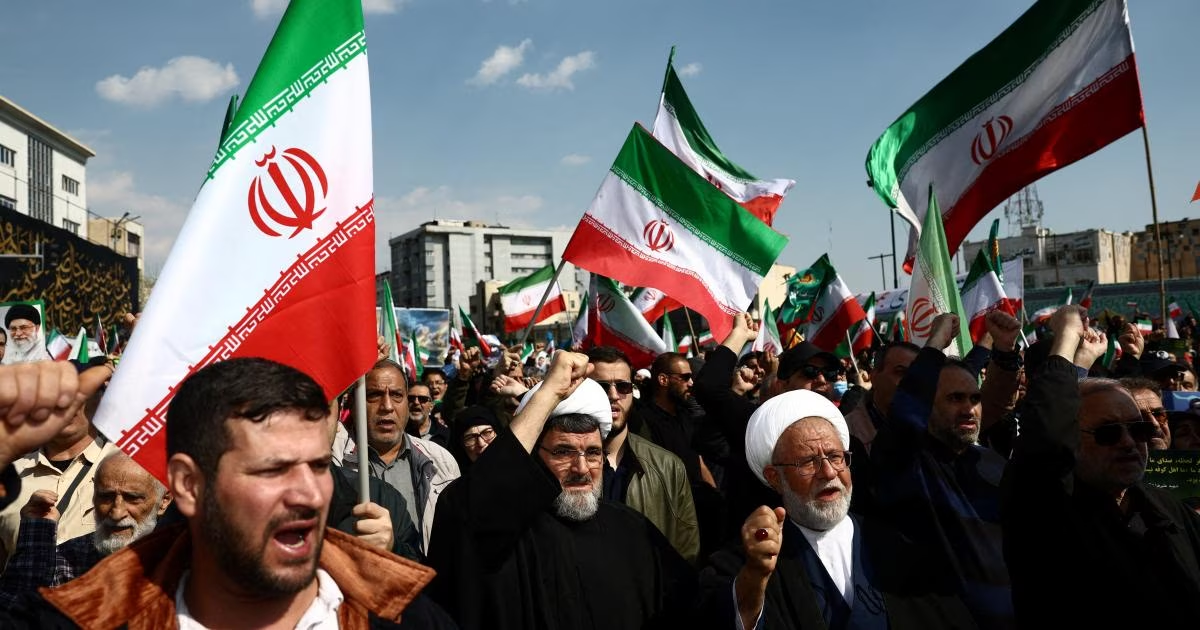
We have practically changed the regime in Iran by eliminating first and second-tier leaders, and now we have more moderate leaders there.

PALESTINE

Thu 02 Apr 2026 8:40 am - Jerusalem Time

Prisoner's Club warns of 'death legislation': Prisoner execution law entrenches Israeli racism

The head of the Palestinian Prisoner's Club, Abdullah Al-Zghari, warned of the serious repercussions of the prisoner execution law recently approved by the Israeli Knesset. Al-Zghari affirmed that this legislation directly threatens the lives of thousands of detainees and reflects the extent of racism that has spread throughout the political and legal systems of the occupation.

Al-Zghari explained in press statements that the approval of such laws represents official legislation for direct killing operations against Palestinians, as the law exclusively targets them. He described this step as an entrenchment of the racial discrimination practiced by the occupation authorities against prisoners in an attempt to legitimize their physical liquidation.

The head of the Prisoner's Club called on international organizations, United Nations bodies, and the Human Rights Council to take urgent action to confront these grave violations. He pointed out that continued international silence encourages the occupation to proceed with its retaliatory policies, despite the rejection of these unjust laws by some European countries.

The new law approved by the Israeli parliament stipulates the execution by hanging of Palestinian prisoners, while providing full legal protection for the executors. The law also grants prison guards who carry out the sentences anonymity, which closes the door to any future legal prosecution against them.

One of the most prominent dangers of this legislation is that it allows for the issuance of death sentences without the need for a request from the public prosecution, and it does not require unanimity among judges to make the decision. The law is satisfied with a simple majority to approve the sentence, which also applies to military courts that already lack fair trial standards in the West Bank.

Al-Zghari indicated that Palestinian prisoners are currently going through the most difficult and dangerous phase in decades, especially after the radical transformations witnessed in prisons after October 8, 2023. The pace of systematic physical and psychological torture has escalated, and detention centers have turned into arenas for collective revenge against male and female prisoners.

The head of the club spoke about the widespread spread of infectious skin diseases among detainees, especially scabies, as a result of the deliberate starvation and overcrowding policy. He affirmed that the prison administration deprives prisoners of the most basic medical care, which has turned their daily lives into a real hell that threatens their physical safety.

Al-Zghari drew attention to the incitement role played by the Israeli National Security Minister Itamar Ben-Gvir, describing him as a sadistic, bloodthirsty model. He affirmed that Ben-Gvir personally supervises the repression and incursions, and seeks to impose a new reality inside prisons aimed at stripping prisoners of all their basic human rights.

Human rights statistics indicate the presence of more than 9,500 Palestinian prisoners in occupation prisons, including 350 children and 73 women living in harsh conditions. The number of administrative detainees is strategically increasing, with hundreds being held without clear charges or legal trial, in flagrant violation of international conventions.

Human rights sources confirmed that the occupation continues to deprive prisoners of family visits, and also obstructs the role of the International Committee of the Red Cross in monitoring their health and legal conditions. This systematic isolation aims to isolate prisoners away from international oversight, which facilitates daily abuse and torture against them.

Israeli figures, including former judges and Nobel laureates, had previously opposed the law, considering it a moral stain on the history of the judiciary. Despite these limited internal criticisms, the far-right government insisted on passing the law to strengthen its repressive policies against the Palestinian people.

Al-Zghari stressed that the continuation of these policies represents a flagrant violation of international humanitarian law and the Geneva Conventions concerned with the protection of prisoners and detainees. He called on the international community to take practical and urgent steps to save the lives of detainees before it is too late, stressing that silence is complicity in the crime.

These legislative developments coincide with the ongoing war of extermination in the Gaza Strip, which has left tens of thousands of martyrs and wounded and widespread destruction of infrastructure. Observers believe that the execution law is part of a comprehensive war waged by the occupation on the Palestinian presence in all its locations.

In conclusion of his statements, the head of the Prisoner's Club affirmed that the Palestinian people will not be broken by these racist laws, and that the issue of prisoners will remain at the top of national priorities. He called for escalating popular and legal activities to support prisoners in their battle against the 'death legislation' that the occupation system is trying to impose.

The approval of the execution law represents a direct death sentence for detained Palestinians, exclusively targeting them within a racist system that entrenches discrimination against them.

OPINIONS

Thu 02 Apr 2026 8:40 am - Jerusalem Time

Friedman in the New York Times: Trump is leading the US military into a 'gas chamber' in his confrontation with Iran

Ramallah - “Alquds ” dot com

Ramallah - “Alquds ” dot com

Opinion Writer

In an article in the 'New York Times,' American writer Thomas Friedman painted a bleak picture of President Donald Trump's policy towards Iran, considering that the current administration lacks strategic vision. Friedman pointed out that Trump and Israeli Prime Minister Benjamin Netanyahu had engaged in a military confrontation, believing that regime change in Tehran would be quick and easy, which reality proved wrong.

The article explained that American and Israeli estimates greatly underestimated the Iranian leadership's ability to withstand pressure, as well as its military capability to inflict severe damage on the interests of Washington's allies. The writer also noted that Tehran succeeded in threatening the most important waterways for global energy transport, which negatively impacted the global economy and the stock market in the United States.

Friedman described President Trump as floundering in his positions in a shameful manner, sometimes claiming that Iranian leaders agreed to his demands, while at other times admitting his inability to regain control of the Strait of Hormuz. This contradiction reflects, according to the article, the absence of any plan for after igniting the fuse of war in the already volatile Middle East region.

The writer strongly criticized Trump's insistence on demanding Western allies send their armies to participate in the war, even though he did not consult them before making the decision to escalate. Friedman believes that this behavior expresses a reckless mentality that places the world's most powerful army in an extremely dangerous position, similar to placing a match in a gas-filled room.

The article touched upon the figures surrounding Trump, specifically mentioning Secretary of Defense Pete Hegseth, noting reports of his adoption of extremist nationalist beliefs. Friedman stated that Hegseth held prayer sessions at the Pentagon calling for the use of 'overwhelming violence' against adversaries, which reinforces the ideological nature of the current confrontation with Iran.

In an attempt to offer a way out of the crisis, Friedman proposed simplifying the war's objectives and limiting them to two basic points to ensure stability. The proposal is for Iran to abandon its stockpile of highly enriched uranium, in exchange for American guarantees to stop efforts aimed at changing the political regime in Tehran.

The writer believes that this agreement, if achieved, would end all hostilities without the need for air strikes or extensive ground operations. It would also contribute to stopping missile attacks and securing navigation in the Strait of Hormuz, which represents a vital interest for American national security and the global economy.

The article cited the opinions of military experts who confirmed that the primary goal of the Iranian regime is to remain in power, while the American goal is to prevent Tehran from acquiring a nuclear weapon. Based on this, abandoning secondary goals by both sides could open the door to a historic settlement that spares the region an impending catastrophe.

Friedman revealed the existence of secret negotiation channels through Pakistan between Trump's team and Iranian Parliament Speaker Mohammad Bagher Ghalibaf. He indicated that these moves suggest that Trump has begun to realize the difficulty of overthrowing the regime through air power alone, and is looking for a way out that saves face.

The article compared Trump's approach with the administration of Barack Obama, which reached the 2015 agreement. Friedman considered that Obama's agreement focused on core, achievable interests. Despite Trump's criticisms of that agreement, he failed to find an effective alternative after withdrawing from it in 2018, which brought Iran closer than ever to a bomb.

Friedman warned that the current policy has reduced Iran's nuclear 'breakout time' from a full year to just a few weeks. This deterioration in the security situation is a direct result of hasty decisions made without considering the consequences or coordinating with active international powers.

The writer affirmed that Trump would be 'lucky' if the Iranian leadership accepted the nuclear swap proposal under the current circumstances. The bitter truth, as he described it, is that the American president's fate is now linked to decisions made by his adversaries in Tehran due to his administration's incompetence in managing the file.

Friedman concluded his article by emphasizing the necessity of returning to political realism and easing oil sanctions in exchange for handing over fissile materials. He stressed that continuing the approach of 'revenge' and uncontrolled decisions would lead the United States into a quagmire from which it cannot easily escape, threatening its global standing.

This analysis reflects the growing concern in American political and media circles about the repercussions of military escalation in the Middle East. Questions remain about the American administration's ability to translate these analytical insights into a diplomatic reality that ends the raging war.

Trump is like a child playing with matches, putting the world's most powerful army in a gas-filled room.

PALESTINE

Thu 02 Apr 2026 8:40 am - Jerusalem Time

Gaza Doctors Under Attack: International Testimonies in South Africa Document the Extermination of Health Personnel

Prominent doctors who participated in the 'Israeli Apartheid Week' events in South Africa affirmed that the occupation's targeting of healthcare workers in the Gaza Strip represents a systematic and deliberate policy. Participants clarified that these attacks occur within the context of an ongoing genocide, aiming to undermine the basic necessities of life for the Palestinian people by destroying their healthcare system.

The city of Johannesburg hosted the screening of the documentary film 'Gaza Doctors Under Attack' by director Marita Rivelli, which highlights the existential threats faced by medical teams since October 2023. The film chronicles how hospitals transformed from life-saving centers into direct targets for bombing and siege, starting from Al-Shifa Medical Complex to Nasser Hospital.

Statistics documented in the film indicate that 164 doctors were martyred in the Gaza Strip by April 2024, noting that more than half of these martyrs were targeted and liquidated inside their homes and among their family members. These figures reflect the extent of the dangers that pursue medical personnel even outside their official working hours in field hospitals.

The screening included a harrowing testimony from Dr. Khaled Hammouda, who works at Al-Awda Hospital, where he recounted the humiliating details of his arrest and his exposure to physical and psychological torture at the hands of the occupation forces. Hammouda described how he was stripped of his clothes and paraded in the streets in shackles, in flagrant violation of all international laws protecting medical personnel in times of conflict.

Dr. Hammouda revealed that he lost 12 family members in an airstrike that targeted their home, including three of his siblings who also work in medical professions, in addition to his daughter. This personal tragedy embodies the reality of hundreds of medical families in Gaza who have been directly and systematically subjected to genocide.

For his part, Dr. Khaled Dawas, founder of the Hanoun Foundation, stated that the film refutes Israeli narratives that attempted to justify attacks on hospitals with claims of military presence. Dawas affirmed that independent investigations were prevented from accessing the targeted sites, which reinforces the hypothesis of covering up war crimes committed against patients and medical staff.

The film touched upon the tragic conditions inside Israeli detention centers, specifically the 'Sde Teiman' center, which has become a barracks for torture and severe violations against Palestinian detainees. Medical sources reported testimonies of inhumane practices, including performing surgeries on the injured without anesthesia, and Israeli doctors refusing to provide necessary treatment to patients.

In a moving intervention, Professor Mahdi, head of the Faculty of Medicine at Wits University, compared the experience of apartheid in South Africa with what is currently happening in Palestine. He pointed out that the brutality of the Israeli occupation in dealing with the medical sector far exceeded what the former apartheid regime practiced, praising the legendary resilience of Palestinian personnel.

Dr. Omar Abdel Manan, a pediatric neurologist, explained that the health system in Gaza was on the verge of collapse even before the recent escalation due to the prolonged siege. He added that power outages and a lack of essential supplies made medical work almost impossible, yet teams continued to perform their duties under constant bombardment.

For her part, Rina King from the organization 'South African Jews for a Free Palestine' called for the international community to act to stop supporting the occupation's economy. King criticized the continued supply of coal to Israel, considering that it indirectly contributes to financing the military machine that kills doctors and civilians in Gaza and Lebanon.

King emphasized that documenting these crimes through documentaries aims to restore global human sensibility and realize that what is happening is a morally unacceptable crime. She stressed that international silence regarding the targeting of universities and medical professionals opens the door to further violations throughout the region.

In a related context, Tariq Lala, a member of the South African Students' Congress, indicated that the student movement launched a national petition calling for a complete boycott of Israeli and Zionist institutions. He affirmed that solidarity with Palestine in South African universities is witnessing unprecedented momentum, linking the struggle of the two peoples against racism and occupation.

Dr. Dawas mentioned that the film's introductory tours will move to Cape Town to spread the Palestinian narrative and keep the issue of detained and martyred doctors alive in international memory. He explained that the goal is to expose the deliberate killings of healthcare workers between 2023 and 2025, and to ensure that perpetrators do not escape punishment.

The events concluded by emphasizing that targeting the health system is part of the 'scorched earth' strategy followed by the occupation to forcibly displace the population. Participants stressed that the protection of hospitals and doctors is not just a humanitarian demand, but a fundamental pillar of international humanitarian law that the world must enforce.

What the medical sector in Palestine faces makes the former apartheid system in South Africa seem much less severe.

ARAB AND WORLD

Thu 02 Apr 2026 8:39 am - Jerusalem Time

Tehran Rejects US Conditions, Adheres to Five Red Lines to End War

Tehran described the demands presented by the United States to end the ongoing conflict in the region as extreme and lacking a compromising logic. Official Iranian sources confirmed that Washington's current stance does not pave the way for genuine diplomatic solutions but rather complicates the already tense field and political scene.

In press statements, Iranian Foreign Ministry spokesman, Ismail Baqaei, denied the existence of any direct negotiation channels with the American side at present. Baqaei clarified that his country had indeed received messages through international mediators, including Pakistan, but these communications did not rise to the level of direct negotiations promoted by some parties.

Iran's Foreign Ministry stressed that the armed forces are on high alert and fully prepared to deal with all forms of potential military escalation. The spokesman indicated that Tehran is ready to repel any aggression, including the possibility of a ground attack, emphasizing that threats will not deter the state from protecting its sovereignty and national interests in the region.

On the other hand, media sources quoted a high-ranking Iranian official as saying that Tehran stipulates obtaining international guarantees for a comprehensive and permanent ceasefire to end the war definitively. The source confirmed that proposals for a temporary truce or partial ceasefire were not seriously discussed through mediators, as Iran insists on a radical solution that ends the causes of the conflict.

Iranian diplomacy adheres to five basic points described as red lines, which were delivered to the American side via the Pakistani mediator in response to a previous list of American demands. These points include the necessity of a complete cessation of military operations, the withdrawal of foreign forces from the region, and compensation for damages to Iranian infrastructure.

In a related context, US President Donald Trump stated that Tehran is currently seeking to reach a ceasefire agreement under the pressure of military operations. However, the Iranian vision leans towards requiring legal and political guarantees to prevent the recurrence of future targeting scenarios, which Washington considers a high bar for demands.

On the intelligence front, American reports indicated that intelligence agencies in Washington believe that the Iranian leadership is not yet ready to enter into substantive and decisive negotiations. These reports suggest that the gap between the two sides remains wide, especially given the continued mutual military operations that erupted since late February of last year.

Intense confrontations have been ongoing in the region since the outbreak of war on February 28, 2025, with Israel and Iran exchanging missile strikes and drone attacks. The attacks also targeted American positions and interests in several Arab countries, leading to civilian and military casualties, amid widespread international condemnation and fears of the conflict expanding to include new regional parties.

The United States' demands to end the war in the Middle East are extreme and illogical, and we are ready for any type of attack, including a ground attack.

LATEST NEWS

Thu 02 Apr 2026 8:39 am - Jerusalem Time

14 Israelis injured in Iranian missile attack targeting central Israel

Medical and field sources reported that 14 Israelis sustained injuries of varying degrees after wide areas in central Israel were subjected to intense missile barrages launched from Iranian territory. Ambulance teams confirmed that among the injured was an 11-year-old girl, whose condition was described as serious due to direct shrapnel injuries to her limbs, and she was immediately transported for intensive treatment.

In an official statement, Magen David Adom teams clarified that they provided first aid to a number of injured individuals before transferring them to nearby hospitals, noting that the injuries ranged from serious to moderate and minor. The list of injured included a woman in her thirties and a 13-year-old boy, who were hit by shrapnel resulting from the explosions that rocked the central region.

For its part, the Israeli police announced that it had received numerous reports of missile remnants and interceptor shrapnel falling in various locations in the center of the country, including the coastal city of Tel Aviv. This shrapnel caused material damage to some properties, while security agencies urged settlers to adhere to instructions and remain near fortified areas until new instructions are issued.

In a related context, the Israeli army confirmed that its air defenses engaged in widespread interception operations to counter the Iranian missiles that penetrated its airspace. The army spokesperson stated in a brief statement that radars detected the direct launch of missiles from Iran, which necessitated activating sirens in dozens of cities and towns to ensure the protection of civilians.

Explosions echoed across central Israel's skies, resulting from attempts by the 'Arrow' and 'David's Sling' systems to intercept the warheads of the attacking missiles. Sources reported that the attack was extensive and targeted vital facilities and areas, leading to a state of full alert among the air force and various combat units.

These field developments come amid escalating regional tension, with military sources considering this attack a significant shift in the nature of the direct confrontation between Tehran and Tel Aviv. Israeli security agencies continue to assess the damage resulting from the missile barrage, with expectations of continued maximum alert on all fronts in anticipation of further attacks.

Despite the air defense announcing the interception of a large number of missiles, the arrival of shrapnel in densely populated city centers caused this number of injuries. Rescue teams are currently sweeping the areas where debris fell to ensure there are no trapped individuals or additional injuries that were not reported in the initial moments of the attack.

Air defense systems are working to intercept missile threats detected coming from Iranian territory.

ARAB AND WORLD

Thu 02 Apr 2026 8:39 am - Jerusalem Time

Iranian Diplomat Kamal Kharrazi Injured and His Wife Killed in Targeting of His Home in Tehran

Local media sources in Iran reported on Wednesday evening that Kamal Kharrazi, head of the Strategic Council for Foreign Relations, was injured as a result of a direct targeting of his home in the capital, Tehran. Reports confirmed that the attack resulted in the immediate death of Kharrazi's wife, while the senior diplomat was transferred to a hospital to receive urgent medical care due to injuries described as severe.

This targeting comes in the context of a widespread military escalation that began since late February, which, according to field sources, has led to thousands of casualties, including dead and wounded. This period has witnessed a series of assassinations targeting senior security and political officials in the Islamic Republic, most notably the former Supreme Leader Ali Khamenei, which reflects the seriousness of the current stage.

Kamal Kharrazi is considered one of the prominent diplomatic figures in modern Iranian history, having held the portfolio of Minister of Foreign Affairs during Mohammad Khatami's two presidential terms between 1997 and 2005. He also represented his country for many years as ambassador to the United Nations in New York, which gave him international weight and extensive experience in managing complex foreign affairs.

Kharrazi currently holds the position of head of the Strategic Council for Foreign Relations, a high-level advisory body directly affiliated with the Iranian leadership, established under the directives of the late Leader. Kharrazi continued to perform his duties as a senior advisor under the leadership of the new Leader, Mojtaba Khamenei, who decided to retain his father's advisory team to ensure the continuity of the state's high policies.

Coinciding with the attack on Kharrazi's home in Tehran, media sources indicated that a mysterious explosion occurred in the strategic port of Bandar Abbas in the south of the country. The full dimensions of this explosion or the extent of the damage caused by it are not yet clear, but it comes at a time when all vital Iranian facilities are on high alert due to successive attacks.

Kamal Kharrazi was transferred to the hospital for treatment after sustaining severe injuries, while his wife lost her life as a result of the same attack.

ARAB AND WORLD

Thu 02 Apr 2026 8:39 am - Jerusalem Time

China, the Biggest Beneficiary of the Strait of Hormuz Crisis: 7 Reasons Boosting Beijing's Global Influence

Tensions are escalating in the Strait of Hormuz, placing China in a unique strategic position that allows it to expand its economic and political influence on the international stage. International press reports indicate that Beijing is closely monitoring the movements of the United States and Iran, transforming the crisis from a potential military conflict into a geopolitical opportunity to strengthen its global standing.

Observers believe that history is repeating itself, as the current crisis in the Strait of Hormuz resembles the Suez Crisis in the 1950s, which marked a turning point in the decline of the British Empire. Just as Britain lost its military and financial superiority then, some believe that American hegemony may face a real test against China's growing rise.

Although Chinese President Xi Jinping recognizes that war could destabilize export markets, he sees it as a means to undermine Western superiority. China seeks to present itself as a balanced and responsible great power, calling for a ceasefire and criticizing what it describes as American hegemony, thereby enhancing its credibility among developing nations.

Economically, the continuous threat to traditional oil supplies contributes to accelerating the global shift towards clean energy and electric vehicles, a sector almost entirely dominated by China. This has been clearly reflected in financial markets, where shares of Chinese electric vehicle companies like 'BYD' jumped by 18%, while their Western competitors experienced a sharp decline.

Beijing holds a strategic bargaining chip in its control over approximately 80% of tungsten production and refining, a vital and indispensable element in the manufacturing of missiles and advanced weapons. China has imposed strict restrictions on the export of this metal, putting American and European military industries in a real predicament due to the increasing shortage of raw materials.

On the ground, the United States has begun moving military assets and strategic resources from the Far East towards the Arabian Gulf to counter Iranian threats. This military movement gives China more room to maneuver in its regional vicinity and alleviates the pressure that American forces were exerting on its eastern borders and the South China Sea.

Chinese academic sources confirm that any decline in the American military presence in the Asia-Pacific region directly benefits Beijing. Experts believe that Washington's preoccupation with Middle Eastern crises provides China with a golden opportunity to impose a new reality in areas it considers within its traditional sphere of influence.

China possesses a high capacity to absorb energy supply shocks thanks to its massive crude oil reserves, which have been bolstered over the past three years. Estimates suggest that these reserves, despite their secrecy, are sufficient to cover the country's consumption for six months, protecting its economy from sharp price fluctuations.

Beijing also relies on diversifying its supply sources by increasing imports from Russia and Iran, exploiting Western sanctions imposed on both countries. This energy alliance enhances China's strategic independence and makes it the only party capable of exerting real pressure on Tehran to ensure navigation security when necessary.

China's ultimate goal is to break the dominance of the US dollar in international trade of raw materials and basic commodities. Beijing seeks to enforce the use of the Chinese Yuan in oil and gas deals, an approach it has already initiated with Russia, Brazil, and Argentina, and aspires to extend it to include Gulf countries in any future settlement.

China's success in imposing its local currency as an alternative to the dollar in the energy sector would be a devastating blow to the Washington-led global financial system. If Beijing can play the role of mediator in the Hormuz crisis, it will undoubtedly stipulate the conversion of commercial transactions to the Yuan, accelerating the decline of the American currency.

Compared to Britain in 1956, the United States today possesses immense technological and military superiority, in addition to the dominance of its financial bonds in international markets. However, the Chinese challenge does not rely on direct military confrontation, but rather on economic attrition and control over vital supply chains.

The question of whether the Hormuz crisis will lead to China's rise as the sole great geopolitical power remains dependent on the outcomes of the current conflict. But current indicators confirm that Beijing is the party most prepared to capitalize on these disturbances to achieve long-term gains at the expense of traditional Western influence.

In conclusion, it seems that the 'Third Gulf War' for the Trump administration may be the moment that reshapes the global balance of power. China is not merely observing; it is actively building a parallel system that ensures its economic and political sovereignty, exploiting every loophole left by American withdrawal or preoccupation in the region.

Any decline in the American presence in the Asia-Pacific region will inevitably benefit some party, and we can well imagine who that party is.

ARAB AND WORLD

Thu 02 Apr 2026 8:39 am - Jerusalem Time

US Air Reinforcements in Europe: 'Warthog' Fighters Arrive in Preparation for Regional Deterrence Missions

Lakenheath Air Base in the United Kingdom witnessed the arrival of significant US military reinforcements last Monday evening, consisting of 12 'A-10C Thunderbolt II' attack aircraft. Air navigation systems tracked the path of these aircraft, which departed from Pease Air National Guard Base in New Hampshire, crossing the Atlantic supported by eight dedicated aerial refueling aircraft to ensure the continuity of the journey.

Military analysts believe that deploying this type of aircraft to areas close to potential theaters of operation reflects a qualitative escalation aimed at securing international navigation in the Strait of Hormuz. This move primarily aims to neutralize threats posed by fast boats, naval mines, and suicide drones, in addition to providing dense air cover for any special operations that may be carried out on the ground in coastal areas.

The 'A-10C' aircraft is known in military circles by the nickname 'Warthog', and it represents the first aerial platform in the history of the US Air Force specifically designed to provide close air support for ground forces. This aircraft is characterized by an exceptional ability to remain in the battle sky for long periods, with the ability to land and take off in very harsh weather and field conditions, making it a deadly weapon in direct confrontations.

This fighter possesses diverse combat capabilities that enable it to destroy a wide range of targets, from heavy tanks and armored vehicles to light vehicles and enemy tactical command centers. It has also proven highly efficient in targeting light naval attack aircraft, which enhances its role in protecting vital waterways from any sudden attacks that regional powers might launch.

Technically, the aircraft is approximately 16 meters long, reaches a maximum speed of 420 miles per hour, and can fly at high altitudes of up to 14,000 meters above sea level. This aircraft entered active service in 1976, piloted by a single pilot within an engineering design that focuses on protecting the cockpit and ensuring the pilot's survival in high-risk combat environments.

'Warthog' aircraft are equipped with advanced vision and guidance technologies that allow them to operate at full efficiency in all weather conditions and around the clock. These technologies include advanced night vision systems, individual command domes designed to be compatible with pilots' protective goggles, in addition to smart guidance systems mounted directly on the pilot's helmet to facilitate the process of identifying targets with extreme precision.

The large canopy of the A-10C aircraft gives the pilot a comprehensive and wide view of the target area, which facilitates the process of distinguishing between friendly and enemy forces in the field. Experts indicate that the US Air Force still relies on a fleet of 281 aircraft of this type, due to its unique ability to direct accurate fire against moving and armored targets in crowded combat environments.

This current redeployment in the United Kingdom comes as part of a broader strategy to enhance US combat readiness on the European continent and ensure rapid intervention in active conflict zones. These movements are a clear message regarding the commitment to supporting allies and providing the necessary protection for strategic interests amid escalating tensions with Iran in the Arabian Gulf region.

In conclusion, the 'A-10C Thunderbolt II' aircraft remains a symbol of striking air power and aiming accuracy, combining durability and high resistance to damage on the battlefield. With the arrival of these reinforcements in Britain, military circles are anticipating how these capabilities will be employed to curb naval and air threats that may face international navigation in the coming period.

The participation of the A-10 aircraft in operations off the southern coast of Iran indicates a qualitative escalation aimed at securing navigation and neutralizing boats and drones.

PALESTINE

Thu 02 Apr 2026 8:38 am - Jerusalem Time

Warnings of the Death of Prisoner Akram Al-Qawasmi and the Occupation Buries a Jerusalemite Child in 'Cemeteries of Numbers'

Palestinian human rights organizations have launched an urgent appeal to save the life of the Jerusalemite prisoner Akram Al-Qawasmi, detained in the Israeli Gilboa Prison, confirming that his health condition has reached a critical stage. Sources clarified that Al-Qawasmi is subjected to a series of violent and systematic physical assaults by the jailers, which has led to a frightening decline in his motor and sensory abilities.

Field reports indicate that prisoner Al-Qawasmi is currently suffering from severe emaciation, to the extent that he is unable to move normally and his fellow prisoners are forced to carry him. These developments come after an escalation in raids on prisoners' cells since the end of Ramadan, with Al-Qawasmi being specifically targeted as one of the prominent figures in the prisoner movement.

Released prisoners conveyed harsh testimonies about Al-Qawasmi's detention conditions, noting that jailers deliberately hit him repeatedly on the head. These assaults caused internal bleeding, leading to the loss of about 80% of his hearing and sight on the right side, and 20% on the left side, amidst a complete deprivation of medical treatment.

Sources confirmed that one of the jailers directly threatened prisoner Al-Qawasmi with death, telling him: 'You will be the first person to die.' This incitement comes amid the policy of tightening restrictions led by Israeli National Security Minister Itamar Ben-Gvir, who previously objected to including Al-Qawasmi's name in any prisoner exchange deal.

Prisoner Akram Al-Qawasmi, 52 years old, hails from Hebron and his family resides in the Ras al-Amud neighborhood in occupied Jerusalem. He has been detained since 1996 for his activity in the Al-Qassam Brigades and his leadership of the 'Holy Vengeance' operations in response to the assassination of leader Yahya Ayyash, and is serving a life sentence.

Despite years of long detention and harsh conditions, Al-Qawasmi managed to continue his education behind bars. He obtained a bachelor's degree in history, then a master's degree in Israeli studies, leading to a doctorate in Jerusalem studies, which made him a constant target for the prison service.

In a related context of occupation violations, the Wadi Hilweh Information Center revealed a new crime related to the detention of martyrs' bodies. The Israeli Public Prosecution informed the Supreme Court that it had buried the body of the child martyr Wadih Shadi Aliyan in the secret 'Cemeteries of Numbers' about six months ago.

The human rights center clarified that the burial took place on October 29 last year, following an Israeli judicial decision approving the continued detention of the body. The child Aliyan, 14 years old, was martyred by occupation forces' bullets at the entrance to the town of Al-Eizariya, east of Jerusalem, in February 2024.

Human rights data indicate that the child Wadih Aliyan was extrajudicially executed, as videos showed him being shot while lying on the ground and posing no threat. Instead of handing over his body to his family for a dignified burial, the occupation authorities decided to transfer him to unidentified cemeteries known as the Cemeteries of Numbers.

Occupation authorities currently hold the bodies of 30 martyrs from occupied Jerusalem in their refrigerators or in the Cemeteries of Numbers. Among these martyrs are 10 children under the age of eighteen, with the martyr Wadih Aliyan being the youngest, in a blatant violation of international and humanitarian laws.

'Cemeteries of Numbers' are known as secret burial sites established by the occupation decades ago to bury the remains of Palestinian and Arab martyrs away from their families. Authorities replace the names of the martyrs with metal numbers placed above the graves, making identification or retrieval of their remains a complex and almost impossible process without legal and international pressure.

Prisoner institutions held the occupation authorities fully responsible for the life of prisoner Al-Qawasmi, demanding immediate intervention from the Red Cross and international organizations. They stressed that what prisoners in Gilboa Prison are subjected to represents 'slow death' that necessitates prosecuting occupation leaders in international courts.

A state of extreme tension prevails within Israeli prisons amid the continued policy of systematic abuse and deprivation of medical care. Prisoners appeal to human rights organizations to send international investigation committees to examine the extent of the crimes committed behind closed doors away from media scrutiny.

Jailers daily isolate Akram Al-Qawasmi, and he has received direct threats of physical liquidation inside his cell.

OPINIONS

Thu 02 Apr 2026 8:30 am - Jerusalem Time

When Detention Echoes Occupation

By: Said Arikat


April 2, 2026


News Analysis


Washington, D.C-In public debates about immigration, detention is often described in sterile, bureaucratic language that obscures the lived reality behind the policy. The story of Leqaa Kordia, a 33-year-old Palestinian woman recently released after a year in a Texas immigration detention center, cuts through that abstraction with unsettling clarity. Her experience forces an uncomfortable question: what does it mean when someone who grew up under military occupation draws parallels between that life and time spent in United States custody?


Kordia was arrested by Immigration and Customs Enforcement in April 2025 after attending a protest against Israel’s war in Gaza outside Columbia University the previous year. The initial charges tied to the protest had already been dropped, yet her encounter with the system was only beginning. Despite having lived in the United States for nearly a decade, having no criminal record, and actively pursuing legal residency through her United States citizen mother, she was placed in immigration detention. What followed, by her account, was not an administrative inconvenience but a prolonged ordeal marked by indignity, neglect, and isolation.


Her reflections carry particular weight because she does not present herself as a seasoned activist. She describes herself simply as someone responding to devastating personal loss. More than 200 members of her extended family were killed in Gaza. Her protest, she insists, was not ideological performance but an expression of grief and a demand for recognition. Yet it is precisely this personal lens that sharpens her critique. She draws a direct line between systems that, in different contexts, reduce human beings to numbers, deny them basic dignity, and normalize suffering.


As a child in the West Bank during the second intifada, Kordia experienced the constant pressure of military occupation: checkpoints, curfews, armed raids. One memory stands out. At nine years old, she awoke to soldiers in her bedroom, one of them laughing while pointing a rifle at her face. It is a moment that has stayed with her not only for its terror but for the casual cruelty it revealed. Years later, in a detention facility in Texas, she says she encountered echoes of that same indifference. Guards, she recalls, dismissed requests for help, told detainees to be quiet, and sometimes laughed at their distress.


The comparison is not about equivalence of scale or context, but about patterns of dehumanization. Kordia describes overcrowded dorms where women slept on thin mattresses on the floor, frigid temperatures justified as a safeguard against germs, and water that was sometimes visibly contaminated. Meals were served at odd hours and often described by detainees as inedible. Those who refused to eat risked punitive isolation under the label of suicide watch. Basic religious accommodations were disregarded. Medical care, she says, was dangerously inadequate, culminating in her hospitalization after a seizure.


Such conditions, if accurately described, should not be controversial to condemn. Yet public understanding of immigration detention remains shallow. Kordia herself believed she was informed before her incarceration. Only after experiencing it did she grasp the extent of the problem. This gap between perception and reality is sustained by distance, by language, and by a tendency to treat detainees as abstractions rather than neighbors.


One of the most striking aspects of her account, however, is not only the suffering but the solidarity that emerged within it. Women from different countries, speaking different languages, formed a community under pressure. They shared food, celebrated birthdays with whatever they could gather, and looked after one another in moments of illness or crisis. When Kordia was hospitalized, it was another detainee who ensured her family was informed and who insisted that her hijab accompany her. In a system seemingly designed to isolate, they built connections.


Kordia now speaks of having a bigger family, one that includes the women she left behind in detention. This shift in perspective has expanded her sense of responsibility. While she continues to advocate for Palestinians, she now feels compelled to speak out about what she calls the human tragedy of immigration detention in the United States. Her testimony suggests that these issues are not separate but interconnected through a broader concern with how institutions wield power over vulnerable populations.


Critics may argue that such comparisons are inflammatory or overly simplistic. But dismissing them outright risks ignoring the underlying grievances they express. When individuals who have experienced different systems of control identify similar patterns, their observations deserve scrutiny, not reflexive rejection. The question is not whether the United States is identical to any other context, but whether its practices align with its stated values.


Kordia arrived in America believing it to be a place defined by freedom of expression and opportunity. That belief has been shaken but not entirely extinguished. She still speaks, still hopes, and still insists on the possibility of change. Her uncertainty about her own future, as her deportation case continues, underscores the precariousness faced by many in similar situations.


At minimum, her story challenges complacency. It asks policymakers, citizens, and observers alike to look more closely at what is done in their name. Detention, after all, is not merely a legal status; it is a human experience. And as Kordia’s account makes clear, it is one that demands far greater attention, accountability, and ultimately, reform.

OPINIONS

Wed 01 Apr 2026 8:09 pm - Jerusalem Time

Trump threatens to withdraw from NATO amid rising tensions with allies

Said Erikat

Opinion Writer

Washington - Said Arikat - 1/4/2026

Former US President Donald Trump sparked widespread controversy after hinting at the possibility of the United States withdrawing from the North Atlantic Treaty Organization (NATO), in statements he made to a British newspaper. These hints came in the context of his repeated criticisms of what he described as the weak support of member states during the military escalation with Iran, reflecting escalating tension in the relationship between Washington and its traditional allies.

In an interview with the British newspaper "The Telegraph" on Wednesday, Trump not only questioned the usefulness of the alliance, but went further, describing it as a "paper tiger," considering that Russian President Vladimir Putin recognizes its fragility. These statements reflect an old stance of Trump, who has long criticized what he considers an imbalance in burden-sharing within the alliance, and accused European countries of over-reliance on American military capabilities.

Trump's statements came at a time when NATO countries showed reluctance to engage militarily to reopen the Strait of Hormuz, which Iran closed in response to US-Israeli attacks. The strait is a vital artery for global energy supplies, which puts the alliance to a difficult test between avoiding military escalation and protecting economic interests.

In a series of statements and posts on the "Truth Social" platform, Trump escalated his rhetoric, calling on European countries to "learn to fight for themselves," and indicating that the United States may not be willing to continue playing the traditional security guarantor role. This discourse weakens the principle of "collective defense" on which the alliance is based, especially Article Five, which historically was only activated after the September 11, 2001 attacks.

Despite the allies, including British Prime Minister Keir Starmer, emphasizing the importance of NATO as "the most effective military alliance in history," differences clearly emerged in positions on the war with Iran. Britain initially refused to use its bases for launching attacks, before later engaging in defensive operations after its assets in the region were targeted.

London also did not escape Trump's criticism, who mocked its naval capabilities and the clean energy policies adopted by the British government, in statements reflecting increasing personal and political tension between the two sides.

Trump's statements reflect a deeper shift in the American vision of its global role, as there is a growing trend towards reducing external military commitments in favor of focusing on direct national interests. This trend, if translated into actual policies, could reshape the international security system established after World War II. It also puts European allies before a strategic dilemma regarding their ability to fill the potential vacuum if the American role declines, both in terms of military capabilities and collective political will.

On the other hand, European reluctance to engage in a direct confrontation with Iran reveals a persistent gap across the Atlantic in assessing threats and national security priorities. While Washington sees military action as a means of deterrence, European capitals tend to avoid escalation, fearing its economic and security repercussions. This disparity is not limited to the current crisis, but reflects a recurring pattern in international crisis management, which weakens the cohesion of the alliance in the long run.

As for bilateral relations, Trump's direct targeting of Britain and its prime minister highlights the decline of what was known as the "special relationship" between the two countries. Instead of close coordination, the relationship has witnessed public tensions reflecting differences in visions on issues of security, energy, and sovereignty. If this trend continues, London may find itself forced to re-evaluate its position between Washington and Brussels, in an attempt to achieve a delicate balance between traditional alliances and national interests.

PALESTINE

Wed 01 Apr 2026 8:08 pm - Jerusalem Time

Rockets from Lebanon hit Kiryat Shmona, Lebanese Army redeploys in the South

The settlement of Kiryat Shmona in northern occupied Palestine witnessed a wave of violent explosions on Wednesday due to rockets launched from southern Lebanon. Field sources reported that the shelling resulted in significant damage to a number of residential buildings and burning vehicles, while columns of smoke rose from the targeted sites amid a state of security alert.

Media sources stated that air raid sirens did not stop blaring in various Upper Galilee settlements since the early morning hours. This escalation came after intensive rocket and drone launches targeting military sites and settlement gatherings were detected, forcing settlers to collectively seek refuge in shelters.

In a later development on Wednesday afternoon, defense systems detected the launch of about 10 rockets towards the city of Nahariya and its surrounding areas. While air defenses were able to intercept a number of these projectiles, others fell in open areas and populated sites, causing additional material damage and a state of panic in the northern region.

For its part, the Lebanese Army announced the implementation of a redeployment and deployment operation that included a number of its military units in the southern border areas. The military statement clarified that this step comes in light of the continuous Israeli incursions around the border towns, and aims to protect military personnel from the risk of siege and isolation imposed by the escalating aggression.

The Lebanese Army command stressed the continued presence of groups of military personnel within the border towns to stand by the residents and provide them with possible support. The statement also warned against attempts to incite and question the role of the military establishment, emphasizing that these campaigns negatively affect national cohesion and civil peace under the current circumstances.

These field developments come in the context of a wide-ranging Israeli aggression that began early last March, and included intensive airstrikes on the southern suburbs of Beirut and the Beqaa and southern regions. The occupation authorities claim that these operations come in response to Hezbollah attacks, although the latter asserts that its operations are in defense of Lebanon and in response to violations of the ceasefire agreement.

Israeli military censorship imposes strict secrecy on the extent of human and material losses resulting from Hezbollah's strikes and Iranian military responses. The occupation authorities prevent the publication of precise details about damaged military sites, contenting themselves with referring to damage to civilian property to reduce the extent of the military achievement of the resistance in Lebanon.

On the political front, observers indicate that the assassination of Iranian leader Ali Khamenei earlier may have pushed the region towards an unprecedented comprehensive confrontation. This event led to the collapse of the fragile understandings reached in November 2024, opening the door for rounds of fighting that are expanding day by day to include multiple fronts.
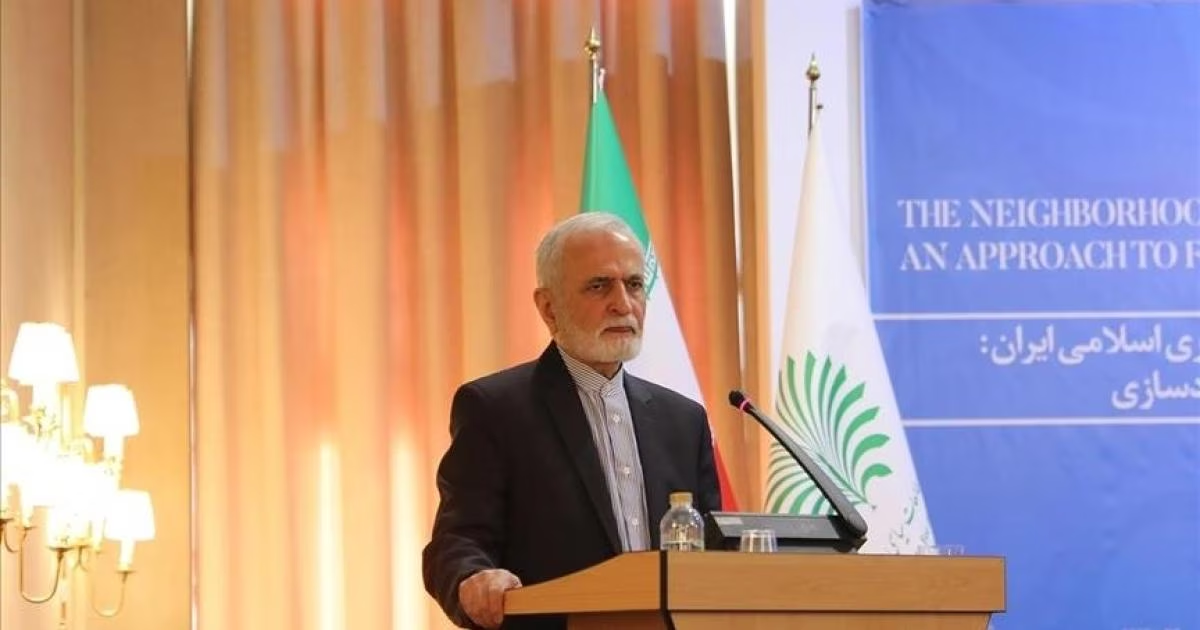
Amid continued airstrikes and ground incursions, humanitarian suffering is increasing in the targeted areas in Lebanon with the displacement of thousands of families. Ambulance and civil defense teams continue their work under shelling to retrieve victims, while the Lebanese resistance insists on continuing its rocket operations until the aggression on Lebanese and Palestinian territories ceases.

The redeployment of Lebanese Army units came as a result of the escalation of Israeli aggression aimed at besieging and isolating forces in border towns.

ANALYSIS

Wed 01 Apr 2026 8:08 pm - Jerusalem Time

Scenarios of Comprehensive Confrontation: How Can Arab Capitals Avoid the 'Great Holocaust' Trap?

As the military confrontation between the American-Israeli axis and Iran enters its second month, it has become clear that bets on a 'lightning war' have fallen short in the face of a complex reality on the ground. Intensive air strikes have not succeeded in crippling Iran's missile capabilities; instead, the scene has transformed into what can be described as a 'centerless war' where fronts intertwine and red lines fall.

Field realities have proven the effectiveness of mutual deterrence, as Tehran has demonstrated military flexibility by launching ballistic missile salvos and kamikaze drones. These means have managed to penetrate advanced air defense systems and reach strategic and sensitive targets, including facilities in Dimona and Beersheba.

The conflict has shifted from its traditional pattern to a cross-border 'network pattern,' where American bases and vital waterways are now within direct targeting range. This shift means that any escalation in a specific geographical point could ignite a fire in areas thousands of kilometers away, making control over escalation almost impossible.

Political readings indicate that the declared objectives of the war have begun to shift from undermining the nuclear program to attempting regime change or completely reducing its regional influence. Through this strategy, Washington and Tel Aviv seek to impose absolute security hegemony that extends for decades to come by breaking Tehran's network of alliances in the region.

The joint strategy of the attacking axis relies on eliminating Iran's regional power surplus and leaving it wounded from the conflict. Current pressures also aim to force Arab countries to abandon 'positive neutrality' and engage directly in the war effort as supporting parties.

The danger of 'managed chaos' emerges as an alternative to an elusive military decisive victory, where the region is kept in a state of continuous turmoil to drain everyone's energies. This scenario ensures the continued need for the American security umbrella and provides cover for redrawing energy routes and global economic maps.

The real trap for Arab countries lies in turning their geography into arenas for settling scores and mailboxes for exchanged military messages. Opening airspace or using military bases puts Arab sovereignty at stake and makes infrastructure legitimate targets in the calculations of reciprocal retaliation.
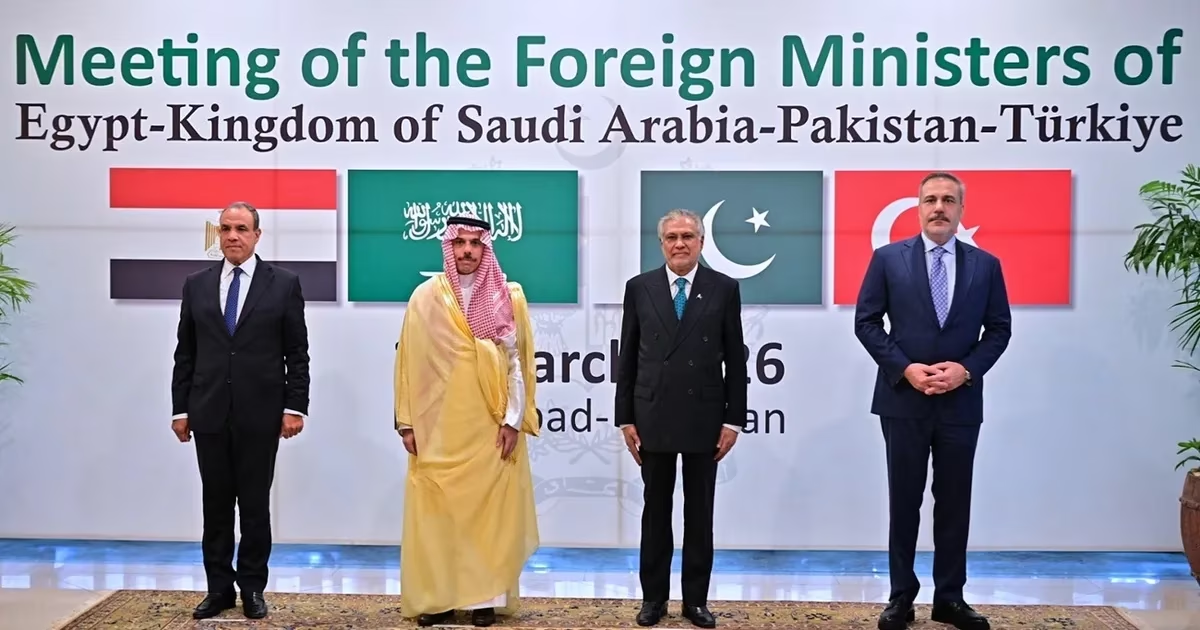
The regional economy faces systematic bleeding due to the continued threat to energy facilities and oil tankers in the Arabian Gulf. These crises severely impact development projects and redirect budgets towards armament and defense instead of the welfare and economic prosperity achieved over decades.

Arab capitals are forced into a sharp polarization dilemma, choosing between engaging in the American-Israeli axis or silence, which could be interpreted as submission. This forced choice deprives Arab countries of their ability to maneuver and build multi-polar strategic partnerships that protect their national interests.

To avoid this slippery slope, there is a pressing need for strict adherence to the principle of 'sovereign neutrality' and a refusal to use Arab territories or airspace as a launching point for any military actions. This stance is an authentic defense of Arab national security, not an alignment with any party to the conflict.

Supporting independent diplomatic tracks, such as the quadrilateral initiative involving Saudi Arabia, Egypt, Turkey, and Pakistan, is a necessary step to seize the initiative. A regional front must be formed to press for an immediate ceasefire and prevent Washington from monopolizing the decision of war and peace in the region.

Economic immunization requires activating emergency plans that go beyond monitoring energy prices to securing alternative trade routes and enhancing inter-Arab integration. Reducing reliance on volatile global markets grants Arab political decision-making greater independence in facing external pressures.

Maintaining open channels of communication with all parties, including Tehran and Washington, is a vital tool to avoid catastrophic surprises. This flexible diplomacy gives Arab capitals the ability to mediate and understand the true intentions of the warring powers in critical moments.

In conclusion, Arab countries must formulate a clear vision for the 'day after' the war to ensure that new external spheres of influence are not imposed. Sustainable stability will not be achieved through military adventures, but through a regional will that refuses to be fuel for the wars of others.

The region faces an exposed American-Israeli engineering attempt to redraw maps of influence to the beat of the drums of comprehensive confrontation.