ISRAELI AFFAIRS

Fri 03 Apr 2026 8:20 am - Jerusalem Time

Occupation Generals Warn of Escalating Iranian Nuclear Threat After the War

A number of senior researchers and generals in the Israeli security establishment have expressed growing concern about the potential escalation of the Iranian nuclear threat following the ongoing military confrontations. These experts believe that failure to address this issue radically during the current phase could lead to catastrophic consequences for the security of the occupation in the near future.

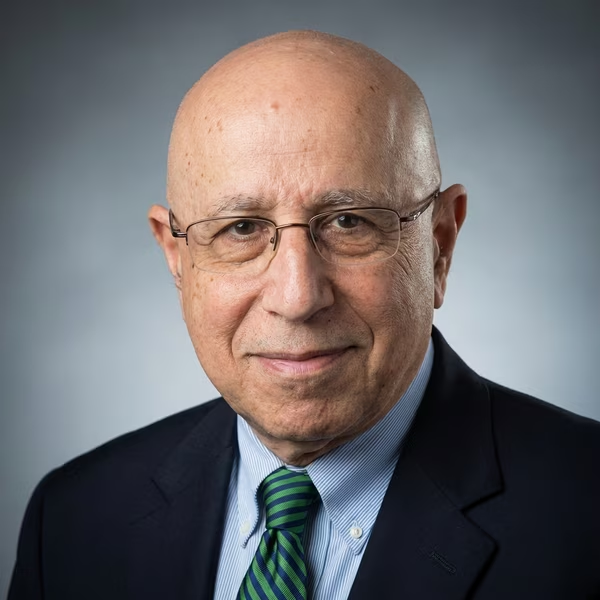
In this context, Reserve General Amos Gilad, former head of the Political-Security Division in the Ministry of War, warned against the Iranian regime remaining resilient despite the blows it has received. Gilad indicated that Tehran might do its utmost to acquire nuclear weapons while maintaining its military proxies in the region.

For his part, General Nimrod Sheffer, former head of the Planning Division in the army, expressed his dissatisfaction with the absence of a clear strategy to deal with the direct nuclear threat. Sheffer stressed that the retention of large quantities of enriched uranium by Iran after the war constitutes an existential threat that cannot be overlooked.

General Tamir Hayman, director of the Institute for National Security Studies, in cooperation with researcher Raz Zimmt, presented a comprehensive working paper outlining the required Israeli action. The paper emphasized the necessity of clearly defining Israeli interests in any negotiations led by the United States to end the current conflict.

The two researchers believe that the Iranian regime, if it withstands, will move towards adopting a national security doctrine based primarily on nuclear deterrence to compensate for its field losses. This potential shift requires the international community and Israel to ensure that Tehran does not acquire any technological capabilities that would allow it to build an atomic bomb.

The study clarified that previous models for managing the nuclear threat are no longer valid for the new reality created by the war, necessitating a more stringent approach. The paper called for insisting on the complete dismantling of infrastructure dedicated to uranium enrichment as a vital condition for any future diplomatic or military path.

Israeli assessments indicate that the current war has shaken the foundations of traditional Iranian deterrence based on proxies and ballistic missiles. This failure in deterrence may lead decision-makers in Tehran to conclude that nuclear weapons are the only guarantee against direct attacks on their territory.

The report also warned of the collapse of previous international monitoring systems, especially after the US withdrawal from the nuclear agreement in 2018. Researchers considered that the idea of 'limited enrichment' under supervision is no longer acceptable or safe from the Israeli security perspective at present.

The working paper touched upon the loss of diplomatic trust between the parties, noting that Iran feels deceived, which reduces the chances of reaching 'soft' understandings. It added that any new round of negotiations might be interpreted by Tehran as an additional deception, which will further complicate the security and political landscape.

Despite intelligence operations targeting Iranian nuclear scientists, the report confirmed that Iran still possesses high-quality human and academic resources. This accumulated knowledge allows the regime to complete technological deficiencies and achieve a rapid breakthrough towards a nuclear bomb in record time if it decides to do so.

Based on these facts, Israeli recommendations called for the necessity of dismantling nuclear facilities located deep in tunnels, such as Fordow, Natanz, and Isfahan. Experts considered that destroying these fortified sites against conventional attacks is the only way to ensure the crippling of Iran's nuclear military capabilities.

The demands also included transferring highly enriched uranium out of Iranian territory, or reducing its enrichment levels to non-military grades. The recommendations also called for a complete ban on the acquisition of advanced centrifuges and a freeze on all research related to the development of warheads.

The researchers proposed replacing the current monitoring system with a stricter and more intrusive system through the International Atomic Energy Agency, without any specific time limit. This system must ensure full transparency at all stages of the nuclear production chain, including sites that were previously secret.

In conclusion, the generals stressed that Israel must lead a tough line with its allies, especially Washington, to reject a return to the 'containment' model. They considered that dismantling underground sites and removing enriched uranium must be a 'red line' that cannot be crossed in any ceasefire agreement.

Ending the war will place Israel and the international community before a new strategic reality, where Iran may adopt a security doctrine based on nuclear weapons as an existential deterrent force.

PALESTINE

Fri 03 Apr 2026 8:20 am - Jerusalem Time

31 International Organizations Condemn Occupation's Legislation to Execute Palestinian Prisoners and Demand European Action

31 international human rights organizations issued a warning cry from Brussels, the Belgian capital, condemning the Israeli occupation authorities' approval of a law that legalizes the execution of Palestinian prisoners in the occupied West Bank. These organizations affirmed in a joint statement that this legislation represents an unprecedented human rights regression, disregarding all international legal standards, and demanded that the European Union and its member states move from condemnation to taking practical and urgent measures to stop these systematic violations.

This human rights action comes at a time when the Israeli Knesset finally approved the law with a majority of 62 votes. The new legislation allows for the imposition of the death penalty by hanging on prisoners convicted of killing Israelis. Among the most prominent dangers of this law is that it allows for sentences to be issued by a simple majority of judges without the need for unanimity, grants full immunity and secrecy to the identity of the perpetrators, and imposes strict restrictions on prisoners' communication with their lawyers by limiting it to visual contact only, which undermines the foundations of justice and fair trial.

On the diplomatic front, these organizations joined a broad opposition front that included the foreign ministers of eight Arab and Islamic countries, including Jordan, Saudi Arabia, Egypt, and Qatar, who described the law as a dangerous escalation. In a related context, the European Union threatened to impose economic and political sanctions on Tel Aviv if the death sentences are actually implemented, coinciding with popular and political movements in several countries, including Mauritania, which witnessed massive demonstrations with the participation of dozens of parties condemning the decision that opposing Israeli figures described as a 'moral stain'.

These legislative developments coincide with a tragic reality experienced by about 9,500 Palestinian prisoners in occupation prisons, including hundreds of children and women who face harsh detention conditions. Statistics indicate that 89 prisoners have been martyred since October 7, 2023, as a result of systematic torture policies and deliberate medical negligence, which reinforces international fears that the death penalty law will turn into a legal liquidation tool added to the series of violations practiced by the prison service against Palestinians.

The new legislation represents a dangerous regression from international legal standards and directly violates the Fourth Geneva Convention and the principle of prohibiting discrimination.

LATEST NEWS

Fri 03 Apr 2026 8:20 am - Jerusalem Time

In coordination with Tehran and Beirut.. Houthis target vital sites in Tel Aviv with ballistic missiles

The Houthi group in Yemen, today Thursday, revealed the execution of a qualitative military operation targeting vital and sensitive sites deep within the Israeli occupation. The group clarified that the attack was carried out by a batch of advanced ballistic missiles that struck targets in the Jaffa area, known to Israelis as Tel Aviv, noting that the operation achieved its objectives with precision.

In a televised statement by the military spokesman for the group's armed forces, Yahya Saree, he confirmed that this attack came within the framework of joint action and high-level coordination with both Iran and Lebanese Hezbollah. Saree stressed that the Yemeni forces are closely monitoring developments on the ground, affirming that direct engagement in the confrontation is proceeding according to a carefully studied gradual strategy.

For its part, Hebrew media sources reported that sirens blared intensely in wide areas including the vicinity of the Dead Sea and southern Israel. The sources claimed that the occupation army's air defense systems managed to intercept at least one missile launched from Yemen, while a state of security alert prevailed in the targeted areas.

This targeting is the fourth of its kind launched by the group since its direct involvement in the current confrontation alongside Tehran, which began last Saturday. This attack was preceded by three other operations using ballistic missiles and suicide drones, targeting sensitive military installations in the southern regions of occupied Palestine.

Israeli occupation authorities continue to impose strict military censorship and comprehensive media blackout on the results of these missile strikes and their impact sites. Military censorship prevents media outlets from circulating any photos or videos showing the extent of material or human losses, warning against publishing any information that might serve what it describes as hostile propaganda.

In a related context, the Yemeni military spokesman affirmed that the group will deal with upcoming field developments based on the path of escalation or de-escalation dictated by circumstances. He indicated that military operations will not stop as long as the aggression continues, pointing out that coordination with the axis of resistance is at its highest levels to deter ongoing Israeli and American attacks.

These developments come amid unprecedented escalation that began since the end of last February, where Iran was subjected to a series of violent attacks that resulted in thousands of casualties. These attacks included assassinations targeting senior state leaders, which prompted Tehran and its allies to respond by launching waves of missiles and drones towards Israeli targets.

On the regional level, the region is experiencing a state of turmoil with the continued exchange of missile strikes that also affected interests and military bases in various Arab countries. While the attacking forces confirm their targeting of military sites only, local reports in some countries indicate damage to civilian properties and civilian casualties due to the accelerating escalation.

The attack was carried out with a batch of ballistic missiles and targeted vital enemy targets in the occupied Jaffa area in cooperation with brothers in Iran and Hezbollah.

ARAB AND WORLD

Fri 03 Apr 2026 8:20 am - Jerusalem Time

Reshaping Iran's Ruling Core: Ghalibaf as a Facade, Power Struggle Shifts to the 'House of Leadership'

International press reports indicate that Iran's political landscape is undergoing a broad reshaping of its ruling core, with Mohammad Bagher Ghalibaf, the current Speaker of Parliament, emerging as one of the most prominent figures in the power structure. This rise follows a series of assassinations targeting senior regime leaders, pushing second-tier figures to the forefront of political and diplomatic events.

Despite Ghalibaf's extensive appearances on official television screens, informed sources confirm that actual power remains confined within the Supreme Leader's office, known as the 'House of Leadership,' and in close coordination with intelligence agencies. Ghalibaf is seen as a potential communication channel, especially after American hints about the possibility of dealing with different figures within Tehran.

Ghalibaf has a solid military background, having been one of the youngest commanders of the Revolutionary Guard during the Iran-Iraq War, and later commanded the Aerospace Force. Observers believe that his current assignment may include overseeing the war effort and defense strategy, benefiting from being one of the last hardline figures known to Western circles.

In the context of diplomatic moves, sources revealed a temporary exclusion of Ghalibaf's name and Foreign Minister Abbas Araghchi from direct targeting lists. However, this protection remains linked to the extent of Tehran's response to the specified deadlines for negotiations, amid the complexities of the current regional and international scene.

On the political front, Tehran officially rejected a 15-point American proposal aimed at completely dismantling Iran's nuclear program. The proposal included handing over enriched uranium and imposing strict restrictions on the missile system, in exchange for lifting economic sanctions, which Iran considered an infringement on its national sovereignty.

Ghalibaf, 64, has a controversial history linked to the suppression of student protests in 1999 and allegations of administrative corruption during his tenure as mayor of Tehran. Analysts believe that his prominence as a facade for the regime may reflect a desire to protect real power centers by placing coordinating figures on the front lines.

Reports indicate that the actual decision-making center is managed by Ali Asghar Hejazi within the Supreme Leader's office, a figure deeply connected to security agencies. This shift comes after the absence of influential historical figures such as Ali Larijani, who combined military, bureaucratic, and religious influence before his killing in an Israeli raid.

Despite Ghalibaf's repeated attempts to reach the presidency and his failure to do so, his current position as Speaker of Parliament grants him a vital coordinating role. However, his political weight remains contingent on his alignment with the directives of the Revolutionary Guard and the Supreme Leader's office, without possessing an independent power base.

Researchers emphasize that the Revolutionary Guard acts as an ideological army serving the institution of 'Guardianship of the Jurist' as an idea transcending individuals, meaning the absence of any leader does not fundamentally affect the continuity of the system. The regime relies on a 'martyrdom' strategy to strengthen the power of blocs associated with leaders lost in confrontations.

In a notable development, the name Ahmad Vahidi emerged as the new commander of the Revolutionary Guard, reflecting a trend towards strengthening the grip of security agencies. Vahidi, who contributed to establishing regional arms of the regime, represents the generation that combines intelligence work and field operations at this critical stage.

Internally, the Iranian regime has begun to intensify security measures within major cities in preparation for confronting any potential popular unrest. Sources reported movements by the Basij militia involving the storage of equipment and weapons in civilian facilities such as schools, as a precautionary measure to confront protest scenarios.

It appears that the competition for the succession of the Leader has entered a new phase with the strengthening of Mojtaba Khamenei's position, despite ongoing debate about his health and internal opposition. Circles surrounding the Leader are working to ensure a smooth transition of power that preserves the regime's ideological cover amidst external threats.

In conclusion, Iranian politics remains governed by delicate balances between the military establishment and the Supreme Leader's political office, where roles are carefully distributed. While Ghalibaf leads the diplomatic scene, major strategic decisions remain hostage to closed rooms managed by senior security leaders.

Real power in Iran is concentrated in the Supreme Leader's office and intelligence agencies, while Ghalibaf emerges as a coordinating facade between institutions.

PALESTINE

Fri 03 Apr 2026 8:20 am - Jerusalem Time

French authorities arrest MEP Rima Hassan on charges of 'supporting terrorism'

French security authorities have arrested Rima Hassan, a Member of the European Parliament belonging to the 'La France Insoumise' party, following investigations related to content she published on social media platforms. Informed sources stated that the detention was for questioning regarding suspicions of 'expressing support for terrorism,' which sparked widespread political reactions within French and European circles.

Jean-Luc Mélenchon, leader of La France Insoumise, confirmed that his colleague Rima Hassan is currently being held by the police due to a comment she posted last March about an attack on an Israeli airport in the 1970s. Mélenchon strongly criticized this measure via his 'X' account, considering the arrest of a parliamentary representative for her political stances a dangerous precedent that practically signifies the absence of parliamentary immunity in the country.

According to French media reports, the charge focuses on a tweet Hassan posted on March 26, in which she discussed the Lod Airport attack that occurred in 1972 and was carried out by the Japanese Red Army. Authorities claim that the wording of the tweet, which included a quote from one of those convicted in that operation, could be interpreted as a form of justification or glorification of armed violence under the guise of defending the rights of the Palestinian people.

Rima Hassan, 33, is one of the most prominent young political figures advocating for the Palestinian cause in France, where her role has become increasingly prominent since the start of the aggression on the Gaza Strip. The MEP has actively participated in international initiatives such as the 'Freedom Flotilla,' which sought to break the siege imposed on the Strip, making her subject to repeated legal pursuits and pressure from the pro-occupation lobby.

This is not the first time Hassan has faced legal action, as she has been under investigation since late 2023 on charges of 'glorifying terrorism' based on statements and positions following the events of October 7. Observers believe that these legal actions aim to restrict voices opposing Israeli policies within European legislative institutions, especially with the escalating political polarization surrounding the Gaza issue.

In a related context, sources close to the party emphasized that Rima Hassan had previously deleted the controversial post, but authorities insisted on prosecuting her legally. These developments come at a time when France is witnessing a heated debate about the limits of freedom of expression and the immunity granted to elected officials, especially in issues affecting foreign policy and sensitive international conflicts.

The re-arrest of Rima Hassan due to an old tweet means the absence of parliamentary immunity in France, and this is unacceptable.

ARAB AND WORLD

Fri 03 Apr 2026 8:20 am - Jerusalem Time

Billions of Dollars in Losses and Strikes on 13 Bases.. Washington Faces a Hefty Price Tag in its Conflict with Iran

International press reports have revealed the escalating scale of losses incurred by the United States as a result of its military confrontation with Iran, with damages affecting 13 American bases spread across the Middle East. Sources indicated that Washington finds itself, for the first time in decades, facing a regular army with advanced technological capabilities, rather than the irregular armed groups it is accustomed to fighting.

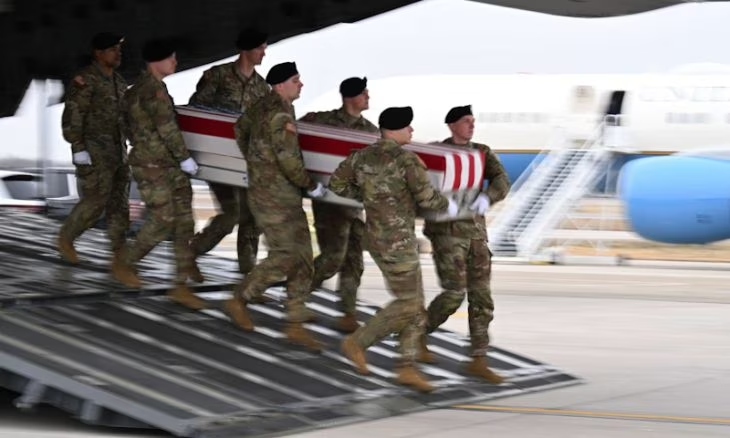
According to recorded data, the cost of material destruction after the first month of the conflict amounted to approximately $1.5 billion, while 13 American soldiers were killed and over 300 others sustained injuries of varying degrees. The US Department of Defense (Pentagon) is facing sharp criticism for what has been described as a failure to adapt to drone warfare, despite the clear lessons provided by the war in Ukraine in recent years.

Defense sources confirmed that Iranian drone swarms, especially the 'Shahed-136' suicide drone model, posed an exceptional challenge to advanced American air defense systems. Despite the deployment of the most expensive defensive systems capable of intercepting ballistic missiles, the drones repeatedly managed to penetrate these defensive layers and hit their targets with high accuracy.

Among the most prominent qualitative losses noted in the report was the destruction of an 'AWACS E-3 Sentry' early warning and control aircraft at Prince Sultan Air Base in Saudi Arabia, a rare aircraft costing $300 million. A long-range radar system in the 'Umm al-Dahl' area near Al Udeid Air Base in Qatar was also completely destroyed, a system estimated to be worth over $1 billion.

In Bahrain, attacks targeted the headquarters of the US Navy's Fifth Fleet in Manama, causing severe damage to vital radar and communication equipment. Reports submitted to Congress estimated the value of damaged equipment at this location alone to be around $200 million, reflecting the rapid financial and military attrition.

US bases in Kuwait witnessed deadly attacks, with six soldiers killed in a raid targeting a logistics center in Shuwaikh Port near Camp Arifjan. Ali Al Salem and Camp Buehring bases also suffered successive strikes that led to the disruption of communication systems and widespread destruction of administrative and military buildings.

In the UAE, Al Dhafra Air Base was a frequent target for drones, a base that houses 'F-22 Raptor' stealth aircraft. Information indicates the destruction of nine 'MQ-9 Reaper' drones belonging to the US Army in separate incidents, with each aircraft of this type costing approximately $30 million.

The bases in Jordan and Iraq were not spared from these targeting efforts, with a air defense radar system at Muwaffaq Salti Air Base in Jordan, valued at $500 million, being damaged. In northern Iraq, Erbil base, which houses special forces, is subject to continuous attacks, while US authorities are imposing a blackout on the extent of damage at Ain al-Asad base in Anbar.

Reports indicate that Russian-Iranian cooperation has further complicated the field situation for US forces, as Moscow is believed to be providing Tehran with precise coordinates of base locations. This cooperation includes monitoring the daily movements of exposed aircraft on runways, making it easier to target them before they are moved to fortified shelters or take off.

Iranian forces are using upgraded versions of drones carrying 90-kilogram warheads, capable of flying at low altitudes to avoid radars. This technology has proven effective in bypassing defensive systems installed on warships and at ground bases, putting American air superiority to a real test.

In the context of military attrition, the United States has consumed a significant portion of its strategic inventory of 'Tomahawk' interceptor and offensive missiles to counter aerial threats. Observers believe that this attrition may be a motive behind American political statements calling for a swift end to the war to avoid entering a costly, comprehensive ground operation.

Military experts believe that the US military is designed to withstand significant pressures, but the scale of the current confrontation is heavily pressing on the American defense industrial base. The need to rebuild operational capabilities and replace destroyed equipment requires time and huge budgets that may not be readily available given the current political division.

For his part, US Secretary of War, Pete Hegseth, admitted that some Iranian missiles and drones had indeed succeeded in penetrating the air defenses deployed in the region. Officials acknowledged that the numerical intensity of the attacks was greater than expected, making it difficult to intercept all hostile targets simultaneously.

In conclusion, defense advisors believe that fighting a state with a regular army like Iran requires a political strategy parallel to military performance to achieve any tangible success. Iran is conducting both symmetrical and asymmetrical battles simultaneously, utilizing multiple levels of military power and regional influence to exhaust its American adversary.

The US Department of War's failure to learn the lessons of Ukraine, particularly regarding drone warfare, is a bipartisan failure across two presidential administrations.

OPINIONS

Fri 03 Apr 2026 8:19 am - Jerusalem Time

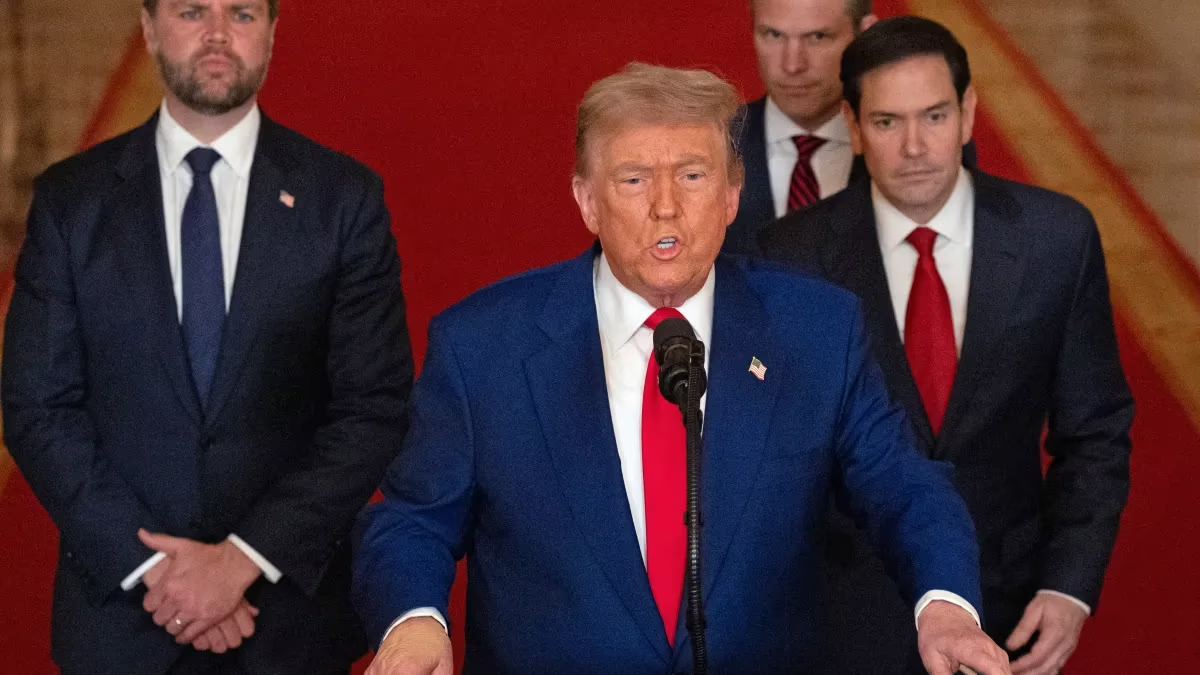
Trump boasts about destroying Tehran bridge, calls on Iran to agree before it's too late

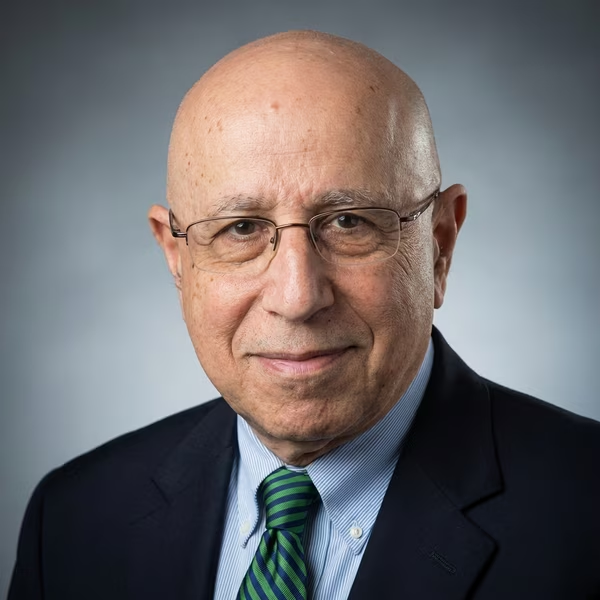
Said Erikat

Opinion Writer

Washington – Said Arikat – 2/4/2026

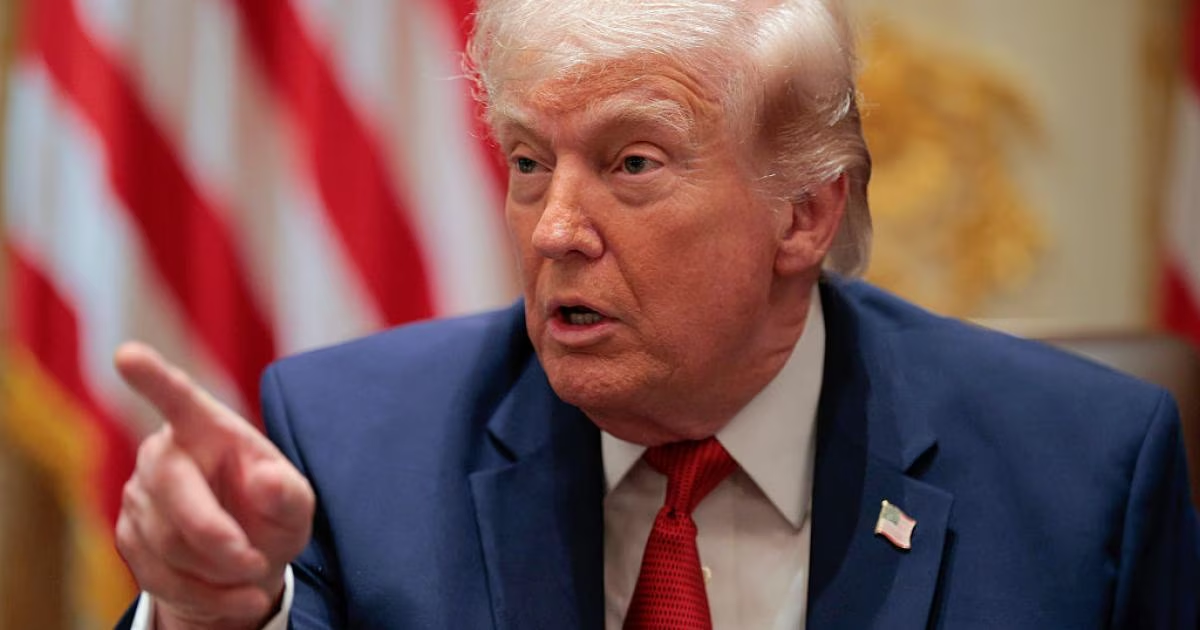
US President Donald Trump announced on Thursday on the "Truth Social" platform that "the largest bridge in Iran has collapsed and will never be used again," attaching to his post a video showing widespread destruction and rising smoke plumes, and adding in a brief statement: "More to come." This direct statement reflects a continuous rhetorical and military escalation, aimed at establishing a maximum deterrence equation, but at the same time raises questions about the limits of American objectives and the nature of the next phase.

In the same context, Iranian television reported that American-Israeli airstrikes targeted a major bridge connecting Tehran with the city of Karaj, west of the capital, explaining that the attacks were carried out in two phases separated by about an hour, and resulted in the death of two people. It added that the second strike occurred while rescue teams were working at the site of the first attack, in a scene that reflects a field escalation not without humanitarian and economic repercussions that may provoke international criticism, including from some of Washington's allies.

In a televised speech from the White House on Wednesday evening, Trump threatened to continue delivering "very severe" strikes against Iran over the next two to three weeks, asserting that military operations are moving towards fully achieving their objectives. Despite his announcement that the primary objectives have been achieved or exceeded, this apparent contradiction between declaring success and threatening more strikes raises questions about the definition and limits of "victory," and whether Washington is expanding the scope of its operations instead of ending them.

Trump did not address the course of negotiations with Tehran in his speech, nor did he refer to the deadline he had set for April 6 to reopen the Strait of Hormuz, a vital passage for global energy flow. In the absence of a diplomatic path, the US administration appears to be relying primarily on military force, based on the conviction that Tehran only responds under pressure. However, this approach, in turn, increases the likelihood of miscalculation and uncalculated escalation.

Trump also did not provide a clear vision for addressing supply disruptions that have driven global energy prices higher, merely calling on affected countries to secure their own needs. This approach highlights the limited economic vision accompanying military action, at a time when energy markets remain highly sensitive to any disruption, especially given the importance of the Strait of Hormuz as a key pivot point in the global supply system.

In parallel with the threats, Trump called on Iran to conclude an agreement "before it's too late," warning that if a settlement fails, the United States could target "every power station" in Iran with simultaneous strikes. He also stressed that any movement towards Iranian nuclear sites would be met with "devastating missile strikes," asserting that these facilities are under close satellite surveillance. These contradictory messages between calling for negotiations and threatening comprehensive destruction reflect a strategy of maximum pressure, but they may push the other party to further intransigence instead of retreat.

These developments place the region at a highly sensitive stage, where military escalation intersects with the fragility of global energy markets, raising the likelihood of the confrontation expanding. While this policy may achieve short-term tactical gains, it carries broader strategic risks, most notably prolonging the crisis and complicating opportunities for a sustainable settlement.

OPINIONS

Fri 03 Apr 2026 8:13 am - Jerusalem Time

Bridges to Nowhere: Trump’s Iran Strikes and the Illusion of Strategy

By: Said Arikat


April 3, 2026


News Analysis


Washington, D.C- By any measure, the spectacle was the point. When Donald Trump took to Truth Social to boast that “Iran’s largest bridge has collapsed and will never be used again”—punctuating the claim with footage of fire and smoke and the ominous promise that “more is coming”—he was not merely communicating policy. He was performing power. The problem is that performance is not strategy, and destruction—no matter how dramatic—does not in itself constitute a coherent endgame. It may project dominance in the moment, but it rarely answers the harder question of what comes next.


The reported strike on a major bridge linking Tehran to Karaj, allegedly carried out in two waves an hour apart, raises deeply troubling questions. If, as Iranian media claim, the second strike occurred while rescue workers were already on site, then this is not just escalation—it is escalation untethered from restraint. Such patterns—often described in reference to Israeli military operations as “double-tap” strikes targeting the same site after first responders arrive—carry profound humanitarian and legal implications. Even allowing for the fog of war and competing narratives, the optics are stark: critical infrastructure reduced to rubble, lives lost, and humanitarian risks amplified. For Washington, which has long claimed a commitment to rules-based conduct, such images risk eroding credibility faster than any adversary could, particularly among allies already uneasy about the trajectory of events.


What, precisely, is the objective? In a televised address, Trump asserted that operations were on track and that core goals had been met or even surpassed—yet in the same breath threatened “very severe” strikes over the coming weeks. This contradiction is more than rhetorical sloppiness; it suggests either mission creep or the absence of a clearly defined mission altogether. If success has already been achieved, why the need for continued bombardment? And if it has not, what metric will determine when it is? These are not academic questions; they are central to assessing whether policy is being guided by outcomes or impulses.


Equally striking is what was left unsaid. There was no serious articulation of a diplomatic pathway, no renewed timeline for negotiations, and no clarity on previously stated deadlines tied to the Strait of Hormuz. The silence speaks volumes. It suggests an administration leaning almost exclusively on coercive force, wagering that Tehran will yield under pressure. Yet history offers little comfort for such assumptions. Pressure without a credible off-ramp tends to harden positions, not soften them, especially in systems where resistance is politically valorized and compromise can be framed as surrender.


The economic dimension is treated with similar indifference. Energy markets—already jittery—have reacted predictably to the prospect of sustained disruption in one of the world’s most vital transit corridors. Yet the response from Washington has been little more than a shrug: affected countries, Trump suggested, should secure their own supplies. This is not leadership; it is abdication. A military campaign that disregards its global economic reverberations is not merely incomplete—it is reckless. It underestimates the degree to which interconnected markets can transmit instability far beyond the immediate theater of conflict.


Most jarring, perhaps, is the administration’s simultaneous invocation of diplomacy and annihilation. Iran is urged to strike a deal “before it’s too late,” even as threats are issued to target every power station in the country and to unleash devastating missile strikes on any perceived movement toward nuclear sites. This is not a calibrated mix of carrots and sticks; it is a jumble of ultimatums that risks convincing the other side that compromise is indistinguishable from capitulation. In such an environment, even pragmatic actors can find themselves boxed into maximalist positions.


None of this is to deny that deterrence sometimes requires force. But deterrence without clarity becomes indistinguishable from provocation. The current approach appears less like a strategy aimed at a defined political outcome and more like an open-ended campaign of attrition, driven by the logic of escalation itself. Tactical successes—bridges downed, facilities damaged—may accumulate. Yet without a credible political framework, they add up to little more than destruction in search of meaning. Over time, such actions risk normalizing a cycle in which each strike invites another, with diminishing strategic returns.


The Middle East has seen this pattern before: overwhelming force deployed with confidence, followed by a slow realization that the end state was never fully thought through. The danger is not only that this cycle repeats, but that it accelerates, compressing decision-making timelines and increasing the likelihood of miscalculation. When rhetoric outpaces strategy, and when destruction is treated as an end in itself, the space for diplomacy shrinks accordingly.


If there is a strategy here, it remains obscured behind plumes of smoke and bursts of rhetoric. Until Washington can articulate not just what it intends to destroy, but what it intends to build—or stabilize—in its place, these actions will continue to look less like policy and more like spectacle. And spectacle, however forceful, is a poor substitute for strategy in a region where the costs of misjudgment are measured not only in infrastructure lost, but in lives upended and futures foreclosed.

OPINIONS

Thu 02 Apr 2026 6:31 pm - Jerusalem Time

Ocasio-Cortez Says She Will Vote Against Any Military Aid to Israel

Washington – Said Arikat – 2/4/2026

US Congresswoman Alexandria Ocasio-Cortez announced on Tuesday that she intends to vote against any military aid to Israel, including defensive supplies, in a notable shift in her political stance. This announcement gains additional importance amid escalating speculation about her potential candidacy for the 2028 presidential election.

A spokesperson for the congresswoman clarified to CNN that she informed members of the New York City chapter of the Democratic Socialists of America of her intention to vote “no” on any expenditures related to military aid to Israel. This position was taken during a special forum discussing the organization's support for her re-election campaign, and City & State newspaper was the first to reveal its details.

This development comes in the context of a gradual shift within the Democratic Party towards adopting more critical stances on Israeli policies, especially amid the activity of pro-Israel lobbying groups that have spent significant amounts to counter Democratic candidates who support conditioning aid on specific terms.

In contrast, prominent party leaders still face difficulties in formulating a unified discourse. California Governor Gavin Newsom retracted previous statements in which he described Israel as an “apartheid state,” later clarifying in an interview with Politico magazine that he was warning of the possibility of it sliding towards this path under the influence of the far-right, referring to Prime Minister Benjamin Netanyahu’s policies.

Ocasio-Cortez is considered one of the most prominent critics of Israel within the House of Representatives, despite her previous varying positions on defensive aid. In 2021, she abstained from voting on an additional funding bill for the “Iron Dome” system, despite announcing her opposition, while in 2024 she signed a letter from progressive representatives rejecting the sending of offensive weapons, while affirming support for defensive systems.

In a statement issued on Wednesday, the congresswoman stressed the necessity for any military aid to comply with what is known as the "Leahy Amendment," which prohibits support for foreign security units involved in human rights violations. She also considered that Israel is capable of funding its defensive system, asserting that she would not support sending more taxpayer money to a government that "disregards international and American law."

Ocasio-Cortez's position reflects a structural shift within the progressive wing of the Democratic Party, where the discussion is no longer limited to the conditions of aid, but has extended to the principle of providing it in the first place. This shift is linked to demographic and ideological changes within the party base, especially among youth and progressive voters who demand a foreign policy more consistent with human rights standards. It also reflects the escalating influence of grassroots movements that pressure their representatives to take clearer stances on the Palestinian-Israeli conflict.

This position places Democratic Party leaders before a complex equation between maintaining traditional alliances, especially with Israel, and responding to increasing internal pressures to redefine this relationship. The hesitation shown by some leaders, such as Newsom, indicates the political and electoral sensitivity of the issue, as any sharp stance could negatively impact the balances within the party or the funding of election campaigns, given the continued influence of influential lobbying groups in Washington.

On the strategic level, this development may open the door to a broader reassessment of US policy in the Middle East, especially if other prominent figures adopt similar positions. As the 2028 elections approach, the issue of aid to Israel may become a major internal debate, testing the Democratic Party's ability to formulate a unified vision for foreign policy. If this trend escalates, we may witness a gradual shift in the conditions and mechanisms for providing US military support to its allies.

PALESTINE

Thu 02 Apr 2026 6:29 pm - Jerusalem Time

Hamas delegation in Cairo discusses ceasefire implementation, Gaza health warns of hospital shutdown

The Ministry of Health in the Gaza Strip has issued stern warnings of an impending humanitarian catastrophe within medical facilities, due to a severe shortage of oils necessary to operate electricity generators. The ministry affirmed that the continuation of this crisis threatens to halt vital health services amidst the complete power outage that the Strip has suffered from for a long time.

Bassam Al-Hammadeen, Assistant Undersecretary for Engineering and Medical Equipment, explained that the absence of these oils from local markets puts hundreds of patients in intensive care units and operating rooms at risk of certain death. He pointed out that the crisis is not limited to operating devices only, but also extends to include the risks of damage to children's vaccines and stored blood units that require continuous refrigeration.

The health authorities appealed to donors and international organizations for urgent intervention to secure the purchase of oils from outside the Strip and their immediate entry into hospitals and primary care centers. They also demanded real pressure on the occupation authorities to lift restrictions on the entry of these essential materials, as hospitals need about 2500 liters per month to ensure minimum operation.

This suffering comes at a time when the health sector relies entirely on electricity generators to compensate for the absence of the public grid, making the availability of fuel and oils a matter of life or death. Israel imposes strict restrictions on the entry of medical supplies and fuel, which has exacerbated the repercussions of the ongoing war of extermination that has destroyed large parts of the medical infrastructure.

On the political front, the Hamas movement announced the arrival of a high-level delegation from its leadership to the Egyptian capital, Cairo, headed by the movement's head in Gaza, Khalil Al-Hayya. The visit aims to follow up on the implementation of the ceasefire agreement that came into effect last October, and to discuss the obstacles hindering the completion of its terms with the Egyptian leadership.

Upon its arrival, the delegation immediately began a series of intensive meetings with mediators from Egypt, Qatar, and Turkey, to assess the current phase of the agreement and ensure the occupation's commitment to implementing the required pledges. The tour is scheduled to include meetings with leaders of Palestinian factions present in Cairo to unify national positions on current issues.

The Cairo stop comes two days after discussions held by the delegation in Ankara with the head of the Turkish intelligence service, Ibrahim Kalin, and Foreign Minister Hakan Fidan. Discussions in Turkey focused on the rapidly accelerating field developments in the Gaza Strip and the West Bank, and ways to enhance humanitarian and political support for the Palestinian people.

Hamas stressed in its statement the necessity of obliging the occupation to implement all requirements of the first phase of the agreement without procrastination or delay. The delegation also provided a detailed explanation to the mediators about the deteriorating security and humanitarian conditions in the Strip, warning of an explosion of the situation if the siege and military violations continue.

In a related context, Egyptian Foreign Minister Badr Abdel Ati met with the High Representative for Gaza, Nickolay Mladenov, to discuss mechanisms for transitioning to the second phase of the proposed peace plan. The meeting addressed ways to consolidate calm amidst the continued Israeli violations that result in daily casualties despite the agreement.

Officials in Cairo discussed the challenges facing the implementation of 'Trump's plan' in its advanced stages, with a focus on the need to open crossings and facilitate the entry of relief aid. The Egyptian Foreign Ministry affirmed its commitment to supporting all efforts aimed at ending the suffering of the Strip's residents and achieving sustainable stability.

During its meetings, the movement's delegation warned of the dangerous Israeli escalation in the occupied city of Jerusalem, especially with the continued closure of Al-Aqsa Mosque to Muslim worshippers. The movement considered that preventing prayer in Al-Aqsa represents a dangerous precedent aimed at imposing a new reality that paves the way for the temporal and spatial division of the mosque and its complete Judaization.

The discussions also touched upon the issue of prisoners, especially after the Israeli Knesset approved a law allowing the execution of Palestinian prisoners, which the movement described as a criminal decision. The Palestinian leadership warned of the repercussions of this law on the lives of thousands of detainees, calling on the international community to act to stop these blatant violations of international humanitarian law.

The lack of oil availability in the local market portends a health catastrophe and real death for hundreds of patients in sensitive departments.

ARAB AND WORLD

Thu 02 Apr 2026 6:29 pm - Jerusalem Time

Strait of Hormuz Crisis: Tehran Insists on Closure, Macron Warns Against Use of Force

Tehran reiterated its strict stance on navigation in the Strait of Hormuz, with Ali Akbar Velayati, senior advisor to the Iranian Supreme Leader, affirming that the vital waterway will remain closed to those he described as enemies of the country. Velayati clarified in a post that this measure targets hostile military bases in the region, emphasizing that the strait is open for global trade movement except for entities that threaten Iran's security.

In response to American threats, Velayati downplayed President Donald Trump's statements regarding the course of ongoing military operations. The Iranian advisor indicated that the end of the conflict would not be determined by the desires or dreams of aggressors, but rather would be the result of Iranian strategy and the field capability imposed by state authority in the face of external pressures.

For his part, US President Donald Trump issued escalating statements, asserting that Washington was on the verge of achieving its primary strategic goals in confronting Tehran. Trump vowed to deliver a 'very harsh' military strike within the next three weeks, claiming that US forces were on track to complete all assigned military tasks in record time.

On the European front, French President Emmanuel Macron adopted a different stance, warning that resorting to military force to open the Strait of Hormuz was an unrealistic option. Macron clarified during his current visit to South Korea that his country had never supported the idea of liberating navigation through armed operations, given the serious risks that such a move could entail.

The French President considered that any attempt to open the strait by force would take a very long time and would expose passing ships to direct risks from Revolutionary Guard missiles and Iranian ballistic capabilities. Macron affirmed that the only solution to ensure the flow of energy and fertilizers lies in dialogue and consultation with the Iranian side, not through direct military confrontation that could spiral out of control.

As part of diplomatic efforts, the French Ministry of Foreign Affairs revealed arrangements for a high-level meeting next week involving G7 countries and the Gulf Cooperation Council states. The meeting, chaired by France in its current term, aims to discuss the repercussions of the strait's closure and seek diplomatic ways to secure international shipping lanes amid the current escalation.

In London, British Foreign Secretary Yvette Cooper expressed her country's deep concern over the continued closure of the strait, describing the Iranian move as reckless and threatening global economic security. Cooper's statements came during an expanded virtual meeting that included representatives from more than forty countries to discuss the crisis of the maritime passage, which is considered the lifeline for global energy supplies.

Economic data indicates that the Strait of Hormuz accounts for about 20% of the world's total oil and liquefied natural gas supplies, making its closure an international crisis that transcends the boundaries of regional conflict. Global markets have been significantly affected since the start of military tensions last February, amid fears of severe supply shortages and skyrocketing prices.

Since late February, the region has witnessed a large-scale military confrontation, with Israeli and American forces launching continuous attacks on Iranian targets, resulting in thousands of casualties. In response, Tehran has retaliated by launching missile barrages and drones targeting Israeli sites, while activating the weapon of closing the strait to pressure the international community.

France is currently seeking, in coordination with European and international allies, to form a coalition aimed at ensuring freedom of navigation once an agreement to cease hostilities is reached. The Élysée believes that restoring confidence in maritime passages requires arduous negotiations with Tehran to ensure that the scenario of closure, which paralyzed trade in one of the world's most important straits, is not repeated.

Field sources reported that the situation around the strait remains highly tense, with an intensive deployment of Iranian Revolutionary Guard naval vessels. International powers are closely monitoring any movements that might indicate Tehran's intention to escalate its measures, at a time when popular and economic pressures are increasing on energy-importing countries to secure alternatives or reach a de-escalation.

Anticipation remains the order of the day, awaiting the outcomes of the G7 and Gulf meetings, and whether American threats will translate into on-the-ground reality or remain within the framework of negotiating pressure. With each side adhering to its positions, the Strait of Hormuz crisis is likely to become more complex, putting the global economy to its toughest test in decades.

The Strait of Hormuz is open to the world, but it will always remain closed to the enemies of the Iranian people and their bases in the region.

PALESTINE

Thu 02 Apr 2026 6:29 pm - Jerusalem Time

China's Five-Point Initiative with Pakistan on Restoring Peace and Stability in the Gulf and the Middle East

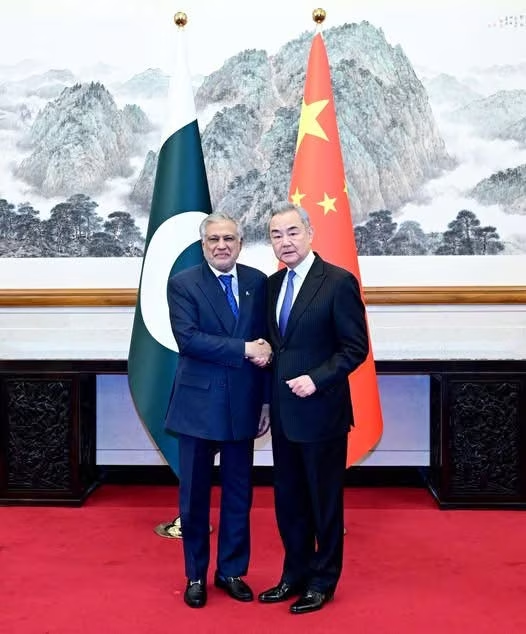
On March 31, 2026, Wang Yi, Member of the Political Bureau of the CPC Central Committee and Minister of Foreign Affairs, held talks with Pakistani Deputy Prime Minister and Foreign Minister Mohammad Ishaq Dar in Beijing. The two sides exchanged views on the situation in the Gulf and the Middle East, and put forward the following initiative:

First, an immediate cessation of hostilities. China and Pakistan called for an immediate ceasefire and prevention of war, making every effort to prevent the escalation of conflict and its extended repercussions, and allowing humanitarian and relief materials to enter all war-affected areas.

Second, the earliest possible launch of peace negotiations. The sovereignty, territorial integrity, national independence, and security of Iran and the Gulf states should be preserved. Dialogue and diplomacy are the only viable path to resolving conflicts. China and Pakistan support stakeholders in launching negotiations, where all parties must commit to resolving disputes through peaceful means, and all parties to the conflict must refrain from using or threatening to use force during peace negotiations.

Third, ensuring the safety of non-military targets. The principle of protecting civilians in military conflicts must not be violated. China and Pakistan called on all parties to the conflict to immediately cease attacks against civilians and non-military targets, fully adhere to international humanitarian law, and stop attacks on vital infrastructure, including energy, desalination, and electricity facilities, and on peaceful nuclear facilities, including nuclear power plants.

Fourth, ensuring the safety of waterways. The Strait of Hormuz and its surrounding waters are an important international passage for trade in goods and energy. China and Pakistan called on all parties to secure stranded vessels and their crews within the Strait of Hormuz, arrange for the safe passage of civilian and commercial vessels through the Strait as soon as possible, and restore normal navigation in the Strait as soon as possible.

Fifth, ensuring the priority of the United Nations Charter. China and Pakistan called for the necessity of implementing true multilateralism, working together to enhance the important role of the United Nations, and supporting the achievement of an agreement on building a comprehensive peace framework that ensures lasting peace under the purposes and principles of the United Nations Charter and international law.

PALESTINE

Thu 02 Apr 2026 3:58 pm - Jerusalem Time

Field escalation in southern Lebanon: 10 martyrs in intense raids and Hezbollah rains rockets on the north

Areas of southern Lebanon witnessed a bloody escalation today, Thursday, as the Lebanese Ministry of Health announced the death of 10 martyrs and the injury of a number of citizens due to a series of violent Israeli air raids. The attacks were distributed among various towns, resulting in widespread destruction of residential buildings and infrastructure amid the continued intense aerial aggression.

In details of the field massacres, an Israeli raid targeted the town of Al-Ramadiyah in the Tyre district, leading to the martyrdom of 4 people, including 3 members of one family, and the injury of 3 others with varying degrees of wounds. The shelling also targeted a two-story building in the town of Kafr Sir, resulting in the martyrdom of 3 people and the complete destruction of the site.

The southern town of Kafra was not spared from targeting, as Israeli warplanes destroyed a residential building, injuring 6 people, 3 of whom were described as being in serious condition. These raids coincide with attempts by ambulance teams to retrieve victims from under the rubble amid complex and dangerous security conditions.

On the ground, military reports revealed that the Israeli occupation army expanded its ground operations deep into Lebanese territory, with invading forces reaching a distance of 14 kilometers. The new incursion focused on the Al-Bayada area, with systematic demolition operations of homes beginning in first-line border villages with the aim of establishing a buffer zone.

In the context of the military response, Hezbollah announced the execution of 16 military operations targeting positions and gatherings of occupation soldiers and their military vehicles in northern Israel. The party confirmed in its statements that its fighters confronted an Israeli helicopter in the airspace of the town of Ramiya with a surface-to-air missile, forcing it to retreat and flee the area.

Field sources reported that the Lebanese resistance launched about 80 rockets from the south towards Israeli settlements, resulting in casualties and extensive material damage. Hebrew media sources stated that the rockets fell in vital areas, causing panic and continuous activation of warning sirens.

In the settlement of Kiryat Shmona, the Israeli Broadcasting Corporation confirmed that two people were slightly injured as a result of direct rocket fire on residential buildings. The rocket barrages also caused fires and damage in the settlement of Ma'ayan Baruch, amid reports of more than 30 rockets falling in the vicinity of the city alone.

Israeli aerial escalation also affected the town of Debbin, leading to a complete power outage in wide areas including Hasbaya, Marjayoun, Shebaa, and Arqoub. These attacks come within the policy of collective punishment and targeting vital facilities to increase pressure on the popular base in border areas.

Sources reported that the occupation army is currently trying to reach the town of Ainata, located in the second line of villages, in an attempt to advance towards the Konin area. However, the invading forces faced fierce resistance and intense clashes from close range, hindering their advance in the central sector of the front.

On the Israeli side, signs of social rebellion began to appear, as the families of a number of soldiers sent a harsh message to the government demanding an end to their sons being thrown into ground battles in southern Lebanon. This petition came after the increasing human losses among the Israeli army in the past few days.

Israeli security reports explained that excessive reliance on air power and targeted strikes against distant targets does not provide sufficient protection for infantry soldiers on the ground. Estimates indicated that the aerial military weight did not succeed in neutralizing Hezbollah's missile capabilities or preventing ambushes targeting invading forces.

The situation in southern Lebanon continues to spiral towards further escalation, with the occupation's insistence on deepening the ground incursion and continuing deadly raids. In contrast, resistance factions continue to affirm their ability to target deep inside Israel, leaving the region open to all possibilities.

The occupation army expanded the ground operation in southern Lebanon to a depth of 14 kilometers, reaching the Al-Bayada area, and began demolishing homes in first-line villages.

ARAB AND WORLD

Thu 02 Apr 2026 3:58 pm - Jerusalem Time

Implications of Concentrating Airstrikes on the Popular Mobilization Forces in Sunni Areas of Iraq

The Iraqi arena is witnessing a remarkable field escalation through almost daily airstrikes targeting sites belonging to the Popular Mobilization Forces (PMF), with these attacks notably concentrated in predominantly Sunni areas. These operations have raised questions about the strategic objectives of confining the targeting to this geography, and whether they aim to undermine the influence of factions in border cities and sensitive security areas.

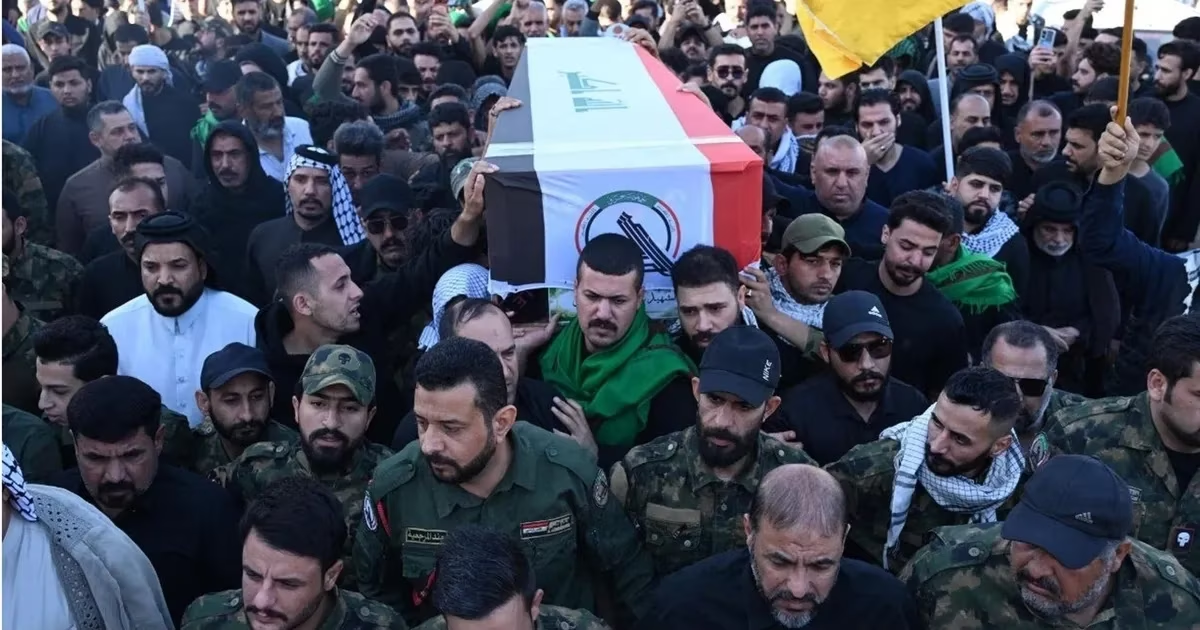
In the latest field developments, the Popular Mobilization Forces mourned three of its fighters who fell in a raid it described as 'Zionist-American' targeting the 17th Brigade in the city of Rutbah in Anbar province. This attack was preceded by similar strikes that hit the 45th Brigade in the Jurf al-Sakhar area of Babil province, and the 31st Brigade in the Karma sector, reflecting the expanding scope of targeting deep in western Iraq.

Observers believe that the strategic importance of the PMF's presence in these areas lies in controlling the border crossings that connect Iraq with Syria and Jordan. These corridors are vital for transporting supplies, with sources indicating that the bombing may target qualitative weapons shipments en route to regional parties, exploiting the Syrian state's weak control over its eastern borders.

Jurf al-Sakhar in Babil province represents a special case in this conflict, described as a fortified stronghold for armed factions that regular forces find difficult to enter. Reports speak of the area containing advanced weapons factories and warehouses, and detention centers, making it a constant target for air operations aimed at dismantling the military infrastructure of pro-Iranian factions.

For its part, the 'Kata'ib Sayyid al-Shuhada' faction warned that repeated attacks in Mosul, Kirkuk, Salah al-Din, and Anbar aim to create a suspicious security vacuum. The faction called on the Iraqi government to provide security forces with advanced air defense systems to counter these violations, considering that silence on these strikes could bring back harsh security scenarios Iraq witnessed previously.

In the context of political analysis, the hypothesis of replicating the Syrian 'Idlib experience' in Sunni areas of Iraq emerges, where analysts believe Washington may seek to create new spheres of influence. This scenario assumes weakening the grip of armed factions in favor of local or international powers, within a broader vision of reshaping the political and security map in the Middle East.

The Iraqi government faces increasing pressure to identify factions it describes as 'outlaws,' a US demand that Baghdad has rejected to avoid internal conflict. This rejection comes at a time when fears are growing that the security gap resulting from the weakening of the PMF could provide a suitable environment for the return of extremist organizations that previously exploited the state of political division.

Despite continuous demands from some political forces to remove the PMF from cities, the field reality indicates significant complexities that prevent this in the short term. This issue is closely linked to the outcomes of regional conflicts and the Iraqi state's ability to impose its full sovereignty over border areas away from the influence of armed factions.

Political sources indicate that the next phase may witness shifts in the identity of components and their geographical extensions, especially in the western provinces, which are considered a strategic depth for Iraq. It is believed that there is a trend to prepare these areas to be away from conflicting regional axes, ensuring relative stability that prevents them from turning into an open war zone.

Regarding the American position, the Washington administration appears to be adopting a 'surgical pressure' strategy by targeting leaders and warehouses without entering into a comprehensive confrontation. This policy aims to reduce the factions' ability to threaten American bases in the region and compel the Iraqi government to take more serious steps in the matter of integrating weapons under state authority.

Experts believe that ruling out a complete return of ISIS may be optimistic, but the harsh experience endured by the residents of those areas makes it difficult to accept any extremist organization again. Nevertheless, the vacuum that the withdrawal of the PMF might leave without a strong security alternative remains a concern for decision-makers in Baghdad and the international community alike.

The overlap between local and regional agendas in the PMF issue makes it difficult to predict an early end to these airstrikes. While factions see them as an assault on national sovereignty, other parties view them as a necessity to reduce cross-border influence and secure vital international corridors passing through Iraqi territory.

Ultimately, the Sunni component in Iraq remains the most affected by these military tug-of-wars, as their cities turn into an arena for settling scores between major powers. The residents of these areas look forward to solutions that guarantee them security and stability away from the dominance of uncontrolled weapons or continuous aerial threats targeting their vital centers.

The question remains about the Iraqi government's ability to balance its international obligations and the pressures of internal factions, in a complex security landscape open to all possibilities. The coming days will reveal whether these strikes are merely tactical operations or part of a comprehensive strategic plan to change the rules of the game in Iraq.

The repeated targeting of the Popular Mobilization Forces in these cities may aim to create a safe zone for opposing Iraqi parties, in the context of what is called the New Middle East.

ARAB AND WORLD

Thu 02 Apr 2026 3:57 pm - Jerusalem Time

Widespread Military Escalation in Iran: US Drone Shot Down, Dozens of Civilian Casualties

Iranian territory witnessed an unprecedented military escalation on Wednesday-Thursday night, as American and Israeli forces launched a series of intense airstrikes targeting strategic and civilian sites. These attacks focused on naval facilities in the Strait of Hormuz and various parts of the country, resulting in casualties and severe material damage to infrastructure.

In a significant field development, the Iranian Revolutionary Guard announced the success of its air defenses in shooting down an advanced American MQ-9 Reaper drone. Military sources clarified that the drone was detected and targeted while flying over the city of Khomein in Markazi Province, reflecting the intensity of the direct confrontation in Iranian airspace.

On the humanitarian front, the Iranian Ministry of Foreign Affairs revealed a massacre in the city of Lamerd in Fars Province, southern Iran, following an American missile attack on a sports hall. The ministry confirmed the killing of 21 civilians in this targeting, noting that among the victims were a number of teenagers who were present at the site at the moment of the bombing.

In a related context, local sources reported the killing of four other civilians, including two children, as a result of a US-Israeli raid targeting a group of citizens in a rugged mountainous area. The incident occurred near the village of Kirmastik in the Larestan region, raising the toll of civilian casualties in recent hours of the ongoing escalation.

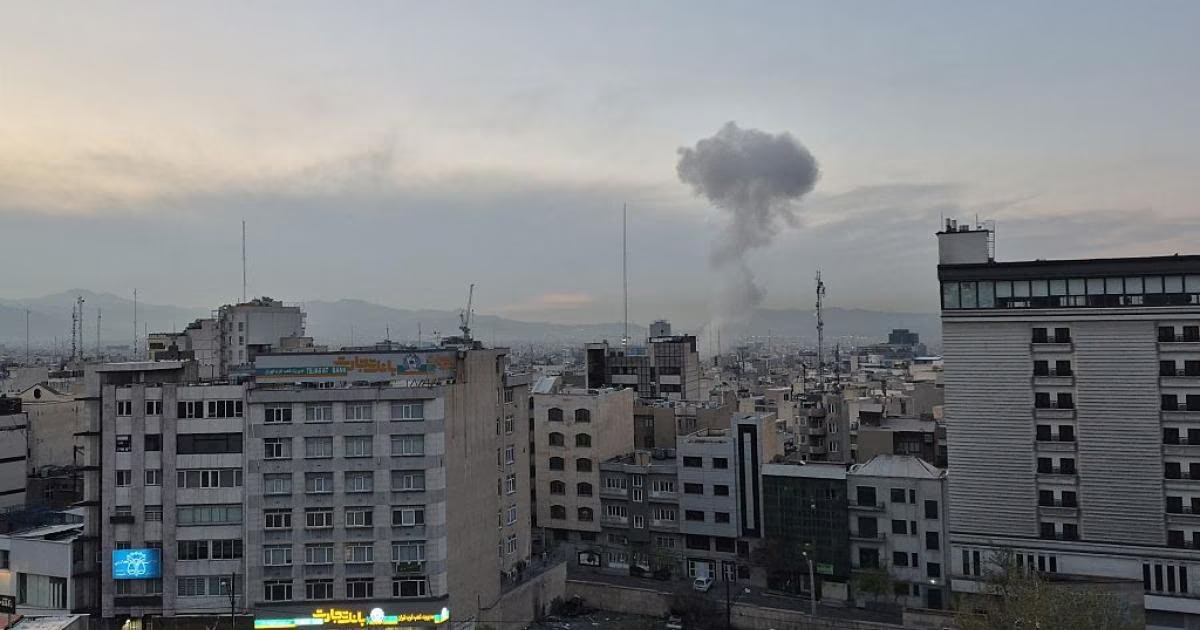
For his part, the spokesman for the Tehran Municipality stated that the airstrikes affected wide residential areas in the capital, where about 33,000 housing units were damaged to varying degrees. Reports indicated that explosions shook neighborhoods in eastern and western Tehran, especially the Aqdasiyeh and Ferdowsi areas, which witnessed an exodus following prior warnings.

The scope of the targets extended to vital facilities on the Iranian coasts, where naval docks on Qeshm Island and Bandar Jask were directly hit. Sources reported that the fishermen's dock in Qeshm was among the main targets, causing the suspension of naval operations and injuring a number of workers in those facilities.

Loud explosions were also heard in several Iranian provinces, including Hormozgan, Isfahan, Lorestan, and Kerman, amid a state of security and military alert. Targeted sites included areas in Bandar Abbas, Kashan, and Khorramabad, in addition to intensive movements of warplanes in the skies of Ardabil, Karaj, and the capital's suburbs.

For its part, the Israeli occupation army claimed to have carried out precise raids targeting a base belonging to the ground forces of the Iranian Revolutionary Guard inside the capital, Tehran. The Israeli military statement claimed the destruction of a mobile headquarters that housed prominent leaders, in addition to targeting a ballistic missile storage site in the Tabriz region in the northwest of the country.

In a report issued by the US Central Command, it was announced that more than 12,300 targets inside Iran have been targeted since the start of ongoing military operations. The command affirmed that its operations aim to dismantle the security system of the Iranian regime, with a focus on sites that pose a direct threat to American interests and its allies in the region.

According to American statistics, more than 155 Iranian vessels have been destroyed or severely damaged during recent naval confrontations. These statements coincide with the Israeli army's announcement of striking more than 4,000 strategic and military targets deep within Iranian territory to undermine its defensive and offensive capabilities.

Reports from Tehran indicate that the attacks continued from midnight until the early hours of dawn, leaving widespread destruction in civilian and military facilities. International circles are awaiting the nature of a potential Iranian response to this widespread wave of raids, amid warnings of the region sliding into a comprehensive and open confrontation.

The Iranian Revolutionary Guard announced the downing of an American MQ-9 Reaper drone after it was detected in the airspace of Khomein city in Markazi province.

ARAB AND WORLD

Thu 02 Apr 2026 3:57 pm - Jerusalem Time

Between Negotiating Pressure and Military Ambiguity.. A Reading of Trump's Strategy Towards Iran

The intensity of statements issued by US President Donald Trump regarding the confrontation with Iran is escalating, in a context that observers place within the complex tools of political negotiation. Analysts believe that Washington, through this discourse, seeks to redraw the balance of power in the Middle East through a mix of military threat and diplomatic pressure.

In this regard, political analyst Hassan Al-Barari explained that the density of controversial statements made by Trump cannot be considered spontaneous or uncalculated. He pointed out that the US President adopts a negotiating style based on the principle of 'maximum pressure' with the aim of creating a state of confusion for the opponent and dragging them to the negotiating table on Washington's terms.

Al-Barari based his analysis on Trump's documented personal experience in his book 'The Art of the Deal,' where he uses contradictory and exaggerated statements as tactical tools. He stressed that downplaying the importance of these words is an oversimplification, especially since Trump works with a comprehensive advisory team that provides him with all potential scenarios and risks before making any public stance.

Regarding the outcomes of the current confrontation, Al-Barari noted that the US administration is striving to paint a clear 'picture of victory' before international and local public opinion. However, he warned that the final strategic outcome might serve Tehran's interests if military operations cease at the present time without achieving a radical change in the balance of power.

For his part, military analyst Mohammed Al-Samadi presented a parallel vision focusing on the field aspect, emphasizing that the threat of ground intervention represents the peak of 'strategic ambiguity.' He considered that these statements, which coincide with a wide military buildup, aim to mislead the opponent about the nature and timing of the next steps that US forces might take.

Al-Samadi stressed that this approach is not merely verbal escalation, but rather the result of deliberate guidance from military decision-making circles and legislative institutions in the United States. This tactic aims to limit Iran's ability to predict upcoming movements, thereby weakening its capacity for defensive preparation or preemptive response.

The analysis concluded that the next phase may witness 'painful strikes' aimed at directly undermining Iranian influence and its allies in the region. These moves come within the framework of strenuous American efforts to impose a new regional reality that aligns with the current administration's strategic vision, away from previous traditional balances.

Trump employs contradictory or exaggerated statements as a tool to impose his conditions and ultimately achieve political gains.

ARAB AND WORLD

Thu 02 Apr 2026 3:57 pm - Jerusalem Time

216 Children Killed in Iran, Hundreds of Health Facilities Damaged Due to Military Escalation

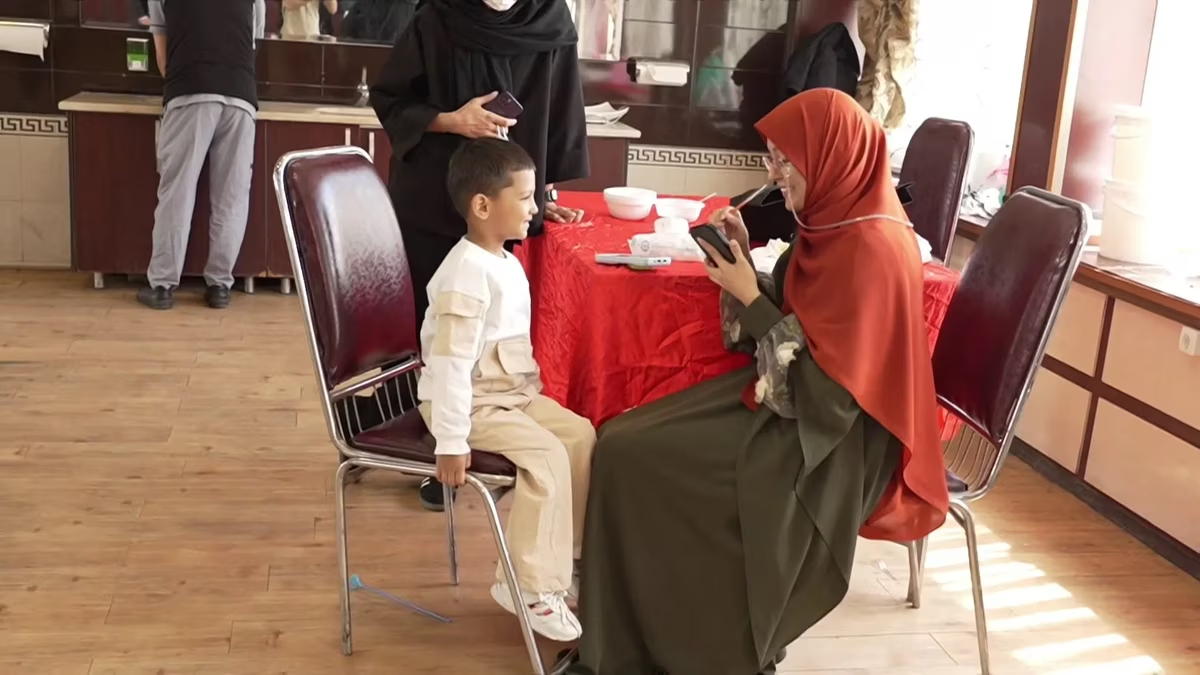
Medical staff in the Iranian capital, Tehran, face severe challenges amid ongoing military escalation, as they strive to alleviate the burden of continuous shelling through humanitarian initiatives within hospitals. Sources reported that health teams have begun organizing recreational activities and games for sick children with the aim of snatching moments of joy amidst the atmosphere of war. These steps aim to reduce the deep psychological impact left by repeated explosions and shocks on young age groups.

On the ground, the spokesperson for the Iranian government revealed a heavy toll of child victims since the outbreak of confrontations, with official records documenting the killing of 216 children under the age of eight. Data clarified that among these victims were 17 children under the age of five, reflecting the widening scope of human damage that directly affected civilians. These figures come at a time when Tehran affirms its full readiness to deal with any ground scenarios or increasing threats.

The health sector was not spared from direct targeting, as statistics indicate the killing of 24 medical personnel while performing their humanitarian duty in affected areas. Additionally, about 114 paramedics and health workers suffered varying injuries, placing additional pressure on the medical system which already suffers from the consequences of the conflict. Iranian health authorities accuse the Israeli side of deliberately shelling civilian facilities and vital infrastructure that provide essential services to the population.

Regarding infrastructure, military operations caused damage to more than 330 medical facilities, including major hospitals and sub-health centers in various targeted areas. Observers believe that targeting these facilities reflects a shift in the scope of military operations to include sensitive service sectors. Despite this destruction, medical administrations insist on continuing to work and provide care, considering that preserving the lives of patients and securing their treatment is the first line of defense in this crisis.

Attempts continue within hospital corridors to create a safe environment for children away from the noise of planes and the sounds of explosions that surround them from all sides. Specialists confirm that psychological support is no longer a luxury, but has become an essential pillar in the treatment protocol followed to confront the effects of the long war. These collective efforts seek to preserve what remains of childhood in a complex field reality that portends further escalation and risks at all levels.

Psychological support has become an essential part of the medical care provided to children who face repeated traumas as a result of continuous shelling.

PALESTINE

Thu 02 Apr 2026 3:57 pm - Jerusalem Time

Widespread Arab and Islamic Condemnation of the Approval of the Palestinian Prisoner Execution Law: An Escalation That Undermines Stability

Eight Arab and Islamic countries today, Thursday, condemned the Israeli Knesset's approval of a law providing for the execution of Palestinian prisoners, describing it as legislation that represents a dangerous escalation threatening regional stability. The foreign ministers of Jordan, the UAE, Saudi Arabia, Qatar, Egypt, Turkey, Indonesia, and Pakistan affirmed in a joint statement that this measure falls within systematic policies to entrench the apartheid system.

The Israeli Knesset had approved the law with a majority of 62 members against the opposition of 48 deputies, which grants the occupation authorities the power to carry out the death penalty by hanging against prisoners convicted of killing Israelis. The new law allows for the issuance of death sentences by a simple majority of judges, without the need for unanimity, and also provides complete immunity and secrecy for the guards and officials responsible for carrying out these sentences.

The joint ministerial statement warned that these measures reflect an exclusionary approach that denies the existence of the Palestinian people and their legitimate rights in their occupied land. The ministers pointed out that the discriminatory application of this law against Palestinians will inevitably lead to an escalation of tensions in the region and undermine any remaining opportunities for achieving peace or stability.

The signatory countries of the statement expressed their deep concern about the harsh conditions faced by prisoners in occupation prisons, based on reliable reports documenting serious violations. These violations include systematic torture, inhumane treatment, a deliberate starvation policy, and depriving detainees of their most basic legal and human rights guaranteed by international conventions.

In a related context, the State of Palestine submitted an official request to hold an extraordinary session of the Council of the League of Arab States at the level of permanent delegates urgently. The proposed meeting aims to discuss ways to address the escalating Israeli violations in the occupied city of Jerusalem, and to confront the legal and humanitarian repercussions of approving the prisoner execution law.

For its part, the Sultanate of Oman denounced the new legislation, affirming that it represents a blatant violation of international humanitarian law, especially agreements related to the protection of prisoners and detainees. Muscat called on the international community to assume its responsibilities and ensure respect for international laws and provide the necessary protection for Palestinians inside occupation prisons to avoid further security deterioration.

In Yemen, Iraq, and Libya, official statements were issued describing the decision as a legislative precedent that entrenches the approach of genocide and racial discrimination. The Iraqi Foreign Ministry considered the decision a grave violation of justice, while Libya called on the international community to immediately pressure the occupation authorities to stop implementing this law, which violates the four Geneva Conventions.

At the popular and parliamentary levels, the Mauritanian capital, Nouakchott, witnessed massive demonstrations in front of the United Nations representation, in which deputies from various political spectrums participated. 31 Mauritanian parties, including the ruling party and the opposition, signed a unified statement demanding the annulment of the law, considering it a crime against humanity that requires the international prosecution of the occupation leaders.

The League of Arab States described the law as a shameful form of apartheid, affirming that it contradicts the most basic moral and legal principles. The Council of Arab Interior Ministers also affirmed that this legislation amounts to a war crime, as it targets a protected group under international law and deprives them of their right to fair and impartial trials.

The opposition was not limited to the Arab and international sides, but also extended to internal voices, as about 1200 Israeli figures, including Nobel laureates and former judges, signed a petition rejecting the law. The signatories described the legislation as a 'moral stain' that will lead to Israel's international isolation and deepen internal divisions over the legitimacy of discriminatory laws.

Human rights statistics indicate the presence of more than 9500 Palestinian prisoners in occupation prisons, including hundreds of children and women who live in tragic conditions. Sources confirm that prisons have witnessed the martyrdom of 89 prisoners since last October 7 due to deliberate medical negligence and physical and psychological torture practiced by the prison administration.

In Brussels, diplomatic sources reported that the European Union is considering imposing specific sanctions on Israel if the death sentences are actually implemented. The Union believes that this trend represents a dangerous regression from universal humanitarian values, and puts Israel in direct confrontation with international obligations that prohibit cruel and inhumane punishments.

The Tunisian Ennahda movement also joined the wave of condemnation, describing the law as shameful and unjust, and called on the United Nations to intervene urgently to stop this heinous crime. The movement stressed that the international community's silence on these legislations encourages the occupation to proceed with violating all treaties and conventions related to prisoners' rights.

Arab foreign ministers concluded their statement by emphasizing the need to ensure international accountability for Israel for all its ongoing violations against the Palestinian people. They called for intensified diplomatic efforts to prevent the implementation of this law, warning that harming the lives of prisoners will lead to an uncontrollable explosion of the situation in the occupied territories.

This legislation constitutes a dangerous escalation that entrenches the apartheid system and adopts an exclusionary discourse that denies the inalienable rights of the Palestinian people.

PALESTINE

Thu 02 Apr 2026 3:57 pm - Jerusalem Time

Fears of 'Legalizing Killing'.. Families of Palestinian Prisoners Face the Specter of Execution and Torture

A state of existential anxiety is escalating among the families of Palestinian prisoners following the Israeli Knesset's approval of a law that legalizes the execution of prisoners. The prisoners' relatives view this legislation as a green light to turn detention centers into public execution grounds, thus multiplying the burden of suffering they have endured for decades. This step comes at a sensitive time when the occupied territories are witnessing unprecedented field tensions and increasing pressure on the prisoner movement.

From the heart of suffering, the cry of Maysoun Shawamreh, mother of prisoner Mansour, emerges, describing her situation and that of thousands of mothers as a heavy wait consumed by fear for the fate of their sons. Shawamreh says that anxiety is no longer limited to long prison sentences but is now focused on how this journey will end, whether through deadly torture or through the guillotine of the new law. Her words reflect a blaze of anger and pain that inhabits Palestinian homes, where they fear losing their sons at any moment.

Cities in the West Bank and occupied Jerusalem witnessed a wave of angry protests coinciding with a comprehensive strike that paralyzed daily life, expressing the categorical popular rejection of this legislation. Demonstrators called on the international community to intervene urgently to stop what they described as 'occupation gallows' before the law is actually implemented. The tension was further exacerbated by the circulation of video clips of National Security Minister Itamar Ben-Gvir celebrating with his supporters the approval of this racist law.

On the political front, the Undersecretary of the Palestinian Ministry of Foreign Affairs, Omar Awadallah, considered that the occupation authorities are trying to practice 'normalization of killing' under a false legal cover provided by their legislative system. Awadallah pointed out that the use of the Knesset as a tool to legitimize the liquidation of prisoners comes in the context of grave crimes committed against Palestinians away from international oversight. He stressed that these policies aim to break the will of Palestinian steadfastness through direct threats to life.

From the perspective of international law, legal expert Tala Nasser affirmed that the Israeli Knesset lacks any legal authority to impose legislation on the residents of areas under occupation. Nasser explained that these laws are used as repressive tools to enhance control and intimidation, and they lack the minimum standards of international justice. She also noted that targeting a specific group with this law strips it of any legitimate legal character and makes it a purely political tool.

Reports from human rights organizations indicate that the law has a clear racist character, as it exclusively targets those accused of threatening the 'existence of the state,' while exempting settlers and soldiers involved in killing Palestinians. What is even more terrifying is allowing the issuance of death sentences without the need for a consensus of judges, which facilitates judicial killings. These organizations confirm that the current environment within prisons is fully prepared for the execution of such crimes in the absence of accountability.

Since October 7, 2023, human rights sources have documented the martyrdom of nearly 100 Palestinian prisoners as a result of systematic torture policies, starvation, and deliberate medical neglect. These numbers are added to the files of enforced disappearances that affected hundreds of detainees from the Gaza Strip, reinforcing fears that the new law is merely an institutionalization of an already existing bloody reality. The issue of prisoners remains the primary driver of the Palestinian conscience and the compass that unites the street in the face of continuous escalation.

Israel seeks to normalize killings through legal tools via the so-called Knesset, while committing grave crimes against our people.

OPINIONS

Thu 02 Apr 2026 3:57 pm - Jerusalem Time

Education in Gaza: The Struggle for Survival and the Battle for Consciousness

The education sector in Gaza is experiencing an unprecedented existential crisis, whose descriptions are no longer limited to the “collateral damage” of wars, but have risen to become a full-fledged “epistemicide.” In the context of the war of extermination committed by the Israeli army, and with more than two years having passed since the war, its effects are still evident. Gazans found themselves facing a paralyzed educational landscape, not only due to the destructive bombing of buildings, but also due to systematic policies aimed at dismantling the right to learn and emptying Palestinian society of its human and intellectual capital.

I live and witness the education sector in Gaza daily, not from the perspective of a distant analytical reading, but as a direct experience with children and students who struggle daily amidst an ongoing war of extermination. Here, the school does not merely represent a building, but has become a temporary space for survival amidst the destruction, and a refuge that tries to protect what remains of a childhood that is daily exposed to bombing, fear, and displacement.

I am displaced in Gaza City after my home was destroyed, and today I live next to two schools that were partially damaged and are being used as shelters for the displaced. In one of the displacement tents set up in the schoolyards, a group of students gathered around their teacher in a cramped and modest corner, sharing a single textbook that survived the rubble. There were no seats or a blackboard, but a few papers and pens that barely worked. The atmosphere was heavy with heat and noise from around the tent, while the children tried to concentrate amidst the clamor and chaos.

Nevertheless, the students enthusiastically raised their hands to answer questions, as if they were defending their dream before defending their right to learn. Their eyes sparkled with hope despite the fatigue and fear of the sounds of explosions coming from the east of the city and the daily aerial targeting, and their broken voices expressed an unbreakable will. As for the teacher, despite the harsh conditions, he remained steadfast, guiding every question and word of encouragement, as if planting the seeds of knowledge in a desert of rubble.

In these moments, education for Palestinian children becomes more than just a school duty; it is hope, life, and a future, and a lifeline amidst the devastation. Even in the absolute silence of continuous danger, children insist on learning, on dreaming, and on surviving, affirming that knowledge is their last fortress against displacement and oblivion.

Education Under the Guillotine of Systematic Destruction

The language of numbers in Gaza does not only speak of material loss, but screams of the magnitude of human loss that will leave its scars on the face of future generations. The discussion here is about deprivation and the human meanings it carries, as nearly 660,000 children are deprived of their basic right to formal education. And when we know that more than 95 percent of educational facilities have been damaged or completely destroyed, we realize that the Israeli army is not only targeting walls, but is targeting “the future” and future generations.

This destruction affected 285 government schools and one-third of the schools of the United Nations Relief and Works Agency for Palestine Refugees (UNRWA). What is more, the remaining schools have been converted into forced shelters for the displaced, lacking the most basic elements of human dignity. The destruction of schools does not only mean the loss of educational buildings, but the collapse of an essential part of the social structure that protects children and gives them a sense of stability. For Palestinian children, school is not just a place for learning, but a space for daily life, social relationships, and rebuilding a sense of security.

And when schools are destroyed or converted into shelters, the educational process is not only disrupted, but childhood itself is severely harmed.

As for universities, they have been widely destroyed, with more than 80 percent of higher education buildings destroyed, academic records lost, hundreds of academics martyred, and laboratories and libraries destroyed. The targeting of universities becomes the peak of epistemicide; it is an attempt to make society ignorant and cut its connection with global scientific development, which makes rebuilding the intellectual and professional elite a sacred national task. For Palestinians, education is the holiest of holies.

Popular Education Experience: Restoring Collective Spirit and the Reference of Steadfastness

To understand the depth of the current challenge, we must not view the Gaza crisis as an isolated event, but as a link in a long chain of attempts to tame Palestinian consciousness. Here, the utmost importance of returning to the “historical memory of popular education” emerges. During the First Intifada (1987–1993), Palestinians faced the policy of closing schools and universities adopted by the occupation to break the popular movement. At that pivotal moment, education transformed from a mere educational process into a sovereign “act of resistance.”

“Alternative education” initiatives emerged within homes, mosques, and churches, where informal educational networks were formed and managed by teachers, students, and the local community with unparalleled solidarity. That experience proved that society is the true incubator of education when official institutions collapse, and that national consciousness is an unbreakable pillar.

Recalling this model today is not merely nostalgia and longing for a past era, but a practical necessity to innovate flexible educational solutions that challenge the rubble of war, based on a long legacy of “stubborn knowledge” that characterizes the Palestinian human being.

Guardian of the Dream: The Palestinian Teacher

It is impossible to talk about resuming the educational process in Gaza or planning for the day after without standing in awe before the file of educational staff and cadres; these who were never just functional numbers, but were the pulsating “memory of the institution” and the guardians of the Palestinian dream in the darkest and harshest circumstances.

Today, in the face of calls for development and reform, we are not in conflict with renewal, but we long to see new blood flowing in the veins of our educational system. But we firmly believe that true renewal does not start from “ground zero,” but is built upon the foundations of experience built by the hands of the first teachers. These male and female teachers are the ones who accompanied the education file from the first moments of the establishment of the Palestinian National Authority, and even before that in the years of steadfastness and insistence on knowledge. They are the ones who transformed simple classrooms into fortresses of thought, and struggled with chalk and book to draw the features of the national character in the minds of generations that succeeded under the weight of siege and wars.

The Palestinian teacher is the cadre who possessed “field experience” baptized with sweat and sacrifice; how can any reconstruction plan bypass those who spent their lives instilling values of belonging and building the educational system brick by brick? Integrating them, honoring them, and providing them with all means of material and moral security, is an acknowledgment of years of giving and effort, and it is the only guarantee against the collapse of the educational structure. The Palestinian teacher is the compass, and protecting their existence and stability is protecting the Palestinian identity itself.

Sovereignty and Illusion… The Dilemma of the National Committee for Education Management

With the emergence of “day after” discussions and the formation of the “National Committee for Gaza Management,” fundamental questions arise about the limits of powers and actual sovereignty. The education management file raises real concerns; while the committee is supposed to organize the educational process, its presumed subordination to international administrative structures, such as the Executive Council headed by Nikolay Mladenov, puts its national independence at stake.

Education in the Palestinian context cannot be managed with a “technical agency” mentality that only implements donor agendas. The greatest danger lies in transforming education into an arena for “reshaping consciousness” beyond national references, under the guise of “reform” that may empty the cause of its historical and struggle content. Therefore, this committee must be a “national shield” that protects the independence of curricula, and ensures that the educational process remains linked to the cultural and political context, based on the experience of the cadres who built this system since the mid-nineties and before.

UNRWA: The Witness Targeted by Political Assassination

The United Nations Relief and Works Agency for Palestine Refugees (UNRWA) represents more than just a service provider; it is the living international witness to the tragedy of refuge, and it manages a huge educational apparatus that includes thousands of teachers who possess exceptional experience in crisis management.

The frantic Israeli campaign to dismantle UNRWA is, in essence, an attempt to erase the right of return and destroy the educational infrastructure that has formed a safety valve for hundreds of thousands. Protecting UNRWA’s role, in integration with the government role, is an utmost national necessity to ensure that no educational gap occurs that leads to the loss of an entire generation in the depths of ignorance and poverty.

The Best Interest of the Child

Talking about “changing curricula” as a condition for reconstruction or for receiving international funding raises great concern, because educational curricula are the last fortress of national identity. Any attempt to tamper with historical memory or erase concepts of steadfastness is a continuation of the war with soft tools that target the child’s mind after targeting their body.

The principle of the best interest of the child forms the basis for protecting Palestinian children in the war of extermination. This does not mean merely the right to sit in a school desk, but requires a safe and stable environment that helps the child grow, learn, and restore their stolen childhood. Education must be accompanied by real psychological and social support, so that children can deal with trauma, regain a sense of security and belonging, and continue their normal lives despite loss and displacement. For the school, even if it is a tent or a temporary room, it must become a space for protection and building trust in life.

The Road Back to the School Desk

For the education sector to emerge from this catastrophe, a comprehensive national strategy must be adopted based on considering education a sovereign priority: considering the book and the blackboard as emergency relief tools equal in importance to medicine and food, and empowering the National Committee by providing clear political support that guarantees its independence and its ability to make national decisions with distinction.

The most important thing is to protect facilities and cadres: international pressure to stop targeting the remaining schools, and considering the teacher “protected” under international laws as a humanitarian cadre. Flexible education models can also be adopted by developing temporary schools (tents and caravans) in displacement areas, while providing “accelerated learning” programs to compensate for the huge educational loss.

In parallel, the teacher must be stabilized, meaning ensuring the financial and professional rights of all teachers who have spent years of their lives serving this system, and providing them with psychological security so that they can give.

Not Just a Dream… But a Foundation for the Future

What is happening in Gaza today is not just a fleeting educational crisis, but a test of the will of an entire generation and its ability to survive and excel despite attempts to crush it. The displaced child who reads and does their homework, and searches for a place in a cramped, dark corner of the tent, with a teacher next to them who bandaged their wounds to give them a lesson in will, sends a message to the world that “the right to consciousness is the essence of the conflict and the condition for victory.”

Education in Gaza cannot be reduced to being just a basic right; it is a daily life that tries to continue despite the destruction, a dream of a different future, and a tool for survival and hope in a reality that threatens everything. For Palestinians, education is a lifeline that protects society from collapse, and from the rubble generations have emerged who carry their cause to the world.

The battle to rebuild education in Gaza is not just about rebuilding schools, but it is a battle to protect Palestinian consciousness and the future. If we succeed in protecting the minds of our children and preserving the dignity of our teachers who built this system with their sweat and patience over long decades, we will have laid the true foundation for the future of Gaza.

Education in Gaza will remain an act of steadfastness and an act of liberation at the same time, and our historical responsibility is to protect this light from going out, and to ensure that the book remains open in the hand of the Palestinian child even in the darkest moments.


PALESTINE

Thu 02 Apr 2026 3:57 pm - Jerusalem Time

Martyr and Wounded in Gaza.. Occupation Blows Up Residential Blocks and Targets Displaced Persons' Tents

Field sources reported the martyrdom of a Palestinian woman and the injury of several citizens, including children, as a result of attacks carried out by the Israeli occupation army in various areas of the Gaza Strip today, Thursday. These developments come amidst continued Israeli violations of the ceasefire agreement in effect since last October, as bullets and artillery shelling targeted civilian gatherings.

In details of the attacks, the woman was martyred after being directly shot by occupation forces stationed outside their deployment areas east of the Maghazi refugee camp in the central Strip. Medical teams also transported a 12-year-old child to the hospital after he was shot by occupation forces in the Al-Atatra area of Beit Lahia town to the north, and his condition was described as moderate.

The Mawasi Khan Yunis area in the southern Strip witnessed a dangerous escalation, where a child was seriously injured as a result of the area being targeted by heavy machine gun fire and artillery shells. In separate incidents, two other Palestinians were shot by occupation forces, one near Ali Mosque in the Zeitoun neighborhood of Gaza City, and the other in the eastern areas of the Nuseirat refugee camp.

On the ground, the occupation army carried out three demolition operations of residential buildings located within what is known as the 'Yellow Line' in the areas of Bani Suhaila, Sheikh Nasser, and Al-Tahliah east of Khan Yunis city. The demolition operations coincided with intense artillery shelling and movements of military vehicles that fired heavily at citizens' homes in Qizan Rashwan and Qizan Al-Najjar south of the city.

In Gaza City, Israeli warships continued to target displaced persons' tents erected along the coast and in the northern areas of the Strip using machine guns. These attacks caused panic among displaced families who are already suffering from harsh living conditions amidst the continued siege and intermittent military operations.

In parallel with the military aggression, displaced persons in the Unknown Soldier area in central Gaza City faced difficult weather conditions that led to the collapse of a tent on its occupants due to strong winds. Palestinian civil defense teams rushed to the scene to remove the rubble and secure the affected families, amidst a severe shortage of necessary capabilities and equipment to cope with the repercussions of winter.

Israeli artillery shelling extended to include the eastern outskirts of the Bureij and Deir al-Balah camps in the central governorate, in addition to the Shuja'iyya, Tuffah, and Zeitoun neighborhoods east of Gaza City. Eyewitnesses confirmed that firing from military vehicles did not stop throughout daylight hours, preventing farmers from reaching their lands near the separation fence.

Data issued by the Ministry of Health in the Gaza Strip indicates that the toll of Israeli violations of the ceasefire agreement has reached alarming numbers since its inception. According to official statistics, occupation forces have killed 713 Palestinians and injured 1940 others in various incidents including shelling, direct shooting, and limited incursions.

Local circles are anxiously monitoring the increasing military movements along the 'Yellow Line' that separates Israeli-controlled areas from areas where Palestinians are allowed to be present. Citizens fear that these repeated violations could lead to the collapse of fragile understandings, at a time when humanitarian suffering continues due to the destruction of infrastructure and residential buildings.

The occupation forces continue their daily violations of the ceasefire agreement, which has led to an increase in the number of victims to hundreds of martyrs and wounded since last October.

PALESTINE

Thu 02 Apr 2026 3:56 pm - Jerusalem Time

Film 'Palestine 36' Continues Its Global Journey with 25 Screenings in the Kenyan Capital, Nairobi

The Palestinian film 'Palestine 36' by director Annemarie Jacir continues its successful international run, having arrived in the Kenyan capital, Nairobi, to present a series of screenings throughout April. One of Nairobi's major cinemas is hosting 25 screenings of the film, which began today, Wednesday, and will continue until the end of the month, a step that enhances the presence of Palestinian cinema on the African continent.

This presence in Kenya follows a busy tour of major cinematic forums, where the film managed to reach the shortlist for the 2026 Academy Award in the Best International Feature Film category. The work also received prestigious nominations at the European Film Awards, making it one of the most prominent Arab and Palestinian cinematic productions recently.

The film had its world premiere at the 'Gala' screenings of the Toronto International Film Festival, before moving to the Arab region via the Red Sea International Film Festival. Its participations continued to include the Marrakech International Film Festival, which chose it as its closing film, in addition to its screening at the Mediterranean Film Festival in Brussels and commercial screenings in several capitals.

For his part, Palestinian Minister of Culture Imad Hamdan affirmed that the film's representation of Palestine at the Oscars came after a precise evaluation by the ministry, emphasizing that the work skillfully embodies the Palestinian national narrative. Hamdan explained that the film contributes to preserving national identity in the face of attempts at marginalization, offering an artistic approach based on the essence of the issue as an extended colonial reality.

'Palestine 36' revolves around a pivotal historical era, shedding light on the 1936 revolt against the British Mandate, addressing the intersections of resistance with daily human life. The screenplay focuses on the character of the young man 'Youssef' who experiences major transformations between his village and the city of Jerusalem, amidst escalating waves of migration and political tensions that reshaped the region.

Director Annemarie Jacir stated that her interest in this revolt stems from her desire to present history from a purely human perspective, away from rigid frameworks. She indicated that the film explores the fateful decisions individuals are forced to make under harsh circumstances, considering that completing the work amidst the current conditions carries deep symbolic meanings.

The film is the fruit of extensive international co-production, with entities from Palestine, Qatar, Britain, France, Denmark, Saudi Arabia, and Jordan participating in its production. This production diversity contributed to providing high artistic capabilities that placed the film among global competitors, while preserving the specificity of the Palestinian story and its historical dimensions.

The work features an elite group of Arab and international stars, led by global star Jeremy Irons, artist Hiam Abbass, Kamel El Basha, and Saleh Bakri. The cast also includes Yasmine Al Massri, Jalal Al-Taweel, and Dhafer L'Abidine, who delivered performances reflecting the development of the Palestinian film industry and its ability to attract global talents to serve the cause.

The film's selection reflects the ability of Palestinian cinema to express the national narrative and preserve identity in the face of ongoing attempts at erasure.

OPINIONS

Thu 02 Apr 2026 3:56 pm - Jerusalem Time

Dancing on the Ladder!

Dr. Ibrahim Melhem

Editor-in-Chief

Few words

"The eccentric man" and "Goebbels" of America do not stop dancing on the rubble heaps in the region, driven by a burning ideology that shapes their thought and behavior, drowning them in the delusions of accelerating the illusory "moment of salvation" with the approaching battle of "Armageddon," in which they see themselves and their followers in "the ultimate enmity." These are "theopolitical" charlatanries that stand behind military decisions, fueled by the psalms of "Mr. Security," who inspired him with what he inspired of launching "easy" invasions with astonishing results, similar to the "Caracas invasion" in which he achieved what the ancients could not.

Over the past hours, Trump has issued a barrage of contradictory statements, sometimes trying to hold the stick by its middle, and other times striking his enemies and opponents indiscriminately. While he announces the imminent end of the war in response to an alleged request from Iranian leaders, which Tehran has denied outright, he threatens NATO with withdrawing its "nuclear umbrella" that shelters it from its neighbors, after its countries refused to go along with his proliferating and confusing wars, as he tried to swallow one of its stray islands by seizing it as he swallows a "hamburger," and he views national security as an "insurance contract" that can be canceled whenever he wishes.

"The article's title" is an Egyptian proverb used for someone who has lost their compass, neither gaining the satisfaction of those above them nor those below them. Trump failed to convince his NATO allies of the futility of his absurd wars, nor was he able to subjugate his enemies in Tehran to his impossible conditions. He became like one who is uprooted, neither covering ground nor keeping a back... and was content with returning with the spoils, after rejecting the advice of his advisors, so the saying of the pre-Islamic poet Duraid bin Al-Samma applies to him: "They did not see the advice clearly until the next morning." Will Trump announce the end of the war in his speech at dawn today?

OPINIONS

Thu 02 Apr 2026 3:56 pm - Jerusalem Time

Structural Contradiction in Trump's Discourse

Trump's discourse represents an embodiment of what can be termed in intellectual contributions as "structural contradiction in political discourse." Here, the disparity in statements is not understood as a flaw in logical sequence, but rather as a deliberate, multi-layered mechanism that seeks to produce meaning within the context of negotiating power. Therefore, the combination of escalation and de-escalation styles does not reflect unconscious duality, but rather reflects an ability to employ semantic multiplicity as a tool to control the scope of interpretation, allowing Trump to maneuver without being bound by definitive, closed positions.

Within this framework, we can say that contradiction and strategic ambiguity are central tools in this rhetorical pattern, which aims to weaken the other party's ability to build comprehensive expectations, thereby limiting its ability to make calculated decisions. In this sense, contradiction becomes a source of power used to rearrange and redistribute levels of uncertainty among active parties. However, although the ambiguous nature of the discourse suggests placing Iran in a state of cognitive uncertainty, Iran recognizes this manipulation and deals with it with full awareness.

On the other hand, at the level of the internal structure of the discourse, one can speak of an intentional popular duality, where statements are formulated in a way that allows for multiple readings depending on the different audiences receiving the political media discourse. We find that escalating statements about "striking energy sources and limited ground intervention" respond to the expectations of a large popular base seeking to demonstrate strength and decisiveness. In contrast, the tone of negotiation and de-escalation produces a rational discourse directed at elites and economic and international institutions, which provides the possibility of interaction and adaptation to several cognitive contexts simultaneously.

In a complementary context, it can be said that retracting, postponing, or modifying positions is not a contradiction in the traditional sense, but rather falls within a rhetorical pattern based on flexibility and continuous adjustment of strategies and power positions. Statements are not viewed from the perspective of their stability or factual accuracy, but rather by their function and strategic political and economic impact, and their ability to reshape collective perception.

However, this approach, despite the strategic flexibility it provides, raises fundamental problems: firstly, it weakens the obligatory value of the discourse, thus losing its function and credibility as a tool of reference to reality, which weakens confidence in the ability to achieve objectives. Secondly, it undermines the possibility of building stable scenarios, which increases the probabilities of strategic miscalculation.

For all the above, this discourse cannot be understood as mere unrelated contradictions, but rather must be read as a rhetorical pattern that offers a new reading of the role of language in shaping and exercising power, despite the multiplicity or difference of its interpretations. It is a discourse that may be employed to gain time and invest the element of surprise as a strategic tool, or it may reflect deliberate caution for fear of economic and military repercussions.

OPINIONS

Thu 02 Apr 2026 3:56 pm - Jerusalem Time

No to Kings! America.. Huge Protests Coming

Away from the heat of the war in the Middle East.. and the loss of Arabs between hegemonic projects, a battle is raging within America that is perhaps no less heated, even if its results will appear in the long run. The American states witnessed a wave of massive protests led by a movement calling itself "No to Kings" or No kings. This is the third wave of protests led by this movement, although it is the largest ever, and it is said that the number of participants reached about 9 million people in various American places and cities. The basic issue from which the idea of the "No to Kings" movement stems is to limit the expansion of the powers and strength of the president, who, from their point of view, has begun to act like a king. He renames public institutions after himself, hangs huge banners with his picture on government buildings, and his supporters and some of his ministers suggest to the general public that he has been granted divine support and that his decisions have a kind of infallibility and blessing. In addition to Trump's perpetually provocative behavior in attacking his opponents from all walks of life and types, and intimidating journalists. For example: he withdrew tax exemptions from left-leaning organizations and universities such as Harvard as a means of pressure due to the university's stance on pro-Palestine demonstrations during the Gaza war, and prevented $18 billion in funding for infrastructure in states governed by Democrats such as New York.

And the truth is, this is not the first time protests have occurred during Trump's era.. and this is expected because an administration like Trump's enjoys immense authoritarian power, as it dominates the three branches of government and is supported by financial and technological magnates, and therefore it is fertile ground for inciting discord and racism, and thus generating an opposing force in the streets against controversial Trumpian policies.

This time, the protests created a great echo within America and were discussed in intellectual and populist debates about their repercussions on political life in America and the extent of their impact on bringing about change, especially in light of the decision to go to war with Iran and the division of some symbols supporting Trump regarding the feasibility of the war. There is no doubt that the weight of the organizing body and its strategy play a major role in the uproar surrounding it, as the importance of the "No to Kings" movement stems from three important points:

First: It is a comprehensive and diverse organization of protest movements, progressive organizations, and alliances that include hundreds of labor unions, religious groups, and civil rights organizations of various stripes and goals, but they agree on opposing Trump's policies and the executive branch's overreach at the expense of the legislative and judicial branches.

Second: Its activities are not limited to protest only, but rather seek to transform the voices of millions of protesters into an electoral force that motivates youth to ensure participation in elections and pushes new candidates, whether in local and small cities or in Congress, to break the Republican Party's dominance over centers of power in the United States.

Third: It rejects violence, shies away from extremism, and adheres to peacefulness, unlike other anarchic protest movements, and has an intention of continuity, and for this reason, it finds a wide echo within American civil society because it expresses the spirit of democracy and American soft power, and it also announced upcoming protest activities in April.

The question is, will the movement succeed in restoring balance to American political life, or are the battles of American democracy not found in the arena of protests, but rather in secret settlements, suspicious deals, the influence of money, and party conspiracies? I believe that the upcoming congressional elections will settle this debate. Although I favor the Democrats winning, taking advantage of the momentum in the American street and the rising price of oil.

PALESTINE

Thu 02 Apr 2026 3:56 pm - Jerusalem Time

The occupation establishes a new military reality east of Gaza by building dozens of sites along the 'Yellow Line'

Field sources reported that the Israeli occupation army continues to strengthen its military and security presence inside the Gaza Strip, exceeding the recently concluded ceasefire understandings under international auspices. Occupation forces have begun constructing dozens of fixed military sites along what is known as the temporary 'Yellow Line,' a path extending from the far north of the Strip to its south, parallel to Salah al-Din al-Ayyubi Road, indicating the occupation's intention to transform this line into a new border reality that isolates the eastern areas.

The occupation army exploited the elevated terrain in the eastern region to establish these fortifications, ensuring full military oversight of the western areas of the Strip. Military bulldozers deliberately cleared and destroyed all surrounding civilian homes and facilities to create open spaces, and these sites were equipped with massive lighting poles operating around the clock to turn the area into military barracks visible to the naked eye from long distances.

These strategic sites are distributed in sensitive points, especially in the buffer zone between the cities of Rafah and Khan Yunis, and in the towns of Ma'an and Bani Suheila, extending to east of Deir al-Balah and the Bureij and Maghazi camps in the central region. Fortification operations also included the Shuja'iyya neighborhood east of Gaza City and wide areas in the north, thus imposing a military siege on all major population centers in the Strip.

In a related context, local sources confirmed the continued extensive bulldozing operations by the occupation of the remaining rubble in the eastern areas, coinciding with massive demolition operations of residential buildings. The past hours witnessed a field escalation represented by intense tank shelling and live ammunition fire, in addition to almost daily airstrikes targeting civilians in areas that the occupation had previously classified as 'safe.'

Estimates indicate that the occupation plans to use these military bases as launching points for managing complex security operations, which may include overseeing local armed militias operating under its command and intelligence agencies. These moves aim to create an alternative security reality that ensures the occupation's permanent control over the Strip's key points and prevents any attempt to restore national administration in the forcibly evacuated areas.

Since the start of the genocide war on October 7, 2023, the occupation authorities have deliberately destroyed all basic life components in Gaza, including water and electricity networks and hospitals, to make returning home impossible. Despite the ceasefire agreement coming into effect on October 10, 2025, Israeli violations have not stopped, as the occupation continues to systematically target citizens in various cities and towns.

Regarding human casualties, the latest statistics issued by the Ministry of Health revealed a massive increase in the number of victims, with the number of martyrs reaching 72,289, while the number of injured reached 172,040 with injuries of varying severity. Rescue teams still face extreme difficulties in recovering thousands of missing persons believed to have been martyred under the rubble of destroyed homes targeted by the occupation throughout the months of aggression.

Establishing these military bases nullifies the idea of temporary positioning and makes the Yellow Line a new border for the devastated Strip.

PALESTINE

Thu 02 Apr 2026 3:55 pm - Jerusalem Time

Settlers carry out bloody attacks in the West Bank (638) attacks against Palestinian citizens and demolition of (70) homes and facilities During last March

The Palestinian Labor and Planning Department of the Palestine Liberation Organization issued its monthly report on settler attacks and the demolition of homes and facilities in the West Bank and occupied Jerusalem, and the most prominent of what was stated in it:-

First: Attacks by settler gangs:

During last March, settler gangs carried out (638) attacks against Palestinian citizens and their properties, an increase of 177% over the same period last year 2025.

These bloody Nazi attacks resulted in the martyrdom of ten unarmed Palestinian citizens, who were killed in cold blood just because they decided to defend their land from intruders and newcomers to this land. The martyrs are: Nablus Governorate: Muhammad Taha Ma'mar (52 years old) and his brother Fihm Taha Ma'mar (48 years old) from Qaryut village, and the martyr Amir Mutasem Odeh (28 years old) from Qasra village. In Hebron Governorate: the martyrs Amir Muhammad Shanaran and Yusri Majed Abu Qubaita (31 years old) from Yatta town. In Ramallah and Al-Bireh Governorate: the martyrs Fara' Judat Hamayel (57 years old) and the martyr Thaer Farouk Hamayel (24 years old) from Khirbet Abu Falah town, and the martyr Raafat Ayed Arar (60 years old) from Qarawat Bani Zeid village. In Jerusalem Governorate: the martyrs Murad Radi Al-Shweiki (32 years old) from Al-Za'im town and the martyr Muhammad Ahmed Faraj Al-Malhi (37 years old) from Sharafat town. Meanwhile, (190) citizens were injured with various injuries as a result of being attacked by gunfire, beating, and stone-throwing, including (11) children and (7) women. These human losses recorded during March are considered the highest ever since the occupation of the West Bank in 1967.

The attacks included (30) shooting incidents, while criminal settler gangs destroyed and uprooted (729) fruitful trees, and stole and killed (1255) head of livestock belonging to Palestinian farmers with the aim of restricting them and raising the cost of their stay on the land. Meanwhile, (84) vehicles were damaged as a result of being burned or stoned, while settler gangs destroyed and burned (4) homes and agricultural, animal, and service facilities in villages and towns of the West Bank.

In the context of pastoral settlement expansion, the Labor and Planning Department monitored during the past month attempts to establish (12) new pastoral outposts, including the areas and villages of Al-Lubban Al-Sharqiya and Beit Amrin in Nablus Governorate, Al-Dhahiriya, Masafer Yatta, and Al-Samu' in Hebron Governorate, Turmus Ayya and Sinjil in Ramallah and Al-Bireh Governorate, Beit Iksa in Jerusalem Governorate, Tayasir and Ainun in Tubas and Northern Valleys Governorate, Sanur in Jenin Governorate, and Harmala in Bethlehem Governorate.

The criminal attacks were concentrated in Nablus Governorate (152) attacks, Hebron Governorate (125) attacks, Ramallah and Al-Bireh Governorate (111) attacks, Tubas and Northern Valleys Governorate (70) attacks, Jerusalem Governorate (51) attacks, Bethlehem Governorate (43) attacks, Salfit Governorate (41) attacks, Jenin Governorate (19) attacks, Qalqilya Governorate (17) attacks, Jericho Governorate (6) attacks, Tulkarm Governorate (3) attacks.

First: Demolition of homes and facilities:

During last March, the Israeli occupation authorities demolished (70) homes and facilities in the West Bank and occupied Jerusalem, including the demolition of (30) homes and (40) facilities, among them (12) self-demolition operations in the towns of Jabal Al-Mukaber, Beit Hanina, and Sur Baher in occupied Jerusalem, and Al-Samu' town south of Hebron Governorate, and Anza village south of Jenin Governorate, which their owners self-demolished to avoid paying exorbitant fines. The demolition operations included the governorates of Hebron, Jerusalem, Jericho, Ramallah and Al-Bireh, Nablus, Jenin, Qalqilya, Tubas, and the Northern Valleys.

In the framework of the collective punishment policy, the Israeli occupation army forces demolished two homes belonging to the families of martyrs and prisoners, claiming they carried out fedayeen operations. They are: the home of the family of prisoner Azmi Nader Abu Hleil from Dura town south of Hebron city, and the home of the family of martyr Mahmoud Imad Al-Aqqad in Nablus city.

Settler gangs continued to sabotage and destroy citizens' facilities in the villages and cities of the West Bank, where the department documented settlers burning and destroying four homes and facilities in the governorates of Nablus, Hebron, Tubas, and the Northern Valleys.

The occupation authorities issued (33) demolition and stop-work orders for homes and facilities, and the notifications included the governorates of Hebron, Jenin, Jerusalem, and Ramallah and Al-Bireh.

ISRAELI AFFAIRS

Thu 02 Apr 2026 3:55 pm - Jerusalem Time

Israeli Calls for a 'Madrid Conference 2' to Redraw a New Political Map for the Region

Calls are escalating in Israeli political circles to adopt a comprehensive diplomatic path that ends the protracted conflict on the Gaza, Lebanon, and Iran fronts. Observers believe that achieving a desired end to these confrontations requires a broad political settlement, stemming from the conviction that military force alone will not resolve the deeply rooted crises in the region.

In this context, veteran diplomat Nadav Tamir reviewed the experience of the Madrid Peace Conference held in 1991 as a model that can be replicated and developed. Tamir pointed out that this conference represented the first attempt to open a direct dialogue between Israel, the Palestinians, and the surrounding Arab states under major international sponsorship.

Tamir explained in an analysis published by the occupation press that the original Madrid Conference came amidst a complex security reality and continuous wars, but the American leadership at the time realized the necessity of dialogue. He considered those discussions to be the first seeds that later led to the Oslo Accords, the peace treaty with Jordan, and eventually the modern normalization agreements.
The Israeli diplomat criticizes the absence of a comprehensive political vision in subsequent meetings held in Camp David and Annapolis, where the link between the bilateral and regional tracks was overlooked. He believes that the current leadership in Tel Aviv has become immersed in a reality that sees war as the only solution, making fighting a daily routine that exhausts all parties.

The analysis indicates that the world currently lacks the quality of leadership that prevailed in the early nineties, considering that the names put forward in the current American administration do not possess the same diplomatic weight. He also described current regional leaders as having turned the 'art of war' into a science, ignoring available opportunities to sit at the negotiating table.

Tamir believes that true victory over what he described as 'hostile forces' led by Iran requires building a regional alliance based on political and economic peace. He stressed that this path will not succeed without explicit recognition of the Palestinian people's right to self-determination and the establishment of their independent, viable state.

The analysis warned that ignoring the Palestinian issue, as successive Israeli governments have done, leads to the fueling of ongoing conflicts and the weakening of Israel's international legitimacy. It also criticized the approach of the Netanyahu government, which is working to entrench facts on the ground that undermine the chances of a two-state solution and prevent any real diplomatic progress.

The article proposes an urgent framework for regional peace talks once direct military operations cease, to avoid a dangerous political vacuum. This proposed framework includes Israel, the Palestinians, Lebanon, and Syria, in addition to active Arab states in the region to ensure the sustainability of any agreement.

Among the proposals was the idea of holding an 'updated Madrid Conference' in the Saudi capital, Riyadh, to leverage the Kingdom's influence and impact on various parties. It is believed that Riyadh's hosting of such an event would ensure broad regional commitment, especially since it was the initiator of the Arab Peace Initiative in 2002.

The Israeli diplomat calls for giving the new American administration an opportunity to build on previous successes to stop the war in Gaza and achieve a comprehensive agreement. He believes that this agreement must include a clear plan for a demilitarized Palestinian state, with precise security and political arrangements between Israel and its neighbors to the north.

The proponents of this idea believe that Donald Trump has the ability to turn military failures into major diplomatic successes if he pursues a path of comprehensive deals. The analysis indicates that Trump has significant influence over the Israeli right, which could enable him to change the current course led by Netanyahu.

The vision put forward by Tamir directly clashes with the current government's tendencies, which prefer the continuation of military operations to achieve its goals. Nevertheless, calls to return to the 'spirit of Madrid' represent a current within the Israeli establishment that sees regional diplomacy as the only way out of the cycle of bloodshed.

The analysis concludes by emphasizing that true stability will only be achieved by changing the path that leads to 'endless bloodshed.' It stresses the need to move from a state of permanent war to political agreements that guarantee security for all peoples of the region based on justice and mutual recognition.

The question remains about the extent to which international and regional powers will respond to such initiatives amidst the sharp polarization and widespread destruction left by recent wars. However, the proposal of 'Madrid 2' reflects a desire to seek a political horizon that ends the stalemate that the region has suffered from for many years.

Solutions to problems will be achieved through the negotiating table, not in endless rounds of fighting, and true victory requires concerted regional efforts to provide a joint response.

ARAB AND WORLD

Thu 02 Apr 2026 3:55 pm - Jerusalem Time

Trump Vows to Return Iran to the 'Stone Age' and Sets a Date for Ending Military Operations

US President Donald Trump emphasized his country's commitment to achieving its military objectives against Iran, vowing to return it to the 'Stone Age' as a result of ongoing operations. Trump clarified in a speech on Thursday that Tehran no longer poses a real threat to American interests in the region, noting that Washington now possesses all the cards to control the course of the conflict.

The US President revealed an anticipated timeline for ending combat operations, expecting American forces to complete their missions within a period of two to three weeks. He affirmed that current discussions focus on delivering decisive and severe blows during this period to ensure the systematic dismantling of the Iranian regime's capabilities that threaten US national security.

Regarding international waterways, Trump reassured global markets that the Strait of Hormuz would open normally once the current conflict ends. He indicated that the United States no longer relies on this passage for oil imports, calling on countries that benefit from navigation there to bear their responsibilities in protecting the security of the shipping lane and securing their tankers.

Trump described Iran's current state as 'completely devastated' militarily and economically, considering that the most difficult part of the confrontation has already ended. He added that the Iranian regime's naval forces have completely disappeared, while the air force suffers from widespread destruction due to concentrated airstrikes targeting vital facilities.

The US President addressed the nuclear file, stressing that the Iranian regime cannot be trusted with possessing weapons of mass destruction. He accused Tehran of attempting to build its nuclear program in secret and various locations, emphasizing that ending the previous nuclear agreement was a necessary step to protect the world from the regime's ambitions, which he described as fanatical.

Regarding economic repercussions, Trump downplayed the recent rise in gasoline prices within the United States, describing it as a 'short-term' increase. He held the Iranian regime fully responsible for the disruption of energy markets due to what he described as insane attacks on oil tankers before its military capabilities were neutralized.

Trump noted that the US armed forces achieved swift and decisive victories over the past four weeks on the battlefields. He affirmed that the primary strategic objectives set by the US administration for this war are nearing final realization, paving the way for a quick and decisive closure of this file.

In a related context, sources reported that the 'Epic Rage' operation led by Washington precisely targeted missile launch platforms and military production facilities deep within Iran. These statements come at a time when news is circulating about the deployment of thousands of additional US troops to the Gulf region to enhance ground control and secure achieved gains.

On the internal Iranian front, Trump claimed that most of the regime's leaders, whom he described as terrorists, had died during recent military operations. He accused the regime of killing about 45,000 of its citizens during its years in power, asserting that the United States is winning today more than ever in confronting the leading state sponsor of terrorism.

For its part, Tehran officially denied reports of its request for a ceasefire, describing the US President's statements as mere 'lies' aimed at media consumption. Iranian sources insist that resistance continues despite the extent of the destruction inflicted on the country's infrastructure, military, and electrical facilities.

In Washington, recent opinion polls conducted by international institutions showed that about 60% of American voters oppose continuing this war. Despite this popular pressure, the White House appears committed to the timeline set by military leaders to complete the mission and destroy what remains of the Iranian regime's capabilities.

Reports indicate that upcoming American threats may include comprehensively striking all power generation stations and the electrical grid in Iran. This escalation, according to observers, aims to paralyze the remaining joints of the Iranian state and force it to full surrender to American conditions before the specified deadline.

Trump concluded his remarks by affirming that the United States will complete the mission very quickly and will not allow the conflict to drag on longer than planned. He stressed that American military power has proven its absolute superiority in the field, making the coming days crucial in drawing a new roadmap for the region free from Iranian threats.

We have all the cards, and they have no cards... We can hit their oil, and we will finish the job very quickly.

ARAB AND WORLD

Thu 02 Apr 2026 3:55 pm - Jerusalem Time

Trump Renews Attack on NATO Over Strait of Hormuz: Deep Divisions Over Internationalizing Conflict with Iran

U.S. President Donald Trump has once again launched scathing criticism at the North Atlantic Treaty Organization (NATO), accusing it of failing to support efforts to secure navigation in the Strait of Hormuz. This attack comes in the context of Washington's ongoing attempts to internationalize the conflict with Iran and involve international powers in military operations led by the United States in cooperation with Israel.

The current U.S. administration seeks to persuade member states of the alliance of the necessity of direct involvement in protecting vital waterways, and to alleviate the financial and military burdens on Washington and Tel Aviv. Observers believe that Trump aims, through these pressures, to transform the confrontation with Tehran from a bilateral conflict into an international security issue for which allies are responsible.

In contrast, NATO countries show strong reluctance towards these demands, refusing to send naval frigates or combat forces to the Gulf region. These countries maintain that the current war does not fall within the alliance's defensive missions, but rather is a result of unilateral policies adopted by the Trump administration in coordination with the Israeli government.

Diplomatic sources reported that major European capitals view American moves as an attempt to drag them into a conflict that does not serve their strategic interests in the region. These sources confirm that the alliance countries prefer diplomatic paths to de-escalate tension, rather than military escalation that could lead to a permanent closure of waterways.
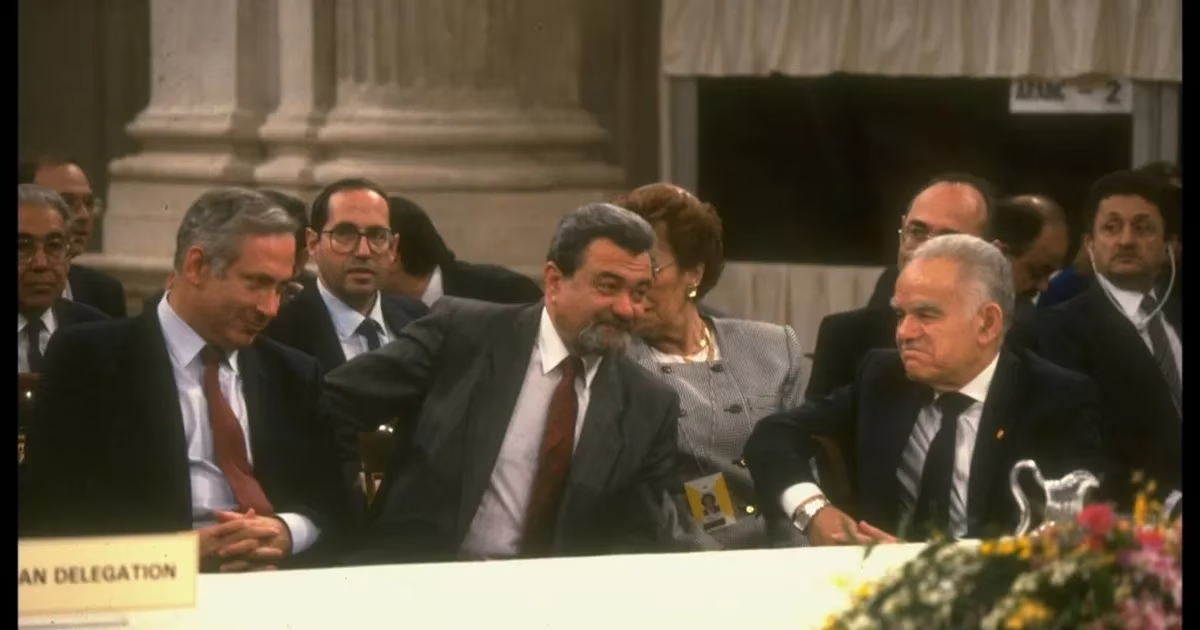
Despite the alliance's history of military intervention in areas such as Libya, Kosovo, and Afghanistan, the situation with Iran appears different for Europeans. In previous cases, there was a UN Security Council cover or collective consensus, which is lacking in the current action in the Strait of Hormuz.
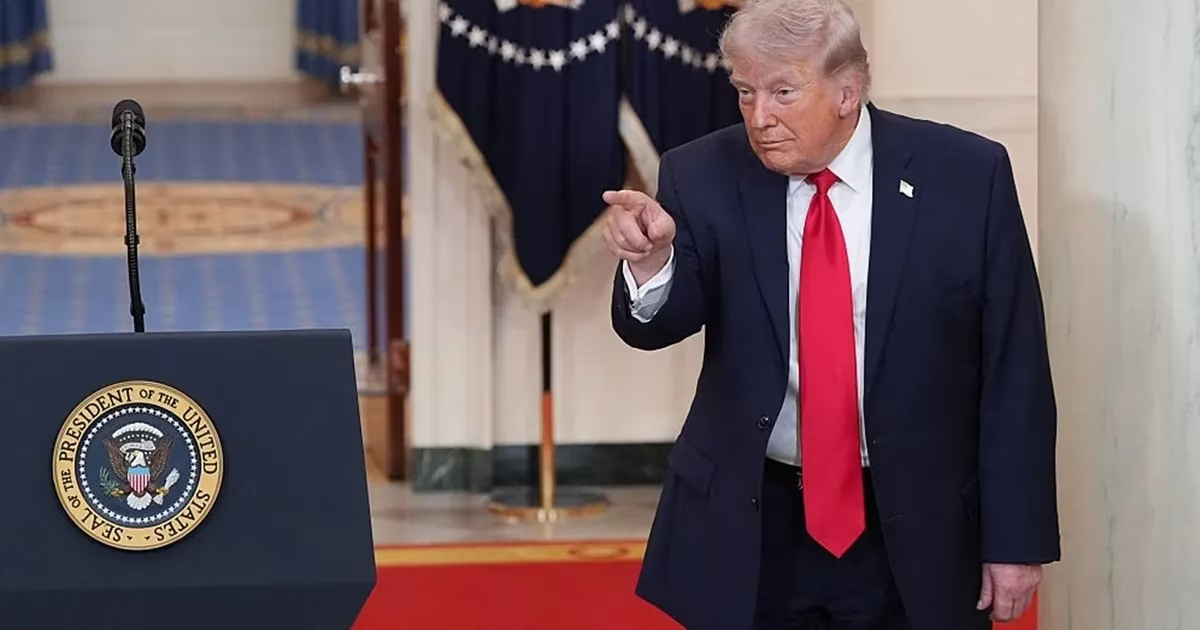
Trump bases his pressures on the enormous military power possessed by the alliance, which includes about 3.5 million soldiers and more than 20,000 warplanes. The U.S. President believes that these capabilities should be harnessed to protect common interests, including global energy security that passes through the Strait of Hormuz.

For his part, French President Emmanuel Macron stressed that Paris is not currently considering participating in any military operations to secure the strait. This French position reflects a state of European caution towards being drawn into the American escalatory vision in the Middle East.

In London, British Prime Minister Keir Starmer indicated that his country is considering alternative plans to secure navigation, but he clearly affirmed that any move would not be under the umbrella of NATO. This position reinforces the isolation Trump faces in his attempt to activate Article 5 of the alliance's charter in this conflict.

As for Germany, it was more explicit in its rejection, as official sources in Berlin confirmed that the ongoing war has nothing to do with NATO's defensive obligations. Other countries such as Japan, Australia, and Spain joined the list of those rejecting any direct military intervention, preferring to stay away from the front lines.

In Brussels, EU foreign policy chief Kaja Kallas revealed the absence of any desire among foreign ministers to contribute to reopening the strait by force. This European consensus indicates a deep gap in strategic visions between the two sides of the Atlantic regarding how to deal with the Iranian file.

Despite Trump's repeated threats to withdraw from the alliance and his description of it as 'obsolete,' legal and political reality limits his ability to take such a step. New U.S. legislation imposes strict restrictions on any decision to withdraw from major international treaties without broad legislative approval.

Analysts believe that Trump's aggressive rhetoric primarily aims at political blackmail to gain financial benefits and increase member states' contributions to the defense budget. However, the allies' insistence on their position may lead to further tension in transatlantic relations in the coming period.

The Strait of Hormuz remains a focal point in the current geopolitical conflict, where global energy interests intertwine with complex military calculations. While Washington continues to pressure, allies remain steadfast in their refusal to turn NATO into a tool in wars they see no need to engage in.

The ongoing war is not the alliance's war; it is a conflict started by the Trump and Netanyahu administrations, and we have no stake in it.