PALESTINE

Mon 20 Apr 2026 4:59 am - Jerusalem Time

Two martyrs and wounded in separate Israeli attacks on Gaza Strip

Israeli occupation forces continued their field violations in the Gaza Strip, where two Palestinians were martyred and four others were injured in separate incidents that occurred on Sunday. These attacks come in the context of a series of ongoing breaches of the ceasefire agreement that came into effect on October 10, 2025, threatening the fragile calm in the Strip.

In details of the field aggression, an Israeli drone targeted a motorcycle that was traveling on Salah al-Din Street east of the Nuseirat refugee camp in the central Strip. Medical sources confirmed that the raid resulted in the martyrdom of one citizen and the injury of three others with varying degrees of wounds, who were subsequently transferred to Al-Awda Hospital for treatment.

Al-Awda Hospital stated in a brief statement that its teams dealt with the body of a martyr and three injuries, noting that among the wounded was a child who was injured by shrapnel from the airstrike. This coincided with intense overflights of Israeli reconnaissance planes in the airspace of the central region of the Strip.

In the northern Strip, local sources reported the martyrdom of a Palestinian due to direct gunfire from occupation army vehicles stationed in the border areas. The shelling targeted the tents of displaced persons in the Halawa camp located east of Jabalia, causing a state of panic and confusion among the displaced families.

In the city of Deir al-Balah, a 16-year-old boy was seriously injured after being targeted by drone fire in the desalination area. Eyewitnesses stated that the targeting occurred in a civilian area where no occupation forces were present, despite the Israeli army's control over large areas exceeding half of the Strip's area.

The eastern areas of the central governorate and the southern Strip witnessed a remarkable escalation, as helicopters and military vehicles fired heavily towards citizens' lands. Israeli artillery also shelled areas east of Khan Yunis city, coinciding with warships targeting the city's coast with shells and heavy machine guns.

These field developments come two years after the genocide war launched by Israel on Gaza since October 2023, which left massive destruction. According to official statistics, that war resulted in the martyrdom of more than 72,000 and the injury of more than 172,000 Palestinians in an unprecedented toll.

For its part, the government media office in Gaza revealed the extent of Israeli violations since the signing of the ceasefire agreement, confirming the monitoring of about 2,400 breaches. These violations varied between direct killing, arbitrary arrests, tightening the siege, and using the policy of starvation against the civilian population in various governorates.

In a related context, the Ministry of Health in the Strip indicated that the continuous violations of the agreement have so far led to the martyrdom of 775 Palestinians and the injury of 2,171 others. These figures reflect the occupation's insistence on undermining international understandings and continuing to target civilians and infrastructure amid complete international silence.

Israel committed 2,400 violations of the ceasefire agreement, including killing, arrest, siege, and starvation.
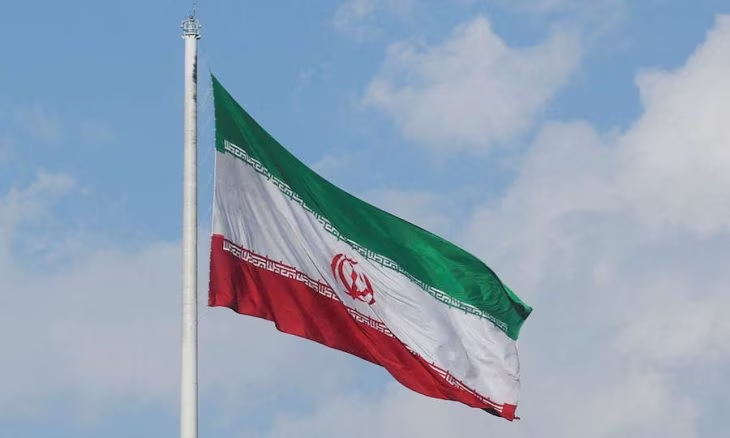
ARAB AND WORLD

Mon 20 Apr 2026 4:58 am - Jerusalem Time

Tehran Rejects Second Round of Negotiations with Washington, Criticizes 'Excessive Demands'

Official sources in the Iranian capital, Tehran, confirmed on Sunday evening the political leadership's opposition to holding a second round of direct talks with the United States of America. This decisive stance comes just hours after statements by US President Donald Trump, in which he indicated that his negotiating team would travel to Pakistan on Monday to complete efforts to end the ongoing conflict.

Media reports clarified that Tehran views the new American invitation as merely an attempt at political maneuvering, especially after the failure of the first round hosted by Islamabad last week. The sources emphasized that the absence of tangible results in previous meetings is primarily due to what they described as 'American intransigence' and a lack of seriousness in making concessions to end the state of tension.

Iranian official bodies attributed the rejection decision to three main factors, topped by American demands described as excessive and unrealistic, in addition to the continuous fluctuation in the positions of the current US administration. Tehran also considered that the continued naval blockade imposed on Iranian ports represents a fundamental obstacle preventing any fertile ground for serious or fruitful diplomatic negotiations.

In a related context, media sources close to decision-making circles in Iran described reports promoting a second round as part of a 'media campaign' led by Washington. This campaign, according to the Iranian view, aims to exert additional psychological and political pressure on Tehran, and to try to hold it responsible for the faltering diplomatic path by exchanging accusations before the international community.

For his part, US President Donald Trump had announced earlier that a high-level delegation would arrive in the Pakistani capital tomorrow evening, Monday, to continue the dialogue. Despite this explicit announcement from the White House, the Iranian side maintained official silence regarding sending any envoys, before recent reports emerged confirming the absence of any Iranian intention to participate in this meeting.

Information from the White House indicates that the American delegation was scheduled to be headed by Vice President 'J.D. Vance,' who led the stalled round of negotiations early last week. The delegation also includes Special Envoy 'Steve Witkoff,' in addition to 'Jared Kushner,' the son-in-law of the US President, reflecting the importance Washington attaches to this path despite significant obstacles.

In a further escalation, media sources quoted informed officials as saying that no future negotiations would be engaged in as long as the US Navy continues to blockade the Strait of Hormuz. This Iranian condition is considered a red line, as Tehran links returning to the negotiating table with the lifting of military and naval restrictions imposed by the United States on vital waterways in the region.

Excessive American demands, the constant change in Washington's positions, and the continued naval blockade offer no promising prospects for serious negotiations.

PALESTINE

Mon 20 Apr 2026 4:58 am - Jerusalem Time

Occupation decides to completely close Rafah crossing and suspend evacuation of thousands of wounded

The Crossings and Borders Authority in the Gaza Strip announced on Sunday evening that the Israeli occupation authorities have decided to completely close the Rafah land crossing starting from Monday. The authority clarified in a brief statement that this measure will directly lead to the cessation of all evacuation operations for the wounded and sick who require urgent medical interventions outside the Strip, without clarifying the reasons behind this sudden decision.

This closure comes at a time when the health sector in Gaza is suffering from a near-complete collapse, as Israel imposes strict restrictions on movement through the crossing since its partial reopening. The Israeli side has not issued any immediate comment on the motives for the closure, which repeats previous scenarios that saw the only outlet for the residents of the Strip to the outside world disrupted for continuous weeks.

In a related context, the spokesperson for the Palestinian Red Crescent Society, Raed Al-Nims, revealed shocking figures related to the humanitarian situation, indicating that more than 18,000 patients and wounded are still awaiting their turn on medical evacuation lists. Al-Nims confirmed that the number of those who were able to leave the Strip since the reopening of the crossing did not exceed 700 patients, which is a very small number compared to the enormous needs and the danger threatening the lives of the injured.

In addition to the closure crisis, local sources reported that Palestinian citizens returning to the Gaza Strip through the crossing were subjected to serious violations by the occupation forces stationed there. These violations included acts of abuse and prolonged detention, in addition to harsh interrogations and psychological pressure suffered by travelers before being allowed to reach their homes inside the Strip.

It is worth noting that the Israeli occupation army has full control over the Palestinian side of the Rafah crossing since its invasion in May 2024, and it was reopened last February within a very limited scope. The crossing constitutes the only remaining lifeline for the residents of Gaza, and its closure represents a death sentence for hundreds of critical cases for whom treatment is not available in the besieged and targeted hospitals.

Movement of patient evacuations will stop tomorrow, Monday, as a result of the closure of the Rafah crossing by the occupation.

ARAB AND WORLD

Mon 20 Apr 2026 4:58 am - Jerusalem Time

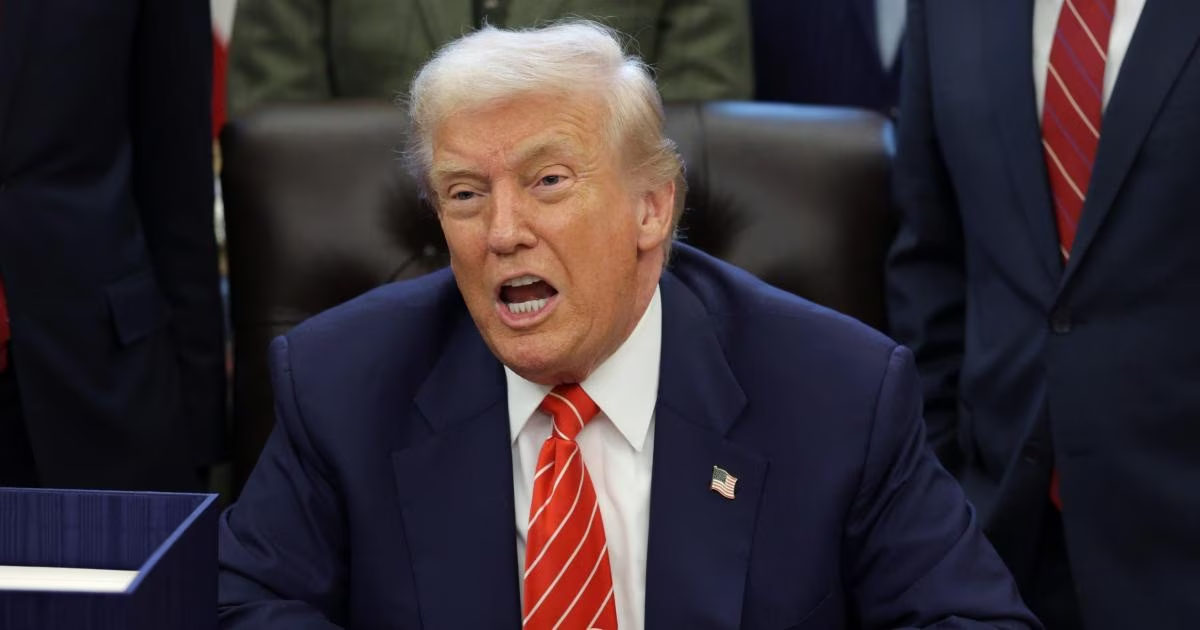
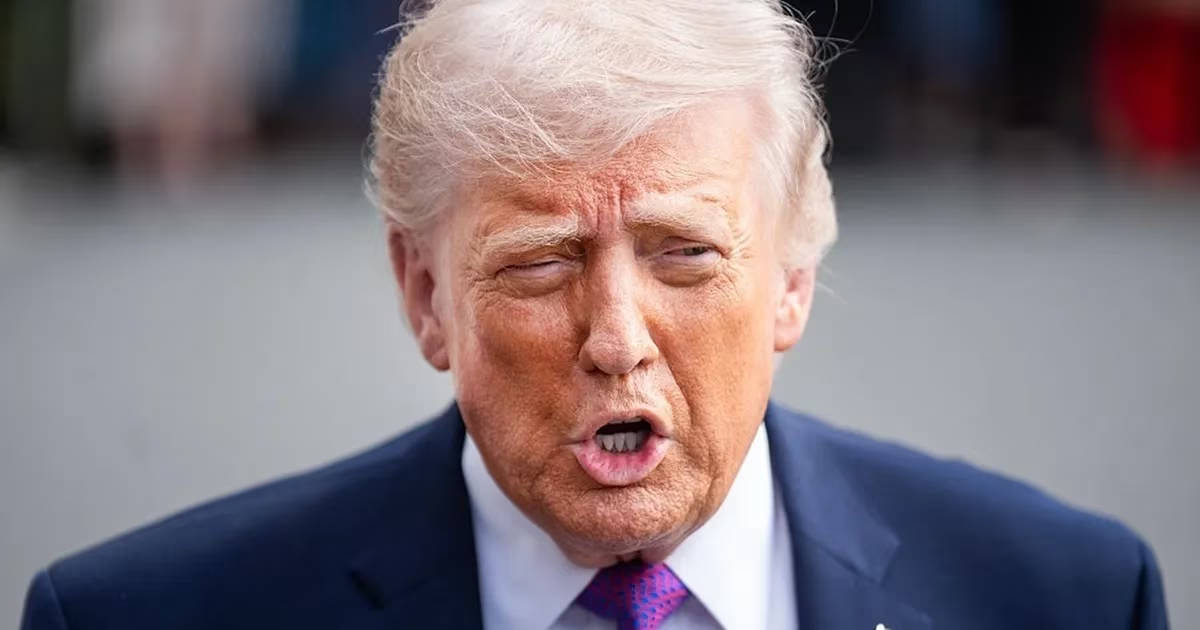
Trump attributes his laryngitis to 'screaming' at Iranians

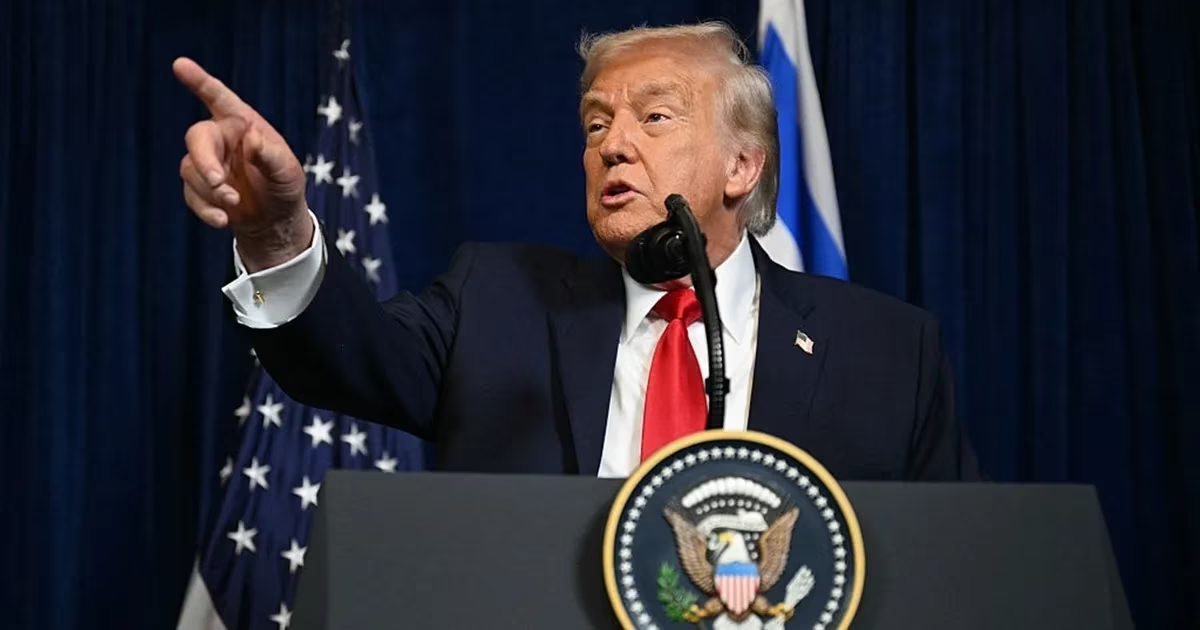
Amid escalating political tensions, US President Donald Trump made unusual statements linking his health condition to his approach to the Iranian issue. Trump claimed that the intensity of discussions and pressures he exerts on Tehran led to him developing laryngitis, reflecting his confrontational style in dealing with thorny international issues.

These statements came during a television interview with anchor Maria Bartiromo, where the conversation touched on sensitive issues including the security of the Strait of Hormuz and the future of stalled negotiations. Instead of providing traditional diplomatic answers, Trump chose a tone that blended seriousness and sarcasm to explain his vision for dealing with international adversaries.

The US President affirmed in his speech that force is the only language that works with the Iranian side, noting that 'gentle treatment' had not achieved the desired results in the past. He considered his continuous shouting to be part of the maximum pressure strategy he adopts to compel Tehran to comply with American demands.

On the ground, Trump expressed great optimism about the course of ongoing military operations, describing the combat performance of the forces as 'exemplary'. He indicated that victory was imminent and that the war was nearing its end, which created a contrast between his talk of military decisive action and the continuation of diplomatic crises.

In a related context, reports from the White House revealed that Vice President J.D. Vance is currently leading the US negotiating delegation. The negotiating team includes prominent figures, suggesting that Trump's statements about 'screaming' may be a metaphorical expression of general policy rather than an accurate description of direct negotiation sessions.

Trump's statements did not pass without sparking a wave of sarcasm and analysis on social media platforms, with some considering them part of the President's usual 'political show'. Observers criticized this approach, emphasizing that managing issues of the magnitude of the conflict with Iran requires diplomatic wisdom that goes beyond merely uttering catchy phrases.

For his part, political science specialist Birmingham commented on these statements, considering that Trump's resort to shouting reflects his frustration at his inability to fully impose his agenda. He added that Iran has proven to be a power that cannot be easily subdued, describing threats of 'ending civilization' as being outside the framework of political rationality.

Websites were also filled with sarcastic comments, with some activists pointing out that Trump's shouting might be directed from the White House balcony and not in closed negotiation rooms. Others considered that losing one's temper and shouting is evidence of losing both the political and military arguments, which weakens the American position internationally.

Despite the criticism, Trump's supporters insist that this direct approach is what the United States needs to restore its prestige in the Middle East. Questions remain about the extent to which these statements will affect the actual course of negotiations, especially given the presence of an official negotiating team trying to balance the President's escalation with diplomatic necessities.

I was screaming at the Iranians all day... and that's why I have laryngitis, they don't understand gentle treatment.

PALESTINE

Mon 20 Apr 2026 4:58 am - Jerusalem Time

Massive Global Demonstrations Commemorate Prisoners' Day and Condemn Israeli Execution Laws

Thousands of demonstrators took to the streets in the West Bank, Morocco, and Australia today, Sunday, in a widespread public movement to commemorate Palestinian Prisoners' Day, which falls on April 17th each year. These movements come amidst exceptional circumstances experienced by detainees inside occupation prisons, coinciding with an escalation in repression and racist legislation targeting their lives.

In the city of Nablus, in the northern West Bank, citizens gathered in a central march that started from the municipality building and proceeded to Martyrs' Square in the city center. Participants carried pictures of prisoners and Palestinian flags, chanting slogans demanding the breaking of chains and the internationalization of the detainees' issue in international forums to confront systematic policies of abuse.

Nablus Governor Ghassan Daghlas affirmed during the event that the occupation authorities continue to tighten their siege on the Palestinian people, alongside unprecedented violations against prisoners. Daghlas pointed out that the Israeli Knesset's approval of the law to execute prisoners represents the peak of legal terrorism practiced by the far-right government against Palestinian freedom fighters.

On March 30th, the Israeli Knesset approved a law allowing the implementation of the death penalty against Palestinian prisoners, with a majority of 62 members. This legislation, which received widespread support from right-wing parties, targets prisoners accused of carrying out operations that resulted in the deaths of Israelis, currently estimated at around 117 prisoners.

In the Moroccan capital, Rabat, massive crowds participated in a solidarity march that paraded through the main streets to the Parliament building, condemning Israeli crimes. Demonstrators carried banners calling for the protection of prisoners from daily abuses, demanding that the international community pressure the occupation to revoke the recent arbitrary laws.

In the Australian city of Melbourne, a massive demonstration took place with the participation of members of Arab communities and foreign sympathizers, expressing their rejection of the Israeli law that permits executions. Protesters called on the Australian government to take firm stances against Israeli practices and to work towards ensuring the release of detainees held in inhumane conditions.

Activists in Australia announced the extension of Prisoners' Day commemoration activities to include a full week of awareness and protest activities. These events aim to highlight the various forms of torture and degrading treatment suffered by Palestinians and to raise global awareness about their just cause in the face of the Israeli machine of oppression.

In Tunisia, activities supporting the Gaza Strip and prisoners continued, with a solidarity march condemning ongoing Israeli violations of ceasefire agreements. Participants stressed the need to grant prisoners their full freedom, expressing their anger at the approval of legislation that legitimizes premeditated murder under the guise of the Israeli judiciary.

For its part, the Commission of Detainees and Ex-Detainees Affairs revealed shocking reports regarding conditions inside the Israeli 'Etzion' prison, describing the treatment there as the worst in decades. The commission quoted legal sources who were able to visit a number of detainees, stating that the prison service has escalated repression and intimidation operations to an unprecedented degree.

Documented testimonies from inside the prison included brutal practices such as raiding cells with police dogs and constantly directing abusive insults at prisoners. Detainees are also forced to kneel for long hours in painful positions, with severe beatings inflicted on anyone who tries to object or is unable to carry out military orders.

Official statistics indicate the presence of more than 9,600 Palestinian prisoners in occupation prisons, including dozens of women and hundreds of children suffering from starvation policies. These prisoners face deliberate medical neglect that has led to the martyrdom of dozens inside captivity, amidst a complete absence of international oversight over Israeli detention centers.

It is worth noting that the pace of abuse against prisoners has sharply escalated since the outbreak of the genocide war on the Gaza Strip on October 7, 2023. These violations continue with American political and military support, leading to the exacerbation of the humanitarian crisis inside prisons and transforming them into arenas for systematic revenge against everything Palestinian.

The occupation imposes a comprehensive siege on our people and practices escalating violations against prisoners, culminating in the approval of the unjust execution law.

ARAB AND WORLD

Mon 20 Apr 2026 4:58 am - Jerusalem Time

Trump Announces 'Framework Agreement' with Iran, Tehran Hesitates to Participate in Islamabad Negotiations

US President Donald Trump revealed new developments in the Iranian file, indicating that a general framework agreement has been reached with Tehran. In a media interview, Trump expressed cautious optimism about the course of the talks, emphasizing that reaching a final agreement is now possible despite the uncertainty surrounding the next phase.

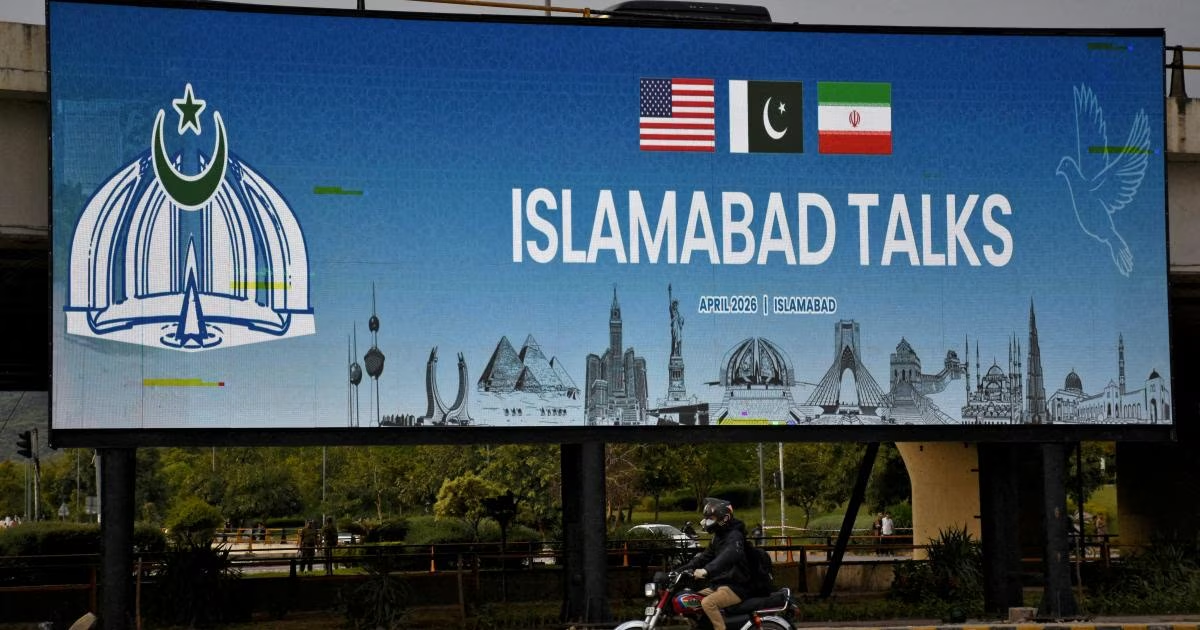
These statements come ahead of the second round of negotiations scheduled to begin in the Pakistani capital, Islamabad, on Monday. These intensive diplomatic moves aim to end the conflict with Iran, especially as the deadline for the current ceasefire approaches.

Sources in the White House confirmed that the United States will send a high-level delegation to participate in the Islamabad talks. The delegation includes prominent figures in the US administration, led by Vice President J.D. Vance, in addition to envoys Steve Witkoff and Jared Kushner, reflecting the importance Washington attaches to this round.

J.D. Vance will lead the US delegation in this crucial round of negotiations with the Iranian side. The US team seeks to translate the 'framework agreement' mentioned by Trump into executive provisions that ensure regional stability and permanently end military operations.

Coinciding with the diplomatic activity, the US aircraft carrier 'Gerald Ford' has returned to the waters of the Middle East, according to official sources. This military move comes amid escalating tensions, with Washington aiming to strengthen its field presence during the negotiation process.

In contrast, a state of hesitation prevails in the Iranian capital, Tehran, where no final decision has been issued regarding participation in the Islamabad round. Informed sources reported that decision-making circles in Iran are still studying the feasibility of engaging in new negotiations under the current circumstances.

Iranian state media quoted its sources as saying that there are no clear prospects for the success of this round of talks or for making them fruitful. Tehran attributes this pessimism to what it describes as unrealistic and exaggerated American demands, which hinder reaching compromises that satisfy both parties.

Iran's Supreme National Security Council is still holding intensive meetings to study the implications of the current negotiation path. Iranian discussions focus on evaluating the US position and the seriousness of its commitment to previous understandings, away from the language of threats sometimes adopted by Washington.

Tehran strongly criticizes what it describes as the 'US naval blockade,' considering it a clear violation of the existing ceasefire understandings. Iranian official bodies believe that US military movements in the region contradict the stated desire to reach a diplomatic solution to the crisis.

Iranian sources described optimistic American statements about an imminent agreement as merely a 'media game' aimed at pressuring the Iranian negotiator. Tehran believes that Washington is trying to suggest positive progress to justify its positions before the international community, while fundamental obstacles remain unresolved.

I feel that we can reach an agreement with Iran, and a general framework agreement has already been reached, but we do not know where things will go.

PALESTINE

Mon 20 Apr 2026 4:58 am - Jerusalem Time

Tel Aviv hints at resuming intense fighting in Gaza, Smotrich demands re-establishment of settlements

Hebrew media sources close to the Israeli Prime Minister's office revealed that the occupation army has begun actual arrangements to return to intensive fighting in the Gaza Strip early next month. These military movements come amid escalating political tension within the Israeli government coalition and demands to end the relative calm.

In a related context, Israeli Finance Minister Bezalel Smotrich renewed his explicit calls for the full re-occupation of the Gaza Strip and the establishment of Jewish settlements on its lands. Smotrich considered this step necessary to confront what he described as Hamas's refusal to dismantle its military capabilities or abandon its weapons.

Smotrich's statements came during an official event for the re-opening of the 'Sanur' settlement in the northern West Bank, a settlement that was evacuated in 2005. Defense Minister Yisrael Katz and a number of officials participated in this event, reflecting a governmental trend towards strengthening settlement on various fronts.

For its part, Hamas affirmed its adherence to the necessity of obliging the occupation to implement the requirements of the first phase of the ceasefire agreement before moving to any new understandings. This came during meetings held by the movement's leadership with international mediators and Palestinian factions in the Egyptian capital, Cairo, to discuss the path of calm.

The movement stressed in an official statement that it has dealt positively with all proposed initiatives, including US President Donald Trump's plan and the Sharm El Sheikh agreements. It demanded the complete withdrawal of occupation forces from the Strip and the opening of crossings to begin reconstruction operations and end the escalating humanitarian suffering.

On the ground, reports from the Gaza Strip indicate that the ceasefire agreement is witnessing continuous and almost daily Israeli violations. These violations range from artillery shelling and direct firing at civilians and farmers in border areas, which undermines the chances of stabilizing the calm.

According to data from the government media office in Gaza, occupation forces have committed about 2,400 violations of the agreement since it came into effect last October. These violations included killings, detentions, severe siege, in addition to the systematic starvation policy practiced against the residents of the Strip.

The Ministry of Health in Gaza reported that these violations resulted in the martyrdom of 775 people and the injury of more than two thousand citizens with various injuries during the past six months. These figures confirm the fragility of the existing agreement in light of the continued limited Israeli military operations and repeated attacks.

The second phase of the US-sponsored peace plan began in mid-January under UN Security Council resolutions. However, the Palestinian side accuses Israel of reneging on its basic commitments, especially regarding the entry of sufficient medical and relief aid.

Official data indicates that the occupation continues to place obstacles to the entry of shelter materials and fuel necessary to operate vital facilities in Gaza. This intransigence threatens the collapse of the political path that began in October 2025 and aims to end the genocide that destroyed most aspects of life.

It is worth noting that the Gaza Strip was subjected to a comprehensive destructive war that began on October 8, 2023, and lasted for more than two years with extensive American military and political support. This war left a heavy toll of victims exceeding 72,000 martyrs and 172,000 injured, most of whom were children and women.

Israeli military operations also caused the destruction of approximately 90% of the infrastructure and residential buildings in the Strip, making reconstruction a huge challenge. In light of the current threats of a return to fighting, the international community fears a deeper humanitarian catastrophe that may affect what remains of the elements of life in Gaza.

I call on the Prime Minister to issue orders to the army to immediately prepare for the full occupation of the Gaza Strip, impose Israeli control, and establish settlements there.

ISRAELI AFFAIRS

Sun 19 Apr 2026 3:20 pm - Jerusalem Time

Boiling in Israel after soldiers killed in southern Lebanon: Accusations against Netanyahu of 'submitting' to Trump

Political and military circles in Israel are experiencing a state of extreme tension after two soldiers were killed and others injured in southern Lebanon, despite the ongoing ceasefire agreement. This continuous bleeding has fueled feelings of anger and reproach towards the government, amid accusations that the political leadership is making promises that have no basis in reality.

Security assessments in Tel Aviv indicate that Iran may move towards blowing up the ongoing negotiations with the United States, not out of a desire for comprehensive escalation, but as a tactical pressure tool. In contrast, voices within the ruling establishment are emerging that wish to return to direct military confrontation on the Lebanese and Iranian fronts to achieve objectives that have not yet been accomplished.

Fears are escalating in the Israeli street that northern areas will remain under the threat of Hezbollah rockets, with critics arguing that Netanyahu and his security minister Katz are involved in arrogant rhetoric that has not changed the reality on the ground. There is a general feeling of bitterness resulting from the conclusion that Hezbollah still retains its military capabilities and its ability to paralyze life in the northern settlements.

For his part, Agriculture Minister and Cabinet member, Avi Dichter, tried to absorb public anger by saying that the nature of fighting with armed organizations always makes borders unclear. Dichter acknowledged that the ceasefire came in response to a direct request from US President Donald Trump, emphasizing the need to maintain the alliance with Washington to confront the Iranian threat.

In the context of field criticisms, military observers expressed their dissatisfaction with the Israeli army's failure to control the Lebanese town of Bint Jbeil despite weeks of intense fighting. Reserve General Yossi Peled pointed out that the gap between the slogans promoted by politicians and the actual results on the ground has become a heavy burden on public morale.

Military analyst Amos Harel believes that the current agreement is fragile, especially after Trump informed the Israeli side of the need to stop bombing immediately. Harel described the new American position as an unprecedented step that prevents Israel from moving freely in Lebanese airspace, which further complicates the security situation.

On the popular level, the municipality of Kiryat Shmona and a number of Galilee settlements announced a general strike, with calls for massive demonstrations in Jerusalem protesting what they described as 'submission'. Northern residents consider the ceasefire agreement to be a surrender to external pressures, leaving them to face an unknown fate in the face of continuous Hezbollah threats.

In a critical reading of the scene, General Michael Milstein considered that excessive reliance on military force without a clear political vision is the main reason for what he described as the current failure. Milstein warned that replacing realistic planning with 'fantasy' and selling illusions to the public will ultimately lead to severe and irreparable strategic damage.

Other experts also warned against attempting to replicate the 'Yellow Line' experience from the Gaza Strip and apply it in Lebanon, stressing that the nature of the land and the resistance in southern Lebanon are completely different. These experts believe that establishing a security belt could turn into a trap for Israeli soldiers due to improvised explosive devices and ambushes, instead of being a defensive solution.

Hebrew media mocked official statements talking about the imminent achievement of peace with Lebanon, noting that reality proves the exact opposite. Reports recalled statements by the Israeli ambassador who heralded Israelis visiting Lebanon in swimsuits, considering them a kind of underestimation of the enemy's capabilities and steadfastness.

Media sources confirm that Netanyahu is facing a political nightmare as general elections approach, as he finds himself unable to market the image of 'security master' that he has always boasted about. This predicament may push him to try to convince the American administration of the need to resume military operations to escape his successive internal crises.

In light of this political deadlock, informed sources do not rule out that Netanyahu may resort to a new military escalation in the Gaza Strip in search of a 'victory image' that would restore some of his lost popularity. The pressures exerted by the far-right and northern residents are tightening the noose on the government and pushing it towards escalatory options with uncertain outcomes.

On the other hand, Shimon Sheffer believes that Iran has proven its strength and steadfastness, contrary to Israeli claims, and has effectively imposed an equation of linking fronts. Sheffer explained that continuing the policy of lying and misleading the public will only lead to more shocks when slogans collide with the bitter reality on the northern and eastern fronts.

The scene in southern Lebanon remains open to all possibilities, in light of continued field friction and Hezbollah's rejection of any change in the previous rules of engagement. With increasing American pressure, Israel finds itself in a dilemma between the desire to continue the war and the international restrictions imposed by Washington in a sensitive transitional phase.

Betting on force without a political vision is the cause of failure, and there is a large gap between politicians' promises and the reality on the ground.

OPINIONS

Sun 19 Apr 2026 3:20 pm - Jerusalem Time

Multiple Readings and Positions on the Aggression Against Iran: A Vision of Regional and Local Repercussions

Ramallah - “Alquds ” dot com

Ramallah - “Alquds ” dot com

Opinion Writer

Major events naturally create a state of sharp divergence in political stances and alignments, which was clearly manifested following the recent American-Israeli aggression against Iran. This division in Arab and Islamic public opinion reflects the complexity of the scene, where the threads of military conflict intertwined with complex political and sectarian calculations in the region.

The proliferation of military confrontations and the targeting of civilian facilities and vital installations in Gulf states by Iranian strikes significantly complicated matters. This development prompted broad sectors to re-evaluate their positions, while others remained steadfast in their preconceived convictions governed by political loyalties or historical rivalries with Tehran.

The balanced stance on this crisis rests on three fundamental dimensions, beginning with an unequivocal rejection and condemnation of the American-Israeli aggression. Conversely, strikes targeting civilian facilities in Gulf states cannot be accepted, with the necessity of affirming the Iranian people's right to freedom and a dignified life away from oppression.

The rejection of external aggression against Iran was not merely an emotional state, but rather the result of a precise assessment of the situation and its repercussions on the entire nation. The project led by Washington and Tel Aviv explicitly aims to redraw the region's maps and form a 'new Middle East' in which absolute sovereignty belongs to the Zionist entity.

This Zionist project resonated with some fragile Arab regimes that rushed towards normalization, considering it a lifeline for their survival. Christian Zionist ideology plays a pivotal role in guiding current American policy, where support for Israel is viewed as a sacred religious duty that transcends traditional political interests.

Iran was targeted not because of its sectarian or ethnic identity, but because it represented a model that resisted American subjugation since 1979. Despite observations on its policies, it remains a stumbling block to full Zionist expansion in the region, which explains the Western insistence on curbing its influence and capabilities.

The failure of the aggression to achieve its strategic goals, namely the destruction of the nuclear program and the overthrow of the regime, is not a gain for Tehran alone but for the region as a whole. This failure obstructs the Zionist hegemony project and gives the peoples of the region hope in their ability to confront the schemes of fragmentation and dependency imposed by major powers.

Iran, like other countries, has a legitimate right to possess nuclear technology for peaceful purposes in accordance with international treaties. Despite religious fatwas prohibiting nuclear weapons, the American desire to prevent any Islamic country from possessing technical knowledge remains the primary driver of repeated aggressions.

Western powers previously succeeded in destroying Iraq's peaceful nuclear program and exerted immense pressure that forced Libya to abandon its technical ambitions. Pakistan remains the only exception that escaped this strict oversight thanks to complex regional and international circumstances that enabled it to build its own nuclear deterrent.

The danger of the Zionist project will not stop at Iran's borders but extends to include other countries such as Syria, Turkey, Egypt, and Saudi Arabia. Therefore, condemning the aggression is a 'duty of the hour' to defend the collective self of the nation, regardless of deep disagreements with Iranian internal policies or regional interventions.

Serious and sincere dialogue must remain the only way to resolve existing problems with Iran, paving the way for building a unified Islamic force. Continued discord only serves external powers that seek to drain the region's resources and keep it in a state of perpetual conflict and absolute dependency.

Iranian strikes targeting infrastructure in the Gulf were a political misstep that contributed to widening the rift with neighboring peoples. These actions reinforced the fears of neighbors and prompted some to lean more into American protection, a trend that facts have proven ineffective in moments of real crisis.

Arab and Gulf states must seriously consider building a common defense system based on diversifying weapons sources and self-reliance. Relying on American bases has proven to be a failure, as Washington left its allies to face their fate alone during the peak of the recent military escalation.

In conclusion, the real bet remains on the Iranian people, who proved their patriotism by rejecting the aggression despite suffering from internal oppression. The authorities in Tehran must repay this people through real political and economic reforms, otherwise, waves of popular anger will return strongly once the cannons of war fall silent.

Condemning the aggression was not an endorsement of Iranian policies, but rather a duty of the hour to defend ourselves and our nation and to confront conspiracies targeting everyone.

ANALYSIS

Sun 19 Apr 2026 3:19 pm - Jerusalem Time

Middle East Transformations: Network Conflict Replaces Traditional Alliances

Today, the Middle East is no longer a space where balances are settled through rigid alliances or clear ideological alignments. Instead, it has transformed into an open arena where states move with extreme caution. In this landscape, international relations are characterized by proximity without adhesion and distance without complete rupture, reflecting a new geopolitical reality forming away from traditional patterns.

Israel stands at the heart of this transformation, not just as a party to a traditional conflict, but as an actor seeking to redefine the entire regional game. This strategy aims to make its presence a functional center around which regional networks revolve, using seemingly neutral tools such as energy, technology, and cross-border economic corridors.

Current Israeli policy seeks to shift the center of gravity away from the Palestinian issue, attempting to strip it of its character as a national political liberation cause. The ultimate goal is to transform it into merely a humanitarian and security file devoid of strategic impact, thereby facilitating the gradual construction of dominance networks that make adapting to them a less costly option than opposing them.

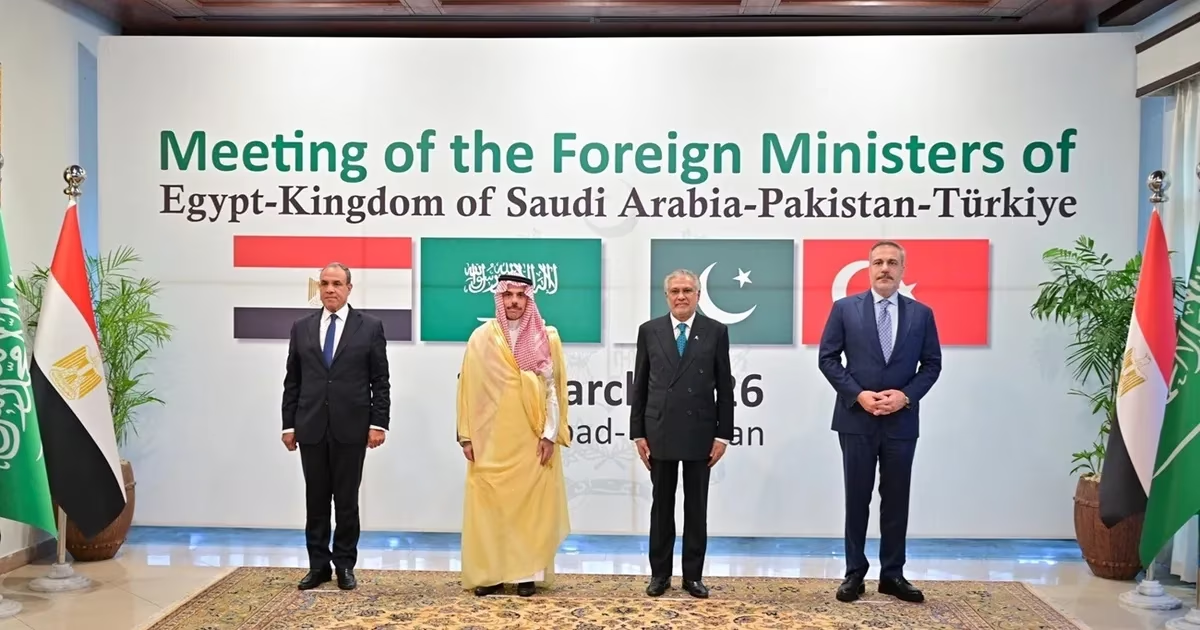
In this complex context, the behavior of major regional powers such as Turkey, Saudi Arabia, Egypt, and Pakistan cannot be understood as an attempt to form an opposing axis in the classical sense. Rather, these movements appear as simultaneous attempts to position themselves within the new reality and ensure that the region's future is not shaped without considering the vital interests of these states.

Turkey, which aspires to a role beyond its geographical borders, today balances its political discourse supporting the Palestinian cause with its strategic necessities. Ankara realizes that isolating itself from Eastern Mediterranean arrangements or international energy equations will not serve its ambitions as a rising regional power, making its maneuvers characterized by high political realism.

As for Saudi Arabia, it is undergoing a profound transformation aimed at redefining its position as a regional stability maker, not just a financial power. Its cautious openness reflects a conscious attempt to control the pace of rapid changes and prevent Israel from becoming an economic and security monopoly center in the region, while maintaining its own conditions for entering any new equation.

For its part, Egypt moves according to a conservative logic closely linked to protecting its national security and strategic position in the Eastern Mediterranean. Cairo views the ongoing transformations as a test of its ability to prevent an imbalance of power, and therefore maintains an organized relationship with Israel, opening doors for cooperation when necessary and closing them when an imbalance is perceived.

Away from the geographical heart of the stage, Pakistan emerges as a cautious observer carrying significant symbolic weight in the Islamic world. Despite maintaining a clear political distance from Israel, its internal priorities make it focus on monitoring the scene and ensuring that its interests are not harmed by the ongoing reshaping of the regional map.

What unites these countries is not a unified political project or a common ideology, but a collective realization that the region is fundamentally changing, and it is impossible to remain outside this change. However, this realization does not necessarily translate into a military or political alliance, given the differing calculations of each state and its definition of threat sources.

The illusion of grand alliances has dissipated, replaced by a more complex pattern of flexible network relationships built and dismantled according to need and interest. These networks are managed by the logic of short-term gain, not long-term commitment, making the ability to maneuver politically far more important than the strength of aligning behind a single axis.

The four regional powers do not appear to be moving towards forming a unified front for direct confrontation with Israel, but rather seeking to forge a complex balance that constrains Israeli hegemonic ambitions. This balance, despite its fragility, represents the most realistic option in a region that can no longer tolerate major military adventures or comprehensive clashes that could destabilize everyone.

The nature of the system currently forming points to a Middle East without a single center and without fixed axes, where each power tries to maintain its position within the game. The real conflict today is not about traditional military victory, but about the ability to endure and not allow others to redefine the roles of states within a system they did not participate in creating.

Despite attempts at marginalization, the Palestinian issue remains the cornerstone of any real stability, as economic corridors alone cannot replace political rights. Regional powers realize that completely bypassing this issue could lead to unexpected explosions that threaten all the networks of interests currently being built.

Ultimately, we are facing a region reinventing itself away from grand slogans, where the language of numbers and geopolitical interests governs the paths of states. This new reality compels everyone to adopt flexible strategies capable of dealing with successive changes in a highly fluid and complex security and political environment.

The ability to maneuver in the region today has become more important than the strength of alignment, where balance itself becomes a goal, not just a result of conflict.

ARAB AND WORLD

Sun 19 Apr 2026 3:15 pm - Jerusalem Time

Islamabad turns into a military barracks in preparation for crucial US-Iranian negotiations

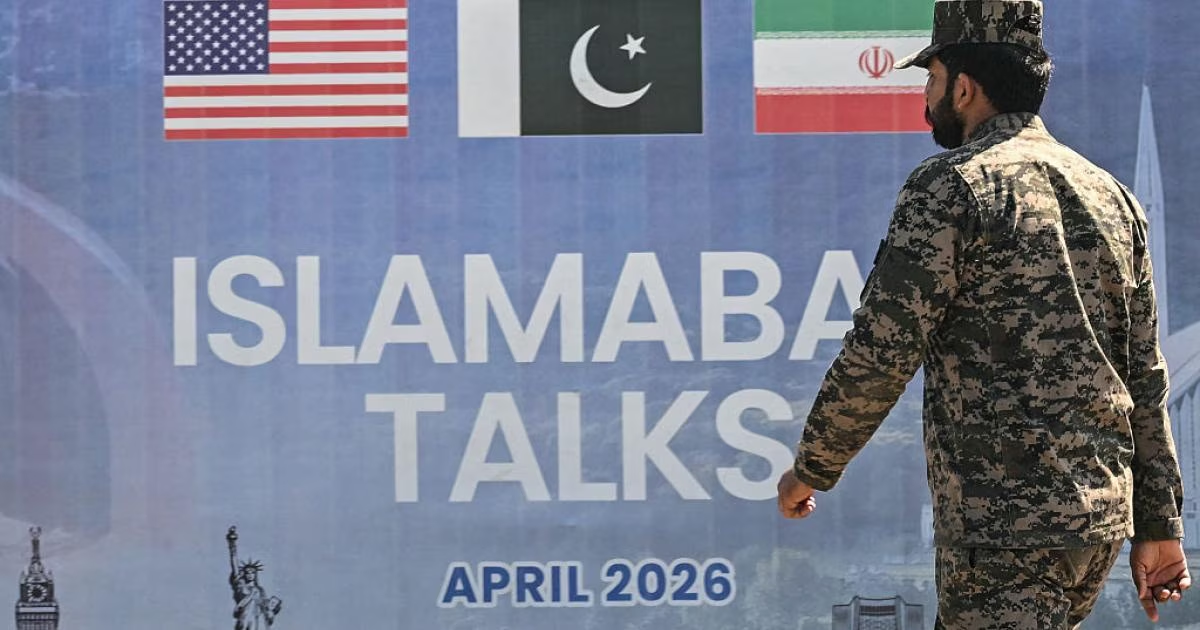
The Pakistani capital, Islamabad, and the neighboring city of Rawalpindi witnessed an unprecedented security alert, coinciding with ongoing preparations to host the second round of diplomatic negotiations between the United States and Iran. These moves come as part of intensive Pakistani efforts to revive channels of dialogue between the two parties and avoid any potential military escalation in the region.

Field sources reported that the comprehensive security plan included the deployment of thousands of police and security forces, with the establishment of more than 600 fixed and mobile checkpoints throughout the two cities. These strict measures aim to secure the arrival and departure routes of diplomatic delegations participating in this sensitive round of talks.

Pakistani authorities decided to completely close vital areas surrounding Nur Khan Air Base and Islamabad International Airport starting from midnight on Sunday. The decisions also included imposing an absolute ban on drone flights over the capital and its suburbs, to ensure the highest levels of aerial protection during the meeting period.

The measures extended to include a widespread closure of public and private facilities in the New Town, Siddiqueabad, and Chaklala areas, where services in restaurants, markets, banks, bakeries, and even fitness clubs were suspended. Instructions were also issued to evacuate university residences and suspend studies and public activities in those areas until further notice.

In a move reflecting the scale of the security challenge, the Deputy Commissioner of Rawalpindi announced a comprehensive suspension of all public and private transportation and cargo operations, leading to a complete paralysis of traffic. Security agency leaders were observed supervising the implementation of these restrictions on the ground, using precise geographical data to secure the diplomatic quarter.

To enhance field readiness, the Pakistani government summoned more than 18,000 soldiers from the armed forces to support security agencies in controlling major entry and exit points. These military reinforcements are part of a security protocol that Islamabad usually implements when hosting high-level international meetings affecting regional security.

This round of negotiations primarily focuses on attempting to extend the existing truce between Washington and Tehran, which is scheduled to expire next Tuesday. Although the first round witnessed some initial understandings, the failure to resolve fundamental issues makes the Islamabad meeting a last chance to prevent a slide towards confrontation.

At this sensitive stage, Pakistan seeks to focus on extending the truce between Washington and Tehran and working to prevent a return to the path of escalation.

ARAB AND WORLD

Sun 19 Apr 2026 3:15 pm - Jerusalem Time

Lavrov: Washington broke its promises regarding NATO expansion, and a Palestinian state is key to regional stability

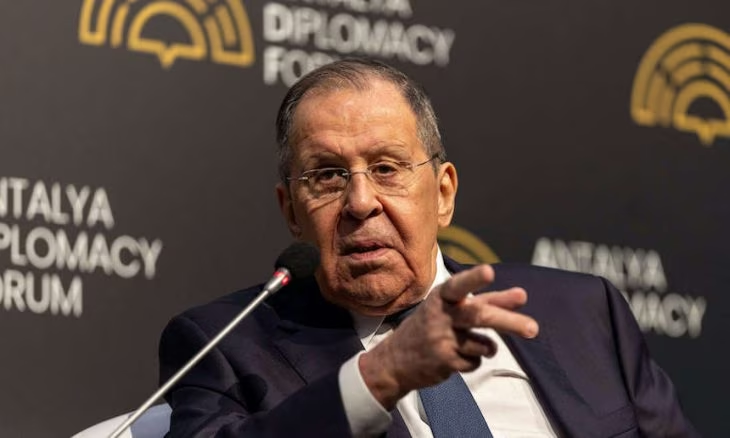
Russian Foreign Minister Sergey Lavrov, during his participation in the Antalya Diplomacy Forum, revealed details of the verbal promises made by the United States to his country regarding the non-expansion of the North Atlantic Treaty Organization (NATO). Lavrov explained that Washington later abandoned those commitments under the pretext that they were not documented in writing, considering that the accession of new countries to the alliance falls within sovereign decisions that no one has the right to interfere with.

The head of Russian diplomacy pointed out that the international scene is witnessing radical transformations after a decade of unilateral American dominance over the global system. He stressed that the world is moving rapidly towards multipolarity, as new regional powers and technological and financial centers have begun to impose their presence and influence on the international political and economic map in a tangible way.

Regarding the economic aspect, Lavrov noted the continuous decline in the status of the dollar as a global reserve currency, citing previous criticisms directed by former US President Donald Trump at the policies of the Joe Biden administration. He considered that these policies directly contributed to weakening the American currency and the loss of international confidence in the stability of the financial system led by Washington.

The Russian minister stressed that Moscow has no ambitions to interfere in the internal affairs of NATO member states, but it carefully monitors attempts to turn Ukraine into a platform for interference in Russian affairs. He accused Western powers of reneging on security promises and systematically working to escalate military tension in areas adjacent to the Russian borders.

Regarding the Ukrainian crisis, Lavrov affirmed that Russia has never closed the doors to dialogue, but the obstacle lies in Washington's pursuit of dominance and tightening its sanctions policy instead of seeking diplomatic solutions. He explained that the current US administration adopts an exclusionary approach aimed at subjugating other parties to its political and economic will.

Lavrov criticized the European confusion in dealing with the energy file, pointing out that the old continent is still in dire need of Russian gas and oil despite its refusal to conclude long-term contracts. He added that targeting gas pipeline infrastructure forced European countries to buy energy resources at exorbitant prices, which negatively affected their economic stability.

In a comparison between US administrations, Lavrov explained that current President Joe Biden cut all channels of communication with Moscow, which led to a diplomatic deadlock. In contrast, he noted that Donald Trump had previously expressed a desire to open channels for dialogue, which reflects a divergence in international crisis management between the two parties.

Regarding the Middle East, Lavrov stressed that the establishment of an independent and sovereign Palestinian state is the only and necessary way to permanently end the Israeli-Palestinian conflict. He also reiterated Russia's firm position that Israel's occupation of the Syrian Golan Heights is an illegal act and contrary to all international resolutions and conventions.

The Russian minister touched on the Venezuelan file, considering that US pressure on President Nicolas Maduro under the guise of combating drugs is nothing but flimsy pretexts. He affirmed that the real goal of these moves is to control the enormous oil wealth that Venezuela possesses and to subjugate its political decision to American interests in the region.

Lavrov warned of the phenomenon of rising Nazi movements in some European countries, describing this trend as posing a direct threat to international peace and security. He considered that the behavior of some governments that support these trends represents a form of World War III, stressing that Russia has the historical experience and sufficient capacity to deal with these challenges.

Lavrov concluded his statements by affirming that his country will continue to defend its national interests in the face of Western encirclement attempts, stressing the need to build a just international system that respects the sovereignty of states. He explained that the new balances of power in the world will impose a different reality that will force traditional powers to recognize the interests of others away from the policy of dictates.

The establishment of an independent Palestinian state is the only way to end the Israeli-Palestinian conflict, and the occupation of the Golan is illegal.

ISRAELI AFFAIRS

Sun 19 Apr 2026 3:14 pm - Jerusalem Time

Yitzhak Brick warns: Iran's missile program is an existential threat and Trump is not working for our benefit

Retired Major General in the occupation army, Yitzhak Brick, believes that the security and political establishment is misjudging the real dangers facing the state, pointing out that the current focus on closing the Strait of Hormuz or uranium enrichment levels in Iran is merely a preoccupation with superficial matters. Brick explained that the fundamental threat lies in the massive missile arsenal developed by Tehran, in addition to the network of allies and proxies spread throughout the region.

In an analytical article published by Maariv newspaper, Brick stressed that addressing the uranium crisis and opening shipping lanes represents treating the visible symptoms while ignoring the underlying chronic disease. He affirmed that allowing Iran's missile program to grow unchecked, with continued financial and military support flowing to Tehran's allies in Lebanon, Gaza, Yemen, and Iraq, is an implicit approval of Iran's transformation into a destructive conventional power.

The retired general warned that Iran's possession of approximately ten thousand precision missiles poses a direct existential threat, even in the absence of a nuclear bomb. He indicated that Israel might suddenly find itself facing a formidable missile army with international cover, while Tehran simultaneously and frantically seeks to acquire nuclear weapons to enhance its influence and deter its adversaries.

Brick touched upon American policy under Donald Trump, calling for the necessity of telling the Israeli public the truth that the American president is not acting from a Zionist perspective. He explained that Trump adopts the 'America First' principle in all his decisions, meaning that Washington's economic and political interests take precedence over any security considerations concerning its allies in the Middle East.

Brick believes that Trump's efforts to end the war in Lebanon and impose a ceasefire on Israel are merely tools to achieve internal stability in the United States. For the American administration, opening international shipping lanes represents a significant economic achievement and a symbol of political victory, regardless of the long-term security repercussions for the Israeli side.

The article warned that conceding the Strait of Hormuz as a pressure card at this time represents a major strategic loss against Tehran, especially with the end of Trump's term approaching. Once the current administration departs, Israel may find itself completely alone in confronting Iran, which will have rehabilitated its economy and become richer and more armed than ever before.

Brick cautioned that the expected scenario if the current approach continues is Israel's loss of all deterrence fronts it has tried to build over decades. He considered that absolute reliance on American support in all security and military matters represents a dangerous gamble with uncalculated consequences, especially given the fluctuations in political interests in Washington.

To prevent the collapse of the deterrence system, Brick called on the Israeli leadership to work immediately on several parallel axes to ensure strategic survival. Foremost among these axes is the necessity of strengthening regional alliances with Arab countries that share Israel's concerns about Iranian expansion, to create a unified and strong front of resistance.

He also called for the necessity of rebuilding bridges of trust and relations with both Republican and Democratic parties in the United States to ensure sustained support that is not tied solely to the person of the president. He stressed that diversifying sources of political and diplomatic support is an urgent necessity to confront radical changes in American foreign policy towards regional issues.

Brick concluded his vision by emphasizing the importance of building a completely independent military force for the army, capable of dealing with existential threats without needing to wait for a green light or urgent supplies from abroad. He considered that true sovereignty lies in the ability to protect national security by self-reliant means, away from the fluctuations of international alliances.

Ten thousand precision missiles pose an existential threat even without nuclear implications, and Israel may find itself facing a formidable missile army.

PALESTINE

Sun 19 Apr 2026 3:14 pm - Jerusalem Time

Suffocating Health Crisis: 18,000 Wounded and Sick in Gaza Await Medical Evacuation Amidst Strict Restrictions

The Israeli occupation continues to impose strict restrictions on movement through the Rafah crossing, which has deprived more than 18,000 wounded and sick individuals in the Gaza Strip of their opportunity to receive necessary treatment outside the Strip. Medical sources reported that the continued closure of crossings and the rationing of critical cases' exit place the dilapidated health system before unprecedented challenges, given the inability of local hospitals to deal with complex injuries and chronic diseases.

The Palestinian Red Crescent Society revealed in recent statements that the number of patients who were able to leave the Strip since the limited reopening of the crossing on February 2nd did not exceed 700 cases. The society explained that this meager number reflects the large gap between the increasing medical needs and the pace of evacuation, which is subject to strict security control by the occupation authorities, exacerbating the suffering of thousands of those waiting.

For his part, the spokesperson for the Red Crescent, Raed Al-Nims, stated that the current pace of evacuation operations is absolutely disproportionate to the magnitude of the health catastrophe experienced by the residents of the Strip. Al-Nims pointed out that thousands of cases classified as critical face a real threat to their lives due to the severe shortage of medical supplies and specialized medicines, emphasizing that delays in granting security approvals prevent the timely rescue of the injured.

The spokesperson added that many patients have already passed away while on long waiting lists, without being able to reach external hospitals. He stressed that the selection of cases is based on precise medical criteria according to the degree of danger, but these criteria always clash with the procedural obstacles set by the occupation, leading to the deterioration of patients' health before their departure.

In conclusion of his statements, the Red Crescent issued an urgent appeal to the international community and UN organizations to intervene immediately to ensure the permanent and stable opening of crossings for humanitarian cases. The society demanded the necessity of neutralizing the medical file from any political or security considerations, and providing safe and sustainable corridors that ensure the flow of the wounded and injured to specialized treatment centers to save what can be saved of lives.

We are facing lives at stake, and there are patients who have passed away while waiting on long lists due to the absence of life-saving medical services.

PALESTINE

Sun 19 Apr 2026 3:14 pm - Jerusalem Time

Occupation uses civilian contractors to destroy villages in southern Lebanon and replicate the Gaza experience

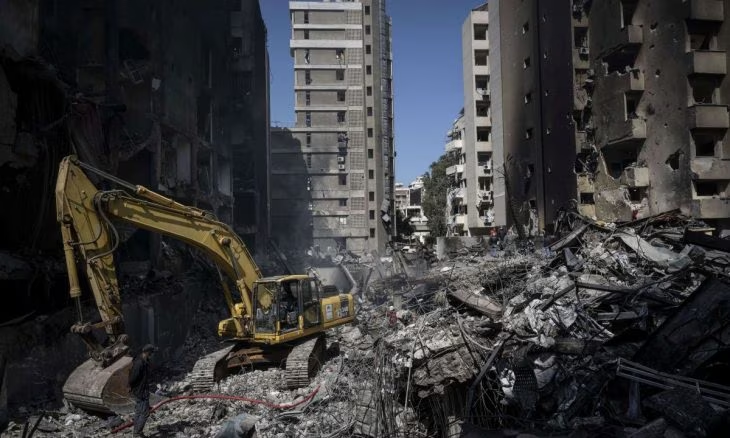
Hebrew press reports have revealed a dangerous trend by the Israeli army aimed at replicating the strategy of widespread destruction it employed in the Gaza Strip and applying it to villages in southern Lebanon. Sources indicated that the military establishment has already begun implementing plans to level large areas of land to prevent Lebanese residents from returning to their homes in border areas.

In detailing this strategy, sources reported that the Israeli army has signed contracts with civilian contractors to undertake the demolition of homes and the destruction of infrastructure in Lebanese villages. This step aims to accelerate demolition operations and relieve the burden on combat units, with work being carried out under intense air cover and precise military supervision to ensure the completion of required tasks.

Reports noted that the payment mechanism for these contractors is directly linked to the extent of the destruction achieved, as they receive financial compensation based on the number of housing units demolished. It is noteworthy that a number of these contractors and workers have prior experience in this field, having participated in similar operations within the Gaza Strip in recent months.

The current Israeli plan includes systematic destruction of buildings within a geographical scope extending up to three kilometers deep into Lebanese territory from the Blue Line. This targeted area includes dozens of villages and towns that the occupation seeks to transform into an uninhabited buffer zone, using bulldozers and explosives supervised by engineering units.

For its part, the Israeli army spokesperson merely stated that forces continue their activity in the geographical area they control in southern Lebanon. The army claimed that these operations aim to remove threats directed against residents of the north, without directly addressing the details of contracts with civilian demolition companies or the nature of the systematic destruction.

In a related context, field data indicates that occupation forces effectively control about one-third of the area extending between the international border and the Litani River. This control is being used to expand bulldozing operations and establish new military points, raising concerns about the occupation's intention to remain for long periods in these areas and change their geographical features.

On the humanitarian front, field sources observed a reverse displacement movement of residents from southern areas towards northern Lebanon, driven by escalating fears of the fragile truce collapsing. Many residents believe that the current calm is only a temporary phase, especially with the continued demolition operations and suspicious military movements carried out by occupation forces.

Repeated Israeli violations increase the prevailing anxiety among displaced persons who are hesitant to fully return to their destroyed villages. Thousands of Lebanese currently reside in shelters or rented apartments, awaiting clarity on the ground situation and the end of proposed calm periods, in the absence of real guarantees for their protection from targeting.

Recent hours have witnessed field developments that further complicated the scene, as the Israeli army targeted individuals in the south, claiming they belonged to Hezbollah. Reports also recorded incidents affecting United Nations Interim Force (UNIFIL) troops, indicating that tension remains dominant despite talks of understandings for a ceasefire.

The situation in southern Lebanon remains suspended between the residents' desire to restore their normal lives and the Israeli destruction machine that continues its work. Facts on the ground confirm that replicating the Gaza experience in Lebanon is not just a media threat, but a reality translated through contractors' bulldozers devouring border villages one after another.

The Israeli army is working to replicate the Gaza experience and apply it in southern Lebanon through systematic destruction of infrastructure and homes.

ISRAELI AFFAIRS

Sun 19 Apr 2026 3:14 pm - Jerusalem Time

Developments in the Iranian Espionage Case: Targeting Smotrich and Hacking the Israeli Air Force

Media sources reported dramatic developments in the investigation file related to an espionage network operating for Iranian intelligence from within the ranks of the Israeli occupation army. Israeli courts are scheduled to present an official indictment next week against two soldiers in regular service, which includes extremely serious security clauses related to aiding the enemy in wartime, reflecting the extent of the penetration suffered by the military establishment.

New details leaked from the investigations revealed that the tasks assigned to the defendants were not limited to purely technical or military aspects, but extended to include monitoring and tracking political figures and ministers in the Israeli government. Finance Minister Bezalel Smotrich emerged as one of the main targets that Iranian operators sought to obtain accurate information about his movements and activities through the arrested soldiers.

According to what was leaked from the security services, the two soldiers, who work in the Israeli Air Force, collected sensitive data related to the locations of air bases and technical details about advanced weapon systems. The investigations confirm that this activity was not a coincidence or a fleeting event, but rather an organized operation that continued for a long period, covering the entire duration of their military service in units of a special security nature.

Arrests were not limited to the aforementioned soldiers, as investigations conducted by the General Security Service 'Shin Bet' in cooperation with the police, included other soldiers working in highly sensitive units, including the air defense system. The files of these soldiers were transferred to the Military Police 'Metzach' to complete legal procedures and investigate the extent of their involvement in leaking military secrets affecting the security of the entity.

Sources indicate that this issue caused a state of confusion within the Israeli security system, given that it reflects the ability of foreign intelligence to recruit elements from the heart of combat and technical units. Intelligence agencies are currently working to assess the extent of the damage resulting from these leaks, amid fears of other cells not yet discovered within the ranks of the regular forces.

The tasks assigned by Iranian operators to the two soldiers included not only bases and weapon systems, but also tracking senior officials.

OPINIONS

Sun 19 Apr 2026 3:13 pm - Jerusalem Time

When the President Wakes Up!

Dr. Ibrahim Melhem

Editor-in-Chief

With words, not agreements, but with wishes and desires, the real estate mogul and dealmaker fills the air with optimism about the imminent end of the raging war in the Gulf. The master of the White House sleeps as trading indicators plummet sharply in the markets, before recovering with the morning's breath to the tune of Tehran's threats to re-close the Strait. Breaths are held, waiting for the President to wake up to know his response to the developments that have shattered the atmosphere of optimism he spread before going to sleep. And with his awakening, the "devils" of land, sea, and air awaken with him, and he returns to his old ways of threats and warnings, bringing "hell" upon Tehran if it does not open the "open strait." Too much chatter leads to stumbles, and undermines the secrecy of the agreements being slowly prepared in Islamabad, which has generated an internal conflict among Tehran's leaders who found Trump's statements a breach of what is being agreed upon regarding the Strait, enrichment rates, and the fate of the dust buried under the rubble. By the time this article is published, the President will have filled screens with statements in which he says one thing and its opposite, confusing the confused, and disrupting oil supplies to Beijing... and "Beijing" here is the crux of the matter, and the hidden goal behind the Strait crisis; for the misfortunes of those trapped in the "bottleneck" are benefits for Trump, who directed ships to buy American oil as an alternative to the Iranian oil "prohibited from exchange." US oil sales during the month of the shutdown recorded an increase of more than five million barrels per day at its glowing prices, compared to three million before the shutdown. This is "investment in the siege"; where military tension turns into growth figures in American ledgers, while the rest of the world pays the price twice, once when the President sleeps, and again when he wakes up.

OPINIONS

Sun 19 Apr 2026 8:10 am - Jerusalem Time

Drone Warfare Exposes Gaps in American Power Against Iran

Washington – Said Arikat – 19/4/2026

In a report published on Sunday, the "New York Times" stated that one of the most prominent conclusions from the war with Iran is that Tehran has proven itself a more capable adversary than previously thought in confronting the United States. In addition to its readiness to go on the offensive, Iran has succeeded in establishing a new military reality, characterized by cheap drones, which have disrupted the calculations of Washington and its allies in the region.

The report indicates that Iranian drones, manufactured with relatively accessible commercial technologies, cost no more than about $35,000 each, a paltry sum compared to the cost of the advanced interceptor missiles used to shoot them down, which can reach millions of dollars. Thus, the equation has been inverted: an inexpensive weapon draining expensive defense systems.

This shift is not entirely new, as the war in Ukraine previously demonstrated the effectiveness of cheap drones in changing the nature of battles. However, the confrontation with Iran more clearly revealed that American defense investments have for decades focused on traditional threats: ballistic missiles, advanced fighter jets, and high-speed targets. Swarms of relatively small and slow drones, however, did not receive the same attention.

According to former Pentagon officials and experts, confronting the drone threat has been a stated priority for years, but without accelerating the production of large-scale solutions. In the first six days of the war alone, the United States spent $11.3 billion, while research centers later estimated that total spending ranged between $25 and $35 billion, a large portion of which went to interceptor munitions. Concerns also escalated about inventories falling to dangerous levels.

In an ideal defensive scenario, an early warning aircraft (AWACS) detects the drone hundreds of miles away, then a fighter jet like the F-16 Fighting Falcon is sent to intercept it using short-range missiles. This method is more cost-efficient, but it is not always available due to the vastness of the confrontation area, as well as Iran's targeting of some early warning platforms that Washington relies on.

Another option is ground-based detection systems, but they suffer from limited detection of low-altitude targets due to the curvature of the Earth's surface. Among the systems specifically developed for this purpose is the "Coyote" system, capable of intercepting drones within a medium range, which is less expensive and more suitable than heavy systems originally designed to shoot down aircraft or ballistic missiles.

However, paradoxically, the US military has not purchased enough of these systems in recent years. Research reports indicate that US forces in the region were forced during previous attacks to move these systems between multiple bases almost daily due to their scarcity.

In contrast, the United States also relies on larger and more expensive systems, such as naval destroyers equipped with SM-2 missiles, or Patriot missile system batteries that use advanced interceptor missiles. Military doctrine often dictates launching at least two missiles against a single target, meaning a cheap drone can drain millions of dollars in minutes.

Military circles, according to the report, believe that this imbalance dates back to the post-Cold War era, when American strategic thinking focused on fewer, more sophisticated threats, rather than mass attacks carried out by swarms of inexpensive drones. Iran exploits this vacuum by launching several Shahed-136 drones at once, drones capable of traveling about 1,500 miles, placing many targets in the Middle East within their range.

Despite the high cost, Washington defends this approach by arguing that protecting strategic assets justifies the expenditure, especially when it comes to radars and military installations worth hundreds of millions of dollars. However, this does not negate the fact that the war exposed the fragility of the cost-effectiveness balance in American defense doctrine.

In the longer term, experts speak of a new future for drone countermeasures based on artificial intelligence, laser weapons, and electronic jamming systems, tools that could reduce interception costs and restore balance to the battlefield.

This war reveals that military superiority is not measured solely by budget size or weapon quality, but by a nation's ability to impose a successful attrition equation. Iran has not technically defeated the United States, but it has forced it to use expensive tools to counter inexpensive threats, a modern form of asymmetric deterrence. When intercepting a target becomes tens of times more expensive than producing it, the stronger party begins to lose part of its strategic advantage, even if it remains superior in firepower and on the ground.

The deeper problem also lies in the American military bureaucracy, where billions are allocated to developing complex systems, while simpler and faster-to-produce solutions are neglected. This pattern reflects the influence of major defense industries more than it reflects actual battlefield needs. If low-cost anti-drone systems had been invested in early, Washington would not find itself today chasing cheap drones with expensive missiles. It is a planning crisis as much as it is an armaments crisis, and perhaps a complete doctrinal crisis.

Politically, these results present President Donald Trump's administration with a double dilemma: how to justify a costly war to the public, and how to convince allies of the robustness of the American security umbrella? Every interceptor missile launched at enormous cost also sends a message of economic and strategic weakness. If adversaries continue to develop cheap and effective tools, the image of American deterrence will gradually erode, not through direct defeat, but through prolonged and costly attrition.

OPINIONS

Sun 19 Apr 2026 8:10 am - Jerusalem Time

Absent Reciprocity: How Do Thinkers and Leaders View Trump's Political Behavior?

Ramallah - “Alquds ” dot com

Ramallah - “Alquds ” dot com

Opinion Writer

The American political thinker Francis Fukuyama summarized the leadership crisis in Washington by describing Trump as a 'president of chance' who lacks the ability to grasp the fundamental rules of international politics. Fukuyama believes that global stability cannot be achieved without a minimum level of mutual trust, a trust conditioned by reciprocity, which Trump failed to practice throughout his terms.

Fukuyama's criticisms went beyond administrative decisions to include the randomness and reckless adventures that characterized American policy, leading to a destabilization of global trust in the United States. This was not limited to external allies but extended to Americans themselves losing trust in their institutions and their ability to predict the course of their White House's decisions.

Trump's media strategy relies on principles he derived from a former mob lawyer, centered on filling the arena with noise and using platforms as a weapon for constant attack. This 'media hype' was accompanied by a barrage of claims that reputable journalistic sources raced against time to refute with numbers and facts as soon as they were issued, to counter the misleading impressions Trump tried to establish.

Recently, signs of a European rebellion against the 'appeasement' policy previously adopted by leaders to avoid direct clashes with the American administration have emerged. French President Emmanuel Macron was the first to inaugurate the phase of reciprocity, refusing to descend to the level of personal comments, and emphasizing that seriousness in politics requires refraining from making contradictory statements daily.

Macron stressed that major international institutions like NATO derive their value from mutual trust and silent work, not by turning them into material for daily chatter. He considered that excessive talk empties international treaties of their essence, advising Trump on the necessity of often remaining silent to preserve the dignity of the office and international commitments.

In a related context, the White House witnessed a quiet diplomatic confrontation when Trump tried to mock Keir Starmer, with Irish Prime Minister Micheál Martin defending the seriousness of European leaders. Sources indicated that leaders in Europe have begun to teach the American administration lessons in political sobriety, in response to attempts at belittling and sarcasm that even targeted global religious and sovereign figures.

Reciprocity is a virtue Trump never understood or practiced.

PALESTINE

Sun 19 Apr 2026 8:09 am - Jerusalem Time

The American Strategy in Lebanon: From the Exception of De-escalation to Attempts to Impose Guardianship

The personality of US President Donald Trump dominates the international scene with his volatile mood and tendency towards hegemony, which directly reflects on production relations and international markets. Observers believe that Trump's approach represents the culmination of a path started by his predecessors to employ superior American military power in the service of direct economics, which has undermined the rules and treaties upon which the international system has been built since World War II.

In the context of geopolitical shifts, the relationship with the Zionist entity stands out as the sole exception to the stability of American policy, as it becomes clearer day after day that Trump's rise is a product of the growing influence of Zionist lobbies. This system, characterized by greed and dominance, found in Trump's racist and authoritarian personality an ideal tool to implement its expansionist agendas in the region without international restrictions or controls.

Historically, the Lebanese arena has been a primary target for American adventures, with military and political interventions recurring since 1958 to support pro-Washington authorities. Significant milestones such as the 1982 invasion and the 2006 aggression witnessed strenuous American attempts to translate Israeli military gains into internal political coups that would ensure Beirut's subservience to American decisions.

In recent developments, sources revealed that Trump, under Zionist pressure, backed down from including Lebanon in the regional ceasefire decision announced on April 8th. This decision comes at a time when Washington, through side agreements, authorized the Israeli enemy to continue military operations despite the Resistance's unilateral commitment to a ceasefire.

The United States is currently managing a well-crafted plan that includes political, media, and security aspects, aimed at enabling the occupation to achieve its strategic goals in Lebanon. This plan primarily seeks to eliminate the Resistance and transform the country into an Israeli protectorate under direct American supervision, in a repetition of scenarios after the 1983 invasion and the May 17th agreement.

American efforts, in cooperation with regional and local parties, have led to tangible changes in the structure of Lebanese authority, including the presidency and the composition of the government. These new balances aim to create a political environment consistent with American and Israeli conditions, weakening the state's ability to uphold its sovereign elements of strength in the face of external threats.

The features of the American-Israeli vision for Lebanon were clearly evident in the corridors of the US State Department recently, where the focus was on the necessity of stripping Lebanon of the right to resistance. Washington is striving to deny the Lebanese people's right to liberate their land and is working to impose a political reality that prevents the exercise of full sovereignty over all Lebanese territories.

In contrast, the official authority in Lebanon entered negotiations in a position described as weak, lacking any internal or external elements of strength to support its stance. The authorities invoked a request for a ceasefire that was practically rejected, reflecting a state of confusion in managing the negotiation file amidst increasing international pressures.

Washington exploited the crisis of Lebanese representation and the debate over Tehran's role in negotiations to justify Lebanon's exclusion from regional de-escalation, which fully serves Israeli interests. This scenario was not accidental but rather the fruit of a conspiratorial path that began with imposing external guardianship and reconstituting the executive authority to meet the occupation's security demands.

The positions of some local forces align with these schemes, openly calling for reliance on the American plan to reconsider Lebanon's system and regional position. This conflict extends beyond Lebanese borders to include confronting Iran's influence as a force opposing American projects, in an attempt to decide the fate of the entire region in favor of the aggressive alliance.

In conclusion, Lebanon remains a key link in the chain of resistance that has always confronted projects of hegemony and occupation, achieving significant field and political accomplishments. Despite the magnitude of sacrifices and grave responsibilities, observers believe that the growing Zionist influence in Washington may be the most prominent indicator of the beginning of the American empire's crack and the collapse of its global influence.

Trump's rise and his approach are the fruit of the growing role and influence of Zionist lobbies in the most powerful country in the world, where American policies have become fully aligned with the agenda of the extreme Israeli right.

PALESTINE

Sun 19 Apr 2026 8:09 am - Jerusalem Time

'The Yellow Line' Strategy: How Israel is Redrawing its Borders in Gaza and Lebanon?

The Israeli army announced the establishment of what is known as 'The Yellow Line' as a dividing line in South Lebanon, a step that reflects a trend towards solidifying a permanent field reality similar to the model applied in the Gaza Strip. This strategy is based on the pretext of 'land grabbing for security reasons,' where the occupation began targeting anyone approaching this line under the guise of preventing direct threats to its forces.

This field move comes within a broader security vision revealed by Israeli Prime Minister Benjamin Netanyahu, aiming to establish a security zone extending from South Lebanon to the Yarmouk Basin in Syria. Through this buffer zone, the occupation seeks to connect the border areas into a continuous front completely under its military and fire control.

'The Yellow Line' in Israeli military doctrine is known as a tool to temporarily redefine borders and link them to complex political and military conditions. In the Gaza Strip, the continuation of this line was linked to the condition of disarming the resistance, while in Lebanon, it is used as a pressure tool to link withdrawal to the issue of Hezbollah's weapons and to empty the area of its inhabitants.

On the ground, this line is demarcated by placing large concrete blocks painted yellow, a color that universally symbolizes warning and danger. This measure turns the areas behind the line into 'free-fire zones,' where civilians are prohibited from crossing, thus establishing a new demographic reality based on forced displacement.

'The Yellow Line' joins a series of historical lines drawn by Israel, such as the Green Line of 1949, the Blue Line that defined the 2000 withdrawal from Lebanon, and the Purple Line in the Golan. However, the new line is characterized by being an expansionist tool aimed at grabbing land under the guise of 'self-defense' and temporary security necessities.

In Lebanon, the Israeli project targets about 55 towns and villages located within a strip ranging from 4 to 10 kilometers deep along the border. Sources reported that nearly 20 of these villages were completely or partially destroyed, especially those on the contact line, with the aim of preventing residents from returning to them in the future.

As for the Gaza Strip, this line has enabled the occupation army to control an area ranging between 52% and 60% of the total area of the Strip. The line extends to a depth of up to 7 kilometers in some areas, turning vast areas into a security belt that prevents Palestinians from accessing their agricultural lands and homes.

The fundamental difference between the two cases is that the Yellow Line in Gaza was included in interim ceasefire agreements, while in Lebanon, it is imposed as a unilateral decision. This approach puts the Lebanese state before a sovereignty challenge, especially with the occupation's insistence on the right to 'free movement' to confront what it describes as threats.

Press reports indicate that the Israeli army has already begun building infrastructure and permanent military sites within the Yellow Line in Gaza. These moves reinforce the hypothesis that the occupation plans for a long-term military presence, and not just temporary security measures as promoted in international forums.

Observers link these lines to the vision of 'Greater Israel' adopted by far-right currents in the current government. Military leaders, including Eyal Zamir, have stated that the Yellow Line represents 'the new borders,' confirming that the goals go beyond security to geographical expansion.

Tel Aviv exploited the international community's preoccupation with regional issues to accelerate the pace of settlement and establish buffer zones in the West Bank and Gaza Strip. Netanyahu's presentation of an Israeli map that includes Palestinian territories at the United Nations is a clear indication of the hidden intentions to abolish the 1967 borders.

Lebanese authorities consider the continued Israeli presence behind the Yellow Line a violation of national sovereignty and armistice agreements. In contrast, resistance forces affirm that this presence gives them the legitimate right to continue military operations until full withdrawal beyond internationally recognized borders.

'The Anti-Tank Missile Line' represents the operational concept that Israel seeks to establish in Lebanon at a depth of 10 kilometers. This range aims to protect northern settlements from direct targeting, but it practically leads to turning Lebanese border villages into deserted and destroyed areas.

In conclusion, 'The Yellow Line' appears as a technical link that gives the settlement ideology a military and legal cover before Israeli public opinion. Thus, the borders described as temporary become a fundamental building block in the project of land grabbing that begins with the pretext of security and ends with the imposition of de facto sovereignty.

The Yellow Line represents the new border between Israel and the Gaza Strip.

ISRAELI AFFAIRS

Sun 19 Apr 2026 8:09 am - Jerusalem Time

Under the Weight of American 'Enough': How Trump Imposed His Guardianship on Netanyahu's Military Decisions?

A state of widespread controversy escalated in Hebrew political and media circles following the firm statements made by US President Donald Trump, which reflected a clear desire to impose American control over the pace of Israeli military operations. According to analytical readings, Trump seeks to demonstrate his strong grip on Middle East issues, setting a limit to Prime Minister Benjamin Netanyahu's ambitions to expand the scope of confrontation.

The writer Eidan Kivlar stated that Netanyahu found himself facing an unexpected reality, as Trump publicly attacked him on social media with the word 'Enough'. This message was not merely diplomatic advice, but was considered an explicit declaration preventing Israel from continuing its attacks on Lebanon, which put the Israeli leadership in an awkward position before its domestic audience.

Sources indicate that Trump created a psychological and political link between the Iranian path and the Lebanese arena during his conversation with journalists. The US President believes that the stability of the Lebanese state is a fundamental pillar for the success of his broader strategy in the region, which aims to curb Iranian influence through comprehensive agreements that are not limited to the nuclear file alone.

On the ground, Israeli compliance with American pressure was evident through the cessation of intensive attacks on Beirut and the shift in focus towards limited operations in the south. This shift coincided with successive announcements from Washington about the imminent conclusion of a final ceasefire formula, which observers considered an Israeli retreat in the face of the White House's will.

In contrast, Tehran exploited this atmosphere to send de-escalation signals, as its Foreign Minister Abbas Araqchi announced the opening of the Strait of Hormuz as a gesture linked to the ceasefire in Lebanon. This step reinforces Trump's vision that direct pressure and shouting at opponents is the only way to achieve tangible results in energy and regional security files.

Despite the sharp tone in Trump's tweets, the legal and technical reality holds more complex details that give Israel room for maneuver. The memorandum of understanding drafted in the corridors of the US State Department still grants Tel Aviv the right to self-defense against planned or immediate threats, leaving the door open for future military operations under security pretexts.

Analysts believe that the gap between Trump's public rhetoric and the mechanisms set on paper is not accidental, but an attempt to balance powers. Trump is concerned with demonstrating his strength to the Republican Party base and his close associates, emphasizing that he is in charge, not Netanyahu, amidst sharp discussions within the party about the feasibility of intervening in foreign wars.

Internal pressures on Trump are increasing with the approaching midterm elections, as he seeks to attract votes skeptical of American involvement behind Israeli policies. The slogan 'America First' compels the current administration to avoid being dragged behind 'Bibi's' personal ambitions, especially since Trump prefers to maintain a clear protocol distance in his dealings with allied leaders.

Despite the rise of isolationist currents, opinion polls indicate that pro-Israel influencers on the American right still hold the upper hand in shaping the discourse. This disparity forces Trump to play a delicate balancing act between satisfying the traditional base supportive of Tel Aviv and his desire to end economically and politically costly conflicts.

Behind the scenes of negotiations, Trump boasts about his rough approach to the Iranian file, claiming that his constant shouting is what pushed Tehran to agree to harsh conditions. According to his statements, the anticipated agreement may include the removal of enriched uranium and the cessation of support for military arms in the region, which requires complete calm on Israel's northern front.

Netanyahu finds himself facing a real dilemma; on the one hand, he tries to market a 'historic peace agreement' that stipulates the disarmament of Hezbollah, and on the other hand, he is forced to acknowledge compliance with American demands. This contradiction narrows the political maneuvering space for the Israeli Prime Minister, making him more dependent on the American umbrella that has begun to impose harsh conditions in exchange for protection.

Economic dimensions play a pivotal role in Trump's decisions, as he closely monitors oil prices and their impact on the American voter. The desire to lower the price of a gallon of gasoline to less than $4 drives the White House to push hard to turn the page on wars in Lebanon and Gaza, to ensure stable energy flows and avoid any economic shocks that could undermine his popularity.

These developments confirm the growing conviction within the occupying state that it lives under complete American guardianship, extending beyond military coordination to the core of sovereign decision-making. The question posed by the Israeli public today concerns Tel Aviv's ability to make fateful decisions independently of Washington's wishes, especially in the presence of a president who does not hesitate to use stern language.

Ultimately, the real test remains the resilience of the ceasefire against any field provocations that may arise. If Netanyahu wants to return to the option of force, he will have to fight an arduous diplomatic battle in Washington to convince Trump that military action falls within the scope of 'self-defense' and is not a violation of the explicit presidential orders summarized by the word 'Enough'.

Israel will not attack Lebanon again; the United States has prevented it from doing so... Enough!"

PALESTINE

Sun 19 Apr 2026 8:09 am - Jerusalem Time

Vidan: Israel cannot be integrated into the region while it practices genocide and territorial expansion

Turkish Foreign Minister Hakan Fidan affirmed that diplomacy remains the optimal path to resolve international conflicts in various regions from the Balkans to Africa and Ukraine. Fidan explained during his participation in the fifth Antalya Diplomacy Forum that the current international system formed after World War II is no longer capable of confronting current challenges. The Turkish minister called for the necessity of formulating a new global order characterized by wisdom and being more just and representative of contemporary political reality.

In the context of his discussion of the conflict in the region, Fidan excluded Israel from the recognized rules of diplomatic solutions, considering it an entity based on the principles of expansion, occupation, and oppression. He pointed out that the occupation seeks to ensure its own security by undermining the security of others, occupying their lands, and forcibly displacing their populations. He stressed that what is happening in the Gaza Strip is a war of genocide that contradicts all international norms and laws.

The head of Turkish diplomacy warned of increasing Israeli ambitions, indicating signs of the occupation's attempt to expand militarily and geographically towards Lebanon and Syria under flimsy security pretexts. He added that these threats are no longer limited to the regional environment but have become a real danger to global security and peace. He explained that the confrontation with Iran reflects the magnitude of the risks that Israeli behavior poses to international stability.

Fidan sent a direct message to the occupation, stating that true security is not achieved through the muzzles of cannons, but by allowing other peoples to enjoy their full sovereignty and independence. He affirmed that Israel must refrain from using military force and respect the territorial integrity of its neighbors if it genuinely wishes to live in peace. He considered that the continuation of the policy of oppression will only lead to further explosion in the region and the world.

In his assessment of international positions, the Turkish minister pointed to a tangible shift in European policy, which has gradually begun to move away from identifying with the Israeli narrative. In contrast, Fidan criticized the American position, considering that it has not yet reached the required level of maturity to stop the violations. He stressed that Washington still has a long way to go to adjust its compass regarding the crimes occurring in the occupied Palestinian territories.

Fidan described the war of annihilation in Gaza as a warning cry that awakened the global conscience and exposed the falsehood of arguments related to self-defense and fighting terrorism. He explained that the world is now clearly observing the terrorism of settlers and their systematic violence against Palestinians in the West Bank and occupied Jerusalem. He noted that this international awareness has prompted some countries to take practical steps and impose direct sanctions on these settlers.

Regarding political efforts to end the war, Fidan expressed his regret over the faltering of the first phase of the proposed peace plan for Gaza due to the occupation's intransigence and non-compliance. He affirmed that the killings have not stopped, and humanitarian and medical aid and temporary housing are still being prevented from entering in sufficient quantities. He concluded by emphasizing that Turkey is closely monitoring the situation before moving to any subsequent stages, stressing the need for Israel to immediately implement its legal and humanitarian obligations.

Israel is now seeking to expand further into Lebanon and Syria under the pretext of security, and it cannot be integrated into the region while it is based on expansion and oppression.

ARAB AND WORLD

Sun 19 Apr 2026 8:07 am - Jerusalem Time

Trump Defies Iranian Threats in Hormuz: The Era of Blackmail is Over

US President Donald Trump stressed that ongoing talks with the Iranian side are showing positive progress, indicating that the current US administration will not allow Tehran to use the Strait of Hormuz as a means to blackmail Washington. Trump clarified in statements made from the White House that communications are continuing and moving in a good direction, affirming that his country is closely monitoring developments on the ground.

In a sharp attack on Iranian military capabilities, Trump considered that Tehran currently lacks effective naval power and air force, as well as the absence of unified leadership, according to his description. The US President went on to describe the current situation as a kind of forced regime change, noting that no one had dared to confront them in this way before the current administration.

Regarding repeated Iranian threats to close the strategic shipping lane, Trump downplayed the importance of these actions, asserting that the era of blackmail that lasted for years is over. He claimed in his speech that shipping traffic had not completely stopped, alleging that commercial ships that had crossed routes linked to the region had arrived in Texas and Louisiana, which reflects his confidence in securing supplies.

In contrast, the Khatam al-Anbiya headquarters of the Iranian Armed Forces announced a return to imposing strict control measures and restricting traffic in the Strait of Hormuz. Iranian sources attributed this decision to the continued naval blockade imposed by the United States on Iranian exports and imports, which prompted Tehran to retaliate in the waterway.

The spokesman for the Iranian headquarters clarified in an official statement that control of the strait has returned to its previous state under strict military supervision, and these measures will not be reversed except with specific guarantees. Tehran stipulated that for these restrictions to end, the United States must stop intercepting Iranian ships and allow them complete freedom of movement to and from their international destinations without harassment.

The Iranian statement indicated that Tehran had previously shown good faith based on negotiated understandings, allowing a limited and organized passage of oil tankers and commercial vessels. However, the Iranian side accused Washington of breaking those promises and continuing to engage in what it described as “piracy and looting” under the guise of the economic blockade imposed on the country.

International circles are awaiting the outcome of the coming hours, as Trump stated that his administration would receive updates and additional information by the end of the day regarding the course of negotiations and the situation on the ground. These developments come amid a state of tension between the two powers, with Washington insisting on a policy of maximum pressure while Tehran brandishes its strategic cards in the waters of the Gulf.

They cannot blackmail us as they have for years; we are talking to them and at the same time taking a very firm stance.

ARAB AND WORLD

Sun 19 Apr 2026 8:06 am - Jerusalem Time

From Angola.. Pope clarifies truth of his dispute with Trump and criticizes African 'tyrants'

Pope Leo XIV arrived in Angola, the third stop on his extensive African tour, where he began his visit by sharply criticizing the mechanisms of natural resource exploitation in the Black Continent. The Pope condemned the behavior of those he described as 'autocrats and tyrants' who make false promises of wealth while causing suffering to their people, calling on Angolan society to free itself from the shackles of the opulent elites.

In a striking political context, the Pontiff sought to calm escalating tensions with US President Donald Trump, noting that media reports regarding his previous statements were not entirely accurate. The Pope affirmed to journalists on the plane heading to Angola that his message was not directly targeting the US administration, as some news circles had promoted.

The first American Pope in the history of the Catholic Church clarified that his speech delivered in Cameroon two days prior about the destruction of the world by 'a handful of tyrants' had been prepared in advance. He indicated that the text was written two weeks before the recent comments by the US President, which refutes any premeditated intention to respond to Trump's statements or engage in a verbal conflict with him.

US President had launched a sharp attack on the Pope via the 'Truth Social' platform, describing him as weak in the face of crime and failing to manage foreign policy. This attack coincided with Trump's posting of an AI-generated image depicting him in a controversial religious guise, which sparked a wave of widespread criticism even among his religious conservative supporters.

The roots of the public dispute between the two parties date back to the Pope's repeated criticisms of military policies, specifically the stance on the American-Israeli war against Iran. Despite the personal attack by Trump, Pope Leo XIV affirmed his commitment to continue speaking about peace and rejecting wars, emphasizing that his moral duty compels him to speak the truth regardless of political reactions.

Pope Leo, born in Chicago, displayed during his current tour a frank and direct style uncharacteristic of the early months of his papacy. His speeches in Africa focused on issues of economic inequality, political corruption, and the devastating effects of armed conflicts, reflecting a new direction for the Vatican in dealing with issues of the Global South.

This African tour is considered one of the most logistically and security-wise complex papal missions in many decades. The Pope is scheduled to travel up to 18,000 kilometers, including 18 flights and intensive visits to 11 cities in four different countries, with the aim of strengthening the Church's presence and supporting social justice issues on the continent.

In his concluding remarks from Angola, the Pope stressed the importance of building societies based on transparency and fair distribution of wealth, away from the 'false bliss' enjoyed by dominant powers. Informed sources confirmed that the Vatican seeks through this visit to consolidate the Church's role as a mediator for peace in conflict areas, away from narrow political tug-of-wars with major powers.

It seemed as if I was trying to get into an argument with the President, and I am not interested in that at all.

PALESTINE

Sun 19 Apr 2026 8:06 am - Jerusalem Time

Quranic verse in Israeli soldier's home sparks uproar.. Is it from looted Gaza homes?

A photo posted by Israeli soldier and activist Elchanan Shkolnik caused a wide wave of criticism and controversy across social media platforms, after he appeared in it embracing his infant child while wearing his military uniform. Despite his attempt to give a human touch to the scene with an emotional comment about securing his child's future, a detail in the background of the photo turned the tables and raised ethical and legal questions.

Followers noticed a framed plaque hanging on the soldier's home wall bearing the Quranic verse 'And say, My Lord, increase me in knowledge' written in clear Arabic calligraphy, which activists considered evidence of the soldier seizing property from Palestinian homes. Sources suggested that the frame may have been looted from one of the homes in the Gaza Strip or the West Bank, as part of a phenomenon of soldiers documenting their thefts that has recurred since the beginning of the aggression.

Observers believe that the presence of a sacred Islamic text in the home of a soldier belonging to the extremist religious Zionist current can only be interpreted as a form of 'acquiring victims' souvenirs'. Tweeters pointed out that these practices recall the settlement and displacement policies pursued by Zionist gangs since 1948, where settlers are placed in Palestinian homes with all their memories and belongings.

Shkolnik is one of the prominent figures in extremist right-wing circles, where he was appointed by National Security Minister Itamar Ben Gvir in 2022 as head of the youth leadership of the 'Otzma Yehudit' party. The soldier also has a long record in political work, having served as spokesperson for Deputy Galit Distel, and is known for his incitement and support for settlement expansion in the occupied territories.

Returning to his roots, Shkolnik's family hails from Poland, where he previously participated in missions to restore Jewish cemeteries there in search of his ancestors' remains. He stated at the time that his goal was to restore 'dignity and names' to the deceased of his family, which critics considered a stark contradiction to his current behavior that contributes to obliterating the identity and dignity of living and dead Palestinians.

Most of the angry comments focused on the ethical contradiction in the soldier's discourse, who talks about building a better future for his child by participating in military operations that have caused the death of thousands of children in Gaza. Activists questioned the kind of values this soldier would pass on to his son, raising him in a home furnished with looted belongings from the original landowners who were killed or displaced.

This incident comes at a time when reports are escalating documenting occupation soldiers looting private property from citizens' homes in the Gaza Strip, including gold, money, furniture, and artworks. This incident once again confirms the systematic practices followed by the occupation forces in violating Palestinian civilian property without legal or moral deterrence.

My dear son, I am going so that you may have a better future.

PALESTINE

Sun 19 Apr 2026 8:06 am - Jerusalem Time

On the second day of the ceasefire: 12 Israeli attacks target southern Lebanon, Hezbollah vows retaliation

The past few hours have witnessed a remarkable escalation in southern Lebanon, as the Israeli occupation army carried out 12 diverse attacks on the second day of the ceasefire agreement. These aggressions included concentrated artillery shelling and systematic demolition operations of residential buildings, in addition to intensive aerial violations by warplanes and drones.

Field sources reported that the artillery shelling targeted the Tal Nahas area in the town of Kfar Kila, and the outskirts of the towns of Deir Mimas and Deir Sirian, extending to the vicinity of the town of Al-Qantara in the Marjayoun district. These movements come amidst a state of cautious anticipation prevailing in the border villages, with the continued Israeli military presence at some points.

In a related context, occupation forces carried out extensive demolition and destruction operations targeting homes and buildings in the city of Bint Jbeil, and the towns of Markaba, Taybeh, and Khiam. These operations, according to observers, aim to clear residential blocks near the border and change the geographical features of the area before the supposed full withdrawal.

Aerial violations also continued, with Israeli warplanes flying over the eastern sector, launching thermal balloons, coinciding with low-altitude flights over the western and central sectors. Drones were also spotted hovering at low altitudes over the Marjayoun district, raising concerns among residents returning to check on their properties.

For its part, the Israeli army acknowledged launching several attacks in the South, claiming they were to 'thwart threats' to its forces and prevent an immediate danger to northern towns. The occupation accused Hezbollah of violating the agreement, claiming to have targeted two cells and an underground tunnel entrance where resistance fighters were entrenched.

Tel Aviv justified its attacks based on a clause in the agreement that grants it what it describes as the 'right to self-defense' against any imminent or ongoing attacks. This clause is one of the most controversial points in the agreement, as Lebanese parties believe that Israel is exploiting it to justify the continuation of its military operations despite the cessation of hostilities.

In contrast, Hezbollah Secretary-General Naim Qassem stressed that the resistance would not stand idly by in the face of these continuous transgressions. Qassem affirmed in a statement that the ceasefire must be mutual and comprehensive, indicating that the resistance fighters would remain in the field with their fingers on the trigger to respond to any aggression.

Qassem clarified that the party does not trust the Israeli side and will not accept a lengthy diplomatic process that does not achieve tangible results on the ground while violations continue. He considered that the continued presence of fighters in their positions is the only guarantee to compel the occupation to abide by the terms of the agreement and prevent it from escalating its aggressions.

According to available statistics, the total number of Israeli attacks since the agreement came into effect has risen to 23, after 11 attacks were recorded on the first day. The aggressions on the first day resulted in the martyrdom of one person and the injury of others, putting the fragile agreement to a real test in its first ten days.

These field developments contradict the pledges made by US President Donald Trump, who stated that Israel would stop shelling Lebanon. Trump had claimed in a post on the 'X' platform that the United States was preventing Israel from continuing military operations, which has not actually materialized on the ground.

It is worth noting that the latest Israeli aggression on Lebanon, which began on March 2nd, has caused immense human and material losses. According to the latest official data, more than 2294 people have been martyred and about 7544 others injured, in one of the fiercest rounds of conflict in recent years.

The aggression also caused the displacement of more than one million Lebanese from their villages and cities, especially in the South, Bekaa, and the southern suburbs of Beirut. The Lebanese government faces enormous challenges in securing the return of the displaced and rebuilding what the Israeli military machine destroyed during 45 days of continuous shelling.

Reports indicate that Israel continues its daily pattern of violations that it has followed since October 2023, despite repeated announcements of truces and agreements. Analysts believe that Tel Aviv seeks to impose a new reality on the ground in southern Lebanon before fully committing to any long-term security arrangements.

The fate of the ceasefire agreement remains dependent on the parties' commitment to calm during the specified 10-day period, which is extendable. Amidst continued shelling and aerial flights, international and local pressures are increasing to ensure that the agreement does not collapse and return to a full-scale confrontation.

A ceasefire means a complete cessation of all hostilities, and because we do not trust this enemy, the resistance fighters will remain in the field with their fingers on the trigger.

ARAB AND WORLD

Sun 19 Apr 2026 8:06 am - Jerusalem Time

Barcelona Progressive Summit: Gaza War Reshapes Political Consciousness in Europe and Confronts the Rise of the Right

The Spanish city of Barcelona hosted the fourth edition of the "Progressive Summit," which saw a wide attendance of elite leftist leaders from Europe, Africa, and Latin America. This international gathering aims to strengthen the pillars of democracy and restore confidence in a global system facing escalating tensions due to the strong rise of far-right currents in several Western countries.

The summit's corridors witnessed widespread condemnation of the systematic attacks targeting the multilateral international system, with participants considering that current challenges require a united front. The presence of American policies emerged as a constant element in the discussions despite the absence of official representation, amidst deep disagreements between the attendees and the unilateral approaches adopted by some international powers.

For his part, Spanish Prime Minister Pedro Sánchez strongly criticized the attacks on international institutions, reiterating his rejection of the war on Iran and the genocide in the Gaza Strip. Sánchez stressed the need to initiate radical reforms within the United Nations to enable it to confront policies imposed by right-wing parties, away from international consensus.

In a related context, Brazilian President Lula da Silva sparked significant interaction by using the term "the danger of a new Hitler," which observers considered an implicit reference to concerns about the return of extremist right-wing policies threatening global stability. These statements come at a time when countries of the Global South are seeking to gain a greater role in international decision-making, away from traditional hegemony.

Colombian President Gustavo Petro, on the other hand, formulated the summit's objectives in diplomatic language that focused on the need to find real alternatives to the right-wing policies currently sweeping the world. Petro indicated that major political transformations require the solidarity of progressive forces to present a governance model based on social justice and human rights as a top priority.

The summit coincided with striking political shifts in Eastern Europe, where reports highlighted the defeat of the far-right in Hungary and the overthrow of Viktor Orbán after sixteen years in power. Analysts believe that this change represents a blow to the alliances that linked Budapest with right-wing power centers in Washington and Moscow alike.

The summit explored the roots of the rise of the European right, with reports linking this rise to the exploitation of refugee and displacement crises resulting from wars ignited by Western powers. Extremist parties have found in immigration and Islam fertile ground for building electoral campaigns based on hate speech and hostility towards immigrants and refugees.

The deliberations confirmed that the war of extermination in Gaza has caused an earthquake in European public consciousness, leading to widespread rebellion against narratives promoted by traditional media. The European public, especially the younger generation, has become inclined to draw information from direct sources after the exposure of blatant media bias in favor of the Israeli narrative.

In contrast, far-right leaders gathered in Milan, Italy, led by Jordan Bardella, in a scene reflecting the sharp division experienced by the old continent. Arab immigrants find themselves amidst this conflict in a state of political dispersion, where they intersect with the right in conservative values, while finding in the left the only ally to support the Palestinian cause.

The genocide in Gaza has changed many concepts for European societies and caused a rebellion among part of the public against traditional media.

PALESTINE

Sun 19 Apr 2026 8:05 am - Jerusalem Time

European parliamentary movement to suspend partnership agreement with Israel after exceeding one million signatures

European Parliament member Manon Aubry launched an urgent appeal for decisive legal and political action aimed at canceling the partnership agreement between the European Union and Israel. This call came against the backdrop of what she described as ongoing crimes committed by the occupation in the Gaza Strip and the occupied West Bank, emphasizing the necessity of stopping the privileges granted to Tel Aviv.

Aubry, who heads the Left group in the European Parliament, affirmed that Israeli Prime Minister Benjamin Netanyahu has completely undermined the pillars of international law. In statements to media sources, she indicated that the continued operation of trade agreements in light of these violations constitutes implicit acceptance of the occupation policies practiced by Israel against Palestinians.

The French parliamentarian revealed that the popular petition demanding the suspension of the agreement has exceeded one million signatures, which represents unprecedented political pressure within the old continent. She explained that these signatures were collected within just three months, reflecting the extent of European public anger towards Israeli practices in the occupied territories.

These moves coincide with a joint statement signed by nearly 350 former European ministers and officials, who called for a review of relations with Israel before the meeting of EU foreign ministers. The officials affirmed in their statement that Israel continues its policies of expansion and occupation in Gaza and the West Bank, which necessitates a firm European response commensurate with the scale of the violations.

The controversial partnership agreement dates back to 1995, when it was signed in Brussels to provide a legal and institutional framework for economic cooperation and political dialogue. The agreement, which came into force in 2000, aims to integrate the Israeli economy into the European market, which Aubry now sees as a pressure tool that must be activated.

Aubry explained that the 'European Citizens' initiative is now seeking to reach 1.5 million signatures to secure a legal safety margin and ensure that no voices are excluded during the verification process. She affirmed that reaching this number will compel the European Commission to provide an official response and declare a clear political stance towards the crimes committed in Gaza.

The initiative is considered a legal mechanism that allows EU citizens to directly influence decision-making, as the system adopted since 2012 obliges the Commission to study any request that receives one million signatures. Although the initiative does not impose immediate legislation, it places European institutions before their ethical and legal responsibilities towards public opinion.

Aubry stressed that time is a crucial factor, saying that 'we do not have a minute to lose' given the deteriorating tragic situation in Gaza, the West Bank, and Lebanon. She considered that the European Union, as Israel's largest trading partner, has the ability to exert effective influence if it decides to use the weapon of economic sanctions.

The partnership agreement has faced sharp criticism since the start of the genocidal war in the Gaza Strip in October 2023, as observers believe that granting trade privileges to a state accused of violating international law contradicts the principles of the Union. Previous reviews by the European Commission concluded that there was evidence of serious Israeli violations of international humanitarian law.

In a related context, official statistics indicate the scale of the humanitarian catastrophe in Gaza, where more than 72,000 Palestinians, most of them women and children, have been martyred due to continuous bombing. The war has also caused massive destruction to infrastructure, making the sector an uninhabitable area under the imposed siege and lack of basic supplies.

The escalation is not limited to the Gaza Strip but extends to the West Bank, which witnesses increasing attacks by settlers and occupation forces daily. According to Palestinian data, more than 1,148 martyrs have fallen in the West Bank since October 2023, in addition to thousands of injured and detainees who have filled Israeli prisons.

Human rights activists believe that the success of this popular initiative will represent a turning point in European foreign policy towards the Palestinian issue. The demand to suspend the agreement is no longer limited to political elites but has turned into a broad societal movement that includes various age groups and political orientations in EU countries.

Official procedures are scheduled to begin within the European Parliament as soon as the required quorum of signatures is completed and their validity is verified from at least seven member states. The European Commission will then have to provide a detailed response within six months, clarifying its position on the continuation of economic partnership with a state facing accusations of genocide.

In conclusion, Aubry affirms that popular pressure is the only way to force European leaders to change their biased or silent course towards what is happening in Palestine. The parliamentary bloc supporting the initiative hopes that this step will lead to Israel's economic isolation and push it to stop its comprehensive aggression against the Palestinian people.

Israel and its Prime Minister Benjamin Netanyahu have completely destroyed international law, and what is required today is to re-establish it and save what can be saved.

OPINIONS

Sun 19 Apr 2026 8:01 am - Jerusalem Time

Omer Bartov’s Israel: What Went Wrong? Is Not a Warning—It Is an Indictment


By: Said Arikat


April 19, 2026


News Analysis


Washington, D.C - Omer Bartov’s Israel: What Went Wrong? is not a gentle meditation on a troubled democracy. It is a devastating moral and political indictment of the Israeli state and the ideology that shaped it. Written by one of the world’s foremost Holocaust historians—an Israeli-born scholar raised on a kibbutz, educated in Tel Aviv, and seasoned in the Israeli army—the book carries the force of insider testimony combined with scholarly rigor. Bartov is not attacking Israel from afar; he is confronting the nation that formed him.


His central claim is stark: Zionism, once conceived as a movement of Jewish emancipation from European persecution, has curdled into a state ideology of exclusion, domination, and permanent violence. The tragedy, in Bartov’s telling, is not simply that Israel lost its moral way. It is that the very state founded in the aftermath of genocide now stands credibly accused of committing grave crimes against another people.


That accusation lands with particular weight because Bartov understands better than most what genocide, dehumanization, and state brutality look like. For decades, he studied Nazi violence and the Holocaust. He knows the language through which societies rationalize cruelty. His decision to turn that lens on Israel is itself historic.


The book dismantles one of the most durable myths of modern politics: that historical victimhood guarantees present innocence. Israel’s founding story has long been anchored in Jewish suffering, culminating in the Holocaust. That suffering was real, immense, and world-shaping. But Bartov insists that trauma cannot serve as a perpetual exemption from accountability. A people that endured catastrophe can still inflict catastrophe.


He traces the roots of today’s crisis to the origins of the state itself. Israel’s “independence” in 1948 was inseparable from the displacement of hundreds of thousands of Palestinians. One nation celebrated liberation while another experienced dispossession. For decades, that contradiction was suppressed beneath triumphant narratives of state-building and security. But suppressed history does not disappear. It returns, generation after generation, in the form of occupation, rebellion, siege, and war.


Bartov appears especially unsparing about the post-1967 era. The occupation of Palestinian territories was not, in his framework, a temporary security necessity gone astray. It became the organizing principle of Israeli political life. Settlements expanded, land was fragmented, rights were stratified, and military rule hardened into a permanent system. The occupation did not corrupt an otherwise healthy democracy from the outside; it revealed what kind of state Israel was willing to become.


Most damning is Bartov’s insistence that this transformation was not imposed solely by extremist leaders. It was enabled by ordinary consent. The synopsis points directly to “support, laced with denial and indifference, of so many of its Jewish citizens.” That is a severe judgment: not merely that governments committed abuses, but that society normalized them. In this view, the problem is structural and civic, not only political.


The war in Gaza gives the book immediate urgency. Bartov asks how a state created in the shadow of extermination can wage what he calls a war of destruction while much of its public accepts or cheers it. His answer seems to be that decades of militarization, fear politics, and ethno-national conditioning have hollowed out empathy. Palestinians became not neighbors or fellow humans, but demographic threats, security targets, or invisible casualties.


Equally provocative is his treatment of Holocaust memory. Bartov does not deny its singular horror; he has dedicated his career to documenting it. But he rejects its political misuse. Memory, he suggests, has been transformed from ethical warning into ideological armor. Instead of teaching solidarity with the persecuted, it is too often invoked to silence criticism and sanctify force.


This argument also implicates Israel’s Western backers. No state sustains indefinite occupation and recurring wars without external sponsorship. The United States and Europe have armed, financed, and diplomatically protected Israeli governments while preaching liberal values elsewhere. Bartov’s critique therefore extends beyond Jerusalem to every capital that enabled impunity.


What makes Israel: What Went Wrong? so unsettling is that it offers little comfort. It does not reassure readers that the problem is a temporary aberration, a single prime minister, or a policy error soon to be corrected. It suggests something deeper: that the crisis is embedded in the state’s ideological foundations and historical refusals.


Yet the book’s severity may also be its moral necessity. Societies rarely reform through flattering myths. They change when illusions collapse. Bartov’s intervention is an attempt to force such a reckoning: to make Israelis, Jews worldwide, and Western allies confront what has been done in their name.


The title asks what went wrong. Bartov’s answer appears uncompromising: domination was built into the project, denial sustained it, and violence became its language. Whether one agrees fully or not, this is not a book that seeks to preserve old narratives. It seeks to bury them.