






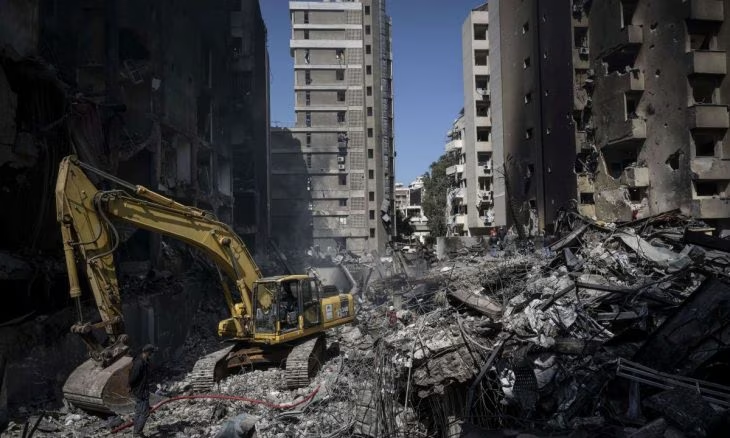
Political and military circles in Israel are experiencing a state of extreme tension after two soldiers were killed and others injured in southern Lebanon, despite the ongoing ceasefire agreement. This continuous bleeding has fueled feelings of anger and reproach towards the government, amid accusations that the political leadership is making promises that have no basis in reality.
Security assessments in Tel Aviv indicate that Iran may move towards blowing up the ongoing negotiations with the United States, not out of a desire for comprehensive escalation, but as a tactical pressure tool. In contrast, voices within the ruling establishment are emerging that wish to return to direct military confrontation on the Lebanese and Iranian fronts to achieve objectives that have not yet been accomplished.
Fears are escalating in the Israeli street that northern areas will remain under the threat of Hezbollah rockets, with critics arguing that Netanyahu and his security minister Katz are involved in arrogant rhetoric that has not changed the reality on the ground. There is a general feeling of bitterness resulting from the conclusion that Hezbollah still retains its military capabilities and its ability to paralyze life in the northern settlements.
For his part, Agriculture Minister and Cabinet member, Avi Dichter, tried to absorb public anger by saying that the nature of fighting with armed organizations always makes borders unclear. Dichter acknowledged that the ceasefire came in response to a direct request from US President Donald Trump, emphasizing the need to maintain the alliance with Washington to confront the Iranian threat.
In the context of field criticisms, military observers expressed their dissatisfaction with the Israeli army's failure to control the Lebanese town of Bint Jbeil despite weeks of intense fighting. Reserve General Yossi Peled pointed out that the gap between the slogans promoted by politicians and the actual results on the ground has become a heavy burden on public morale.
Military analyst Amos Harel believes that the current agreement is fragile, especially after Trump informed the Israeli side of the need to stop bombing immediately. Harel described the new American position as an unprecedented step that prevents Israel from moving freely in Lebanese airspace, which further complicates the security situation.
On the popular level, the municipality of Kiryat Shmona and a number of Galilee settlements announced a general strike, with calls for massive demonstrations in Jerusalem protesting what they described as 'submission'. Northern residents consider the ceasefire agreement to be a surrender to external pressures, leaving them to face an unknown fate in the face of continuous Hezbollah threats.
In a critical reading of the scene, General Michael Milstein considered that excessive reliance on military force without a clear political vision is the main reason for what he described as the current failure. Milstein warned that replacing realistic planning with 'fantasy' and selling illusions to the public will ultimately lead to severe and irreparable strategic damage.
Other experts also warned against attempting to replicate the 'Yellow Line' experience from the Gaza Strip and apply it in Lebanon, stressing that the nature of the land and the resistance in southern Lebanon are completely different. These experts believe that establishing a security belt could turn into a trap for Israeli soldiers due to improvised explosive devices and ambushes, instead of being a defensive solution.
Hebrew media mocked official statements talking about the imminent achievement of peace with Lebanon, noting that reality proves the exact opposite. Reports recalled statements by the Israeli ambassador who heralded Israelis visiting Lebanon in swimsuits, considering them a kind of underestimation of the enemy's capabilities and steadfastness.
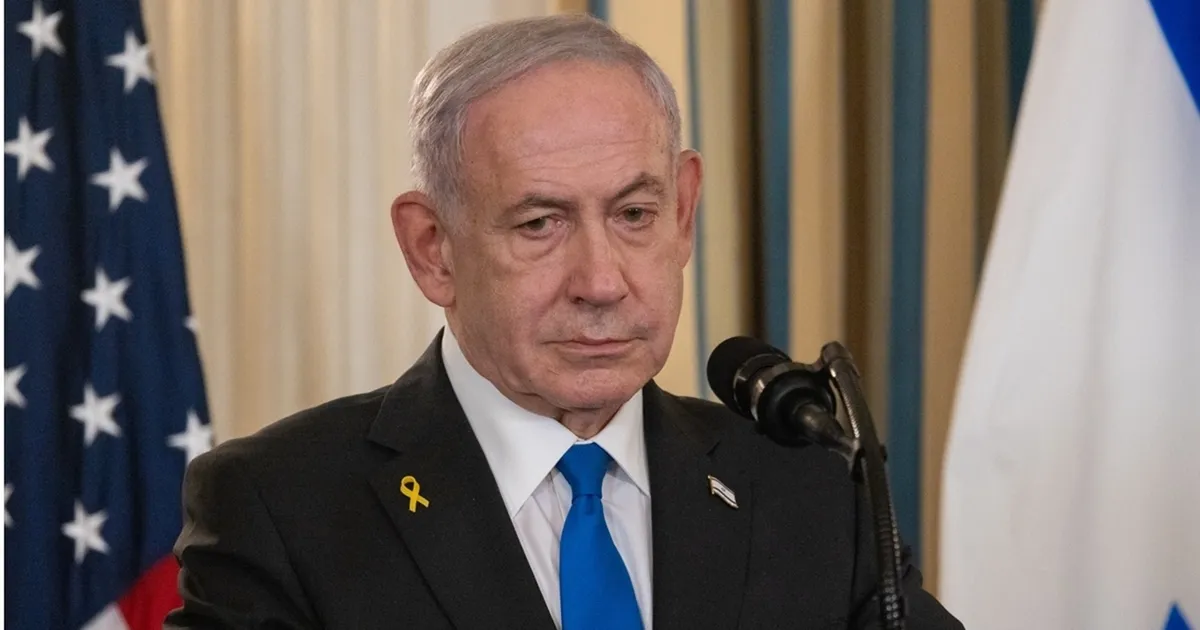
Media sources confirm that Netanyahu is facing a political nightmare as general elections approach, as he finds himself unable to market the image of 'security master' that he has always boasted about. This predicament may push him to try to convince the American administration of the need to resume military operations to escape his successive internal crises.
In light of this political deadlock, informed sources do not rule out that Netanyahu may resort to a new military escalation in the Gaza Strip in search of a 'victory image' that would restore some of his lost popularity. The pressures exerted by the far-right and northern residents are tightening the noose on the government and pushing it towards escalatory options with uncertain outcomes.
On the other hand, Shimon Sheffer believes that Iran has proven its strength and steadfastness, contrary to Israeli claims, and has effectively imposed an equation of linking fronts. Sheffer explained that continuing the policy of lying and misleading the public will only lead to more shocks when slogans collide with the bitter reality on the northern and eastern fronts.
The scene in southern Lebanon remains open to all possibilities, in light of continued field friction and Hezbollah's rejection of any change in the previous rules of engagement. With increasing American pressure, Israel finds itself in a dilemma between the desire to continue the war and the international restrictions imposed by Washington in a sensitive transitional phase.
Betting on force without a political vision is the cause of failure, and there is a large gap between politicians' promises and the reality on the ground.



Share your opinion
Boiling in Israel after soldiers killed in southern Lebanon: Accusations against Netanyahu of 'submitting' to Trump