OPINIONS

Fri 20 Feb 2026 2:53 pm - Jerusalem Time

The Gaza Peace Council: Between the Logic of Reconstruction and Unilateral Decision-Making...!

Amidst the rapid transformations witnessed in the international arena, the initiative known as the “Gaza Peace Council” has emerged as a proposed framework for addressing the situation in the Strip after the war.

However, any serious approach to Gaza's future cannot be separated from a fundamental question: Can lasting stability be built without involving the legitimate representative of the Palestinian people? And will reconstruction become an entry point for monopolizing Palestinian political decision-making?

The Palestine Liberation Organization (PLO) constitutes the politically recognized framework, Arab and internationally, as the sole legitimate representative of the Palestinian people, while the Palestinian National Authority (PNA) undertakes executive responsibilities stemming from existing agreements. Furthermore, the State of Palestine enjoys recognition from more than 160 UN member states.

Therefore, any initiative that does not stem from this legal and political basis raises issues related to legitimacy and representation, and may be understood as an تجاوز (overstepping) of the comprehensive national framework.

From a procedural perspective, the establishment of an international council to manage a transitional phase in Gaza might appear to be an organizational step aimed at mobilizing resources and coordinating reconstruction efforts.

However, the true measure of success is not determined by the number of participants or the volume of financial pledges, but by the extent to which the initiative aligns with the rules of international law and the principle of peoples' right to self-determination.

Reports circulating about the composition of the council and the powers of its presidency—if accurate—indicate a clear centralization of decision-making and a direct link to the US administration under Donald Trump.

Such a structure, if not regulated by a multilateral collective governance framework, could be understood as a political mechanism of a unilateral nature, rather than a balanced international body, which deepens concerns about the monopolization of decisions related to the future of the Gaza Strip.

The reconstruction of Gaza is an urgent humanitarian necessity that cannot be postponed.

However, transforming reconstruction into an entry point for reshaping the political or security structure of the Strip without comprehensive Palestinian national consensus could lead to counterproductive results. Comparative experiences in multiple conflict zones confirm that reconstruction separated from a political solution turns into temporary crisis management, not a radical solution to it.

The issue of the unity of Palestinian land arises here; any administrative formula for Gaza must be part of a broader vision that ensures the unity of the West Bank, the Gaza Strip, and East Jerusalem within the framework of an independent Palestinian state on the June 4, 1967 borders.

Devoting separate or long-term arrangements for the Gaza Strip outside this context could be interpreted as solidifying division instead of overcoming it.

Furthermore, concerns associated with the “voluntary migration” theses issued by some Israeli officials, including Bezalel Smotrich, add a sensitive dimension to any international initiative that does not include an explicit text rejecting forced displacement and protecting the Palestinian population's presence on their land.

Ensuring the survival of the population and safeguarding their rights is not merely a political matter, but a legal obligation under the rules of international humanitarian law.

Any international framework aiming to achieve peace and stability in Gaza should be based on three fundamental pillars:

Respect for the Palestinian national authority and not bypassing or circumventing it.

Linking reconstruction to a clear political horizon that ends the occupation and embodies the two-state solution.

Ensuring that any transitional administration is temporary, supportive of Palestinian legitimacy, and not a substitute for it.

In conclusion:

Just peace is not built on top-down arrangements, nor on excluding the rightful owner, nor on unilateral management that uses reconstruction as an entry point for monopolizing national decision-making.

Gaza is not a pending administrative file, nor a geographical area amenable to political reshaping according to external calculations, but an integral part of the cause of a people seeking to exercise their legitimate right to self-determination and establish their independent state with East Jerusalem as its capital.

The future of Gaza cannot be drawn outside the framework of Palestinian national legitimacy, nor in isolation from the unity of the land and the people, and any path that bypasses these constants will not produce sustainable peace, but will perpetuate long-term crisis management under new names.

PALESTINE

Fri 20 Feb 2026 2:52 pm - Jerusalem Time

Warnings of 'Trump's Plan': Dividing Gaza into Two Enclaves and Consolidating West Bank Annexation

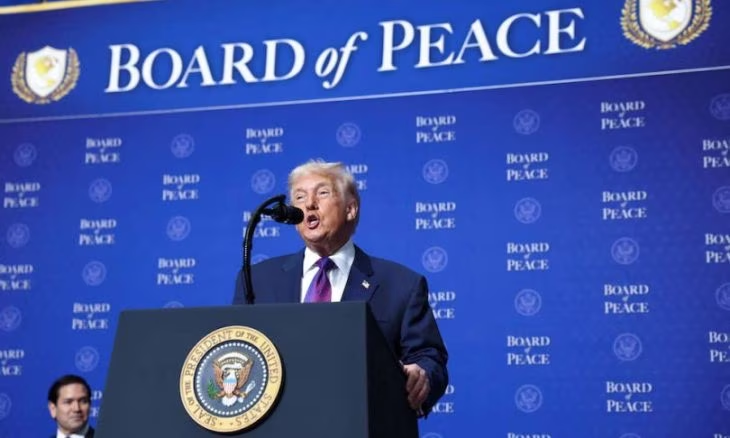
The Gaza Strip issue has once again taken center stage in international attention with the inaugural meeting of the 'Peace Council' chaired by US President Donald Trump. This move comes as an implementation of the peace plan, which has received support from a UN Security Council resolution, opening the door to a new phase in dealing with the Israeli-Palestinian conflict.

Dr. Neil Quilliam, a researcher at the British think tank Chatham House, warned that this path could close all avenues for the establishment of an independent Palestinian state. Quilliam pointed out that the current plan gives the Israeli right a golden opportunity to realize its dream of full control over the occupied West Bank and marginalize Palestinian national identity.

Observers believe that the current agreements portend a repetition of the mistakes of 'Oslo,' which created a limited self-governing system and hindered full sovereignty. The new plan goes even further by imposing a multi-level external governance system that reduces Palestinian participation in decision-making to its lowest levels.

Absolute authority is concentrated in the 'Peace Council' chaired by Trump, which exercises its powers through an executive council for Gaza that includes no direct Palestinian or Israeli representation. A temporary international stabilization force assumes security tasks, transforming the Strip into an internationally administered area far from national aspirations.

The plan also includes the establishment of the 'National Committee for Gaza Administration,' composed of 15 non-political technocrats, selected under strict American supervision and Israeli scrutiny. This structure reflects a desire to create a local administration that lacks political legitimacy and is entirely subject to external will.

UN Security Council Resolution 2803 raises serious concerns, as it narrowly focuses on Gaza, threatening to sever the remaining political and economic ties with the West Bank. This approach entrenches geographical and political separation and makes the establishment of a Palestinian state merely a conditional possibility contingent on the impossible task of complete disarmament.

The international resolution does not obligate the international community to establish a Palestinian state; rather, it legitimizes the separation of Gaza from the West until at least the end of 2027. Analysts believe that this timeline gives Israel enough time to impose new settlement realities in the West Bank, making the two-state solution impossible.

In a related context, Jared Kushner revealed features of the 'New Gaza' plan, which treats the Strip as a massive investment and real estate project. The plan aims to transform existing neighborhoods into modern areas mimicking the Dubai model, prioritizing economic zones at the expense of the political rights of the residents.

Reports indicate that the reconstruction process will be subject to strict Israeli security standards, with a focus on areas under military control. This distinction will effectively create 'two sectors' within Gaza: one demilitarized and loyal to external powers, and the other marginalized and unstable.

It is likely that the administration of isolated enclaves in Gaza will be entrusted to Palestinian figures capable of close security coordination with Israel and the United States. Names such as Mohammed Dahlan are being put forward as potential candidates for this administrative role in the absence of any prospects for comprehensive national political representation.

On the other hand, the Israeli Security Cabinet quickly approved measures aimed at imposing full sovereignty over the West Bank. These decisions include accelerating the pace of settlement construction unprecedentedly to block any international attempts to revive the negotiation process.

Statements by Israeli Finance Minister Bezalel Smotrich confirmed this trend, as he explicitly declared that the goal is to 'bury the idea of a Palestinian state.' These statements reflect the Israeli right's confidence in the absence of any real international pressure that could impede the de facto annexation of the occupied territories.

Experts warn that the continuation of this path will lead to a new wave of forced displacement and dispossession of Palestinians, threatening the stability of the entire region. Treating the issue as a real estate or security file ignores the political roots of the conflict and fuels anti-occupation sentiments in the Middle East.

In conclusion, analysts call on Arab and European countries to review their positions on Trump's framework before it is too late. Without serious diplomatic action to modify these strategies, the international community will find itself facing a new reality that completely ends any chance for a just and comprehensive peace.

The new Gaza plan redefines the Strip as a real estate development project, dividing it into areas that mimic modern Gulf cities, far from the concept of a state.

ISRAELI AFFAIRS

Fri 20 Feb 2026 5:06 am - Jerusalem Time

Confrontation Scenarios: A Reading of War Options and Surgical Strikes Against Iran

Hebrew press reports have revealed the expected scenarios for any potential military confrontation led by the United States against Iran, coinciding with the completion of the arrival of American military reinforcements in the region. Sources indicated that Tehran, despite its inability to challenge traditional American power, possesses asymmetrical deterrence tools in the form of a massive missile arsenal and widespread regional proxies.\n\nEstimates suggest that the U.S. military is planning a prolonged military campaign that could last several weeks, reflecting a tendency within the American administration to explore the possibility of bringing about deep political change in the structure of the Iranian regime. However, a strategic question arises about the realism of this goal and the ability of military force alone to achieve it without sliding into long ground conflicts.\n\nIn this context, statements by American officials, including J.D. Vance, emphasize that the mission of regime change must originate from the Iranian people themselves. This stance reflects caution against repeating past experiences in Iraq and Afghanistan, especially in the absence of a unified and organized Iranian opposition capable of leading the transitional phase in the event of the regime's collapse.\n\nOne proposed scenario is to increase military pressure to stimulate internal protests and undermine the regime from within. But this option clashes with the reality that the Iranian leadership, especially the Revolutionary Guard, does not have a strategy for withdrawal or escape; instead, it will tend to use excessive force to suppress any disturbances that threaten its survival, which could drag the country into civil war.\n\nRegarding the nuclear file, any attack targeting nuclear facilities faces a major technical and strategic dilemma, as air strikes cannot erase the accumulated scientific expertise of Iranian cadres. Moreover, destroying declared sites does not guarantee the elimination of enriched uranium stockpiles that may be distributed in secret and fortified underground locations.\n\nSources warn that Iran may emerge from any nuclear strike with greater determination to complete its armament project, considering that military confrontation may lift the psychological and political restrictions that prevented Tehran from reaching the nuclear threshold. This scenario places decision-makers before the challenge of the long-term feasibility of such surgical military operations.\n\nRegarding missile capabilities, analysts believe that destroying the Iranian missile project is a vital goal to reduce Tehran's deterrence capability. Although a widespread campaign could inflict severe damage on the production infrastructure, experience in other fronts has proven the difficulty of completely eliminating these capabilities, which rely on technologies that can be re-manufactured and restored.\n\nOn another note, the option of imposing negotiations under military pressure remains preferred by some circles in Washington, including President Trump's inclinations. The logic here is that targeted strikes might force the Iranian leadership to accept harsh conditions it previously rejected, to avoid the complete collapse of the regime under the weight of attrition.\n\nHowever, the Iranian leadership has historically proven its ability to 'absorb blows' and bet on the time factor, believing that prolonging the conflict will increase internal political pressure on the American administration. This Iranian gamble aims to push Washington to seek a quick political exit without achieving real strategic gains on the ground.\n\n"Decapitation" or targeting the supreme leadership, especially Khamenei, emerges as one of the most dangerous and extreme options. Sources confirm that such a step could lead to completely counterproductive results, as the Iranian system is characterized by an institutional rather than individual structure, and the absence of the pivotal figure could lead to the rise of more radical currents within the Revolutionary Guard.\n\nMoreover, targeting major religious symbols could provoke a wave of overwhelming anger among regime loyalists at home and abroad, opening the door to widespread retaliatory actions targeting American interests and its allies in the region. This escalation could drag the United States into a comprehensive regional war that was not part of its initial plans.\n\nIsraeli readings emphasize that the overwhelming military superiority of the United States does not necessarily guarantee a decisive strategic victory. A direct confrontation with a country the size of Iran differs fundamentally from proxy wars and requires a precise definition of 'success' before embarking on any military action whose outcomes may be unknown.\n\nIn conclusion, all proposed options appear fraught with risks and complex geopolitical repercussions, as there is no simple path that guarantees neutralizing the Iranian threat without heavy costs. The fundamental question facing Washington remains its willingness to bear the consequences of potential chaos or engage in a long-term stabilization process in the region.\n\nThe current military buildup may be a tool for diplomatic pressure as much as it is preparation for war, but sliding into direct confrontation remains a possibility if political paths reach a dead end. Regional parties are cautiously monitoring these developments, awaiting the outcome of American moves in the coming weeks.\n\nAmerican military superiority in direct conflict does not necessarily mean strategic priority; direct confrontation requires defining the goals of success and its cost in advance.

PALESTINE

Fri 20 Feb 2026 5:06 am - Jerusalem Time

Occupation Imposes 'Magnetic Card' and Strict Security Permits for Friday Prayer at Al-Aqsa

The Central Command of the Israeli occupation army announced the completion of its security and field arrangements to secure the first Friday prayer of the holy month of Ramadan at Al-Aqsa Mosque. These preparations come amidst a state of severe tension, as the occupation authorities seek to impose a new security reality that tightens the noose on the access of worshipers from West Bank governorates to occupied Jerusalem.

Media sources revealed that the occupation army has introduced a 'magnetic card' system that every Palestinian from the West Bank must obtain and pass through electronic checkpoints. This measure aims to accurately track the movement of worshipers from the moment they leave their residential areas until they reach the military checkpoints surrounding the holy city.

The new procedures include a strict monitoring mechanism, whereby the Israeli police will be provided with immediate digital data on every person who exceeds the permitted duration of stay inside Jerusalem. Reports confirmed that any worshiper who does not register their exit through the designated crossings will face immediate penalties, including permanent deprivation of permits and legal prosecution.

For its part, security sources indicated that the Central Command anticipates widespread friction at major crossings such as Qalandia and Rachel checkpoints, in addition to the Ibrahimi Mosque area in Hebron. These expectations come amidst a state of popular unrest resulting from the prohibitive restrictions that prevent thousands from performing their religious rituals.

In the context of field reinforcements, the occupation police intend to deploy more than 3,000 personnel in the alleys of the Old City and around Al-Aqsa Mosque to secure the first Friday prayer. All roads leading to the vicinity of Al-Haram Al-Sharif will also be closed to private vehicles, which exacerbates the suffering of worshipers who are forced to walk long distances.

The occupation authorities have set a ceiling for the number of worshipers allowed to enter from the West Bank at only 10,000 people per week, a very small number compared to the number of those wishing to pray. The Civil Administration of the occupation stipulated that each individual must obtain a special daily permit subject to prior and comprehensive security approval from intelligence agencies.

The restrictions were not limited to numbers but also included harsh age criteria, where only men over the age of 55 and women over the age of 50 are allowed to enter. As for children, only those under the age of 12 were allowed to pass, provided they were accompanied by a first-degree relative who met the permit conditions.

On the ground inside Al-Aqsa Mosque, the Islamic Endowments Department reported that the occupation authorities continue to obstruct the usual Ramadan preparations. Occupation forces prevented medical teams from setting up field clinics and also obstructed the installation of sunshade umbrellas in the mosque courtyards, in a move aimed at causing distress to worshipers.

Jerusalemite sources warned of threats from the occupation police to prevent the entry of Iftar and Suhoor meals designated for those observing I'tikaf inside Al-Aqsa Mosque during the holy month. These restrictions coincide with unjust decisions to ban a number of mosque imams and Sharia judges from Al-Haram Al-Sharif for varying periods to undermine the religious and national role of Jerusalemite authorities.

In contrast, sources in the occupation police confirmed that the security deployment will be intensive and around the clock throughout Ramadan, with a focus on monitoring the gates of Al-Aqsa Mosque. The occupation authorities claim that these measures aim to maintain security, while Palestinians view them as an entrenchment of the policy of siege and temporal and spatial division of holy sites.

The Israeli police will be informed of the data of anyone who does not return from Jerusalem to the West Bank, and immediate penalties will be imposed on them.

PALESTINE

Fri 20 Feb 2026 5:06 am - Jerusalem Time

Trump's Council After Its Inauguration: Financial Pledges Without Guarantees, and an Ambiguous Platform for Crisis Management

Said Erikat

Opinion Writer

Washington – Said Arikat – 20/2/2026

News Analysis

The first meeting of what was called the "Peace Council," launched by US President Donald Trump, raised more questions than it provided answers, both in terms of form and content. The initiative, promoted as a new international platform to support stability, especially in Gaza, began amidst striking institutional ambiguity: no specific executive mechanism, no clear timeline, and no administrative structure to show how financial pledges would be managed or their expenditure monitored. The announcement of allocating ten billion dollars for reconstruction seemed enormous in terms of the figure, but it remained closer to a symbolic political pledge in the absence of a detailed plan specifying the supervising bodies, disbursement criteria, and oversight and accountability tools. Thus, the Council so far appears closer to a platform for declaring intentions than to a binding framework.

This impression was reinforced by the size and quality of international participation. Out of dozens of invitations, attendance was limited to about a third of the number, with reserved or low European representation. This hesitation reflected European fear that the Council might turn into a parallel track that bypasses the multilateral system, primarily the United Nations. Reservations were not limited to European capitals; Pope Leo XIV of the Vatican expressed his reservation "due to the nature of the Council," a reference understood as concern about creating a new framework that might compete with existing international authorities in crisis management. Here, the question of legitimacy arises: Does the Council seek to integrate with the international system, or to reshape it according to a selective approach led by Washington?

Palestine and the Palestinian issue were touched upon briefly during the meeting, more as a humanitarian item within a crowded agenda, rather than a central political issue requiring comprehensive treatment. Significant Palestinian political representation was absent, in contrast to very limited technical presence, represented by the presence of Ali Shaath, head of the new Palestinian Technocrat Committee, at the meeting without mention by the host or participants, which weakened the initiative's image in the Arab street and raised questions about the Palestinian Authority's position in any future arrangements concerning Gaza. The focus on relief and reconstruction, without a clear approach to political rights and self-determination, reproduced a pattern of crisis management instead of resolution, and kept the core of the conflict outside the scope of actual treatment.

However, the most sensitive question concerns the extent to which countries that have announced financial pledges, including the United States itself, will fulfill their promises. Previous experiences in support and reconstruction conferences have shown that the gap between announced pledges and actually transferred funds can be wide, and often linked to political or security conditions that change with shifting priorities. In the American case specifically, any financial commitments remain hostage to internal considerations, from congressional approval to changing political moods, as well as being linked to the behavior of local and regional parties. As for other countries, they may view pledges as immediate diplomatic messages rather than binding contractual obligations, which raises serious doubts about the actual amount of money that will be disbursed, the timing of its disbursement, and the parties that will benefit from it.

This doubt is not limited to financial capacity but extends to political will. Will the pledges remain if de-escalation falters? And will they be used as a pressure tool to re-engineer the political landscape in Gaza? The absence of a clear mechanism for obligation and accountability makes it difficult to distinguish between sustainable humanitarian support and conditionally time-bound aid. Moreover, the lack of a regulatory legal framework for pledges opens the door for their reinterpretation or freezing whenever calculations change.

In contrast, Israel continues its intransigence regarding the future of Gaza and Hamas's weapons, and treats any de-escalation as reviewable security arrangements. Thus, a ceasefire, if achieved, becomes fragile and prone to relapse, while any subsequent phase of reconstruction remains hostage to security calculations that have not fundamentally changed. Amidst the continued settlement expansion in the West Bank, any approach that separates reconstruction from the political track appears vulnerable to accusations of entrenching a long-term transitional reality, not a final settlement.

In the Arab context, the Arab League finds itself facing an additional test. The initiative in its current form raises questions about its position in any arrangements concerning Gaza and the Palestinian issue in general. The absence of a clear coordination framework between the new Council and regional and international institutions deepens the impression that a path is intended to be formed outside known channels. For Arab countries that fear marginalization of the Palestinian national dimension, the ambiguity in the mechanism, timeline, and administration—in addition to doubts about the implementation of pledges—is not a technical detail, but an indicator of the potential for financial support to turn into a tool for crisis management rather than resolution.

In conclusion, the "Peace Council" stands at a crossroads between being a genuine platform for mobilizing sustainable political and financial resources, or merely a grand political declaration with high expectations and low guarantees. While financial pledges remain the focus of attention, the criterion for seriousness will not be in the size of the announced figures, but in the extent to which they are converted into actual, transparent commitments, within a clear political vision that addresses the roots of the conflict.

OPINIONS

Fri 20 Feb 2026 5:06 am - Jerusalem Time

The Manufactured Case for War on Iran

News Analysis

Washington, D.C - The White House is increasingly portraying a U.S. strike on Iran as “necessary,” even as President Donald Trump publicly grants Tehran 15 days to accept his terms. That juxtaposition captures the central weakness of the administration’s posture: urgency without clarity. When Press Secretary Karoline Leavitt claimed there were “many reasons” to attack but declined to specify them, she inadvertently highlighted the problem. A case for war that cannot be articulated plainly is rarely a defensive imperative. More often, it signals political calculation, strategic ambition, or opportunism searching for a persuasive frame.


The most glaring contradiction concerns the nuclear file. Trump has repeatedly asserted that U.S. airstrikes during the June 2025 12-Day War “obliterated” Iran’s nuclear facilities. If accurate, that claim undercuts the need for renewed bombing to prevent an imminent breakout. If inaccurate, it implies the public was misled about the success of a major military operation. The administration cannot coherently argue both that the threat has already been neutralized and that it is urgent enough to justify immediate war. Strategic credibility collapses when mutually exclusive claims are advanced to support the same policy outcome.


Vice President JD Vance has tried to narrow the objective: Iran must not obtain a nuclear weapon. Yet even this formulation appears thin under present conditions. There is no clear public evidence that Iran can rapidly enrich uranium to weapons-grade levels after the reported damage to its facilities. Iranian officials have also signaled willingness to cap enrichment well below the 90 percent threshold associated with weapons capability—levels they have never reached. If the stated goal is nonproliferation, diplomacy remains viable. When a negotiated constraint is plausible, the threshold for preventive war becomes extraordinarily high. Military action is the bluntest, costliest instrument for an objective that may still be achieved through verifiable agreement.


Compounding the weakness of the nuclear rationale is the steady rotation of pretexts. In December, Trump suggested support for an Israeli strike if Iran continued its conventional missile program. In January, he floated military action in response to domestic unrest inside Iran. Now the emphasis has swung back to the nuclear issue. This pattern suggests not that Tehran crossed a single, well-defined red line, but that Washington is searching for a justification with sufficient political traction. States confronting imminent existential threats do not cycle through unrelated arguments. When the rationale shifts, it raises the possibility that the decision to strike precedes the reasoning offered to defend it.


A more coherent explanation lies in external pressure, particularly from Israel. Reporting indicates Israeli officials favor a broad campaign extending beyond discrete nuclear targets, potentially including assets that could destabilize or even topple Iran’s government. Regime change, however, is not a defensive objective; it is an expansive political project with a long record of unintended consequences. From power vacuums to insurgency and regional spillover, such efforts have frequently generated protracted instability rather than durable security. If weakening or transforming Iran’s regime is the underlying aim, the nuclear issue becomes a more palatable public wrapper for a far wider strategic ambition. That would also explain the administration’s reluctance to articulate a single, bounded objective.


The invocation of Iranian “weakness” further underscores the opportunistic tone. The argument appears to be that Tehran is vulnerable after internal protests and recent strikes, making retaliation more containable now than later. But vulnerability is not a legal or moral basis for war; it is a calculation about timing and cost. Striking because the moment seems advantageous is exploitation, not self-defense. Moreover, foreign attacks often consolidate regimes by activating nationalist sentiment, even among citizens critical of their leaders. The expectation that military pressure will catalyze internal collapse is a recurring misjudgment in U.S. strategy, one that has repeatedly produced outcomes opposite to those intended.


Energy markets introduce another revealing dimension. Some analyses frame low oil prices and robust supply as creating a “strategic opportunity,” implying that market disruption from conflict might be manageable. Such reasoning reduces war to a variable in commodity pricing rather than a decision with profound human, legal, and geopolitical consequences. Treating military escalation as tolerable so long as price spikes remain contained reflects a technocratic calculus detached from regional realities. It also assumes that retaliation would be limited and predictable.


That assumption is precarious. Even absent a formal closure of the Strait of Hormuz, Iran possesses asymmetric tools: cyber operations, attacks on U.S. facilities in the region, pressure through allied militias, and calibrated disruption of maritime traffic. Escalation in modern conflict is rarely linear or fully controllable. Wars expand through miscalculation, misperception, and reciprocal signaling, not solely through deliberate design. Confidence that violence can be neatly bounded has often proven illusory.


The broader geopolitical context sharpens the picture. Iran remains one of the few significant regional actors not aligned with U.S. influence. Weakening it would reshape the regional balance of power in ways favorable to both Washington and Israel. Additionally, constraining Iran’s oil exports to China would complicate Beijing’s energy security and reinforce U.S. leverage. These are strategic objectives, not emergency responses to imminent attack. Framed this way, the prospective war appears less a necessity than a convergence of incentives: allied pressure for decisive action, a White House seeking demonstrations of strength, and an opportunity to recalibrate regional dynamics.


Ultimately, the most compelling evidence that an attack is not strictly necessary is the administration’s inability to present a stable, singular rationale. If Iran’s nuclear capacity was truly “obliterated,” if diplomatic constraints remain feasible, and if the supporting arguments revolve around timing, weakness, and oil market calculations, then the logic of necessity gives way to the logic of opportunity. Wars initiated on the basis of opportunity rather than clear defense imperatives tend to drift, expand, and endure. Years later, the original justifications blur, leaving a familiar question in their wake: if the threat was so urgent, why was the reasoning so unstable?


PALESTINE

Fri 20 Feb 2026 5:05 am - Jerusalem Time

Israeli Motives to Handle Debris Removal in Gaza and International Pledges of $17 Billion

Media sources reported that decision-making circles in Tel Aviv see a strategic interest in Israel taking responsibility for funding and leading debris removal operations in the Gaza Strip. This perspective stems from a security conviction linking the removal of rubble with the ability to access and permanently destroy the complex tunnel network, in addition to neutralizing the threat of unexploded ordnance.

Reports quoted sources from the 'Peace Council' stating that the Israeli side considers itself the only entity with the technical and field capabilities to dismantle the underground military infrastructure at the required speed. The source clarified that this approach is not solely driven by humanitarian motives, but represents a supreme military and political interest aimed at ensuring that Palestinian factions do not regain their fighting capabilities in the future.

In a related context, a Peace Council conference was held in the American capital, Washington, which resulted in the announcement of initial financial pledges for the reconstruction of the Strip, amounting to approximately $17 billion. The United States topped the list of donors with $10 billion, although there are indications that President Donald Trump has not yet finalized the decision to allocate this entire amount for direct construction and reconstruction operations.

Arab and regional countries also contributed to these pledges, with Qatar, Saudi Arabia, UAE, Bahrain, and Kuwait, in addition to Uzbekistan and Azerbaijan, announcing total contributions of up to $7 billion. These funds are expected to be subject to international coordination mechanisms to ensure they reach the targeted projects, amid anticipation for the actual start dates of financial transfers.

Regarding international organizations, Trump announced that the United Nations would allocate $2 billion to provide urgent humanitarian aid, under the direct supervision of the Peace Council. In a notable move, the President of the International Federation of Association Football (FIFA) revealed a plan to raise $75 million dedicated to supporting sports and football projects in the afflicted Strip, as part of efforts to restore normal life.

Reconstruction efforts face enormous logistical challenges, as UN estimates indicate there are approximately 60 million tons of rubble in various areas of the Strip. Statistics show that this massive quantity is equivalent to the cargo of thousands of ships, meaning there are about 30 tons of rubble for every Palestinian citizen in Gaza, which will require many years of continuous work to remove.

Data issued by international bodies indicates that the percentage of total and partial destruction in the Gaza Strip reached 84%, while in Gaza City alone it was about 92%. With the total cost of reconstruction estimated at around $70 billion, the question remains about the sufficiency of current pledges and the ability of international parties to implement their plans amidst ongoing field complexities.

Israel is the only party capable of destroying tunnels at the required speed, and this constitutes a pure military and political interest for it.

PALESTINE

Fri 20 Feb 2026 5:05 am - Jerusalem Time

Palestine's UN Envoy: Occupation Seeks to Ignite West Bank, Annexation Ends Political Path

The Permanent Representative of Palestine to the United Nations affirmed that the Israeli policies pursued aim primarily and continuously to undermine the historical Palestinian presence on the land, in preparation for extending full control over it. He pointed out in his speech that this strategy has not changed, but rather is intensifying through systematic practices aimed at uprooting citizens from their villages and cities.

The representative explained that the escalating pace of settlement in the occupied territories, and the accompanying organized terrorism practiced by settlers against civilians, is inseparable from the policy of demolishing Palestinian homes and structures. He considered that these field measures all integrate to serve one ultimate goal: to impose the actual 'annexation' of Palestinian lands and transform it into a legal reality.

The Palestinian diplomat stressed that Palestine belongs to the Palestinians alone, affirming that it is not a commodity for sale or a subject for bartering and control, no matter how great the political or field pressures. He noted that any attempt to change the identity of the land or its legal status will clash with the steadfastness of the Palestinian people and their adherence to their legitimate historical rights.

In a related context, the representative described the Israeli annexation policies as a grave violation of the United Nations Charter and a direct assault on the foundations of international law and relevant international legitimacy resolutions. He warned that the continuation of these violations puts the international community to a real test to protect the international system from collapse in the face of policies of imposing a fait accompli by force.

The representative also sent a strongly worded message to the international community, stating that the decisions recently taken by the Israeli government represent an explicit declaration of reaching the 'end of the road' for the political process. He pointed out that these moves destroy any remaining opportunities for achieving a just and comprehensive peace based on agreed international references.

The representative concluded his warnings by alerting that the occupation authorities are deliberately pushing towards a comprehensive 'explosion' in the West Bank through their successive escalatory decisions. He affirmed that this trend reflects an Israeli desire to spread chaos to facilitate the implementation of displacement plans, which necessitates immediate and decisive intervention from the UN Security Council to stop this dangerous deterioration.

Recent Israeli decisions mean that we have reached the end of the road, and the Israeli government seeks an explosion in the West Bank.

PALESTINE

Fri 20 Feb 2026 5:05 am - Jerusalem Time

Hamas: The 'Peace Council's' ability to compel the occupation to stop its aggression is the true test of its credibility

The Islamic Resistance Movement (Hamas) affirmed that the lesson from the formation of the 'Peace Council' and its meetings in Washington lies in tangible results on the ground, specifically in its ability to curb Israeli aggression. The movement clarified in a statement that previous experiences have proven the occupation's disregard for international statements that lack real political and field pressure tools, considering that relying solely on theoretical promises will not end the escalating humanitarian suffering in the Gaza Strip.

The movement's stance coincides with the first meeting of the Council, chaired by Donald Trump with the participation of 47 countries, where huge sums of money for reconstruction were announced, reaching 17 billion dollars, including a 10 billion dollar American contribution. Despite these figures, sources indicated that the Council, established under Security Council Resolution 2803 as an interim administration, faces legitimacy challenges in the absence of any Palestinian representation and the refusal of influential international powers such as Russia, China, France, and Britain to join its composition, which includes figures such as Jared Kushner and Tony Blair.

Hamas stressed that any political or reconstruction path must primarily be based on stopping the comprehensive aggression, lifting the unjust siege, and ensuring the Palestinian people's right to self-determination. These demands come at a time when reports indicate clear Israeli intransigence, as the occupation has not adhered to implementing 80% of the ceasefire understandings signed last October, while the deadly toll of the war continues to exceed 72,000 martyrs and almost complete destruction of infrastructure in the Strip.

The true test of what the participants in the Peace Council meeting announced is their ability to compel the occupation to stop its ongoing violations and crimes.

PALESTINE

Fri 20 Feb 2026 5:05 am - Jerusalem Time

Under Army Protection.. 'Hilltop Youth' Gangs Claim Dozens of Bloody Attacks in the West Bank

A radical settler movement calling itself 'Hilltop Youth' has claimed full responsibility for carrying out a series of violent attacks against Palestinian citizens across the occupied West Bank. In a statement published on its digital platforms, the movement described these assaults as a 'struggle record,' confirming the involvement of its members in dozens of crimes targeting Palestinian property and lives under security and military cover.

The list published by the movement on Wednesday evening documented over 60 attacks in just one month, affecting 33 Palestinian villages in various areas. These assaults were heavily concentrated in the town of Mukhamas, near Ramallah, where the area was subjected to five consecutive attacks, leading to the intimidation of local residents and forcing neighboring Bedouin communities to forcibly relocate to escape settler brutality.

In a related context, the Palestinian Ministry of Health announced the death of a 19-year-old man, who succumbed to critical injuries sustained after settlers shot him in the town of Mukhamas. This incident underscores the brutality of the attacks carried out by these gangs, which have now resorted to using live ammunition directly against unarmed civilians amid a complete silence from the occupation authorities.

According to the report published by the settler movement, their attacks resulted in the burning of 12 inhabited homes and setting fire to 29 Palestinian vehicles, in addition to injuring approximately 40 citizens with varying degrees of wounds. The movement also boasted about smashing hundreds of vehicle windows and uprooting hundreds of ancient olive trees, in an attempt to undermine the economic resilience of Palestinians on their land.

'Hilltop Youth' attacks were not limited to Palestinians but also extended to threatening officials in settlements, soldiers, and officers whom the movement considers 'moderate' or not firm enough in implementing settlement plans. This internal rebellion reflects the extent of radicalism within these groups, which have begun to impose their own agenda by force of arms and intimidation on all parties on the ground.

For its part, the 'Peace Now' organization confirmed in recent reports that settlers systematically infiltrate Palestinian agricultural lands and prevent their owners from accessing them. The organization indicated that these practices are carried out with direct and clear support from the Israeli government and army, who provide protection to settlers during their attacks and offer them the necessary legal cover to evade punishment.

Since the beginning of 2025, the West Bank has witnessed an unprecedented pace of settlement expansion, with the far-right government approving the construction of 54 new settlements, a record number reflecting the desire to decisively resolve the conflict on the ground. These expansions coincide with extensive land registration and ownership regularization operations, a first of its kind since the occupation of the West Bank in 1967, paving the way for a comprehensive annexation process.

In the context of international reactions, the Under-Secretary-General of the United Nations, Rosemary DiCarlo, warned of the danger of unilateral Israeli moves aimed at changing the demographic and geographical reality in the West Bank. DiCarlo stated during a Security Council meeting that the world is now witnessing a de facto annexation process taking place silently, where any opportunity for the establishment of a geographically contiguous Palestinian state is being undermined through the planting of settlement outposts.

Despite calls from some rabbis in northern West Bank settlements for restraint and adherence to authorities' instructions, the reality on the ground proves that these calls do not resonate with radical youth groups. The settler movement now views violence as a legitimate means to achieve its political goals, exploiting the current government composition which includes ministers who openly support these extremist tendencies.

It is worth noting that the West Bank is home to approximately three million Palestinians who daily face attacks from over half a million settlers spread across illegal settlements under international law. This cycle of violence continues in the absence of any political horizon, and with the occupation's insistence on accelerating the pace of land seizure and destruction of Palestinian property to impose a new reality that will be difficult to reverse in the future.

We are witnessing a gradual de facto annexation of the West Bank, where unilateral Israeli steps are steadily changing the situation on the ground.

ARAB AND WORLD

Fri 20 Feb 2026 5:05 am - Jerusalem Time

Trump gives Tehran 15 days to make a deal or face dire consequences

US President Donald Trump issued a stern warning to the Iranian leadership, giving them a maximum of 15 days to reach what he described as a 'meaningful deal'. Trump stressed during a meeting in Washington that failure to conclude this agreement would lead to 'bad things' happening, indicating that the coming days would be crucial in determining the course of the confrontation.

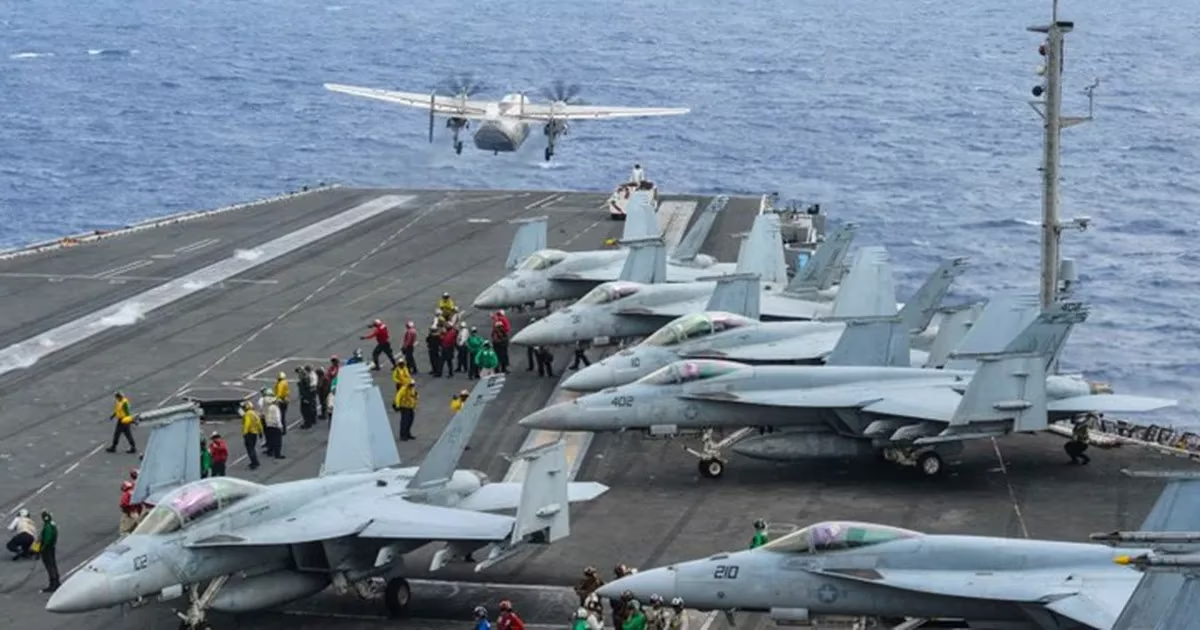
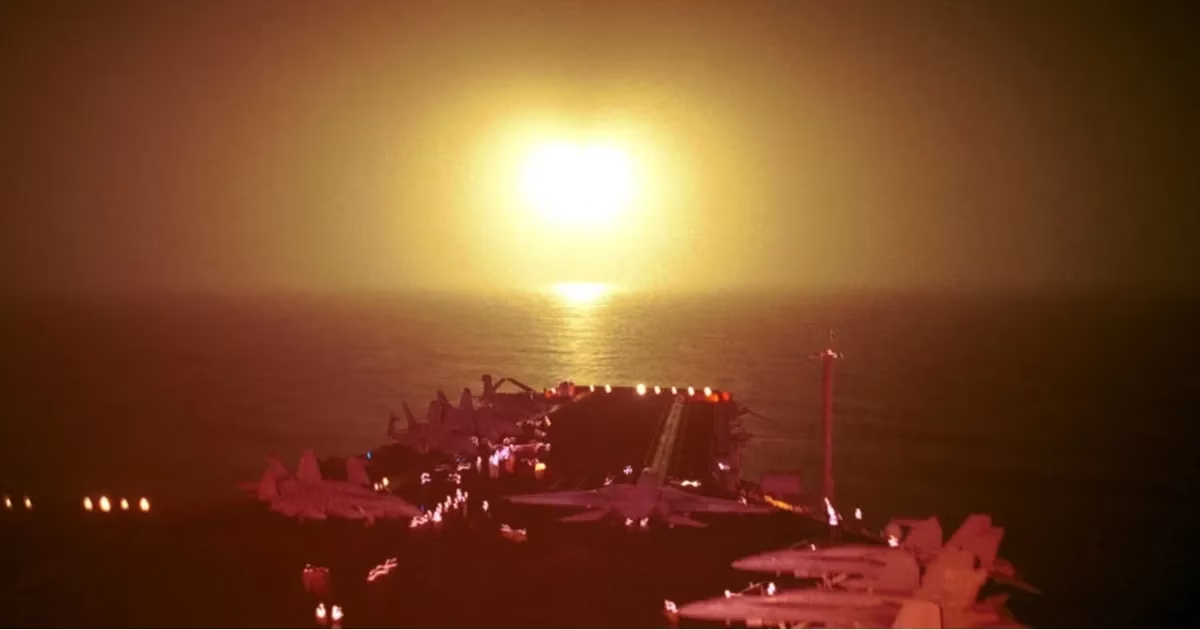
These statements come at a time when the region is witnessing a large-scale American military buildup, with Washington deploying an aircraft carrier off the Iranian coast and a second carrier heading to the region. These movements coincide with the deployment of squadrons of fighter jets and tens of thousands of soldiers to regional bases, raising the pace of readiness for any potential confrontation.

For his part, Israeli Prime Minister Benjamin Netanyahu joined the threats, warning Tehran against making any mistake by attacking Israel. Netanyahu vowed a violent military response beyond the imagination of the Iranian leadership, stressing that Tel Aviv would not hesitate to defend its security with full force if it were subjected to any direct aggression.

On the ground, some European countries have begun to take precautionary measures, with the German army announcing the temporary relocation of a number of its soldiers from the city of Erbil in northern Iraq. This decision came amid escalating security tensions in the Middle East and fears of targeting bases hosting foreign forces in the region.

In a related context, Polish Prime Minister Donald Tusk urged his citizens in Iran to leave immediately and without delay. Tusk considered that the possibility of an open armed conflict erupting in the region has become very real, requiring the utmost caution and prudence to secure Polish nationals.

Internationally, the Russian presidency called on all parties involved in the crisis to exercise maximum restraint and avoid uncalculated escalation. Moscow expressed regret that tensions had reached unprecedented levels, stressing the absolute necessity of prioritizing political and diplomatic means to resolve outstanding differences.

For its part, France called on both Washington and Tehran to return to the negotiating table as the only option to prevent Iran from acquiring nuclear weapons. Paris affirmed that the diplomatic path is the optimal way to ensure regional stability and avoid the region sliding into a comprehensive military confrontation that may not be controllable.

Economically, these tensions were directly reflected in global energy markets, with oil prices soaring to record levels not seen in many months. Brent crude recorded a significant increase, reaching $71.66 per barrel, amid fears among suppliers of supply disruptions in the event of a military conflict in the Strait of Hormuz.

In contrast, Tehran staunchly defended its position, with the head of the Atomic Energy Organization of Iran, Mohammad Eslami, affirming his country's right to possess peaceful nuclear technology. Eslami explained that uranium enrichment operations represent the basis of the national nuclear industry, noting that the program is progressing in accordance with the rules of the International Atomic Energy Agency.

Media reports quoted American sources as saying that the military options presented to the White House were designed to inflict the greatest possible damage on Iranian infrastructure. These plans include the possibility of targeting prominent political and military leaders, with the aim of weakening the ruling regime in Tehran or overthrowing it in the event of war.

Despite the threats, Iranian President Masoud Pezeshkian affirmed that his country does not seek war and has never initiated it since he took office. However, he stressed at the same time that Iran will not succumb to American demands aimed at humiliating the Iranian people or imposing external will on them under threat.

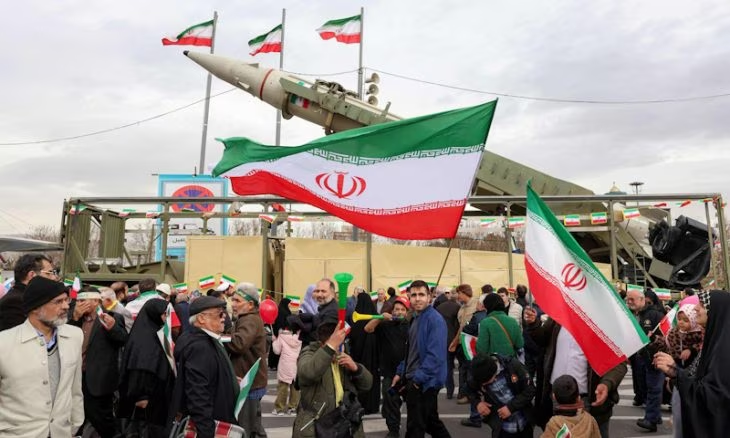
Iranian officials hinted at the possibility of closing the strategic Strait of Hormuz, which is the lifeline for global oil and gas trade, if their country is attacked. The Revolutionary Guard conducted extensive military maneuvers in the strait to raise combat readiness and test the defensive and offensive capabilities of the naval forces.

In a move reflecting the depth of regional alliances, Iranian and Russian naval forces completed joint military exercises in the Gulf of Oman and the northern Indian Ocean. These maneuvers aim to enhance security cooperation between the two countries and send a clear message regarding the balance of power in the region amid increasing American pressure.

Anticipation remains the master of the situation during the next two weeks, as the results of indirect talks in Oman and Geneva will determine the fate of the region. Either a framework will be reached that satisfies all parties and lifts sanctions on Iran, or a dark tunnel of military confrontation will be entered that could change the face of the Middle East.

We must reach a meaningful deal, otherwise bad things will happen, and you will probably find that out in the next ten days.

ISRAELI AFFAIRS

Fri 20 Feb 2026 5:04 am - Jerusalem Time

Netanyahu plans early elections to escape the 'curse' of the October 7 anniversary

The signs of an early election race are beginning to emerge within the occupation state, as field and political data indicate that dates are now under actual discussion among the poles of the ruling coalition. The biggest concern dominating the thinking of Benjamin Netanyahu and his right-wing allies is the necessity of avoiding holding elections on the original scheduled date in October 2026, to prevent their coinciding with the third anniversary of the October 7 attack.

Informed sources reported that senior Likud party officials have already begun to change their schedules to accommodate the hypothesis of imminent elections, with June 30 or July 7 being circulated as preferred dates. Observers believe that this shift reflects Netanyahu's desire to preempt any public or media movement that might accompany the commemoration ceremonies of the major security and military failure that occurred during his tenure.

Political circles in Israel avoid August for holding elections due to it being the annual tourist travel season, which makes it difficult to ensure wide participation from voters abroad. September also represents an additional obstacle due to the overlap of Jewish holidays, as leaders of the Haredi religious parties prefer not to be preoccupied with election campaigns during periods of religious arrangements and their special rituals.

A major political gamble on external support is emerging, specifically from US President Donald Trump, who is expected to visit Israel at the end of next April. Netanyahu aims with this visit to capitalize on the anticipated American praise to enhance his leadership image before the Israeli voter, and to use the echoes of this visit as a strong propaganda lever in his election campaign during June.

The Israeli Prime Minister is currently seeking to achieve a state of temporary stability within his coalition by passing sensitive legislation, foremost among them the military exemption law and the general budget. These steps are necessary to ensure the continued support of the Haredi parties, as Netanyahu fears the outbreak of protests or riots within these circles that could negatively affect his electoral chances.

The Likud party corridors are witnessing an unprecedented state of alert, with internal sources describing the situation as 'hysteria' that has afflicted ministers and officials seeking to maintain their positions. The intensity of the competition has reached the point where senior officials have stormed private social and family events of party activists without invitation, in a desperate attempt to secure loyalties before the expected primary elections begin soon.

The verbal altercations observed in the Knesset cafeteria between disgruntled activists and party ministers reflect the enormous pressure facing Likud leaders at this stage. Each minister is trying to prove his efficiency and field activity to compensate for any previous shortcomings, fearing punishment from party members who have the authority to determine the order of names on the upcoming electoral list.

Internal Likud assessments showed that only four names feel relatively secure in the top ten list: Yisrael Katz, Yariv Levin, Eli Cohen, and Amir Ohana. The rest of the ministers and deputies find themselves at the mercy of Netanyahu's decisions, whose close associates have already begun sending clear messages calling for the need to bring forward the election date to ensure control of the scene.

Political analysts believe that Netanyahu fully realizes that his political survival is linked to his ability to maneuver away from the failures in Gaza, which explains his haste to turn the page on the original election date. Escaping the 'October curse' represents a survival strategy aimed at shifting public discourse from security failures to alleged political achievements and close international relations.

Pressure is increasing within the right-wing coalition to quickly finalize the budget file, as it is the only tool preventing the government's collapse before the date set by Netanyahu. If he succeeds in passing the budget and the conscription law, the way will be paved for announcing the dissolution of the Knesset and heading to the polls next summer, away from the noise of investigations into the events of October 7.

Behind-the-scenes negotiations include equal deals between Likud poles to ensure no surprises in the primary elections, as there is concern about the rise of new faces that could overthrow the old guard. This state of uncertainty pushes ministers to intensify their media and field appearances, in an attempt to convince the party bases that they are the most worthy of representing the right in the next phase.

On the other hand, the Israeli opposition is cautiously watching these moves, considering that bringing forward the election date is a transparent attempt to mislead public opinion and circumvent investigation committees. However, the state of fragmentation within the opposition may give Netanyahu the opportunity he is looking for to rearrange his cards and return strongly through an alliance with Trump and the far-right.

The tight timeline under which Netanyahu operates leaves little room for error, as any setback in passing the required laws could lead to the collapse of the coalition at a time the Prime Minister does not desire. Therefore, the coming weeks will be crucial in determining whether Netanyahu will succeed in imposing his own timing on the Israeli political map or whether successive crises will precede him.

In conclusion, it seems that the political scene in Israel is heading towards a new peak of internal conflict, where the personal interests of leaders intertwine with party interests under complex security conditions. The memory of October 7 remains the hidden driver of all these moves, as everyone seeks to escape its political and legal repercussions that continue to haunt decision-makers in Tel Aviv.

Netanyahu does not want an election campaign accompanied by commemoration ceremonies and media articles addressing the abysmal failure for which he is responsible.

PALESTINE

Fri 20 Feb 2026 5:04 am - Jerusalem Time

With an extremist "struggle record".. a settlement movement adopts dozens of terrorist attacks in the West Bank

The extremist settlement movement "Hilltop Youth" revealed its adoption of a wide series of systematic attacks against Palestinian citizens throughout the occupied West Bank. Sources reported that the movement published a report via its digital platforms documenting the execution of more than 60 terrorist attacks in just one month, targeting 33 Palestinian villages and towns, describing these crimes as part of their alleged "struggle record" against the Palestinian presence.

The intensity of the attacks was concentrated in the town of Mikhmas, near Ramallah, where settlers admitted to carrying out 5 direct attacks that led to the intimidation of local residents. According to field testimonies, the Bedouin communities surrounding the town were forced to flee and leave the area during this February, due to the escalating pace of harassment and continuous threats practiced by these extremist groups under security protection.

In a related context, the Palestinian Ministry of Health announced the death of a 19-year-old young man, succumbing to serious injuries he sustained after being shot by settlers in the town of Mikhmas last Wednesday. This incident confirms the brutality of the attacks carried out by settler gangs, which are no longer content with damaging property but have moved to directly targeting lives in cold blood.

According to statistics boasted by the settlement movement in its report, their attacks resulted in the burning of 12 inhabited homes and setting fire to 29 Palestinian vehicles. These attacks also caused injuries to about 40 citizens, in addition to smashing hundreds of windows of homes and cars and uprooting hundreds of ancient olive trees in an attempt to undermine the elements of Palestinian economic resilience.

"Hilltop Youth" groups are known as extremist Jewish youth formations that emerged in the late 1990s, adopting an exclusionary ideology aimed at expelling Palestinians and establishing illegal settlement outposts. Over time, these groups have transformed into an executive tool used by the occupation to implement forced displacement policies, sometimes away from official restrictions and at other times with full complicity from the army.

For its part, the "Peace Now" organization confirmed in a recent report that settlers are increasingly infiltrating Palestinian agricultural lands to prevent their owners from accessing them. The organization explained that these practices are carried out with clear support from the Israeli government and army, where violence and intimidation are used as primary tools to force Palestinians to leave their lands for the benefit of accelerated settlement expansion.

Data indicates that the current Israeli government, which is classified as one of the most extremist governments, has pushed forward record settlement plans during 2025. The construction of 54 new settlements has been approved, an unprecedented number that reflects the official trend towards effectively annexing the West Bank and undermining any chance of establishing a geographically contiguous Palestinian state.

In a dangerous development, the occupation authorities began the process of registering and settling land ownership in the West Bank, the first step of its kind since the 1967 occupation. This step has met with widespread international and UN condemnation, with human rights organizations considering it a "massive seizure" that paves the way for legitimizing the looting of Palestinian lands and accelerating the pace of final annexation under a false legal cover.

We carried out more than 60 attacks in one month on 33 Palestinian villages as part of what we call the record of struggle against the Arab enemy.

PALESTINE

Fri 20 Feb 2026 5:04 am - Jerusalem Time

Three Paths for the Future of the Palestinian Authority Amid an Unprecedented Existential Crisis

The Palestinian National Authority is currently undergoing the most dangerous political and field-related turning point since its establishment in 1994, as Israeli pressures intersect with internal crises to shape a critical phase. Three potential fates loom on the horizon, ranging from complete collapse under the weight of pressures, or the leadership's initiative to dissolve the Authority itself, to the option of comprehensive national reconciliation that could redefine the Palestinian national project anew.

These developments come amidst unprecedented Israeli escalation aimed at seizing what remains of the West Bank territories, especially after the approval of decisions allowing the registration of Area 'C' lands as state lands. These measures target more than 61% of the West Bank's area, where the occupation authorities impose impossible conditions and complex historical and survey documents on Palestinians to prove their ownership, threatening widespread confiscation.

Statistical data indicates a sharp and continuous decline in the area of land controlled by Palestinians. After their ownership reached 82% within the Green Line in 1948, this percentage has shrunk to less than 4% at present. These figures reflect the magnitude of the existential challenge facing the geographical identity of the future Palestinian state amidst accelerating settlement expansion.

Economically, the Authority is suffering from a severe financial strangulation due to Israel's refusal to transfer tax revenues and customs duties ('clearance') for ten consecutive months. Since these funds represent two-thirds of the general budget revenues, this withholding has led to the Palestinian government losing approximately 90% of its operational capacity and its ability to fulfill its obligations towards citizens and public employees.

On the ground, the occupation authorities exploited the world's preoccupation with the Gaza war to intensify settlement in the West Bank, where 58,000 dunams were seized and 350 new settlement outposts were established on an area estimated at 800,000 dunams. Observers believe that these moves aim to impose a new demographic and geographical reality that ends any chance of establishing a geographically contiguous Palestinian state, turning cities into isolated enclaves.

In a reading of the future, political experts believe that the most likely scenario is the continuation of the gradual weakening of the Authority without allowing its complete collapse, transforming it into an entity that only manages population affairs. In contrast, voices emerge calling for the necessity of launching serious internal reconciliation leading to democratic elections, considering that preserving the Authority's entity remains a national achievement that cannot be relinquished despite all observations.

On the other hand, academics propose an alternative scenario represented by reactivating the Palestine Liberation Organization as a comprehensive and inclusive umbrella for all forces and factions, away from the restrictions of Oslo. This approach is based on adopting a rational resistance discourse that integrates diplomatic and international legal work with popular action on the ground, drawing inspiration from historical experiences in which the organization was able to gain international recognition under very complex circumstances.

The most realistic scenario is the continuation of the status quo with the deepening gradual weakening of the Authority without complete collapse.

PALESTINE

Fri 20 Feb 2026 5:04 am - Jerusalem Time

Hamas Sets Conditions for Political Process and Formation of New Police Force in Gaza with International Support

Hamas affirmed in an official statement issued on Thursday that any political vision or future arrangements concerning the Gaza Strip must be fundamentally based on a comprehensive cessation of Israeli aggression. The movement stressed the necessity of fully lifting the blockade and ensuring the legitimate national rights of the Palestinian people, foremost among them the right to self-determination and freedom.

These positions came in response to the launch of the first session of the Peace Council in Washington D.C., which aims to lay out a roadmap for the reconstruction of Gaza and the establishment of stability. The movement indicated that the international community is required to take practical steps that compel the occupation to cease its continuous violations of the ceasefire agreement and open crossings without restrictions.

In a related field context, the National Committee for Gaza Strip Affairs announced the opening of applications to join the new Palestinian police force. This step aims to strengthen civil administration and provide security in the Strip, which has suffered extensive destruction due to the ongoing war, coinciding with diplomatic activity in Washington.

The committee set conditions for applicants, including being residents of the Gaza Strip, aged between 18 and 35, with a clean criminal record and high physical fitness. The committee launched an electronic link to receive applications, emphasizing that the door is open to qualified men and women to serve their community in these exceptional circumstances.

For his part, Nikolay Mladenov, the envoy tasked with post-war coordination, revealed that the first hours of opening applications saw a large turnout, with about two thousand Palestinians registering their names. He explained that there is a genuine desire among Gaza's youth to contribute to maintaining internal security and rebuilding national institutions.

In the same context, Major General Jasper Jeffers, commander of the multinational peacekeeping force, stated that the strategic plan aims to train and qualify about 12,000 Palestinian police officers. This force will be responsible for enforcing public order in all areas of the Strip, within an international vision aimed at ensuring sustainable stability.

Regarding financial support, US President Donald Trump announced the United States' pledge of a massive financial contribution of up to $10 billion to support peace on the borders. This funding aims to accelerate reconstruction efforts and provide the necessary infrastructure for the return of normal life to the devastated Strip.

The Peace Council meeting also witnessed extensive Arab and international pledges, with the United Arab Emirates announcing a contribution of $1.2 billion to support the Council's efforts. For its part, Qatar pledged $1 billion, while Saudi Arabia announced a contribution of $1 billion to be disbursed over the next few years.

Contributions were not limited to financial aspects, as Indonesian President Prabowo Subianto expressed his country's readiness to send eight thousand soldiers to participate in an international security force. This force aims to provide a safe environment that allows civil institutions and local police to carry out their duties without military interference.

In terms of logistical and educational support, Uzbekistan pledged to help rebuild schools, hospitals, and childcare facilities damaged during the war. The King of Bahrain also announced the provision of necessary expertise to build an advanced government digital services platform to facilitate transactions for citizens in Gaza.

For its part, Egypt affirmed its determination to continue training Palestinian police cadres to ensure their efficiency in maintaining internal security. Official sources indicated that Cairo has extensive experience in this field and will work to transfer it to new recruits to ensure the professionalism of the new security apparatus.

Turkey and Morocco also joined the support efforts, with Ankara offering to contribute to the health and education sectors and police training, in addition to providing stabilization forces. Morocco, meanwhile, expressed its readiness to send police personnel and train local cadres, along with establishing a military field hospital to provide urgent medical care.

Kuwait also announced a donation of $1 billion to the Peace Council, joining the list of major donors seeking to alleviate humanitarian suffering. These donations come within a coordinated international effort aimed at transforming Gaza from a conflict zone into an area experiencing economic growth and security stability.

Hamas concluded its statement by emphasizing that any genuine international effort must address the root causes of the problem, namely the occupation and its aggressive policies. The movement called on mediators and international parties to fulfill their responsibilities in implementing agreements and preventing the occupation from obstructing urgent humanitarian and political entitlements.

Any political path or arrangements discussed regarding the Gaza Strip and the future of our people must stem from a complete cessation of aggression and the lifting of the blockade.

PALESTINE

Fri 20 Feb 2026 5:04 am - Jerusalem Time

Hamas Leader: Peace Council's Tasks Lack Clarity, We Won't Succumb to Threats

Mohammed Nazzal, a member of the political bureau of the Islamic Resistance Movement (Hamas), criticized the ambiguity surrounding the tasks of the newly formed Global Peace Council, established to manage the transitional phase in the Gaza Strip. Nazzal clarified that the Council is now required to fulfill its legal and ethical responsibilities by compelling the Israeli occupation to implement the terms of the ceasefire agreement, emphasizing that the movement will not engage with any proposals that do not guarantee the fundamental rights of the Palestinian people.

In press statements, Nazzal indicated that the language of threats and intimidation adopted by some parties will not deter the resistance nor push it to make concessions that compromise national constants. He affirmed that all outstanding issues must be clearly presented at the negotiating table, away from the policy of dictates and pressures that the occupation attempts to exert to evade its direct obligations regarding de-escalation and reconstruction.

This stance comes concurrently with the inaugural meeting of the Peace Council in the American capital, Washington, chaired by Donald Trump, with the participation of 47 countries. Trump announced the allocation of $10 billion to support the Strip. Despite these financial promises, Nazzal considered that the true test of the Council lies in its ability to break the imposed siege and facilitate the entry of the Gaza administration committee to carry out its duties without Israeli obstacles.

On the humanitarian front, the Hamas leader stressed that the full reopening of the Rafah crossing is a top priority that cannot be postponed, describing current measures as extremely slow and insufficient to meet the needs of the population. He explained that reconstruction efforts require a comprehensive vision that goes beyond mere rhetorical statements, especially given the destruction of 90% of the Strip's infrastructure, with an estimated cost of up to $70 billion.

Regarding the formation of the international stabilization force, Nazzal revealed serious reservations that prevent this force from becoming a tool to impose the occupation's will within Gaza, affirming that participating countries reject any infringement on Palestinian sovereignty. He considered that any deviation from peacekeeping tasks would put the American administration and the occupation in a political and field predicament, complicating an already tense situation since the issuance of Security Council Resolution 2803.

Nazzal reminded that the Israeli occupation continues to procrastinate in implementing about 80% of the provisions of the first phase of the October 2025 agreement, which reinforces the state of distrust in international promises. He affirmed that the absence of Palestinian representation in the Council, and the refusal of major powers such as Russia, China, and Britain to join it, raises major questions about the legitimacy and ability of this body to achieve sustainable peace.

Nazzal concluded his statements by emphasizing that any successful political path must begin with a comprehensive cessation of aggression, lifting the siege, and guaranteeing the right to self-determination for the Palestinian people. He called on the Peace Council to focus on practical solutions that end the suffering of more than two million Palestinians in Gaza, who have made immense sacrifices, amounting to over 72,000 martyrs and 171,000 injured during the harsh years of war.

The language of threats does not intimidate us, and the Peace Council must demonstrate its ability to make real commitments and bring about tangible change on the ground, away from dictates.

PALESTINE

Fri 20 Feb 2026 5:04 am - Jerusalem Time

Details of the plan to deploy the international stabilization force in Gaza: 5 countries confirm participation and police training begins

General Jasper Jeffers, commander of the International Stabilization Force in the Gaza Strip, revealed new aspects of the international military movement in the Strip, confirming the official commitment of five countries to send military reinforcements to participate in security and stability missions. The announced list of countries includes Indonesia, Morocco, Kazakhstan, Kosovo, and Albania, in a step aimed at filling the security vacuum and initiating a new transitional phase.

Jeffers explained during an expanded meeting of the Peace Council in the American capital, Washington, that Indonesia, as the largest Muslim-majority country by population, will play a pivotal role by assuming the position of deputy commander of the international force. Indonesian President Prabowo Subianto expressed his country's readiness to deploy about 8,000 military personnel to participate in this force, which the international community aspires to reach 20,000 members.

The operational plan stipulates that the deployment of these international forces will begin from the Rafah area in the southernmost part of the Gaza Strip, where local police elements will begin training before geographically expanding to other sectors. The task of technical and training supervision for the new Palestinian police personnel will be entrusted to both Egypt and Jordan, to ensure the establishment of a security apparatus capable of managing civilian affairs.

In a related context, Peace Council coordinator Nikolay Mladenov announced the official opening of applications for the formation of a new Palestinian national police force, emphasizing the need for this force to be free from the influence of Hamas. Mladenov indicated that the first hours of opening applications witnessed a wide turnout, with more than two thousand people applying to join this nascent security apparatus.

For their part, Egypt and Jordan reiterated their emphasis on the need to accelerate the deployment of the international force and begin comprehensive reconstruction operations in the Strip, which has suffered widespread destruction. The foreign ministers of the two countries, Badr Abdel Aty and Ayman Safadi, stressed the importance of adhering to the requirements of the second phase of the American plan that began in mid-January to end the conflict.

On the ground, Hebrew media sources reported that the Israeli army has already begun logistical arrangements to receive Indonesian soldiers inside the Strip. Although a precise date for the arrival of all units has not been set, estimates indicate that the Indonesian vanguard will be the first foreign forces to set foot in Gaza as part of this international mandate.

Jakarta views its participation in this force as a temporary measure aimed at protecting civilians and facilitating the delivery of humanitarian aid, considering that the ultimate goal must remain the achievement of a two-state solution. These moves come in implementation of UN Security Council Resolution 2803, which established the legal framework for the international force's work and its powers in maintaining security on the borders.

The tasks of the international force include protecting humanitarian corridors and securing the borders of the Gaza Strip with both Israel and Egypt, in addition to overseeing disarmament operations and ensuring the arrival of necessary construction materials for reconstruction. The force has been granted broad powers to use necessary measures to enforce order in accordance with international and humanitarian law standards.

Reports indicate that the White House seeks to expand participation to include more than 40 countries, while the participation of countries such as Argentina and Paraguay from Latin America, and Hungary and Greece from the European continent, has been confirmed so far. This diversity reflects the American desire to give a comprehensive international character to the management of the transitional phase in Gaza, away from traditional parties.

In contrast, field and political challenges arise related to the Palestinian resistance factions' rejection of these forces, as they consider them another face of the occupation, especially with Washington and Tel Aviv's insistence on the disarmament mission. Observers believe that the success of this force largely depends on the extent of its acceptance by the Palestinian street and its ability to provide tangible services in the relief and reconstruction files.

It is worth noting that the administrative structures for the transitional phase, which include the Gaza Executive Council and the National Committee for Administration, were officially adopted on January 16. These bodies work in coordination with the International Stabilization Force to ensure a gradual transfer of power, amidst intensive international oversight aimed at preventing a return to military escalation in the region.

Finally, the Peace Council, headquartered in Washington, remains the primary driver of these efforts, seeking to translate the twenty provisions of Trump's plan into tangible reality. With the continued influx of applications for the new police, attention turns to Rafah to await the first steps of the actual deployment of international forces and the resulting changes in the field.

Indonesia has been offered and accepted the position of deputy commander of the security forces, and is ready to contribute eight thousand soldiers to enhance stability.

PALESTINE

Fri 20 Feb 2026 5:03 am - Jerusalem Time

Academics Analyze Challenges of "Peace Council" for Gaza: Legitimacy Crisis and Gap Between Ambition and Reality

The "Peace Council" is preparing to hold its first meeting in the United States, chaired by Donald Trump, amidst a state of international anticipation tinged with tension and divergence in the positions of major capitals. Questions are escalating regarding the legitimacy of this new entity and its operational mechanisms on the ground, in light of a growing trust gap between declared objectives and the actual balance of power on the ground in the Gaza Strip.

This meeting will be held with the participation of 27 countries, based on a mandate from the UN Security Council to follow up on the implementation of the ceasefire agreement and full oversight of governance and reconstruction paths. International experts are scrutinizing this move, describing it as facing rejection in research circles due to the broad powers granted to its president and its structure's association with a specific political figure.

Observers believe that this new framework could turn into a parallel platform to traditional UN structures, which could lead to the destabilization of international balances that have been stable since the end of World War II. Academics point out that granting the Council's president veto power and absolute control over the agenda weakens the principle of diplomatic multilateralism upon which the global system was founded.

Dr. Khaled Al-Haroub, Professor of International Politics, stated that academic discussion currently focuses on the question of legitimacy before effectiveness, considering the initiative a re-formulation of diplomatic rules of engagement through the centralization of decision-making. He explained that this approach creates a trust gap among Washington's traditional partners in Europe and Asia who fear the marginalization of their historical roles.

Al-Haroub stressed that the success of any peace framework depends entirely on its ability to produce a real balance of interests among conflicting parties and to possess effective leverage tools. He warned that the absence of clear enforcement mechanisms, coupled with continued violations on the ground, puts the Council to a harsh credibility test from its very first moments.

For his part, political analyst Ali Qassem Najm considered that the initiative aims to reshape regional spheres of influence, as Washington seeks to exclusively control the Gaza file. He affirmed that this path is met with strong reservations in Moscow, Beijing, and Tehran, as it bypasses accredited international references and weakens UN legitimacy.

Najm warned that the absence of a detailed vision for governance and security in Gaza could open the door to dangerous political vacuums exploited by competing regional powers. He pointed out that historical experiences prove the failure of unilateral initiatives to gain the trust of local parties, emphasizing that active Palestinian participation is the essential condition for any sustainable stability.

In a related context, Dr. Ali Al-Harithi noted that the first meeting comes at a critical humanitarian moment that requires tangible results on the ground, not just strategic speeches. He explained that the continued field tension and the slow pace of aid entry through crossings deepen doubts about the Council's ability to translate its mandate into a reality that improves the lives of civilians.

Al-Harithi believes that the current focus on the donor conference and reconstruction requires a stable security environment and a clear civilian administration with defined powers to succeed. He added that the formation of technocratic committees is an organizational step, but empowering them requires practical understandings with the controlling forces on the ground to ensure they do not clash with the complex reality.

For her part, researcher Tahani Al-Fuqaha indicated that the language used in the Council's founding documents raises a philosophical discussion about the future of the existing international system. She said that the texts carry a critical discourse of current mechanisms with promises of resolving conflicts, but resolution in complex issues requires cumulative legitimacy built on consensus, not imposition.

Al-Fuqaha warned that the clear European reservation weakens the image of international consensus around the Council, and the disregard for direct Palestinian representation represents a blatant structural challenge. She affirmed that any path that ignores the principle of self-determination enshrined in international law will complicate the chances of transitioning from a mere ceasefire to a comprehensive political settlement.

Experts' assessments converge on a fundamental point, which is the "implementation gap," where the Council advances with promising rhetoric while reports of continued violent field tensions accumulate. This contradiction places the Council before two choices: either to innovate real pressure mechanisms or to face a rapid erosion of political credibility before the international community.

All eyes are now on the outcomes of the first meeting, awaiting the announcement of practical paths that include independent monitoring mechanisms and a clear timeline for reconstruction operations. Observers are also anticipating the formula through which the Palestinian side will be involved, which is the point that will determine the popular and political acceptance of this initiative.

Academics concluded that any peace initiative lacking the pillars of comprehensive international legitimacy, inclusive representation, and effective implementation tools will remain merely a broad title. The real test for the Council remains its ability to open a genuine political horizon that ends human suffering in Gaza, away from electoral calculations or unipolarity.

This Council is read in light of profound shifts in the structure of the international system, where its current formula grants its president exceptional powers that weaken the logic of multilateralism upon which the world has been built for decades.

PALESTINE

Thu 19 Feb 2026 7:41 pm - Jerusalem Time

Trump concludes first "Peace Council" meeting in Washington, announces $10 billion US contribution to Gaza

Said Erikat

Opinion Writer

Washington – Said Arikat – 19/2/2026

US President Donald Trump on Thursday concluded the first meeting of what he called the "Peace Council" in the capital Washington, which was attended by nearly 30 countries, about two hours after its launch, to the applause of those present, in a meeting that seemed to have been attended by the majority of participants in response to the US President's desire rather than being a reflection of broad political consensus on the initiative.

During his speech at the meeting, Trump announced that the United States would provide a massive financial contribution of $10 billion to the council he founded with the aim of supporting stability in the Gaza Strip, a remarkable step that came at a time when Western countries, which have long supported Washington's initiatives, showed coolness towards the council and ignored engaging in it as expected.

Trump said: "I want to inform you that the United States will contribute ten billion dollars to the Peace Council," in the presence of about twenty leaders, in addition to senior officials and representatives of allied countries.

The US President also announced that a number of Washington's friendly countries contributed more than seven billion dollars as part of a relief package for Gaza, pointing to contributions from Kazakhstan, Azerbaijan, the UAE, Morocco, Bahrain, Qatar, Saudi Arabia, Uzbekistan, and Kuwait, considering that "every dollar spent is an investment in hope."

In the context of his speech, Trump directly praised leaders and political figures, including the Prime Minister of Qatar and the Emir of Qatar, emphasizing Doha's role in supporting Washington's efforts. He also commended US envoy Steve Witkoff, describing his performance as "exceptional" in the Gaza file, and that he is a mediator who enjoys the trust and respect of all parties.

Trump also touched on multiple international issues during the meeting, including the tension between India and Pakistan, saying that his intervention and contacts with the leaders of the two countries prevented the outbreak of war, threatening to use tariffs as a pressure tool to stop the fighting. He also spoke about Washington's relations with China, announcing his intention to visit Beijing next April.

On the Iranian file, the US President stressed the need to reach a "fruitful" agreement with Tehran, warning that failure could lead to "bad things," and emphasizing that Iran "cannot obtain a nuclear weapon." He also said that the United States would know within ten days whether it would reach an agreement, speaking about developments related to Israel and Iran.

Regarding Gaza, Trump said that the war was over, and that the "Hamas" movement would surrender its weapons as promised, otherwise it would face "harshly," adding that the movement contributed a large part to the search for the bodies of the hostages, and at the same time affirming that he does not believe that sending American soldiers to Gaza to eliminate Hamas is necessary.

The remarkable aspect of the first meeting was not only the large financial announcement, but the nature of the attendance itself. Experts believe that describing the participation as being "to please the US President" reflects that the council may be used as a platform for political influence and realigning alliances rather than a multilateral initiative agreed upon. In American politics, announcing an initiative of this magnitude is not only humanitarian, but carries a dual goal: solidifying American leadership in the Gaza file, and imposing a new rhythm on allies and adversaries.

Moreover, the disregard of Western countries for the council, despite usually supporting Washington's initiatives, indicates a political gap that cannot be bridged by funding alone. Western countries, even when they agree with Washington, prefer traditional institutional frameworks (UN, EU, G7). In contrast, Trump seemed to be testing a different model: a "donor alliance" led directly by the White House. This model gives Washington greater control over decisions, but weakens the legitimacy of the international initiative.

Trump's speech was not limited to Gaza, but extended to China, India, Pakistan, Iran, and immigration, as if he was using the council to confirm the image of "the President as a global peacemaker." This expansion is not spontaneous, according to experts, but reflects a political style based on gathering major issues into one speech to demonstrate control and the ability to impose solutions. However, the danger here is that dissolving the Gaza issue within a broader showy discourse may reduce the chances of building a detailed and implementable plan on the ground.

PALESTINE

Thu 19 Feb 2026 7:41 pm - Jerusalem Time

Extensive International Moves to Establish Stability in Gaza: Indonesia Contributes 8,000 Troops and the World Bank Launches Reconstruction Fund

The Indonesian President announced a significant military step in the path of supporting stability in the Gaza Strip, reiterating his country's commitment to contribute eight thousand or more soldiers to the international stabilization force. This step comes within the framework of international efforts to consolidate the security situation and enable civilian governance in the Strip, in line with the visions put forward by the National Committee overseeing the transitional phase.

In a related context, the World Bank officially initiated procedures to establish the Gaza Reconstruction and Development Fund, to be the primary financial reference for managing cash flows and international grants. The fund aims to institutionalize development operations and ensure the highest levels of transparency in implementing vital projects, thereby transforming the Strip into a center for stability and economic prosperity under direct international supervision.

On the diplomatic and field levels, Morocco expressed full readiness to deploy units of security and police and high-ranking officers to contribute to maintaining order within Gaza. The Moroccan initiative also included the establishment of a fully integrated field hospital and active participation in programs to combat hate speech and promote values of coexistence, reflecting a regional desire to shape a new reality away from armed conflicts.

For their part, Gulf countries provided generous financial support to ensure the success of this international mission, with Qatar pledging one billion dollars to push for the implementation of the twenty-item action plan. In the same context, the United Arab Emirates announced the allocation of 1.2 billion dollars to support the sector, emphasizing that these efforts complement its vision for achieving a better future for the region through development and cooperation pathways.

The Turkish position confirmed its commitment to Gaza's security by contributing to the rehabilitation of vital sectors such as health and education and training police cadres. Official sources clarified that Turkey is ready to participate with elements in the international stabilization force, stressing that the two-state solution remains the basic and sole foundation for achieving any lasting and comprehensive peace in the region.

In Cairo, the Egyptian Prime Minister affirmed his country's support for international visions that open a new phase of peaceful coexistence, appreciating positions that reject the annexation of the West Bank and support the right of Palestinians to self-determination. These statements reinforce regional consensus on the need to find a political and security solution that ends the suffering of the residents in the Gaza Strip and ensures that military escalation is not repeated.

Finally, the Prime Minister of Albania clarified that the current moves through the Peace Council are not intended to marginalize the role of the United Nations, but rather seek to stimulate and awaken the international system to fulfill its responsibilities. He called on the international community to urgently contribute to supporting the children of Gaza and providing a suitable environment for their growth away from destruction, considering that investing in people is the real guarantee for the sustainability of any security agreements.

The Gaza Reconstruction and Development Fund will serve as an international financial umbrella to manage grants and investments to ensure transparency and efficiency under responsible supervision.

PALESTINE

Thu 19 Feb 2026 7:40 pm - Jerusalem Time

Trump's Plan for Gaza: Beginning Formation of Transitional Police and Dedicating the Principle of One Weapon

US President Donald Trump chaired the first meeting of the Peace Council dedicated to shaping the future of the Gaza Strip, with broad participation including delegations from 45 countries. This international alliance aims to bring about a radical change in the infrastructure and politics of the Strip, ensuring reconstruction on stable security and political foundations that end decades of continuous conflict.

US Vice President JD Vance praised Trump's efforts to reach this stage, emphasizing that the American commitment focuses essentially on saving lives and promoting welfare. Vance also expressed his appreciation for the regional and international mediations that contributed to creating the atmosphere for this new peaceful path, pointing to similar successes in other international issues.

For his part, Marco Rubio considered that the crisis in Gaza represented a unique challenge that traditional institutions failed to find effective solutions for over many years. Rubio expressed his hope that the proposed 'Gaza model' would become a global reference for resolving complex international conflicts, by integrating security and economic paths simultaneously.

In the context of diplomatic efforts, Steve Witkoff, the US President's envoy, revealed the existence of what he described as an amazing partnership with Qatar and Egypt to facilitate the implementation of the agreement's provisions. Witkoff particularly praised the exceptional role played by the Prime Minister of Qatar, noting that joint coordination was a decisive factor in achieving tangible progress on thorny issues.

Informed sources confirmed that the US administration's efforts were pivotal in the file of recovering detainees, as Trump was keen to communicate directly with their families to ensure their return. Witkoff indicated that Israeli Prime Minister Benjamin Netanyahu played a central role in completing these understandings, which paved the way for moving to the executive phase of the peace plan.

On the ground, the head of the National Committee for the Administration of Gaza announced the actual start of work to achieve stability and development in the Strip despite weather challenges and exceptional circumstances. He stressed that the top priority for the next phase is to restore security and enforce the rule of law under the umbrella of a single authority that alone has the right to possess weapons.

As part of the executive steps, Ali Shaath, the Executive Director of the Peace Council in Gaza, revealed the start of close coordination with the Israeli side and the relevant Palestinian bodies to implement the security plan. Shaath explained that the goal is to build a security system capable of protecting developmental gains and preventing a return to military confrontations.

Shaath announced that about 2000 people have applied to work within the ranks of the new 'transitional police' in the Strip, which will undertake public order duties in the first phase. He affirmed that the option of disarmament in Gaza is the only indispensable path to ensure the success of reconstruction projects and the sustainability of the peace that the international community aspires to.

Officials in the Peace Council expressed their deep gratitude to Qatar, Egypt, and Turkey for their continuous support for the executive and field efforts. Observers believe that this tripartite regional support constitutes a fundamental pillar to ensure the plan's popular and political acceptance, and to facilitate the flow of aid and necessary personnel for reactivation.

In turn, former British Prime Minister Tony Blair stated that the international alliance led by Trump succeeded in creating the necessary momentum to rebuild Gaza on solid foundations. Blair concluded by emphasizing that this plan represents the last historical hope for the region to overcome the era of wars and enter a phase of peaceful coexistence and economic prosperity.

Trump's plan now represents the only hope not only for Gaza, but for the entire region, and it is a historic project to achieve peace.

PALESTINE

Thu 19 Feb 2026 7:40 pm - Jerusalem Time

Gaza Management Committee announces the establishment of a new police force and opens applications

The National Committee for Gaza Administration (NCAG) announced today, Thursday, the start of receiving applications for membership in the new Palestinian police force in the Strip. This step aims to create a security force responsible for maintaining public order and enforcing the rule of law during the upcoming transitional phase, ensuring the stability of internal affairs.

In an official statement, the committee called on all qualified men and women who possess competence and integrity to submit their applications and participate in serving the community. Sources confirmed that the new force will work to protect families and preserve human dignity, with a focus on building a secure future for coming generations amidst current challenges.

The committee stressed that the establishment of the police force will be based on solid foundations of transparency and full legal accountability to ensure public trust. All members will be subject to strict professional conduct standards and continuous oversight, thereby establishing the principles of justice and equality in dealing with all citizens within the Gaza Strip.

The National Committee for Gaza Administration is a non-political body formed within the framework of understandings related to US President Donald Trump's plan for managing civil affairs in the Strip. The committee consists of 11 Palestinian figures headed by Ali Shaath, with its primary tasks focused on providing daily services and facilitating the lives of residents away from political disputes.

Despite Hamas's announcement of its logistical and administrative readiness to hand over civil administration tasks to the committee, the latter has been operating from the Egyptian capital, Cairo, since mid-January. The committee has not yet commenced its field duties from within Gaza, amidst calls from the government media office for its immediate presence in the Strip.

The entry of committee members into Gaza is linked to the necessity of complex field and security coordinations through the crossings under the control of the Israeli occupation authorities. No official clarification has been issued by the committee so far regarding the precise reasons preventing its teams from reaching the Strip to commence the tasks announced in the latest statement.

Joining the police force represents a national duty and an active contribution to rebuilding trust and security within Gazan society.

ISRAELI AFFAIRS

Thu 19 Feb 2026 7:40 pm - Jerusalem Time

Israeli estimates suggest an impending US military action against Iran

Hebrew press reports issued today, Wednesday, stated that estimates from the military establishment of the occupation indicate a significant escalation in the likelihood of the United States launching a military attack on Iran. These estimates come in the wake of the latest round of talks between Washington and Tehran, which did not yield concrete results in narrowing existing gaps.

Sources indicated that Israeli assessments contradict announced Iranian statements that attempt to show progress in the diplomatic track. The occupation's security agencies believe that the differences remain fundamental and hinder the achievement of any real understandings between the two sides at present.

The demand to abandon uranium enrichment on Iranian soil stands out as a major obstacle in the negotiation process, as Washington insists on this condition to ensure that Tehran does not possess a nuclear weapon. In contrast, the US administration faces extreme difficulty in extracting Iranian approval for this sovereign and sensitive demand for the Iranian regime.

In light of this political stalemate, security circles in Tel Aviv expect US President Donald Trump to resort to activating the military option in a shorter timeframe than previously estimated. It appears that the conviction is growing among both the American and Israeli sides that the diplomatic path has exhausted its purposes without achieving a real breakthrough.

Military estimates do not rule out the possibility of the occupation army being directly and effectively involved in any military confrontation that may erupt between Washington and Tehran. It is emphasized that coordination between the two sides has reached advanced levels, especially in the areas of intelligence and vital information and communication technology.

Joint cooperation also includes strengthening air defense systems to counter any potential reactions that may result from the presumed American attack. Joint operations rooms are working to update defensive and offensive plans to ensure maximum readiness for any escalatory scenario in the region.

For its part, the occupation army affirmed that it has not issued any exceptional instructions to change the nature of troop deployment in the home front so far. Military sources clarified that the Home Front Command has not asked vital institutions to take measures beyond the high alert level that has been in effect for weeks.

The occupation's security establishment seeks to manage the situation cautiously, trying to find a delicate balance between the need to warn the public of security risks and maintaining the stability of economic activity. This approach aims to reduce collateral damage that may affect the daily routine of settlers in the event of deteriorating conditions.

Informed sources reported that the US administration is now fully aware of Iranian attempts to buy time and engage in political maneuvering without making substantive concessions. Washington emphasizes in its implicit messages that it will not compromise on the basic demands related to the Iranian nuclear program under any circumstances.

Regarding civilian readiness, hospitals, major infrastructure companies, and energy sectors have not received any orders to move to a state of maximum emergency yet. This relative calm on the home front indicates that the zero hour has not yet arrived, despite increasing field and political indicators.

International circles are closely monitoring military movements in the region, amid fears of a widespread regional conflict. All eyes remain on the White House and the decisions Trump may make in the coming days to resolve the Iranian nuclear issue.

Israel expects US President Donald Trump to resort to the military option in a shorter period than expected in recent days.

PALESTINE

Thu 19 Feb 2026 7:40 pm - Jerusalem Time

Ambiguity surrounds the formation of a stabilization force in Gaza and international rejection of proposed security missions

Ambiguity still surrounds the features of the international force that US President Donald Trump seeks to form under the name of maintaining stability in the Gaza Strip. This ambiguity has led influential countries such as Indonesia and Pakistan to express deep reservations about joining, attributing this to the lack of clarity regarding the mandate granted to this force or the limits of its field powers.

While Israeli media outlets are promoting the readiness of four countries – Kosovo, Albania, Greece, and Morocco – to participate, observers believe that this readiness stems from political and economic interests linking these countries to Tel Aviv. Expert in Israeli affairs, Nihad Abu Ghosh, indicates that these limited participations do not reflect an international consensus on the American plan.

The American-Israeli vision clashes with a categorical Palestinian rejection, especially with the insistence that the primary mission of the force is to disarm the resistance. Resistance factions have clearly announced that they will deal with any foreign forces entering the Strip with this objective as occupation forces, which raises the risks of direct field confrontation.

President Trump had previously stated that the countries involved in the ceasefire arrangements would undertake the task of disarming Hamas if it was not done voluntarily. These statements reinforced international fears that the proposed force is merely a tool to implement Israeli military objectives that the army failed to fully achieve.

In a related context, documents published by the British newspaper The Guardian revealed trends within the Trump administration to establish a military base inside the Gaza Strip. According to these records, the plan includes deploying about 5,000 US soldiers, which gives a permanent military character to the American presence in the region under the guise of security and oversight.

The White House is scheduled to host the first meetings of the "Peace Council" established by Trump to discuss relief and reconstruction files. While US officials speak of broad participation exceeding 40 countries, Palestinian analysts downplay expectations, describing the move as a political show lacking concrete implementation mechanisms.

Specialists believe that donor countries are still hesitant to inject any funds for reconstruction as long as the Israeli military presence continues inside the Strip. Fears of renewed destruction prevent funders from committing to financial pledges in an unstable security environment under direct occupation control.

Data indicates that the occupation army continues systematic destruction operations in the areas it controls despite the ceasefire agreement being in effect. These operations appear to aim at preparing the ground for new settlement or security projects that do not serve Palestinian interests, but rather establish a new geographical reality that serves the Israeli vision.

As for international participation, the map appears clearly divided, with the majority of Latin American countries supporting Palestine absent, with the exception of Argentina and Paraguay. This division extends to the European continent, where participation is limited to countries such as Hungary and Greece, amid a boycott by central countries that fear marginalizing the role of the United Nations.

Arab and Islamic countries participating in these meetings are trying to play a mediating role, with the aim of finding an entry point to protect the Palestinian people and alleviate the burden of the siege. These moves come in an attempt to ensure that the US administration does not unilaterally shape the future of the Strip away from Palestinian national constants and international law.

It is worth noting that the "Peace Council" was officially announced in mid-January, based on Trump's plan, which later received Security Council endorsement through Resolution 2803. The Council theoretically aims to manage the transitional phase and coordinate aid, but it faces major legitimate and field challenges that threaten its ability to operate.

In conclusion, the bet remains on the ability of international parties to transform these initiatives into a real political path that ends the occupation. Without clear guarantees of Israeli troop withdrawal and the opening of crossings, the international stabilization force will remain merely a proposal facing Palestinian popular and official rejection.

The Palestinian resistance affirmed that it will not accept disarmament missions and will deal with any foreign presence of this kind as an occupation force.

PALESTINE

Thu 19 Feb 2026 7:40 pm - Jerusalem Time

Escalating settler attacks displace last Palestinian families from Al-Burj community in the Jordan Valley

Field sources reported that escalating settler attacks in the Jordan Valley area, east of the occupied West Bank, led to the forced displacement of the last 15 Palestinian families who lived in the Bedouin community of Al-Burj. This displacement came after a series of violent attacks targeting tents and private property, reaching the point of burning citizens' homes, which forced residents to dismantle what remained of their homes and search for alternative shelter in the absence of international protection.

The displaced residents described the situation in the community as unbearable, as the area has become a hostile environment due to systematic practices aimed at emptying the land of its rightful owners. Residents confirmed that these attacks, ongoing for more than two years, are part of a clear plan to seize lands and convert them for settlement expansion, noting that settlers have already begun to be present at the site in preparation for living there immediately after the Palestinian families leave.

Field statistics indicate that the policy of displacement in the Jordan Valley has reached dangerous levels, with 7 Bedouin communities completely emptied of their residents, while 13 other communities have been subjected to partial displacement operations. The remaining communities in the area face an imminent risk of displacement at any moment, especially since the Jordan Valley constitutes about a third of the West Bank's area and is the main food source for Palestinians, making its control a strategic blow to the Palestinian presence.

On the international level, the Under-Secretary-General for Political and Peacebuilding Affairs, Rosemary DiCarlo, warned of the repercussions of the Israeli escalation in the West Bank. During a briefing to the UN Security Council in New York, she explained that what the region is witnessing represents a process of 'creeping de facto annexation' of Palestinian territories, stressing that all settlement activities lack legal legitimacy and violate relevant international resolutions.

In a related context, UN reports noted that the expansion of military operations and settlement activities around occupied Jerusalem and large areas of the West Bank threatens to undermine any future opportunities for peace. The humanitarian suffering of displaced families continues as they find themselves forced to move from one area to another in search of lost safety, amid the escalating violence perpetrated by settlers with the protection of occupation forces.

What is happening in the West Bank represents a creeping de facto annexation, and settlements are illegal under international law.

ARAB AND WORLD

Thu 19 Feb 2026 7:39 pm - Jerusalem Time

6 Indicators Putting Washington and Tehran on the Brink of All-Out Military Confrontation

Tensions in the Middle East have escalated rapidly following the second round of negotiations between the United States and Iran in Geneva, with the White House issuing statements that have disrupted the political landscape. The American administration affirmed that there are strong arguments justifying a military strike against Tehran, putting the diplomatic understandings brokered by Oman at risk.

These political statements coincided with field reports revealing an unprecedented American military buildup in the region, including the deployment of two aircraft carriers and hundreds of fighter jets. Media sources reported that Washington reinforced its logistical capabilities with over 150 cargo planes, a move interpreted by observers as preparation for a large-scale military operation.

On the Israeli side, security and military agencies raised their alert levels to the maximum in preparation for a potential confrontation that could erupt within a few days. Reports indicate that Tel Aviv is pushing for a comprehensive operation that goes beyond limited strikes, aiming to directly and radically target Iran's nuclear and missile programs.

'Axios' believes that the long-standing nuclear dispute is the primary driver of this escalation, especially with Washington's insistence on preventing Tehran from acquiring nuclear weapons. Political memory recalls last June's events when American and Israeli forces bombed underground Iranian facilities immediately after the negotiation deadline expired.

The current American ambition goes beyond merely curbing the nuclear program; there is a clear desire within the Trump administration and its allies to change the structural behavior of the Iranian regime. Analysts suggest that any upcoming military action will not be limited to technical targets but may extend to vital command and control centers.

The human rights file and internal protests in Iran represent a second reason for the escalation, as Trump was close to making a decision for war last month. Although the decision was postponed then for logistical reasons, the current reinforcements in the Gulf indicate that the military obstacle has already been overcome.

The 'Chekhov's gun' principle emerges as a strategic analysis of current American behavior, where the presence of such a massive military buildup cannot be explained without a genuine intention to use it. Retreating at this stage is inconsistent with current foreign policy, especially in the absence of any real progress in the diplomatic track.

The Israeli government is exerting intense pressure on Washington to ensure that the next strike is 'decisive' and comprehensive, not just a warning message. Prime Minister Benjamin Netanyahu is coordinating closely with the White House to impose simultaneous economic and military sanctions aimed at weakening the Iranian regime from within and without.

Western intelligence circles believe that the Iranian regime is going through an unprecedented phase of weakness due to internal crises and successive external blows. Officials believe that Iran's response to any attack will be limited for now due to the exhaustion of its regional proxies in recent conflicts.

The oil factor plays a crucial role in the timing of the strike, as global markets are experiencing relative stability and abundant supplies, reducing the risk of price spikes. Washington is betting that any disruption in Iranian exports will not lead to a long-term global energy crisis under current conditions.

On the diplomatic front, sources reported that Iran offered a proposal to suspend uranium enrichment in an attempt to avert the imminent military option. However, this offer still falls short of American demands, which stipulate strict and comprehensive oversight of all Iranian nuclear activities.

Reports indicate that Tehran may be betting on gaining time until the US congressional midterm elections next November. But diplomatic sources warned that this gamble might be wrong, as it appears that the decision for military action has already been made in the White House corridors.

Any upcoming confrontation will not resemble previous limited operations but will be closer to a comprehensive military campaign with profound geopolitical repercussions for the Middle East. The results of this confrontation will shape the regional balance for years to come, especially with the fracturing of Iran's allies' fronts in the region.

In conclusion, the situation remains open to all possibilities, with military escalation being the more likely outcome in the absence of 'painful' Iranian concessions. Global capitals are cautiously awaiting what the coming days will bring, amid warnings that the region is on the brink of a volcano that could erupt at any moment.

Two aircraft carriers and hundreds of planes are usually not moved to locations unless there is a real intention to use them.

PALESTINE

Thu 19 Feb 2026 7:39 pm - Jerusalem Time

Human Rights Report Documents Horrific Torture and Sexual Abuse Against Palestinian Journalists in Occupation Prisons

The Committee to Protect Journalists, in an extensive human rights report titled 'We Returned from Hell,' revealed horrific details of severe violations suffered by Palestinian journalists inside Israeli occupation prisons. The report documents live testimonies from released journalists, confirming their exposure to systematic torture operations, including severe beatings and forced starvation, in addition to sexual assaults used as a tool for psychological and physical humiliation.

The committee confirmed that the observed patterns of violations occurred between October 2023 and January 2026, with the study including interviews with 59 released journalists. All respondents, with only one exception, agreed that they were subjected to harsh forms of violence and ill-treatment aimed at breaking their will and preventing them from carrying out their professional work in conveying the truth.

For her part, Jodie Ginsberg, the CEO of the committee, described these practices as a 'deliberate strategy of intimidation' rather than mere individual actions by soldiers. Ginsberg called on the international community to take immediate action to impose real accountability on the occupation authorities, warning of the consequences of continued failure to adhere to international humanitarian standards and laws that protect media personnel.

In a related context, the committee's regional director, Sarah Qaddah, indicated that this policy directly aims to silence the Palestinian voice and destroy journalists' ability to testify to the crimes committed. Qaddah warned that the silence of international institutions regarding these crimes directly contributes to entrenching a policy of impunity and encourages the occupation to proceed with its violations.

The report included harsh testimonies about the use of electric shocks and beatings with sharp objects, and forcing detainees into painful positions for very long periods. The report also revealed at least two cases of rape inside the cells, with sources confirming that sexual violence was deliberately practiced to leave permanent psychological scars and break the dignity of the detained journalists.

Regarding the starvation policy, 55 journalists reported severe food deprivation, leading to an average weight loss of 23.5 kilograms during their detention. The committee reviewed photographs of the released individuals showing shocking physical transformations, with their bodies appearing extremely emaciated and their bones protruding, reflecting the extent of suffering inside detention centers.

The report also documented 27 cases of deliberate medical neglect, where deep wounds of some journalists were stitched without any anesthesia. Testimonies mentioned that the occupation deliberately left bone fractures and severe eye injuries untreated, amidst unhealthy environmental conditions that exacerbated skin diseases and infections among detainees.

Regarding psychological torture, the report monitored the use of threats to liquidate family members as a means of pressuring journalists, especially those working with international media. The report pointed to practices of sleep deprivation through playing very loud music for long periods, particularly in the 'Sde Teiman' camp, which was described as one of the worst-reputed detention centers in dealing with Palestinians.

Legally, the report revealed that over 80% of the journalists included in the study were held under the arbitrary 'administrative detention' system without specific charges or being brought to trial. A quarter of these journalists were also denied the right to communicate with their lawyers or families throughout their detention, making them forcibly disappeared for varying periods.

As of mid-February 2026, 30 Palestinian journalists remain in detention out of 94 arrested since the escalation began, while statistics from the 'Shireen' observatory indicate that nearly 300 journalists have been killed by occupation fire. The committee concluded its report with a firm demand to allow international observers and UN rapporteurs access to detention centers to conduct transparent and independent investigations.

The magnitude and consistency of these testimonies indicate far more than mere individual behaviors; we are facing a clear and systematic pattern of violations.

PALESTINE

Thu 19 Feb 2026 7:39 pm - Jerusalem Time

Leaks reveal Trump administration's plan to build an international military base south of the Gaza Strip

British press sources have revealed official documents and records confirming the Trump administration's intention to construct a major military base within the Gaza Strip. According to these documents, the base is designed to be a permanent headquarters for approximately 5,000 soldiers of multiple nationalities, as part of what is known as the 'International Stability Force'. This move comes as a pivotal part of the 'Peace Council' strategy, recently established by the US administration to address the war in the Strip.

The proposed military base spans an area of up to 350 acres in a desert region located south of the Gaza Strip, an area that still contains remnants of rubble from previous military operations. The engineering plans include the construction of a military fortress 1400 meters long and 1100 meters wide, surrounded by barbed wire and extensive security installations. The site will also be equipped with 26 armored, portable observation towers, in addition to firing ranges and advanced storage facilities for military and logistical equipment.

Reports indicated that the contract document for the construction of this facility was issued by the 'Peace Council', headed by Trump and led by his son-in-law Jared Kushner, under the direct supervision of US government contracting officials. This council, whose formation was announced last January, aims to manage the transitional phase in Gaza and coordinate reconstruction efforts. The council also seeks to provide international security cover by deploying stabilization forces to contribute to the implementation of post-war arrangements in accordance with UN Resolution 2803.

On the international level, mixed reactions emerged regarding this plan, with Indonesia offering to send approximately 8,000 soldiers to participate in the proposed international force. In contrast, the proposal faced sharp legal criticism, with legal experts describing the 'Peace Council' as a tool for direct American control. Human rights groups considered the construction of military bases on Palestinian land without national consent to be a new form of occupation, especially given the thousands of bodies still under the rubble.

For its part, the official side in Washington remains cautious regarding these leaks, with Trump administration officials denying the presence of any American combat forces on the ground at present. Official sources refused to comment directly on the details of the leaked documents, despite confirming ongoing diplomatic efforts to consolidate security in the region. The question remains about the ability of this international force to impose stability amidst the increasing field and political complexities in the Palestinian territories.

The complex spans approximately 350 acres and is planned as a base for a multinational force within the vision of the Peace Council.

PALESTINE

Thu 19 Feb 2026 11:59 am - Jerusalem Time

Between Reconstruction Hopes and Procrastination Fears: What Do Gaza Residents Expect from the 'Peace Council' Meeting in Washington?

The eyes of Gaza Strip residents are turned today, Thursday, to the American capital, Washington, where Donald Trump is presiding over the first meeting of the international 'Peace Council'. This political move comes at a time when Palestinians are suffering from a severe deterioration in living conditions with the arrival of the month of Ramadan, amidst increasing complaints about the slow arrival of humanitarian aid and essential shelter supplies.

The Gazan street is experiencing a state of division between cautious optimism and pessimism resulting from previous experiences, as some see this council as an opportunity to impose international pressure on the occupation. Popular demands focus on the necessity of obliging the Israeli government to implement the entitlements of the second phase of the ceasefire agreement, which was reached on October 10th.

The issue of withdrawal from the 'Yellow Line' is the most urgent demand for Palestinians, as this line consumes about 60% of the Strip's area and prevents hundreds of thousands from returning to their homes. Displaced people in refugee tents in the town of Al-Zawaida and central areas hope that the Washington meeting will result in decisive decisions that end the Israeli military presence in the northern areas of the Strip and the Jabalia camp.

In field testimonies, citizen Karim Hamdan expresses his hope that the council will succeed in providing alternative residential 'caravans' for the dilapidated tents in which millions of displaced people live. Hamdan points to the suffering of travelers and injured people receiving treatment abroad, emphasizing the need to facilitate traffic through the crossings without security or political obstacles.

Structurally, the Peace Council was established in mid-January based on Trump's plan adopted by the UN Security Council in Resolution No. 2803. The Council is supposed to take full oversight of the reconstruction budget and manage the transitional phase, including the deployment of an international stabilization force to ensure adherence to the ceasefire.

On the ground, young people in Gaza City neighborhoods, such as Sheikh Radwan, observe the rubble of their homes that has not been moved for months, amidst ongoing Israeli military movements. Citizens complain about the indiscriminate firing that accompanies the occupation's vehicles in the eastern areas, which hinders any individual attempts to live on the ruins or begin simple restoration.

Reports indicate that the Israeli occupation has not adhered to about 80% of the provisions of the first phase of the agreement, and continues to prevent members of the National Committee for the Administration of the Strip from carrying out their duties. This intransigence further complicates the scene for the Peace Council, which includes 27 members, and lacks direct Palestinian representation or the presence of major powers such as Russia and China.

Political analysts believe that the success of the Council depends on its ability to provide the financial support promised by Trump, estimated at $5 billion as a first installment for the reconstruction fund. It also requires activating urgent recovery programs to remove millions of tons of rubble and rehabilitate the dilapidated infrastructure destroyed by two continuous years of war.

Behind the scenes of the meeting, thorny issues emerge related to the disarmament of Palestinian factions and securing natural resources off the coast of Gaza, files that raise fears of the council turning into a political tool. Nevertheless, the urgent humanitarian need to provide security and food remains the primary driver of the hopes of citizens who follow Washington news through local radio stations.

In conclusion, the Palestinian street demands the necessity of real international oversight that curbs repeated Israeli aggressions and ensures the sustainable flow of goods and aid through the crossings. The question remains in the destroyed alleys of Gaza: Will the Peace Council succeed where traditional diplomacy has failed, or will it remain just another link in the chain of international promises?

I don't know what the Peace Council will offer us after I lost my home, but I hope we can live without aggressions and be allowed to return to our homes.

ARAB AND WORLD

Thu 19 Feb 2026 11:58 am - Jerusalem Time

Trump told by advisers that the US is ready to attack Iran on Saturday if ordered

Said Erikat

Opinion Writer

The crisis between Washington and Tehran is heading towards a sharp turn, after CBS News reported that senior US national security advisers informed President Donald Trump that the US military could be ready to launch strikes on Iran starting Saturday, if Trump issues the order. However, the decision, according to the same sources, has not yet been made, with expectations that the timeline for making it will extend beyond the end of this week.

This hesitation does not necessarily mean an absence of intent, but rather may reflect the nature of the Trump administration, which tends to keep the final decision in its hands until the last moment, and to use ambiguity as a pressure tool. The current scene suggests that Washington is holding two threads at once: brandishing force to compel Iran to make political concessions, and keeping a diplomatic window open to prevent a slide into an open war whose repercussions cannot be easily controlled.

While these preparations are presented publicly as "precautionary measures," the accompanying details go further. CBS News reported that the US Department of Defense intends to temporarily relocate some of its personnel from the Middle East in the coming days, in anticipation of an Iranian counterattack if the United States launches a strike. Other leaks indicated that US forces deployed in the region are required to be at the highest levels of readiness by mid-March. In deterrence calculations, such steps are not usually taken merely for show, but to reduce the cost of surprise if the doors of confrontation are opened.

At the same time, the Israeli dimension of the crisis is strengthening. The Times of Israel website quoted a US official as saying that US Secretary of State Marco Rubio will visit Israel on February 28 to meet with Israeli Prime Minister Benjamin Netanyahu, at a moment when estimates within the Israeli security establishment are growing that Trump may resort to the military option soon, especially after the failure of nuclear negotiations. The visit here appears to be more than just a diplomatic stop, but rather part of a political and security coordination intended to appear cohesive to Tehran, and to send a message that any potential American strike will not be isolated from Tel Aviv's position, according to the website.

However, the scene is not limited to military signals. Following the US-Iranian talks in Geneva, a senior US official told Reuters that Iran is expected to submit a written proposal on how to avoid confrontation with the United States. In a political sense, submitting a written proposal means not only a desire to negotiate, but an attempt to reframe the crisis according to clearer rules, or at least to prevent the language of threat from turning into a final decision. Nevertheless, Israeli estimates indicate that the gaps remain wide, especially with regard to Washington's basic demand: abandoning uranium enrichment within Iranian territory, a demand that Tehran considers a crossing of red lines.

In Israel, preparations are proceeding at a pace that suggests military scenarios are being seriously considered. Hebrew media reported that Israel is preparing for the possibility of receiving an American "green light" to launch an attack on Iran's ballistic missile system. The Israeli Broadcasting Corporation reported that targeting missiles is linked to a potential American decision regarding striking Tehran, while Haaretz newspaper spoke of close coordination between the two countries in the areas of intelligence, air defense, and military communications. This type of coordination, if true, indicates that military options are being discussed as a joint or intertwined operation, not just a separate strike by one party.

This impression is reinforced by what Yedioth Ahronoth published about Netanyahu instructing the Home Front Command and rescue agencies to prepare for war, coinciding with the postponement of the meeting of the Ministerial Committee for National Security (the "Cabinet"). Internal mobilization is not only read as a defensive measure, but as part of managing public opinion and preparing the home front for the possibilities of escalation. Israel Hayom also reported predictions of a long-range Iranian missile response if a wide strike is carried out, with expectations that Israel may not hesitate to join Washington if operations begin.

However, the fundamental dilemma is that the strike, if it occurs, may not remain "limited" as is usually promoted. Iran possesses a network of response options that are not confined to one front: from targeting interests and bases, to activating regional allies, to expanding the scope of engagement so that it transforms from a punitive strike into a long escalatory path. Here lies the paradox of deterrence: what is supposed to be pressure to prevent war may itself become the spark that ignites it.

Politically, the escalation cannot be separated from the broader regional and international scene. While the Sultanate of Oman continues to play the role of mediator, having sponsored a round of negotiations in Geneva after a previous round in Muscat, US military buildups in the Middle East are increasing. In contrast, joint maneuvers between Russia, China, and Iran are emerging in the Arabian Sea and the northern Indian Ocean, sending a message that Tehran is not completely isolated, and that it has room to maneuver within a network of international relations counter to US influence. This parallel between diplomacy and military buildup makes the crisis closer to a game of "brinkmanship" than to a traditional negotiating path.

Amidst this picture, some observers believe that Washington and Tel Aviv may be engaged in a calculated "war of nerves" against Iran, based on raising the threat level and leaking indications of military readiness, with the aim of pushing Tehran to make more concessions without the need to ignite the spark of war. However, this approach carries a double risk: on the one hand, it may push Iran to harden its positions instead of retreating, and on the other hand, it gives Israel greater scope to influence the American decision, which may cause the escalation to feed on itself, and turn the strike from a political option into a semi-inevitable outcome of an accelerating path.

The Trump administration appears to be negotiating from a logic of power, not a logic of compromise. But power, in a charged regional environment, is not a neutral pressure tool; it is a gamble on reactions that are difficult to predict, and on the ability of the parties to control the limits of fire. In light of the intertwining of interests and alignments, any decision to strike could turn into a comprehensive test for the region, not just for Iran.