PALESTINE

Sat 21 Feb 2026 5:09 am - Jerusalem Time

Huckabee: Israel has the right to establish its state from the Euphrates to the Nile

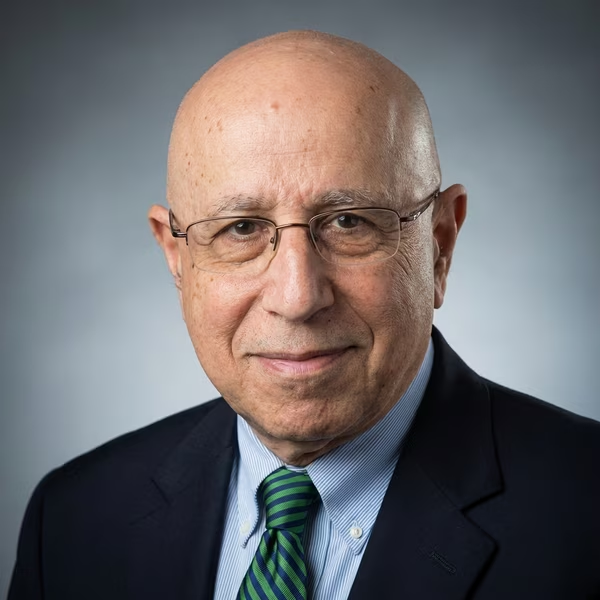
Said Erikat

Opinion Writer

Washington – Said Arikat – 2/21/2026

The American ambassador to Israel, Mike Huckabee, sparked a wide wave of controversy after statements he made during an extended interview with conservative media personality Tucker Carlson, in which he spoke about Israel's "right" to the lands extending between the Nile and Euphrates rivers, a geographical reference that includes five Arab countries in addition to the occupied Palestinian territories.

During the interview, Carlson referred to a text from "Genesis 15" in the Bible, asking whether this geographical extent represents, according to religious interpretation, the boundaries of the "divine promise." He pressed Huckabee to clearly define his position, saying that a literal reading of the text means "the entire Middle East." Huckabee replied after a short hesitation: "It's okay if they take it all," before adding that this "is not what we are talking about today."

The statements were placed in the context of a broader debate about what is known as the concept of "Greater Israel," which Prime Minister Benjamin Netanyahu and a number of officials are accused of adopting views close to, despite their denial of seeking to annex lands outside the current control boundaries.

Carlson returned to confirm that what he heard reflects the essence of "Christian Zionism" in its theological dimension, noting that accepting the idea of seizing the lands of countries such as Syria, Lebanon, or Jordan would be politically unacceptable. However, Huckabee denied that Israel was seeking to annex these countries, stressing that it "wants to protect its people now," adding that any potential control over additional lands would only be in the context of a defensive war.

It is worth noting that Israel occupies all of Palestine and parts of Syria and Lebanon, and launches aggressive strikes across the region.

The debate between the two men did not begin with this interview. Earlier, Carlson criticized Huckabee's positions on the treatment of Christians in the occupied territories, and also criticized his statements to Bloomberg News in which he said that the establishment of a Palestinian state in the West Bank was no longer a goal of American policy, considering that "fundamental changes in culture" are a condition for any political path of this kind.

Both parties exchanged arguments via the "X" platform, where Huckabee invited Carlson to meet him instead of "talking about him," to which the latter responded by welcoming and arranging the meeting. Indeed, Carlson traveled to Israel for the interview.

However, the visit witnessed an additional development, as Carlson told the "Daily Mail" that Israeli security officials detained him and members of his team at the airport after the interview, confiscated their passports for a short period, and interrogated one of the producers about the content of their conversation with the ambassador. Carlson described the incident as "strange," confirming that they later left the country.

In his 165-minute program, Carlson criticized Huckabee for not contacting him after the incident, and went so far as to say that an American citizen in Israel "cannot trust that his government will stand by him if it conflicts with the interests of the Israeli government," a statement that reflects the escalating tension between the two men, and opens a new door for discussion about the limits of American support for Israel and its intersections with internal and external considerations.

In a related context, Huckabee did not issue any statement of condemnation or public comment after the killing of the American-born and national Nasrallah Abu Siam, who was killed by Jewish settlers in the town of Mukhamas northeast of Jerusalem in the occupied West Bank, despite three days passing since the incident, which raised questions and criticisms about the American embassy's position on issues affecting American-Palestinian citizens in the occupied territories.

Huckabee's statements, in which he describes himself as a Christian Zionist, reveal the deep overlap between theology and politics in some circles of the American right that supports Israel. The invocation of religious texts to define contemporary geographical boundaries reflects an ideological vision that transcends international law and modern concepts of sovereignty. Despite his attempt at partial retraction, the theoretical acceptance of the idea of "complete seizure" raises real fears in the region, and fuels narratives of existential conflict. It also puts the American administration to a precise test: will support for Israel remain within pragmatic political frameworks, or will it slide into adopting religious interpretations with broad geopolitical implications?

The debate between Carlson and Huckabee reflects a division within the American conservative movement itself regarding the limits of the relationship with Israel. While Huckabee represents a rigid ideological current in his support, Carlson shows an isolationist tendency critical of prioritizing Israeli interests over American national considerations. The detention incident at the airport, regardless of its details, provided additional material for this debate, and re-raised the question of political loyalties and the limits of the alliance. Ultimately, the disagreement goes beyond two individuals to a deeper discussion about the identity of American foreign policy and its future directions.

ISRAELI AFFAIRS

Sat 21 Feb 2026 5:09 am - Jerusalem Time

The Secrets of Back Channels: How Israel Used the Epstein Network to Export Spy Technologies?

Leaked documents reveal a complex web of financial and political relationships that linked the late American financier Jeffrey Epstein with Israel's security elite, most notably former Prime Minister Ehud Barak. This relationship began to take on an institutional character in 2013, with Epstein acting as a financial and strategic intermediary to open new markets for Israeli military and cyber industries in politically unstable regions.

The correspondence shows that Epstein was not just an investor, but a deal architect connecting global capital with emerging Israeli surveillance technologies. Among the most prominent of these companies was 'Carbyne' (formerly known as Reporty), which specialized in emergency response and surveillance technologies, and received financial support from Epstein and direct supervision from Ehud Barak before being sold later for hundreds of millions.

Israel relied on legal loopholes in its defense export control system to export its security technologies, allowing it to circumvent international standards and human rights. Since Israel is not a member of the 'Wassenaar Arrangement,' it found in the back channels managed by Epstein an ideal means to bypass official oversight and achieve secret diplomatic and security interests.

In the case of Ivory Coast, official meetings between Benjamin Netanyahu and President Alassane Ouattara in Jerusalem in 2012 coincided with secret meetings held by Epstein in New York with members of the Ouattara family. This parallel track reflects an Israeli strategy based on building personal relationships with decision-making circles in target countries to pave the way for major security contracts.

Ehud Barak used his influence as a former defense minister to lend intelligence credibility to the deals Epstein was promoting, moving between his capacity as a businessman and a former state official. During his visit to Abidjan in 2013, Barak presented proposals for building an eavesdropping and interception infrastructure, cloaked under the humanitarian guise of building a medical hospital, a common tactic to disguise security activities.

These activities were not limited to the African continent but extended to Mongolia, where Epstein coordinated a visit for Barak in April 2013 to meet senior national security officials there. Correspondence indicates that Epstein guided Barak step-by-step, urging him to exploit civil unrest around the world to turn it into lucrative financial returns through the sale of surveillance systems.

Swiss private banks, such as 'Edmond de Rothschild' and 'Julius Baer,' played a vital role in providing financial and legal cover for these operations. These institutions granted consulting contracts to Barak and Epstein, allowing the conversion of brokerage commissions in arms and espionage deals into legitimate professional fees, away from the eyes of international financial oversight.

One of the most controversial aspects is the involvement of international organizations such as the 'International Peace Institute' in this network, where the institute's diplomatic reputation was used as a front to facilitate security investments. The institute's president, Terje Rød-Larsen, was later forced to resign after his suspicious financial ties with Epstein were exposed, highlighting the Israeli security industry's penetration of international institutions.

The documents show that Barak used official papers bearing the emblem of the State of Israel to present military proposals to foreign countries despite being outside the government. This deliberate blurring of public and private sectors reflects an Israeli policy aimed at marketing 'combat expertise' as a commercial product, while ensuring that these operations remain under indirect supervision from security agencies in Tel Aviv.

After years of diligent work in back channels, results began to appear on the ground through the signing of official security agreements between Israel, Ivory Coast, and Mongolia. It was not long before technical reports detected the use of Israeli spy software such as 'Pegasus' in these countries, confirming that unofficial channels were merely a prelude to imposing cyber dominance.

Epstein's network provided Israel with unique access to financial and power elites in Silicon Valley and in African and Asian capitals alike. Through financial engineers like Epstein and security officials like Barak, Israel was able to build a surveillance export empire that transcends the boundaries of international laws and diplomatic norms.

The Ivory Coast case remains a stark example of how political crises turn into investment opportunities for Israeli security companies. After the UN arms embargo on the country was lifted, Israeli companies were the first to enter the market thanks to the prior arrangements made by Epstein and Barak, raising questions about Israel's role in engineering political changes to serve its commercial interests.

Epstein's 'secret fund' continues to reveal the hidden depths of his relationships with the Israeli security establishment, which appear to have gone beyond mere personal friendships to strategic alliances. These alliances enabled Israel to transform surveillance technologies into a tool of political pressure and a bargaining chip in its international relations, far from any human rights accountability.

Ultimately, this issue highlights how the boundaries between the state and private companies in Israel have blurred, with former senior officials acting as sales agents for spy technologies. As documents continue to emerge, it appears that what was known about Epstein's relationship with Israel is merely the tip of the iceberg in a global system of surveillance and cyber control.

If Ehud wants to make a lot of money, he has to build a relationship with me... Time, attention, consistency, and repetition.

PALESTINE

Sat 21 Feb 2026 5:09 am - Jerusalem Time

Occupation mechanisms open fire with their machine guns east of Khan Yunis

At dawn on Friday, Israeli occupation army mechanisms heavily opened fire with their machine guns towards citizens' lands and homes in the eastern areas of Khan Yunis city, located south of the Gaza Strip.

Sources reported that the Israeli targeting was directly concentrated in the areas adjacent to the border security fence, where the sounds of heavy gunfire clearly echoed throughout the residential neighborhoods near the area, causing a state of anxiety and panic among the local residents, especially children and women.

These military movements come within the framework of periodic sweeping operations carried out by the occupation army along the border strip of the Strip. Field sources confirmed that no injuries among Palestinian citizens have been reported as a result of this targeting so far.

Shooting operations are concentrated along the security fence, where gunfire is clearly heard inside nearby residential neighborhoods.

ARAB AND WORLD

Sat 21 Feb 2026 5:09 am - Jerusalem Time

Death threat before Congress.. Epstein's partner's lawyer stirs controversy during hearing

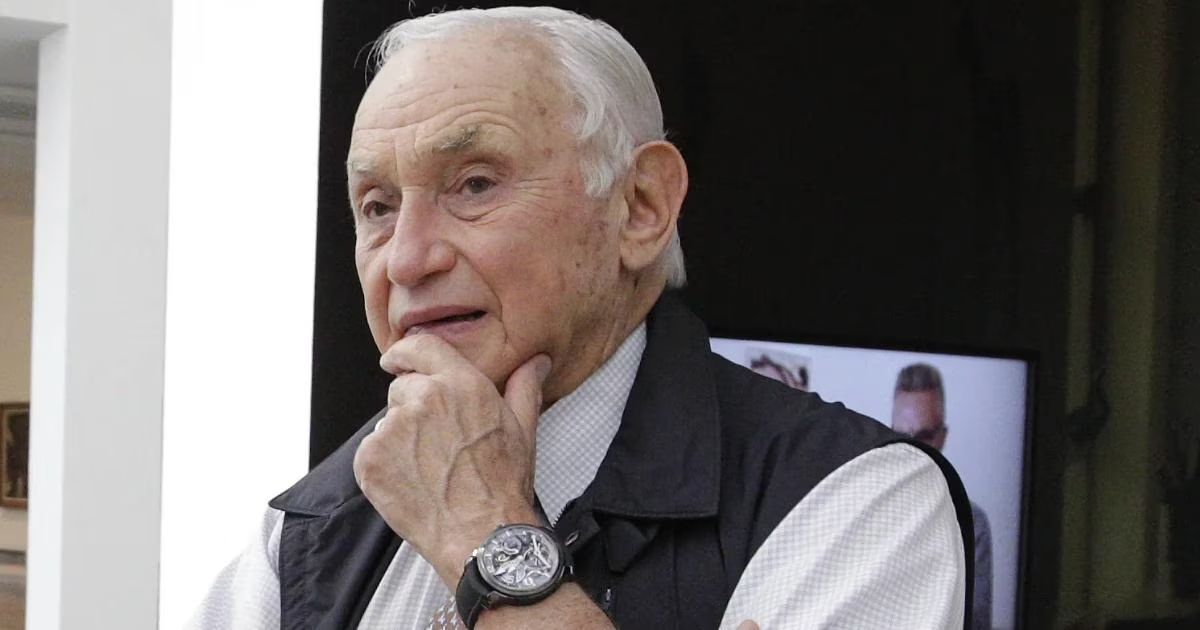
American billionaire Leslie Wexner, 88, faced sharp criticism following his virtual appearance before the US House Oversight Committee. This session comes as part of the extensive investigations being conducted by lawmakers into the complex network of financial relationships that linked prominent businessmen to convicted sex offender Jeffrey Epstein.

During his testimony from his home in Ohio, the former CEO of 'Victoria's Secret' tried to distance himself from his long relationship with Epstein. Wexner affirmed that he had cut all ties with the late businessman nearly two decades ago, describing him as an abusive person and a master deceiver.

Wexner emphasized in a written statement distributed to American media that he was 'naive and foolish' when he placed his absolute trust in Epstein. The billionaire added that despite being deceived, he had committed no legal violations and had nothing to fear from official investigations.

However, the atmosphere in the session suddenly tensed when lawmakers began questioning Wexner about a legal authorization previously granted to Epstein. The question concerned how a part-time employee obtained absolute authority to dispose of hundreds of millions of dollars from Wexner's personal fortune.

In a dramatic moment captured by the session's microphones, lawyer Michael Levy intervened to prevent his client from elaborating on sensitive financial details. Levy whispered a clear threat into Wexner's ear, saying: 'I'll kill you if you answer any question with more than five words,' which shocked those present and observers.

Legal analysts considered lawyer Levy's behavior to exceed the bounds of traditional legal advice and could be interpreted as an attempt to intimidate the witness or obstruct justice. This incident raises new questions about the extent of the secrets still hidden in the files of the relationship between Wexner and Epstein's financial empire.

This testimony comes at a sensitive time, as congressional investigative committees seek to summon more high-profile political and economic figures. Former President Bill Clinton and his wife Hillary Clinton are expected to testify in the same context by the end of February.

The ongoing investigations are based on thousands of pages of leaked government documents that have re-highlighted Epstein's influential partners. Through these sessions, lawmakers aim to uncover the full details of the network that allowed Epstein to operate freely for many years despite his recorded criminal record.

I'll kill you if you answer any question with more than five words.

ARAB AND WORLD

Sat 21 Feb 2026 5:09 am - Jerusalem Time

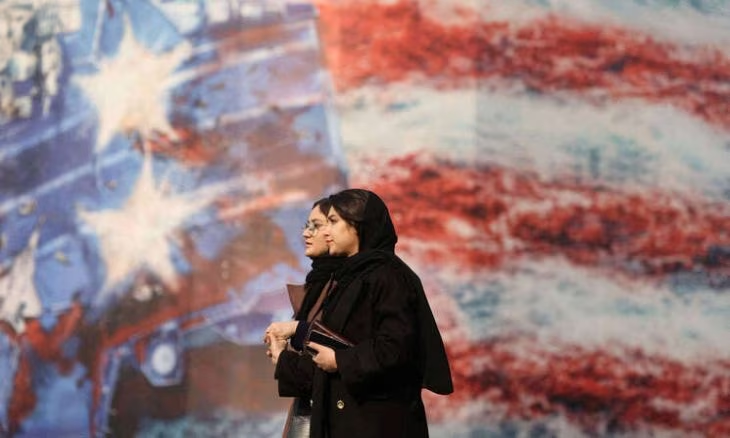
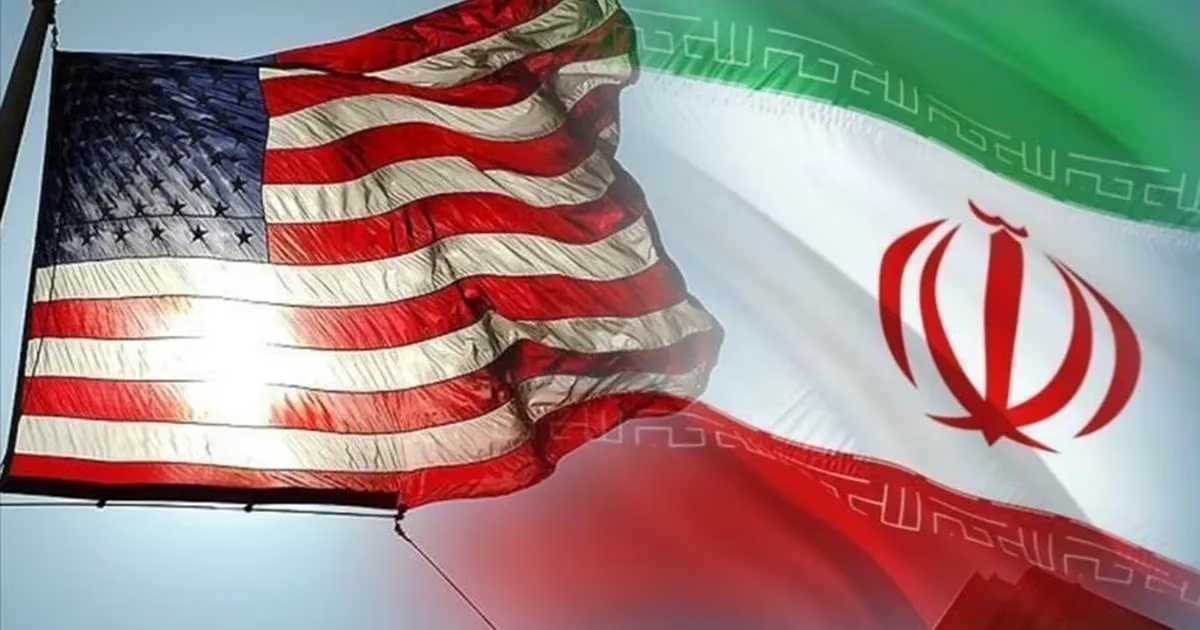
Ominous Signs of Military Confrontation: Unprecedented American Buildup and Stalled Diplomatic Path with Iran

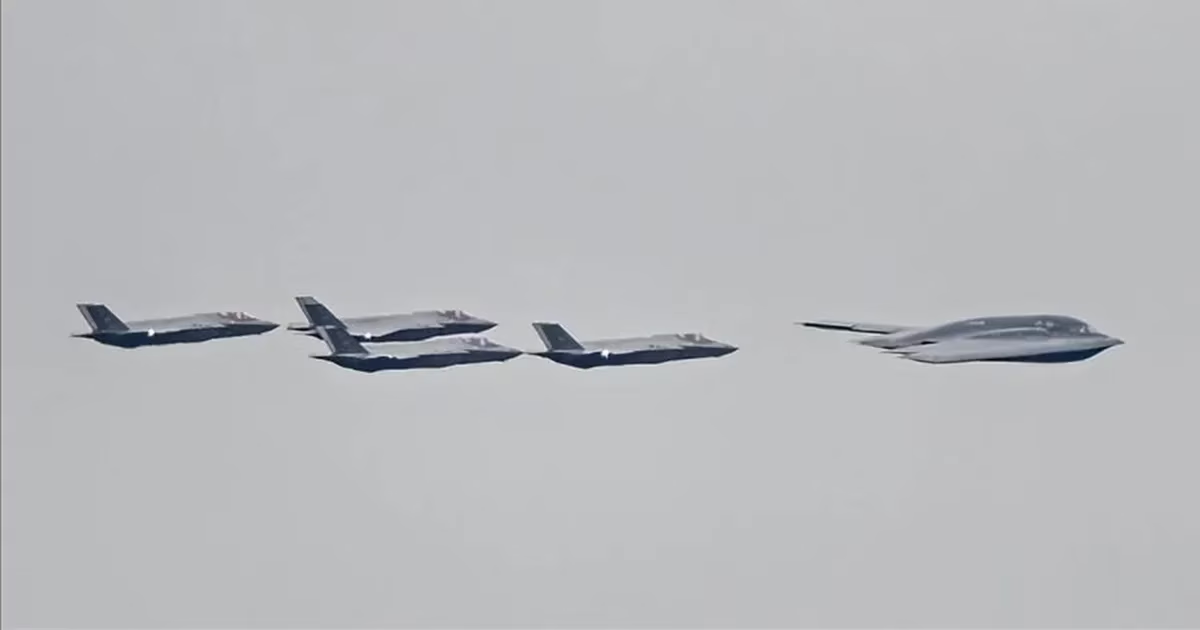
American and Iranian officials, along with diplomats from the Gulf and Europe, have revealed a rapid trajectory towards a direct military clash between Washington and Tehran. These warnings come as hopes for a diplomatic resolution to the Iranian nuclear crisis dwindle, amidst a state of alert in regional and international capitals.\n\nField reports indicate that the United States has begun one of its largest military deployments in the region since the 2003 invasion of Iraq. Iran's neighbors in the Gulf, as well as Israel, believe that the outbreak of armed conflict is now more likely than reaching a political settlement given this massive buildup.\n\nIn a related context, informed sources stated that the Israeli government believes talks between Tehran and Washington have reached a complete dead end. Consequently, Tel Aviv has begun extensive preparations for a potential joint military operation with American forces, although no final decision on implementation has been issued yet.\n\nIf this attack is carried out, it will be the second time the United States and Israel have targeted Iranian facilities in less than a year. Airstrikes last June targeted military and nuclear sites, raising tensions to unprecedented levels in the region.\n\nOil-producing Gulf states are on high alert for what they describe as a military confrontation that could spiral out of control and destabilize global energy supplies. Regional officials believe that the fundamental differences between Washington and Tehran have become intractable, making military escalation a likely option.\n\nObservers believe that Tehran may have miscalculated by adhering to its demands at a time when US President Donald Trump finds himself in a political predicament. The large military buildup led by Trump makes it difficult for him to back down without achieving tangible gains that ensure the preservation of his political prestige.\n\nOn the diplomatic front, two rounds of intensive negotiations addressing uranium enrichment and Iran's ballistic missile system have stalled. Efforts to bridge views on easing economic sanctions imposed on Tehran have not succeeded, further complicating the political landscape.\n\nThe behind-the-scenes negotiations witnessed severe tension, with sources reporting that Iranian Foreign Minister Abbas Araqchi even refused to open an envelope containing American proposals regarding missiles. Omani mediators delivered this envelope in an attempt to break the deadlock, but the Iranian response was a firm and absolute rejection of discussing this issue.\n\nFor his part, the US President issued a direct threat that a nuclear agreement must be reached within a timeframe of 10 to 15 days. Trump warned of "really bad things" happening if the deadline passed without results, which the Iranian side met with similar threats to target American bases.\n\nTrump acknowledged in press statements that he is considering the possibility of a limited military strike to force the Iranian leadership to the negotiating table on new terms. However, the exact timing of any military action remains unclear, pending the completion of US troop deployment by mid-March.\n\nAttention is focused on the anticipated meeting between US Secretary of State Marco Rubio and Israeli Prime Minister Benjamin Netanyahu at the end of February. The meeting is expected to focus on coordinating future military and political steps regarding the Iranian nuclear file and defining the strategic objectives of any potential strike.\n\nWashington has its sights set on military objectives including disabling Iranian air defenses and targeting the Revolutionary Guard's naval forces. The United States considers this force responsible for the continuous threats to navigation in the Strait of Hormuz, through which five of the world's oil production passes.\n\nIn contrast, Tehran shows limited flexibility on international oversight, with Ali Larijani stating his country's readiness for broader cooperation with the Atomic Energy Agency. However, Supreme Leader Ali Khamenei's position remains firm on considering enrichment and missile development as sovereign rights that are not open to negotiation.\n\nEuropean diplomats warn that initiating military action may be much easier than controlling its strategic repercussions in the region. There is concern that the strikes could lead to widespread chaos without guaranteeing a change in the Iranian regime's behavior or weakening its security and domestic grip.\n\nEach side is entrenched in its position, and no real solution can be reached unless Washington and Tehran back down from their red lines.

PALESTINE

Sat 21 Feb 2026 5:09 am - Jerusalem Time

Occupation Navy Targets Fishermen's Boats Off Khan Yunis Shores

Israeli occupation warships opened machine gun fire at Palestinian fishermen's boats operating off the coast of Khan Yunis city in the southern Gaza Strip early Saturday morning. Field sources reported that the attack was intense and indiscriminate, causing panic among the fishermen who were practicing their profession in their designated areas.

The machine gun shelling coincided with the occupation forces firing flare bombs into the sky of the maritime area, while military cruisers chased Palestinian fishing boats to prevent them from continuing their work. Local sources confirmed that the fishermen were forced to withdraw completely towards the coast for fear of being injured or having their equipment and nets, which constitute their sole source of livelihood, destroyed.

These aggressions come in the context of continuous tightening by the occupation against the fishing sector in Gaza, where fishermen are subjected to daily pursuits aimed at harming the local economy and depriving thousands of families of their livelihoods, amidst the ongoing siege imposed on the Strip and strict restrictions on maritime movement.

The intense fire and the pursuit by occupation cruisers forced the fishermen to withdraw towards the shore despite being in the allowed fishing area.

PALESTINE

Sat 21 Feb 2026 5:08 am - Jerusalem Time

Israeli plan to isolate Gaza legally: Cancellation of registration of 37 international organizations and prevention of foreign witnesses

The Israeli occupation government continues to impose severe restrictions on the work of international humanitarian organizations in the Gaza Strip and the West Bank, through a strategy aimed at isolating the occupied territories from international oversight. These moves come in the context of preventing the entry of foreign figures who criticize Israeli policies, to ensure that there are no neutral witnesses to convey the reality of the field conditions and the violations committed against Palestinians to the international community.

Human rights activist Lee Caspi, from Physicians for Human Rights, revealed an official decision to cancel the registration of 37 international organizations that provide vital aid and manage development projects in the Palestinian territories. She explained that this decision was taken by a joint ministerial committee established last year, headed by the Ministry of Diaspora Affairs, following legal amendments targeting the entry and residency conditions for foreigners.

New procedures require international organizations to re-register according to complex security standards, including a comprehensive review of their public data and the provision of detailed personal information about all their Palestinian employees. Observers believe that these conditions place humanitarian workers under direct security prosecution, threatening the continuity of humanitarian work in affected areas.

Data indicates that this tightening comes after heavy losses in humanitarian personnel, as about 1,700 medical and relief workers were killed during the recent aggression on the Gaza Strip. Major organizations such as 'Doctors Without Borders' tried to reach understandings that would ensure the use of their employees' data for administrative purposes only, but the Israeli ministerial committee refused to cooperate with these demands.

The seriousness of canceling registration is evident in preventing the entry of specialized foreign personnel, leading to a paralysis in the provision of basic medical and social services in Gaza and the West Bank. Figures confirm that 'Doctors Without Borders' alone provided about 800,000 medical consultations in Gaza during 2025, and supervised one-third of births in the Strip, making its absence a real health catastrophe.

In a related context, the decision affected 'Save the Children' organization, which has provided relief services to more than 812,000 Palestinian children since October 2023, including providing newborn supplies and basic health needs. Depriving these organizations of their legal status means stopping the flow of in-kind and financial aid on which hundreds of thousands of displaced and wounded depend.

Israeli immigration authorities have already begun implementing a pre-emptive ban policy, prohibiting the entry of representatives of four international organizations that support local human rights institutions active in exposing occupation violations. This move aims to cut off any cooperation between Israeli non-governmental organizations opposing the occupation and donor or international oversight bodies.

Minister of Diaspora Affairs, Amichai Chikli, openly declared this policy on social media platforms, boasting about preventing a delegation from 'Eyewitnesses Palestine' organization from entering. Chikli confirmed clear directives to prevent any representative of an international organization that adopts positions classified by Israel as 'hostile,' in a step that entrenches the policy of silencing international voices.

The persecution is not limited to relief organizations but extends to academics and UN special rapporteurs, as legal amendments dating back to 2017 are activated, allowing the prevention of entry of anyone who calls for a boycott. These laws were previously used to deport Omar Shakir, the director of the Palestine and Israel division at Human Rights Watch, as part of a comprehensive campaign against human rights defenders.

On the media front, Israel imposes a complete blackout through the 'Al Jazeera Law' approved in 2024, which grants authorities the power to close press offices and prevent broadcasting. Foreign journalists are also prevented from entering the Gaza Strip independently and are forced to participate in limited military tours under the supervision of the occupation army to ensure the direction of the media narrative.

This systematic blackout aims to confine the narrative to what only Palestinian victims convey, who face harsh conditions of hunger and displacement that weaken their ability to communicate with the world. In parallel, Israel continues to classify long-standing Palestinian human rights organizations as 'terrorist' organizations, despite international intelligence confirmations of no evidence to support these claims.

The remaining human rights organizations within the occupied territories face enormous financial pressures, as the 'Registrar of Organizations' has begun opening administrative and financial investigations against them for unknown reasons. These investigations coincide with proposed laws seeking to impose exorbitant taxes on foreign donations, with the aim of drying up the financial sources that ensure the continuity of these associations' activities.

These accelerating measures indicate an Israeli desire to liquidate the international and local human rights presence in Palestine, and to turn the Strip and the West Bank into closed areas far from legal accountability. Experts believe that the absence of international witnesses will give the occupation authorities a green light to escalate repression and displacement operations without fear of international criminal prosecution.

In conclusion, there is concern that organizations opposing the occupation will be the next victim on Israel's targeting list, under a banking and legal system that constantly tightens its grip on them. The remaining time to save what is left of the humanitarian and human rights work structure is dwindling, requiring urgent international intervention to stop these retaliatory policies.

The knockout blow came with the decision to cancel the registration of 37 international organizations managing vital projects in the West Bank and Gaza, in an attempt to remove neutral witnesses to the occupation's crimes.

ARAB AND WORLD

Sat 21 Feb 2026 5:08 am - Jerusalem Time

Zero-Sum Confrontation: Is the Hour of Reckoning Approaching Between the Trump Administration and Iran?

The Middle East is currently at a highly sensitive historical turning point, where the complexities of the current crisis surpass all confrontations the region has witnessed over the past decades. The intense military movements in the Gulf waters indicate that the scene has shifted from traditional pressures to a zero-sum confrontation zone, where diplomatic options narrow and the probabilities of direct conflict emerge.

Sources reported that the negotiation track hosted in Geneva in recent months under Omani patronage faced fundamental obstacles that prevented any real breakthrough. These difficulties stem from the widening gap between the ceiling of American demands and Iranian red lines, making a compromise currently out of reach.

While Tehran has presented proposals including a temporary freeze on some aspects of its nuclear program, Washington maintains a hardline stance demanding a comprehensive dismantling of nuclear capabilities and a reduction of the missile program. The Iranian leadership considers these conditions to target the core of the deterrence system that protects the regime, making any concession an unacceptable existential risk.

Time emerges as a crucial factor in President Donald Trump's strategy, as he seeks to close this thorny file before the midterm elections. The White House believes that procrastination might give Tehran an opportunity to strengthen its positions or await internal political shifts in the United States, thus accelerating the pace of political and military pressure.

Despite the move towards a decisive outcome, Trump's ambition clashes with serious economic concerns regarding the potential for oil prices to jump to record levels, possibly exceeding $150 per barrel. This scenario threatens the return of inflation to American markets, putting the administration in a dilemma between the desire to show strength and the need to maintain global economic stability.

On the other hand, Iran is no longer facing international pressures alone, as reports indicate deepening technical and military cooperation with China and Russia. This coordination, which includes monitoring and navigation systems, sends clear messages to Washington that the major powers in the East will not allow a change in regional power balances by force without a reaction.

The Gulf and Arabian Sea are witnessing unprecedented American military buildups, primarily aimed at imposing a policy of maximum deterrence on Tehran. However, this military intensity increases the risks of unintended friction that could ignite a widespread confrontation that neither party openly desires.

Tehran relies in its defensive strategy on raising the cost of any potential attack, brandishing sensitive geopolitical cards, foremost among them the closure of the Strait of Hormuz. The mere threat of disrupting navigation in this vital passage puts the international economy on high alert, making any American military decision subject to calculations of economic profit and loss.

In addition to direct threats, Iran practices a policy of strategic ambiguity regarding its missile capabilities and new air defense systems. The aim of this ambiguity is to create a state of doubt among American military planners about the actual outcomes of any military strike, thereby enhancing mutual deterrence between the two parties.

At the core of this crisis, the confrontation is not limited to offensive capabilities alone, but also concerns the ability to endure and manage the brink. The United States seeks to demonstrate its overwhelming superiority, while Iran works to make the cost of war politically and economically prohibitive to the extent that it prevents a decision to attack.

Media sources reported that decision-making circles in major capitals are seriously discussing emergency military plans, indicating that the margin of error has become extremely narrow. Although war is not inevitable, the current situation suggests that a small spark could be enough to overturn the table and change existing diplomatic paths.

The regional street is experiencing a state of cautious anticipation, despite its preoccupation with daily livelihood crises, yet the realization of the seriousness of the moment has begun to permeate everyone. Any military clash in this vital region will not stop its effects at the borders of the warring states, but will extend to include global energy security and the stability of the entire region.

The fundamental question remains about the ability of major players to manage this escalation without sliding into a comprehensive confrontation imposed by miscalculations. History proves that many major conflicts began with moments when everyone thought things were under control, before dramatically spiraling out of control.

In conclusion, the region stands before a fragile equation separating a potential historical settlement and an explosion that redraws political maps. Whether this tension ends with a new agreement or an armed conflict, the results will shape the international order and power relations in the Middle East for decades to come.

The outcome of this confrontation will not only define the future of the Middle East but will also leave its mark on the shape of the international order for decades to come.

PALESTINE

Sat 21 Feb 2026 5:08 am - Jerusalem Time

The 'Settlement Dates' Deception.. How the Occupation Falsifies the Identity of its Exports to Circumvent the Boycott?

With the advent of the blessed month of Ramadan in 2026, data released by industry observers and the international boycott movement revealed a sharp escalation in attempts by date exporters in occupation settlements to circumvent comprehensive boycott campaigns. The figures show a shocking gap in statistics, where declared production is about 8,800 tons annually, while export quantities exceed 35,000 tons, meaning that approximately 26,000 tons are supplied from illegal settlements.

The misleading strategy adopted by exporters relies on complex techniques to conceal the true origin of the products, where dates are transferred to intermediate centers for repackaging and labeling with misleading names such as 'Mediterranean Basin products'. These operations aim to launder the product's identity and facilitate its entry into European and Arab markets that impose strict restrictions on products from settlements established on occupied territories.

The forgery operations go beyond merely changing labels to complete visual 'identity theft', through the use of designs that mimic Palestinian cultural heritage and the employment of Arabic calligraphy and religious symbols such as crescents. Misleading labels bearing the phrase 'Packed in Palestine' are also placed to deceive consumers, in addition to manipulating barcodes to disable the ability of smart boycott applications to detect the true source.

Informed sources reported that exporters also resort to mixing limited quantities of original Palestinian dates with settlement produce in small proportions, in order to bypass inspection and border control procedures. The religious sentiments of Muslims during the holy month are also exploited by launching brands with names that suggest sanctity, such as 'Holy Land Dates', in an attempt to break the intensity of public rejection of these products.

In the face of this wave of deception, global boycott campaigns have issued strong warnings to consumers about the need to be wary of specific brands proven to be involved in marketing settlement produce, most notably 'Jordan River' and 'King Solomon'. In contrast, these campaigns called for strengthening support for verified Palestinian producers who face economic restrictions, emphasizing the importance of checking reliable brands such as 'Zaytoun' and 'Yaffa'.

On the technical and field level, activists have developed advanced applications based on artificial intelligence techniques to detect attempts to manipulate origin and accurately examine supply chains. These digital efforts coincided with the organization of widespread protests in global capitals such as London and Munich, to pressure major supermarket chains to stop dealing with distributors proven to be involved in marketing 'laundered settlement dates'.

Reports indicate that the hashtag 'Do not break your fast on genocide' has topped social media platforms, creating unprecedented legal and financial pressure on the agricultural sector of the occupation. Legal proceedings have already begun in countries such as Spain and France against commercial platforms that contribute to promoting these products, amidst international demands for imposing strict sanctions on companies that violate laws related to the country of origin.

The huge gap between actual production and export volume confirms that 75% of marketed dates come from illegal settlements under the guise of fake identities.

ARAB AND WORLD

Sat 21 Feb 2026 5:08 am - Jerusalem Time

Iran warns Security Council: We will respond firmly to any aggression, and all American bases will be legitimate targets

The Islamic Republic of Iran sent a strongly worded message to the UN Security Council via the Secretary-General of the United Nations, warning against increasing American threats to resort to military force. Tehran affirmed in its message that it would not hesitate to respond firmly and proportionately to any aggression targeting its territory or interests, emphasizing the readiness of its forces to deal with any escalatory scenario.\n\nThe message, delivered by Iran's ambassador to the international organization, Amir Saeid Iravani, clarified that all military bases and facilities belonging to any attacking force in the region would become legitimate targets for Iranian defense. This warning comes amidst escalating regional tensions and military movements that Tehran monitors as signs of Washington's intention to undertake hostile military action.\n\nIran's diplomatic move followed statements made by US President Donald Trump, in which he alluded to the possibility of using strategic air bases such as 'Diego Garcia' and 'Fairford' to launch attacks. Ambassador Iravani considered these statements a direct threat to international peace and security, and not merely routine political rhetoric.\n\nThe Iranian envoy, in his address to Antonio Guterres, stressed that the current regional scene has become "highly volatile" due to continuous American military movements. He indicated that these actions increase the likelihood of a comprehensive confrontation whose consequences may not be controllable, necessitating immediate international intervention to curb this escalation.\n\nDespite the warning tone, Tehran affirmed that it does not seek to wage war or increase tension in the region, and will not be the party to initiate any military action. However, the message emphasized that Iran will exercise its inherent right to self-defense in accordance with Article 51 of the UN Charter, holding Washington fully responsible for any consequences.\n\nIn the context of the diplomatic path, the message affirmed Iran's commitment to the principles of international law and peaceful solutions to crises, noting its serious engagement in nuclear negotiations. Tehran demanded the complete and unconditional lifting of sanctions, which it described as "illegal and inhumane," as a fundamental condition for achieving lasting stability in the nuclear file.\n\nSources indicated that Iran sees the possibility of reaching a balanced solution if the US administration shows genuine seriousness and respect for international conventions. The message called on the UN Secretary-General to activate his powers and those of the Security Council to stop American threats before it is too late, to avoid the region sliding into a widespread conflict.\n\nTehran warned that international silence regarding these threats might encourage the repetition of the same scenario with other UN member states. The Iranian mission formally requested that this message be circulated as a Security Council document to document the Iranian position before the international community under these critical circumstances.\n\nOn the other hand, US President Donald Trump had set a ten-day deadline for Iran to reach what he described as a "meaningful deal." Trump threatened during a meeting in Washington that "bad things" would happen if the deadline expired without an agreement satisfactory to the US administration regarding the nuclear program and regional policies.\n\nThese developments reflect the crisis between Washington and Tehran reaching a brink, where direct military threats intertwine with political and economic pressures. International circles are awaiting what the coming days will bring, given each party's insistence on its declared positions and Tehran's warning of an unprecedented response to any military action.\n\nThe statements of the US President cannot be treated as mere fleeting political talk, but rather express a real danger of a military aggression whose consequences would be catastrophic.

PALESTINE

Fri 20 Feb 2026 7:51 pm - Jerusalem Time

Dead and Injuries in a Series of Israeli Violations of the Ceasefire Agreement in the Gaza Strip

The Gaza Strip witnessed a new escalation in a series of Israeli violations of the ceasefire agreement, as the Israeli army announced targeting a Palestinian in the southern region of the Strip. Military sources claimed that forces stationed there spotted a person who crossed what is known as the 'Yellow Line,' considering that he posed an immediate threat that required immediate action.

In a related context, medical sources reported that a Palestinian child was injured by Israeli gunfire targeting displaced persons' tents in Al-Halawa camp in the town of Jabalia, north of the Strip. The sources clarified that this targeting occurred in an area outside the agreed-upon deployment range of Israeli forces, which constitutes a direct violation of the established security protocols.

Regarding field operations in the central region, medical teams were able to retrieve the body of a Palestinian martyr who was killed by occupation bullets several days ago in the Netzarim area. Field reports confirmed that the victim fell in an area where the Israeli army is not officially present, which reflects the continued sniping and indiscriminate targeting of citizens.

Early this Friday, Israeli fighter jets intensified their airstrikes and artillery shelling on wide areas in the north, center, and south of the Strip. Local sources reported that occupation aircraft launched at least two raids inside the Yellow Line in the eastern areas of Al-Shuja'iyya and Al-Tuffah neighborhoods in Gaza City, causing panic among residents.

The aerial bombardment coincided with intense gunfire from Israeli military vehicles towards citizens' homes and displaced persons' tents in the Al-Zaytoun neighborhood, southeast of Gaza City. Residential areas also came under intermittent artillery shelling, leading to severe material damage to the property of Palestinians who are already suffering from infrastructure destruction.

In Al-Bureij camp in the central Strip, Israeli army engineering units carried out large-scale demolition operations of buildings and facilities located east of the camp. These operations came hours after military bulldozers carried out bulldozing and sabotage work near 'Abu Ataya' roundabout, amid intense gunfire to prevent citizens from approaching the area.

In the southern Strip, the eastern areas of Khan Yunis city witnessed suspicious military movements and gunfire from vehicles stationed on the border. These movements come at a time when residents are trying to regain some of their normal lives during the blessed month of Ramadan, which comes under harsh humanitarian conditions.

For its part, the United Nations Relief and Works Agency for Palestine Refugees (UNRWA) warned of the continued deterioration of living conditions in Gaza as a result of Israeli restrictions. The agency confirmed in a statement that the obstacles imposed on the access of humanitarian aid prevent meeting the basic needs of millions of displaced persons who rely entirely on international relief.

UNRWA indicated that it is making strenuous efforts to provide health care, education, and food aid, but the quantities allowed to enter cover only a small part of the existing deficit. The agency called on the international community to pressure for lifting the siege and allowing the flow of medical supplies and fuel to ensure the continuation of vital services.

It is worth noting that these violations come under the ceasefire agreement in effect since last October, which has witnessed hundreds of violations that resulted in civilian casualties. The occupation continues to obstruct the access of supplies to about 2.4 million Palestinians, including 1.5 million displaced persons living in tragic conditions after two years of war and widespread destruction.

The amount of aid currently allowed to enter meets only a small fraction of the needs of Palestinians, and restrictions must be lifted immediately.

ARAB AND WORLD

Fri 20 Feb 2026 7:50 pm - Jerusalem Time

Khamenei Faces the Toughest Test: US Pressure and Collapse of Regional Influence

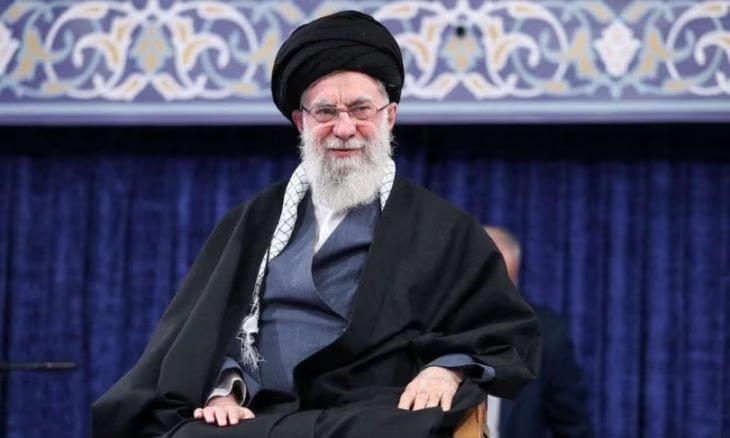
Iran's Supreme Leader, Ayatollah Ali Khamenei, finds himself today at the most dangerous crossroads since he assumed power some 36 years ago, as escalating internal pressures coincide with existential external threats. This crisis comes at a time when Iranian diplomacy is racing against time to avert potential airstrikes hinted at by the United States, putting the stability of the regime at stake.

Internally, Iran is suffering from widespread popular discontent due to the deteriorating economic conditions resulting from strict international sanctions. This anger was manifested in last January's protests, which the authorities met with an iron fist, leading to thousands of casualties in confrontations described as the bloodiest in decades.

Regionally, Tehran's policy appears to be in an unprecedented decline after decades of expansion, as intensive Israeli strikes have significantly weakened Hezbollah's capabilities in Lebanon. The fall of Bashar al-Assad's regime in Syria also dealt a devastating blow to the Iranian sphere of influence, depriving Tehran of a vital strategic bridge in the region.

The Iranian leadership now faces firm American demands to abandon its ballistic missile program, which Tehran considers its last strategic bargaining chip and its only remaining deterrent. Despite showing flexibility regarding the nuclear file, Khamenei still refuses to compromise on missile capabilities, considering them a red line that cannot be crossed.

US President Donald Trump recently stated that he is seriously considering limited military strikes to pressure Tehran into a comprehensive agreement. This show of force puts Khamenei, 86, before difficult choices ranging from direct military confrontation to making painful concessions.

Khamenei's current calculations are based on a long history of hostility towards the West and a personal experience shaped during the Islamic Revolution and the war with Iraq. The Supreme Leader holds absolute authority in making sovereign decisions, as all military and civilian state institutions are under his direct supervision, making the country's fate tied to his personal decision.

Despite his known ideological rigidity, Khamenei has shown in previous instances an ability for tactical retreat when he feels a real threat to the regime's survival. The concept of 'heroic flexibility' stands out as a legitimate tool he used in 2013 to justify entering into nuclear deal negotiations, which may be repeated in the current crisis.

Observers believe that tightening security control through the Revolutionary Guard and Basij forces remains the primary pillar Khamenei relies on to confront unrest. These forces have proven their absolute loyalty to the Supreme Leader in suppressing successive waves of protests, whether in 2009 or during the Mahsa Amini events in 2022.

In addition to military power, Khamenei relies on a massive financial empire known as (Setad), a semi-governmental institution that controls vast sectors of the Iranian economy. This institution, estimated to be worth tens of billions, provides the necessary resources to fund security operations and support the Revolutionary Guard away from parliamentary oversight.

Reports indicate that the assassination attempt on Khamenei in the early 1980s left a deep impact on his personality, as he tends towards excessive secrecy and caution against betrayal. This constant anxiety is reflected in the structure of governance in Iran, where powers are distributed in a way that ensures no strong rival to his authority emerges.

Amid increasing American military buildup in the region, international circles are awaiting Tehran's next move, and whether it will lean towards de-escalation or escalation. The Supreme Leader's political history indicates that he prefers to prolong negotiations to gain time, but the margin available to him now seems narrower than ever before.

Khamenei transformed from a president described as weak at the beginning of his tenure to one of the most powerful leaders in modern Iranian history, thanks to political cunning and the establishment of a loyal security apparatus. However, the current challenges, represented by the collapse of regional allies and direct American threats, place him before an unprecedented test since 1989.

Informed sources indicate that Tehran's envoys are making strenuous efforts through back channels to avoid direct military confrontation with Washington. However, adherence to the missile program may thwart these efforts, especially with the new US administration's insistence on fundamentally changing Iranian behavior.

Ultimately, preserving the continuity of the Islamic Republic will remain the supreme goal that may push Khamenei to drink the 'cup of poison' once again, similar to what his predecessor Khomeini did when ending the war with Iraq. The coming days will reveal whether 'heroic flexibility' will save the regime again or if confrontation has become inevitable.

Preserving the Islamic Republic at any cost is the principle that drives Khamenei's decisions, even if it requires exercising tactical 'heroic flexibility'.

PALESTINE

Fri 20 Feb 2026 7:50 pm - Jerusalem Time

3 Dead in Israeli Raid Targeting Security Headquarters in Ain al-Hilweh Camp, Southern Lebanon

At least three people were martyred this Friday evening as a result of an airstrike carried out by an Israeli occupation army drone on the Ain al-Hilweh Palestinian refugee camp in the city of Sidon, southern Lebanon. Field sources reported that the drone directly fired three missiles towards the densely populated Hitten neighborhood, causing widespread destruction in the targeted area.

Sources within the Hamas movement confirmed that the bombing targeted a headquarters designated for the joint security force inside the camp, denying Israeli claims that the site was used as a center for the movement's activities. The sources indicated that the victims fell while carrying out their security and organizational duties inside the camp, which already suffers from difficult humanitarian conditions.

For its part, the Lebanese National News Agency clarified that the three missiles accurately hit their targets in the Hitten neighborhood, resulting in a number of serious injuries in addition to the three martyrs. Ambulance and civil defense teams are currently working to recover the victims and transport the injured to nearby hospitals for necessary treatment.

In the context of official responses, the Lebanese-Palestinian Dialogue Committee issued a strongly worded statement condemning the repeated targeting of Ain al-Hilweh camp by the occupation forces. The committee considered this attack a blatant violation of Lebanese sovereignty and a breach of all international laws and conventions that protect civilians in conflict zones.

The committee stressed in its statement that this aggression constitutes a direct threat to the recently signed ceasefire agreement, warning that such operations raise the level of tension in Palestinian camps. It called on the international community to intervene immediately to stop these violations that threaten the fragile stability that Lebanon seeks to maintain.

Coinciding with the raid, Lebanese airspace witnessed intense overflights by Israeli occupation warplanes and drones over the Zahrani areas and neighboring villages at very low altitudes. Local sources also reported spotting hostile reconnaissance planes circling over the capital Beirut, reaching the southern suburbs, which caused a state of anxiety among residents.

This escalation comes a few months after a horrific massacre committed by the occupation army in the same camp last November, which resulted in 13 martyrs and dozens injured. The repetition of these attacks indicates an Israeli strategy aimed at destabilizing security within Palestinian refugee communities in the diaspora.

The Israeli army, for its part, tried to justify the operation in an official statement, claiming that it targeted a headquarters from which Hamas elements were active in the Ain al-Hilweh area. However, field facts and eyewitness testimonies confirm that the targeted site belongs to the security force responsible for maintaining order within the camp in coordination with the Lebanese authorities.

It is worth noting that the widespread Israeli aggression against Lebanon since October 2023 has left a heavy toll of bloodshed, with more than 4,000 Lebanese and Palestinians martyred and about 17,000 others injured. Despite the signing of a ceasefire agreement at the end of last year, Israeli air and ground violations have not completely stopped.

A state of anger and sadness prevails in the alleys of Ain al-Hilweh camp after the fall of the new martyrs, amidst calls to escalate protests against Israeli practices. Political circles in Lebanon are cautiously monitoring the repercussions of this attack on the continuity of the fragile calm, in light of the ongoing Israeli military provocations in Lebanese airspace.

The ongoing aggression constitutes a breach of the ceasefire agreement, threatens fragile stability, and raises the level of tension within Palestinian camps.

ARAB AND WORLD

Fri 20 Feb 2026 7:50 pm - Jerusalem Time

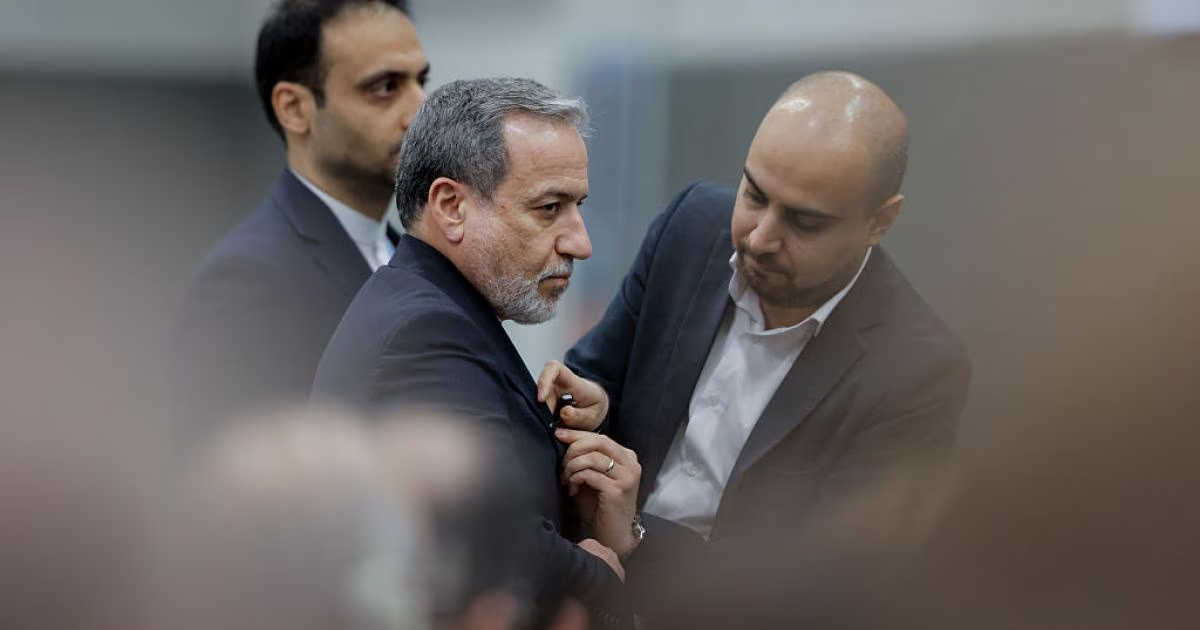
Araghchi: Washington did not demand 'zero enrichment' and diplomatic solution is near

Iranian Foreign Minister, Abbas Araghchi, revealed new details regarding the course of nuclear negotiations with the United States, confirming that Washington did not ask Tehran to completely abandon uranium enrichment. Araghchi clarified that the talks hosted by the Swiss city of Geneva last Tuesday, mediated by Oman, did not address proposals to suspend enrichment or reduce it to zero.

In a media interview broadcast on Friday, the head of Iranian diplomacy indicated that his country had not made any promises to suspend its current nuclear activities, nor had the American side put forward the demand for 'zero enrichment' as a precondition. Araghchi described this stance as a remarkable and important development, especially given previous statements from the US administration that called for a complete ban on enrichment operations.

The Iranian minister stressed Tehran's conviction that there is no military solution that can end or radically address the Iranian nuclear file. He considered that resorting to force would only complicate the situation, emphasizing that the diplomatic path remains the only option capable of ensuring the peaceful nature of the nuclear program and addressing the concerns of international parties.

In the context of his discussion about the relationship with Washington, Araghchi clarified that Iran does not harbor hostility towards the American people, but rather its primary problem lies in the governmental policies characterized by hostility towards Tehran. He added that changing the form of relations between the two countries depends on the cessation of hostile actions and confrontational policies pursued by the United States against the Iranian state and its interests.

Araghchi affirmed his country's adherence to diplomatic solutions as a strategic option, indicating that constructive dialogue is the guarantor of building mutual trust between the disputing parties. He noted that Tehran is ready to take 'confidence-building measures' at both technical and political levels, provided that these are met with concrete measures related to lifting the economic sanctions imposed on it.

Regarding the next steps, the Iranian minister expected a draft counter-proposal to be submitted to US envoys Steve Witkoff and Jared Kushner within two or three days. He expressed optimism about the possibility of reaching a final agreement in a very short period, noting that a new round of talks might be held within a week to discuss technical details.

These statements come at a time when Tehran considers the right to uranium enrichment a red line that cannot be crossed in any future negotiations. US President Donald Trump had on several occasions called for a comprehensive ban on enrichment, which Iran completely rejects as a violation of its sovereignty and international rights.

It is worth noting that the nuclear agreement signed in 2015 set an enrichment ceiling at 3.67%, but this agreement has practically become null and void after the US withdrawal from it. Since 2018, Iran has gradually disengaged from its commitments, raising enrichment levels to 60% according to reports from the International Atomic Energy Agency.

Experts explain that uranium enriched to low levels is used for peaceful purposes such as electricity generation and the production of medical isotopes for treating intractable diseases like cancer. However, high levels of enrichment raise international concerns about their potential use for military purposes, as manufacturing a nuclear weapon requires reaching an enrichment level of approximately 90%.

For its part, Iran continues to deny any intention to possess nuclear weapons, emphasizing that its program is for civilian purposes only and for developing the national energy sector. Tehran bases its position on the Nuclear Non-Proliferation Treaty, which grants signatory states the right to possess peaceful nuclear technology under international supervision.

In contrast, Western powers and Israel continue to express deep skepticism about Iranian intentions, accusing Tehran of actively seeking to acquire the atomic bomb. Israel, described by experts as the only nuclear power in the region, considers the Iranian nuclear program an existential threat to its national security.

Tensions peaked in June 2025, when the United States carried out airstrikes targeting key nuclear facilities in Fordow, Natanz, and Isfahan. These strikes followed a 12-day military confrontation, sparked by a surprise attack launched by the Israeli occupation in the region.

Despite assurances from the US administration that these strikes inflicted severe damage on Iranian nuclear infrastructure, technical reports indicate ambiguity regarding the actual extent of the destruction. It appears that Tehran managed to absorb the shock and proceed with strengthening its negotiating and field capabilities despite intense military pressure.

These current diplomatic moves coincide with extensive American military reinforcements in the Gulf region, including the deployment of naval vessels and advanced air defense systems. This buildup, according to informed sources, aims to exert maximum pressure on Tehran to push it towards making substantial concessions on the nuclear file and regional influence.

There is no military solution to the Iranian nuclear program, and dialogue is the only way to ensure its peaceful framework.

PALESTINE

Fri 20 Feb 2026 7:49 pm - Jerusalem Time

Isolation that obscures time.. Palestinian prisoners in occupation prisons unaware of the start of Ramadan

Day after day, new chapters of human suffering endured by Palestinian prisoners inside Israeli occupation prisons are revealed, where violations have exceeded the limits of physical abuse to reach complete isolation from time and place. Recent legal testimonies indicate that the policy of solitary confinement has become a tool to deprive detainees of their most basic spiritual and religious rights, including knowledge of the dates of sacred religious occasions.

In this context, lawyer Khaled Mahajneh, from the Commission of Detainees and Ex-Detainees Affairs, conveyed painful details about the قطع of communication between prisoners and the outside world. Mahajneh explained that during his representation of one of the Palestinian prisoners from within the Palestinian territories detained in 'Gilboa' prison before the court, it became clear that the prisoner was unaware that the month of Ramadan had already begun, as a result of the forced absence imposed on him inside his cell.

The lawyer recounts that when he took the initiative to congratulate the prisoner on the advent of the holy month and asked him about his fasting, he was surprised by the prisoner's indignant response: 'Today is Ramadan? No one told us it started.' This incident shows the extent of the cruelty in the occupation's procedures, which aim to break the morale of the prisoners by stripping them of their connection to the outside reality and preventing them from psychological and physical preparation for fasting.

This testimony sparked a wide wave of interaction and condemnation on social media platforms, where activists and human rights defenders considered it additional evidence of the brutality of the conditions in which prisoners live. Human rights sources confirmed that depriving a prisoner of knowledge of temporal timing and religious rituals represents a flagrant violation of international conventions that guarantee the right of detainees to practice their worship freely and without restriction.

These developments come at a time when Israeli prisons are witnessing an unprecedented escalation in the pace of torture and ill-treatment, amid warnings of serious repercussions on the lives of prisoners. Observers warn that the continuation of these systematic policies, which include prolonged solitary confinement and deprivation of basic needs, portends an explosion of conditions inside prisons in the absence of effective international oversight.

Today is Ramadan?! No one told us it started

PALESTINE

Fri 20 Feb 2026 7:49 pm - Jerusalem Time

Gaza Faces the Largest Orphan Crisis in Modern History: 40,000 Children Without Parents

The Gaza Strip is facing a worsening humanitarian catastrophe that has affected the most vulnerable segment of its population, with estimates indicating that approximately 40,000 children have lost one or both parents as a result of the ongoing war. The United Nations Children's Fund (UNICEF) has classified this situation as the largest orphan crisis in modern history, amidst a complete collapse of infrastructure and the absence of basic safety provisions.

Field sources have reported heartbreaking stories of children who suddenly found themselves facing life's burdens without support. One grandmother, who is caring for her grandchildren, recounts that the little ones are living in a state of devastating emotional emptiness. She explained that these children watch the windows, waiting for the return of their martyred parents, while extended families try to fill the void despite scarce resources and harsh living conditions.

In live testimonies, children revealed that they have been forced to bear responsibilities beyond their years, including caring for their younger siblings and managing their daily affairs in displacement centers. One child who lost both parents affirmed that the affection of grandparents, despite its importance, cannot compensate for the absence of a father and mother, describing life as an orphan as a daily struggle for survival.

For his part, Salim Oweis, UNICEF's regional spokesperson, explained that the announced figures may not reflect the true extent of the tragedy experienced by children in the Strip. In statements to media sources, he indicated that more than 3,000 children lost both parents in direct strikes, which prompted the organization to work on family reunification programs and provide urgent psychological support commensurate with the scale of the trauma.

Regarding education, Adnan Abu Hasna, UNRWA's media advisor, revealed that 94% of educational facilities in Gaza have been completely destroyed. Despite this destruction, the agency is attempting to resume the educational process through temporary tents accommodating hundreds of thousands of students, with a particular focus on orphans who require intensive psychological and physical care.

Relief efforts face enormous challenges with the onset of winter, as orphaned children lack winter clothing, stationery, and a suitable learning environment. UNRWA sources confirmed that current needs far exceed available capacities, especially in light of the ongoing blockade that prevents the flow of essential aid to restore the lives of these children.

The profound effects of this war have not been limited to physical loss but have extended to create a generation suffering from permanent disabilities and chronic psychological trauma. Hundreds of thousands of children in Gaza remain victims of blockade and destruction policies, making the issue of orphans an international matter that requires urgent intervention to save what remains of their stolen childhood.

They wait for their martyred mother at the window... It's true they feel a great emptiness, but we try to compensate them as much as we can.

PALESTINE

Fri 20 Feb 2026 7:49 pm - Jerusalem Time

International Report Warns of 'Status Quo' Collapse in Al-Aqsa Under Pressure of Israeli Extremism

Indicators of tension are escalating in occupied Jerusalem with the advent of the holy month of Ramadan, amidst increasing accusations against the Israeli occupation authorities of seeking to impose a new reality within the blessed Al-Aqsa Mosque. Field reports indicate that recent security measures have exceeded all historical understandings that have governed the holy site for many decades, threatening an explosion of the situation in the region.

International press sources quoted experts warning that the agreement that regulated prayer affairs in the Noble Sanctuary for six decades has effectively collapsed. This collapse is a result of continuous pressures from extremist Temple groups that enjoy direct and unprecedented support from ministers in the current Israeli government, who seek to change the identity of the place.

Ramadan's first days witnessed a series of blatant violations, most notably the arrest of the Al-Aqsa Mosque Imam and police forces raiding the courtyards during worshipers' evening and Tarawih prayers. These actions represent a clear breach of the status quo since 1967, which restricts the right to pray in the Noble Sanctuary to Muslims alone.

The occupation police and the General Security Service (Shin Bet) are currently under the command of a far-right political leadership that adopts an overt agenda to undermine the role of the Islamic Endowments Department. Observers believe that these policies aim to assert full Israeli control over the site and force Palestinians to accept daily incursions as an unchangeable reality.

Sources in the Islamic Endowments Department in Jerusalem confirmed that the Shin Bet detained a number of its employees administratively without clear charges, in a move aimed at intimidating staff. Decisions were also issued to prevent dozens of employees and imams from entering the mosque to perform their religious and administrative duties, which disrupted the department's ability to organize the influx of worshipers.

The restrictions were not limited to human aspects but extended to include preventing necessary maintenance work and looting endowment offices inside the Sanctuary. The occupation authorities deprived worshipers of the most basic services, preventing the installation of sun-protective awnings or the establishment of temporary medical clinics to deal with emergencies during Fridays and crowded days.

In a provocative move, the occupation police extended the hours of settler and tourist incursions into Al-Aqsa Mosque during the morning period. Eyewitnesses documented the entry of hundreds of settlers who performed Talmudic rituals and chanted religious songs loudly inside the courtyards, in a blatant challenge to the feelings of fasting Muslims.

The National Security Minister, Itamar Ben-Gvir, is leading this escalatory trend through his repeated statements about his desire to raise the Israeli flag inside Al-Aqsa and build a Jewish synagogue. Ben-Gvir has given settlers the green light to bring in printed prayer books, which was strictly prohibited previously by the Israeli security services themselves.

Legal experts and international advisors described the situation in Jerusalem as a 'ticking time bomb' that could explode at any moment due to the desecration of the holy site. They pointed out that any real or perceived threat to Al-Aqsa has always been the primary driver of major unrest in the Palestinian territories, as happened in the Al-Aqsa Intifada in 2000.

Analysts believe that the current Israeli government feels a sense of impunity, which pushes it to cross red lines without regard for international public opinion. This feeling stems from its ability to implement extreme military and political policies in Gaza and the West Bank without facing real international pressure that would compel it to retreat.

The Islamic Endowments Department, affiliated with the Jordanian Ministry of Endowments, faces immense pressure to maintain its role in managing the site under Hashemite custodianship. However, unilateral Israeli measures weaken the institution's ability to protect the mosque and provide services to thousands of worshipers who travel to it from various regions.

Figures issued by the Jerusalem Governorate indicate that the campaign of arrests and expulsions systematically targeted active personnel in the mosque before and during Ramadan. The occupation aims to empty the mosque of its guards and custodians to facilitate incursions and implement the temporal and spatial plans it seeks to impose.

The repeated police raids on the mosque courtyards during Tarawih prayers reflect a desire to break the morale of Jerusalemites and prevent them from performing i'tikaf. Occupation forces sometimes use excessive force to evacuate the courtyards, leading to injuries and arrests among the young men stationed inside the Noble Sanctuary.

Al-Aqsa Mosque remains the central axis of the conflict, as all parties realize that tampering with it means entering a new phase of comprehensive confrontation. With the continued 'brinkmanship' policy pursued by the right-wing government, eyes remain fixed on Jerusalem, fearing a deterioration of the situation to undesirable consequences.

Al-Aqsa is like a ticking time bomb, and what we are witnessing today are repeated provocations that make the situation significantly more sensitive, especially with the West Bank turning into a powder keg.

PALESTINE

Fri 20 Feb 2026 7:49 pm - Jerusalem Time

Blair reveals outlines of Gaza plan: Disarming the resistance and Israeli oversight of the new police force

Tony Blair, a member of the Executive Council of the "Peace Council," revealed security and political details concerning the future of the Gaza Strip, indicating that Israel will be responsible for inspecting and scrutinizing the new police force to be formed. Blair explained in media statements that this measure aims to ensure what he described as "proper governance" and prevent any security breaches that could threaten the new arrangements.

Blair affirmed, during his participation in the inaugural summit of the Council in Washington D.C., that the American administration led by Donald Trump places Israel's security at the top of its priorities. He added that the current approach seeks to balance strict Israeli security requirements with attempts to improve the living conditions of Palestinian residents in the Strip through international channels.

The proposed plan in Gaza is fundamentally based on the complete disarmament of the Palestinian resistance and the dismantling of all its military and structural capabilities. According to Blair, the ultimate goal is to ensure a smooth transition of power to an independent "technocrat committee" with full administrative and executive powers, away from armed factions.

Regarding the international military force, Blair announced that five Islamic countries have agreed to send security personnel to participate in the "International Stabilization Force." This list includes Indonesia, Morocco, Kazakhstan, Kosovo, and Albania, where these forces will work to maintain internal security in coordination with the supervising authorities.

Concerning the financial aspect, sources revealed international pledges amounting to approximately 7 billion dollars allocated for reconstruction and infrastructure operations. Blair indicated that there is real momentum to support this initiative, emphasizing that the door is still open for other countries to join this international alliance that seeks to impose a new reality in Gaza.

For his part, US President Donald Trump announced the allocation of 10 billion dollars to the "Peace Council" to fund major reconstruction projects in the Strip. Trump considered that this amount, despite its enormity, is small compared to the massive destruction caused by the war, stressing the need for firm international leadership for the file.

General Jasper Jeffers, commander of the International Stabilization Force, explained that the forces coming from the five mentioned countries will be the nucleus of a long-term security operation. This force aims to enforce the law and support the new Palestinian civil police, which will undergo strict screening criteria to ensure they do not belong to any resistance factions.

Despite these arrangements, the conference faced widespread criticism due to the absence of genuine Palestinian representation that expresses the national and political will of the Palestinian people. In contrast, the Israeli side actively participated as a key member of the Council, raising questions about the legitimacy of the decisions made in the absence of the direct stakeholders.

Israel will inspect the new police force in Gaza to ensure proper governance, and the plan is primarily based on disarming the resistance.

PALESTINE

Fri 20 Feb 2026 7:49 pm - Jerusalem Time

France intends to legally ban 'anti-Zionism' and attacks genocide reports in Gaza

French Prime Minister Sébastien Lecornu revealed his government's serious intention to introduce a new bill aimed at criminalizing and punishing the expression of 'anti-Zionist' views. Lecornu stated that an individual defining themselves as anti-Zionist directly undermines Israel's right to exist, emphasizing that the French state will not tolerate what he described as new forms of hatred.

In the context of his comments on the ongoing war in the Gaza Strip, the French Prime Minister strongly attacked reports speaking of 'genocide' against Palestinians. He described these claims as an attempt to distort historical facts, considering that the underlying goal of these terms is to strip the memory of the Holocaust from Jewish consciousness and employ it in different political contexts.

Lecornu explained that the French government intends to present this project to parliament next April, to be an effective legal tool to suppress calls for the destruction of Israel. He affirmed that this step comes within the framework of protecting the values of the Republic, noting that hatred of Jews directly intersects with hatred of the principles upon which France was founded.

Proposed measures included a clause prohibiting anyone who makes statements classified as anti-Semitic from running for public office in the country. The Prime Minister justified this approach by stating that freedom of expression in France does not in any way mean 'freedom of exclusion,' emphasizing the necessity of purifying the political arena from discourse that incites hatred or discrimination.

On the international level, Lecornu renewed his country's attack on the United Nations Special Rapporteur on Human Rights in the Palestinian Territories, Francesca Albanese, demanding her immediate resignation. He indicated that the appearance of a UN representative alongside parties such as Iran or the Hamas movement deeply harms the credibility of the international organization and its supposed neutrality in conflicts.

These French pressures come in coordination with other European powers, including Germany and Italy, which have severely criticized Albanese over her recent reports. Despite these attacks, the UN Rapporteur insists that her criticisms are primarily directed at the apartheid system and practices that amount to genocide, denying all accusations against her person.

The French Prime Minister concluded his speech by calling for what he described as a 'civilizational and cultural battle' against the normalization of hatred in French society. He pledged to confront all transformations that have occurred in anti-Semitism, considering the new legislation to be the necessary legal bulwark to protect the social and political fabric from disintegration under the weight of external conflicts.

Talk of genocide in the Gaza Strip is nothing but an attempt to distort facts with the aim of stripping the memory of the Holocaust from Jews.

ISRAELI AFFAIRS

Fri 20 Feb 2026 7:48 pm - Jerusalem Time

Scenes reveal Israelis involved in looting belongings of Nova party dead and injured the day after October 7

Official media sources have revealed never-before-published video clips documenting the involvement of Israeli citizens in looting and stealing the belongings of participants in the 'Nova' music party. These incidents occurred on October 8, 2023, the day immediately following the attack carried out by the Palestinian resistance as part of the 'Al-Aqsa Flood' operation in the Gaza envelope.

Surveillance camera recordings showed three individuals sneaking among the wrecked cars and abandoned bags at the party site, where they meticulously searched belongings and seized everything they could get their hands on. Sources indicated that these looting operations took place at a time when the area was still experiencing security tensions and sporadic clashes with Palestinian fighters.

The list of stolen items that were cataloged included cash amounting to 13,000 shekels found inside one of the bags, in addition to valuable jewelry and accessories estimated at about 2,000 shekels. The thieves also seized electronic devices, including headphones, laptops, and technical work tools, exceeding 5,000 shekels in value, reflecting the extent of exploitation of the catastrophic circumstances.

In the context of legal prosecution, an Israeli court last month convicted three defendants from the city of Beersheba: Yiran Yaakovov, Netanel Aviv, and Oz Hai Roham. They were sentenced to actual prison terms ranging from 36 to 40 months, in addition to fines of 18,000 shekels as compensation for the damages they inflicted on the victims of the attack.

The judge who presided over the session described the defendants' behavior as an 'absolute betrayal' of human and social values, emphasizing that committing such crimes amidst a national tragedy amplifies their heinousness. The court considered that these individuals exploited the state of widespread chaos to achieve despicable material gains at the expense of the victims' blood and suffering.

These leaked scenes sparked a massive wave of anger within Israeli circles, with criticism focusing on the egregious security failure that allowed the thieves to access the site. Observers questioned the reason for the absence of complete security control over the party area more than 24 hours after the events began, which made it an open field for theft operations.

This scandal adds to a series of failures acknowledged by Israeli officials, who described the events of October 7 as the biggest intelligence and military failure in Tel Aviv's history. These repercussions continue to damage the image of the security establishment and the army, especially with the emergence of new details revealing the fragility of field control in critical moments.

Looting in such circumstances is not merely a criminal act, but an absolute betrayal of human dignity and fundamental social solidarity.

PALESTINE

Fri 20 Feb 2026 4:39 pm - Jerusalem Time

Ben Gvir storms Al-Aqsa and vows to impose 'sovereignty and firmness' during Ramadan

The extremist National Security Minister in the occupation government, Itamar Ben Gvir, stormed the courtyards of the blessed Al-Aqsa Mosque this Friday morning, in a new provocative step aimed at escalating tension in the Holy City. Ben Gvir chaired an extensive security meeting inside the police command room in occupied Jerusalem, dedicated to what he described as 'assessing field conditions' and setting final security arrangements before the advent of the holy month of Ramadan.

The meeting was attended by high-ranking leaders of the occupation's security apparatuses, headed by Police Commissioner General Danny Levy, and Jerusalem District Commander General Avshi Feld, along with a number of senior officers responsible for securing the area. Discussions focused on coordinating field mechanisms and the restrictions that will be imposed on Palestinian worshipers wishing to access the Noble Sanctuary, amid fears of clashes erupting as a result of these repressive measures.

During a field tour he conducted at the 'Mughrabi Gate' area, the extremist minister addressed dozens of occupation police officers directly, assuring them of absolute support and full political cover to carry out any field operations that commanders deem necessary. Ben Gvir stressed in his speech that imposing what he called 'sovereignty and firmness' is the only way to ensure deterrence and prevent any attempts at protest, claiming that force is the only language that prevents people from tampering with security, as he put it.

Despite Ben Gvir's claims about respecting 'freedom of worship,' his statements carried a clear tone of threat, as he vowed to strike with an iron fist those he described as 'instigators of chaos' in Al-Aqsa Mosque. He indicated that the occupation's strategy in the coming phase relies on tightening security control to ensure that situations do not get out of hand, considering that strong deterrence will achieve the desired calm in the coming weeks.

For its part, Hebrew press reports, including what was published by 'Maariv' newspaper, indicated that Ben Gvir's directives reflect the far-right's desire to change the status quo in Islamic holy sites and impose a new security reality. Local sources warned that these incursions and direct threats could lead to an explosion of the situation in Jerusalem and all Palestinian territories, especially in light of the severe tension experienced by the Palestinian street due to the continuous practices of the occupation.

Governance and firmness are the only way to achieve deterrence, even during the holy month of Ramadan.

PALESTINE

Fri 20 Feb 2026 4:39 pm - Jerusalem Time

United States to Build Military Base in Gaza

Said Erikat

Opinion Writer

The Guardian newspaper revealed in an investigative report that the administration of US President Donald Trump is considering a plan to build an American military base inside the Gaza Strip, comprising approximately 5,000 personnel, to serve as the headquarters for a proposed international force within the framework of what is known as the "Peace Council." The report is based on official contracting records showing that the project is not merely temporary arrangements, but a comprehensive vision for a long-term military presence in the southern part of the Strip, placing it at the heart of the political and security transformations related to Gaza's future after the war.

According to the documents, the base will be built on an area exceeding 350 acres, with dimensions up to 1400 meters in length and 1100 meters in width, with construction to be carried out in stages. The facility includes 26 armored observation towers mounted on trailers, a small arms firing range, fortified bunkers, military equipment warehouses, in addition to a complete barbed wire fence surrounding the site. This description reflects an advanced operational structure closer to a complete combat base than a traditional peacekeeping mission with a monitoring or logistical support character.

The project's sensitivity increases with the inclusion of a special protocol in the contracting documents for dealing with the possibility of finding human remains during construction work, given estimates of thousands of victims under the rubble of the Strip. Instructions stipulate immediate cessation of work, securing the site, and notifying the contracting officer upon discovery of any remains or cultural artifacts. The inclusion of this clause not only reflects a legal awareness of the risks but also highlights the ethical paradox of building a military facility on land where search, recovery, and documentation operations have not yet been completed.

Financially, the project cost has not been officially announced, although previous estimates spoke of a major military facility costing between $500 and $600 million. At the first meeting of the "Peace Council" in Washington, Trump pledged $10 billion to support the council, without clarifying disbursement mechanisms, management structure, or oversight system. This institutional ambiguity raises questions about the nature of the American commitment: are we facing a multilateral framework with clear authority, or an initiative led by Washington that later seeks partners to provide political cover?

Politically, the plan stipulates that the international force will replace Israeli forces that still control more than half of the Strip's area. However, the absence of a binding timetable for this transition, and the continued Israeli threats to resume widespread operations, place the project in a gray area. Establishing an international base under an existing military reality might make it part of the control equation rather than a tool for dismantling it, undermining the stated goal of restoring stability and creating a new political environment.

Furthermore, the limited international response — with only Indonesia initially declaring its readiness to participate — reflects coolness or caution from other capitals. Multinational forces require clear legal authorization, local acceptance, and agreed-upon political guarantees, conditions that have not yet materialized. Amid ongoing violations and exchanged threats, any deployed force might find itself caught between the parties to the conflict, without a defined political horizon.

Observers believe that prioritizing the establishment of a military base of this size, at a time when the features of reconstruction or the form of civil governance are not yet clear, reflects a distortion of priorities. Instead of starting by addressing the political and humanitarian roots of the crisis, a security approach is being consecrated that elevates the logic of deterrence and control. This path may create a permanent security reality that will be difficult to dismantle later, transforming the international presence from a bridge towards settlement into a fixed element in the structure of the conflict.

Likewise, the absence of a clear timetable and a comprehensive political roadmap weakens the project's credibility. Military bases do not create peace by themselves; rather, they can turn into temporary management of an open crisis. If the proposed deployment is not accompanied by international legal guarantees and explicit Palestinian consent, it may be seen as a repositioning of power rather than a mechanism for transitioning towards ending the occupation, deepening doubts and increasing the fragility of any future arrangements.

PALESTINE

Fri 20 Feb 2026 4:38 pm - Jerusalem Time

UN warnings of 'ethnic cleansing' in Gaza and West Bank and calls to stop arms exports to the occupation

The United Nations Human Rights Office expressed serious and documented concerns about the Israeli occupation authorities committing widespread 'ethnic cleansing' operations in the Gaza Strip and the occupied West Bank. The office clarified in its latest report that the escalation of systematic military attacks and forced displacement operations clearly aim to achieve permanent displacement of Palestinians from their historical lands.

UN High Commissioner for Human Rights, Volker Türk, warned that the cumulative effect of Israeli military conduct, coupled with the suffocating blockade, has created impossible living conditions. Türk affirmed that these policies have directly and unprecedentedly threatened the survival of Palestinians as a cohesive population group within the Gaza Strip.

The comprehensive UN report monitored serious violations during the period from early November 2024 to the end of October 2025. It highlighted the systematic use of unlawful force by occupation security forces in various areas of the West Bank and occupied Jerusalem, reinforcing the policy of oppression and control.

The report indicated that the intensification of attacks and the destruction of entire residential neighborhoods, along with the deprivation of essential humanitarian aid to civilians, aims to bring about permanent demographic change. UN sources considered these practices to reflect a premeditated intention to reshape the demographic composition in Gaza and the West Bank through brutal military force.

In a related context, the report condemned the continued killing and injury of unprecedented numbers of civilians, documenting the spread of famine as a tool of war. The UN document mentioned the martyrdom of at least 463 Palestinians as a result of direct starvation in Gaza, including 157 children who died due to severe malnutrition.

The report described the humanitarian situation in the Strip as placing Palestinians before an inhumane choice: to die of starvation or risk their lives to obtain a livelihood. The United Nations affirmed that these deaths were expected and were a direct result of deliberately restrictive measures taken by the Israeli government.

The Commission stressed that the use of starvation of civilians as a method of warfare constitutes a full-fledged war crime, and may amount to a crime of genocide according to criminal intent. These conclusions were consistent with reports from the 'UNRWA' agency, which confirmed the continued deterioration of conditions due to strict Israeli restrictions on aid convoys.

The UN report urged the international community and all states to immediately stop the sale, transfer, and diversion of weapons, ammunition, and military equipment to the occupying state. It considered that the continued supply of arms facilitates the commission of serious violations of international humanitarian law in the occupied Palestinian territories and prolongs suffering.

The United Nations criticized the absence of accountability mechanisms in international plans aimed at ending the conflict, stressing that achieving justice for victims must be the cornerstone of any reconstruction efforts. It called for ensuring immediate Palestinian participation in governance structures to determine their political and social future away from external dictates.

The release of this report coincided with extremist statements by Israeli Finance Minister Bezalel Smotrich, in which he openly called for pushing Palestinians towards forced emigration from their lands. The United Nations views these statements as a coordinated effort to accelerate the annexation of large parts of the West Bank and deprive the Palestinian people of their right to self-determination.

The report noted a general climate of impunity, where the occupation authorities continue their violations without fear of deterrent international legal prosecution. Volker Türk affirmed that the absence of accountability is not just a legal concept, but a bitter reality that translates daily into more bloodshed and victims among civilians.

For its part, the occupation mission in Geneva strongly attacked the report, claiming that the Human Rights Office is engaged in a campaign of misinformation and demonization against Israel. The mission alleged that UN reports lack credibility and promote incitement, in an attempt to evade the legal and international obligations imposed by the report.

Impunity is not an abstract concept, but it leads to killing. Accountability is indispensable, and it is a prerequisite for a just and lasting peace in Palestine.

PALESTINE

Fri 20 Feb 2026 3:11 pm - Jerusalem Time

Trump Conditions Gaza Reconstruction on Hamas Disarmament and International Pledges of $7 Billion

White House and Peace Council Senior Advisor, Josh Groinbaum, confirmed that US President Donald Trump has set the complete and final disarmament of Hamas as a fundamental and non-negotiable condition for the actual commencement of reconstruction operations in the Gaza Strip. Groinbaum explained in statements to media sources that this approach comes within the US administration's vision to ensure long-term stability in the region and prevent the recurrence of future military confrontations.

The American official revealed that he held what he described as constructive talks with several regional and international parties to ensure the movement's engagement in the negotiation process, indicating that a framework has been agreed upon since the signing of the Twenty Points Plan. He stressed that close coordination with countries such as Egypt, Qatar, and Turkey primarily aims to ensure all parties adhere to the terms of the agreement and facilitate the political and security transition process in the Strip.

Regarding the financial aspect, Groinbaum noted that the last meeting of the Peace Council in Washington succeeded in mobilizing massive financial pledges exceeding $7 billion. These funds will be allocated to support the implementation of the Twenty Points Plan, secure the return of detainees, in addition to financing essential infrastructure and reconstruction projects awaited by the war-affected residents of the Strip.

On the security arrangements front, the White House advisor explained that work has been ongoing for months to prepare an international stabilization force in cooperation with Jordan, Egypt, and Israel to ensure its full readiness before field deployment. He announced that a deputy commander for this force has been appointed from Indonesia, a step that reflects the desire to give a broad international character to the force that will undertake sensitive tasks during the transitional phase.

Groinbaum expected that the tangible results of this international coordination and the harmony in the performance of the stabilization force would begin to appear on the ground within a period ranging from 45 to 60 days from the date of its deployment. This timeline aims to ensure the smooth delivery of urgent humanitarian aid, the beginning of rubble removal, and the creation of conditions for the return of normal life to the cities and camps of the Gaza Strip.

It is worth noting that the 'Peace Council' led by Trump was established in mid-January based on a comprehensive plan to end the war, a plan that gained international legitimacy after its adoption by the Security Council in Resolution No. 2803. The Council is responsible for overseeing the management of the transitional phase and coordinating international efforts to provide the necessary financial and political support to achieve sustainable peace in the region.

Immediate and complete disarmament is the basis for launching the reconstruction process in the Gaza Strip.

PALESTINE

Fri 20 Feb 2026 3:11 pm - Jerusalem Time

Occupation violates truce with raids and artillery shelling on Gaza on the third day of Ramadan

The Israeli occupation army escalated its military attacks on the Gaza Strip early Friday morning, with warplanes and artillery carrying out a series of intensive raids targeting the northern, central, and southern areas. These aggressions come on the third day of the holy month of Ramadan, deepening the suffering of citizens who are trying to resume their lives under harsh humanitarian conditions.

Field sources reported that the Israeli shelling represents a blatant violation of the ceasefire agreement in effect since October 10, 2025. These repeated violations since the agreement was signed have resulted in hundreds of martyrs and wounded, threatening the collapse of the fragile calm in the besieged Strip.

In Gaza City, warplanes launched at least two raids in areas within what is known as the 'Yellow Line' east of the Shuja'iyya and Tuffah neighborhoods. This aerial bombardment coincided with intensive ground movements by military vehicles that fired their machine guns towards residential neighborhoods adjacent to the eastern border.

The Zeitoun neighborhood, southeast of Gaza City, witnessed direct targeting of citizens' homes and displaced persons' tents, as Israeli vehicles fired randomly and intensively. This was accompanied by intermittent artillery shelling, causing panic among displaced families who lack the minimum safety requirements amid ongoing military threats.

In the central Strip, occupation forces carried out widespread demolition operations of buildings and civilian facilities east of the Bureij camp. These destructive operations came hours after military bulldozers carried out leveling and sabotage work near Abu Ataya roundabout, amid heavy gunfire to prevent citizens from reaching their lands.

The 'Yellow Line' is known as an imaginary line temporarily established under ceasefire understandings to separate Israeli forces and Palestinian areas. Under this distribution, the occupation army controls about 53 percent of the Strip's area on the eastern side, while Palestinians are allowed to move in the remaining western areas.

In the southern Strip, the city of Khan Yunis was not spared from the aggressions, as military vehicles opened fire heavily towards the eastern areas of the city. No accurate information is available yet regarding the extent of human losses or the specific targets that the occupation sought to target through this sudden shelling.

Palestinians in Gaza are receiving the month of Ramadan this year amidst a scene of widespread destruction left by the ongoing two-year genocide war. Despite the cessation of major military operations, the infrastructure remains completely destroyed, and living and economic conditions have not seen any tangible recovery so far.

Official statistics indicate that the genocide war, which began on October 8, 2023, with widespread American support, has left an unprecedented humanitarian catastrophe. More than 72,000 Palestinian martyrs have fallen, and over 171,000 others have been injured, the vast majority of whom are women and children who were the direct targets of the shelling.

Israeli military operations over two years have also caused the destruction of about 90 percent of the civilian infrastructure in the Strip, including hospitals, schools, and water and electricity networks. This systematic destruction has made a return to normal life almost impossible under the suffocating siege and restrictions imposed on reconstruction.

Medical sources continue to warn of the repercussions of ongoing Israeli violations on the already dilapidated health system. Every new raid increases the number of wounded and depletes the limited remaining resources in hospitals operating at minimum capacity due to a lack of fuel and essential medical supplies.

Amidst this field escalation, the international community demands that pressure be put on the occupation authorities to abide by the terms of the truce and stop targeting civilians. However, facts on the ground show that the occupation army continues to impose its military control and change the geographical features of the Strip through continuous demolition and leveling operations in the border areas.

The occupation continues to violate the ceasefire agreement in effect since October 2025 by targeting civilians and displaced persons in various areas of the Strip.

ARAB AND WORLD

Fri 20 Feb 2026 2:54 pm - Jerusalem Time

Trump challenges 'deep state' and orders declassification of UFO files

US President Donald Trump dropped a bombshell by officially announcing executive orders to declassify government files related to the UFO phenomenon and extraterrestrial life. This announcement came via a post on the 'Truth' platform, confirming that the decision includes the Department of Defense and all relevant federal agencies, in response to growing public interest in this mysterious matter.

Trump's move comes just hours after his sharp criticism of former President Barack Obama, who recently and explicitly admitted the existence of unexplained aerial phenomena and extraterrestrial beings. Trump had considered Obama's statements a breach of national security, before deciding himself to proceed with uncovering the hidden and publishing documents that intelligence agencies had kept for decades.

Reports indicate that this file is one of the most complex issues in Washington's corridors, where experts believe there is a 'deep state' within military institutions controlling this information. Observers believe that Trump, through this decision, seeks to confront the security elites accused of withholding facts from both presidents and Congress since the 1940s.

Historically, the features of official recognition of these phenomena began to crystallize at the end of Trump's first term in 2020, when the Pentagon was forced to confirm the authenticity of videos captured by US Navy pilots. Those clips showed objects moving at speeds and in directions beyond known human technological capabilities, prompting the Department of Defense to establish a special office to study these phenomena.

In 2021, the Pentagon issued a historic report acknowledging its inability to identify many of the objects observed in US airspace or those emerging from the depths of the seas. This admission shocked scientific and political circles, as the discussion shifted from 'conspiracy theory' to a serious security threat and scientific research.

July 2023 witnessed a crucial turning point when Congress heard testimonies from former intelligence officers, including David Grusch, who confirmed the existence of secret programs to recover non-human craft wreckage. Grusch explained in his testimony that there is a 'small entity' within the US administration that has powers exceeding those of the president in accessing this sensitive information.

The US administration relies on a security technique known as 'compartmentalization of sensitive information' to protect these secrets, a mechanism that prevents anyone from forming a complete picture of the project. This policy, previously used in the atomic bomb project, ensures that essential details remain in the hands of a handful of security officials who determine who has access based on the 'need to know' principle.

Recognition of the existence of 'something' in space was not limited to junior officers but extended to high-ranking figures such as Marco Rubio, the current Secretary of State, who appeared in documentaries confirming the existence of undeniable radar data. Former defense officials also stated that these phenomena are supported by solid technical data and are not mere fantasies or visual hallucinations.

Observers recall previous statements by former President Bill Clinton, who admitted his failure to obtain the complete files related to the famous 'Roswell' incident in 1947 despite his official request. This repeated presidential failure puts Trump to a real test of his ability to break the bureaucratic and security restrictions imposed on this sovereign file.

The question remains in the American and global public sphere: how successful will Trump be in fulfilling his promises to publish these files without clashing with national security interests? While enthusiasts and scientists await a historic disclosure, some fear that this step could destabilize social stability or reveal highly secret military technologies belonging to major powers.

Given the great interest, I will ask departments and agencies to begin the process of identifying and publishing files related to extraterrestrial life and flying saucers.

PALESTINE

Fri 20 Feb 2026 2:54 pm - Jerusalem Time

Led by an extremist Knesset member.. Settlers storm Gaza Strip borders to entrench settlement plans

Informed sources reported that the occupation army revealed on Friday an infiltration incident carried out by a group of extremist settlers deep into the territories of the Gaza Strip last Thursday. This group was led by right-wing Knesset member Limor Son Har Melech, affiliated with the 'Otzma Yehudit' party led by Itamar Ben Gvir, in a clear defiance of military decisions classifying the area as a closed military zone.

The extremist MP announced through her official platforms that this move comes under the slogan of 're-settlement,' emphasizing her claims that the Gaza Strip will remain under Israeli control forever. This step reflects the extent of influence enjoyed by right-wing currents within the government and the Knesset, and their persistent endeavor to impose a new geographical and demographic reality in the besieged Strip.

For their part, activists in the 'Nachala' settlement movement explained that the border crossing operation with their private vehicles was not spontaneous, but rather came as part of prior arrangements to prepare for the rebuilding of settlements that were evacuated in 2005. The movement indicated that this infiltration represents a preliminary 'rehearsal' for a massive march they plan to organize inside Gaza during the upcoming Jewish Passover holiday, with the aim of pressuring the political level.

In contrast, the occupation army issued a statement strongly condemning the incident, considering that the entry of civilians into combat zones directly endangers their lives and the lives of soldiers. The statement confirmed that field forces detained the infiltrating group immediately upon detection, and they were transferred to police investigation centers to take legal action against them as a result of violating military orders.

Observers of Israeli affairs believe that these repeated incursions are not just isolated incidents, but rather part of a systematic strategy followed by far-right forces to test the security establishment. These movements reveal an escalation of popular and political pressures within Israel to legitimize the return of settlements to Gaza, exploiting the ongoing war conditions to push through their ideological agendas.

Gaza will remain ours forever, and this infiltration is a prelude to a massive march to rebuild the settlements.

PALESTINE

Fri 20 Feb 2026 2:53 pm - Jerusalem Time

Israeli Military Escalation in Gaza and Tight Restrictions Suffocating Humanitarian Aid

The Israeli occupation forces intensified their military attacks on wide areas in the Gaza Strip early this Friday morning, with the assaults including airstrikes and heavy artillery shelling targeting the northern, central, and southern parts of the besieged Strip. Field sources reported that warplanes targeted sites within what is known as the Yellow Line east of the Shuja'iyya and Tuffah neighborhoods in Gaza City, causing panic among residents.

The aerial bombardment coincided with intense gunfire from Israeli military vehicles stationed on the border, with bullets targeting citizens' homes and displaced persons' tents in the Zeitoun neighborhood southeast of the city. The eastern areas also experienced intermittent artillery shelling, as part of the ongoing military pressure on densely populated residential areas.

In the central region of the Strip, the occupation army carried out extensive demolition operations of buildings and residential facilities east of the Bureij refugee camp, hours after bulldozing and heavy gunfire near the Abu Ataya roundabout. These actions are part of the occupation's attempts to change the geographical features in the border areas and impose a new security reality.

The 'Yellow Line' is known as an imaginary line established under ceasefire understandings, separating the areas of deployment of the occupation army, which controls about 53% of the Strip's area to the east, and the areas where Palestinians are allowed to move to the west. However, these areas witness continuous violations and direct targeting of civilians.

In the southern part of the Strip, local sources reported that Israeli vehicles opened fire with their machine guns intensively towards the eastern areas of Khan Yunis city. The attacks were not limited to direct shelling but also included terrorizing displaced persons living in extremely complex humanitarian conditions due to repeated displacement.

On the humanitarian front, the United Nations Relief and Works Agency for Palestine Refugees (UNRWA) warned that the situation in Gaza continues to deteriorate tragically. The agency confirmed that Israeli restrictions on the delivery of humanitarian and medical aid remain in place, hindering international relief efforts.

UNRWA explained that it is making strenuous efforts to provide basic services to the displaced, including primary healthcare, education, and limited food aid. It stressed that the amount of trucks allowed to enter covers only a small fraction of the enormous needs of the population suffering from the specter of famine and lack of medicine.

Regarding the education sector, the UN agency indicated that Gaza's children are paying the highest price for this war, as they live in harsh conditions lacking the most basic necessities of life. The agency is trying to provide temporary learning spaces and online lessons to ensure that the educational future of an entire generation of Palestinians is not lost.

Occupation authorities continue to prevent the entry of sufficient quantities of fuel, medical supplies, and shelter materials, exacerbating the suffering of approximately 1.5 million displaced people living in dilapidated tents and shelters. This intensified blockade comes at a time when the Strip is already suffering from the consequences of a continuous blockade for over 18 years.

Palestinians are preparing to welcome the holy month of Ramadan amidst the rubble of homes and the massive destruction left by the ongoing two-year genocide war. Despite the fragile ceasefire, the destroyed infrastructure and collapsed living conditions make a return to normal life a distant prospect under the continued occupation.

The amount of aid currently allowed to enter meets only a small fraction of the needs of Palestinians, and we demand an immediate lifting of restrictions.

PALESTINE

Fri 20 Feb 2026 2:53 pm - Jerusalem Time

Trump launches 'Peace Council' from Washington: $10 billion for Gaza and an ultimatum for Hamas and Iran

The US capital, Washington, witnessed the inaugural meeting of the 'Peace Council' chaired by US President Donald Trump, with the participation of representatives from nearly 50 countries. Trump placed the reconstruction of the Gaza Strip at the forefront of the Council's agenda, emphasizing his endeavor to transform this platform into a comprehensive international tool for addressing major conflicts around the world.

The US President announced the allocation of $10 billion as an initial American contribution to support reconstruction efforts, describing this amount as meager compared to the enormous scale of destruction in the Strip. Reports from the White House indicated the mobilization of additional international pledges totaling approximately $6.5 billion, all of which will be allocated to the Gaza Development Fund under the supervision of the World Bank.

This financial move comes at a very sensitive time, as Hamas still maintains control over parts of the Strip and has not shown full readiness to disarm. The US administration has issued an ultimatum to the movement, demanding that it relinquish its military arsenal within a period not exceeding 60 days, warning of severe consequences in case of refusal.

In the context of direct threats, Trump addressed the attendees, affirming his confidence in Hamas's commitment to previous promises of disarmament, but stressed that failure to implement would be met with an unprecedented military and political response. These statements coincide with explicit Israeli warnings of a return to the option of comprehensive war if the military capabilities of Palestinian factions are not dismantled.

For his part, Ali Shaath, head of the National Committee for Gaza Administration, warned of the complexities of implementing any reconstruction plans in light of the near-complete economic collapse and escalating humanitarian needs. Shaath explained that the field conditions are extremely difficult, as the war has destroyed about 90% of the Strip's infrastructure, making any international effort face enormous logistical and security challenges.

On the organizational front, the structure of the 'Peace Council' sparked widespread controversy, as Trump appointed himself permanent chairman of the Council, and offered permanent membership to countries that contribute at least $1 billion. This approach provoked the resentment of European countries that saw the Council as an attempt to marginalize the role of the United Nations and bypass the powers of traditional international organizations in crisis management.

The meeting was not limited to the Palestinian issue but also extended to include the Iranian file, where Trump gave Tehran a few days to reach a 'meaningful deal'. The US President threatened Iran with 'bad consequences' if it did not respond to US demands regarding its nuclear program, ballistic missiles, and support for armed groups in the region.

In contrast, the Islamic Republic adhered to its right to enrich uranium for peaceful purposes, amid expectations of a written Iranian proposal to end the confrontation. The Trump administration seeks through these pressures to impose a new reality that ends Tehran's regional influence and ensures the final dismantling of its strategic military capabilities.

Informed sources revealed that only 26 countries signed the Council's charter during the meeting, while other countries preferred to wait and observe developments. Trump hinted at imposing indirect pressure on hesitant countries, expressing his conviction that everyone would eventually join this new leadership framework he is adopting.

10. The meeting witnessed a clear international division, as leaders such as Hungarian Prime Minister Viktor Orbán and Pakistani Prime Minister Shehbaz Sharif used the platform to praise Trump's vision. In contrast, major powers such as France, Britain, Russia, and China were absent from the scene, expressing their concerns about undermining the existing multilateral international order.

Field data indicate that the Israeli occupation has not implemented 80% of the provisions of the ceasefire agreement signed last October, which further complicates the Council's mission. The Council also lacks any official or symbolic Palestinian representation, although the Palestinian issue constitutes the main focus of its discussions and financial pledges.

Despite Trump's announcement of the end of the war, the reality on the ground indicates that more than 72,000 people have been killed and the Strip needs about $70 billion for reconstruction. Major questions arise about the 'Peace Council's' ability to translate these political ambitions into tangible results that end the suffering of millions of Palestinians in Gaza.

In a first practical step, the Council announced the opening of applications to form a new Palestinian national police force, with about 1,000 people applying in the first hours. This step comes in parallel with the commitment of five countries to send troops as part of the 'International Stabilization Force' to ensure security during the transitional phase approved by the UN Security Council.

I believe Hamas will give up its weapons, and that is what it promised. If it doesn't, it will face a very harsh response.

ISRAELI AFFAIRS

Fri 20 Feb 2026 2:53 pm - Jerusalem Time

A psychological tsunami hits Israel: The number of trauma victims rises to 3,000 weekly

Recent official data has revealed a sharp deterioration in the psychological state of Israeli society since the outbreak of the war on the Gaza Strip on October 7, 2023. The data showed an increase in the number of trauma victims due to security-related incidents from 300 patients weekly before the war to about 3,000 cases currently, reflecting the enormous psychological pressure faced by settlers.

Informed sources reported that the 'Natal' association, specialized in treating psychological trauma, has received more than 120,000 distress calls since the beginning of the aggression. The association's CEO, Efrat Shvroot, explained that the numbers peaked during periods of direct military escalation, emphasizing that these statistics represent the true 'barometer' of the deteriorating emotional state within Israel.

Shvroot warned that what is to come might be even harder, noting that Israeli society is living under the weight of a 'tsunami' of psychological crises whose effects have begun to clearly surface. These effects include chronic fear attacks, sleep disorders, and a steady increase in suicidal tendencies that require immediate intervention from the police and ambulance services on a daily basis.

Reports indicate that the apparent calm in Israeli streets and cafes hides 'volcanic material' in a state of boiling that threatens social foundations. While the media is preoccupied with political disputes, a wide segment of Israelis suffers from silent distress and internal bleeding that pushes them towards isolation or complete withdrawal from work and essential life functions.

Addiction has emerged as one of the most dangerous national repercussions of the war, with authorities recording a significant increase in drug, cannabis, and sedative use among youth and discharged soldiers. Experts believe that this escape into addiction is a failed attempt to cope with harsh war memories and trauma symptoms that haunt those involved in military operations.

On the family front, statistical studies revealed a 65% increase in domestic violence cases reported to social welfare centers. This phenomenon has particularly worsened in families whose members serve in the army, where rates of physical and sexual violence have doubled due to the psychological pressures soldiers bring from battlefields to their homes.

In a related context, physical health symptoms resulting from sustained stress have begun to appear, with medical sources observing an increase in heart disease and cancer. Reports considered these diseases to be the 'inevitable health cost' of accumulated psychological traumas that have not found effective treatment amidst the ongoing state of war and continuous security threats.

Specialists have introduced a new term into the Israeli psychological lexicon, 'rolling trauma,' to describe a state where the term 'post-trauma' loses its traditional meaning. Society is still living within the traumatic event, as crises and threats continue without a time interval that allows for recovery or the beginning of traditional treatment.

Reports also drew attention to the alarming rise in fatal traffic accidents, which analysts linked to the confused mental state of traumatized drivers. This phenomenon is similar to what the US Army observed among its soldiers returning from the Vietnam and Afghanistan wars, where psychological trauma translates into aggressive and dangerous driving behaviors.

In conclusion, the data indicates that approximately 20,000 Israeli soldiers have been directly affected by 'post-traumatic stress' due to the fighting in Gaza, a number expected to increase with ongoing military operations. Medical and psychological institutions in Israel face an existential challenge in how to contain these massive numbers of affected individuals amidst limited budgets and increasing economic pressures.

The war has not ended; it has moved from the borders to the depths of the soul, and we face a terrifying existential question about society's ability to contain this rolling psychological catastrophe.