






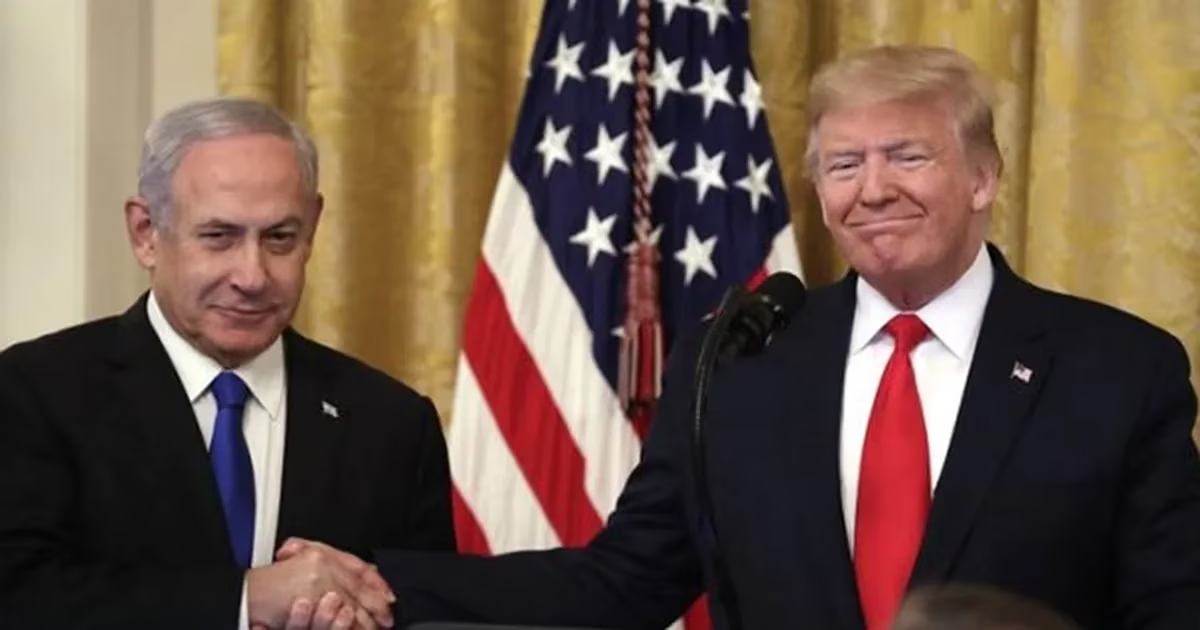
Political and intelligence circles within the Israeli occupation state are experiencing a state of anticipation and concern regarding the path the American administration is taking in its dealings with the Iranian file. Observers believe that negotiations between Washington and Tehran have reached a dead end, which has placed President Donald Trump before a series of options, all described as 'bad' and difficult to implement.
In this context, General Eldad Shavit, a researcher at the Institute for National Security Studies and former head of the research department at the Mossad, stated that Trump is trying to market an image of 'victory' to the American public and the world. Trump claimed in his statements that the pressures succeeded in destroying Iran's military power, but the reality indicates that there is no basis for this narrative given the continuation of field challenges.
Shavit pointed out in an analysis published by Hebrew media that the fundamental question lies in the extent of Washington's actual control over the scene; if Iran has truly been defeated, why does it refuse to submit to American conditions? And why do commercial ships still face direct threats in international waterways, exposing freedom of navigation to constant danger?
The American administration faces a real dilemma in the Strait of Hormuz, which has become a focal point in the current conflict, where experts believe that any miscalculation or misinterpretation of military movements could lead to a wide-ranging conflict. This scenario completely contradicts Trump's electoral promises in which he pledged to avoid engaging in long and costly wars.
Intelligence sources believe that Iran is trying to delay reaching a partial agreement through calculated escalation, to present it later as a limited measure aimed at protecting its interests. This tactic puts Washington in a defensive position, where it is content with managing the current crisis instead of finding radical solutions that completely end Iran's nuclear ambitions.
For the Israeli side, the danger lies in the possibility of Trump accepting a partial agreement that may seem strategically weak, which gives Tehran an opportunity to gain time. Tel Aviv fears that this path will lead to Iran retaining its enriched uranium stockpile, allowing it to quickly restore its nuclear capabilities in the future.
Shavit believes that American action against nuclear components or Iranian pressure tools in the seas may be seen in Washington as an attempt to regain the initiative. However, these limited military steps may not achieve their desired goals, but may give Tehran an additional incentive to escalate in other regional arenas where it has strong influence.
Israeli concerns are mainly focused on two central questions: the first relates to the fate of the technical nuclear capabilities that Iran currently possesses, and the second relates to the Lebanese arena. Tel Aviv is carefully monitoring Washington's attempts to prevent regional escalation, fearing that this may come at the expense of the vital security interests of the occupation state.
The analysis clarifies that what Trump might consider a major political achievement serving his campaign, may represent a dismal failure from the perspective of military leaders in Israel. The primary goal for the occupation is not merely to bring Iran back to the negotiating table, but to permanently strip it of the ability to possess a military nuclear weapon.
Amidst the ongoing crisis, the American president finds himself in a political 'trap', as Tehran does not respond to his basic demands, while internal and external pressures on him increase. It has become difficult for the White House to present the current situation as a clear diplomatic success, especially with the Strait of Hormuz turning into a powder keg ready to explode.
Intelligence readings indicate that the coming days will be decisive, as Trump may be forced to make military decisions he did not want in order to break the stalemate. The American desire to avoid war clashes with a field reality that forces it to act to protect its international prestige and ensure the security of navigation in the most important global energy corridors.
Sources confirm that Israel is pushing for no concessions on the enrichment issue, considering that any American retreat on this file would represent an existential threat to it. Israeli circles demand the necessity of strict international guarantees that prevent Iran from rapid recovery after any potential agreement, which seems out of reach at present.
In conclusion, the complex scene shows that the options available to Washington are narrowing day by day, while Iran continues to use its naval and nuclear power cards to maneuver. This situation puts Israeli interests at stake, awaiting the outcome of upcoming American moves amidst mutual threats.
What can be considered a political achievement for Trump, may be considered an unsatisfactory result in Tel Aviv, which fears the retention of Iranian nuclear capabilities.



Share your opinion
Between the Nuclear Deal and the Strait of Hormuz.. An Israeli Reading of Trump's "Dilemma" with Iran