







A state of anxiety prevails within the Israeli occupation army following the revelation of what it described as a 'giant tunnel' in southern Lebanon. Observers believe that this step, despite its field importance, opens the door to complex questions about the ultimate feasibility of military operations without clear political cover. The primary fear lies in sliding into a broad and long-term confrontation, much like what is happening on the Gaza front, where the adversary fights for survival and constantly develops its tactics.
Military sources reported that the 36th Division is the only force currently conducting offensive maneuvers, with its primary tasks focused on clearing Hezbollah's military infrastructure in border areas. Through these operations, the army seeks to establish what it calls the 'defensive line,' while military commanders try to draw future plans that go beyond mere localized raids, amidst the ambiguity of the political vision for the next phase.
Reports clarified that the occupation army now stands at a difficult crossroads, where it must make crucial decisions regarding remaining in the areas it has controlled or withdrawing from them and contenting itself with a system of raids. This decision is directly linked to the results of political negotiations that have not yet matured, amid expectations of American pressure that may impose a partial withdrawal in exchange for security arrangements that include disarming Hezbollah in areas near the border.
Sweeping operations in the Qantara area revealed the presence of secret fortified underground sites, described as safe havens and launching points for raids towards northern settlements. High-ranking security sources confirm that the size of the military infrastructure being discovered is 'enormous,' forcing forces to advance very slowly and clear the area meter by meter to avoid ambushes and densely planted improvised explosive devices.
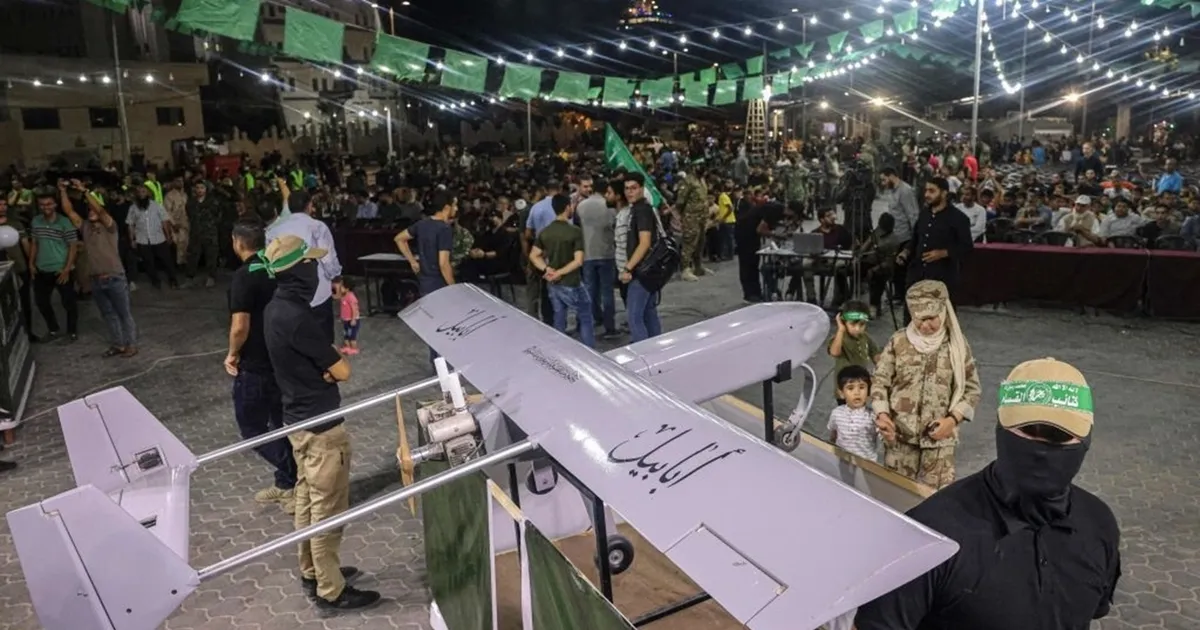
Remote-launched drones represent one of the biggest challenges facing occupation forces in the field, especially with the inability of current defense systems to find radical solutions for them. These drones use advanced technologies including fiber optics and guided explosive devices, making their interception a complex event that requires intensive technical and intelligence operations whose effectiveness has not yet been fully realized.
Sources in the occupation army admitted the killing of one soldier and the injury of others in recent drone attacks, confirming that there is no 'magic solution' to end this threat in the foreseeable future. Technical units are currently working to improve interception capabilities, while the 226th Brigade continues to destroy weapons depots, observation posts, and buildings used by Hezbollah for military purposes.
Israeli readings of the scene indicate that Hezbollah uses civilian and military infrastructure to promote its plans and carry out precise attacks against settlers and army forces. Despite ongoing clearing operations, a state of uncertainty prevails among the military leadership regarding the ultimate direction of this campaign, especially since major decisions are now closely linked to directives coming from the White House.
Military analysts believe that dismantling Hezbollah's capabilities will not happen in a short time, as some political parties promote, speaking of dismantling it in stages. They recall the experience of the 'Yellow Line' in the Gaza Strip, where Hamas is still able to withstand and regain some of its administrative and field capabilities despite a long period of intensive military operations and a significant weakening of its capabilities.
Writer Elisha Ben Kimon confirms that Hezbollah in the north is fighting fiercely to prevent any moves aimed at dismantling its organizational or military structure, considering the party's survival as the primary driver of its current operations. Security Minister Yisrael Katz hinted at a gradual dismantling strategy, which was met with counter-threats from the party's leadership, vowing to expand the circle of fire to include all fronts.
Israeli circles warned that the Lebanese government's continued provision of political cover for Hezbollah could lead to a comprehensive confrontation that would burn the entire region. Amidst this verbal and field escalation, the occupation army awaits clear political vision to redraw its military path, fearing falling into the trap of permanent stagnation within a 'security zone' that drains its human and material resources.
The greatest fear haunting the occupation leaders is the transformation of the military presence in southern Lebanon into a state of 'permanent stagnation,' where soldiers are preoccupied with daily control tasks instead of achieving the goal of defeating the enemy. This scenario brings to mind the previous security belt experience that ended with a general withdrawal in 2000, which the army is trying to avoid by demanding decisive political decisions before any deeper ground involvement.
In conclusion, field data show that the confrontation in southern Lebanon has gone beyond the idea of quick raids to become a complex technological and human war of attrition. With the continued discovery of massive tunnels and the escalating threat of drones, the question remains about the occupation's ability to achieve its goals without sliding into a new Lebanese 'quagmire' that repeats the tragedies of Gaza and bitter past experiences.
Any future plan is based on political decisions in negotiations that have not yet been resolved, and the army fears collapse in the face of growing Hezbollah threats.




Share your opinion
Fears of a 'Gaza Scenario' in Lebanon: The Occupation Army Faces the 'Yellow Line' Dilemma and the Drone Challenge