







This week, Israel commemorated the Nazi catastrophe through a series of traditional ceremonies, overshadowed by speeches from political and military leaders seeking to link the Nazi genocide to the contemporary narrative of an 'existential threat.' The ruling elite attempted to convey the conclusion that the continued existence of Jews depends on possessing excessive power, considering that historical weakness allowed the Holocaust to occur, while the current army is tasked with preventing its recurrence.
This narrative reflects a trend among decision-makers in Tel Aviv that preventing calamities requires more than traditional military victory, aiming for 'zero threats' by completely eradicating adversaries. Observers believe that the goals set by Benjamin Netanyahu in this multi-front war are unattainable in practice, but they serve as political cover to justify the continuation of military operations without a time limit.
Field experience has shown that slogans such as 'absolute victory' or 'regime change' are difficult to achieve and almost impossible given the current regional complexities. Nevertheless, Netanyahu insists on pursuing an endless war, promoting the idea that goals will be achieved either through intense military pressure or by imposing harsh diplomatic conditions that other parties cannot meet.
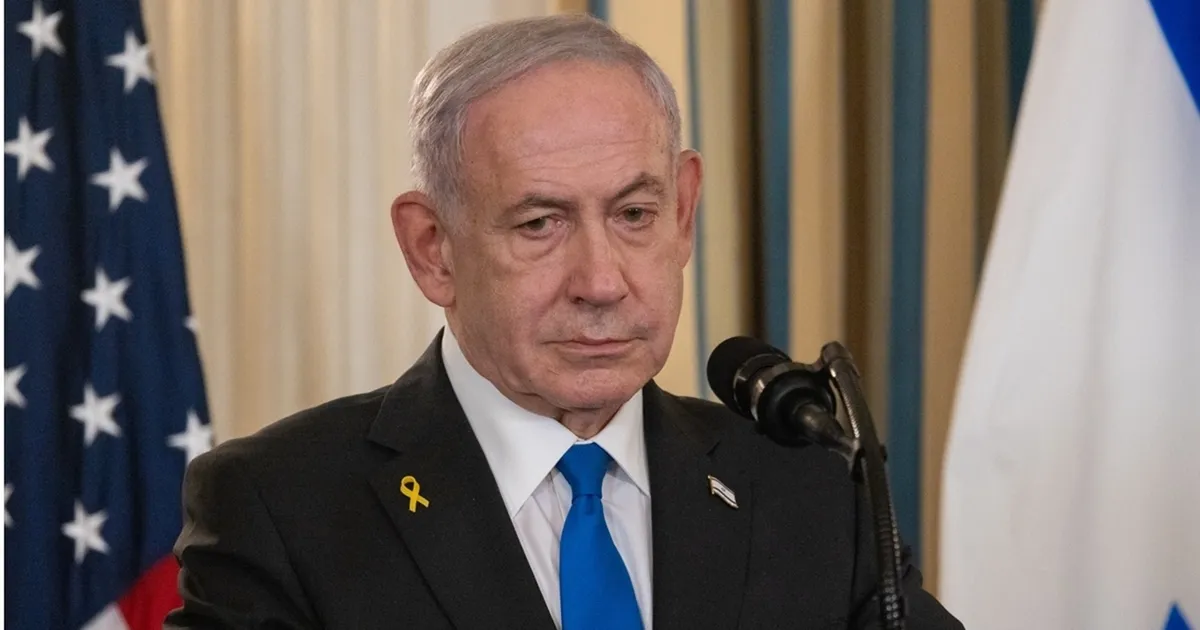
In his latest speech, Netanyahu used past atrocities as a justification to legitimize current military operations, sending sharp messages to the international community, especially Europe. Netanyahu claimed that Israel is defending Western civilization against what he described as 'evil regimes,' attempting to exploit Europe's guilt complex to extract unconditional support for his expansionist and aggressive policies in the region.
For his part, the Chief of Staff of the Israeli Army, Eyal Zamir, adopted a purely offensive approach devoid of traditional defense justifications, describing the current confrontation as a decisive battle. Zamir considered that the army is fighting a war to eliminate existential threats that clearly emerged after the events of October 7, which opens the door to continuous fighting that will not stop until the 'imagined threat' to the security establishment disappears.
Analyses indicate that the Israeli security establishment has expanded its margins of action to include confronting potential dangers and even 'the shadow of danger,' in an attempt to prevent any future security breach. This pattern of military thinking imposes a permanent state of emergency that suppresses any internal discussion about political alternatives or peaceful settlements, making war the only option available on the table.
Mossad chief David Barnea did not deviate from this context, re-proposing the goal of 'overthrowing the Iranian regime' as an imperative for Israel's existential security. Barnea affirmed that Mossad's sabotage and espionage missions will continue even after any potential settlements, emphasizing that the agency will not stand idly by in the face of what he described as an 'additional existential threat' emanating from Tehran.
Regarding domestic public opinion, polls show a societal impulse towards military escalation options, with the overwhelming majority supporting the continuation of the war on the Gaza and Lebanon fronts. Figures reveal that more than 80% of Israelis support military operations in Lebanon until Hezbollah is disarmed, giving the political leadership a popular mandate to continue the military rampage.
Netanyahu appears to be leveraging this public mood to strengthen his fluctuating political position, attempting to translate support for the war into electoral capital for his Likud party. Although this support has not fully translated into party polls, continued aggression remains the winning card Netanyahu is betting on to convince the Israeli voter of his leadership capabilities.
In conclusion, the discourse of total war dominates the Israeli scene, with an almost complete disappearance of any talk of peace or sustainable diplomatic solutions. Even with international mediation negotiations, the prevailing conviction in Tel Aviv is that these paths will not achieve the desired goals, leaving the region in a spiral of continuous fighting and open fronts.
Simply defining war as a decisive battle to eliminate existential threats is a recipe for endless fighting until the threat to existence ends.



Share your opinion
The 'Permanent War' Doctrine: How Does the Israeli Leadership Use the 'Existential Threat' to Justify Open Battlefronts?