






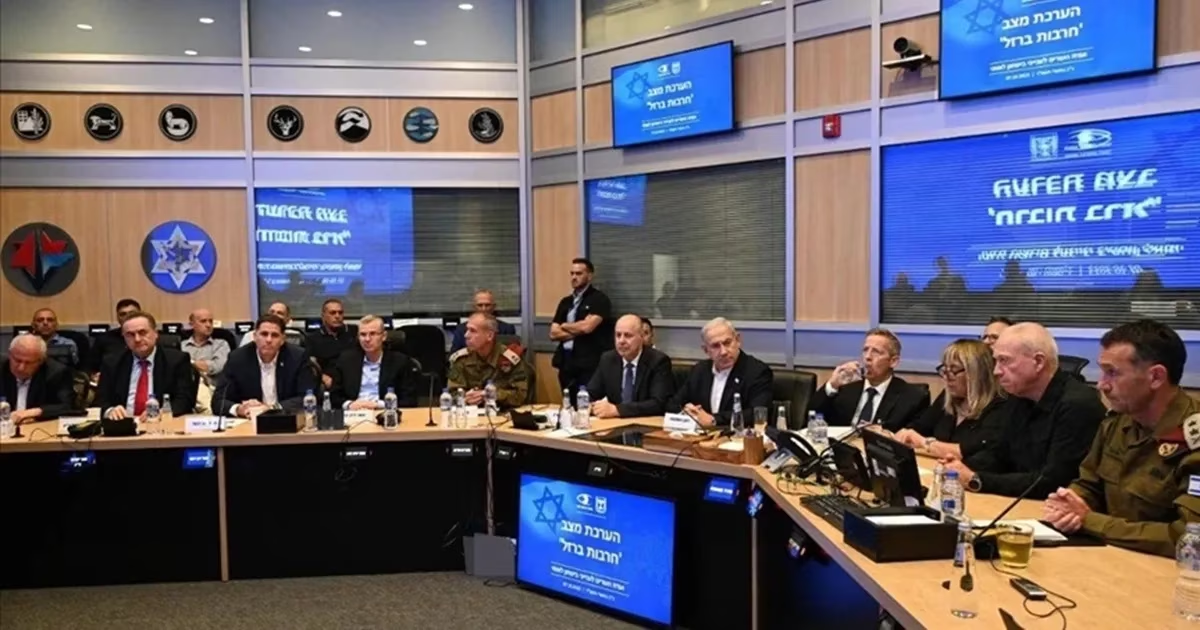
Hebrew media sources have revealed a state of frustration prevailing in political and security circles in Tel Aviv, following a growing conviction that the opportunity to overthrow the Iranian regime has become unrealistic at present. The sources indicated that the initial assessments upon which the current military campaign was built were overly optimistic, especially with the state institutions in Tehran showing unexpected cohesion.
Press reports stated that the Iranian leadership succeeded in systematically regaining control of affairs, after a short period of chaos that followed the assassination of Supreme Leader Ali Khamenei. It appears that the Iranian security apparatus still maintains an iron grip, preventing any internal collapse that external powers might have bet on during the ongoing military operations.
In an analysis of the current governing structure, sources explained that strategic decisions in Tehran are currently made by a duo comprising Ali Larijani and Mohammad Qalibaf. Ambiguity still surrounds the role of the new leader, Mojtaba Khamenei, and whether he exercises actual powers or is merely a symbolic facade amid reports of his injury during the attack that targeted his father.
Based on these facts, the Israeli government began to lower its expectations before public opinion, to avoid a feeling of failure when the military operation ends without achieving the goal of regime change. The current strategy focuses on achieving tangible military gains on the ground instead of betting on radical political transformations within Iran that may not happen soon.
The military circles identified three main axes for the offensive effort, foremost among them the destruction of missile launch platforms and air defense batteries that impede the freedom of movement of Israeli aircraft. Despite the intensive strikes, military sources admit that the damage to the Iranian missile arsenal has not yet reached a stage of complete paralysis.
The second axis systematically focuses on targeting the infrastructure of the arms industry, including drone factories and ballistic missile production facilities. These strikes aim to ensure that Iran will not be able to return to serial weapons production for a long time, even if the current regime remains in power.
As for the third axis, it directly targets Iranian security forces facilities and military decision-making circles, with the close participation and coordination of US forces in the region. Washington is simultaneously working to secure its allies in the Gulf region and ensure the continuity of international navigation in the Strait of Hormuz, which is the global energy lifeline.
In a related context, a reluctance was observed among Gulf states to directly engage in the offensive campaign against Tehran, for fear of Iranian reactions that might target vital oil installations. This Gulf caution imposes restrictions on the international coalition and places the greater burden of military operations on direct Israeli-American coordination.
Regarding the timeline of the operation, estimates indicate that Chief of Staff Eyal Zamir set early April as the timeframe for ending major military operations. These estimates coincide with discussions in Washington to end the campaign before an anticipated visit by the US President to China, to ensure that the region does not get dragged into a long war of attrition.
On the northern front, Israel is preparing to escalate the pace of fighting in Lebanon, considering that the confrontation with Hezbollah is no longer secondary but has become an integral part of the regional conflict. The Northern Command anticipates attempts by Radwan forces to infiltrate south of the Litani River, which necessitated the deployment of massive reinforcements of infantry and armored vehicles to the border.
Limited ground operations in southern Lebanon aim to push Hezbollah elements away from border settlements and radically destroy their combat infrastructure. Tel Aviv believes that continuous military pressure is the only way to force the Lebanese government to take effective steps to curb the party's influence and prevent it from threatening northern security.
Sources indicate that Israel is adopting a policy of controlling strategic points within Lebanese territory and preventing residents from returning to some border villages at present. These areas are used as political and military bargaining chips to impose a new security reality different from the situation before the outbreak of the current confrontation.
Despite the intensity of fire, military analysts acknowledge that the complete elimination of Hezbollah's military capabilities faces challenges similar to what the army faced in Gaza. The party has changed its tactics and begun to lean towards direct confrontation and qualitative operations, which requires continuous adjustments in the defensive and offensive plans of the occupation army.
The question remains about Israel's ability to achieve its goals in Lebanon and Iran before the scheduled end of the operation, especially in light of international political changes. Political circles are awaiting the results of the coming weeks on the ground, which will determine the shape of the new balances in the Middle East for years to come.
The chances of overthrowing the Iranian regime are less than we initially estimated, and may not be realized even with the end of the current campaign due to the tight control over the security apparatus.



Share your opinion
Israeli Admissions of Declining Chances to Overthrow Iranian Regime and Setting a Date for Ending Military Operation