








Washington – Said Arikat – 3/13/2026
News Analysis
As the war between Israel and Iran expands, and the exchange of strikes between the two sides intensifies, a highly sensitive question has returned to the forefront of strategic discussions in Washington: Could Israel consider using a tactical nuclear weapon against Iran? In recent days, talk of this scenario has increased on a number of American media networks and think tanks, not as a likely option, but as a possibility that must be analyzed in light of the ongoing escalation.
However, the majority of strategic experts and former diplomats believe that the possibility of Israeli Prime Minister Benjamin Netanyahu resorting to this option remains very low, even if the war expands and Iran continues to deliver painful blows to Israel. These experts link their assessment to several strategic, political, and military factors related to the nature of Israel's nuclear doctrine, international balances, the limited military utility of any tactical nuclear strike, as well as the serious repercussions of breaking the nuclear taboo that has been established in the international system since the end of World War II.
The first of these factors relates to the nature of the role played by the Israeli nuclear arsenal in the strategic thinking of the Hebrew state. Israel does not officially admit to possessing nuclear weapons, but for decades it has followed a policy known as “nuclear ambiguity,” meaning refraining from confirming or denying possession of such weapons. Most strategic studies estimate that Israel possesses between eighty and two hundred nuclear warheads. However, the primary goal of this arsenal, according to experts in Washington, is not to use it on the battlefield, but to deter any existential threat that might threaten the state's survival.
In Israeli security literature, nuclear weapons are sometimes associated with what is known as the "Samson Option," meaning their use only if the state faces a real existential threat. Even with the expansion of the war with Iran, many analysts believe that the current conflict does not reach the level of an existential threat that might push Israel to break the nuclear taboo.
The second factor relates to the enormous political and diplomatic cost of using nuclear weapons. If Israel were to take this step, it would be the first country to use such weapons since 1945. This would likely lead to an almost complete wave of international condemnation and the imposition of harsh economic and political sanctions. Strategic relations between Israel and the United States could also be severely shaken, as Washington has for decades turned a blind eye to Israeli nuclear ambiguity within an unstated understanding based on not using these weapons. Breaking this understanding would also place Israel in unprecedented international isolation and reopen its nuclear file in international institutions, including the Security Council and the International Atomic Energy Agency.
In this context, some experts in Washington point out that for decades Israel has been able to move in the region with a great degree of strategic freedom, supported by extensive American political and military protection, which has made it consistently act as if it were above international accountability. However, this reality could fundamentally change if Israel were to break the nuclear taboo. The mere use of a nuclear weapon, even if tactical and limited, could overturn the political and diplomatic environment surrounding Israel and place it under unprecedented international pressure, including from its Western partners, including the United States.
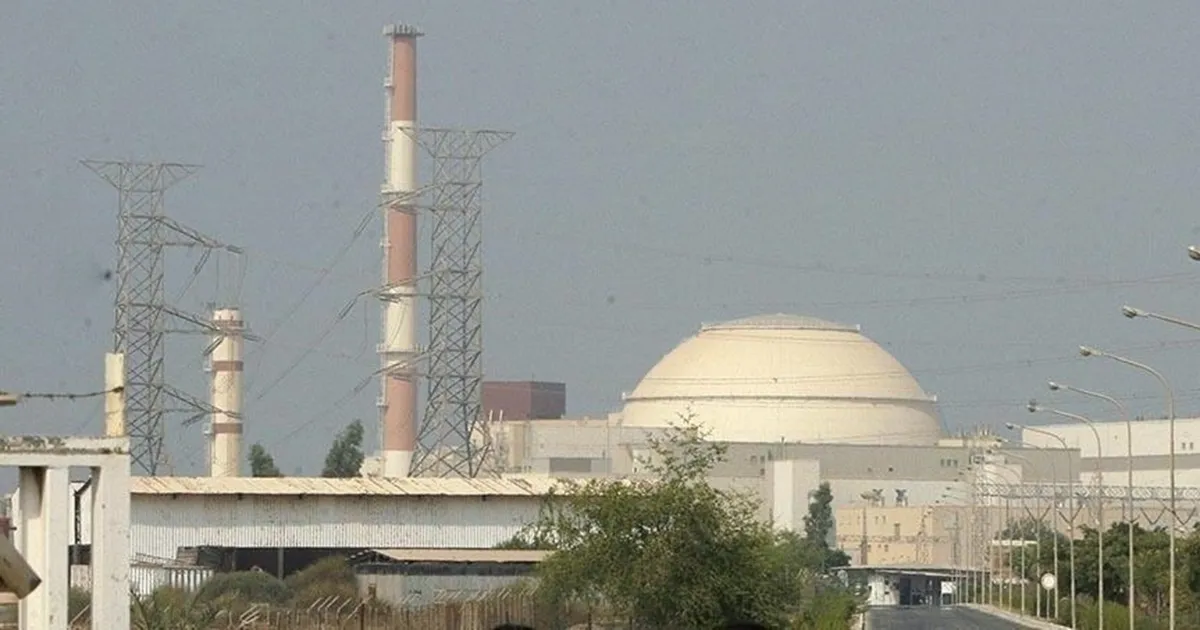
The third factor relates to the limited military utility of such a strike. Major Iranian nuclear facilities, such as the Fordow and Natanz facilities, are located deep underground and fortified with layers of protection. Even the use of a tactical nuclear weapon does not necessarily guarantee the complete destruction of these facilities.
In contrast, Israel already possesses a wide range of advanced conventional American military tools, including bunker-buster bombs, cyber capabilities, and precise air strikes, in addition to covert intelligence operations. For this reason, a number of experts believe that conventional options could achieve the same military objective without risking nuclear escalation.
The fourth factor is the continuation of what researchers call the "nuclear taboo," which is the unwritten rule that emerged since the end of World War II, under which nuclear states refrained from using these weapons in armed conflicts. Even major nuclear powers avoided using them despite fighting numerous wars over the past decades.
For Israel, which relies heavily on Western political and military support, breaking this taboo could entail an enormous political and moral cost.
The fifth factor relates to the risk of regional escalation and nuclear proliferation. Israel's use of a nuclear weapon against Iran could open the door to a series of dangerous developments in the Middle East. This could include widespread Iranian missile responses or through its allies in the region, in addition to an accelerated nuclear arms race.
Major regional powers such as Egypt, Saudi Arabia, and Turkey might see such a development as an impetus to accelerate their nuclear programs or seek to acquire similar deterrent capabilities, which could turn the Middle East into one of the most dangerous regions in the world in terms of nuclear weapons proliferation.
The sixth factor is related to the nature of Iranian geography itself. Iran is a vast country with a political and military structure distributed over a large geographical area. Even if Israel were to use a tactical nuclear weapon, the strike would likely be very limited in terms of the number of targets. Practically, Israel might only be able to target one or two sites, but this would not completely paralyze the Iranian state. Tehran might be able to absorb the blow and reorganize its military and political capabilities, which reduces the strategic value of any nuclear use.
The seventh factor relates to Israeli military traditions, which tend towards conventional preemptive strikes rather than nuclear escalation. In the past, Israel has relied on precise military operations to destroy hostile nuclear programs, such as the destruction of the Iraqi nuclear reactor in 1981 and the strike on the Syrian nuclear reactor in 2007. These precedents reflect Israel's preference for limited and precise operations that achieve strategic objectives without sliding into catastrophic escalation.
Amidst this debate, a number of analysts in Washington point out that the increasing discussion in the American media about the possibility of using a tactical nuclear weapon partly reflects the concern within decision-making centers about the course of the war. The mere raising of this scenario in public discussion indicates a growing awareness that escalation could spiral out of control. However, most former officials and experts present this possibility within the framework of theoretical analysis, and not as a political option actually on the table for decision-makers.
Some researchers also point out that Israeli nuclear ambiguity has historically been part of a precise deterrence equation in the Middle East, based on possessing the capability without using it. If Israel were to break this balance through the actual use of nuclear weapons, it might undermine one of its most important sources of strategic power. Ambiguity gives deterrence psychological and political strength, while actual use might transform nuclear weapons from a deterrent tool into a heavy strategic burden.
In purely military calculations, experts believe that a tactical nuclear strike does not provide a quick solution to the dilemma of the Iranian nuclear program. The distributed and fortified nature of Iranian facilities, in addition to the Iranian state's ability to rebuild, means that any strike, no matter how severe, might only delay the program and not end it. Rather, it might give Tehran a domestic and international political justification to accelerate the public development of its nuclear capabilities.
In conclusion, Israel might resort to a widespread military escalation using advanced conventional tools if the war continues to expand. But the use of a tactical nuclear weapon would carry an enormous strategic and political cost, in return for limited military benefit. For this reason, despite the increasing discussion about it in some media and analytical circles, the possibility of resorting to this option remains very low.

Share your opinion
Between Deterrence and the Nuclear Taboo: Why is the Use of Tactical Nuclear Weapons by Israel Against Iran a Remote Possibility?