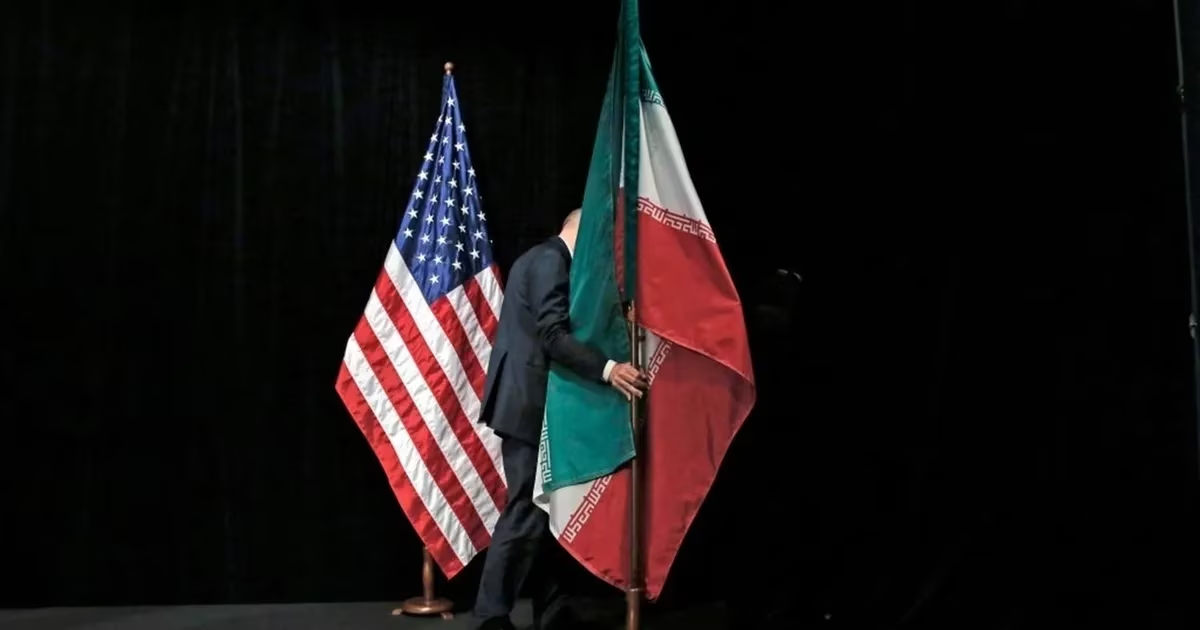







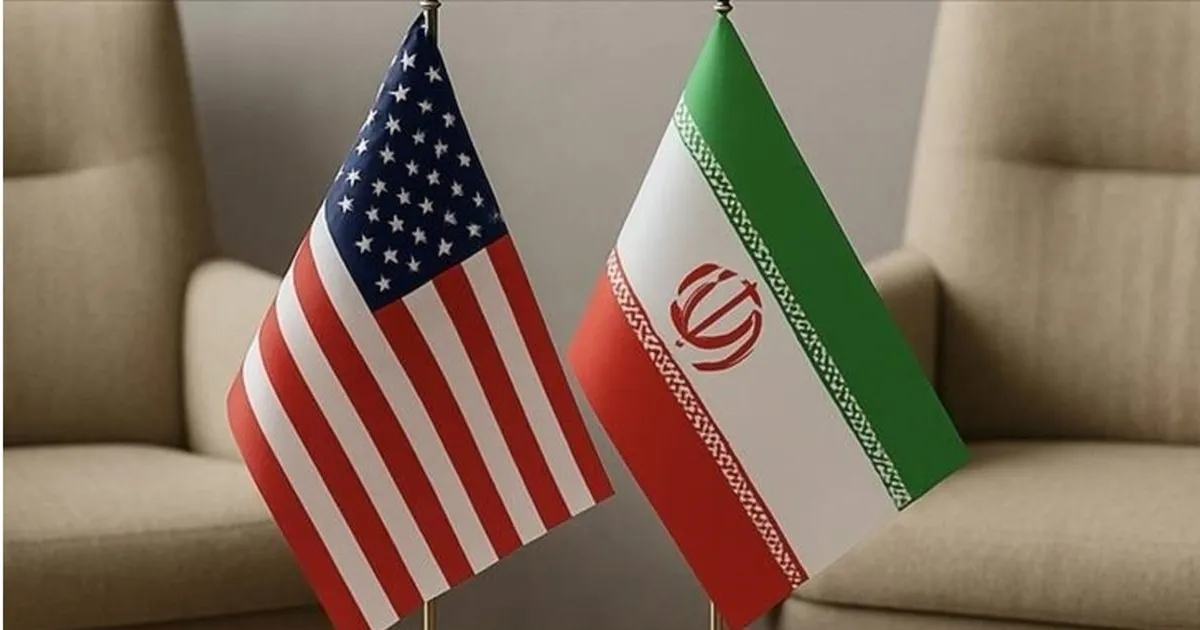
Russian researcher Timofey Bordachev, Director of Programs at the Valdai Club, believes that the recent agreement between the United States and Iran does not inherently represent any real shift in the balance of power. In an analytical article, he explained that the roots of the current conflict extend beyond technical issues such as the nuclear program or ballistic missiles, reaching the core of Iran's existence as a regional power that rejects subservience.
Bordachev noted that the military confrontation that erupted in the winter of 2026 will remain a landmark in contemporary political history. Despite its ferocity, it represented a rare example of an armed conflict that did not lead to any tangible results on the ground, as the political map remained unchanged with no significant shift in the international balance of power.
According to the Russian interpretation, the lifting of the blockade on the Strait of Hormuz and the return to the pre-conflict situation reflects a state of strategic stalemate. Two months of negotiations failed to budge either party from their principled positions, which they had maintained since last February.
The author considered this outcome to be of double importance given the vast military and economic disparities, where the world's strongest power confronted a besieged regional power. The attack was supposed to be a decisive display of American deterrent power, but the results disappointed planners in Washington and Tel Aviv.
Bordachev described the American military power in this confrontation as appearing like a 'paper tiger,' having exhausted enormous resources and involved the civilian sector in the war effort to no avail. He affirmed that this war proved that Washington is no longer able to impose its will except on weak and fragmented parties in the international community.
The analysis suggests that governments under American pressure now possess practical models for dealing with threats, citing the difference between the Venezuelan and Iranian experiences. While pressure succeeds in certain places, the Iranian case showed that internal resilience can neutralize Western technological and military superiority.
Bordachev stressed that the direct strategic objective of the joint US-Israeli attack was to overthrow the regime in Tehran and dismantle the state's key institutions. With the regime remaining intact and its institutions cohesive, the author considered what happened to be a clear strategic failure that the West is now trying to package as a fictitious political victory.
The article pointed out that this confrontation did not reach the level of the comprehensive war witnessed in Iraq in 2003, and this was not due to an American desire for restraint. Rather, the author attributed it to the current limited capabilities of the United States and its inability to mobilize enormous resources for an integrated land, sea, and air operation.
In a striking comparison, the researcher noted that Iran did not receive open external military support as Kyiv did in its conflict with Russia. Nevertheless, Tehran was able to withstand thanks to structural characteristics in its society and political leadership, which gave it a high capacity for maneuver and overcoming a lack of material resources.
Bordachev believes that the secret of Iranian resilience lies in the state of identification between the state and society, a moral and philosophical factor that outweighs the importance of military arsenals. This factor was what decided the course of the conflict at critical moments, surpassing the enormous technical and economic capabilities possessed by the Western camp.
The author cited the theories of strategic historian Edward Luttwak, emphasizing that fighting spirit and social cohesion are the most valuable currencies in 21st-century wars. This was clearly demonstrated when smart weapons failed to break the opponent's will or force them to make fundamental political concessions affecting their sovereignty.
The article concluded that Washington's failure to achieve its central goal rendered secondary issues, such as technical restrictions on armaments, strategically worthless. The problem for the United States and Israel lies in the existence of Iran as an independent entity in itself, regardless of the type of weapons it possesses.
The survival of Iran as an active and independent player in the international system after this confrontation represents, according to Bordachev, a structural dilemma for American policy in the Middle East. This failure to dismantle means that the region is heading towards new balances in which traditional powers do not have the upper hand as was the case in past decades.
In conclusion, the Russian author believes that the most important lesson from the 2026 war is that the era of military dictates is over, and that hard power is no longer sufficient to change political systems. Accordingly, agreements that follow such conflicts are merely an implicit acknowledgment of the fait accompli that cannons failed to change.
The war proved to the entire world that massive costs ultimately yielded a paper tiger capable only of threatening the weakest parties.
Share your opinion
Russian Researcher: US-Iranian Confrontation Proved Military Power's Inability to Impose Political Change