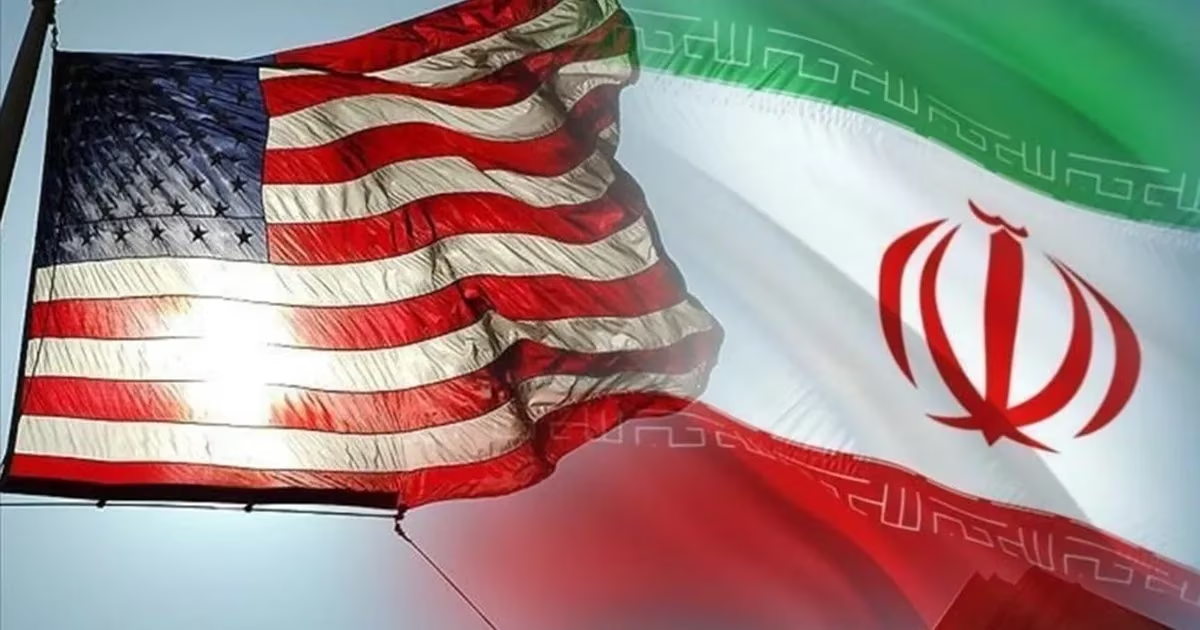







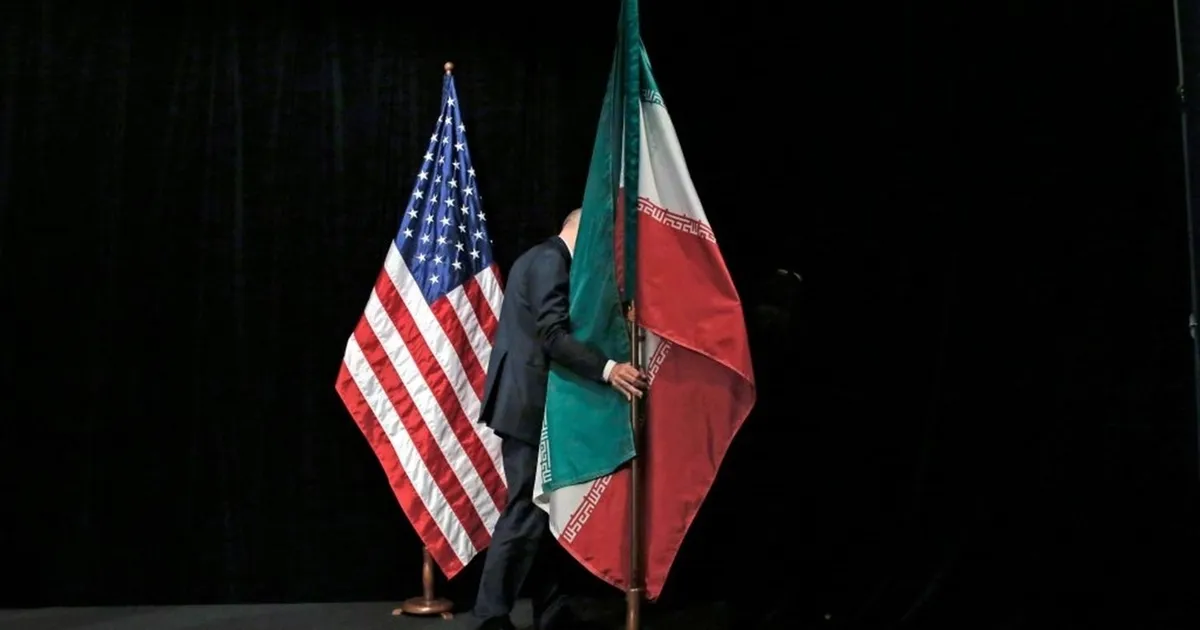
In the halls of Washington and the media centers monitoring the conflict in the Middle East, highly divergent expectations have emerged regarding a potential US strike on Iran. These expectations differ not only in degree but also in kind, revealing a deep divergence of opinions among seasoned analysts reading the same data. This division presents the world with a difficult choice between two irreconcilable predictions, at a time when one of the most important decisions the Trump administration must make needs to be evaluated.
One of these analysts, Professor John Mearsheimer of the University of Chicago, believes that if a US military action were to actually occur, it would be a 'calculated restraint,' and would ultimately prove to be merely a 'face-saving' measure. This action would be limited in scope, unilateral, and aimed above all at solving the political conundrum currently facing Trump. In stark contrast, an analysis by former CIA intelligence officers Larry Johnson and Ray McGovern suggests that US military action could happen within days, leading to an all-out conflagration that would engulf US bases, Israel, and the global economy.
The striking disparity between two irreconcilable predictions lies at the heart of this analysis; while Professor Mearsheimer sees calculated restraint stemming from military impotence, Johnson and McGovern see an unstoppable march towards war. Professor Mearsheimer built his analytical framework on a grim reality: that regime change in Iran remains militarily impossible and would have enormous negative regional consequences. Indeed, his analysis suggests that US military leaders informed Trump on January 14 that they could not guarantee regime change, especially after the failure of CIA-planned protests in the streets of Iran.
This leaves Trump with a series of painful choices. Mearsheimer says: 'Simply massing more military forces in the region does not make regime change more achievable, and this is precisely the problem Trump has brought upon himself with his aggressive rhetoric.' He adds that the only option left for him now is to launch a 'limited strike, a means of saving face to declare victory and then withdraw.' However, this also carries serious risks, as 'Iran has made it clear that any military strike, however limited, will lead to a full retaliatory response.'
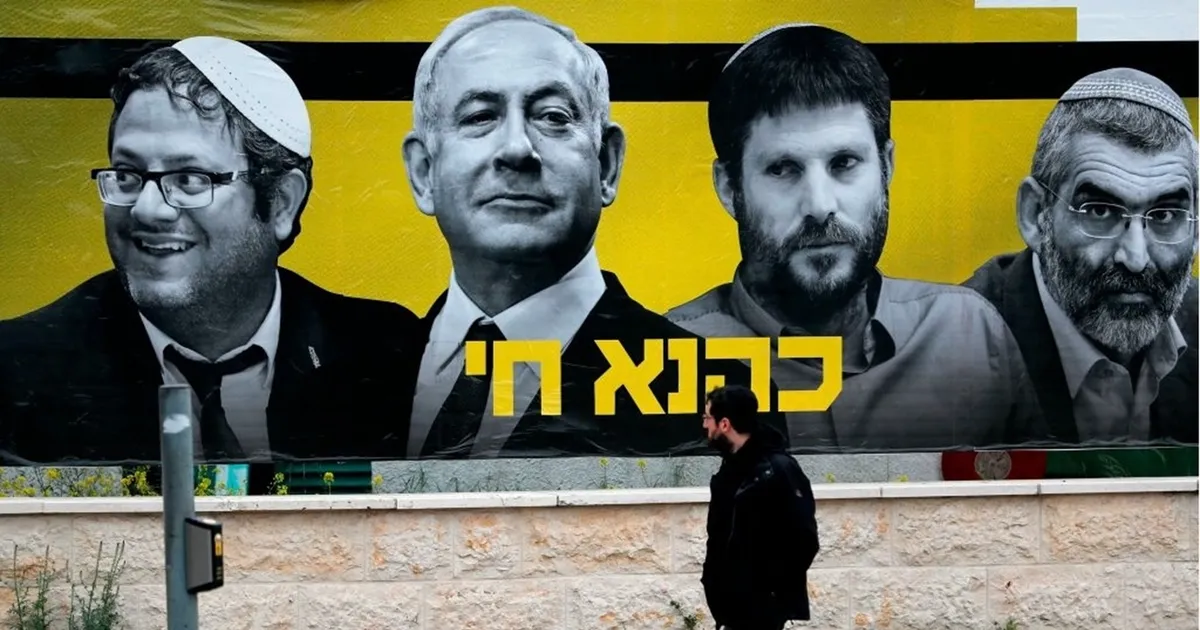
The consequences of such an event would be easy to predict: 'Iranian missiles falling on American targets across the Middle East, attacks on Israel despite its attempts to stay out of this war, and perhaps even an attack on the Strait of Hormuz, an act that would have devastating consequences for the global economy.' A fundamental assumption in Mearsheimer's argument is his assertion that US policy towards Iran is not driven by legitimate security concerns, but by 'the Israeli lobby.' He cited the Clinton administration's attempt at rapprochement with Iran as an example of how US presidents have been prevented by the lobby from pursuing beneficial policies, and how this creates a constant risk of war between the two countries.
Johnson and McGovern have no such doubts. Based on their access to intelligence sources and back channels, they reported that 'a US strike could happen this weekend or next week, with Iran immediately declaring war.' The operational difficulties they present are enormous; Saudi Arabia, Oman, Qatar, and the UAE reportedly refused to allow the United States to use their airspace, leaving aircraft carriers in vulnerable positions off their coasts. Johnson calculates that the naval fleet's air defense missiles would run out within 10 days of fighting without access to a safe port for resupply, should Bahrain be attacked.
Johnson clearly states: 'Iran is likely to declare war,' outlining Tehran's three-pronged approach: attacking US bases in the region, attacking Israel, and closing the Strait of Hormuz. Johnson notes that Iran is making its intentions clear to oil-dependent countries in the Gulf and Asia, hoping that these countries will pressure the United States to back down. McGovern, meanwhile, paints the potential consequences in darker colors, suggesting that Trump may commit the fatal error of 'the law of unintended consequences,' which could push Iran to 'annihilate' Israel.
McGovern points out that the justification for war is clear; US intelligence assessments concluded that Iran 'might consider the possibility' of resuming its nuclear program, which is not a justification for unleashing a potential catastrophe. Again, McGovern points to Israel's role as a driving force behind the United States, saying that '98 percent of the reason we are going to war with Iran is due to the priorities of the government in Jerusalem, which are sacred in Washington.' But unlike Mearsheimer's scenario, McGovern makes it clear that there is no evidence of Iran backing down. Johnson notes that the June operation did not even succeed in crippling Iran's ability to retaliate, as retaliation came within ten hours.
What explains these divergent conclusions? While both analyses agree that the influential variables are Trump's hawkish stance, Iranian deterrence capability, Israel's interests, and the impossibility of regime change, they reach different conclusions regarding the timing and likelihood of such a war. Mearsheimer's conclusions are based on 'rational actor theory,' which holds that the impossibility of military action and catastrophic consequences will ultimately dictate the behavior of the parties. Johnson and McGovern's conclusions, on the other hand, are based on insider information, with both believing that the momentum of the situation has exceeded the parties' ability to think rationally and strategically.
The implications of this analytical disagreement are significant, as the results of a war with Iran would be catastrophic, not only for the Middle East but for the entire world; such a war has the potential to create a global economic crisis, as well as the possibility of drawing in Russia and China, given their significant interests in Iranian oil fields. The question that the interested observer must ask is: which interpretation of the same intelligence information should be believed? Should we believe the professor who believes that the strategic paralysis caused by military impossibility will govern actions, or the intelligence experts who believe that there is an unstoppable momentum towards the coming conflict? The answer to this question will determine whether the coming weeks will see tense diplomatic maneuvers or the outbreak of the most dangerous conflict in the Middle East in decades.
98 percent of the reason we are going to war with Iran is due to the priorities of the government in Jerusalem, which are sacred in Washington.
Share your opinion
Between 'Saving Face' and All-Out War: Conflicting Readings of US-Iran Confrontation Scenarios