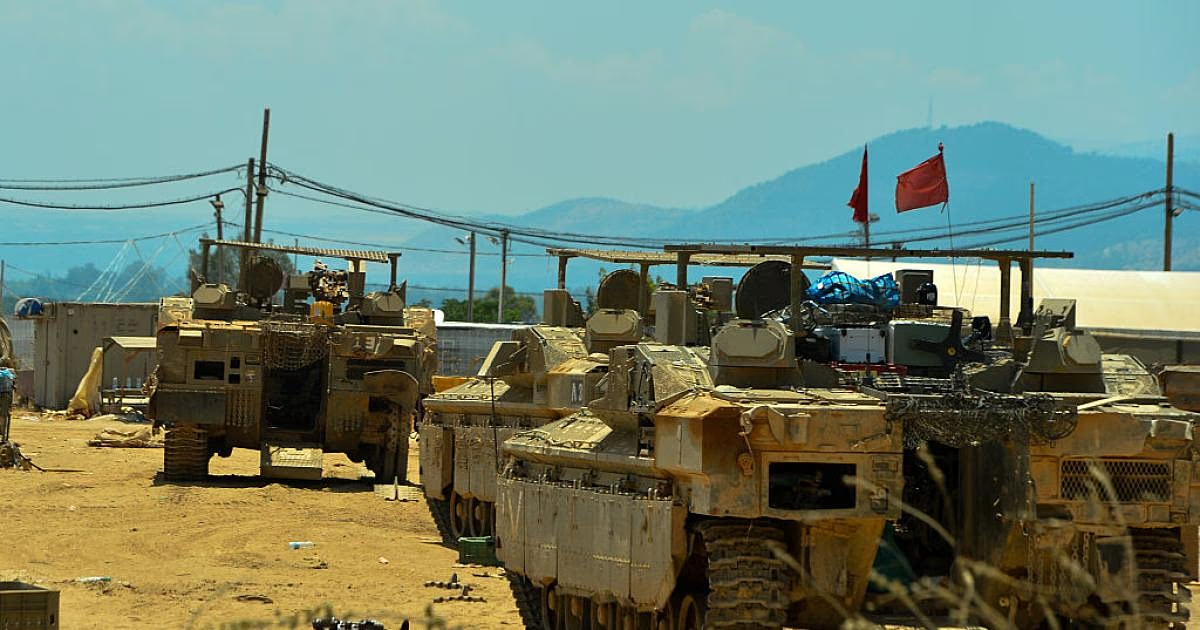







A high-ranking American official revealed anticipated field developments in southern Lebanon, confirming that the first 'pilot area' for the withdrawal of Israeli forces will be identified within a few days. The Lebanese Army is scheduled to take control of security in this area, which is currently under Israeli occupation, as part of international understandings aimed at ending military escalation.
Informed sources clarified that technical and field work is currently underway to prepare accurate maps and identify additional pilot areas that will be included in subsequent withdrawal phases. This move comes as part of Washington's efforts to ensure a smooth transition of security authority and prevent any vacuum that could lead to renewed armed clashes in the border region.
In a related context, the American Ambassador to Lebanon, Michel Issa, informed Lebanese President Joseph Aoun of the imminent arrival of an American military delegation in Beirut. The mission of this delegation will be to directly supervise the Israeli withdrawal operations from two pilot areas that were previously agreed upon within the 'Framework Agreement' signed in Washington at the end of last month.
Reports from the Lebanese presidency indicate that coordination with the American side focuses on establishing precise implementation mechanisms to ensure no security breaches occur during the handover process. The American Ambassador stressed during his meeting with President Aoun that the stability of the South is a top priority for the international community at the current stage.
Lebanon and Israel signed an internationally sponsored agreement on June 26th last year, which stipulates a gradual withdrawal of Israeli forces in exchange for an intensive deployment of the Lebanese Army. The agreement also includes provisions related to the disarmament of Hezbollah in the border areas, a point that still raises widespread debate about the mechanisms of its implementation on the ground.
The Lebanese side links its participation in the upcoming round of negotiations, scheduled to be held in the Italian capital Rome, to the extent of Israeli commitment to withdrawing from the pilot areas. Diplomatic sources reported that Beirut stipulates seeing tangible steps on the ground before sitting down again at the negotiating table scheduled for mid-July.
For his part, Lebanese President Joseph Aoun stressed the necessity of permanently establishing a ceasefire and pressuring the Israeli side to stop all hostile acts. Aoun emphasized during official meetings the importance of restoring Lebanese sovereignty over all territories in the South to enable the state to fulfill its constitutional duties and protect its citizens.
Despite these understandings, the agreement still lacks a final and comprehensive timetable for the withdrawal of Israeli forces from the entire 10-kilometer deep security zone. Israel insists that the presence of its forces is directly linked to ending Hezbollah's armed presence and dismantling its military infrastructure in those areas.
In contrast, Hezbollah continues to express hardline positions regarding surrendering its weapons, relying on its regional alliances, which places the Lebanese state before major logistical and political challenges. Observers believe that the success of the 'pilot areas' will be the real test of the Lebanese Army's ability to impose its sole control in the South.
The Italian capital Rome is expected to host a decisive round of negotiations on July 15 and 16, with an American desire to move the dialogue from Washington to Europe. This geographical change aims to facilitate the return of delegations to their political references for quick consultations on pending fundamental issues that require high sovereign decisions.
These diplomatic moves coincide with preparations for an official visit by the Lebanese President to Washington in the last week of this month. This visit comes at the invitation of US President Donald Trump, where border issues and final security arrangements are expected to top the agenda of the bilateral summit.
On the ground, the United Nations Interim Force in Lebanon (UNIFIL) described the current situation as 'very fragile' despite the relative calm that has recently prevailed in the region. The international force confirmed that it has intensified its patrols and operational activities to support stability and facilitate the return of displaced Lebanese to their villages damaged by military operations.
UNIFIL clarified in a statement that it is working to coordinate with all parties to prevent any misunderstanding that could lead to a renewed outbreak of violence. The international forces also contribute to the repair of damaged infrastructure and vital roads to facilitate the movement of civilians and technical teams of the Lebanese Army in the border areas.
The sources concluded by emphasizing that the coming days will be crucial in determining the course of the conflict, either success in establishing the 'pilot areas' model and moving towards a comprehensive solution, or a return to the square of tension if the withdrawal procedures falter or the Lebanese Army faces obstacles in extending its authority.
Preparations are underway to implement what was agreed upon regarding the pilot areas, and an American military delegation will determine the implementation mechanism on the ground.
Share your opinion
Under American supervision.. The first areas of Israeli withdrawal from southern Lebanon to be identified within days