






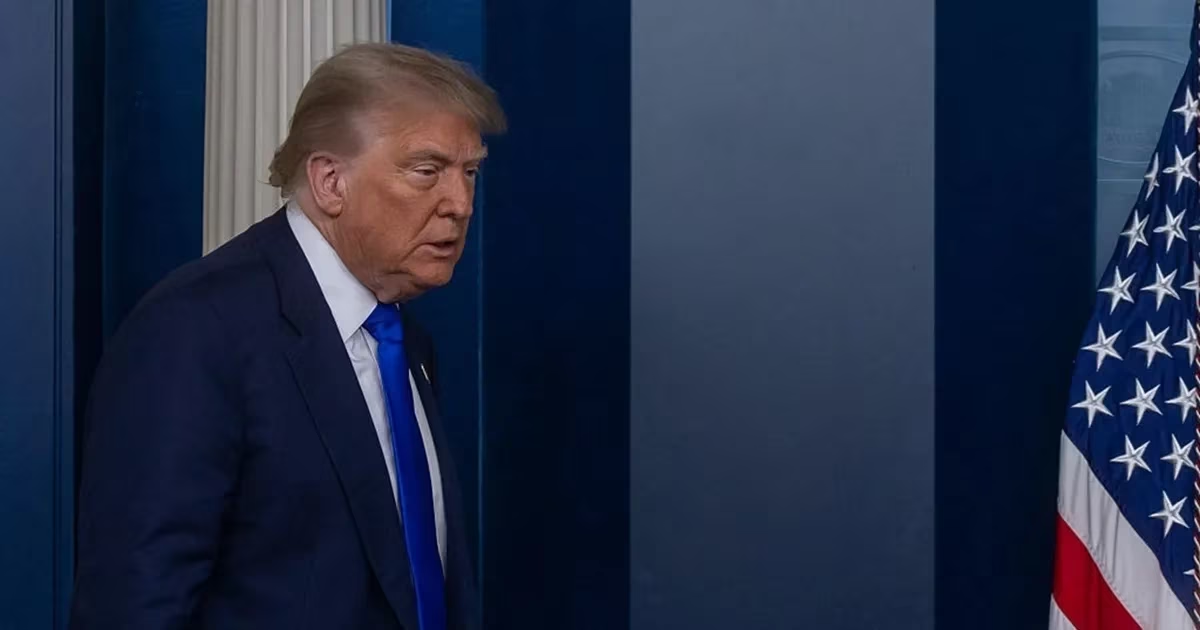
American writer Nicholas Kristof, in an article published by the 'New York Times,' considered President Trump's announcement of reaching an agreement to end the escalation with Iran to be, in essence, a 'conditional surrender' on Washington's part. The writer pointed out that previous demands for unconditional surrender from Tehran faded in the face of the new negotiation reality, which granted the Islamic Republic broad gains.
The terms of the preliminary agreement caused astonishment and anger among hawks within the Republican Party, with Senator Ted Cruz describing the granting of billions of dollars to the Iranian regime as a catastrophic idea. Critics believe that this step strengthens extremist religious factions that pose a direct threat to American interests and its allies in the region.
The leaked details of the agreement include providing immediate financial aid to Tehran, including the release of billions of dollars frozen in international banks as a first step to build trust. A proposal for establishing a massive fund worth $300 billion, allocated for rebuilding what years of confrontation and economic sanctions have destroyed, also looms on the horizon.
One of the most controversial points in the agreement is the understandings related to the Strait of Hormuz, where it appears that Washington has opened the door for Tehran to exercise partial sovereignty over this vital shipping lane. This includes the possibility of imposing fees on passing ships after a 60-day transitional period, which gives Iran a global economic leverage.
Republican Senator Bill Cassidy described this approach as the 'worst foreign policy mistake in decades,' considering that the current administration abandoned its leverage without real compensation. However, Kristof believes that the fundamental mistake was not in ending the war but in sliding into it from the beginning without a clear strategy.
Trump defended his decision to back down, asserting that continued bombing for additional weeks or months would not have opened the Strait of Hormuz or achieved a decisive victory. He clarified in his statements that he sought to avoid a global economic catastrophe that would have rocked markets and directly affected the Republicans' chances in the upcoming elections.
The analysis indicates that Iran succeeded in its procrastination strategy, realizing that Trump was looking for a face-saving exit after the failure of military pressure. This failure led Washington to accept an agreement that many consider 'humiliating,' given the extent of concessions made on issues that were considered red lines.
The lesson learned from this crisis, according to Kristof, is the necessity of humility in military objectives and greater reliance on proactive diplomacy. It seems that the hawks who pushed for the destruction of the Iranian regime have, unwittingly, contributed to strengthening it and increasing its regional influence.
The writer recalled the nuclear deal concluded by Barack Obama in 2015, considering it to have provided a reasonable solution to the nuclear problem through strict international oversight. However, Trump's withdrawal from it, encouraged by Benjamin Netanyahu, pushed Tehran to rapidly develop its nuclear program until it reached the brink of the current crisis.
Reckless policies led to the absence of a clear exit strategy, as Trump began the bombing campaign without accurate calculation of potential Iranian reactions, especially regarding the closure of waterways. This military confusion ultimately led to a return to the negotiating table from a position of weakness, not strength.
Observers fear that the new agreement will postpone fundamental questions about Iran's nuclear ambitions instead of resolving them definitively. There are concerns that Tehran might exploit the sixty-day period to procrastinate, while Trump loses interest in the file, as happened with other international issues such as the Gaza Strip.
Domestically in the US, the desire to engage in new wars in the Middle East has declined, which might push the Iranian Revolutionary Guard to adopt a 'North Korean model.' This approach aims to build a deterrent nuclear arsenal that ensures the regime's survival and consolidates its regional hegemony away from American threats.
The human and material cost of this confrontation reached shocking figures, with Harvard University estimates suggesting that the total bill could reach one trillion dollars. These costs include repairing military bases, replacing ammunition, and caring for veterans, in addition to the loss of American soldiers' lives and civilians in the region.
Kristof concluded his analysis by pointing out that the biggest losers are ordinary Iranians who were left to face a more oppressive regime after false American promises of change. He warned against following 'war hawks' who promise easy victories, emphasizing that the tragedy of history repeats itself when caution is absent in the face of uncalculated military ambition.
The bitter truth confirms that Iran won the war, and for this reason, it won the negotiations, and the failure of the war left Trump with no satisfactory exit.
شارك برأيك
New York Times: How Did Trump's Military Ambition Against Iran Turn Into a 'Conditional Surrender'?