






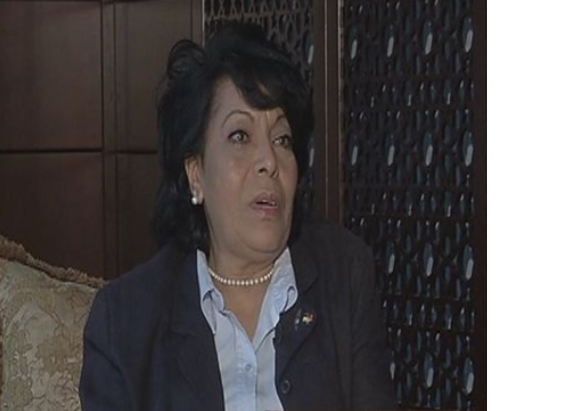
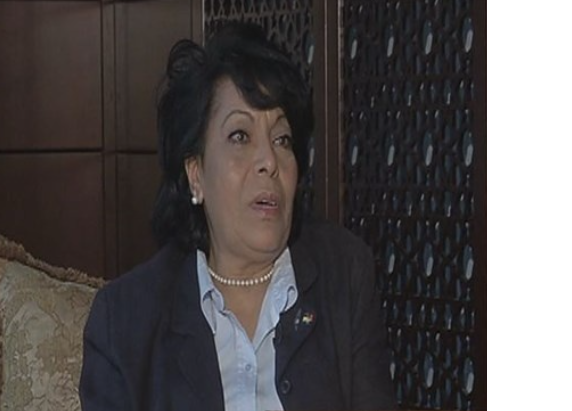
When a picture is stronger than a thousand words, the Jerusalemite researcher Professor Nawaf Al-Zarou documented the crimes and Nazism of the Israeli occupation against Palestinian children in his two encyclopedic works titled "The Epic of the Century in Palestine: Zionist Extermination Against Palestinian Children and Generations from the Nakba 1948 to the War of Annihilation in Gaza 2023-2025." The first volume, whose cover featured the image of six-year-old Hind Rajab, whose body was pierced by 365 bullets, used images and news. The researcher dedicated the second part of the same encyclopedia to narration, presentation, and analysis, spanning over six hundred pages.
The title of the encyclopedia indicates the researcher's reliance on connecting the threads of the issue not as separate events but as an extended process from 1948 to the present, focusing on children and generations, meaning targeting the future and living identity, not just a fleeting military conflict! Therefore, the reader sees that the researcher does not deal with events as a journalistic report but as an encyclopedic work that relies on documentation as a tool to preserve collective memory in the face of attempts at obliteration and distortion, and in confronting the false and misleading Israeli Zionist narrative. He also did not limit himself to narration; rather, he sought to build a legal and moral foundation that condemns the Nazism of the occupation and describes the extermination as an open map against children and generations, transcending time, for the targeting here is not geographical but a demographic targeting of the Palestinian future.
Here, the author presents a hypothesis contrary to the Zionist project; if Israel resorts to wars of despair to break the will of the Palestinian and push them towards surrender or displacement, then the opposing approach emphasizes that the conflict is an extended generational struggle and that the failure of the occupation lies in its inability to erase these generations or end the idea of steadfastness and survival on the land of Palestine.
In a section titled "A Reading of the Strategic Preludes to Zionist Extermination" on page 53, the author discusses the current war of extermination 2023-2025 not as a sudden event or an immediate reaction; rather, as a result of strategic political and military preludes, plans, and philosophy in Zionist thought.
Professor Al-Zarou, with the intelligence of a researcher, managed to maintain a distance of objectivity and academic documentation, despite being one of the Palestinian people's fighters. A court of the Zionist occupation authorities had issued a life sentence against him until his release ten years later during an exchange deal in the seventies of the last century. Despite this, his research and narrative style was not overwhelmed by charged emotion; rather, the author excelled in balancing the focus on showing the injustice of the Palestinian as a victim without falling into the trap of stereotyping the Palestinian as a passive victim, but rather as an influential and resistant actor.
The central idea of the research lies in documentation as an act of continuous engagement and a tool for delayed justice, and in an attempt to deconstruct these essential dimensions of the work, we see that the dialectic of steadfastness and extermination is a dual scene dialectic, as we cannot separate or start from the date of October 7, 2023, as an isolated event; rather, it is a condensation of a full century of conflict and Israeli aggression against everything Palestinian, holding two parallel lines, the legendary struggle and resistance dimension, i.e., documenting the epics of steadfastness and survival on the land of Palestine as a voluntary Palestinian act, and the criminal genocidal Zionist dimension, i.e., documenting the systematic and programmed extermination that targets children and the future.
The author skillfully employed his extensive cognitive tools in real-time documentation to protect the narrative from falsification and ensure that the text does not turn into an emotional political statement that loses its legal value, and protects the recipient – due to repetition – from emotional dullness, habituation to pain, or the routine of the scene, so that he moved with shocking fluidity from documenting the event to documenting the human within the event by deconstructing it – i.e., deconstructing the event – from the moment of death to what was moments before a shirt hanging on a clothesline and to a mother preparing a meal that was not eaten, from Hind Rajab's plea for life to the poetry of Youssef Al-Ashqar (the curly-haired). The idea was not to solicit sympathy for absolute death but; for the life that was amputated, for the simple dreams that a shell assassinated!
"The Epic of the Century in Palestine" is a creative documentary work that humanized the victim in all her human dimensions, moving the recipient away from the scene of misery and into a varied space of the harshness of reality and the victim's stubbornness, which puts him in a state of conscious shock that dazzles him and drives him to want to follow up and take a serious stance against injustice and a bias towards justice, and this is what the streets of the world have felt in their bias towards Palestine and its return to the map of revolutionary resistance action.
The researcher in his encyclopedic works did not assume the role of the traditional historian who waits for the event to end, but rather believes in his role as an engaged human rights historian who collects evidence and testimonies for an inevitable future historical trial.
The contents of the encyclopedia included six detailed chapters and fifteen documents about horrific tales of Zionist brutality in several axes since "Deir Yassin" and (scenes and massacres from the Nakba of 1948 and beyond, and the role of Zionist massacres and slaughters in emptying Palestine and transforming it into "the land of Israel"), a document that does not neglect the names and stories of children whose lives were targeted by the Israeli death machine (and the most moral army in the world!) as its leaders claim.
What adds importance and credibility to this work is the researcher's reliance on live testimonies of journalists who lived through and documented the event, and here, in the same context, I quote an excerpt from an article by the Israeli writer Gideon Levy in Haaretz, which came during an interview with the British surgeon from Oxford, Dr. Nick Maynard, who has been volunteering in Gaza for about seventeen years, saying in the context of his article: "At the end of the week, a two-hour interview conducted by Tucker Carlson with the British surgeon Dr. Nick was published on social media, where he testified about the atrocities he witnessed and what he saw with his own eyes was jaw-dropping; that bodies arrived tied up, and children were executed by shooting their genitals, and infants died of starvation, and premature babies were left by order of the Israeli army inside incubators, and were found dead a few weeks later."
Professor Nawaf Al-Zarou excelled in his documentation of the epics of systematic extermination against all Palestinians, humans, stones, and trees, over years of research and investigation, relying on narratives from Israeli journalists, newspapers, and Israeli references, and condemning them with their own words, in twenty-seven books and encyclopedias, and the last of them will not be (The Epic of the Century in Palestine: Zionist Extermination Against Palestinian Children and Generations from the Nakba 1948 to the War of Annihilation in Gaza 2023-2025).
In conclusion, the purpose of documentation was not merely to monitor victims as much as it was to record how the victim confronts the tools of annihilation, and here I quote what the researcher said: "We will remain in a state of existential, radical, and strategic engagement with the Zionist project and occupation, and we will continue to document the cries of the children and women of Gaza and the moans of its wounded – and I add from my side all of Palestine – as if the day of true and serious judgment comes tomorrow, and we will continue to document the epics of Palestinian steadfastness and survival in the face of that criminal enemy whose criminality and Nazism surpassed all that was committed in wars..."
شارك برأيك
A Reading of "The Epic of the Century in Palestine"... Genocide Against Palestinian Children and Generations from the Nakba of 1948 to the War of Annihilation in Gaza