






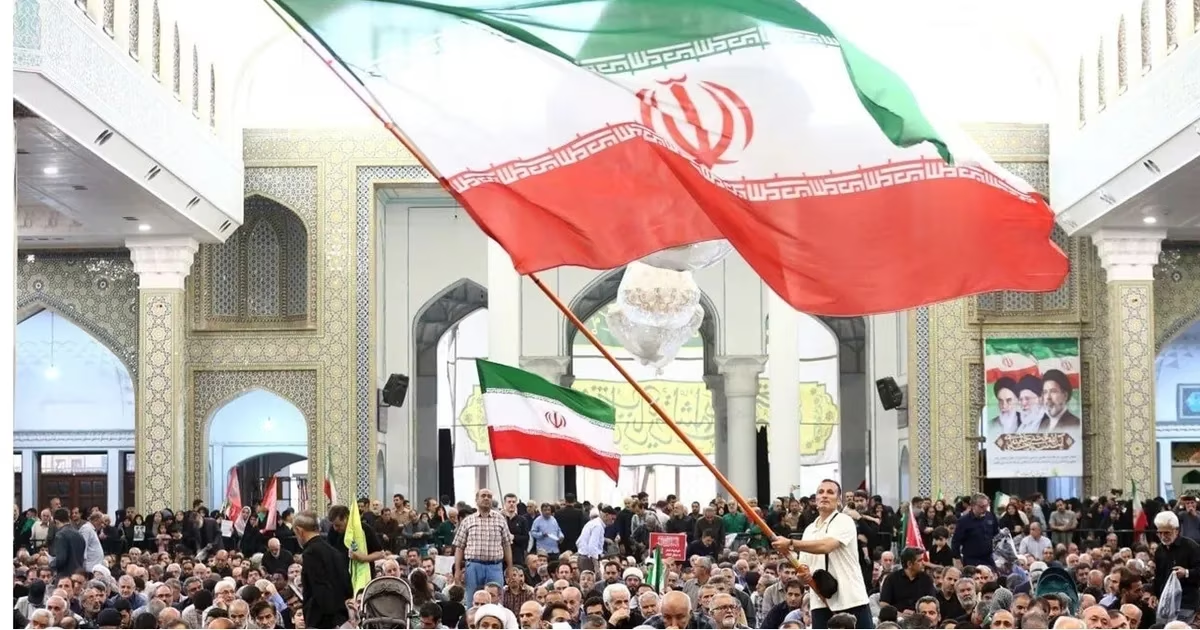
Prominent American press reports have re-evaluated the outcomes of the recent military confrontation between the United States and Iran, indicating that Tehran managed to survive the joint attack launched by Washington and Tel Aviv. Analytical readings considered that the gains achieved by the US administration remained very limited when compared to the high costs incurred militarily and economically.
Sources stated that US President Donald Trump appeared at the G7 summit as someone seeking to finalize deals, while his deputy, JD Vance, took on the task of defending the memorandum of understanding concluded with the Iranian side. These moves come at a time when a new round of negotiations, lasting sixty days, has begun, opening the door for a comprehensive review of what was described as the 'war of choice' launched by the White House.
Despite the US administration's insistence at the beginning of the conflict that its goals were to completely destroy Iranian military and industrial capabilities, the reality on the ground showed different results. The operations failed to end the influence of pro-Tehran factions in the region, nor did they succeed in extracting radical concessions regarding the Iranian nuclear program, which remains in place.
Leaked intelligence data indicates that the Iranian regime succeeded in preserving about 70% of its missile capabilities despite the severe strikes targeting vital sites. Reports also confirmed the continued operational activity of Tehran's allies in Lebanon and Yemen, reflecting the failure of the comprehensive deterrence strategy that Washington tried to impose during months of fighting.
Regarding the nuclear file, sources clarified that the current understanding agreement did not impose the dismantling of fortified facilities, but rather sufficed with reducing uranium enrichment levels while maintaining current stockpiles. The complex technical details are scheduled to be discussed over the next two months, amid fears of Tehran's ability to quickly resume its activities should the understandings collapse.
On the American side, the human and military toll was heavy, with 13 soldiers killed and hundreds injured, in addition to a severe depletion of qualitative weapon stockpiles. Strategic studies reported that the US military consumed more than half of its strategic ammunition, which may require a full six years to replenish and return to pre-war levels.
Diplomatically, the war revealed cracks in international alliances, as European powers refused to engage in securing waterways in the Strait of Hormuz. At the same time, a state of concern prevailed among Gulf countries due to instability, while the Israeli side found itself excluded from some final negotiation stages led by Washington.
Economically, the war caused inflation rates within the United States to rise to alarming levels of 4.2%, but the impact was catastrophic on the Iranian domestic front, which recorded inflation of 84%. However, observers believe that lifting the naval blockade and allowing oil exports again will give the Iranian economy a necessary lifeline in the coming phase.
The terms of the agreement also included the release of $24 billion in frozen Iranian assets abroad, in addition to international promises to establish a reconstruction fund worth up to $300 billion. These financial gains were considered by Iranian Parliament Speaker Mohammad Qalibaf as a major political victory achieved at the negotiating table, surpassing what military force failed to achieve.
In conclusion of the situational reading, tension remains dominant with Trump's threats to return to heavy bombardment if any breach of the agreement occurs. Sources warned that Tehran might exploit the state of American 'deterrence weakness' to strengthen its regional influence, especially with close monitoring from China, which could benefit from any future collapse of these fragile understandings.
Iran triumphed at the negotiating table more than it achieved militarily, while Washington depleted half of its strategic ammunition stockpiles.
شارك برأيك
US Assessment of War Outcomes with Tehran: Iran Survives with Minimal Losses, Washington Pays a Heavy Strategic Cost