






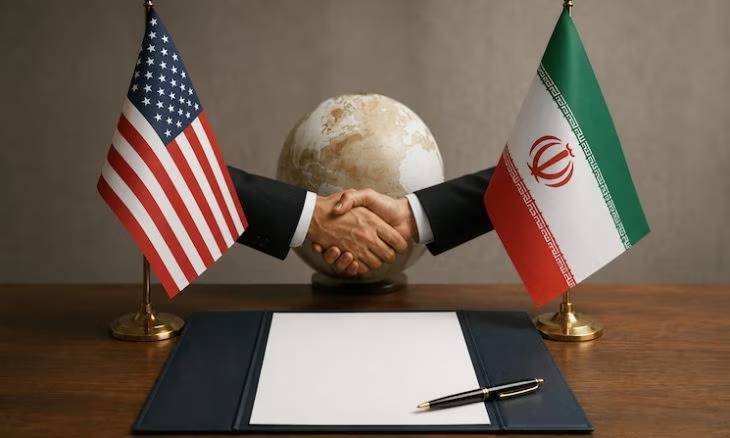
The announcement of a preliminary memorandum of understanding between the United States and the Islamic Republic of Iran has sparked widespread debate in political circles in Washington. The memorandum, described as a preliminary step, includes reopening the Strait of Hormuz to international navigation and launching an intensive sixty-day round of nuclear negotiations.
Despite the ambiguity surrounding some of the document's provisions, global financial markets responded positively and quickly to the announcement. Oil prices saw a significant decline, with Brent crude falling by more than 4%, driven by expectations of stable energy supplies through vital waterways.
The official signing of this memorandum is scheduled for next Friday, while American officials confirmed that technical discussions will begin immediately, led by Vice President J.D. Vance. This path aims to establish clear timelines for mutual commitments between the two parties during the upcoming transitional phase.
US President Donald Trump indicated that the full details of the agreement would be revealed later after the official signing ceremony. This approach comes amid internal pressures demanding transparency about the nature of concessions Washington may have made to ensure oil flow and de-escalate military tensions.
On the Iranian side, Parliament Speaker Mohammad Bagher Ghalibaf led the negotiating team that digitally signed the memorandum with the American side. Sources confirm that Tehran provided initial assurances not to seek nuclear weapons, although the issue of enriched uranium stockpiles remains unresolved pending technical negotiations.
Previous reports indicate that Iran currently possesses a massive stockpile of highly enriched uranium, amounting to approximately 12 tons. Dealing with this stockpile, whether through dilution or transfer, will be the cornerstone of any final agreement aimed at preventing Tehran from acquiring a nuclear bomb.
Domestically, the agreement faced reservations from Republican leaders, with Senator Lindsey Graham expressing concern about a gap in interpretations between the two parties. Graham warned that Tehran's view of commitments might differ radically from what the Trump administration's negotiating team is promoting.
For his part, Senate Republican Majority Leader John Thune demanded access to verification mechanisms for Iranian compliance before proceeding. Thune stressed that economic incentives must be linked to tangible and measurable steps on the ground to ensure that past mistakes are not repeated.
Economically, the memorandum provides Iran with breathing room by suspending sanctions on its oil exports throughout the negotiation period. This measure aims to encourage Tehran to engage seriously in the diplomatic process, with the possibility of releasing frozen assets estimated at $25 billion in later stages.
Regarding the Strait of Hormuz, informed sources announced that navigation would return to normal with joint management of navigational services between Iran and Oman. The US administration affirmed that the goal is to ensure the strait remains permanently open without imposing any additional fees on passing vessels.
Regionally, the memorandum included references to establishing a ceasefire in Lebanon, but it did not obligate Israel to a full withdrawal from border areas. Sources clarified that Tel Aviv reserves the right to respond in the event of any attacks by Hezbollah, which keeps the field situation fragile and prone to escalation.
Israeli Defense Minister Yoav Gallant, for his part, confirmed that Israeli forces would not currently withdraw from some strategic locations in southern Lebanon. Gallant indicated that any direct threat from Iranian territory would be met with a decisive military response, regardless of the ongoing diplomatic paths in Washington.
These developments bring to mind comparisons with the 2015 nuclear deal, from which Trump previously withdrew. While critics see the new agreement as potentially similar to its predecessor in offering financial benefits to Tehran, the current administration insists that the new terms are stricter and better serve American interests.
In conclusion, the international community awaits the tangible results of the next sixty days regarding the nuclear issue. The question remains whether the Trump administration can transform this preliminary memorandum into a comprehensive agreement that ends decades of hostility and tension in the Middle East.
Either Iran refuses to cooperate and remains under pressure, or it complies and receives economic benefits; in both cases, this represents a gain for the United States.
شارك برأيك
Trump-Iran Deal: Political Doubts in Washington and a Boost in Global Markets