






Israeli Prime Minister Benjamin Netanyahu affirmed today, Thursday, that there is no intention for a ceasefire in Lebanon at the present time. These statements came shortly after he issued instructions to begin direct negotiations with the Lebanese side, reflecting a contradiction in the field and political scene.
Netanyahu stressed that Israel's objectives from any negotiation path are primarily focused on disarming Hezbollah and securing an agreement that guarantees sustainable peace on the northern border. He indicated that the move towards negotiation came in response to what he described as repeated requests from Beirut, expressing his appreciation for Lebanese statements calling for disarmament.
For its part, a high-ranking Lebanese official clarified that Beirut is looking for a negotiation path similar to the truce model between Iran and the United States. The official stressed the necessity of Washington's presence as an international guarantor for any agreement that may be reached with Tel Aviv, calling for a temporary truce to prepare the atmosphere for talks.
In the context of international movements, sources in the US State Department revealed arrangements to host an expanded meeting next week. This meeting aims to discuss prospects for ceasefire negotiations between Israel and Lebanon and try to bridge the views between the concerned parties.
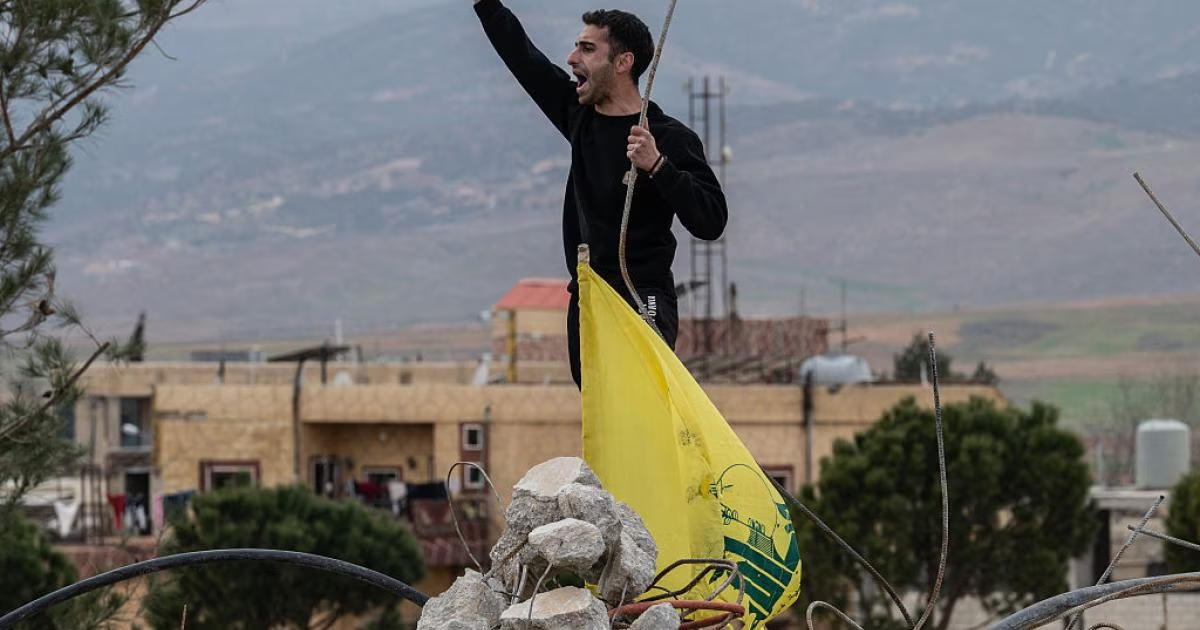
In contrast, Hezbollah quickly renewed its firm stance rejecting any form of direct negotiations with the Israeli occupation. The party affirmed in official statements that the top priority remains a comprehensive cessation of aggression and a complete withdrawal from the occupied Lebanese territories.
Hezbollah MP Ali Fayyad stated that Lebanese national constants are non-negotiable, foremost among them the return of residents to their border villages and towns. Fayyad called on the Lebanese government to adhere to a ceasefire as a prerequisite and mandatory condition before engaging in any subsequent political steps.
Fayyad indicated that any official Lebanese position must prioritize the withdrawal of occupation forces from all border points. He considered that attempts to impose conditions under the pressure of arms will not succeed in changing the field or political reality imposed by the party.
On the other hand, press sources from occupied Jerusalem reported widespread doubts about Netanyahu's true intentions behind the call for negotiations. Observers believe that the Israeli move may be a political maneuver aimed at alleviating increasing international pressure on the occupation government in international forums.
Hebrew reports quoted high-ranking officials as saying that Israel seeks to maintain its international legitimacy to ensure the continuation of its confrontation with Iran in the next phase. These sources clarified that moving towards the negotiating table does not necessarily mean a desire to end military operations immediately.
Field data indicates that Israel is adopting a 'negotiation under fire' strategy, as it continues its raids and ground operations in parallel with diplomatic movement. The ceiling of expectations from these negotiations remains low in light of the occupation's insistence on establishing a buffer security zone in southern Lebanon.
It is worth noting that Israel has procrastinated on several previous occasions regarding official Lebanese calls for dialogue, and has backed down from understandings regarding the place and time of meetings. Previous French efforts also failed to break the diplomatic stalemate due to persistent Israeli intransigence and Tel Aviv's insistence on imposing harsh field conditions.
No ceasefire in Lebanon, and negotiations aim to disarm Hezbollah and achieve sustainable peace.
شارك برأيك
Netanyahu denies ceasefire in Lebanon, Hezbollah renews rejection of direct negotiations