






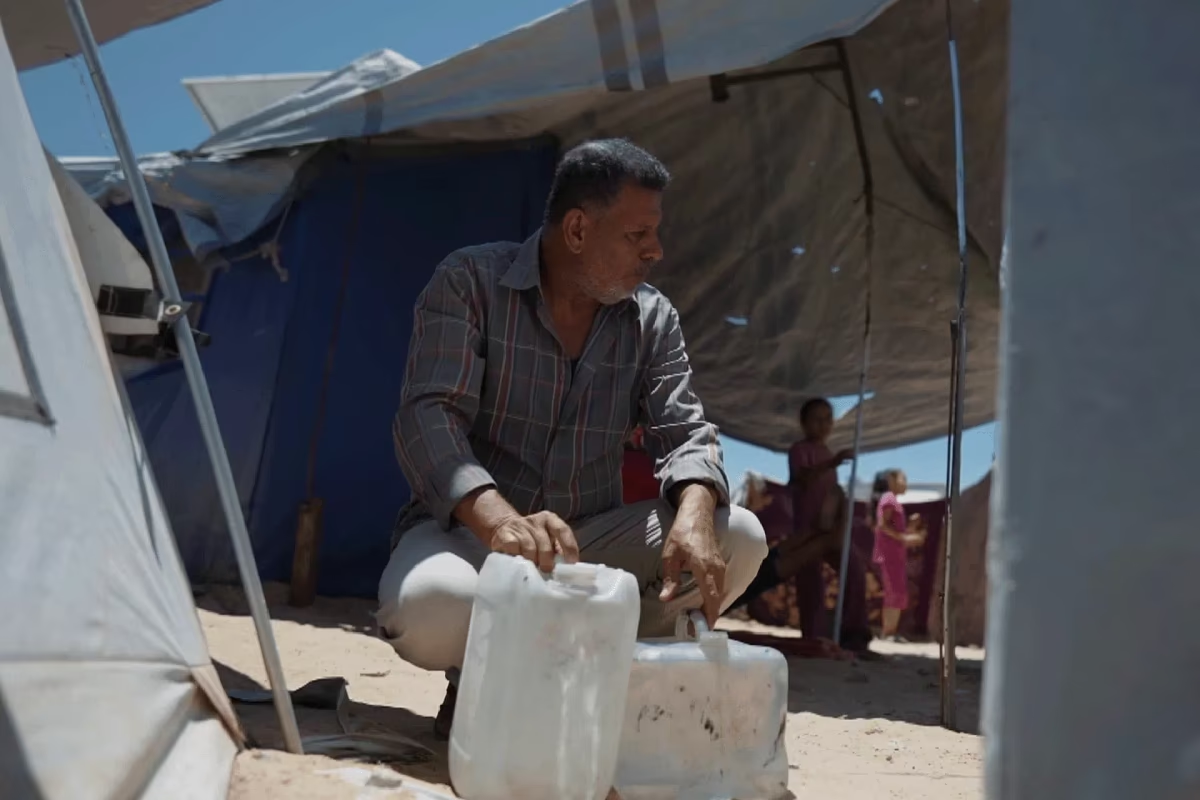
The severity of the humanitarian suffering is escalating in the villages northwest and west of Nablus city in the occupied West Bank, where thousands of citizens are facing a severe water shortage crisis that has lasted for consecutive weeks. This crisis coincides with intense heatwaves in the summer, which has doubled families' need for water to meet basic drinking and hygiene requirements, amidst a bitter daily reality where residents spend their time searching for a drop of water.
Sebastia Mayor, Mohammed Azem, held the Israeli occupation authorities fully responsible for this deterioration, emphasizing that the occupation has absolute control over the quantities of water reaching the area. Azem explained that Israeli measures include preventing Palestinians from developing new water sources or drilling additional wells, making the area hostage to political and security decisions aimed at restricting the Palestinian presence.
Field sources indicated that water pumping stations in the Sebastia area are completely dry, reflecting the scale of the disaster affecting population centers. Local officials called on the international community to intervene urgently to pressure the occupation authorities to ensure water flow, warning that the continuation of these policies poses a direct threat to the lives of residents and their stability in their lands.
During a tour inside the affected homes, the extent of frustration and distress experienced by citizens is evident, as citizen Mohammed Shehadeh confirmed that water has not reached his home for ten days. Shehadeh explained that the absence of water has disrupted all details of daily life, making the simplest household tasks a burden requiring prior planning and double effort, leading to a state of constant tension within the family.
Many residents in Nablus are forced to resort to alternative and costly options, such as buying water from private tankers that charge exorbitant prices beyond the financial capacity of families. These additional financial burdens come amidst difficult economic conditions experienced by West Bank residents, putting heads of households before harsh choices to provide the minimum needs for their children and elderly.
For his part, child Abdul Rahman Shehadeh expressed his dissatisfaction with the loss of this essential facility, noting that the absence of clean drinking water has made it difficult to lead a normal life. The child, like other children in the area, hopes for an end to this crisis soon and a return to their daily routine without the constant worry about the availability of water for personal and educational uses.
Technical data indicates that the crisis is a result of a deliberate decision by the Israeli company 'Mekorot' to reduce the quantities of water allocated to Palestinian towns, in response to pressure and demands from settlers in the area. Observers believe that this step falls within the systematic 'thirst policy' aimed at prioritizing illegal settlements at the expense of indigenous Palestinian villages and cities, in flagrant violation of international law.
This water crisis comes in the context of a broader escalation witnessed in the West Bank since October 7, 2023, where the pace of attacks by the army and settlers has increased unprecedentedly. According to official statistics, these attacks have resulted in thousands of martyrs and wounded, in addition to widespread arrest campaigns and forced displacement affecting thousands of families, exacerbating living and service crises in all governorates.
Ending the crisis requires allowing water access to villages, approving well drilling, and stopping water theft and diversion to settlements.
שתף את דעתך
Thirst Policy: Occupation Cuts Lifeline to Nablus Villages for Settlements