






International press reports have revealed an escalation in tensions between Washington and Muscat, as the Sultanate of Oman faces increasing pressure from the United States due to its adherence to a traditional policy of neutrality in the escalating conflict with Iran. This pressure comes amidst American accusations that Muscat maintains close relations with Tehran and avoids taking decisive stances against its activities in the region.
Informed sources reported that Omani officials moved from the first days of the confrontation to open secret channels of communication with Tehran, in a diplomatic effort to contain the repercussions of the military conflict. These efforts succeeded in securing air corridors for some Gulf countries, which Muscat considered a success reflecting its position as a trusted mediator between the two parties to the conflict.
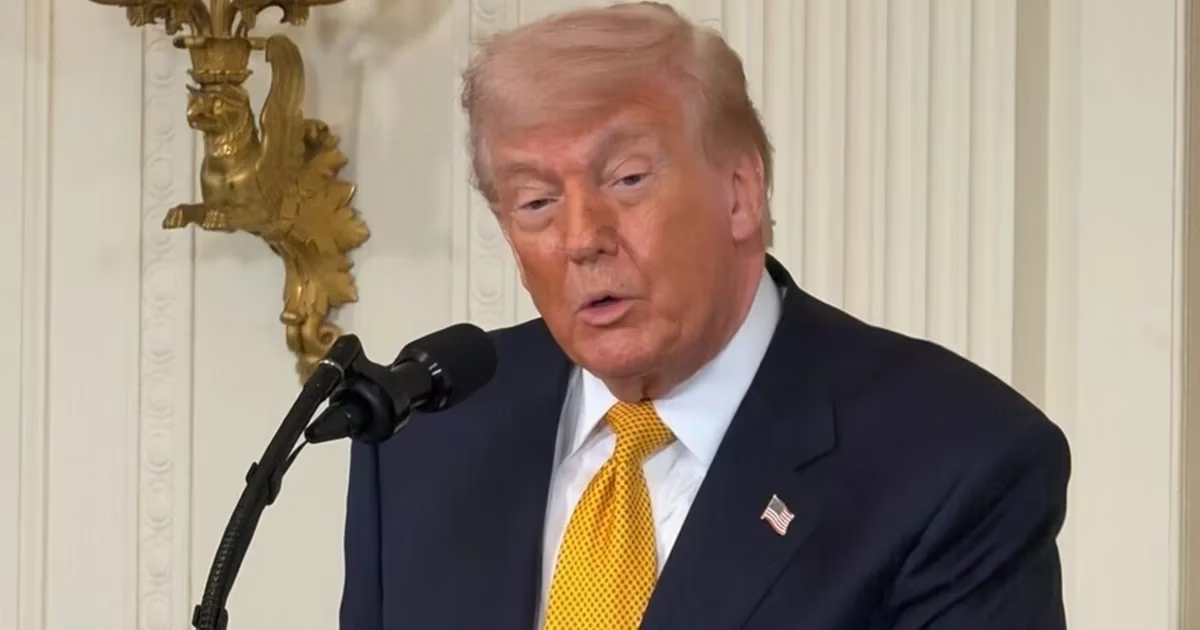
However, the American administration began to view this neutrality as an indirect alignment with the Iranian side, which prompted Washington to exert intense pressure for a clearer stance. President Donald Trump's administration went further by hinting at imposing economic sanctions, and even issuing military threats based on intelligence information.
American intelligence reports claim that Muscat was considering joining an Iranian plan aimed at imposing financial fees on ships crossing the strategic Strait of Hormuz. For its part, the Omani authorities completely denied these allegations, affirming their full commitment to the freedom of international navigation and their intention not to impose any financial restrictions on ships.
In the context of the official response, Omani Information Minister Abdullah Al-Harrasi affirmed that his country is ready to work with the United States and all international partners to enhance regional stability. Al-Harrasi explained that Muscat always seeks to protect common interests and prevent any disturbances that could threaten the security of the sensitive region.
Oman's strategy throughout the war has been based on maintaining a delicate balance between its historical alliance with Washington and its geographical and political ties with Tehran. Muscat believes that this approach offers the only opportunity to maintain stability and open avenues for diplomatic solutions away from the language of weapons.
Despite this approach, the Sultanate has been subjected to sharp criticism from Washington and some regional allies who demand a tougher stance towards Iran. Muscat fears that abandoning its neutrality could turn it into a direct target for Iranian responses, as happened with other countries during previous periods of tension.
For her part, researcher Sanam Vakil believed that the threats issued by the Trump administration reflect an American conviction that the Sultanate has become closer to Tehran than it officially declares. She pointed out that Omani policy is currently subject to unprecedented American scrutiny that affects the constants of its non-aligned foreign policy.
It was noted that Oman avoided issuing direct condemnations of Iran regarding the attacks targeting maritime navigation or the missile strikes that the region has recently witnessed. This position is consistent with Omani diplomatic traditions that prefer to keep channels of dialogue open with everyone to avoid sliding into a comprehensive confrontation.
Omani Foreign Minister Badr Al-Busaidi had called from the beginning of the conflict for the necessity of avoiding escalation, warning that the continuation of the confrontation weakens the entire region. Al-Busaidi also put forward the idea of reviewing regional security relations with international powers in light of the rapid developments taking place on the scene.
In contrast, sources recorded that Iran directed fewer strikes towards Omani interests compared to its neighbors, which reinforced American suspicions about the nature of the understandings between the two countries. However, officials confirmed that Muscat provided limited logistical support to American forces at the beginning of military operations without direct involvement.
US President Donald Trump sparked widespread controversy by hinting at the possibility of military strikes against Oman if its cooperation with Tehran's plans in the Strait of Hormuz was proven. Treasury Secretary Scott Pisent also threatened economic sanctions, before receiving official assurances from Omani Ambassador Talal Al-Rahbi denying those intentions.
Omani diplomacy is currently working to contain this crisis through an international campaign that highlights the Sultanate's role in protecting navigation and ensuring the flow of global trade. These efforts include coordination with the United Nations to ensure the safe passage of food and humanitarian aid ships heading to the African continent.
In conclusion, these pressures revealed serious challenges facing Muscat in maintaining its historical role as a regional mediator amidst the sharp polarization. It appears that the trust gap between Washington and Muscat has widened, especially after Oman refrained from signing international statements condemning Iranian naval movements.
Omani policy towards Iran has opened the door to unprecedented American scrutiny of a country that has long built its foreign policy on neutrality.
שתף את דעתך
Unprecedented American Pressure on Muscat to End its Neutrality Towards Tehran