ARAB AND WORLD

Fri 20 Oct 2023 6:39 pm - Jerusalem Time

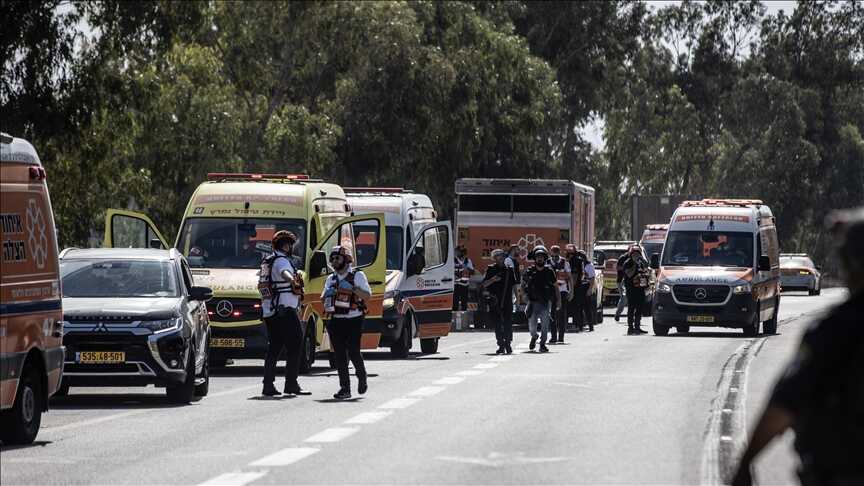
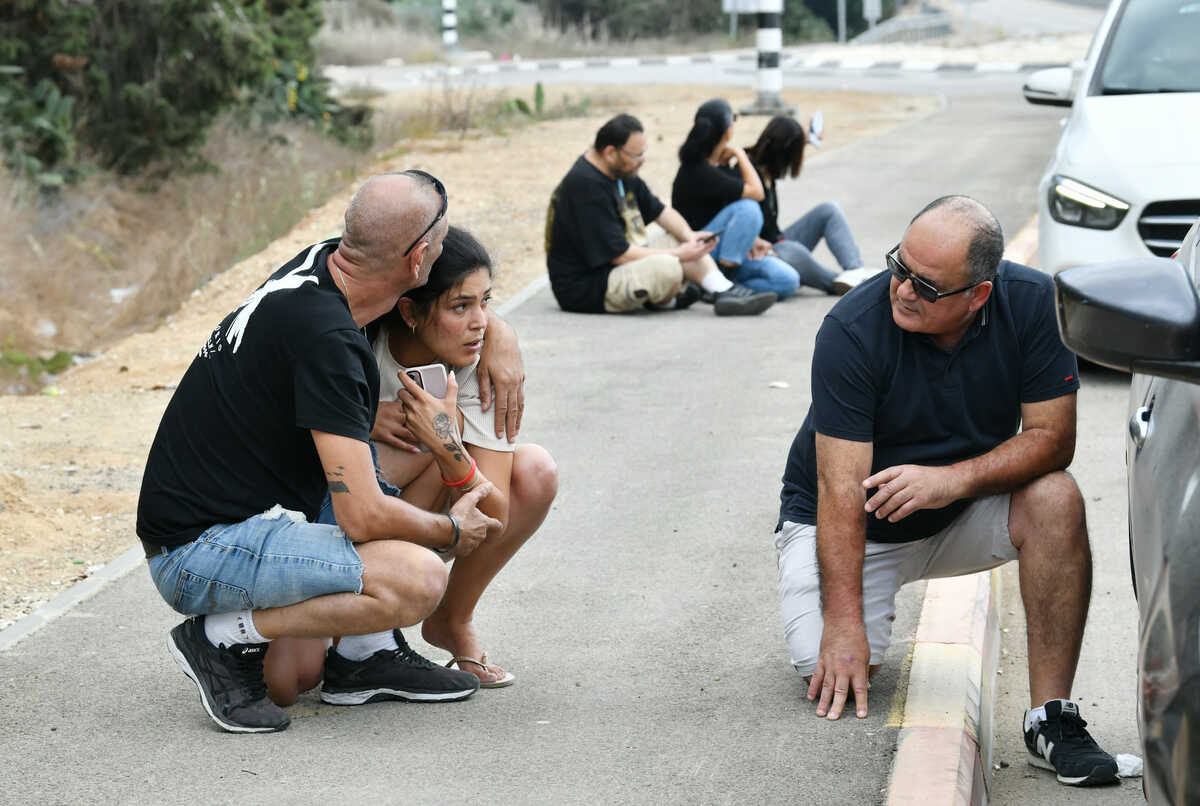
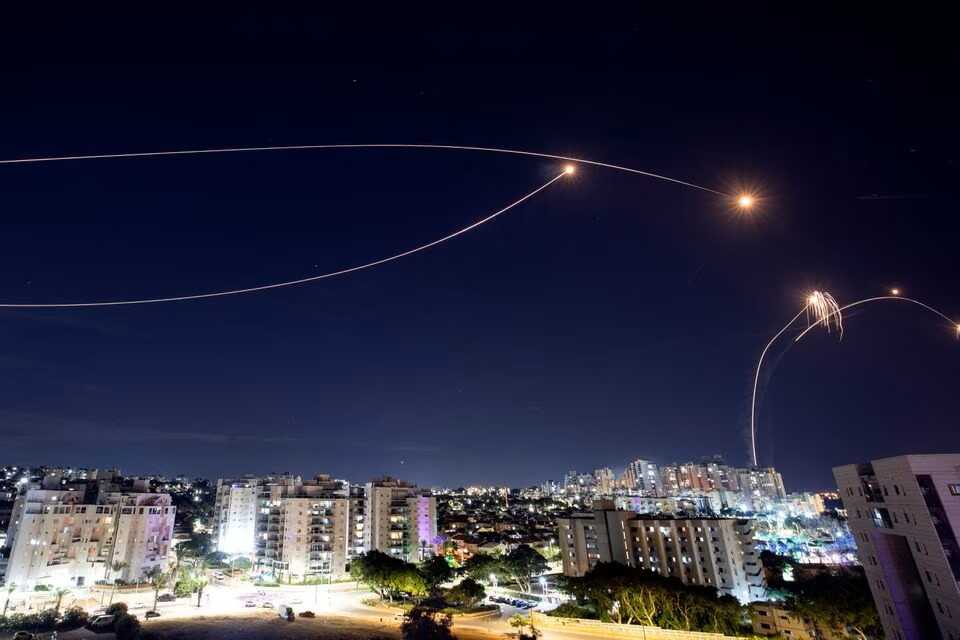
Israel: The number of war wounded risen to 4,834, 48 of whom in serious condition

The Israeli Ministry of Health announced on Friday that the number of Israelis wounded had risen to 4,834 since the start of the war on Gaza on October 7.


The ministry said in a statement, a copy of which was sent to Anadolu: “The number of injured people who were transported to hospitals as of Friday reached 4,834, including 12 in critical condition, 280 in serious condition, 771 in moderate condition, and the rest in minor condition.”


The Ministry stated that the number of injured people still in hospitals reached 301 on Friday, including 48 in serious condition, 173 in moderate condition, and 80 in minor condition.


Israeli media, including the official Israeli Broadcasting Authority, announced that at least 1,300 Israelis had been killed since the beginning of the war.


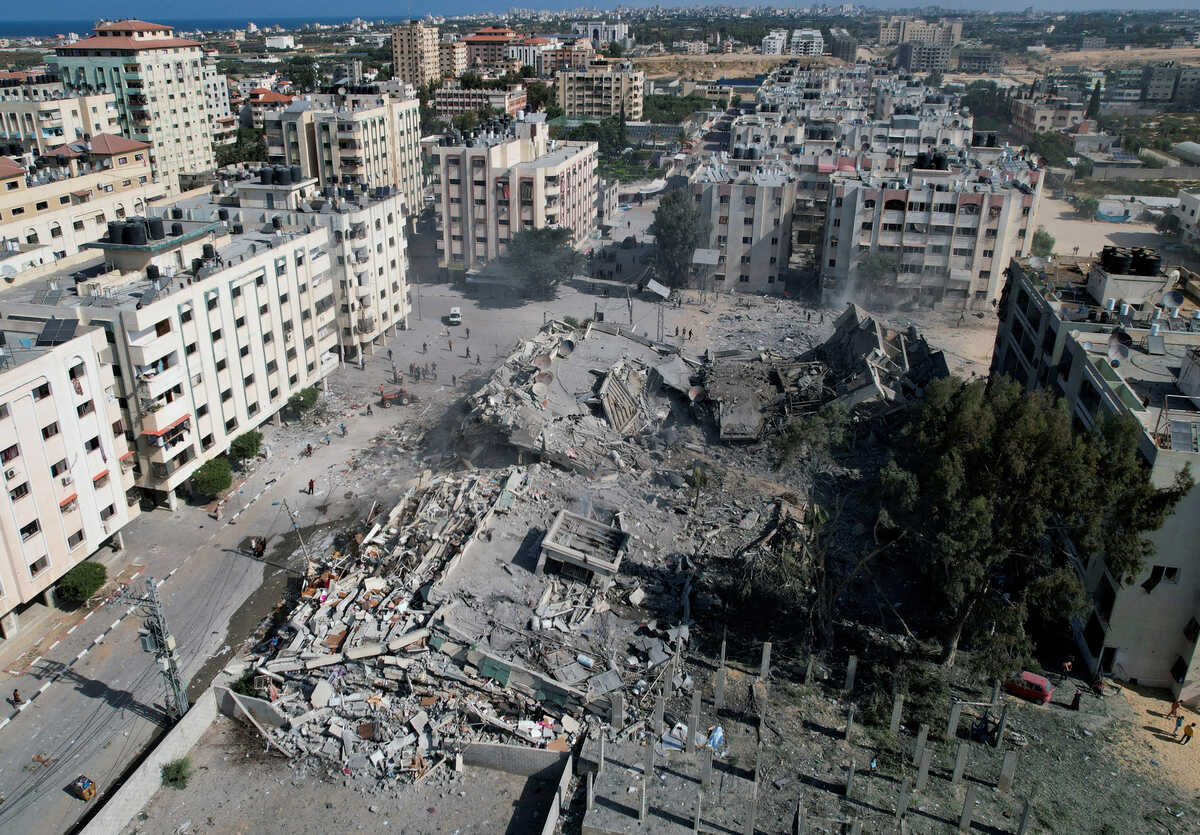
For the fourteenth day, the Israeli army continues to target the Gaza Strip with intense air strikes that destroyed entire neighborhoods and killed and wounded thousands of Palestinian civilians.


At dawn on October 7, the Hamas movement and other Palestinian factions in Gaza launched Operation “Al-Aqsa Flood,” in response to “the continuing attacks by Israeli forces and settlers against the Palestinian people, their property, and their sanctities, especially Al-Aqsa Mosque in occupied East Jerusalem.”


On the other hand, the Israeli army launched Operation Iron Swords and continues to launch intensive raids on many areas in the Gaza Strip, which is inhabited by more than two million Palestinians who suffer from deteriorating living conditions as a result of an ongoing Israeli siege since 2006.


Source: Anadolu

PALESTINE

Fri 20 Oct 2023 6:29 pm - Jerusalem Time

Gaza: Israeli war machine claims lives of more than 4,137 killed and 13,000 injured

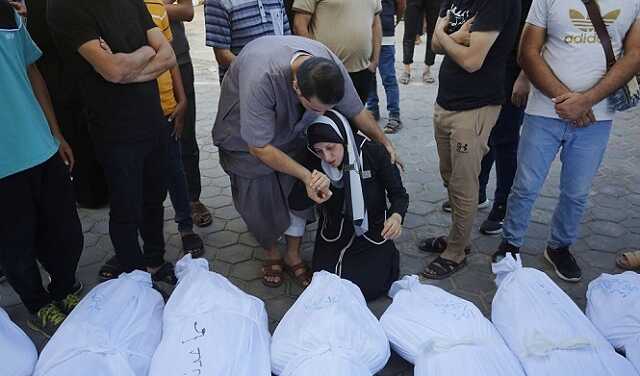
In the latest statistics of the Palestinian Ministry of Health, it said that more than 4,137 dead and more than 13,000 wounded are victims of the occupation’s aggression in Gaza, since it began on October 7.


More than 4,000 people were killed, and more than 13,000 others were injured, most of them children and women, as a result of the Israeli occupation’s aggression against Gaza, in light of the continued intense occupation raids on various areas in the besieged Gaza Strip, which mainly targeted populated areas.


In the latest tally of the Palestinian Ministry of Health, it said that more than 4,137 martyrs and more than 13,000 wounded are victims of the occupation’s aggression in Gaza, since it began on October 7.


The Palestinian Ministry of Interior in the Gaza Strip said, via a statement on Telegram, that “occupation aircraft simultaneously targeted 6 homes, with their residents on their heads, in Khan Yunis Governorate, south of the Gaza Strip.” The statement indicated that "9 people were killed and more than 60 others were injured," all of whom were transferred to Nasser Medical Hospital.


Israeli warplanes targeted several inhabited homes in Khan Yunis, killing 21 people and wounding 79 people, most of whom were women and children. They were taken to Nasser Hospital in Khan Yunis. The sources indicated that 8 of the martyrs were from one family.


The occupation forces also bombed Gaza City, and the bombing focused on the Al-Zaytoun and Al-Shuja'iya neighborhoods, causing the demolition of several homes, and the bombing continued on several areas in the Gaza Strip.

PALESTINE

Fri 20 Oct 2023 6:06 pm - Jerusalem Time

Poll: A majority in Israel supports a broad invasion of the Gaza Strip

According to the poll, 65% support a broad invasion of Gaza and 51% support a broad military operation against Hezbollah, and 80% demand that Netanyahu bear responsibility for the political and security failures, while his popularity and the popularity of his coalition decline significantly.


65% of citizens in Israel supported launching a large-scale ground military operation in the Gaza Strip, while 21% opposed it, and 14% said that they had no opinion about that, according to a poll published by the newspaper “Maariv” today, Friday, and showed that there was no difference in positions between Likud party voters and Yesh Atid party voters.

Also, 51% called for a broad military operation against Hezbollah in Lebanon under the pretext of responding to the firing of missiles towards northern Israel, and 30% supported launching a local military operation against Hezbollah.


A large majority, 80%, believed that the Israeli Prime Minister, Benjamin Netanyahu, should bear responsibility for the security and political failures that led to the Hamas movement’s success in launching a large, sudden attack in southern Israel on October 7th.


69% of Likud voters said that Netanyahu should announce that he bears responsibility for these failures. This comes after ministers, security and military officials announced that they bear responsibility for this failure, while Netanyahu has so far refrained from doing so.


The decline in Netanyahu's popularity continued this week, and it was found that 28% prefer that Netanyahu assume the position of prime minister, while 49% said that they prefer that the head of the "National Camp" bloc, Benny Gantz, assume this position.


The poll also showed that the popularity of the current coalition parties is still declining, and that if elections were held for the Knesset now, the coalition parties would have won 43 seats, even though they are represented today by 64 seats. Opposition parties will obtain 77 seats in new elections, or 68 seats without the Arab parties.


65% said they were optimistic about Israel's future, while 25% said they were pessimistic about its future. The percentage of optimists decreases and the percentage of pessimists increases among secular Jews.


Source: Arab 48

ARAB AND WORLD

Fri 20 Oct 2023 5:51 pm - Jerusalem Time

Massive demos in Egypt in support of Palestine

The Egyptian governorates witnessed massive demonstrations after Friday prayers, as citizens took to the streets and squares denouncing the Israeli aggression against Palestine, especially the Gaza Strip, and rejecting the Israeli plans to displace them.


The demonstrators denounced the Israeli occupation's bombing of the Gaza Strip, which led to the martyrdom of thousands of Palestinian people, raising the Palestinian and Egyptian flags.


The Rifaat al-Masry crossing also witnessed demonstrations by Egyptian citizens, demanding the entry of humanitarian aid into the Gaza Strip, following a speech delivered by United Nations Secretary-General Antonio Guterres.

PALESTINE

Fri 20 Oct 2023 5:37 pm - Jerusalem Time

Palestine President meets with British Prime Minister Rishi Sunak in Cairo

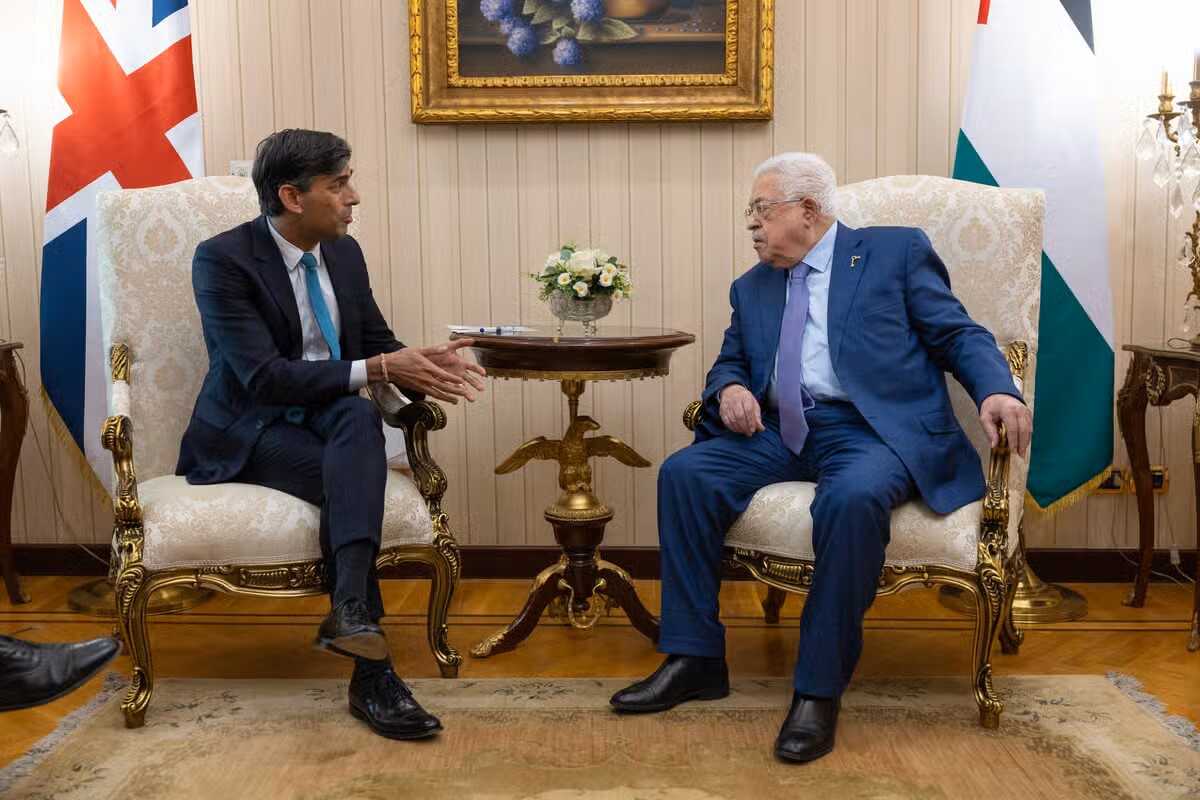
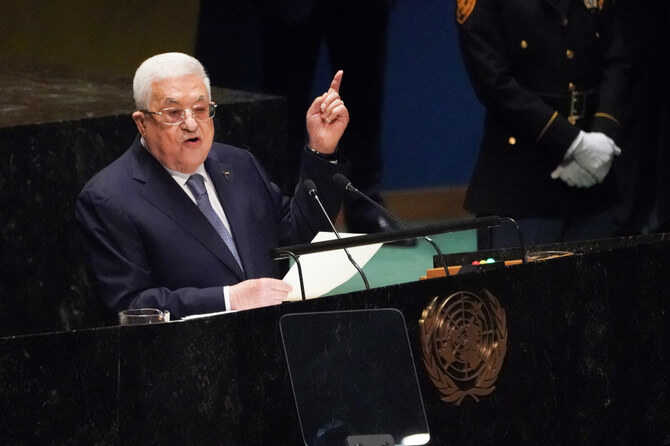
Today, Friday, the President of the State of Palestine, Mahmoud Abbas, met in the Egyptian capital, Cairo, with British Prime Minister Rishi Sunak.


During the meeting, they discussed the latest developments on the Palestinian scene, the latest developments in the ongoing efforts to stop the aggression against our people, spare civilians the scourge of war, and the importance of introducing medical and food relief materials and providing water and electricity as quickly as possible.


He stressed the State of Palestine’s categorical rejection of the displacement of Palestinians from the Gaza Strip, the West Bank or Jerusalem.


President Abbas stressed that peace and security are achieved through implementing the two-state solution based on international legitimacy resolutions, which includes the entire territory of the State of Palestine in the West Bank, including East Jerusalem and the Gaza Strip, and recognition of the State of Palestine.


For his part, British Prime Minister Sunak offered condolences to the Palestinian victims in Gaza and the West Bank, stressing that his country is against the killing of civilians, and that Britain will provide urgent relief and humanitarian aid to Gaza.


Sunak stressed his country's commitment to the two-state solution, so that Palestine and Israel can live side by side in security, peace and good neighborliness.


This meeting comes within the framework of President Mahmoud Abbas's participation in the Cairo Summit Conference called for by Egyptian President Abdel Fattah El-Sisi, and within the framework of mobilizing international support for the Palestinian position.

PALESTINE

Fri 20 Oct 2023 4:41 pm - Jerusalem Time

Israel received a thousand tons of weapons since start of war on Gaza

The Israeli Ministry of Defense said that Tel Aviv received supplies estimated at about a thousand tons of weapons from outside the country, without specifying the sources of those military supplies.


The ministry reported - in a statement, a copy of which reached the Turkish Anatolia Agency - that 45 cargo planes had arrived to the Israeli occupation since October 7, between the occupation army and the Palestinian resistance.


The statement said, "The Israeli Ministry of Defense and the Israeli Army announce the successful arrival of an additional cargo plane to Ramon Airport near Eilat (south) earlier this morning, Friday."


The statement indicated that the shipment of military supplies received today includes military ambulances, medical equipment for the use of the Israeli army, and various other resources aimed at enhancing the army’s readiness and ability.


The Israeli Ministry of Defense did not specify the source of this shipment. The Israeli Ministry of Defense said, “This plane is the 45th plane to land in Israel as part of a coordinated initiative led by the Ministry of Defense and the Israeli Army.” It confirmed that about 1,000 tons of weapons have arrived in Israel so far, including various weapons. Designed to support the Israeli army's offensive plans. Yesterday, Thursday, Israel announced the arrival of another batch of weapons from the United States.


Source: Anadolu Agency

PALESTINE

Fri 20 Oct 2023 4:24 pm - Jerusalem Time

Israel disclosed information about the hostages in Gaza and their situation

On Friday, the Israeli army published new information about the hostage situation in the Gaza Strip following the attack launched by militants of the Islamic Resistance Movement "Hamas" inside Israel on October 7.


The Israeli army said that the majority of the hostages are alive, noting that more than 20 of the hostages are children under the age of 18, and between 10 and 20 of the hostages are over 60 years old.


It is unclear how many hostages are being held in Gaza overall.


The Israeli army said that the number of missing people ranged between 100 and 200 people, while Abu Ubaida, spokesman for the “Al-Qassam Brigades,” the military wing of the Hamas movement, said in a video statement on Monday that the number ranged from at least 200 to 250.


He added that the Al-Qassam Brigades took about 200 hostages, and the rest were being held by other “armed formations” in Gaza, adding that they could not determine the exact number of hostages due to the ongoing Israeli bombing.

PALESTINE

Fri 20 Oct 2023 4:06 pm - Jerusalem Time

Aid trucks need to move to Gaza as quickly as possible: UN chief

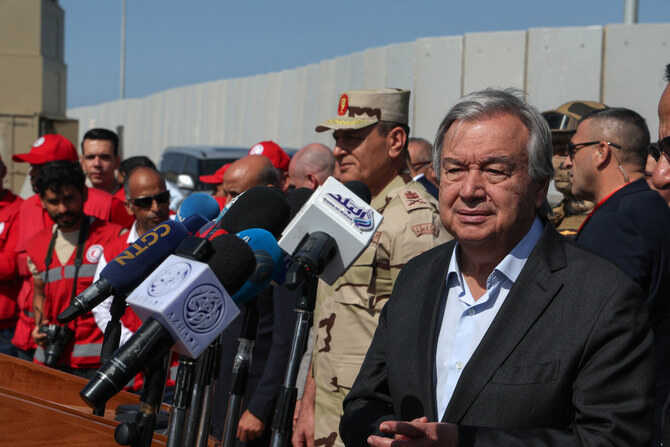
Aid trucks need to move to Gaza as quickly as possible, United Nations Secretary-General Antonio Guterres said at the Egyptian side of the Rafah crossing between the Gaza Strip and Egypt. He called for a meaningful number of trucks to enter Gaza every day and for verifications of aid to be done in a way that is practical and expedited. “We are actively engaging with all parties to make sure conditions for delivering aid are lifted,” he said. 


The UN chief paid a visit to the Egyptian side of the Rafah border crossing with Gaza on Friday to oversee preparations for the delivery of aid to the war-torn enclave. Trucks stuffed with international aid for Gaza should be rolling “in the next day or so,” the United Nations said Friday, with Palestinians desperate for life-saving supplies after relentless bombing from Israel, still reeling from its bloodiest-ever attack. 


Israel has vowed to destroy Hamas after the Islamist militant group launched an unprecedented raid from the Gaza Strip on October 7, killing at least 1,400 people, mostly civilians who were shot, mutilated or burned to death, according to Israeli officials. Hamas gunmen also kidnapped nearly 200 hostages including foreigners from around two dozen countries ranging from Paraguay to Tanzania. In response, Israeli war planes have levelled entire city blocks in Gaza in preparation for a ground invasion they say is coming soon. More than 3,785 Palestinians, mostly civilians, have died in the bombing, according to the latest toll from the Hamas-run health ministry. 


The United Nations says more than one million of Gaza’s 2.4 million people are displaced and that the humanitarian situation is deteriorating daily. 

A spokesman for UN humanitarian chief Martin Griffiths told reporters in Geneva they were in “deep and advanced negotiations” with all sides to ensure aid moves “as quickly as possible. ” “A first delivery is due to start in the next day or so.” Medicine, water purifiers and blankets were being unloaded at El-Arish airport near Gaza, an AFP reporter saw, with Ahmed Ali, head of the Egyptian Red Crescent, saying he was getting “two to three planes of aid a day.” The situation inside Gaza is “beyond catastrophic,” said Sara Alzawqari, UNICEF spokeswoman for the Gulf. “Time is running out and the numbers of casualties among children are rising.” Egyptian state-linked broadcaster Al Qahera News had said the Rafah crossing — the only route into Gaza — would open Friday, but Cairo has said it needed more time to repair roads. Raising some hope aid could soon flow, Egypt has removed concrete blocks on the only route into Gaza, a security source told AFP. 


Egypt is still fixing bomb-damaged roads and on Friday “vehicles and Egyptian equipment went in to repair the road on the Palestinian side,” witnesses told AFP. The World Health Organization’s emergencies director has called a deal struck by US President Joe Biden to allow in 20 trucks “a drop in the ocean of need.” “It should be 2,000 trucks,” said Michael Ryan.


Agencies

ARAB AND WORLD

Fri 20 Oct 2023 3:58 pm - Jerusalem Time

US military in Middle East faces increasing threats amid Israeli siege on Gaza

With tensions spiking in the Middle East, US forces in the region are facing increasing threats, as a Navy warship shot down missiles appearing to head toward Israel Thursday and American bases in Iraq and Syria were repeatedly targeted by drone attacks.


The USS Carney, a Navy destroyer in the northern Red Sea, intercepted three land attack cruise missiles and several drones that were launched by Houthi forces in Yemen. The action by the Carney potentially represented the first shots by the US military in the defense of Israel in this conflict. 

Brig. Gen. Pat Ryder, Pentagon press secretary, told reporters the missiles were “potentially” headed toward Israel but said the US hasn’t finished its assessment of what they were targeting. 


A US official said they don’t believe the missiles — which were shot down over the water — were aimed at the US warship. The official spoke on condition of anonymity to discuss military operations that had not yet been announced. But an array of other drone attacks over the past three days did target US bases, including one in southern Syria on Thursday that caused minor injuries. 


The rash of violence comes in the wake of an explosion at a Gaza hospital that killed hundreds of people, triggering protests in a number of Muslim nations. The Israeli military has relentlessly attacked Gaza in retaliation for the devastating Hamas rampage in southern Israel almost two weeks ago, but Israel has denied responsibility for the Al-Ahli hospital blast and the US has said its intelligence assessment found that Tel Aviv was not to blame.


In recent days, however, a number of militant groups across the region — from Hezbollah to the Houthis — have expressed support for the Palestinians and threatened Israel. Since Tuesday, militants have launched at least four drone attacks on US military installations in Iraq and Syria where US troops train local defense forces and support the mission to counter the Daesh group.

The attacks fuel escalating worries in the US and the West that the war in Israel could expand into a larger regional conflict. “That’s exactly what we are trying to prevent,” Ryder said. The most recent drone attack was Thursday at Al-Asad Air Base in western Iraq. The Islamic Resistance in Iraq posted a statement claiming responsibility for the attack, saying they had fired a salvo of rockets at the base and “they hit their targets directly and precisely.” A US official confirmed the latest attack but said it was too early to assess any impact.


Also Thursday, the Al-Tanf garrison in southeastern Syria was struck by drones. US troops have maintained a presence at the base for a number of years to train Syrian allies and monitor Islamic State militant activity.
The Pentagon said one drone was shot down, but another hit the base and caused minor injuries.
The garrison is located on a vital road that often used by Iranian-backed militants to ferry weapons to Hezbollah in southern Lebanon — and Israel’s doorstep.
Syrian opposition activists also said there was a separate drone attack on an oil facility in eastern Syria that houses American troops. Omar Abu Layla, a Europe-based activist who heads the Deir Ezzor 24 media outlet, said three drones with explosives struck the Conoco gas field in the eastern province of Deir Ezzor that borders Iraq. The Britain-based Syrian Observatory for Human Rights, an opposition war monitor, also confirmed explosions at the site.
On Tuesday, militants launched three drones against two Iraq bases that the US uses to train forces and conduct operations against the Islamic States. During the spate of launches, one warning turned out to be a false alarm at Al-Asad, but it sent personnel rushing into bunkers. During that incident, a contractor suffered a cardiac arrest and died, Ryder said.
He said the Pentagon does not yet have confirmation on who launched the drone attacks but said the US ”will take all necessary actions to defend US and coalition forces against any threat.” He said any military response would come “at a time and a manner of our choosing.”
On the intercepts by the Carney, Ryder said the strikes were done because the Houthi missiles “posed a potential threat” based on their flight profile. He added that the US is prepared to do whatever is needed “to protect our partners and our interests in this important region.” He said the US is still assessing what the target was, but said no US forces or civilians on the ground were injured.
Iranian-backed Houthi rebels have expressed support for the Palestinians and threatened Israel. Last week, in Yemen’s Sanaa, which is held by the Houthi rebels still at war with a Saudi-led coalition, demonstrators crowded the streets waving Yemeni and Palestinian flags. The rebels’ slogan long has been, “God is the greatest; death to America; death to Israel; curse of the Jews; victory to Islam.”
Last week, Abdel-Malek Al-Houthi, the rebel group’s leader, warned the United States against intervening in the ongoing conflict between Israel and Hamas, threatening that his forces would retaliate by firing drones and missiles.
When approached Thursday, two Houthi officials declined to comment on the incident. One said he was unaware of the incident, while the second said he did not have the authority to speak about it.


Source: Arab News


PALESTINE

Fri 20 Oct 2023 3:55 pm - Jerusalem Time

Palestinian president among international leaders to attend Cairo peace summit

CAIRO: Palestinian President Mahmoud Abbas will be among international leaders to participate in the Cairo summit for peace on Saturday, an official source told Reuters.

Bahrain’s King Hamad bin Isa Al Khalifa and Kuwait’s Crown Prince Sheikh Mishal Al-Ahmad Al-Jaber Al-Sabah also confirmed their presence in Cairo.

French Foreign Minister Catherine Colonna, European Council President Charles Michel and EU’s top diplomat Josep Borrell have confirmed their presence in the meeting, which will discuss the Palestinian-Israeli issue, according to reports. Colonna had already travelled to Cairo, Beirut and Israel last week as Paris looks to reduce the risk of an escalation across the region.

Greek Prime Minister Kyriakos Mitsotakis and Italian Prime Minister Giorgia Meloni will also participate in the peace summit, government sources told Reuters.


South African President Cyril Ramaphosa confirmed his attendance to discuss the conflict in Israel and the Gaza Strip, his office said.

“President Ramaphosa has been deeply concerned by attacks on civilians, the resulting enormous loss of life, displacement of people and the humanitarian crisis that has engulfed the Gaza Strip,” South Africa’s presidency said in a statement on Friday.


“South Africa stands ready to join the global effort that will bring about lasting peace to the Middle East.”

The other attendees expected so far are Spanish Prime Minister Pedro Sanchez, Cypriot President Nikos Christodoulides, Canadian Prime Minister Justin Trudeau, German Foreign Minister Annalena Baerbock, Japanese Foreign Minister Yoko Kamikawa and British foreign minister James Cleverly.


The summit, which was called by Egypt’s President Abdelfattah El-Sisi, aims to de-escalate the violence in Gaza, help reach a ceasefire and arrive at a just solution for the Palestinian issue.


Israel has intensified its bombardment on Gaza over the two weeks, killing at least 3,800 people and wounding more than 13,000. Calls for peace have intensified as Gaza prepares to receive long-awaited aid after an agreement to open the Rafah border crossing.


Source: agencies

ARAB AND WORLD

Fri 20 Oct 2023 3:54 pm - Jerusalem Time

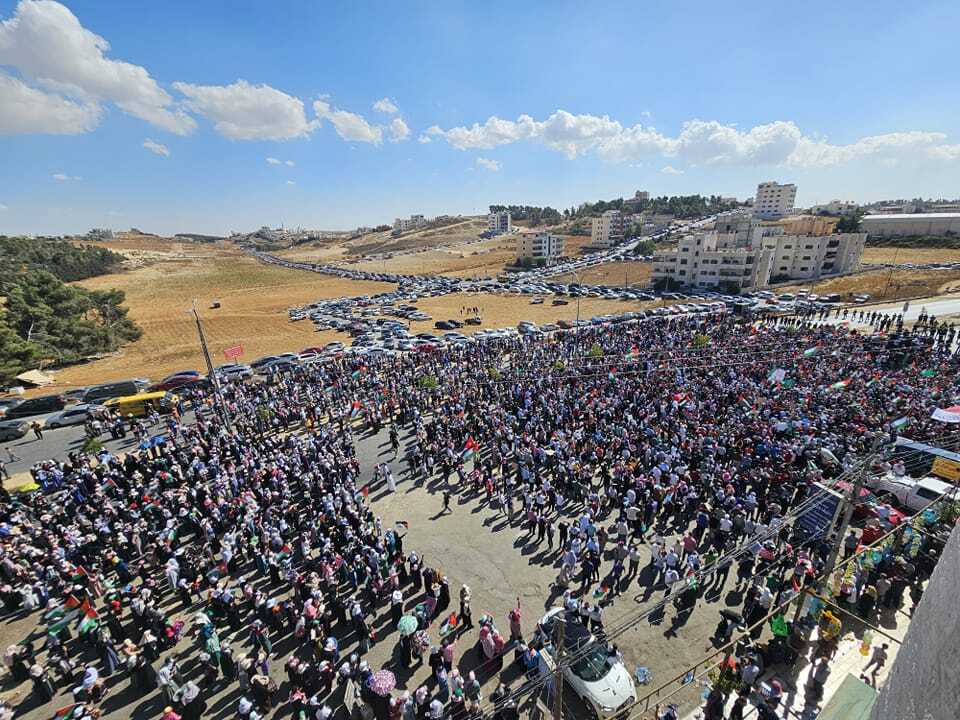
Tens of thousands of Jordanians participate in angry marches and vigils in support for Palestine

Tens of thousands of Jordanians, in all governorates of the Kingdom, participated today, Friday, in marches and vigils in support of Palestine and support for Gaza, and to denounce the aggression of the Israeli occupation.


A massive march began in front of the Al-Husseini Mosque in the capital, Amman, which included thousands of Jordanians, who denounced the Israeli occupation’s aggression against the Gaza Strip, and expressed their support for the Palestinian people in the face of the Israeli war machine.


The participants chanted slogans expressing their solidarity with the people stationed in Al-Aqsa Mosque and the defenders of its sanctities, stressing that these crimes are repeated and desperate attempts in the face of the steadfastness of the Palestinians.


They called on the international community to take quick and urgent action to provide international protection for the defenseless Palestinian people, and to put pressure on the occupation to adhere to international resolutions.

PALESTINE

Fri 20 Oct 2023 3:48 pm - Jerusalem Time

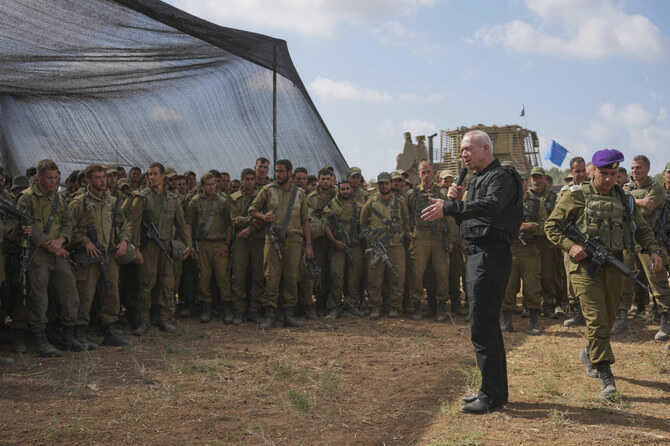
Update // Gallant reveals 3 stages of war and confirms Israel will not control ‘life in Gaza’

Israel’s defense minister said Friday that after the country destroys the Hamas militant group, the military does not plan to control “life in the Gaza Strip.”
Defense Minister Yoav Gallant’s comments to lawmakers were the first time an Israeli leader discussed its long-term plans for Gaza.
Gallant said Israel expected there to be three phases to its war with Hamas. 

He said it first would attack the group in Gaza with airstrikes and ground maneuvers, then it would defeat pockets of resistance and finally it would cease its “responsibility for life in the Gaza Strip.”
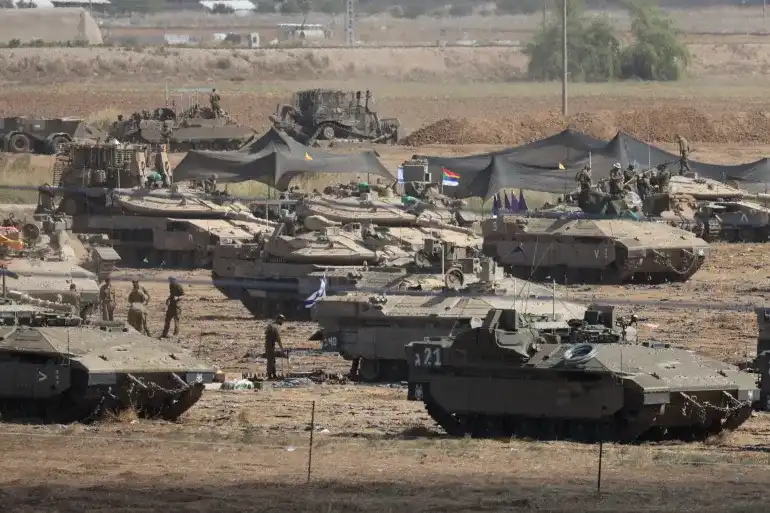
Israel bombarded the Gaza Strip early Friday, hitting areas where Palestinians had been told to seek safety, and it began evacuating a sizable Israeli town near the border with Lebanon, the latest sign of a potential ground invasion of Gaza that could trigger regional turmoil.


Palestinians in Gaza reported heavy airstrikes in Khan Younis, a town in the territory’s south, and ambulances carrying men, women and children streamed into the local Nasser Hospital. The hospital, Gaza’s second largest, already was overflowing with patients and people seeking shelter.


The Israeli military said it had struck more than 100 targets across Gaza linked to the territory’s Hamas rulers, including a tunnel and arms depots.
On Thursday, Gallant ordered ground troops to prepare to see Gaza “from the inside,” hinting at a ground offensive aimed at crushing Gaza’s militant Hamas rulers nearly two weeks after their bloody incursion into Israel. Officials have given no timetable for such an operation.


Over a million people have been displaced in Gaza, with many heeding Israel’s orders to evacuate the northern part of the sealed-off enclave on the coast of the Mediterranean Sea. Though Prime Minister Benjamin Netanyahu had called areas in south Gaza “safe zones” earlier this week, Israeli military spokesman Nir Dinar said Friday: “There are no safe zones.”


UN officials said that with the bombings across all of Gaza, some Palestinians who had fled the north appeared to be going back.
“The strikes, coupled with extremely difficult living conditions in the south, appear to have pushed some to return to the north, despite the continuing heavy bombing there,” Ravina Shamdasani, spokesperson for the UN human rights office, said.


Gaza’s overwhelmed hospitals are rationing their dwindling medical supplies and fuel for generators, as authorities worked out logistics for a desperately needed aid delivery from Egypt. Doctors in darkened wards across Gaza performed surgeries by the light of mobile phones and used vinegar to treat infected wounds.
The deal to get aid into Gaza through the territory’s only entry point not controlled by Israel, remained fragile. Israel said the supplies could only go to civilians and that it would “thwart” any diversions by Hamas. More than 200 trucks and some 3,000 tons of aid were positioned at or near the crossing in Rafah, a city that straddles northern Egypt and southern Gaza.


Work began Friday to repair the road at the border that had been damaged in airstrikes, with trucks unloading gravel and bulldozers and other road repair equipment filling in large craters.
Israel has evacuated its own communities near Gaza and Lebanon, putting residents up in hotels elsewhere in the country. The Defense Ministry announced evacuation plans Friday for Kiryat Shmona, a town of more than 20,000 residents near the Lebanese border. Three Israelis including a 5-year-old girl were wounded in a rocket attack there Thursday, according to Israeli health services.


Lebanon’s Hezbollah militant group, which has a massive arsenal of long-range rockets, has traded fire with Israel along the border on a near-daily basis and hinted it might join the war if Israel seeks to annihilate Hamas. Israel’s archfoe Iran supports both armed groups.
The violence in Gaza has also sparked protests across the region, including in Arab countries allied with the US Those demonstrations could flare anew Friday following weekly Muslim prayers.


Meanwhile, an unclassified US intelligence assessment delivered to Congress estimated casualties in an explosion at a Gaza City hospital this week on the “low end” of 100 to 300 deaths. The death toll “still reflects a staggering loss of life,” said the report, seen by The Associated Press. It said intelligence officials were still assessing the evidence and their casualty estimate may evolve.

“Whoever sees Gaza from afar now, will see it from the inside,” he said. “It might take a week, a month, two months until we destroy them,” he added, referring to Hamas.
With supplies running low because of a complete Israeli siege, some Gaza residents are down to one meal a day and drinking dirty water.


Egypt and Israel were still negotiating the entry of fuel for hospitals. Israeli military spokesman Rear Adm. Daniel Hagari said Hamas has stolen fuel from UN facilities and Israel wants assurances that won’t happen again.
The Gaza Health Ministry has pleaded with gas stations to give fuel to hospitals, and a UN agency also donated some of its last fuel. Gaza’s sole power plant shut down last week, forcing Palestinians to rely on generators, and no fuel has gone in since the start of the war.
The agency’s donation to Gaza City’s Shifa Hospital, the territory’s largest, would “keep us going for another few hours,” said Mohammed Abu Selmia, the hospital director.


Source: Arab News

PALESTINE

Fri 20 Oct 2023 3:48 pm - Jerusalem Time

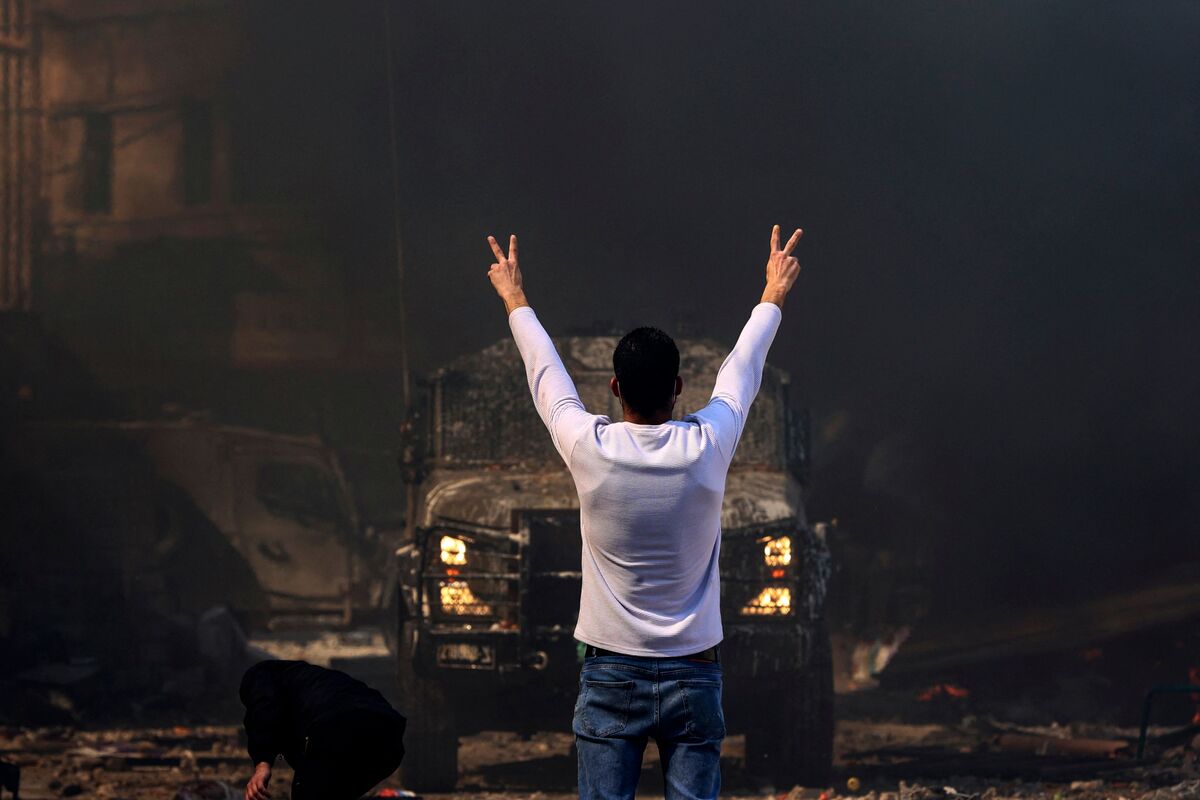
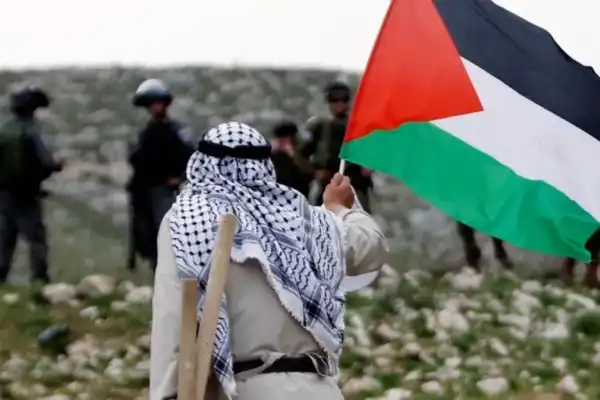
Confrontations broke out between Palestinian and Israeli armed forces in West Bank

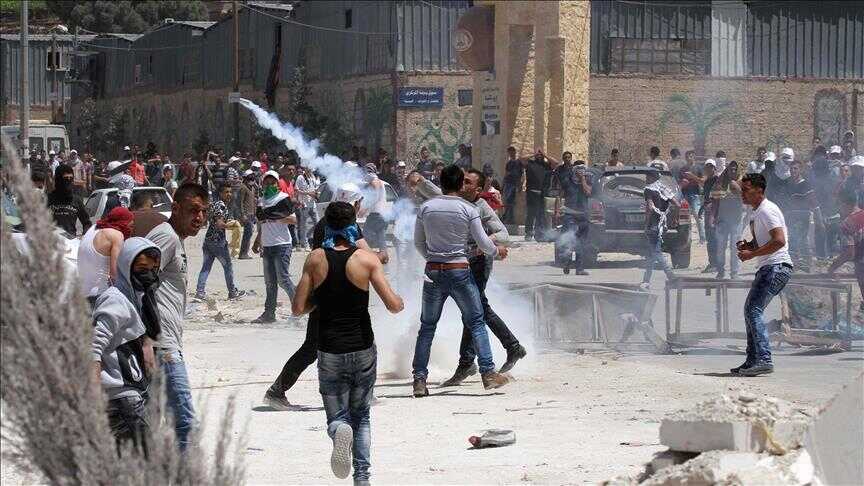
A number of citizens were injured by live bullets, rubber-coated bullets, and suffocation, during confrontations that broke out with the occupation forces in the West Bank governorates, today, Friday, in support of our people in the Gaza Strip, which is subjected to aggression and a fierce war waged by the Israeli occupation state.


In Nablus, seven citizens were injured, and two others, including a child, were arrested during confrontations with the Israeli occupation forces, at the Huwwara checkpoint, south of Nablus.


The Palestinian Red Crescent Society in Nablus reported that seven citizens were injured, including a 14-year-old child, during the clashes that broke out at the Huwara military checkpoint.


She added that the child was shot in the foot with live bullets before he was arrested, while a young man was injured after he fell at the scene.


In Ramallah, two citizens were injured by live bullets, during confrontations that broke out with the Israeli occupation forces, at the northern entrance to the city of Al-Bireh.


Local sources reported that the occupation soldiers stationed at the military checkpoint in the vicinity of the “Beit El” settlement, built on Al-Bireh lands, fired live bullets and rubber-coated metal bullets at the young men participating in the march that started from the center of Ramallah, denouncing the ongoing Israeli aggression on the Gaza Strip. .


She added that the bullets fired by the occupation led to the injury of two young men, one in the foot and the other in the hand, and they were transferred to the Palestine Medical Complex.


In Hebron, dozens of citizens suffered from suffocation during confrontations with the Israeli occupation forces at the entrance to the Al-Arroub camp, north of Hebron.


Local sources reported that the confrontations broke out after the occupation forces suppressed a mass march that started from the camp mosque in support of our people in the Gaza Strip, which led to dozens of people suffocating.


In Qalqilya, confrontations broke out between citizens and the Israeli occupation forces, in the town of Kafr Qaddum, east of Qalqilya.


Local sources said that following the weekly march, which was launched to denounce the Israeli aggression against our people, the occupation army fired stun grenades and toxic tear gas towards the citizens, which led to the outbreak of confrontations.


In Bethlehem, a young man was injured by live bullets, and dozens suffocated, during confrontations with the Israeli occupation army at the northern entrance to Bethlehem.


A medical source in the Red Crescent reported that a young man was hit by a bullet in his side, and was subsequently transferred to Beit Jala Governmental Hospital, in addition to others suffering from suffocation as a result of inhaling toxic tear gas.


A march left the Bab Al-Zaqq area, passing through Al-Quds Al-Khalil Street, denouncing the Israeli aggression against our people. It was suppressed by the occupation soldiers when it reached the northern entrance, and confrontations broke out as a result.

PALESTINE

Fri 20 Oct 2023 3:04 pm - Jerusalem Time

More than 2,000 British stars demand an end to the Israeli war on Gaza

More than 2,000 British actors and artists signed a petition in which they called for an immediate halt to the Israeli bombing and aggression on the Gaza Strip and an end to the siege imposed on the residents of the region.


In detail, a number of star producers, writers, DJs, architects and designers expressed their support for “the global movement against the destruction of Gaza and the mass displacement of the Palestinian people,” through an open letter they signed.


“We are witnessing a crime and a catastrophe,” the letter read. “Israel has reduced much of Gaza to rubble, cutting off water, electricity, food and medicine supplies to 2.3 million Palestinians. In the words of the UN Under-Secretary-General for Humanitarian Affairs, the ‘specter of death’ hangs over the Region".


The letter was based on Israeli Defense Minister Yoav Galant's description of the Palestinians as "human animals," indicating that they could do anything to them.


The stars also accused their government of inciting and aiding Israel in committing war crimes in Gaza, writing: “Our governments not only condone war crimes, they also aid and incite them.”


The letter condemned "all acts of violence against civilians and every violation of international law, regardless of who commits them."


Among the signatories of the letter are actors: Tilda Swinton, Charles Dance, Steve Coogan, Miriam Margolyes, Peter Mullan, Maxine Peake, and Khaled Abdullah.


Source: Annahar

OPINIONS

Fri 20 Oct 2023 2:40 pm - Jerusalem Time

Opinion: The Palestinian is always accused of his humanity, and it is easy to label him as a terrorist

Ramallah - “Al-Quds” dot com

Ramallah - “Al-Quds” dot com

Opinion Writer

Author: Moayad Tanina

“If wars begin with lies, then peace can begin with the truth,” said journalist Julian Assange, founder of WikiLeaks, in his talk about the importance of telling the truth and not remaining silent about it. Perhaps that is what we, Palestinians, need in our battle to For freedom and confronting the misleading media narrative that dehumanizes us and sides with the occupation in its narrative.


As the open battle in Gaza continues, it is clear that things will not return to what they were before October 7, 2023, at all levels, given the unprecedented act of resistance that the battle caused, with the rise of the Martyr Izz al-Din al-Qassam Brigades, the military wing of the movement. Hamas, by breaching the separation fence and carrying out a qualitative operation, can be considered the most severe and extensive since the establishment of the occupying state in 1948, and with the accompanying narratives and media news that attempted to distort the image of the Palestinian and describe him as a “terrorist.”


Palestinians, it is important to be aware that this battle came as a natural response to the continuation of Zionist attacks on everything Palestinian, land and people, with the continued encroachment of settlement on the land, even if the Al-Aqsa Mosque was the cause of its direct spark, according to what the Commander-in-Chief of the Martyr Izz al-Din al-Qassam Brigades stated. Muhammad Al-Deif in his speech announcing the battle: “In response to the occupation’s orgy in Al-Aqsa Mosque.”


In the first moments of the battle, a torrent of visual content invaded social networking sites, coinciding with the Palestinian resistance’s invasion of the occupation army’s camps and settlements in the “Gaza envelope,” which was followed by the entry of dozens of Gazans into these colonies, in a majestic scene, in which the Palestinian saw a “scenario.” Complete liberation of the occupied territory. A dreamy freedom was reflected in the digital space, which had always oppressed, silenced, and prevented the story from being told, and it was clear the heightened feelings of freedom that seeped into the conscience of the Palestinian, who owned the world in both its parts, the real and the virtual.


It was striking in the first hours of this battle that the algorithms of Meta Company, which owns the applications: Facebook, WhatsApp, and Instagram, which impose restrictions and restrictions on Palestinian and pro-supportive content, considering it “sensitive content,” did not comprehend the enormous volume of content that was published and broadcast. Therefore, the stream of visual content continued to flow and arouse enthusiasm and interaction among followers regarding what is happening around the Gaza Strip.


Gradually, the dust of the battle cleared, and the sun of the defeat that the occupying state suffered in the first hours shone. When the occupying forces and intelligence agencies woke up from their slumber, the Gazans were still ecstatic in their famous slumber, waiting for what would bring them back to the reality that was harsh on them, and still is.


The moment colonialism and its tools woke up from sleep, the round of revenge against Gaza and its people began. Fighter planes launched raids on those who were safe, and Meta Company led its war on the Palestinian narrative, and began restricting, blocking, and deleting hundreds of publications and accounts. To complete the unjust and biased role against Palestine and its people. The narrative of the vanquished rebel was silenced, and the door was wide open to the narrative of the aggressor occupier.


The Western media was present as an effective tool in this battle, biased towards the colonizer, as usual, and therefore, misleading reports and coverage began to spread, based on demonizing the Palestinian and describing him as a “terrorist,” and humanizing the Zionist and describing him as a victim, which means global solidarity with the occupying state, and granting it the right to Eliminate Hamas forcefully, under the pretext of self-defense.


The first reports biased towards the occupation, which were broadcast by the media, were carefully directed and referred to a set of information directed at the Western public to gain its sympathy and solidarity. Therefore, phrases appeared, such as: “The return of ISIS, the killing of children, the rape of women, the killing of civilians, the kidnapping of the elderly.” Attacking a celebration on the occasion of Eid.” Following this news, American and Western statements of condemnation of the Hamas movement came in, which gives the occupation, at the same time, the green light to respond and defend itself, according to their point of view.


When the novel refutes itself

In his speech in support of the occupying state, US President Joe Biden said: “I really did not think that I would see... I confirmed the pictures of ‘terrorists’ beheading children.” It was clear that the American President based what he said on the narrative of the occupation and the media biased towards it.


Only a few hours passed until the White House announced its retraction of President Joe Biden's statements, because they had not seen any photos, and the authenticity of the reports had not been independently verified.


The reports intended by the White House were initiated by the Israeli channel i24 and international channels, such as CNN, and quoted officers in the occupation army seeing children and women killed by members of Hamas, without these channels themselves confirming what happened, which is considered one of the ABCs. Journalistic work.


While the media confirmed that this news was baseless, especially with the issuance of a statement by the occupation army, in which it said: “There is no information confirming that ‘Hamas’ beheaded children.” Media professionals apologized and retracted what had been previously published, including CNN correspondent Sarah Sidner, who apologized to her followers on the X platform, in which she said: “I have to be more careful with my words. I’m sorry.”


In continuation of the path of lamentation and pleading, to justify and feed the American and Western green light to the occupying state in order to take revenge on the Palestinians, in response to this operation, the account of the occupation prime minister published on the “X” platform, that Netanyahu showed US Secretary of State Anthony Blinken pictures of three children who were killed and burned by the movement. “Hamas,” and at the bottom of the tweet, he described the “Hamas” movement as “ISIS and terrorist.”


The American journalist, Gascon Hinkle, verified these images himself, and it later became clear that they were created with artificial intelligence, so that the narrative that Netanyahu wanted to promote to demonize the Palestinian and attract more international support and sympathy turned on his head and was used against him.


In the face of the wave of criticism of the White House and the major media institutions that published false and misleading narratives, the White House returned to clarify that its mission is not to verify the truth of these images, as if it were placing responsibility on its ally who misled it. However, the American administration remained committed to its ally and supported him.


On the other hand, and to refute the ongoing occupation narrative that the Hamas movement and its fighters killed children, the Al-Qassam Brigades published a video on its platform on the Telegram website, on October 14, in which resistance members appear, playing and laughing with children, and one of the members helped an infant to stop. He stopped crying and was rocking him to sleep, and one of them was carrying two children and saying to the camera, “Look at the mercy in our hearts. These are the children. We did not kill them as you do.”


Author: Muayad Tanina

As if this is awareness and anticipation of events, and a clear message prepared in advance to the biased world, that real terrorism is practiced by the colonizer who has a profession in killing and torturing children, and that nothing has happened that might be promoted later, as if the resistance knows that this discourse that will be promoted is to justify terrorism and the killing of civilians and children in Gaza from occupation aircraft.


Al-Aqsa Channel, affiliated with the Hamas movement, had broadcast a video showing the release of a woman accompanied by her two children, and the Israeli media, at the time, was quick to interview the woman, thinking that the time had come to expose the “terrorist” practices of Hamas, according to the colonial mentality, which shocked them from Her talk about the resistance fighters carrying the child, and about not harming her or harming her.


The strangeness was evident in international media circles regarding what one of the settlers narrated in an interview about the Qassam officers who were in her house, where one of them asked her permission to eat a “banana,” and that they did not cause her any harm at all. A female settler gave another testimony about the resistance’s gentle treatment and the dialogue that took place between her and them. She then stated that the army bombed a house in which these gunmen were present, along with the settlers’ hostages from the party, and they were all killed.


During the first days, the Zionist media continued to search for actions in its imagination that it wanted to attribute to the Al-Qassam Brigades and Hamas fighters, but the narratives presented by the settlements did not serve it. Rather, they provided content that supported the Palestinian resistance narrative.


Based on the above, it is clear beyond any doubt that the Palestinian is always accused of his humanity, and it is easy to stigmatize him as a terrorist, because his enemy is the child of colonialism and his white ally, and that the Palestinian is forced all the time to prove to the world “how human he is.” This was confirmed by the biased media coverage in this battle.


Source: Institute of Palestinian Studies


PALESTINE

Fri 20 Oct 2023 2:19 pm - Jerusalem Time

Israel begins evacuation of Kiryat Shmona settlement near Lebanese border

Today (Friday), the Israeli army announced a plan to evacuate residents of the Kiryat Shmona settlement, located near the border with Lebanon, amid tension with Hezbollah, against the backdrop of the war in the Gaza Strip.


Army spokesman Avichay Adraee said on his account on the (X) website today, “The National Emergency Authority affiliated with the Ministry of the Army announces the activation of the plan to evacuate the residents of the Kiryat Shmona settlement to guest houses funded by the state.”


Adraee added that Defense Minister Yoav Galant approved the activation of the plan.


The announcement of the settlement's evacuation comes amid tension on the border between Lebanon and Israel.


These days, the Lebanese-Israeli border is witnessing an exchange of fire between Hezbollah and the Israeli army since the outbreak of the ongoing round of fighting between the Islamic Resistance Movement (Hamas) and Israel in the Gaza Strip and its surroundings on October 7th.


In this context, Adraee said today that an Israeli army march “eliminated a terrorist inside Lebanese territory.”
Adraee confirmed that the army "last night raided several Hezbollah infrastructure in response to the launching of missiles from Lebanon towards Israel yesterday."

PALESTINE

Fri 20 Oct 2023 1:59 pm - Jerusalem Time

Israeli government approves “emergency regulations” allowing the closure of Al Jazeera

Today, Friday, the Israeli government approved emergency regulations aimed at closing media outlets and satellite channels, claiming that they “target state security.” As a result, the government approved closing the offices of the “Al Jazeera” network and preventing it from broadcasting from Israel.


A statement issued by the Israeli Ministry of Communications stated that, according to the instructions of the Prime Minister, Benjamin Netanyahu, and the Minister of Communications, Shlomo Karai, and with the support of the Mossad, the Shin Bet, and the Ministry of Security, and the approval of the government’s judicial advisor, Gali Beharav Meara, the government approved, today, the suspension of the work of the “Al Jazeera” network. During the war on Gaza.


The statement claimed that the closure of the "Al Jazeera" network comes in the wake of "providing evidence that it helps the enemy, broadcasts propaganda in the service of Hamas in Arabic and English to its viewers around the world, and also transmits sensitive information to our enemies."


The closure of the "Al Jazeera" network will be proposed during the upcoming meeting of the Israeli mini-ministerial council for political and security affairs (the cabinet), and after the cabinet's approval, Karai will sign the "order to stop broadcasting" from Israel, which will go into effect immediately.


The statement quoted Karai as saying, “Israel is at war. We will not, in any way, allow the broadcast of reports that harm the security of the state. The regulations that the government is now approving will allow us to close channels, confiscate equipment, and withdraw the journalist’s card from those who target the security of the state during the war.”


Karai claimed that "Al Jazeera's reports and correspondents constitute an incitement broadcast against Israel, serving Hamas and terrorist organizations through propaganda reports and encouragement of violence against Israel, and thus targeting the security of the state."


PALESTINE

Fri 20 Oct 2023 1:45 pm - Jerusalem Time

Israel levels Gaza district, missile hits Orthodox church

Israel levelled a northern Gaza district on Friday after giving families a half-hour warning to escape, and hit an Orthodox Christian church where others had been sheltering, as it made clear that a command to invade Gaza was expected soon.

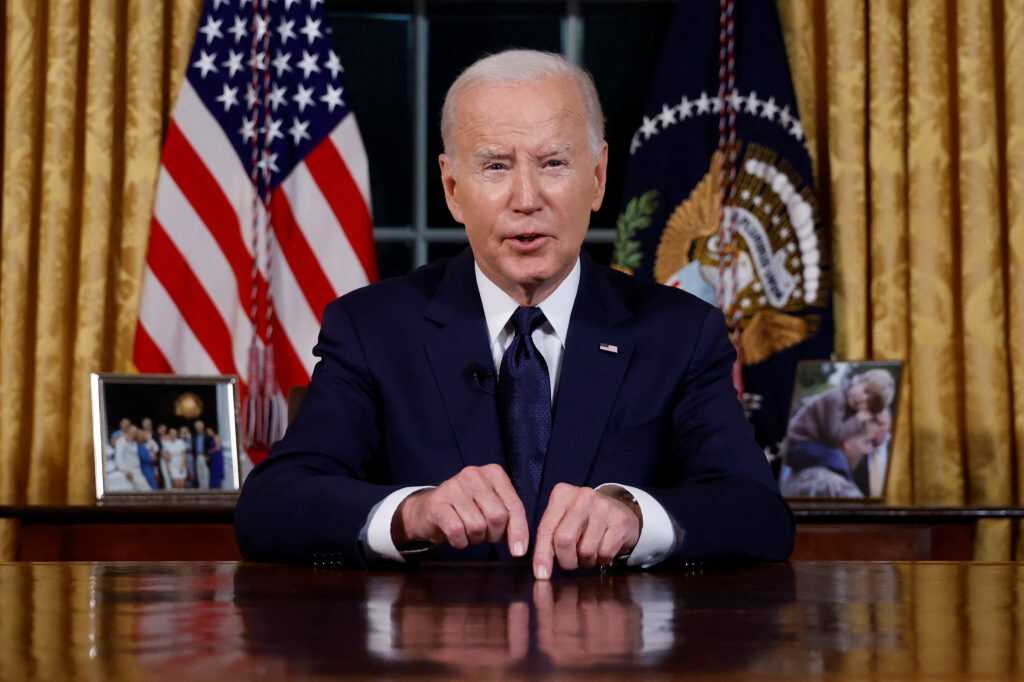
In Washington, U.S. President Joe Biden, back from a trip to Israel to demonstrate support, asked Americans in a televised speech to spend billions more dollars to help Israel fight Hamas, which he said sought to "annihilate" Israel's democracy.

Israel has vowed to wipe out the Hamas Islamist group that rules Gaza, after its gunmen burst through the barrier fence surrounding the enclave on Oct. 7 and rampaged through Israeli towns and kibbutzes, killing 1,400 people, mainly civilians.

"You see Gaza now from a distance, you will soon see it from inside. The command will come," Defense Minister Yoav Gallant told troops gathered at the Gaza border on Thursday.

Israel has pounded Gaza with air strikes and put the enclave's 2.3 million people under a total siege, banning shipments even of food, fuel and medical supplies. Since Oct. 7, 3,785 Palestinians have been killed including more than 1,500 children, Palestinian officials say. The U.N. says more than a million have been made homeless.

Israel has already told all civilians to evacuate the northern half of the Gaza Strip, which includes Gaza City. Many people have yet to leave saying they fear losing everything and have nowhere safe to go with southern areas also under attack.

The Orthodox Patriarchate of Jerusalem, the main Palestinian Christian denomination, said Israeli forces had struck the Church of Saint Porphyrius in Gaza City, where hundreds of Christians and Muslims had sought sanctuary.

Video from the scene showed a wounded boy being carried from rubble at night. A civil defense worker said two people on upper floors had survived; those on lower floors had been killed and their bodies were still in the rubble.


"They felt they would be safe here. They came from under the bombardment and the destruction, and they said they would be safe here but destruction chased them," a man cried out.

Gaza's Hamas-run government media office said 18 Christian Palestinians had been killed. There was no immediate word from the church on the final death toll. It said targeting churches that were used as shelters for people fleeing bombing was "a war crime that cannot be ignored."

The Israeli military said part of the church was damaged in a strike on a militant command center and it was reviewing the incident.

In Zahra, a northern Gaza town, residents said their entire district of some 25 multi-storey apartment buildings was razed to the ground.

They received Israeli warning messages on their mobile phones at breakfast time, followed ten minutes later by a small drone strike that hammered the message home. Half an hour after the initial warning, F-16 warplanes brought the buildings down in huge explosions and clouds of dust.

"Everything I ever dreamt of and thought that I have achieved was gone. In that apartment was my dream, my memories with my children, and my wife, was the smell of safety and love," Ali, a resident of the district, told Reuters by phone, declining to give his full name for fear of reprisals.


The United Nations humanitarian affairs office said more than 140,000 homes - nearly a third of all homes in Gaza - have been damaged, with nearly 13,000 completely destroyed.

The south of the enclave has also been regularly hit. Gaza authorities said there were several dead and wounded in fresh strikes on Khan Younis, the enclave's main southern city.


OTHER FRONTS IN LEBANON, WEST BANK

While Israeli troops are massing around Gaza in anticipation of an order to invade, conflict is also spreading to two other fronts - the West Bank and the northern border with Lebanon.


The defense ministry ordered residents of the largest Israeli town near the Lebanese border, Kiryat Shmona, to evacuate to guest houses. Clashes at the border between Israel and Lebanon's Hezbollah movement have been the deadliest since a full-blown war in 2006.


In the West Bank, the Palestinian health ministry said 13 people were killed including five children after Israeli troops raided and called in air strikes on the Nur Shams refugee camp near Tulkarm.

The territory, where Palestinians have limited self rule under Israeli military occupation, has seen the deadliest clashes since the second intifada uprising ended in 2005.


Diplomats fear the conflict could spread even further. The Pentagon on Thursday said a U.S. Navy warship operating in the northern Red Sea intercepted three cruise missiles and several drones launched by the Houthi movement in Yemen, potentially toward Israel.


The Houthi, like Hamas in Gaza and Lebanon's Hezbollah, are backed by Iran, which has lauded the Hamas attacks on Israel though it denies being behind them.


AID TO GAZA STILL HELD UP

Western leaders have so far mostly offered support to Israel's campaign against Hamas, although there is mounting unease about the plight of civilians in Gaza, which has yet to receive long promised aid.

"We can't ignore the humanity of innocent Palestinians who only want to live in peace and have opportunity," Biden said in his speech.

Israel has said it will allow no aid from its own territory to reach Gaza until more than 200 hostages captured by the gunmen are set free, a position Palestinians say amounts to unlawful collective punishment of the civilian population.

Biden secured a promise from Israel to allow some aid to enter Gaza from Egypt, provided it is monitored to ensure none reaches Hamas. So far, the trucks remain backed up on the Egyptian side of the crossing.


ARAB AND WORLD

Fri 20 Oct 2023 1:40 pm - Jerusalem Time

Moody's and Fitch review Israel's credit rating

Moody's and Fitch announced that they had placed under review the rating of Israel's long-term sovereign debt (currently A1), in preparation for the possibility of lowering it due to the ongoing war between the Hebrew state and the Hamas movement.


Moody's announced this decision in a statement (Thursday), two days after a similar move by Fitch, which placed under negative monitoring Israel's long-term and short-term sovereign debt in foreign and local currencies.


Fitch justified the possibility of downgrading the rating (Tuesday) “by the increasing risk that the current conflict in Israel will expand to include widespread military clashes with many actors, for a long period.” “Hezbollah, other regional armed groups, and Iran,” the agency reported.


For its part, Moody's said, "This review was decided due to the sudden and violent conflict between Israel and Hamas," warning that the most dangerous repercussions of this conflict are its "human cost." She stressed that this announcement is “related to the repercussions of recent incidents on credit.”


Recalling that its expectations for Israeli sovereign debt “were previously stable,” Moody’s said that it would study during the review the future of the current war and its repercussions.


She said that during this review, she will “assess whether it is possible for the conflict to move toward a solution, or whether there is a possibility of a significant and prolonged escalation.”


Moody's explained, “The review will focus on the potential duration and scope of the conflict, and on evaluating its effects on Israeli institutions, especially the effectiveness of its policies, public finances, and economy.”


Moody's noted that "the review period could be longer than the usual three months." She particularly noted the unusual nature of this war compared to previous ones.


Moody's warned that “the longer and more intense the military conflict is, the greater its impact on the effectiveness of policies, public finances and the economy” in Israel.


Moody's added, "Even if the dispute is short-term, it could have an impact on credit."


Fitch said that the rating may not be downgraded if there is “de-escalation, which reduces the risks of a long-term material impact on the economy and public finances” of Israel.

PALESTINE

Fri 20 Oct 2023 1:30 pm - Jerusalem Time

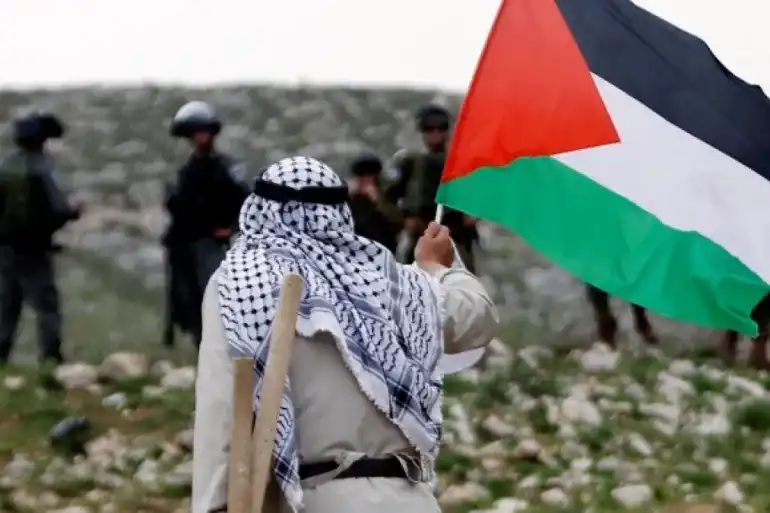
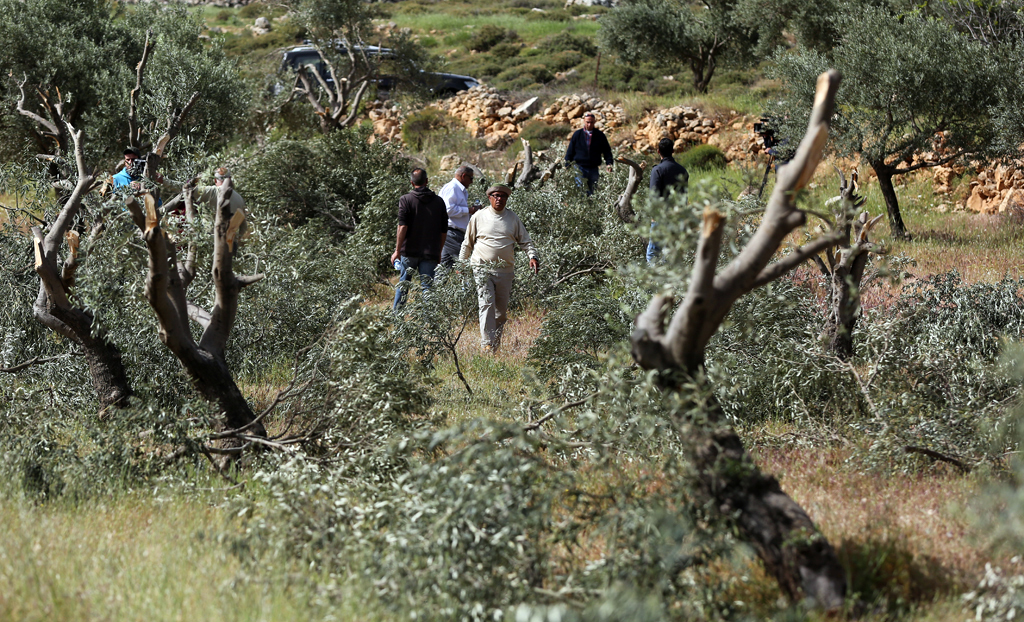
Today: Israeli settlers intensify attacks on Palestinian farmers’ lands in the West Bank.

Today, Friday, settlers launched attacks on farmers and citizens’ lands in the West Bank.


In Jericho, today, Friday, settlers established a separation trench in the endowment lands of Al-Auja, north of the city of Jericho.


An activist in the Popular Resistance Committees in the Jordan Valley, Ayman Gharib, said that a group of settlers in the area built a trench separating the lands, in preparation for seizing hundreds of dunams.


In Salfit, today, Friday, settlers fired live bullets at olive pickers in the village of Yasuf, east of Salfit.


Local sources reported that settlers from the “Taffuh” settlement established on village lands, and under the protection of the occupation army, prevented farmers from reaching the “Al-Karam” area east of the village, shot those present there, and forced them to leave the place.


Settlers, protected by the Israeli occupation army, prevented citizens in the town of Kafr al-Dik, west of Salfit, from picking olives.


Local sources reported that settlers prevented the owners of lands adjacent to the “Brukhin” colony, established on town lands in the “Al-Mawares area,” from picking olives.

PALESTINE

Fri 20 Oct 2023 11:50 am - Jerusalem Time

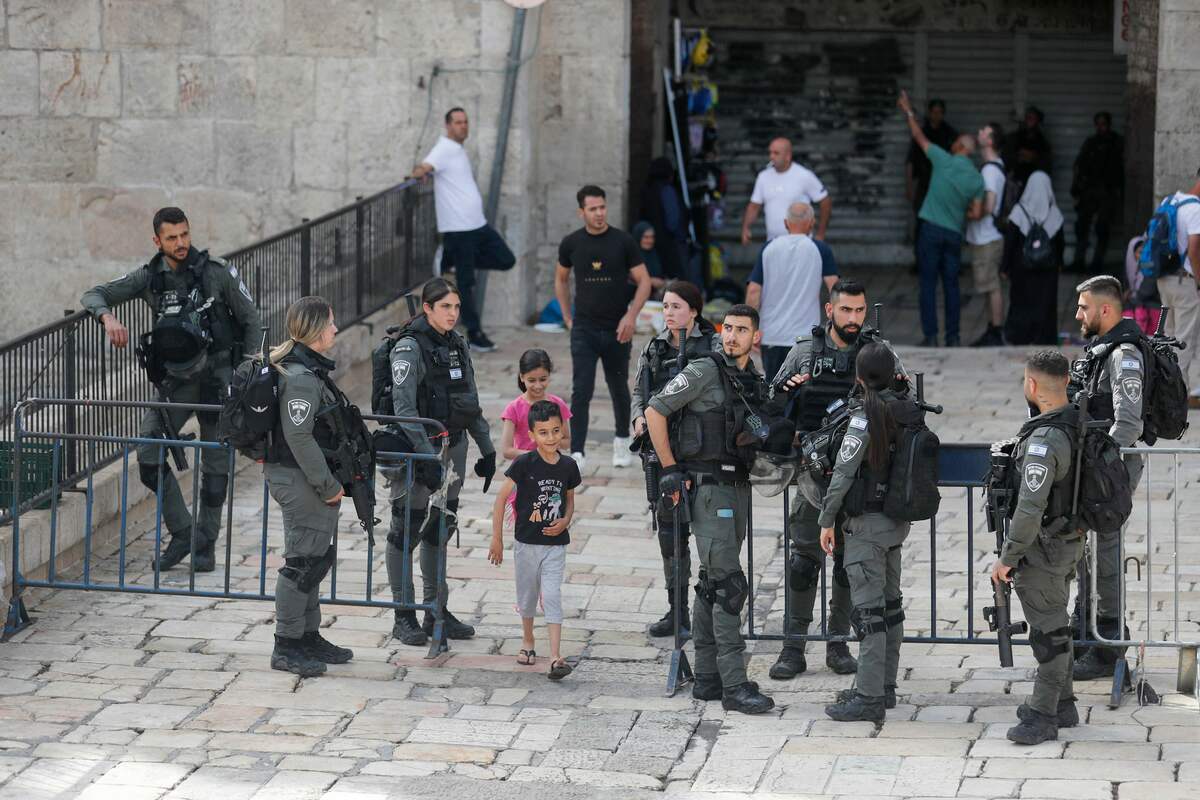
Israel tightened their military procedures at the gates of Al-Aqsa Mosque before friday prayers

The Israeli occupation forces turned the city of Jerusalem and its old town into a military barracks before Friday prayers.


Eyewitnesses reported that the occupation forces placed iron barricades at the gates of Al-Aqsa Mosque and the Old City, while hundreds of soldiers were deployed around the city.


The occupation forces tightened their military procedures, searched citizens, checked their identities, and prevented a number of them from reaching Al-Aqsa Mosque, while allowing only Jerusalemites living in the Old City to enter through the gates of the Old City.

PALESTINE

Fri 20 Oct 2023 11:43 am - Jerusalem Time

Bernie Sanders Blocks Ban on U.S. Aid to Gaza as Pentagon Sends More Materiel to Middle East

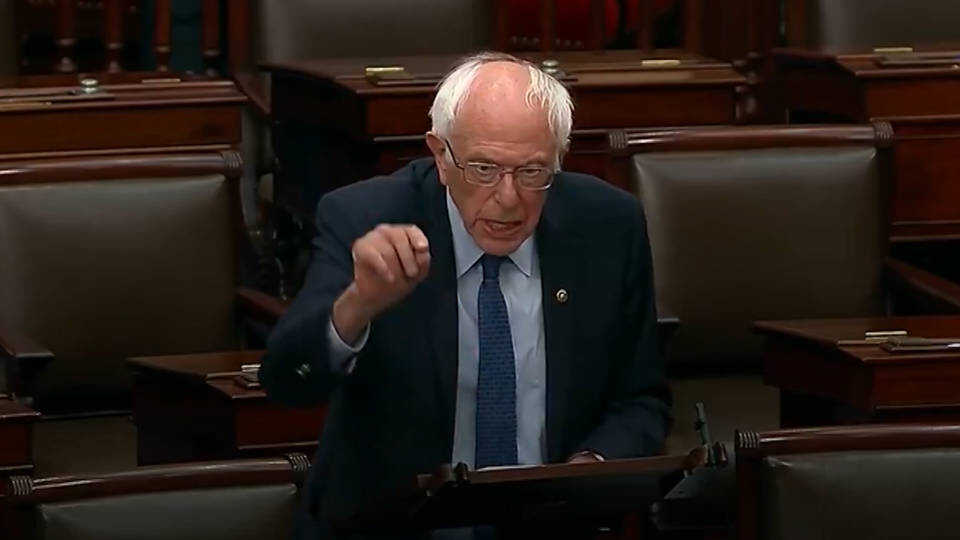
In Washington, D.C., Vermont independent Senator Bernie Sanders has blocked legislation that would have effectively barred U.S. humanitarian aid from reaching Gaza. On Wednesday, Sanders objected when Florida Republican Senator Rick Scott tried to pass the so-called Stop Taxpayer Funding of Hamas Act by unanimous consent. 

Sen. Bernie Sanders: “Right now there are hundreds and hundreds of thousands of innocent men, women and children in Gaza who have lost their homes. They’ve been thrown out of their homes. They have no food. They have no water. 

They have no fuel. And I remind my colleagues that half of those people are children.” 


Pentagon chief Lloyd Austin has ordered an additional 2,000 U.S. troops to deploy to the Middle East in support of Israel. The order builds on a rapid response force of 2,000 U.S. Marines sailing for the eastern Mediterranean, along with two U.S. Navy carrier strike groups.


This evening, President Biden is giving a primetime address where he’s expected to ask Congress for $100 billion in emergency funds to ship more weapons to Israel, Ukraine and Taiwan, and to further militarize the U.S.-Mexico border.


PALESTINE

Fri 20 Oct 2023 11:38 am - Jerusalem Time

Israeli Knesset Suspends Lawmaker Ofer Cassif for Criticizing Israel’s War on Gaza


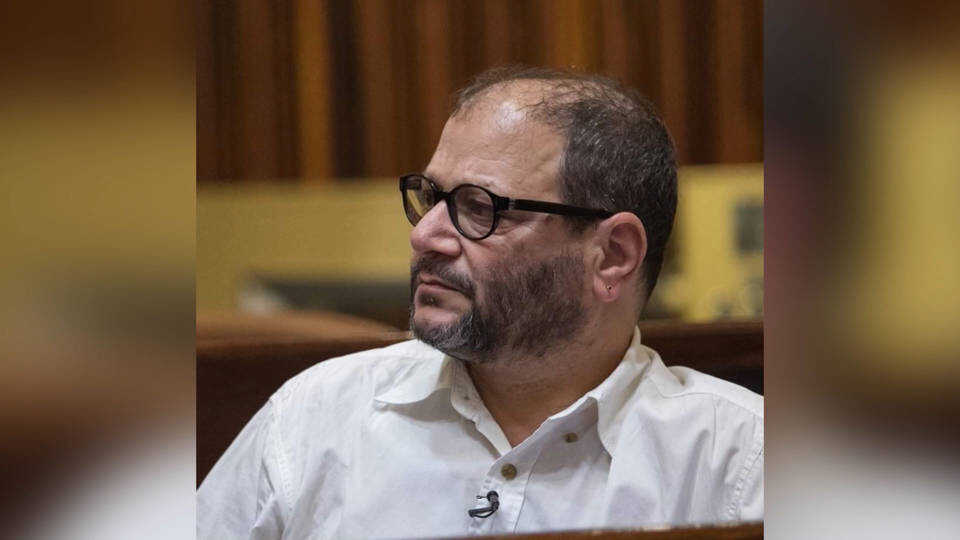
An Israeli parliament ethics committee has suspended Knesset member Ofer Cassif for 45 days after Cassif criticized Israel’s assault on Gaza. His suspension comes as Israeli authorities have arrested more than 100 Israeli citizens over social media posts supporting Palestinians in Gaza. At least 70 Israeli university students face suspension or other disciplinary action for posting pro-Palestinian sentiments online.


PALESTINE

Fri 20 Oct 2023 11:16 am - Jerusalem Time

Israel abducts 80 Palestinians in the West Bank

Last night and at dawn on Friday, the occupation forces arrested at least 80 citizens from the West Bank, including representatives from the Legislative Council, former prisoners, and two journalists.


The arrests were concentrated in the governorates of Hebron and Bethlehem, while the rest of the arrests were distributed in the governorates of Ramallah, Nablus, and Tulkarm.


Thus, the number of arrests since October 7th has risen to more than 930 cases, in light of the comprehensive aggression and systematic mass revenge operations against our people.

OPINIONS

Fri 20 Oct 2023 10:40 am - Jerusalem Time

Israel misread Iran’s way of war. A proper understanding could help predict Hezbollah’s next moves.

Ramallah - “Al-Quds” dot com

Ramallah - “Al-Quds” dot com

Opinion Writer

Author: David Daoud

In perhaps the Israeli political echelon’s first—and, to date, highest ranking—admission of failure to preempt the October 7 Hamas-led attack on southern Israel, National Security Council chairman Tzachi Hanegbi said misunderstanding the group’s intentions was “my mistake, first and foremost.” Hanegbi explained that Israel “believed Hamas internalized the lessons” of Operation Guardian of the Walls “when it was dealt a heavy blow” in 2021.

As proof, he pointed to Hamas’s seeming indifference to Palestinian Islamic Jihad’s (PIJ) “pleas for help”—as he put it—when PIJ clashed with Israel in August 2022 and May of this year. “Hamas decided to remain outside the battle,” Hanegbi said. Though accurate on a technical level, Israel’s analysis of Hamas’s intentions, as reflected in Hanegbi’s statement, demonstrates a fundamental failure in understanding how Iran and its proxy forces operate, cooperate, and make war.


Iran’s proxies have long ceased to work as geographically contained entities or in isolation. Particularly with the onset of the Syrian civil war, Tehran has worked on integrating its various extensions and proxies into a mutually reinforcing and symbiotic regional alliance—a true “Axis of Resistance.” This also applies to Hamas, both within the Palestinian Territories and outside them.

Inside the Gaza Strip, the group has operated as a first among equals among the twelve-member Joint Operations Room of the Palestinian Resistance Factions since 2018, an umbrella organization coordinating the activities of all Gaza-based terror groups. More broadly, Hamas and this entire Gaza-based umbrella organization have become integrated into the regional, Iranian-led Axis of Resistance.


It is critical to understand how these forces symbiotically operate. First, to the extent that this is possible, they have set aside their differences. This was most evident with Hamas in the Syrian civil war. At the conflict’s outset, the group’s Sunni loyalties led it to oppose Bashar al-Assad’s brutal assault against his people. However, in time—circa mid-2017—Hamas became more agnostic on the Syrian conflict, neither fighting to save Assad like Iran’s other extensions nor commenting on the war at all. Indeed, from 2017 until Hamas reconciled with Damascus in 2022, the Syrian civil war did not exist as far as the group was concerned. 

The Axis of Resistance had decided to set aside these differences, which were dividing their forces and weakening them through infighting, and focus on their greater, shared goals: eroding American regional influence and the eventual destruction of the State of Israel.


The Axis of Resistance’s constituent organizations also cooperate militarily. In countries like Syria, they fought alongside each other. But their cooperation can take different forms, like sharing intelligence, military knowledge, and experience, joint planning and coordination, and, at times, the more experienced groups loaning forces or attaching advisors to more junior counterparts.


The final point relates to the tension between the desire of the Axis of Resistance to ceaselessly pursue its larger objectives and the constraints of reality that may prevent any of its constituent forces from acting freely at any given time. In a practical sense, this has meant that the Axis groups will figuratively pick up the slack for each other.

This is most relevant to Hanegbi’s observation that Hamas abstained from involvement in the two recent rounds of fighting between PIJ and Israel. Hamas had not been permanently nor temporarily deterred by Israel. Likelier, PIJ could simply afford to absorb the consequences of the clash at the time. Alternatively, Hamas had capabilities that the group and Iran wanted to preserve for a more critical date. Or Tehran and its Gaza-based proxies wanted to keep the round of fighting limited, which was possible if PIJ alone entered the fray—not if Hamas joined.


The Axis of Resistance has adopted this approach in other arenas where it holds sway—most noticeably in Lebanon. There, the country’s ongoing and worsening economic crisis has constrained Hezbollah’s ability to directly attack Israel over the last four years. Out of concern for eroding its public support or making itself the focal point of Lebanese anger, the group cannot be seen to compound Lebanon’s dire economic straits with a security conflagration or war (particularly since recovery aid will likely not be forthcoming once the war concludes). Rather than halt or suspend its ideologically motivated fight against Israel, Hezbollah has transferred the battle to its Palestinian partners, both inside Lebanon and Israel, more capable of absorbing Israeli retaliation.


Iran’s relationship with its proxies is a top-down hierarchy. But Tehran does take into account the input, local conditions, and needs of its proxies. In that manner, the overall objective of the Axis of Resistance—to destroy Israel—can continue to be pursued without endangering or risking the destruction of one of its constituent forces, especially if it has been made particularly vulnerable by its current circumstances.

Understanding this can help predict—to whatever extent that is possible—Hezbollah’s, Iran’s, and the broader Axis of Resistance’s next steps as the war between Israel and the Gaza-based factions unfolds. And here, so far, the Axis, but particularly Hezbollah, have been sending contradictory messages.


While Hezbollah’s typically loquacious Secretary-General Hassan Nasrallah has been unusually silent since the war’s outbreak, Iran has taken point on the Axis of Resistance’s messaging. Foreign Minister Hossein Amir-Abdollahian—expectedly, from Beirut, which has become a hub of the regional alliance’s meetings and decision-making—has now twice threatened broader Axis intervention, promising “a very likely preemptive strike by the Resistance within the next few hours” on October 16, which never materialized. Supreme Leader Ayatollah Ali Khamenei conveyed a similar message the following day.


It is important, however, to distinguish between the Axis’s bellicose bluster and genuine threats and the form they will take. Amir-Abdollahian’s second, more jingoistic, statement occurred three days after his October 13 meeting with Nasrallah, where the two undoubtedly discussed Hezbollah’s ability to intervene and the limitations that local circumstances placed on the group’s freedom of action. This includes, as noted, Lebanon’s economic collapse, the improbability of post-war economic recovery aid, especially if hostilities are initiated by Hezbollah, and the inevitable Lebanese public backlash against the group after the war.


Indeed, Hezbollah promised Lebanese officials—to the extent it can be taken at its word—to avoid involvement in the war unless Israel “harasses” Lebanon. Meanwhile, Prime Minister Najib Miqati has been conducting ongoing “contacts domestically,” referring to Hezbollah, “and externally” to keep Lebanon outside of the war, stressing “the adventurism of opening a new front [against Israel] from south Lebanon is in no one’s interest because the Lebanese cannot bear [the consequences].”

Caught between its obligations to Tehran and its interest in quite literally not burning the ground under its feet, Hezbollah has so far chosen a now-familiar middle ground: facilitating attacks by Palestinian groups. This allows Hezbollah to continue bleeding Israel while providing it enough plausible deniability to avoid the full consequences of Israeli retaliation and very limited direct harassment.

Admittedly, Hezbollah has exploited Israel’s concentration on the Gaza Strip to carry out more severe and daring attacks that recall the group’s pre-October-2019 posture—some of which have even resulted in Israeli military casualties—but even these have occurred within its established “rules of engagement” with Israel. Most of the attacks have been directed at the Shebaa Farms—long accepted by both sides as a permissible arena for fighting—while Hezbollah conveyed to Al-Araby al-Jadeed that, for the time being, it was reverting to its old equation of “no war, but blood for blood.”

Unaltered, Hezbollah’s current approach would force Israel to split its efforts between the north and Gaza rather than focusing undivided attention on the coastal enclave. This would slow the pace of an Israeli incursion into the Gaza Strip, buying time that the Axis of Resistance could be hoping would result in a premature ceasefire. This would allow Hamas, PIJ, and their other terrorist allies to live to fight another day. Meanwhile, Hezbollah can leverage its threats of entering the conflict to prompt the creation of lifelines for its Gazan allies, buying them more time.

However, an element of uncertainty remains attached to the seriousness of Iran and the Axis’ threats to intervene, if and when Israel’s war evolves into a ground invasion that threatens the existence of the Gaza-based militant groups.

Iran—through Hezbollah—has spent almost two decades and considerable effort and funds building the Gaza Strip into the Axis of Resistance’s Southern Front against Israel. It has spent even more time and energy propping up Hamas, PIJ, and other Palestinian proxies. On October 7, the Axis leveraged this build-up to launch the meticulously planned “Al-Aqsa Flood” attack (likely to torpedo Saudi-Israeli normalization talks). Indeed, as far as can be deduced, the Axis planned the massacre to be even bloodier, judging from the size of the force (1,500 alone were killed inside Israel, which is roughly equivalent to two battalions) and the quantity and quality of weapons they were carrying. 


The groups seriously underestimated the intensity of Israel’s response, perhaps assuming the Jewish state’s internal divisions over the past year would blunt its response or even bought into their own propaganda regarding Israeli society’s fragility. And now the Axis of Resistance could stand to risk losing its Southern Front in the face of a determined Israeli onslaught.


Iran’s next steps would then depend on the importance it places on preserving its Gaza-based proxies and military investment in the coastal enclave, particularly if alternatives to ordering Hezbollah to directly enter the fray—like igniting fighting between Palestinian factions and the IDF in the West Bank or stoking Jewish-Arab tensions into violence inside Israel—fail to achieve their desired results. Non-intervention could risk not only the Southern Front’s demise, but also damage Iran’s credibility on the Palestinian question. On the other hand, ordering Hezbollah to intervene puts the brightest star in Tehran’s constellation of regional forces—and its most loyal extension—at risk of direct harm from Israeli military retaliation, not to mention postbellum Lebanese ire. And of all of this would be to save its militarily inferior proxies whose loyalty to the Iranian regime is relatively more questionable.


David Daoud is a nonresident fellow at the Atlantic Council.


PALESTINE

Fri 20 Oct 2023 10:22 am - Jerusalem Time

Experts react to Biden’s ‘inflection point’ address on Ukraine and Israel

By Atlantic Council experts


“We are facing an inflection point in history.” On Thursday evening, US President Joe Biden spoke to Americans from the Oval Office—in only the second such address of his presidency—to tie together the conflicts in Israel and Ukraine as part of a larger struggle for democracy and freedom. Biden made the case that US leadership in these global crises will make the United States safer. He leveled with Americans that this safety will come at a cost, calling on Congress to pass an “unprecedented” aid package for Ukraine and Israel. But he also told Americans that the cost of walking away from these wars would be much higher.


Below, Atlantic Council experts assess Biden’s big speech and what to expect next.


John E. Herbst: Biden’s second bravura presidential moment in two days is a legacy-builder

Jenna Ben-Yehuda: Biden rallies Americans as global defenders of democracy. Will it work?

Thomas S. Warrick: It’s all about the money—and vital US national interests

Shelby Magid: Biden gives arguments both parties can embrace for a Ukraine-Israel aid package

Daniel Fried: This was an application of US grand strategy from Truman to Reagan

Matthew Kroenig: Biden made strong points, but failed to explain why Ukraine and Israel matter to everyday Americans

Jonathan Panikoff: Biden backs his allies’ wars of necessity


Biden’s second bravura presidential moment in two days is a legacy-builder

It has been a good week for Joe Biden. In a tour de force, he visited Israel and delivered a pitch-perfect message of support for its embattled people and some careful observations on how to deal with the challenges ahead. Then one day after that trip, he gave a powerful speech from the Oval Office laying out the major dangers presented to global order, vital US interests, and US leadership by Vladimir Putin’s aggression to subdue Ukraine and Hamas’s savage attack on Israel. US presidents are usually elected for reasons related to the economy and other domestic issues, but presidents often establish their legacy at moments of international peril.

Even before Putin launched his massive invasion of Ukraine in February of 2022, the Biden administration laid out a sensible policy to deter Russia and then to make sure it did not succeed: 1. major sanctions on Russia; 2. political isolation of Russia; 3. the provision of substantial military and economic support to Ukraine; and 4. strengthening NATO defenses in the east. It took great effort to implement this successfully. 


But one thing the White House had not done was to explain to the American people why the United States was leading this major effort. Biden checked that box tonight. He explained that if Putin wins in Ukraine, he might march west and attack our NATO allies, which the United States would be obliged to defend. He reminded the American public that Ukraine was only asking for the means to defend itself. Providing the military and economic assistance that Ukraine needs is therefore the smart and economical way to protect the United States and its allies. He pointed out that if Putin wins in Ukraine, it would also embolden aggressors elsewhere. That would erode American leadership. He noted too that Ukraine and Israel are democracies attacked by authoritarians bent on their destruction. Stopping them is consistent with our values as Americans. 

To help defend our interests, the president noted that he was sending a request to Congress for substantial aid to Ukraine and Israel, and he expected us to overcome our divisions in dealing with these challenges. That aid is essential to defend American interests, and his handling of it was a smart, statesmanlike way to address the disorder in the US House of Representatives. 

It was Biden’s second bravura presidential moment in two days. In its clarity, strategic focus, and sunny summons of American values and leadership, it recalled Ronald Reagan at his best. This is good for Biden and better for us.


—John E. Herbst is the senior director of the Atlantic Council’s Eurasia Center and a former US ambassador to Ukraine.


Biden rallies Americans as global defenders of democracy. Will it work?

Biden’s Oval Office address to the nation sought to answer one central question regarding the conflicts between Israel and Hamas and Russia and Ukraine: “Why should the American people care?” Against the domestic political backdrop of a speaker-less Republican Party, a barely avoided government shutdown, and a deeply divided nation, Biden sought to unify the American people as global defenders of democracy. 

The rhetoric was about more than drawing important parallels between the wars in Ukraine and Israel. Biden is hoping that his message will compel lawmakers—under pressure from their constituents—to pass the forthcoming package of direct military aid to both nations that he previewed tonight. An omnibus aid package could offer something for a spectrum of Israel supporters and Ukraine skeptics alike. Or, alternatively, some could weaponize its sticker shock to draw the nation inward. But this is where Biden’s appeal for support rightly extended beyond the theoretical: Just twelve days after Hamas’s terrorist attack on Israel, American Jews and Muslims have begun to face heightened threats to their safety as a result of anti-Semitic and Islamophobic violence across the nation—with deadly consequences already in Illinois, where a six-year-old Palestinian-American child was brutally murdered for his faith.

The big question is whether Biden’s case was strong enough to move Republican lawmakers reluctant to cede any perceived win to a president with just thirteen months to go in his quest for reelection. The unity that the United States experienced after the 9/11 attacks seems a distant memory. Can Biden, who has invoked 9/11 to describe the aftermath of Hamas’s terrorist attack in Israel, summon the same resolve that followed that national trauma? The forthcoming funding request will serve as a test, and US allies and foes alike will be watching to see if the United States passes it.

—Jenna Ben-Yehuda is the executive vice president of the Atlantic Council, and the former president and chief executive officer of the Truman National Security Project and the Truman Center for National Policy.


It’s all about the money—and vital US national interests

There was one important takeaway from Biden’s speech beyond his strong words of support for embattled democratic allies Ukraine and Israel, his words of support for innocent Palestinians caught in the crossfire between Hamas and Israel, and his warnings denouncing both anti-Semitism and Islamophobia in the United States.

It was the money—and the link to vital US national interests.

Over the years, administrations of both parties have written brilliant strategies that have failed because no one appropriated the funds needed to turn those strategies into reality. In today’s Washington, “thoughts and prayers” has become a cynical cliché about doing nothing real to address the nation’s problems.

So what made tonight’s speech especially important was that the president said he would ask for serious money—reportedly one hundred billion dollars for the next year—for the “arsenal of democracy,” a phrase he has brought forward from President Franklin Roosevelt in 1940. Of this, roughly sixty billion is for Ukraine, ten billion is for Israel, and the remaining thirty billion is for Taiwan, the Indo-Pacific, and border security.

Biden’s speech linked support for Ukraine and Israel to the United States’ vital national interests. Ukraine is under attack by Russia, which, as Biden reminded everyone, seeks to destroy Ukraine as an independent nation and to re-establish the Soviet empire. Israel is under attack by a terrorist group intent on Israel’s destruction, with two million Gazans caught in the crossfire. These are among the United States’ most vital national security interests.

The cost of doing nothing in these areas is far greater than what the president is asking from the Congress. Asking for billions of dollars to achieve vital US national interests is how you show seriousness in today’s Washington.


—Thomas S. Warrick is a senior fellow and director of the Future of DHS Project at the Atlantic Council. He served in the Department of State from 1997-2007 and as deputy assistant secretary for counterterrorism policy at the US Department of Homeland Security from 2008-2019.


Biden gives arguments both parties can embrace for a Ukraine-Israel aid package

Moscow may have been pleased over the past couple weeks as it watched the government scramble in Washington to commit to Ukraine aid, while the crisis in the Middle East took over the news cycle, but Biden’s powerful speech from the Oval Office should be a strong reality check—US support for Ukraine is not waning.

Biden’s long-awaited Ukraine-focused Oval Office speech made it clear to the American public and the world that support for Ukraine, as well as Israel, is a national security priority and firmly in American interests. As the president said, “American values would be at risk if we walk away from Ukraine.” That’s not a stance the US government or people will back down from lightly.

The president’s speech came at a critical time as support for Ukraine aid was coming into question on Capitol Hill, mainly in the House, despite polls, including one from Quinnipiac released this week, showing that the majority of voters understand supporting Ukraine is in the national interest. While directly linking Hamas’s brutal attack on Israel and Russia’s invasion of Ukraine, Biden gave a thorough overview of the reasons that supporting our allies Israel and Ukraine remains necessary and urgent.

Biden squarely acknowledged that these conflicts can feel far away and, feeling disconnected, the public questions why what happens in Israel and Ukraine matters for Americans. Biden provided strong arguments that both parties can use to back up the argument that this effort is in the US interest, as he announced that he’s sending an urgent request to Congress for a substantial package of aid for both Israel and Ukraine—which will require support from both Democrats and Republicans to become law.

Perhaps smartly, he did not mention the exact price tag for the aid package (reportedly around one hundred billion dollars), but the compelling arguments coupled with the inclusion of aid to Israel make it far more difficult for those who might oppose passing Ukraine aid on its own to go against this presidential request. For as Biden said, we cannot let terrorists win. And if we don’t give Ukraine and Israel the aid they need to defend themselves, we’re putting them deeply at risk—as well as ourselves.


—Shelby Magid is the deputy director of the Eurasia Center.


This was an application of US grand strategy from Truman to Reagan

Biden’s Oval Office address laid out the case for US support of Israel and Ukraine, framing the argument in terms of American power and responsibility: “American leadership is what holds the world together” was the core of the argument—i.e., that the United States has responsibilities to back its principles and its friends against terrorist groups and dictators. He weaved together strategy, values, and US interests, linking “the idea of America, the promise of America” with American interests in supporting Israel and Ukraine. This was an application of US grand strategy from Truman to Reagan.

The problem is that neither this speech nor any fifteen-minute Oval Office speech could do justice to the complexities of the two wars, especially the Israel-Hamas war. Biden rightly referred to the rights of Palestinians and cautioned against acting in anger but did not outline a way out of the conflict. He did not attempt to define the precise goals the United States seeks in supporting Ukraine. He didn’t do a lot of other things in the speech and critics will have a field day pointing out various “he could have said’s.”


But Biden’s purpose seemed different: This was a speech to rally US support for an internationalist agenda and the funding for Israel and Ukraine to back it; he asserted, like Franklin Roosevelt, Harry Truman, John F. Kennedy, and Ronald Reagan before him, that US interests and US values are interwoven and then argued that both are at stake in the two conflicts. It was a speech rooted in a belief in American leadership in the world, in a conviction that the US national interest requires not just transactional deals but a higher purpose. It’s a tough case to make to a skeptical US public, with cynical isolationism coming back as a political force for the first time in generations, but a critical one.

—Daniel Fried is the Weiser Family distinguished fellow at the Atlantic Council and a former US assistant secretary of state for Europe.

Biden made strong points, but failed to explain why Ukraine and Israel matter to everyday Americans

Biden deserves praise for making his case directly to the American people. He made some strong points, including “American leadership holds the world together,” and “American values make us a partner that other countries want to work with.” He also clarified some important misconceptions, explaining that much military aid goes to drawing down US stocks, while fueling defense production in the United States and the ultimate replenishment of American stocks. 

Still, ultimately, I believe the speech fell short. Biden needed to explain what he hopes to achieve in Israel and Ukraine, how he plans to do that, and why the outcome of these conflicts matters to the kitchen table concerns of everyday Americans. He did not do that.


—Matthew Kroenig is vice president and senior director of the Atlantic Council’s Scowcroft Center for Strategy and Security.


Biden backs his allies’ wars of necessity

Tonight, against the backdrop of his own political and domestic challenges, Joe Biden demonstrated what US leadership in the world looks like. Biden’s speech is best viewed in the context of an age-old question: How many times must we repeat the same mistakes?

This Saturday will mark two weeks since the deadliest attack on the Jewish people since the Holocaust. The lessons the world learned from that atrocity, and from World War II more broadly, resonate today more than ever. Peace should always be the goal. But while a peace achieved by the appeasement of autocrats and terrorists may calm tensions temporarily, it is likely to lead to a far bigger conflict in the future. We are, as the president said, at an “inflection point.”

There are times when the United States can shape the reality of the world, and times when the United States must live within the world’s confines; this is an opportunity to do the former. US allies are not always democracies, nor are they always inclined to hedge toward the liberal international order. But if the United States does not stand up to support democracies such as Israel and Ukraine, no matter how imperfect they are, then the message its other global allies will receive is that the United States will certainly not stand up for them when their country is threatened and their security challenged.


Perhaps worse is the signal such an outcome would send to the United States’ biggest adversaries. Not supporting Israel would tell Iran that it is free to continue empowering terrorists and that its quest for Israel’s annihilation is within reach. Not supporting Ukraine would signal to Russia that Moscow is free to pursue its goal of reunifying the Soviet Union. And it would send a message to China that the United States’ retreat from its role as a global leader, even one in a multipolar system, is complete and that Beijing is now free to grab and occupy that opening.


There is a difference between a war of choice and a war of necessity. And what Biden highlighted tonight is that Israel and Ukraine are both engaged in wars of necessity—wars required to ensure the security of their people, to defend their homelands, and to safeguard democratic ideals.


—Jonathan Panikoff is the director of the Scowcroft Middle East Security Initiative in the Middle East Programs and a former deputy national intelligence officer for the Near East at the US National Intelligence Council.


Source: Atlantic Council 

OPINIONS

Fri 20 Oct 2023 9:55 am - Jerusalem Time

What was Hamas thinking? And what is it thinking now?

Ramallah - “Al-Quds” dot com

Ramallah - “Al-Quds” dot com

Opinion Writer


By Alan Pino

The size, scale, and brutality of Hamas’s October 7 assault on Israel suggests that the group’s aim was to fundamentally change the strategic dynamic with Israel and the Palestinian Authority, and probably in the larger region, as well. 


Hamas may have believed Israel was weakened, distracted, and divided by its internal political turmoil over the past year, making this a good time to strike. Perhaps Hamas thought a surprise attack would widen political divisions in Israel, upend the Israeli government, and sap the resilience and determination of the Israeli people to prevail, rather than produce the unity and resolve the world is currently seeing. 


Hamas may also have calculated that it had an opportunity to deal a knockout blow to the Palestinian Authority. The popularity of President Mahmoud Abbas and the Authority itself had been plummeting, and hardline factions, including Hamas cells, had begun to gain traction in the West Bank by taking the fight to Israel. The October 7 attack appears to have been specifically timed to coincide with the fiftieth anniversary of the 1973 Yom Kippur war—in which Israel’s apparent invulnerability was called into question by successful surprise attacks from Egyptian and Syrian armies—to catch the Jewish state off guard and deal it a major blow.


Hamas and its Axis of Resistance partners expect that rising pro-Hamas and anti-Israeli sentiment in the Arab world will prompt Saudi Crown Prince Mohammed bin Salman to halt efforts to openly embrace Israel for the indefinite future.


It also appears that a key aim of the attack was to derail the ongoing Saudi-Israeli talks aimed at normalizing relations between the two countries. Hamas, Hezbollah, and Iranian officials have publicly condemned the Saudi-Israeli discussions, and Hamas and Hezbollah officials reportedly also have cited the talks—which they view as a sellout of resistance to Israel’s presence in Muslim lands and a betrayal of the Palestinians—as a major motivation for Hamas’s October 7 assault on Israel. These groups recognize that the establishment of normal relations between Saudi Arabia and Israel poses a strategic threat to their cause that would strengthen the pro-Western countries in the region and leave the Iran-led “Axis of Resistance” isolated. 


Concern over the apparent progress of the Saudi-Israeli talks appears to have prompted the Axis of Resistance to pursue greater unity of effort to combat the threat they believe it poses. According to media reporting, Hamas coordinated its attack plans with Iran and Hezbollah, and officials from all three organizations met in Beirut on several occasions in recent months to discuss the operation. Hamas probably had the final call on the specifics of its operational plan and the timing of its attacks, but Iranian funding, weapons, and training over many years have been key to Hamas’s increased military prowess. 


Hamas leaders probably recognize that their attack on Israel—undoubtedly supported and endorsed by their Iranian patron—will heighten Saudi fears of Iran and desire for an eventual alliance with Israel to counter the Iranian threat. However, Hamas probably also believes that the Arab public will be cheering its attack and will rally behind Hamas in the face of large-scale Palestinian civilian casualties from Israeli military operations. Hamas and its Axis of Resistance partners expect that rising pro-Hamas and anti-Israeli sentiment in the Arab world will prompt Saudi Crown Prince Mohammed bin Salman to halt efforts to openly embrace Israel for the indefinite future.


After the October 7 attacks

Hamas probably calculated that Israel would respond with a major ground invasion to the horrific attacks the group has carried out, and most likely it has made preparations to bleed Israeli forces when they enter Gaza. Hamas probably also has placed its communications centers, fighters, and munitions among the civilian population, which will inevitably increase the number of civilian deaths. Hamas may have assessed that it can achieve a replay of previous wars with Israel, in which mounting Israeli military casualties and a rising death toll among civilians in Gaza resulted in domestic pressure in Israel and calls from the international community, including the United States, for Israel to accept a ceasefire. Hamas undoubtedly also plans to use the many hostages it has taken as leverage to get Israel to stop operations with Hamas still intact and able to claim victory. 


However, Hamas may have misjudged both the international support it will enjoy and Israeli determination to sustain the fight. First, the sickening news of innocent men, women, children, and elderly people being kidnapped and murdered has undermined sympathy around the world for the group’s claims to be the defender of Palestinians against Israeli oppression. These acts have also bolstered support for Israel’s claim that it must respond with great force to the threat Hamas poses. Even so, to avoid losing international backing for its military response, especially as its ground invasion of Gaza unfolds, Israel will need to show continued concern to minimize casualties and help preserve adequate humanitarian conditions for Palestinian civilians in Gaza.


Second, unlike in the past, the Israeli government probably will not face domestic pressure in the near-to-medium term to halt its offensive. The Israeli public and all major Israeli political parties have united right now behind destroying Hamas, as is evident in the formation of a unity government that includes key centrist opposition leader, Benny Gantz, a former defense minister and chief of the general staff of the Israel Defense Forces. As a result, Israel is likely to approach this situation much as the United States did Afghanistan and Iraq, grinding it out over the long term to try to crush Hamas and remove it as a threat.


Source: Atlantic Council
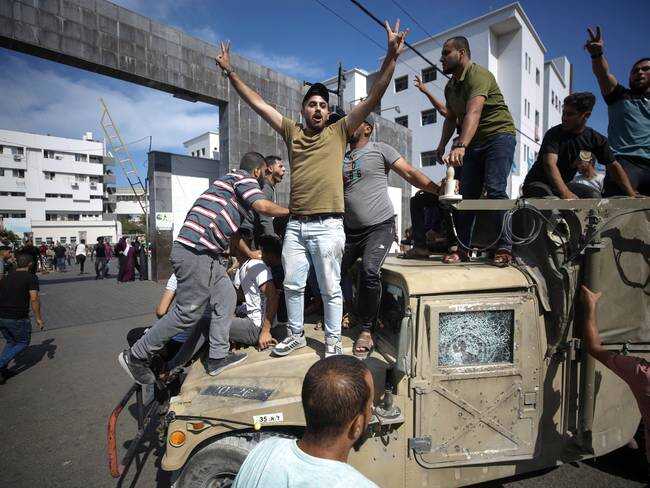
PALESTINE

Fri 20 Oct 2023 9:34 am - Jerusalem Time

Israel Bombards Gaza with Airstrikes and Readies Troops for a Ground Assault

Israeli airstrikes on Gaza continue and Israel's defense minister has told troops to be ready for a ground assault on the Palestinian territory, although he has not said when that will begin. More than 1 million Palestinians, roughly half of Gaza’s population, have fled homes in the north and Gaza City after Israel told them to evacuate. The airstrikes continued overnight Friday in southern Gaza and ambulances transported the wounded to Gaza’s second-largest hospital, Nasser, in Khan Younis, The Associated Press said.


The office of Israeli Prime Minister Benjamin Netanyahu said Wednesday that limited humanitarian aid would be allowed into Gaza from Egypt following a request from US President Joe Biden.


The war that began on Oct. 7 after Hamas militants stormed into Israel has become the deadliest of five Gaza wars for both sides. The Hamas-run Gaza Health Ministry said Thursday that 3,785 Palestinians have been killed and nearly 12,500 others have been wounded.


More than 1,400 people in Israel have been killed, mostly in the initial attack. An Israeli military spokesperson said Thursday that the families of 206 people believed to have been captured by Hamas and taken into Gaza had been notified. Israel has vowed to destroy the militant group.


PALESTINE

Fri 20 Oct 2023 9:20 am - Jerusalem Time

China's Mideast envoy urges guarantees for Palestinians

China's special Mideast envoy pinned the cause of the Israel-Gaza crisis on the lack of guarantees for Palestinian rights and urged greater coordination with Moscow in a meeting with his Russian counterpart in Qatar, a key go-between in the conflict.


In the first leg of his tour in the region, China's envoy for Middle East issues Zhai Jun landed in Qatar on Thursday where he reaffirmed with his Russian counterpart Mikhail Bogdanov Beijing's alignment with Moscow in their efforts to help de-escalate the Gaza crisis.


China and Russia share the same position on the Palestinian issue, Zhai was quoted saying after meeting with Bogdanov in Doha, a day after Russian President Vladimir Putin held talks with his "dear friend" President Xi Jinping in a rare meeting in Beijing.

"The fundamental reason for the current situation in the Palestinian-Israeli conflict is that the legitimate national rights of the Palestinian people have not been guaranteed," Zhai said.


On Oct. 7, Hamas gunmen stormed into southern Israel from the Gaza Strip, killing at least 1,400 people. In response, Israel has retaliated with air strikes, putting the Gaza Strip's 2.3 million people under siege.

A week later, Chinese Foreign Minister Wang Yi, while condemning "all acts that harm civilians" without naming Hamas, declared that "Israel's actions have gone beyond the scope of self-defense."


'ROOT CAUSES'

The crisis has also increasingly put China and Russia in separate camps from the United States. President Joe Biden said he would seek extra funding, estimated to be in the billions, to help Israel fight Hamas.

Russia, which has ties with Iran, the Hamas militant group, major Arab powers as well as with the Palestinians and Israel, has repeatedly said the United States and the West have ignored the need for an independent Palestinian state within 1967 borders.


A Brazil-drafted U.N. Security Council resolution that called for a humanitarian ceasefire failed to pass on Wednesday, with the United States vetoing the resolution.

Twelve other members of the council voted in favor, while Russia and Britain abstained. Washington traditionally shields its ally Israel from any Security Council action. "China is deeply disappointed at the U.S. blocking the Security Council resolution," said a spokesperson at the Chinese foreign ministry on Thursday.
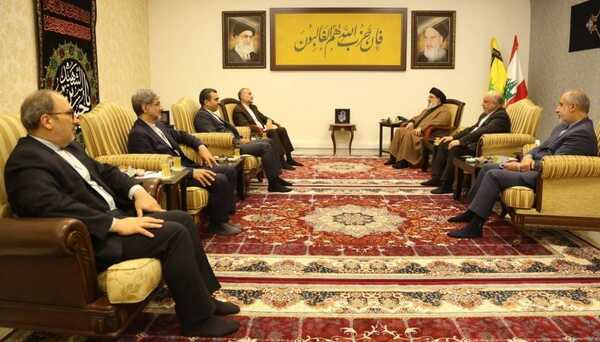
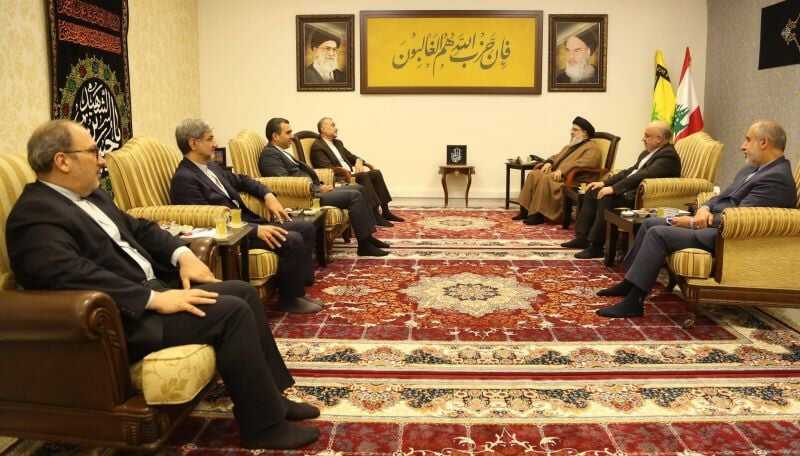
A Russian-drafted resolution that called for a humanitarian ceasefire also failed to pass on Monday.

"The biased attitude of the U.S. is one of the root causes of the long-standing Palestine issue, and it acts as a catalyst for escalating the conflict when it erupts," China's nationalist tabloid, Global Times, wrote in an editorial.


QATAR

In Qatar, Zhai said China was ready to maintain communication and coordination with Russia in an effort to calm the Israel-Palestinian conflict. The tiny Gulf state of Qatar has been an essential stopover for foreign diplomats seeking to mediate in the Israel-Gaza conflict in recent days, having direct communication channels with Hamas, which has had a political office in Doha for more than a decade.


A week ago, U.S. Secretary of State Antony Blinken visited Doha on his Middle East tour and told the Qatari prime minister that Washington was working to secure the release of hostages held in Gaza.

Blinken also urged Israel to take every possible precaution to avoid harm to civilians.


PALESTINE

Fri 20 Oct 2023 9:12 am - Jerusalem Time

Palestine West Bank a potential 'third front' for Israel

Violence in the occupied West Bank has surged since Israel began bombarding the Gaza Strip and clashing with Hezbollah at the Lebanon border, fueling concerns the flashpoint Palestinian territory could become a third front in a wider war.


Israel is waging war against the militant Hamas group in the Palestinian enclave of Gaza, but Israeli soldiers and settlers pulled out of Gaza in 2005. Israel still occupies the West Bank, captured with Gaza in a 1967 Middle East war.


Hamas, which controls Gaza, killed more than 1,400 people in a surprise attack in Israel on Oct. 7, prompting an Israeli bombardment that has killed 3,500 in Gaza. Israel is preparing a full-scale ground assault on Gaza to destroy Hamas.

Western countries supporting Israel fear a wider war that would open up Lebanon, with its Iran-backed group Hezbollah, as a second front and the West Bank as what Israeli media call a potential third front.


Clashes between Israeli soldiers and settlers and Palestinians have already turned deadly. More than 70 Palestinians have been killed in West Bank violence since Oct. 7 and Israel has arrested more than 800 people.

Israeli forces raided and carried out an air strike in a Palestinian refugee camp in the West Bank on Thursday, killing at least 12 people, Palestinian officials said, and Israeli police said an officer was killed during the raid.


The violence poses a challenge to both Israel and to the Palestinian Authority (PA), the only Palestinian governing body recognized internationally which is headquartered there.

The Israeli military said it was on high alert and bracing for attacks including by Hamas militants in the West Bank.

Hamas was trying to "engulf Israel in a two- or three-front war", including the Lebanese border and the West Bank, military spokesperson Lieutenant Colonel Jonathan Conricus told Reuters. "The threat is elevated," he said.

'GIVE PEOPLE WEAPONS. LET THEM CLASH'

In Ramallah, rare chants this week supporting the military wing of Hamas - a rival of the PA's ruling Fatah party - showed a growing appetite for armed resistance.

"Give people weapons. Let them clash. We'll show what we can do," said Salah, a 20-year-old demonstrator who gave only his first name.

Fatah official Mowafaq Sehweel told Reuters: "We should let go of the reins and use whatever means to fight occupation."

Others are less ready to fight.

Nizar Mughrabi, owner of an architecture firm, said he was disgusted by Israel's assault on Gaza but not ready to pick up a gun.

"Netanyahu wants to fight, Haniyeh wants to fight - put them in the desert with guns and let them shoot each other," he said, referring to Israeli Prime Minister Benjamin Netanyahu and Hamas leader Ismail Haniyeh.
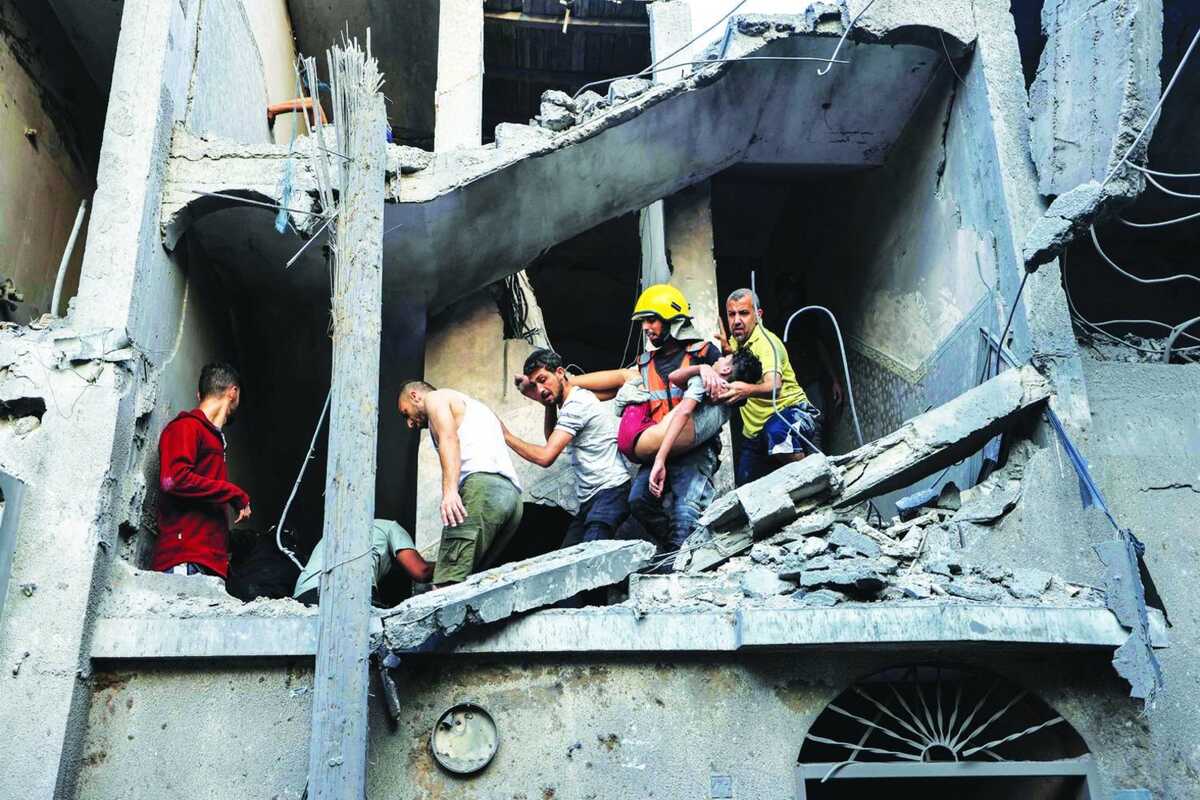
Palestinian officials and Israeli analysts say a number of factors are both helping to ignite tensions, but conversely also limiting their scope, for now.

One is the hundreds of arrests Israel has made.

Hamas cited attacks on West Bank Palestinians and arrests this year as part of its reason for attacking on Oct. 7.

But the arrests have also limited West Bank violence, said Mustafa al-Khawaja, a 52-year-old anti-settlement activist.

"In Gaza, there's enough time (for Hamas) to organize militarily," he said. "Here, the occupation (Israel) can clamp down on a daily basis. It leaves no space to build up military or political forces."


WEST BANK A COMPLEX PATCHWORK

While Hamas tightly controls besieged Gaza, the West Bank is a complex patchwork of hillside cities, Israeli settlements and army checkpoints that split Palestinian communities.

Israel occupied the territory in 1967 and has divided it into large areas it controls, small areas where Palestinians have full control and areas where Palestinians and Israeli forces divide civil and security duties.

Between the seat of power in Ramallah and poorer peripheral areas, there are multiple views on the benefits of violence.

Desperate young men in refugee camps are more willing to fight than those in Ramallah where businessmen and senior Palestinian officials stand to lose from a spiral of violence.

"My business is already suffering because of the unrest," Mughrabi said.

Another key factor in stemming violence is Israel's security agreement with 87-year-old President Mahmoud Abbas's PA.

Abbas condemned Israel's assault on Gaza while his security forces cracked down on demonstrations. Fatah has not issued public calls for armed resistance.

"The PA wants to keep peace and is worried that marches of thousands of people could quickly turn into hundreds of thousands," said Palestinian political analyst Hadi al-Masri.

He added that PA officials do well financially and rely on arrangements with Israel to get paid.

Should Abbas lose his grip or become ill in his old age, the situation could deteriorate, he said.


'LONE WOLVES'

Lior Akerman, a former officer in Israel's internal security service the Shin Bet, said fears over West Bank unrest predated the Hamas war.

Hamas for years had been trying to "do all it can to activate terrorists in the West Bank," he said.

Akerman acknowledged, however, that security measures had been tightened since the Gaza bombardment began, saying that the most recent round of arrests might not have happened under normal circumstances.

"Last night the army ... took around 100 terrorists in the West Bank. In regular days ... the Shin Bet would arrest only those they knew were preparing terror attacks," he said.


One worry for Israel in the West Bank is "lone wolf" attacks from among Palestinians who have disparate local loyalties but an overall contempt for Israeli occupation, analysts say.

Recent surveys have shown overwhelming public support among Palestinians for armed groups, including local militias that include members from traditionally separate factions.


Even before the current Gaza crisis, the West Bank had seen a surge in violence.

Israel stepped up military raids and a spate of Palestinian attacks targeted Israelis. The 2023 Palestinian death toll until Oct. 7 was over 220 and at least 29 people in Israel had been killed, according to UN records.