PALESTINE

Sun 12 Nov 2023 9:05 pm - Jerusalem Time

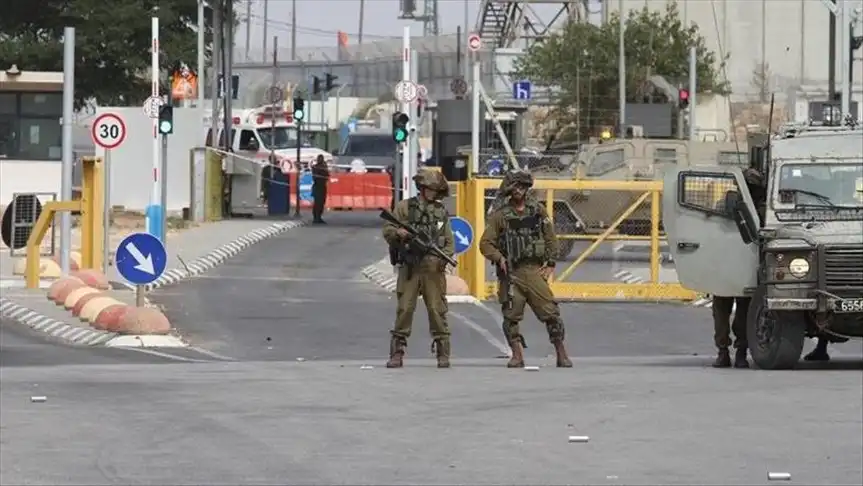
Israeli armed forces seize areas of land east of Bethlehem

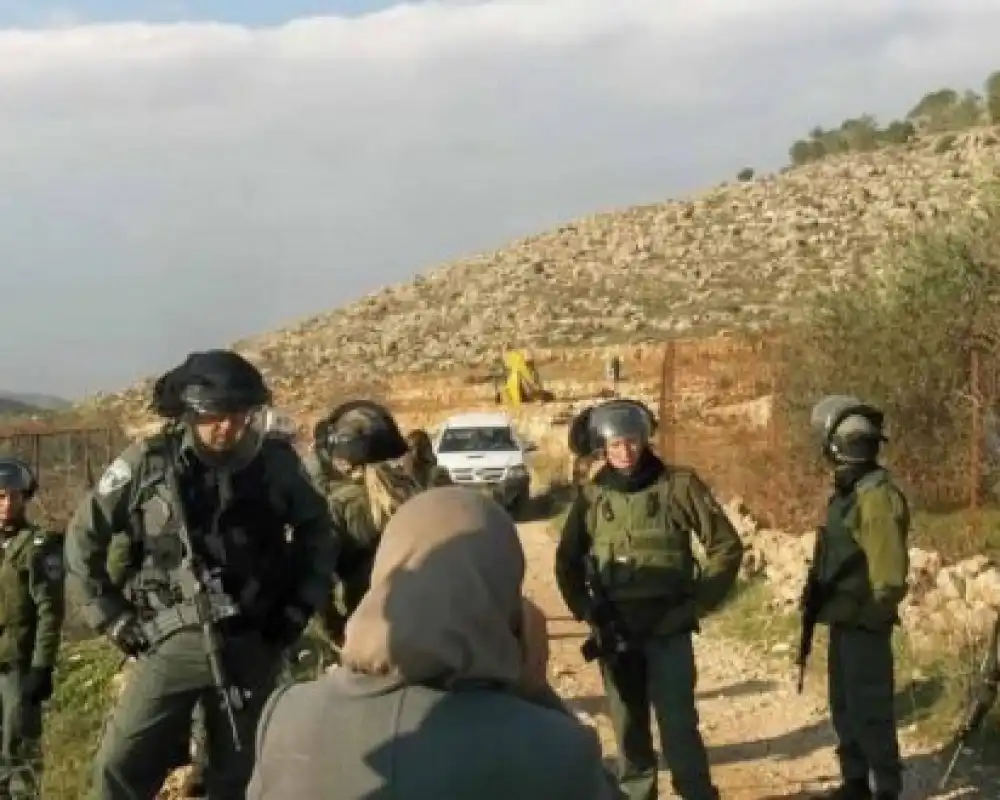
Today, Sunday, Israeli occupation forces seized areas of land in the Al-Taamra area, east of Bethlehem.


The director of the Office of the Wall and Settlement Resistance Commission in Bethlehem, Hassan Barijiyah, reported that the occupation forces seized a land area of 5.5 dunams in Basin (5) in the Al-Murooj area, and Basin (4) in the Al-Uqban area of the Al-Taamara lands, for military purposes.

PALESTINE

Sun 12 Nov 2023 8:28 pm - Jerusalem Time

Escalation in the West Bank: Death, arrests, and injuries concentrated in the abdomen

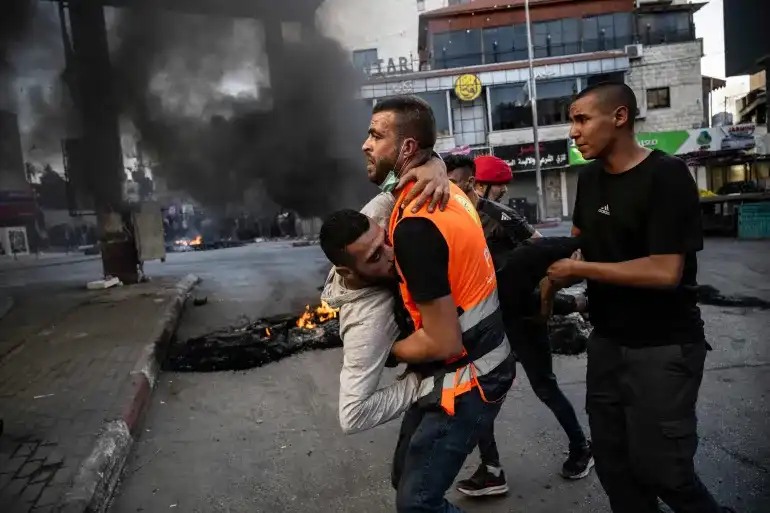
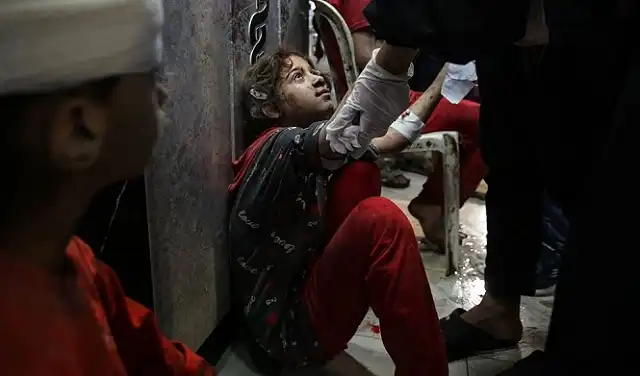
Doctors Without Borders said that most of the wounded it receives in the city of Jenin, north of the occupied West Bank, suffered gunshot wounds to the abdomen and legs, at a time when Palestinians are being martyred one after another and raids and arrests continue.


A doctor in the intensive care unit in Jenin with Doctors Without Borders said that some of the wounded suffered shattered livers and spleens, while others suffered serious blood vessel injuries.


He stressed that the majority of Palestinian youth received by Jenin Hospital suffered wounds resulting from gunshots in the abdomen and lower thighs, saying that "most of the wounded we receive suffer from life-threatening injuries."


In the West Bank in general, Israel has continued to escalate the incursions it carries out on a daily basis, which often end in martyrs among Palestinian citizens.


Three Palestinians were martyred, and about 40 were arrested, as a result of the Israeli occupation forces storming various areas, including Jerusalem, Hebron, Tulkarm, and Nablus.


The Palestinian Ministry of Health announced the death of a young Palestinian man as a result of wounds he sustained at dawn today in the town of Burqa, Nablus district, which also witnessed a storming of the town of Beita.


This was preceded by the fall of two martyrs in the Jenin Governorate, last night, one in the town of Arraba, south of Jenin, and the other in the city of Jenin, during confrontations that took place with the occupation forces, which raised the number of martyrs in the West Bank to 186 since the beginning of the war on Gaza, and the number of detainees reached 2,470. Detained.


Hundreds arrested

For its part, Israel announced on Sunday the arrest of 950 activists from the Islamic Resistance Movement (Hamas) in the West Bank since the start of the war on October 7.


The Israeli army said - in a statement - that "since the outbreak of the current war, more than 1,570 wanted persons have been arrested throughout the West Bank, with more than 950 of them belonging to the Hamas organization."


He reported that 15 Palestinians were arrested last night throughout the West Bank, including 6 belonging to Hamas, according to the statement.


Curfew On the other hand, the Israeli human rights center B'Tselem said on Sunday that Tel Aviv has imposed a curfew on 11 neighborhoods in the Old City area in the city of Hebron, in the southern West Bank, since the start of the war.


The center reported - in a report - that businesses and stores were closed and about 750 families were imprisoned in their homes.


He continued, "Only on October 21, after two weeks of complete curfew, the army announced that residents could leave their homes, on Sundays, Tuesdays, and Thursdays, for one hour in the morning, and one hour in the evening each time."


The Old City area in Hebron is under Israeli responsibility, and is home to a number of Israeli settlers. B'Tselem reported that any exit from the house requires passing through checkpoints and confrontations with soldiers, which entails insults and severe physical searches.


He explained that this procedure takes a long time, and many residents who go out to shop are unable to pass through the checkpoint during the short time allotted to them.


Source: Al Jazeera + Anatolia

ARAB AND WORLD

Sun 12 Nov 2023 7:57 pm - Jerusalem Time

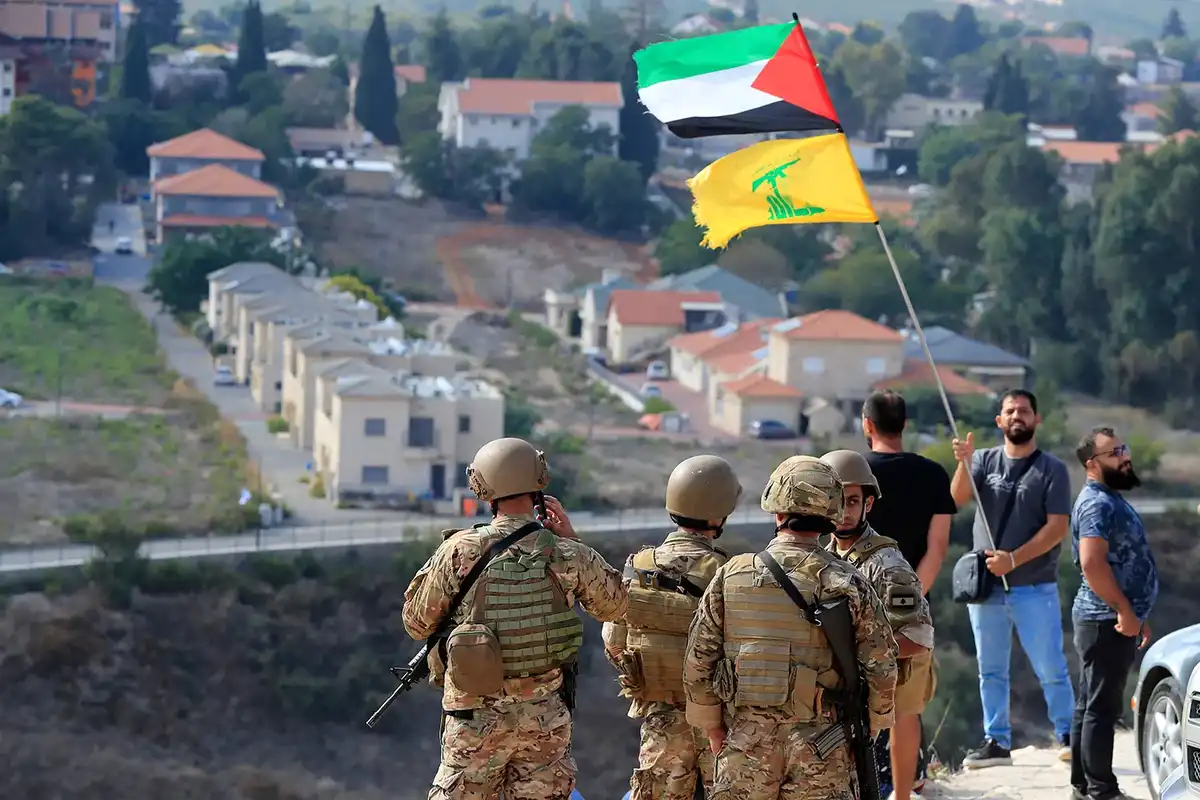
Israelis injured as a result of an anti-tank missile being fired from Lebanon

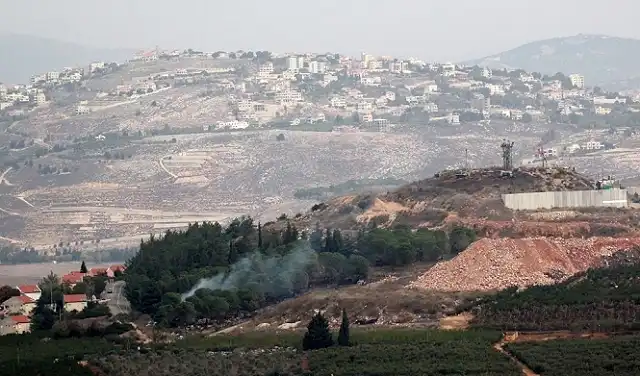
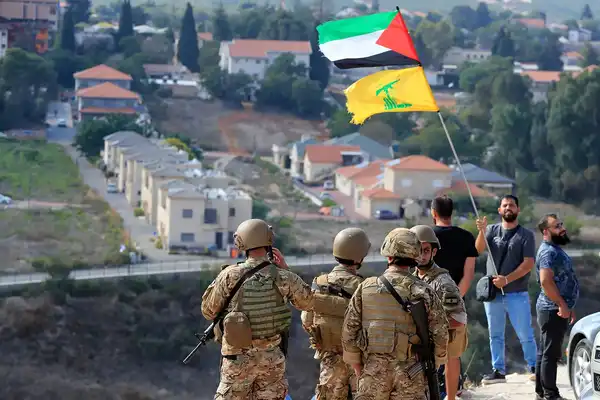
The Israeli occupation army announced that a number of civilians were injured as a result of the firing of anti-tank missiles from southern Lebanon, this afternoon, Sunday, targeting the "Dovive" northern border area between Israel and Lebanon.


The army said, in a statement, that militants "fired anti-tank missiles at the Doviv area." He added, "A number of civilians were injured as a result of the shooting, and Israeli army forces are attacking the sources of the fire with artillery."


The Israeli ambulance indicated that there were 6 injuries, including a critical condition, and 5 others in a serious condition, while the Israeli Electricity Company said that an anti-tank missile hit its workers while they were working in the north of the country.


In a second incident, the Israeli army reported that its forces “attacked a cell that was planning to fire from a civilian area in Lebanese territory.” A missile fired from southern Lebanon, Sunday morning, also landed in an open area in the Western Galilee.


For its part, Hezbollah confirmed, in a statement, "the targeting of a logistical force belonging to the occupation army that was in the process of installing transmission poles and eavesdropping and spying devices in a newly created gathering near the Doviev Barracks." Israeli occupation artillery bombed border towns in southern Lebanon.


The Israeli army announced the bombing of Hezbollah sites and infrastructure in southern Lebanon and bombing sites in Syria, last night, after Hezbollah adopted a series of operations on the country's northern border with southern Lebanon.

PALESTINE

Sun 12 Nov 2023 7:55 pm - Jerusalem Time

Israeli armed forces storm the city of Bethlehem

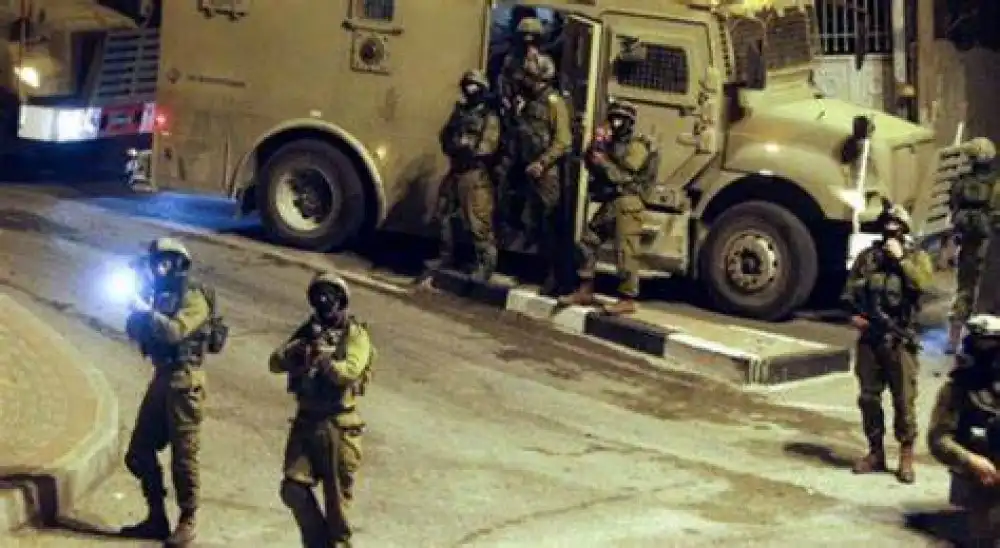
On Sunday evening, Israeli occupation forces stormed the city of Bethlehem.


Local sources reported that Israeli occupation forces stormed the city of Bethlehem, stationed themselves in the Jabal al-Mawaleh area, and raided a number of citizens’ homes.

PALESTINE

Sun 12 Nov 2023 7:42 pm - Jerusalem Time

Senior leader in Hamas: Gaza will only be governed by its people, and there will be no authority in it except a Palestinians

Hamas leader Osama Hamdan said on Sunday that “Gaza will only be governed by its people, and there will be no political or security authority there except the Palestinians.”


Hamdan added in a press conference held in Beirut that the decision of the Arab Islamic Summit to break the siege and impose the entry of aid into the besieged sector “is moving in the right direction, and we are awaiting its implementation,” according to what was reported by the Arab World News Agency.


The Arab-Islamic Summit, which was held on Saturday in the Saudi capital, Riyadh, decided to break the siege imposed on Gaza and “impose” the immediate entry of humanitarian aid, including fuel, into the Strip. It condemned any attempts to displace Palestinians from north to south Gaza or outside the Strip, the West Bank and Jerusalem. It also called on the Security Council to take a binding decision to stop the Israeli attack on Gaza.


Israeli media quoted Prime Minister Benjamin Netanyahu as saying, on Friday, that the army will remain in control of the Gaza Strip after the war, which may surprise the international community after it confirmed hours ago that Israel does not want to rule or “occupy” the Strip.


Netanyahu said in a meeting with the mayors of the towns adjacent to the Gaza Strip: “The army forces will remain in control of the Gaza Strip, and we will not hand it over to international forces,” according to the Arab World News Agency. He added: “There will be Israeli security control over the Gaza Strip, including This is complete disarmament, to ensure that there is no threat from Gaza to the citizens of Israel.”


This came after Netanyahu told the American Fox News network on Friday that Israel does not want to reoccupy or rule the Gaza Strip. He told the network: “We do not want to seek to rule Gaza, nor do we want to seek occupation, but we seek to give it and us a better future in the entire Middle East. This requires defeating Hamas.”

PALESTINE

Sun 12 Nov 2023 6:48 pm - Jerusalem Time

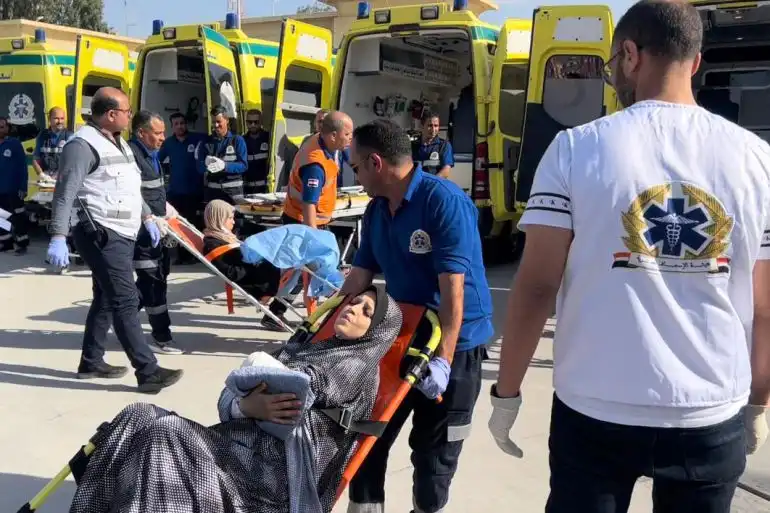
A new batch of foreigners and wounded were evacuated from Gaza through the Rafah crossing

Egyptian security sources said that a group of foreigners and injured Palestinians who were evacuated from Gaza arrived in Egypt - today, Sunday - after the reopening of the Rafah crossing, with the continued Israeli aggression against the Gaza Strip since the seventh of last October.


The sources said that several injured Palestinians arrived in Egyptian territory to receive treatment, in addition to 80 holders of foreign nationalities and their families, while others are subject to transit procedures.


Evacuation operations through the crossing were stopped for the third time on Friday after obstacles in transporting injured Palestinians from the northern Gaza Strip.


The General Authority for Crossings and Borders announced on Saturday evening the resumption of operation of the Rafah crossing on Sunday, and called on travelers “holders of foreign passports listed on the travel lists” to go to the crossing.


Since November 1, dozens of wounded Palestinians have been evacuated to Egyptian hospitals, and hundreds of dual nationals and foreigners have left, including Americans, French, Russians, and Poles.


The Rafah crossing, which is the only crossing into the Gaza Strip that is not controlled by Israel, was closed on Friday and Saturday.

ARAB AND WORLD

Sun 12 Nov 2023 6:39 pm - Jerusalem Time

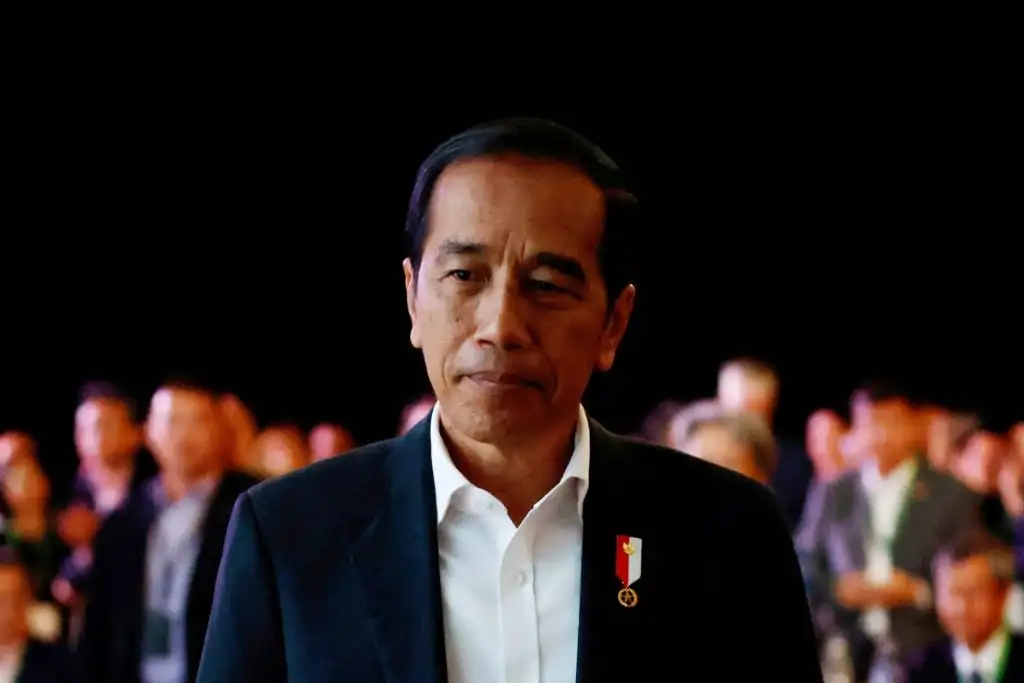
Indonesian Jokowi comes to Washington with a sensitive yet promising to-do list

Even as Indonesia seeks to assert its global leadership role, President Joko Widodo, colloquially known as Jokowi, views foreign policy largely through the lens of its impact on domestic matters. His upcoming meeting on November 13 with US President Joe Biden at the White House, after which he will travel to the Asia Pacific Economic Cooperation Leaders’ Week in San Francisco, will reflect this mentality. 


As Chatham House’s Ben Bland effectively asserts in his excellent biography of Jokowi, the former businessman—who started in politics as a local mayor, no less—is laser-focused on domestic issues and economic development, attributable to both his professional background and the sheer scale of Indonesia’s economic needs.

One way this is reflected is in his infrequent overseas travel. He didn’t attend the United Nations General Assembly until his sixth year in office, and he may have only done so because it was held virtually. His 2022 trip to Russia and Ukraine was a high-profile exception. But in that case the domestic impact of Russia’s invasion of Ukraine was arguably the impetus for the trip, along with keeping the Group of Twenty (G20) Summit that Indonesia hosted later that year on track.


His visit comes at a sensitive moment in Jakarta and Washington due to cascading global challenges and presidential elections in both countries in 2024. Despite these sensitivities, Jokowi has a promising opportunity to advance progress on three issues important to securing his legacy during his final year in office: economic development, geopolitics, and the conflict in Gaza.


Economic development and job creation

As a country with 1.7 million young people entering the workforce annually, economic development and job creation are understandably among Jokowi’s top priorities. The prospect of economic strife casts a long shadow over Indonesian leaders, as economic crises have historically led to societal upheaval, violence, and regime change. They have even raised the specter of the country’s collapse. 


To meet Indonesia’s daunting economic needs, Jokowi has sought to improve infrastructure, foster a more favorable environment for foreign investment, incubate the country’s technology and critical minerals sectors, and mitigate the impact of climate change on the sprawling archipelago. In doing so, he has sought support from all sources willing to provide it, including but not limited to the United States, China, Japan, the European Union, Persian Gulf states, and Australia.

Expect Jokowi to push for action on market access, particularly in relation to critical minerals, as well as for investment in building a new capital for the country and transitioning to clean energy. The possibility of a US-Indonesia trade agreement on critical minerals has elicited pushback from a bipartisan group of US senators, who raised their concerns in a letter to the Biden administration in October. While these anxieties should be surmountable, they highlight the notoriously vexing nature of trade-related issues in US politics. By the same token, resource nationalism is a politically risky issue in Indonesia.


Geopolitics and regional stability

Like other Southeast Asian nations, Indonesia has expressed concern about growing tensions between the United States and China and doesn’t want to “pick a side” between the two behemoths. Jokowi has advanced this view, using his country’s perch as the Association of Southeast Asian Nations (ASEAN) rotating chair to call in September for the bloc to “lower heated tensions, to thaw frozen state of affairs, to create room for dialogue, to bridge existing differences.

Indonesia is a proud nation that believes it can and will chart its own geopolitical course. While it has increased defense cooperation with the United States and sought greater maritime autonomy in the North Natuna Sea, it has also constrained its actions there and elected to move ASEAN’s first joint naval drills away from it to the South Natuna Sea, away from areas disputed by China. Jokowi was also a notable guest at the Belt and Road Initiative Forum in Beijing in October, which drew notably fewer heads of state than it had in the past.

At a time when China hawks are on the ascent in Washington, Jokowi’s message of de-escalation may not be well-received in certain corners, and a time may come when Indonesia is forced to pick a side. With that said, Jokowi’s perspective is one that needs to be heard more often by US officials, as it’s one held by nations across the Global South. The Indonesian leader stands to benefit at home by advancing it, and if his track record is any indication, he will do so in a delicate yet certain fashion in Washington.


The conflict in Gaza

Indonesia is the world’s largest Muslim country, and the long-running conflict between the Israelis and Palestinians has always loomed large in Indonesian politics. As a recent editorial in the Jakarta Post put it, “Indonesia has consistently thrown its weight behind the Palestinian people’s struggle for independence under a two-state solution,” and it does not have formal diplomatic relations with Israel.


This mentality was on display earlier this week, when Jokowi held a press conference to announce the delivery of humanitarian assistance to the Gaza Strip. Indonesia’s presidential candidates have latched onto the issue as well: former Governor of Jakarta Anies Baswedan spoke at a massive pro-Palestinian rally, former Governor of Central Java Ganjar Pranowo reiterated his support for Palestinian independence, and Defense Minister Prabowo Subianto was front and center at Jokowi’s press conference announcing the aid delivery to Gaza.

Jokowi needs to show Indonesians that he’s standing up for Palestinians, and Washington provides a tailor-made forum for doing so. But, by doing so, he risks raising the ire of some US officials, particularly in Congress where many members hold strongly pro-Israel views. Of all the issues on Jokowi’s agenda, this one may be the most challenging for him to navigate, and he will need to do so adeptly if he is to make progress on the rest of his to-do list.

PALESTINE

Sun 12 Nov 2023 5:41 pm - Jerusalem Time

Israeli extremist settlers attack citizens' vehicles on the Ramallah-Nablus road

This Sunday evening, settlers attacked citizens’ vehicles on the Ramallah-Nablus road, causing material damage to a number of them.


Local sources reported that a group of settlers threw stones at citizens' vehicles on the main road near the town of Turmus Ayya, northeast of Ramallah, causing material damage to a number of them.


It added that a group of settlers smashed the windows of the vehicle of citizen Hosni Assaf from the town of Jama’in, on the main road near the “Shilo” settlement, which is built on citizens’ lands north of Ramallah.

PALESTINE

Sun 12 Nov 2023 5:32 pm - Jerusalem Time

Hamas suspended prisoner exchange negotiations due to the Shifa Hospital bombing

A Palestinian official familiar with the prisoner exchange negotiations in Gaza told Reuters on Sunday that Hamas suspended the negotiations because of what Israel is doing towards the Shifa Medical Complex in Gaza City.


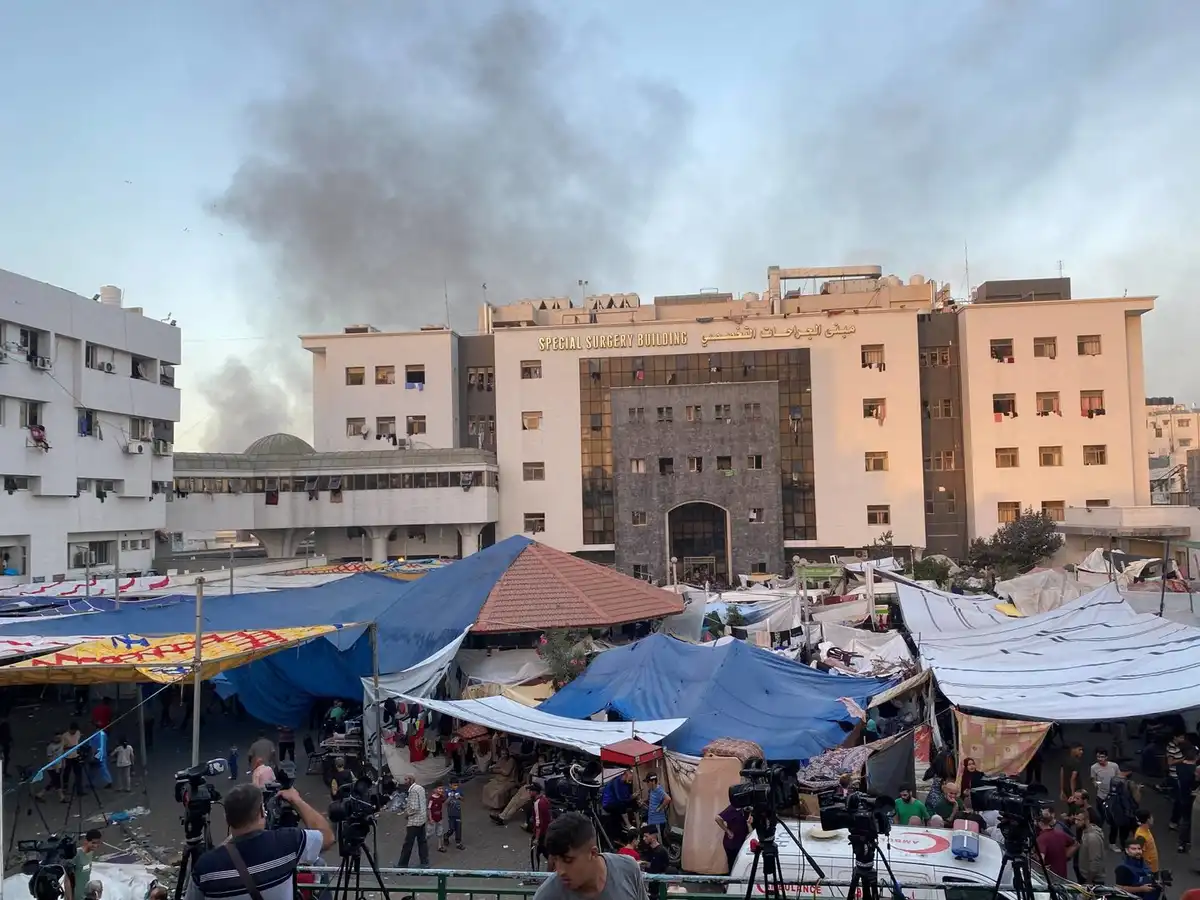
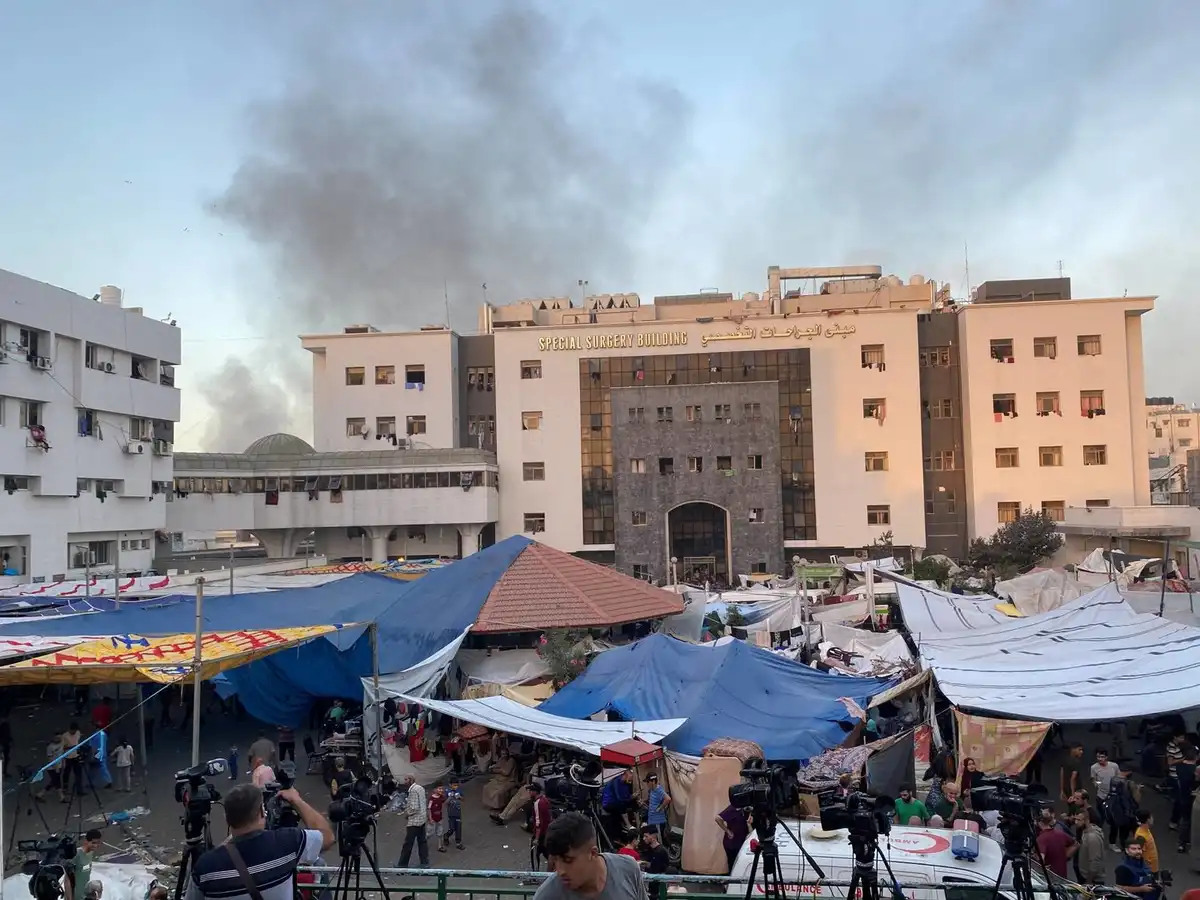
Reports in the besieged Gaza Strip stated that the Israeli army imposed a siege on the Al-Shifa Medical Complex in Gaza City, and in addition bombed parts of it, such as the maternity hospital and the heart department, which led to deaths and injuries.


Inside the hospital, the wounded suffer from tragic conditions as fuel and medicines run out, amid warnings of immature children facing the risk of death due to the lack of supplies in the hospital.


"Progress in negotiations"

The suspension of negotiations comes, according to Reuters, after Western news reports reported that progress had occurred in negotiations between Hamas and Israel to complete a prisoner exchange deal between the two parties.


The American Politico news website reported that Israeli officials are cautiously optimistic about reaching a deal to exchange female prisoners and child prisoners with Hamas, despite the continuing fighting between the two sides.


But these officials, whose names the website did not reveal due to the sensitivity of the issue of detainees, confirmed that such a deal - if it takes place - will be temporary and limited.

ARAB AND WORLD

Sun 12 Nov 2023 5:27 pm - Jerusalem Time

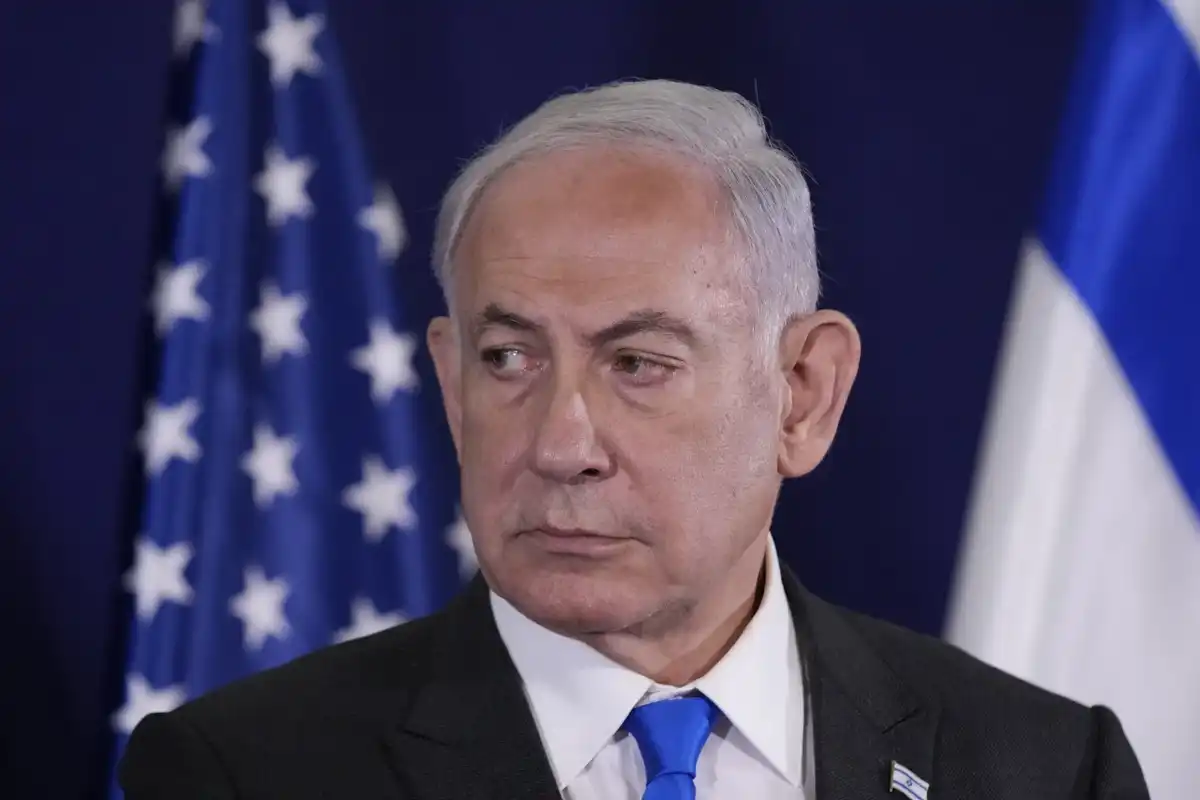
Netanyahu interview on CNN: The number of civilian casualties in Gaza has decreased. Our priority is to destroy Hamas

Israeli Prime Minister Benjamin Netanyahu said on Sunday that the number of civilian casualties in the Gaza Strip had “decreased” due to Israel’s calls for civilians to move south.


Netanyahu added during an interview with CNN: “I think the number of civilian casualties has actually decreased because people are responding to our calls to leave the area.”


Netanyahu went on to say, "Hamas wants an endless series of (fire) pauses, which essentially dissipates the battle against it."


Netanyahu added that "there is no reason" not to evacuate patients from Al-Shifa Hospital, the largest hospital in Gaza.

Netanyahu added: “There is no reason why we should not get the patients out of there, instead of allowing Hamas to use it (the hospital) as a terrorist command center.”

Israel insists that Hamas uses hospitals and civilian infrastructure as shields for its attacks on Israel.

“We have asked for all patients to be evacuated from this hospital, and in fact 100 or so have already been evacuated,” he said.

Netanyahu stressed that Israel is helping patients "by creating safe corridors."

He explained that French President Emmanuel Macron sent a ship as a floating hospital, and Netanyahu said: “I asked the UAE to send a field hospital.”

Netanyahu added: "It is clear that we are treading carefully when it comes to hospitals, but we also will not grant immunity to terrorists. We want to keep all civilians out of harm's way, and Hamas is doing everything it can to keep them in harm's way."

When asked about Israel's post-war plans in Gaza, Netanyahu appeared to rule out handing control over to the Palestinian Authority, saying that the Palestinian Authority had failed to "disarm" and "de-radicalize" Gaza in the past.

Netanyahu added that Israel's first priority is to destroy Hamas.

Once this is achieved, Netanyahu continued, there must be a "dominant Israeli military presence" to avoid the return of terrorism.

He said that "the civil authority must cooperate to achieve two goals: the first is to demilitarize Gaza, and the second is to remove extremism from Gaza."


He explained: "I must say that the Palestinian Authority has unfortunately failed in both matters."

“We must give Gaza a better future, and let us not return it to a failed past,” he said, adding: “Let us create a different reality there.”


The Israeli Prime Minister refused to answer whether he would bear responsibility for the failure to prevent the October 7 attack on Israel, saying that there would be time for such “difficult” questions once the war ended.


In the interview, Netanyahu acknowledged that this was “a question that must be asked.” “And we will answer all these questions,” he said, adding: “Right now, I think what we have to do is unite the country for one goal: achieving victory.” He added: "Let's focus on victory. This is my responsibility now."


Regarding the hostages, Netanyahu said that Israel is “doing everything in its power around the clock” to release more than 200 hostages held by Hamas. He added: "This is one of our goals in the war. The first is to destroy Hamas and the second is to return our hostages."


When asked if he was doing enough, Netanyahu said: “We are doing everything we can around the clock, and I cannot, you know, talk about that.”


He added: "I have personally met the families of the hostages several times, and this is heartbreaking."


Netanyahu said that "the whole world must join us" in trying to release the hostages, and stressed that the only ceasefire that would be considered "is the one during which our hostages are released."


PALESTINE

Sun 12 Nov 2023 5:13 pm - Jerusalem Time

Al-Shifa Complex: The lives of 650 patients are at risk

The Director General of Hospitals in the Gaza Strip, Muhammad Zaqout, warned on Sunday that about 650 patients and wounded, including 36 children, had their lives in danger due to the catastrophic situation in the Shifa Medical Complex.


Zaqout said, in a press conference: “About 650 sick and wounded people, including 36 children, have their lives in danger due to the catastrophic situation in the Al-Shifa Complex, and we call on Egypt to save their lives.”


On a daily basis, humanitarian aid trucks enter Gaza from the Rafah land crossing with Egypt.


Since the outbreak of the war, Israel has cut off supplies of water, food, medicine, electricity, and fuel to the residents of Gaza, who are approximately 2.3 million Palestinians, who already suffer from extremely deteriorating conditions. As a result of an ongoing Israeli siege since 2006, he also confirmed the presence of “about 1,500 displaced people in the Al-Shifa Medical Complex (west of Gaza City), whose lives are in danger.”


He warned of “the accumulation of garbage and medical waste, the lack of water, and the power outage, which threatens everyone’s lives,” and Zaqout pointed out that “there is no safe place in the Al-Shifa Medical Complex and its surroundings.”


Al-Shifa Hospital and its surroundings, as well as other hospitals in the Gaza Strip, are constantly targeted by bombing by the Israeli army.


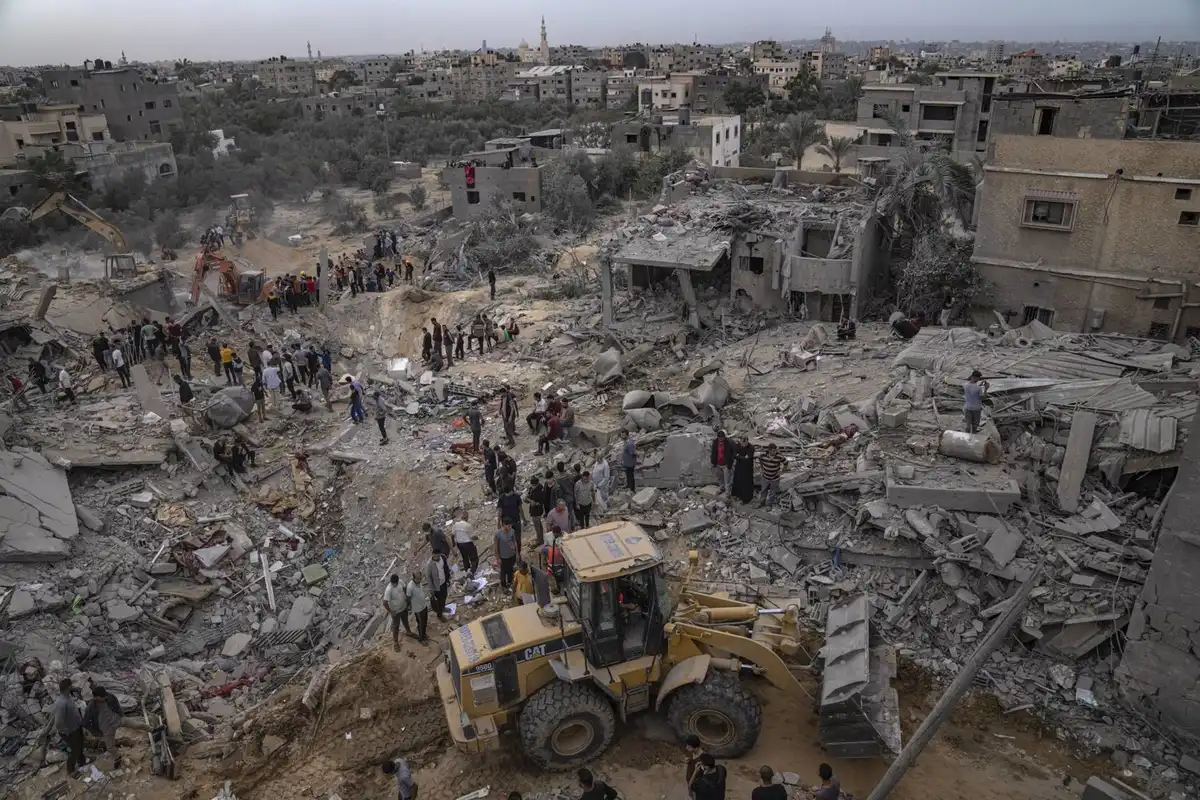
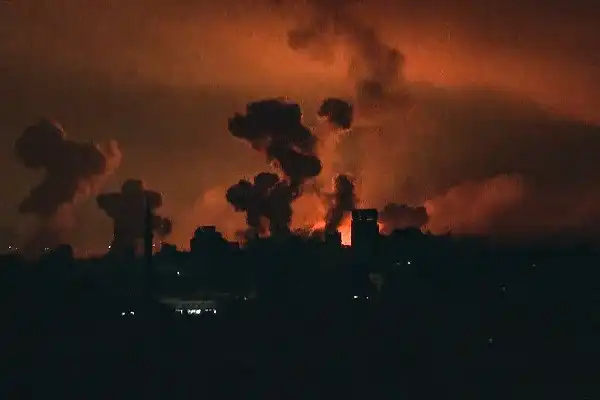
For the 37th day, the Israeli army is waging a devastating war on Gaza, which has left more than 11,110 dead, including more than 8,000 children and women, in addition to more than 28,000 wounded, according to official Palestinian sources on Saturday evening.

OPINIONS

Sun 12 Nov 2023 4:57 pm - Jerusalem Time

Israel’s military failed the nation, but that won’t end Israeli militarism

AlJazeera

AlJazeera

Opinion Writer

Haim Bresheeth-Žabner


The October 7 attack was a shock to the system in Israel that made clear there is no military solution in Palestine. But Israelis would not heed.


Israel before October 7 was a riven nation. After nine months of mass demonstrations against Prime Minister Benjamin Netanyahu and his judicial coup, polarization was at an all-time high. The bitterness and determination to bring down his government had galvanized more than half of the country. Remarkably the protests were joined by former officers from the army, Mossad and Shabak, as well as employees of leading high-tech companies which make up the backbone of the Israeli military industrial complex (MIC).It looked like Netanyahu would fall within months. As all eyes were focused on a much-awaited verdict of the Supreme Court on one of his government’s judicial legislation changes, no one was paying much attention to Gaza. Despite intelligence warnings from Egypt, Hamas’s attack on October 7 came as a surprise.

To fully comprehend the shock it inflicted on the Israeli society, one needs to go back to the point of creation of the Israeli nation.


A nation-building institution

The building of the Israeli army started well before the creation of Israel. The Zionist leadership in British-ruled Palestine was well aware of the need for a modern military force to take the land from its indigenous population. Zionist organizations controlled less than 7 percent of the Palestinian territories as late as 1946.Throughout the 1920s and 1930s, three competing organizations – Haggana, Irgun and Lehi – secretly and illicitly trained and armed tens of thousands of fighters and built rudimentary but efficient armament plants. By the end of the 1948 Arab-Israeli war, their ranks swelled to 120,000 troops, as thousands of British soldiers who had fought in World War II and survivors of Nazi Germany’s death camps joined them.


During the 1948 war, this formidable force easily defeated the few thousand untrained irregulars from Palestine and the rather inferior forces from the surrounding Arab polities – Jordan, Egypt, Syria and Iraq. As a result, some 750,000 Palestinians were expelled while the new state of Israel came to control 78 percent of Palestine. 

Newly created Israel had a large army but had no nation. The 650,000 Jews within the new polity were far from a homogenous group: They spoke numerous languages, came from diverse cultures and did not share a political ideology.

This was immediately noted by Israel’s first prime minister, David Ben-Gurion. The nation he would create would be a nation at arms, in a permanent state of neither peace nor war. To make this mode of existence into Israel’s modus vivendi, a major social engineering project lasting decades would follow, requiring constant renewal.


Thus, just as the Israeli state was created by the Zionist army, so too was the Israeli nation. After all, it was the largest, richest, and most powerful institution in Israel. Drafting all male adults, as well as many women, created a common experience on the basis of which common identity started to emerge, grounded in conflict with the Palestinians and the Arab nations.


Through a long series of wars initiated by Israel, as well as more limited military campaigns in between, a national identity was created totally dependent on the Israeli army. Other issues could divide the Israelis, but – almost – all were members of the largest club in society, one which cut across class, culture, language and religious boundaries. The army became an organization trusted by all Israeli Jews, as opposed to all other, civic and state organizations, which divided rather than united Israelis. Israel became a warrior democracy akin to a modern Sparta, with a citizen army of Jews and a small minority of Druze and Bedouins. 


From a professional army to a colonial police force. 

The army in Israel was elevated in public opinion to such heights that even when the Egyptian and Syrian forces dealt it a devastating blow in the 1973 war, the blame was mainly put on the politicians, like Prime Minister Golda Meir and Defense Minister Moshe Dayan, rather than on army officers.

The partial defeat was an early sign of an important process which had started in 1967, transforming the army into a glorified colonial police force. Its troops, instead of focusing on the threat of fighting back foreign armies, were tasked with subjugating more than a million Palestinians in the newly occupied West Bank and Gaza. As the Israeli state started settling these lands illegally, the military was deployed to guard and facilitate the process.

Another factor that further accelerated this transformation was peace-making and normalization with Arab states achieved with the help of Israel’s closest ally, the United States, pressuring these nations. These diplomatic efforts totally disregarded the Palestinians. 

Normalization started with Egypt signing a peace treaty in 1979, which was followed by Jordan in 1994. Then came the Abraham Accords of 2020 with the UAE, Bahrain, Morocco and Sudan also normalizing relations, and Saudi Arabia declaring plans to follow suit.

This process removed the threat of military attacks from neighboring Arab countries on Israel, allowing the Israeli army to focus on suppressing the Palestinian population. More confident than ever in its security arrangements, the Israeli state became also much more extreme in its policies towards the Palestinians. This escalated even further in 2023, when Prime Minister Benjamin Netanyahu returned to power, buoyed by the Abraham Accords and supported by extreme far-right settler parties. His government started to move even more aggressively towards the final stage of the Zionist project – that of dispossessing Palestinians of the 12 percent of historical Palestine still under their partial control.


Recently, as tension heightened in the West Bank due to settler pogroms, thousands of Israeli troops were moved there from the envelope around Gaza, to protect settlers in their continuing attacks on Palestinians and facilitate the expulsion of Palestinian families from their land. Amid this escalation, Netanyahu continued to believe that trouble from Gaza is most unlikely, as Hamas and Islamic Jihad could not possibly face the might of the Israeli army, with its technological superiority and vast intelligence apparatus. This only fitted his policy of helping Hamas in order to weaken the Palestinian Authority. The Palestinians were a disorganized, poor, and isolated nation, without a proper army, with no heavy weapons of any kind – what was there to worry about?


The shock of October 7

But then, out of the blue, came Hamas’s attack of October 7 and the sky caved in. A small Palestinian force of just more than 2,000 fighters moved in to take over several military bases and strongholds in Israel’s south. Like in 1973, the surprise attack caught the Israeli army unprepared, with some Israeli soldiers still in their underwear and without their rifles when they came under fire. 

Within hours, using a combination of missile attacks, drones, small arms, motorcycles, and power gliders, Hamas’s fighters were able to defeat all the forces defending the Gaza theatre, kill hundreds of Israeli soldiers, carry out massacres of civilians, and return to Gaza with more than 250 hostages, which they planned to exchange for the thousands of Palestinian prisoners in Israeli jails.

After the initial shock, the Israeli army struggled to launch a coordinated response. Some back-up units took hours to arrive on the scene and when they did, the battles with Hamas’s fighters were anything but well-thought-out. According to reports, civilians held as hostages and Israeli troops may have been killed in the crossfire or due to the use of indiscriminate firing, air raids and tanks to target Hamas fighters in the kibbutzim. The military was unable to re-establish full control over the south for several days. 

This was perhaps unsurprising given that the Israeli army has never won a battle decisively since 1967 and has not fought a regular army since 1973. When facing small resistance groups, like the PLO, Hezbollah, or Hamas, its success has been rather limited.


The reason for this is the transformation of the Israeli army into a brutal colonial police force that for decades has mostly fought unarmed men, women and children. It is no longer trained to fight a war and continuously underestimates the capabilities of its enemies.

What was especially shocking for Israelis about Hamas’s attack was the fact that army spokespeople and commanders admitted to the utter chaos and the innumerable mistakes made by all involved in the military response. The Israelis realized their army was not able to protect them, despite the enormous budget it has, the huge number of soldiers it retains, the advanced technologies it employs, etc. That the painful defeat was dealt by such an inferior opponent is the most hurtful insult to Israeli militarized identity. 


As most Israeli adults, men and women, served in the army, their identity, both personal and socio-national owes more to it than to any other institution in Israel. When the army fails so dramatically, it is a failure shared by all Israelis. The defeat of the Israeli military is a defeat of all Israeli Jews.

The socio-political change in Israel was immediate and all-encompassing turning the Jewish Israelis sharply to the racist right that many of them opposed before the Gaza crisis. Even famous academics, like the sociologist Sami Shalom Chetrit, found it acceptable and necessary to write, just two days after the attack: “First I wish to clarify: All Hamas members, from the head to the lowest murderer, will all die. I dislike wars (one was enough for me) but I am not a pacifist. I would shoot them myself.” This is typical of many reactions of the professional middle class, and is certainly not the most disturbing. One is tempted to think that this was written in the heat of the moment, but this is not so – the reaction to the Hamas attack, and the deep humiliation it caused to all Jewish Israelis has pushed them to a position which before was held by the far-right settler militias carrying out the pogroms, against all Palestinians. 

“Everyone in Gaza is Hamas” is a normalized by-line of many of the journalists and columnists right now, and the stakes are raised daily and ratchetted up, with the full support of the population. 


I do not believe this is either short-term or reversible. And there are no signs of any soul-searching in the Israeli public now that it is crystal clear that there is no military solution to the colonial conflict, unless Israel decides to undertake the elimination of everyone in Gaza.


This genocidal option has already been floated around by some Israeli ministers – one even suggested using nuclear weapons for the task. Unfortunately, as activist and journalist Orly Noy pointed out in a recent article, large sections of Israeli society have also embraced it. 

An internal document dated October 13 leaked to the Israeli media lays bare the Israeli endgame after the “expected defeat of Hamas”. It outlines three phases of the planned Israeli takeover of the Gaza Strip which include a bombing campaign focused on the north, a ground attack to clear the underground network of tunnels and bunkers and finally the expulsion of Palestinian civilians to Egypt’s Sinai Peninsula with no option for return.

Over the past few days, we have been witnessing this three-phase program take shape in the terrible landscape of the Israeli destruction of Gaza. At the time of writing, Israel has killed more than 10,000 Palestinians and injured tens of thousands, apart from nearly 3,000 missing under the rubble of destroyed buildings. Israel’s ire knows no bounds. The Israeli dehumanization of Palestinians is not a sign of social strength, but of a terminal ailment of the social fabric of Zionism. 


It is what will bring its dissolution, I believe. The Israeli army, the author and the executioner of the 1948 Nakba and the 1967 Naksa now carries out the 2023 Nakba. It is a terrifying act of genocide and ethnic cleansing, unlikely to be the last. There are still more than four million Palestinians between the river and the sea. The plan to expel them has been written a long time ago. 


The leaders of the West, in their political and moral criminality, have enthusiastically signed up to this plan, without even reading it. If they think this will help Israel and bring stability to the region, they must be very deluded.


ARAB AND WORLD

Sun 12 Nov 2023 4:47 pm - Jerusalem Time

Le Monde: Tension within the Israeli war cabinet despite the illusion of unity

The French newspaper Le Monde said that the Israeli war cabinet - which leads military operations in Gaza, on the Lebanese border and in the West Bank - maintained the illusion of unity at the head of the state, reflecting the image of the unified Israeli nation in mourning and in the largest military mobilization in its history, but it is confused and deeply divided from the inside.


The newspaper explained - in a report written by its correspondent in Jerusalem, Louis Imbert - that this body consists of 5 members, namely Prime Minister Benjamin Netanyahu, with the American Ron Dermer, his deputy and his “second mind,” and 3 generals who have been wearing black clothes for a month and are constantly clarifying and contradicting Netanyahu’s statements, and they are the minister. Defense Minister Yoav Galant and former chiefs of staff Benny Gantz and Gadi Eisenkot - who joined the opposition government on the fifth day of the war - served as security around the prime minister.


Netanyahu's second mind

The reporter stated that Florida-born Ron Dermer - who has been with Netanyahu since 2000 - was religious but did not serve in the Israeli army, and is responsible for relations with the administration of US President Joe Biden, who, like his predecessors, participates in Israeli decision-making during wartime.


Dermer - who knows officials in the Biden administration closely, due to his bitter enmities with them - was appointed by Netanyahu as ambassador to Washington in 2013, and advisors to former Democratic President Barack Obama considered rejecting his credentials, believing that he is more of a political activist in the American Republican Party than he is. He is a diplomat, and he helped persuade former US President Donald Trump to exit the 2015 nuclear deal with Iran.


As for the fifth member of the war government, whose decisions are taken unanimously under the guidance of the commanders of the army and security services, he is Aryeh Deri, the leader of the extremist Israeli Shas party, who was twice convicted of corruption and tax evasion. He leads a party whose majority of voters reject military service, and seeks to maintain the huge government subsidies granted in the spring.


War generals

The newspaper reviewed the biographies of the generals of the war cabinet, the first of whom was Gadi Eisenkot, who had the “suburb” military doctrine that contradicted the principle of appropriate response. He destroyed the southern suburb of Beirut with bombs during the 2006 war against Hezbollah, and his predecessor, Benny Gantz, to whom Netanyahu did not fulfill his promise that he would succeed him after he joined. To his government, he is now seeking to confront the influence of the extreme right-wing ministers whom Netanyahu refuses to get rid of, such as National Security Minister Itamar Ben Gvir, who has questioned the legitimacy of the war government. Ben Gvir is also working with his ally, Finance Minister Bezalel Smotrich, to fuel chaos in the West Bank.


The generals of the war government have in common that they warned the prime minister months ago of the danger of a major attack against Israel, and at a time when the country was torn by the judicial reform desired by Netanyahu, they indicated that the Islamic Resistance Movement (Hamas) believes that Israel is in an unprecedented state of weakness. For example, Netanyahu refused to receive Chief of Staff Herzi Halevy, who wanted to share with him the disturbing analyzes by military intelligence.


Last October, the generals of the war government twice stood up against the public accusations directed by Netanyahu against the heads of the security services, then against the reservists and former high-ranking officers in the army who demonstrated against his reforms, and they were now joined by important allies of the Prime Minister who were angry about these accusations, so that several Voices from the right-wing newspaper Israel Hayom long devoted to Netanyahu's defense this week called for his resignation.


Source: Le Monde

ARAB AND WORLD

Sun 12 Nov 2023 4:39 pm - Jerusalem Time

Washington requests clarification from Israel regarding Netanyahu’s statements about Gaza

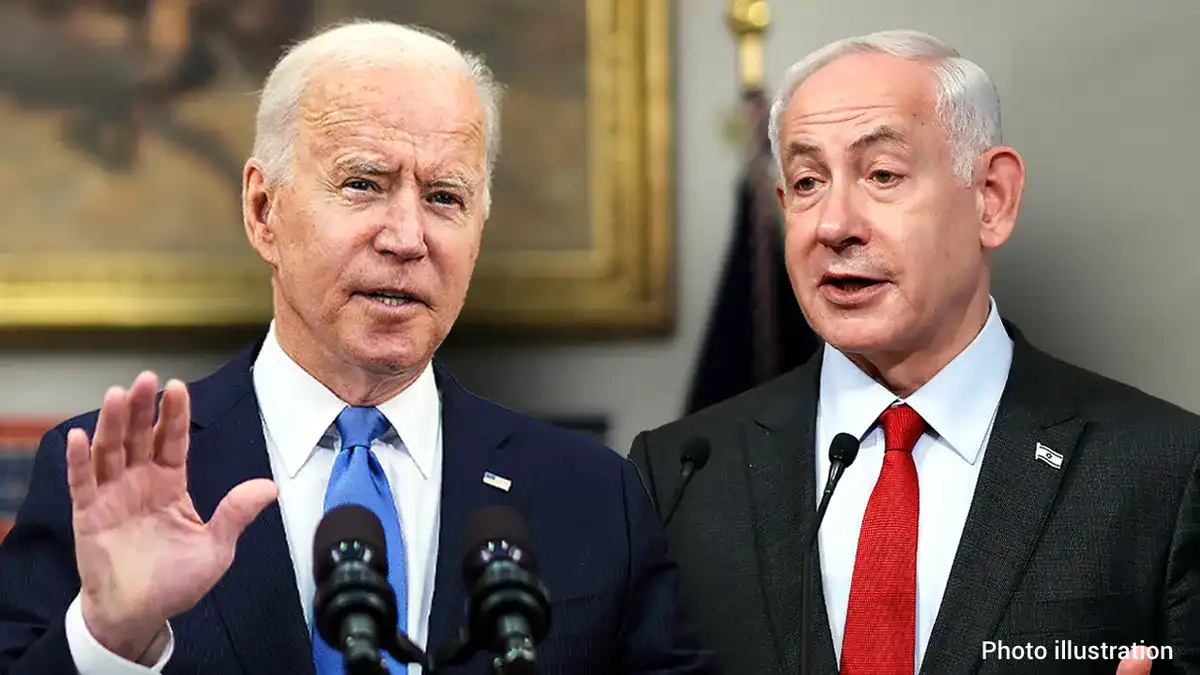
The Israeli newspaper Haaretz reported on Sunday that the administration of US President Joe Biden contacted Israeli officials and asked them to clarify what Israeli Prime Minister Benjamin Netanyahu meant when he said, “Israel will continue to have security control over the Gaza Strip.”


The newspaper said that Netanyahu kept repeating this phrase about the situation in Gaza after the end of the war several times during recent days, in a statement yesterday, Saturday, in interviews with foreign media, and in a meeting with Israeli officials.


US Secretary of State Anthony Blinken indicated this week the ultimate goal after ending the control of the Islamic Resistance Movement (Hamas) over the Gaza Strip.


Reuters quoted a senior American official as saying that Blinken informed Palestinian President Mahmoud Abbas during his meeting with him in Ramallah that the Palestinian Authority must play a pivotal role in the future of Gaza.


In a statement at a press conference last night, Netanyahu addressed the issue of the “day after” the war in Gaza, and said, “We will not agree to give up security control over Gaza under any circumstances,” adding, “The next day, Gaza will be demilitarized, and there will be no... There is another threat from the Gaza Strip to Israel."


Regarding the possibility of establishing a settlement in Gaza, Netanyahu said that he "does not believe that is a realistic goal."


Source: Israeli press

ARAB AND WORLD

Sun 12 Nov 2023 4:37 pm - Jerusalem Time

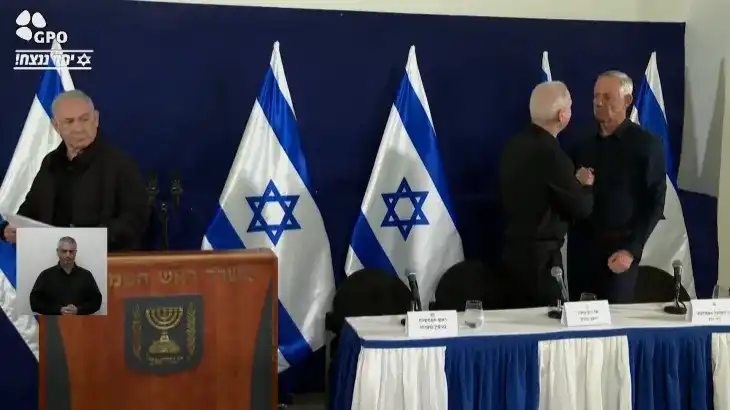
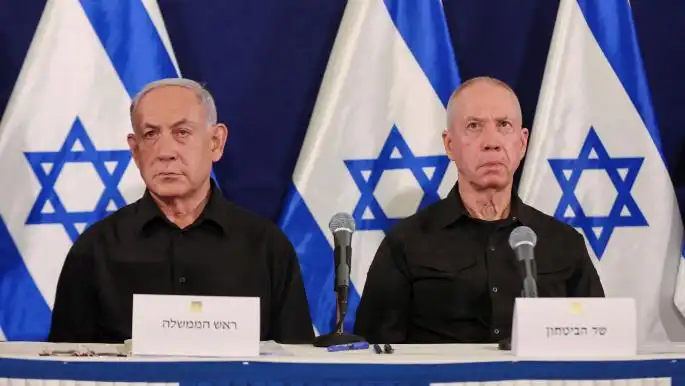
“Two against one, this is the focus of the war.” Galant and Gantz shook hands without Netanyahu

Israeli Defense Minister Yoav Gallant and War Council member Benny Gantz shook hands after a press conference in Tel Aviv, but ignored Israeli Prime Minister Benjamin Netanyahu.


The pictures showed Netanyahu collecting his papers and about to leave the stage without comment, while Israeli media commented on this shot by saying: “Two against one, this is the focus of the war.”


It is noteworthy that signs of disagreement between the pillars of the Israeli War Council appeared during the first weeks of the war on Gaza.


In a press conference late last month, the first signs of hidden disagreements came to light, when Netanyahu refrained from answering questions from Israeli journalists regarding the news that months ago, he had obtained reports from the General Security Service (Shin Bet) and Military Intelligence (Aman), warning of the increasing possibility of... War breaks out without dealing with it.


Disagreements intensified between the Prime Minister and the National Emergency Government coalition, when Netanyahu refuted Israeli reports that stated that the military establishment and intelligence services had submitted reports to his office at the beginning of this year in which they warned of the consequences of the outbreak of war on several fronts, and did not rule out the scenario of a surprise attack that might be launched by the Islamic Resistance Movement (Hamas). On the "Gaza cover".


In a tweet on his account on the X platform, Netanyahu accused the army and intelligence services of responsibility for failing to warn and prevent the events of “Black Saturday” on the seventh of last October.


His tweet was met with strong criticism from partners in the emergency government coalition and members of the “War Cabinet,” and Gantz then addressed Netanyahu, saying, “When Israel is at war, the leadership must be responsible, take the right steps, and support the army and security forces to achieve what is asked of them.”


Gantz renewed his full support for the commanders of the army, the intelligence services, and the heads of the security services, while the opposition leader, Yair Lapid - head of the “There is a Future” party - launched an attack on Netanyahu, accusing him of evading responsibility and shifting it to the military and security leaders who are waging a war against Hamas and Hezbollah, which... It prompted Netanyahu to delete his tweet, apologize for its content, and admit that he “made a mistake.”


Source: Al Jazeera.Net

OPINIONS

Sun 12 Nov 2023 4:23 pm - Jerusalem Time

Israeli Press| Nasrallah determined the balance of deterrence that is proportional to the scale of confrontation with Israel

Haaretz- "Al-Quds" dot com

Haaretz- "Al-Quds" dot com

Opinion Writer

By Zvi Barel

“Pay attention to what is happening on the field, not to what we say,” this is what Hassan Nasrallah suggested to his listeners in Israel, in the Middle East, and in Washington, at the end of a speech filled with Qur’anic verses and rhetoric, as usual, and many attacks on Israel. A week after his previous speech, the first since the beginning of the war; Nasrallah appears to have absorbed the criticism directed at him over the party's limited scope of operations against Israel, his meager commitments to "the unity of the arenas," and Hamas's disappointment.

This time, from his position as a commentator, he devoted an important part to the new term he coined, “Support Front.” He praised the Houthis' decision to use missiles and drones against Israel, and in his view, the political achievement lies in the fact that for the first time, a country outside the "axis of resistance" is actually participating in the battle against Israel. Syria, "despite its 'difficult' situation, participated by allowing party forces to operate from its territory against Israel, and the Shiite militias attacking American targets make it clear who the real enemy is, and of course, Iran, 'without which there is no resistance.'" Which finances and arms the resistance. “In the past, we hid this, but today, we talk about it with our mouths full.”

All of these things together create what he calls a “support front,” a lesser term than “empathy,” which he used in his previous speech, but without full military intervention. 


But the Palestinians in Gaza did not obtain pledges, or they felt that Nasrallah intends to change the equation he has established so far, according to which the party moves and responds to any attack on Lebanese civilians. Nasrallah, who seemed to be in the process of presenting accounts before a critical committee, went into details, and stated that for the first time, a Burkan missile had been brought into the arena; He said, "We returned to using Katyushas," helicopters, and the party's drones entered Israeli territory more than once a day...

On Friday, Iranian Foreign Minister Hossein Amir Abdollahian warned his Qatari counterpart, Mohammed bin Abdul Rahman II, by phone that “in light of the intensity of the Israeli attacks on Gaza, the expansion of the war will be inevitable.” His words were interpreted as a threat that Iran would join the battle directly. A short time later, clarification came from the Iranian ambassador to the United Nations, in an interview with CNN, in which he explained that Iran was not the one that would expand the war, and that “its expansion, simply, is not ruled out.”

It seems that so far, these are the directives guiding Hezbollah: The confrontation between Israel and the party must maintain “the borders of a specific region,” not force Iran to enter the battle itself, which could lead to a direct confrontation with the United States. This is a delicate and fragile dividing line that forces Israel and Hezbollah to engage in a battle of precise and calculated mutual responses. Iran is not the only one that wants to maintain a declared position that it is not the one dictating their steps to Hezbollah or Hamas. Rather, the United States also wants to remain on the “support front” and hold Israel’s hand firmly so as not to drag it into a regional confrontation.

Thus, a new and more extensive deterrence equation emerged. It is not limited to the borders between Israel and Lebanon, and between the Israeli army and Hezbollah. Rather, it pits the most powerful superpower in the world against Iran over a problem that should never have concerned Washington. The potential confrontation was planned only if Iran possessed a nuclear weapon, and not because of the development of a local conflict, no matter how tragic and cruel.

Saudi Arabia is trying to curb the conventional Iranian threat that could spark a regional war. The emergency Arab-Islamic summit, which was held in Riyadh yesterday, played an important role in advancing this endeavor. For the Palestinians, the summit is useless. Dozens of such summits have been held in the past and were subject to severe criticism for “Arab impotence.”

The fact that this summit was held a month after the war indicates the gap between apparent solidarity and willingness to take practical steps, and this is not new. Initially, it was planned to hold two summits, one for the Arab League countries, and then a summit of Islamic countries. In a wise move, Saudi Crown Prince Mohammed bin Salman decided to combine the two summits into one summit, which was attended for the first time, since the resumption of relations between Saudi Arabia and Iran, by Iranian President Ibrahim Raisi, whose speech, as was expected, was full of condemnations of Israel and the United States, and included far-reaching demands. , such as boycotting Israel and arming the “resistance,” but Saudi sponsorship and the position presented by Crown Prince Bin Salman in his short speech are supposed to bind Iran, which is employing intense diplomatic efforts to restore its relations with the Arab countries in the region.

The decisions taken by the summit included 31 items, including demanding an immediate ceasefire, stopping arms shipments to Israel, calling on the Security Council to condemn the destruction of hospitals in the Gaza Strip, lifting the siege and opening humanitarian aid channels, and turning to the international community to work to stop the war and release all prisoners. detainees and civilians, and other provisions relating to the international legal treatment of “war crimes” committed by Israel.

The resolutions also included two important clauses that talk about a future political solution: Clause 28, which stresses that the Palestine Liberation Organization is the only legitimate representative of the Palestinian people, and that all other Palestinian factions must unite within its framework, and Clause 30, which calls for holding an international peace conference in “Soon." This means that "Hamas" and the other resistance movements do not represent the Palestinians. It is true that this clause is not new and was previously adopted 50 years ago, but at a time when "Hamas" is waging a war against Israel, this clause seems important because it ignores its existence. 


In any case, Bin Salman, along with the leaders of Egypt, Qatar, and Jordan, succeeded in preventing important practical decisions. No to boycott Israel, nor to prevent Israeli aircraft from crossing the skies of Arab countries, nor to call on Arab countries and others to sever their relations with Israel. The request was previously discussed in the meetings of Arab foreign ministers before the summit. These demands do not only seek to reconcile the Arab and Islamic poles, but also between what the United States can accept and the hard-line positions presented by the leaders of some Arab countries. 

Iran will be forced to make its decision: will it be satisfied with the common denominator presented by the summit, under the inspiration of Bin Salman, or will it move independently, after recording a political achievement through its attendance at an Arab forum, and not just an Islamic one?


PALESTINE

Sun 12 Nov 2023 4:05 pm - Jerusalem Time

Netanyahu: We will control Gaza, and the Palestinian Authority will not return to it after the war

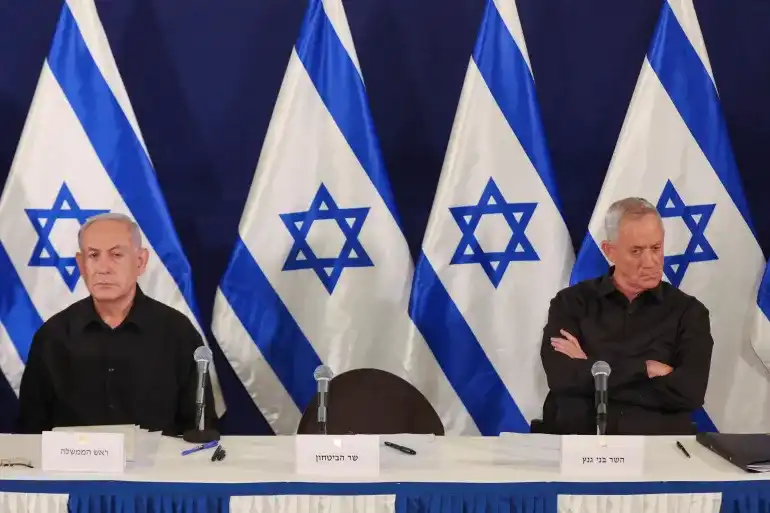
The Prime Minister of the Israeli occupation government, Benjamin Netanyahu, confirmed on Saturday night in a joint conference, with Defense Minister Yoav Galant and Minister of the “War Cabinet” Benny Gantz, that the Palestinian Authority will not return to the Gaza Strip at the end of the war, while the Israeli Minister of Defense, Yoav Galant, threatened Lebanese Hezbollah to attack Beirut.


During a press conference for the Israeli War Council, Netanyahu said: “We will not stop until we complete the mission. The war against Hamas is progressing with full force and its only goal is victory and nothing but victory. We will eliminate Hamas and return the kidnappers.”


Netanyahu claimed that the occupation army had completed the encirclement of Gaza City and killed thousands of resistance fighters, including those who participated in the “Al-Aqsa Flood” operation on October 7, which was carried out by the Palestinian resistance in response to the occupation’s crimes and violations.


He also claimed that "Hamas has lost control over the northern Gaza Strip and there is no place for Yahya Al-Sinwar (Hamas leader in the Gaza Strip) and even the last gunman to hide. They will all die. Our forces are striking them from above the ground and from under the ground, and we will continue with all force until victory," as he put it. .


Regarding the war on the Lebanese front, Netanyahu said: “We are also ready on the northern front, and I warned Hezbollah not to make a mistake and enter the war, because this will be the mistake of their lives and they will decide the fate of Lebanon.”


Regarding the prisoners, Netanyahu spoke of “daily sessions” to discuss this file in the cabinet, before saying that “there will be no ceasefire without the return of our kidnappers. When we have something to say, we will inform the families and bring it to the government table, and until then it is better to remain silent.” .


Netanyahu also addressed the Americans, saying: “You also enlisted for our primary goal, which is to eliminate the Hamas movement, and this is your goal as well, and most of the American public supports us (..) From time to time there are disagreements. I tell them, our war is your war as well, and in this war we must win by “For our sake, but also for your sake.”


While he said that “there is no global pressure that will undermine our work in defending ourselves,” he announced that “Gaza will be a demilitarized Gaza,” and that “the Israeli army will continue to have security control over the Gaza Strip,” claiming that “the events of October 7 (the Al-Aqsa flood) “It has proven conclusively that we must not compromise security control under any circumstances,” he said.


Regarding what he means by security control, Netanyahu said that this means “that we enter whenever we want in order to kill those who pose a threat to Israeli security.”


He added: "What we can pledge is that there will not be Hamas that can enter and kill the Israelis, nor will there be a (Palestinian) authority, and there cannot be an authority headed by a president who has not, to this day, denounced what happened on October 7."

Source: Al-Araby Al-Jadeed


ARAB AND WORLD

Sun 12 Nov 2023 4:03 pm - Jerusalem Time

Netanyahu seeks to appoint Tony Blair as coordinator of the Gaza Strip

Israel has been holding talks for two weeks, in an attempt to reach the appointment of former British Prime Minister Tony Blair to the position of coordinator of humanitarian operations in the Gaza Strip.


The Yedioth Ahronoth website, which reported the news on Sunday, reported that the exact definition of the position is not yet clear, but it is clear that it will deal with the worsening humanitarian situation in the Gaza Strip, with a focus on health conditions and the possibility of wounded and sick Palestinians leaving the Strip.


The website quoted an unnamed senior Israeli official as saying that Prime Minister Benjamin Netanyahu is interested in appointing Blair, who worked for years as a special envoy for the international Quartet for peace in the Middle East, which includes the United Nations, the European Union, the United States and Russia, and that the Quartet office is aware of the communications.


Blair served as British Prime Minister from 1997 to 2007. Blair played a prominent role in involving Britain in the Afghanistan war alongside the United States. He was also enthusiastic about the invasion of Iraq in 2003, and always defended military action in the region.

source: AlAraby Al-Jadeed


PALESTINE

Sun 12 Nov 2023 3:51 pm - Jerusalem Time

With items related to prisoners and fuel... "Israeli" reports about a possible hostage agreement

Reuters reported on Sunday that some progress had been made towards reaching an agreement to release people held by Hamas in Gaza, citing the three main television news channels in Israel on Sunday.


Israeli Prime Minister Benjamin Netanyahu said he would not discuss the details of any potential agreement, which according to Channel 12 News, would include the release of between 50 and 100 women, children and elderly people in phases during a three- to five-day cessation of fighting.


According to reports on news channels, whose sources were not mentioned, Israel will release Palestinian women and minors from its prisons, and will consider allowing fuel into Gaza, while reserving the right to resume fighting after the agreement.


Reuters quoted an Israeli army spokesman as saying, "Multiple efforts are being made to release detainees in Gaza."


For the second week in a row, thousands of demonstrators gathered, on Saturday evening, in front of the central military headquarters in Tel Aviv to express their frustration with the Israeli government’s management of the file of the kidnapped hostages in Gaza, and to urge it to work to release them immediately.


The demonstrators carried pictures of the kidnapped people and listened to speeches given by their family members, in the largest mass gathering in Israel since the Hamas attack on October 7, which resulted in the killing of about 1,200 people, most of them civilians, in addition to the kidnapping of 239 people, including children, women, and soldiers.


So far, Hamas has released four kidnappers, and Israeli forces rescued another hostage.


Israeli forces, locked in a war to eliminate Hamas after its deadly cross-border attack on October 7, clashed with Hamas militants throughout the night in and around Gaza City where Shifa Hospital, the largest hospital in Gaza, is located, Gaza residents said.


PALESTINE

Sun 12 Nov 2023 3:42 pm - Jerusalem Time

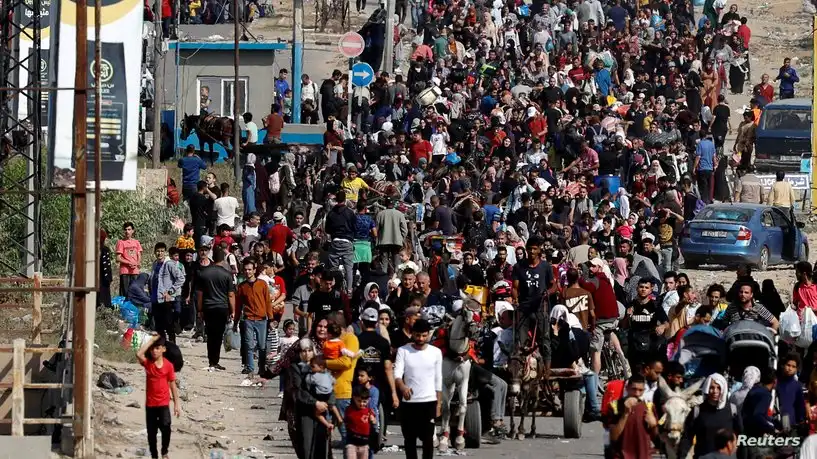
After the incursion into Gaza.. an Israeli minister talks about the “Nakba of 2023”

An Israeli minister described the displacement of Gaza Strip residents to the south as similar to the "Nakba", referring to the mass exodus during the war that accompanied the establishment of the State of Israel in 1948.


In response to a question whether the scenes of the exodus of Palestinians from northern Gaza resemble the “Nakba,” Security Cabinet member and Minister of Agriculture, Avi Dichter, said that this is the case, adding: “From a practical point of view, there is no way to wage war in the way that the army seeks.” "The Israelis will not do it in Gaza with a large population of people among tanks and soldiers," according to his statements reported by Haaretz newspaper.


When asked again if this was the “Gaza Nakba,” Dichter, who previously ran the Shin Bet, said: “It will be the Gaza Nakba of 2023. This is how it will end.”


When asked again whether Gaza City residents would be allowed to return, he replied: “I don’t know how it will end since Gaza City represents a third of the Strip, half the population but a third of the territory.”


On Saturday, Israeli Prime Minister Benjamin Netanyahu confirmed that after the war, which is now entering its sixth week, the Gaza Strip will be disarmed, and Israel will maintain security control there.


In response to a question about what he meant by security control, Netanyahu said that Israeli forces should be able to enter Gaza when necessary to pursue militants.


With the presence of Israeli forces deep in Gaza about two weeks after the start of a ground operation there to eliminate Hamas militants, speculation is increasing about what the future of the Strip may look like after the end of the fighting.


The United States says that the Palestinians should take over the management of Gaza's affairs after the war, but how to implement this successfully on the ground is still unclear.


At the end of last October, US Secretary of State Anthony Blinken considered that the Palestinian Authority, led by Mahmoud Abbas, must regain control of the Gaza Strip when the war ends, and that other international parties could also play a role during a transitional period.

Source: Alhurra

ARAB AND WORLD

Sun 12 Nov 2023 3:38 pm - Jerusalem Time

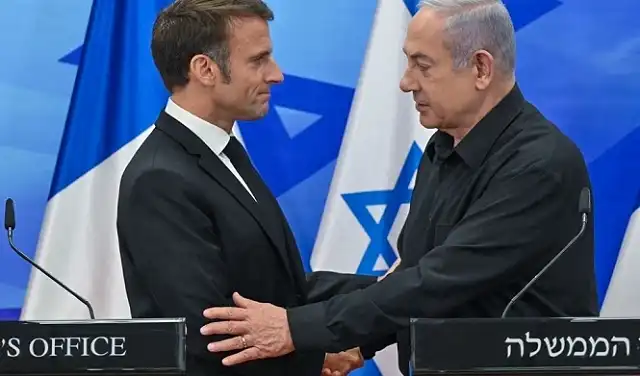
French official: Macron has not changed his position in support of Israel during the war on Gaza

The French official’s statements come against the backdrop of Netanyahu’s criticism of Macron: “Israel can and must do more to refrain from targeting Palestinian civilians in Gaza,” and Macron remains “steadfast in his support for Israel since the first day of the war.”


A French political official said that he rejects criticism directed by Israeli Prime Minister Benjamin Netanyahu to French President Emmanuel Macron, who called on Israel to stop killing women and children in the Gaza Strip, while Netanyahu considered that Macron “is committing a catastrophic mistake in this matter, in terms of facts and morally as well”.


The French official indicated that Macron “has not changed his position” regarding the war launched by Israel on Gaza, considering it a war against the Hamas movement, and that the French President believes that “Israel can and must do more to refrain from targeting Palestinian civilians in Gaza,” as reported in Haaretz newspaper today, Sunday.


The French official added that a humanitarian truce must be followed by a ceasefire in order to allow the transfer of aid to the citizens of Gaza in parallel with the liberation of Israeli prisoners held by Hamas.


The French official continued that Macron remains "solid in his support for Israel since the first day of the war," and that during the Hamas attack, on October 7, 40 French citizens were killed and that the movement captured eight others or they are described as missing, "and France is a partner in Israel's mourning and pain."


He said that Macron was "the first international leader to propose forming an international coalition, similar to the one that fought ISIS, through security coordination and intelligence cooperation against regional terrorist organizations." He added, "Macron reiterated that Israel will not be alone in the fight against terrorism," and that Macron believes that "a political initiative is a necessity in order to create long-term stability."


The French official added that Macron believes that Israel must respect international law, and that “its right to defend itself does not exist without laws. The French president does not believe that Israeli forces are deliberately targeting civilians. He is aware of Israel’s efforts to refrain from significant harm and allow humanitarian corridors.” But he believes that more can be done about the difficult humanitarian situation among the civilian population in Gaza.”


He added that from Macron's point of view, "humanitarian truces and then a ceasefire will allow the transfer of much-needed aid to the civilian population in Gaza."


PALESTINE

Sun 12 Nov 2023 3:23 pm - Jerusalem Time

Gaza Ambulance Director: The Strip is on the verge of famine, and this may be our last message

The Director of Ambulance and Emergency in Gaza sent an appeal to the world through a message that he said might be the last, before being cut off from the outside world, in light of the intense attacks and ongoing raids on the Gaza Strip, targeting civilian facilities and health facilities.


Muhammad Abu Musabah said that the Gaza Strip is on the verge of famine, and the Israeli targeting is affecting the basic necessities of life. He added that the targeting of schools and headquarters housing displaced persons is a very dangerous and disturbing indicator, and that the international silence has encouraged the Israeli occupation forces to continue targeting civilians and protected groups in Gaza.


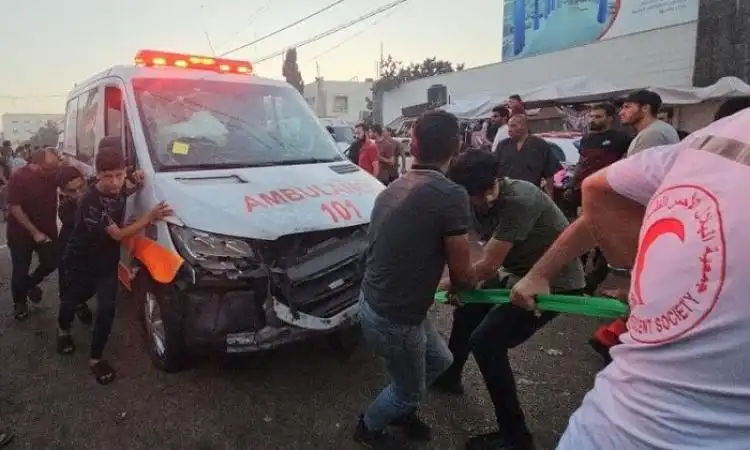
Abu Musabih - who is also the spokesman for the Palestinian Red Crescent - also announced that Al-Quds Hospital was out of service due to running out of fuel and a power outage. It has been under siege for a week and Israeli tanks are about 20 meters away from it.


Abu Musabih said, "This may be our last message, and we may soon be cut off from communication with the outside world."


Doctors Without Borders warned - earlier today, Sunday - that if the bloodshed does not stop immediately through a ceasefire or the minimum evacuation of patients, these hospitals will become morgues.


In a related context, activists circulated on social media a video clip of a doctor in Britain collapsing while reading an emergency message from the director of Al-Shifa Hospital in Gaza, where health care workers gathered in front of the Prime Minister’s office in London, raising banners bearing the names of more than 200 doctors. They have been martyred so far.

PALESTINE

Sun 12 Nov 2023 2:50 pm - Jerusalem Time

In a systematic escalation: Israeli settlers demand the erasure of Hawara, as is happening in the Gaza Strip

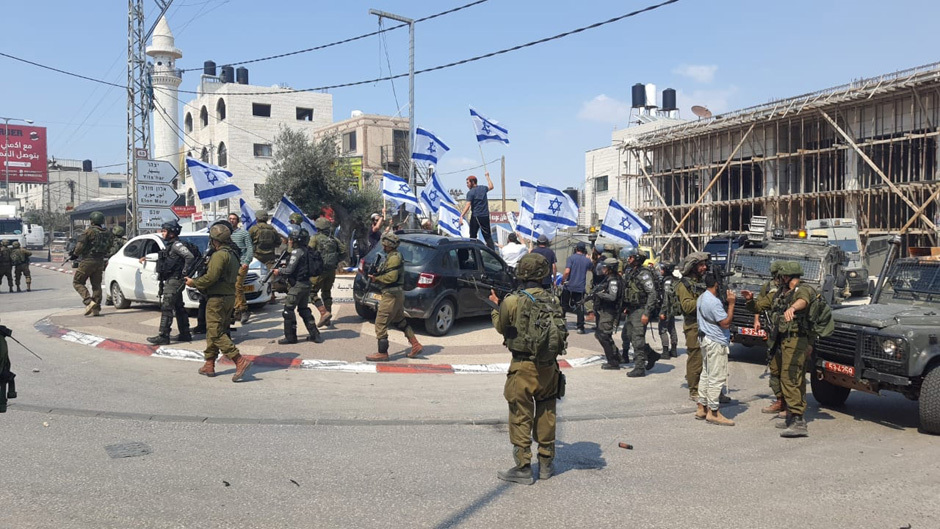
Today, Sunday, settlers demanded that the Israeli occupation government erase the town of Huwara, south of Nablus, as they do in the Gaza Strip, and not allow shops to open their doors on the main Huwara Street.


During their provocative march on the Huwara Bypass Street, south of Nablus, the settlers confirmed that they would continue to pass through the main Huwara Street, despite the occupation’s construction of the Huwara Bypass Street, which will be opened this week.


It is noteworthy that the main Huwara Street has been closed for about a month and a half, and vehicles bearing Palestinian license plates are not allowed to pass, not even citizens on the main street, and any citizen who violates this is attacked.


These extremist calls come within a systematic policy that seeks to disturb the conditions of citizens in Huwwara, which are exposed on a daily basis to continuous violations by the occupation and its colonialists.


It is noteworthy that the Minister of Finance in the extremist occupation government, Bezalel Smotrich, called last March for the town of Huwwara to be wiped out of existence.

PALESTINE

Sun 12 Nov 2023 2:21 pm - Jerusalem Time

Israeli courts sentence the youngest female Palestinian prisoner to 12 years in prison

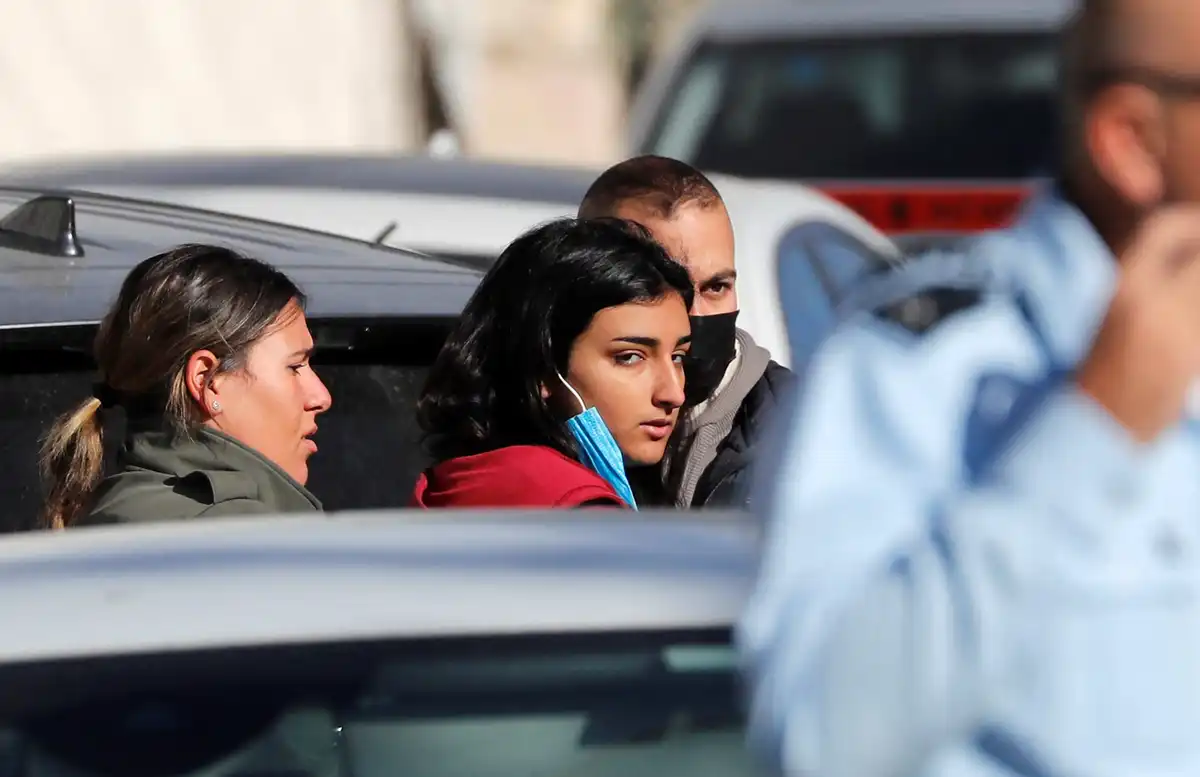
Today, Sunday, the Israeli occupation court issued a 12-year prison sentence and a fine of 50,000 shekels against the detained child, Nofoze Hammad (16 years old), from the city of Jerusalem.


The Prisoner's Club reported that the detainee, Hammad, from the Sheikh Jarrah neighborhood of the city, is considered the youngest detainee in the occupation prisons, as she was arrested on December 8, 2021, and was subjected to a harsh and long interrogation, and is languishing in "Damoun" prison.


OPINIONS

Sun 12 Nov 2023 2:14 pm - Jerusalem Time

The Emotional Storm We are Living Through

Gershon Baskin

Gershon Baskin

Opinion Writer

We are all completely overwhelmed in a storm of emotions – pain, anger, fear, we watch suffering every day and we are flooded with the stories of the victims. Tears fill our eyes and we are wrenching with heartbreak every time we turn on the television. There is no escape, even one month since it all began on October 7. 


Unlike most Israelis and Palestinians, I get it from both sides. I am watching the death and destruction on all of the Israeli channels, but I am also watching several Palestinian channels.  We all know people who have been killed or who are hostages now. We are all traumatized by what has happened since October 7. 

For Israelis, we are thrown back 90 years to the horrors of the Holocaust.  October 7 was not a holocaust, but more Jews were killed at one time in one place since the holocaust and perhaps even more than that, on October 7 we lost our sense of security. 


The State of Israel failed in its primary function to provide us with security, and the State failed us. So many people cried for help, and it did not come and they were butchered and abducted by an enemy so much weaker than the mighty Israeli army. Palestinians have been taken back 75 years. The Nakba is happening once again and not only in Gaza. Israeli settler and military violence against Palestinians in the West Bank has rocketed since October 7 with 128 killed in there and more than 9,000 Palestinians are dead in Gaza and about 1.5 million Palestinians in Gaza have become homeless once again. Human tragedy is all around us. Most of us can only see the death and destruction on our own side, but it is happening all around us. 

When this war is over, Israelis and Palestinians are going to remain on this narrow land and we will once again have to face each other – eye to eye and maybe after all of this trauma our eyes will hopefully also see the humanity on the other side.


Like everyone, I want this war to end. Like almost every Israeli, and a lot of Palestinians that I know (in Gaza and in the West Bank), I want to Hamas to be dismantled from its ability to ever govern Gaza and threaten Israel again. I want the people of Gaza to be free from the strangle hold that Hamas had on their lives since 2006.  

I want all of the hostages to be freed immediately.  Hamas must free the babies, children, women, elderly, sick and wounded – even without a deal because that is what their holy book the Holy Quran instructs them to do.  They should never have been taken hostage, and killing women, children and elderly is explicated Haram – forbidden in Islam, even in the distorted version of Islam espoused by Hamas. 


I want there to be a ceasefire in Gaza to enable the innocent victims of this war to be able to get food, water, medical supplies and treatment, a roof above their heads, but I am very sorry to say that I don’t think that a ceasefire should be granted without the release of hostages. I want humanitarian aid to enter Gaza and I think that Israel should even allow it to enter from the Israeli side at Kerem Shalom, but I want hostages to be released first. It truly pains me to write this. I have friends in Gaza who are really suffering. 


I have friends who have lost their homes and everything they own and they are on the streets and they are writing me that they are hungry.  My heart is breaking for them. But Hamas must first release hostages – at least the infants, children, woman, elderly and sick. The world and the people in Gaza must cry out for Hamas to do this. Ceasefire yes! As soon as possible. Humanitarian aid – Yes! As soon as possible and as much as possible.  Releasing hostages – immediately, without delay comes before everything else. 


Eventually, soon, Israel will enter the tunnels. That is where everyone believes the hostages are being kept. They are not all together and the web of tunnels is enormous and every meter of the city that Hamas has built underground is a mortal danger for the soldiers who will enter. I assume that the Israeli army has detailed plans on how to minimize the danger to the soldiers. 

They will use technology, robots, explosives, maybe they will try to smoke out the Hamas commanders and leaders and armed militants. Maybe they will be able to cut off the flow of fresh air into the tunnels. But if the hostages are not released or freed by then, they will be in harms way. This must not happen. Israel has a moral responsibility to bring all of the hostages home alive. 

Israel failed to protect these citizens and Israel must bring them home. Every means in Israel’s toolbox is legitimate to pressure Hamas to release hostages, including sticks and carrots. Israel should state that it is prepared to open another corridor for humanitarian aid to end Gaza, through Kerem Shalom, but only once hostages are freed – especially the infants, children, women, elderly, sick and wounded. 
 

When Hamas negotiated with Israel on the Schalit deal they insisted first that Israel release all of the Palestinian women prisoners in Israeli jails, regardless of what they did that put them in prison. The final number of prisoners released in the deal was 1027.  The initial agreement was for 1000, but after the two sides agreed on the list of 1000, days before the return of Schalit, it was discovered that 27 women prisoners remained in prison that were not included on the list, so rather than argue and risk the deal falling through, Israel added the additional 27 women.  

Now it is Israel’s turn to make demands. There are no women soldiers – there are only women, and all of the women hostages must be included in the humanitarian return of the hostages.  No exceptions. If the “all for all” deal of all of the hostages for all of the Palestinian prisoners is not being considered and the sides are focusing on a partial deal, there are 43 Palestinian women prisoners and 190 Palestinian minors in prison (from before October 7). These could be considered as part of the deal.  

They are all from the West Bank, none of them are important Hamas people, and I believe that there are none who have killed Israelis. It is clear that when a release will be accepted and organized there will be a temporary ceasefire to enable the hostages to be sent home and perhaps some Palestinian prisoners released. 
 

If a partial deal is done and Israeli soldiers are left behind in the tunnels, negotiations could continue until Israelis forces enter the tunnels. Negotiations are taking place in what appears to be three tracks. Egypt and Qatar and a possible third track that may be working (I cannot give details). Hamas is likely to demand the release of all of the Palestinians in Israeli jails.  The number is around 7000 including at least 130 terrorists who committed the brutal crimes inside of Israel on October 7.  

There are another 559 who were sentenced to life imprisonment, and many of those with multiple life sentences. Around 25% of the prisoners are members of Hamas. More than 2000 of them are administrative detainees, meaning that they were arrested without charge and incarcerated without conviction.  The overwhelming majority of the prisoners are from the West Bank, not from Gaza. 

There are two major questions probably being discussed, if this option is on the table – will they be released in one release? This is crucial because if Hamas is planning to release them in stages, it is probably a deal-breaker for Israel.  The second question is to where would they be released?  To their homes?  Unlikely. To Gaza, perhaps. To Iran – maybe the 559 serving life sentences? Will Israeli pursue them after they are released?  I would say most definitely.  Every person who was connected to the abduction and captivity of Gilad Schalit is no longer living. 

I think it would be safe to assume that every person who is connected to the abduction and captivity of all of the Israeli hostages will find the same fate as will those who committed the horrific acts of terrorism on October 7. 


The last issue I would like to discuss is can Hamas be eliminated and defeated? From a military point of view, Hamas can be destroyed – more precisely the ability of Hamas to govern Gaza and to threaten Israel in anyway is possible.  Israel can kill all of the Hamas leaders in Gaza, the military commanders and most of the Hamas fighters. Israel can destroy the Hamas infrastructure, their offices and command centers, most or all of the tunnels, their stockpile of weapons and rockets and the shops and factories where weapons were manufactured. Israel cannot destroy the idea of Hamas or its ideology. 

The only way to destroy an idea or an ideology is with better ideas and better ideologies. The post-war scenario of rehabilitation and reconstruction of Gaza after Israel turns the territory over to what I hope will be a multi-national Arab force led by Egypt, Jordan, Saudi Arabia, UAE, Bahrain and perhaps others (with a limited but detailed mandate), must include deep political reform in the Palestinian Authority with elections in which only political parties that support the two-states solution and a non-militarized Palestinian state in the West Bank, Gaza and East Jerusalem would be allowed to participate. 

In order for that to happen, the international community must get serious about peacemaking and commit itself to the two-states solution that they have put back on the agenda this past month. That commitment must include the recognition of the State of Palestine (if two states then both have to be recognized) and Palestine must be allowed to be a full member of the United Nations. Of course, we are going to need completely new leaders in Israel and Palestine to achieve this.


Replacing a bad ideology with a good one means that the distorted interpretation of Islam as espoused by Hamas which sanctifies death must be replaced with a powerful Islamic theology that sanctifies life. It is about time that the Palestinian people invest themselves in living for Palestine rather than dying for Palestine. There are voices within the Islamic world, in Palestine as well which preach the message of Peace as a central philosophy of what Islam is about. Those voices need to be heard loud and clear. 

But that will only happen once there are voices in Israel which speak loudly and clearly about the right of the Palestinian people for freedom, liberation, and self-determination. Both sides will have to make many painful compromises and it will take many years to build any kind of trust between the two sides. The regional states that surround Israel and Palestine – Egypt, Jordan, Saudi Arabia, UAE, Bahrain, and even far away Morocco have a key role to play in helping to build that trust.   


We need regional agreements for security, economic development, water, energy, border management, peace keeping, and more. We need the international community led by the United States to be fully onboard to assure us all that we have the resources to have a restart which will enable us to begin to look forward, and not only backwards as we have done for 100 years. 

Neither side should have the notion that they have more rights than the other side. In order for us to have that restart, it must begin by accepting the principle that everyone living between the River and the Sea has the same right to the same right.  This is where our new beginning can take its first steps – and it must begin there. 


PALESTINE

Sun 12 Nov 2023 2:13 pm - Jerusalem Time

Israeli settlers uproot dozens of perennial olive trees west of Salfit

Today, Sunday, settlers uprooted dozens of perennial olive trees in the town of Kafr al-Dik, west of Salfit.


According to local sources, settlers uprooted about 70 old olive trees from his land, which has an area of 20 dunums, located in the “Khallet Abu Mazhar” area, west of the town, adjacent to the “Ali Zahav and Leshem” settlers, which are established on citizens’ lands.


The town has witnessed an escalation in attacks by the Israeli occupation forces and settler gangs recently, with the aim of seizing more lands for the benefit of settlement expansion.

PALESTINE

Sun 12 Nov 2023 2:09 pm - Jerusalem Time

Palestine Minister of Health reveals atrocities occurring inside the Shifa Medical Complex in Gaza

The Palestinian Minister of Health, Dr. Mai Al-Kaila talked about the atrocities occurring in hospitals in the Gaza Strip, especially Al-Shifa Medical Complex.


Minister Alkaila added in a press statement, today, Sunday, that the Israeli occupation army does not evacuate hospitals, but rather throws the wounded and sick into the street to certain death, and “this is not an evacuation, but an expulsion at gunpoint.”


She added that there is a catastrophe happening in hospitals, namely patients who are now dying without receiving their treatments, such as children and adults on dialysis who die in their homes without receiving dialysis sessions.


The Minister of Health confirmed the death of 12 patients inside Al-Shifa Medical Complex, so far, due to the outage of electricity and medical consumables, including two newborn children.


She said that all 3,000 oncology patients who were being treated in Al-Rantisi and Al-Turki Hospital have now been left to die, after the occupation expelled them from the hospitals.


The Minister of Health confirmed that all pregnant women and those with dangerous pregnancies are at risk, as women do not find anyone to provide them with treatment and medical services in Gaza. Every woman about to give birth will not find anyone to provide her with any medical service.


She explained that the sick and wounded cannot reach Al-Shifa Medical Complex, and many of them lost their lives either as they were bleeding or because they did not receive their necessary medications and treatments.


The Minister of Health confirmed that the medical staff inside Al-Shifa Hospital cannot move between the departments and buildings of the medical complex, as a drone fires at everyone who moves inside the complex.


She continued: Another danger that threatens the lives of patients and threatens the occurrence of a health catastrophe, which is the inability of medical teams to bury 100 martyrs whose bodies began to decompose in the hospital courtyard and that stray dogs mauled some of them, according to the testimonies of the medical staff present there, in addition to the medical waste accumulated inside the departments.


The Minister of Health said: Patients were injured again while on Al-Shifa beds as a result of the occupation’s bombing of the medical complex, which affected water wells, oxygen stations, the complex’s gate, and other facilities, while the blood stock inside the departments was spoiled due to a power outage, as medical teams were no longer able to administer units. Blood for the sick and wounded who are bleeding.


She pointed out that the wounded, sick, and medical teams do not find anything to eat in addition to all that they are suffering, and that water is cut off in the complex.


She stressed that the solution now is to supply the medical complex with electricity, medical consumables, medicines and fuel, or to safely evacuate patients for treatment in the Arab Republic of Egypt, as the Gaza Strip’s hospitals are no longer able to receive more wounded.

PALESTINE

Sun 12 Nov 2023 12:48 pm - Jerusalem Time

Israeli settlers gather near the village of Kisan, south of Bethlehem

Today, Sunday, a number of settlers gathered on citizens’ lands near the village of Kisan, east of Bethlehem.


According to local sources, settlers from "Gush Etzion" gathered on the settlement road called "Route 60" linking the city of Jerusalem and the Hebron Governorate, raising Israeli flags.


In a related context, the occupation forces stormed the town of Beit Fajjar, south of Bethlehem, and stationed themselves in the “Jabal al-Manzala” area adjacent to the “Migdal Oz” resistance colony on citizens’ lands. They initiated a thorough inspection campaign, and also raided the house of citizen Ali Thawabta and climbed onto its roof.


PALESTINE

Sun 12 Nov 2023 12:34 pm - Jerusalem Time

Gaza: Al-Quds Hospital is out of service due to running out of fuel and a power outage

The Palestine Red Crescent Society announced today, Sunday, that Al-Quds Hospital in Gaza has been out of service due to running out of fuel and a power outage.


Mai Al-Kaila, Palestinian Minister of Health, said yesterday that the Israeli occupation forces are bombing hospitals, besieging and killing those inside them, cutting off water, fuel, and electricity, and preventing medical supplies from reaching them, according to what the Arab World News Agency reported.


Earlier today, the spokesman for the Ministry of Health in Gaza, Ashraf Al-Qudra, said that Al-Shifa Hospital in the northern Gaza Strip is unable to provide any medical service, after all its capabilities had been exhausted, electricity had been completely cut off, and the complex had been surrounded by Israeli tanks.


Al-Qudra added that the situation around the hospital is a war zone. Pointing out that the conditions that patients live in in the complex “cannot be described.”


He added: “The bodies are piled up in and in front of Al-Shifa Hospital, and there is no one to bury them.”


The Ministry of Health spokesman stated that the hospital is witnessing successive announcements of new deaths, as a result of the inability to perform surgical operations or even provide oxygen to those who need it, or provide heating in children’s incubators.


He said that the Israeli army was “firing towards any object that could move” in the vicinity of the hospital, according to the Arab World News Agency.


He explained that international institutions working in the health field, such as the World Health Organization and the Red Cross, as well as the United Nations Relief and Works Agency for Refugees (UNRWA), “are all unable to do anything, and have lost their ability to work.”

PALESTINE

Sun 12 Nov 2023 12:22 pm - Jerusalem Time

A Call on international institutions to go to Al-Shifa Hospital to protect it and those inside it

The Government Media Office called on all international institutions in the Gaza Strip, without exception, to immediately go to Al-Shifa Medical Complex in order to protect it and the medical teams and everyone inside it, as it is being subjected to siege, targeting, and killing in a clear war crime.


In a statement today, Sunday, the office held the Israeli occupation and the international community, especially the United States of America, fully responsible for this ongoing crime and for the lives and safety of all medical staff, the wounded, the sick, and the displaced inside the Shifa Medical Complex.


We salute all the medical teams for their heroic, brave and legendary role and for carrying out their historic national role towards our great Palestinian people.


He stressed that the occupation is committing an organized crime against Al-Shifa Medical Complex and then spreading false information.


He said: Israel continues to commit an organized crime that was planned in advance against the Al-Shifa Medical Complex, which includes hundreds of wounded, displaced people, and medical teams, in front of the world.


He pointed out that the Israeli occupation is besieging Al-Shifa Medical Complex, and deploying many drones in the airspace of the complex, and these drones are firing intensely inside the hospital’s courtyards at everyone who moves inside, which led to the injury of a number of those inside.


He stated that one of the displaced families tried yesterday to take the risk and leave the Shifa complex in the hope of surviving, but the occupation army bombed this family, which led to their death.


He also pointed out that after the power outage in Al-Shifa Complex, one of the workers wanted to inspect the electric generator to operate it and save the lives of dozens of patients living on ventilators, but the occupation army targeted him and shot him directly, wounding him in the neck.


He confirmed that many injuries were bleeding inside the Shifa Medical Complex as a result of being hit by gunfire from occupation drones in the complex’s courtyards, and medical teams were unable to save these cases due to the occupation army’s siege of the complex and the teams’ inability to move between the internal buildings.


He refuted what one of the occupation army officials said in a video message yesterday in which he claimed that they were not targeting Al-Shifa Medical Complex and that what was published in the media in this regard was merely a “lie.”


Al-Ban asked: Who are the drones that shoot at everyone who moves in Al-Shifa Medical Hospital for? Who is the army that bombed one of the families who left the Shifa Medical Complex yesterday and killed them as martyrs?


He added, wondering: Who is the army that shoots at everyone who moves inside the Shifa Medical Complex? Who is the army that bombed the fifth floor of the Shifa Medical Complex? Who is the army that bombed the outpatient clinic in the Shifa Complex, causing many martyrs and wounded, and who is the army that fired shells in the courtyard of the Shifa Complex, near the journalists’ tent, and injured a number of those present there?


He stressed that the occupation army is carrying out massacres and crimes in an organized, thoughtful and pre-planned manner, and is currently preparing and planning to commit a new massacre in the Shifa Medical Complex, and then after that practices lies, spreads fake news, fabricates stories that have no basis in truth, and says that it does not target the hospital, and this If this indicates, it indicates the failure of his narrative and its lie in the face of the facts on the ground.