PALESTINE

Wed 07 May 2025 12:00 pm - Jerusalem Time

Israeli occupation begins demolitions, seizures, and bulldozing operations in the West Bank and Jerusalem.

Today, Wednesday, the Israeli occupation forces began demolitions, seizures, and bulldozing operations in various areas of the West Bank and occupied Jerusalem.


In occupied Jerusalem, occupation forces demolished a horse stable in the town of Issawiya.


Eyewitnesses reported that occupation forces stormed the town, deployed throughout it, and demolished a horse stable.


In Qalqilya, Munif Nazzal, the official in charge of the settlement file in Qalqilya, said that the occupation authorities issued a decision to seize approximately one dunam and 965 square meters of land from the villages of Saniriya and Mas'ha, south of Qalqilya, in preparation for the construction of six new colonial units for the "Sha'arei Tikva" colonial outpost, which is built on citizens' land in the governorate.


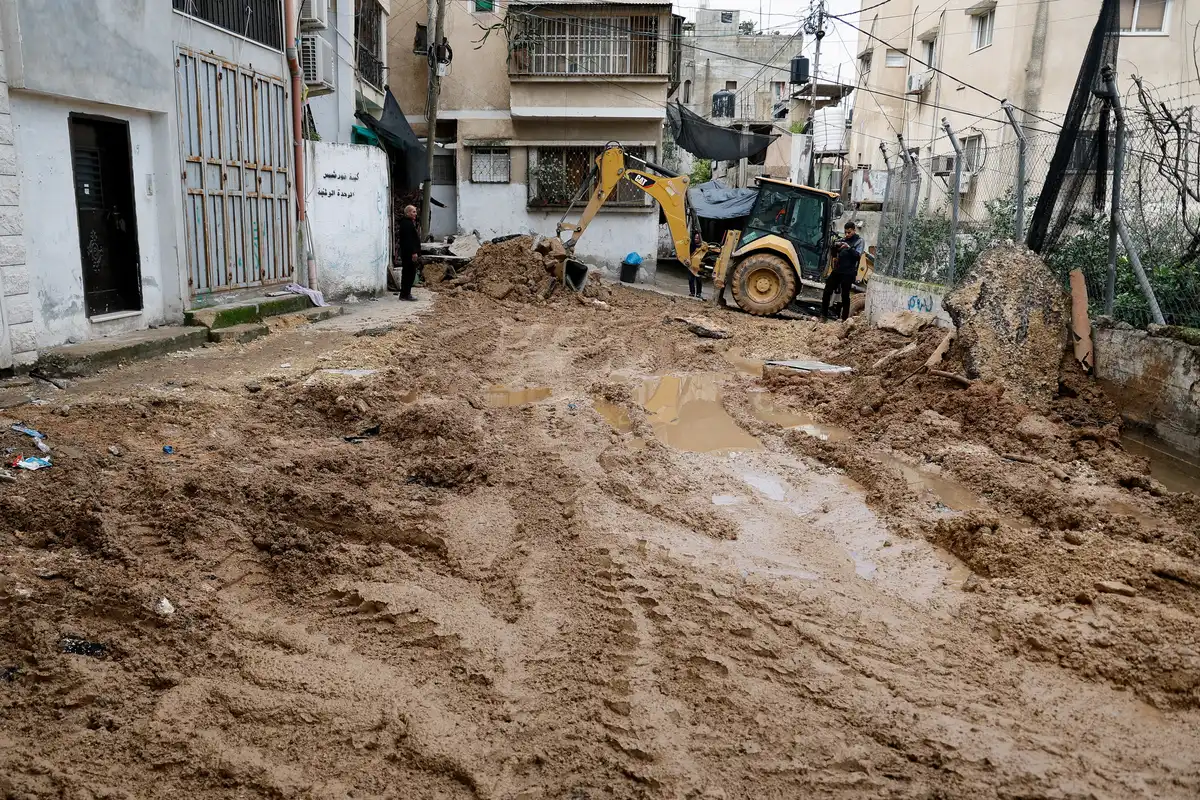
In Ramallah, occupation forces stormed the Al-Dawara neighborhood in the village of Deir Ibzi', accompanied by bulldozers, and razed lands before withdrawing.


It is noteworthy that the occupation authorities notified, on April 16, 2025, the demolition of seven homes in the village of Deir Ibzi', west of Ramallah, on the pretext of building without a permit.


According to the Wall and Settlement Resistance Commission, the occupation authorities carried out 73 demolition operations last April, targeting 152 facilities, including 96 inhabited homes, 10 uninhabited ones, 34 agricultural facilities, and others. The operations were concentrated in the Tubas governorate with 59 facilities, the Hebron governorate with 39 facilities, and the Jerusalem governorate with 17 facilities.


The occupation authorities distributed 46 demolition notices against Palestinian facilities, continuing their crackdown on Palestinian construction and the natural growth of Palestinian villages and towns, which is currently being translated into a large-scale demolition operation. The notices were concentrated in the Hebron Governorate with 16, Ramallah with 14, and Jerusalem with 12.

PALESTINE

Wed 07 May 2025 11:56 am - Jerusalem Time

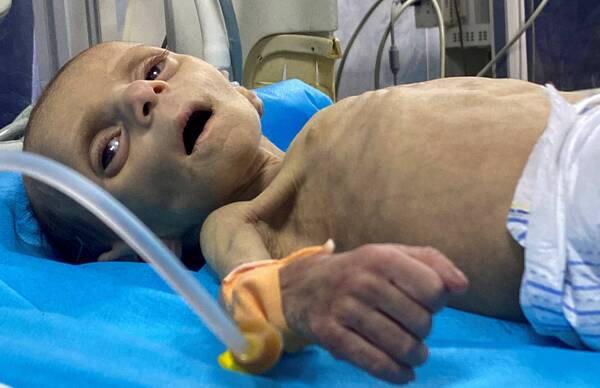
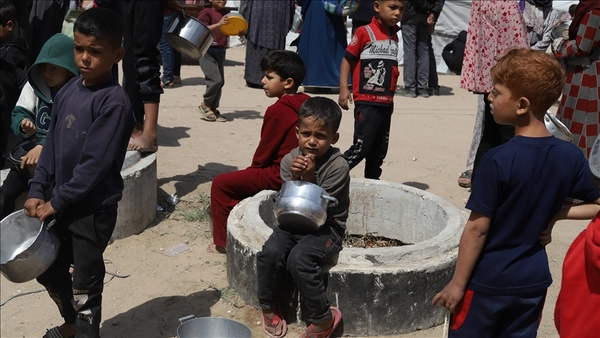
WHO: Nearly 10,000 children suffer from malnutrition in Gaza

The World Health Organization has announced alarming figures regarding the prevalence of malnutrition among children in the Gaza Strip. Since the beginning of the year, nearly 10,000 children have been diagnosed with malnutrition, including approximately 1,400 suffering from severe malnutrition requiring immediate medical intervention and treatment.


According to its official website, the organization warned on Wednesday that children who reach the stage of severe malnutrition without treatment face the risk of death. Despite the availability of three treatment centers, the number of children receiving treatment is lower than expected, often due to difficult access or repeated displacement, resulting in one in five children not completing treatment.


The organization expressed grave concern about the spread of acute watery diarrhea, which poses a deadly threat to children already suffering from malnutrition due to the deterioration of the water and sanitation infrastructure in the Strip.

ARAB AND WORLD

Wed 07 May 2025 11:06 am - Jerusalem Time

A secret meeting brings together Syrian and Israeli academics in a European capital.

The Israeli newspaper Yedioth Ahronoth revealed an unannounced meeting between five Syrian academics and businessmen, along with two Israelis, at a private home in a European capital.


The newspaper described the meeting as the first of its kind between the parties, with participants exchanging views on political and security issues, as well as the internal situation in Syria.


According to the newspaper, "The Israeli side expressed its astonishment at the Syrian guests' level of knowledge of Israeli affairs, which relied on monitoring the Hebrew media and translations of the Israeli press."
The journalist continued: "The Syrians showed a remarkable interest in learning about Prime Minister Benjamin Netanyahu's vision, particularly regarding security policy."
According to the newspaper, "Syrian participants, aged between 40 and 50, who grew up under the rule of ousted President Bashar al-Assad, indicated that they are living in a state of political uncertainty. They emphasized that they do not know exactly where the country is headed, in light of what they described as the multiple crises facing the new administration."
The newspaper quoted one of them as saying, "The new president has not yet succeeded in establishing full control over the capital, Damascus," a statement that was met with support from those present.
The report added that the meeting coincided with an Israeli airstrike targeting an area near the presidential palace in Damascus, under the pretext of protecting the Druze community.


ARAB AND WORLD

Wed 07 May 2025 11:00 am - Jerusalem Time

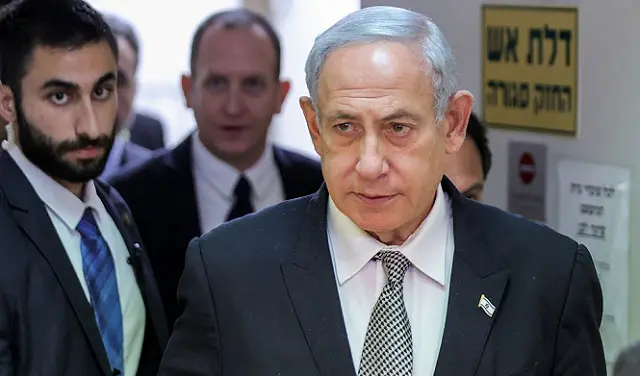
Israeli Minister Attacks Netanyahu: He Chats Uselessly

Israeli Tourism Minister Haim Katz attacked Prime Minister Benjamin Netanyahu, saying he was "bothering."


The Israeli Broadcasting Authority said on Tuesday that the attack occurred during a government meeting on Monday.


The committee added: "The cabinet session witnessed a sharp political dispute after Katz launched a public attack on Netanyahu, describing his recent statements regarding the Iranian threat and the raids in Yemen as idle chatter and a waste of money and weapons."
Katz was quoted as saying: "As long as Iran is not defeated, what Netanyahu is doing is just useless noise. We must leave the Americans to deal with the Houthis. This is not our responsibility."
The Authority noted that Netanyahu responded by saying, "Haim, I cannot elaborate on this in front of everyone. If you would like, come later and we can talk privately."
The commission said, "This public confrontation reveals the extent of the division within the government regarding Israeli intervention on foreign fronts, amid controversy over the effectiveness of the current strategy toward Iran and its proxies in the region."


PALESTINE

Wed 07 May 2025 10:55 am - Jerusalem Time

Tulkarm: Buildings demolished and others seized amid bulldozing and displacement

The Israeli occupation's aggression on the city of Tulkarm and its two camps has entered its 101st day, amidst new home demolitions, the seizure of others, and the forced displacement of citizens from their homes.


The official Wafa news agency reported that the occupation announced last night its intention to demolish new buildings belonging to seven families in Nour Shams camp. Each building contains a number of residential apartments, and among the families are: Junaidi, Muqbil, Alian, Sakran, Ghraifi, Saruji and Fahmawi.


She pointed out that this escalation coincides with the occupation's commencement of a plan to demolish 106 homes and residential buildings in the Tulkarm and Nur Shams refugee camps. The demolition process began over the past two days in the Manshiyya, Al-Maslakh, and Al-Jami' neighborhoods in the Nur Shams refugee camp, after forcibly evacuating their residents. Meanwhile, occupation bulldozers are stationed in the Al-Murabba'a Street area of the Tulkarm refugee camp.


Our correspondent noted that the occupation forces continue to seize homes and residential buildings on Nablus Street and the adjacent northern neighborhood, converting them into military barracks after forcibly evacuating their residents, while stationing their vehicles in the vicinity.

She added that the city has witnessed, since the early morning hours, intensive movements of occupation vehicles, as they roamed the main streets, specifically around the Martyr Thabet Thabet Roundabout and the Government Hospital, and the streets of Haddadin, Al-Alimi and Nablus, and obstructed the movement of citizens and vehicles, while provocatively honking their horns and deliberately passing against traffic, with reconnaissance aircraft flying at low altitudes.

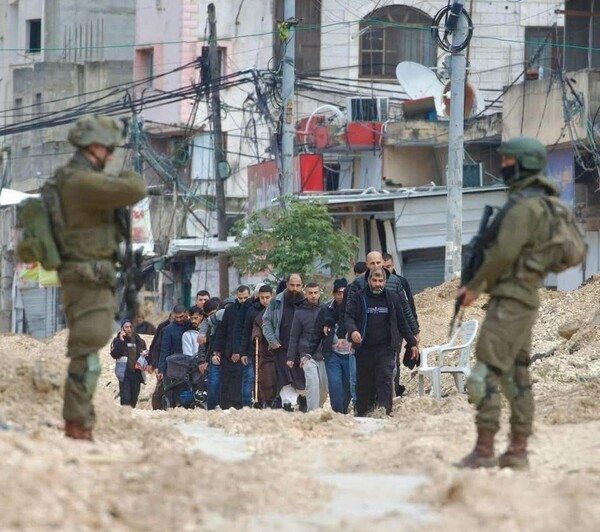
Israeli occupation forces deployed bulldozers and infantry units in and around Nour Shams camp, pursuing residents as they headed to their homes threatened with demolition to retrieve their belongings. They detained a number of young men and took them to a military barracks at the camp entrance, where they were interrogated despite having received prior coordination for entry.

The city, its two camps, and its suburbs are subjected to a suffocating siege and repeated raids, often accompanied by the firing of live ammunition and sound bombs, particularly at night. Furthermore, there are systematic attacks on citizens' homes and infrastructure, transforming the camps and residential neighborhoods in some parts of the city into military barracks, after homes were seized and their residents forcibly expelled.

The occupation's ongoing aggression and escalation against the city of Tulkarm and its two camps resulted in the martyrdom of 13 citizens, including a child and two women, one of whom was eight months pregnant. Dozens were also injured and arrested, and the infrastructure, homes, shops, and vehicles were completely and partially demolished, burned, vandalized, looted, and robbed.

The aggression also resulted in the forced displacement of more than 4,200 families from the Tulkarm and Nur Shams camps, comprising over 25,000 citizens. It also resulted in the complete destruction of more than 400 homes and the partial destruction of 2,573 others, in addition to the closure of their entrances and alleys with earth mounds.

OPINIONS

Wed 07 May 2025 9:46 am - Jerusalem Time

Gaza in the eye of the storm: permanent occupation and systematic displacement!!


Nabhan Khreisha

The Israeli government has approved a large-scale military operation in the Gaza Strip, dubbed "Gideon's Chariots." According to the biblical myth, Gideon led a small group of fighters and defeated the vast army of Midianites (this event is not mentioned in any historical reference). According to the plan, as reported by Israeli media, the Israeli army will move forcefully to defeat Hamas, subjugate it, and destroy its military and governmental capabilities. This will be accompanied by intense pressure to release all hostages. The plan also calls for a large-scale "evacuation" of all Gaza Strip residents from combat zones, from the north and center to Rafah in the south. Israeli forces will remain in any areas they occupy to prevent the return of Palestinian fighters.
Israel's Channel 13 quoted Israeli political sources as saying that if a deal on the hostages is not reached by the end of Trump's visit to the region, Israel will expand the scope of the fighting, beginning to deploy its forces before the operation to provide an opportunity to reach a deal to free the hostages according to the "Witkoff model." During the attack, Israel will seek to retain the territories it "cleanses" and add them to the security zone behind the contact lines, while stressing that it will not evacuate the security zone around Gaza in any permanent or temporary agreement, in order to protect Jewish population centers and prevent weapons smuggling to Hamas. Channel 13 added that the ban on the entry of humanitarian aid will continue and will be lifted later after the start of military operations, followed by the implementation of a "humanitarian" plan by American companies in areas that Israeli forces will work to secure.
The Gideon Wagons operation has raised fears in Israel about the possibility of killing Israeli prisoners held in Gaza during the military operations. This will lead to a wave of massive protests in the Israeli street, with the political echelon, represented by Netanyahu, and the military jointly held responsible. This threatens an unprecedented societal division, similar to what occurred after the Second Lebanon War in 2006. The division in Israel over the feasibility of the large-scale ground military operation before it began has been reflected in campaigns to boycott the call-up of reserve forces, and escalating protests on Hebrew social media platforms. Israeli media outlets such as Ynet and The Times of Israel have monitored the rise of digital campaigns calling on reserve soldiers to boycott the new call-up orders. Perhaps the most prominent campaign was the one launched on the X platform under the hashtag #No_to_the_Occupation, in which activists and families of soldiers participated, believing that this war is pointless and could end in disaster. They also pointed to a loss of confidence in Netanyahu's leadership, as he exploits the war for domestic political purposes.
Some analysts believe that Israel's threat to launch a large-scale ground attack on the Gaza Strip could be a means of pressure in the ongoing negotiations to reach a truce and a prisoner exchange. While the Israeli government is talking about the option of a decisive military solution and the preparations underway in this regard, leaks from the Egyptian negotiating delegation, published by the newspaper "Al-Araby Al-Jadeed," indicate that Israel is using escalation to pressure Hamas to make concessions on the prisoner exchange issue. In the same context, Netanyahu had publicly accused Qatar, in a press conference on April 30, 2025, of what he described as "bias toward Hamas and obstructing the achievement of an agreement." Doha responded by rejecting the accusations and threatening to reevaluate its role in the mediation.
According to statements by Israeli political and military officials, the plan for the planned large-scale Israeli ground operation in Gaza includes forcibly pushing more than 1.5 million Palestinians towards the south of the Strip, specifically the Rafah area, so that the occupation forces can, as they claim, "cleanse" the northern and central areas of Palestinian fighters. This displacement will occur in the absence of any Israeli or international plans to return residents to their original areas, meaning that it will not be temporary. In practice, it will constitute an actual displacement, even if it does not yet cross the border. However, according to Israeli media sources, the Israeli army will work to open "exit corridors" after completing the population cramming into a very small geographical area in the Rafah area. Amid the ongoing bombing and food shortages, the only option for people will be to flee across the border to Sinai, despite declared Egyptian opposition to this.
What Israel is practicing is not displacement, but rather a systematic expulsion, very similar to the expulsion of hundreds of thousands of Palestinians from their homeland, carried out by Zionist gangs in 1948. Today, Israel is using several tools to expel Palestinians from the Gaza Strip, such as starvation by preventing or restricting the entry of food, water, fuel, and medical supplies, and repeated attacks on aid convoy trucks. It also targets food production and storage facilities such as bakeries, poultry farms, and water stations. The goal is to "manufacture" a famine that would lead to a catastrophic humanitarian situation and turn the lives of Palestinians into an unbearable hell, making "exit" the only option available to them to save their lives.
The occupation of the Gaza Strip and the transfer of its population to the Rafah area raises several issues under international humanitarian law and international human rights law. Forced population transfer is a crime under the Geneva Conventions and the Rome Statute of the International Criminal Court. The forced displacement of civilians in armed conflict constitutes a war crime and, if carried out systematically and on a large scale, a crime against humanity. Furthermore, Israel is considered an occupying power in the Gaza Strip, despite its withdrawal in 2005. It still controls the airspace, border crossings, territorial waters, and population registry, and repeatedly exercises excessive military force. Consequently, many international legal scholars and human rights organizations believe that Israel remains a de facto occupying power, especially in light of the renewed ground invasion.
Although international law permits the evacuation of civilians only in cases of temporary military necessity, it requires that the evacuation be temporary, with the intent to return them immediately after the danger has passed. The purpose of the evacuation must be to ensure the safety of the population, not for political or demographic reasons. Furthermore, adequate humanitarian conditions must be provided in the evacuation areas. However, facts on the ground indicate that there are no guarantees for the return of the population, and there is a lack of infrastructure or shelter in Rafah. This is compounded by statements by Israeli government ministers, military personnel, and party leaders calling for "cleansing Gaza of its residents."
Amid these complexities on the ground and in the political arena, Israel appears to be oscillating between two options: either a large-scale, risky military operation that could result in heavy losses among its forces and a strategic failure that would spark internal political and social crises; or a fragile political solution based on uncertain deals, amid eroding trust between the parties. Gaza, meanwhile, faces the worst-case humanitarian scenario, with the ongoing blockade, the ban on humanitarian aid, and the worsening crisis in all directions.

===============================

What Israel is doing is not a displacement operation, but rather a systematic expulsion operation, very similar to the expulsion of hundreds of thousands of Palestinians from their homeland, carried out by Zionist gangs in 1948.


OPINIONS

Wed 07 May 2025 9:42 am - Jerusalem Time

Gideon's Ships

Written by: Ismail Jumaa Al-Rimawi

As the Israeli aggression against the Gaza Strip continues, the outlines of a plan far more dangerous than a mere military operation are emerging. This plan bears a biblical name—"Gideon's Boats"—but in essence, it is merely a political cover for a new phase of its forced displacement project. Through its policy of intensive bombardment and the strangulation of civilians, Israel aims not only to exhaust the resistance but also to relocate the population within a besieged geographic area in the far south, paving the way for their transformation from a fixed political-demographic reality into a "transferable human mass," meaning a population destined for displacement beyond its borders. In this sense, Operation Gideon Boats is not just a military campaign, but a direct extension of the theory of "controlling territory through controlling populations," whereby military decisiveness becomes a means of producing a new scenario: a Gaza without resistance, without population density, and perhaps without Palestinians. This qualitative shift in Israeli security doctrine redefines the objectives of war, from deterrence to displacement, from temporary control to emptying the territory and re-engineering it politically and geographically to serve the project of Netanyahu and his coalition of extreme Zionist right-wingers on the ruins of the Palestinian cause.
With each new military escalation in the Gaza Strip, it becomes clear that Israeli operations are not merely a war against an armed faction, but rather a systematic war targeting the Palestinian existence itself. Since the beginning of the current aggression, Israel has adopted a strategy of gradual displacement, forcibly transferring residents from the north of the Strip to the center, then to the south, and now placing them in the Rafah trap, where they are subjected to a stifling siege and continuous bombardment. This clearly reflects an Israeli policy aimed at emptying Gaza of its population. The expansion of the military operation to include the south of the Morag axis, coinciding with the violent escalation in Rafah, is not merely a military measure; it is a central step in implementing the displacement plan revealed by official documents, leaks, and multiple reports. These documents demonstrate that Israel is working to transform the Strip into an uninhabitable environment, pushing Palestinians toward one option: departure.
This escalation cannot be separated from the Israeli Ministry of Intelligence document published on October 13, 2023, which explicitly called for "transferring Gaza residents to North Sinai," considering it "Israel's preferred strategic solution." This document, which was published by several media outlets, including Al Jazeera, was not merely a theoretical idea; it was reflected on the ground through systematic displacement operations that began in the north, then spread to the south, and are now being implemented with greater ferocity in Rafah. Statements by Israeli officials left no room for doubt about the true intentions behind these military operations. Finance Minister Bezalel Smotrich announced the progress of the plan to displace Gaza residents, revealing the formation of a unit within the Ministry of Defense to organize the deportations. Meanwhile, National Security Minister Itamar Ben-Gvir asserted that "the only solution is to encourage the emigration of Palestinians."
Expanding military operations in the Gaza Strip serves this agenda through multiple tactics, most notably the destruction of infrastructure, targeting displacement camps, and preventing the delivery of humanitarian aid, rendering Gaza uninhabitable. Asharq Al-Awsat revealed that Israel is considering a "soft deportation policy," by opening crossings and exit routes to Sinai or by sea, while offering financial incentives to those who leave. This aligns with the actions of Zionist lobbies in Washington, which are promoting Palestinian resettlement projects under the guise of a "humanitarian solution."
In the ground campaign it intends to launch soon, Israel seeks to gather the population of the entire Gaza Strip south of the Morag axis, then target them with bombing and starvation. This is not merely military revenge; it is a political tool to achieve the transfer project, which seeks to redraw the demographic map of the Gaza Strip and transform it into an entity emptied of its inhabitants, placing it either under complete Israeli control or subject to a new reality imposed by regional and international interests, thus resuming settlement projects. This plan, which is being repeated today with more brutal methods, is essentially no different from the 1948 Nakba or the ethnic cleansing massacres in Lod and Jaffa. However, this time it is being implemented under the guise of "international legitimacy" and "fighting terrorism," and in full view of the world, including Arab and international countries. Meanwhile, the Palestinian Authority appears to be completely unconcerned with what is happening, as the Palestinians as a whole, in the West Bank and Gaza Strip, face one of the largest colonial projects in their modern history.
What is happening in Gaza is not just a new chapter of military aggression, but rather the practical implementation of a long-term Israeli plan aimed at emptying the land of its inhabitants and imposing a new demographic and political reality that serves the Zionist project. Bombardment, starvation, and the denial of aid are not only tools of war, but also tools of forced displacement carried out amid international silence and regional complicity. The silence of the international community, the inability of UN institutions, and the absence of a decisive Arab position are all factors that encourage Israel to continue on this path of destruction. In the absence of a unified Palestinian-Arab strategy to confront this existential threat, there is an urgent need to reformulate a national resistance project that restores respect for the Palestinian right to land and return, and thwarts the displacement project that threatens to repeat a new Nakba.

============================

What is happening in Gaza is not just a new chapter of military aggression, but rather a practical implementation of a long-term Israeli plan aimed at emptying the land of its owners and imposing a new demographic and political reality that serves the Zionist project.

PALESTINE

Wed 07 May 2025 9:33 am - Jerusalem Time

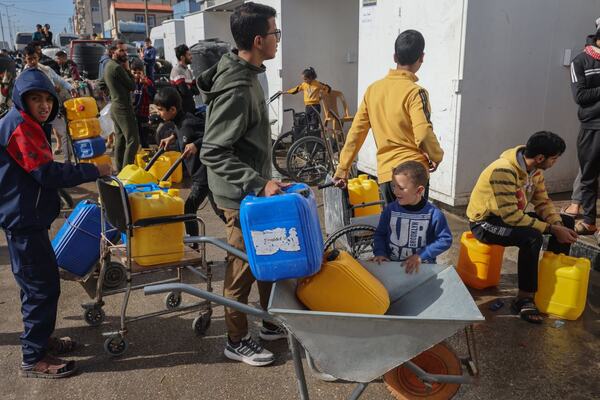
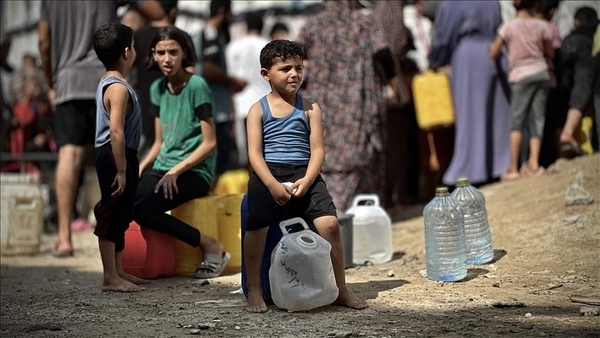
UN rapporteur: 2.1 million people in the Gaza Strip face a severe water crisis

The UN Special Rapporteur on the situation of human rights, Pedro Agudo, announced that approximately 2.1 million people in the Gaza Strip are suffering from a severe water crisis, noting that approximately 70 percent of the Strip's water infrastructure has been destroyed as a result of Israeli military operations.

In a press statement on Wednesday, Agudo explained that the occupying power has systematically destroyed the water infrastructure and prevented access to clean water sources in Gaza, describing this as a "silent but deadly bomb."

He stated that the vast majority of Gaza's population has access to only very limited quantities of water, or receives contaminated water that poses a serious threat to their health.

The Special Rapporteur noted that the Israeli blockade imposed since October 2023 has affected food, water, electricity, and other essential goods, noting that the crisis has spiraled out of control after Israel cut off access to fuel needed to operate water purification plants and wells.

He emphasized that the deliberate destruction of water systems means using water as a weapon in the war on Gaza, noting that Israeli attacks on Gaza's water infrastructure have reduced the per capita daily water supply to just 5 liters, which is "insufficient for normal life."

PALESTINE

Wed 07 May 2025 9:29 am - Jerusalem Time

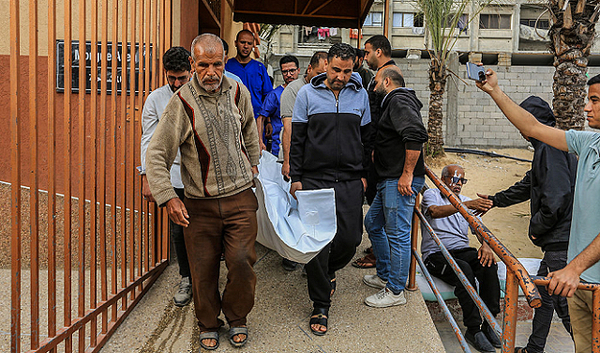
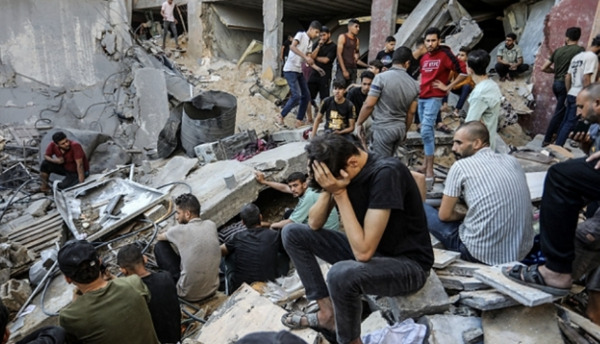
22 dead and wounded in the occupation's bombing of various parts of the Gaza Strip.

Twenty-two civilians, including children and women, have been killed and others injured since dawn on Wednesday in the ongoing Israeli bombardment of the Gaza Strip.

Local sources, citing medical sources, reported that two citizens were killed and others injured when the occupation forces bombed the Abu Shab family home in the town of Bani Suhaila, east of Khan Yunis.

According to the same sources, eight civilians, including a child and three girls, were killed when the occupation forces bombed the Al-Qudra family home in central Khan Yunis.

Three civilians were killed and others injured when the occupation forces bombed the home of the Abdul Qader family in the Tal al-Zaatar area, east of Jabalia, in the northern Gaza Strip.

In a new massacre, nine civilians were killed and others injured when Israeli warplanes targeted Al-Karama School in the Al-Tuffah neighborhood east of Gaza City.

Since October 7, 2023, the Israeli occupation forces have been waging a relentless aggression against the Gaza Strip. This has so far resulted in the deaths of 52,615 civilians, the majority of whom are children and women, and the injury of 118,752 others, according to a preliminary toll. A number of victims remain under the rubble and on the streets, unable to be reached by ambulances and rescue teams.

PALESTINE

Wed 07 May 2025 9:27 am - Jerusalem Time

Trump's hope for a Gaza deal fades as Israel plans a major escalation

The New York Times reported that when US President Donald Trump hosted Israeli Prime Minister Benjamin Netanyahu at the White House on April 7, a reporter reminded him that his 2024 campaign promise to end the war in Gaza had not been fulfilled.

Israel recently violated a fragile ceasefire in its 18-month war on the besieged Gaza Strip on March 18 and resumed its brutal bombardment, but Trump expressed optimism, replying: "I would like to see this war stop. And I think it will stop at some point, not in the distant future."

But a month later, the chances of Israel stopping its war on Gaza have diminished significantly.

Netanyahu threatened on Monday that the world would see an "intensified" Israeli escalation against the devastated and starving Palestinian enclave after his security cabinet approved plans to call up tens of thousands of reservists for a new offensive there.

Israeli hardliners insist that force alone will force Hamas to release the remaining detainees, while many analysts believe that a major Israeli escalation could extinguish any remaining hope for a ceasefire.

While some now wonder how Trump will react to this new reality, analysts say that after an early wave of diplomacy to free the hostages and reach a long-term settlement, Trump and his top officials have been distracted by the conflict, "which has created a kind of free hand for Netanyahu, who appears ready to exploit it," according to the newspaper.

The New York Times quotes Ilan Goldenberg, a Middle East specialist in the Obama and Biden administrations: "At the beginning of the administration, all the promises were focused on Gaza. But when the ceasefire collapsed, Trump gave the Israelis a green light to do whatever they wanted."

"I feel like he's not as engaged (in the Gaza crisis) as he should be; he's kind of bored," added Goldenberg, who is now a senior vice president at J Street, a centrist American Jewish organization that advocates for a two-state solution.

It's worth noting that US President Trump intends to travel to the Middle East next week, visiting Saudi Arabia, Qatar, and the United Arab Emirates.

The violent escalation in Gaza may be frustrating for President Trump, a stark reminder that he has failed to deliver the peace he promised.

However, Trump may have lost patience and is welcoming talk in Israel of delivering a final, crushing blow to Hamas, while Netanyahu said his military officials told him that his anticipated massive offensive would be the "final steps" of the war.

Trump may also have a high tolerance for Israel's use of excessive force. He has warned Hamas that "all hell will break loose" if the group does not release the remaining hostages.

Michael Makovsky, president and CEO of the ultra-Orthodox Jewish Institute for National Security of America, agreed that Trump was less engaged with Israel on the Gaza issue than the Biden administration. President Joe Biden and his senior officials spent a significant amount of time after the Hamas attacks of October 7, 2023, trying to manage the Israeli campaign in Gaza. Their goal was to limit civilian suffering in Gaza and spare Israel from international condemnation, even if critics described them as overly tolerant of Israel's use of force.

Trump has shown signs of concern for the people of Gaza, saying on Monday that he would help Gazans "get some food" amid the Israeli blockade, but placing the blame squarely on Hamas. But his attention to the tragedy has been sporadic.

"It's like night and day with the Biden administration, which has been trying to control the details of Israeli operations," Makovsky said.

He added that Israeli officials "are not receiving phone calls." "I don't think they are under pressure about the number of aid trucks arriving."

Axios reported on Monday that Israel would launch a new ground operation in Gaza if no agreement was reached with Hamas by the time Trump returned from his trip to the region. Makovsky, who recently attended meetings with senior Israeli officials, said the report was consistent with his understanding.

He added that when it comes to the Middle East, Trump has been more focused on emerging diplomacy aimed at preventing Iran from developing a nuclear bomb. In a statement issued Monday, Brian Hughes, spokesman for the US National Security Council, said that Trump "remains committed to securing the immediate release of the hostages and ending Hamas's rule in Gaza." He added that "Hamas bears sole responsibility for this conflict and the resumption of hostilities."

One indication of this shift in focus is the appointment of Steve Witkoff as President Trump's special envoy to the Middle East. In the early days of the Trump presidency, Witkoff engaged in diplomacy with Israel and Hamas, seeking to extend the temporary ceasefire agreement reached on January 15, 2025.

But Witkoff has since become a super-envoy, juggling multiple assignments. The former real estate developer and longtime Trump friend (Steve Witkoff himself) has also taken on the Iran file and met with Russian President Vladimir Putin four times to discuss Ukraine. But there's no indication that Secretary of State Marco Rubio has been involved. Rubio, whom Trump appointed National Security Advisor last week, has shown no interest in Israel's war on Gaza and has yet to visit Israel.

PALESTINE

Wed 07 May 2025 9:09 am - Jerusalem Time

Netanyahu Escalates Threats... Prolonging the Aggression to Extend His Stay in Power

Dr. Omar Rahal: Netanyahu is deliberately perpetuating the bloody war in the Gaza Strip as a strategic means of remaining in power and avoiding legal obligations.
 Major General Wasef Erekat: The trio of Netanyahu, Ben-Gvir, and Smotrich seek absolute victory, the elimination of the resistance, and the displacement of Palestinians, making it difficult to reach solutions.
 Khalil Shaheen: A Palestinian delegation, including Hamas and Islamic Jihad, must be formed under the umbrella of the PLO to manage negotiations on Gaza and stop the war.
 Muhammad Hawash: Rescuing this ordeal requires a unified Palestinian political movement, greater flexibility, and alignment with the Arab initiative to end the war.
 Majed Hadeeb: The Palestinian issue has reached a dangerous turning point due to Hamas's practices and the policies of the Israeli far right.


The Israeli war on the Gaza Strip continues amid escalating threats from Prime Minister Benjamin Netanyahu, his government, and his war cabinet. This is seen as Netanyahu's attempt to prolong the aggression to ensure his political survival and escape the corruption trials and security failures linked to the events of October 7, 2023.
In separate interviews with Al-Quds, writers and political analysts believe this war is part of a comprehensive Israeli strategy aimed at eliminating Palestinian resistance and re-engineering the demographic and geographic reality in Gaza. This strategy involves imposing complete control and displacing the population under the guise of "voluntary migration," supported by policies of starvation and chaos, with the ultimate goal of preventing the establishment of a Palestinian state.
Writers and analysts emphasize that talk of deepening the occupation of Gaza highlights the reality that Gaza is effectively completely occupied. Israeli forces control the Strip through aerial and artillery bombardment, despite the presence of ground forces in only 25% of its territory, while systematically targeting civilians and destroying infrastructure.
In the face of this tragic reality, writers and analysts are calling for a unified Palestinian and Arab movement to halt the war of extermination. This can be achieved by forming a Palestinian negotiating delegation under the umbrella of the Palestine Liberation Organization (PLO), including all factions, to manage negotiations on halting the aggression and allowing aid into the country. This should be done in parallel with intensifying diplomatic and media efforts to expose the occupation's crimes, exploiting the Arab Peace Initiative and the resolutions of the Arab and Islamic summits to push for a two-state solution, and exploiting any potential disagreements between Netanyahu and the US administration to bolster international pressure to end the war and revive hope for the establishment of a Palestinian state.

Prolonging the aggression until the next elections

Writer and political analyst Dr. Omar Rahal says that Israeli Prime Minister Benjamin Netanyahu is deliberately maintaining the bloody war in the Gaza Strip as a strategic means of remaining in power and avoiding the legal and popular challenges that threaten his political future.
Rahhal explains that a ceasefire would put an end to Netanyahu's political career and open the door to his trial on charges of corruption and mismanagement, prompting him to prolong the aggression until the next Knesset elections.
Rahhal emphasizes that Netanyahu is not alone in this plan, but rather finds a key ally in the US administration. He enjoys the support of US President Donald Trump, who supports Israel in its aggression, citing his strong relationship with Netanyahu and his hostile stance toward the Palestinian cause.
Rahhal asserts that Netanyahu is specifically betting on Trump as a tool to reengineer and redraw the demographic and geographic map of the Palestinian territories and the region, in a way that serves the interests of Israel and the United States. Netanyahu seeks to impose a new reality in Gaza that does not involve occupying it in the traditional sense, but rather radically changing its political and social nature.

Starvation has become a strategic weapon.

In his review of the tools employed by Israel in the war, Rahal asserts that starvation has become a strategic weapon in the hands of the occupation, after traditional military tools failed to subdue the Palestinian resistance. Rahal explains that the occupation uses the policy of siege and starvation to create an internal rift within the Palestinian social structure by creating a state of chaos. The occupation also aims to break the popular support for the resistance.
Rahal points out that Gaza is, in practice, under complete occupation due to the ongoing blockade and aggression. He argues that Israel's repeated statements about "decisiveness" and "expanding military operations" are nothing more than political propaganda aimed at the Israeli public, aiming to portray Netanyahu as a strong leader determined to "win," even though the war has not yet achieved any of its declared objectives.
In the same vein, Rahal explains that Netanyahu is attempting to employ terms like "victory" as part of a domestic and international deception campaign aimed at buying time and justifying the continuation of the war, given the failure of his military strategy.
Rahhal believes that Netanyahu is exploiting the mounting number of Palestinian casualties to bolster his image as a leader who will not back down, even if the price is more Palestinian blood and suffering.

Urgent Palestinian and international action is required.

Rahal calls for sparing Gaza an uncertain fate through urgent Palestinian and international action to halt this aggression. He proposes launching an intensive diplomatic and political campaign led by the Palestinian Authority in partnership with universities, civil society organizations, unions, and Palestinian communities abroad to pressure for an end to the massacres.
Rahhal calls for the activation of Palestinian and international media to refocus attention on the Gaza tragedy and expose the occupation's crimes to global public opinion. He urges the launch of a broad popular movement in the West Bank and Arab countries, along with the formation of a unified Palestinian crisis cell comprising the Palestinian Authority, factions, and other components, to ensure coordinated positions and support Gaza's resilience in the face of the ongoing war of extermination.
Rahhal emphasizes the importance of humanizing Palestinian discourse and highlighting human suffering, considering this a key to gaining international support and exposing the crimes of the Israeli occupation to the world.


The Gaza Strip is occupied and completely under Israeli control.

For his part, military and security expert and retired Major General Wassef Erekat says that talk of expanding the Israeli military operation in the Gaza Strip serves Israeli Prime Minister Benjamin Netanyahu's political objectives, despite the fact that it will lead to further losses among Israeli prisoners and soldiers, as well as the perpetration of more massacres and genocide against Palestinian civilians.
Erekat asserts that the Gaza Strip is occupied and under complete Israeli military control, despite the deployment of ground forces in only 25% of its area. Warplanes, drones, artillery, and tanks control the Strip remotely, taking turns committing war crimes and massacres targeting civilians, most of whom are children, women, and the elderly.
Erekat points to Israel's use of internationally banned bombs, along with starvation policies, targeting the health sector, and destroying the necessities of life, all aimed at forcing Palestinians toward forced displacement masquerading as "voluntary."
Erekat reviews the details of the ground military operation that began on October 27, 2023. Israel deployed ten elite military divisions after an unprecedented three-week preliminary bombardment, using fire belts, prohibited shells, and a scorched-earth policy, destroying 75% of Gaza's infrastructure and wiping out entire residential neighborhoods.

unattainable goals

Although Israel has declared goals such as eliminating Palestinian resistance and forcibly liberating prisoners, Erekat asserts that Israeli military leaders themselves consider these goals unachievable.
Erekat points out that the operation witnessed two truces and a prisoner exchange, but the aggression resumed each time, with repeated Israeli statements claiming that a large percentage of the resistance's capabilities had been eliminated. On the 575th day of the aggression, the Chief of Staff announced the expansion of the operation to recover the prisoners, while Netanyahu spoke of achieving "absolute victory," in clear contradiction to the statements of opposition leaders such as Yair Lapid and General Ziv, who warned that military expansion would lead to the deaths of more prisoners and soldiers to no avail, and would only serve Netanyahu's political interests.
Erekat believes that the success of Israel's military expansion depends on the response of reserve soldiers, but some groups have declared their refusal to enlist, and the call for 19,000 Haredim to serve has met with limited response.

Throwing in more teams will escalate the massacres.

Erekat points out that Israeli military reports confirm the need to rehabilitate its forces after the prolonged fighting, while deploying more divisions will lead to an escalation of the massacres, increased casualties, and increased popular pressure on Netanyahu, with the number of those refusing to serve increasing.
Regarding solutions, Erekat believes that the trio of Netanyahu, Ben-Gvir, and Smotrich seeks absolute victory, the elimination of resistance, and the displacement of Palestinians, making it difficult to reach solutions without a ceasefire and prisoner exchange.
Erekat asserts that US President Donald Trump is capable of pressuring Israel, especially with his upcoming visit to the Gulf states, where Arab states can exploit his interests to influence him.
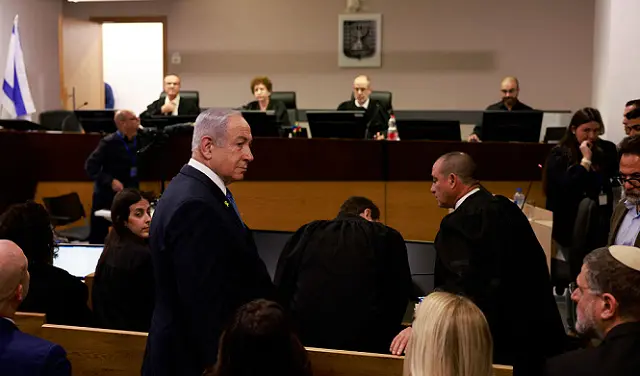
Erekat points to Israeli President Herzog's offer to Netanyahu of a plea bargain to avoid prison in exchange for ending his political career, which could constitute an additional pressure factor.
Erekat stresses the need to unify the Palestinian position to end the suffering and halt the genocide, calling for concessions for the sake of the people and supporting the Arab initiative to achieve these goals.


Part of a comprehensive plan aimed at reoccupying the Gaza Strip

In turn, writer and political analyst Khalil Shaheen says that the Israeli cabinet's decision to approve a gradual operational plan in the Gaza Strip is essentially part of a comprehensive plan aimed at reoccupying the entire Strip and displacing its population.
Shaheen explains that this rolling plan reveals previously hidden goals that are now publicly stated, centering on a war of genocide, the annexation of Gaza, and the imposition of complete control over it with the expulsion of the population, rather than mere military rule.
Shaheen points out that Israeli Prime Minister Benjamin Netanyahu has succeeded in achieving the highest degree of harmony between the military and security establishments and the political echelon over the past period. This has been achieved through fundamental changes, such as the dismissal of Defense Minister Yoav Gallant and the Chief of Staff, and the appointment of Eyal Zamir, who adopts a more aggressive approach. He also notes attempts to dismiss the head of the Shin Bet security service and expected changes in other military and security positions.
Shaheen asserts that these moves enabled Netanyahu to reframe the war's objectives in accordance with his basic vision: occupying Gaza and expelling its residents, or at least most of them, to the satisfaction of his extremist allies such as Itamar Ben-Gvir and Bezalel Smotrich.

The axes of the rolling Israeli plan

Shaheen reviews the axes of the rolling Israeli plan, which includes: gradually expanding the direct occupation of Gaza, by "nibbling away" one area after another, similar to what happened in Rafah, while destroying the facilities and foundations of life in these areas.
According to Shaheen, the plan also includes continuing to use starvation and chaos as weapons, by controlling the volume of food aid entering Gaza, even with the involvement of international organizations or private security companies, to maintain food supplies at levels that prevent mass deaths without improving the situation.
Shaheen points out that the limited aid plan of 60 trucks per day, approved by the cabinet at the suggestion of the Israeli Chief of Staff, embodies this approach.
According to Shaheen, the plan includes the internal displacement of residents from northern and central Gaza toward the south, particularly Rafah and its northwest, as Israel is promoting that aid will only reach these areas.
The final component of the plan is the transition to external displacement through what Israel calls "voluntary migration." This is, in fact, forced displacement imposed by the destruction of the basic necessities of life, making remaining in Gaza impossible and forcing residents to choose between leaving or dying with their families.

Israel encourages chaos by supporting gangs of robbers and thugs.

Shaheen asserts that Israel is encouraging chaos by supporting gangs of robbers and thugs in Gaza, with the goal of weakening Hamas's ability to manage civil and security affairs, creating a hostile environment that supports the goal of displacement.
Shaheen points out that these gangs, whose members carry expensive weapons, seek not only to steal food, but also to create chaos that will contribute to achieving Israeli goals.
Shaheen explains that the gradual implementation of the plan serves several purposes. It allows Netanyahu to satisfy his extremist allies while maintaining the cohesion of the government coalition; it spares the military establishment the responsibility of additional prisoner losses due to military pressure; it allows Israel to claim that it is giving negotiations a chance while continuing military pressure to force Hamas to make concessions; and it enables Netanyahu to maneuver with the administration of US President Donald Trump, especially with his upcoming visit to the Arab region, where Netanyahu seeks to ease international pressure by showing partial flexibility before escalating operations after the visit.
Regarding the Palestinian position, Shaheen stresses the need to prioritize halting the genocide in Gaza through urgent international action in cooperation with the United Nations and countries that reject the policy of starvation, and through pressure through the General Assembly and the International Criminal Court to hold Israel accountable for mass killing and starvation.

The Palestinian Authority is required to assume its responsibilities.

Shaheen calls for the formation of a unified Palestinian delegation under the umbrella of the Palestine Liberation Organization (PLO) to manage negotiations on a ceasefire, aid deliveries, and reconstruction, with the participation of all factions, including Hamas and Islamic Jihad, similar to the 2014 experience led by Azzam al-Ahmad.
Shaheen stresses that this requires the Palestinian Authority to assume its responsibilities and prevent Hamas from monopolizing the negotiations.
Shaheen recommends confronting the chaos in Gaza by supporting the efforts of the Palestinian police and forming joint protection committees comprising factions, clans, and civil society to combat gangs of thieves and thugs.
Shaheen calls for a unified Palestinian vision for governing the Gaza Strip and the West Bank, including the formation of a national consensus government or an administrative committee linked to the Palestinian Authority, all of which should be linked to a political horizon aimed at establishing an independent Palestinian state along the 1967 borders with Jerusalem as its capital.

Netanyahu clings to the slogan of "absolute victory" to prolong the war.

For his part, writer and political analyst Muhammad Hawash says that Israeli Prime Minister Benjamin Netanyahu continues to cling to the terms "absolute victory" and "final victory" to prolong the war in the Gaza Strip, with the goal of swaying Israeli public opinion in his favor and evading prosecution in corruption and national security cases related to the failures of October 7, 2023.
Hawash points out that Netanyahu, who is accused of being primarily responsible for the containment policy that led to these failures, is using war as a tool for political survival, while his military plans lack clear objectives.
Hawash explains that the seven-hour Israeli cabinet meeting offered nothing new except confirmation that humanitarian aid would be used as a pressure card against the Palestinians, and Hamas in particular, along with threats to expand the occupation of Gaza to force the movement to surrender, hand over weapons, and release prisoners without compensation.
Hawash considers these threats illogical and impractical, pointing out that Israel has failed to achieve these goals through the current war and will not succeed through additional military operations. He quoted Israeli military officials as confirming that there are no real military objectives remaining in Gaza that would justify calling up reserves or launching a large-scale ground operation, making the political goals of Netanyahu and his far-right government disconnected from the military reality.

Demographic reengineering in the sector

Hawash asserts that Netanyahu is seeking, by prolonging the war, to sway Israeli public opinion in his favor and appoint loyal judges who will facilitate his evasion of trial.
Hawash points out that opinion polls since the start of the war have shown that it is impossible for Netanyahu to form a new government, even with his popularity rising at times.
Meanwhile, Hawash explains that Israel's fundamental goal, which enjoys broad consensus among right-wing parties inside and outside the government, is to eliminate Hamas, eliminate the Palestinian population in Gaza through displacement, and re-engineer the region's demographics.
Hawash points out that the right wing outside the Israeli government prefers a temporary ceasefire to release the prisoners, then resume fighting from a stronger position, without fear of Israeli casualties.
Hawash explains that the current Israeli government, like its right-wing predecessors, does not recognize the national rights of the Palestinian people and seeks to eliminate any Palestinian resistance, prevent the establishment of a Palestinian state, and destroy opportunities for life in Gaza.
Hawash asserts that the strategic goal extends beyond Gaza to the West Bank, where land confiscation continues in an effort to annex it without its Palestinian residents, as part of a broader effort to deepen the occupation and control.
Hawash believes that the continuation of the war also serves Netanyahu and his government's political survival. However, Israel emphasizes that Netanyahu's opportunistic goals must not overshadow the broader Israeli goal of deepening the occupation, controlling the Palestinian people, and preventing the establishment of a Palestinian state.

Exploiting potential differences between Netanyahu and Trump

Regarding solutions, Hawash emphasizes that resolving this ordeal requires a unified Palestinian political movement. All factions, whether in the government, the opposition, or the PLO, must adopt greater flexibility and align with the Arab Initiative to end the war and move toward a two-state solution.
Hawash points out that unprecedented American support for the extremist Israeli government makes ready-made solutions difficult.
Hawash suggests exploiting potential disagreements between Netanyahu and US President Donald Trump, especially with Trump's upcoming visit to the region. He notes that Trump's regional priorities may go beyond supporting Israel, opening a window to capitalize on the official Arab position supporting an end to the war and the establishment of a Palestinian state.
Hawash calls for strengthening harmony with the resolutions of the Arab and Islamic summits, which affirmed the need to end the occupation and establish a Palestinian state. He emphasizes that Palestinian flexibility will spare the people of Gaza the scourge of war and return the Palestinian cause to its political path.
Hawash believes that continued pressure on Hamas and the Palestinian people through war and aid aims to evade Israel's responsibility for the war of extermination, which requires a unified political solution to confront these challenges.


Hamas's insistence on remaining serves Netanyahu's agenda.

Writer and political analyst Majed Hadeeb says that Hamas's stance is the decisive factor in the escalation of threats against the Gaza Strip by Israeli Prime Minister Benjamin Netanyahu and the extreme right. He emphasizes that the movement's insistence on remaining in the political arena and its refusal to relinquish control of the Strip serves Netanyahu's agenda and prolongs the war.
Hadib calls on Hamas to withdraw from the political scene and hand over control to the Palestinian Authority to save the Palestinian people from the scourge of hunger and killing.
Hadib explains that Netanyahu is exploiting Hamas's insistence on controlling Gaza to escalate his threats, with the goal of appeasing the Israeli public and strengthening his position within his government, which seeks to eliminate the movement once and for all.
Hadib points out that the terms of a prisoner exchange deal between Hamas and Israel are achievable based on the circulating proposals, but Hamas's insistence on remaining a major player in the political arena is hindering the achievement of an agreement.


Hamas' release of prisoners could end the war

Hadib asserts that Hamas's decisive stance, including releasing prisoners and relinquishing control of the Gaza Strip, could end the war, force Israel to withdraw, and preserve what remains of the dignity of the Palestinian people in the Strip, who are suffering from misery, hunger, and the loss of human life as a result of the land, sea, and air bombardment.
Hadeeb believes that Hamas's continued rejection of proposals that would alleviate the suffering of the Palestinians gives Netanyahu and the extreme right a pretext to adopt more hardline positions, which increases their threats and distances the world from viewing the Palestinian issue from a political and legal perspective.
Hadib points out that the international community's focus solely on the humanitarian aspect, rather than the political, is sapping the momentum of the issue. He warns that Hamas's insistence on control will lead to the demise of proposed solutions and push the Palestinian people further into confusion and loss.
Hadib expresses his regret that the Palestinian issue has reached a dangerous turning point due to the practices of Hamas and the policies of the Israeli far right, which combine all-out war and siege.
Hadib calls on Hamas to completely withdraw from the political scene in Gaza and hand over its responsibilities to the Palestinian Authority, which has legal jurisdiction over the Strip.
Hadib asserts that this move will restore legal and political ties between Gaza and the West Bank and constitute a prelude to pressuring Israel and the US administration to seek political solutions, especially with the approaching international conference called for by Saudi Arabia to discuss the Palestinian issue and call for recognition of the State of Palestine.

Hamas faces a fateful choice

Hadeeb rejects claims that Hamas's handover of prisoners will encourage Netanyahu to continue the war, arguing that such claims serve the interests of the extreme right and prolong the conflict to Netanyahu's continued rule.
Hadeeb points out that Hamas's recent decisions, such as reviving the "Executive Force" and threatening the population under the pretext of "maintaining security," reflect its insistence on control, which increases the suffering of Palestinians and exposes them to further punishment and death.
Hadeeb believes that Hamas faces a fateful choice: either withdraw from governing Gaza to restore life to the Palestinian people, or insist on maintaining control, which will lead to escalating suffering and destruction as a result of Netanyahu and his government's insistence on eliminating the movement.
Hadib calls for urgent action to restore political momentum to the Palestinian cause, leveraging international statements supporting recognition of the State of Palestine to ensure a political solution that ends the war and restores hope to the Palestinian people.




PALESTINE

Tue 06 May 2025 10:34 pm - Jerusalem Time

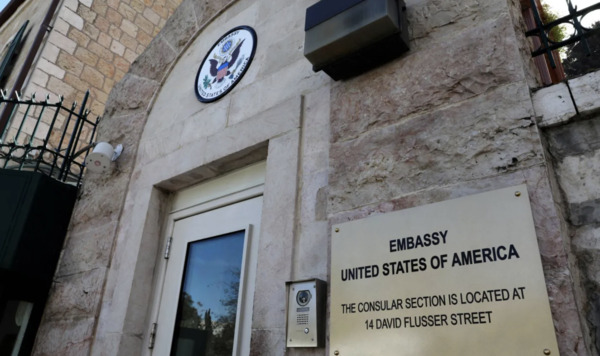
Washington announces the merger of the Palestinian Affairs Office with the US Embassy in Jerusalem.

US State Department spokeswoman Tammy Bruce said on Tuesday that Secretary of State Marco Rubio has decided to merge the office that manages Washington's relations with the Palestinians into the US embassy in Jerusalem, according to Reuters news agency.


She told reporters that the Palestinian Affairs Office will now report to US Ambassador to Israel Mike Huckabee and will be merged with other departments at the main embassy in Israel in the coming weeks.


PALESTINE

Tue 06 May 2025 9:30 pm - Jerusalem Time

UNRWA: Israel is pursuing a deliberate policy of starvation in Gaza and using aid as a weapon.

The United Nations Relief and Works Agency for Palestine Refugees (UNRWA) accused the Israeli occupation of pursuing a deliberate, politically motivated policy of starvation against the residents of the Gaza Strip, describing it as "absolute cruelty."


"The deliberate and politically motivated starvation in Gaza is an expression of absolute cruelty," UNRWA said in a post on the X platform.


She stressed that starvation cannot be addressed by using humanitarian aid as a "weapon."


The UN agency added that the model proposed for aid distribution by the Israeli occupation "is far from a response to the catastrophic hunger that exists."


She also stressed that "humanitarian agencies are committed to delivering aid to all those in need without exception."

ARAB AND WORLD

Tue 06 May 2025 8:45 pm - Jerusalem Time

China opposes the Israeli occupation's plan to expand the war of extermination in Gaza.

China has expressed its opposition to Israel's plan to expand its 19-month-old genocidal war on the Gaza Strip.


Chinese Foreign Ministry spokesman Lin Xiang said at a press conference on Tuesday that his country is closely monitoring the situation in Gaza.


He added that his country hopes that the parties will work together to ensure the continued and effective implementation of the ceasefire and a return to the path of a political solution.


In early March 2025, the first phase of a ceasefire and prisoner exchange agreement between Hamas and Israel, which had been in effect since January 19, 2025, concluded. However, Israel reneged on the agreement and resumed its genocide in the Gaza Strip on March 18.


On Monday, Israeli Prime Minister Benjamin Netanyahu said that the security cabinet approved an expansion of the ongoing war of extermination in Gaza, reaffirming Israel's determination to reoccupy the besieged enclave.


Netanyahu said, "There is a plan to evacuate the population of the Gaza Strip," claiming that the goal is to "protect them," without elaborating.


Netanyahu's announcement comes amid mounting international warnings of an impending humanitarian catastrophe in Gaza, due to the severe blockade and ongoing genocide that has lasted for nearly 20 months. This has resulted in the deaths and injuries of more than 171,000 Palestinians, the majority of whom are women and children, and more than 11,000 missing.

PALESTINE

Tue 06 May 2025 7:09 pm - Jerusalem Time

The occupation commits a new massacre: Dozens of people were killed and wounded in the bombing of a school housing displaced persons east of Al-Bureij.

Israeli occupation forces committed a new massacre on Tuesday evening, bombing a school housing displaced persons east of the Al-Bureij refugee camp in the central Gaza Strip, killing and wounding dozens.


According to local sources, at least 17 civilians were killed and dozens more were injured, including women and children, in an Israeli airstrike on the Abu Hamisa School yard east of the Bureij refugee camp. The dead and wounded were transferred to Al-Aqsa Martyrs Hospital in Deir al-Balah and Al-Awda Hospital in Nuseirat.


The sources indicated that at least seven children were among the dead, who were transferred to Al-Awda Hospital. The sources noted that the bodies of the martyrs were thrown over the school buildings due to the intensity of the shelling.


Earlier, two citizens were killed and others injured when the occupation forces bombed the Bashir family's home, near Al-Mazra'a School, southeast of Deir al-Balah in the central Gaza Strip.


Four civilians were killed and others injured on Tuesday afternoon when Israeli warplanes bombed the al-Ma'askar area west of Deir al-Balah.


A number of civilians were injured when an Israeli drone bombed a house in the Batn al-Sameen area of Khan Yunis, south of the Gaza Strip.


Since October 7, 2023, the Israeli occupation forces have been waging a relentless aggression against the Gaza Strip. To date, this has resulted in the deaths of 52,615 civilians, the majority of whom are children and women, and the injury of 118,752 others, according to a preliminary toll. A number of victims remain under the rubble and on the streets, unable to be reached by ambulances and rescue teams.


PALESTINE

Tue 06 May 2025 6:26 pm - Jerusalem Time

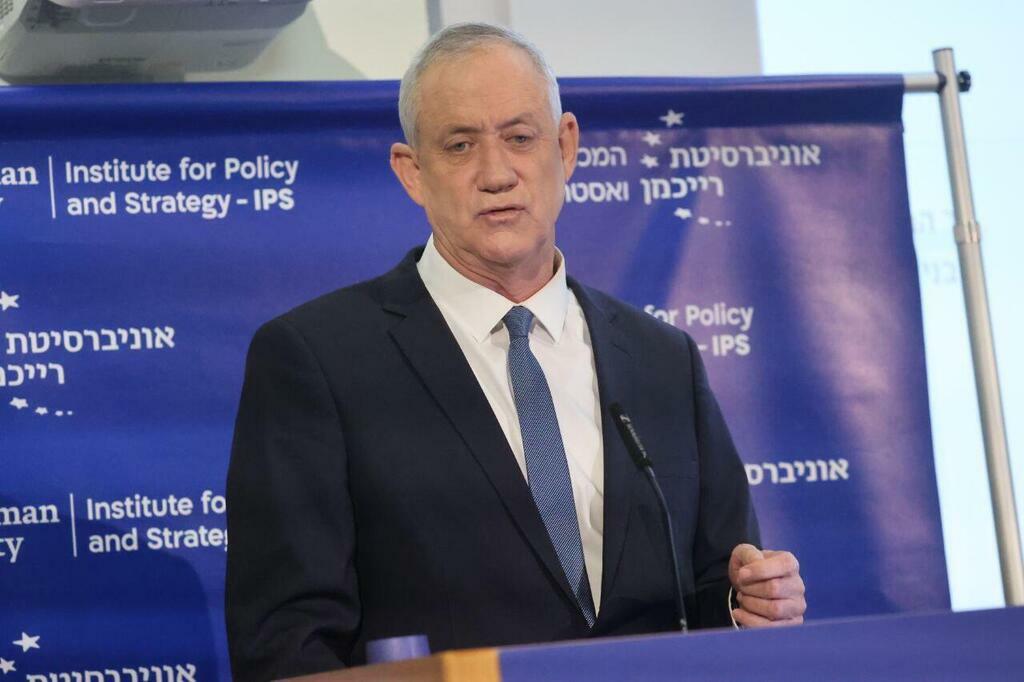
Gantz opposes the establishment of a Palestinian state and supports the reoccupation of Gaza.

Israeli opposition party leader Benny Gantz announced on Tuesday his rejection of the establishment of a Palestinian state and his support for the reoccupation of the Gaza Strip.


This statement represents the latest Israeli challenge to international legitimacy resolutions, which reject Israel's occupation of Palestinian lands and call for the establishment of an independent Palestinian state.


Gantz spoke at the Makor Rishon conference in the Ofra settlement in the occupied West Bank, according to the settlers' Channel 7.


"Israel cannot allow a direct and significant threat to its citizens on all its borders," said Gantz, a former minister in the war cabinet.


For decades, Israel has occupied territories in Palestine, Syria, and Lebanon, and refuses to withdraw from them and establish an independent Palestinian state with East Jerusalem as its capital, along the pre-1967 borders.


Gantz continued: "Therefore, we must control security and maintain freedom of action (aggression) in Gaza, the West Bank, southern Lebanon, and the border area with Syria."


Since October 7, 2023, the Israeli occupation, with American support, has been committing genocidal crimes in Gaza, leaving more than 171,000 Palestinians dead and wounded, most of them children and women, and more than 11,000 missing.


In parallel with its war to exterminate Palestinians in their occupied territories, Israel launches almost daily, devastating, bloody attacks on its neighbors, Syria and Lebanon.


Gantz said, "Anyone who talks about (establishing) a Palestinian state or withdrawing (from occupied territories) is simply detached from the security reality."


Since the start of the genocide in Gaza, Israeli officials, including Prime Minister Benjamin Netanyahu, who is wanted by the International Criminal Court, have declared their rejection of the establishment of a Palestinian state and affirmed their commitment to annexing the occupied West Bank to Israel.


Gantz added: "In one of the first cabinet meetings, I was the one who raised the need to seize (occupy) lands in Gaza."


During the same conference, Israeli President Isaac Herzog emphasized "the importance, magnificence, and prosperity of the settlement project, and the extent to which the settlements are a protective wall for Israel in every sense of the word," he said.


Israel previously occupied Gaza in the June 5, 1967 war, then withdrew unilaterally in 2005, dismantling settlements it had established in the Palestinian Strip.


Israel has been blockading Gaza for 18 years, leaving approximately 1.5 million Palestinians out of a population of approximately 2.4 million homeless after their homes were destroyed in the war of extermination. The Strip is suffering from famine due to Tel Aviv's closure of the crossings to humanitarian aid.

ARAB AND WORLD

Tue 06 May 2025 6:18 pm - Jerusalem Time

A bill that would penalize Americans who boycott Israel was withdrawn from Congress.

The US Congress has withdrawn an anti-Boycott, Divestment, and Sanctions (BDS) bill, which was scheduled to be voted on Monday, following angry reactions from several "America First" Republican lawmakers and podcasters on social media.


The bill, called the "Intergovernmental Organizations Anti-Boycott (IGO) Bill," aims to effectively criminalize boycotts of Israel.


It's worth noting that boycotting foreign countries is an American tradition older than the United States itself. The Boston Tea Party movement, which preceded the American Revolution, followed a boycott campaign against British goods. However, since the 1970s, the US government has attempted to prevent Americans from participating in unauthorized boycotts of foreign countries.


The House of Representatives was scheduled to vote on the International Governmental Organization's Anti-Boycott Act, which could be the most stringent measure of its kind to date: it imposes a maximum prison sentence of 20 years or a fine of $1 million on anyone who complies with international human rights sanctions against a US ally, including "providing information."


The bill's bipartisan sponsors are Reps. Mike Lawler (R-NY) and Josh Gottheimer (D-NJ). After facing unexpected Republican opposition—including from lawmakers who strongly oppose boycotts of Israel, such as Reps. Marjorie Taylor Greene (R-GA) and Ana Paulina Luna (R-FL)—the vote was quietly postponed, liberal-leaning Rep. Thomas Massie (R-KY) revealed on X on Sunday night.


Although the bill is currently frozen, the anti-boycott laws on which it is based remain in effect.


In response to the Arab League's embargo on Israel, the Carter administration adopted export regulations in 1977 prohibiting U.S. companies from complying with "an agreement with, a requirement, or a request from" a foreign government to boycott a "friendly" third party. Congress tightened the restrictions in 2018, imposing a maximum prison sentence of 20 years or a $1 million fine for violators. Compliance with the boycott includes "providing information" to the boycotting countries, or even failing to notify the U.S. Bureau of Industry and Security of a foreign boycott request. Last year, a U.S. company was fined $151,875 for failing to inform the U.S. government that its distributor in the United Arab Emirates wanted to stop selling its products to Israel.


The Intergovernmental Organizations Anti-Boycott Act would expand the scope of unauthorized boycotts to include campaigns against international institutions such as the United Nations or the European Union. A previous version of the bill, sponsored by Democrats and defeated in 2018, specifically accused the UN Human Rights Council of sponsoring a “business boycott” of Israel by publishing a list of companies deemed complicit in Israeli rule in the Palestinian territories. “International organizations cannot get away with targeting our key democratic ally, Israel,” Gottheimer said in a January press release shared by Lawler’s office. “That is why we are introducing the Intergovernmental Organizations Anti-Boycott Act, a bipartisan bill that addresses the blatant anti-Israel bias at international organizations like the UN.”


Civil liberties advocates warn that designating the UN list as a foreign boycott would allow the US government to sue Americans for their political statements. The American Civil Liberties Union (ACLU) argued in a February 2024 letter to lawmakers that the International Governmental Organizations Anti-Boycott Act "clearly extends to voluntary, politically motivated speech that seeks to support prohibited boycotts."


Although the 2016 UN resolution that created the list does not explicitly call for a boycott, it does urge states to hold listed companies, such as Israeli security and surveillance firms, accountable for violating Palestinian rights. When the list was published in 2020, Israeli Foreign Minister Israel Katz described it as a "discriminatory, anti-Israel policy" and a "shameful surrender to pressure from countries and organizations seeking to harm Israel." Prime Minister Benjamin Netanyahu promised to "confront this with all our strength."


An Israeli government strategy memo, written in February 2019 and revealed by the Distributed Denial of Secrets group in July 2024, recommends attempting to include the UN list within “existing US anti-boycott regulations imposed by the Commerce and Treasury Departments,” which “could be exploited to limit the ability of any person subject to US regulations… to conduct any activity related to the UN database.”


The memo continued: "The challenge is that the Commerce and Treasury departments have, historically, taken the position that their regulations apply only to government-imposed boycotts. Therefore, they have not applied these regulations to actions taken by individual companies to comply with non-governmental boycotts." It added that "new legislation in Congress" would be "the most difficult approach, but would provide the greatest flexibility to implement the new authorities."


Lawler and Gottheimer's bill would achieve exactly that. Although it passed the House of Representatives last year, the effort fizzled in the Senate. Lawler and Gottheimer predicted that a second attempt would be more successful now that Republicans control both chambers of Congress, according to their January 2025 statement, which included supportive quotes from Christians United for Israel, the American Israel Public Affairs Committee, the Republican Jewish Committee, and the Foundation for Defense of Democracies.


What they didn't take into account was the extent of the Republican opposition they would face within the House itself. Luna wrote on X: "Americans have the right to boycott, and punishing it threatens freedom of expression. I strongly reject and condemn anti-Semitism, but I cannot violate the First Amendment." Massie called it "a ludicrous bill that our leadership should never have scheduled for a vote."


It is unclear whether or when the bill will be reintroduced. Meanwhile, several anti-boycott laws are already in effect. In addition to federal anti-boycott laws, at least 38 states have passed laws, executive orders, or resolutions targeting boycotts of Israel. In 2019, the Arkansas Times sued the state for requiring an anti-boycott certification to continue doing business with the state university system. The Eighth Circuit Court upheld the law, holding that "purely commercial, non-expressive behavior" is not considered protected free speech. Jay Diaz, senior staff attorney for the Foundation for Individual Rights and Expression, argued that this decision was erroneous, pointing to a "rich American history" of political boycotts, from the Boston Tea Party to the civil rights movement.


Deep skepticism toward Israel among Trump's allies has been evident in podcasts. Last month, conservative talk show host Tucker Carlson hosted media personality Matt Walsh in a debate in which they briefly discussed whether Israel's "survival" as a state is necessary.


The shift in negative sentiment toward Israel was most noticeable among younger Republicans under 50, who are more likely to listen to podcasts like Carlson's and are influenced by concerns about free speech and foreign aid distribution.

PALESTINE

Tue 06 May 2025 6:02 pm - Jerusalem Time

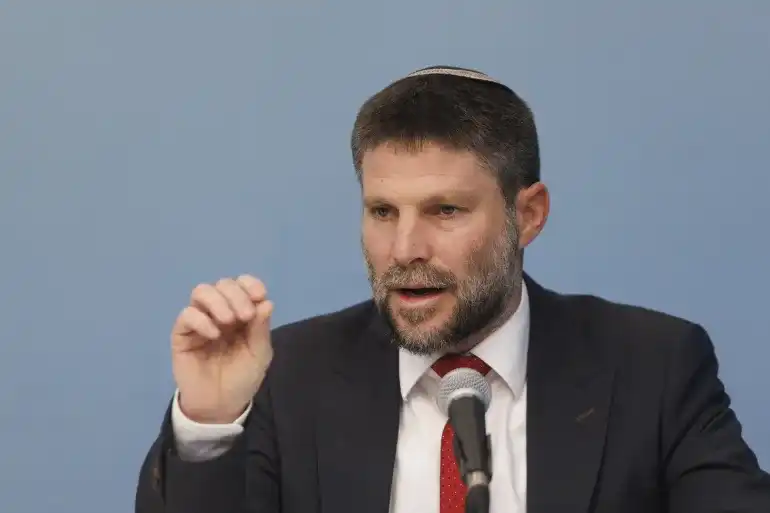
Smotrich vows to destroy Gaza "completely within months" as part of an expanded genocide plan.


Israeli Finance Minister Bezalel Smotrich vowed on Tuesday to completely destroy the Gaza Strip within a few months, as part of an ongoing plan to expand the genocide, claiming that Palestinians would then flee to other countries.


"I think it will be possible to declare our victory within a few months," Smotrich was quoted as saying by Israel's Channel 12 at a conference on settlements in the West Bank settlement of Ofra.


He added, "Gaza will be completely destroyed, and its population will be concentrated in the Morag axis area, from where they will leave in large numbers to third countries."


The Hebrew newspaper Yedioth Ahronoth quoted him in response to a question about the situation in the Gaza Strip after six months, saying: "Hamas is absent there as an active entity, neither militarily, civilly, nor governmentally. There is no entity that knows how to pay salaries, nor does it manage anything," he said.


He claimed that "the entire population is concentrated from the Morag axis (which separates Rafah from Khan Yunis) southward in an area completely free of Hamas."


Earlier today, the Israeli military indicated its intention to expand its genocide against Palestinians in the Rafah area in the southern Gaza Strip.


The army said in a statement: "After completing the encirclement of Rafah several weeks ago, army forces are continuing their operations in the area, and it is expected that the operation will expand to include several additional locations and neighborhoods."


On Monday, Smotrich said that Tel Aviv will not withdraw from Gaza after completing its occupation, even if it is in exchange for the release of prisoners held by Palestinian factions. He added, "We will finally occupy the Gaza Strip. We will stop fearing the word 'occupation.'"


Regarding settlement expansion, the Israeli Finance Minister indicated on Tuesday that the government is likely to announce the annexation of the West Bank during its term, which ends at the end of next year.


On January 21, 2025, the Israeli army launched a military aggression in the northern West Bank, starting with the city of Jenin, its camp, and surrounding towns. It then expanded its aggression to the city of Tulkarm on the 27th of the same month.


In parallel with the genocide in Gaza, the Israeli military and settlers escalated their attacks in the West Bank, resulting in the deaths of more than 960 Palestinians, the injury of nearly 7,000 others, and the arrest of 16,400 people, according to Palestinian data.

ARAB AND WORLD

Tue 06 May 2025 5:40 pm - Jerusalem Time

Trump: We will help the "starving" people of Gaza get food, but Hamas "makes that impossible."

US President Donald Trump said on Monday that his administration would help deliver food to "starving" Gazans amid an Israeli blockade that has lasted more than two months, but added that Hamas had made that "impossible" by diverting humanitarian aid to its fighters.


"We're going to help the people of Gaza get some food. People are starving, and we're going to help them get some food," Trump told reporters during a White House event.


Israeli officials have so far claimed that Gazans have not yet reached the point of starvation, and that enough aid entered the Strip during the six-week ceasefire to sustain the territory for a long time, although they have also argued without evidence—like Trump—that Hamas has been stealing the aid.


Data and testimonies from inside the Strip indicate a worsening hunger crisis and rising malnutrition rates, while Israel is working to implement a new system for distributing aid in a way it hopes will prevent Hamas from diverting it. International aid organizations briefed on the initiative announced Sunday that they would not cooperate with it, arguing that it does not adequately address the humanitarian crisis. Trump continued, "A lot of people are making it worse. Hamas is making it worse because they seize everything that comes in." The president added that Palestinians in Gaza are "treated very badly by Hamas."


An Israeli Defense Ministry official stated on Monday that plans for a major offensive against Hamas, if no hostage deal is reached with the movement by the end of Trump's visit to the region next week, include transferring Palestinian civilians to the southern Gaza Strip, attacking Hamas, and preventing the movement from controlling humanitarian aid supplies.


The official added that the "blockade" on the entry of humanitarian aid would continue, and "a humanitarian plan will only be implemented later, after the start of military operations and the large-scale evacuation of residents to the south." He said the plan involves designating an area in Rafah in southern Gaza—south of the Israeli-controlled Morag corridor—for the IDF to secure while civilian companies distribute aid to Palestinian civilians. The official added that those entering the "sterile area" in Rafah would undergo security screening by the IDF to prevent Hamas from receiving the aid.


This sweeping overhaul of the aid delivery system, approved by the cabinet on Sunday evening and first reported by The Times of Israel on Friday, will require the IDF to shift away from bulk distribution and warehousing of aid, and instead have food boxes distributed to individual Gaza families by international organizations and private security companies.


According to Israeli and Arab officials familiar with the matter, the Israel Defense Forces will not be directly involved in distributing the aid, amid opposition from Chief of Staff Eyal Zamir, but troops will be tasked with providing an external layer of security for private contractors and international organizations distributing the aid. The officials said Israel believes this approach will make it harder for Hamas to divert aid to its fighters. The United Nations announced in a statement Sunday that it would not participate in the plan as presented, considering it violates its core principles. According to a memo from the defense body responsible for coordinating aid to Gaza, COGAT, seen by The Associated Press, all aid will enter Gaza through the Kerem Shalom crossing, aboard about 60 trucks per day, and will be distributed directly to those in need. About 500 trucks entered Gaza daily before the war.


The memo stated that facial recognition technology will be used to identify Palestinians at logistics centers, and text message alerts will be sent to inform residents of the possibility of receiving aid.


The email, sent Monday by the Office for the Coordination of Humanitarian Affairs to aid organizations and shared with The Associated Press, noted that mechanisms are in place to ensure aid is not diverted.


Earlier, the Office for the Coordination of Humanitarian Affairs said in a statement that the plan would leave large segments of the population, including the most vulnerable, without supplies. It added that the plan "appears designed to strengthen control over essential commodities as a pressure tactic—as part of a military strategy."


The head of the Norwegian Refugee Council told AFP on Monday that the plan to seize control of humanitarian aid distribution to Gaza "fundamentally contradicts humanitarian principles."


"UN agencies, all other international humanitarian organizations, and NGOs refused to participate in this idea issued by the Israeli cabinet and the Israeli military," he said.


Egeland said the Israeli government wanted to "militarize, manipulate, and politicize aid by allowing it to reach a few collection centers in the south, a system where people are screened, and it's completely broken." He added, "This will force people to flee to get aid and will continue to starve the civilian population," emphasizing, "We have no role in that." He emphasized, "If one side in a bitter armed conflict tries to control, manipulate, and ration aid among civilians on the other side, that goes against everything we believe in."


Egeland added that the Israeli government wants to "militarize, manipulate, and politicize aid by only allowing aid to reach a few detention centers in the south, a system where people are screened, a system that is completely broken."


"This will force people to flee in search of aid and will lead to the continued starvation of the civilian population," he said, adding, "We will have no role in this."

PALESTINE

Tue 06 May 2025 4:32 pm - Jerusalem Time

UN rapporteur: Israel's cutting off of drinking water in Palestine a "silent but deadly bomb"

Pedro Araujo-Agudo, the UN Special Rapporteur on the human rights to adequate drinking water and sanitation, said that Israel's destruction of water infrastructure in the Gaza Strip and its denial of access to clean water is a "silent but deadly bomb."


In a statement, Agudo explained that 2.1 million people in Gaza are facing a water crisis, and that approximately 70 percent of the region's water infrastructure has been destroyed by Israel.


He stressed that "the vast majority of the population in the Gaza Strip either only receives very limited amounts of water, or the water they do receive is dangerously polluted."


He added that the Israeli blockade imposed since October 2023 has included food, water, electricity, and other basic commodities.


He pointed out that the crisis spiraled out of control after Israel cut off access to fuel needed to operate water purification plants and wells.


He stressed that the deliberate destruction of water systems means using water as a weapon in the war on Gaza.


He continued, "Water is being used as a weapon, but not against an army or a militia, but against civilians. Cutting off people's drinking water is like dropping a silent bomb on them. And this bomb is silent, but it is deadly."


He pointed out that Israeli attacks on Gaza's water infrastructure have reduced the per capita daily water supply to just 5 liters, which is "insufficient for normal life."


Citing UNICEF data, Agudo said that diarrhea cases among children under five increased from 40,000 to more than 70,000 during the first week of December 2024.


With full American support, Israel has been committing genocidal crimes in Gaza since October 7, 2023, leaving more than 171,000 Palestinians dead or wounded, most of them children and women, and more than 11,000 missing.

PALESTINE

Tue 06 May 2025 2:07 pm - Jerusalem Time

Israeli occupation extends the detention of journalist Saeed Hassanein.

The Haifa District Court on Tuesday extended the detention of detained journalist Saeed Hassanein until next Tuesday, May 13. The court will review the evidence, testimonies, and arguments of the defense team and the public prosecutor, and will then decide whether to place Hassanein under house arrest or extend his detention until the end of the legal proceedings.


During the session, the court heard testimony from Hassanein's wife and two brothers, as well as two of the owners of the house he was proposed to be relocated to in the town of Kafr Manda. The aim was to ensure Hassanein's continued support throughout his house arrest and to ensure he does not violate the terms of his detention, such as leaving the house or using social media.


In addition, Hassanein was interviewed on-screen, confirming his "commitment to the terms of his deportation and house arrest." He also addressed his difficult situation in prison and the illnesses and health complications he suffers from.


For her part, the prosecutor demanded Hassanein's continued detention until the completion of legal proceedings, claiming that "Hassanein does not regret what he did except for his imprisonment and the personal price he is paying." She added that "this case comes amid the ongoing war and the continued detention of 59 Israeli prisoners in Gaza." She noted that "Saeed destroyed evidence and poses a danger to the public."


On April 28, the Haifa District Court extended Hassanein's detention until today, after reviewing the Probation Officer's report, which did not recommend that Hassanein be placed under house arrest. The same session witnessed a remarkable argument from Hassanein's defense attorney, Namir Idlebi, who refuted the arguments on which the Probation Officer's report was based. This was reflected in the judge's position and his decision to inspect a proposed house in the town of Kafr Manda to which Hassanein could be deported.


During his defense, Idlebi said that "the probation officer's report lacks several factors and points that it did not address." He questioned the probation officer's claim that "Hassanin poses a danger to the public," saying that "Hassanin is 62 years old, a father, grandfather, and sports journalist, and has no criminal background. He has good relationships with Arab and Jewish athletes, and even if Hassanin poses a danger, this danger does not warrant extending his detention."

During his plea, Idlebi added, "Hassanin is suffering from health complications without receiving the necessary medication, and there is no justification for his continued detention for more than two months."


During his pleadings in Hassanein's case, Idlebi compared it to other security cases involving very serious charges, noting that the court had referred the defendants to house arrest in those cases.


The Public Prosecution charged Hassanein in the indictment with "contact with a foreign agent and expressing solidarity with a terrorist organization," after he expressed solidarity and praised Hamas's actions and treatment of Israeli detainees in media interviews. He also praised Hassan Nasrallah and Hezbollah for standing with the Palestinians, according to the prosecution.


Israeli police arrested Hassanein after raiding his home in the city of Shefa-Amr on the night of Tuesday-Wednesday, February 25, 2025. They conducted searches and summoned members of his family for interrogation.


  1. Hassanein's arrest followed an intense incitement campaign led by Israeli media outlets and extremist Jewish groups, sparked by an interview he gave to Al-Aqsa TV.

PALESTINE

Tue 06 May 2025 2:01 pm - Jerusalem Time

The death toll from the aggression has risen to 52,615, and the Ministry of Health appeals for fuel supplies.

The Ministry of Health in Gaza reported that the death toll from the Israeli aggression has risen to 52,615 dead and 118,752 wounded since October 7.


In a brief statement on Monday, the ministry confirmed that 48 dead and 142 injuries had arrived at Gaza Strip hospitals in the past 24 hours.


She pointed out that the death toll and injuries since March 18, 2025, has reached 2,507dead and 6,711 injuries.


The Ministry of Health in Gaza also appealed to supply the Strip's hospitals with fuel to ensure the continuity of health services.


PALESTINE

Tue 06 May 2025 1:58 pm - Jerusalem Time

Hamas: Israel's expansion of its operation in Gaza means sacrificing its prisoners

Hamas on Tuesday considered the Israeli Security Cabinet's approval of an expanded ground operation in Gaza a decision to "sacrifice" its prisoners held in the Strip.


The movement said in a statement that "the occupation cabinet's approval of plans to expand its ground operation in Gaza represents an explicit decision to sacrifice Israeli prisoners in the Strip."


She also considered this decision a "reproduction of the cycle of failure" that the army began 20 months ago without "succeeding in achieving its declared goals."


The movement emphasized that statements by Israeli Prime Minister Benjamin Netanyahu, who is wanted by the International Criminal Court, indicating an insistence on committing further crimes against civilians in Gaza, come "with full cover from the US administration."


The movement called on Arab and Islamic countries, the international community, and the United Nations to "assume their responsibilities and take immediate action to curb the fascist occupation government and bring its leaders to international justice."


She called on Arab and Islamic peoples to "activate and intensify popular pressure to halt the aggression on Gaza and end the occupation."


ARAB AND WORLD

Tue 06 May 2025 1:15 pm - Jerusalem Time

Netanyahu appears for the 28th time before the Tel Aviv District Court to answer corruption charges.

Israeli Prime Minister Benjamin Netanyahu appeared for the 28th time in Tel Aviv District Court on Tuesday to answer corruption charges against him.


Israel Hayom newspaper reported that Netanyahu appeared before the court for the 28th time since December 10, 2024.


She added: "Netanyahu is expected to focus today on the prosecution in Case 2000, known as the 'Netanyahu-Mozes' affair."


She continued: "Arnold Mozes, who was the controlling shareholder in the Yedioth Ahronoth group at the time in question and is also a defendant in this case, also attended Netanyahu's testimony today."


The newspaper explained that the indictment "states that the two held a conversation about their shared interest in improving the way Netanyahu was covered by the Yedioth Ahronoth media, while simultaneously imposing restrictions on the rival newspaper Israel Hayom."


The newspaper quoted Netanyahu as denying the allegations against him, telling the court judges: "I did not believe there was anything criminal in the contacts with Mozes. It was part of the usual contact between a politician and a publisher."


He added about Moses: "He was a bitter opponent. The newspaper systematically attacked me and supported my opponents. He never once offered me a bribe, and I never thought he offered me a bribe, and I don't think he offered me a bribe today."


The court convenes twice a week to hear Netanyahu's responses to the charges of bribery, fraud, and breach of trust against him.

Two weeks ago, the court decided to end hearings on Netanyahu's responses tomorrow, Wednesday.


Yedioth Ahronoth reported last Tuesday: "The judges in Netanyahu's trial have authorized his lawyer, Amit Hadad, to hold four additional sessions in the main testimony phase, which will conclude on May 7."


She added, "After the testimony phase ends, Netanyahu's cross-examination will begin," without providing further details.

Netanyahu faces charges of corruption, bribery, and breach of trust in what are known as Cases 1000, 2000, and 4000. Former Attorney General Avichai Mandelblit filed the indictment in late November 2019.


"Case 1000" concerns allegations that Netanyahu and members of his family received expensive gifts from wealthy businessmen in exchange for various benefits and assistance.


In "Case 2000," he is accused of negotiating with Arnon Mozes, publisher of the privately owned Hebrew newspaper Yedioth Ahronoth, to obtain positive media coverage.


The more serious "Case 4000" concerns the alleged facilitation of favors to the former owner of the Israeli Walla news website, Shaul Elovitch, who was also an executive at the Bezeq telecommunications company, in exchange for positive media coverage.


Netanyahu's trial in these cases began in 2020 and is still ongoing. He denies the charges, claiming they are a "political campaign aimed at ousting him."

PALESTINE

Tue 06 May 2025 11:57 am - Jerusalem Time

Disease, hunger, and medical neglect are ravaging detainees in occupation prisons.

The Palestinian Prisoners' Affairs Commission said that disease, hunger, and medical neglect in Israeli prisons are ravaging detainees.


In a statement issued Tuesday, the organization explained that the policy of intensifying punishment and torture of sick prisoners in occupation prisons is gradually worsening and increasing in severity with the passage of time. The deliberate and systematic medical neglect of sick and elderly prisoners is a ghost that haunts them endlessly, exacerbating their physical and psychological pain exponentially, so that occupation prisons have become coffins, where those who enter are lost and those who survive are born.


The Commission revealed the health status of a number of prisoners, including:

Prisoner Hussein Abu Kuwaik from Ramallah (68 years old), married with 4 sons and 3 daughters, was arrested on 11/15/2023, and is held in Section 24 of the Negev Prison. He is an administrative detainee who has spent a total of 17 years in the occupation prisons, as he lost more than 60 kilograms of his weight, and suffers from inflammation in the knees and joints, as well as scaphoid disease, and he has not been provided with any treatment despite his repeated requests.


It is noteworthy that Abu Kuwaik was subjected to an assassination attempt during the Second Intifada, when his car was bombed, resulting in the martyrdom of his wife, son, and two daughters.


Prisoner Thaer Odeh from Balata Camp (40 years old) was arrested on 9/25/2024, and is currently in Section 8 of the Negev Prison. He suffered from scabies and was not treated until the disease reached its final stages, and the signs of the disease are still evident on his hands.


Awda said that detainees are constantly subjected to humiliation and insults, noting that the prison's overall conditions are poor and that there has been no improvement in detention conditions.


Prisoner Riyad Sawafta from Tubas (22 years old), was arrested on May 10, 2023. He is an administrative detainee in the Negev prison. He has been suffering from scabies for about 8 months, and the prison administration has not provided him with any treatment.


Prisoner Raed Adel Wadih Al-Ratrout from Nablus (39 years old) spent 18 years in occupation prisons, and is sentenced to 27 years in prison. He is held in Section 21 of the Negev Prison. He suffers from major dental problems and is not receiving any treatment despite the severity of his condition.


He says there has been no improvement in the quality or quantity of food provided to them.


Yahya Jamil Al-Khatib (36 years old), from the town of Beit Rima, northwest of Ramallah, was arrested on 2/22/2024. He is an administrative detainee and is being held in the Negev prison, where his detention has been extended 4 times so far. Two sick prisoners with scabies are being held in the room with him, and he is not providing them with any treatment. He indicated that they are suffering due to the lack of hygiene and bathing.


As for prisoner Suhaib Saeed Muhammad Kabha (30 years old) from the town of Ya'bad in the Jenin Governorate, he suffers from a constant headache and blurred vision, especially in his left eye, due to a head injury he sustained during an assault by the prison guards. He was also infected with the new "amoeba" virus a month ago, and as a result, he lost more than 50 kilograms of his weight.


Note that he was arrested on 11/22/2023 and was sentenced to 18 months of administrative imprisonment.

Prisoner Mahmoud Muhammad Allan (32 years old) from the town of Anata in the Jerusalem Governorate, complains of severe pain in the spine and an injury to his right hand, as a result of the prison guards’ severe beating of him in March 2024 while he was in Ramla prison. He requested treatment several times but to no avail. He is currently in the Negev prison. He was arrested on 11/27/2022 and was sentenced to 4 years in prison.


Prisoner Mohammed Maher Sarsour (23 years old) from the town of Beitunia, west of Ramallah, suffers severe bruises all over his body as a result of the severe beating he was subjected to by prison guards about a week ago.


He said: "All prisoners in Section 28 of the Negev Prison are infected with amoeba and are suffering from diarrhea and vomiting."


It is noteworthy that Sarsour has been detained since 05/26/2024, and was sentenced to 6 months of administrative detention, which was extended for the second time, and he is scheduled to be released on 05/22/2025.

PALESTINE

Tue 06 May 2025 11:50 am - Jerusalem Time

UNRWA: 66,000 children in the Gaza Strip suffer from severe malnutrition.

The United Nations Relief and Works Agency for Palestine Refugees (UNRWA) said on Tuesday that more than 66,000 children in the Gaza Strip are suffering from severe malnutrition due to Israel's continued starvation policy, which has closed the crossings and prevented the entry of relief aid for more than two months.


UNRWA spokesperson Adnan Abu Hasna added in a statement that "hundreds of thousands of Palestinians eat one meal every two or three days."


Since March 2, the occupation authorities have closed the crossings with the Gaza Strip to the entry of food, relief, medical aid, and goods, causing a significant deterioration in the humanitarian situation of Palestinians, according to government, human rights, and international reports.


According to medical sources, the death toll from famine has risen to 57 since the start of the aggression, warning of a likely increase given the closure of crossings and the prevention of relief aid for more than two months.


Palestinian government and UN officials have repeatedly warned of the dangers of Israel's continued closure of the crossings, preventing the entry of essential supplies including food, medicine, fuel, and water into the Gaza Strip for two months.


According to a report by the Hebrew news website Walla on Monday, the Israeli government's security cabinet approved a plan the day before yesterday to resume the entry of humanitarian aid into the Gaza Strip via an international fund and private companies. This mechanism has sparked widespread rejection from the Palestinian side and international institutions, who consider it a violation of humanitarian principles.


Commenting on the plan, the International Humanitarian Country Team in the Occupied Palestinian Territory said, "Israel has sought to shut down the current aid distribution system run by the United Nations and its humanitarian partners. This plan is inconsistent with international humanitarian principles, dangerous, and pushes civilians into military zones to obtain rations, threatens lives, and further entrenches forced displacement."


The Humanitarian Team is a strategic body led by the United Nations, comprising representatives of UN agencies and Palestinian and international NGOs, and operates under the supervision of the UN Humanitarian Coordinator for the occupied Palestinian territory.


UN Secretary-General António Guterres and Emergency Relief Coordinator Tom Fletcher have previously announced that the organization will not participate in any plan that does not adhere to the universal humanitarian principles of humanity, impartiality, independence, and neutrality.


Since October 7, 2023, the Israeli occupation forces have been waging a relentless aggression against the Gaza Strip. To date, this has resulted in the deaths of 52,567 civilians, the majority of whom are children and women, and the injury of 118,610 others, according to a preliminary toll. A number of victims remain under the rubble and on the streets, unable to be reached by ambulances and rescue teams.

PALESTINE

Tue 06 May 2025 11:32 am - Jerusalem Time

The Israeli army intends to establish three aid distribution centers in Rafah.

As part of its plans for a large-scale ground invasion of the Gaza Strip, the Israeli army intends to establish three food distribution centers for Gazans. All of these centers will be located in the Rafah area in the southern Gaza Strip.


The army claims that the mechanism it has put in place prevents Hamas from accessing these supplies.


According to this mechanism, food distribution to Gazans will take place in the area between the Morag and Philadelphi axes. The area will be "cleared," meaning free of Palestinian fighters. It will be controlled by the Israeli army, and Palestinians will only enter after being searched "to ensure that Hamas elements do not enter," Israeli Army Radio reported Tuesday.


The radio station added that there will be no other food distribution centers throughout the Strip. "No aid will be distributed anywhere else," which would accelerate the displacement of residents from the north of the Strip to the south.


Israel is considering establishing a single temporary food distribution center in the northern Gaza Strip, initially, which will be closed later after residents of the northern Gaza Strip are displaced to the southern Gaza Strip.


The food distribution mechanism is based on allowing a family representative to come to a distribution center and obtain a quantity of food for his family only.


The Israeli security service calculated the amount of food needed, claiming that "the average family in the Gaza Strip needs approximately 70 kilograms of food per week to survive," according to the radio.


Each family representative in the Strip will receive "sufficient food for their family to prevent famine in the Strip."


The food will be distributed through registers managed by American charities and private companies, with the claim that "this way, the aid will reach families and citizens."


The radio quoted Israeli security sources as saying, "We believe this is the best mechanism to ensure that aid does not reach Hamas."


Three UN agencies last week urged Israel to end the humanitarian aid embargo that is putting the population of the Gaza Strip at risk of starvation.


It should be noted that Israel has been preventing the entry of humanitarian aid into the Gaza Strip since March 2nd. No food, medicine, or fuel has entered the Strip since then, and most of the water sources in the Strip are unfit for drinking.


An Israeli "political source in the Prime Minister's Office" said yesterday that the decisions taken by the political-security cabinet the day before yesterday included the possibility of distributing humanitarian aid "if needed." Cabinet ministers were told that at this stage there is enough food in Gaza, contrary to reports from all international relief organizations operating in the Strip, confirming that Israel is deliberately starving the people of Gaza.


The Commissioner-General of the United Nations Relief and Works Agency for Palestine Refugees (UNRWA), Philippe Lazzarini, condemned Israel's blocking of humanitarian aid since March 2, asserting that it is causing a "politically motivated, man-made famine."


On Friday, the World Food Programme announced that it had "delivered its last remaining food stocks to hot meal kitchens in the Gaza Strip. These kitchens are expected to run out of food completely in the coming days."


PALESTINE

Tue 06 May 2025 11:28 am - Jerusalem Time

100 days and Israeli occupation continues its aggression on Tulkarm and its two camps

The Israeli occupation forces continue their aggression against the city of Tulkarm and its camp for the 100th day, and against the Nur Shams camp for the 87th day, amid ongoing field escalation that has caused significant human and material losses to property and infrastructure, and ongoing provocations against civilians.


Our correspondent said that last night and this morning, the city witnessed intensive movements of occupation vehicles and infantry units, as they patrolled the main streets and neighborhoods, specifically around the Martyr Thabet Thabet Roundabout and the streets of Al-Haddadin, Al-Alimi, Nablus and Shuwaika. They obstructed the movement of citizens and vehicles, amid provocative acts, abuse against them, and the firing of live bullets and sound bombs.


She added that the occupation forces raided a number of homes and arrested the two young men, Ahed Fathallah Al-Hamshari, from his home in the eastern neighborhood. He is an officer in the Civil Defense, and Wissam Issam Odeh from his home in the southern neighborhood. They also raided the home of former detainee Hadi Al-Hamshari, the director of political and national guidance in Tulkarm, searched it and vandalized its contents. Over the course of the 100 days, the city and its two camps, Tulkarm and Nour Shams, and their suburbs, have been subjected to a stifling siege, repeated raids, and systematic attacks on citizens' homes and infrastructure. This has turned the camps and residential neighborhoods in some areas of the city into military barracks, after seizing a number of them, displacing their residents, and accompanying the comprehensive destruction of infrastructure and property, and closing their entrances with earth mounds.


This escalation coincided with the occupation's commencement of its plans to change the features and demographic composition of the two camps, emptying them of their residents. Last Thursday, it notified the demolition of 106 homes and residential buildings in the two camps, including 58 in Tulkarm camp and 48 in Nour Shams camp. Yesterday, it began demolishing 15 residential buildings in the Manshiyya neighborhood of Nour Shams camp.


In implementation of this plan, the occupation announced last night its intention to demolish 19 additional buildings, comprising more than 50 residential units, in the al-Jami' and al-Maslakh neighborhoods of Nour Shams camp. The occupation gave residents two hours this morning to evacuate their belongings.


Despite residents having obtained prior coordination to enter their homes in the camp for evacuation, they are being obstructed by the occupation forces, who chase them, detain them for hours, threaten them, and fire live ammunition and sound bombs at them, including Red Crescent Society crews and support teams.


Tulkarm Governor Abdullah Kamil considered the Israeli occupation forces' demolition of 15 housing units in Nour Shams camp to be "true sadism," stemming from the criminal mentality the occupation has adopted against our people everywhere. This has exacerbated the suffering of citizens, exacerbated the crisis of forced displacement, and forced displacement from their homes under flimsy pretexts unrelated to any security concerns.


He renewed his call to the international community, human rights organizations, and diplomatic missions to take immediate action and break the silence to stop this aggression against the city of Tulkarm and its two camps.


Meanwhile, the occupation forces continue to seize homes and residential buildings on Nablus Street and the adjacent northern neighborhood, converting them into military barracks after forcibly evacuating their residents. The occupation forces also positioned their vehicles and bulldozers in the vicinity.


The occupation's ongoing aggression and escalation against the city of Tulkarm and its two camps resulted in the martyrdom of 13 citizens, including a child and two women, one of whom was eight months pregnant. Dozens were also injured and arrested, and the infrastructure, homes, shops, and vehicles were completely and partially demolished, burned, vandalized, looted, and robbed.


The aggression also resulted in the forced displacement of more than 4,200 families from the Tulkarm and Nur Shams camps, comprising more than 25,000 citizens. It also resulted in the complete destruction of 396 homes and the partial destruction of 2,573 others, in addition to the closure of their entrances and alleys with earth mounds.

PALESTINE

Tue 06 May 2025 11:23 am - Jerusalem Time

Details of the first visit to Gaza detainees underground in Ramla prison revealed.

The Commission of Prisoners' Affairs and the Prisoners' Club reviewed new testimonies, adding to the already shocking and horrific record of testimony about the details experienced by Gaza detainees during their arrest, interrogation, and transfer from prison to prison and from camp to camp over the course of several months of detention.


The Commission and the Prisoners' Club revealed the first visits to Gaza detainees in the section located under the Nitzan-Ramla prison, or what is called the "Rakefet" section, which the occupation has designated for prisoners called "elite" prisoners, who are part of those visited and are classified by the occupation as "illegal combatants."


They addressed the systematic crimes committed against Gaza detainees, which were, in their entirety, crimes of torture that they experienced moment by moment since their arrest. These testimonies were obtained through visits, the first of their kind that legal teams were able to conduct recently, during which a group of detainees were visited under strict conditions and a high level of supervision in the "Rakefet" section, located within the Nitzan-Ramla prison.


An underground visit to Gaza detainees in the Rakefet section

In the details of the visit that took place to a group of detainees, the visit began with the legal teams entering the entrance of an old warehouse-like building. A door was opened, which is the entrance to an underground staircase, according to what the lawyers described, full of cockroaches and holes in the ground and walls. The visits took place accompanied by prison guards and under strict supervision, during which the lawyers were informed that it was forbidden to tell the detainees anything related to their families, or anything that was happening outside. Signs of terror and fear were evident on the bodies of the detainees who were visited. At first, there were great difficulties in starting a conversation with any detainee, due to the level of supervision imposed on the visit. However, after attempts made by the lawyers, they were able to reassure the detainees and confirm to them that they were lawyers who had come to visit them.


They reviewed some of the detainees' testimonies, including the shocking details they contained. These are an extension of dozens of testimonies and statements obtained from Gaza detainees since the beginning of the genocide.


The testimony of the detainee (S.J.): “I was arrested in December 2023, and I was immediately transferred to the investigation that lasted for 6 days, which were the most intense and difficult, during which I was subjected to the (disco) and (pampers) investigation, and throughout the 6 days I only heard very loud music, and throughout these days I was forced to use (diapers) to relieve myself, they were changed only twice, and I was deprived of food, and the water was very little, half a cup a day, and throughout the investigation period I was handcuffed and blindfolded, and later I was transferred from the (Sde Teiman) camp to (Ashkelon) prison, where I stayed for 45 days, then I was transferred to the (Moscobiyya) detention center for (85) days, then to (Ofer) prison, and finally to the “Rakefet” section in (Nitzan) prison Ramle.”


The detainee pointed out that the detention conditions in the "Rakefet" section in Ramleh are the most difficult compared to all the prisons he was transferred to during his detention. In each cell, there are three prisoners, one of whom sleeps on the floor. The exit to the "furah" (prison yard) takes place every other day, during which we remain handcuffed, knowing that this area is not exposed to the sun. Throughout their time in the "furah", they are subjected to humiliation and degradation, and they are also forbidden to raise their heads throughout the "furah".

We don't know when the sun rises and when it sets.


Detainee (W.N.): “I was arrested in December 2024. The occupation army interrogated me before transferring me to a camp in the Gaza Strip. I was interrogated by intelligence, threatened, and beaten. Later, I was transferred to Ramla prison. Today, I suffer from health problems and severe pain in my body. What increases my suffering is that we are forced to sit on our knees for long periods. I was also sexually assaulted by being beaten with a scanner on sensitive parts of my body. Today, we are completely isolated from the outside world. We do not know when the sun rises or sets. We are provided with worn and damaged clothes, but we are forced to wear them. We are denied underwear. In addition to all of this, they force us to curse our mothers. We are subjected to beatings and oppression. The beating during my transfer to prison caused one of my fingers to be broken. It is known that the prison guards use the method of breaking fingers, and this has happened to more than one detainee.”


Finger breaking is a method of torturing detainees.

In this context, the detainee (Kh. D.) indicated that he was subjected to a “disco” investigation, and later to an investigation by the occupation intelligence, and this was repeated 3-4 times. They deliberately hung him on a chair for long periods, and threw him on the floor while handcuffed. The investigation continued for 30 days in the cells of Ashkelon prison, and throughout this period he was subjected to severe beatings. Today he suffers from scabies, which he contracted during his detention in Ofer prison, and the disease continued with him after he was transferred to Ramla prison. Today, in addition to scabies, he suffers from severe chest pains that increase in severity as a result of the handcuffing operations that are carried out from behind. The detainee indicated that the prison administration punishes prisoners by breaking their thumbs.


Cameras inside the cells document the detainees' movements around the clock.

“As for the detainee (A.G.), he said: “I was detained for (35) days in the (Sde Timan) camp. I was subjected to a (disco) investigation for five days. When I was arrested, I was suffering from an injury and did not receive any treatment. I had a high fever at the beginning of the detention, and I was screaming all the time from the severity of the pain in my body. In addition, I suffer from heart problems and I lost consciousness several times. They were satisfied with just confirming that I was alive. In the first stage of detention, I did not have clothes or a blanket, so I felt very cold because I was detained in a (barrack) open from several sides, which exacerbated my suffering. For 15 days, my hands were tied and my eyes were blindfolded all the time. Then I was later transferred to the (Rakefet) section in the (Ramla) prison. In all the rooms here, there are cameras that document our movements constantly. We are forbidden from praying, and they threaten us with death all the time. The process of taking us out to the break is an opportunity for the prison guards to assault us with severe beatings and insult us while our hands are tied. We never see the sun, we are forced to curse our mothers, and the jailer decides when and for how long we can shower. Every three days, each cell is given a roll of toilet paper, and the amount of food is very small. We know it's dawn because the jailers pull out the mattresses and blankets.


Rakefet Prison - Ramle is one of the prisons and camps that the occupation has established since the genocide or reopened again to detain detainees from Gaza. The most prominent of them are: (Sde Teiman), (Anatot), (Ofer) camp, (Rakefet), and another camp that was opened for detainees from the West Bank, which is (Manashe) camp. These camps were the most prominent headlines for torture crimes, as the occupation turned them into spaces for torturing detainees physically and psychologically on the spot.


It is noteworthy that the number of Gaza detainees recognized by the Israeli Prison Service as of the beginning of April 2025 amounted to 1,747, classified as "illegal combatants." This figure does not include all Gaza detainees held in Israeli military camps, but only those under the administration of the prisons.

OPINIONS

Tue 06 May 2025 11:09 am - Jerusalem Time

Both Israelis and Palestinians have lost their future.

Translated by Al-Quds.com

Translated by Al-Quds.com

Opinion Writer

American Foreign Policy magazine

By Steven Cook, Foreign Policy staff writer and senior fellow for Middle East and Africa studies at the Council on Foreign Relations


This article examines the implications of the war in Gaza for the future of Palestinians and Israelis, explaining how the conflict has complicated the political landscape and deepened the existing stalemate. It discusses the impact of Hamas's attack and the Israeli response on the prospects for a two-state solution or any political settlement. It also highlights the shifts within Israeli society and Israel's growing international isolation. A full translation of the article follows:

When the ceasefire in Gaza went into effect earlier this week, the joy across the conflict lines was palpable even from 6,000 miles away. While the complex, three-phase agreement is unlikely to be fully implemented, it will save lives, return some hostages home, and provide Palestinians in Gaza with much-needed humanitarian aid. The initial release of hostages and prisoners also offers a moment to reflect on the broader consequences of the war, most notably how the conflict has not only altered the trajectories of Israeli and Palestinian societies but has also forced them to regress in significant ways.

There is no doubt that Hamas has achieved a number of notable accomplishments since launching its offensive, dubbed "Operation Protective Edge," on October 7, 2023. It has drawn the Israeli army into a fierce battle in the Gaza Strip, undermining the international legitimacy of Israel's military and the state it defends. The Palestinian issue has not been at the forefront of regional and international politics with such intensity since the announcement of the Clinton Parameters and the attempts to salvage the Oslo process at the Egyptian resort of Taba in early 2001.

But at the same time, when Hamas sent its fighters across the separation wall between Israel and the Gaza Strip, it set the Palestinian issue back decades, perhaps a generation or more. There was a time, not so long ago, when it was possible to imagine a Palestinian state in the West Bank and Gaza Strip. With the peace process irretrievably broken, some observers believed that a “one-state reality,” uniting the Palestinian territories with Israel, might lead to a “one-state solution” in which Palestinians and Israelis would live together. Regardless of the viability of either solution, Hamas’s 15-month-old quest to turn its vision into reality—liberating Palestine from Metulla to Eilat and from the Jordan River to the Mediterranean Sea—made both the two-state and one-state solutions impossible.

In addition to the bloodshed perpetrated by Hamas, international outrage over what Israelis view as legitimate self-defense has diminished the number of Israelis who still believe Palestinian nationalism and Zionism can be reconciled. The Palestinians may have the right to a state, but given the power imbalance, the Israelis have the power to prevent them from achieving it. After October 7, this prospect seems closer than ever.

While Palestinians in the West Bank and Gaza are rejoicing over the ceasefire, they remain politically disoriented and feel that no one truly represents them. Although Hamas's popularity rises during the conflict with Israel, it declines when the harshness of life under its rule becomes clear to those living in Gaza. It is difficult not to conclude from the past two decades that Hamas's approach to holy resistance has brought Palestinians nothing but more pain and suffering. Yes, there is renewed international sympathy for the Palestinian cause, but the world has long recognized the importance of achieving justice for Palestinians, without this translating into tangible achievements.

There may be other, better options for Palestinians. A vibrant Palestinian grassroots movement is seeking new means of political representation, exploiting the past fifteen months of violence to strengthen ties between the Palestinian cause and international networks of progressives, NGOs, humanitarians, and academics. This is an interesting development, but much of the energy of these movements appears to be directed more toward delegitimizing Israel than toward building a new Palestinian political reality. Given the devastation in Gaza and the existential nature of the Israeli-Palestinian conflict highlighted by the Hamas attack and the Israeli response, the most lasting achievement of this attack may be the perpetuation of statelessness for Palestinians.

For Israelis, the era of “bourgeois Israel” is over. The Israel of Nike stores, luxury bicycle studios, Maseratis cruising the Ayalon Highway, and glass towers built thanks to the successes of Silicon Valley will remain, but there is a shift in the general mood among Israel’s Jewish citizens. The terror attack that targeted kibbutzim and southern towns 15 months ago has swept Israel back into a different era, one of vulnerability and uncertainty. The collective trauma has been compounded by the incomprehensible hostility Israelis have faced from governments and public opinion in the West.

Israelis have long believed they have overcome their historical isolation, but the intensity of the negative sentiments displayed by the international community toward wounded Israel has been shocking, as if UN Resolution 3379, which defined Zionism as a form of racism, had never been repealed. In the coming years, Israel will face increasing hostility from influential, though not necessarily powerful, elements within the UN system and the NGO world, who have proven their allegiance to a broad anti-Zionist front. Although Israel enjoys diplomatic relations with most countries in the world, the war in Gaza has reopened the question of its international acceptance and legitimacy.

But the consequences of the war extend beyond the hostility of bureaucrats at the UN, Amnesty International, Human Rights Watch, and governments such as Ireland and Spain. Calls for boycott, divestment, and sanctions seem unlikely to achieve real success, given that Israel is so deeply embedded in the global economy, particularly in the high-tech and healthcare sectors. But Israelis, whose security has been strengthened and whose economy has been helped by the United States, will have to contend with higher defense budgets and increased hostility from some members of the US Democratic Party, who will be required to continue supporting security assistance to Israel. This may not have much effect while the Republican Party controls the executive branch and Congress, but Democrats will not remain out of power forever, and the Israeli military's operations in Gaza, which have killed more than 47,000 Palestinians (according to the Gaza Ministry of Health), have had a profound impact on the US Congress. The bipartisan consensus on support for Israel's security was already fraying before the Hamas attack, and the violent Israeli response on October 7 may have shattered it completely.

But what does this mean for the future of Israelis and Palestinians? It means almost nothing. Many analysts said at the outset of the war, “Out of crisis comes opportunity.” This sounds good, but it’s just words. The most likely scenario has always been a return to the status quo ante of October 6, 2023, rather than any positive shift that would enhance the chances of peace. As the release of Gonen, Damari, and Steinbrecher has made clear, Hamas still maintains its grip on Gaza, foreshadowing further Israeli blockades and periodic periods of intense violence. Meanwhile, Palestinians and Israelis are further away from achieving their national goals than ever before.